When I was planning my backpacking route through Europe 25 years ago, Portugal wasn’t on my radar. From Athens to the north of Scotland, I don’t recall meeting another traveler who had been to or was planning to travel to Portugal.
Fast-forward to 2025, and suddenly Portugal is one of Europe’s hottest destinations. The weather, sights, wine, beaches, pricing, and one of the EU’s most attractive visa programs are all luring visitors to a country that, just 14 years ago, was the economic pariah of Western Europe.
Our Euro-African Journey (So Far...)
Lori and I had a hunch that Lisbon would be a touristy destination before we arrived, based on our research and the number of people in our circles who had visited or were planning a visit here.
But we also thought that maybe in October and November with rain and cooler temps in the forecast that we might see some sort of shoulder season slump in Lisbon. So far, that has not been the case.
One thing we did not anticipate at all was the number of daily visitors from cruise ships alone.
Both of us were totally ignorant of the fact that Lisbon has now become a major port of call, with huge cruise ships dumping off thousands of visitors into Old Town on a daily basis, year-round.
Apparently, the terminal had a major upgrade in 2017, and numbers since then have grown exponentially.
Lori and I are no strangers to cruise ship crowds. It’s something we’ve planned around for the past several years in Mexico, in places like Puerto Vallarta, Los Cabos, Huatulco, Loreto, and even La Paz.
In La Paz, we got to know the schedule well—most Tuesdays and Thursdays from November to May. One of the first things we did when we arrived in Lisbon is pull up the cruise schedule so we could plan our outings accordingly. We were shocked to learn that cruises dock basically every day of the year, no matter what the season.
So much for that.
Fortunately, we had chosen well with our apartment, which was located in a neighborhood about a mile north of the central tourist core. I initially wanted to stay in the heart of the ancient Aflama neighborhood. Now I know that would have been a huge mistake. For a few nights, absolutely. For a month, no freakin’ way.
All this to say, it’s forced us to get more creative and flexible with our sightseeing, particularly to the city’s main attractions—chief among these being the Jerónimos Monastery and the São Jorge Castle, the latter of which we’re off to explore today.
The beauty of staying in one place for a month is having a lot of flexibility with these things.
For São Jorge Castle (which is located a short distance from the cruise ship terminal), we looked at the cruise schedule and the weather forecast to see where the smallest ship and best weather intersected, and landed on Friday. From there, we knew that the earlier we could get to the castle, the better.
From what Lori read, she also knew that buying tickets online in advance was a no brainer, as the longest lines would be at the ticket window.
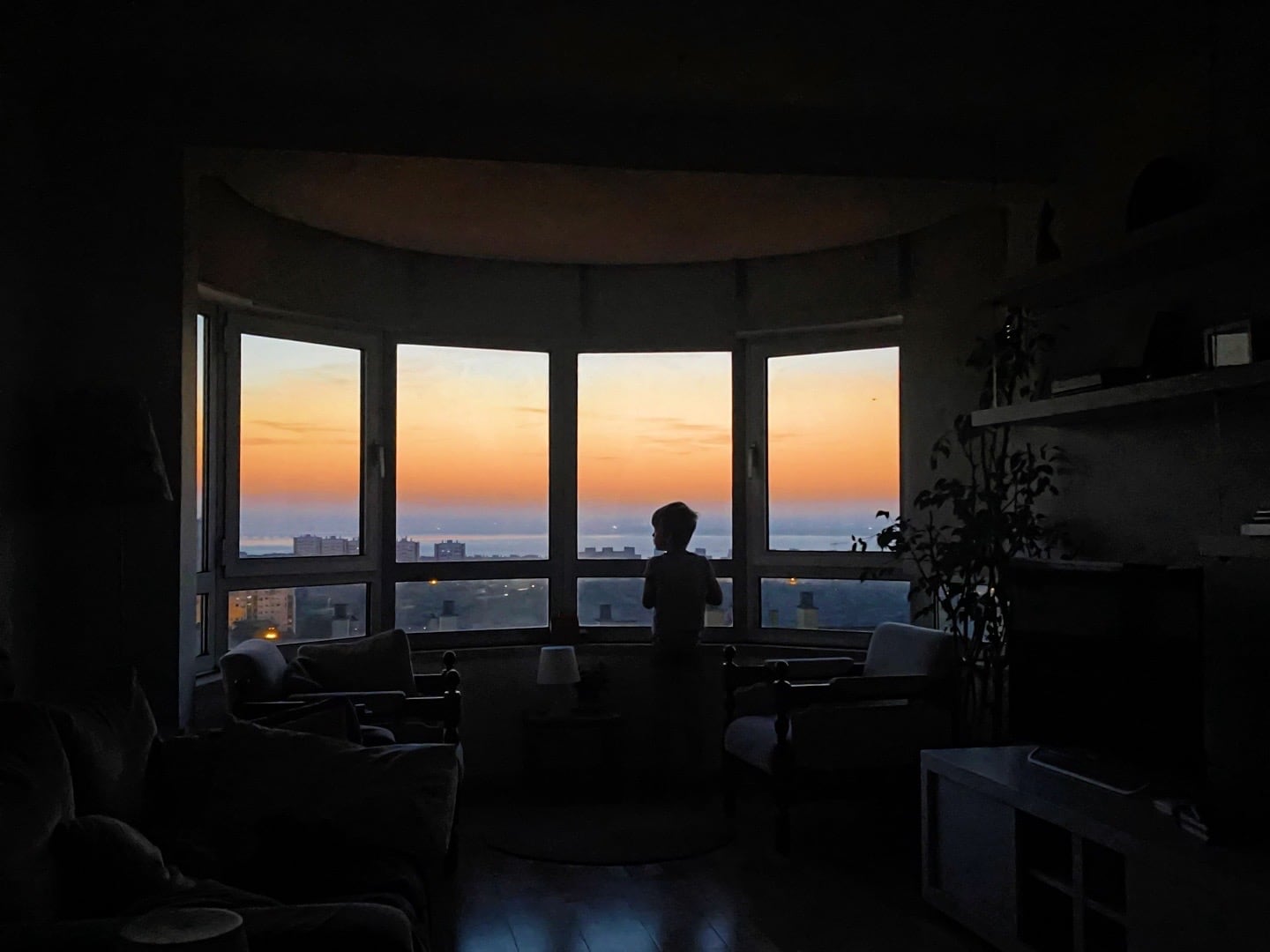
Another stunning sunrise from our apartment. Our early riser, Riley, catches most of them these days, but we all were up this particular morning for the show.
With e-tickets in hand and food in our bellies, we grabbed an Uber and beelined it to the 1,000-year-old fortress atop Lisbon’s oldest neighborhood.
Vehicles aren’t allowed near São Joao Castle, so we hoofed it uphill the last ten minutes, following a footpath lined with some of the city’s oldest residences.
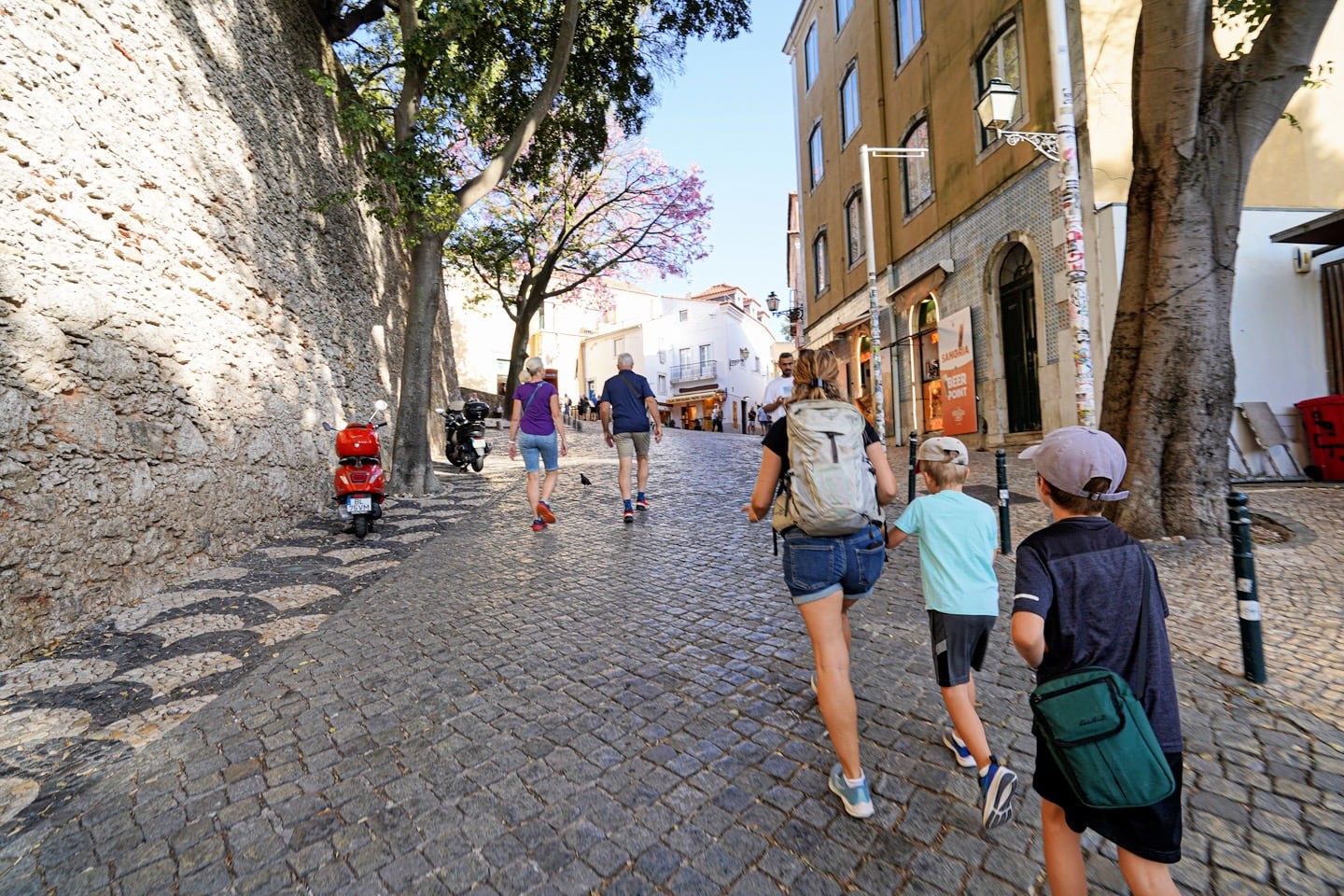
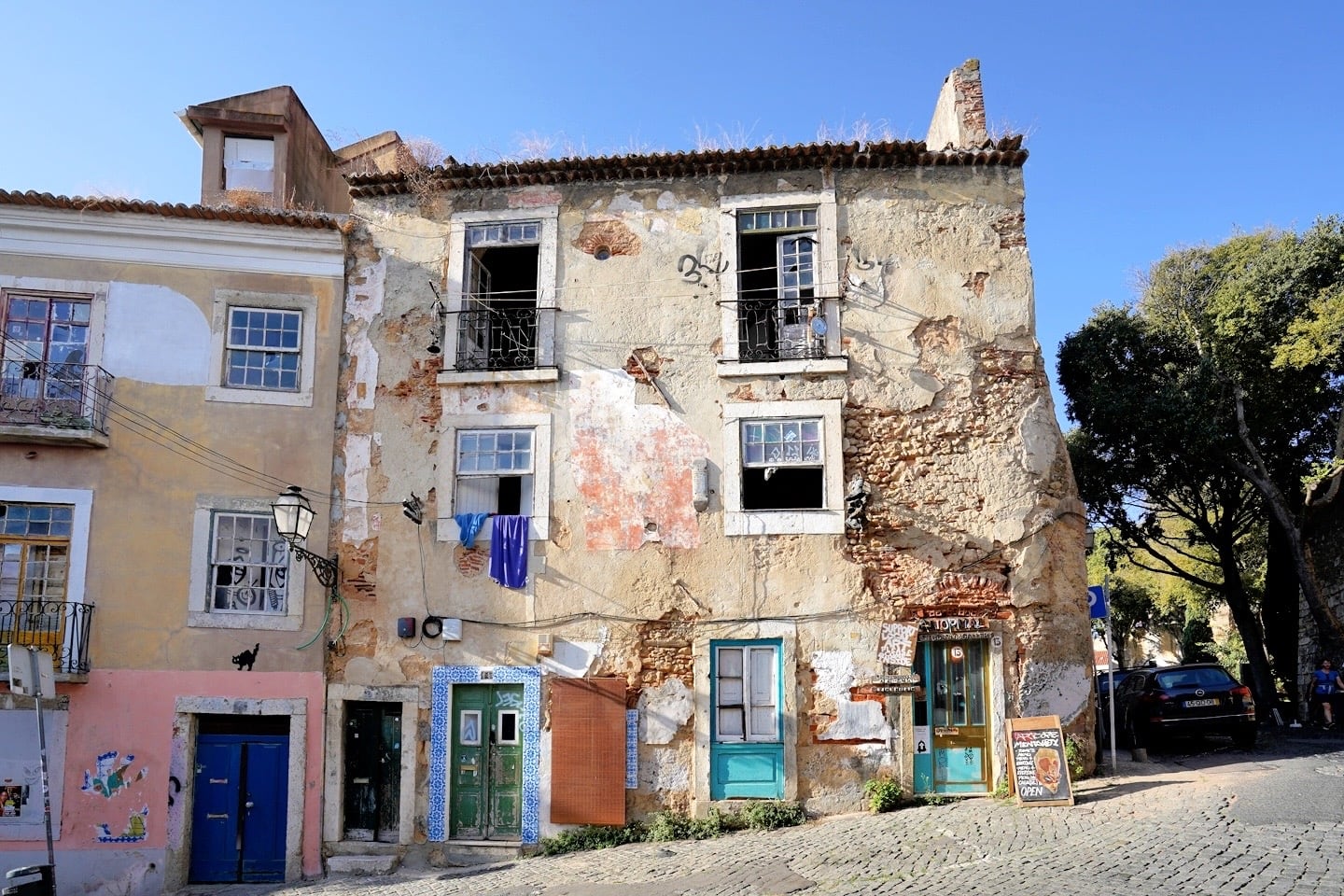
Lori and I have been to lots of old fortresses together over the years, but its been decades since either one of us have visited a medieval hilltop castle-fort (the Great Wall or Walls of Constantinople would be the closest thing).
The boys visited San Juan de Ulua in Veracruz in the past year, but I imagine this will be on another level.
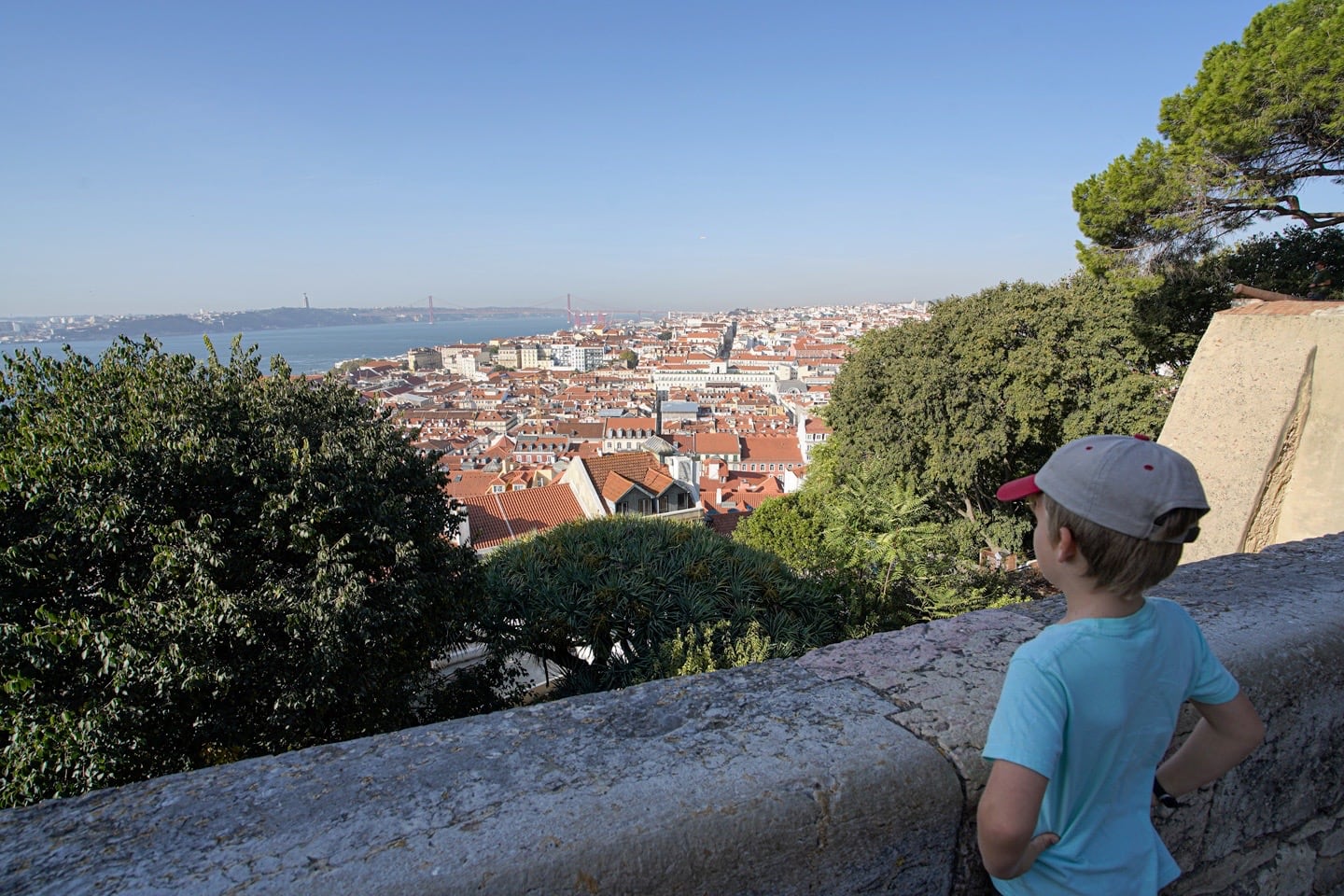
Sure enough, when we arrived just after 10am, there was already a long line to buy tickets at the window, but no line at the turnstiles, so we were able to walk on in.
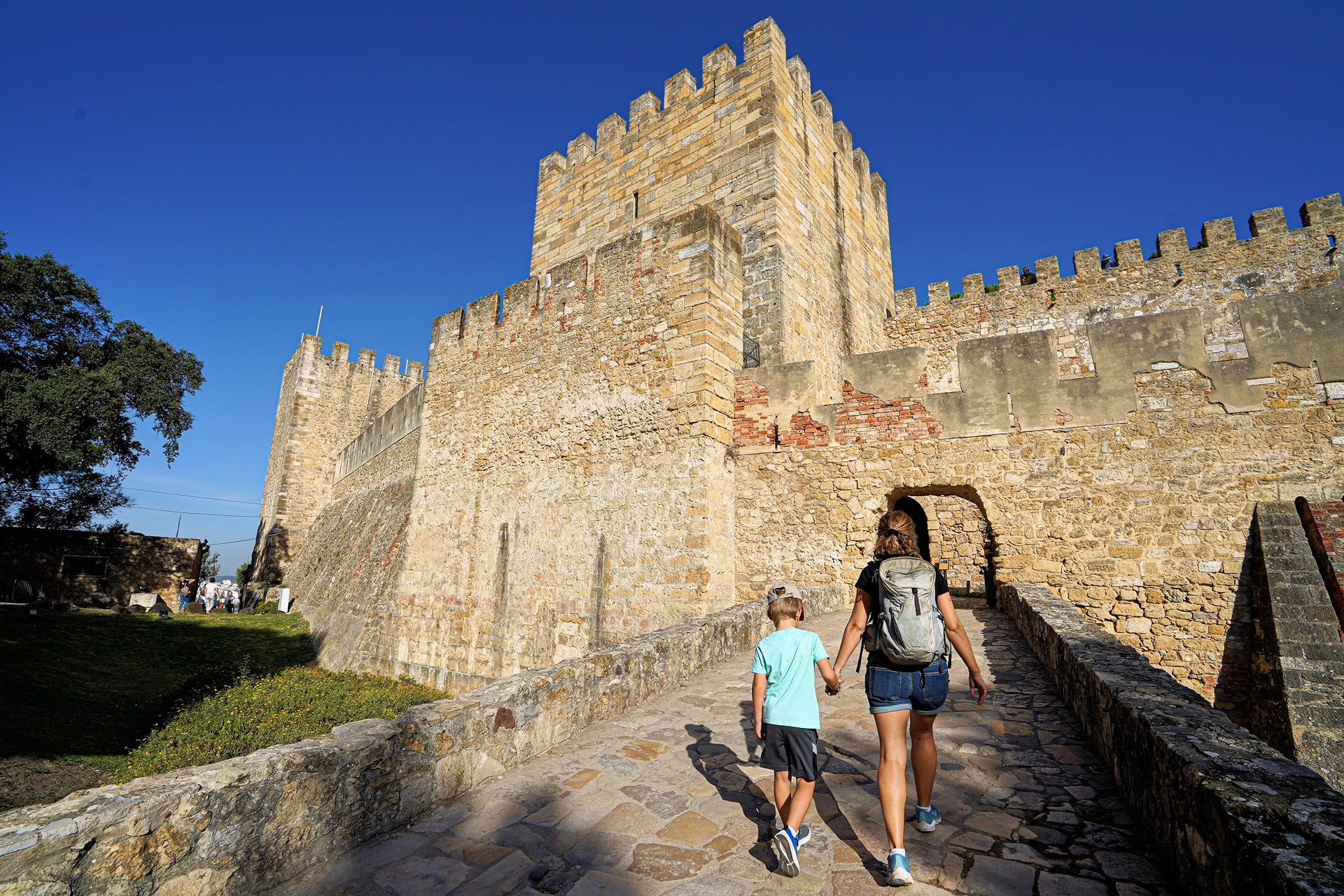
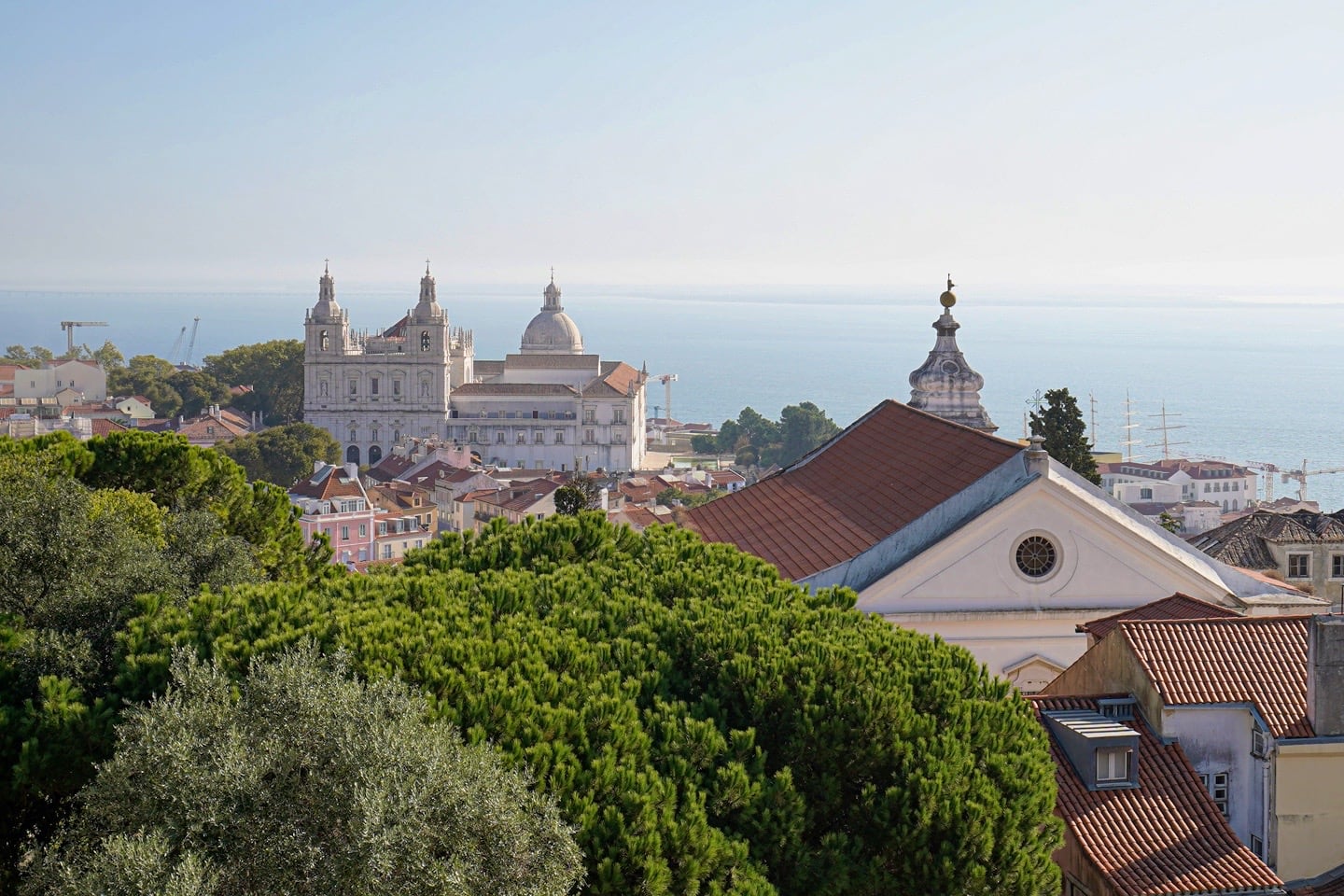
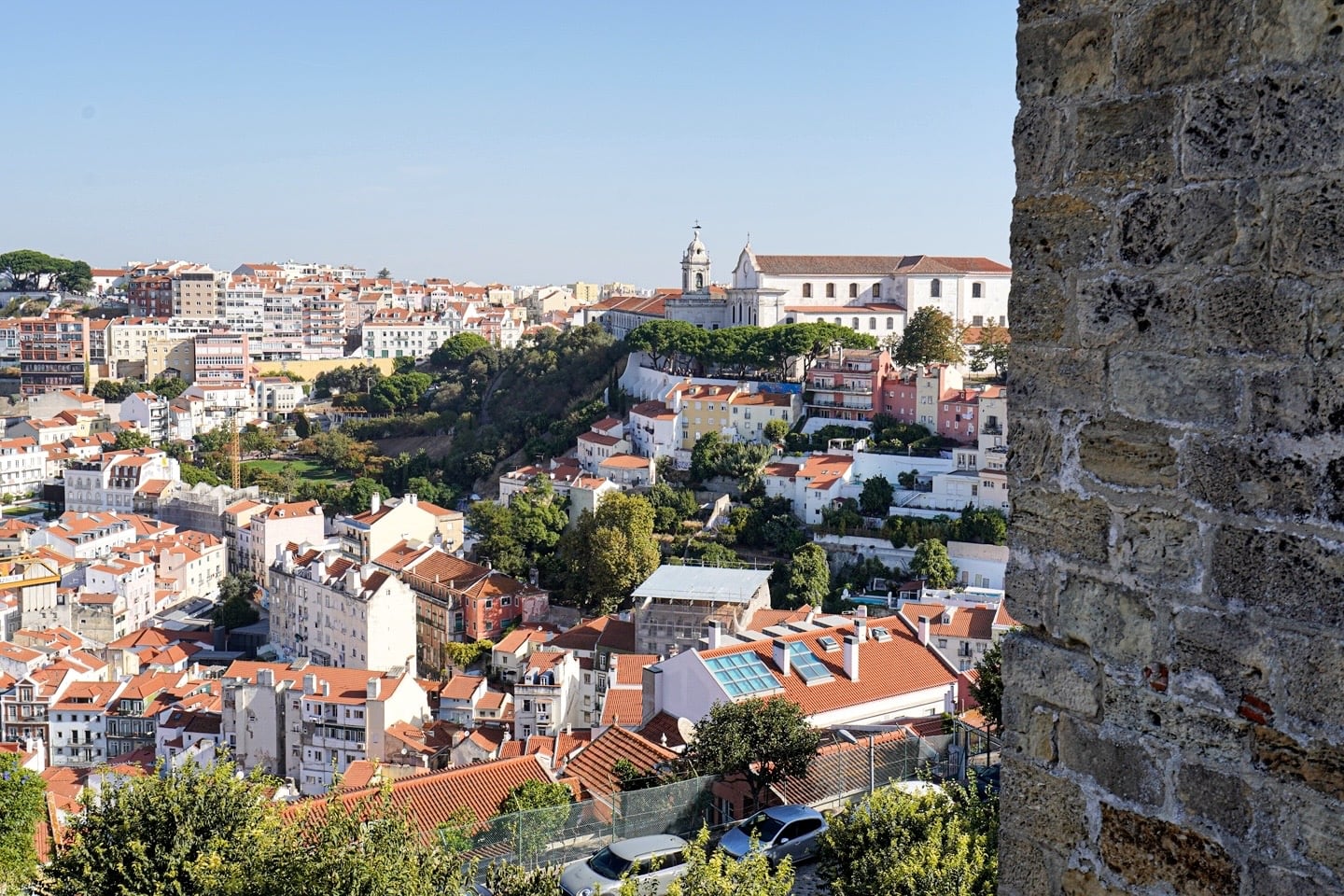
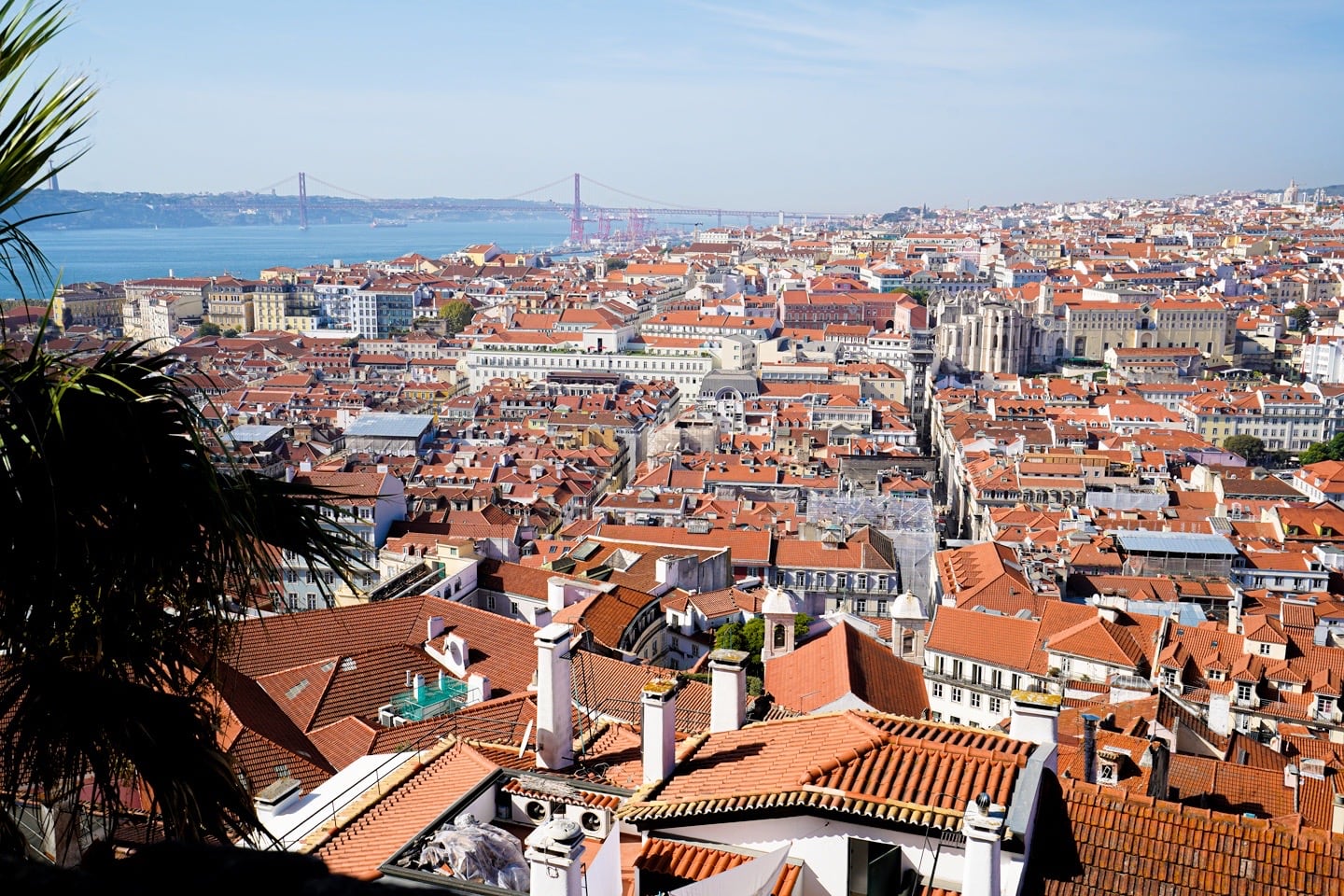
The outer walls of the castle provide commanding views of Old Town Lisbon. But we couldn’t linger long. We pushed on to make sure we got to see the most popular areas while the crowds were still minimal.
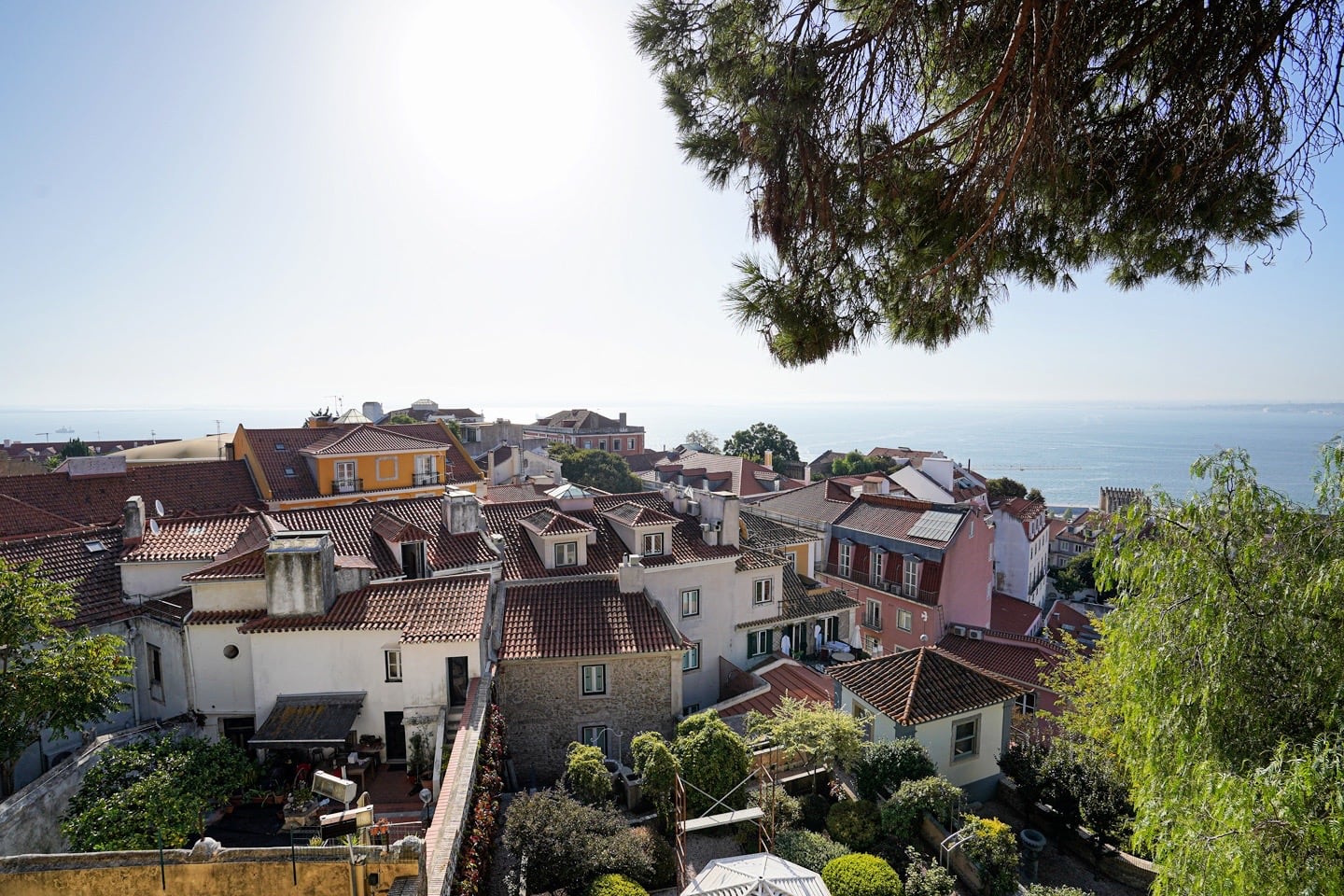
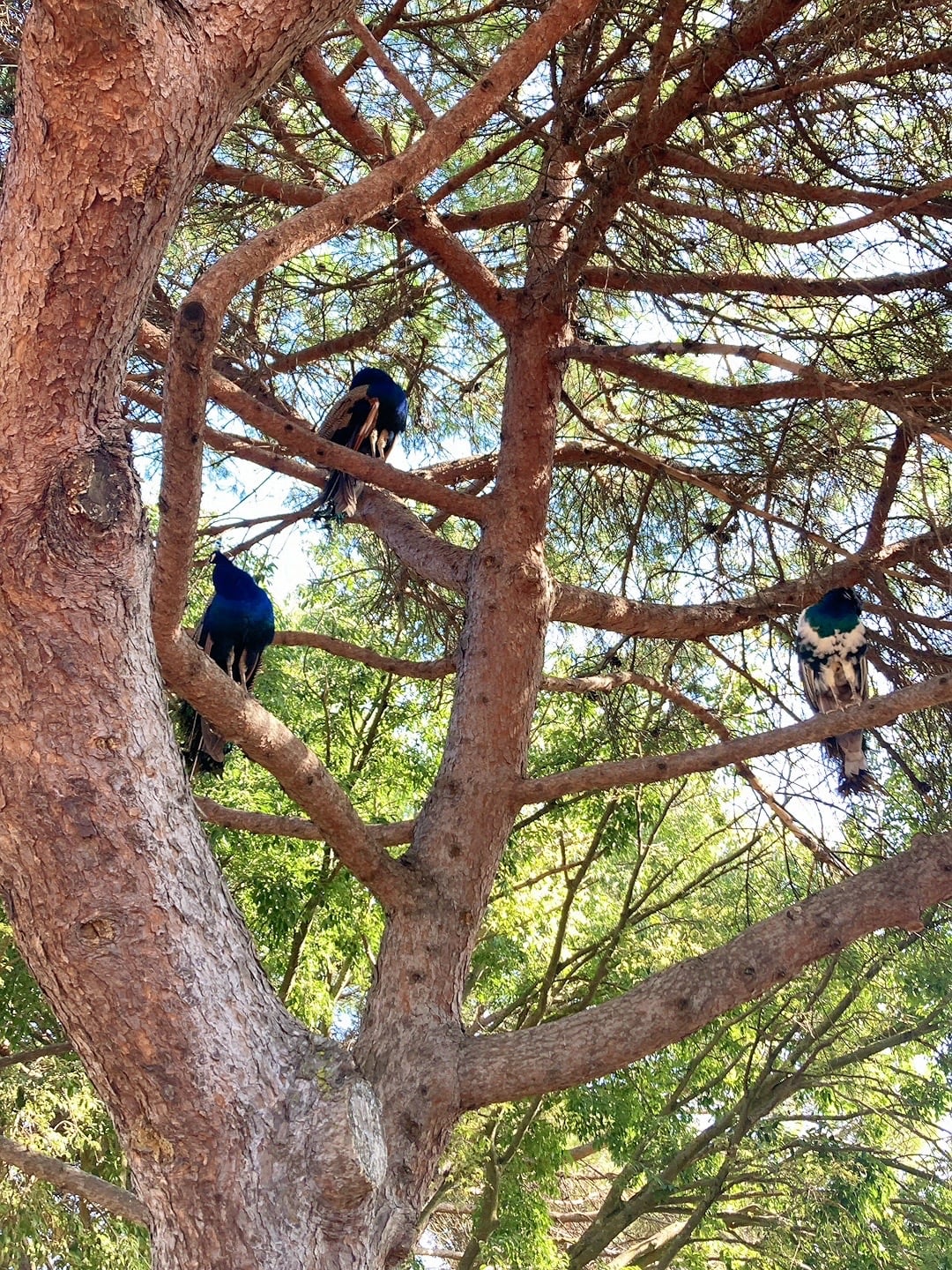
Peacocks are a common feature throughout the grounds.
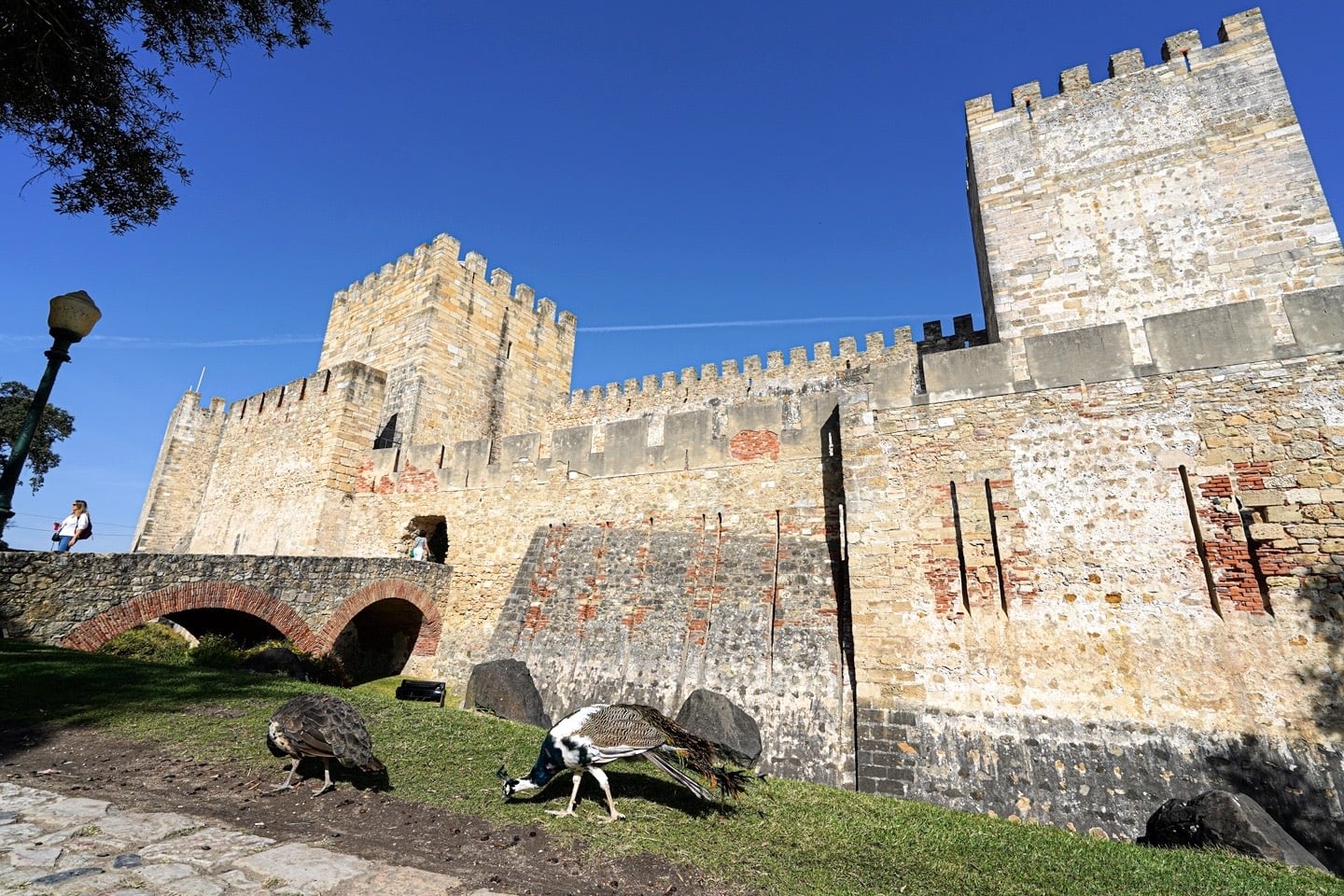
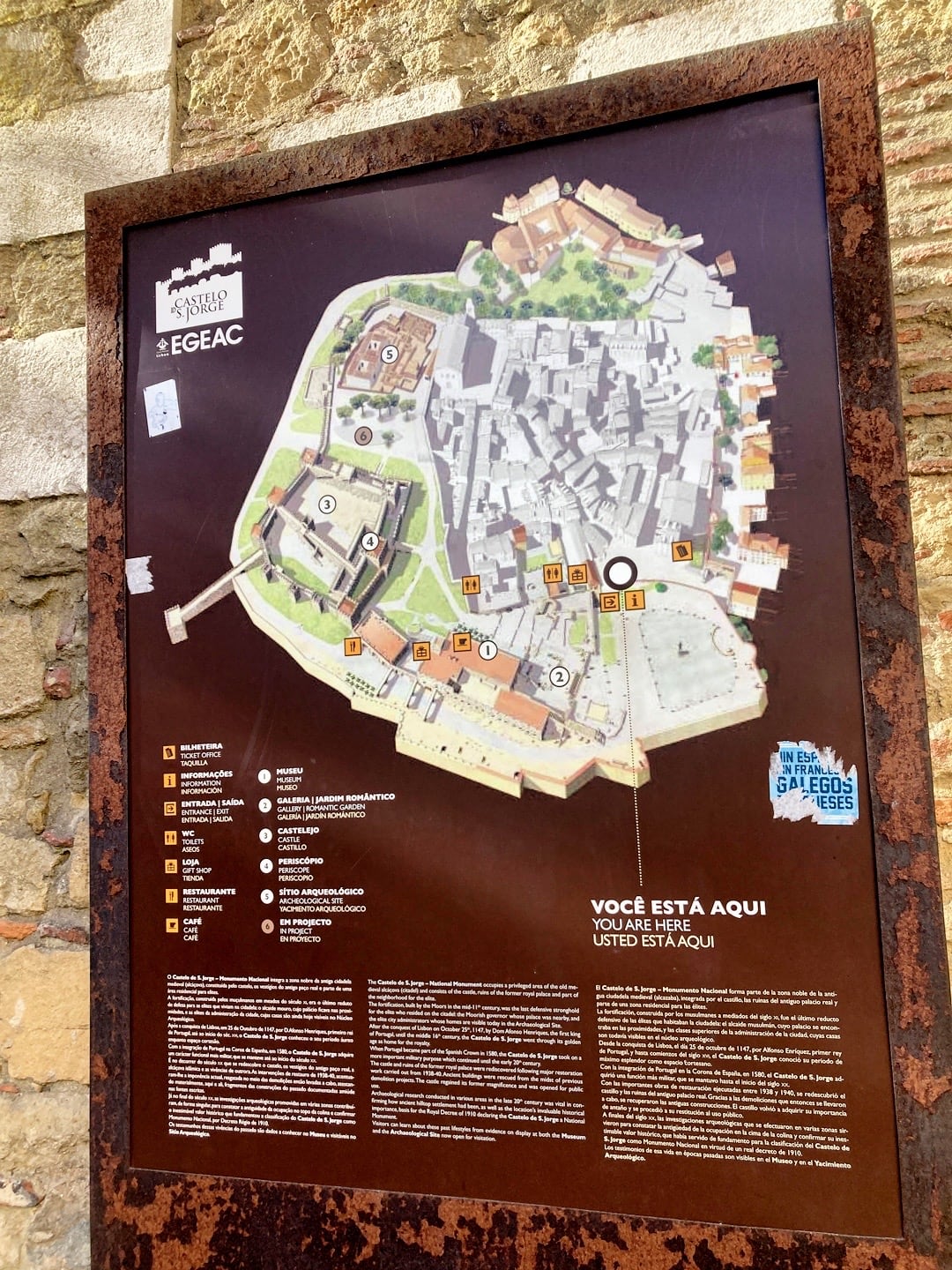
The outer perimeter has the views, but the inner sanctum is what we came to see today.
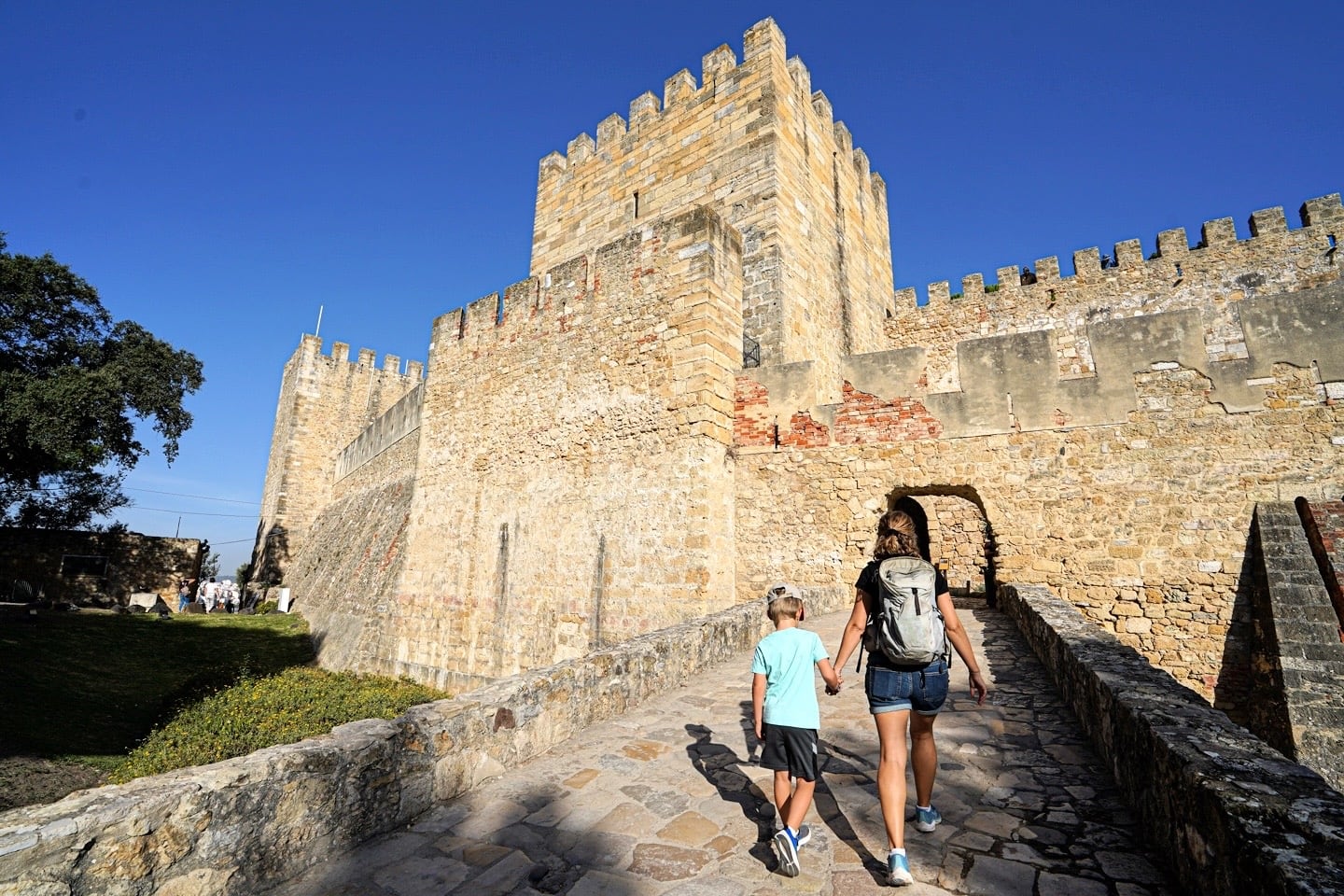
São Jorge Castle has a long history, beginning with the Moors in the 10th century as the Castle of Alcáçova. It was conquered by the Portuguese in 1147, becoming a royal residence until the 16th century.
After serving as a military base, prison, and hospital, it was heavily damaged by the 1755 earthquake and was later restored in the 20th century to what we see today.
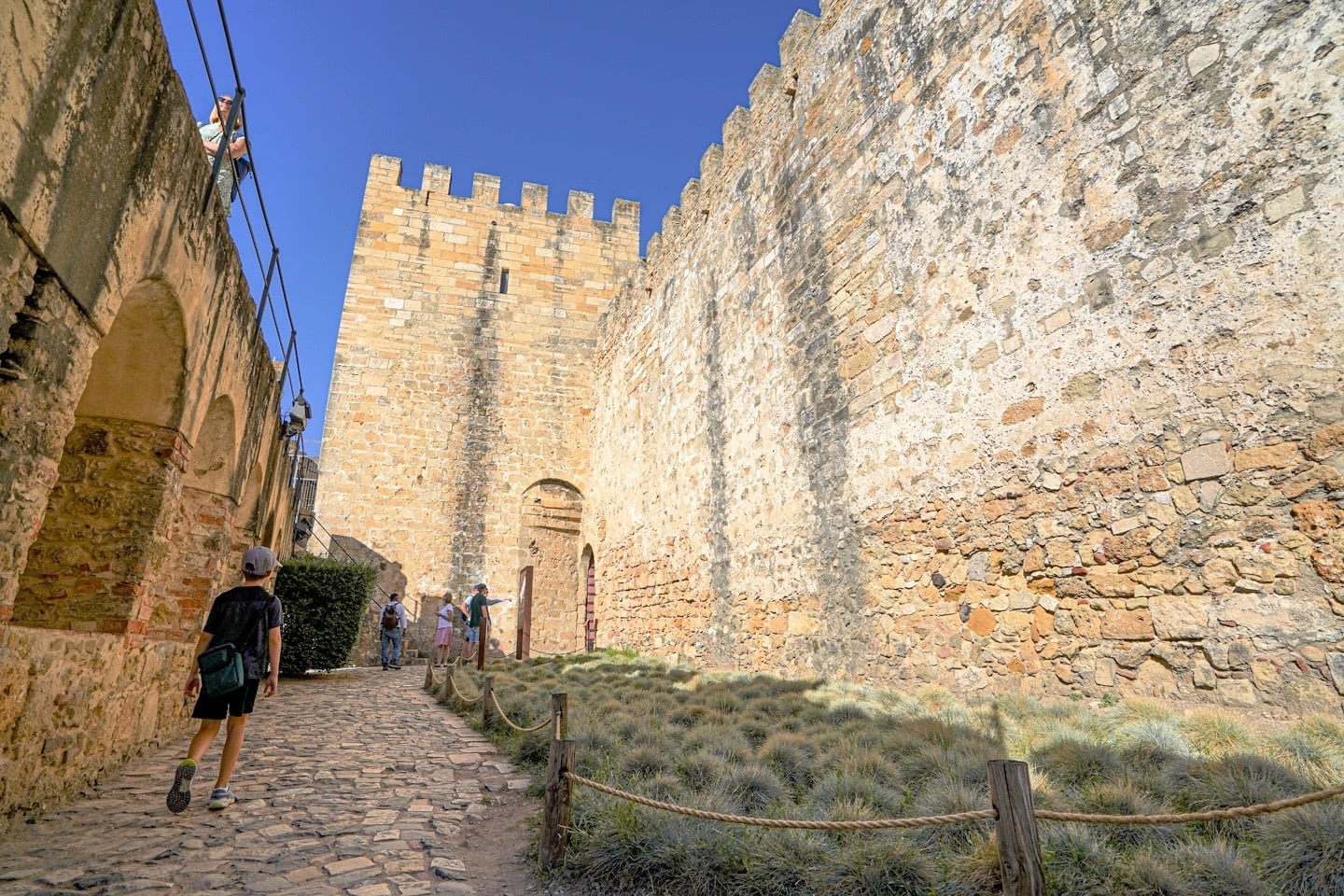
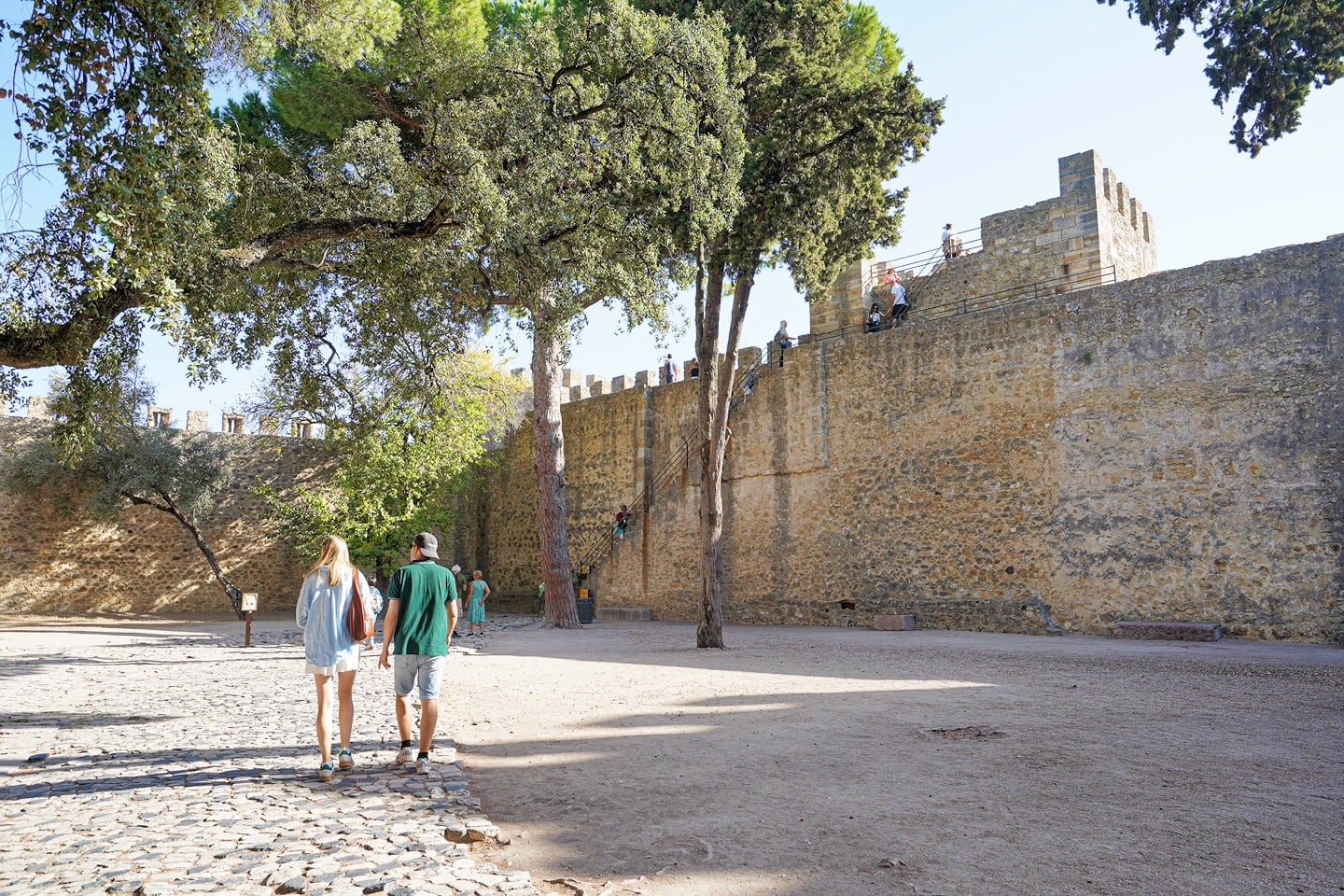
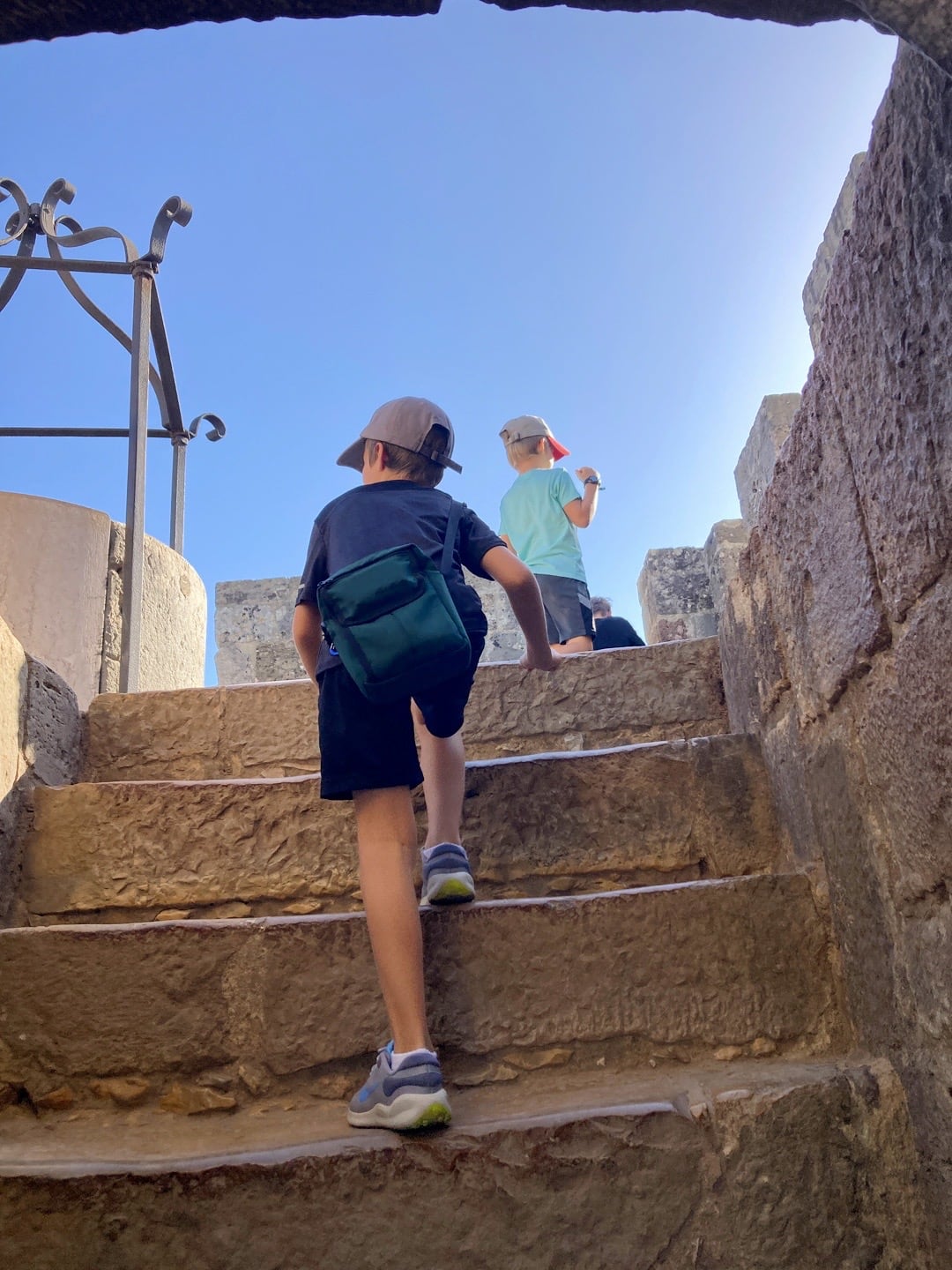
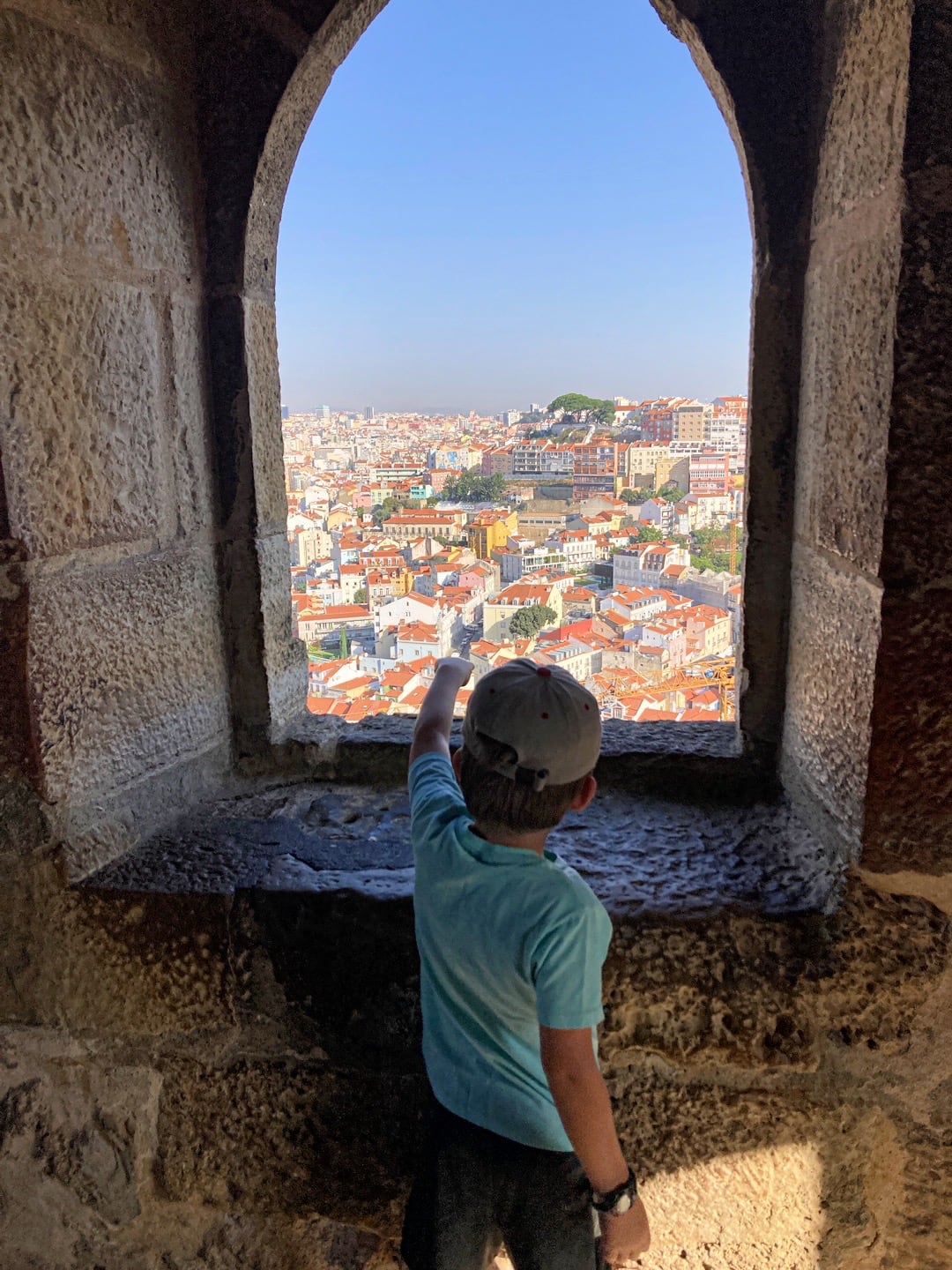
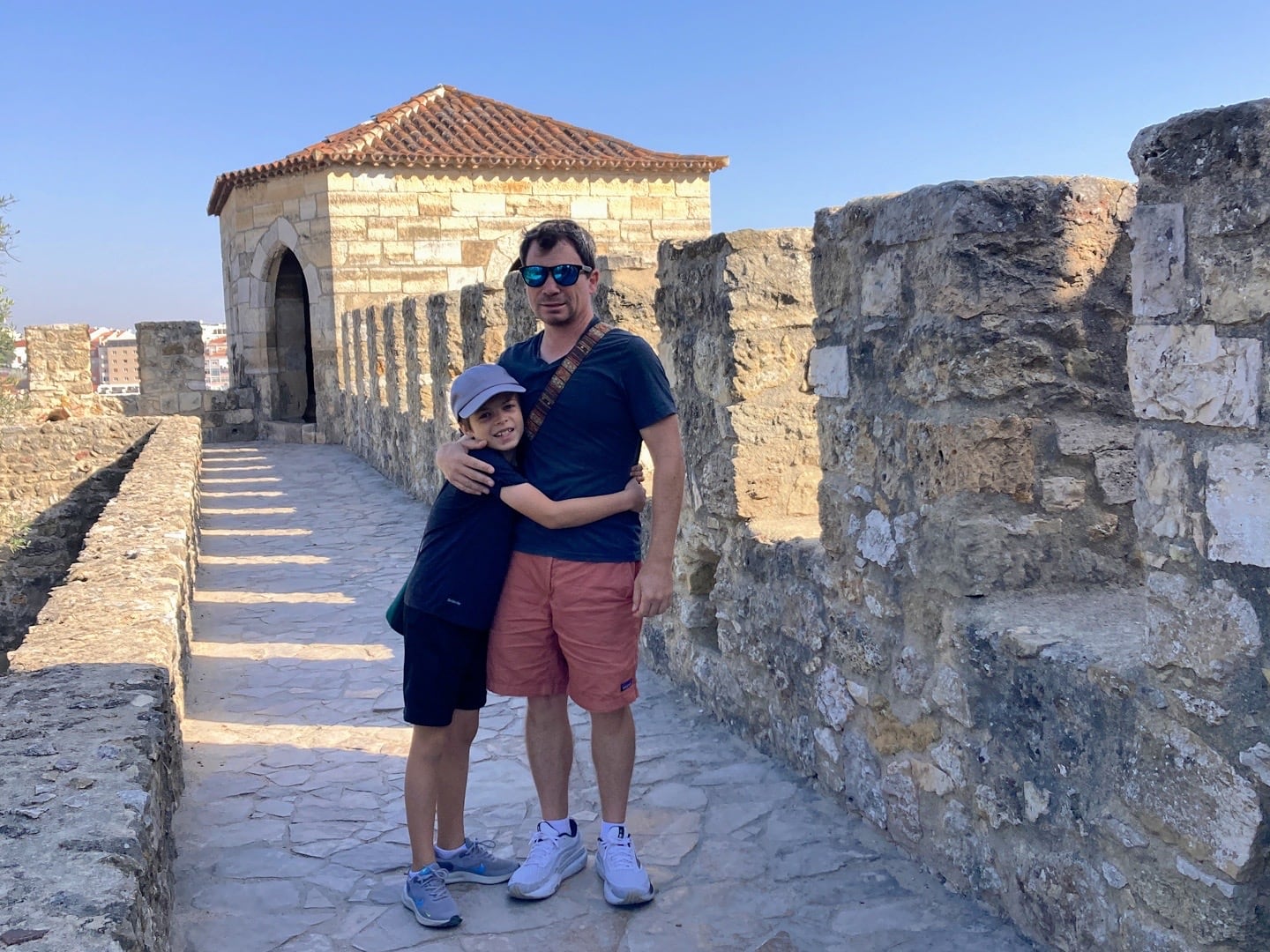
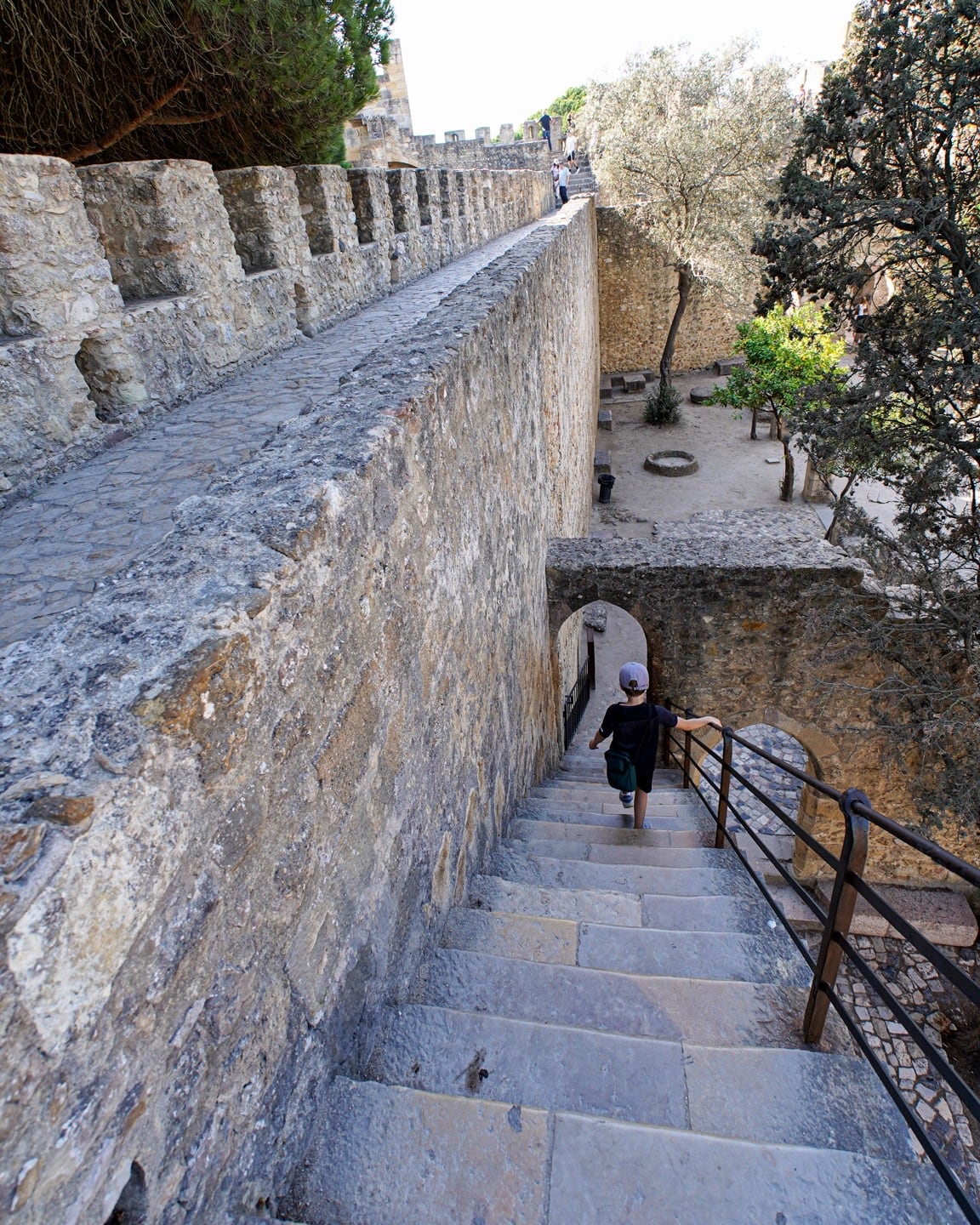
The best part about visiting the castle is climbing the ramparts, and there are ample opportunities to do so. The boys loved every minute.
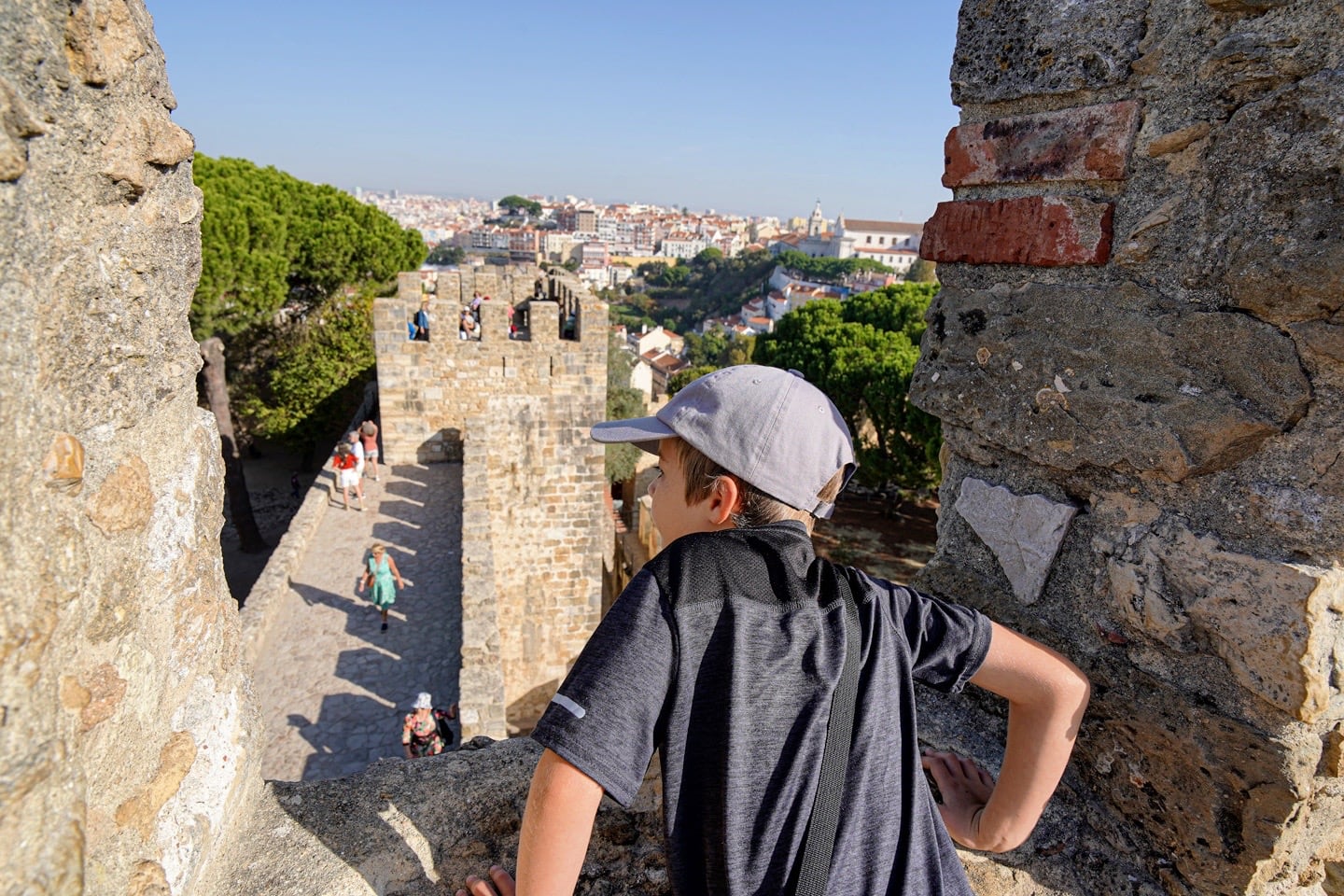
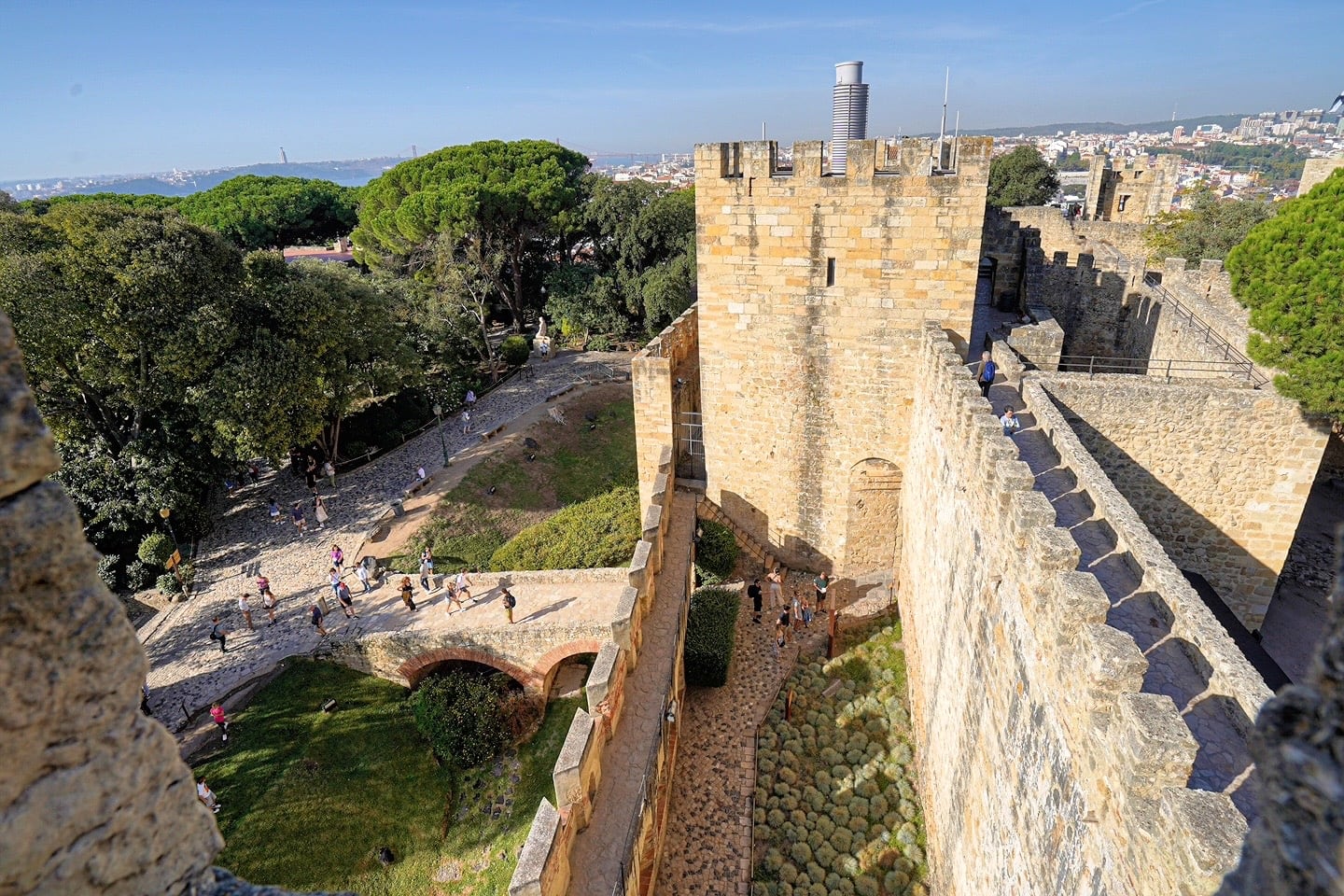
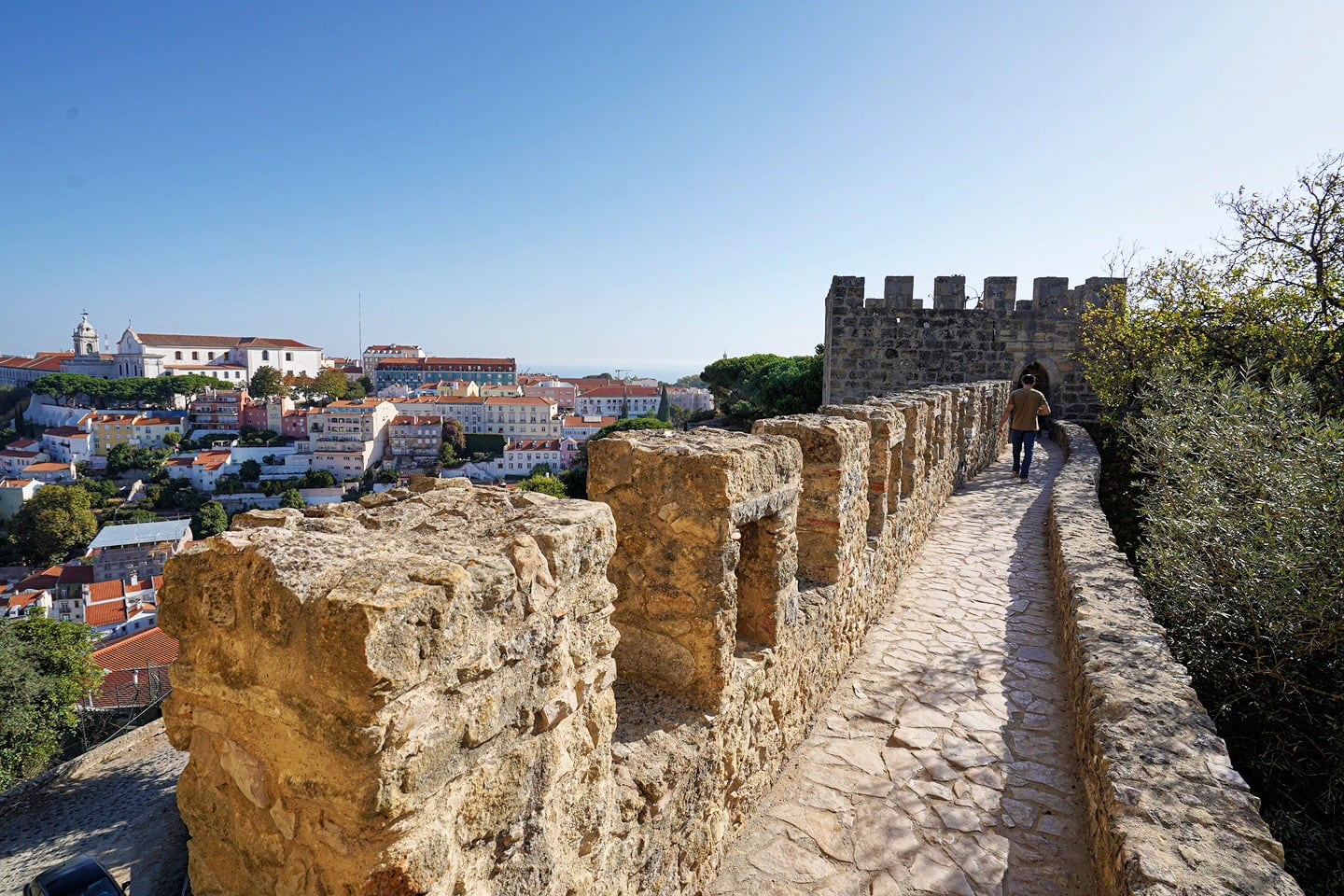
No crowds yet. In another hour or so, I’m sure these ramparts will be jam-packed.
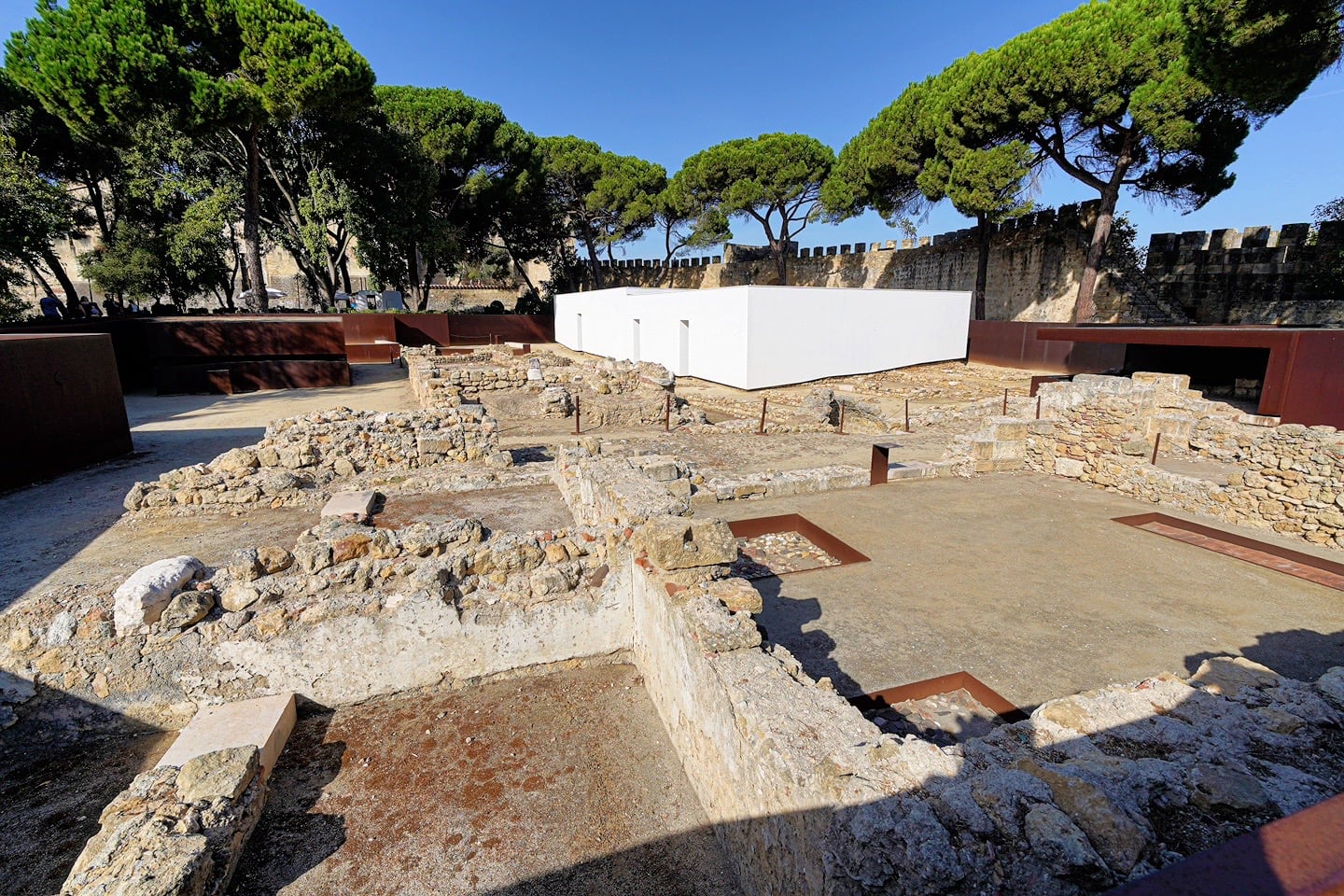
Underneath this unassuming plot of land lay archeological sites from three different time periods: An Iron Age settlement dating from the 7th century BC, the Moorish occupation from the 11th century AD, and the ruins of a 15th century Portuguese palace.
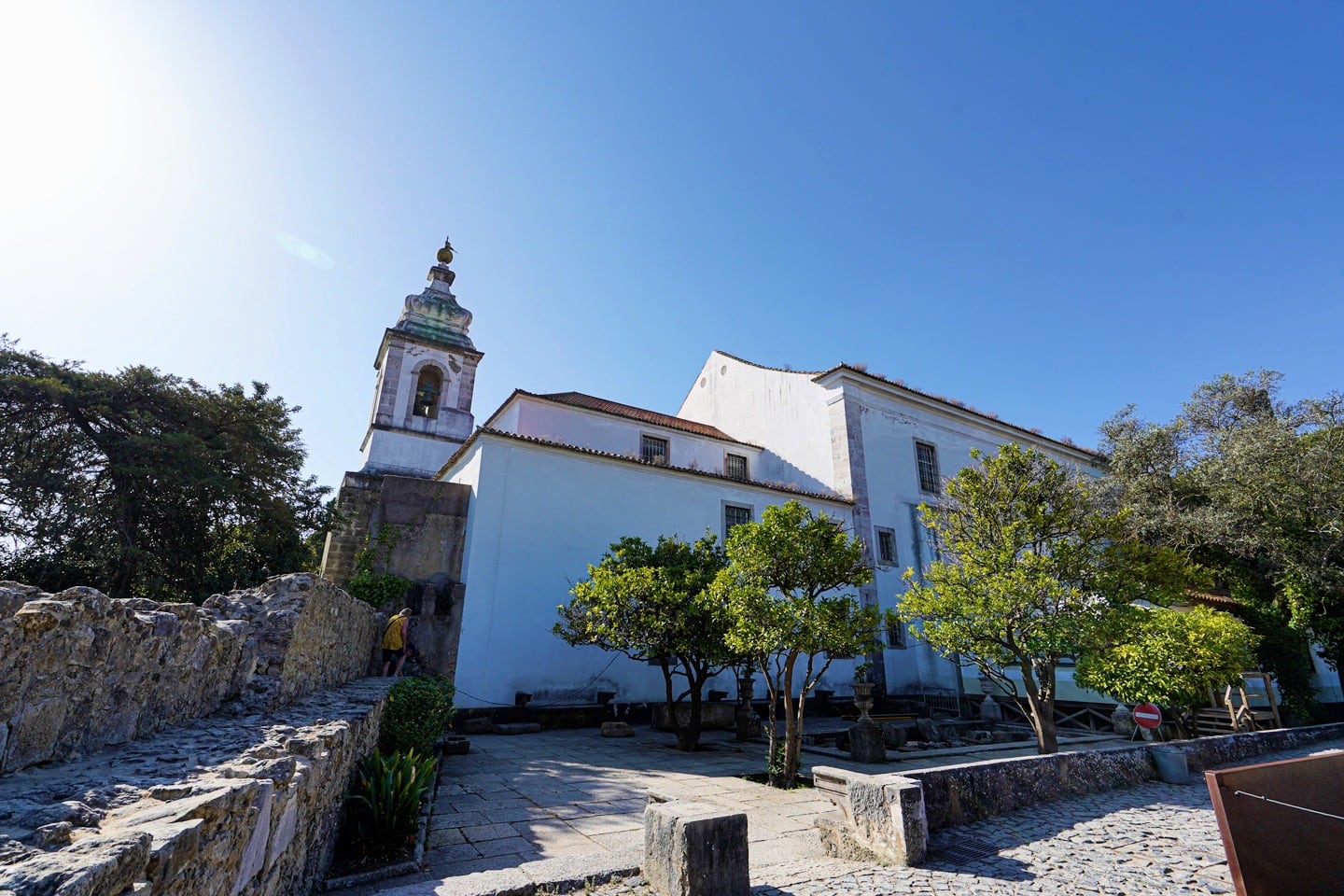
The adjacent chapel, commissioned a few decades before the Great Lisbon Earthquake somehow survived while the palace did not.
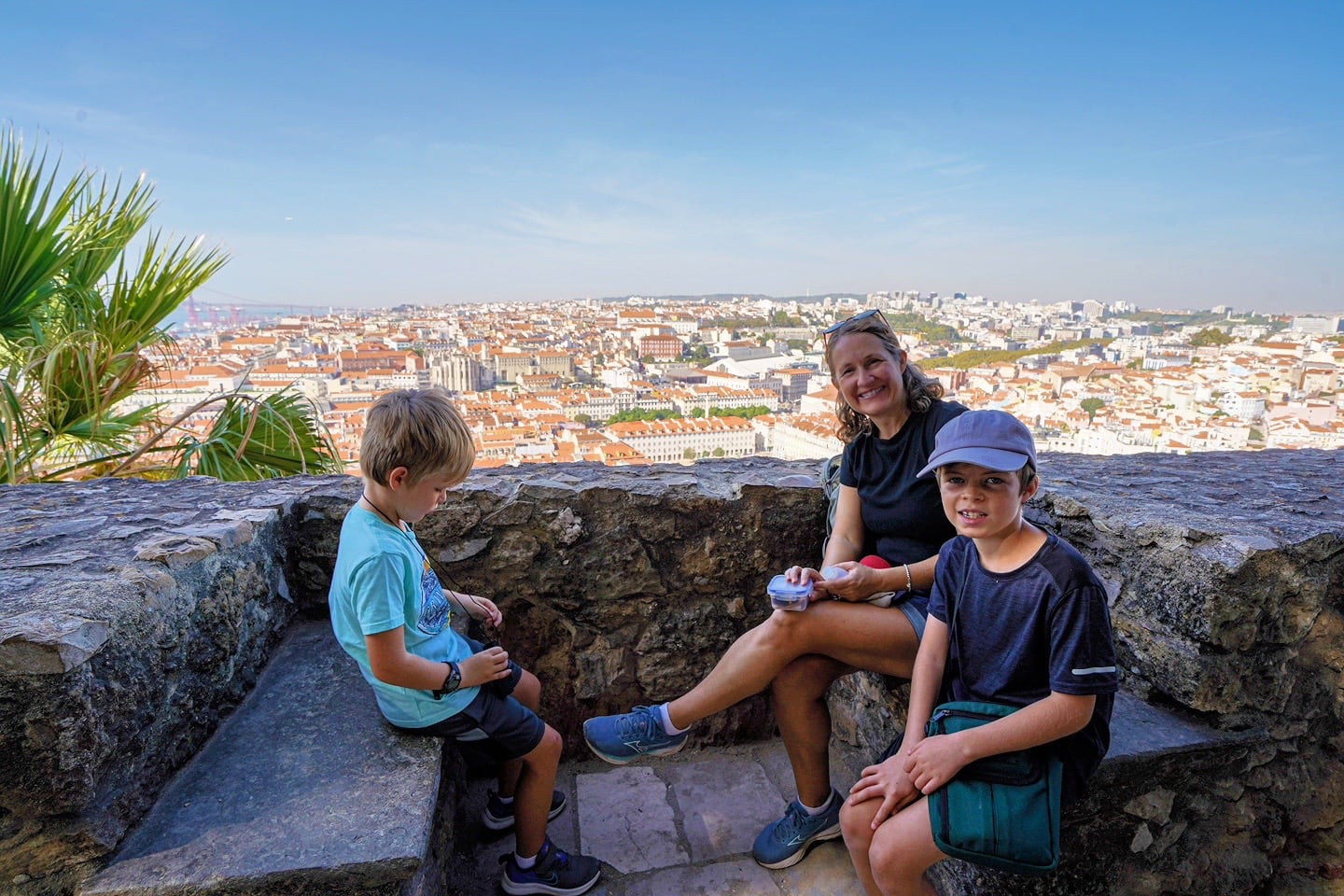
We spent a total of two hours exploring the castle, which seemed like just enough time for everyone. Even around noon, there were still scenic alcoves available along the ramparts to enjoy a snack and views.
When we exited the castle, we could tell that crowds were ramping up, spilling out into the surrounding neighborhood.
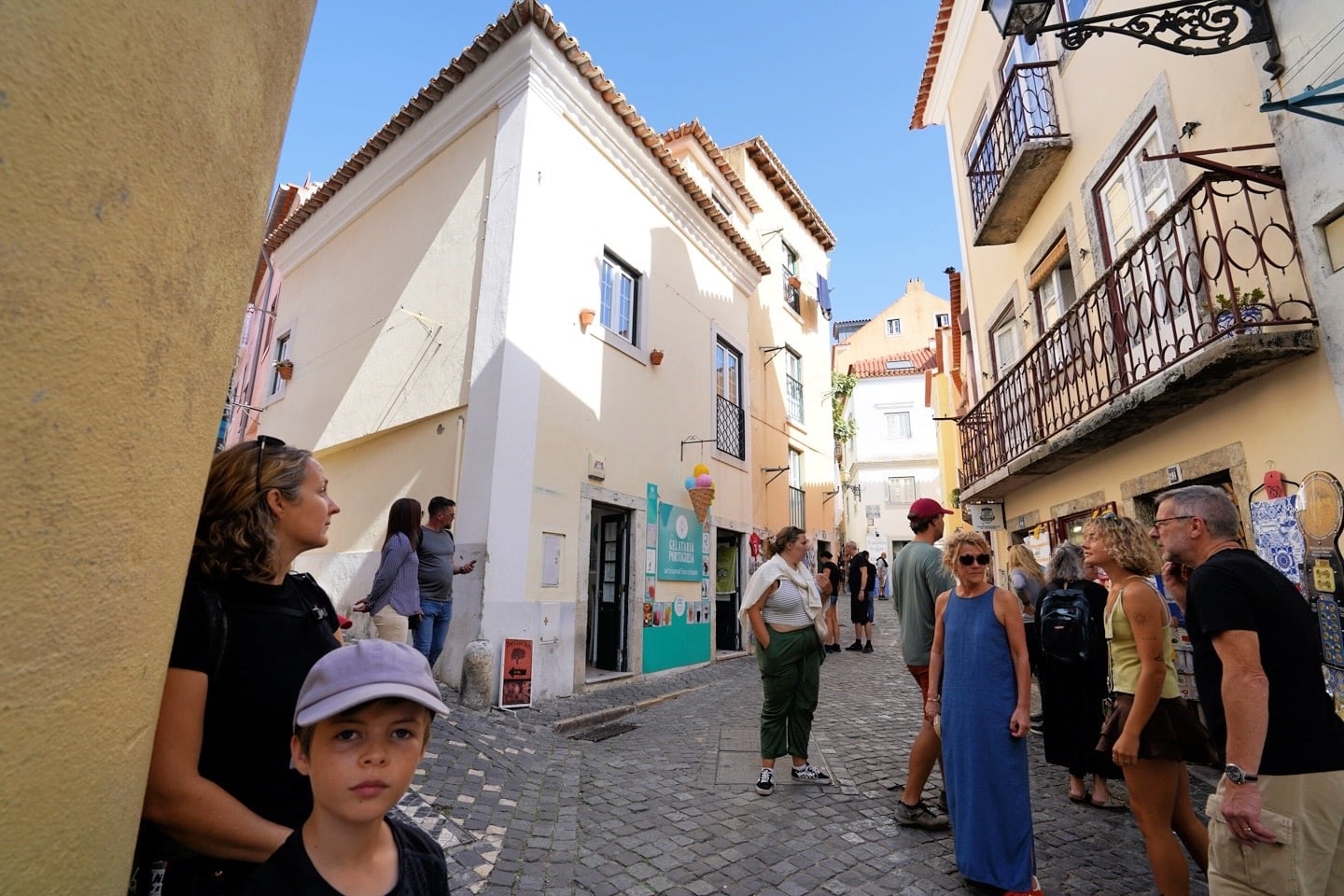
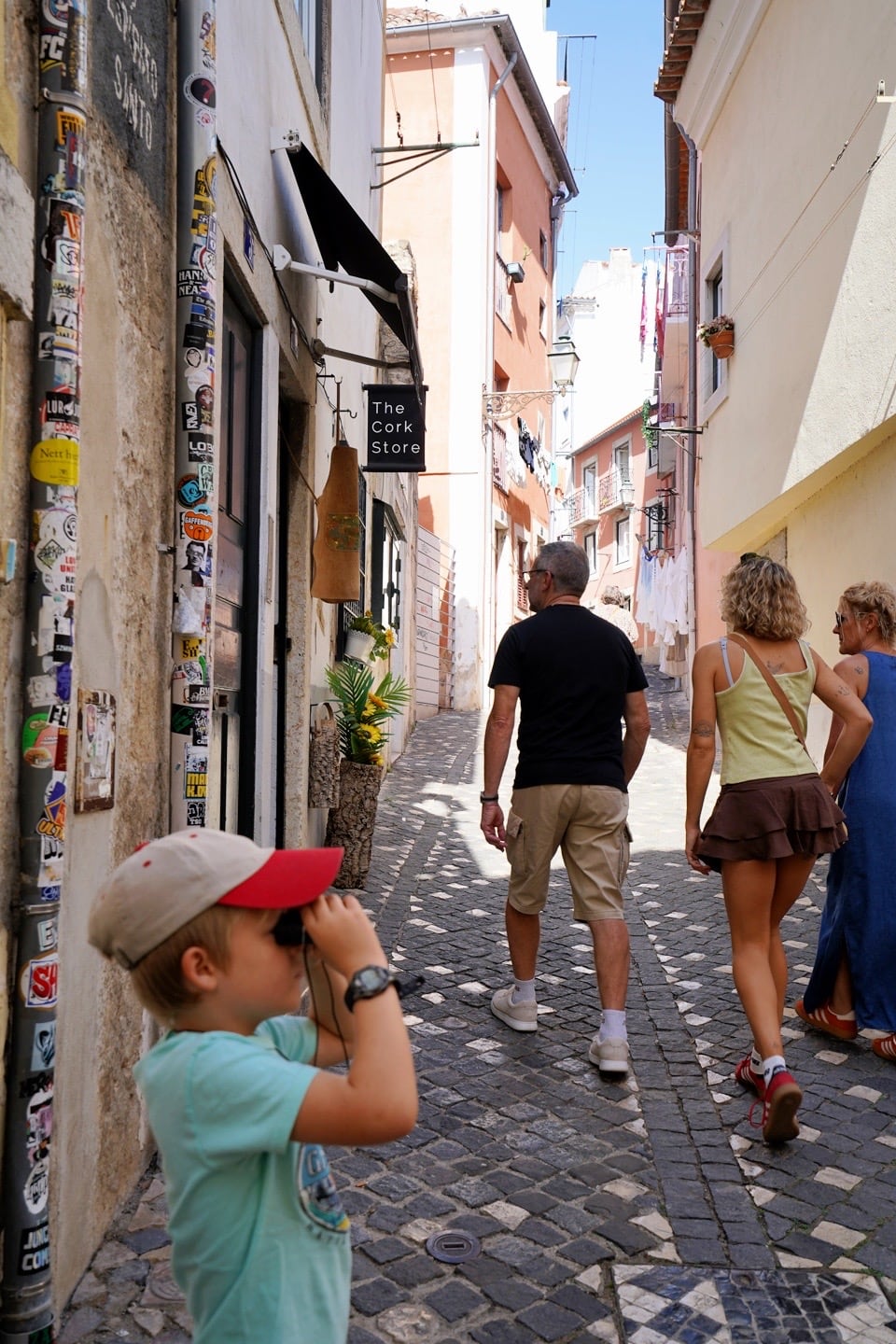
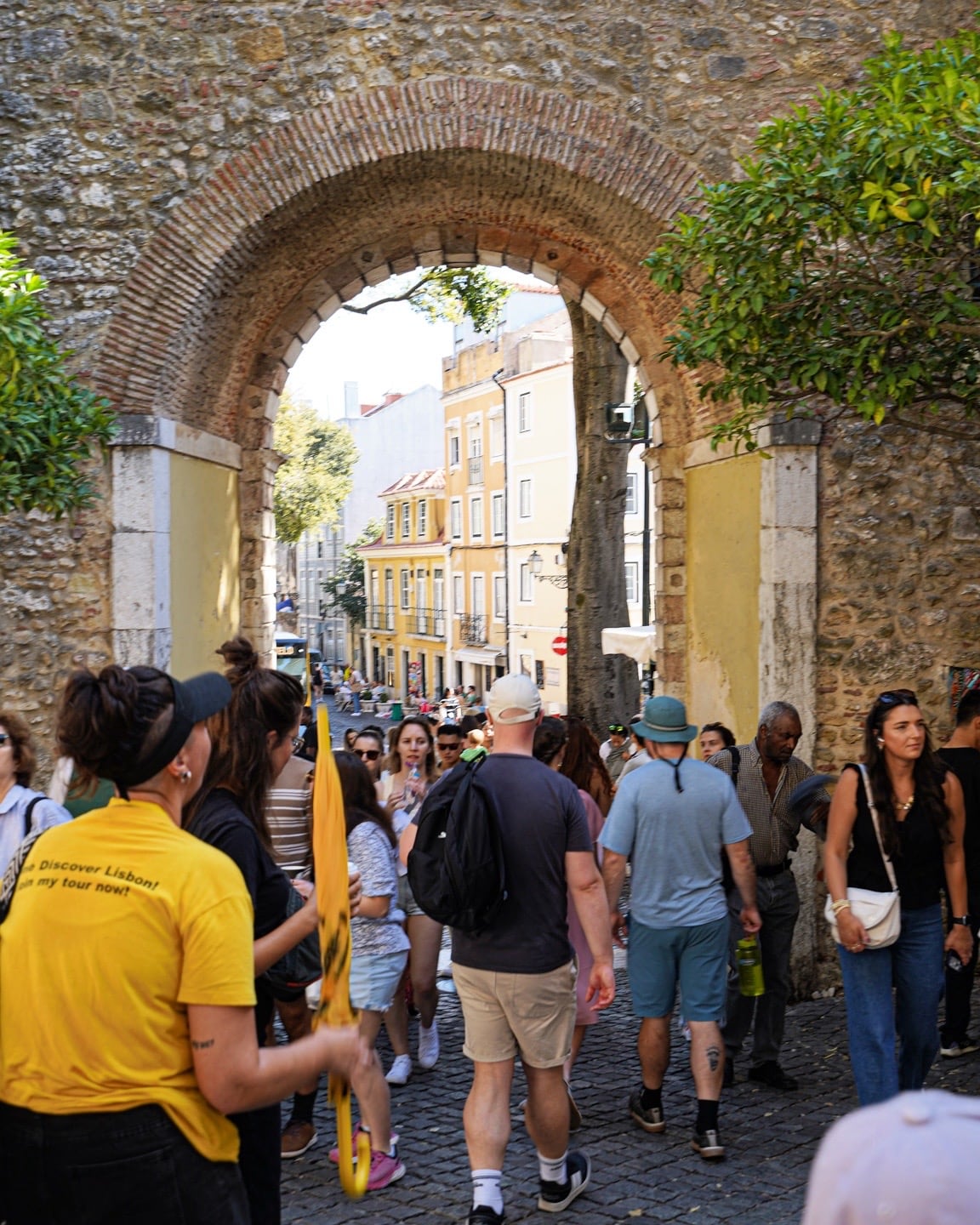
The line to buy tickets wrapped all the way down the street and out the main gate.
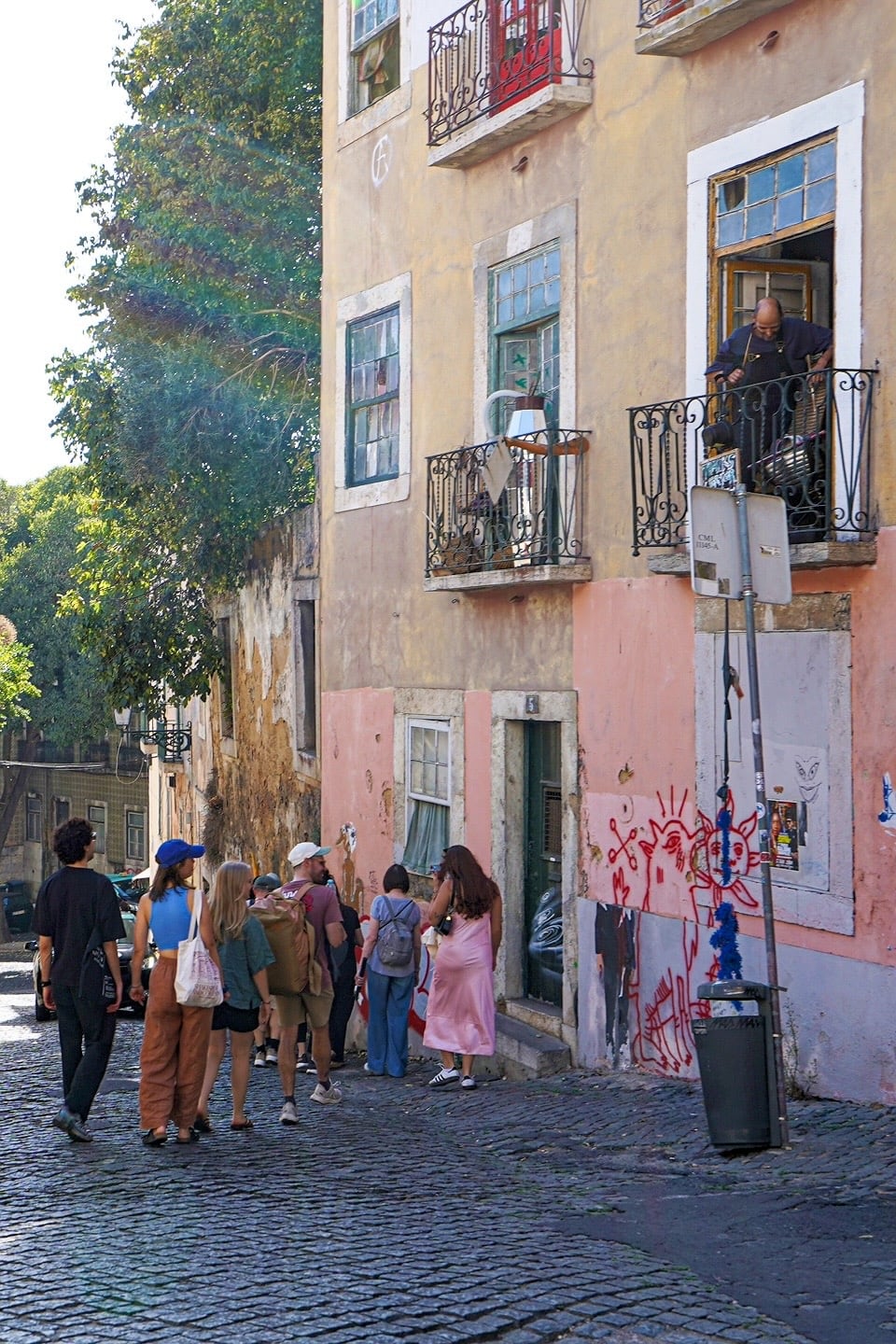
Many local residents of the neighborhood seem to take every opportunity to entice visitors to part with their Euro. This guy’s playing some homemade drums with a bucket lowered down to street level for tips.
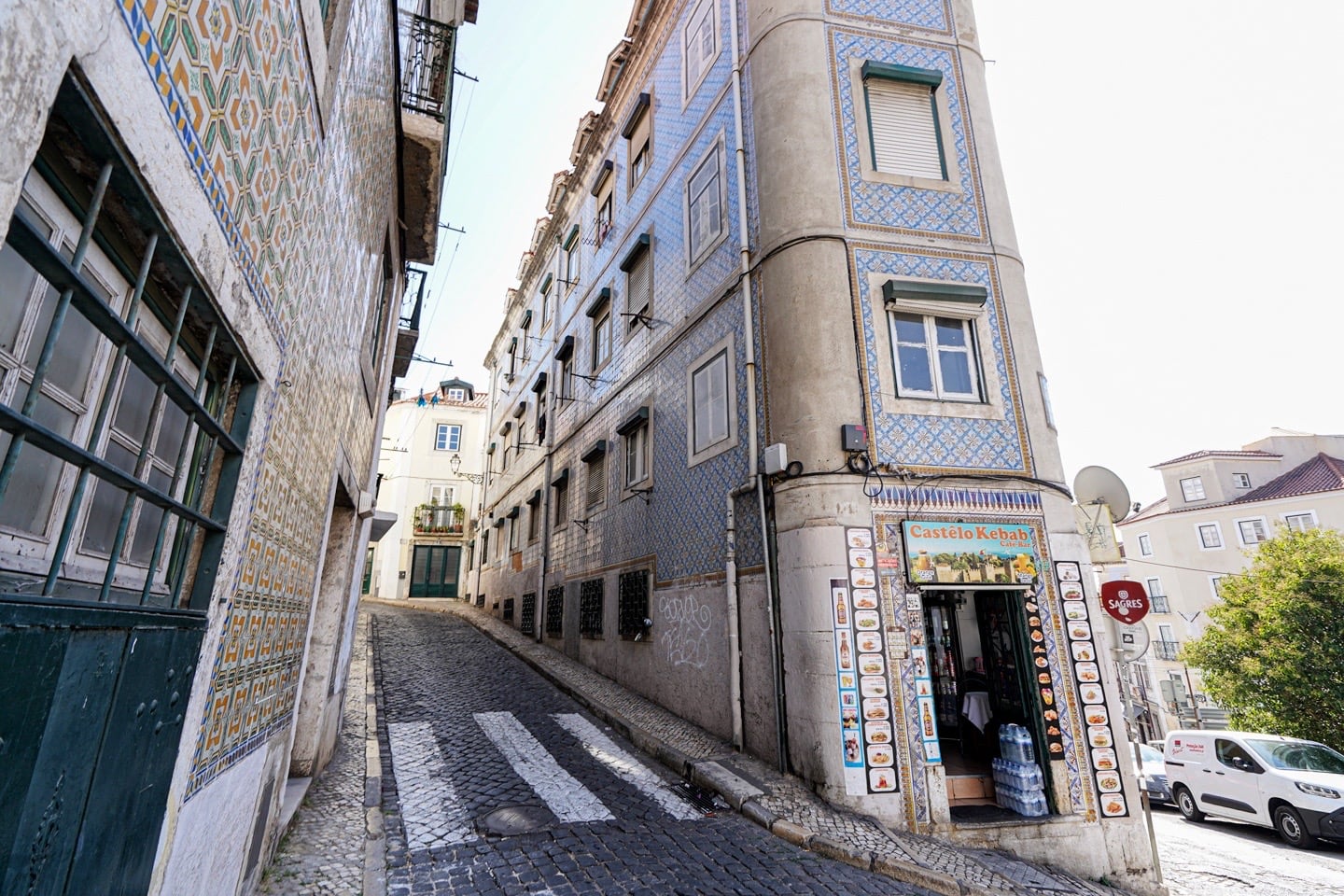
Restaurants near the fort are on the pricier side. Head down the hill a bit and prices also seem to go down. Hole-in-the-wall shawarma joints seem to be a good, cheap bet for lunch anywhere you go in the city. Considerably cheaper than a Portuguese meal.
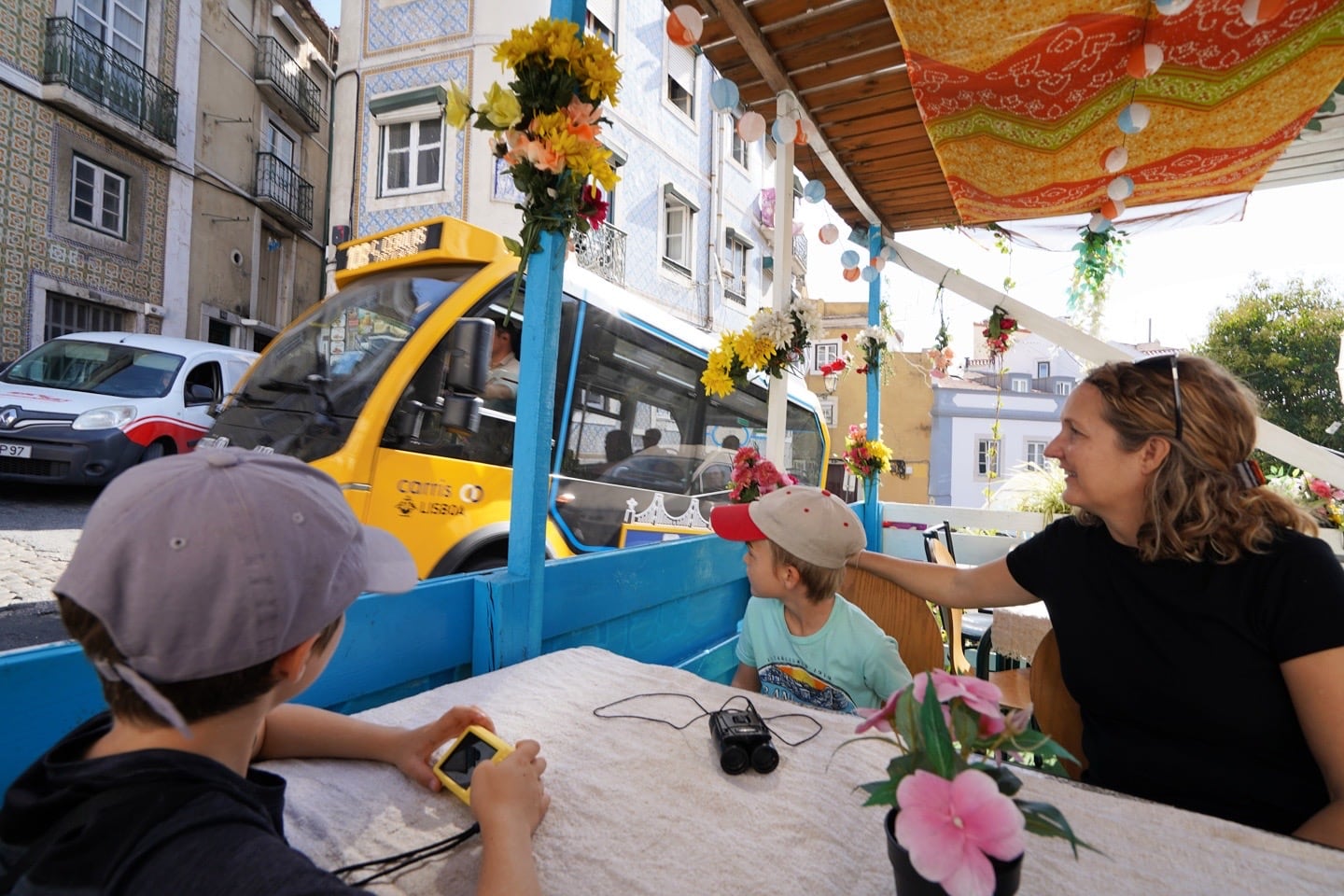
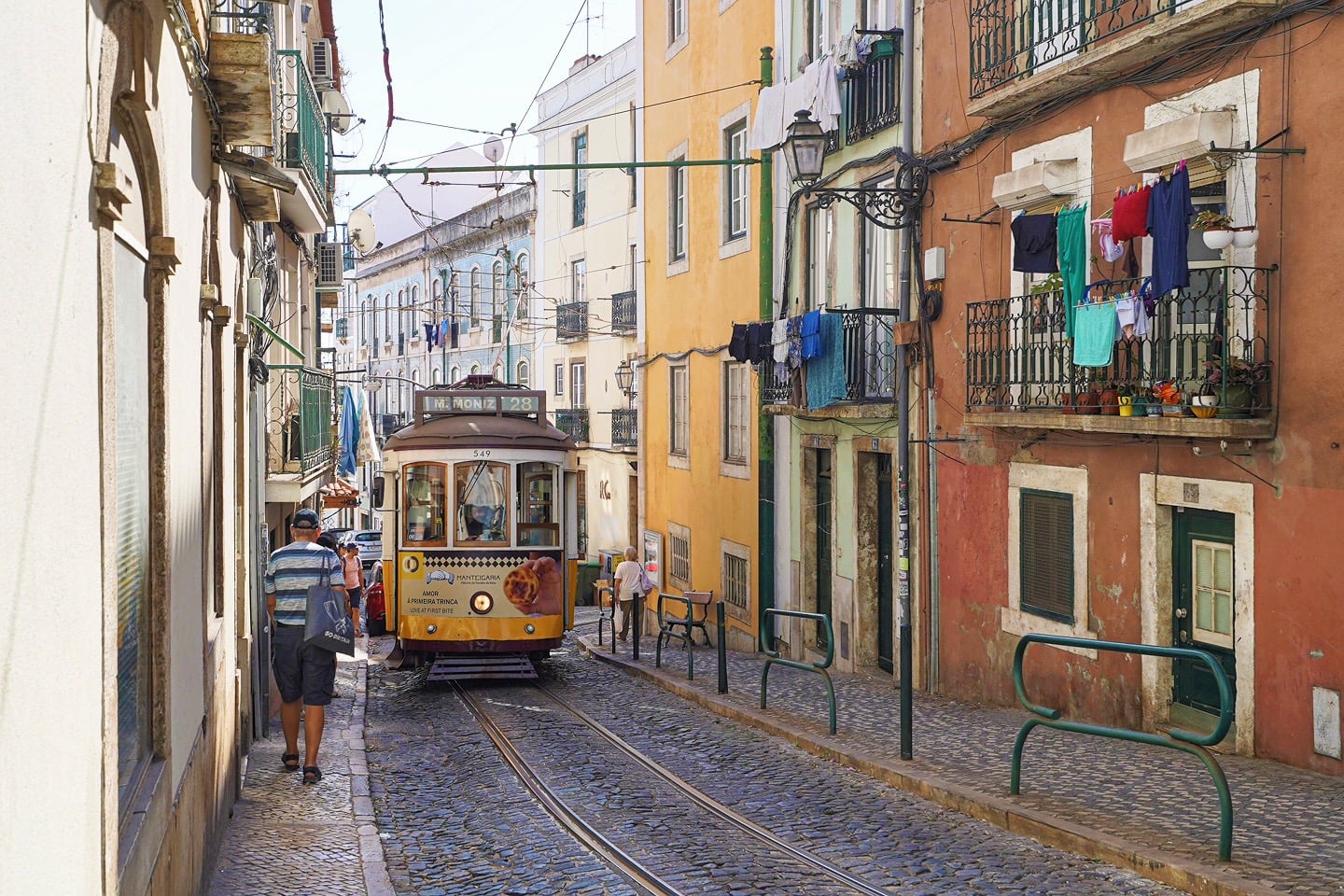
Afterwards, we poked around the Alfama’s narrow and winding thoroughfares.
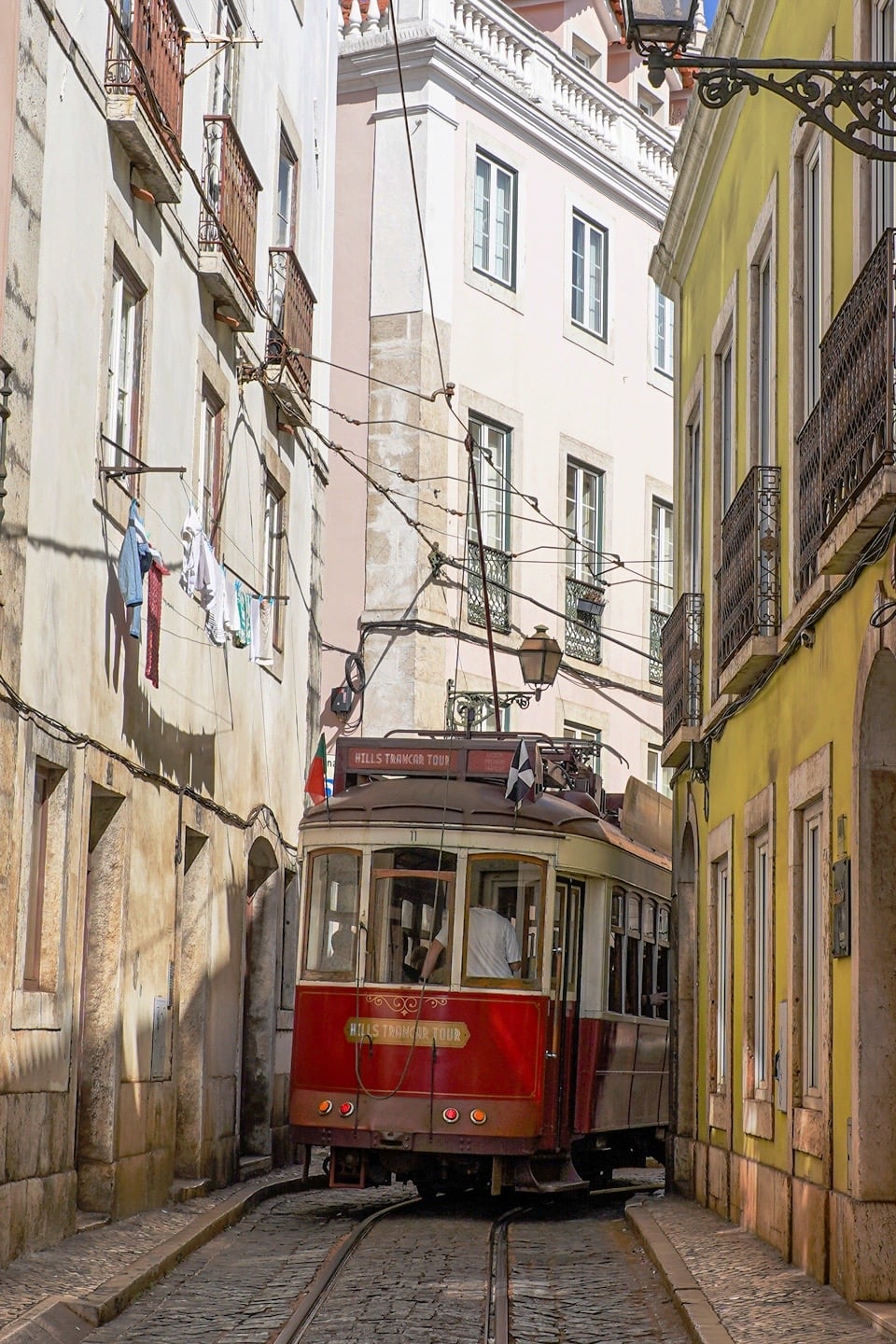
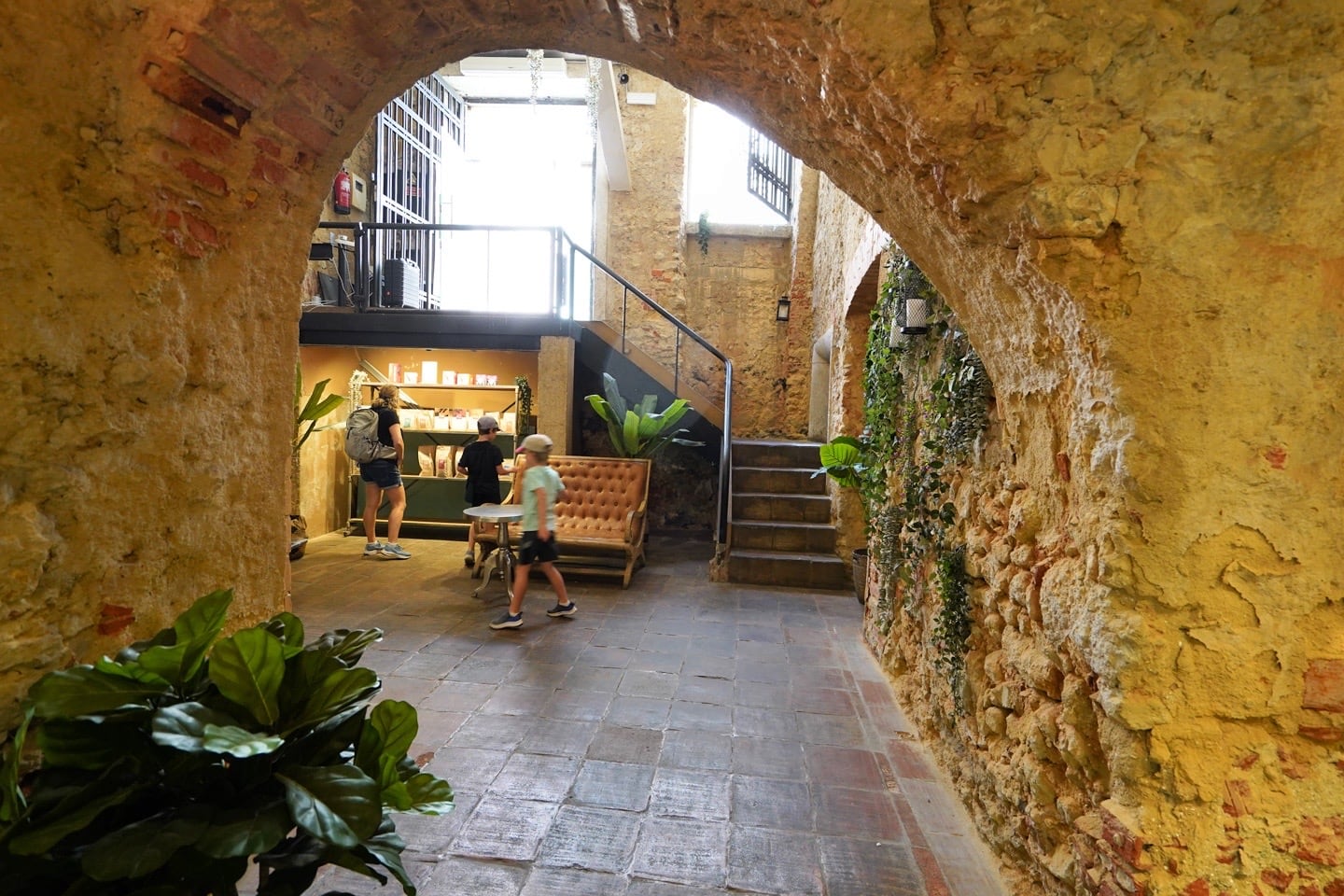
Copenhagen Coffee Lab’s Alfama location intrigued us, so we popped in for a coffee and a game of cards.
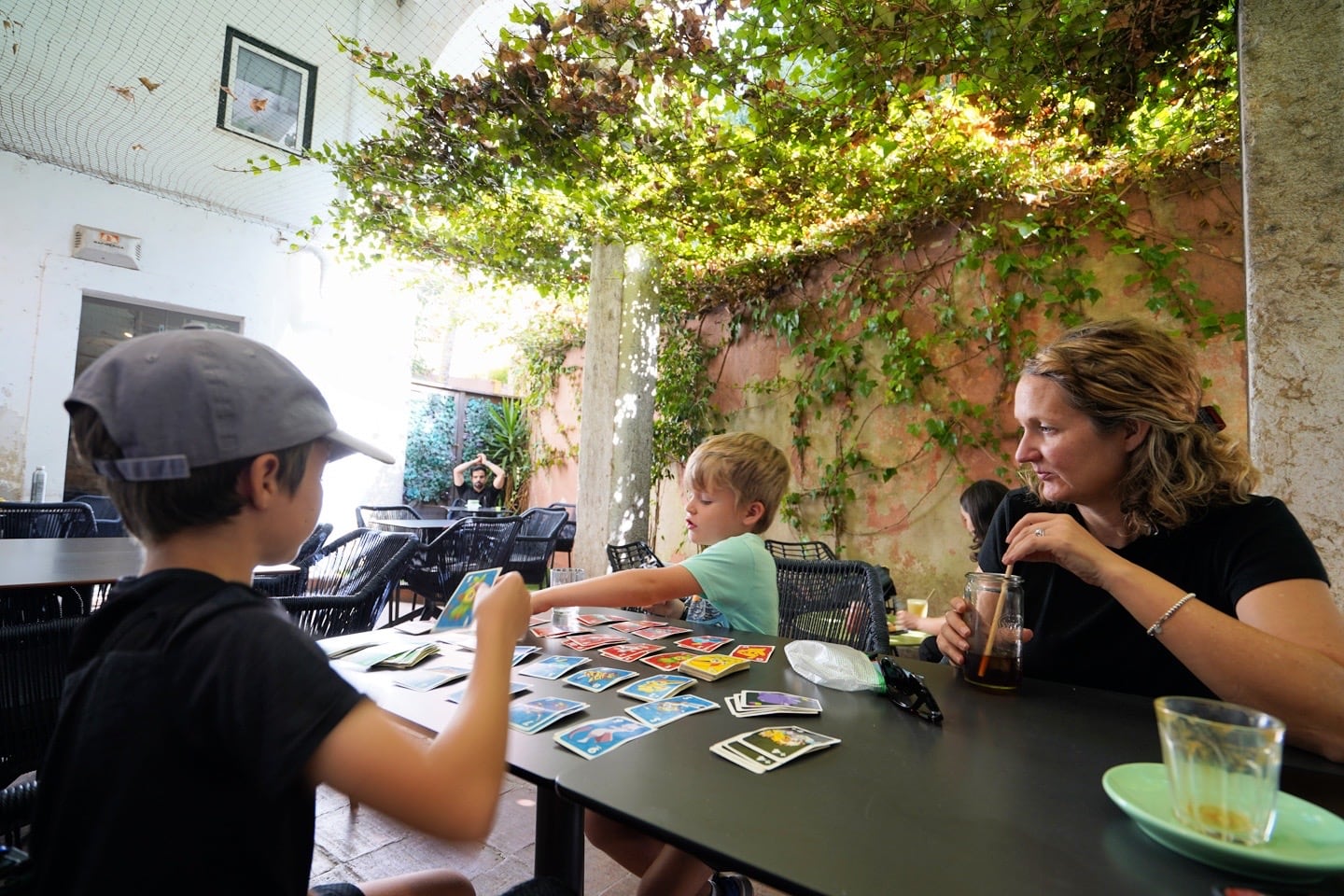
Copenhagen’s an interesting little operation. They’re based out of, you guessed it, Copenhagen, Denmark, which is where they roast all their coffee. But the majority of their coffee shop locations are spread out among Portugal, Spain, and Germany, with a dozen in Lisbon alone.
Even though they’ve got a bunch of different locations, each coffee shop is unique, and their sandwiches and pastries are baked and prepared fresh daily and priced very reasonably by European standards.
We are big fans.
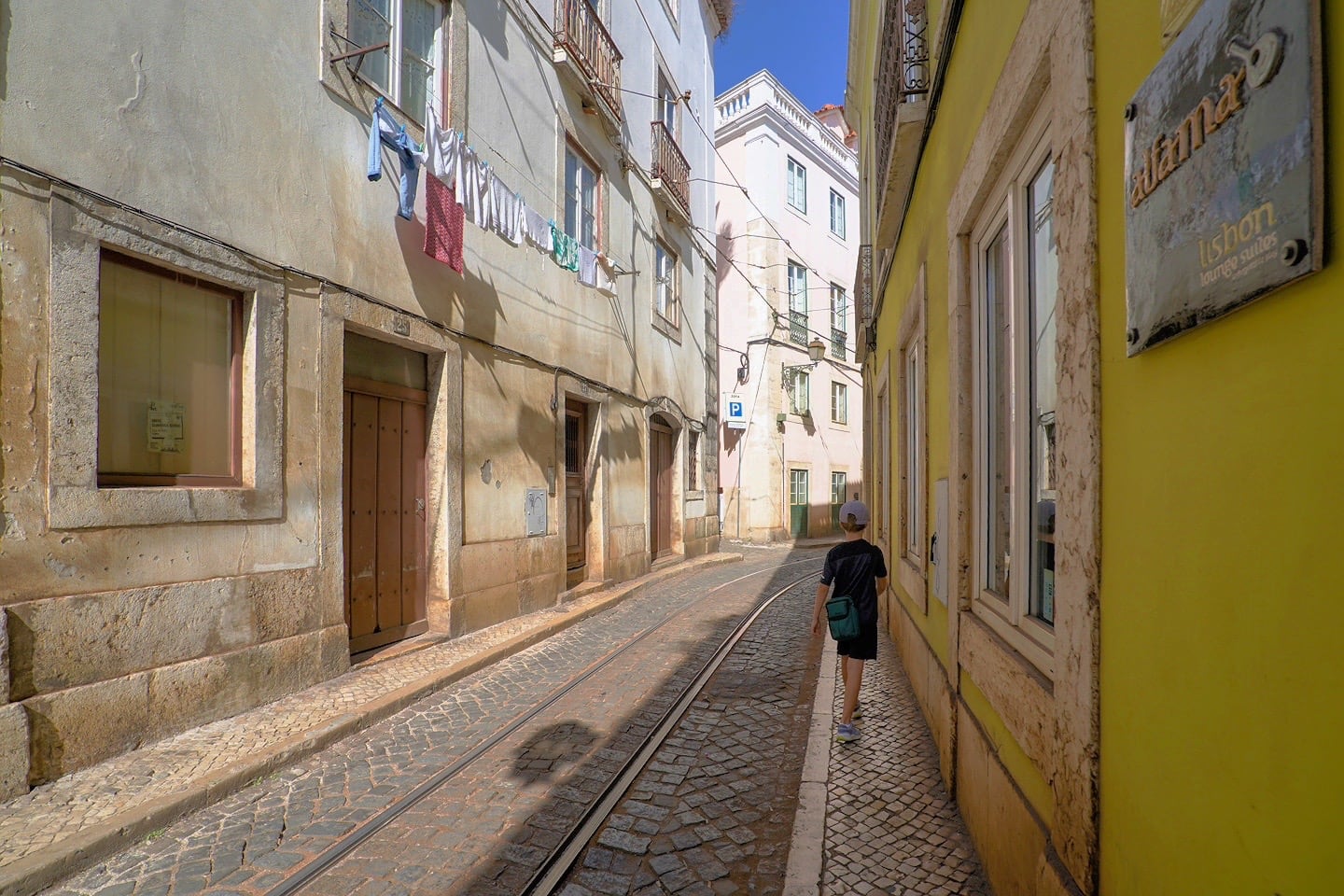
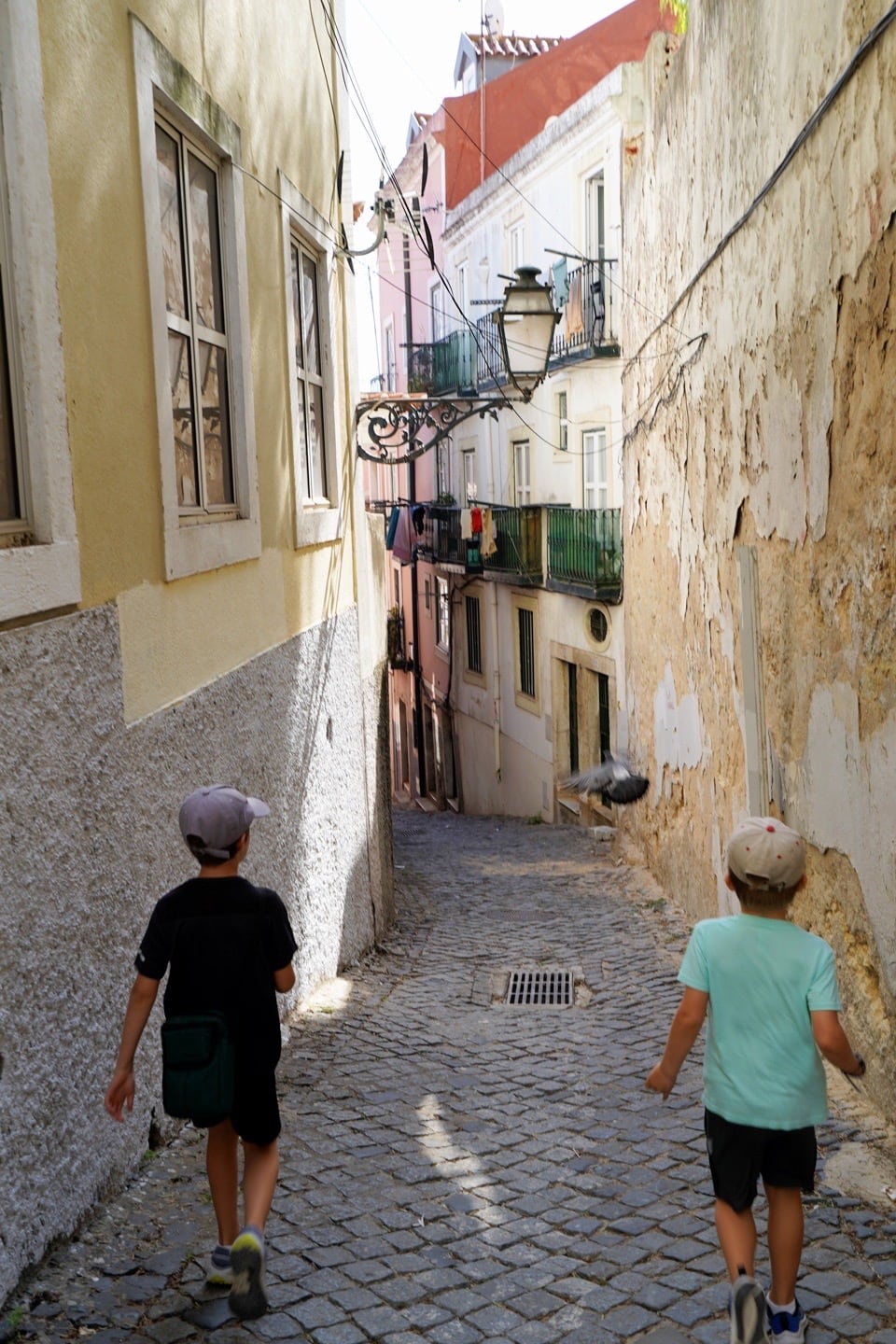
More Alfama wanderings.
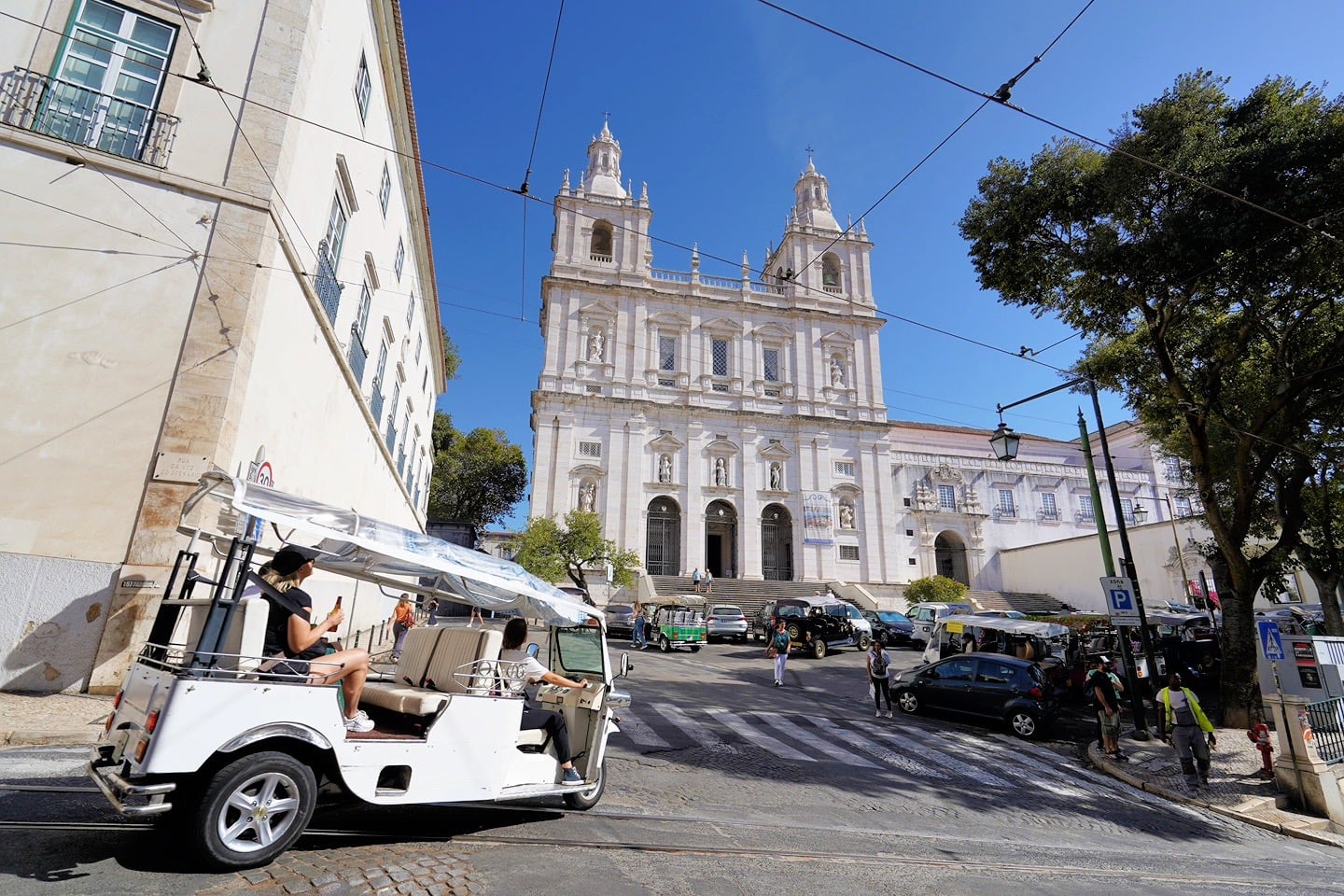
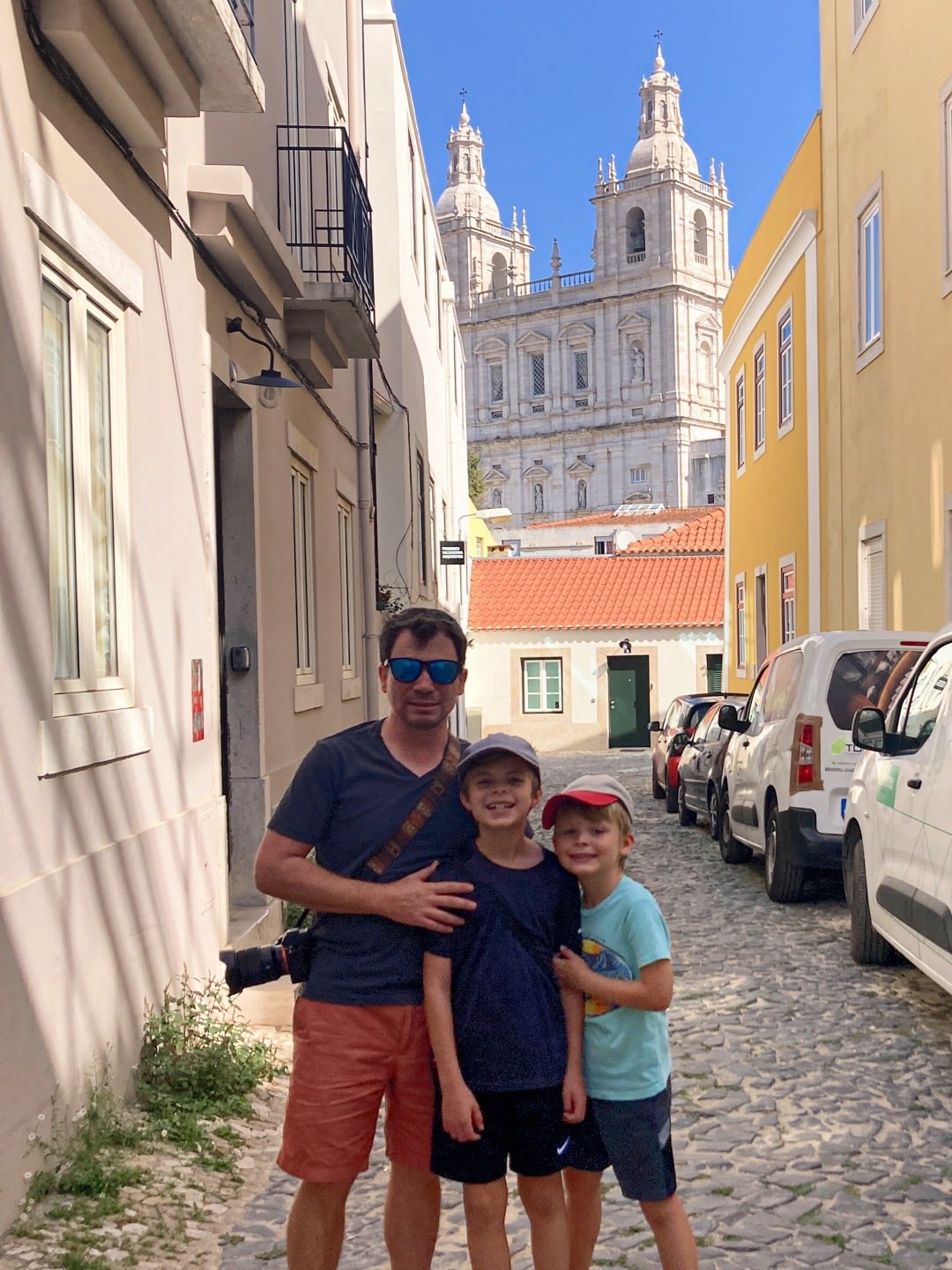
Church of St. Vincent de Fora.
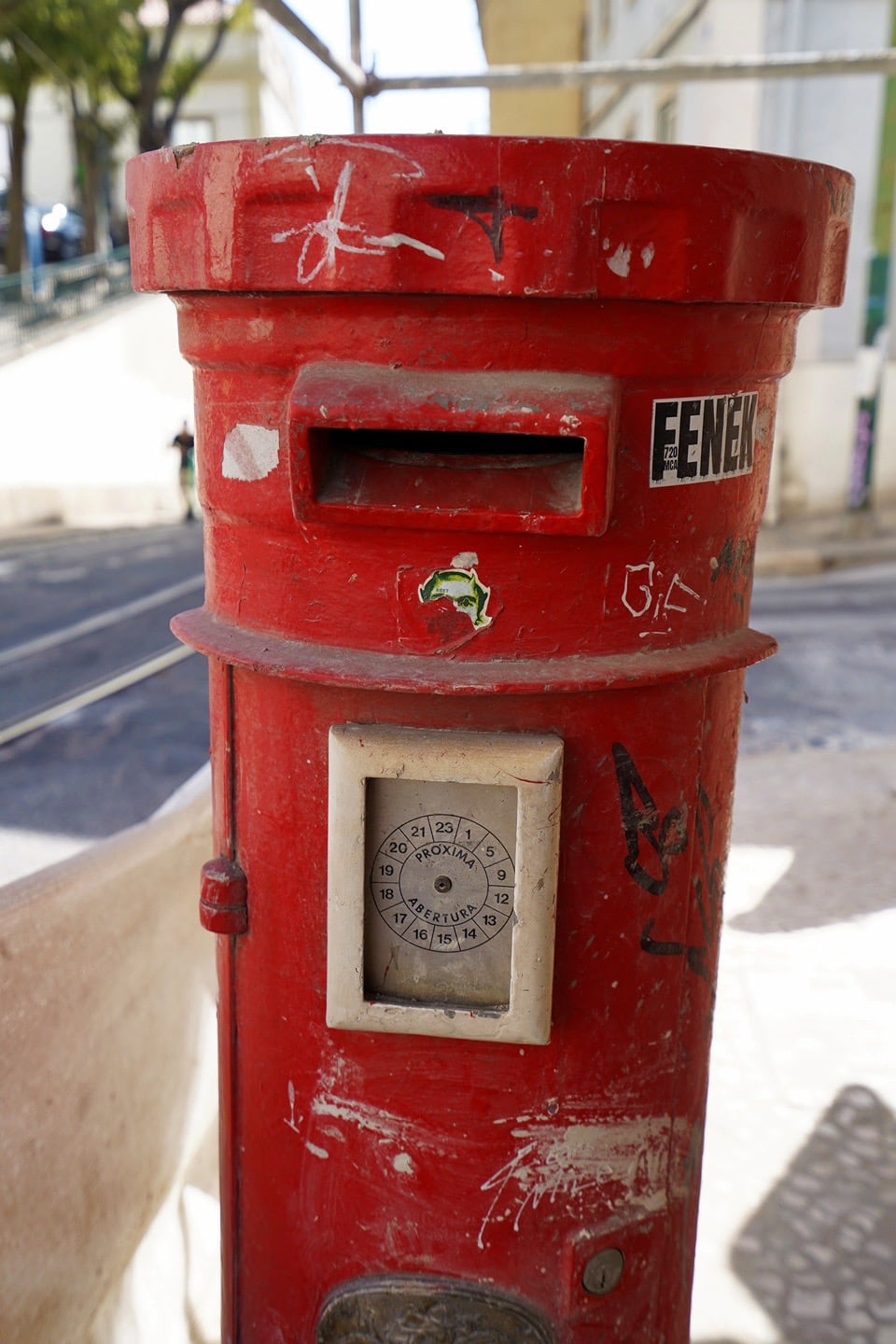
These mailboxes are all around Old Town, but I’m not sure I would trust them to actual mail—at least not the kind you want to go anywhere.