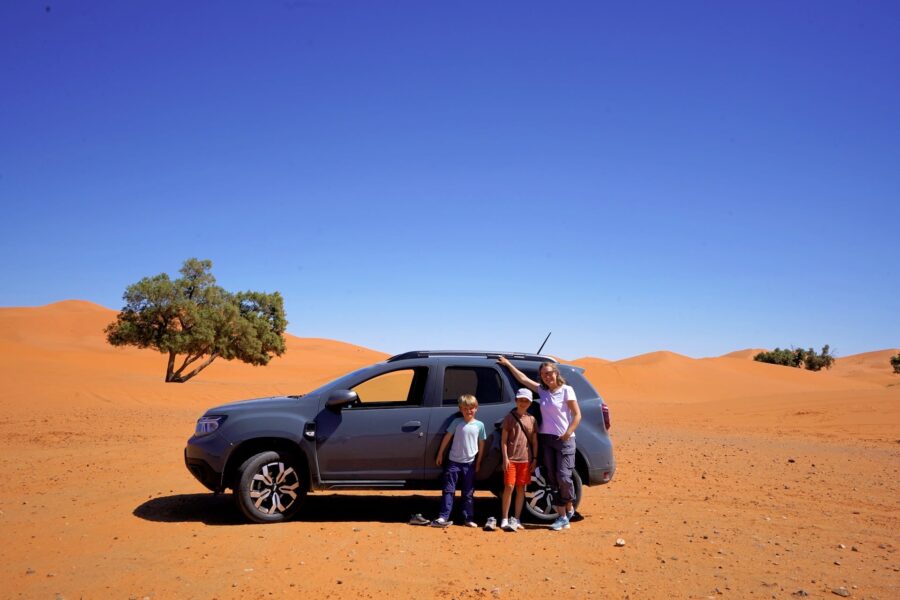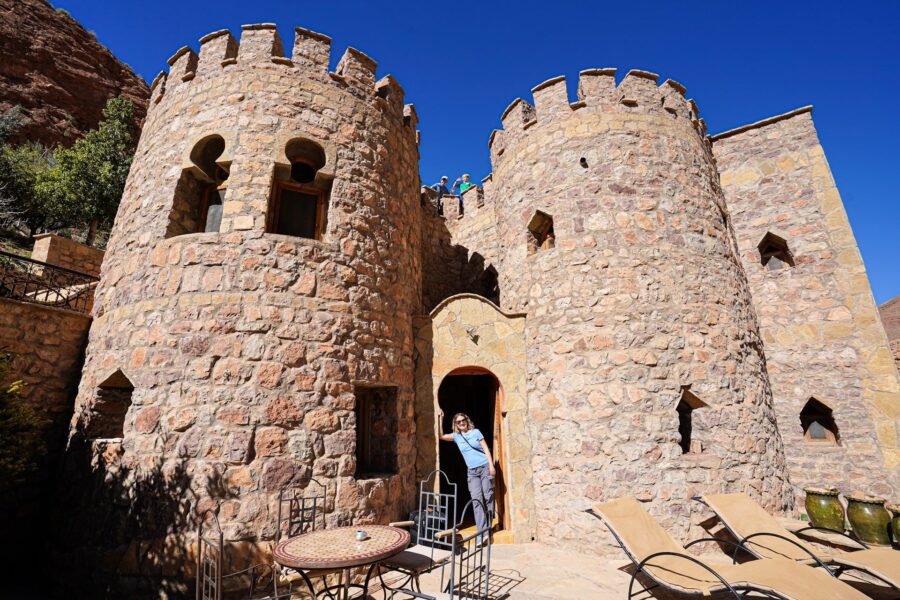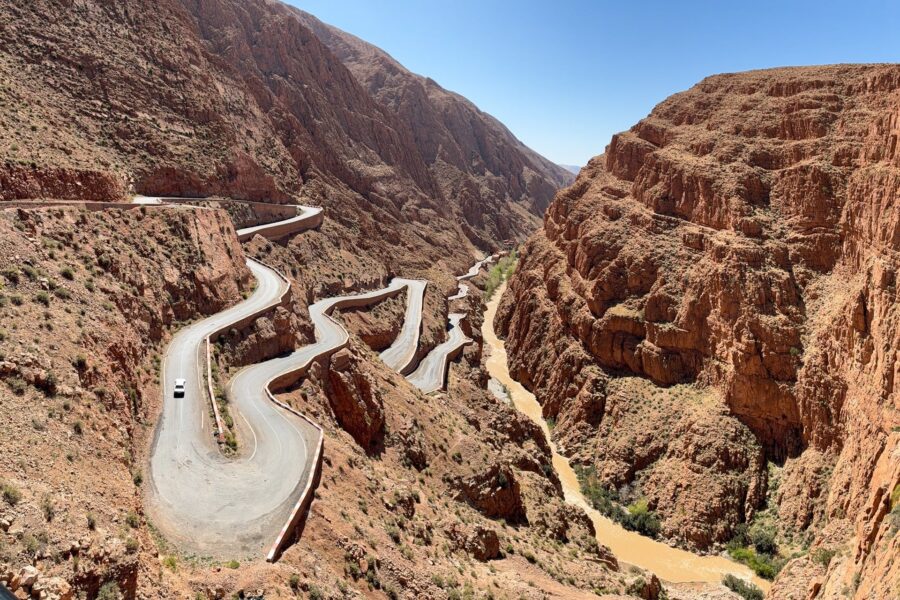
Erg Chebbi is one of those wild and crazy places you see in pictures and movies and dream about going as a kid—you just don’t know it’s Erg Chebbi.
The Sahara Desert covers some 3.6 million square miles of the planet’s surface; 70-80% of which is made up of flat, hard, rocky terrain, not the Lawrence-of-Arabia-style sand dunes most people associate with the largest hot desert on earth.
Our Euro-African Journey (So Far...)
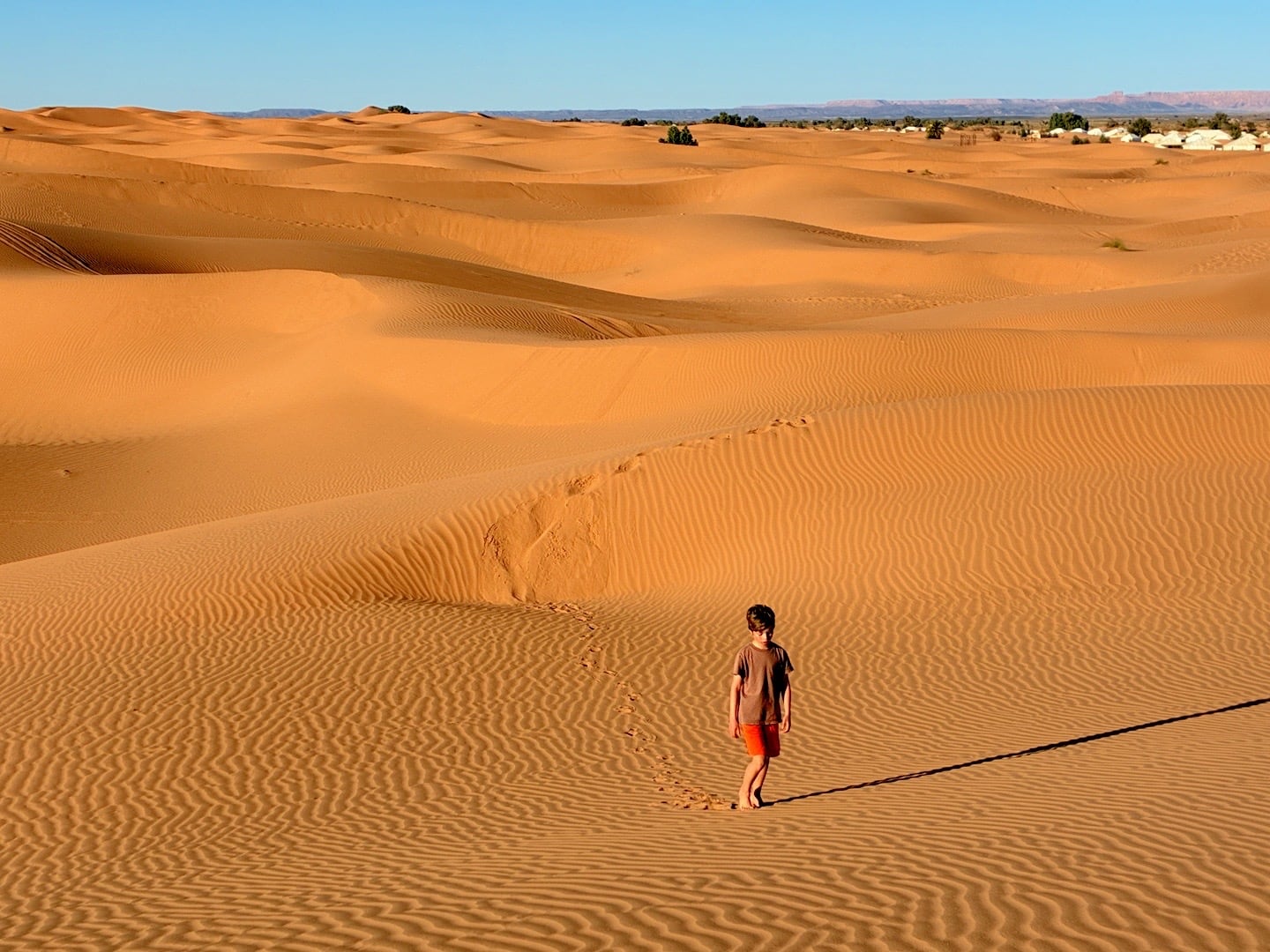
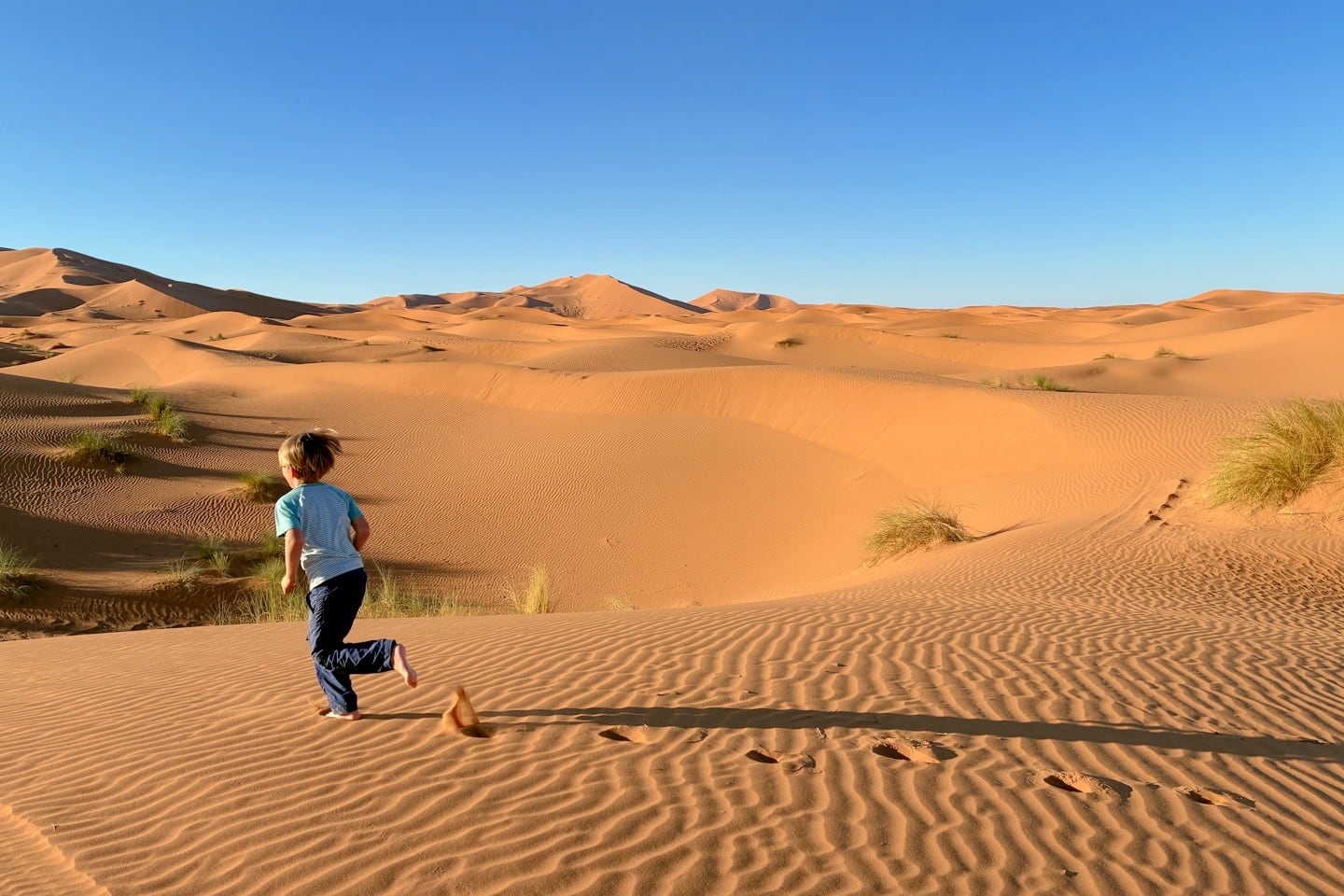
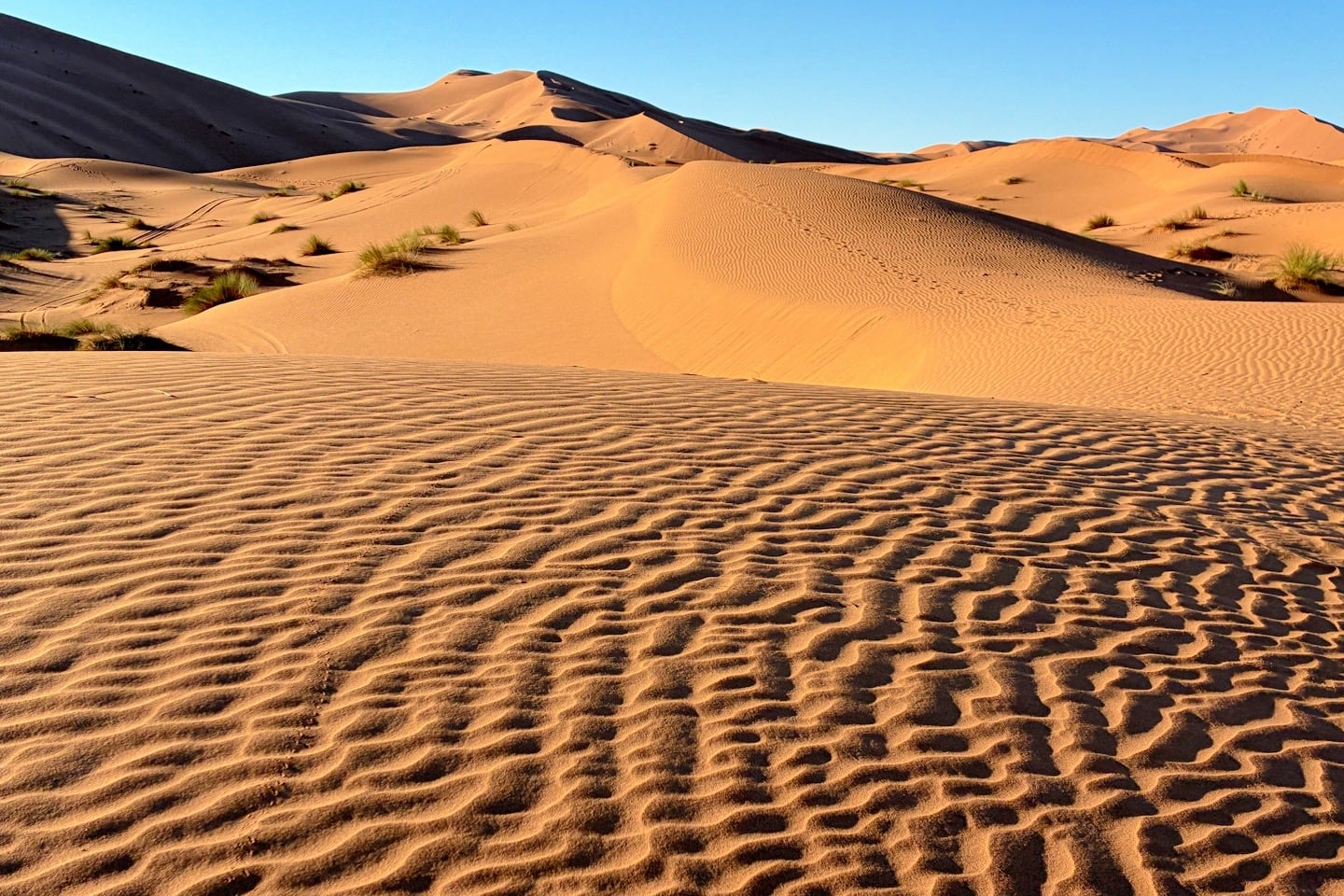
But Erg Chebbi is one of those special corners of the Sahara that offers the quintessential cinematic experience of red and orange sand dunes as far as the eye can see.
Several years ago, Lori and I went on an overnight camel trek into India’s Thar Desert. It was one of those authentic, unique, and truly rustic experiences that are getting harder to find—sleeping under the stars on a mat with no services, facilities, or settlements for miles and miles.
The experience was certainly memorable, and we’d do it again in a heartbeat. But it wasn’t the Sahara. The Sahara—like the Nile or Mt. Everest—is in a league of its own.
And here we are, eight days into our Morocco road trip from Marrakesh, ready to make our way into the desert.
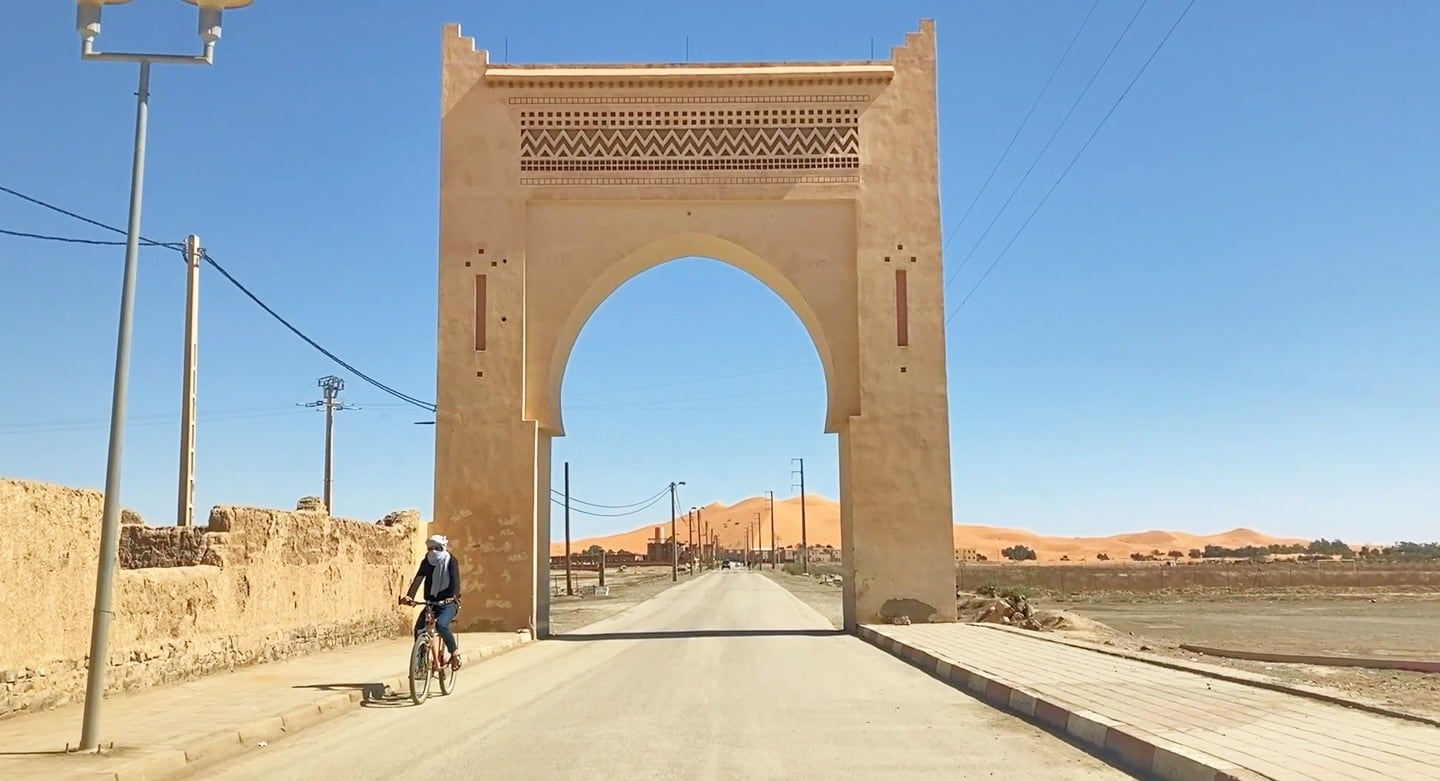
There are dozens of “luxury” desert camps in Erg Chebbi. We decided to go with one by the creative name of Merzouga Luxury Desert Camp on booking.com, which is also know as Africa Luxury Camps. We chose this particular operation out of the pack because it seemed to offer the best value for the money and had a ton of glowing reviews.
In the end, we were very pleased with our choice.
We had the option of covering the three miles from town to camp by camel or 4×4. Spending a couple of hours on a camel in the mid-afternoon heat didn’t sound that appealing, so we opted for the 4×4 to get there and back, and a camel ride around sunset.
I was expecting the 4×4 transfer to be a humdrum, routine journey around the dunes on surface roads. But getting there ended up being a part of the adventure. We loaded our stuff into the Prado and our driver took us up and over the dunes.
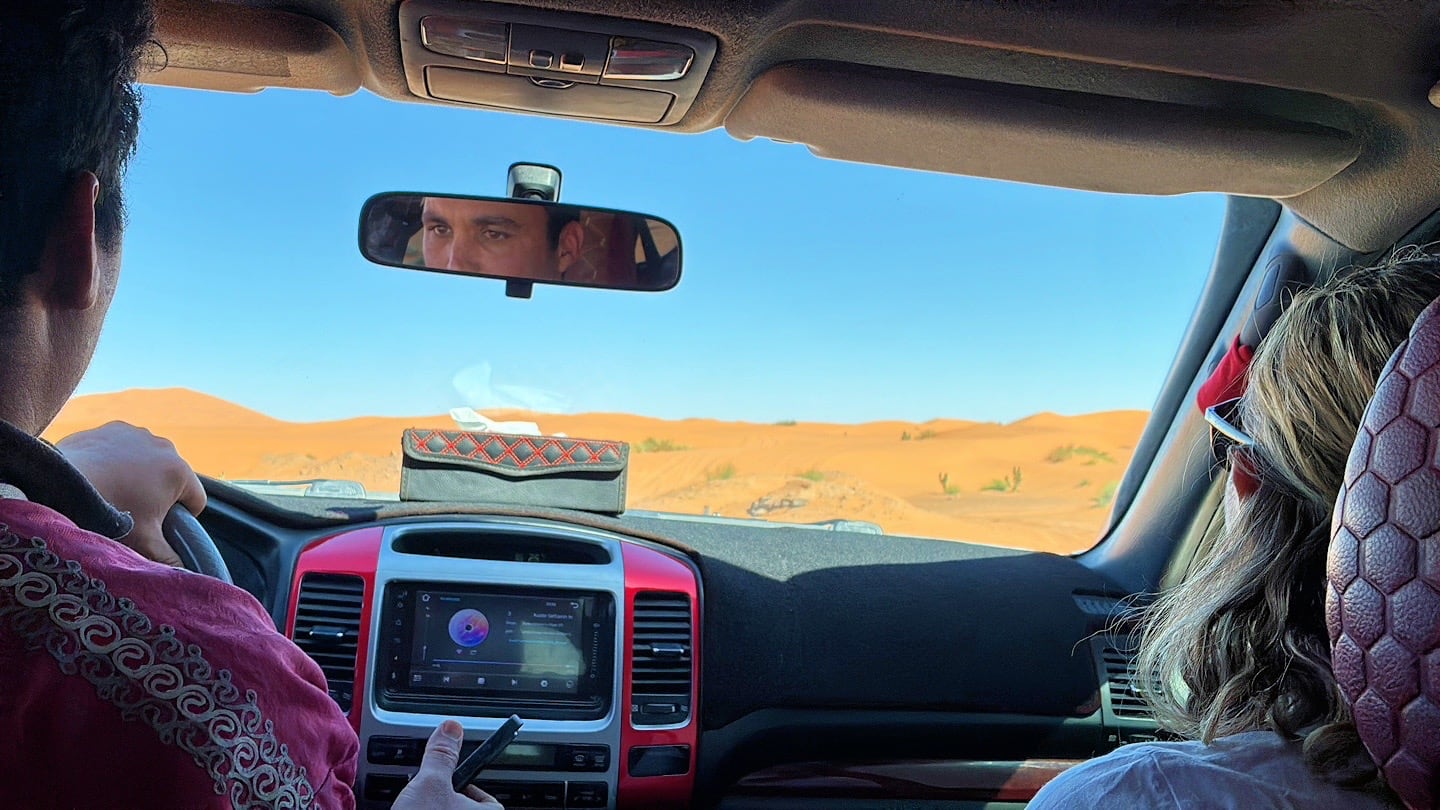
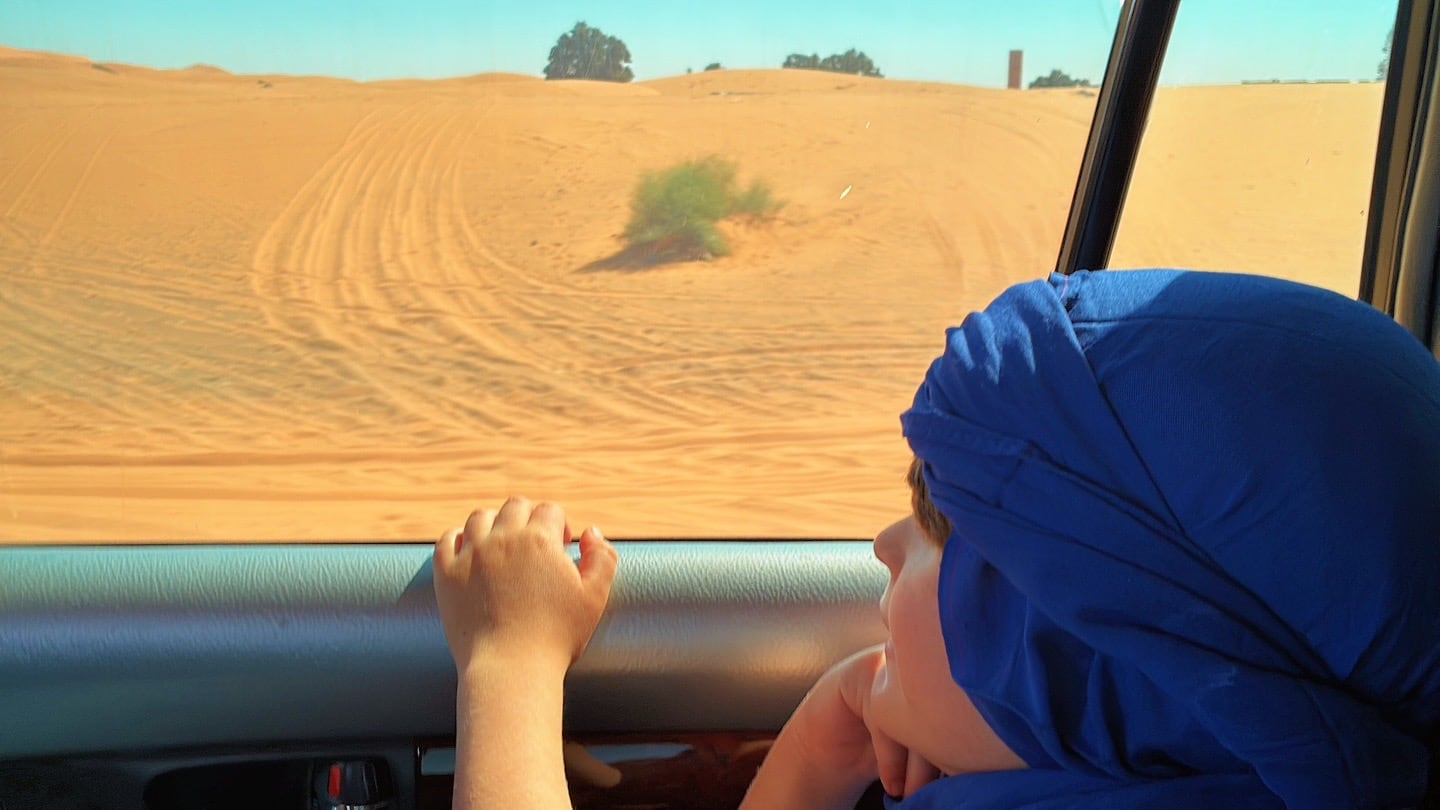

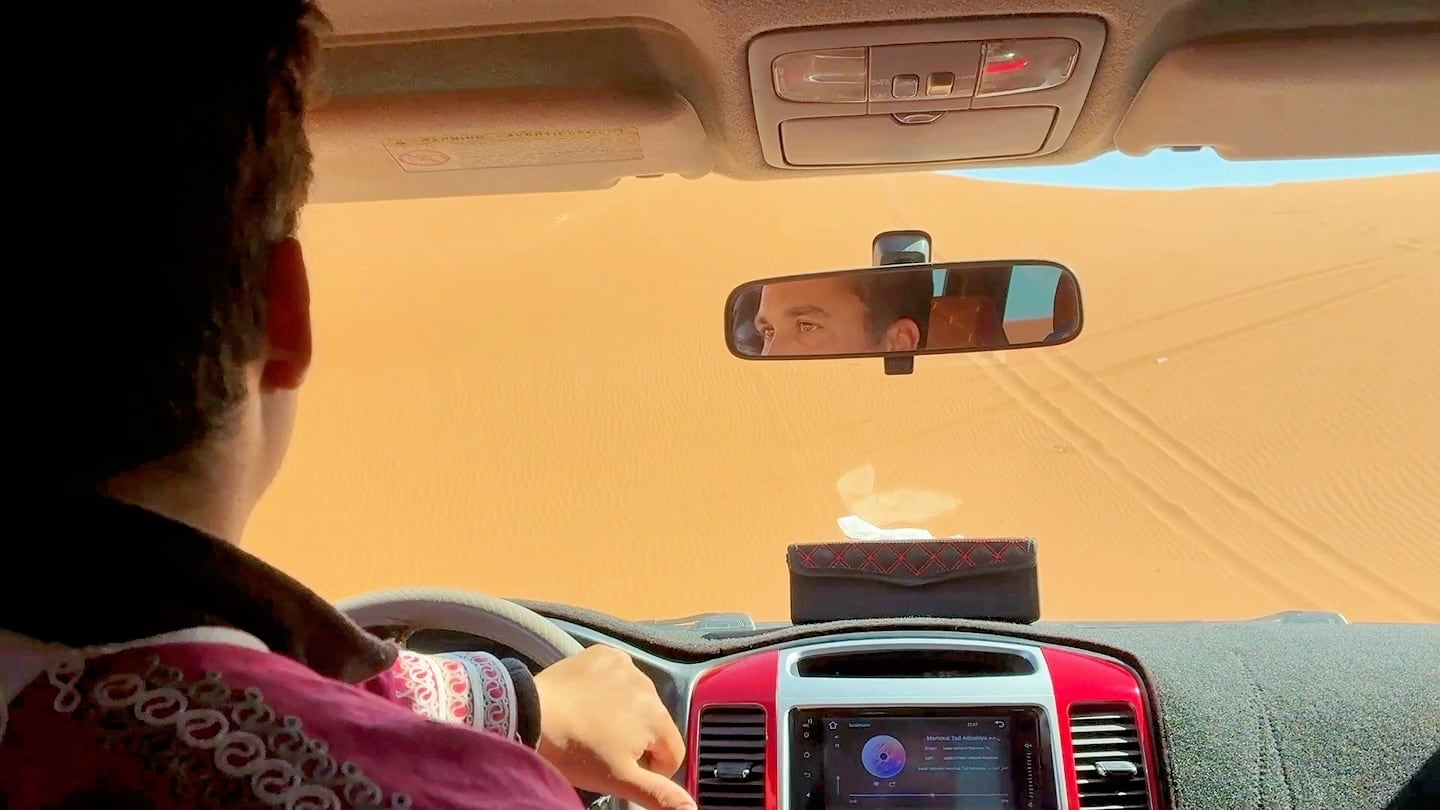
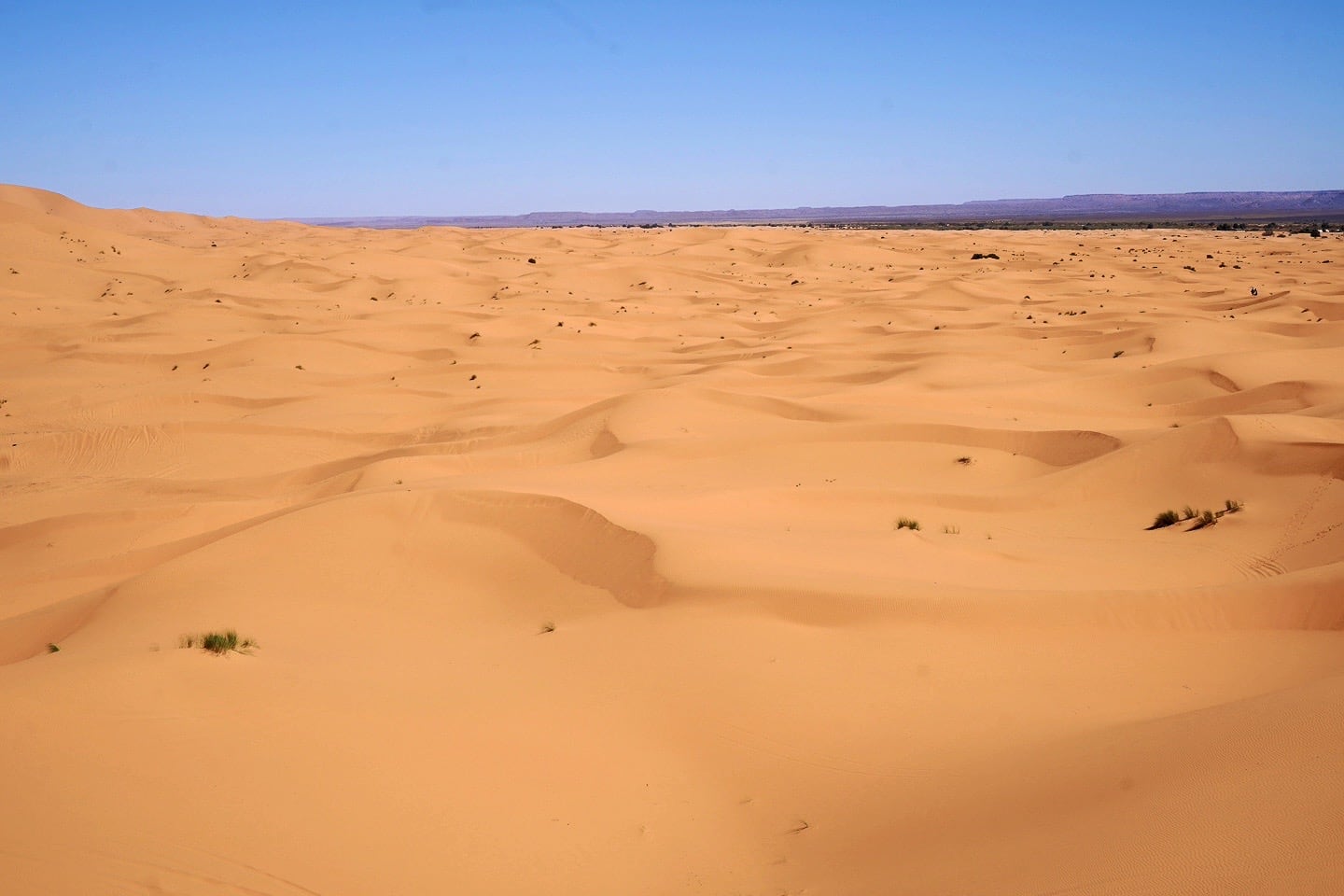
It’s worth mentioning here that these dunes are not small. Some are 300-400 feet high, with the highest rising to nearly 500 feet (150m). That’s as tall as a 50-story building.
We didn’t summit the highest, but we skirted it. The expansive views and the motion felt more like being in an aircraft than a ground vehicle.
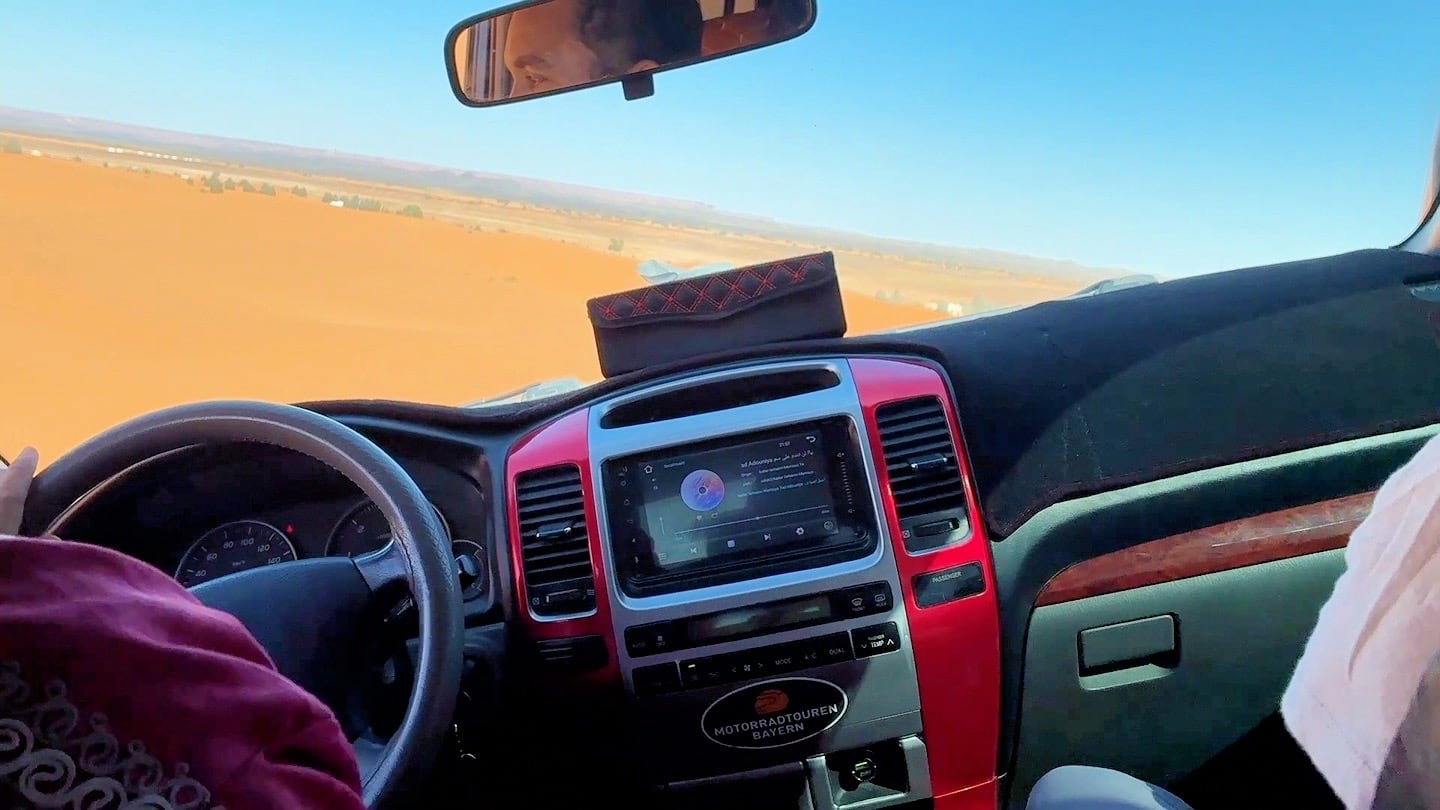
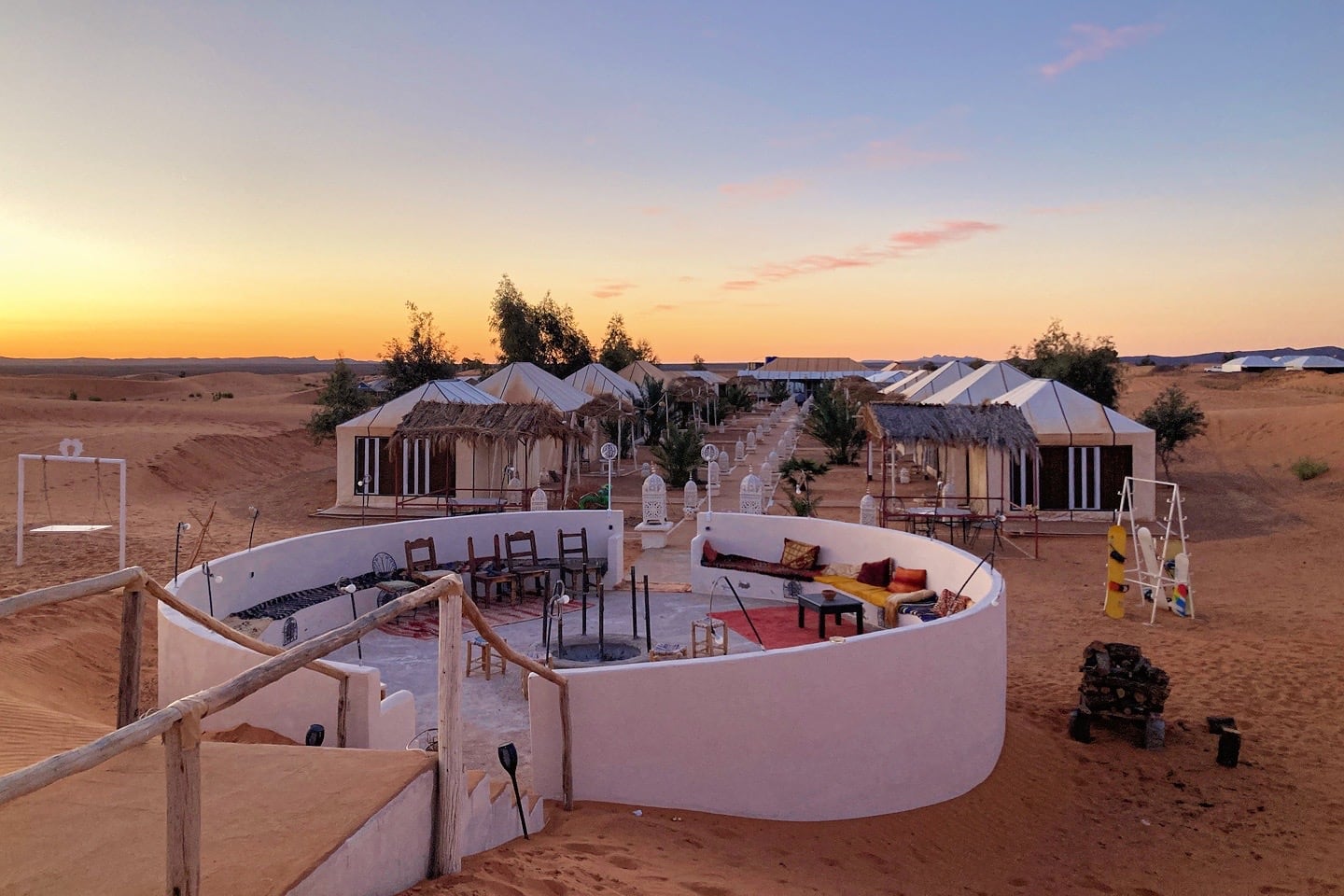
And just like that, we arrived at the desert camp and escorted to our glamping quarters for the night.
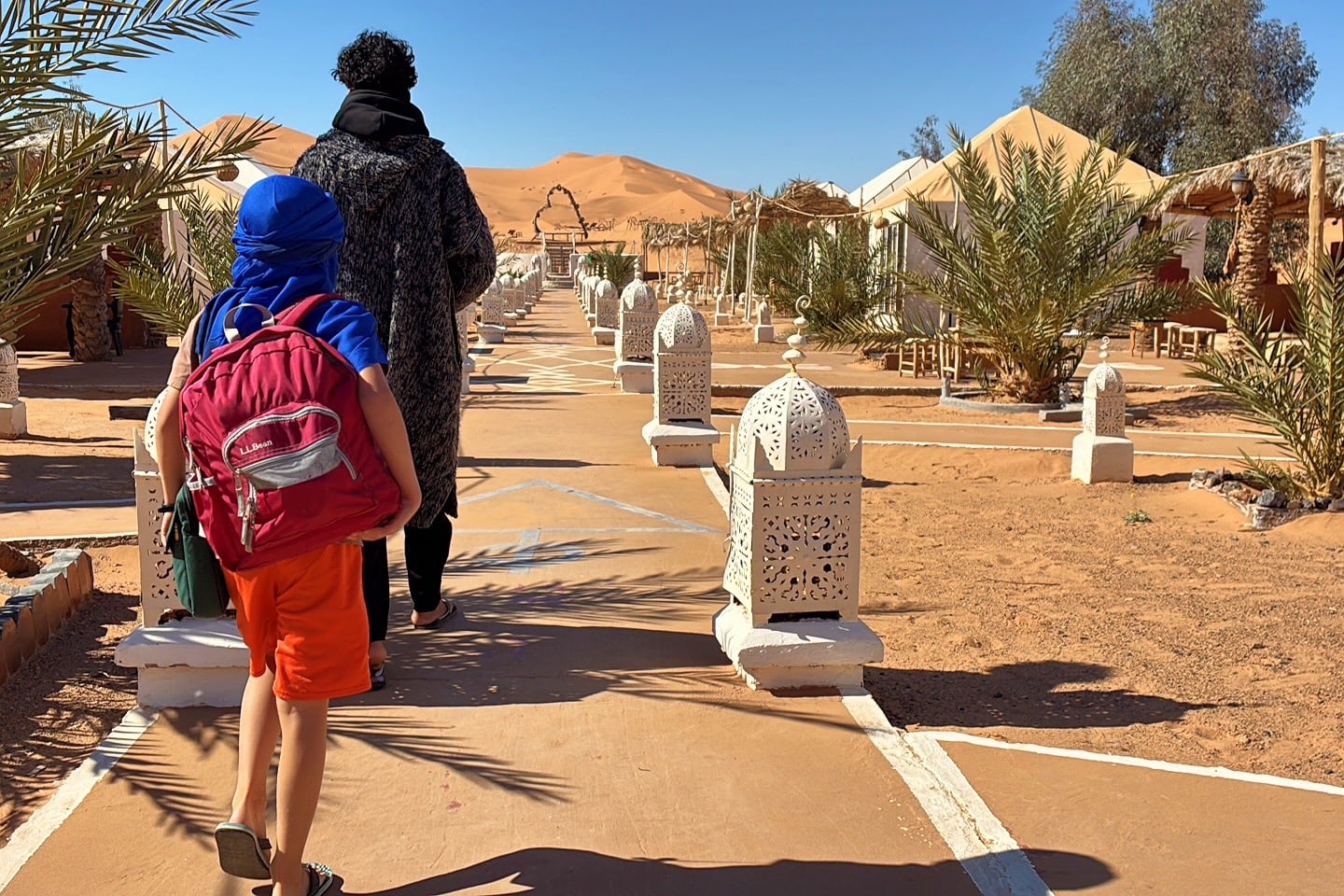
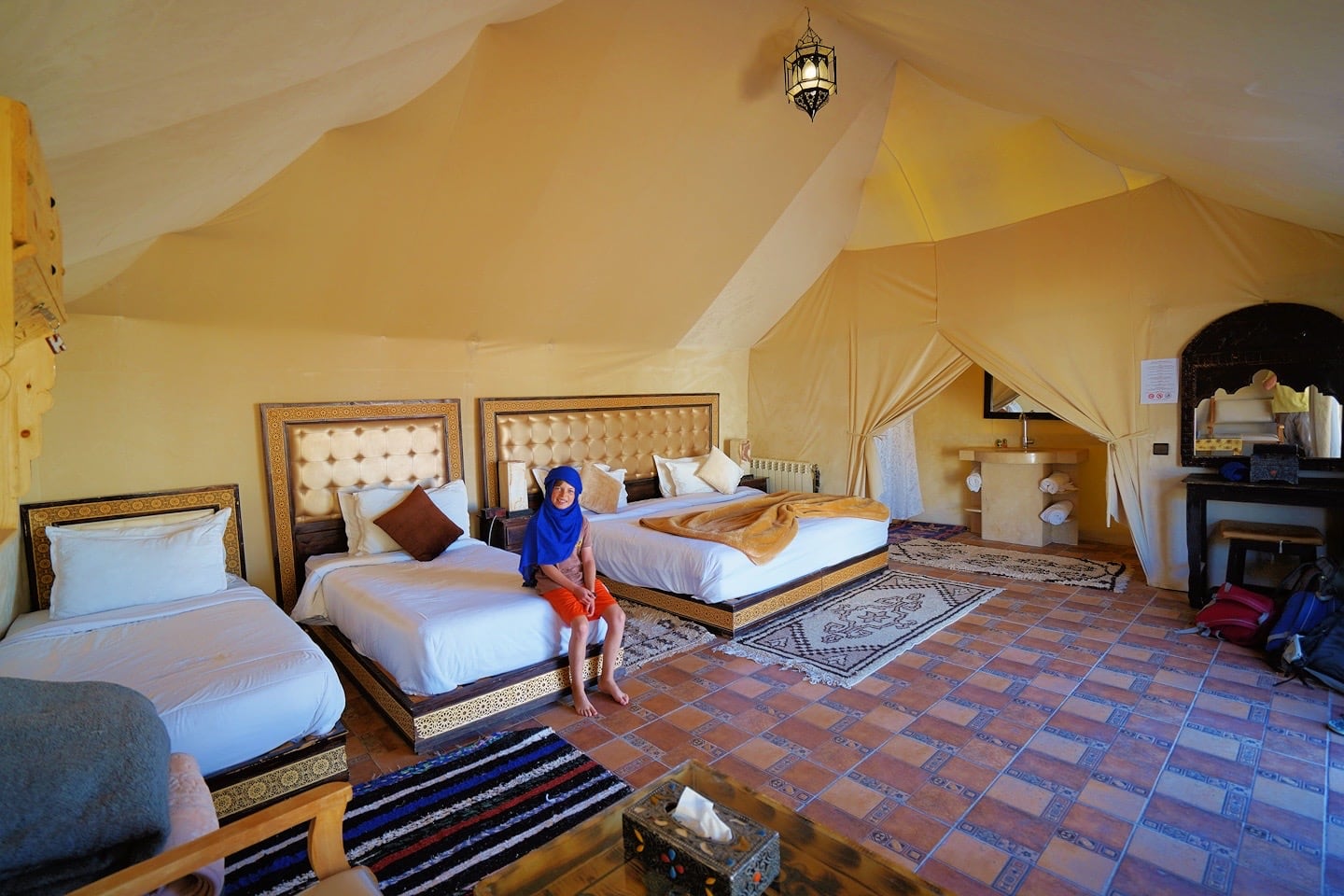
Comfy beds, electricity, hot, running water, and even heating and A/C for a limited time during the night (we ended up needing the heating as it dipped down to the low 40s (F) at nighttime.
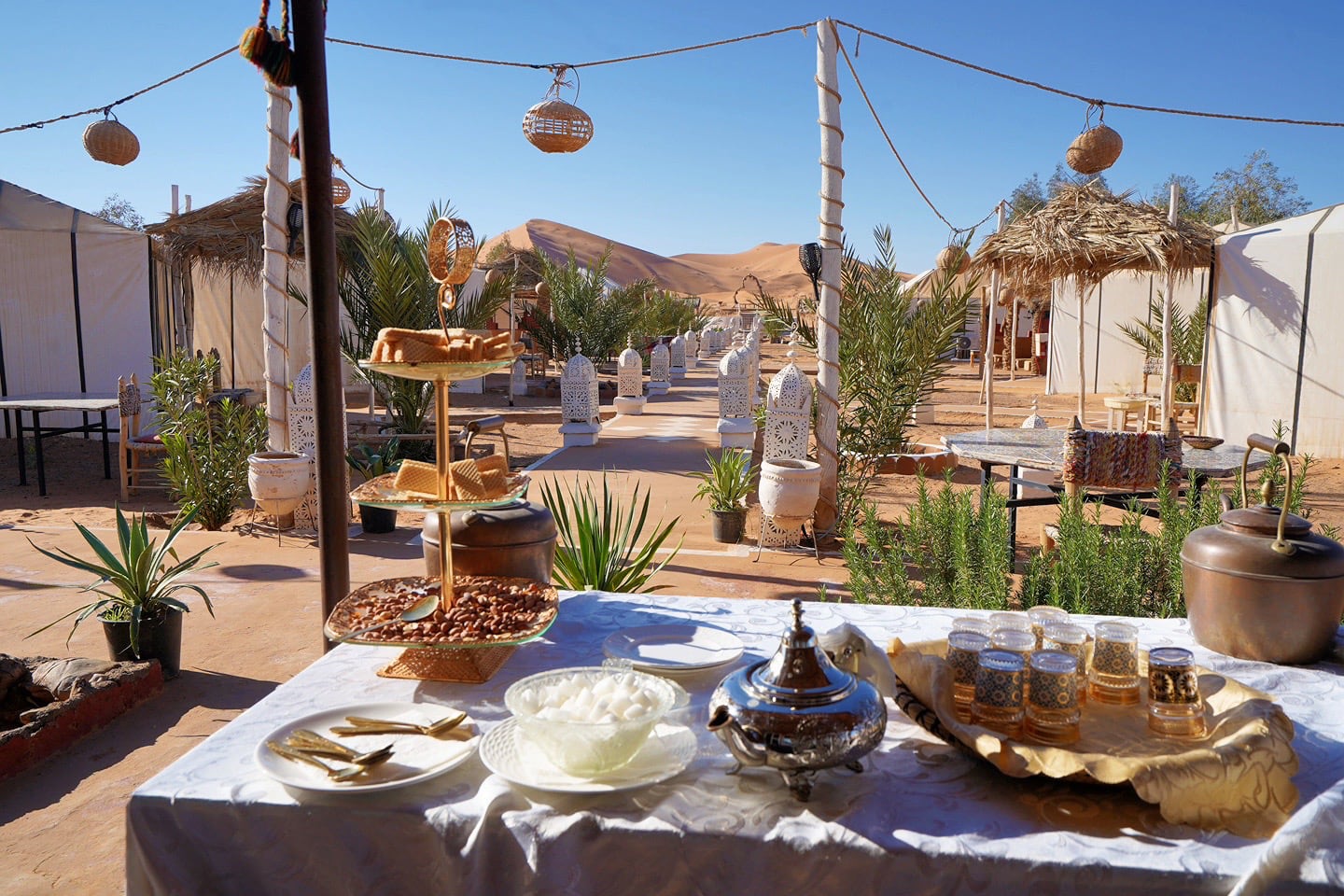
Welcome tea and snacks.
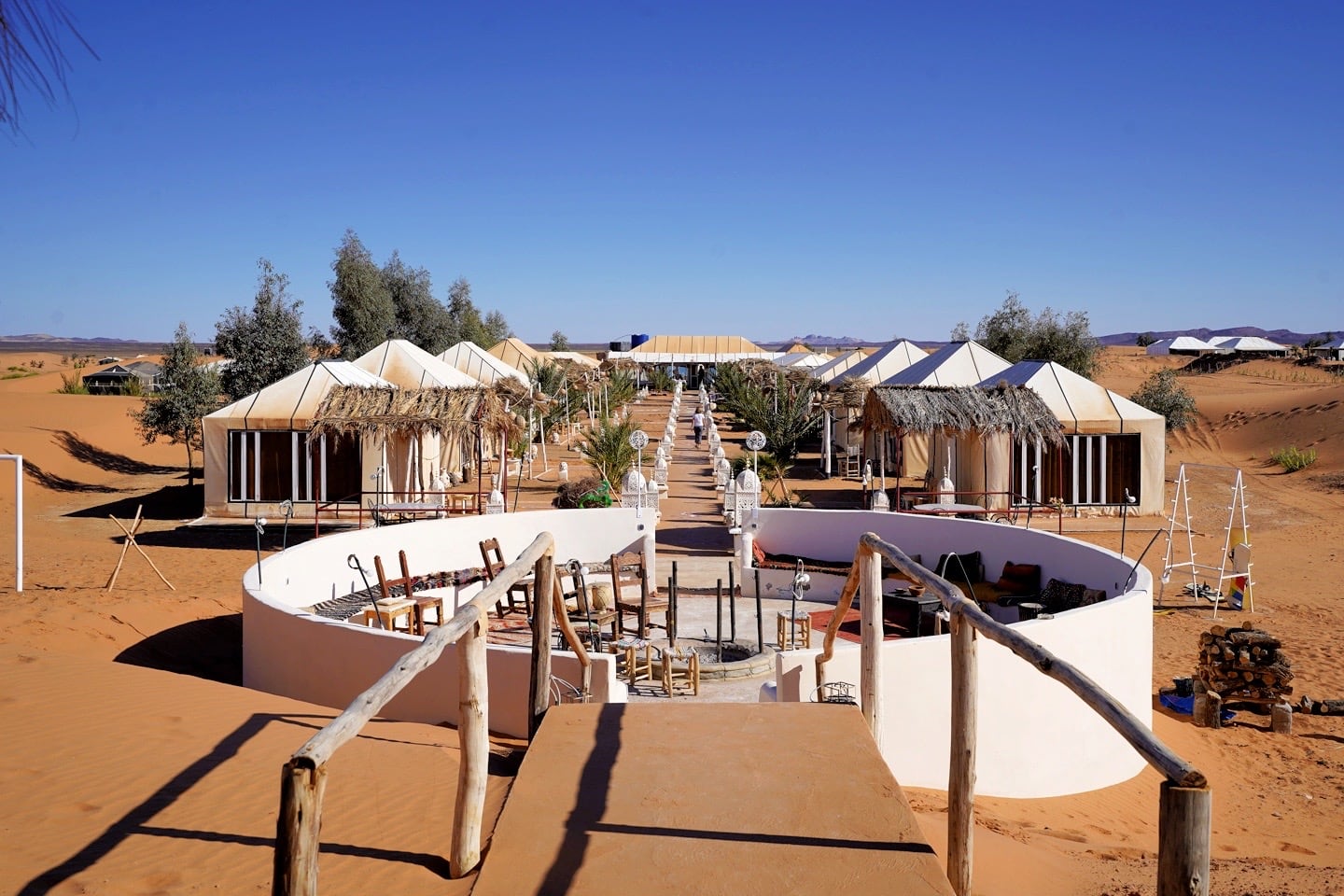
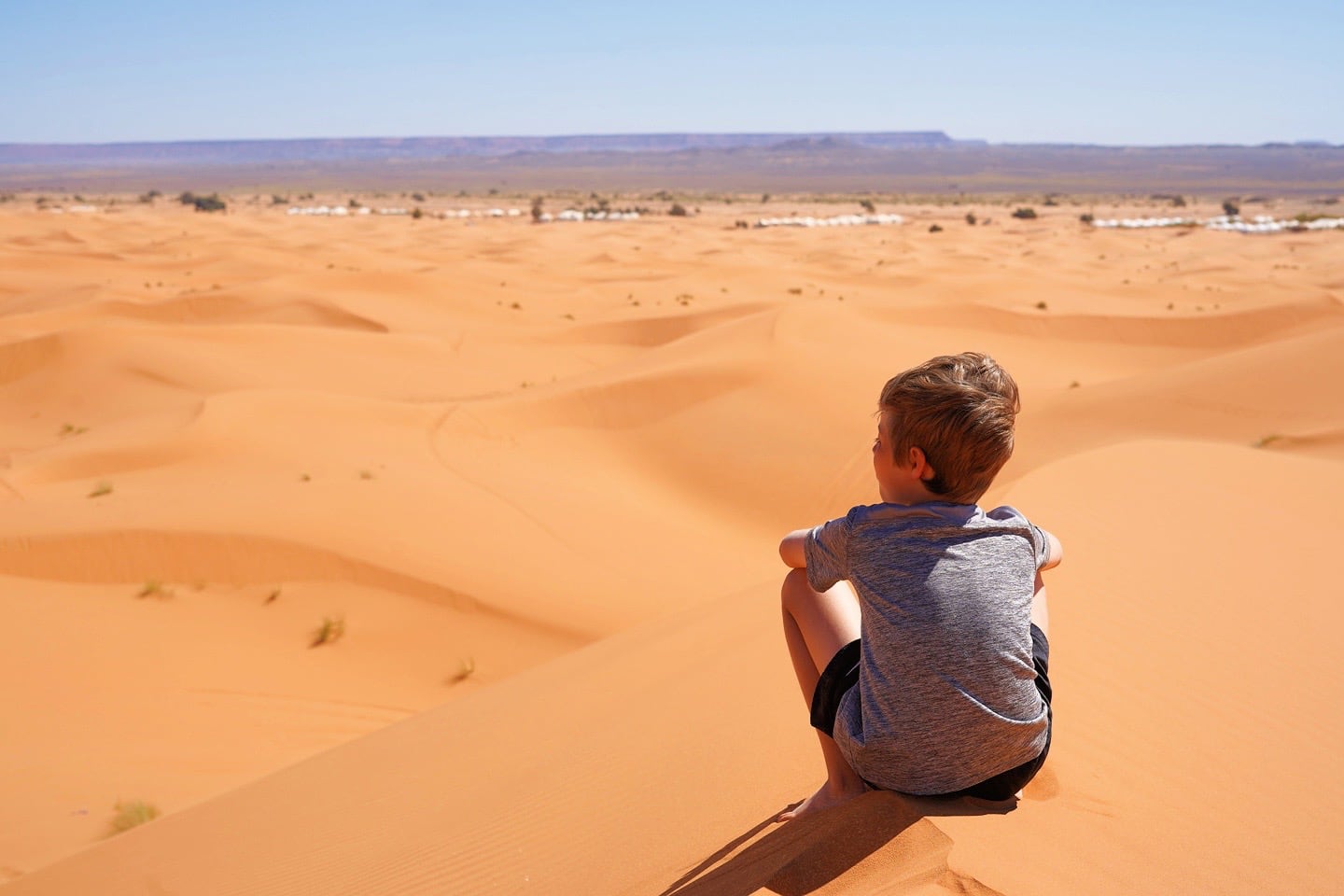
Some things that surprised us on arrival. For one, the camps are all constructed on the edge of the dunes, not on the actual dunes. Presumably, this is due to conservation and ground stability, but I really don’t know.
Number two, the camps are all pretty close together. But, there tend to be dunes and trees between them, so you really can’t see one camp from another until you’re high up on the dunes looking back.
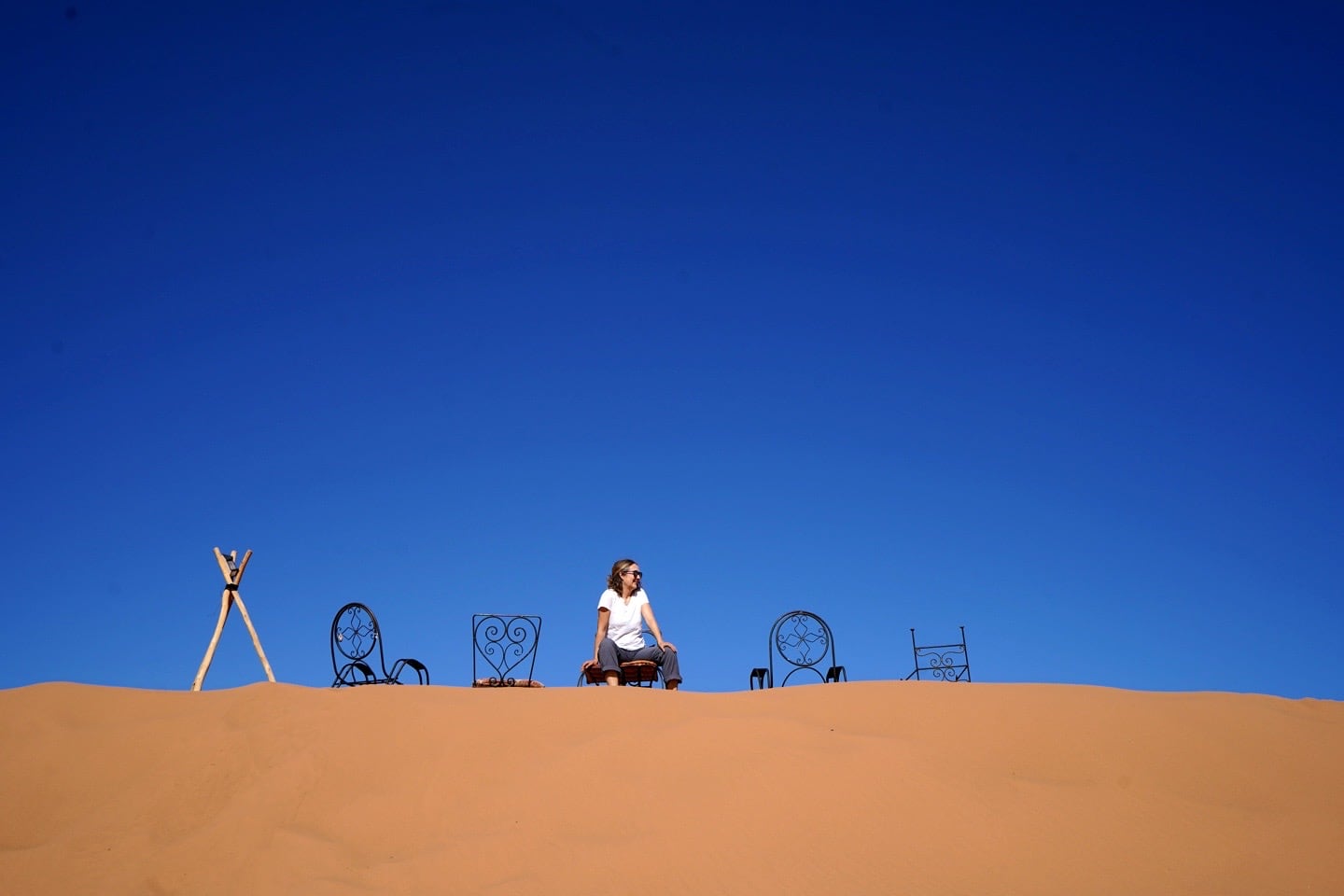
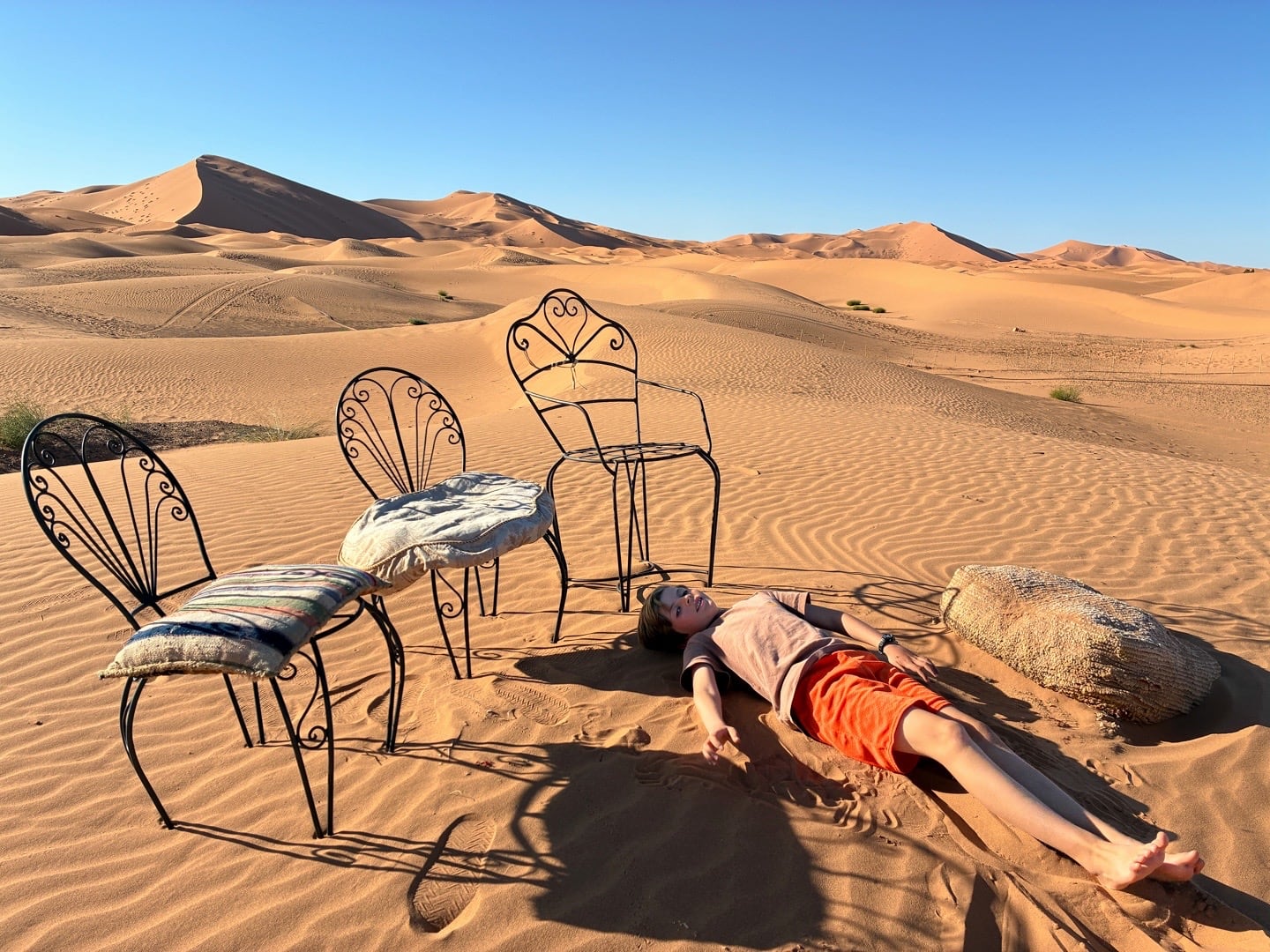
We finished up our welcome snack and hit the dunes. The boys immediately ran towards the sand boards. They’ve been wanting to try their hand at sand boarding since they saw it on a video a month or two ago, and were super excited to finally get the chance.
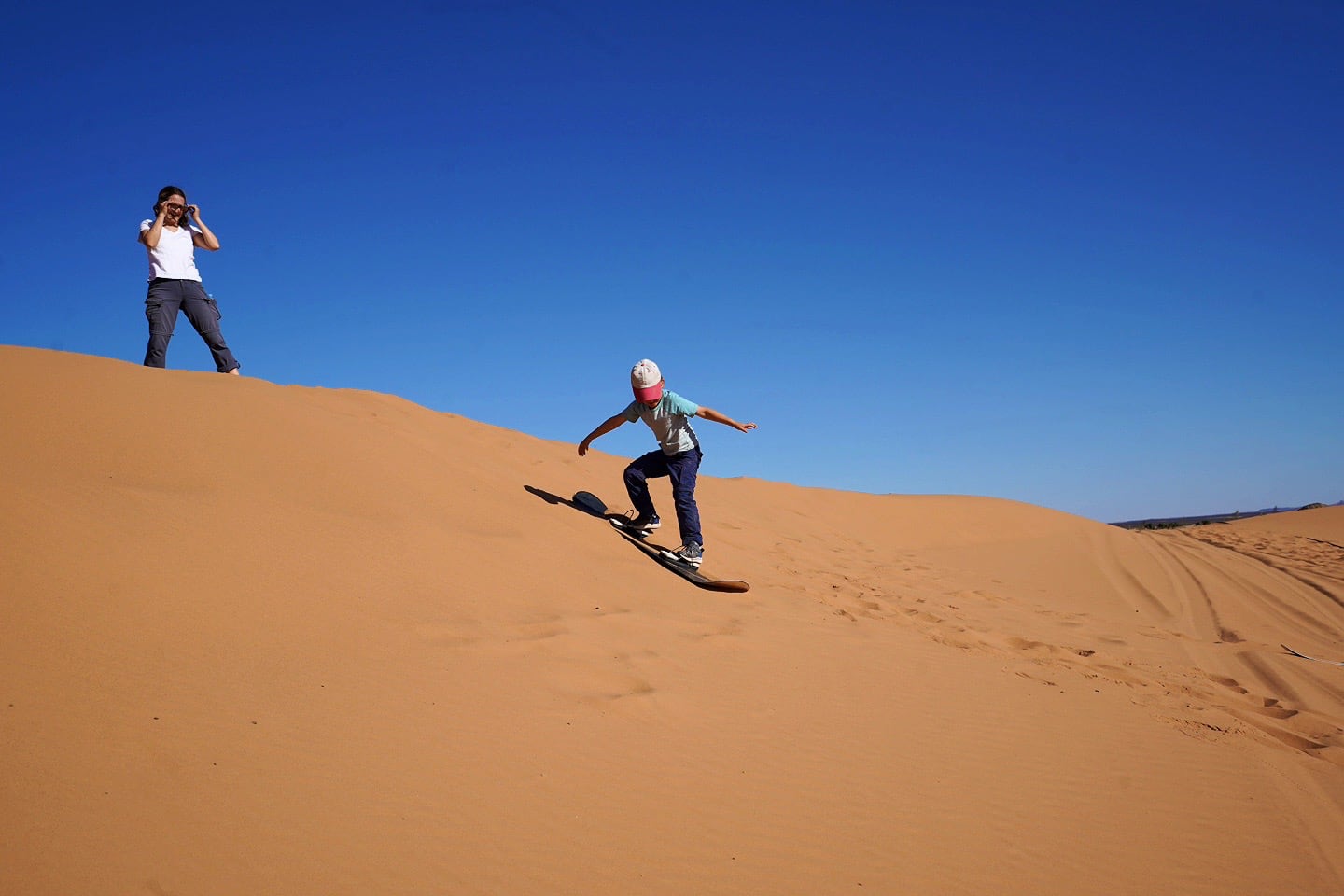
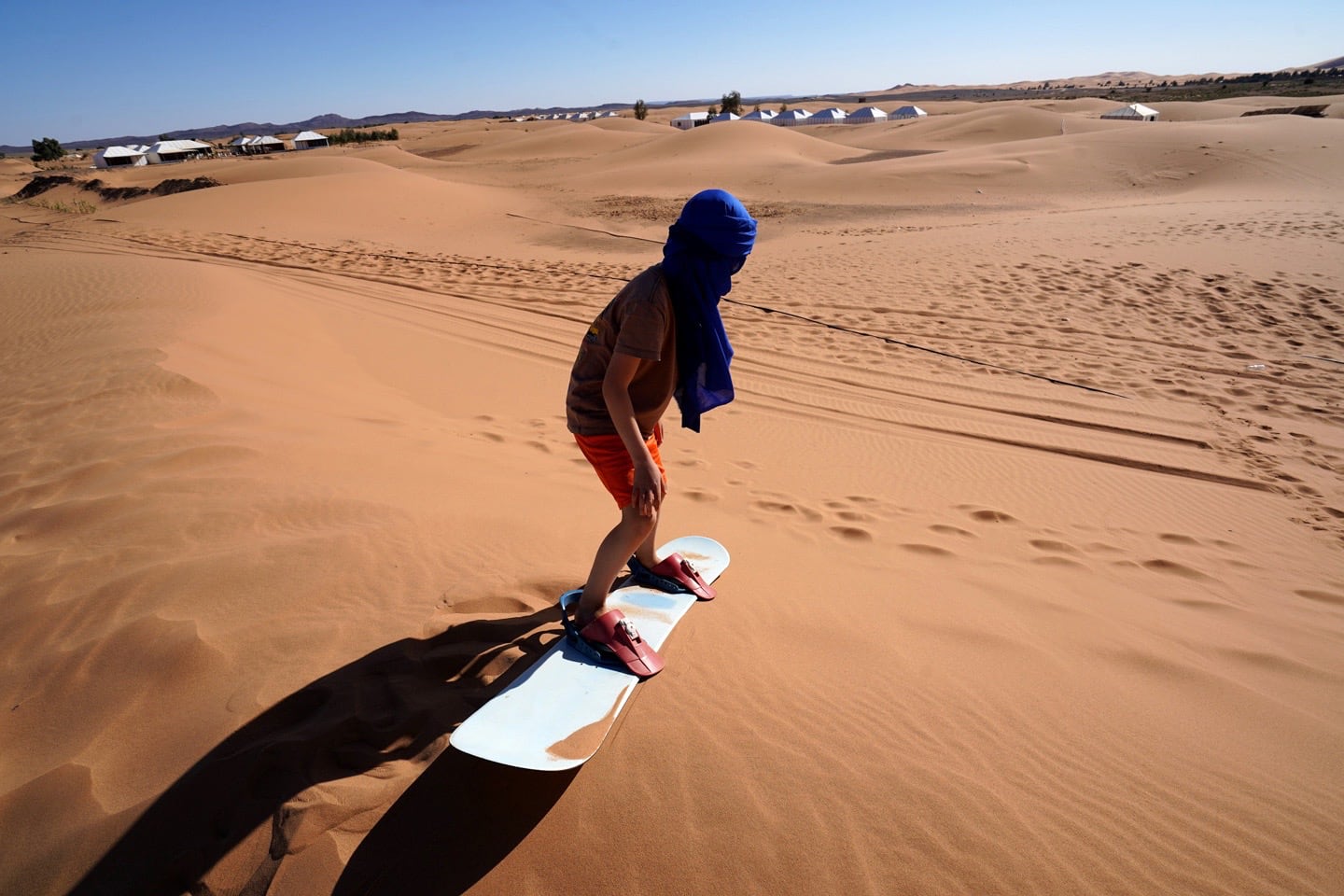
Of course, they learned it’s not as easy as it looks, but they still had a blast.
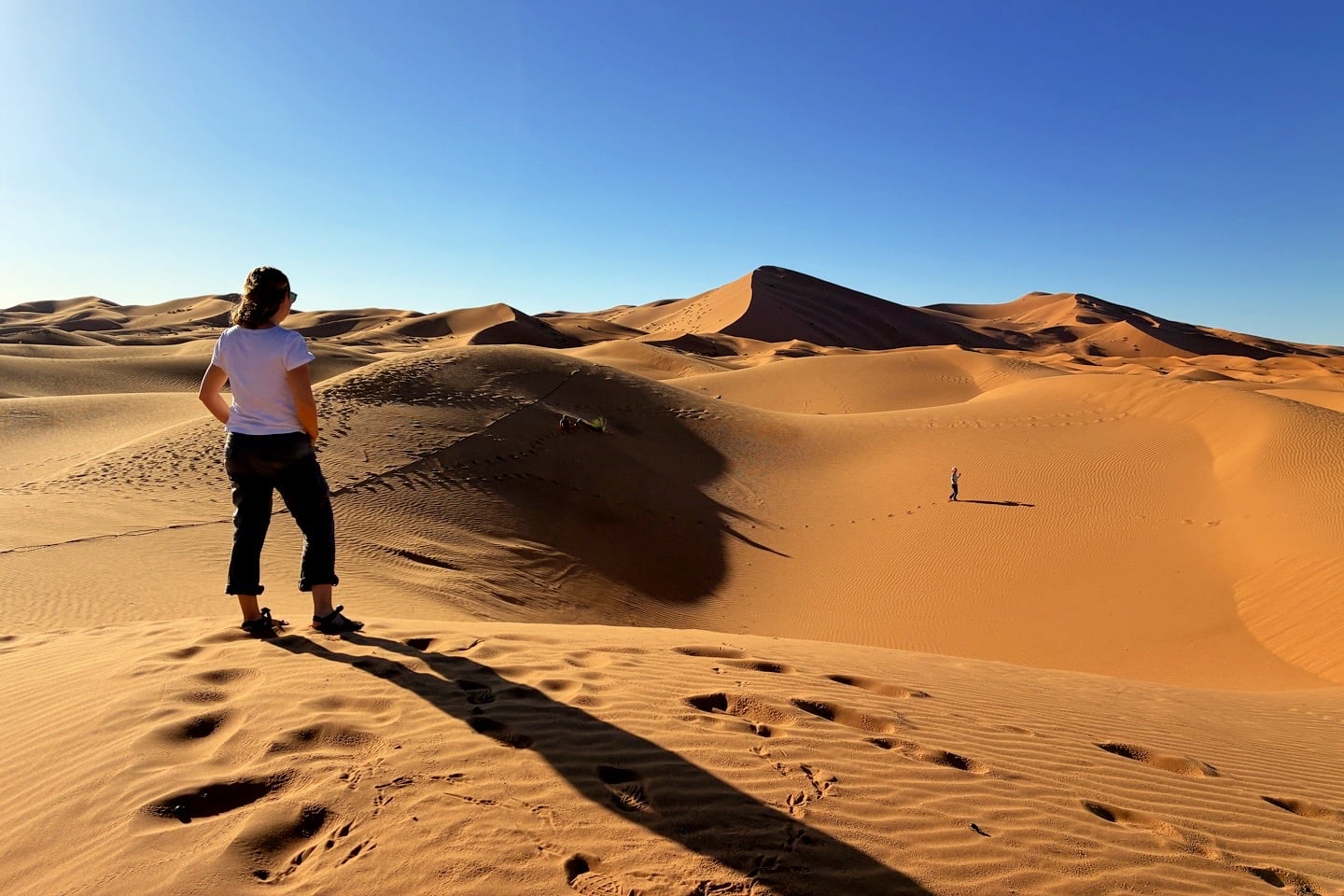
After a short rest, we ventured farther up the dunes to see what we could see.
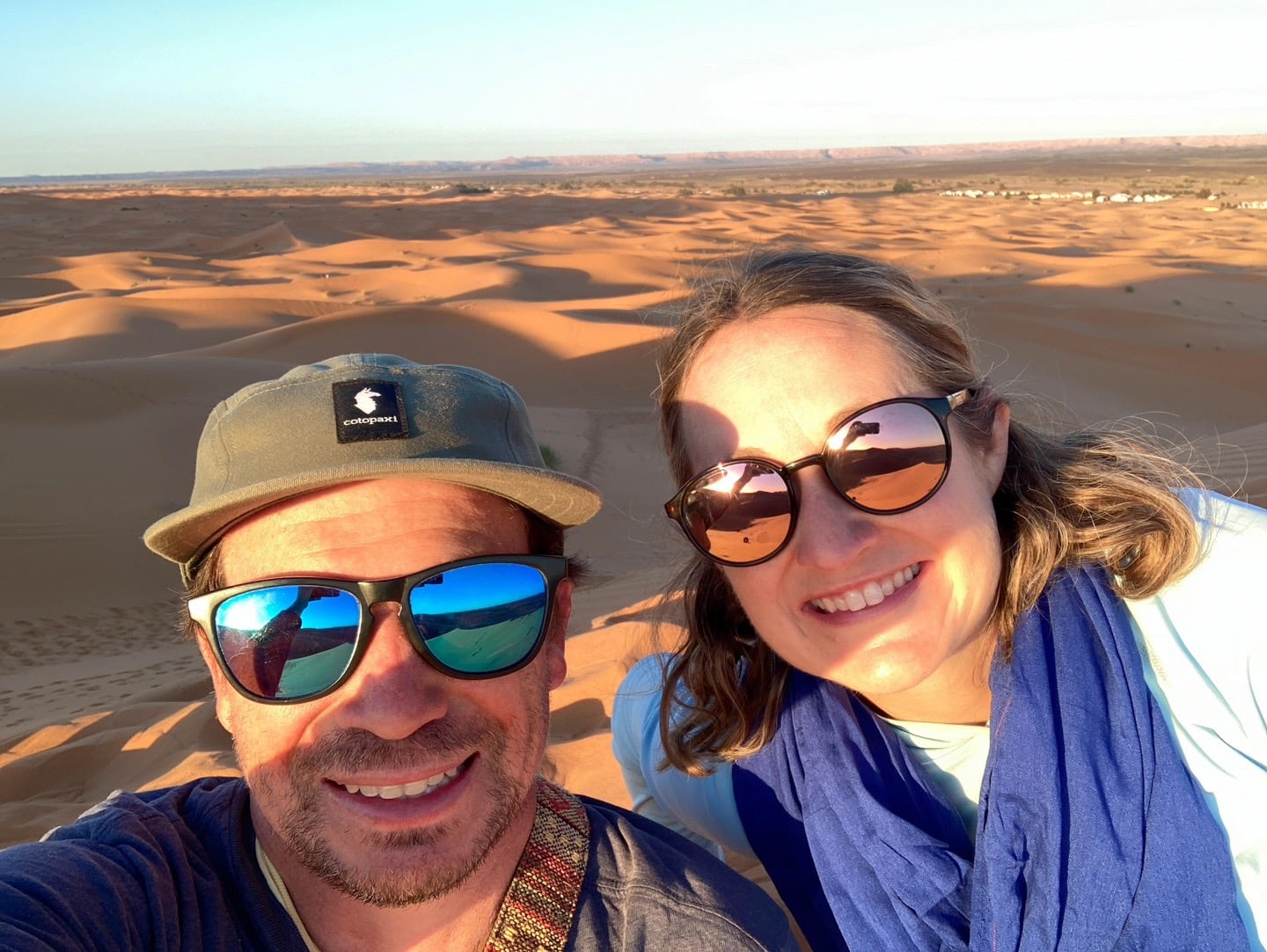
After gaining a little elevation, the Algerian border came into view a mere ten miles to the east (that ridge in the distance).
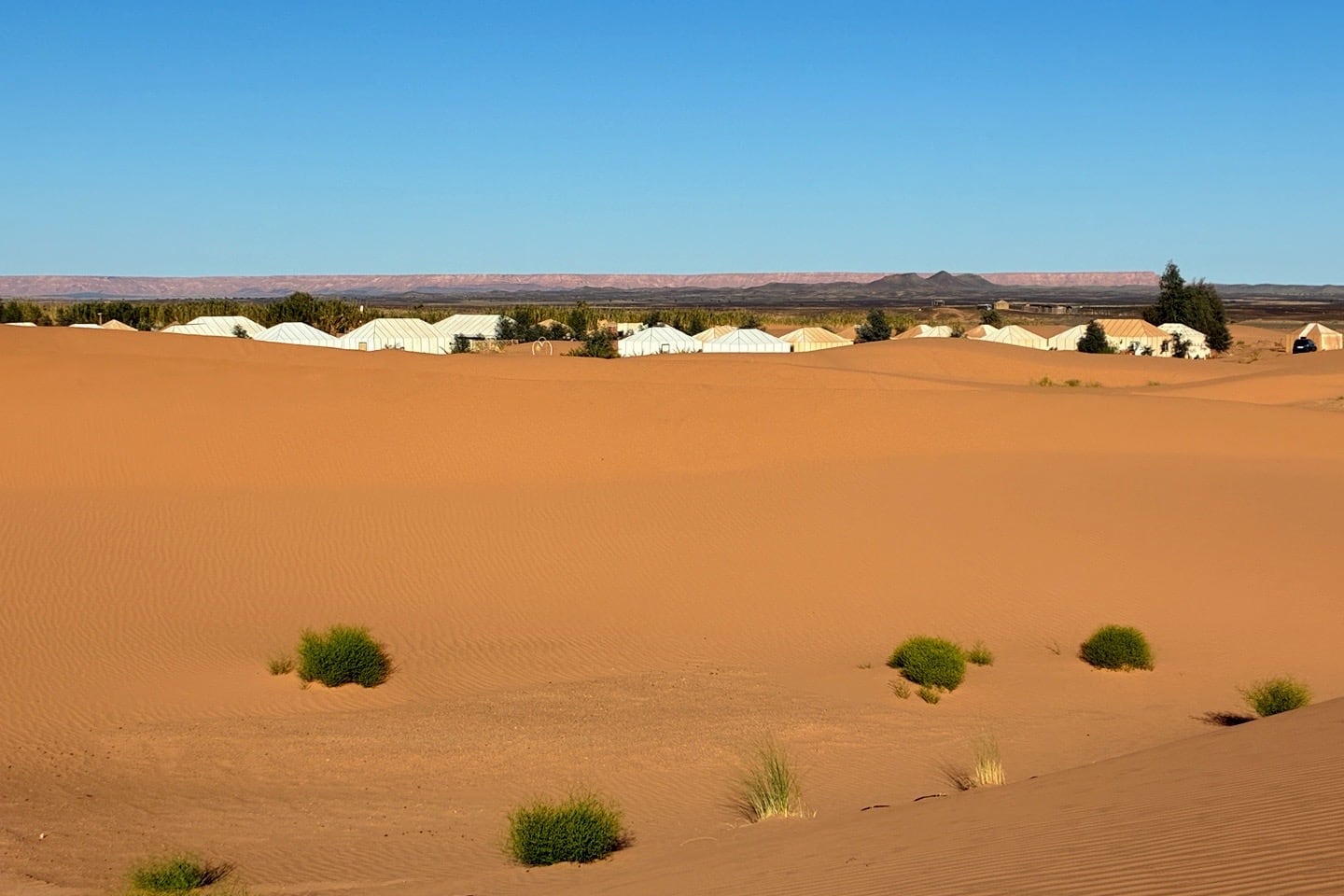
Of course, you can’t legally cross from Morocco to Algeria overland, but there it is.
So, why exactly does this island of sand dunes exist out here in the middle of nowhere?
Morocco’s got only a handful of these “erg” ecosystems (sprawling seas of ever-shifting golden-orange sand dunes). Over millions of years, the region’s rivers washed huge quantities of sediment and sand down from the High Atlas Mountains into this low-lying basin.
As the climate got dryer, strong seasonal winds pushed the river sediment across the desert floor. But why did it get concentrated here?
This just happens to be the crossroads of two powerful wind currents that blow in opposition to each other (creating Erg Cherie’s famous pyramid dunes). One set of wind currents blows from the Northeast, the other, the Southwest. So, the sand gets trapped right here in this spot with nowhere to go but up.
It’s an awesome sight.
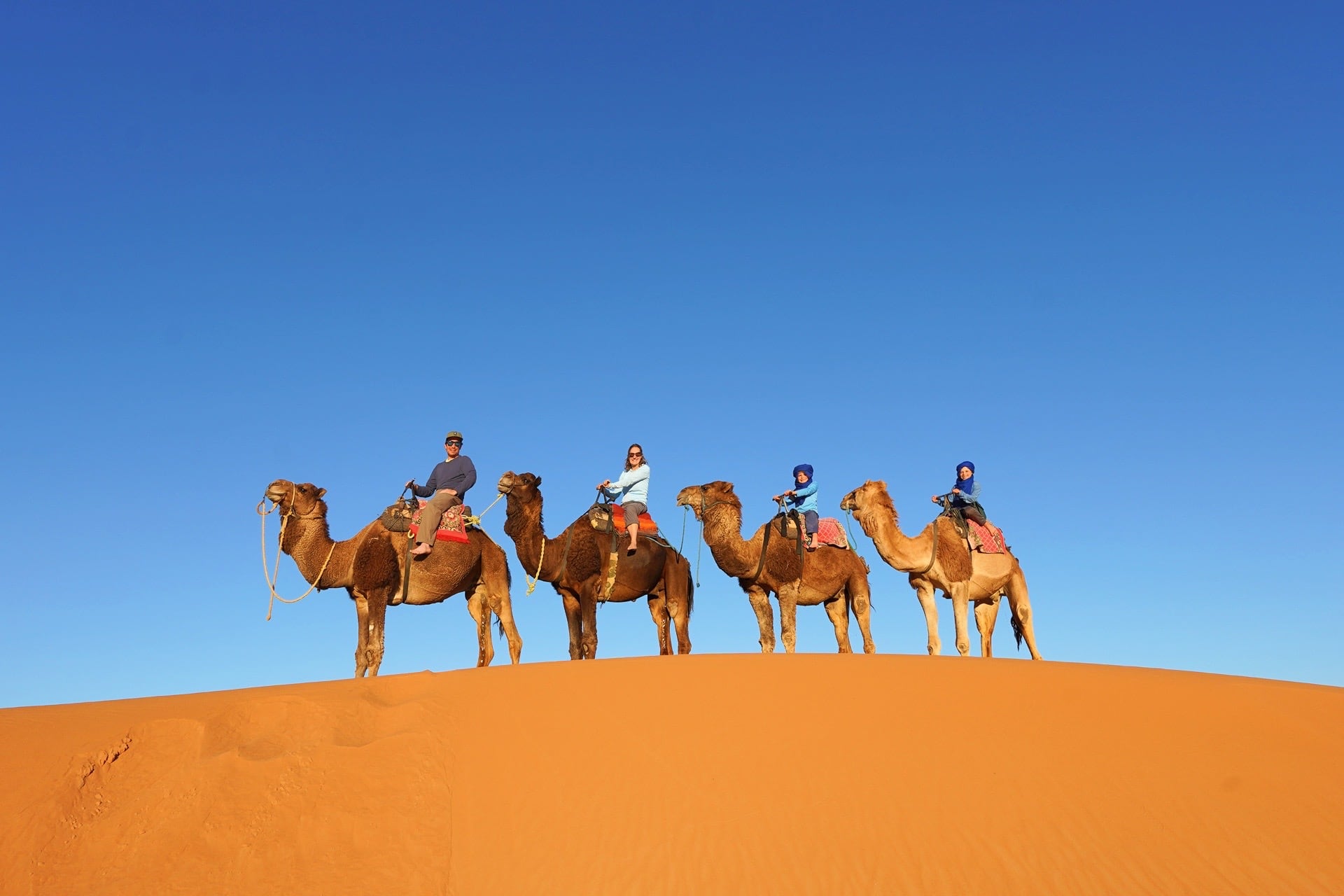
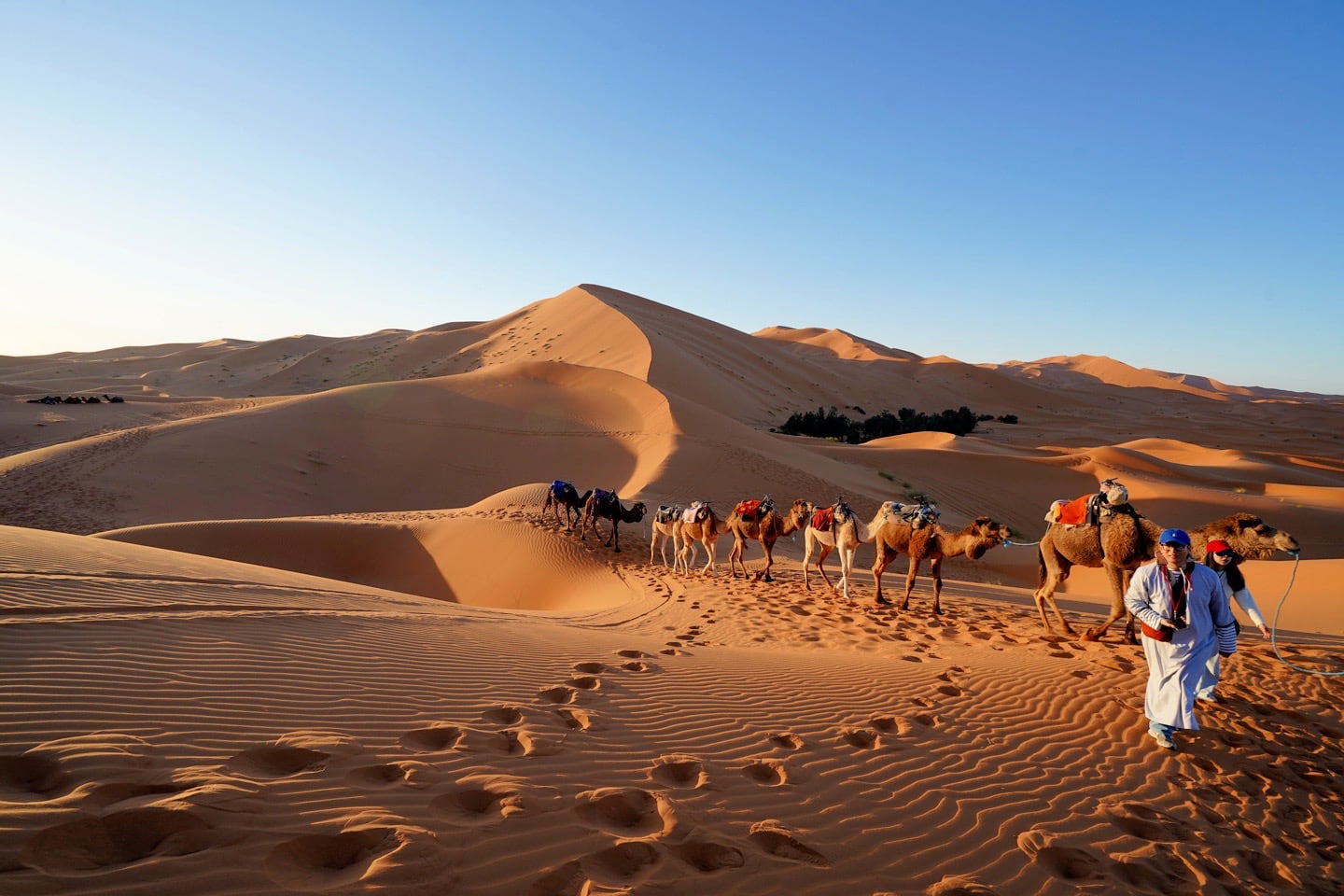
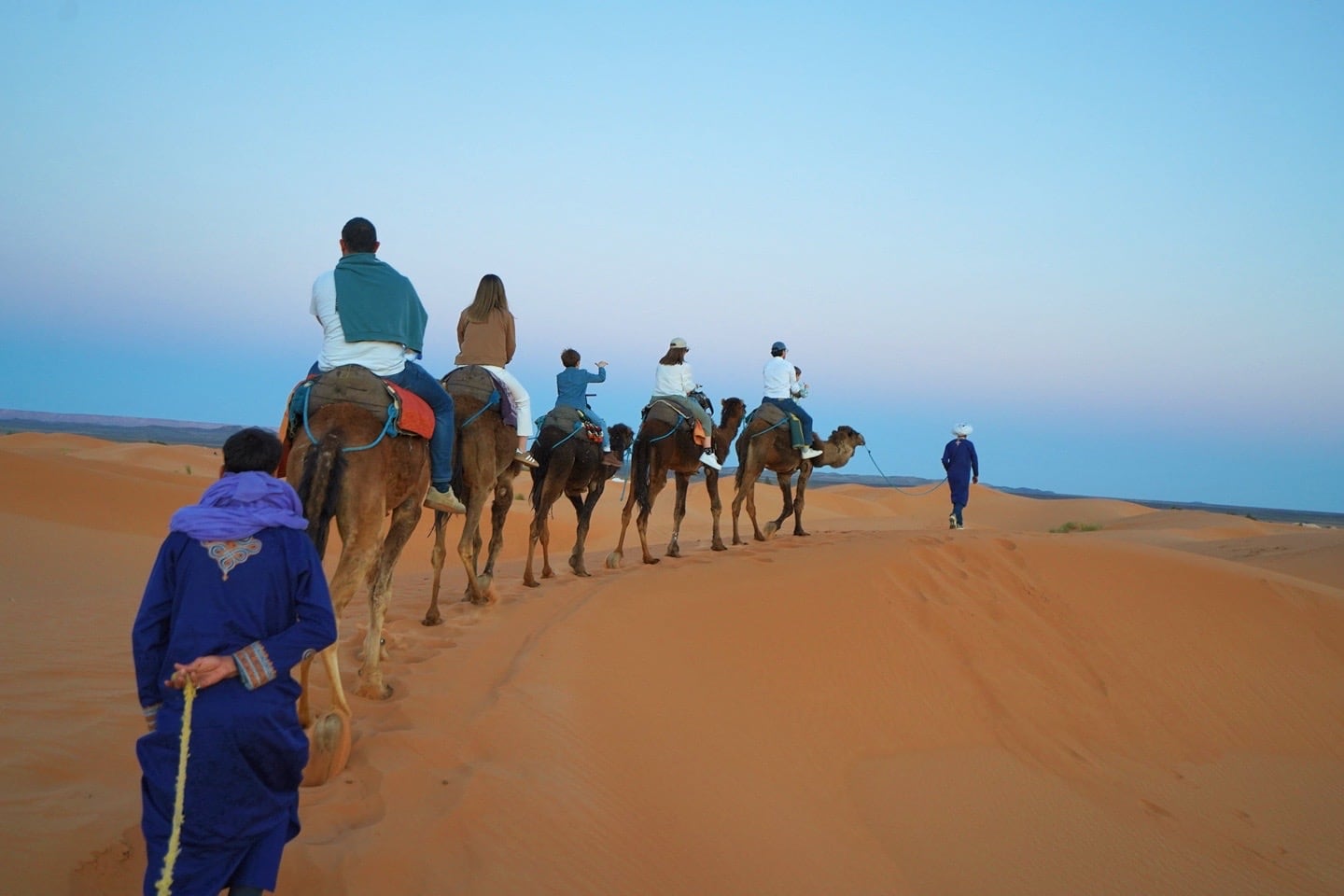
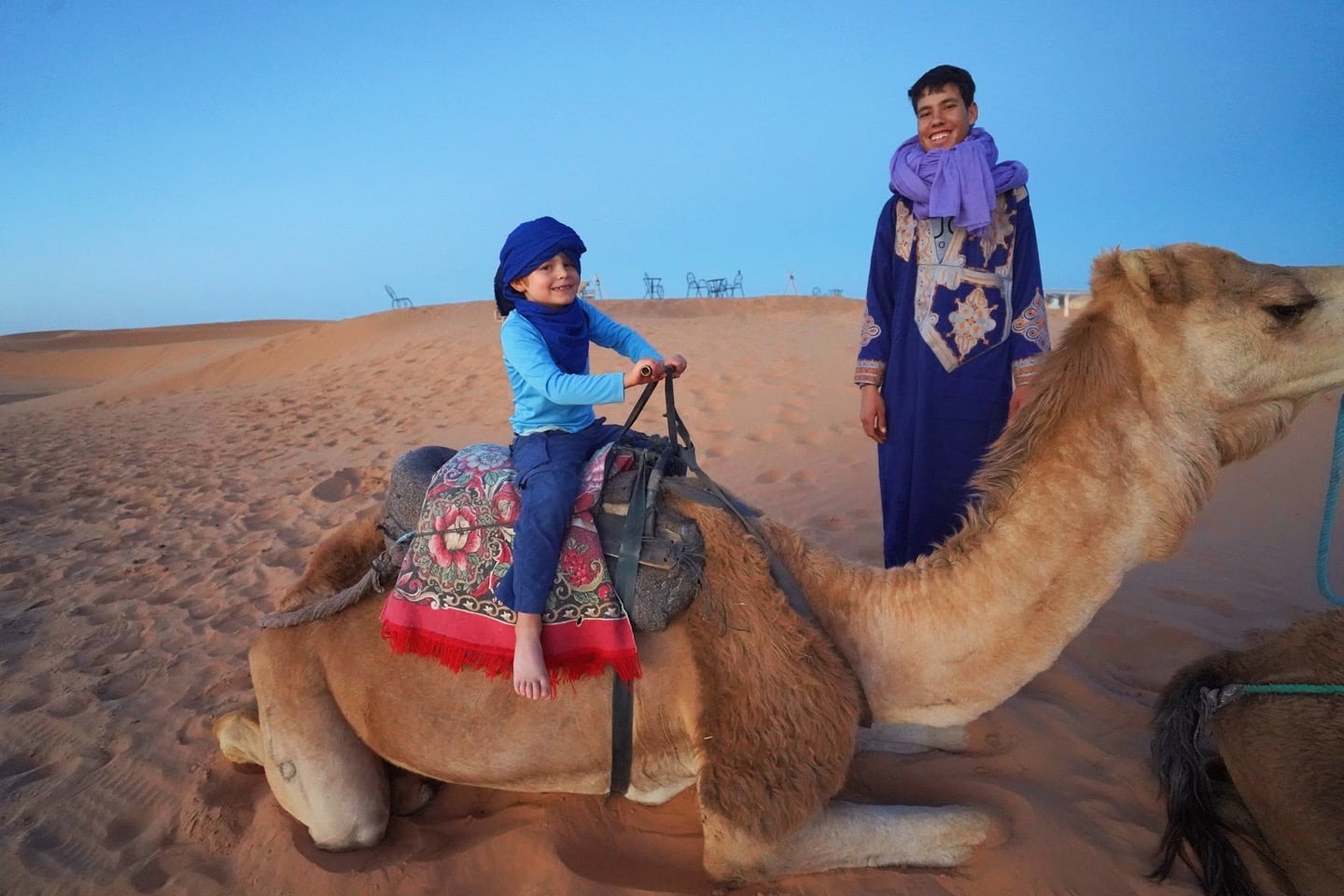
Around an hour before sunset, it was time for the four of us to mount up and head farther into the Erg by camel. The boys were beyond excited. Lori and I were too. It’s not everyday we get to ride a camel in the Sahara.
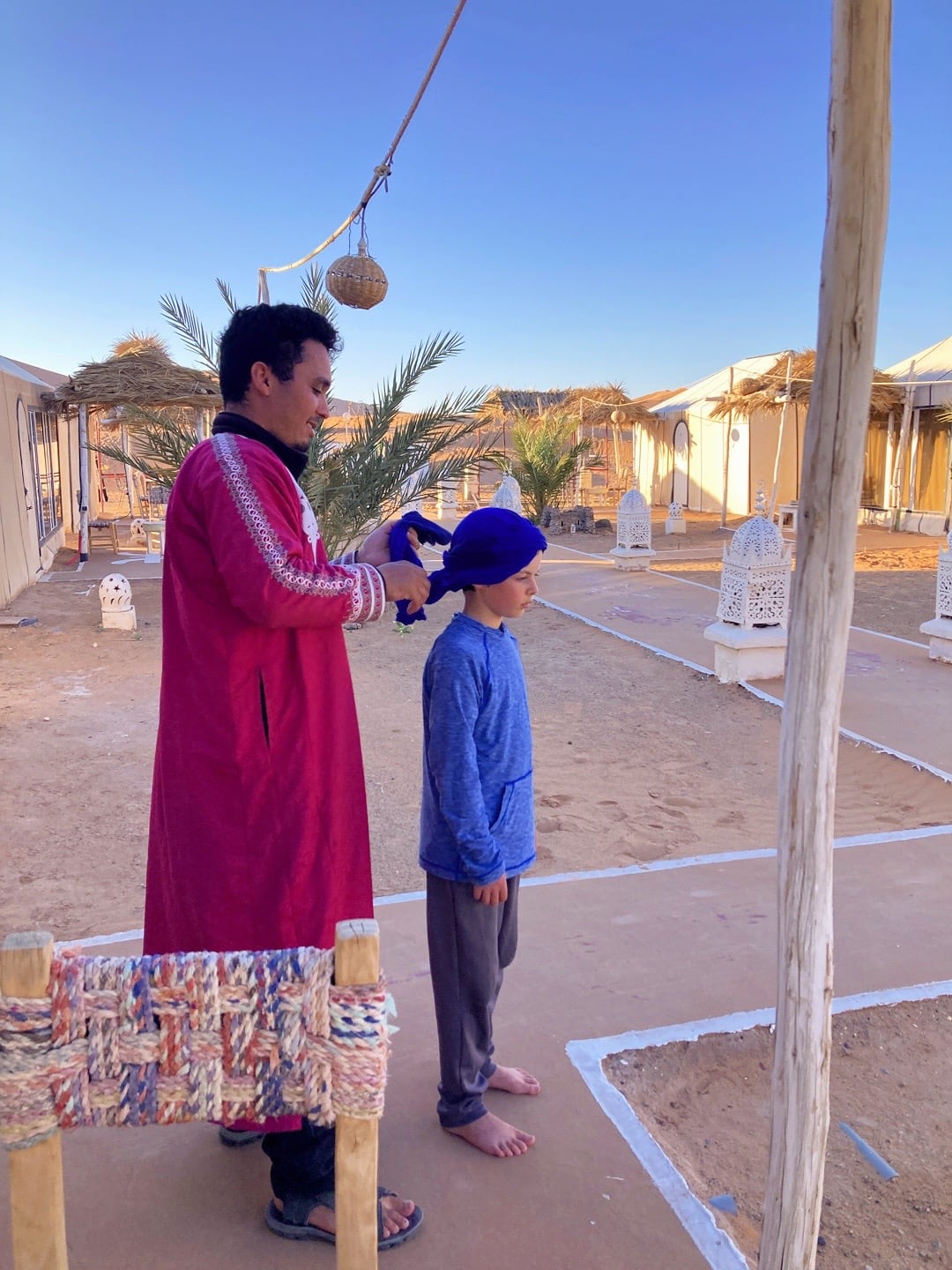
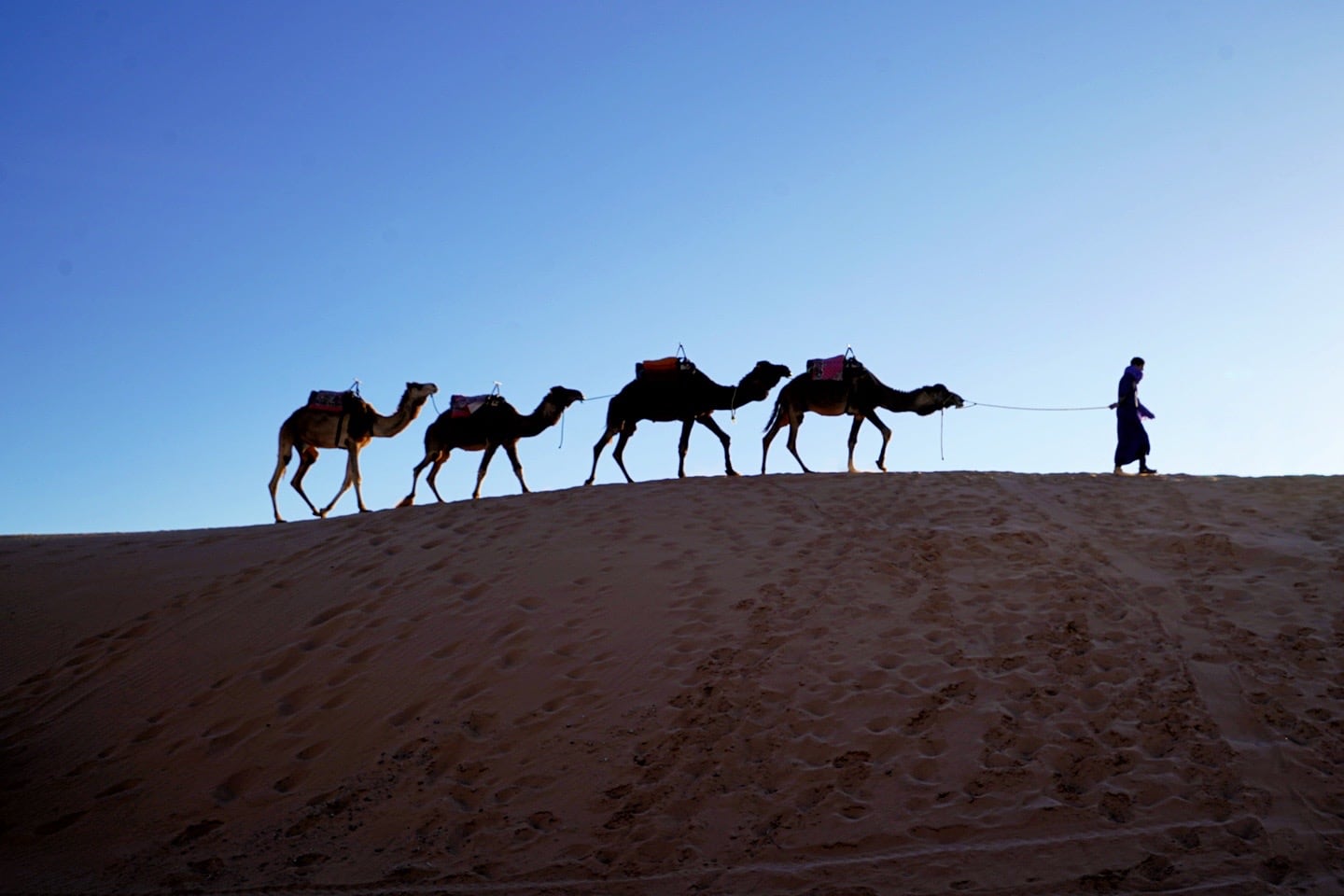
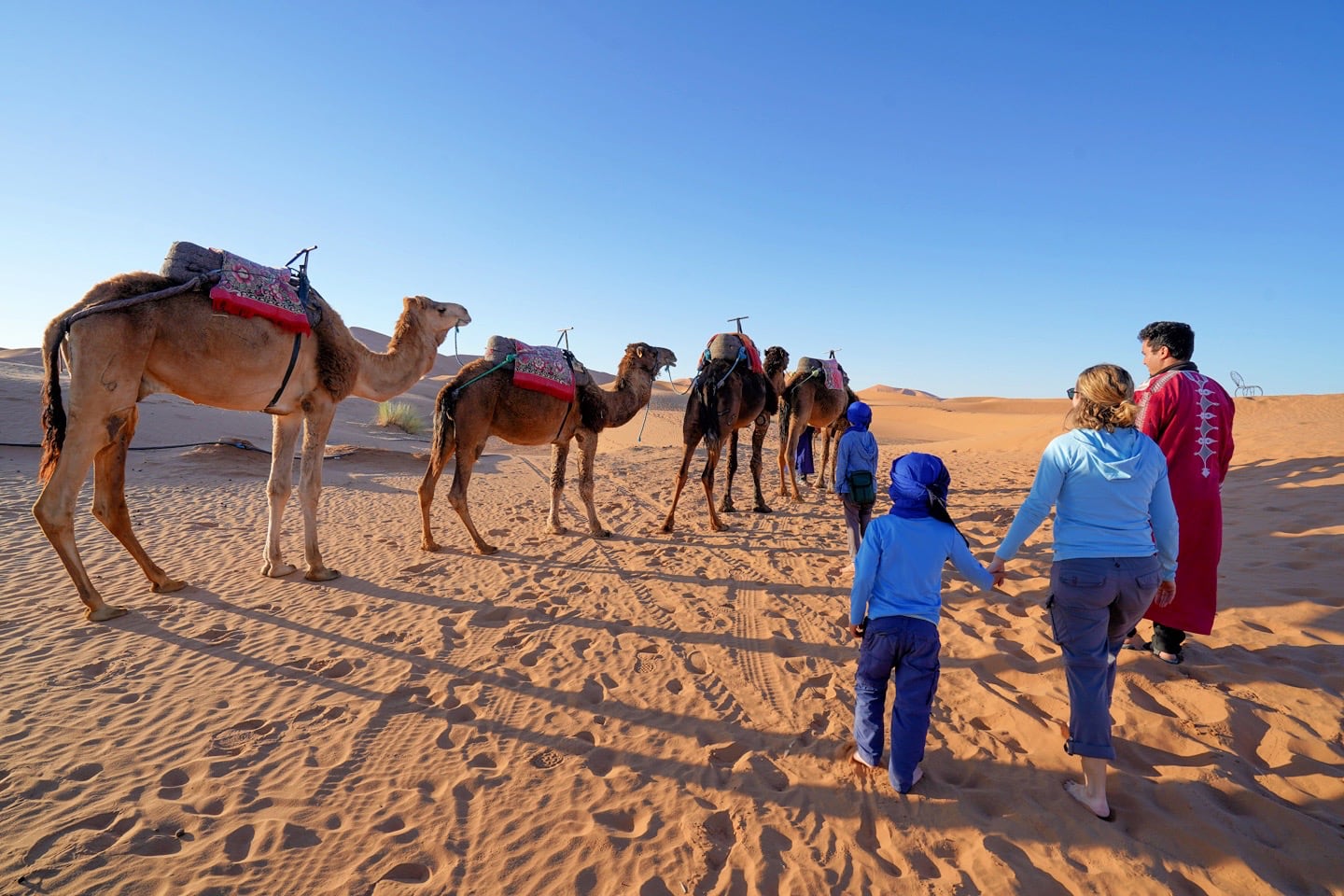
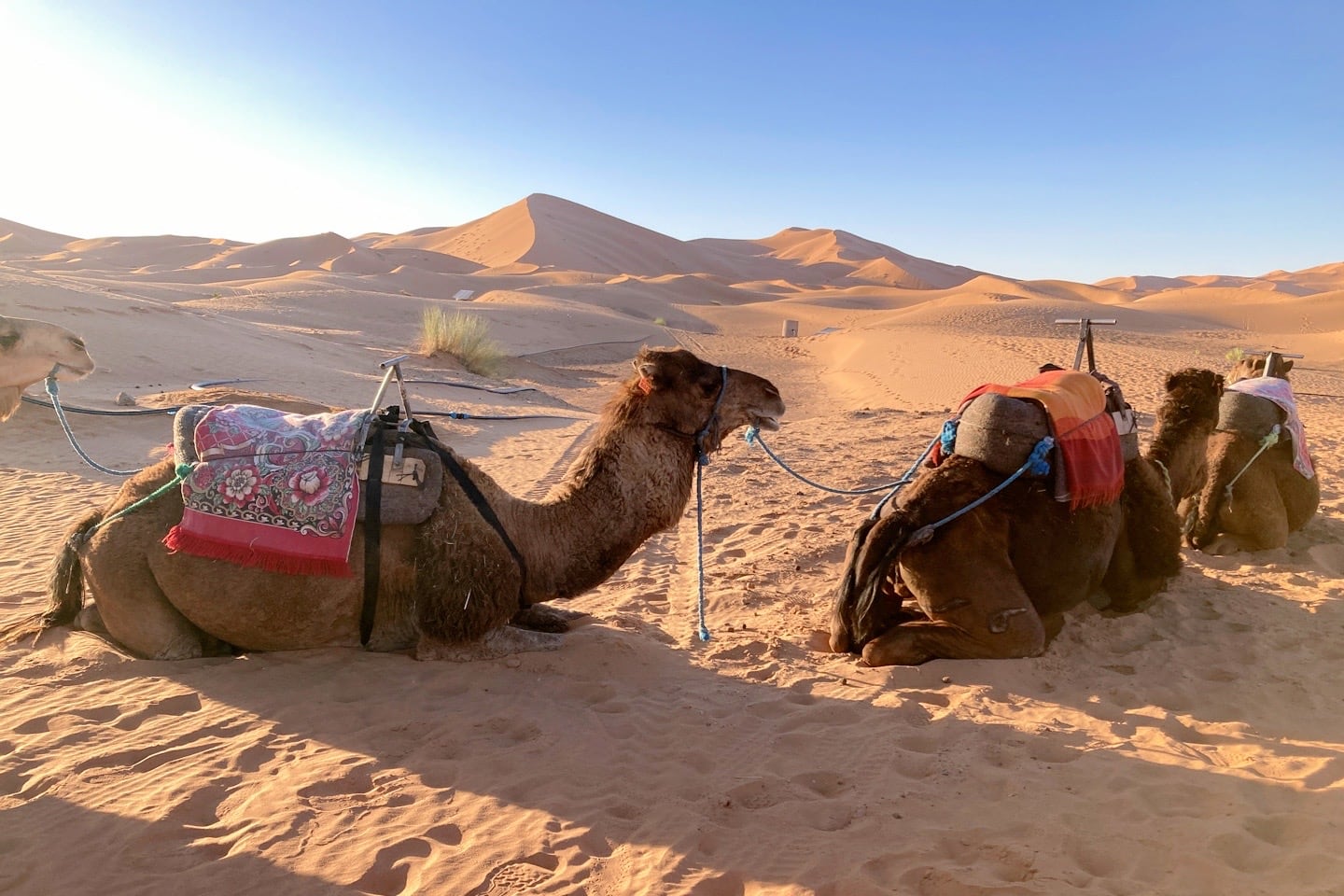
I had somehow forgotten that, unlike horses, camels kneel down and rest on the ground, making them incredibly easy to mount, even for the kids.
But that sudden jolt that you get when the camel stands up is something you don’t forget; I doubt the boys will anytime soon.
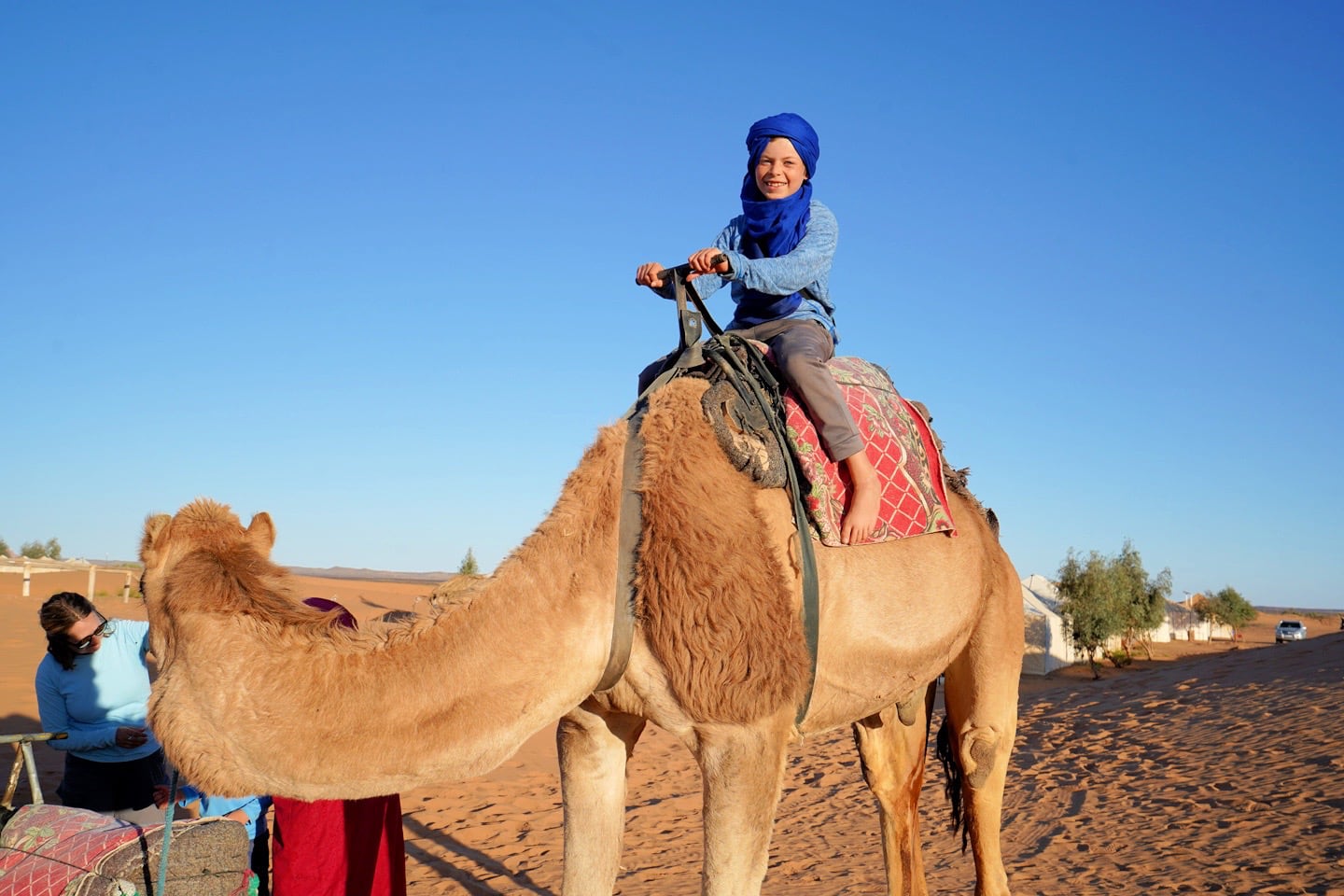
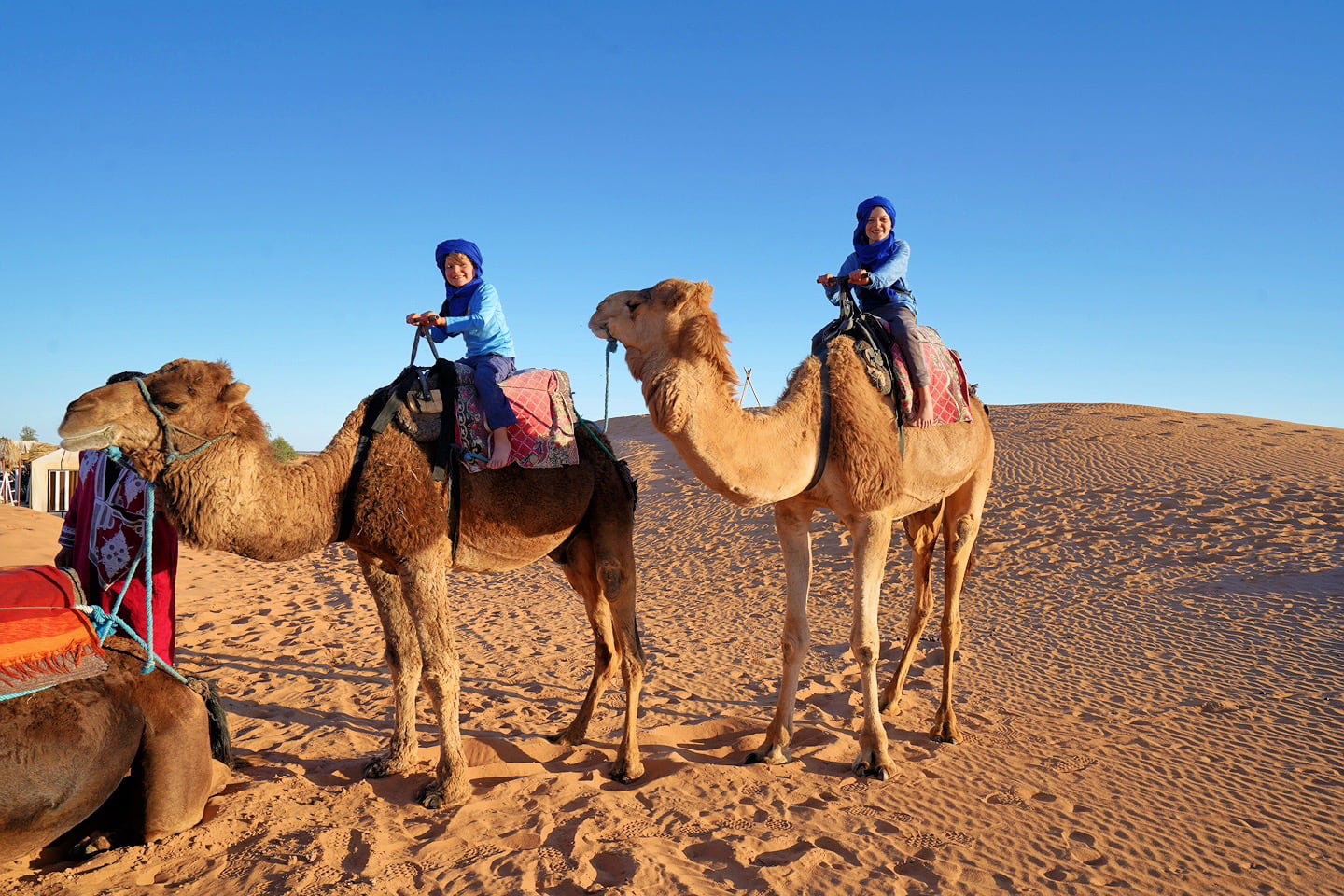
Time to head out!
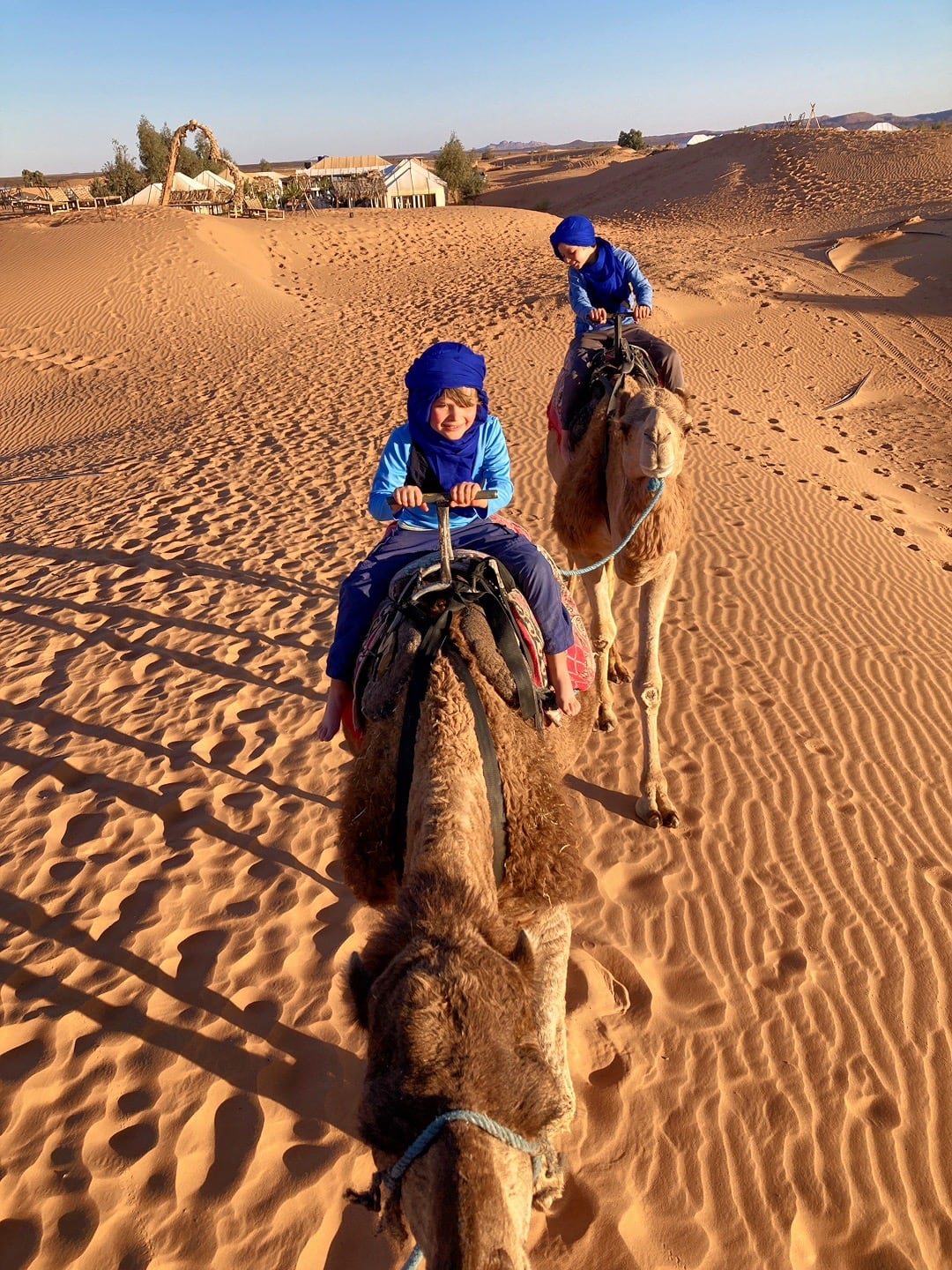
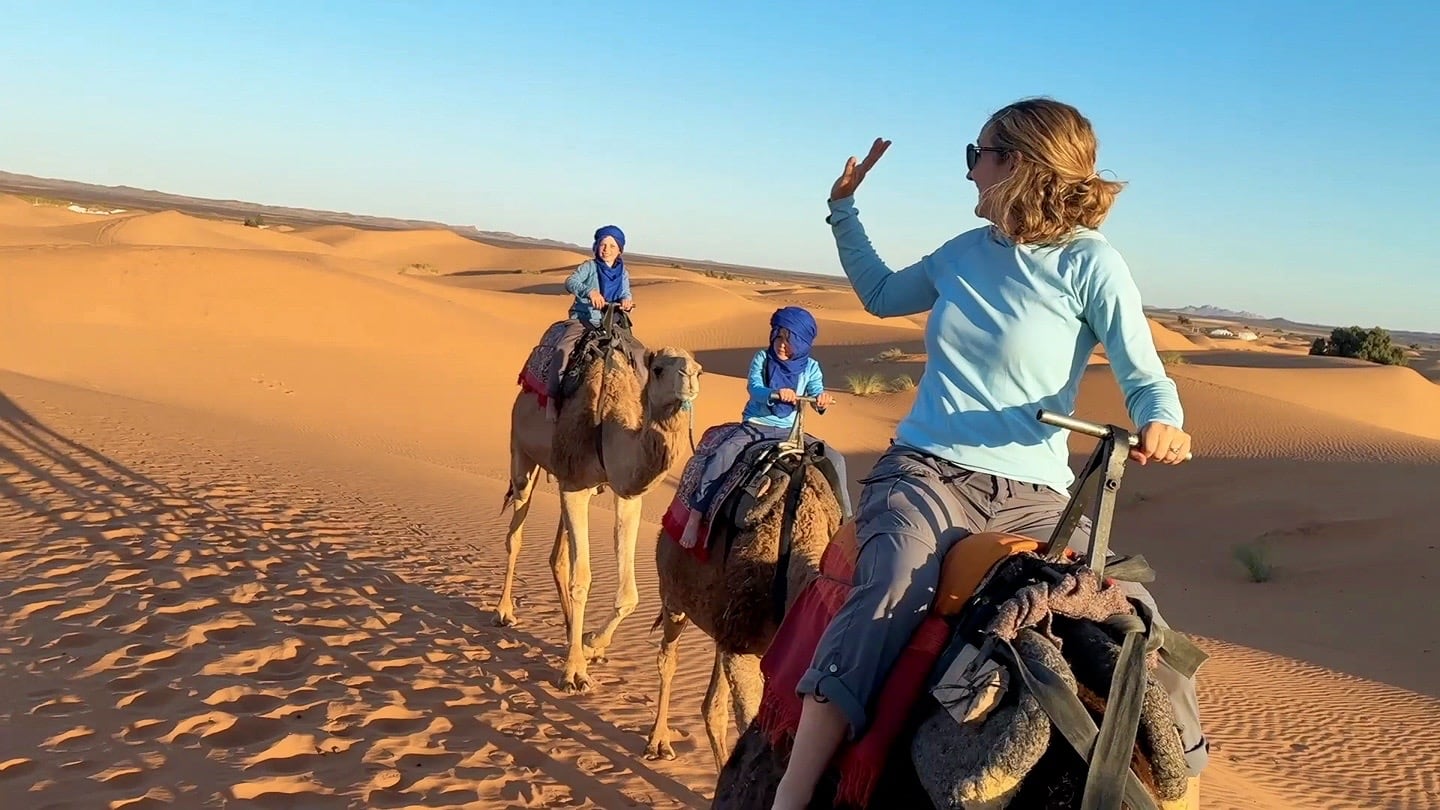
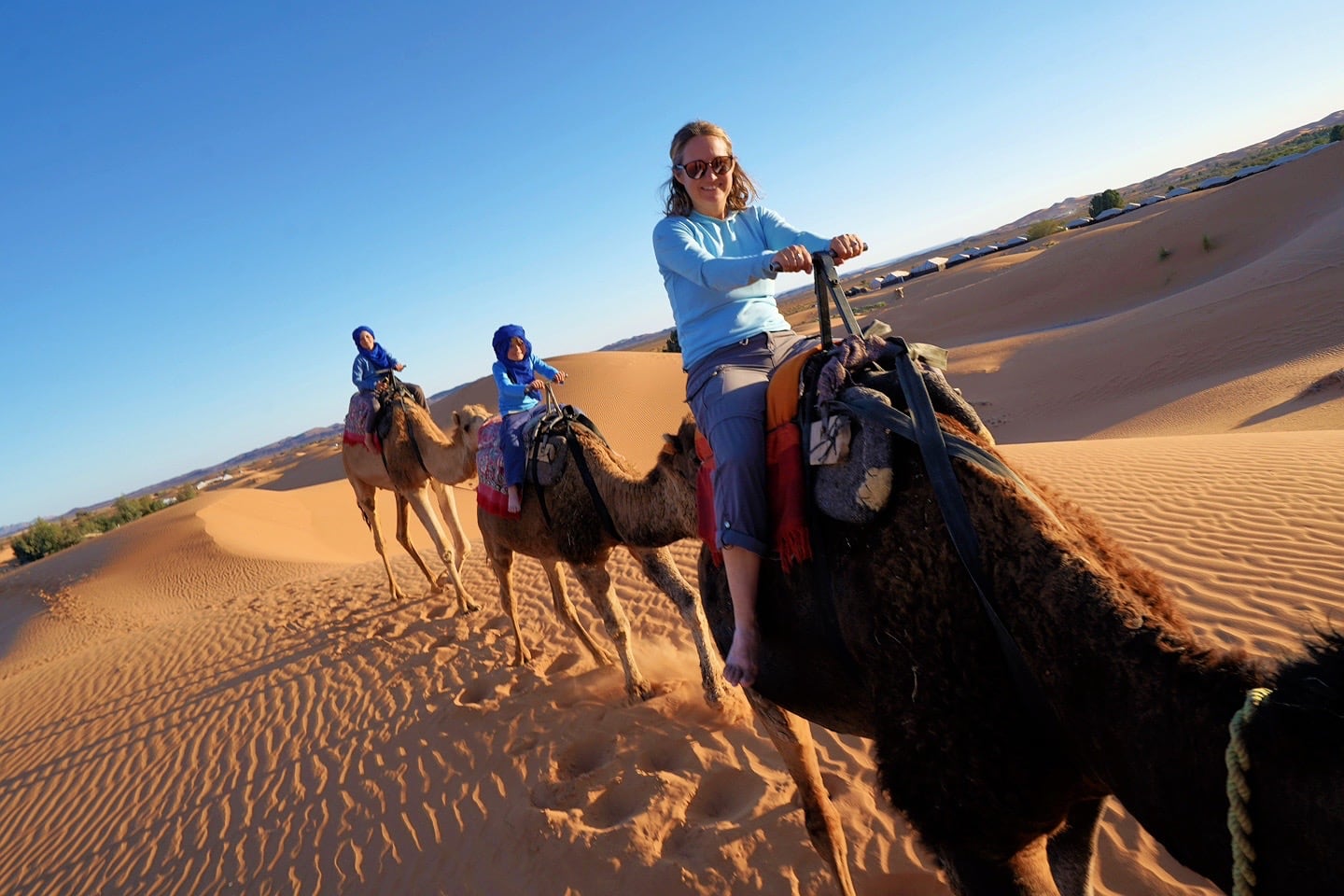
I’ll also add that it is really, really difficult to get good pictures while riding a camel. I didn’t spend the entire time snapping away, but wanted to make sure the boys had some evidence of this.
I had my big camera slung around my neck, but I imagine most folks try and snap a bunch of pictures with their phone. I’m not sure how they don’t lose the dang thing in the sand with all of the abrupt movements the camels make.
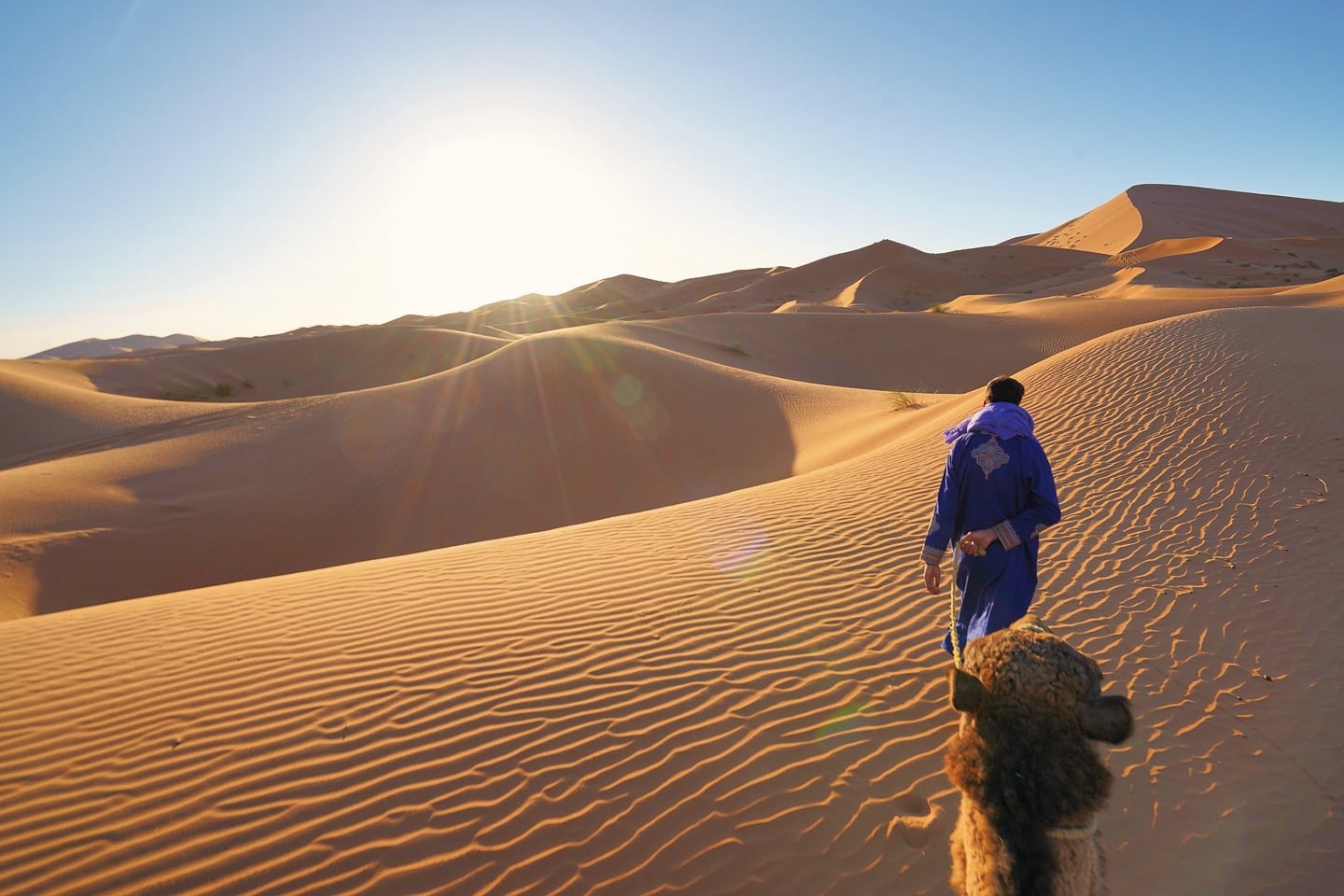
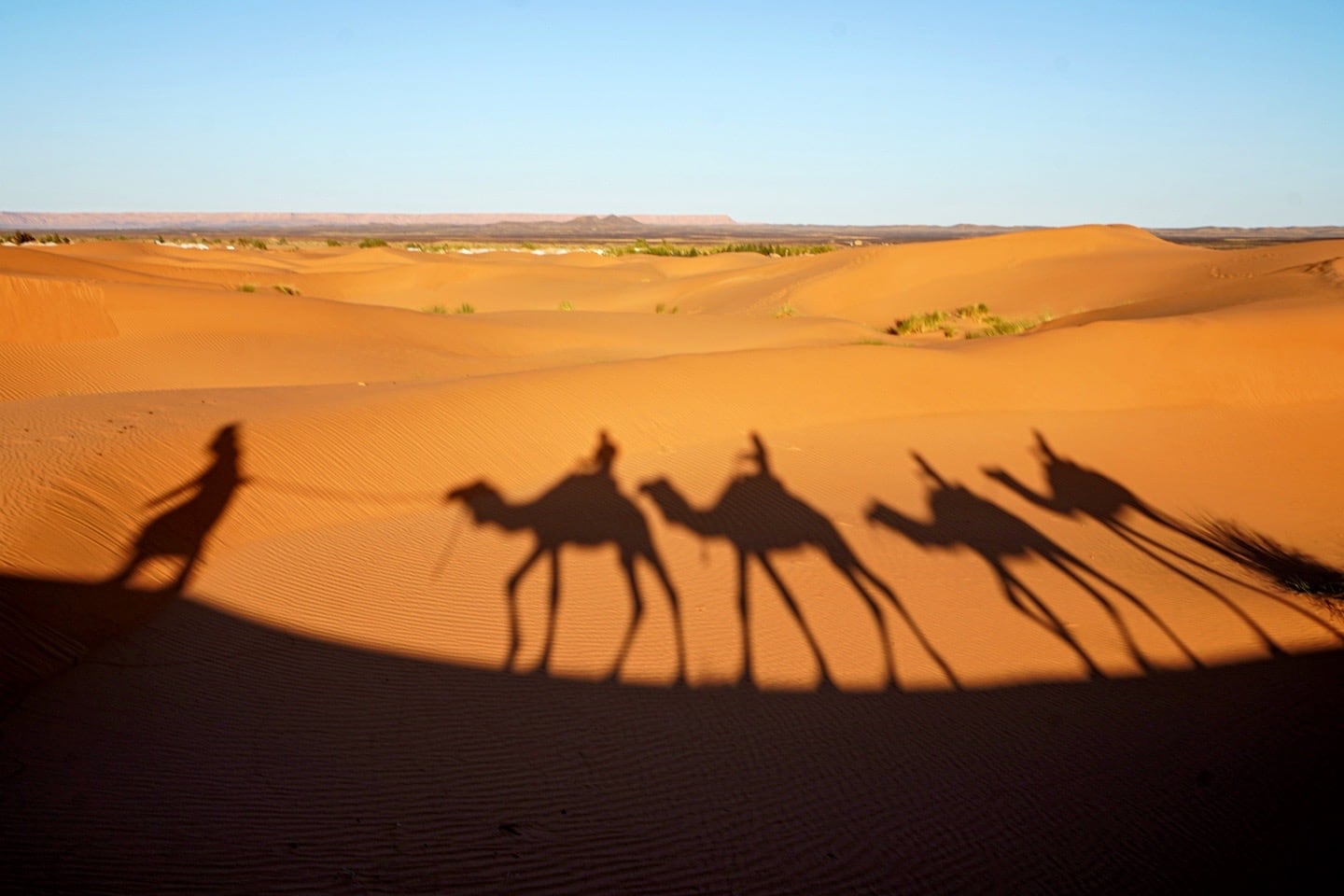
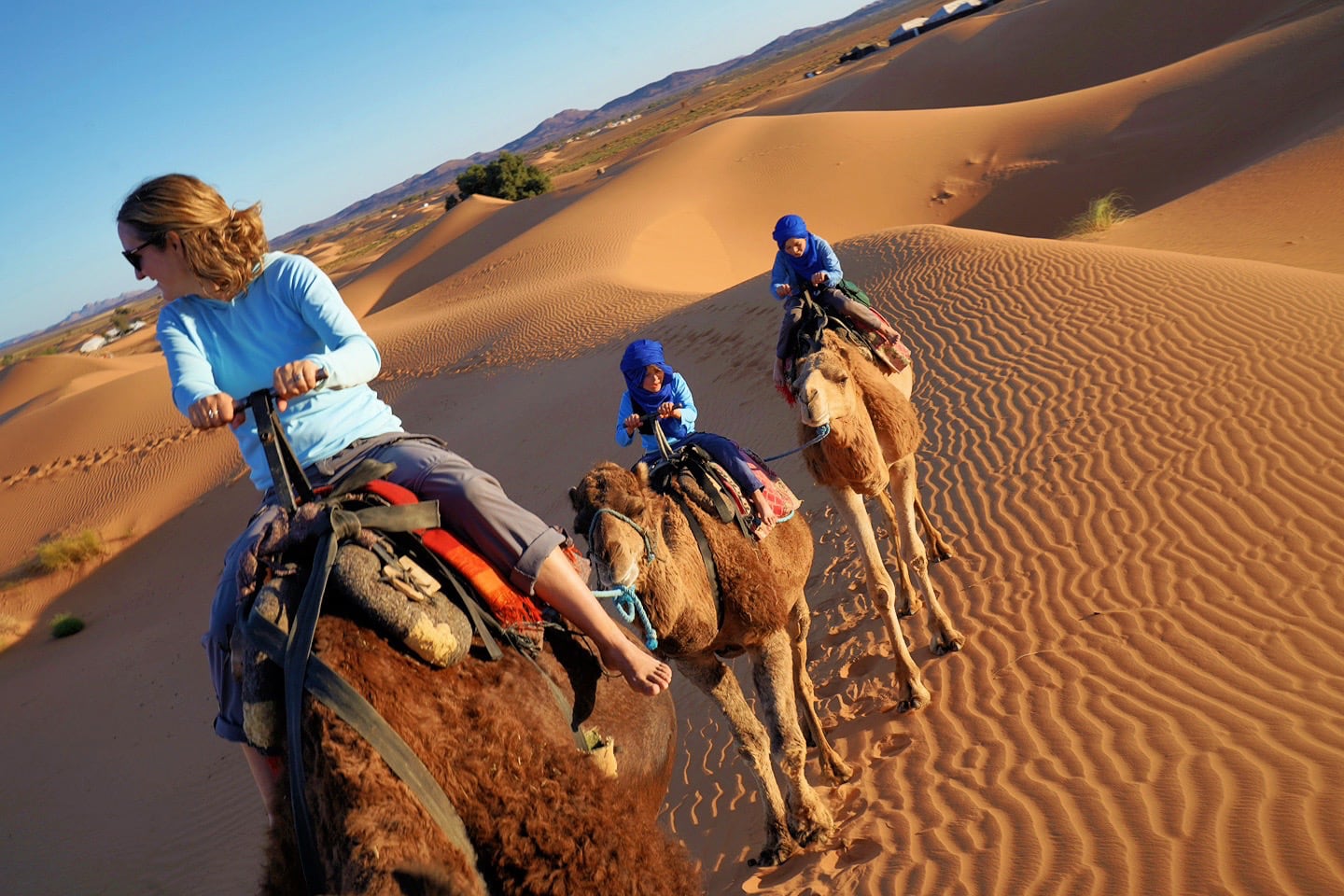
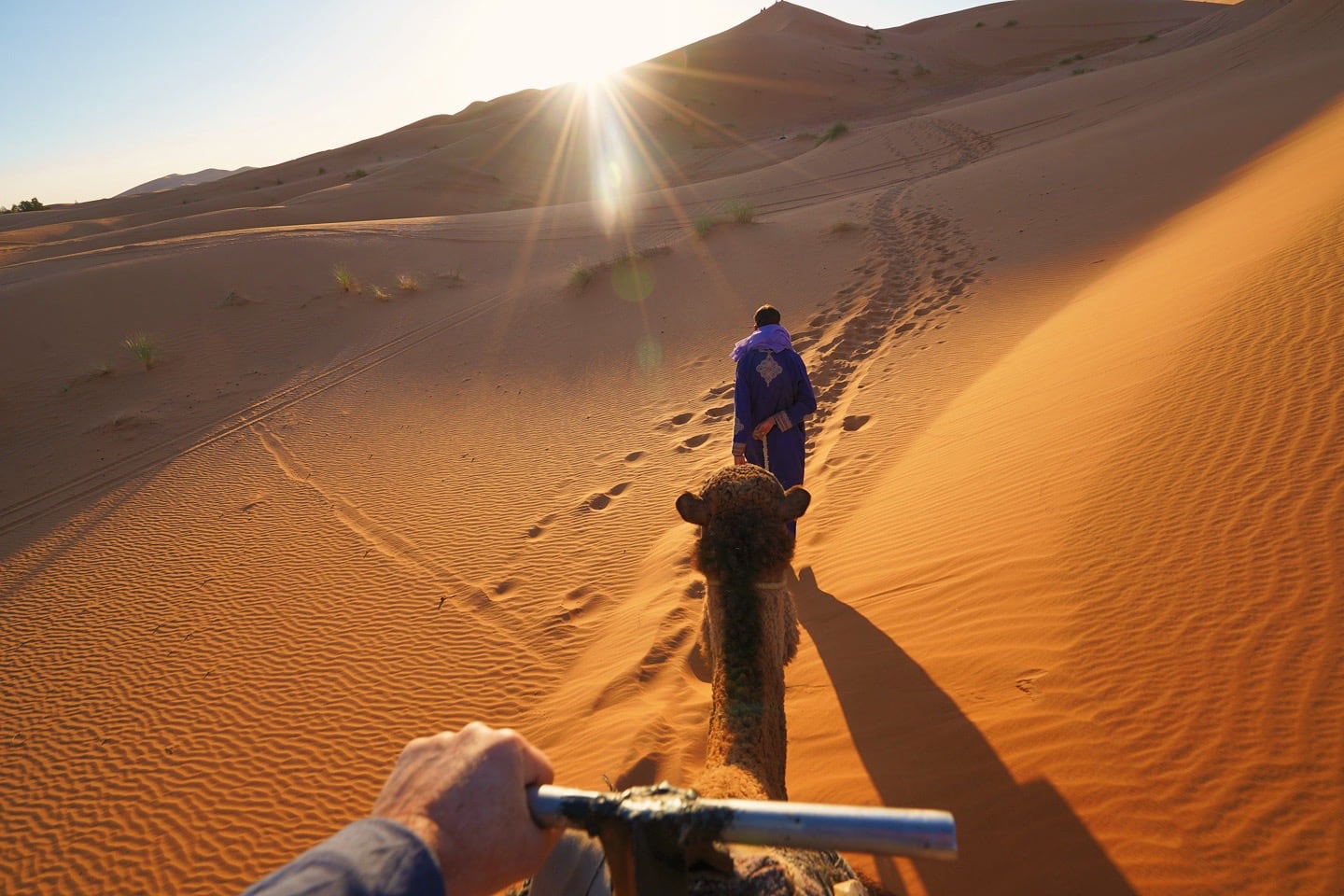
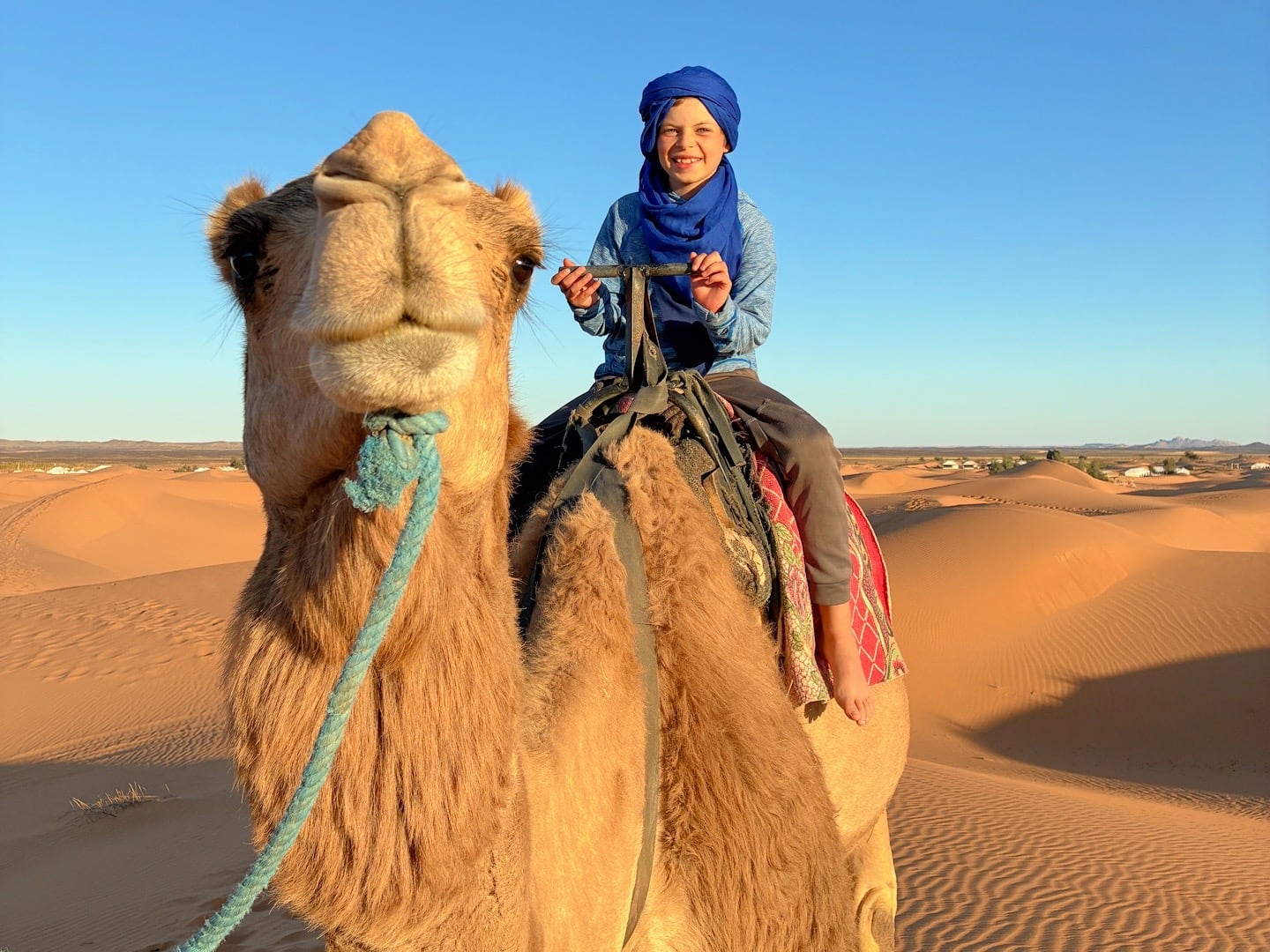
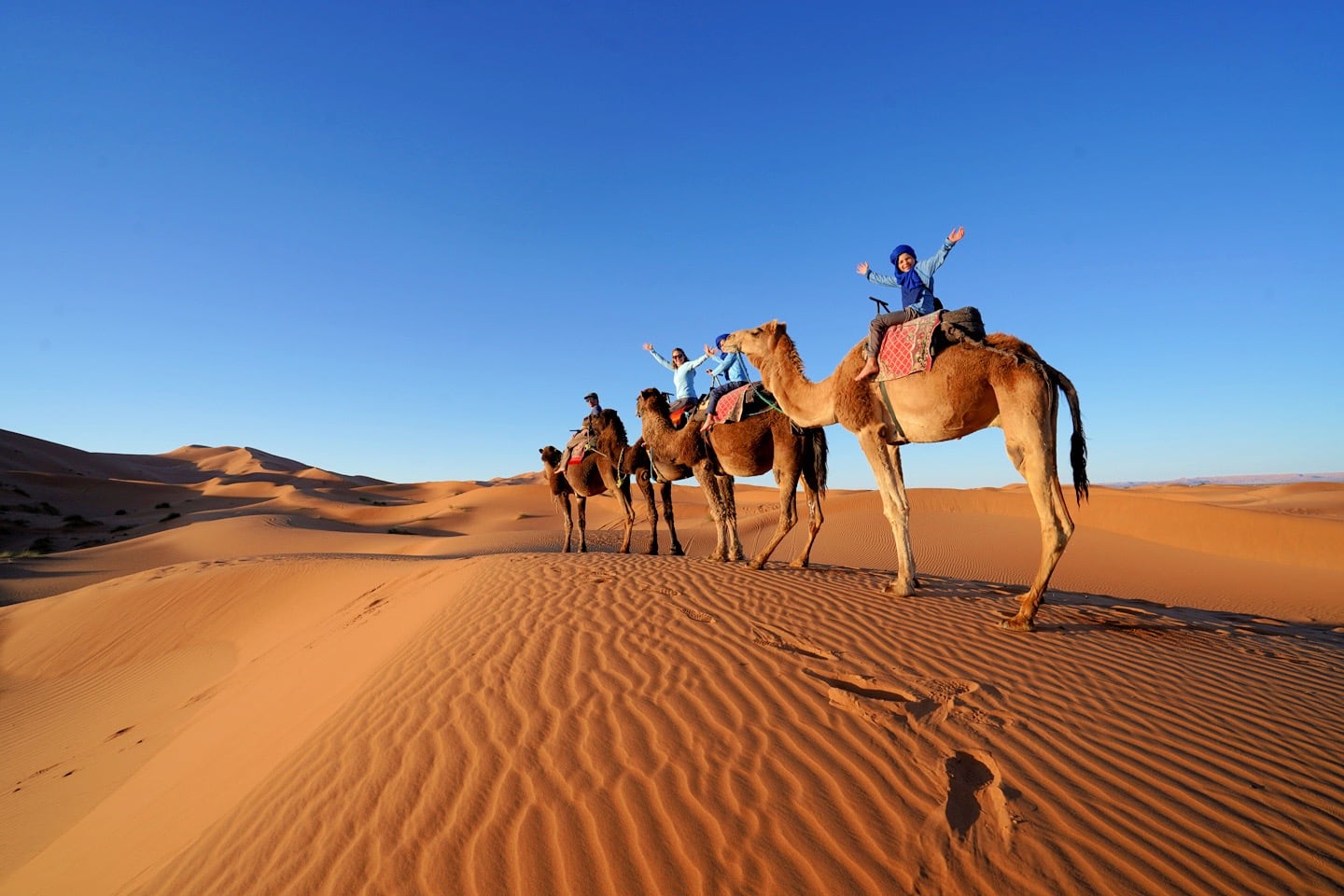
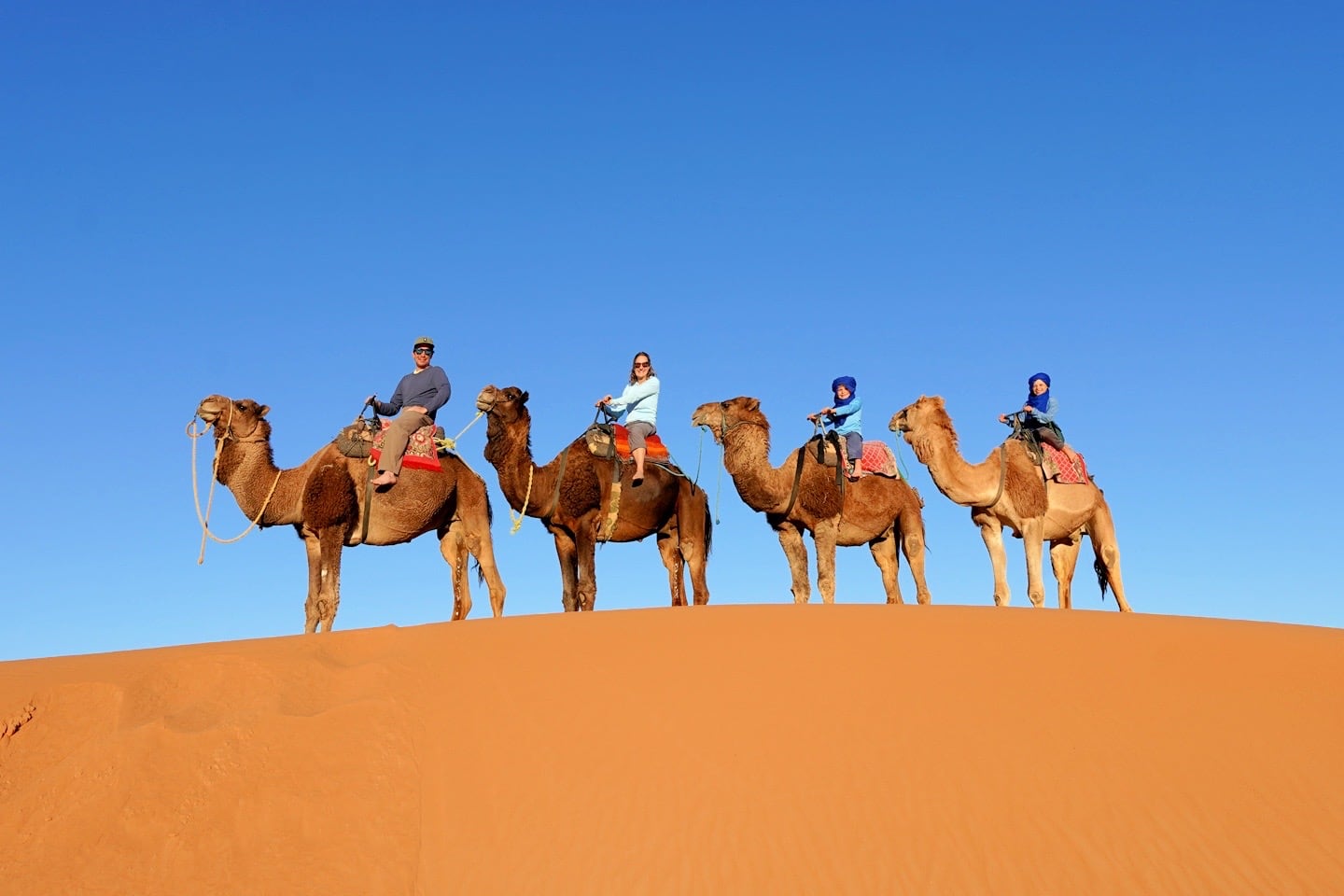
We climbed and climbed and climbed until we were just shy of the summit of one of the higher dunes in the area. We de-cameled and made our way to the top on foot.
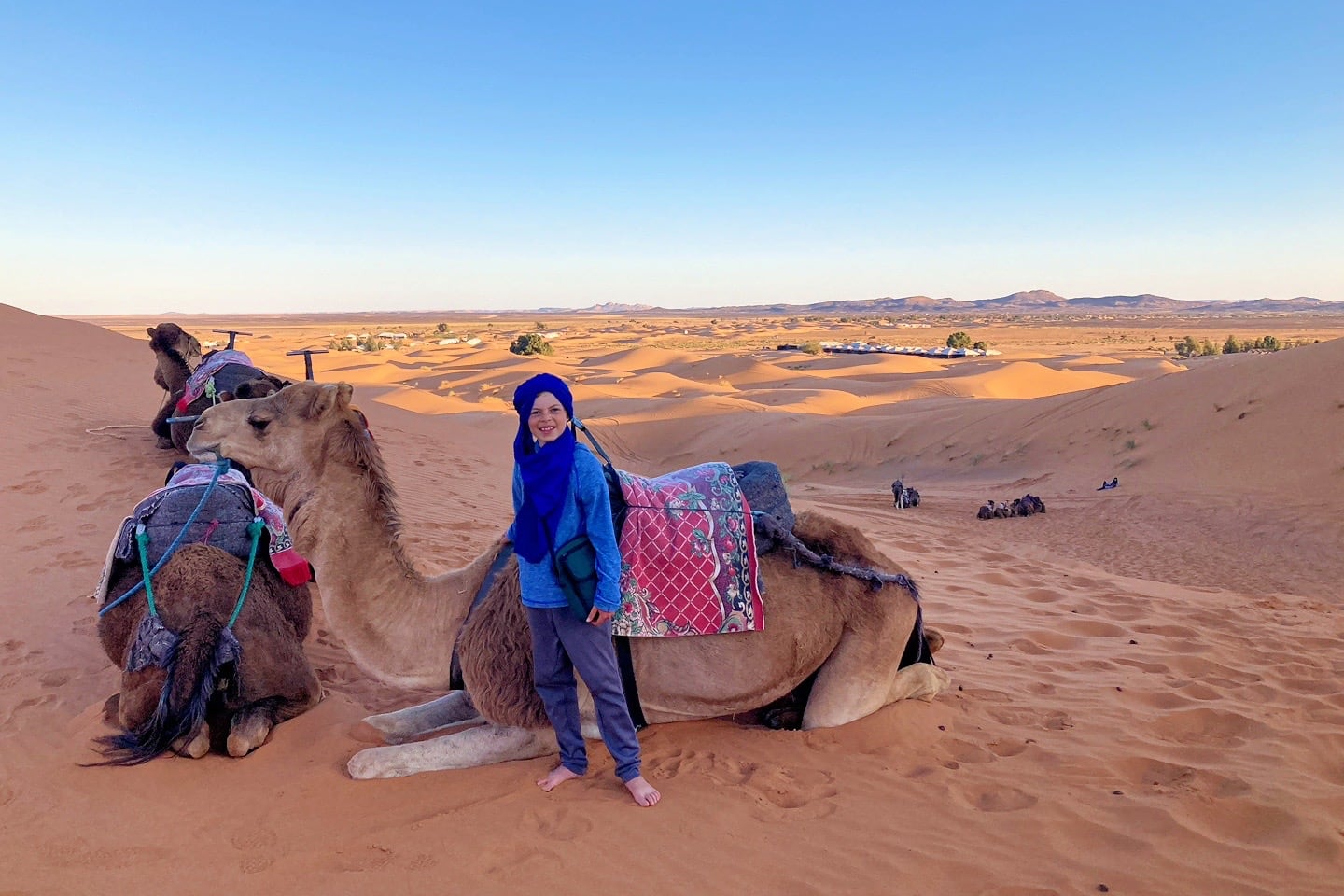
A couple other groups joined us for the spectacle.
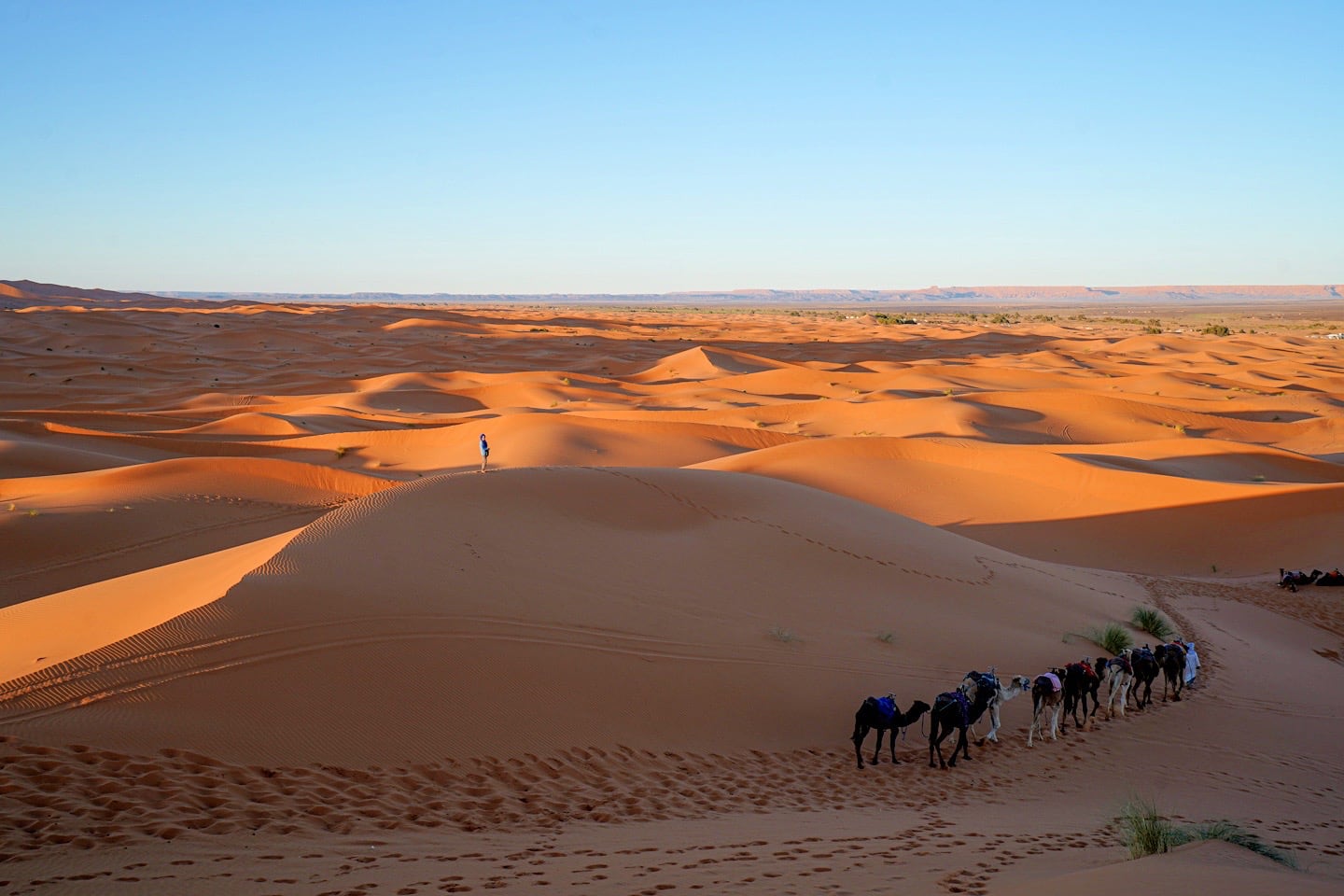
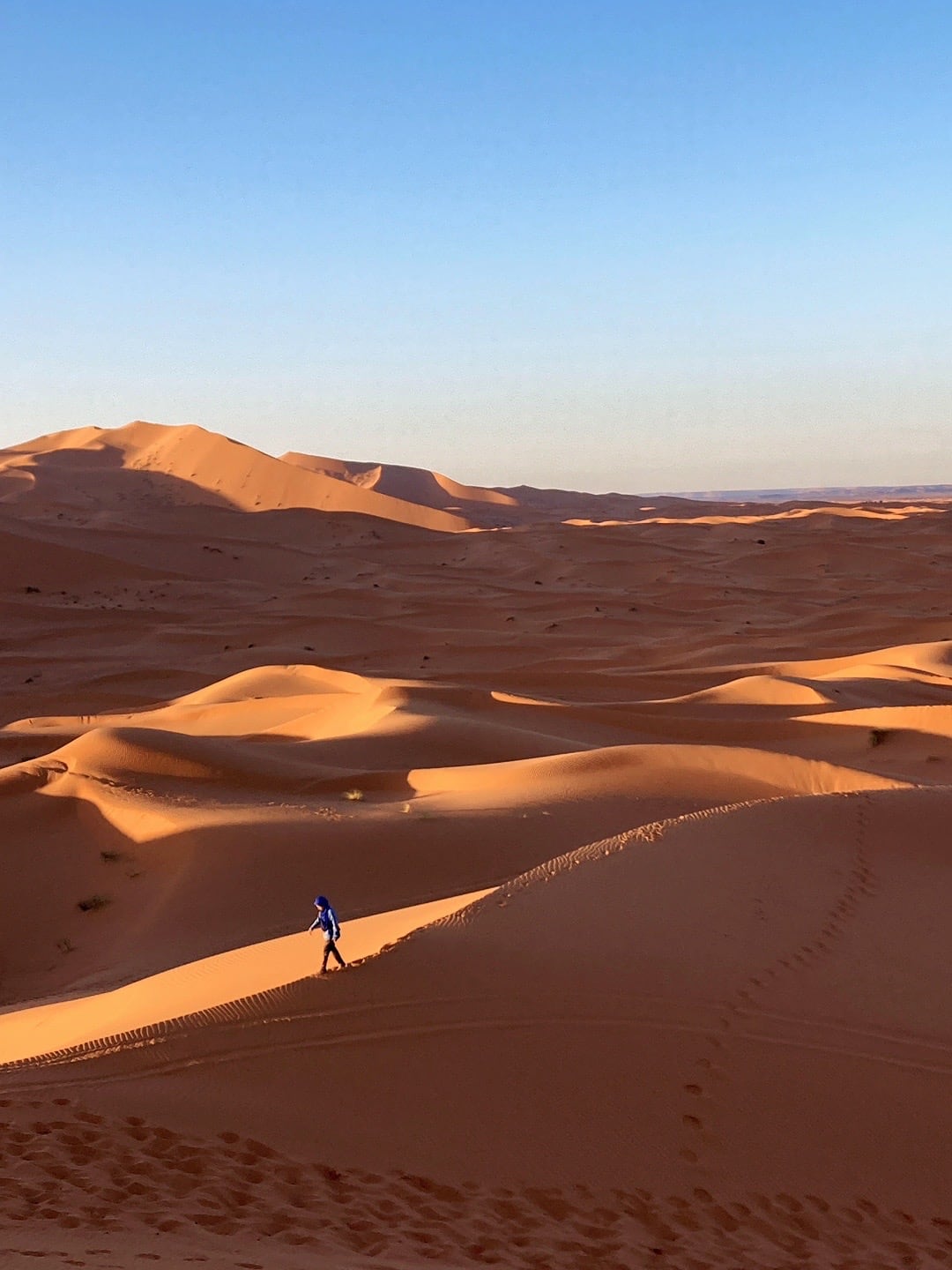
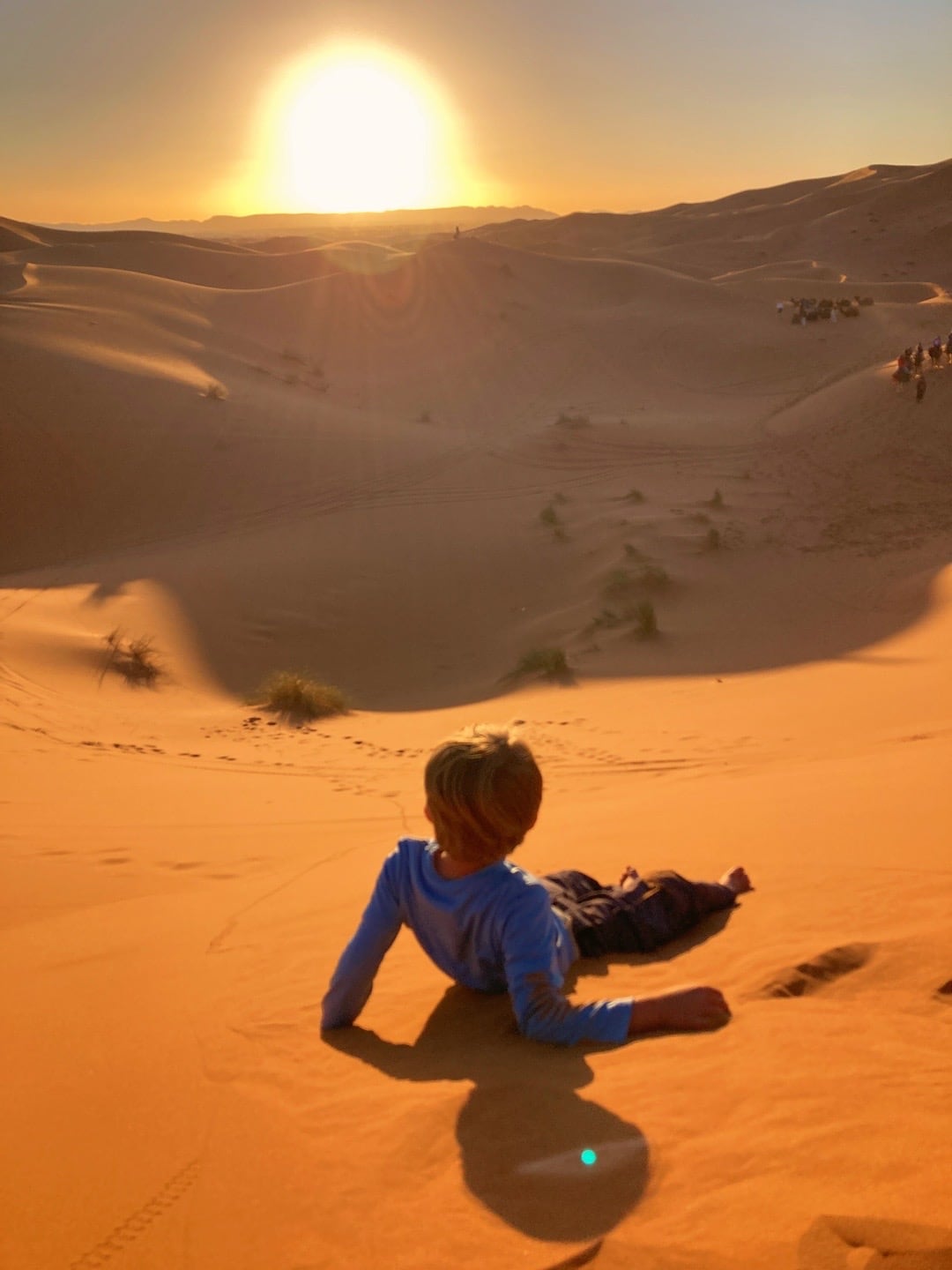
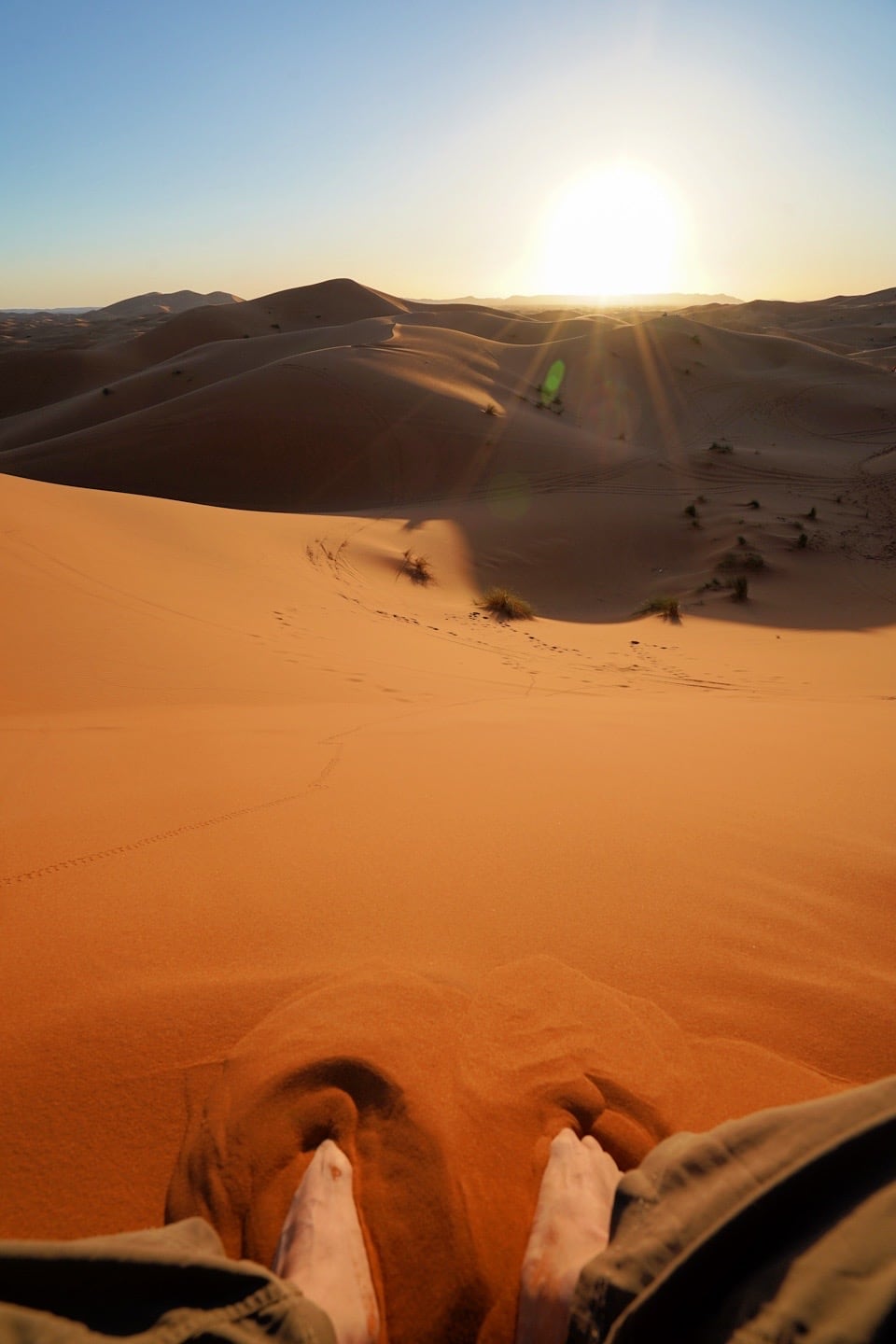
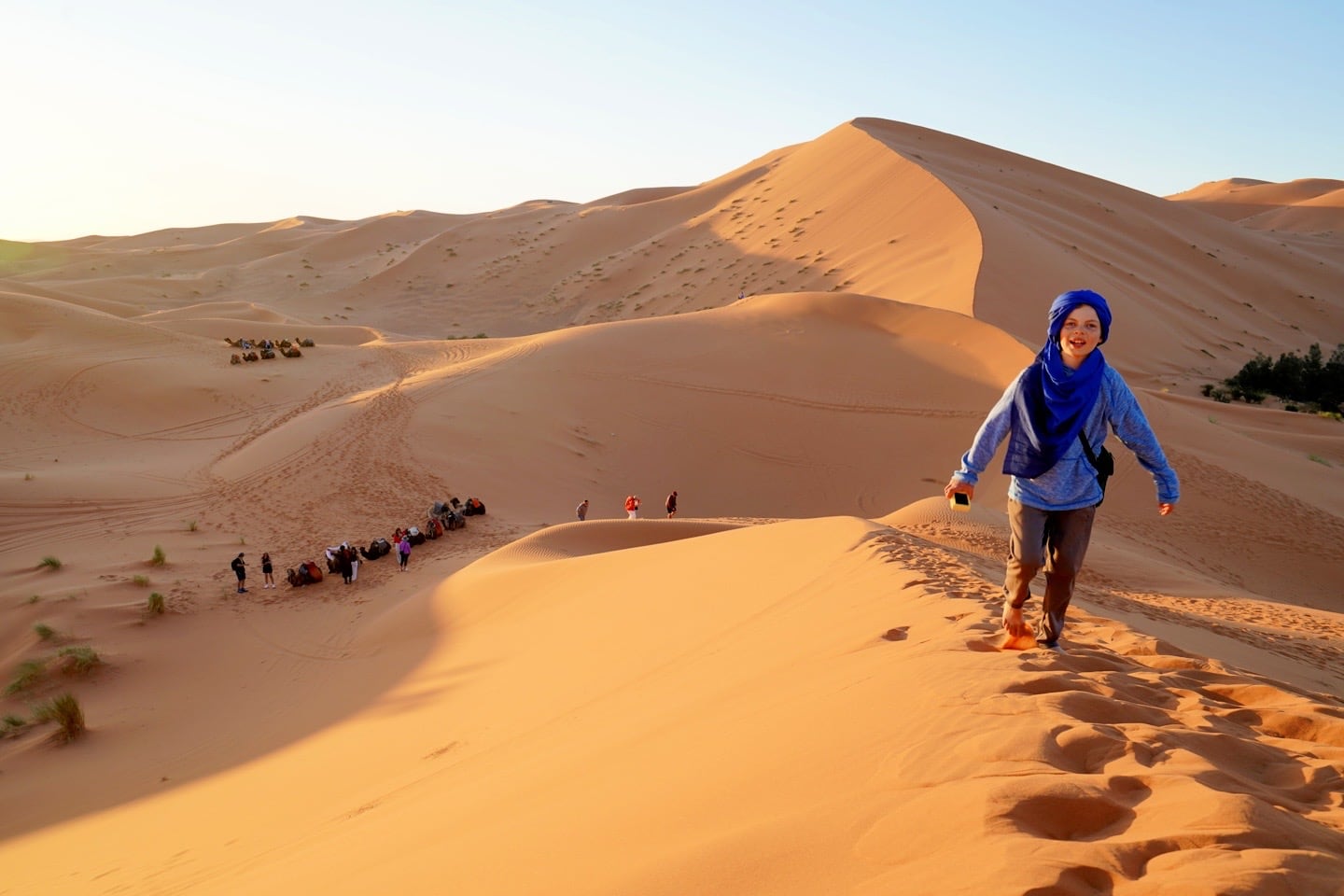
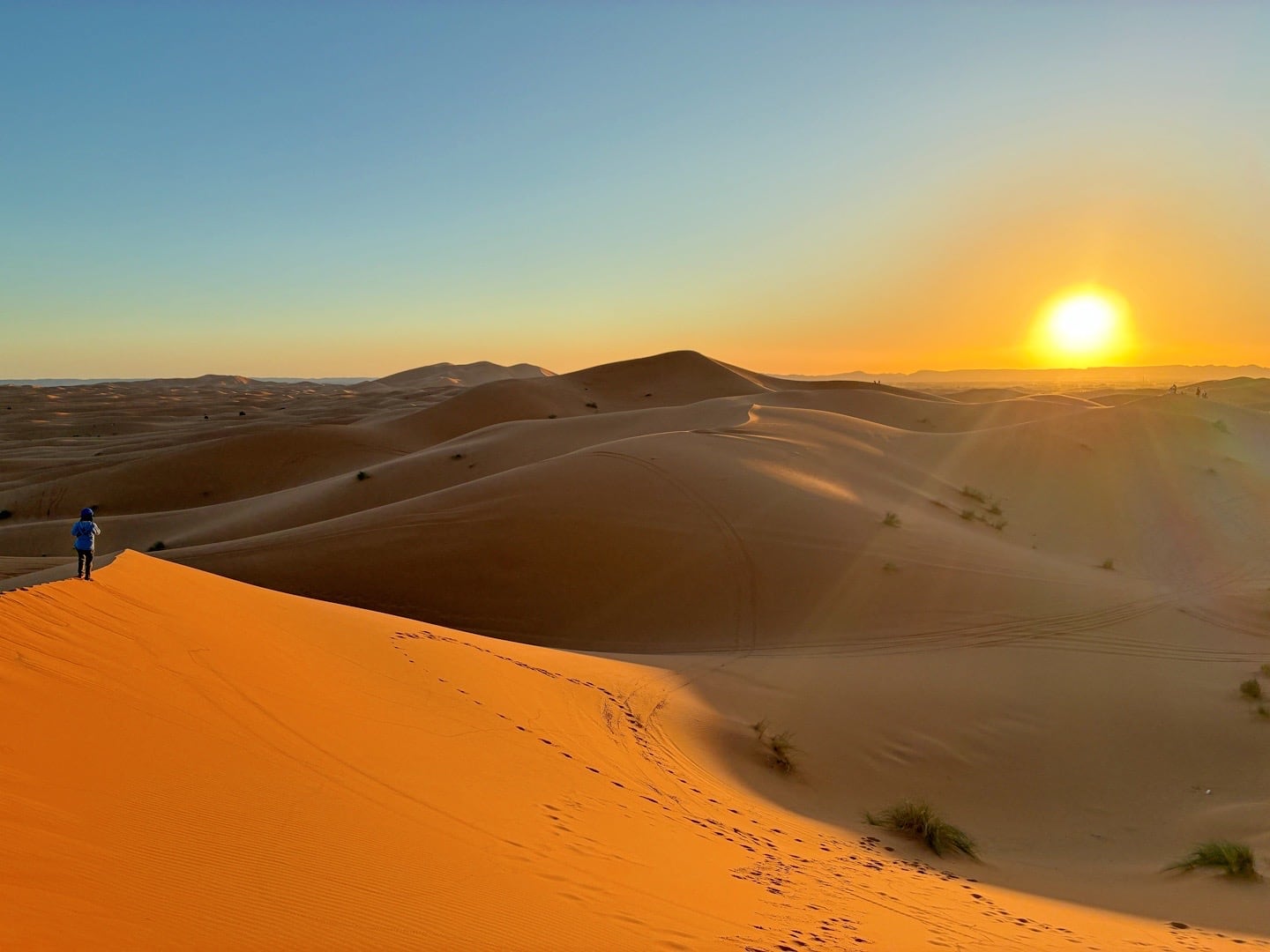
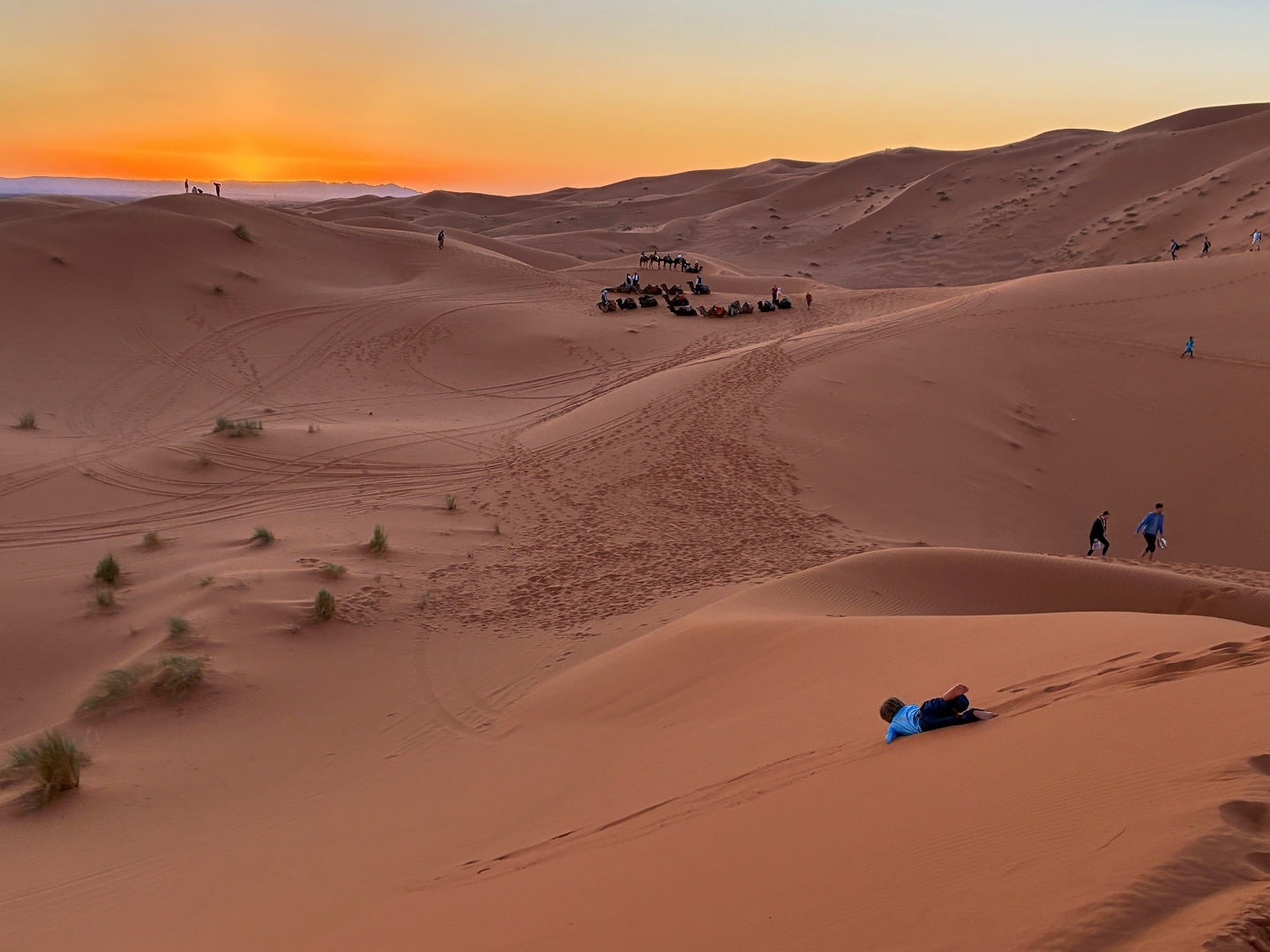
Another dramatic and memorable Moroccan sunset!
Time to make our way back for dinner.

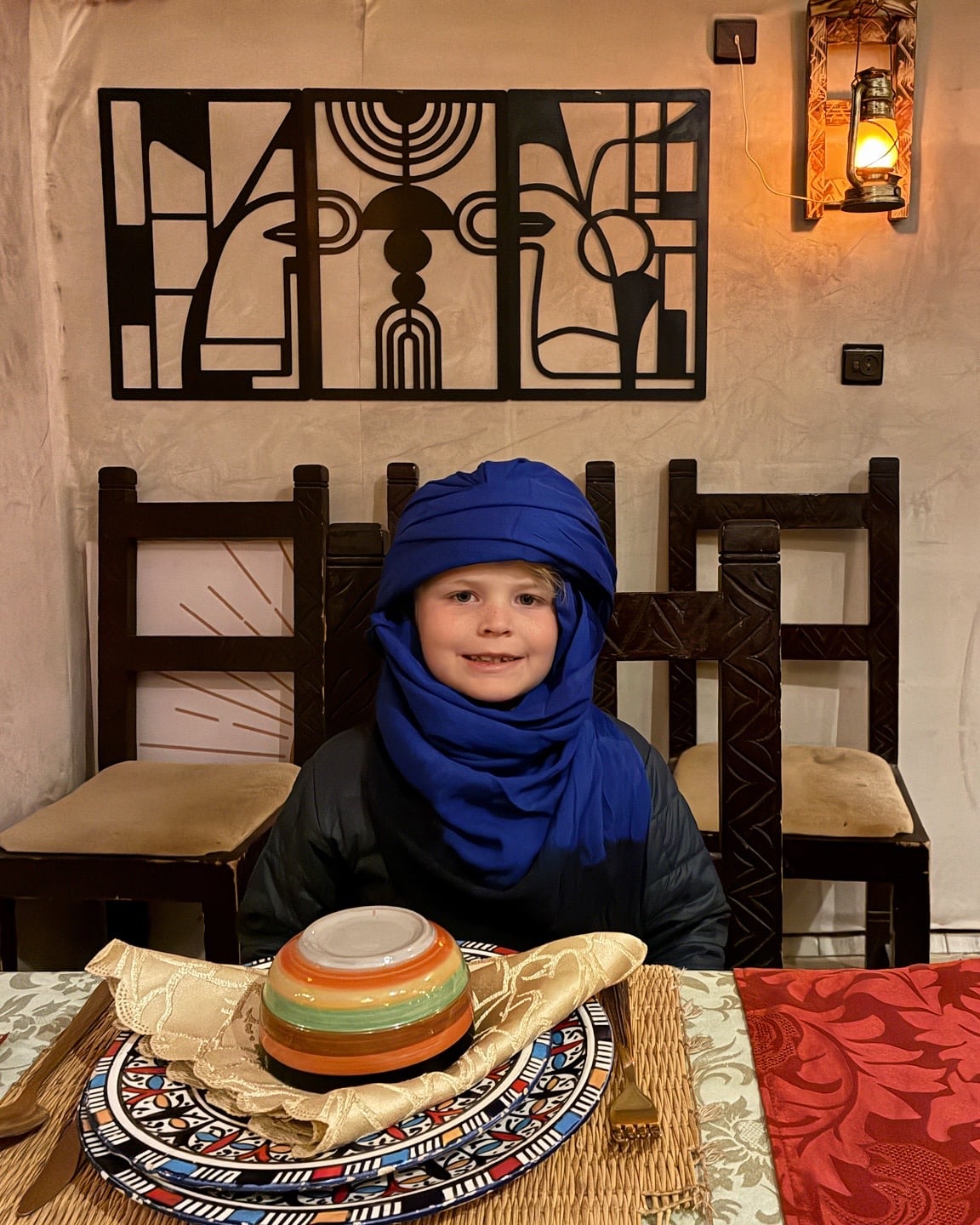
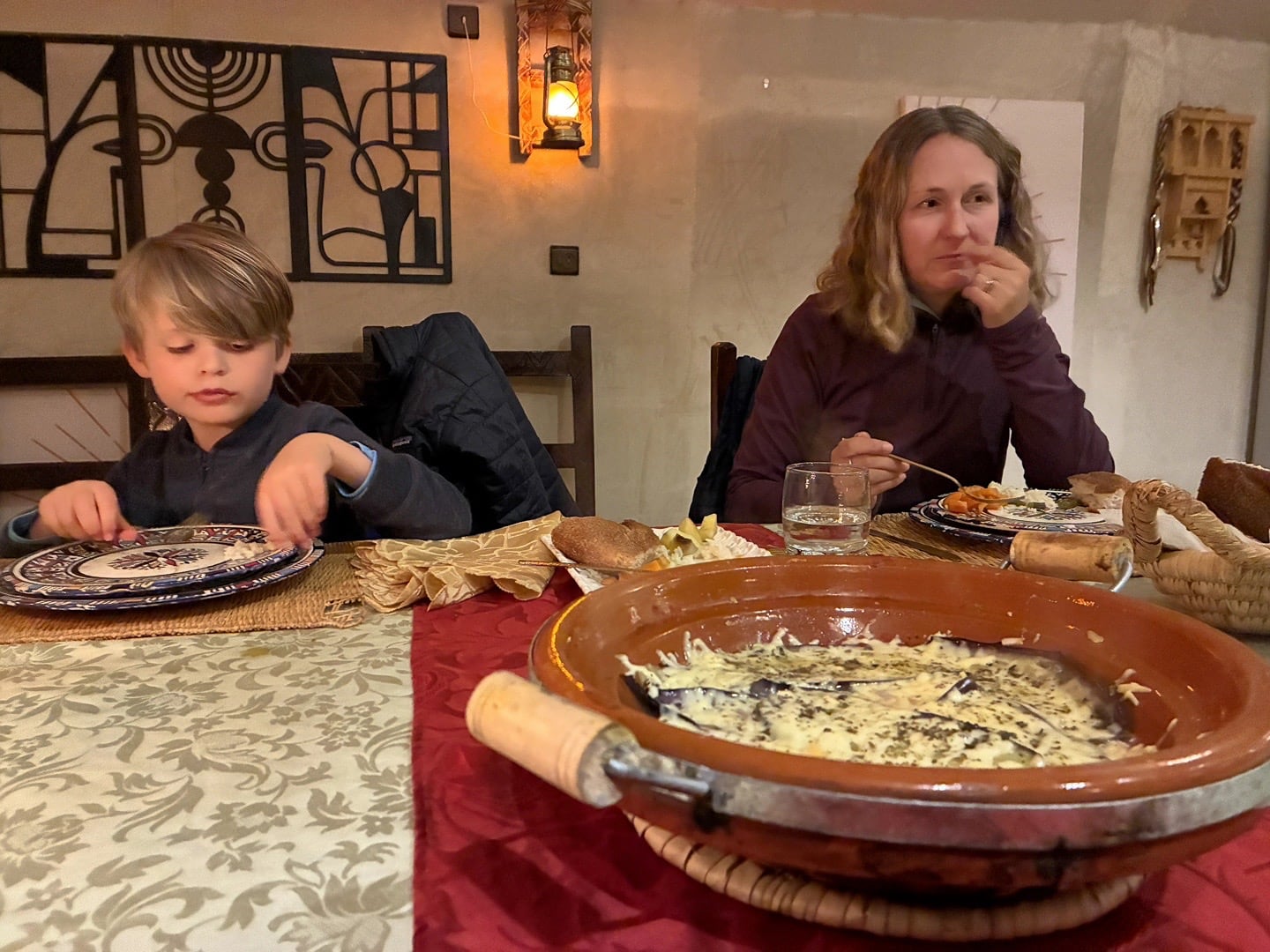
We were stuffed with more food than we could possibly pack away. Multiple courses of Berber specialties kept coming out of the back.
We almost wish they had saved some for breakfast the next morning, as the breakfast was one of the lighter ones we’ve had on our road trip.
Regardless, the food was delicious, and the staff, as always in Morocco, was genuinely friendly and welcoming.
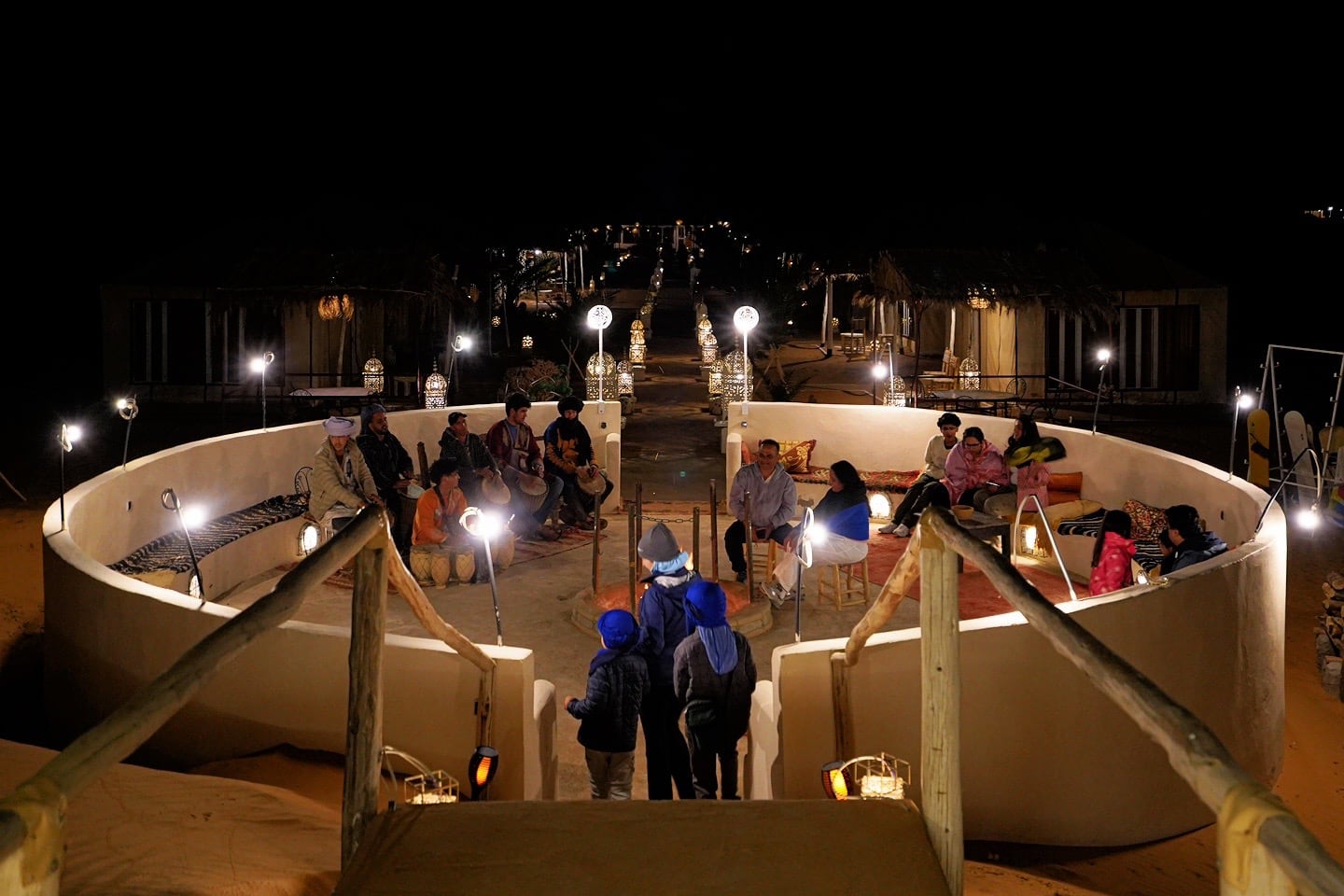
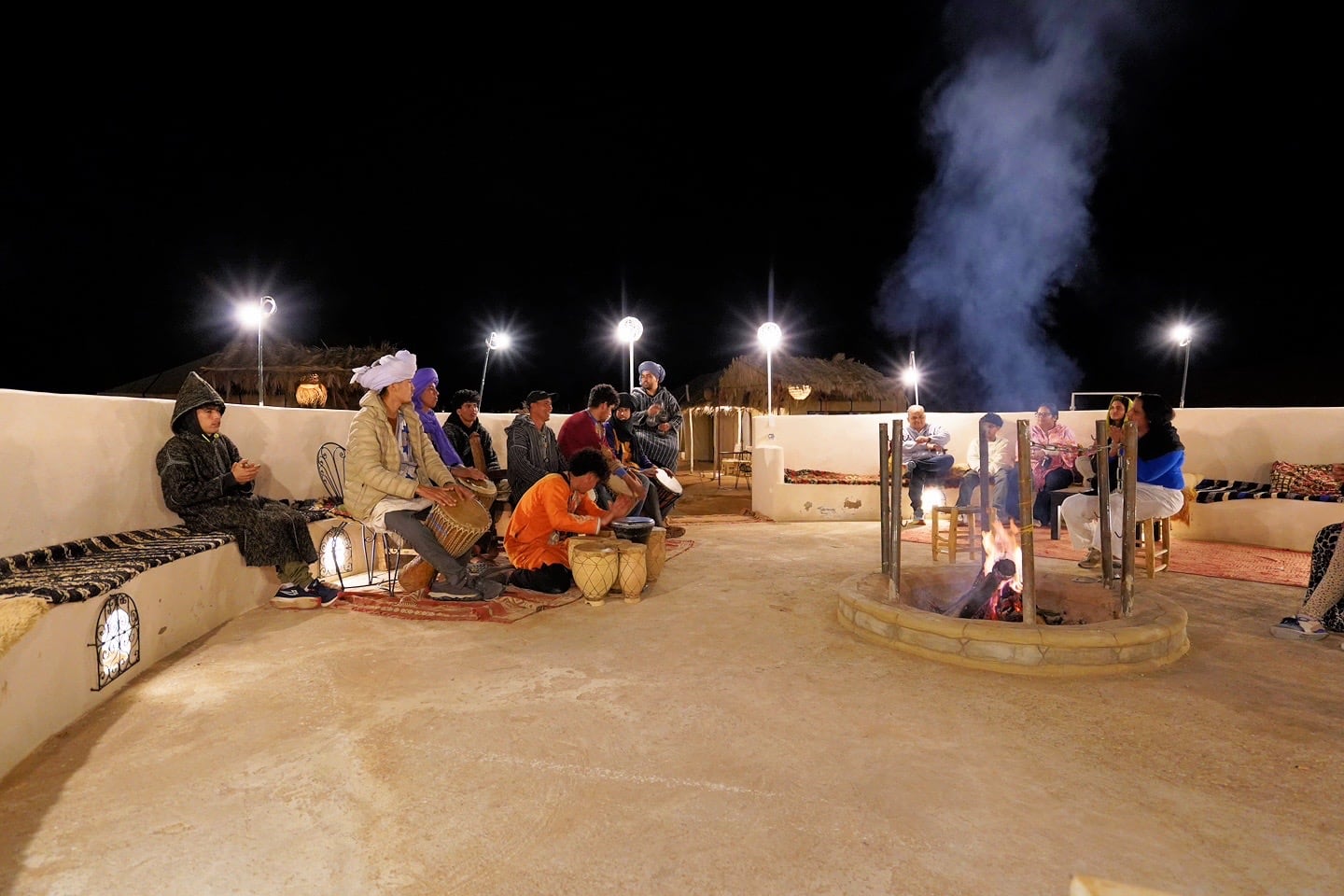
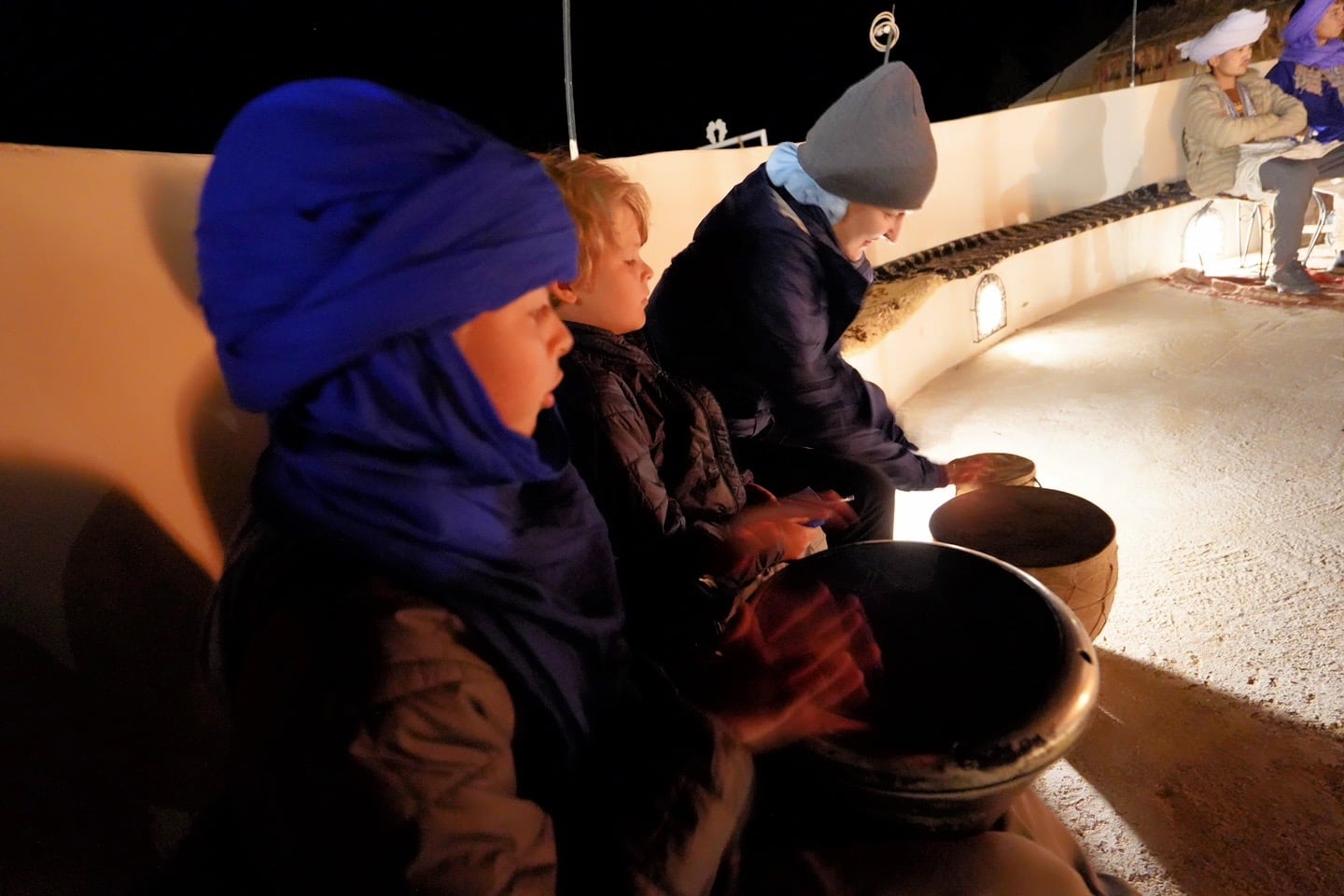
After dinner, the staff put on a drum performance around a fire and under the stars. A very nice end to a memorable day.
Again, Lori was up and at ’em to watch the sunrise over the dunes.
A short while later, the boys and I joined her. The light was still dramatic.
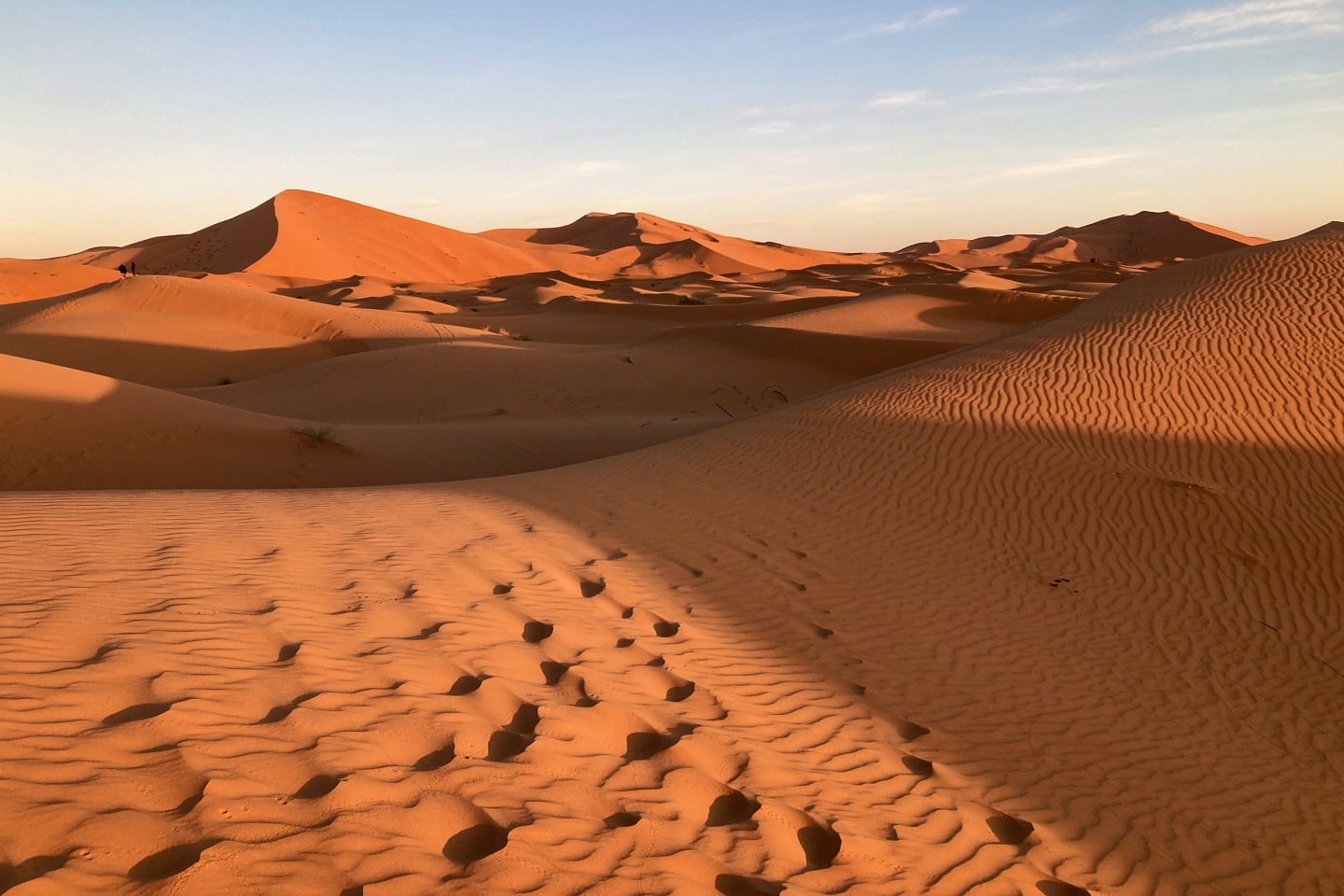
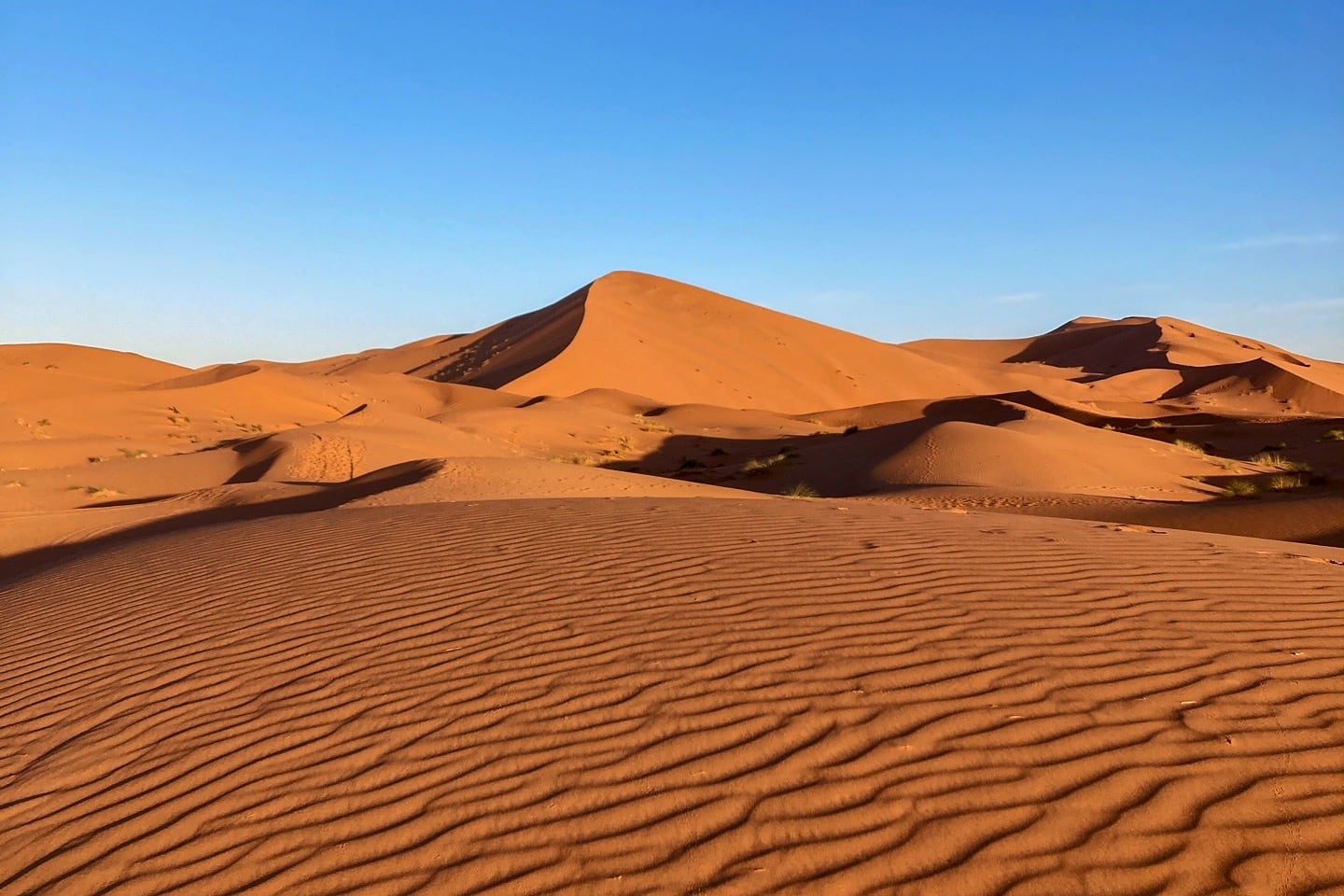
After breakfast, we made sure to get a couple more hours of fun on the dunes in before check-out. Most of the other guests had already left (I assume they had tour buses to catch to take them back to Marrakesh), so we essentially had the camp and the dunes all to ourselves.
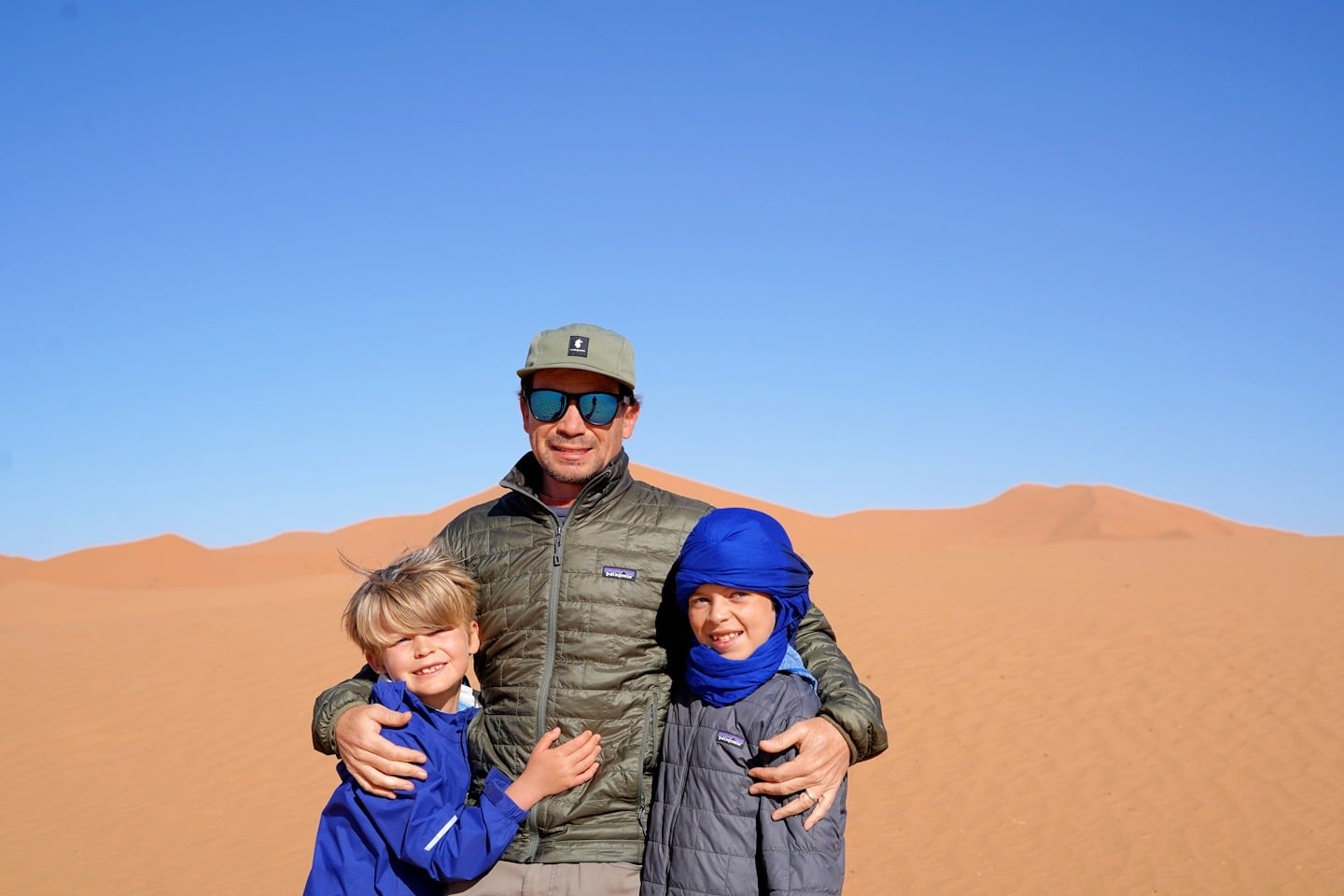
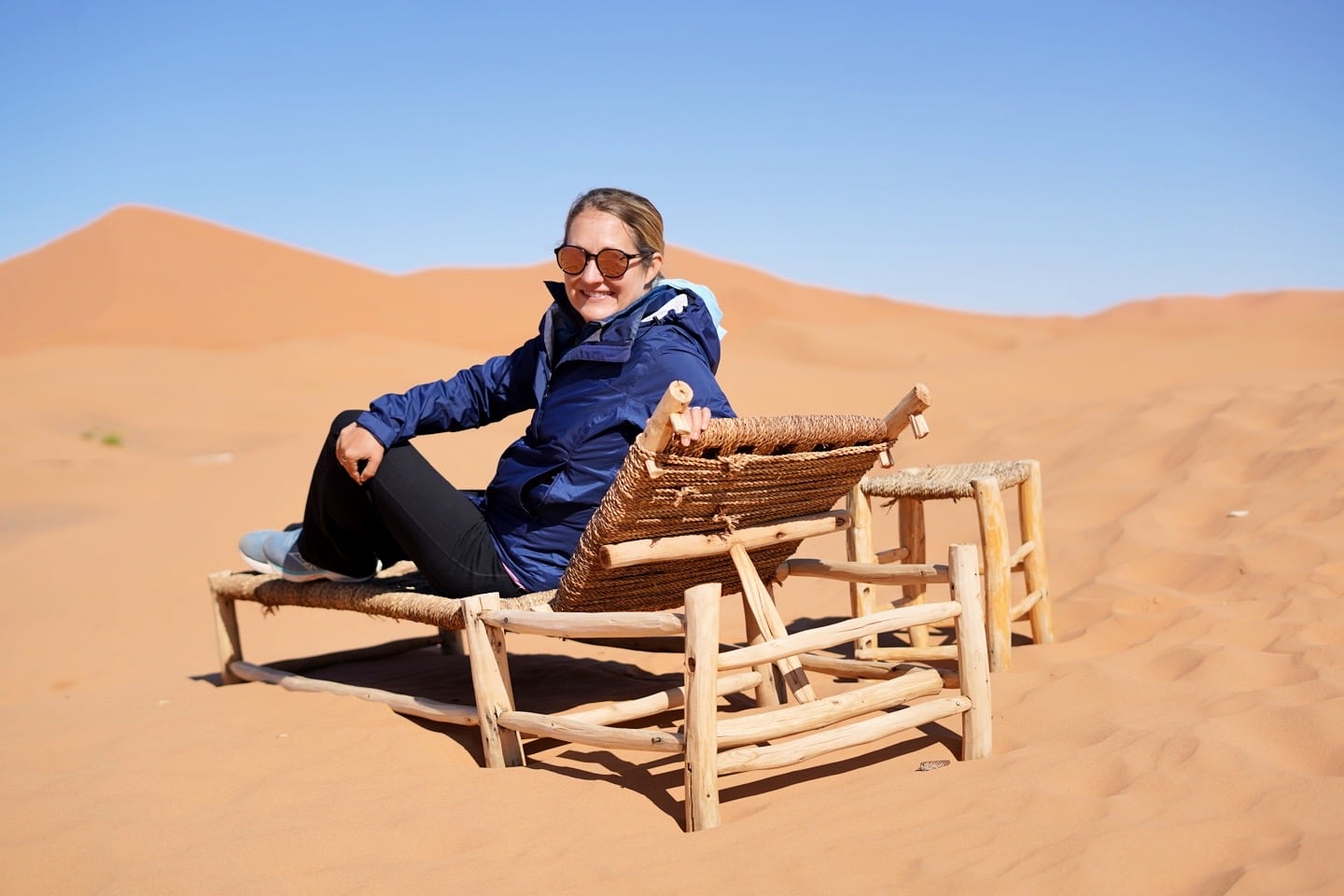
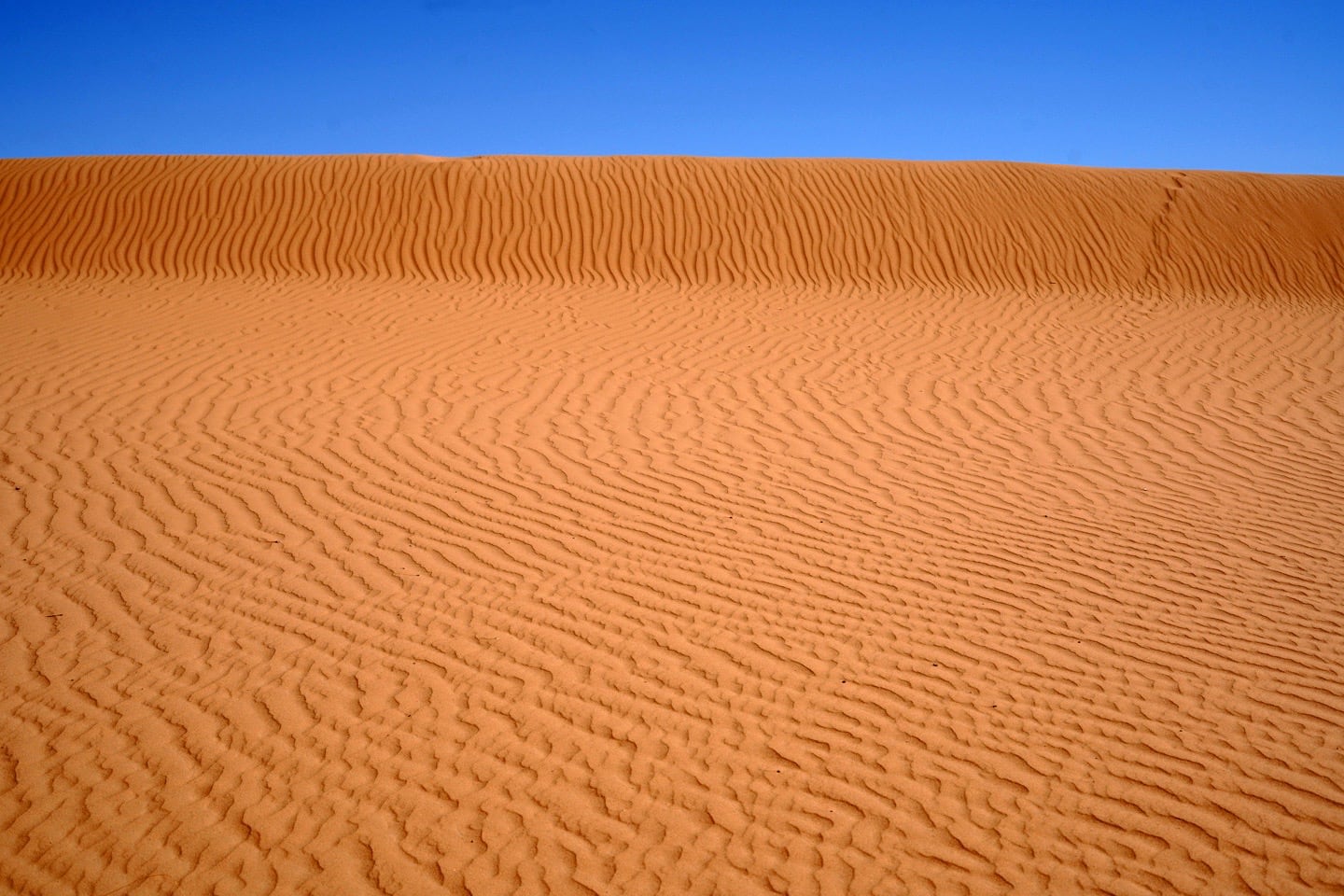
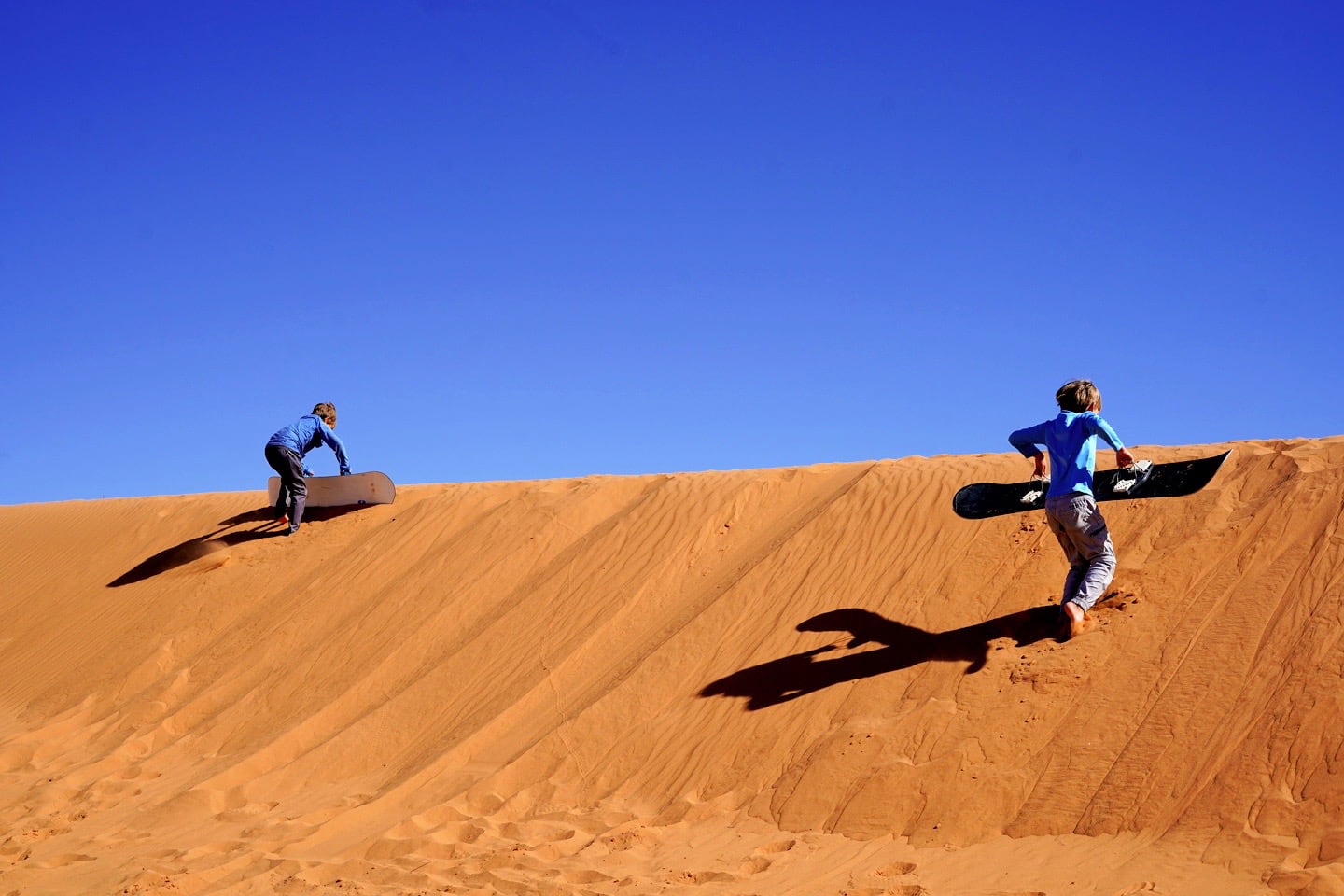
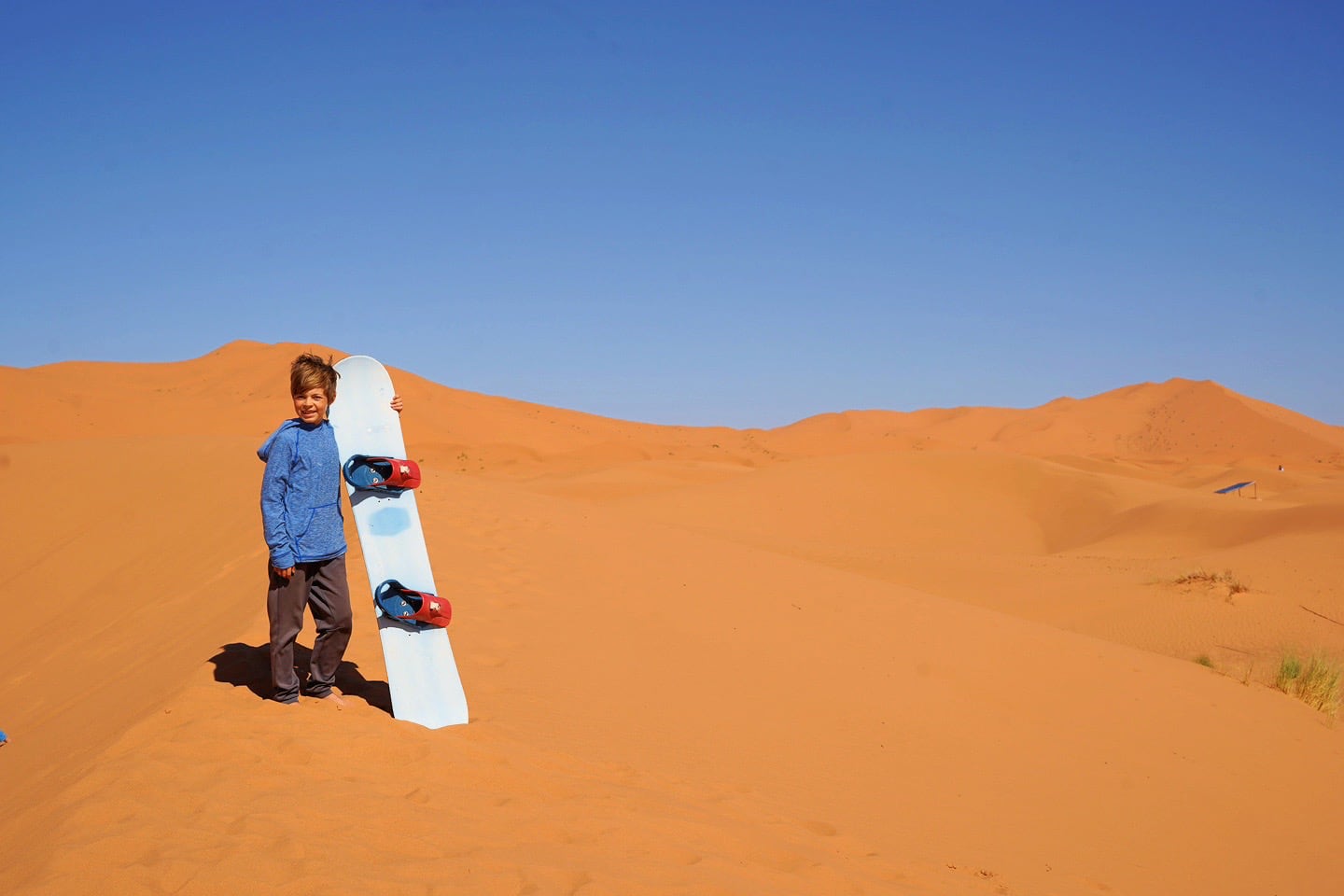
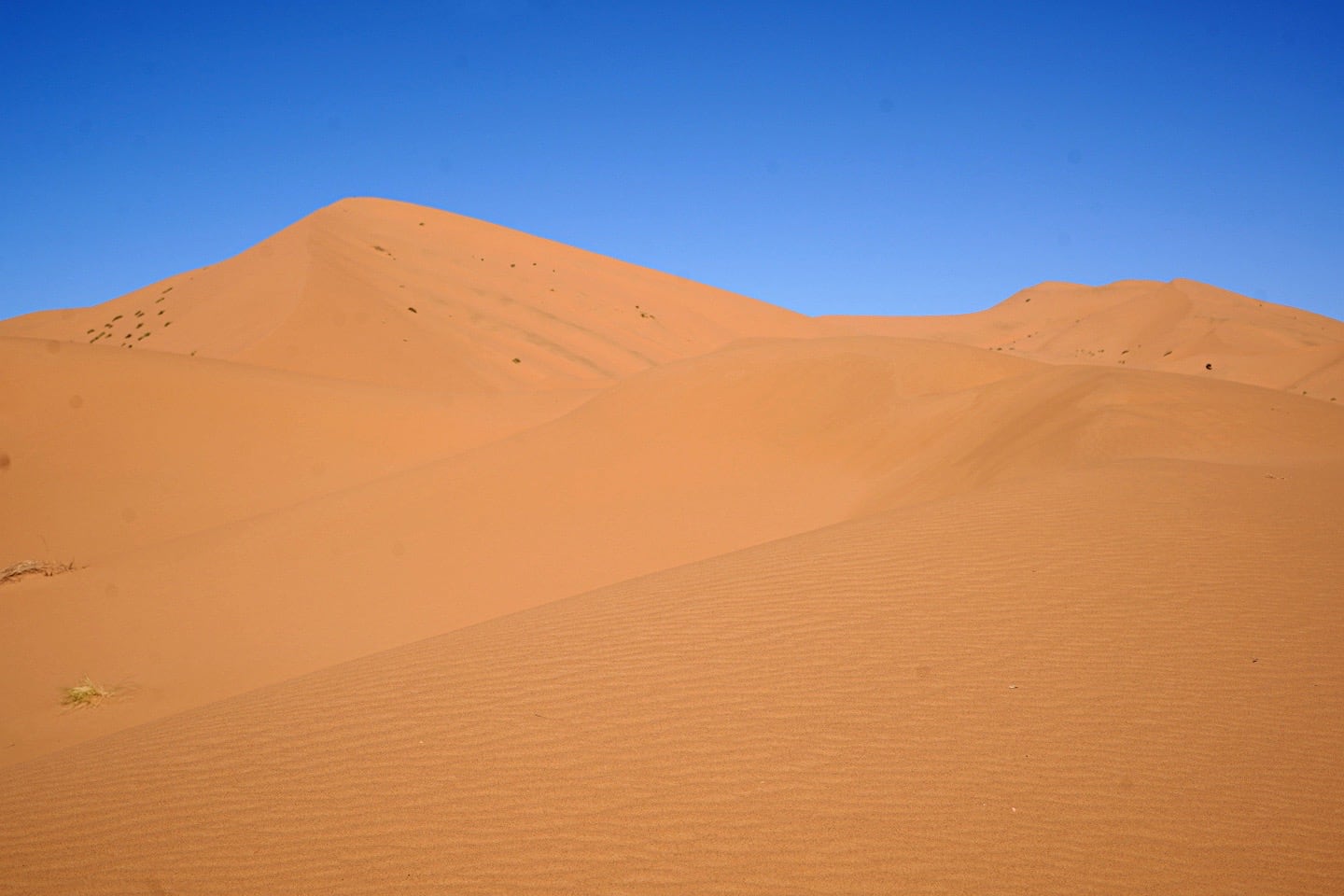
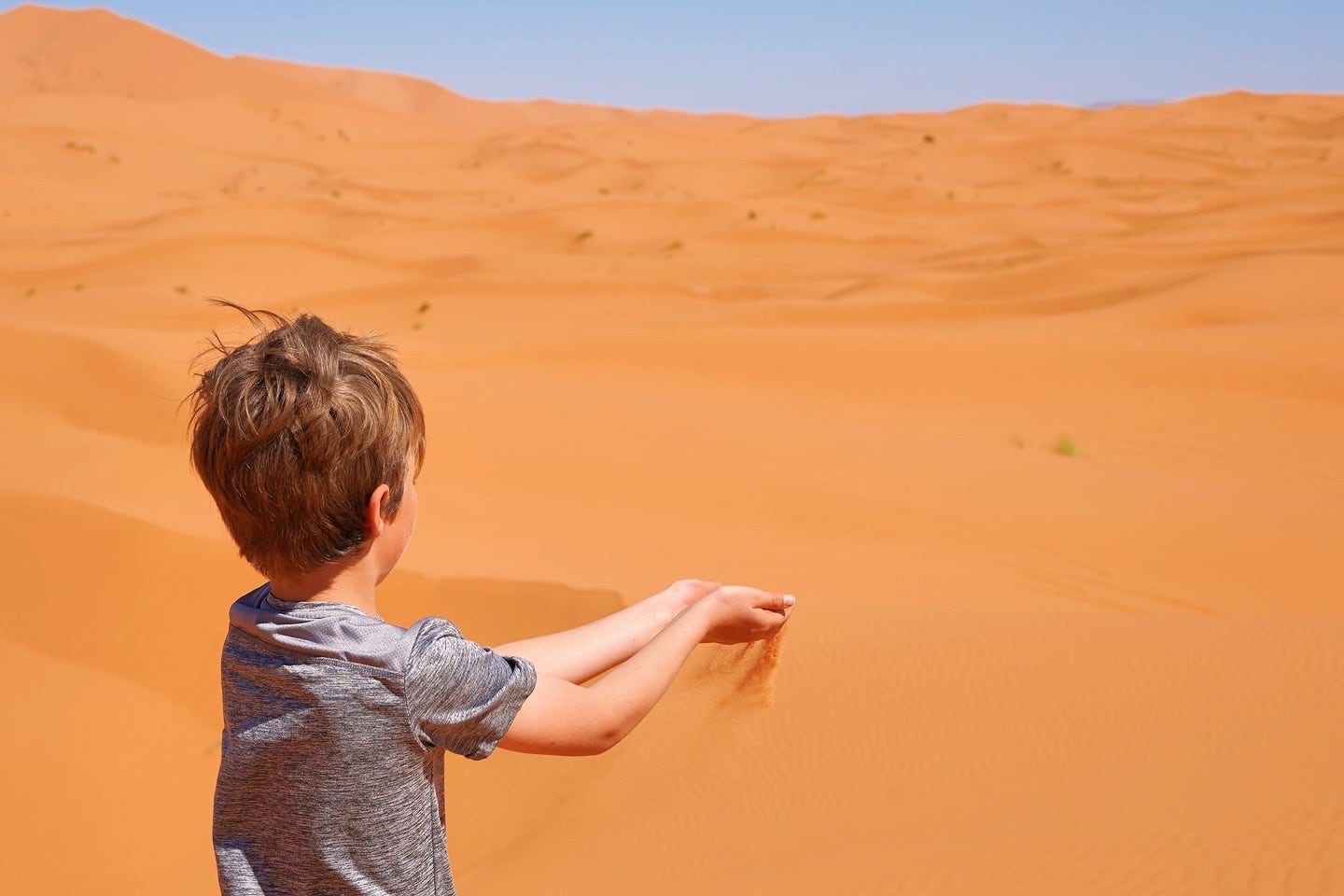
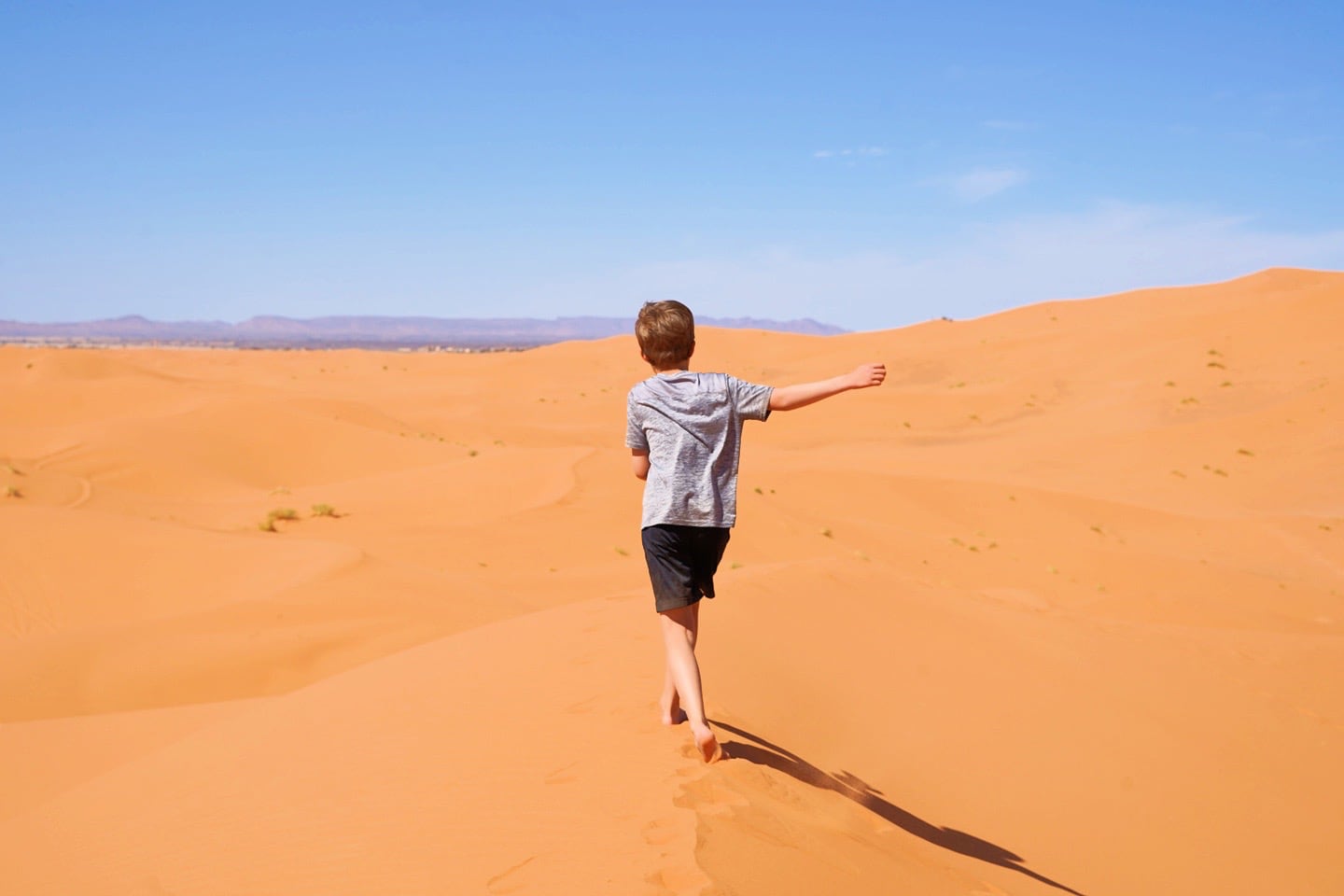
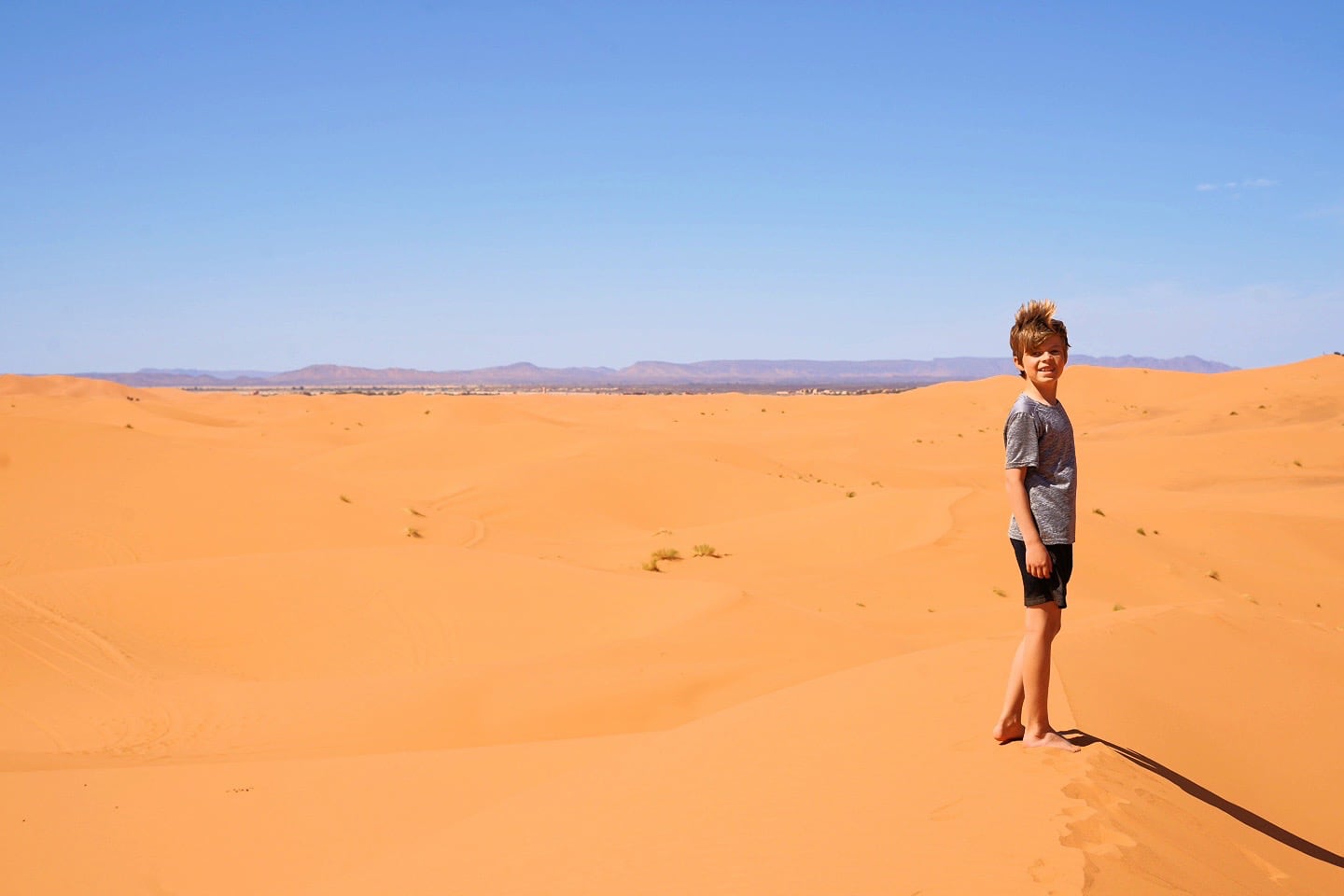
We walked everywhere here barefoot. The sand looks hot, but stayed pretty cool throughout the day. Overnight and daytime temps didn’t really let the sand heat up that much, reaching mid-70s (F) during the day and dipping to the low-40s at night.
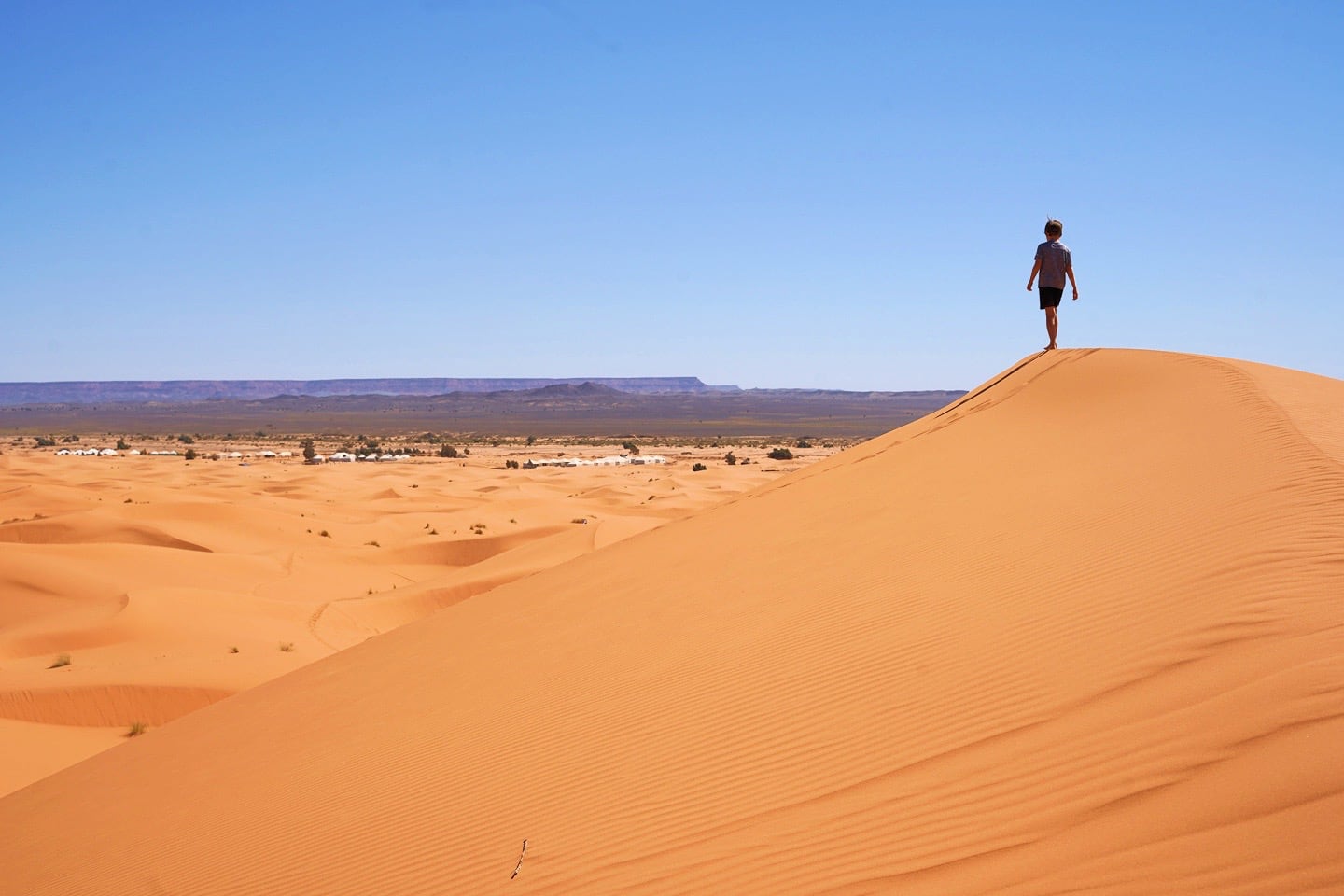
We got back to Merzouga the same way we came here: By 4×4 Prado, a direct competitor to our old Mitsubishi Montero. I couldn’t help kicking myself thinking about all the dune driving I could have done in Baja. Who needs an RZR!
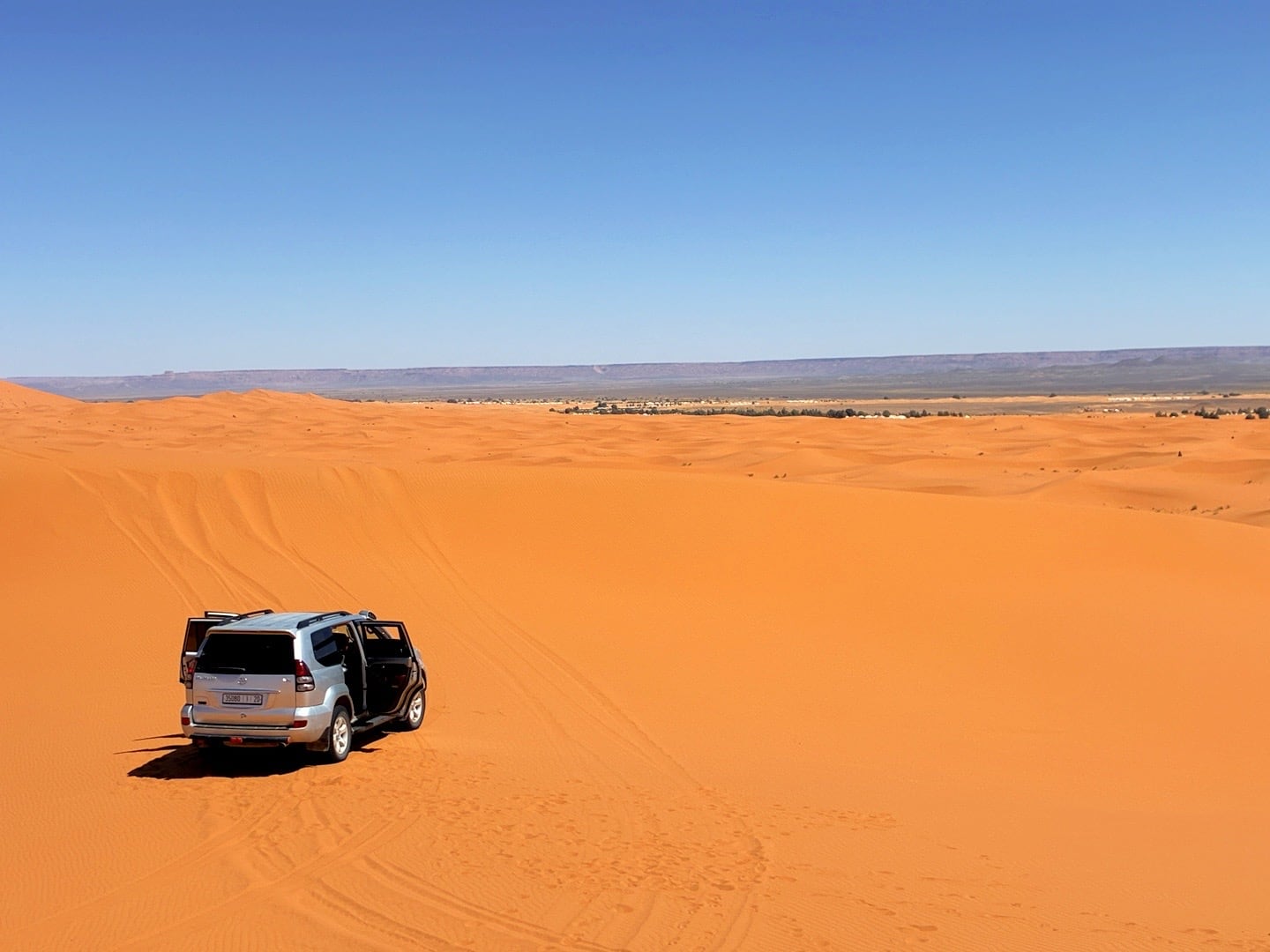
This time, the driver drove us nearly to the top of Lala Lallia, the highest dune (and reddest part) of Erg Chebbi, for the best views yet of the entire Erg.
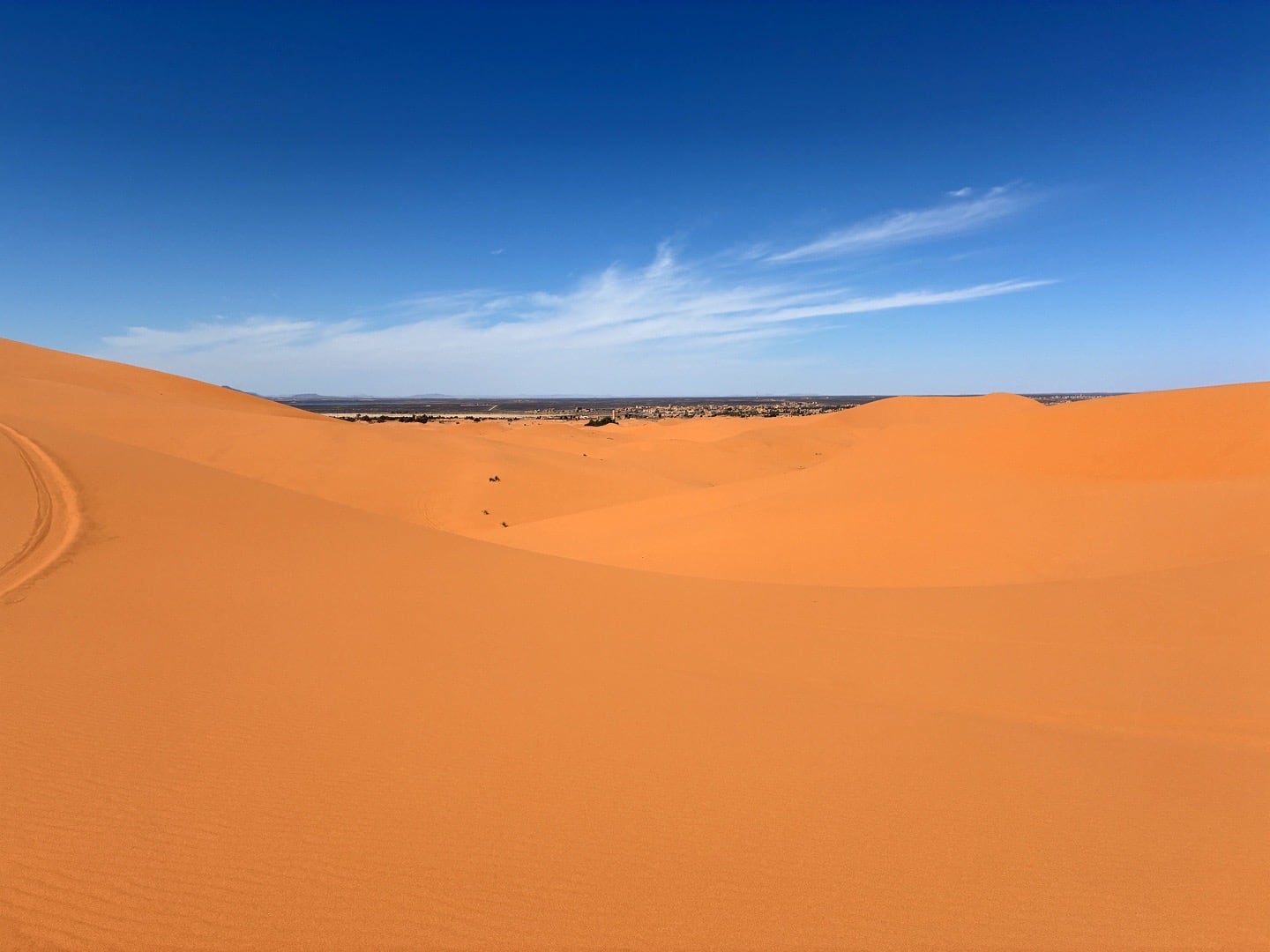
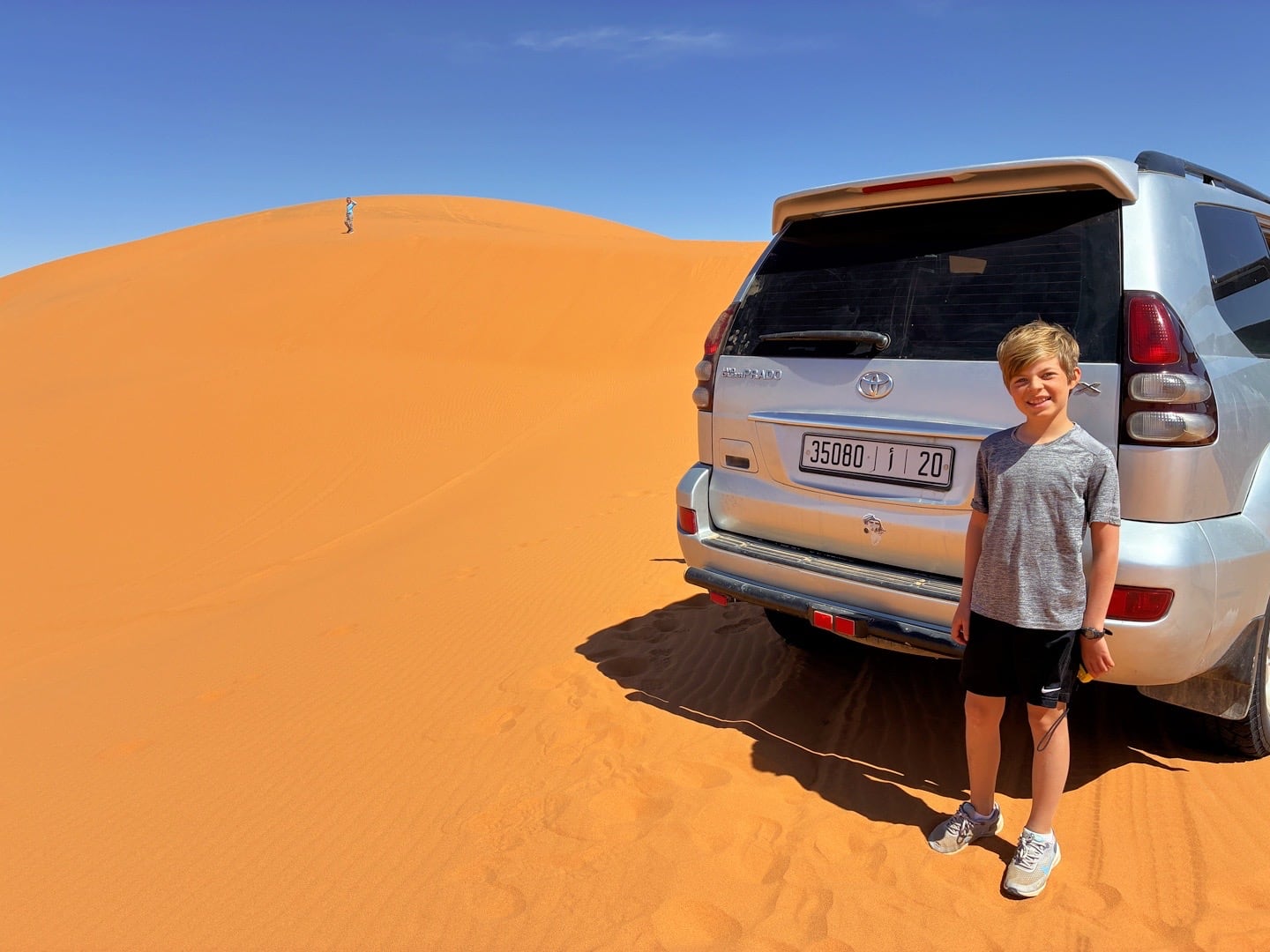
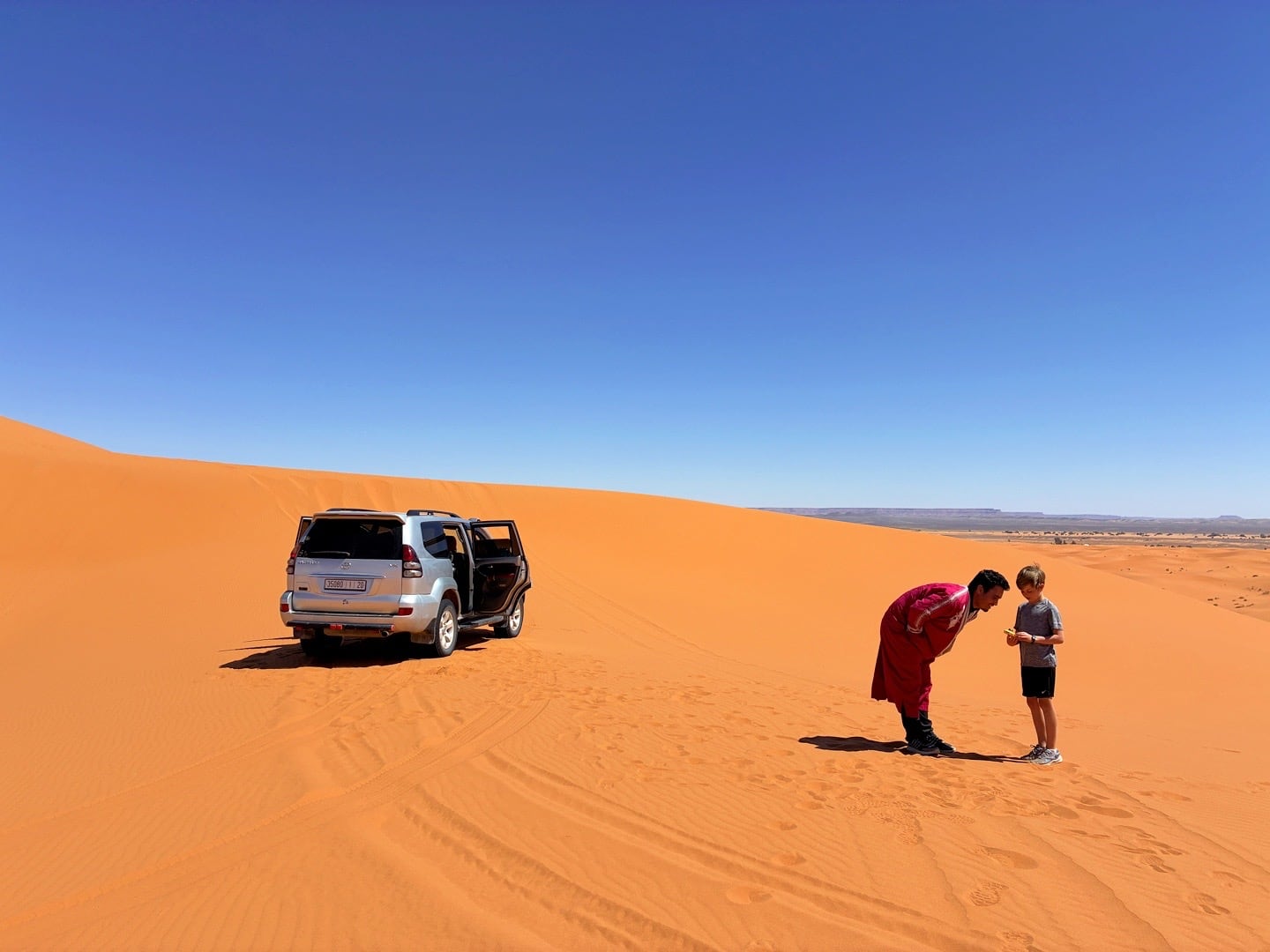
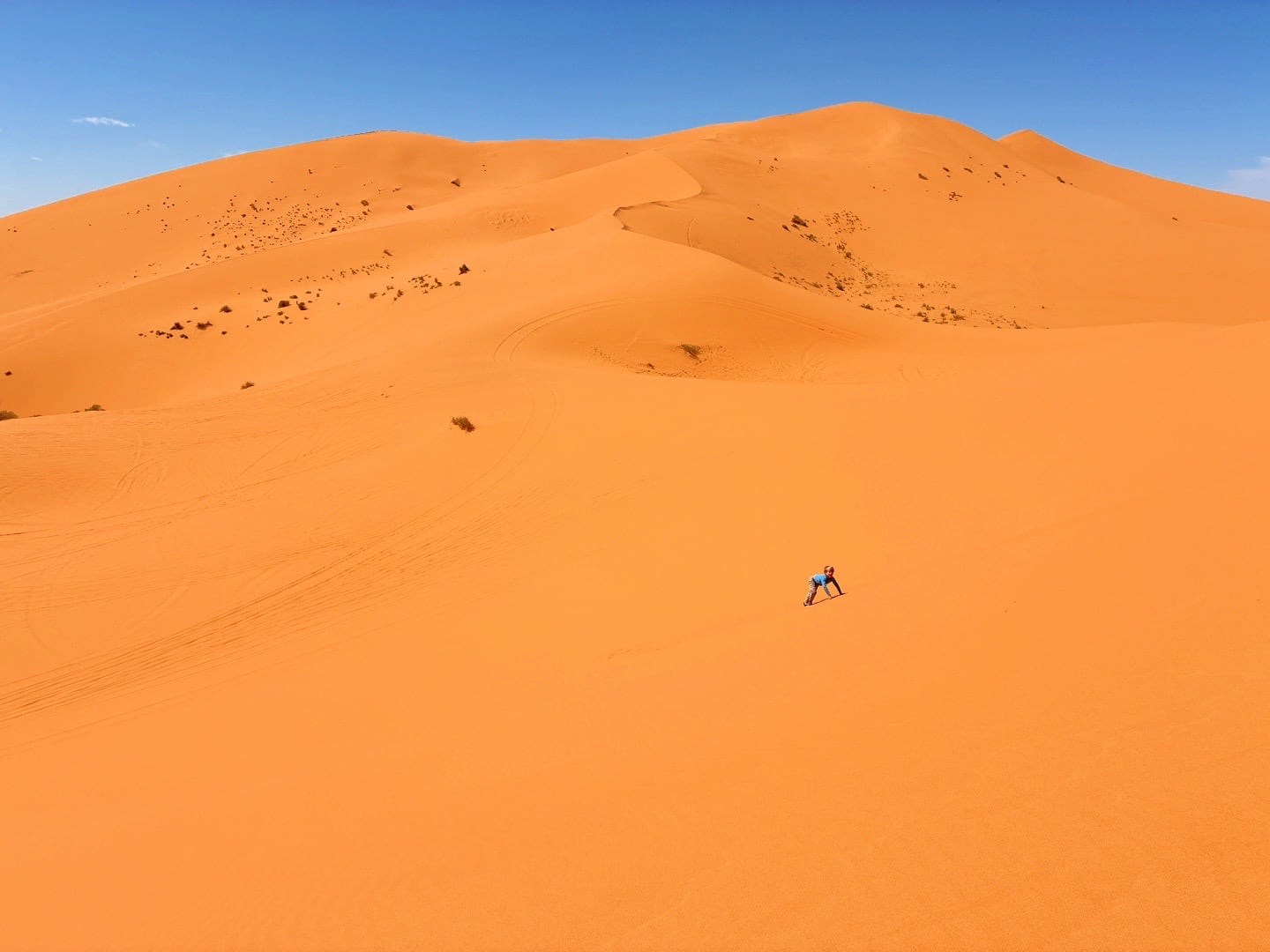

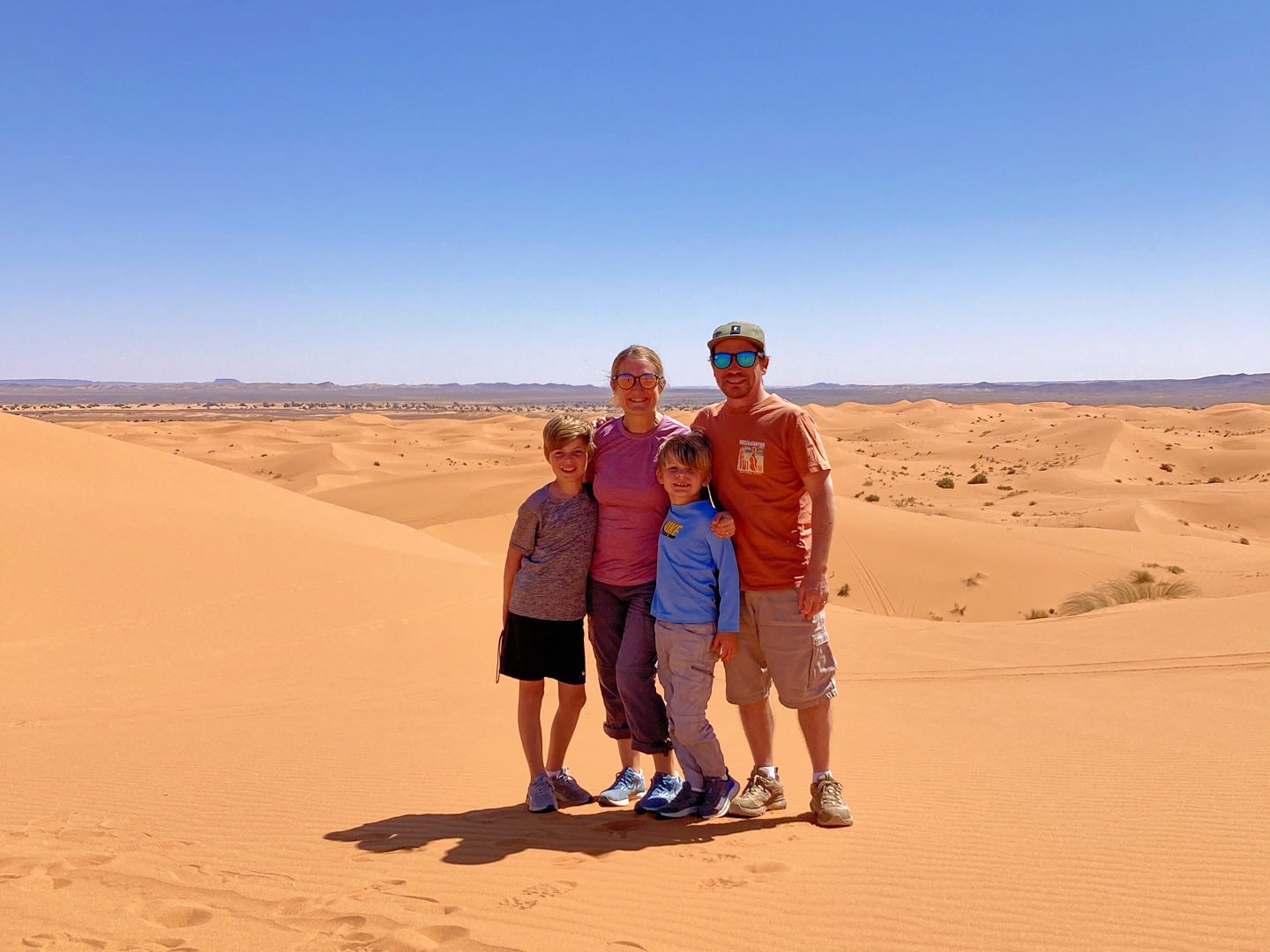
Mission accomplished!
Guess that means it’s time to make our way back to Marrakesh…
.