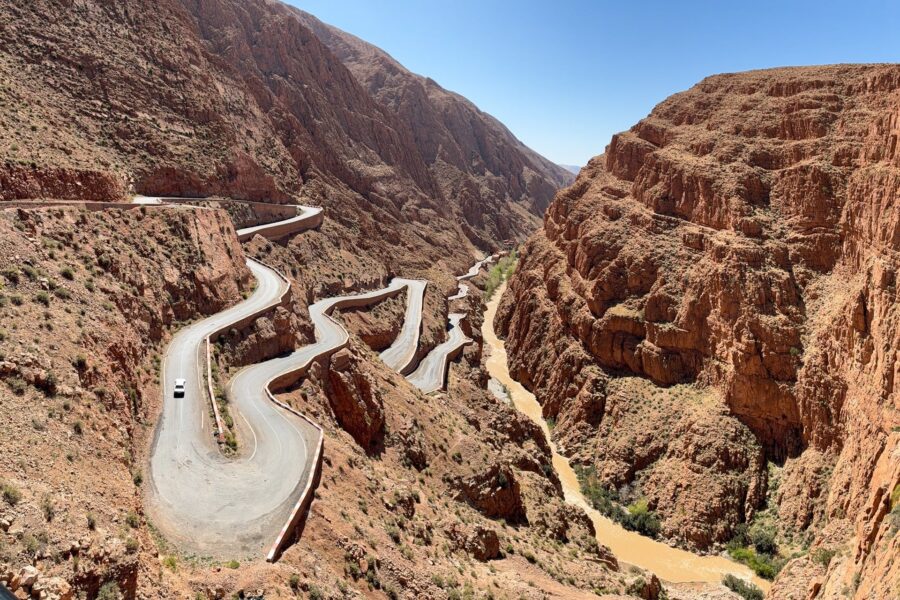
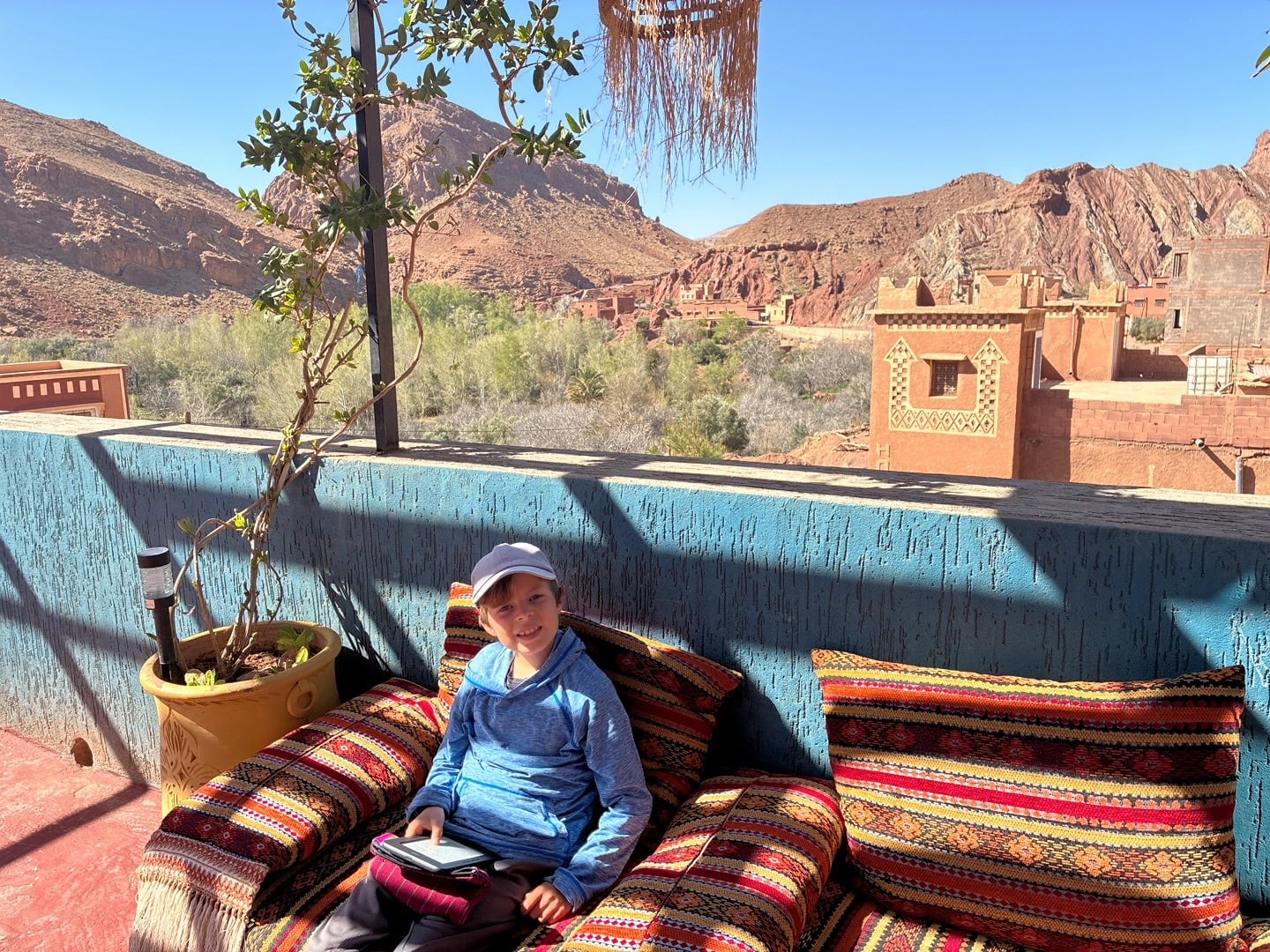
Following a big day of hiking yesterday, a restful night’s sleep, and another delicious Moroccan breakfast, we couldn’t help but linger in Dades Valley just a little bit longer than expected before hitting the road.
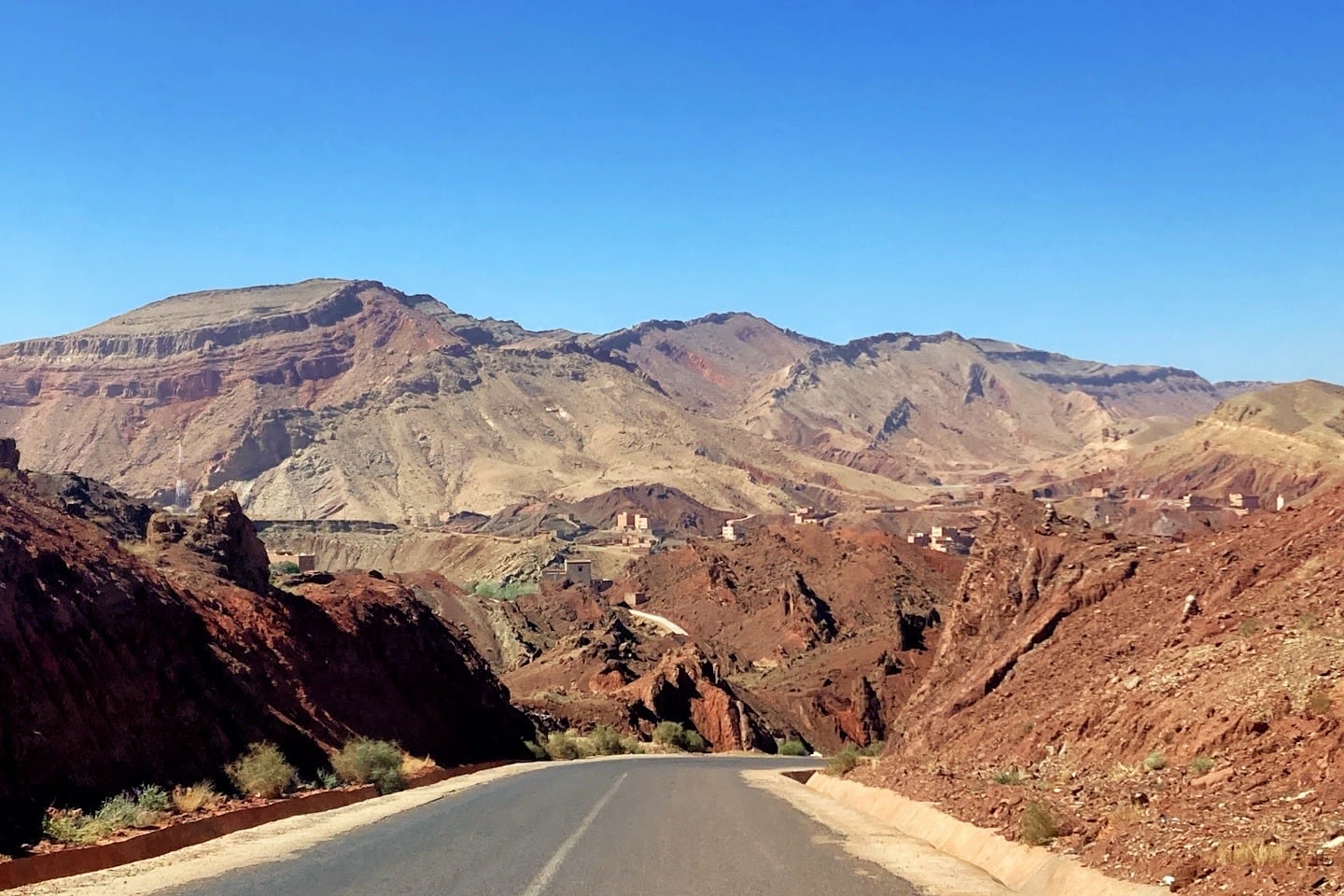
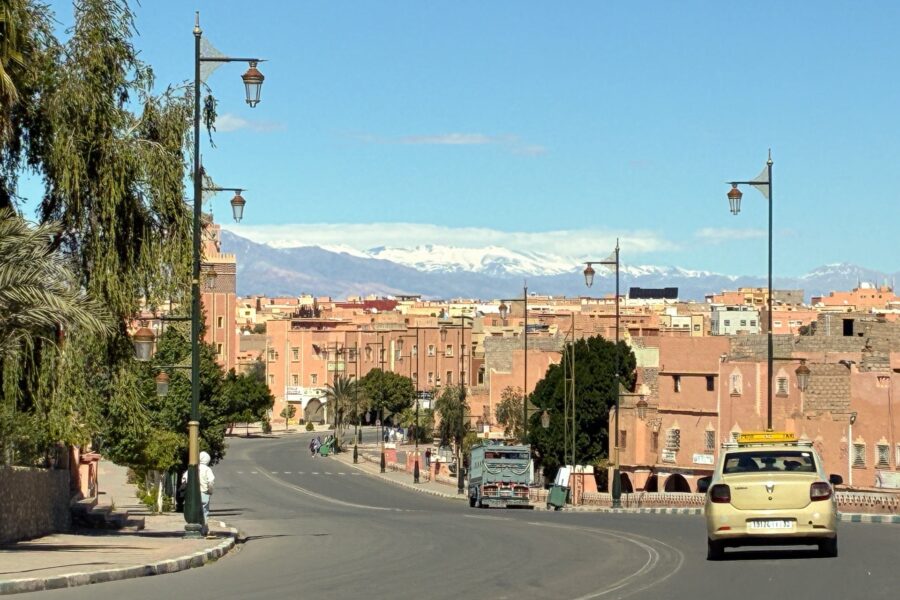
With the Dades River Valley in the rearview, we going back up with the N10 and just an hour later, arrive in the lush oasis of Tinghir.
Our Euro-African Journey (So Far...)
Along the short drive, we pass more ancient fortified villages than any of us have ever seen in our entire lives—most of them long abandoned, but some showing signs of life.
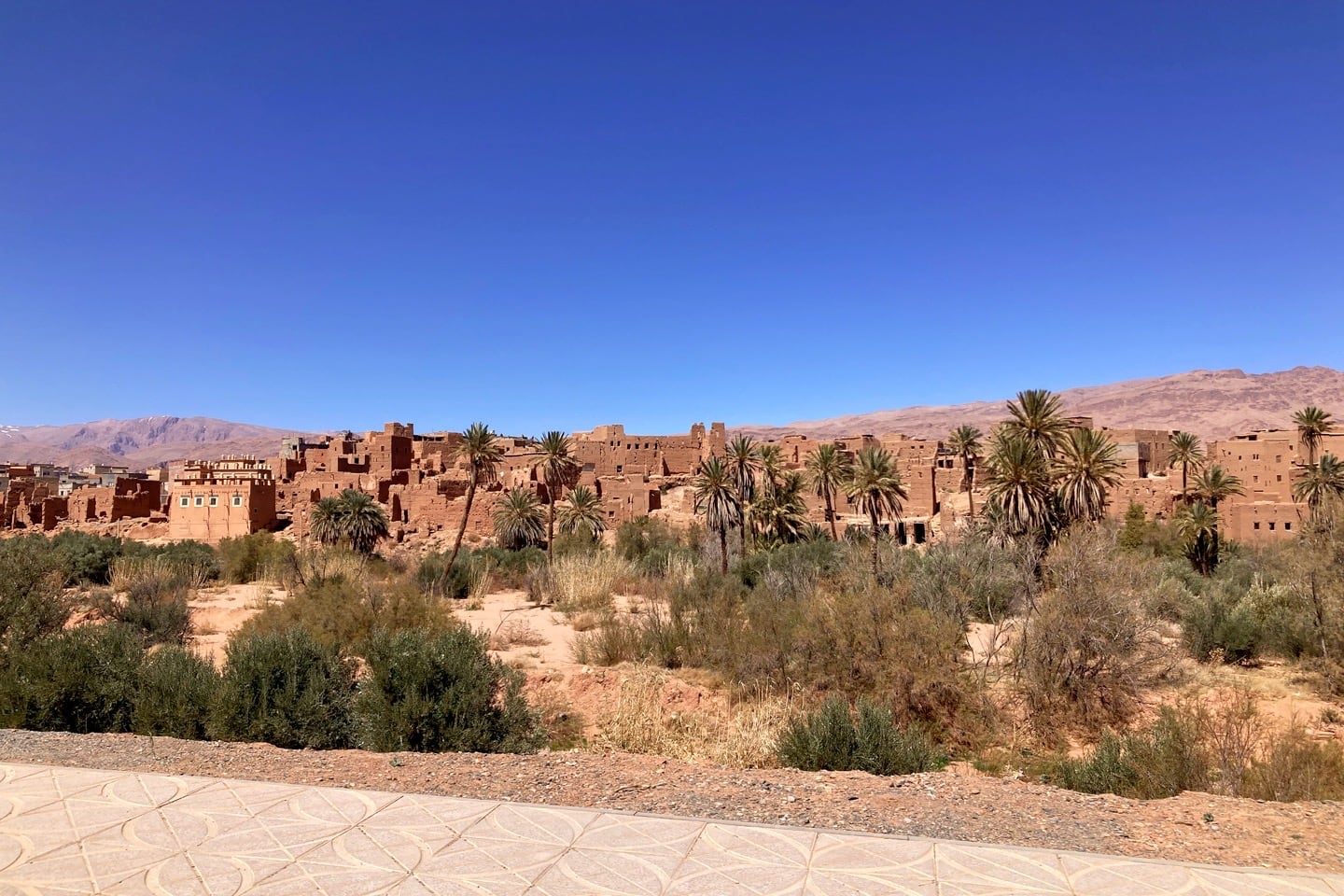
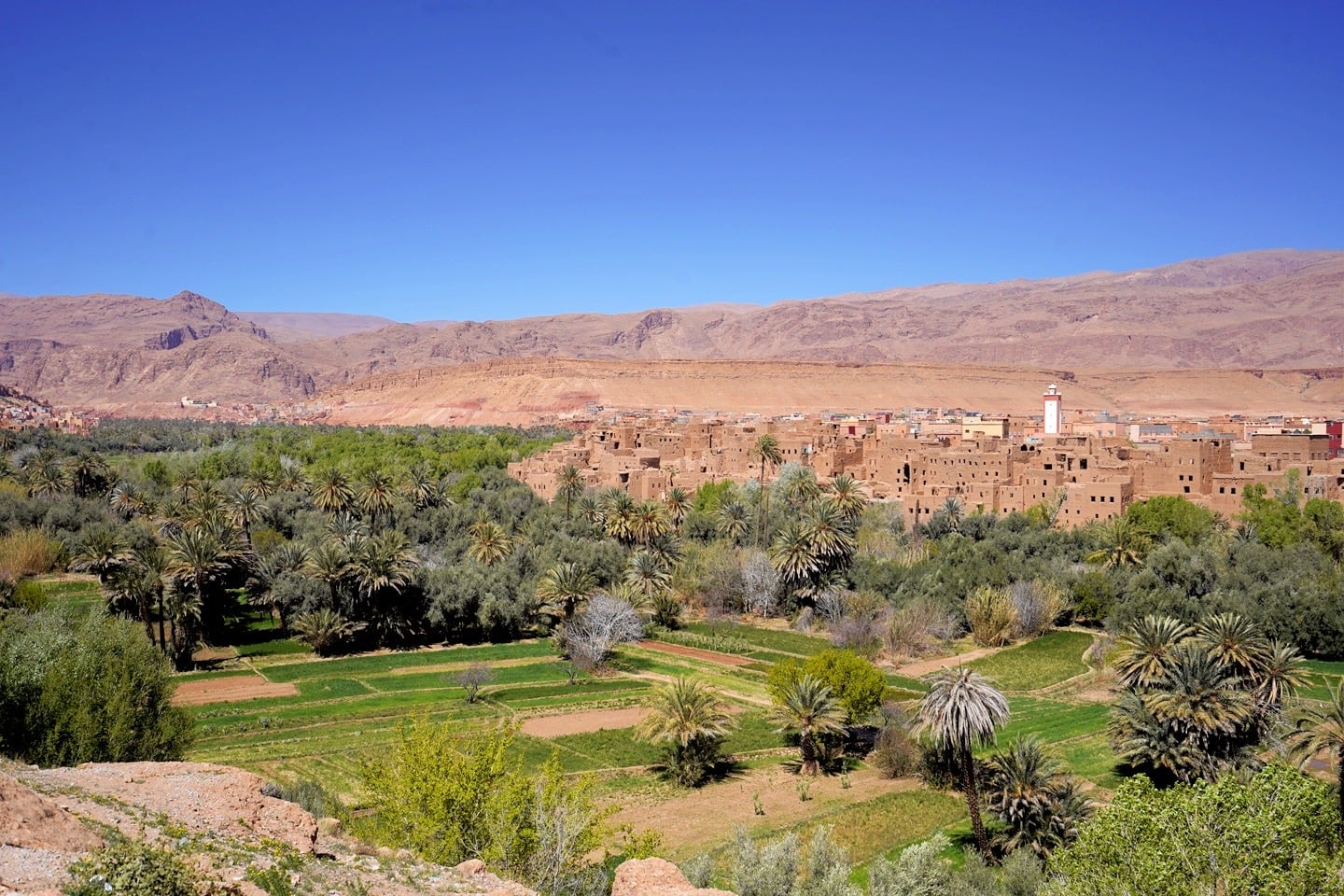
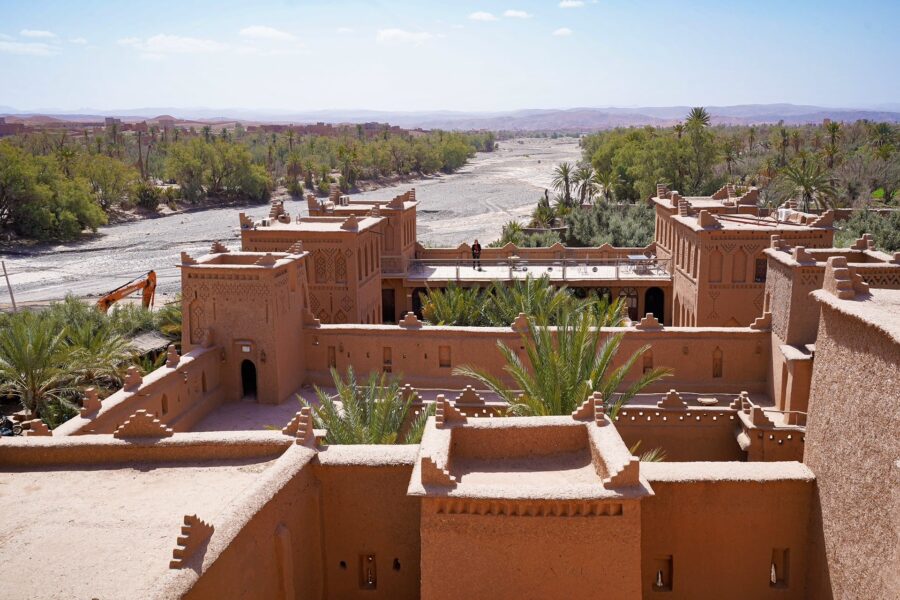
This is more or less the same view that the desert caravans would have seen hundreds of years ago as they approached the oasis.
Here at the edge of the largest desert in the world, in one of the driest and most arid climates on earth is this ocean of green, as far as the eye can see.
How is this possible? The snow-capped High Atlas Range—located a couple dozen miles from here—receives significant winter precipitation from Europe and the Mediterranean from the north. This provides a year-round source of water for these valleys on the southern side of the range.
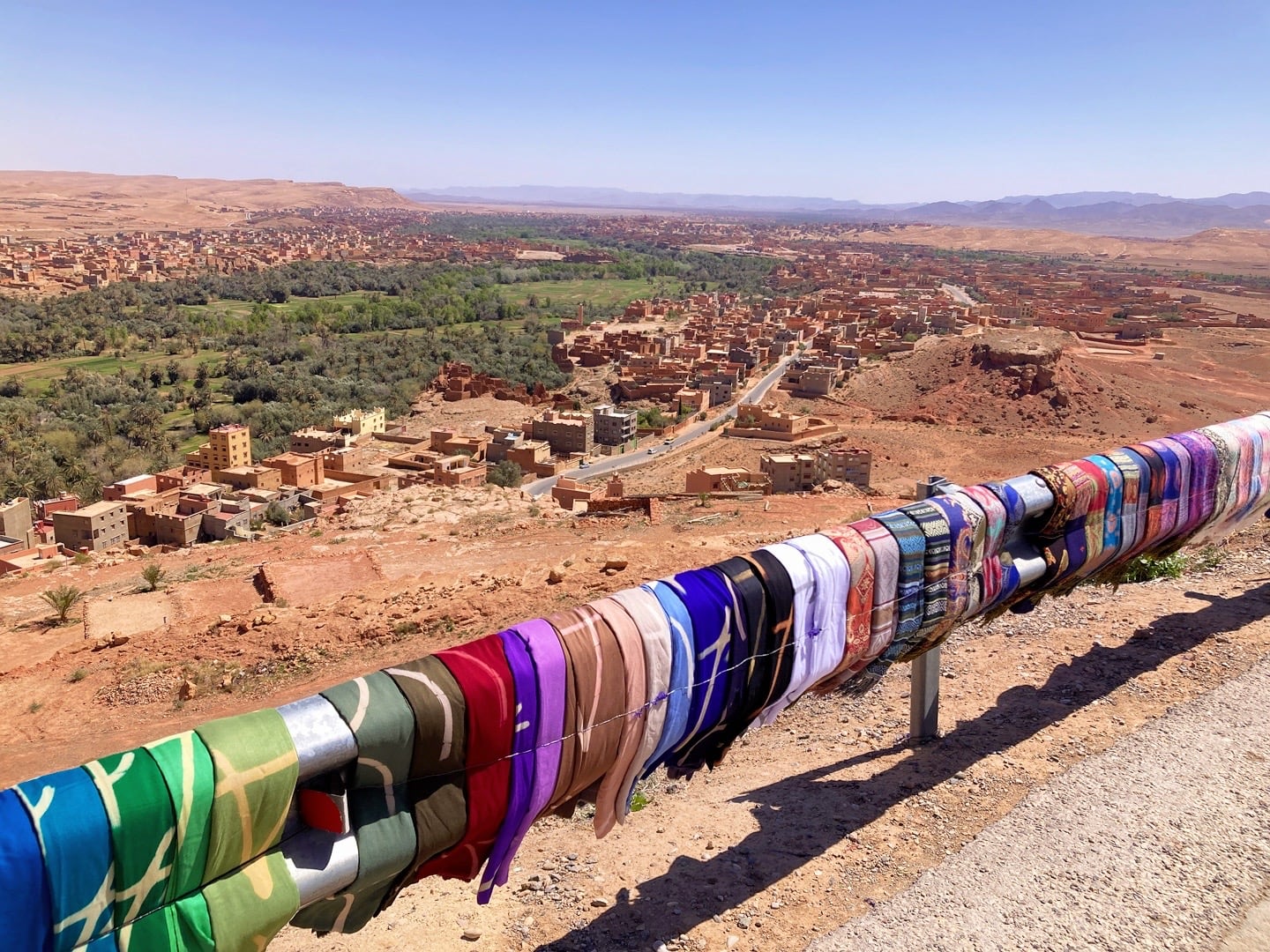
The sudden increase in souvenir stalls are a sure sign that we’re getting close to one of the more touristed areas of this part of Morocco.
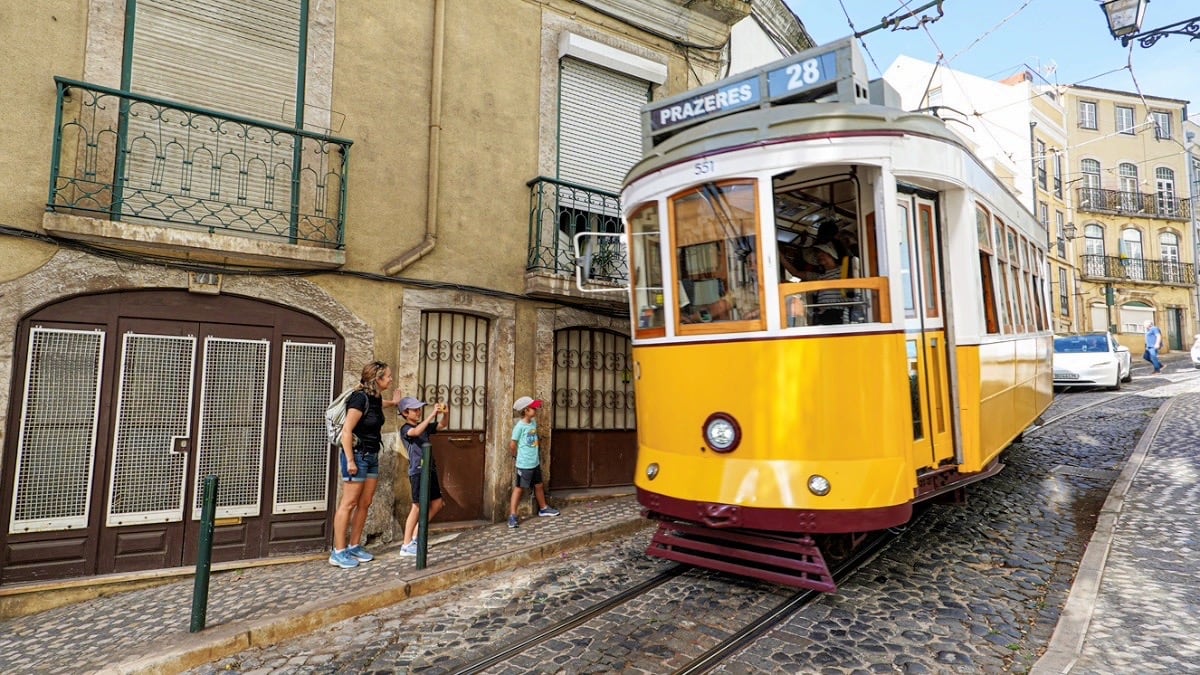
Thirty minutes short of the main attraction here, we pull over for a little midday hike around the Tinghir oasis. It’s an opportunity we couldn’t pass up.
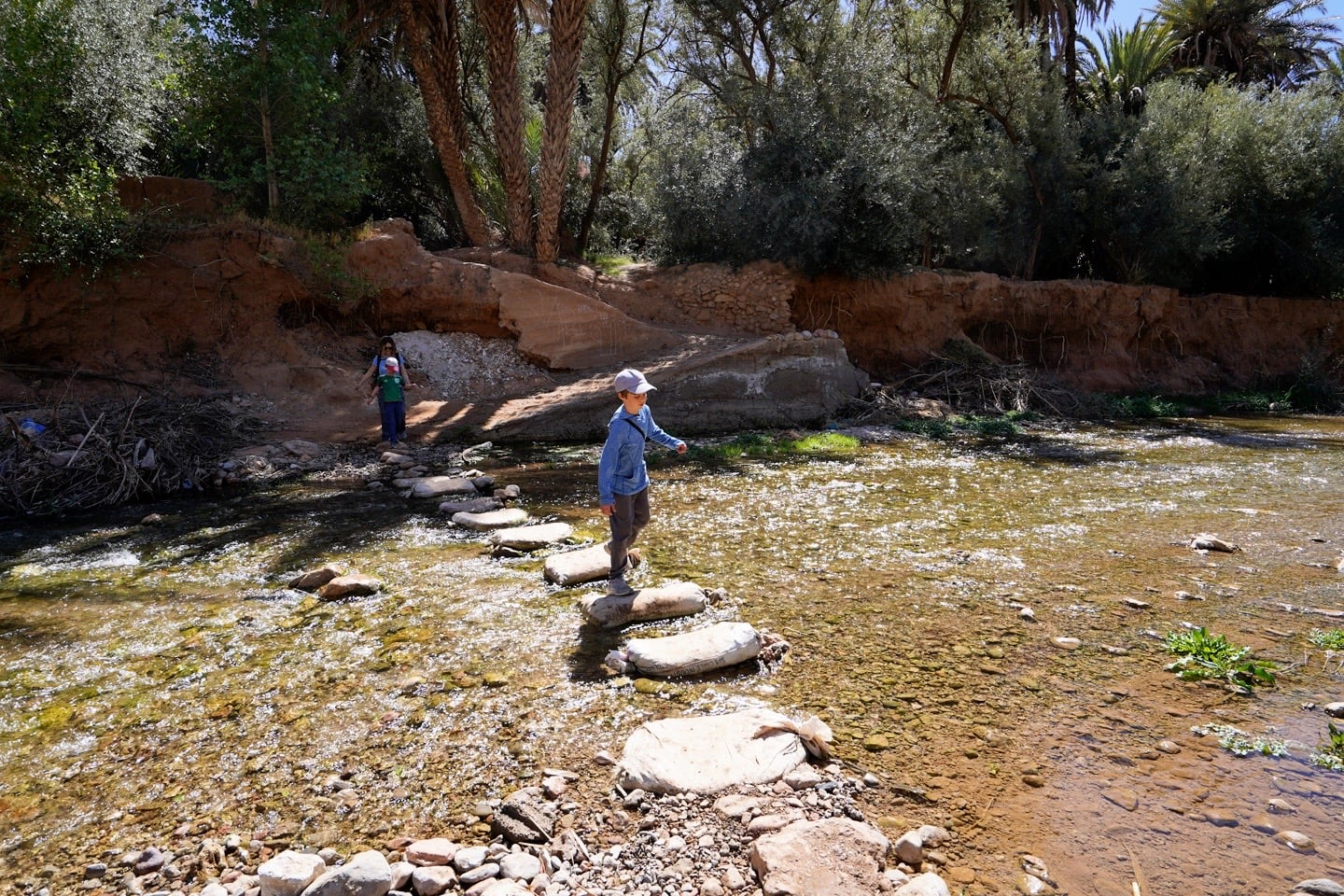
There isn’t much to the river crossing in Tinghir. No bridges here. For many of the farmers in the oasis, this is their primary route for getting to work.
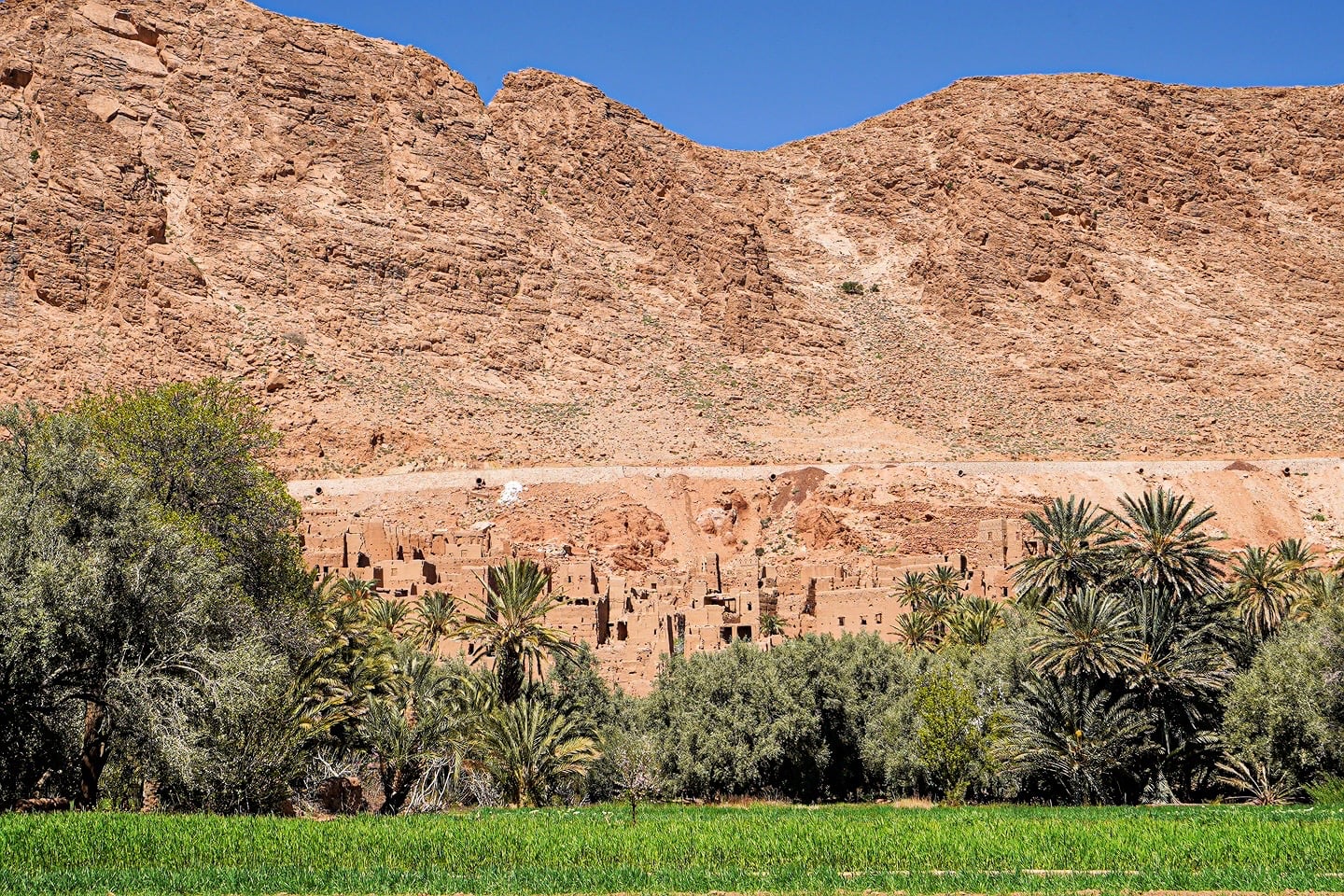
At ground level, the contrast between the dry limestone and clay hillside and the neon green vegetation is even more striking.
The date palm is the region’s primary crop. Beneath the palms, however, farmers cultivate other fruit trees and a ground layer of wheat, barley, and alfalfa.
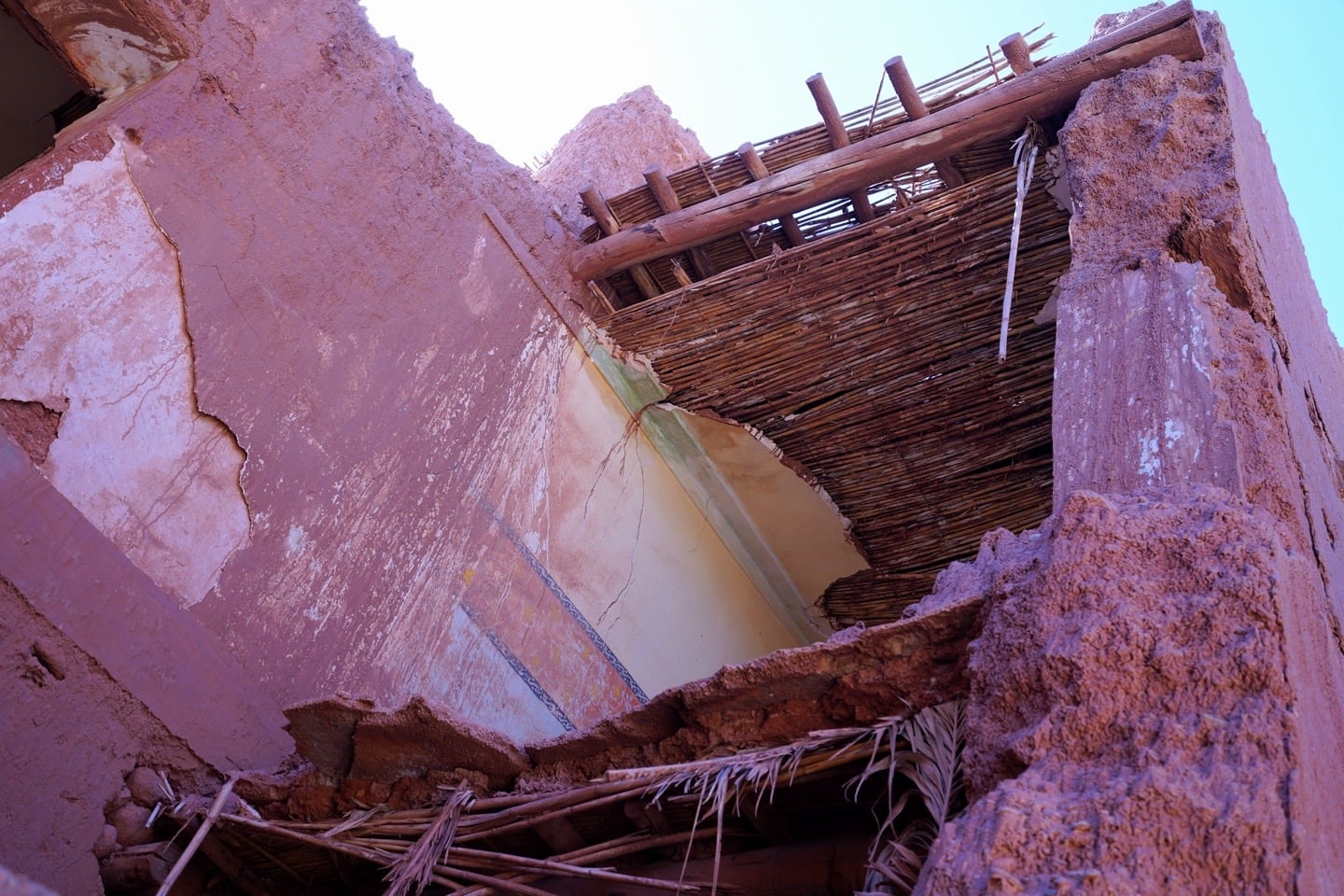
Our goal was to make our way into the crumbling ksar for a look around, but it proved more difficult than I expected. Because many of these fortified villages were built on a hillside and in an advanced state of decay, landslides frequently block the old footpaths that used to connect the various sections of the town.
We were able to explore a small section, much of which was miraculously still standing after centuries. I was surprised to happen upon some buildings that appeared to have been occupied until very recently, as some of the wall paint and wooden roof material were still being intact.
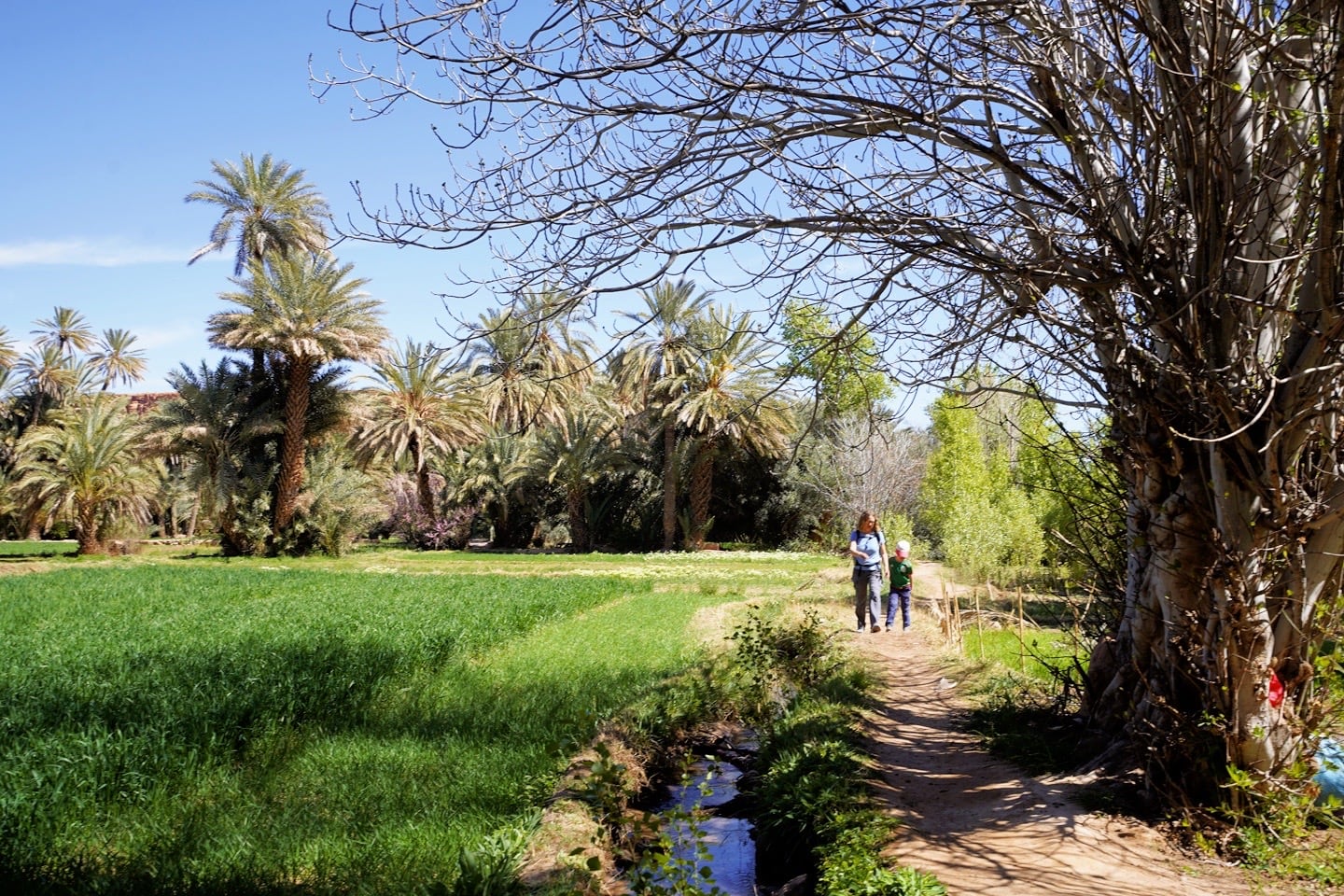
It’s impossible to overstate how peaceful it is in this valley. We encountered a dozen or so locals on our journey either working the fields, tending livestock, or making their way here and there. Yet, there are no roads or loud, motorized equipment on this side of the river. Most of the time, birdsong and the wind rustling through the palms were all we heard.
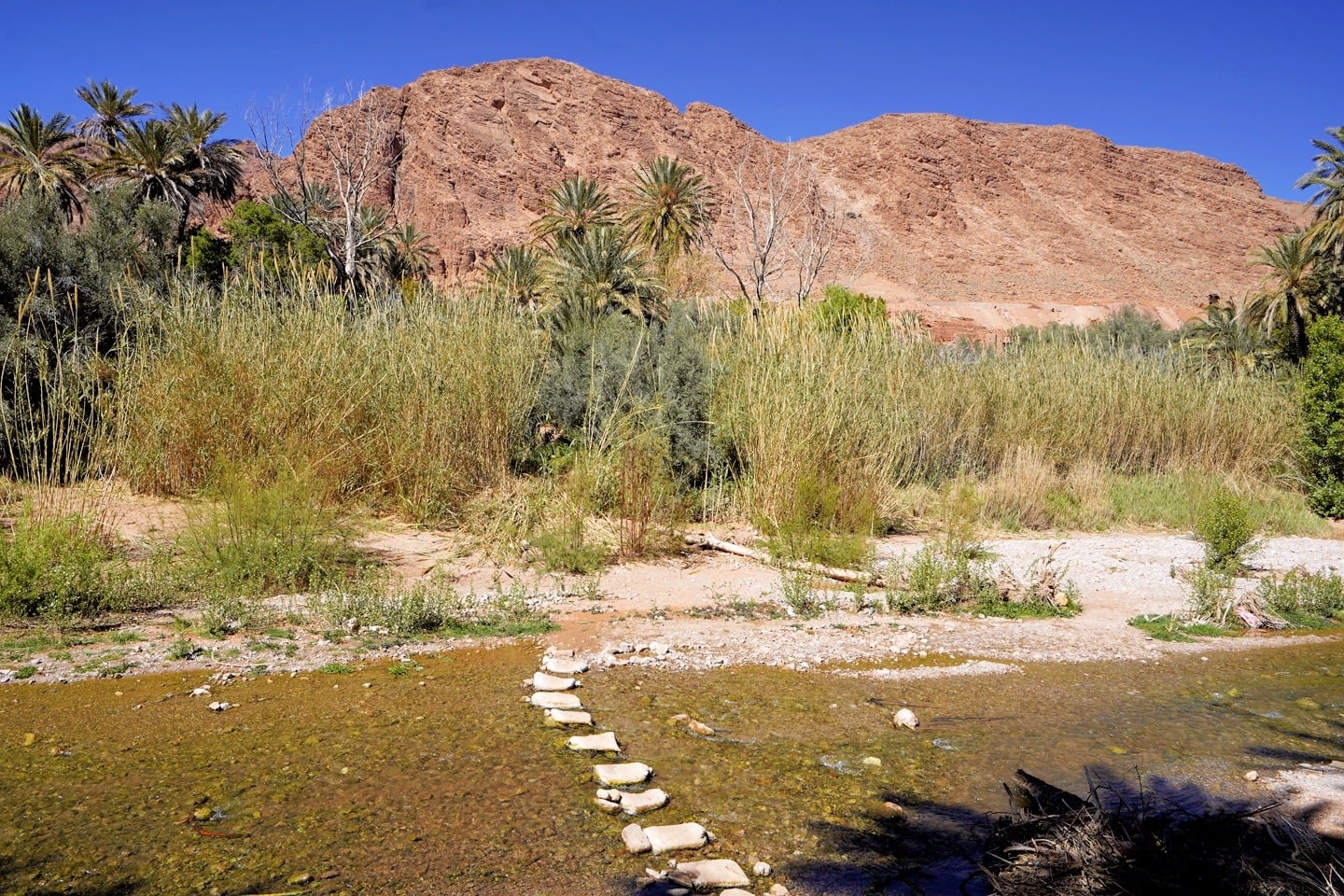
We headed back to the car and continued deeper into the gorge to a place that was not nearly so peaceful—Morocco’s famous Todra Gorge.
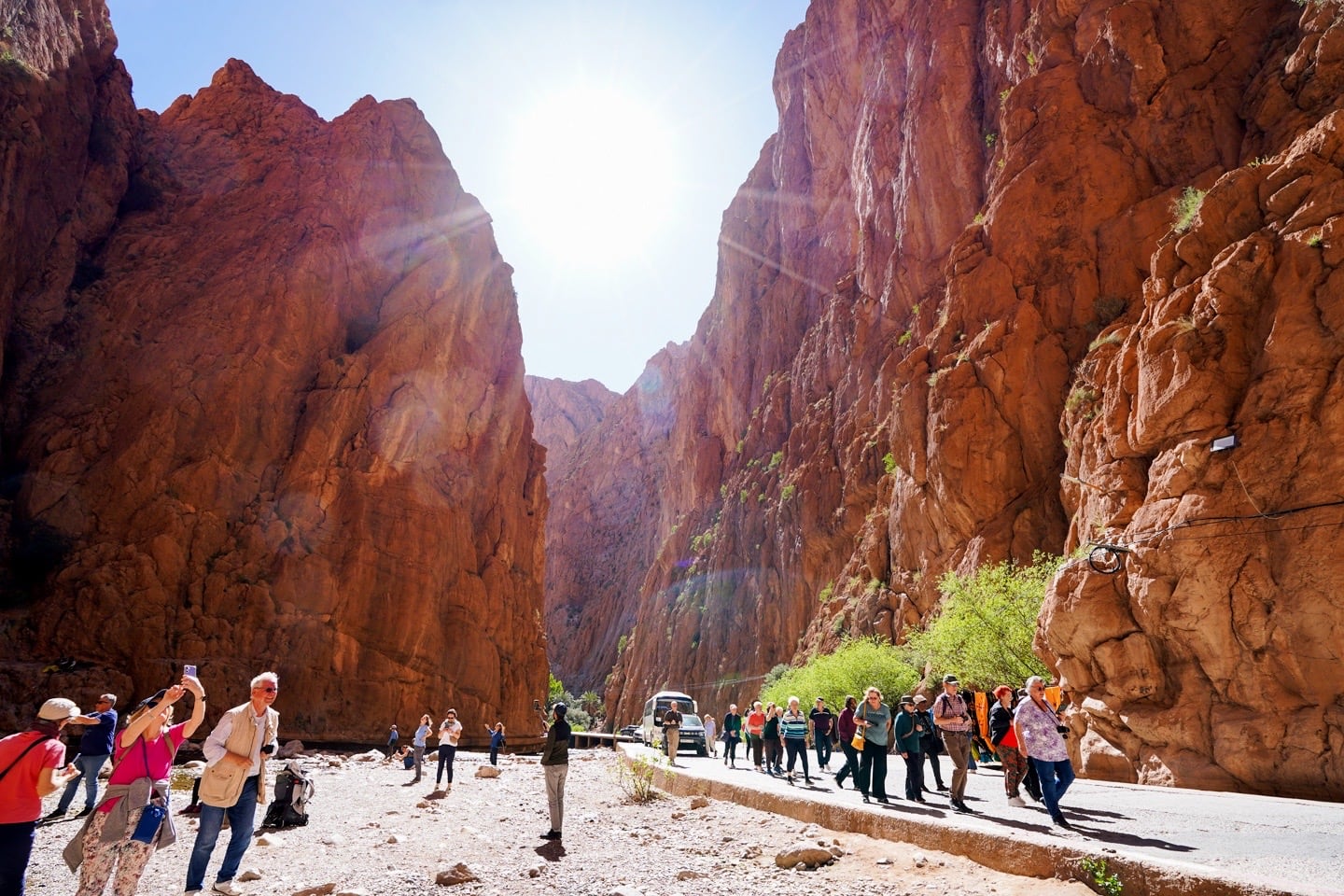
This part of Morocco has no shortage of gorges, but this one might have the most impressive half mile stretch of any of them, with 1,000-foot high limestone walls that narrow in some spots to just 30 feet—just wide enough (we discovered) for a vehicle, a river, and a steady line of tour groups to fit through side-by-side.
Most visitors to Todra visit as part of a tour to/from the Sahara on huge coach buses that really have no business on a road this narrow. The buses drop them off for 20 minutes to snap pictures, then turn around and head back to the main highway bound for either Erg Chebbi or Marrakesh.
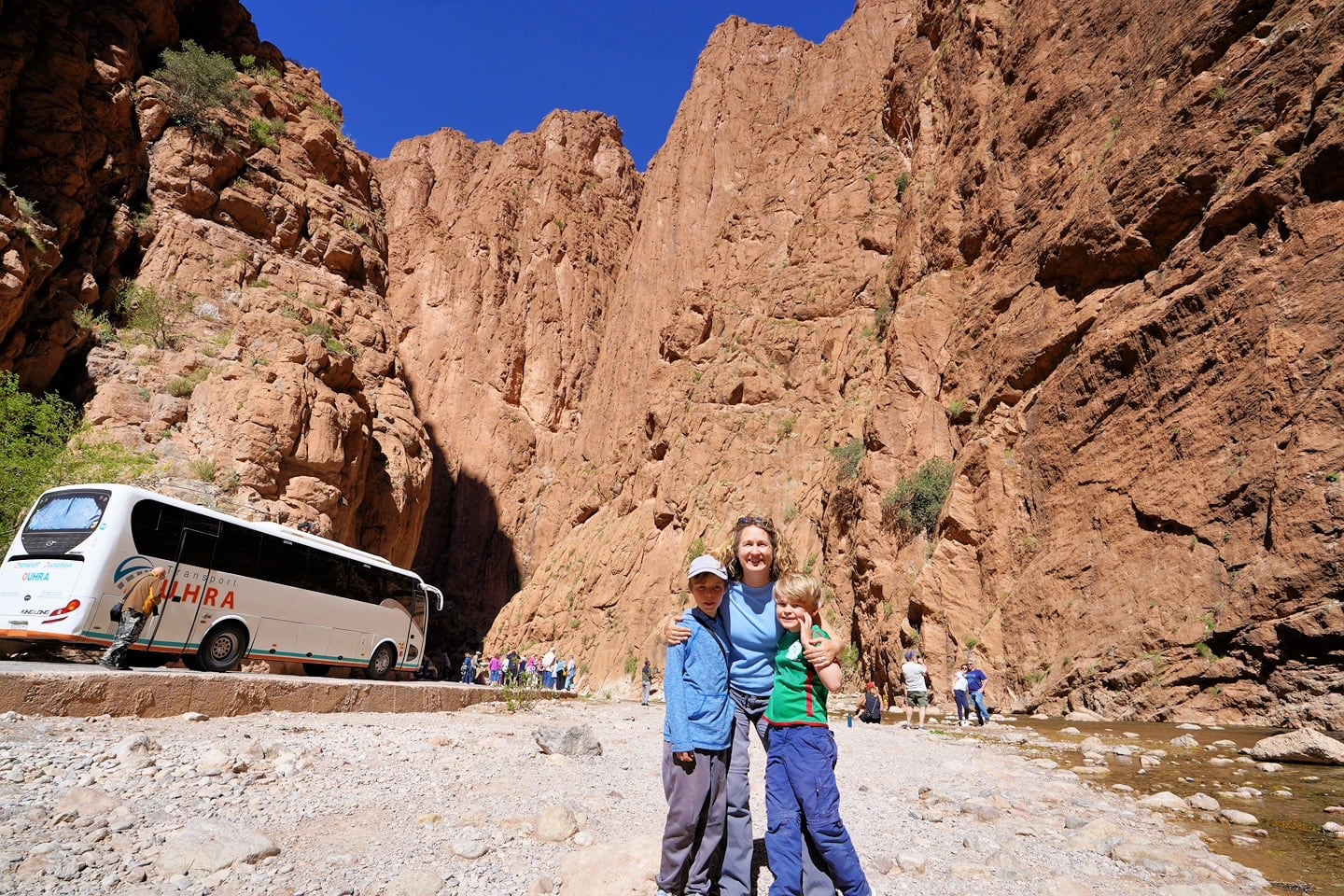
After reading about how crazy the gorge can get with tour buses, we most certainly would have skipped it. However, driving through the gorge was the only practical way to get to our accommodation for the night (another fun driving adventure!).
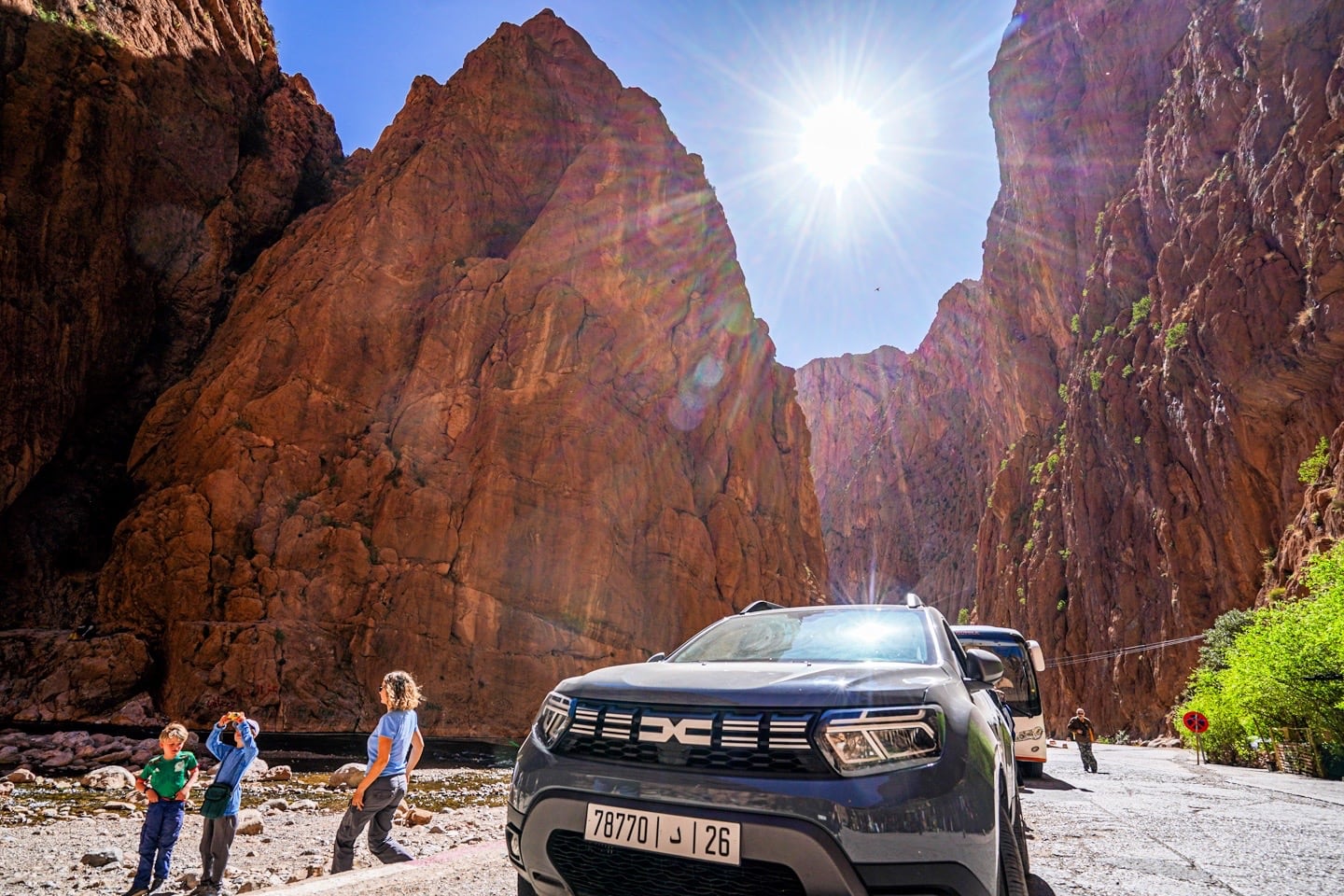
Fortunately, our rental car isn’t all that big and the crowds could have been much, much worse.
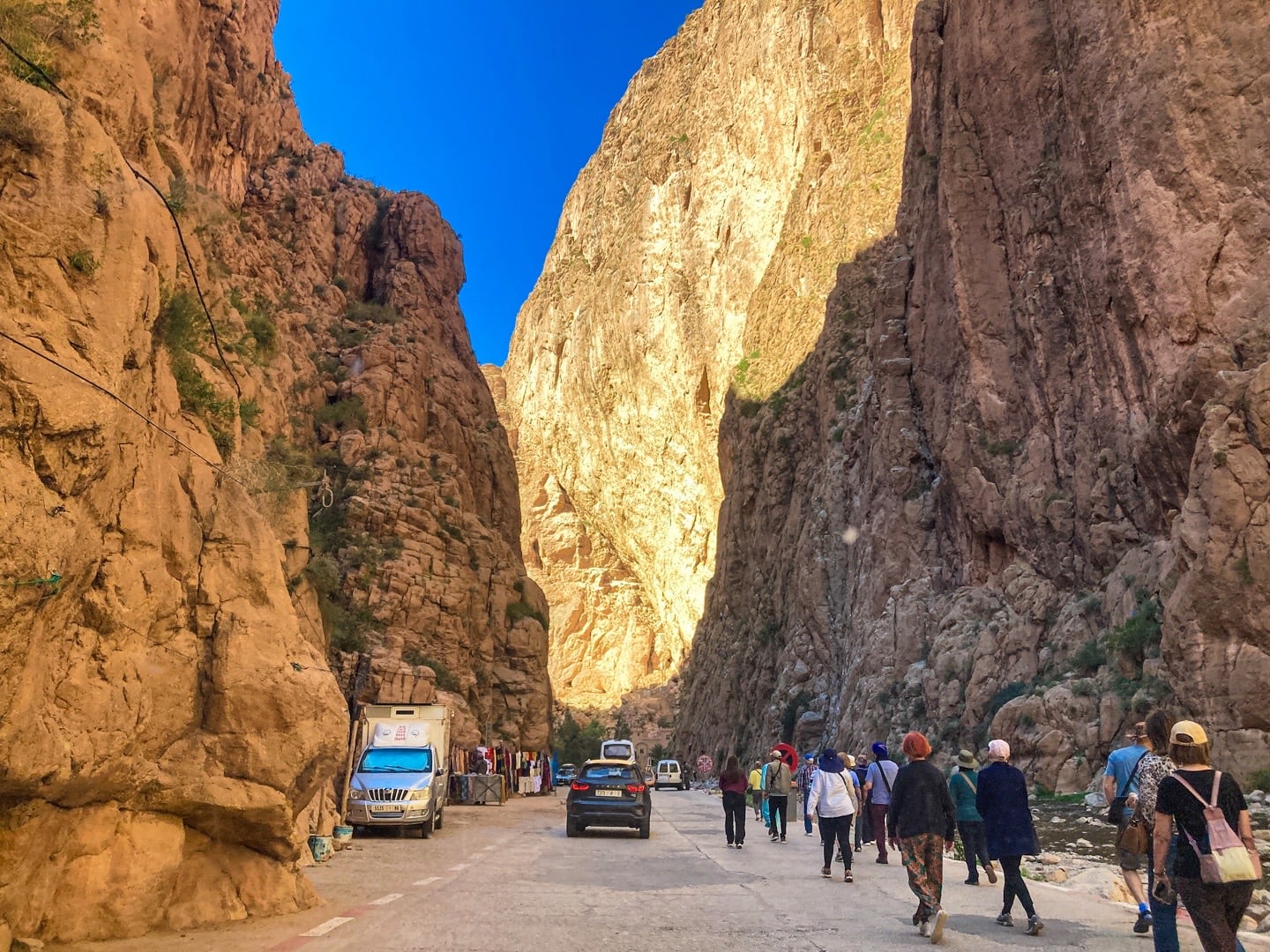
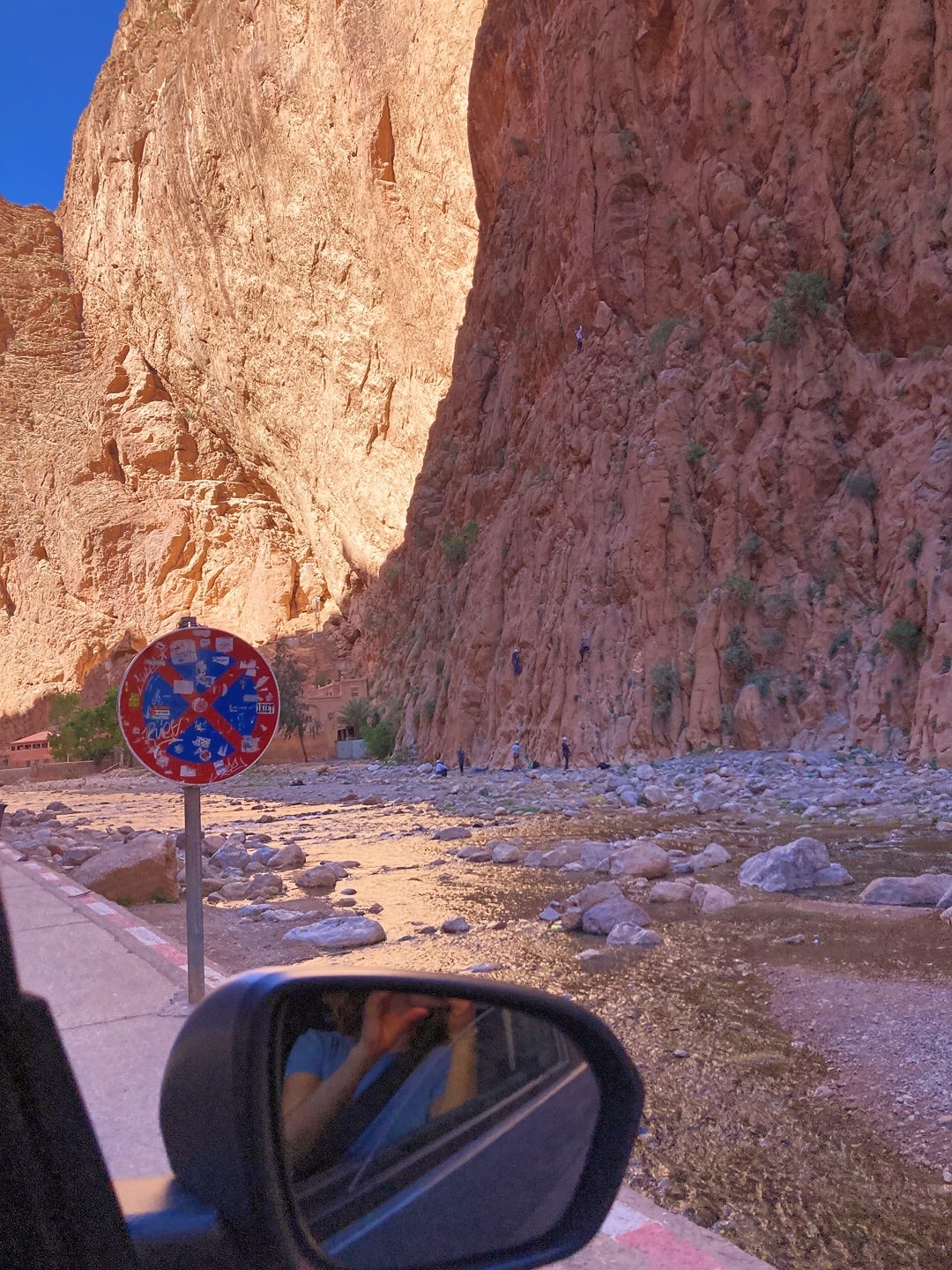
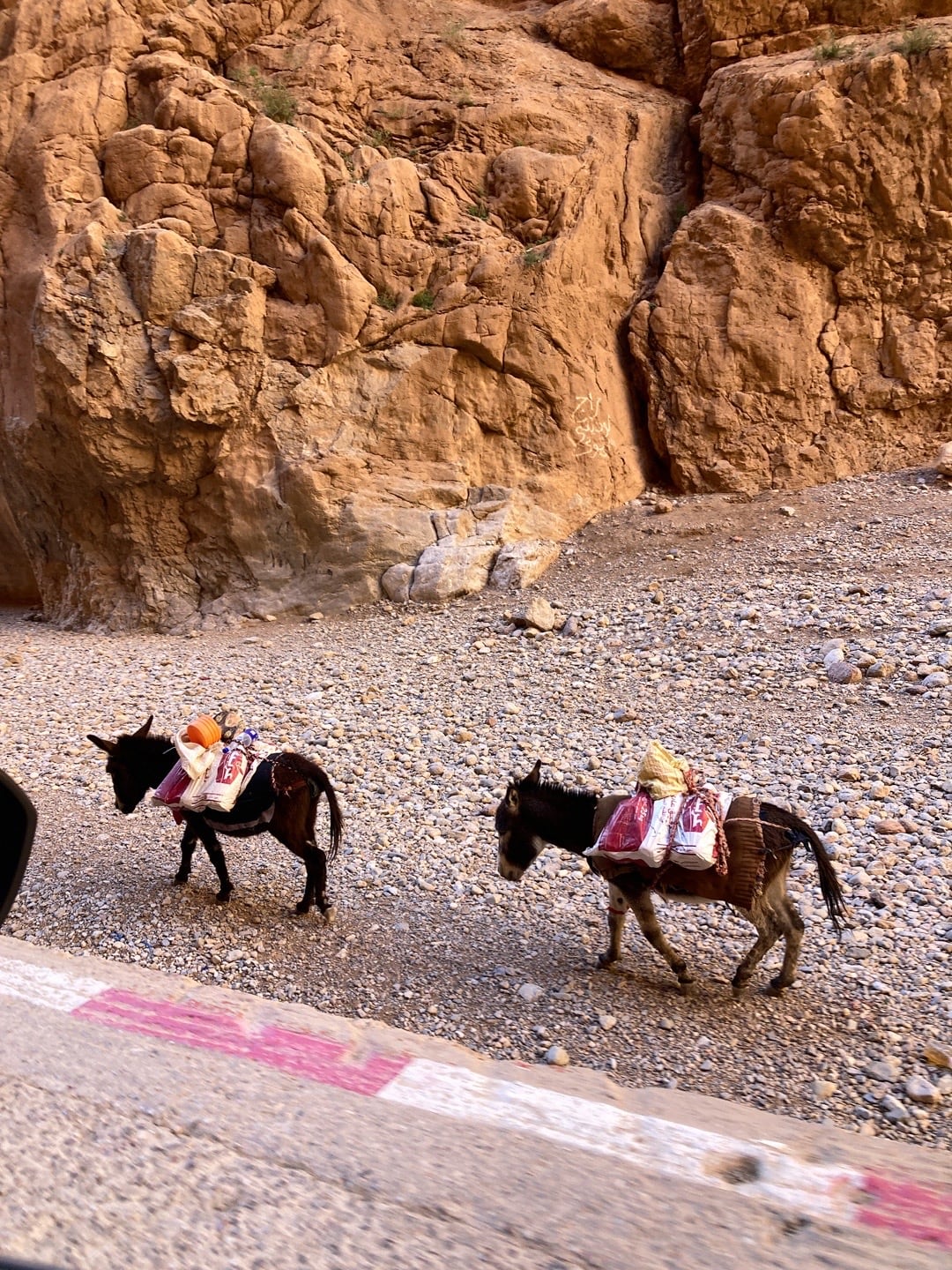
We left behind the tour buses and groups and forged 30 minutes deeper into the narrow gorge.
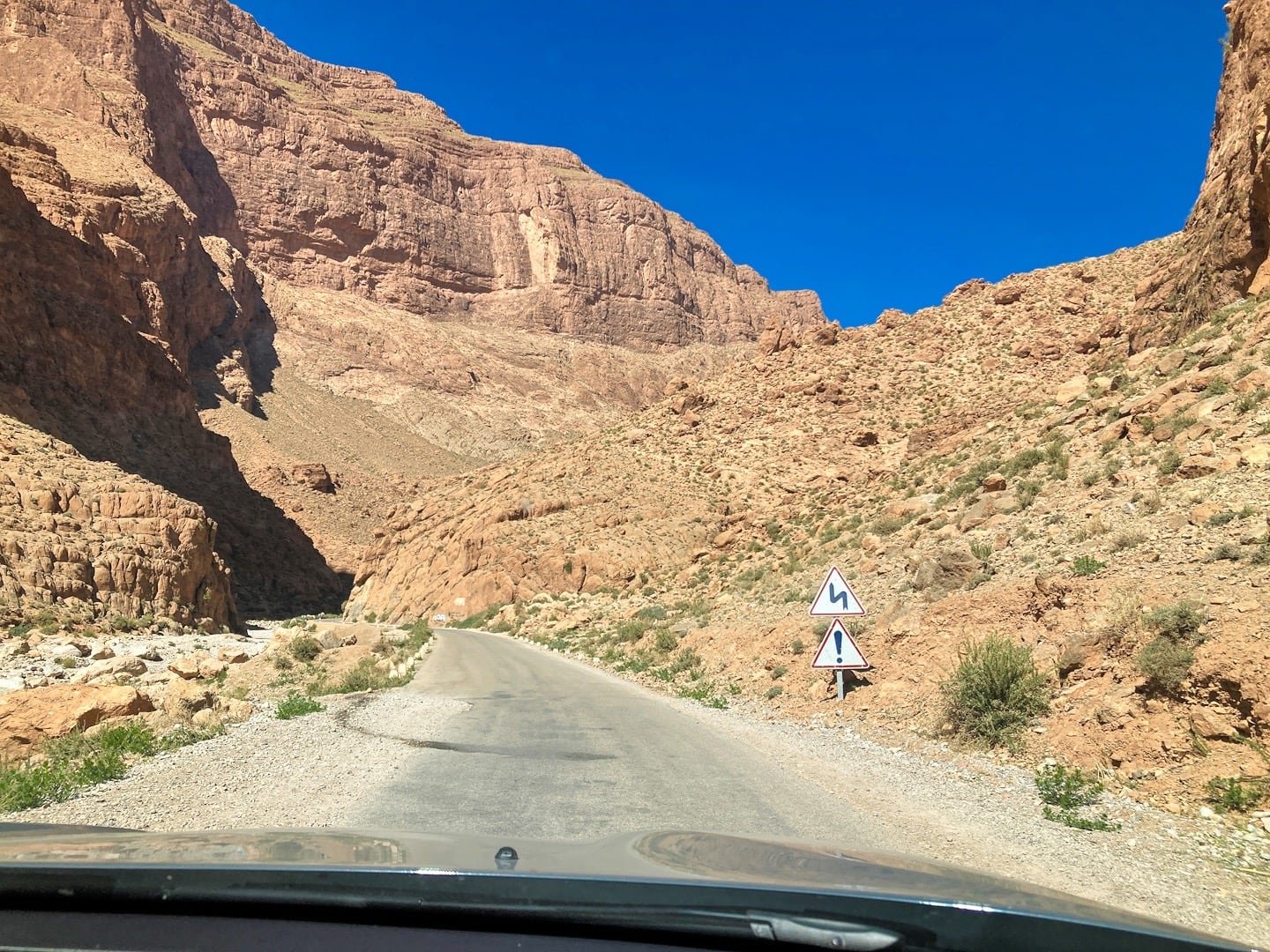
This stretch of road was not nearly as well-maintained as the previous Tinghir-Todra stretch. But it offered [mostly] good visibility around corners and I’ve driven worse in a 25-foot Winnebago in Mexico.
Overall, it was a nice drive with very few other vehicles on the road, and we made it to our destination with plenty of time to enjoy it before sundown.
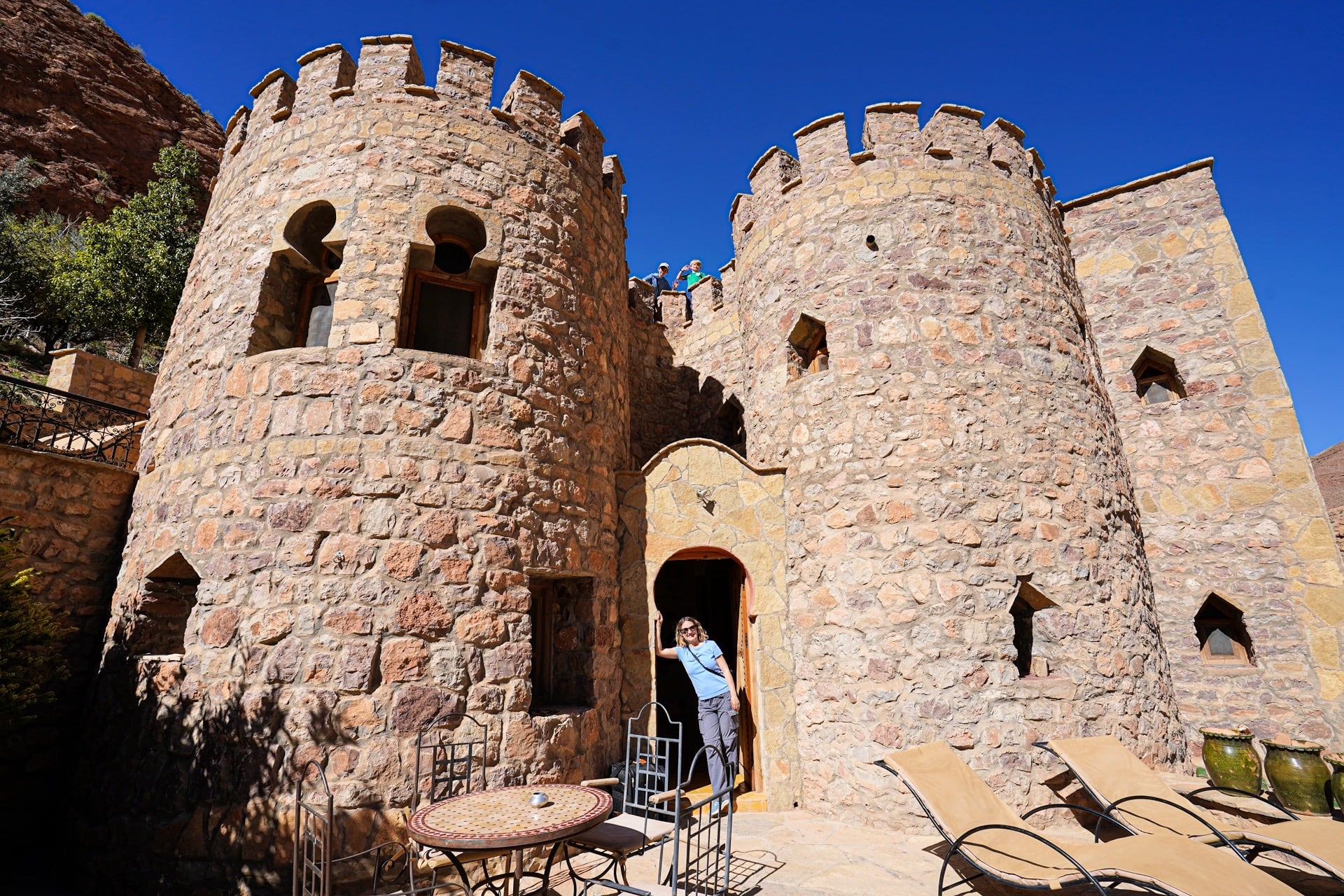
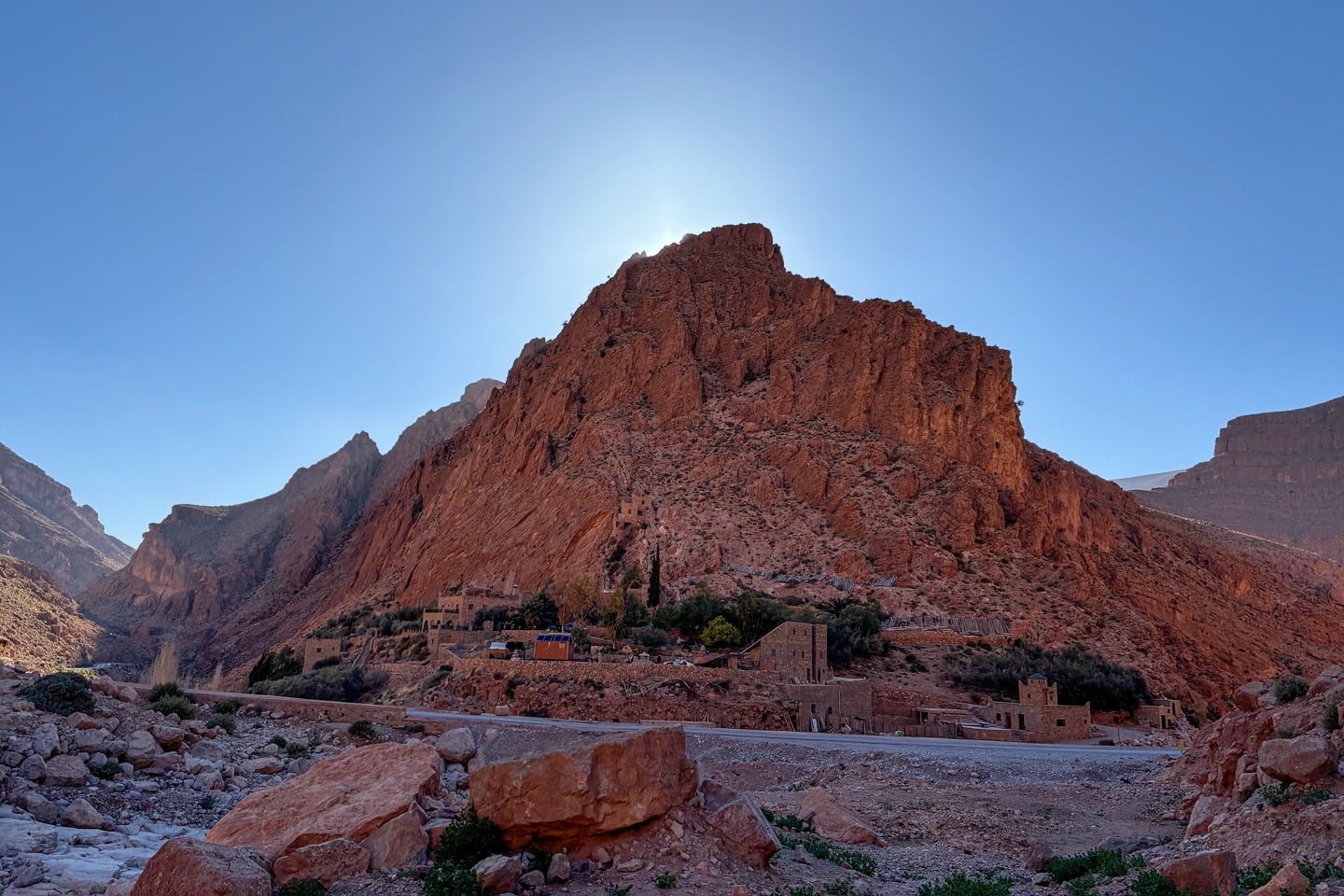
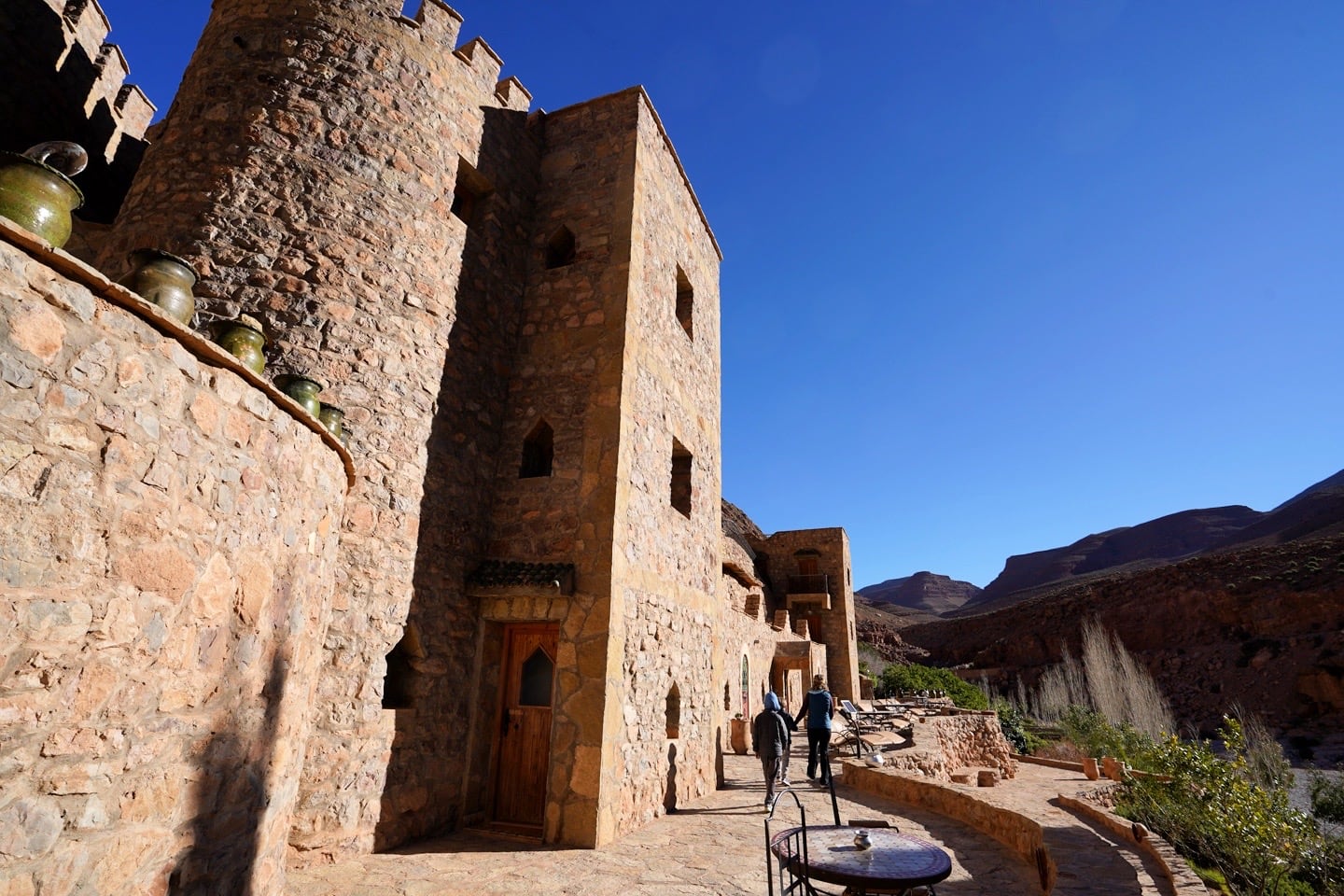
Our lodging for the night? Auberge Le Festival Todra Gorge, which could be mistaken for an old stone castle built into the side of a mountain.
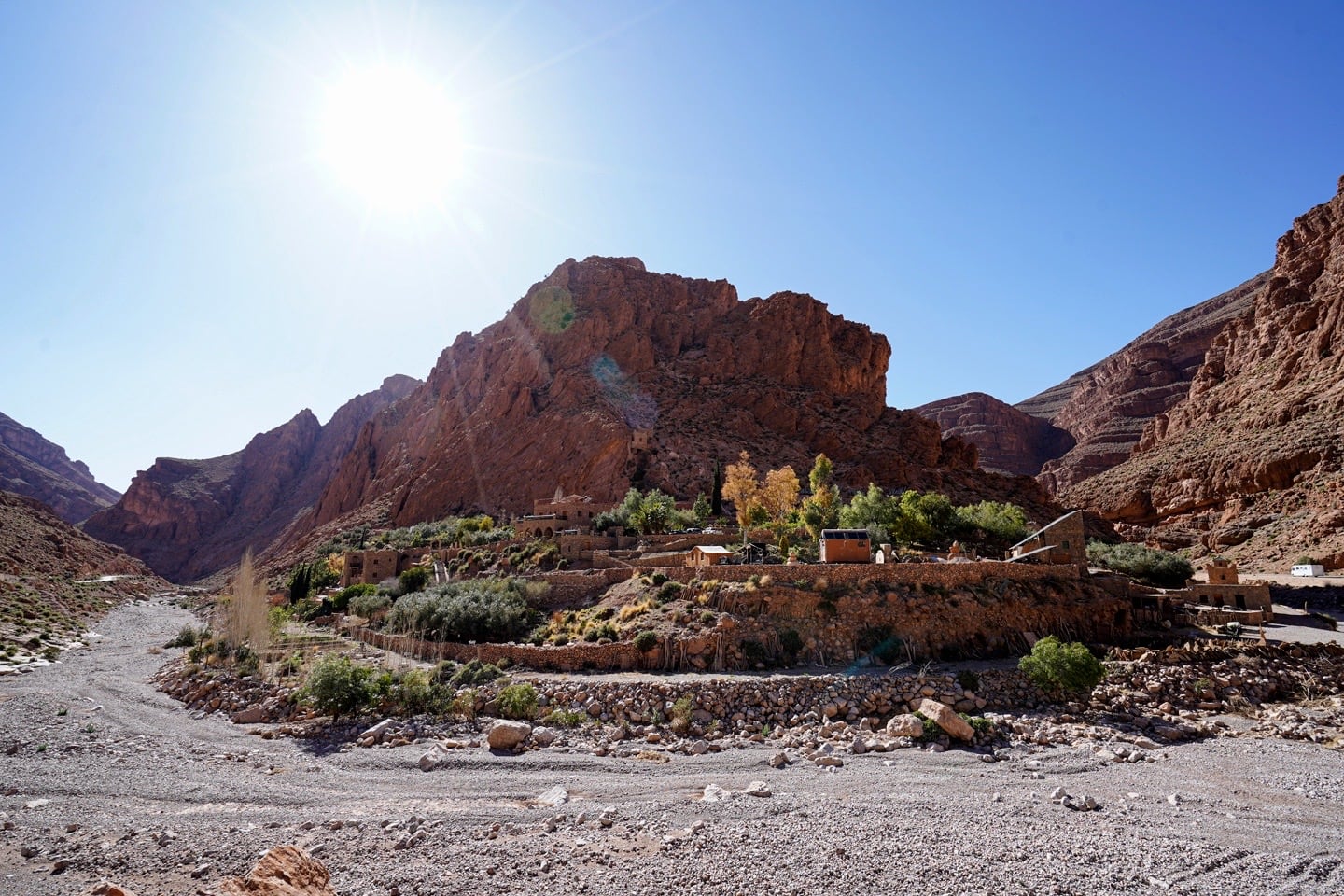
So much of this journey since early October has revolved around staying in 2-bedroom Airbnbs with the bare essentials of what we need to get into our routine with the boys for 1-4 weeks.
One thing that excited me about this road trip was being able to chuck out our usual list of criteria and look for unique stays that we normally wouldn’t book for a longer stay. Specifically, I wanted to find places that had some special, irreplicable quality to them that evoked a sense of place.
The lodging we booked in Ait Benhaddou, Skoura, and Dades Gorges certainly met that criteria. But Auberge Le Festival crushed it.
When I came across this place, I knew we had to spend a night. And when I saw the only room left during our road trip was the family room tower, I snatched it up.
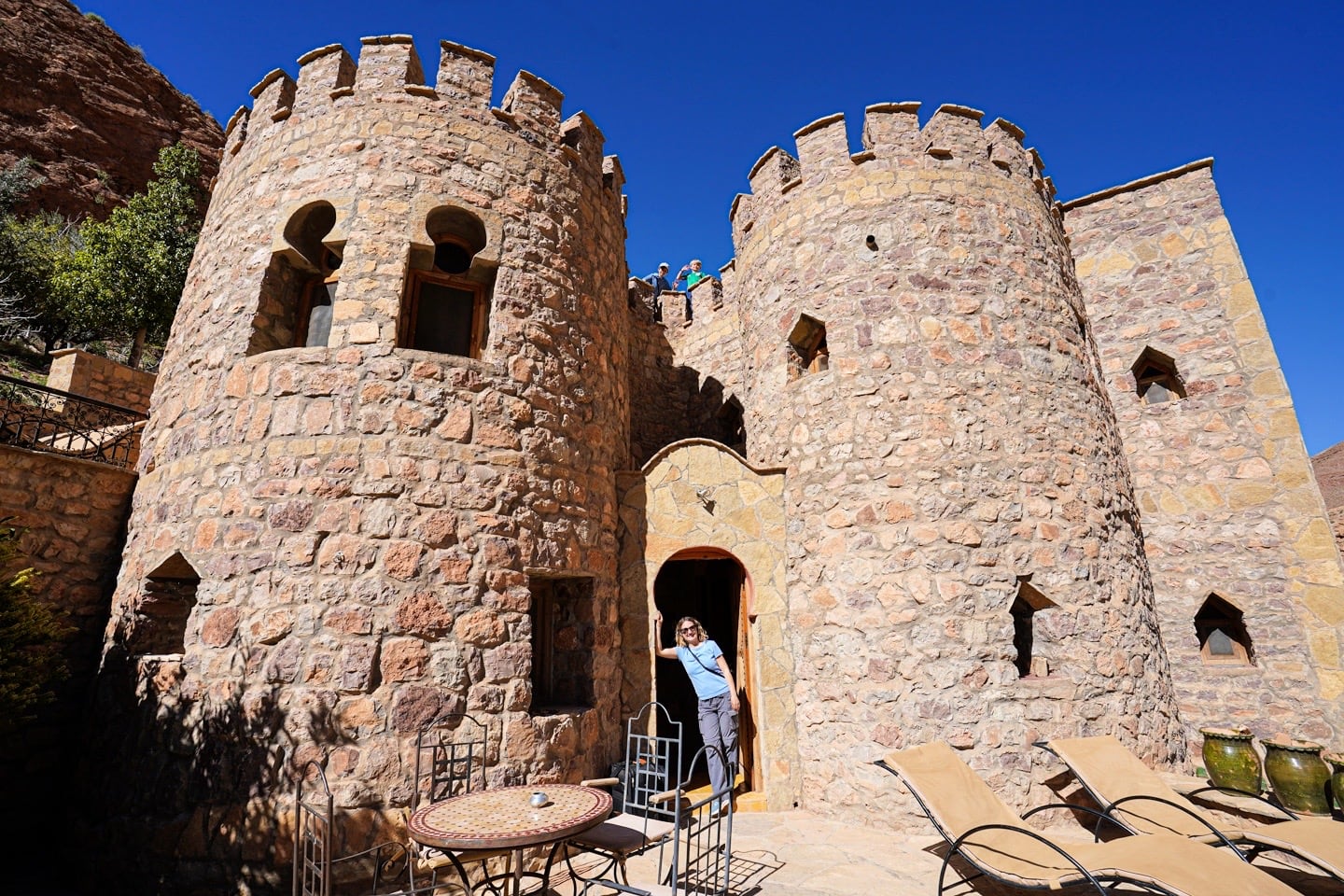
There are two- two-bedroom family rooms in the tower section of the hotel: one above and one below. We were in the ground floor family room, which consisted of two separate bedrooms connected by a curved hall.
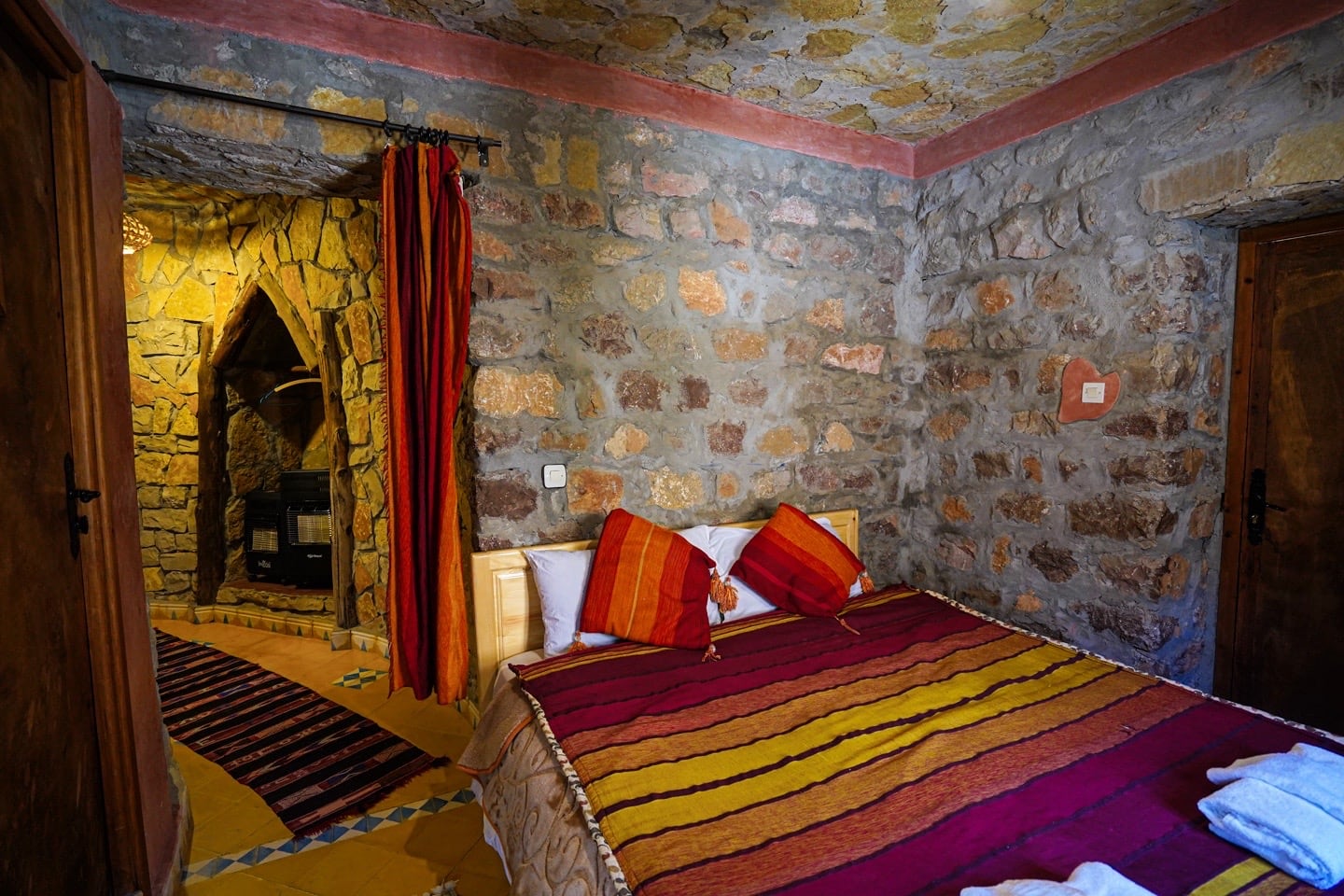
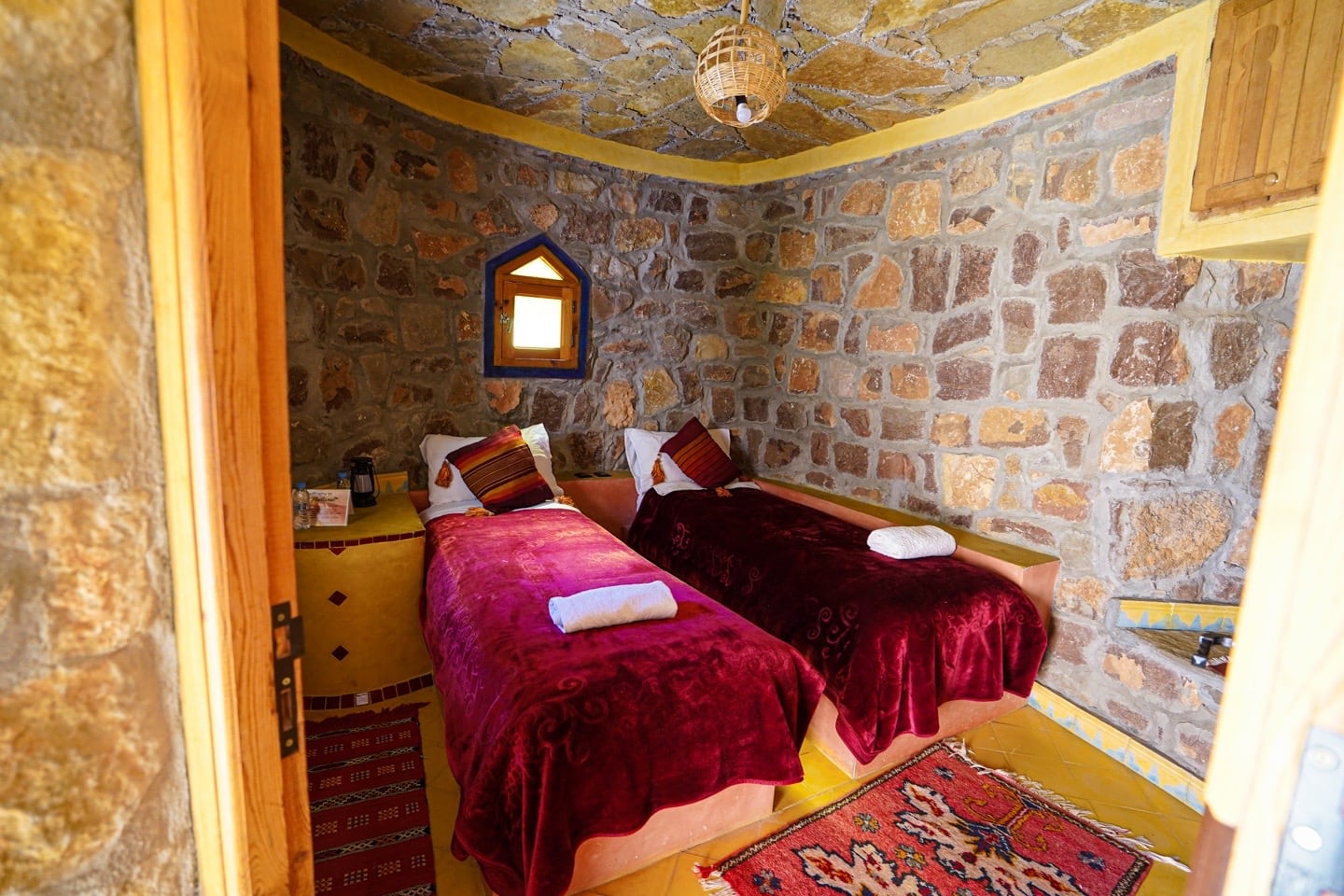
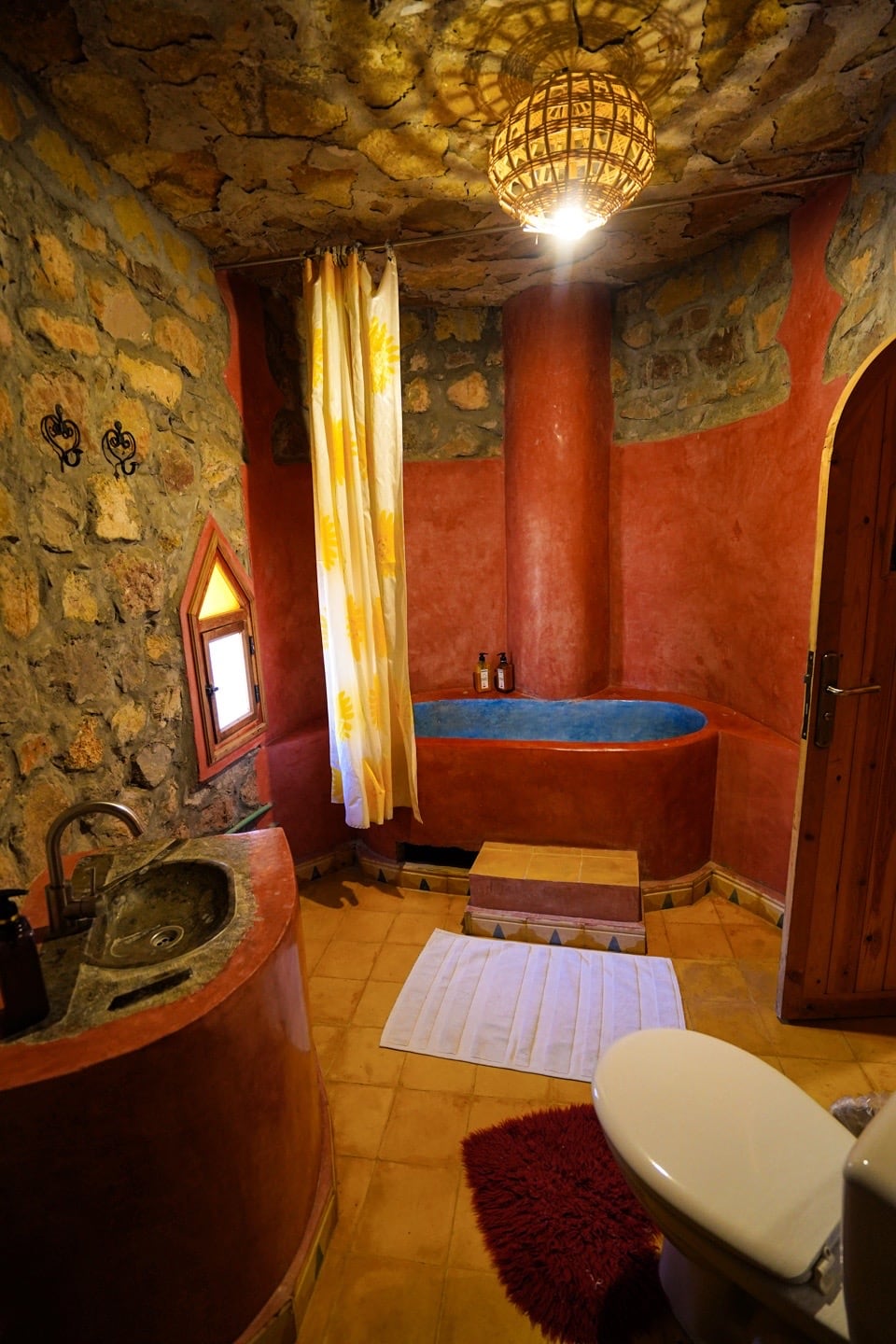
And yes, there was even a bathroom with hot water bath and shower.
Very rarely does a place we book actually exceed my expectations, but Le Festival did. The property was nicer, the accommodation was far larger, the food was better, and there was more to do than I had expected.
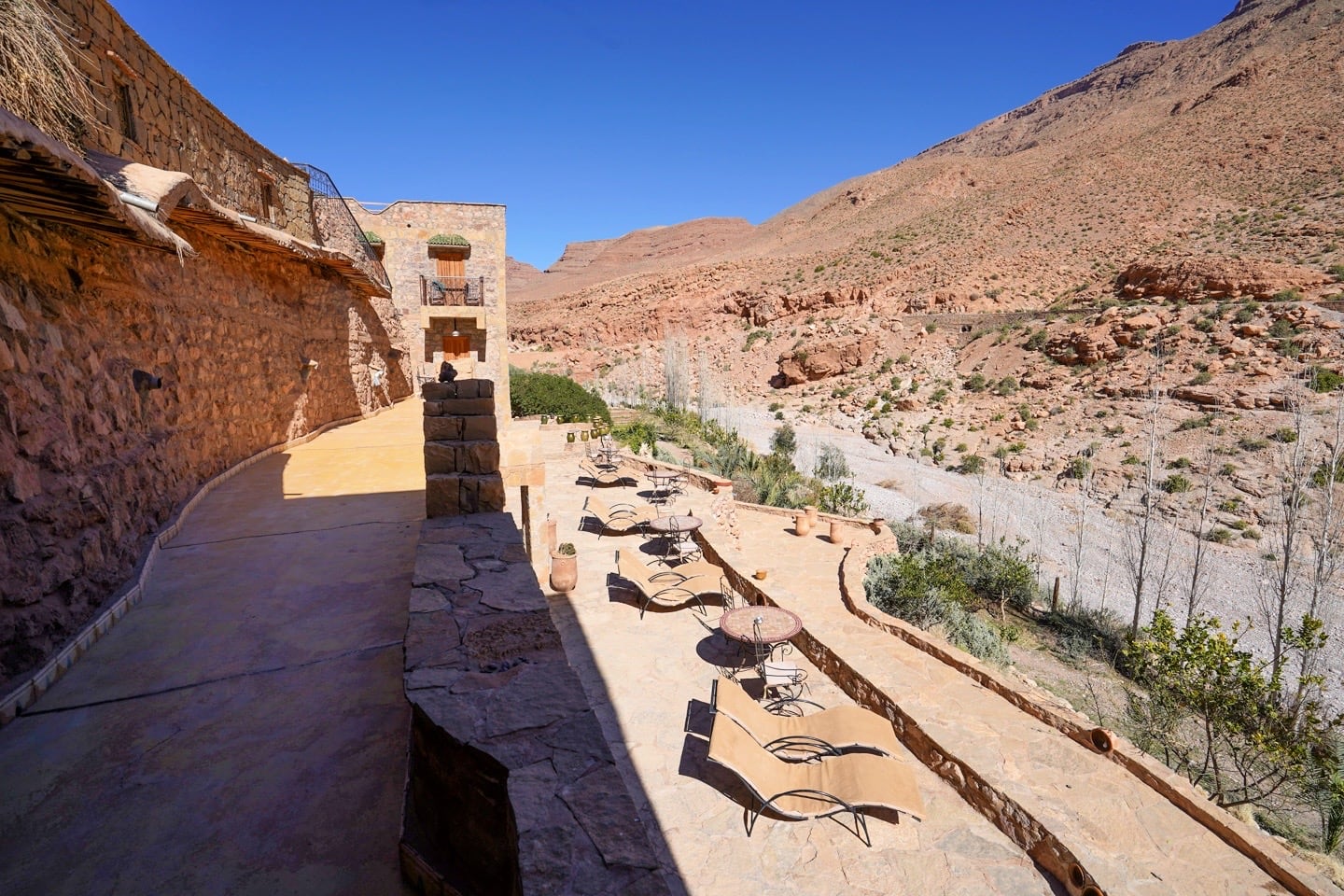
The entire property is constructed of local materials, off-grid, and literally out in the middle of nowhere. The stars at night are absolutely incredible. And did I mention the food is awesome? (mostly grown/ raised onsite).
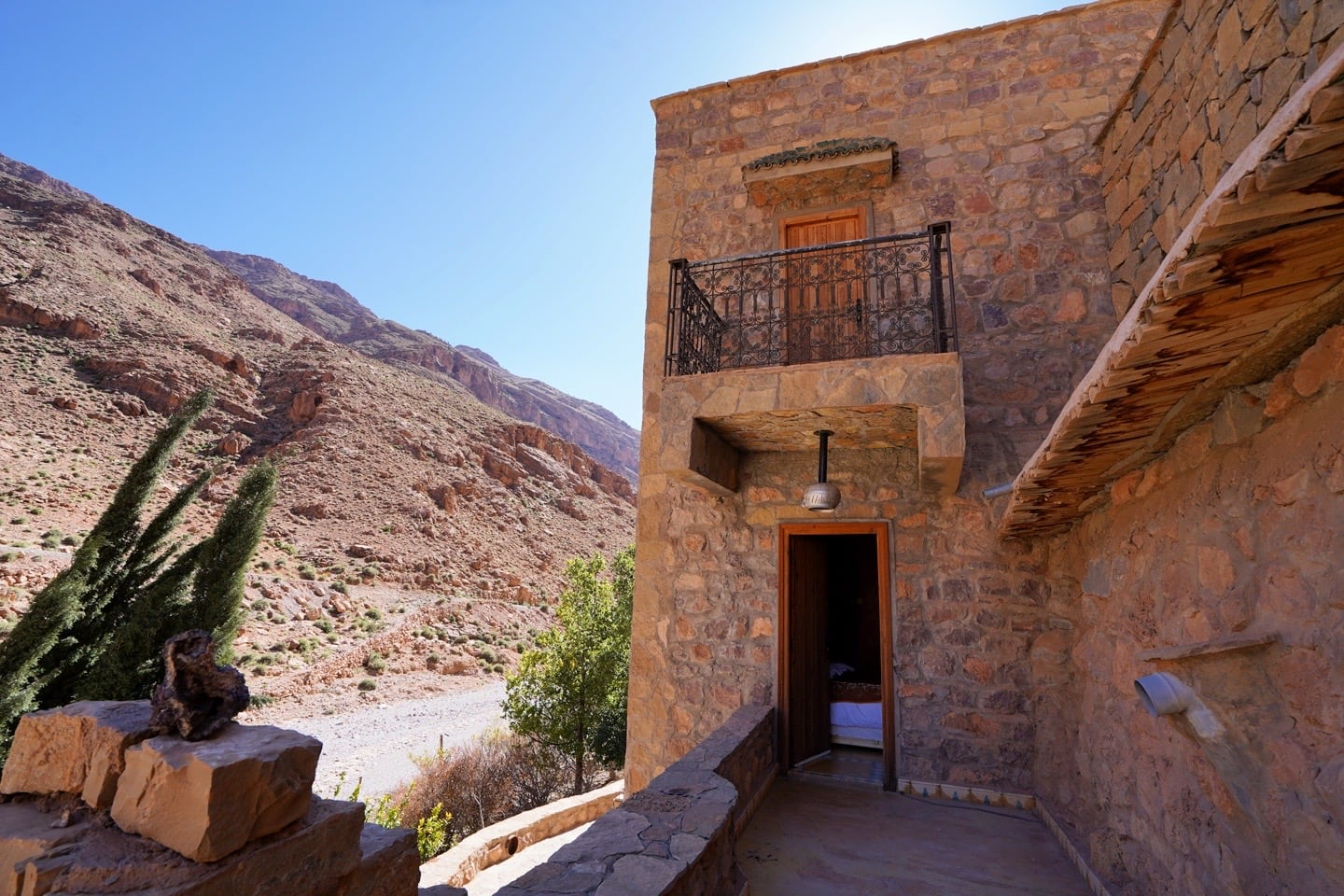
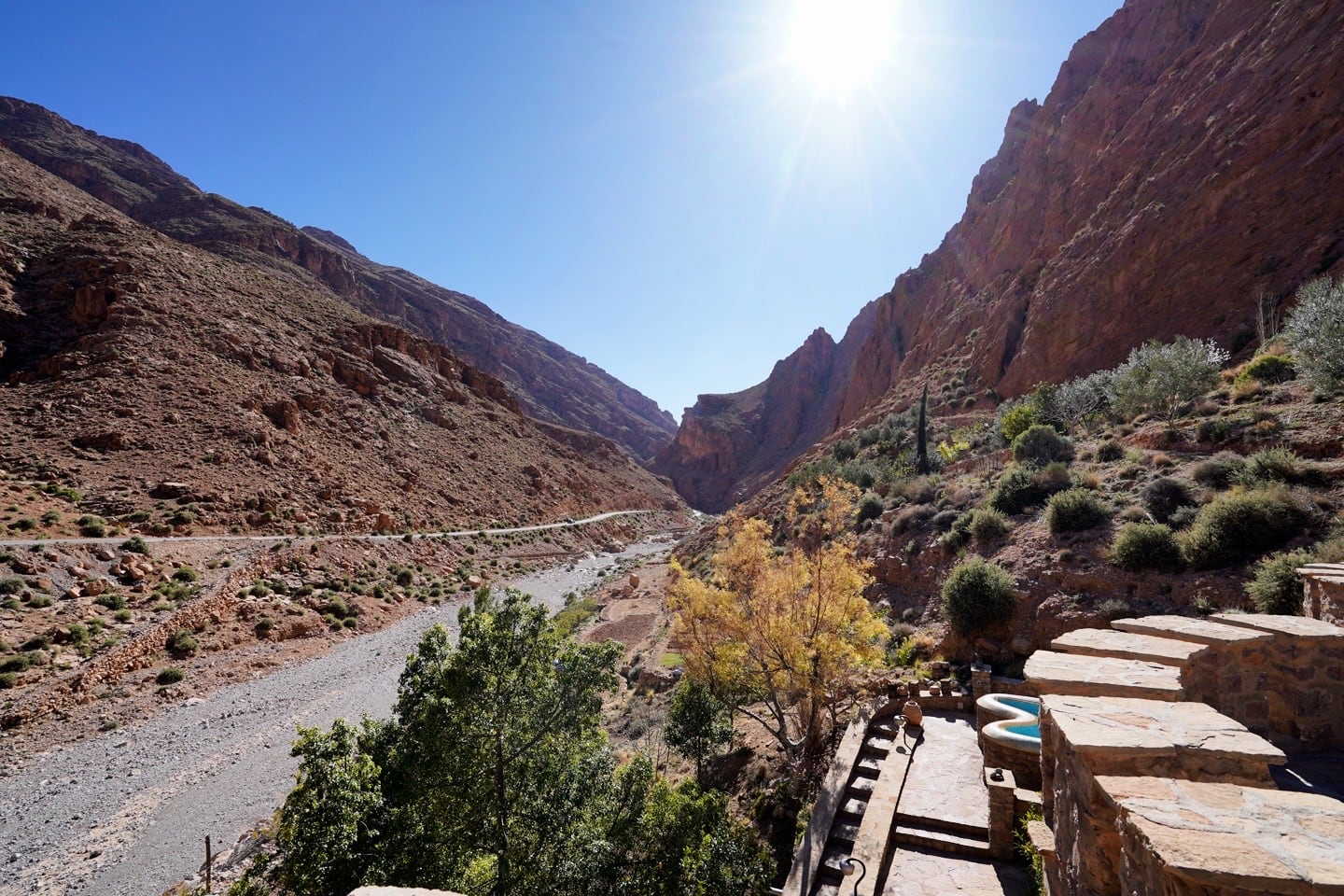
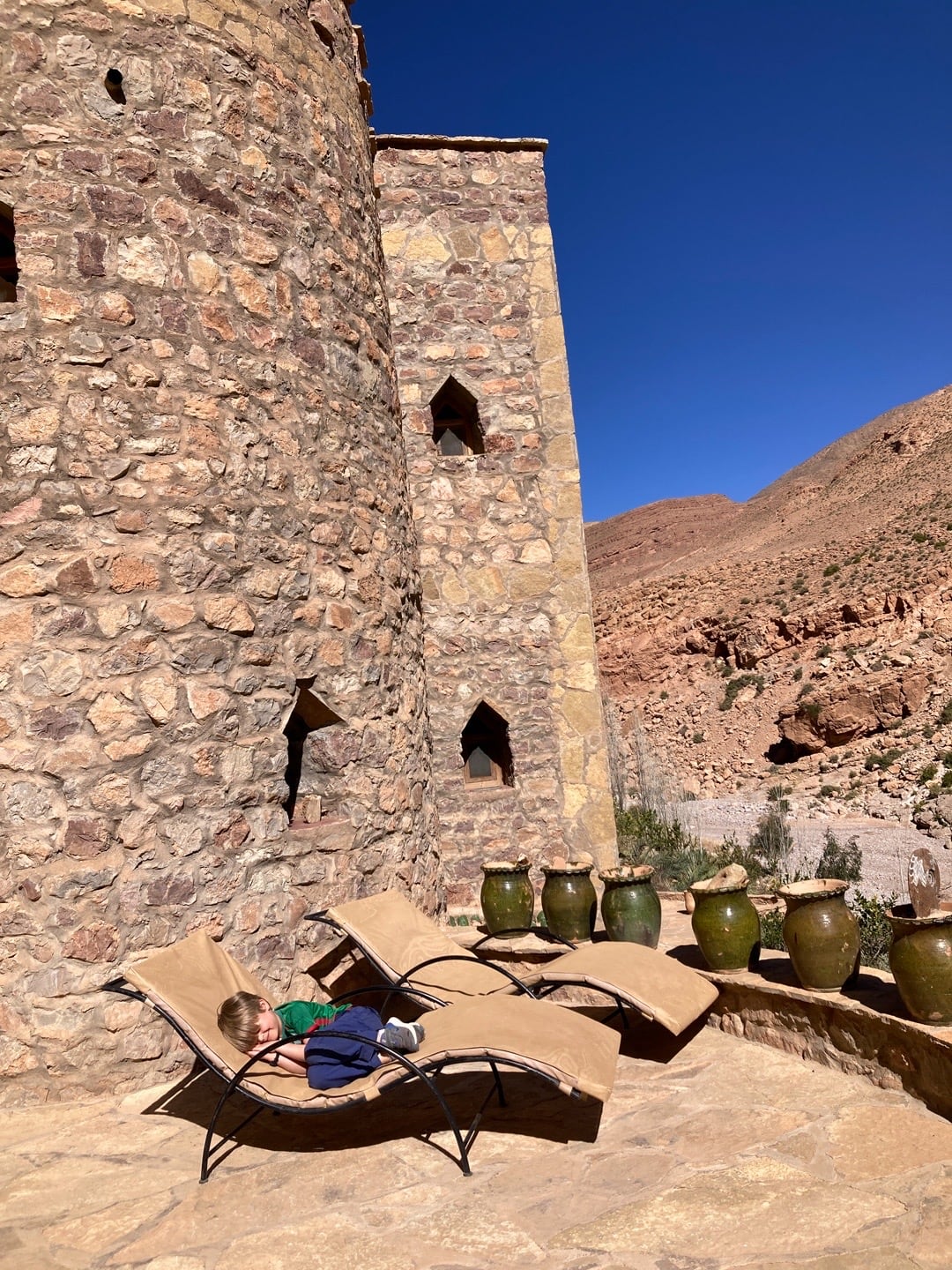
We had some time before dinner, so we figured we’d check out the trail across the street leading into a small canyon.
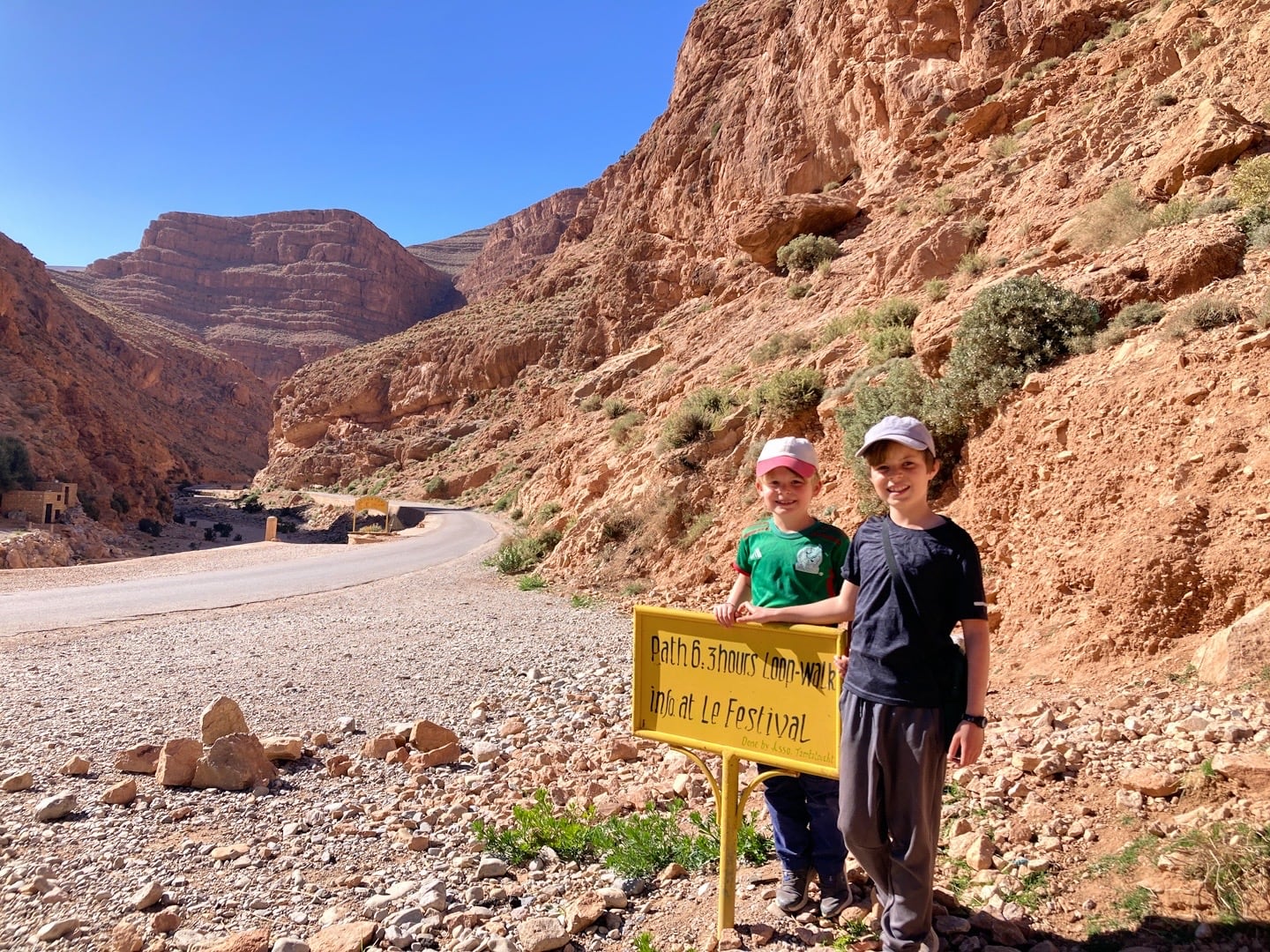
The sign posted at the trailhead indicated that this was a much longer hike than we were comfortable with doing this afternoon, but a simple 60-minute out-and-back turned out to be perfect.
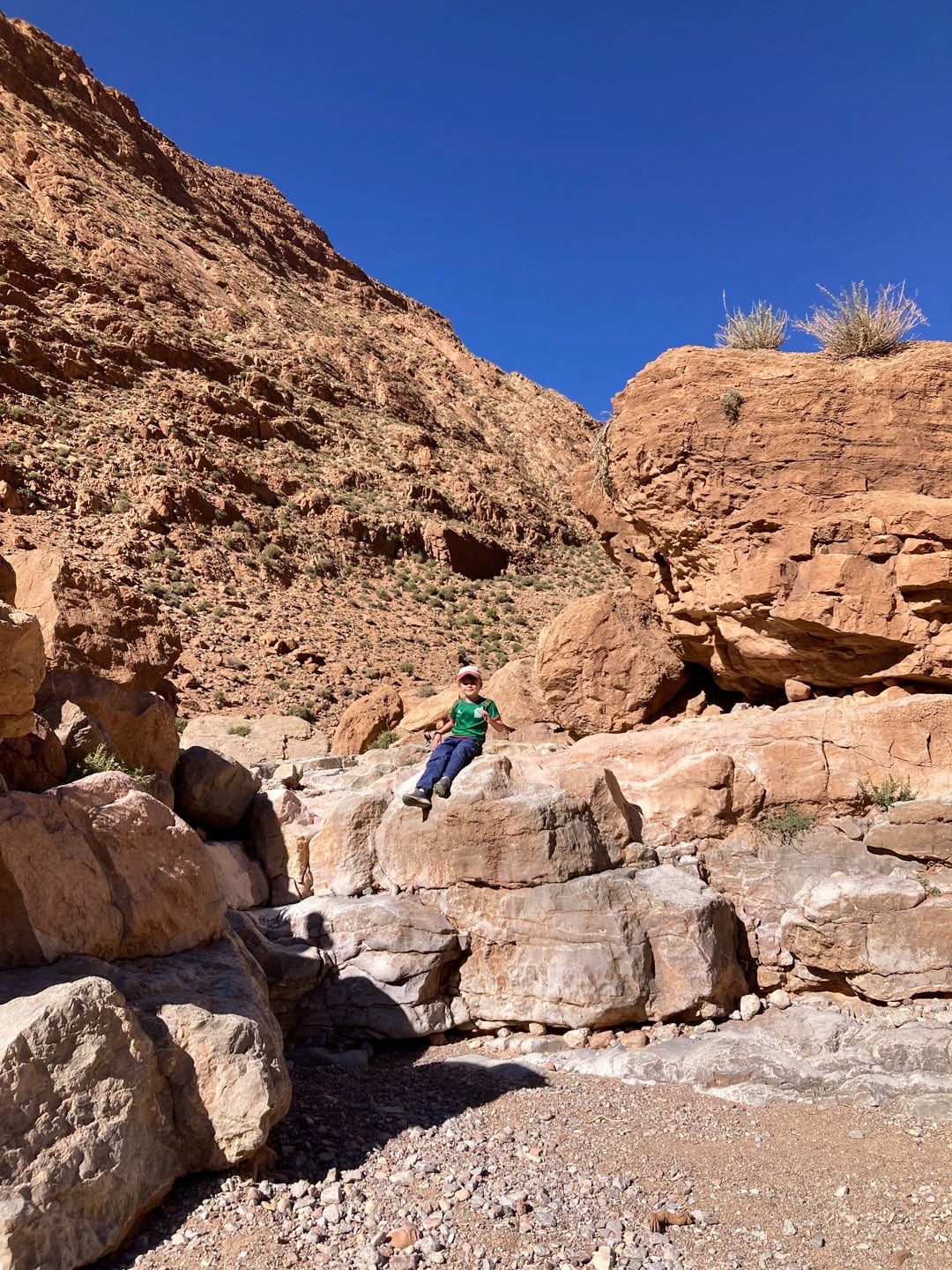
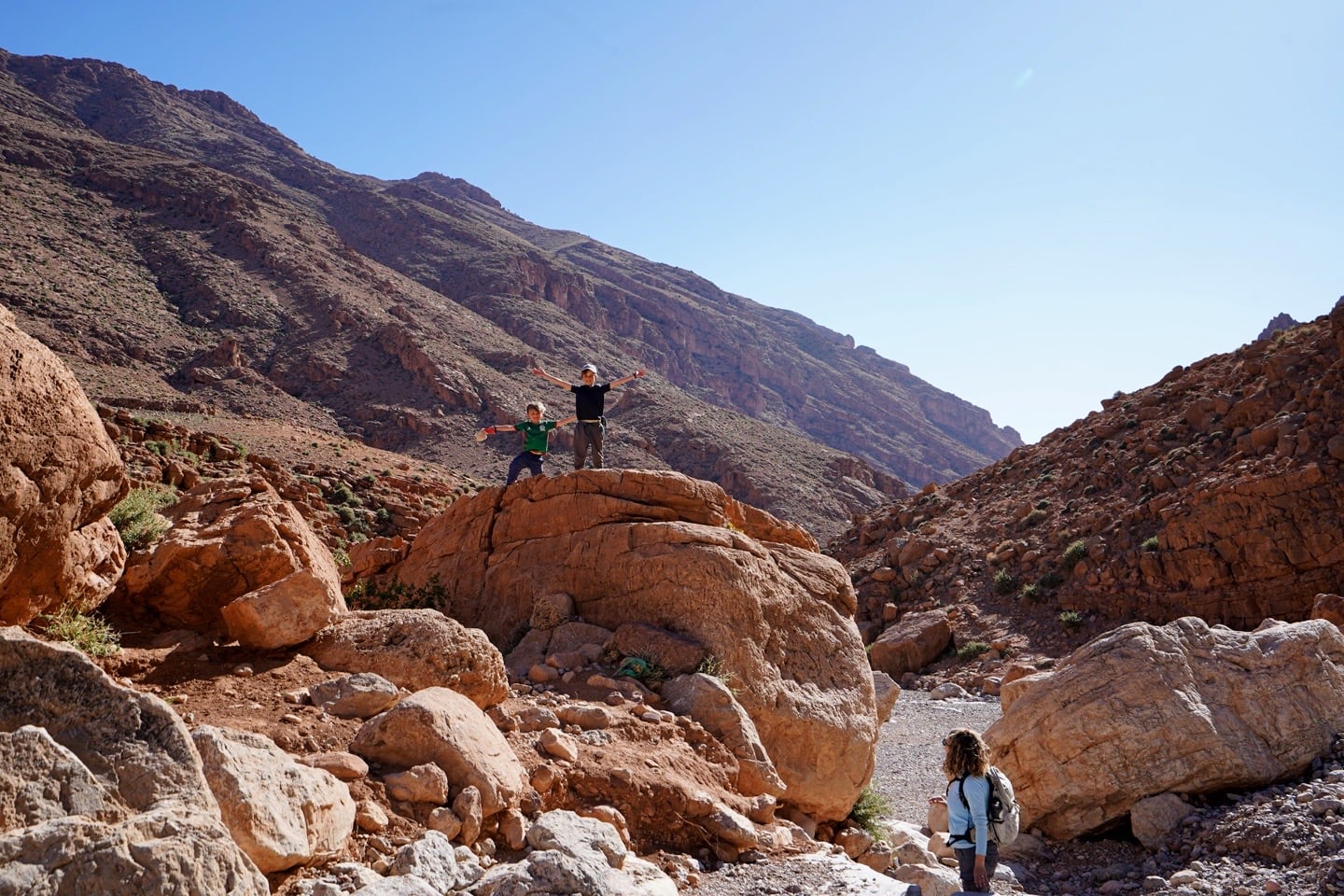
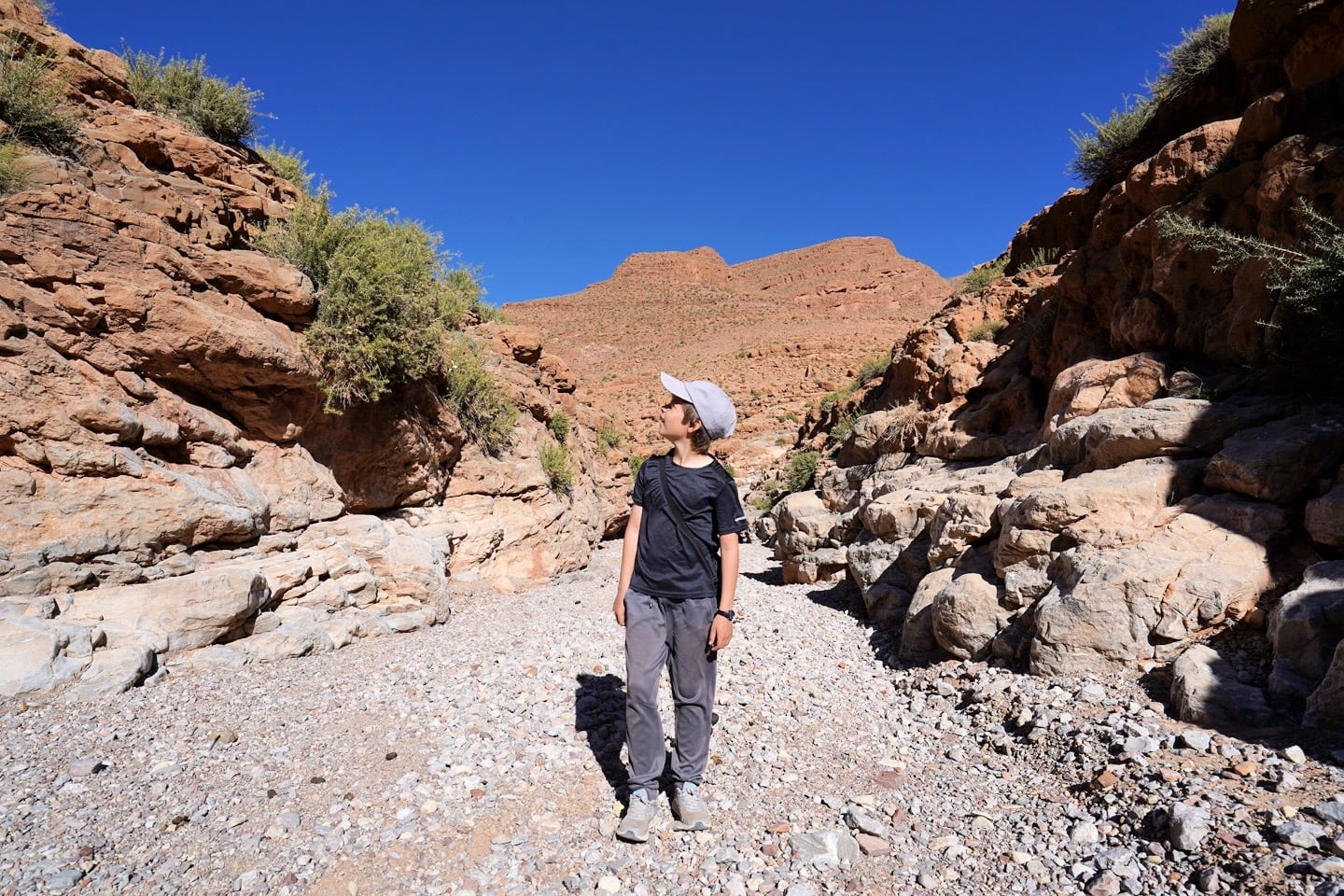
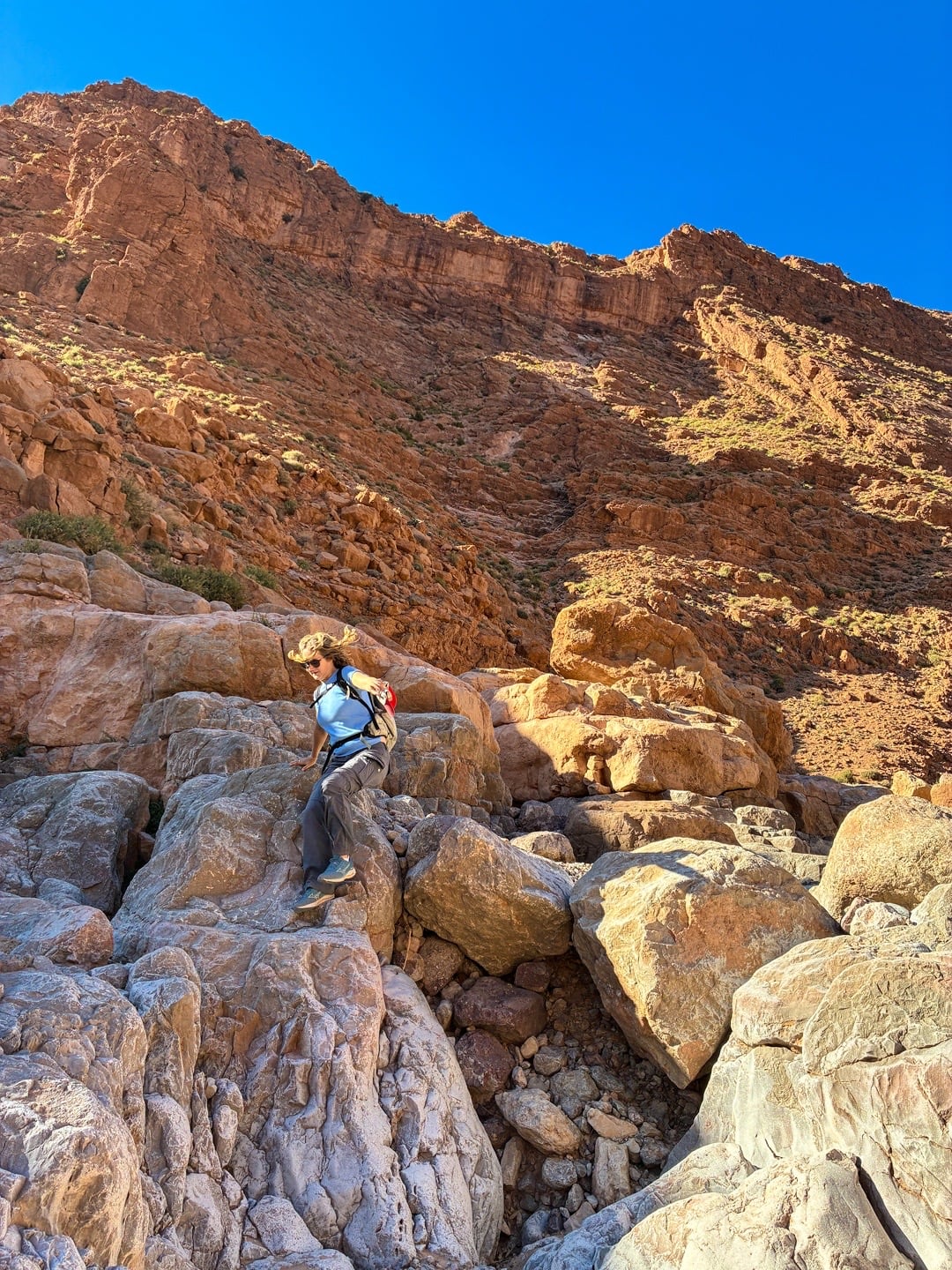
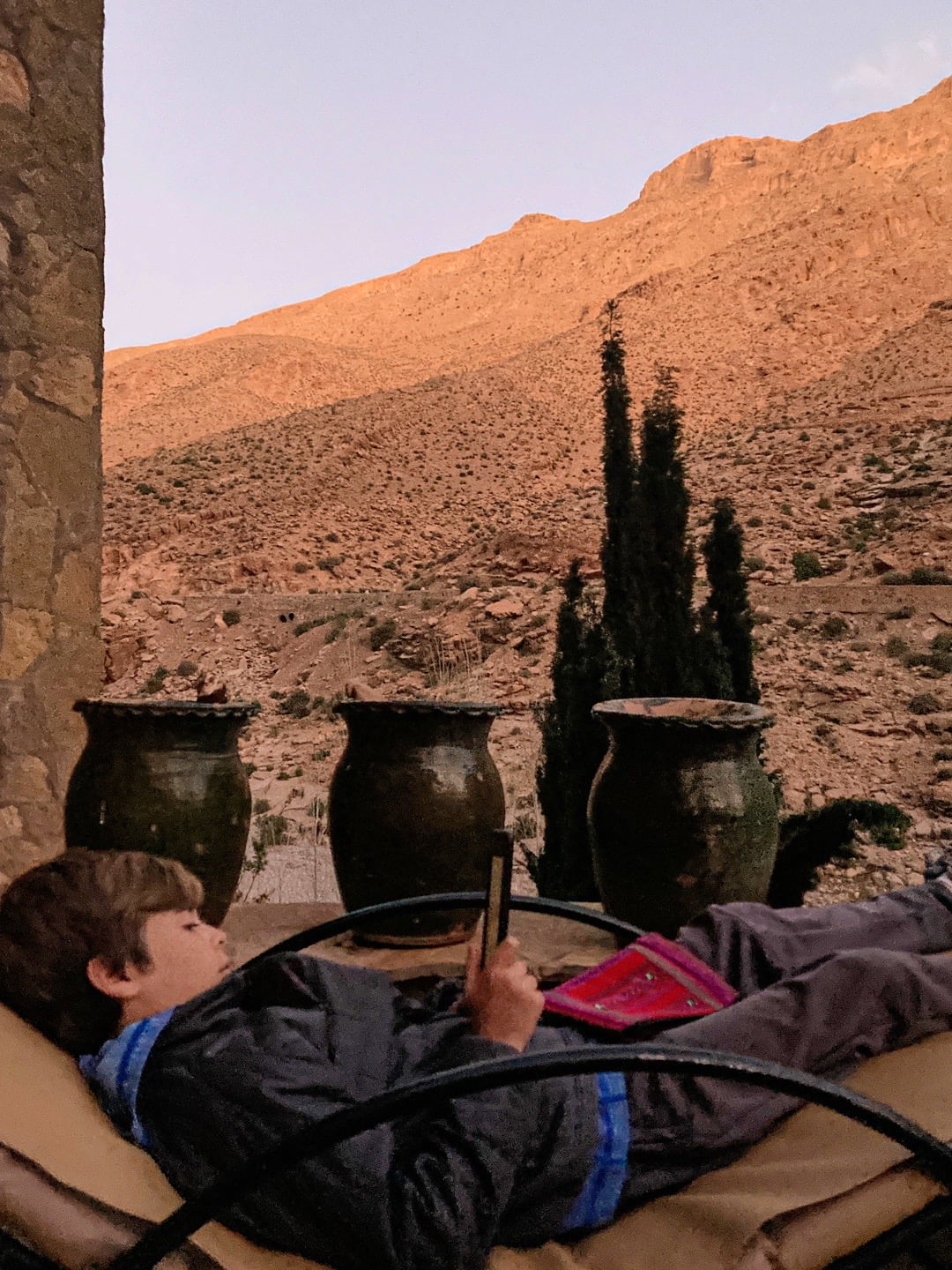
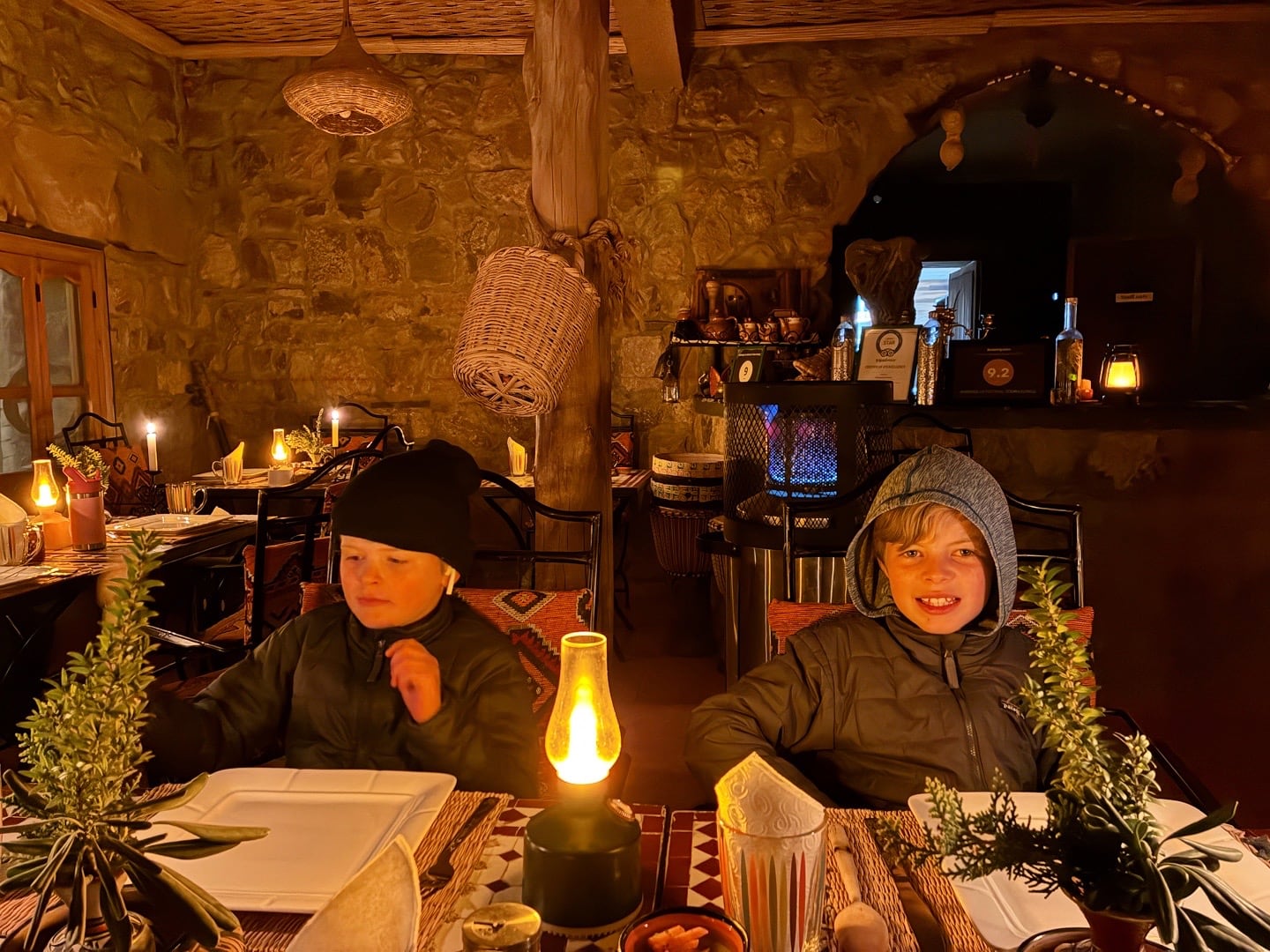
As you might imagine, there aren’t a whole lot of dining options besides the hotel restaurant out here. Come to think of it, the hotel restaurant is the only option for miles.
Fortunately, they didn’t gouge us like some isolated places we’ve stayed at in the past. The food was excellent, reasonably priced for the quality and location AND we got our first beer in weeks (we were not expecting that).
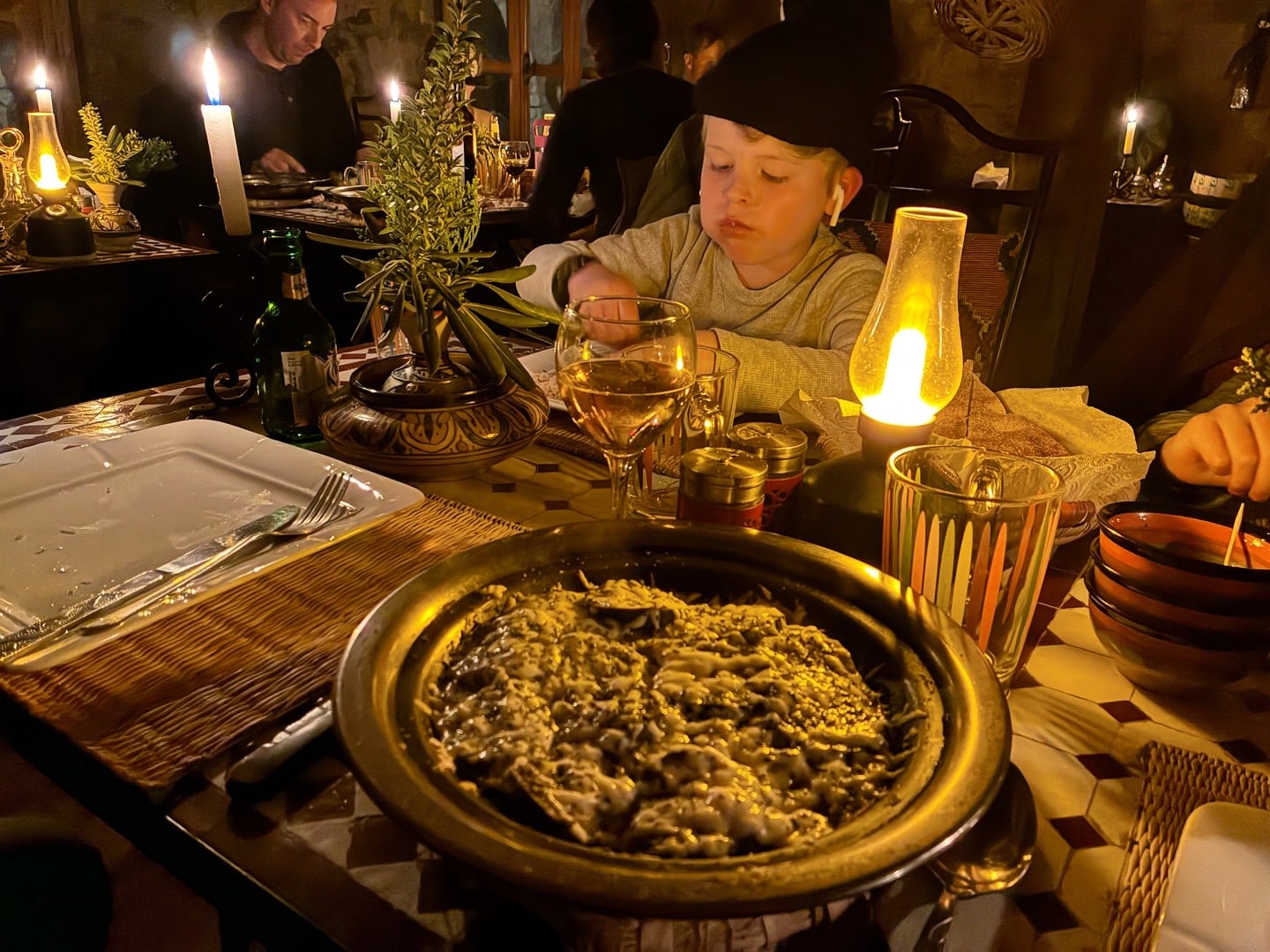
After dinner, we were treated to a traditional drum performance put on by a couple of the staff.
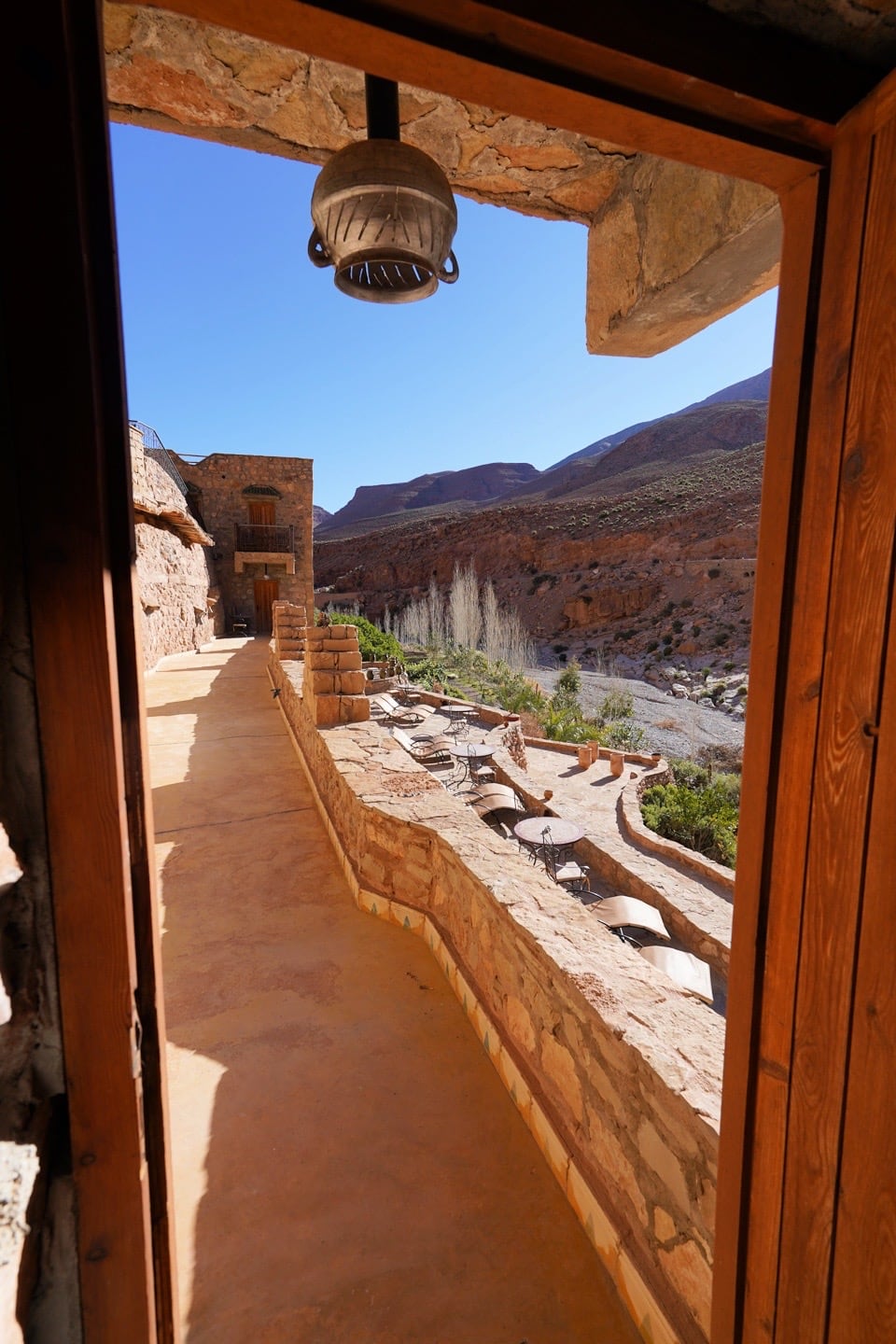
The next morning, we were again greeted by brilliant sunshine and perfect temps. We’ve almost come to expect it here in March on this side of the High Atlas.
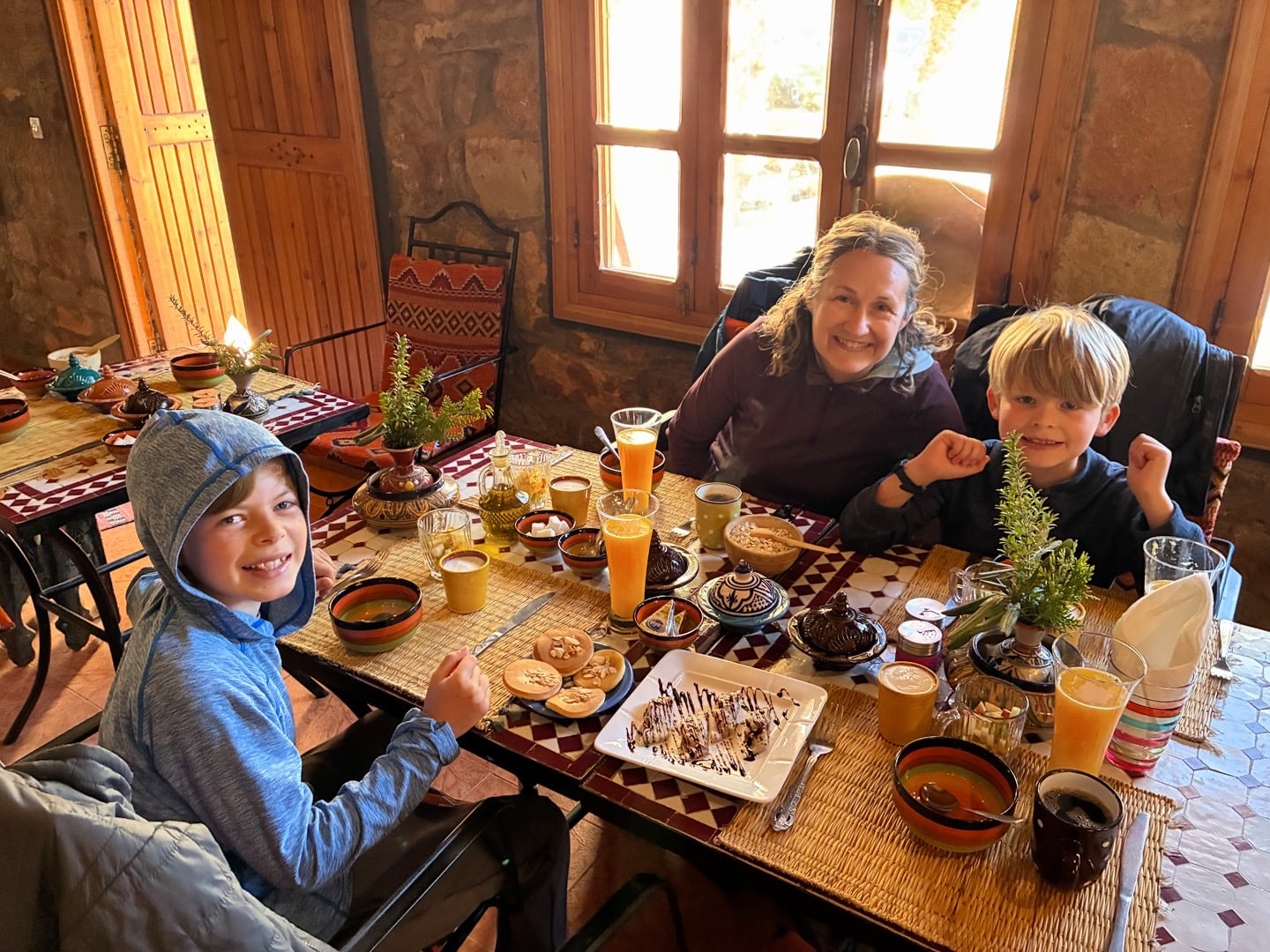
Breakfast has been included in nearly all of our accommodation on our road trip, and we heard Le Festival’s was supposed to be one of the best. So, it wasn’t much of a surprise that it turned out to be our absolute favorite.
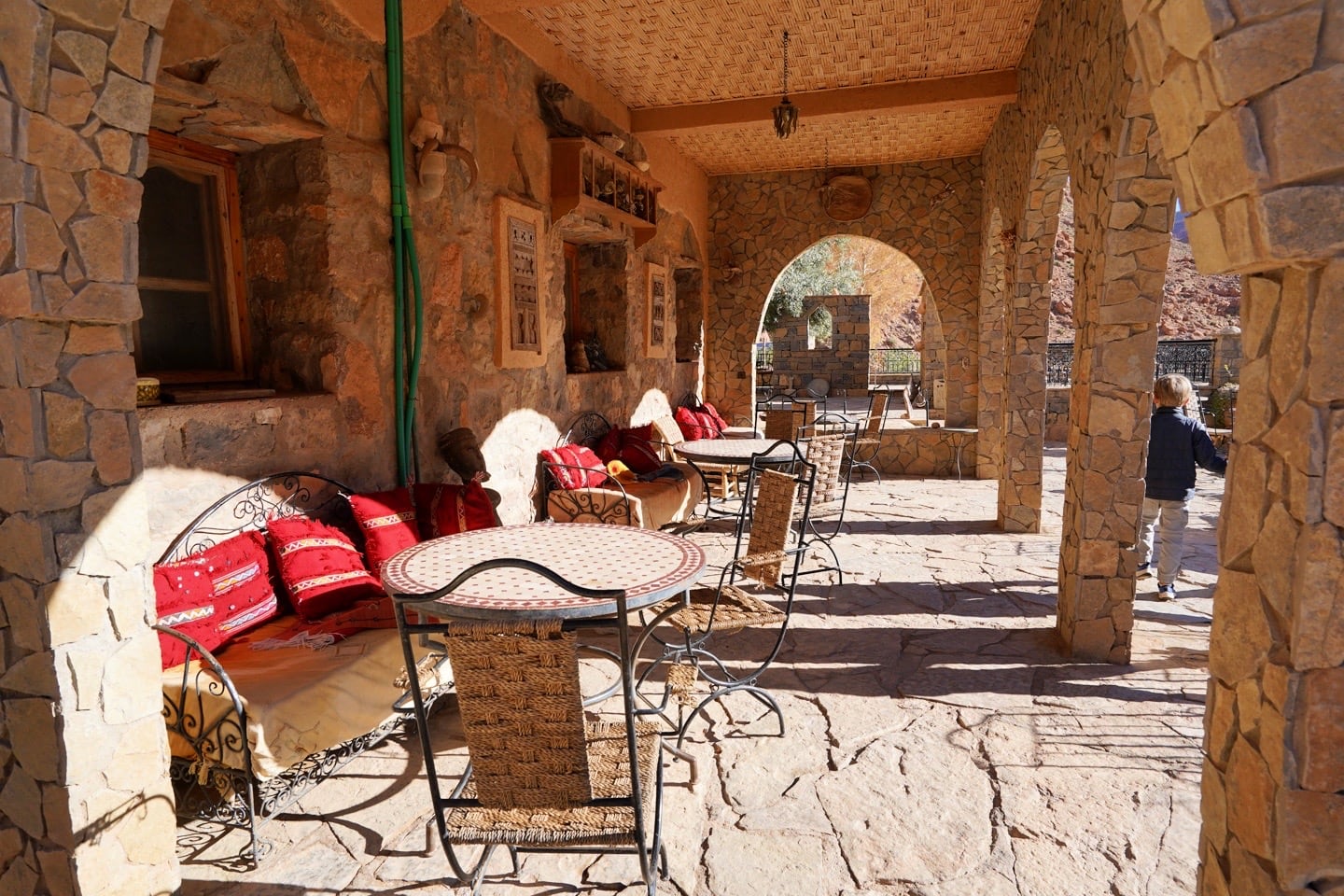
After breakfast, Lori and I got a refill of coffee and took it out on the terrace to soak up some sunshine.
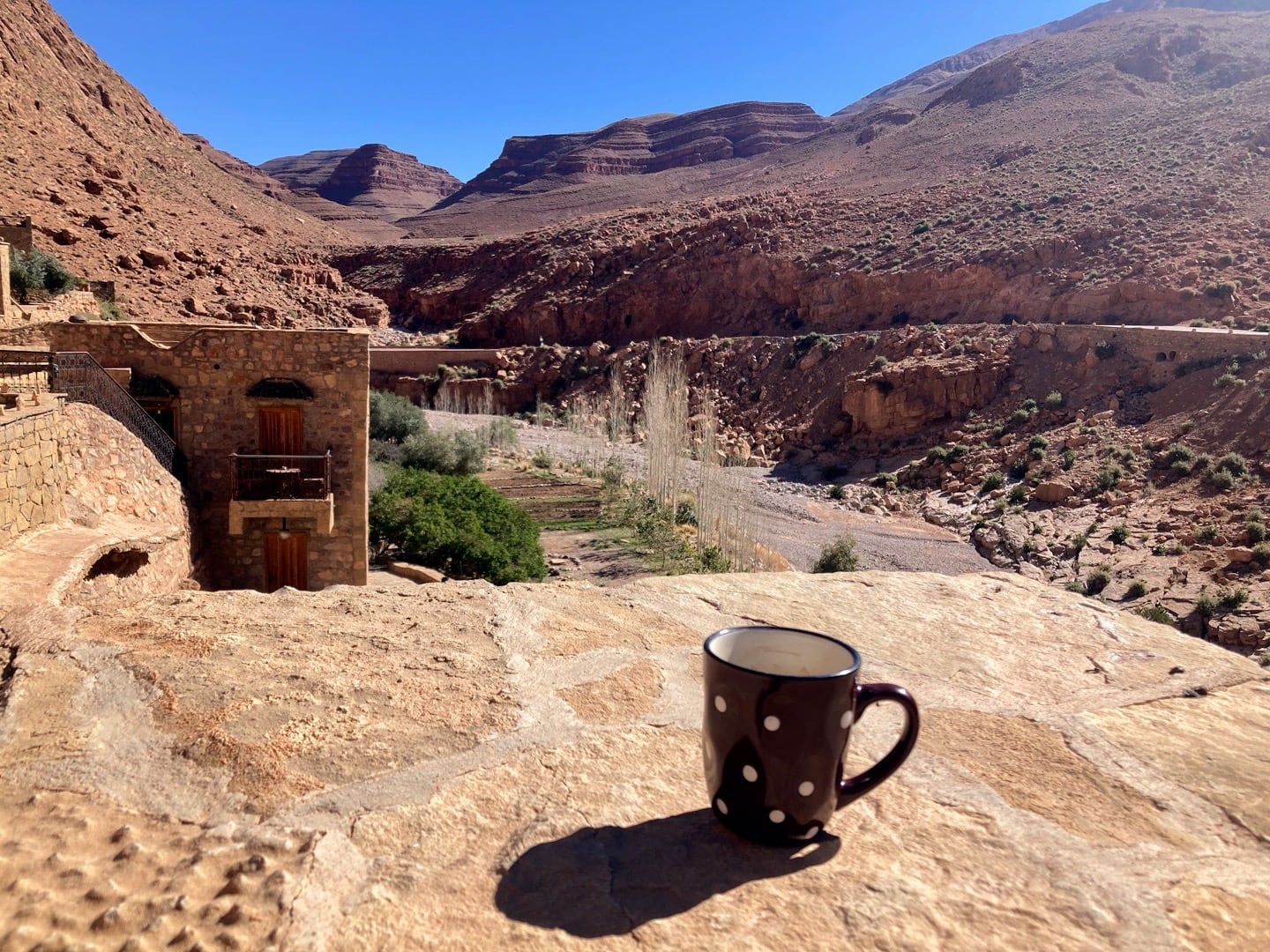
Meanwhile, the boys happened to find a brother and sister from Canada around their ages and happily played together around the castle grounds for couple of hours until check-out. And we got to have a nice chat with the parents for a while.
It’s been a couple of weeks since we left the Mirleft worldschool hub, and there aren’t a lot of local families out and about during the day on account of Ramadan, so the boys were both stunned and thrilled to find English-speaking kids from North America to hang out with out here in the middle of nowhere.
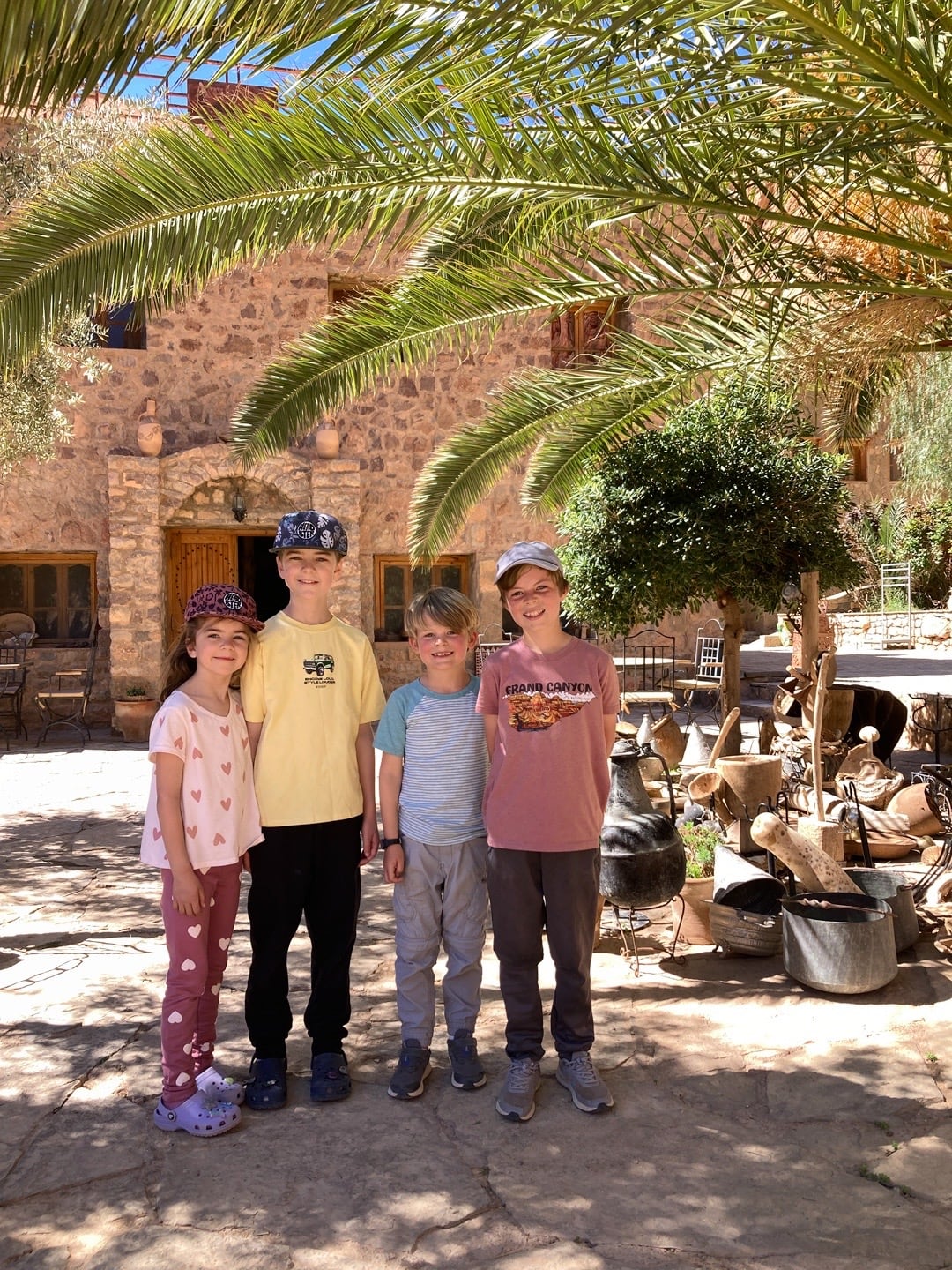
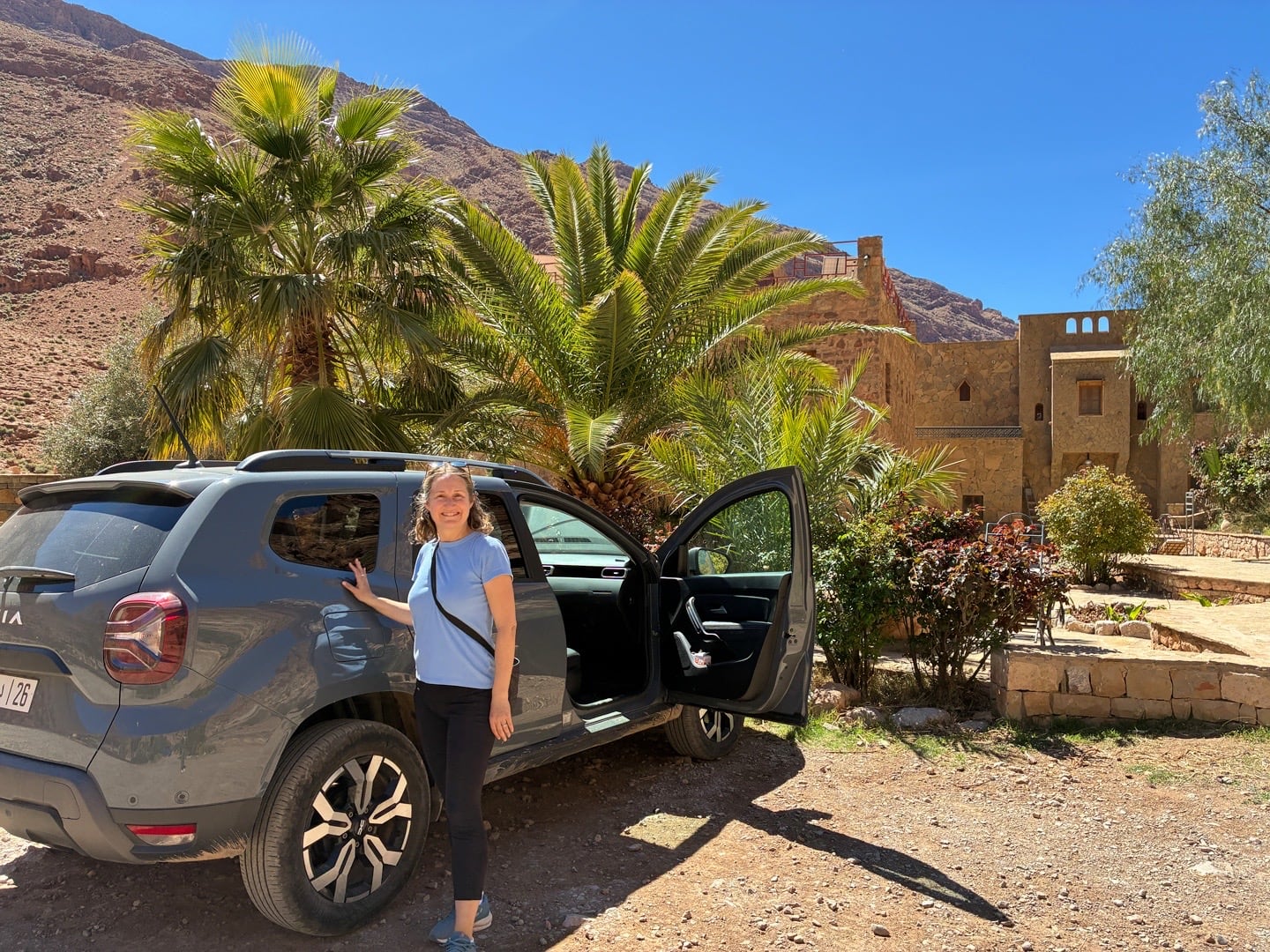
Time to hit the road! So long, Auberge Le Festival.
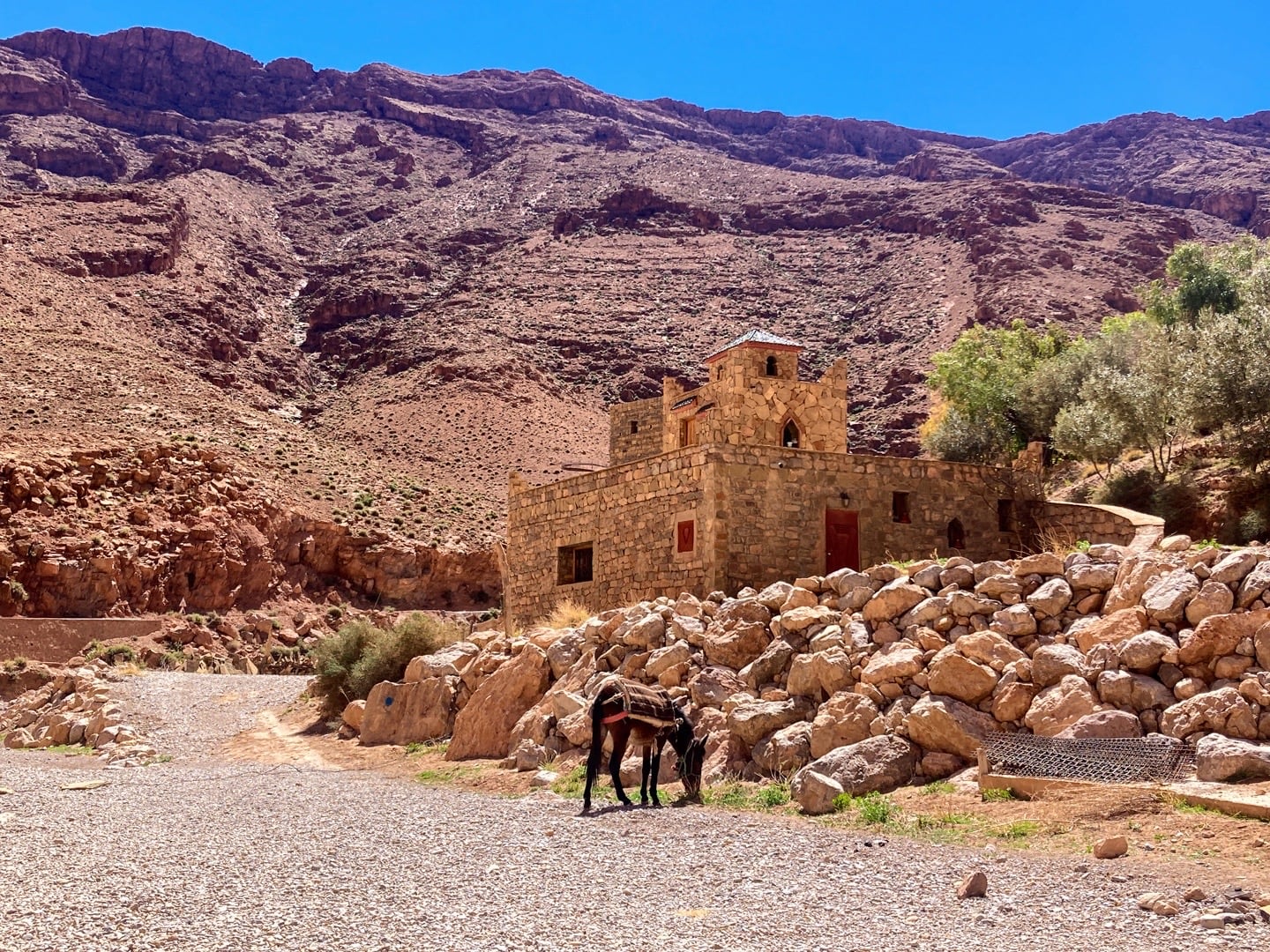
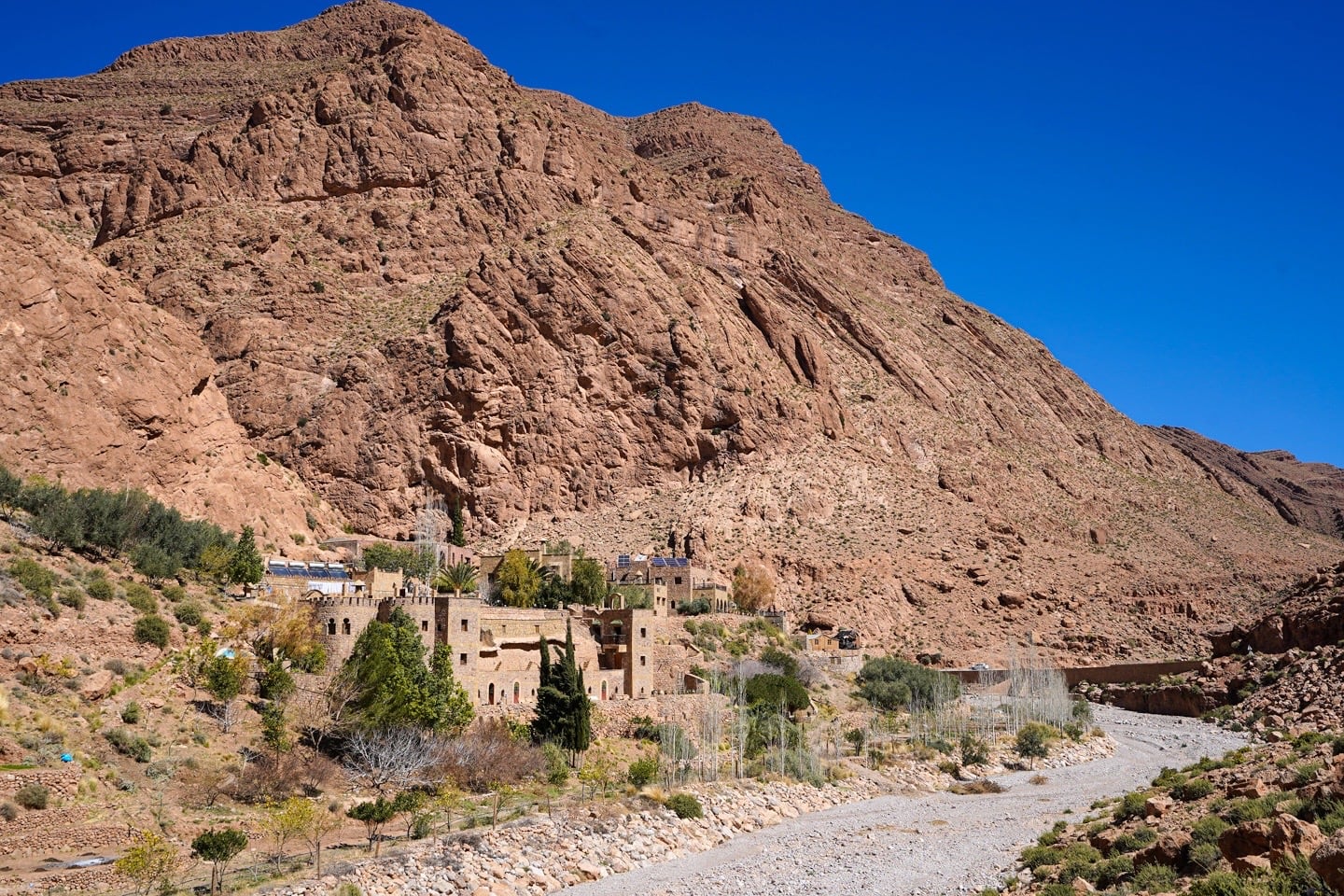
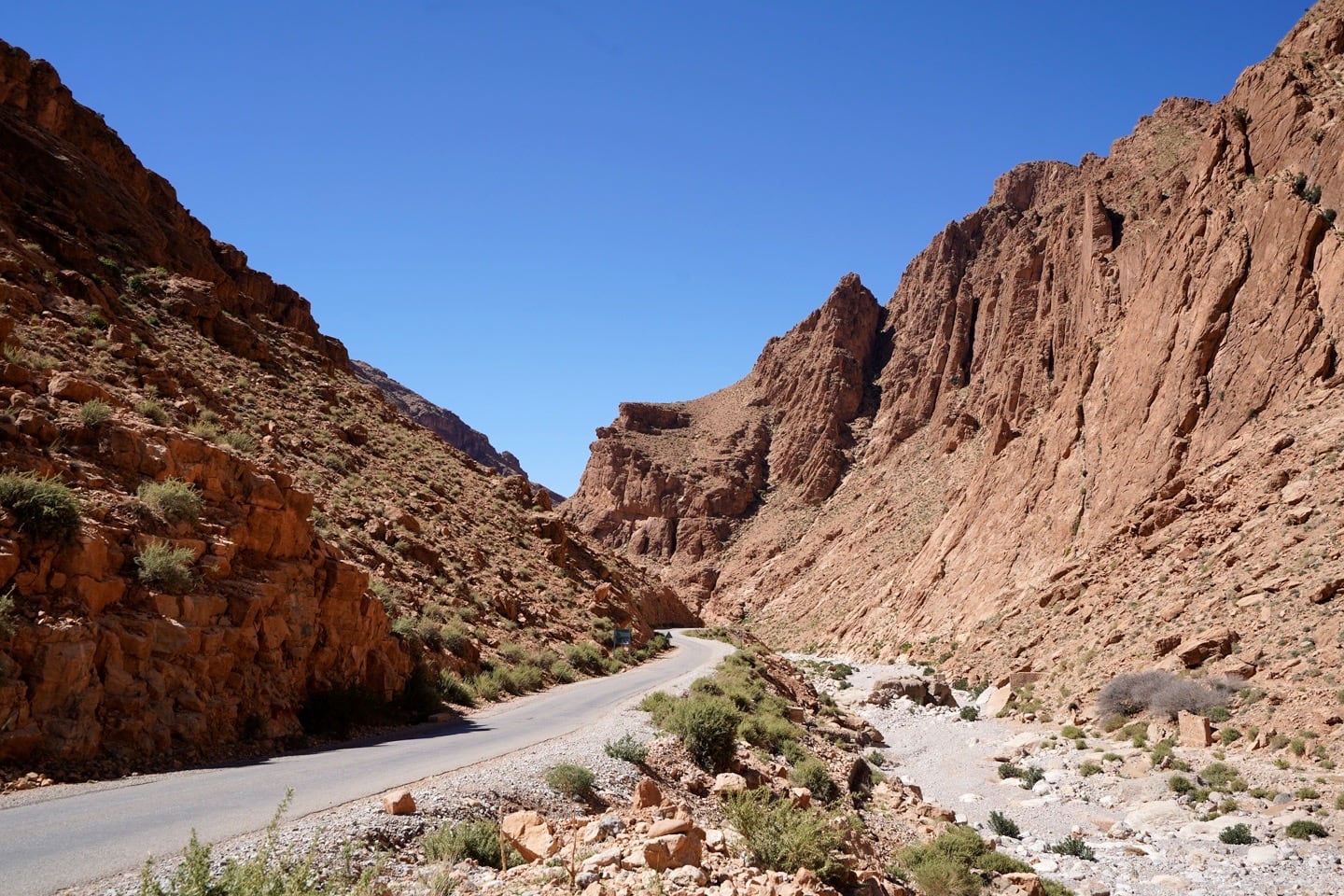
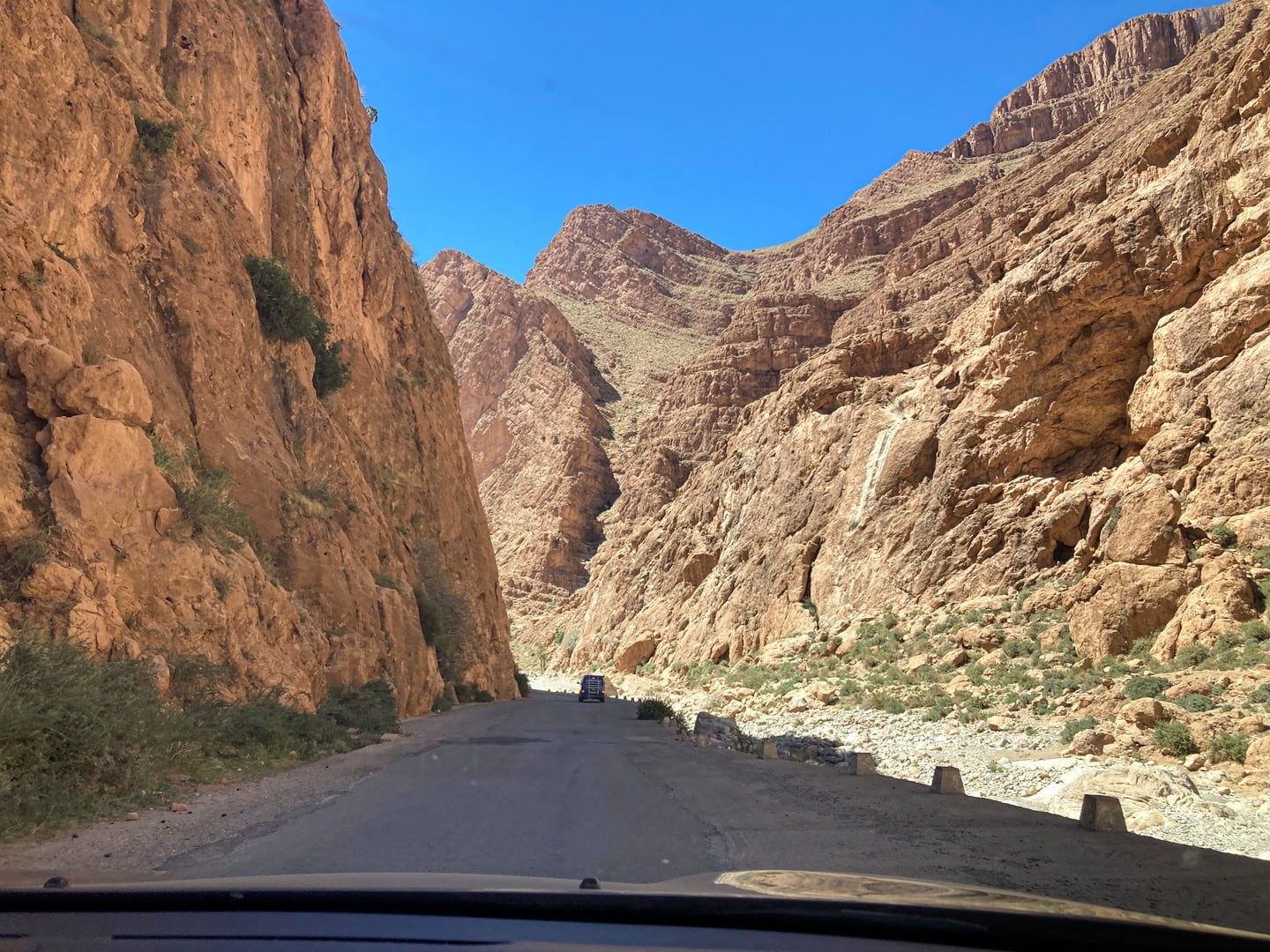
Thirty minutes on, we were back at the mouth of Todra Gorge.
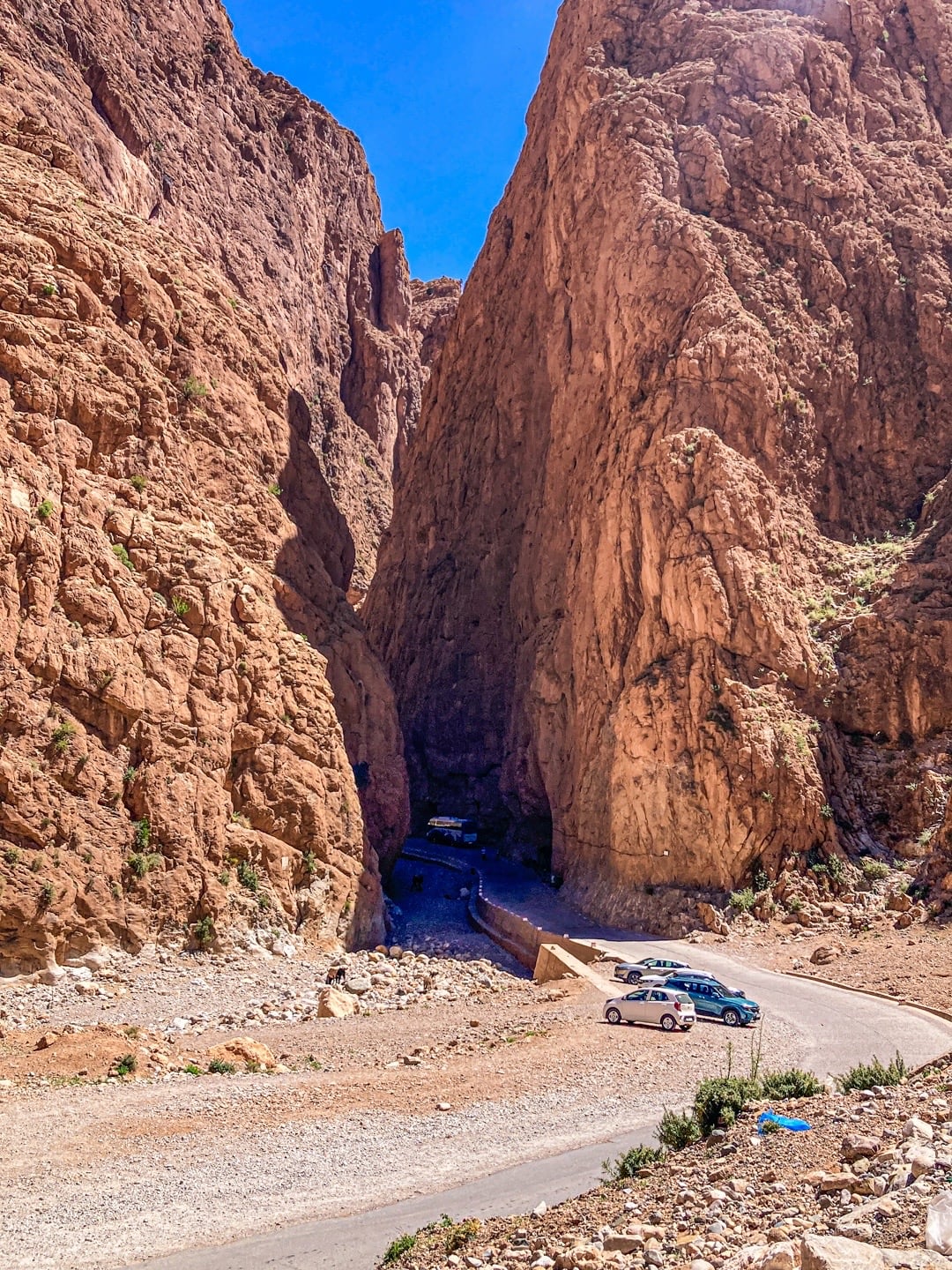
I’ve been looking forward to this driving day for a while. In about three hours from now, we’ll finally roll into Merzouga. There, we plan to leave behind the rental car for a few days and make our way to a desert camp in the Sahara.