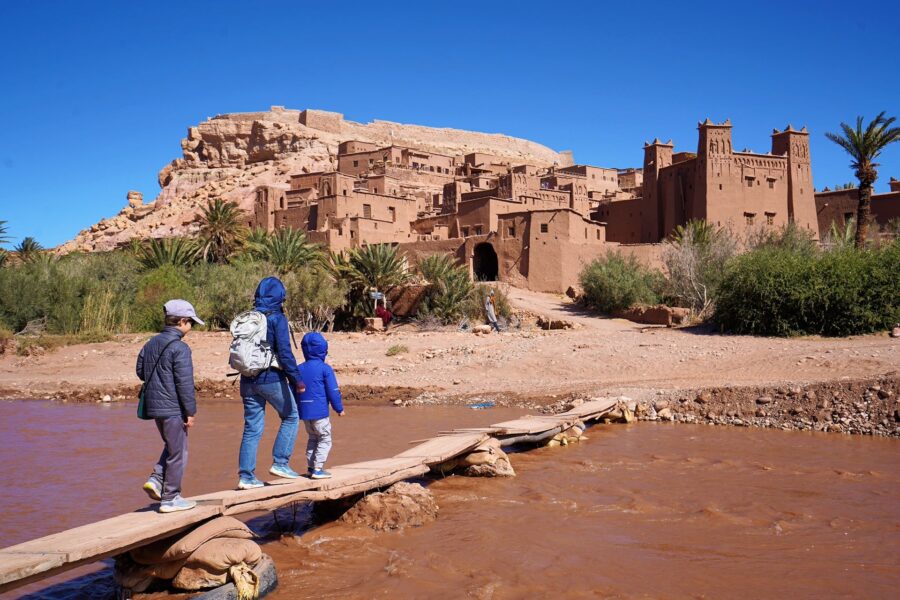
We’ve got a short drive of about an hour to our next overnight stop today. We’ll spend the morning exploring a bit more of Morocco’s famous Aït Benhaddou mud village. Then, we’ll head over to nearby Ouarzazate before finally making our way east to one of the valley’s most historic and significant oases.
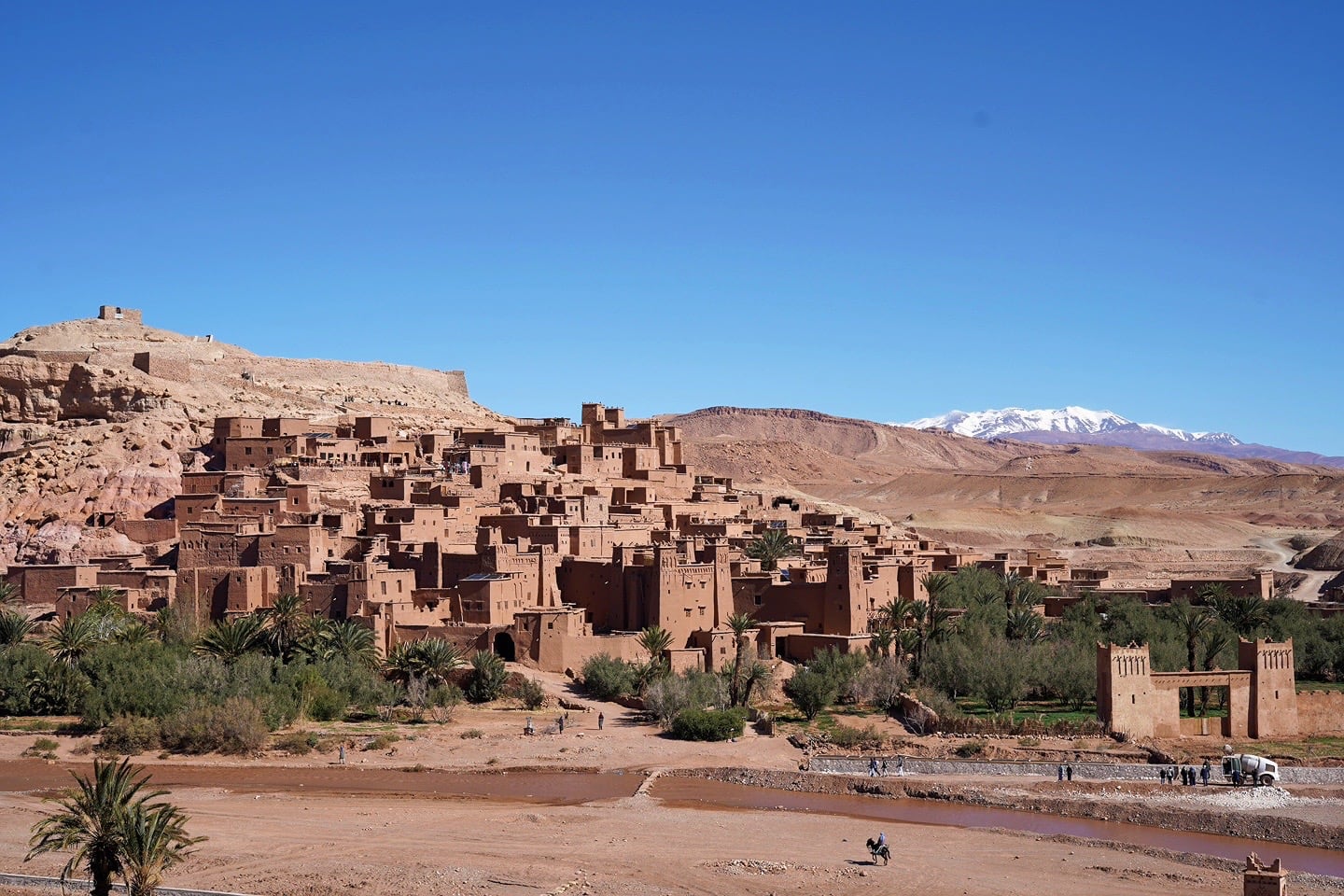
It’s hard to imagine I’d ever get tired of this view.
Our Euro-African Journey (So Far...)
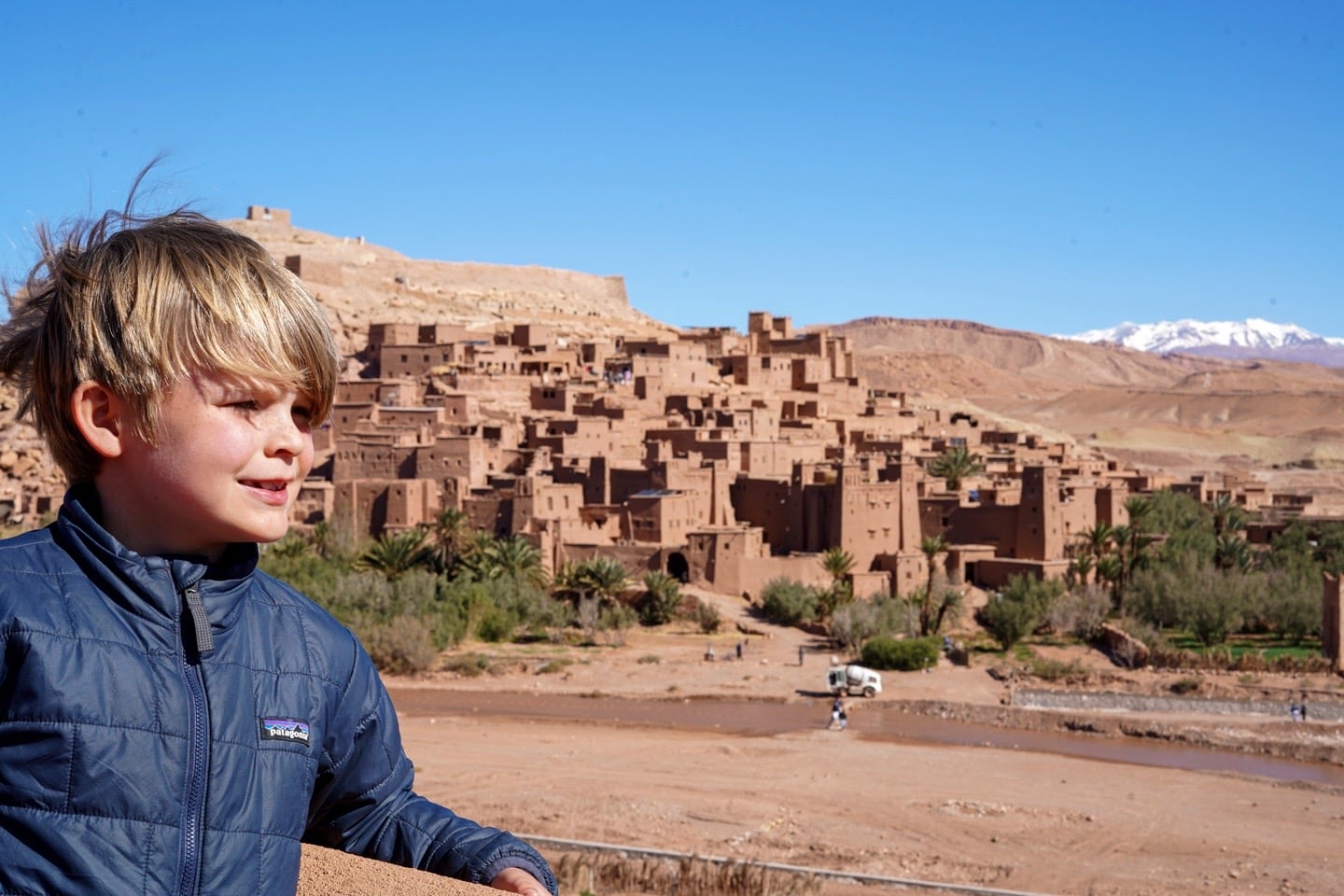
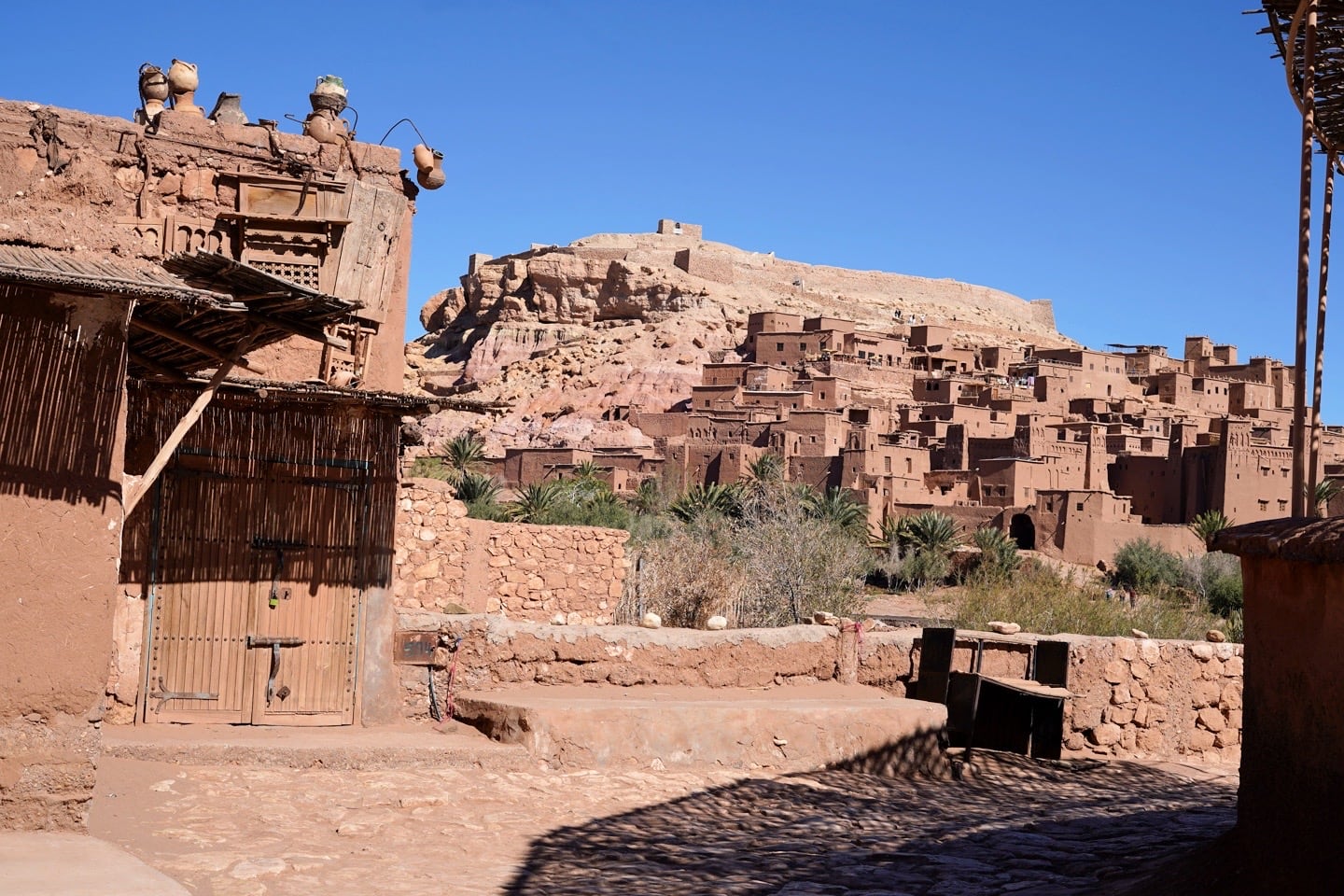
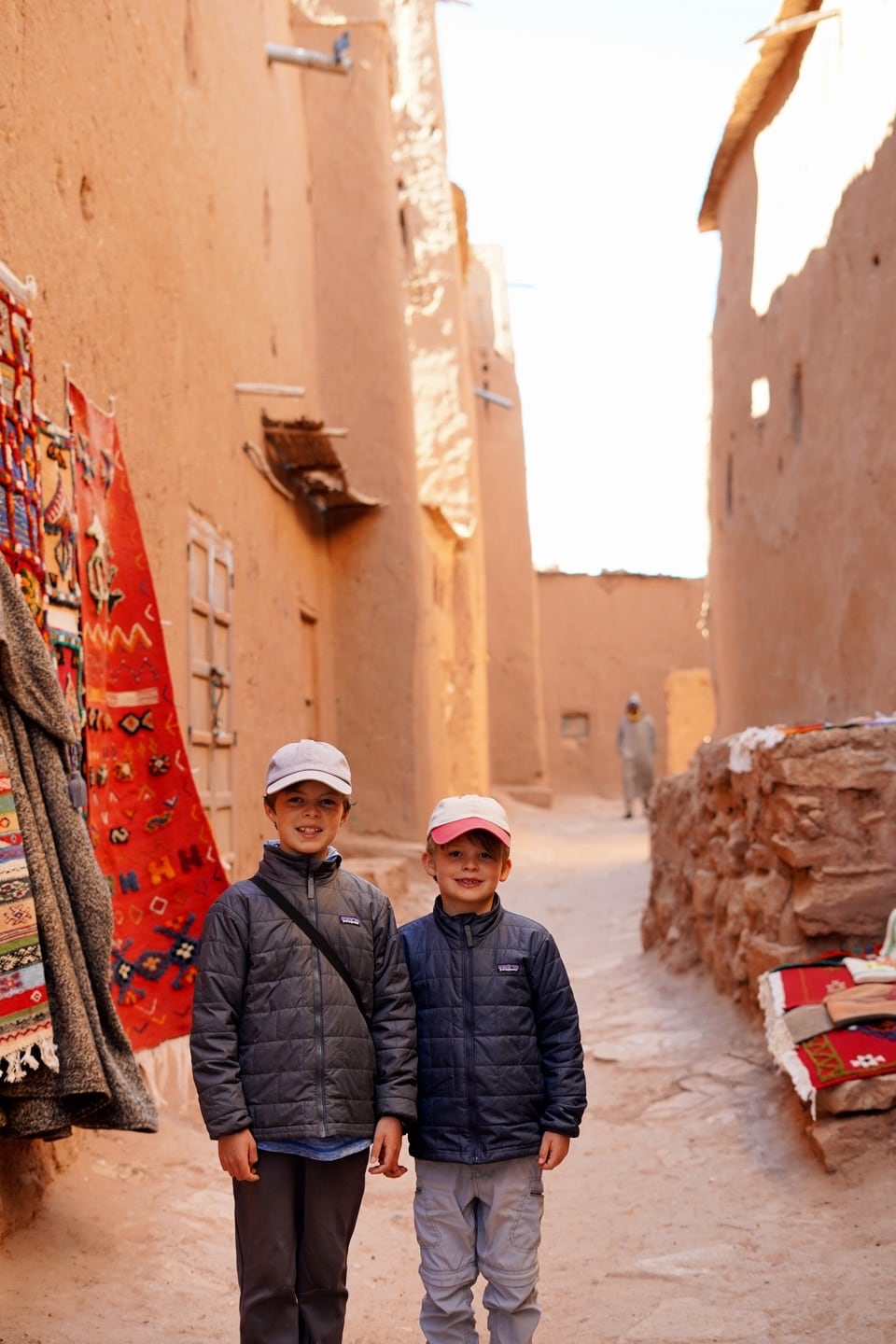
The wind isn’t as strong as yesterday, so we made another attempt scale the monolith near the Ksar. This time, we were successful.
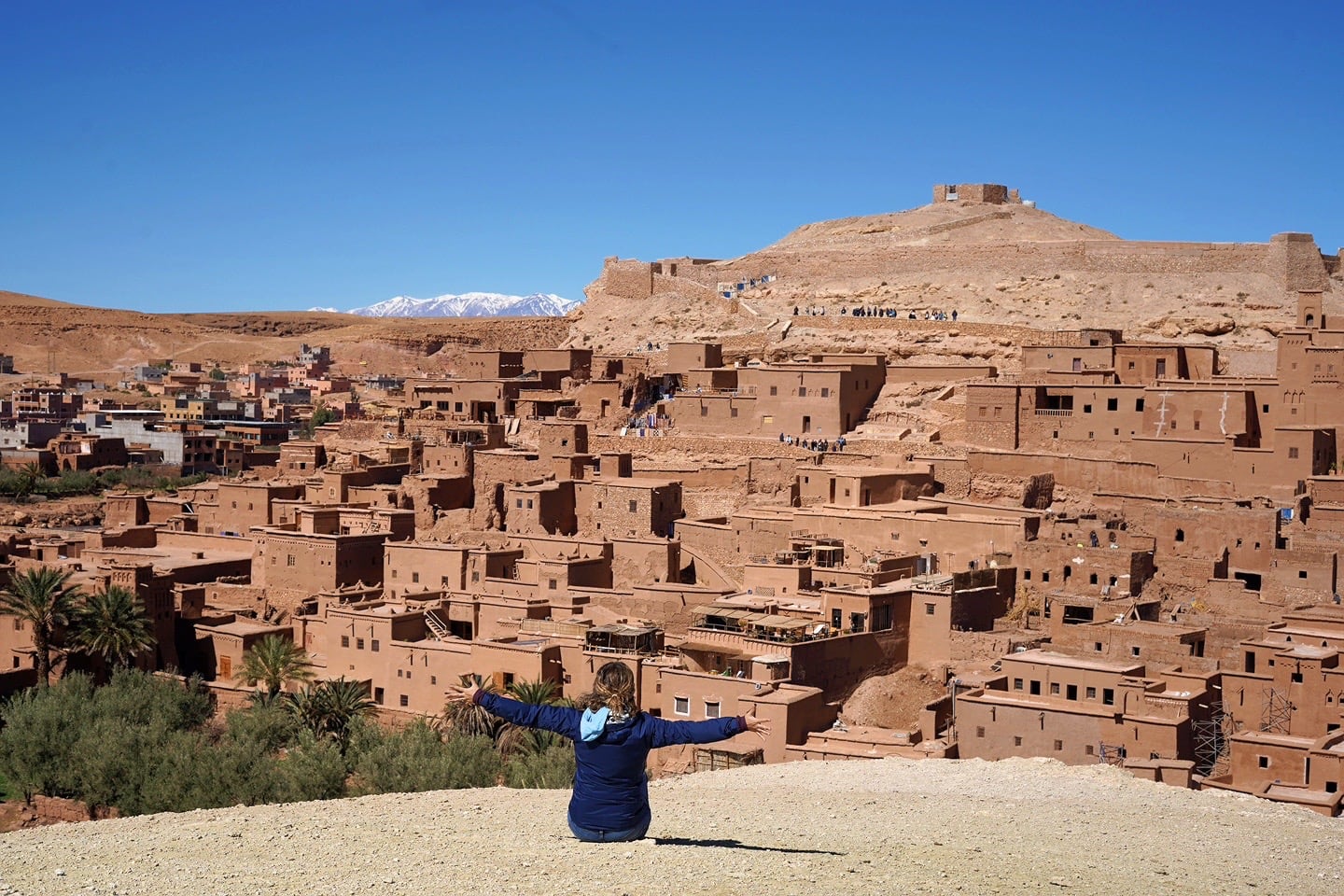
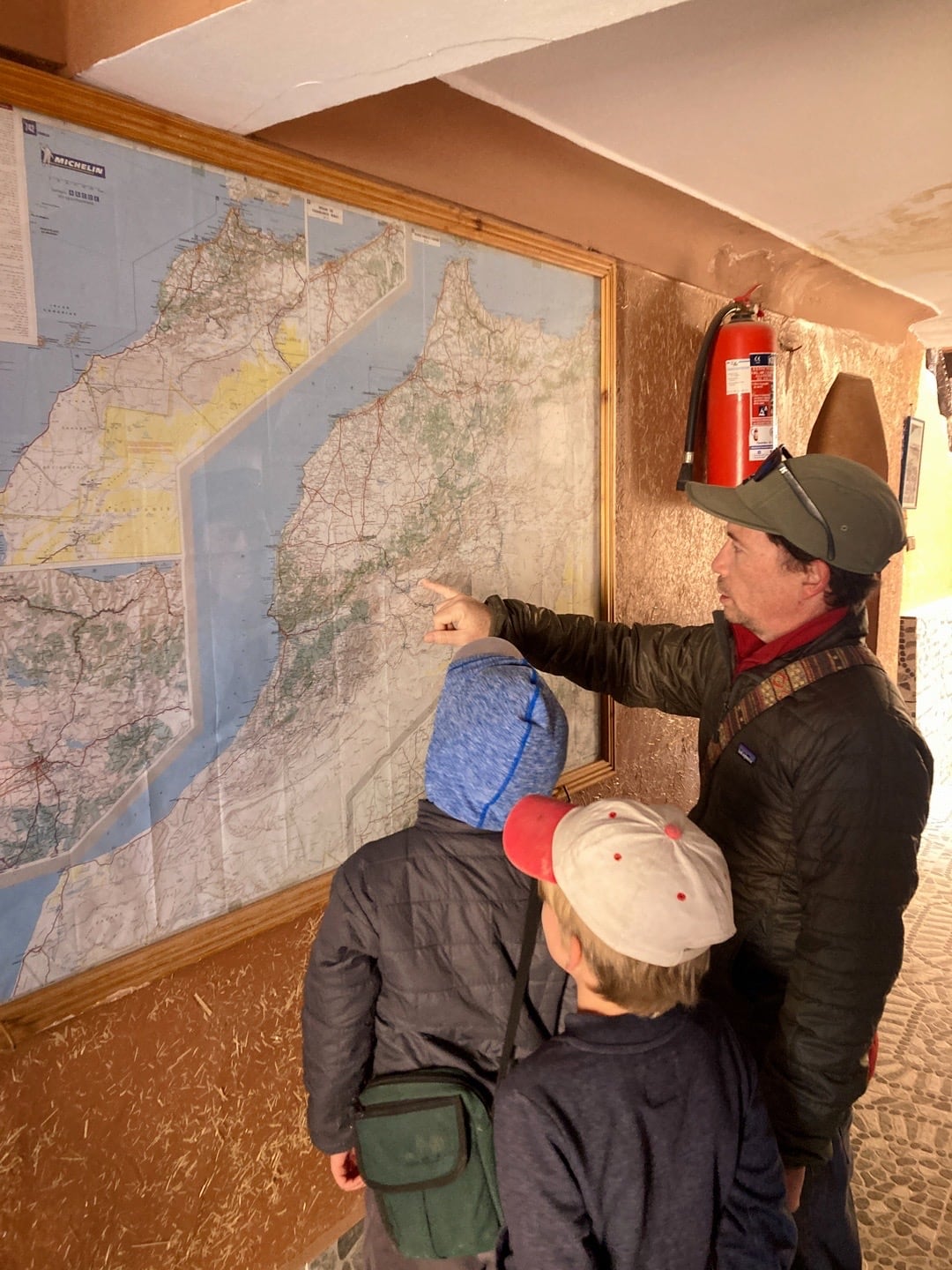
Briefing the boys on our travel plans for the day.
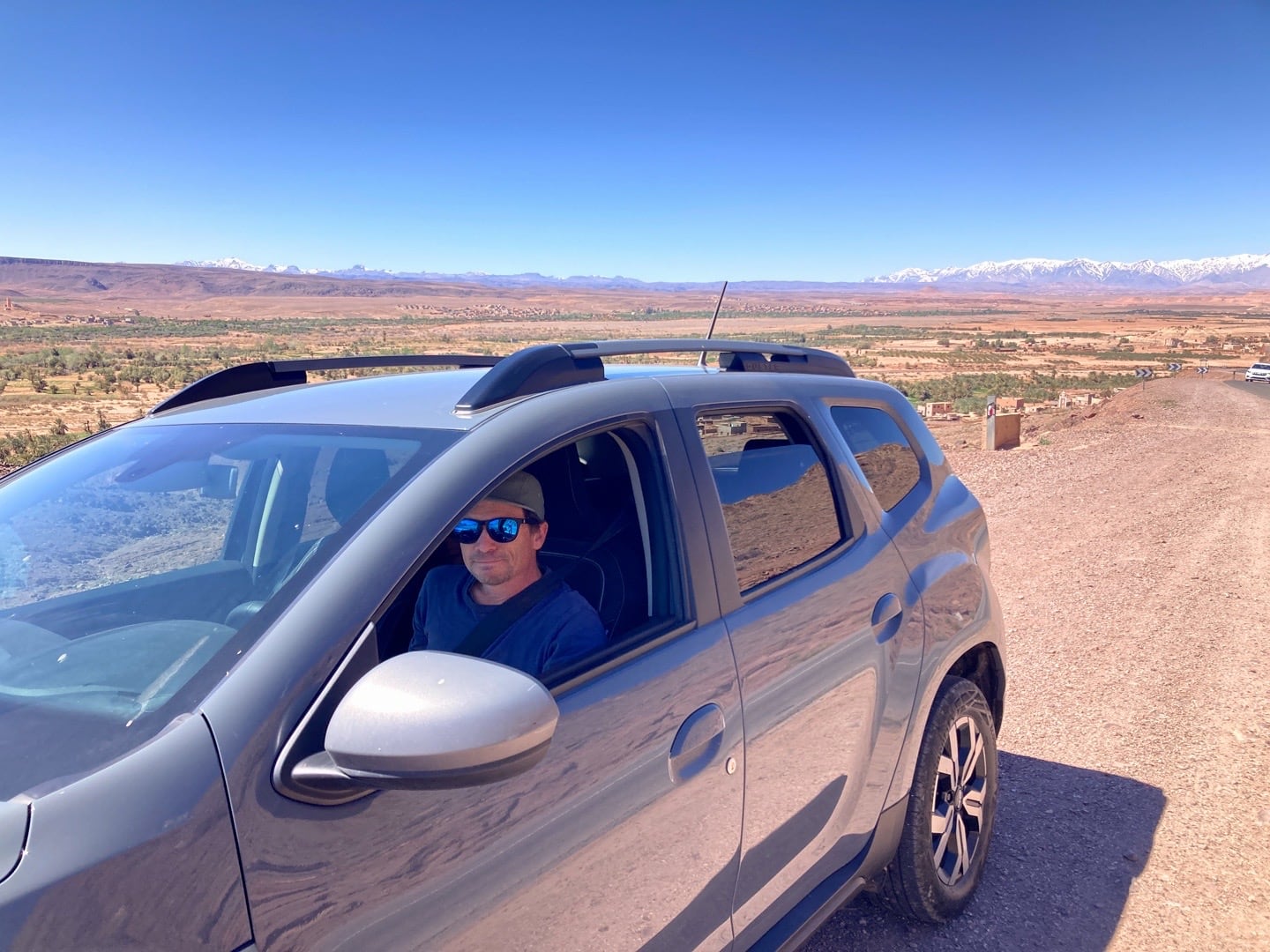
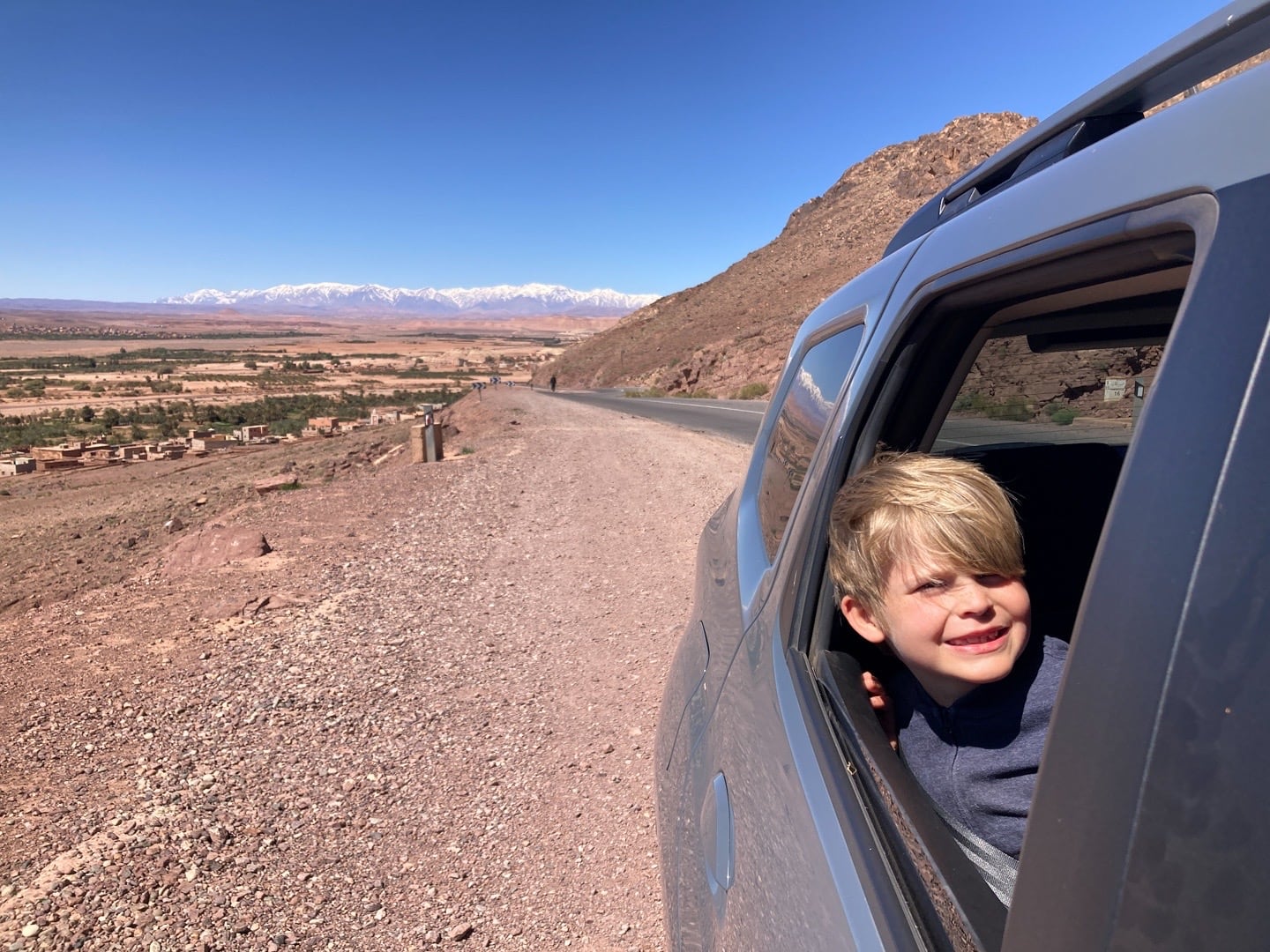
On the road again!
We leave Aït Benhaddou and make the short drive down to Ouarzazate, billed as the “Hollywood of Africa” and home to Atlas Studios (Gladiator, Kingdom of Heaven, Game of Thrones…).
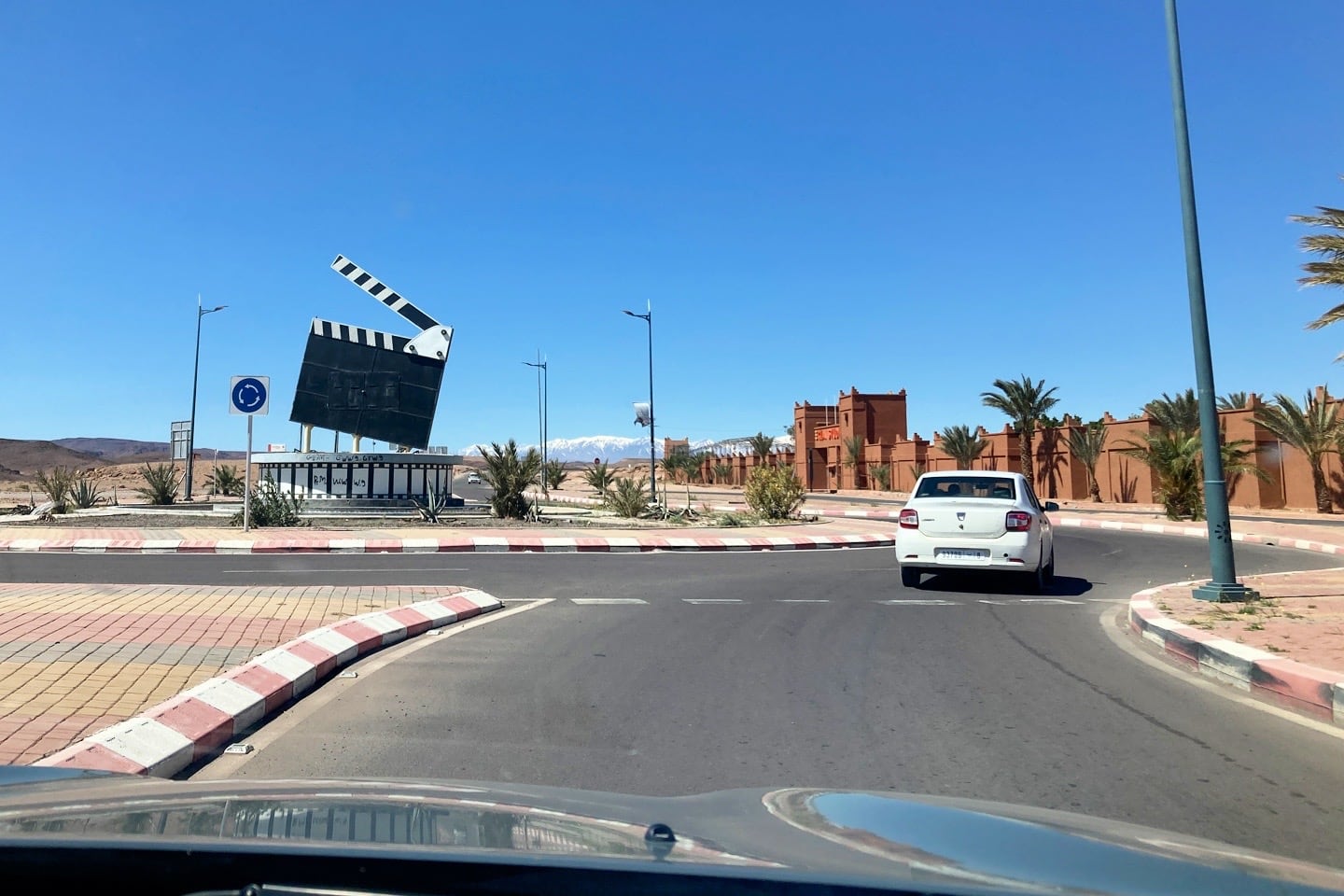
Given that Noe and Riley haven’t seen any of those movies, we didn’t think it was worth the time and money to do the full tour of the studio. But you can get a pretty good view of the massive sets from a nearby hill.
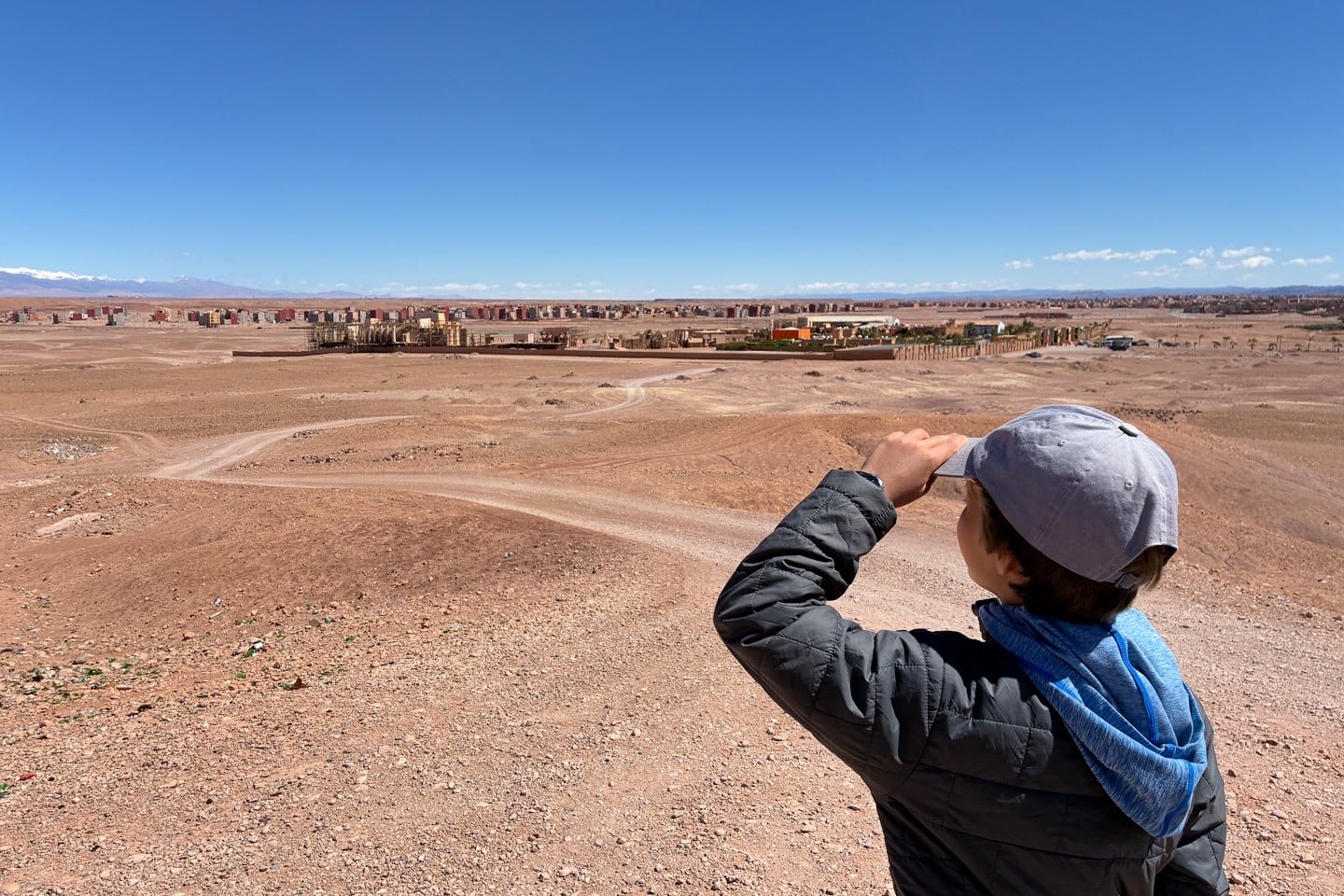
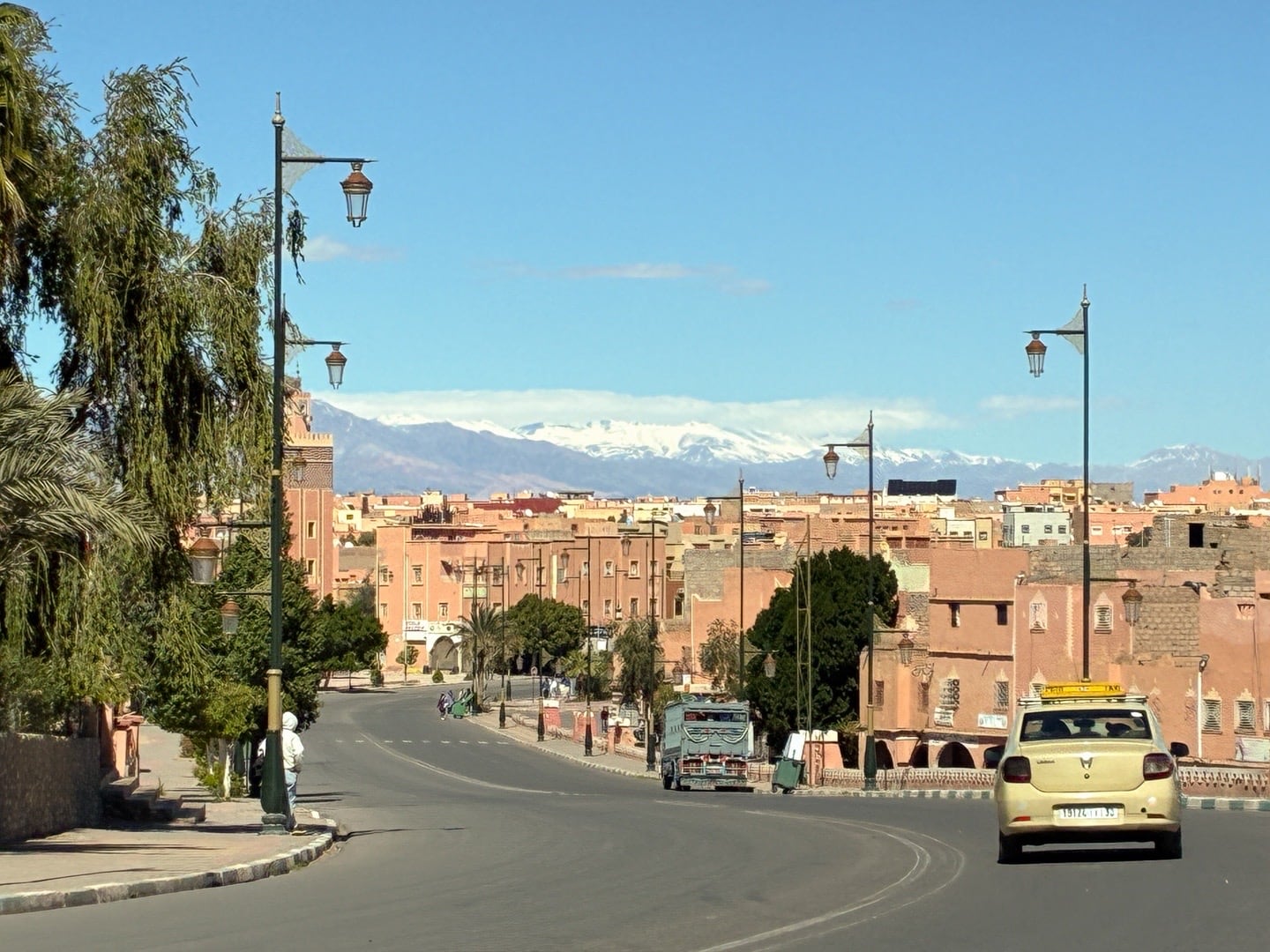
The other main attraction in town is the imposing 17th-century Taourirt Kasbah.
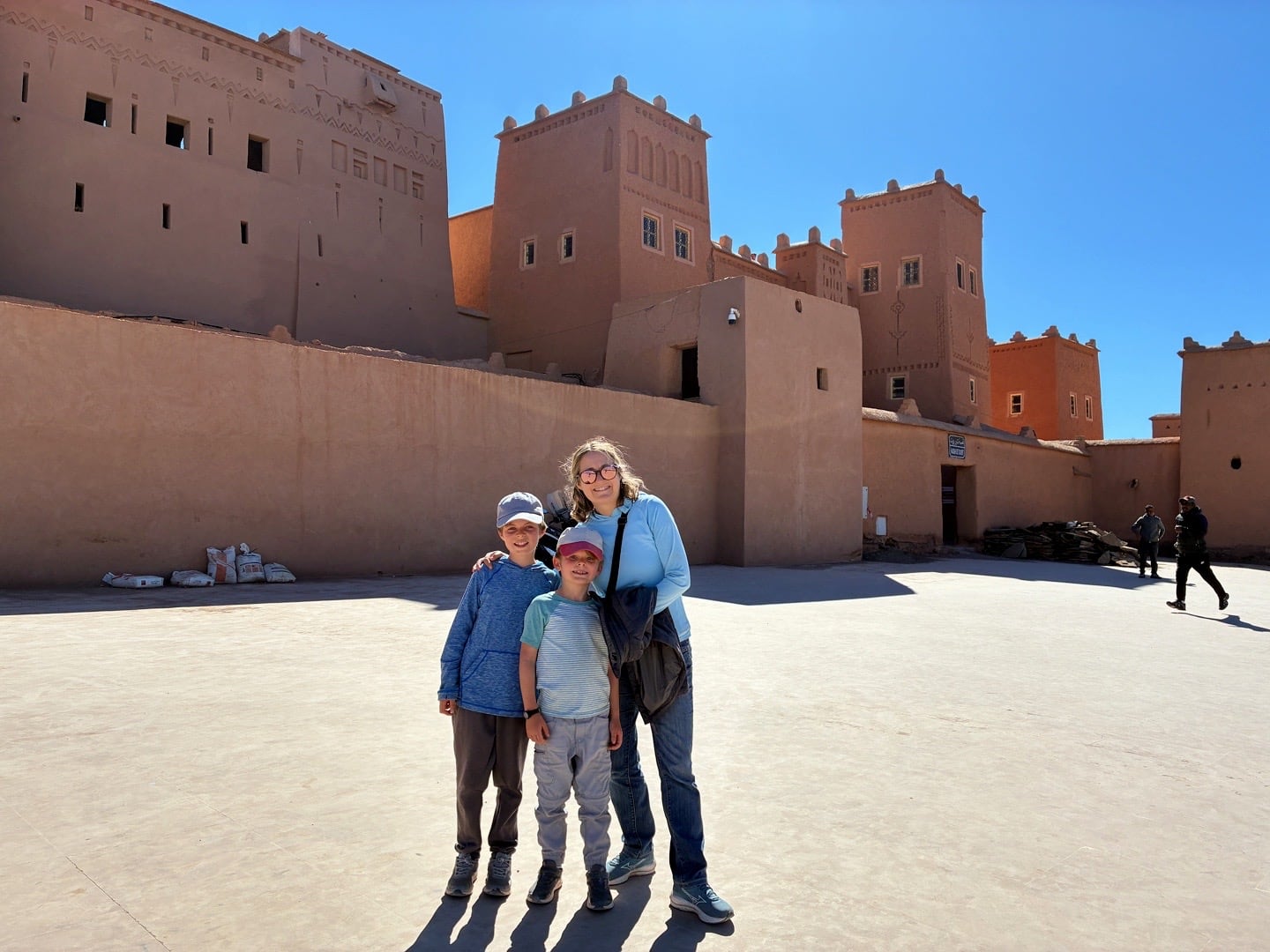
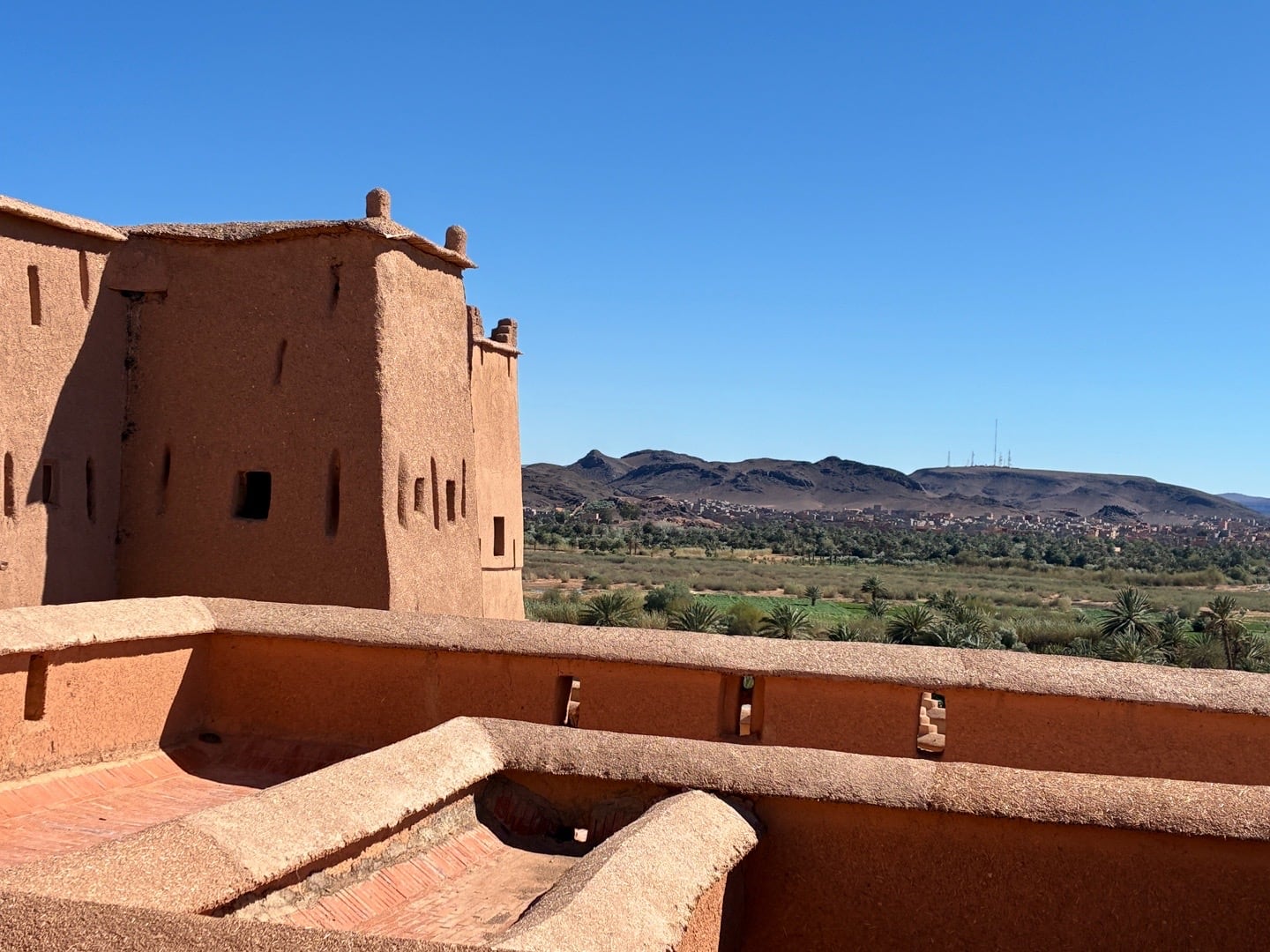
Once home to one of Morocco’s most powerful families, this huge and well-preserved complex is now open to the public.
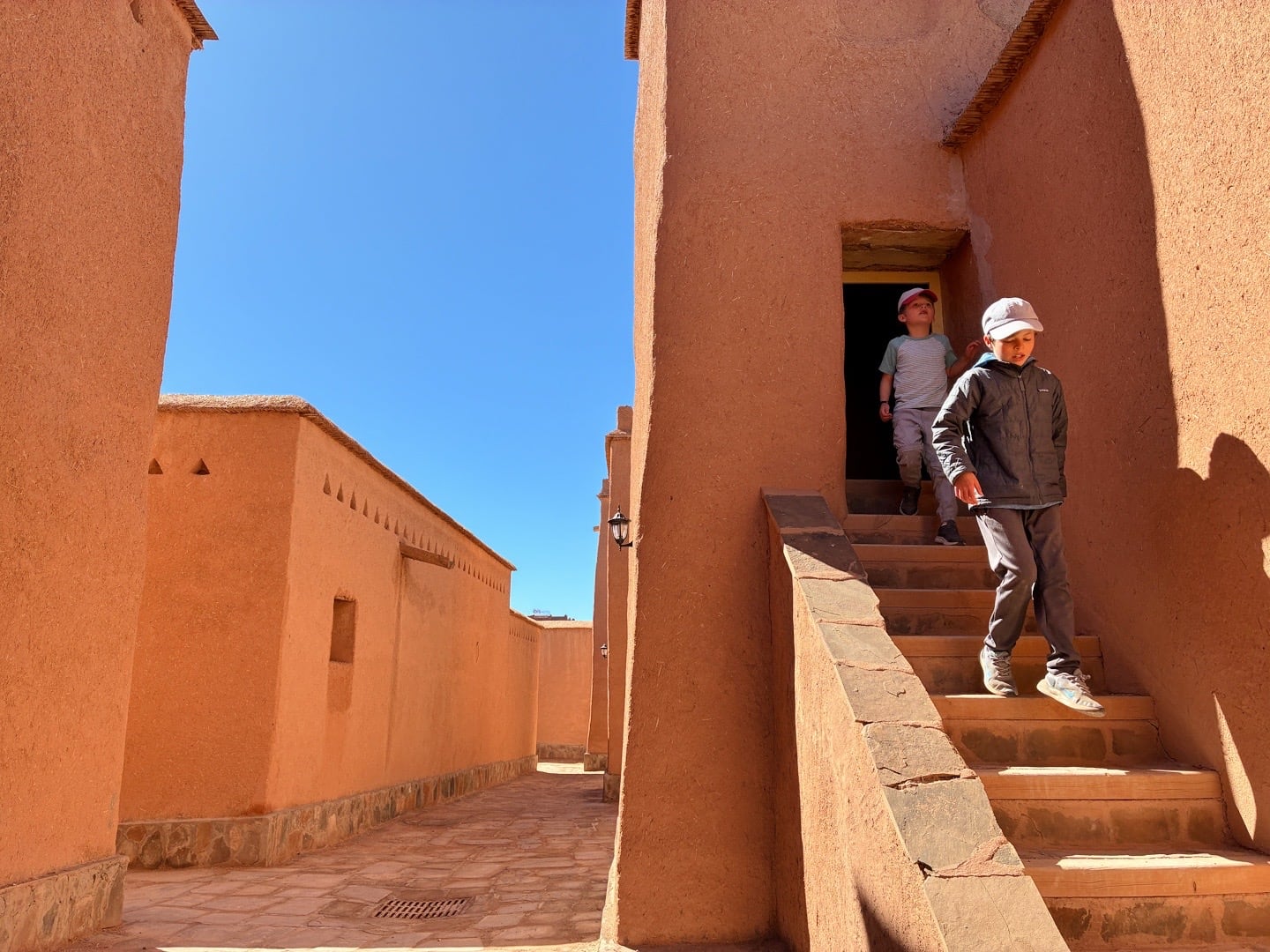
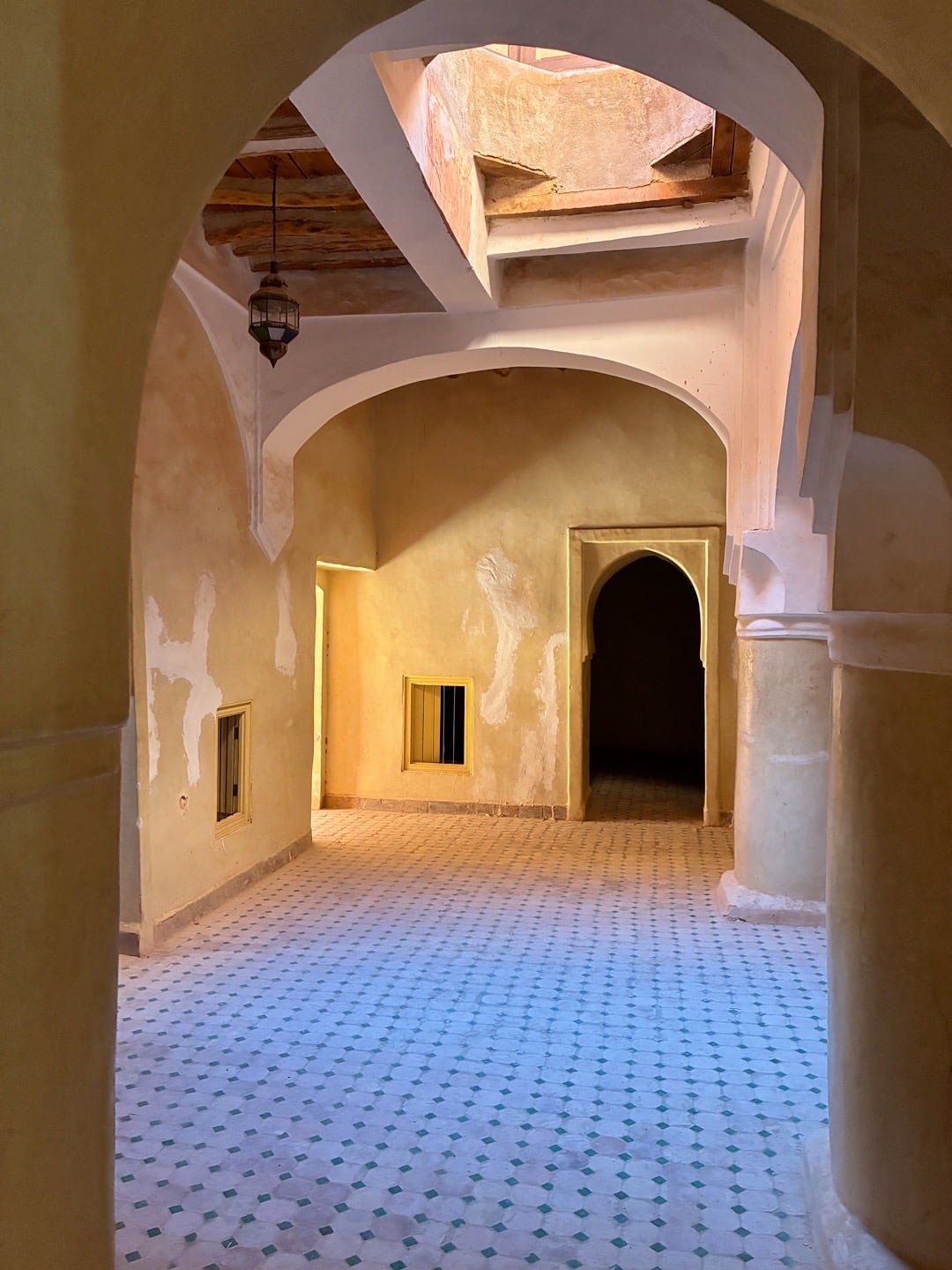
Freely exploring the sprawling walled palace was a highlight for the boys. How often can you wonder around such a place with no crowds and few restrictions? It’s a kids dream (Lori and I had fun too).
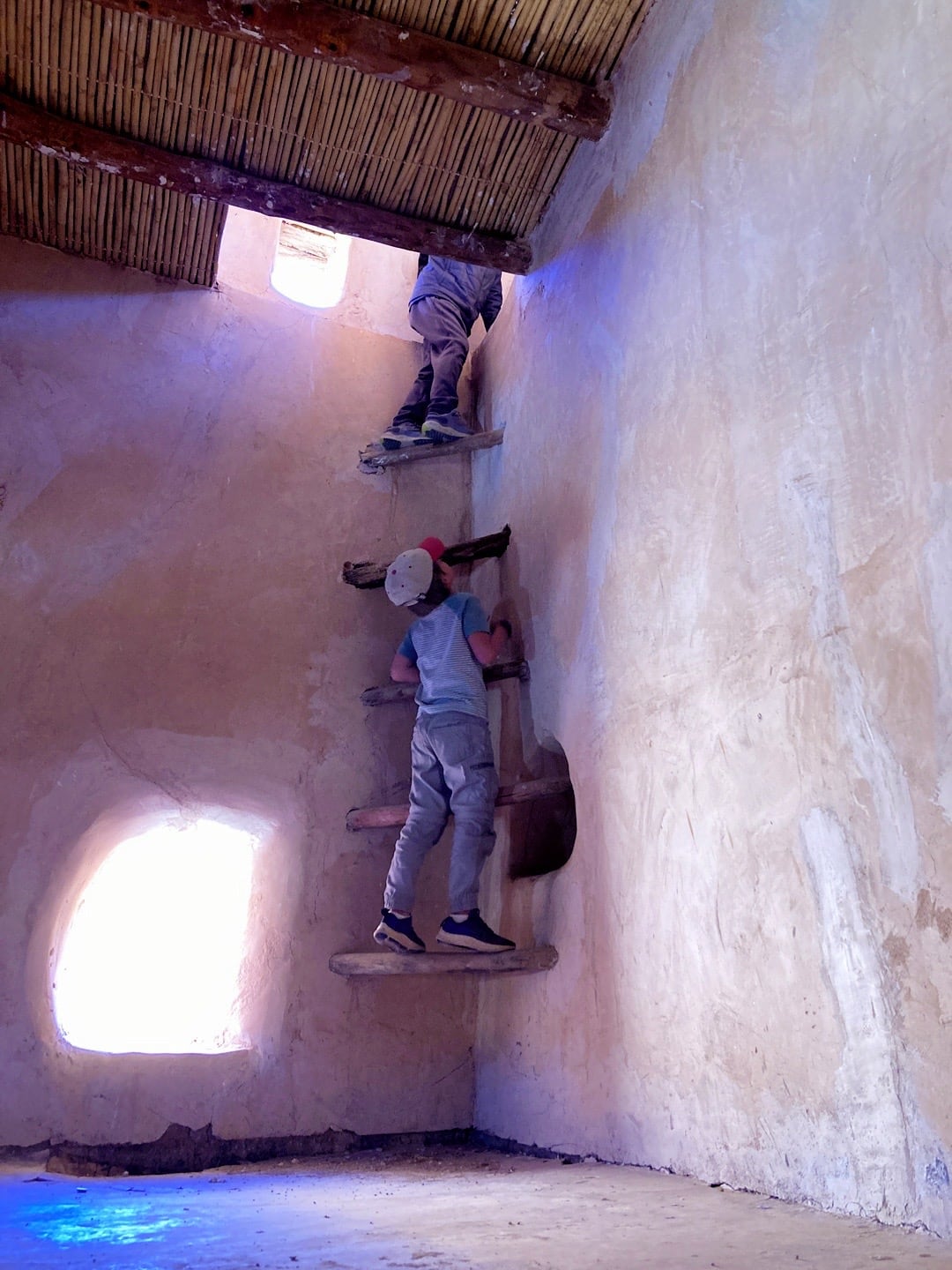
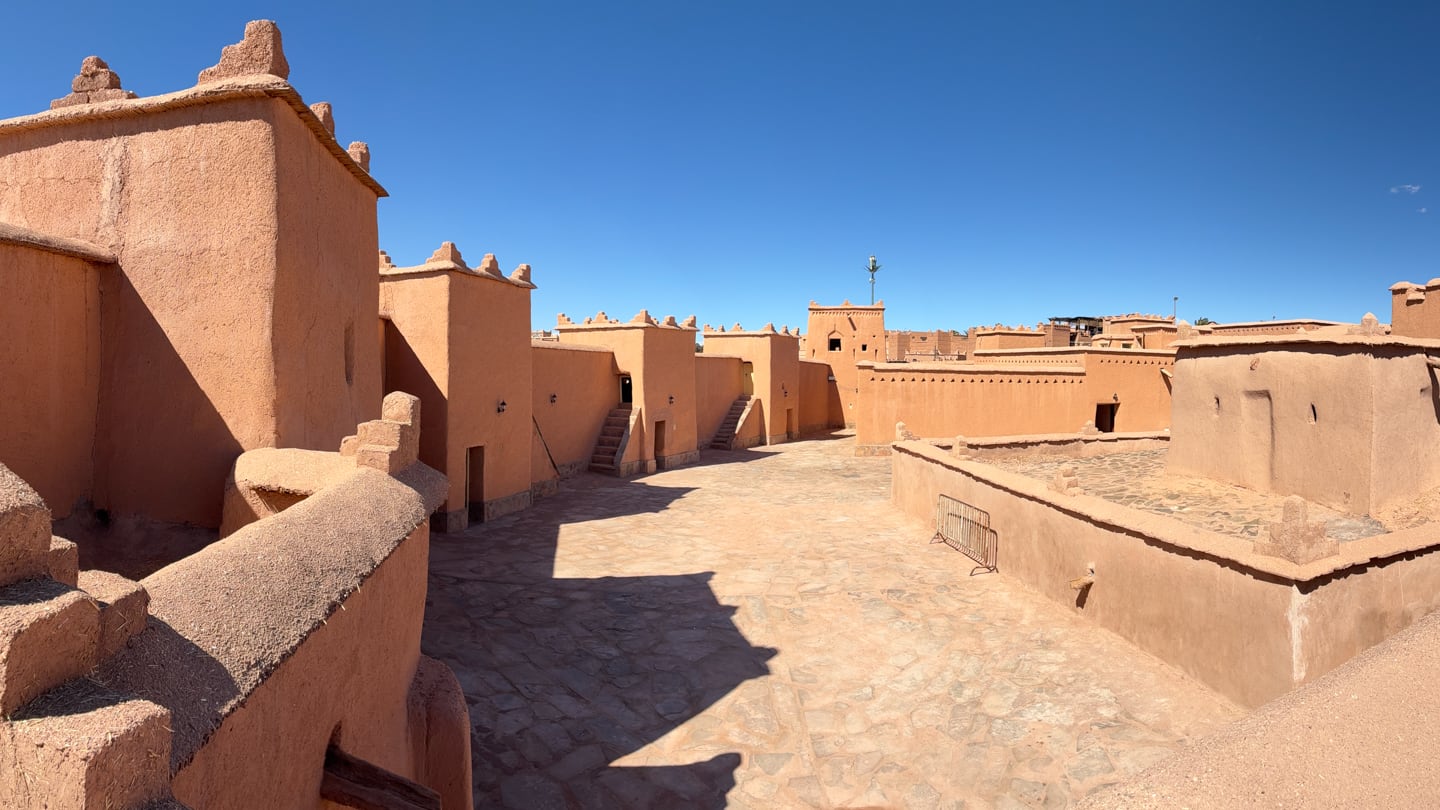
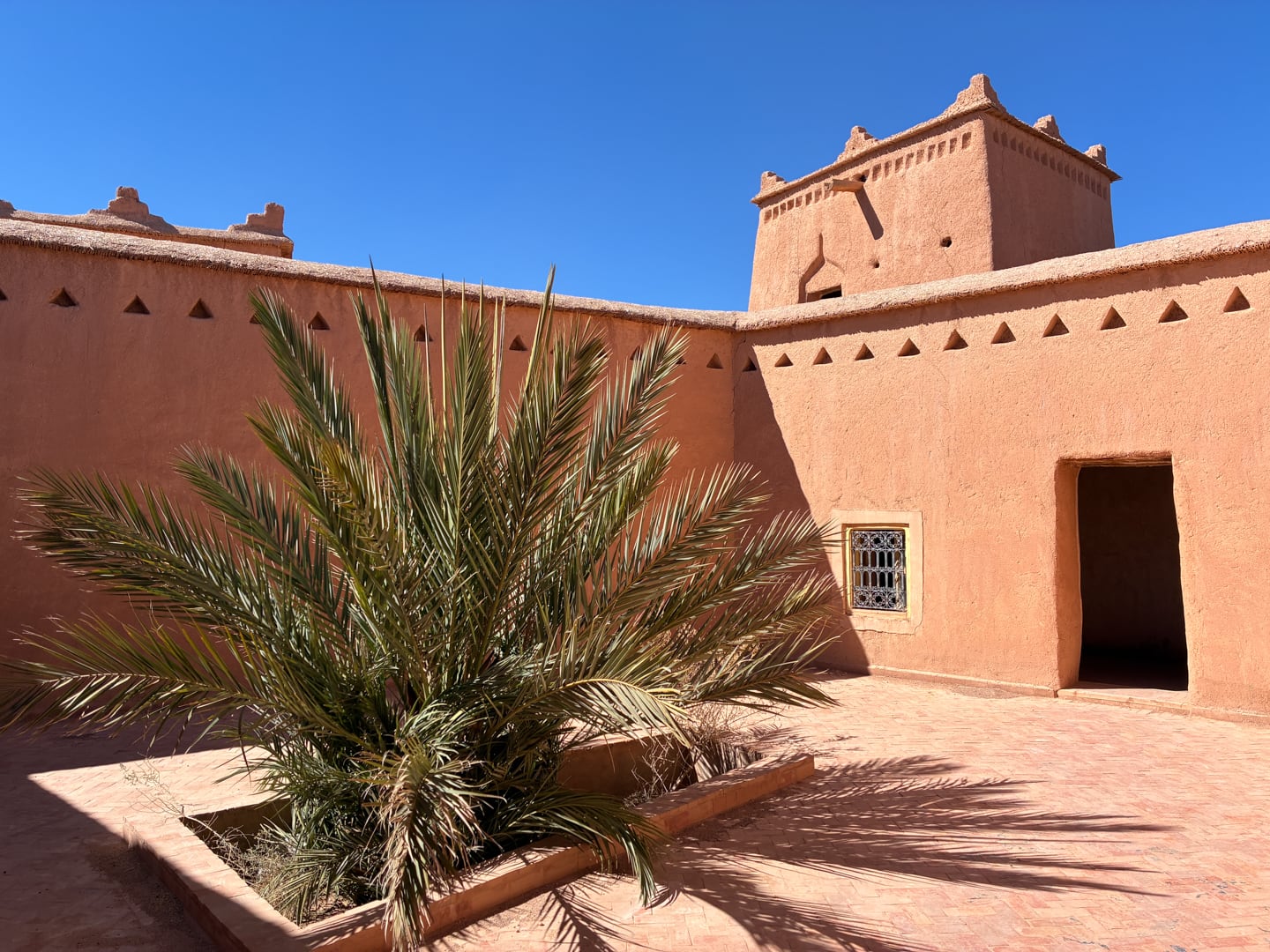
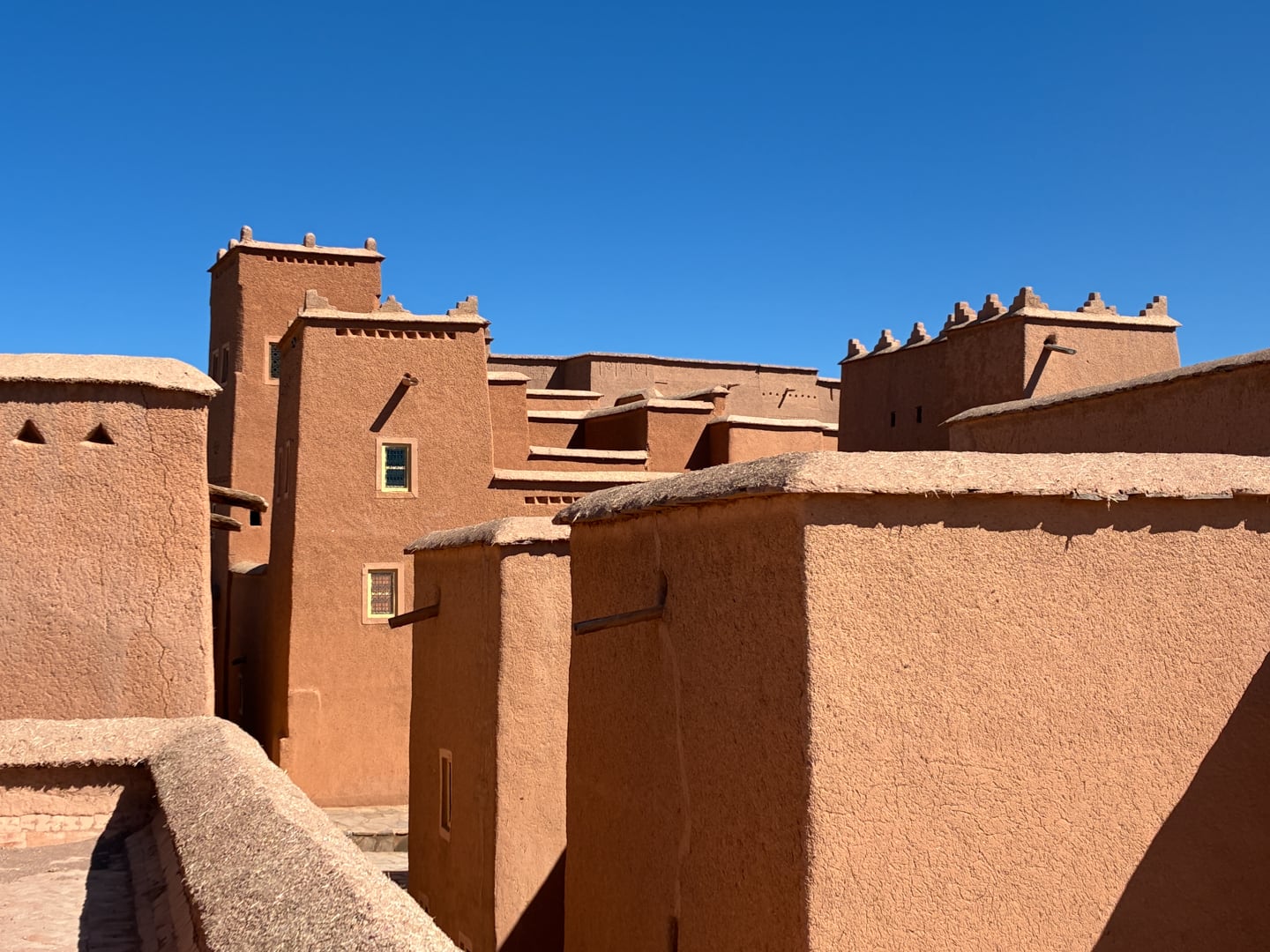
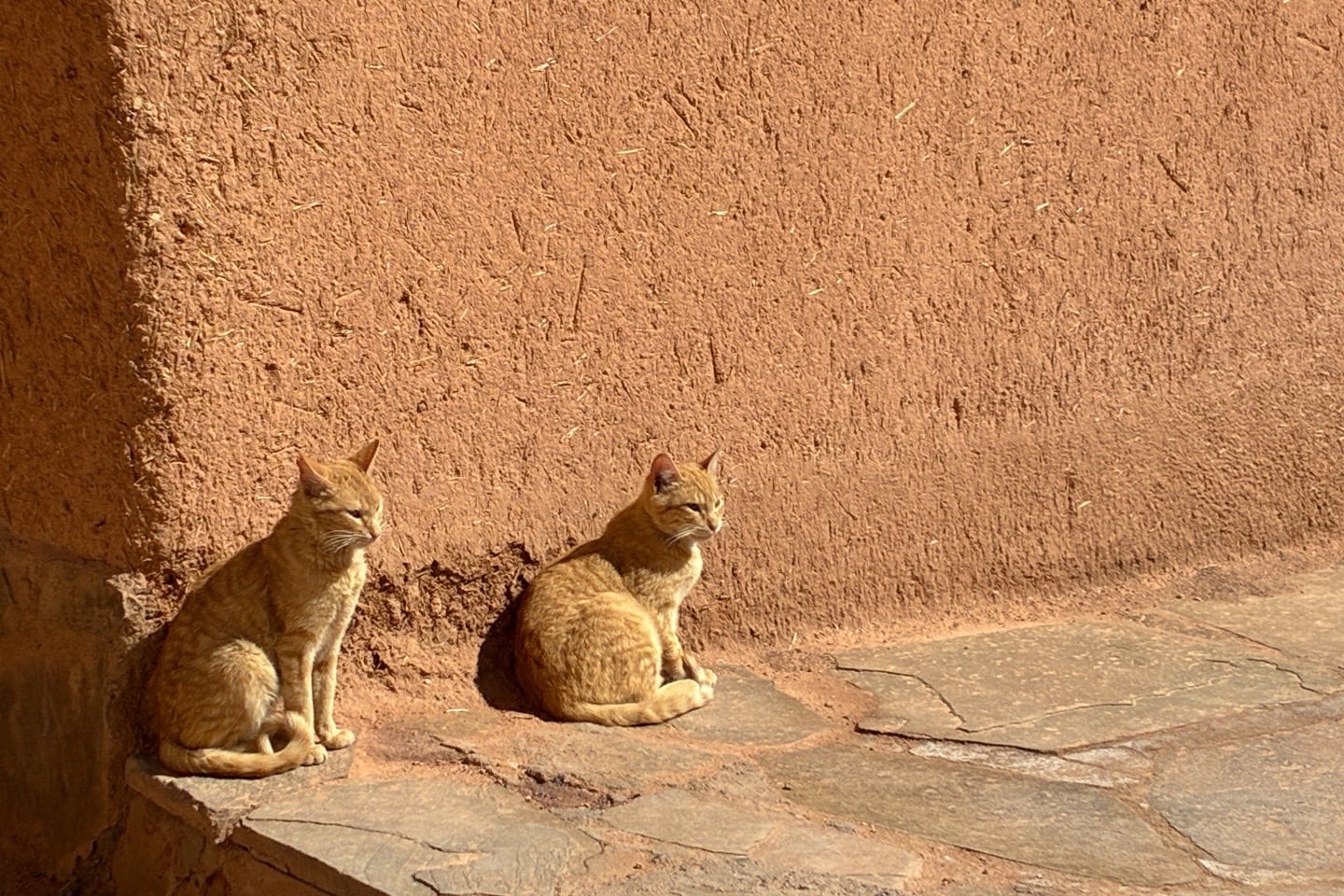
We’d get to a point where we thought we’d seen it all, then boom! Another huge building to explore (some having three or even four levels).
Leaving the Kasbah, it would have been a short, easy, an uneventful hour-long journey to Skoura Oasis, but the Morocco highway patrol had other ideas.
Reading up on doing this road trip, there was one particular piece of advice repeated more than any other: Don’t exceed the speed limit and keep an eye out for police checkpoints. When you do spot a police checkpoint, make sure to go as slow as humanly possible.
Living in Mexico for five years, adhering to a “speed limit” is currently something that is not exactly in my nature. It’s not that I like to drive fast (I typically don’t), but the speed in Mexico is just not something that is routinely enforced.
I tried my best to heed the advice of other travelers. It was a bit of a challenge to get into the mindset of checking my speed constantly, and speed changes aren’t always clearly marked (sometimes you don’t know that the speed has reduced from 80 km/h to 60 km/h until you see the “End 60 km/h” sign.
Still, I thought I was managing to do a pretty good job all the way up until I was waved over to the side of the road after a police checkpoint. At first, I thought it might be merely a documents check (something I’d become very accustomed to in Mexico). But nope.
I’d been following a slow and oversized truck for 10 minutes with no opportunities to pass. When I finally got my chance, I took it, passed the truck, and immediately eyed a checkpoint far off in the distance. The truck was so big, it had obscured the slower speed sign as I was passing it, so I had no clue.
The officer didn’t speak English, so my next thought was that this would be like Mexico and he would eventually get tired of trying to communicate with me and wave me on. Nope again. He just went and got a junior officer who spoke better English.
My crime? They caught me going 67 km/h in a 60 zone with the radar gun. For reference, that’s 41 mph in a 37 mph zone.
I attempted to plead my case through Google Translate, but it was quickly evident these guys were going to let me off. The good news is, the ticket wasn’t 500 Dirhams like I had read about, but a much lower fee of 150 (about US$16).
I collected the receipt and my documents and continued on. I was none too pleased by the ordeal, but the boys had a field day. If having to part with 150 Dirhams wasn’t enough, I also had to endure taunting from my own two sons (“Daddy got in trouble! Daddy got in trouble!”) all the way to the guesthouse.
Fortunately, the guesthouse was only a few minutes away.
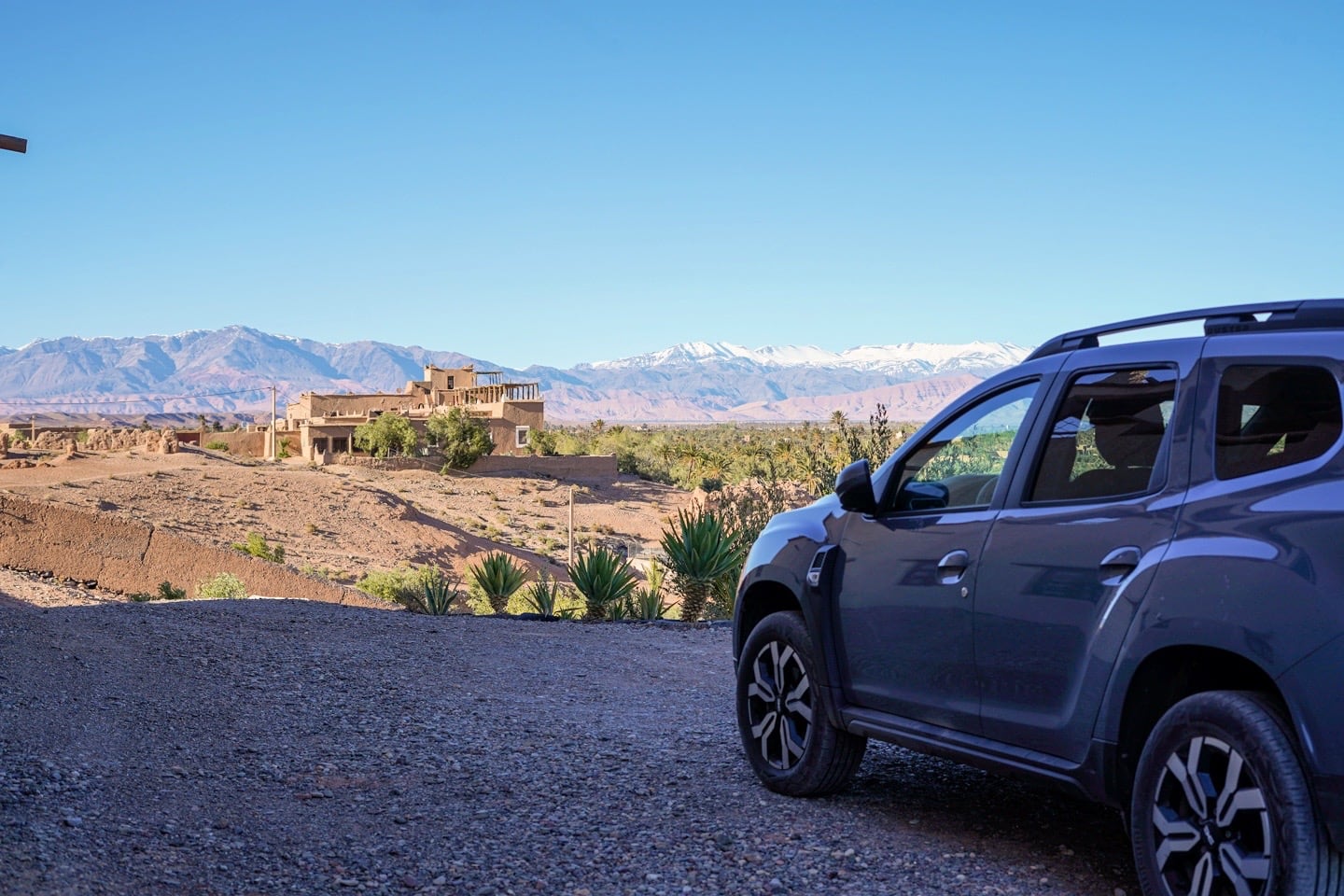
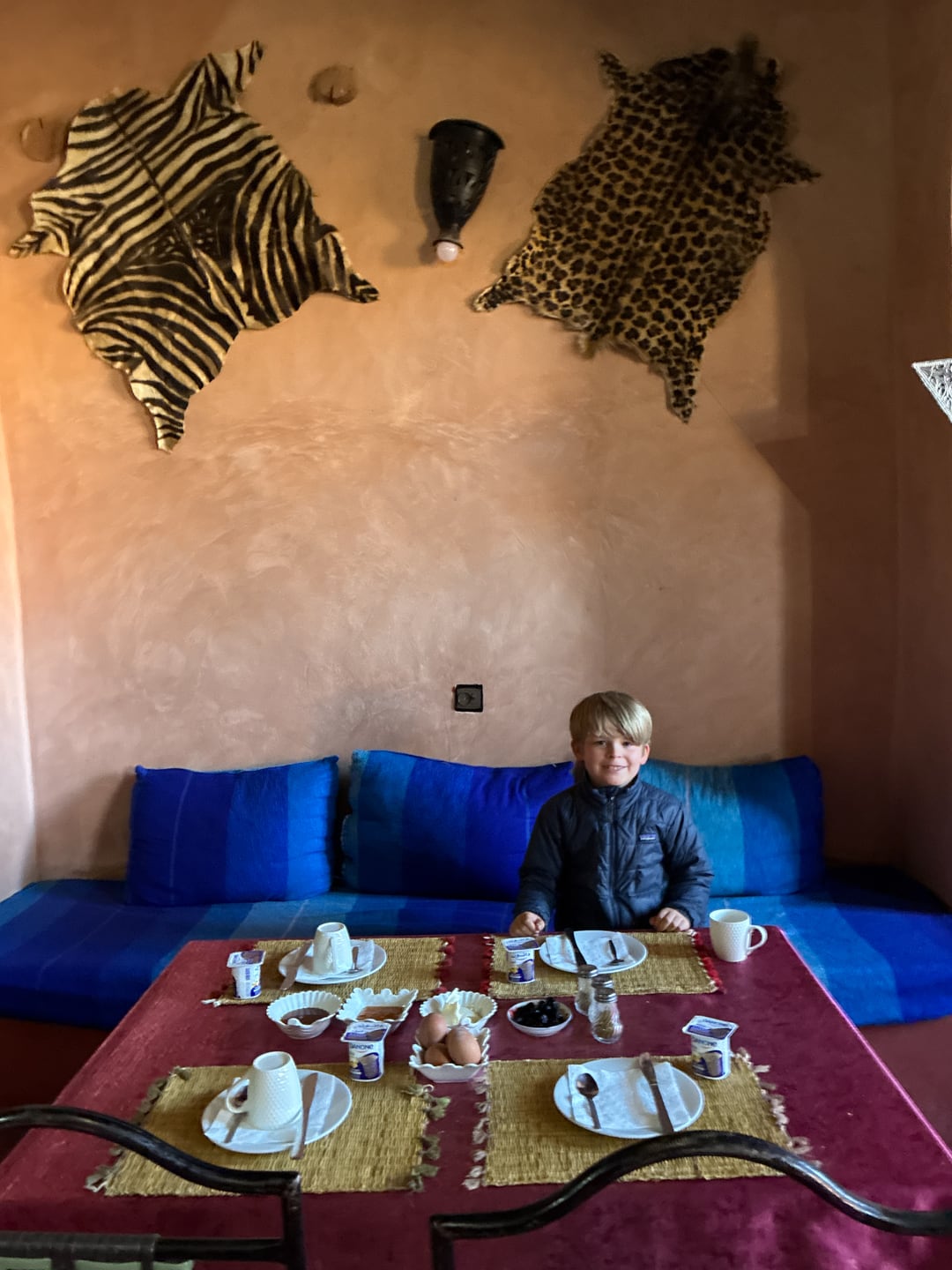
Auberge Migusta turned out to be a pleasant surprise.
I struggled to find accommodation in this area (unlike Ait Benhaddou and Ouarzazate, Skoura isn’t exactly a huge tourist destination, which makes it all the more appealing in my book). I saw this place, but there weren’t a lot of photos, information, or reviews to make an educated decision. In the end, I took a leap of faith with the place and it paid off.
Migusta is a large mud-and-straw-brick guesthouse run by a very warm and friendly local family who stuffed us crazy (after sunset) with one of the best tajines we’ve had yet (we’ll get to that).
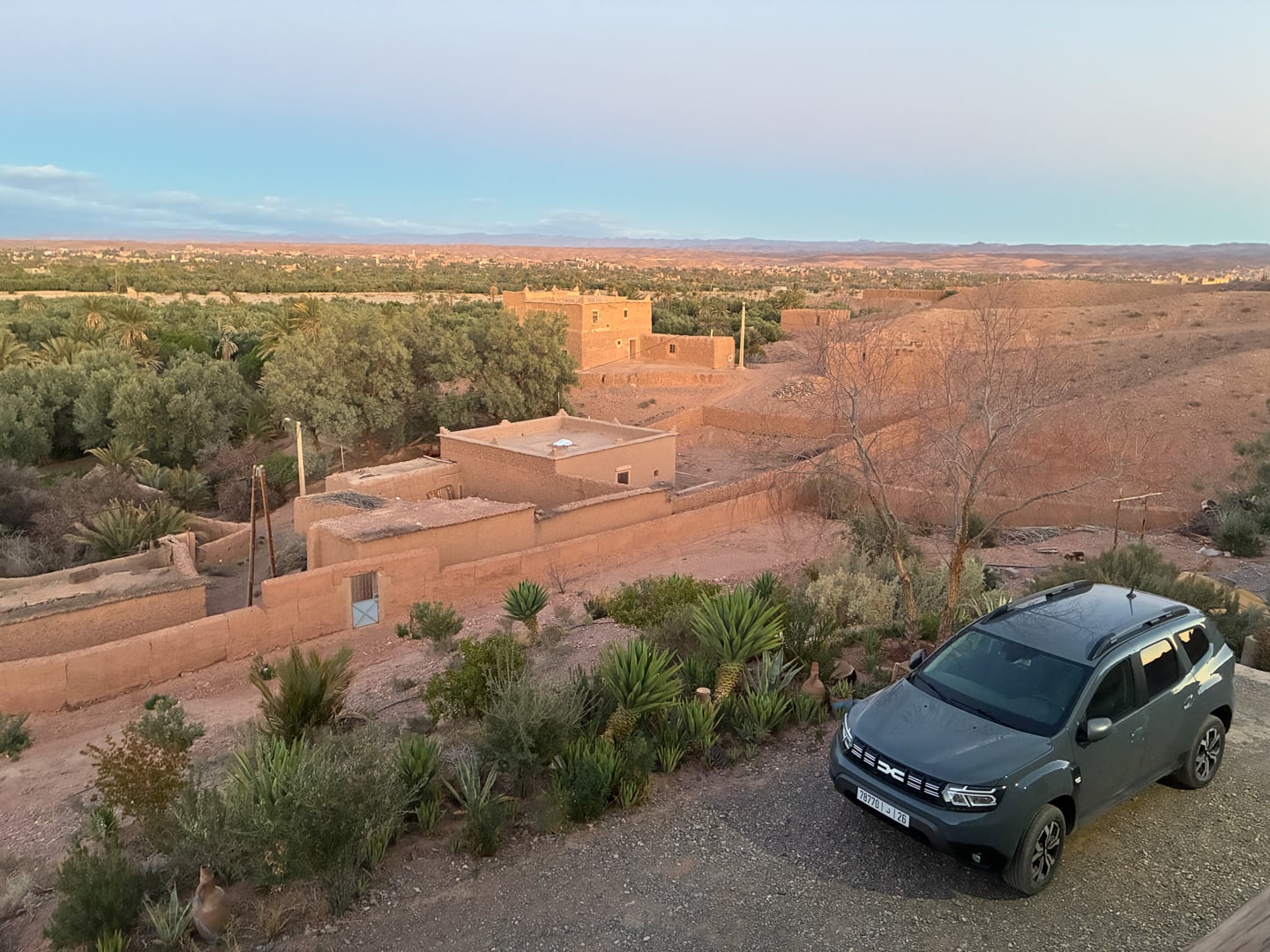
We stayed in the newer addition of the home, which while still employing traditional materials and methods in its construction, felt comfortable and modern. There was even a small outdoor area for lounging.
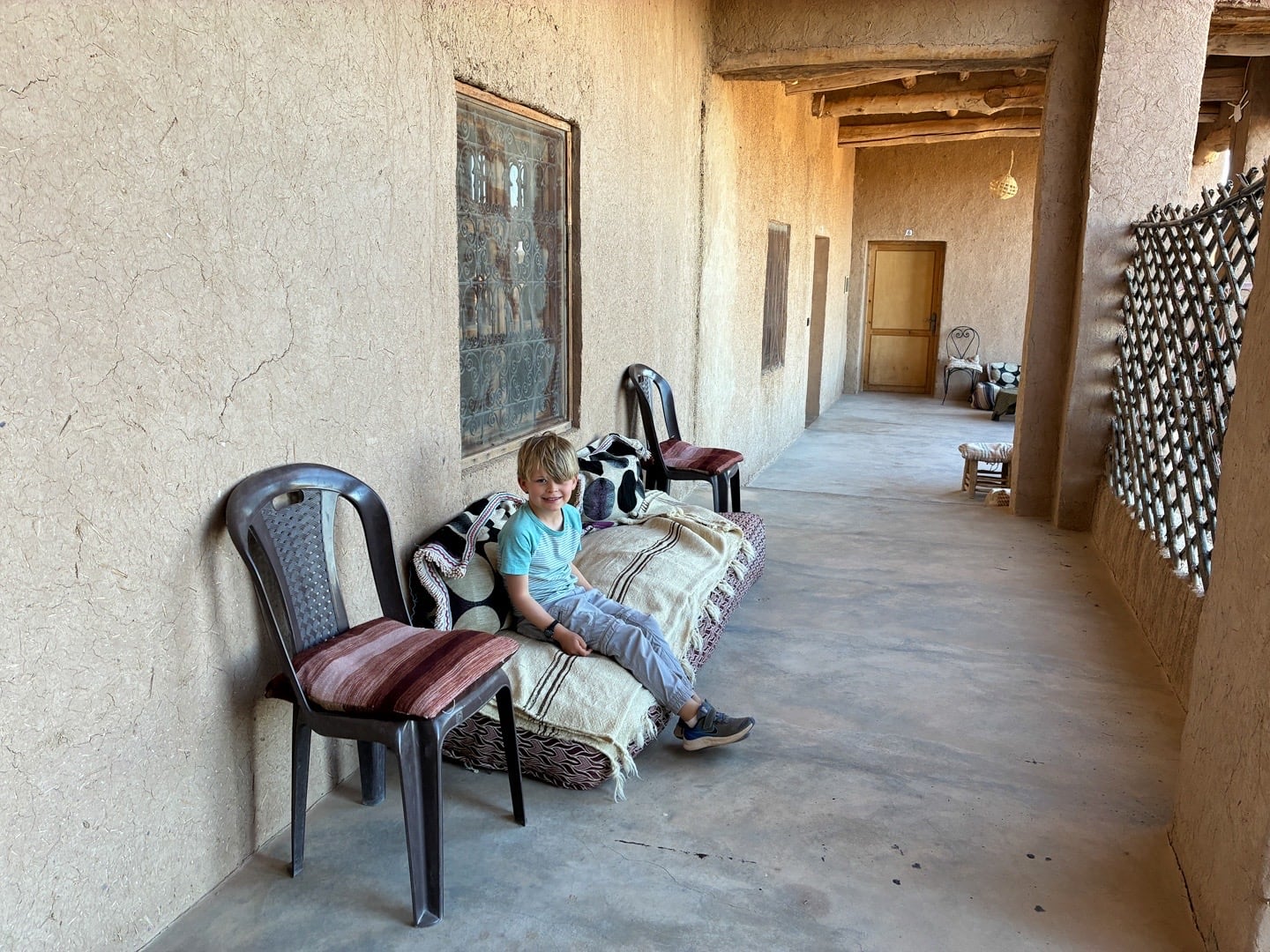
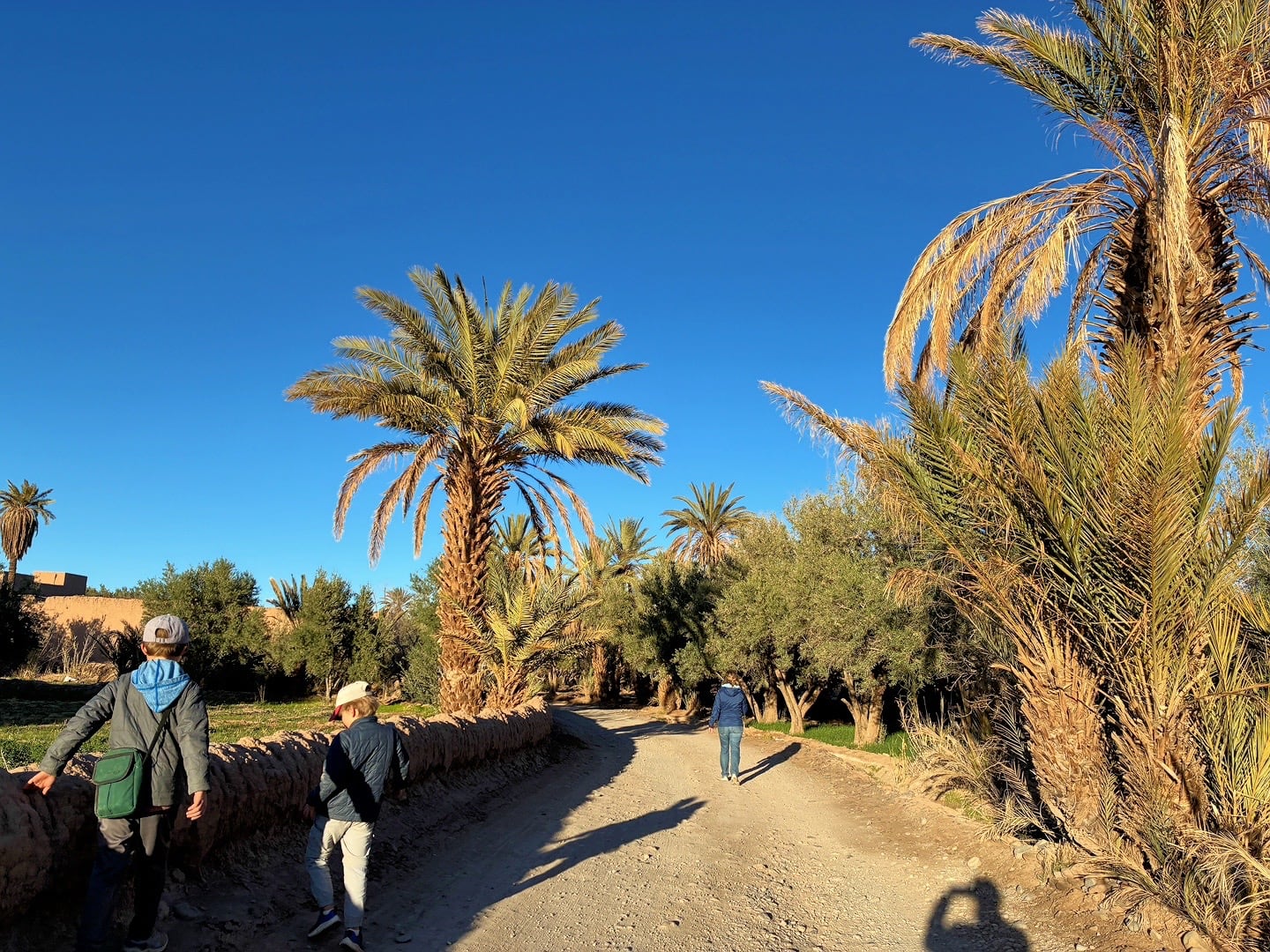
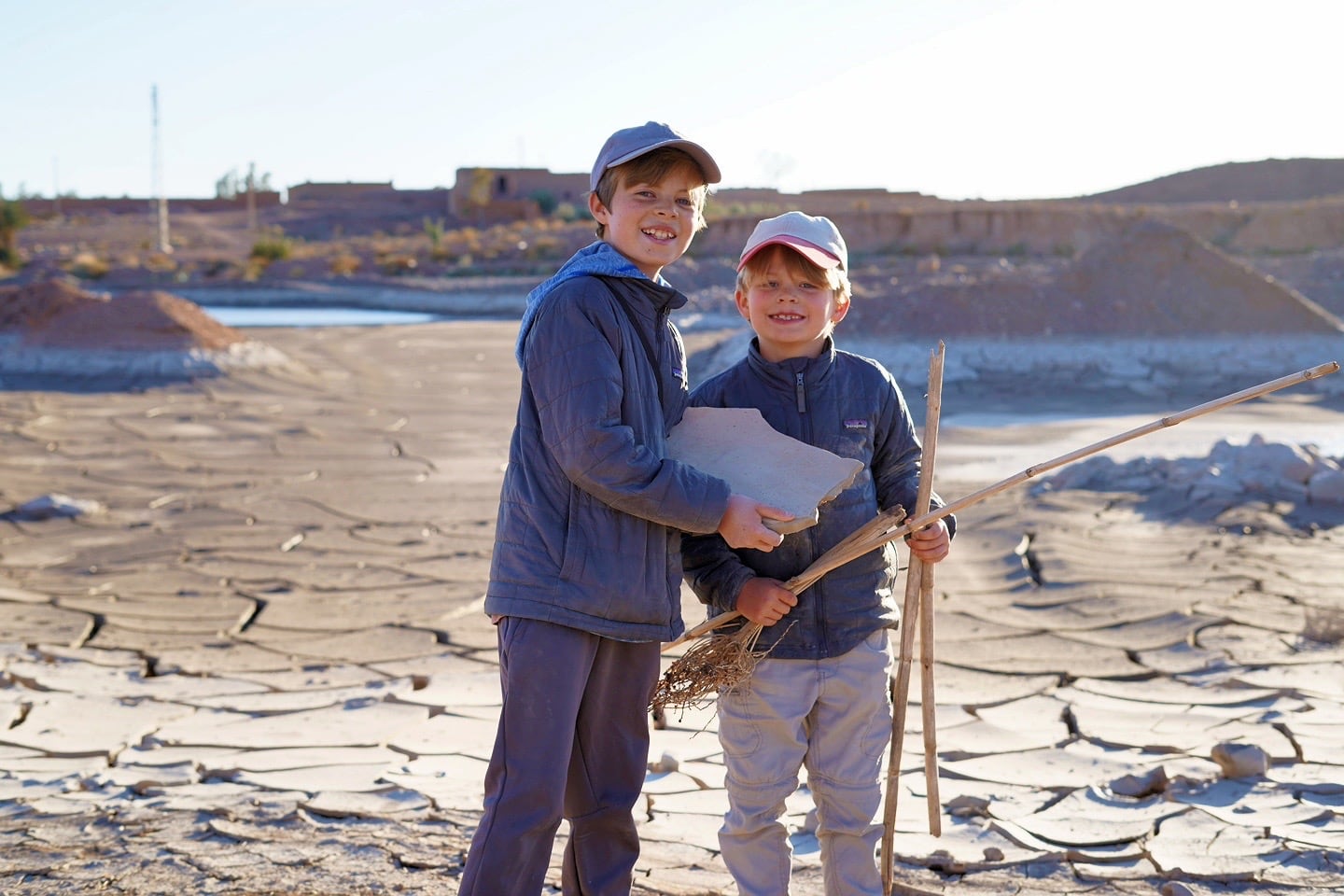
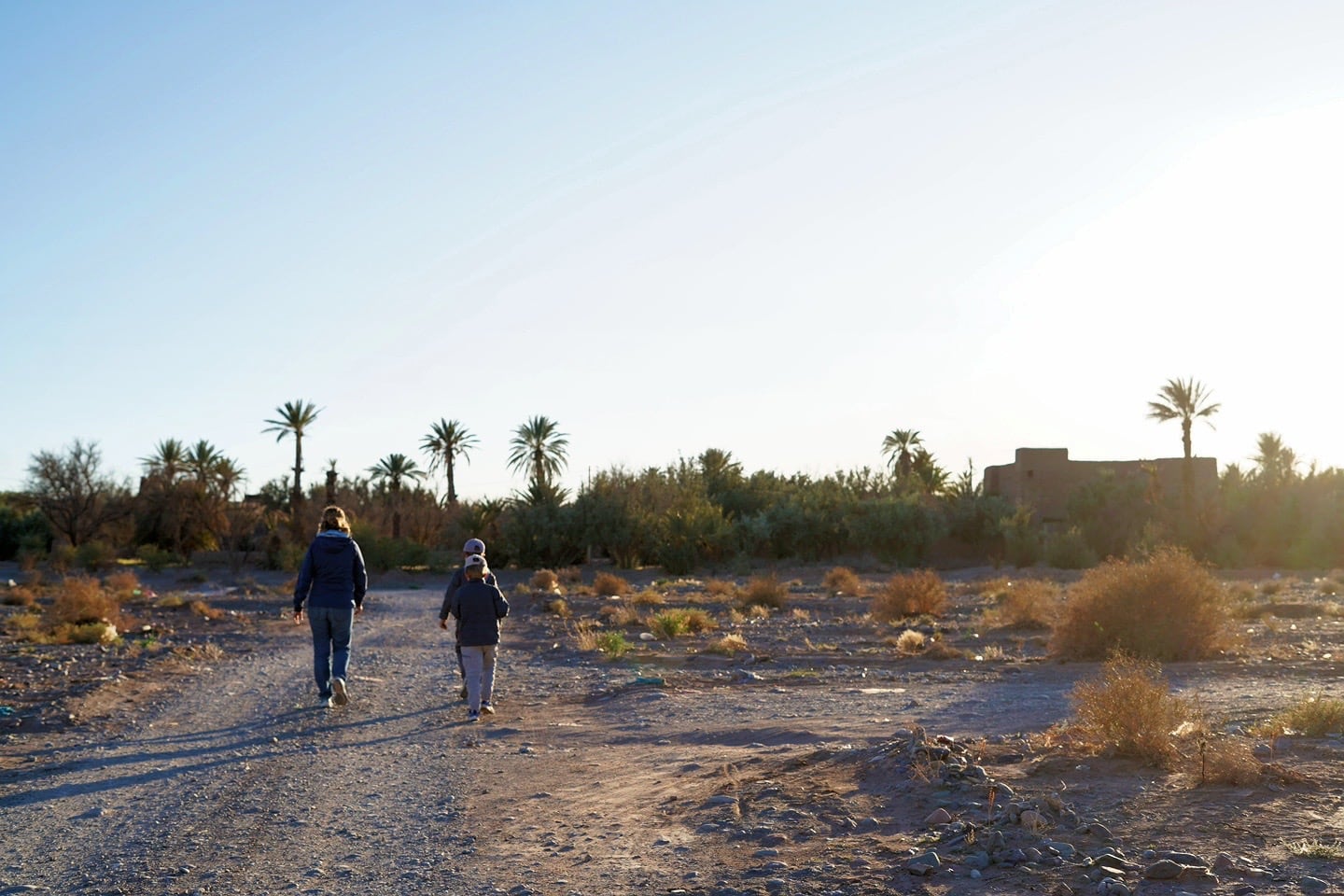
We quickly settled in, then turned around and headed back out to enjoy a walk around the palm oasis before sunset.
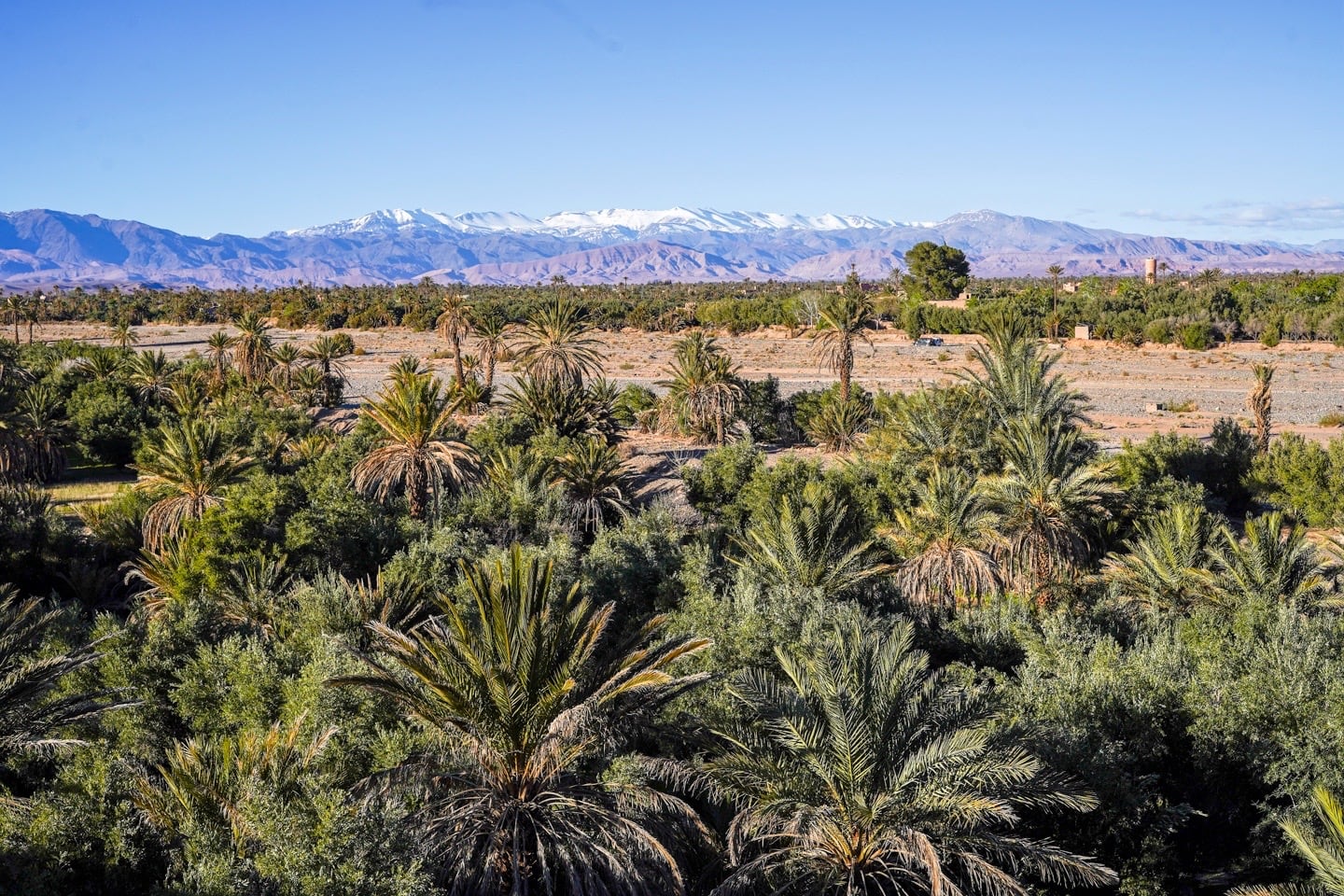
The views everywhere around here are stunning. Skoura Oasis is famous for its dense palm groves (dating back to ancient times) framed by the backside of the High Atlas Mountains.
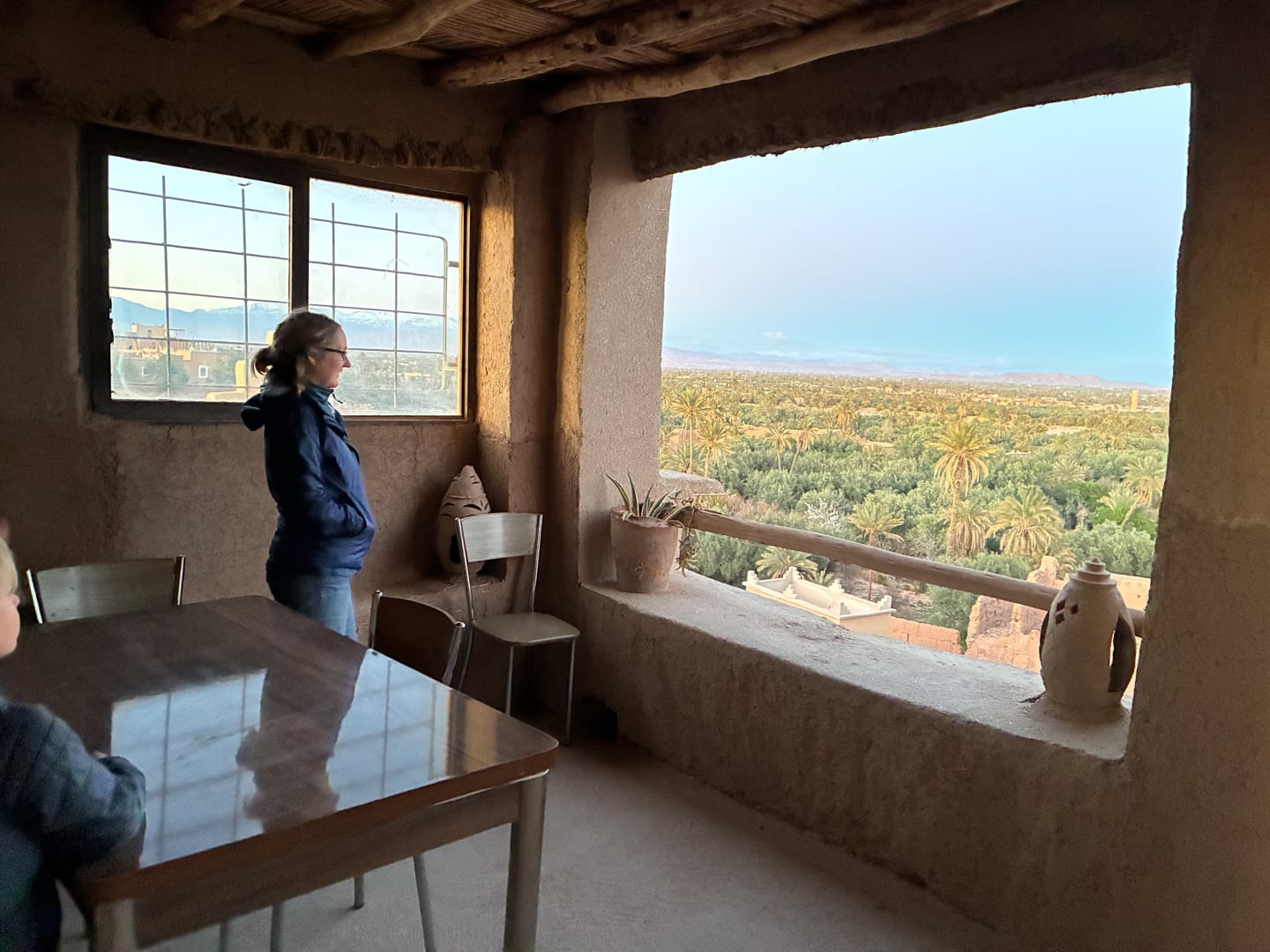
We enjoyed watching the last light of the day from the rooftop dining area.
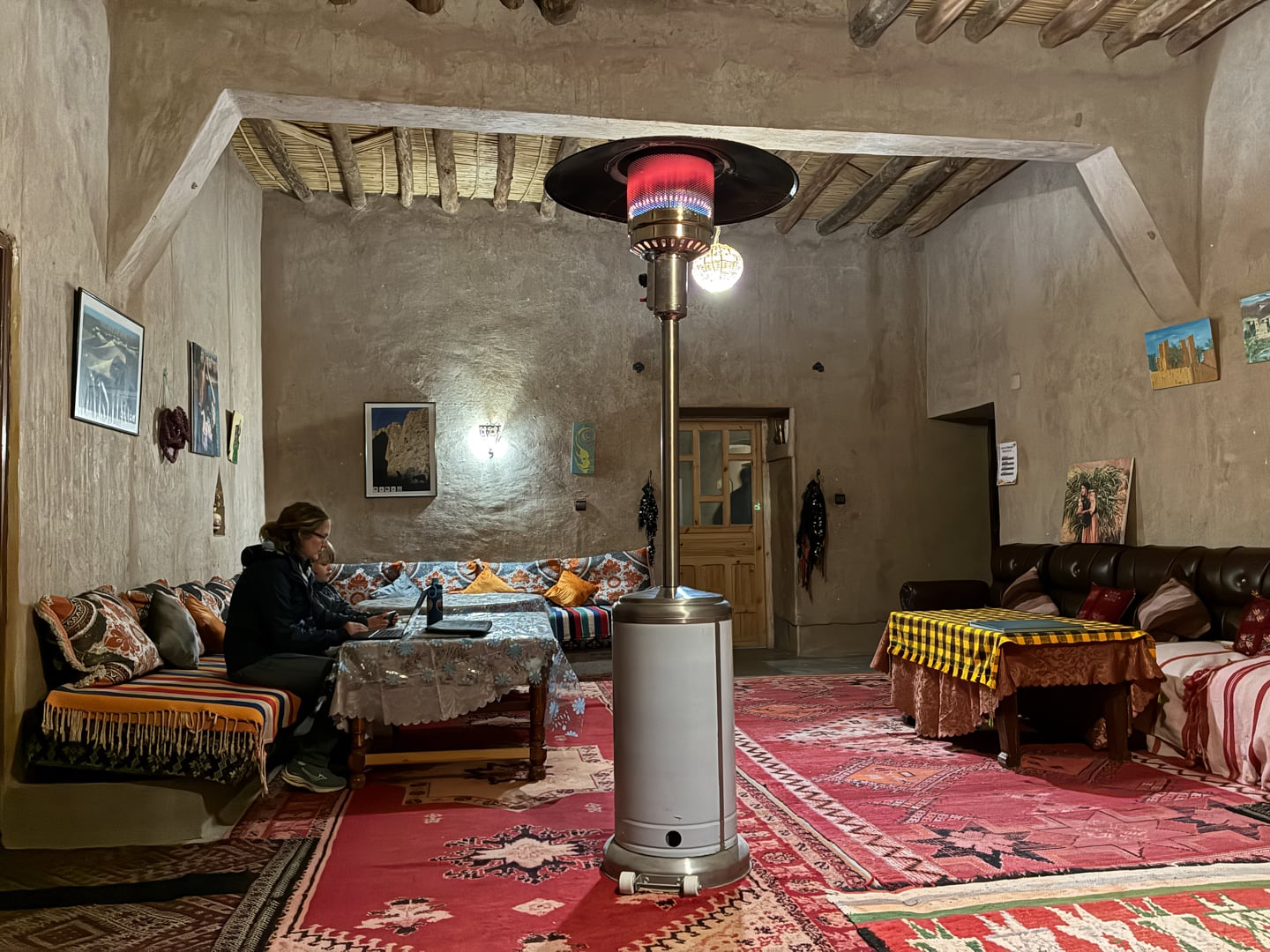
Temperatures during the day lately have been pleasant to ideal. But the nights are chilly on this side of the mountains in mid-March, reaching down into the upper 30s—especially in the large common spaces of these guesthouses.
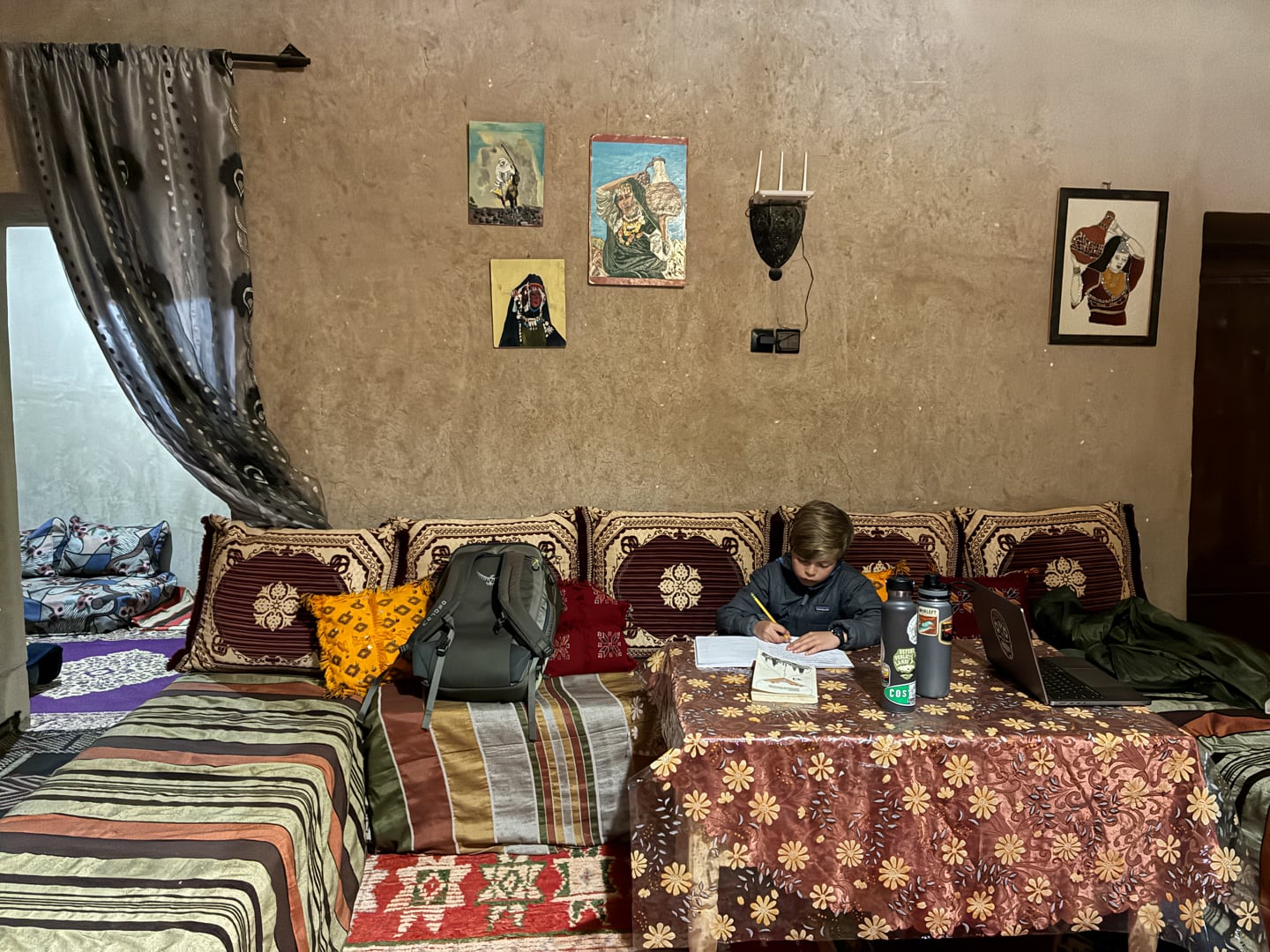
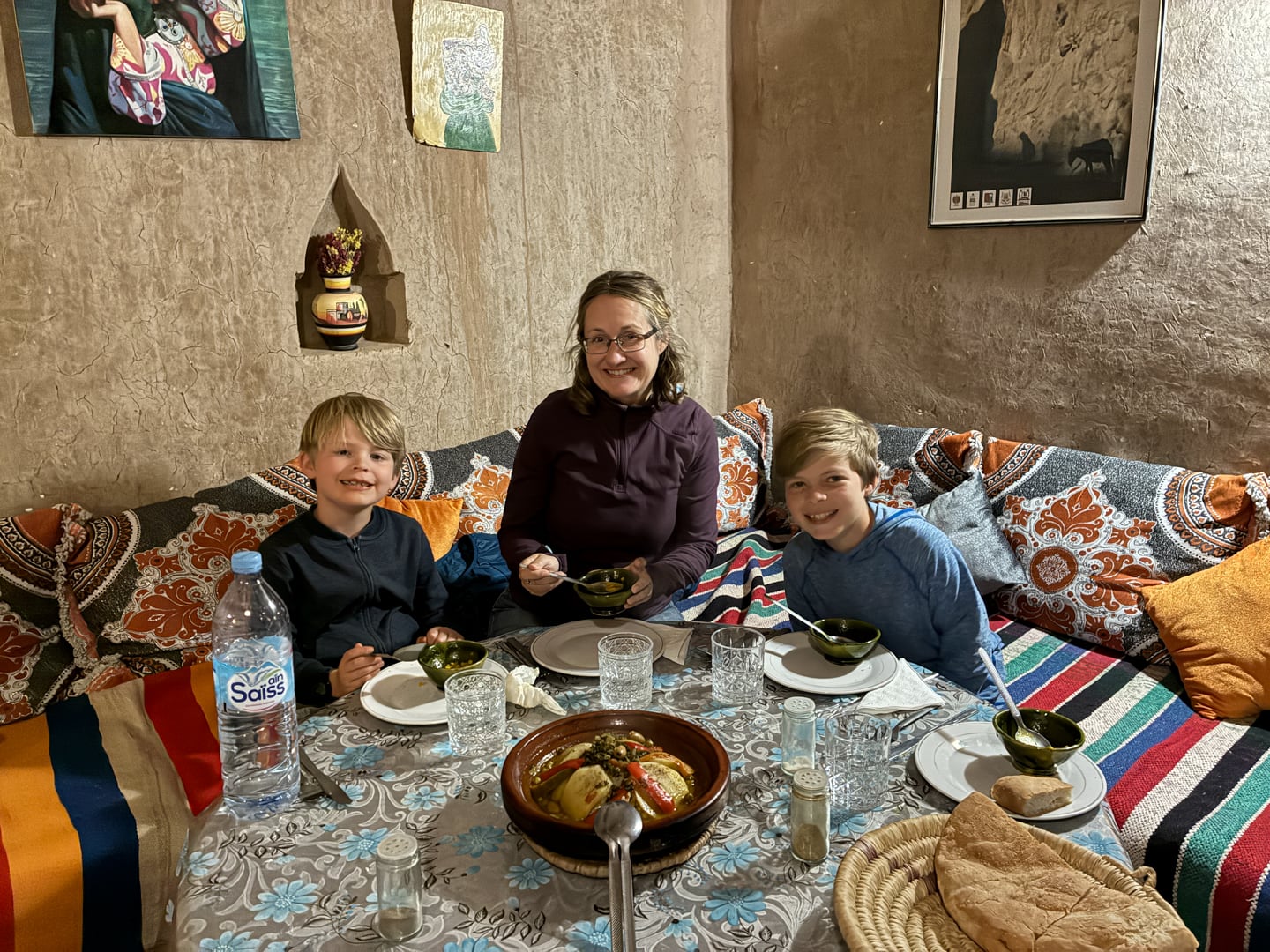
Shortly after the evening call to prayer rang out, the doors to the kitchen opened and out came our food. We and another group of visitors enjoyed a huge and delicious tajine (Moroccan stew), while the Moroccan family enjoyed their Iftar (breaking the Ramadan fast) in the next room.