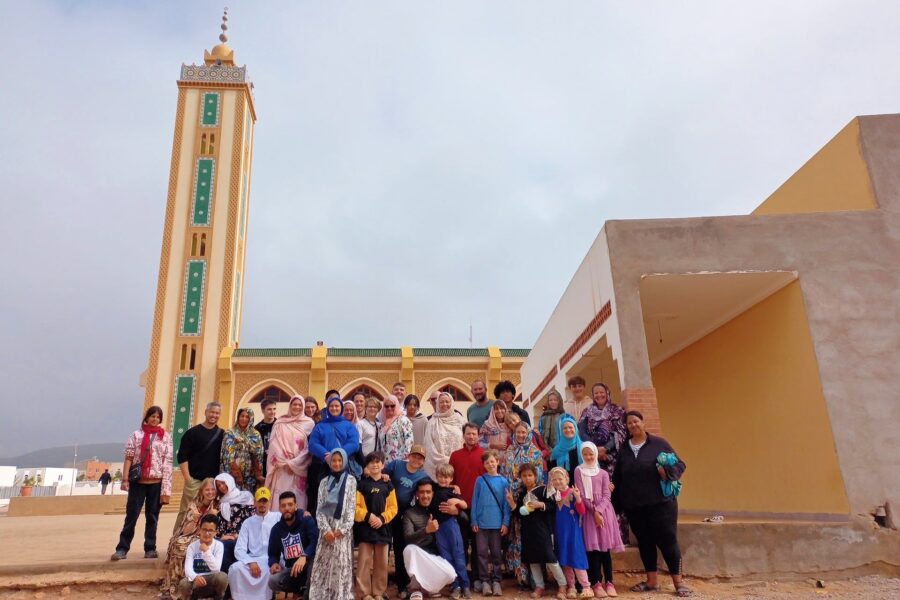
When we arrived in Mirleft for the kids’ Worldschool Hub, that was as far as Lori and I had gotten in our travel planning. Not only had we left our third month in Morocco wide open, but everything after that as well.
When we set out on this little adventure in early October, we had a rough idea of our route for the next year—and by rough, I mean some countries colored in on a map.
Our Euro-African Journey (So Far...)
Originally, we had planned on spending more than just a month in Spain, eventually making our way to England, Scotland, and Ireland after Morocco.
We also knew we needed to get a jump on our fall travel plans, as we would likely have family joining us for part of that timeframe.
Our month in Mirleft was an excellent opportunity to start making some decisions and getting things on the calendar.
This is perhaps the hardest part of what we’re doing this year, and honestly, not our favorite. It’s great when we’ve decided on specific cities and can proceed with researching and booking things to do in those cities. But deciding where to go (i.e. where the best value for the money is for us), is not easy.
After a few hours spent on UK and Ireland research, I realized pretty quickly that two months in that part of the world wasn’t going to be realistic for us without significantly increasing the amount we’re working or dipping into savings—neither of which Lori and I wanted to do, not when there are other places we can go.
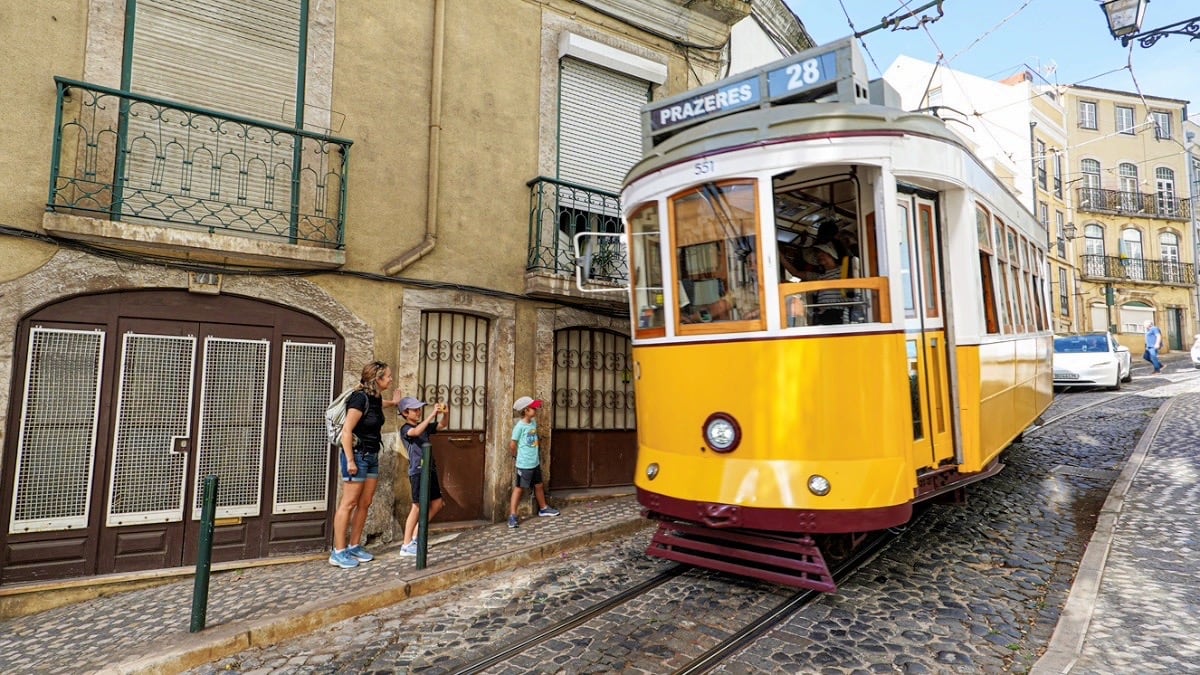
We also have to be mindful of the “Schengen Shuffle”, i.e. not overstaying in Europe—we are limited to 90 days in any 180 day period in most countries in the EU. Finding nearby countries outside of the Schengen Area isn’t easy these days. Morocco is a good one. UK is another good one (but expensive). Beyond that, you’re either looking at the Balkans, or the Middle East and Caucuses.
It was a monumental effort, but by the end of our time in Mirleft, we had accomplished something we never have before (and likely never will again): Seven months worth of accommodation and transportation booked across 12 countries.
The first portion, of course, being what to do with our remaining month in Morocco.
The easiest decision we made was to earmark more time in Marrakesh. How could we not? After, that’s what most travelers come to Morocco to see. We decided to split our stay up into two separate chunks on both ends of March.
Getting down here to Mirleft from Fez was a time consuming process. Fortunately, getting back to Marrakesh would not be so time-consuming, but would require two different modes of transport.
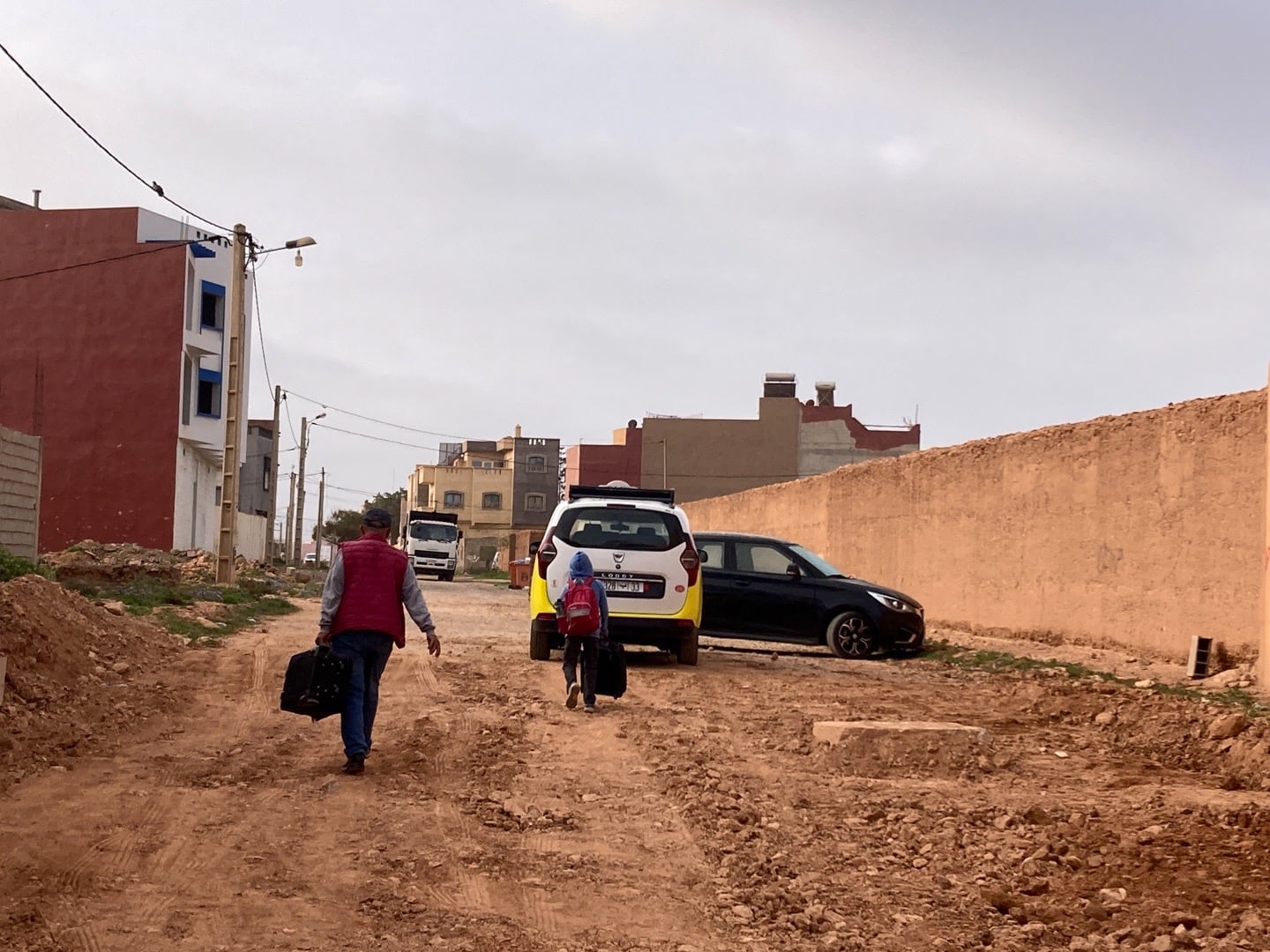
The first leg: Mirleft to Agadir by taxi (about two hours).
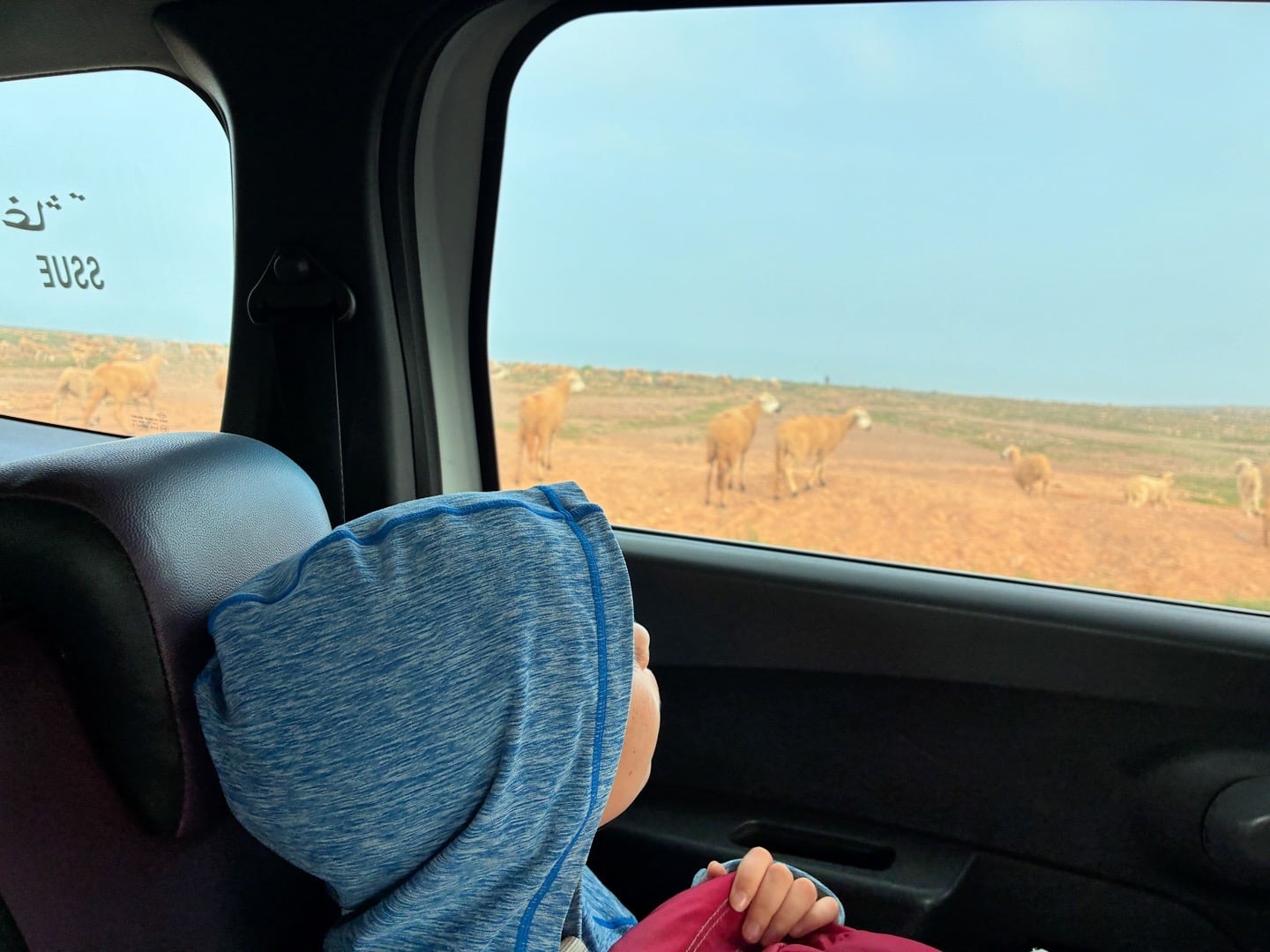
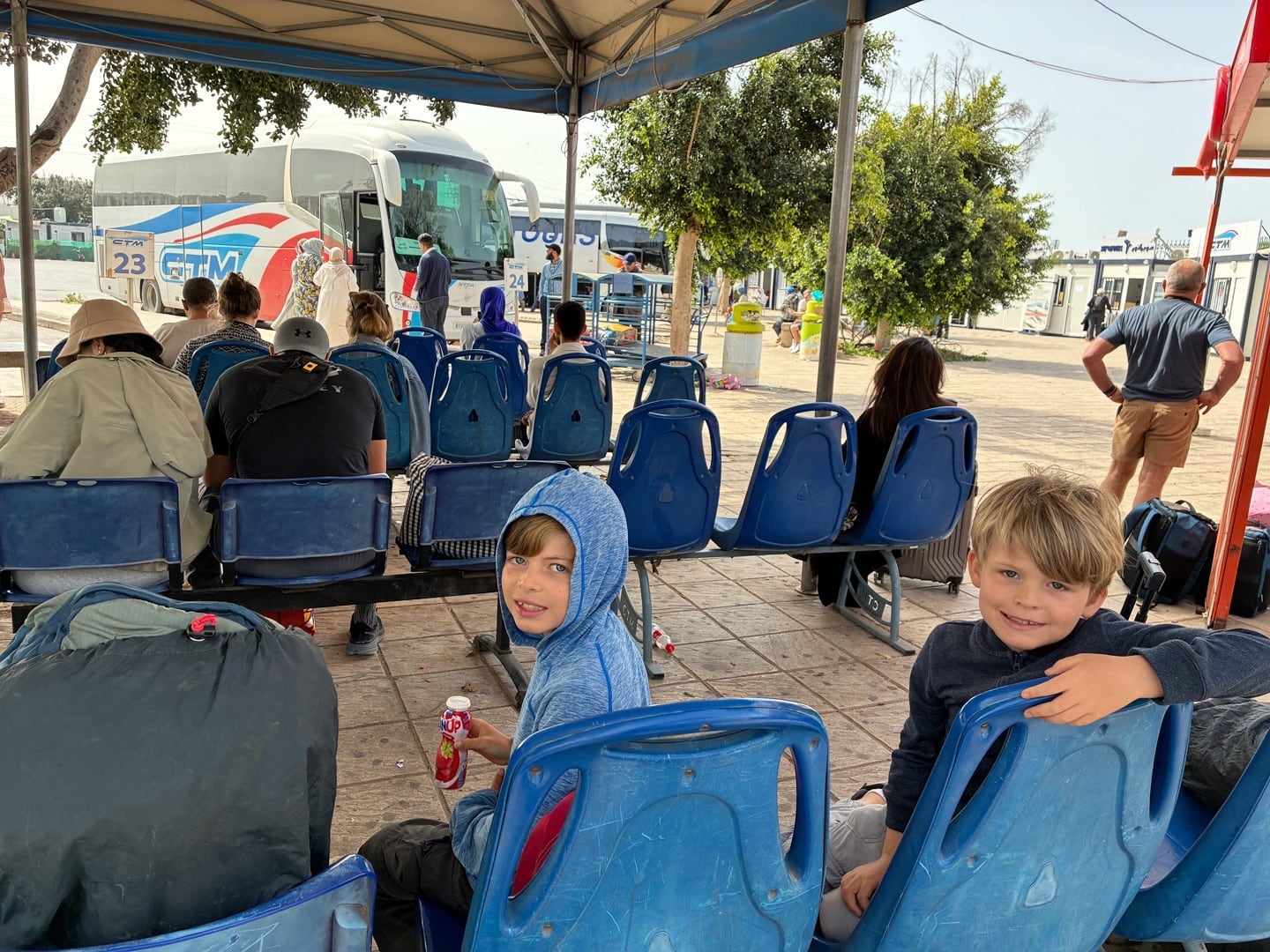
We’re 10 days into Ramadan now, so most of the country is still fasting during daylight hours. We’re not Muslim, but do try to make a point of not eating or drinking in public right now. However, there’s an exception for people traveling 50km or more, so the rules are a bit different at transit stations these days.
Some 3.5 hours later and we were back in Marrakesh, a city we briefly spent the night in a month ago and are eager to explore.
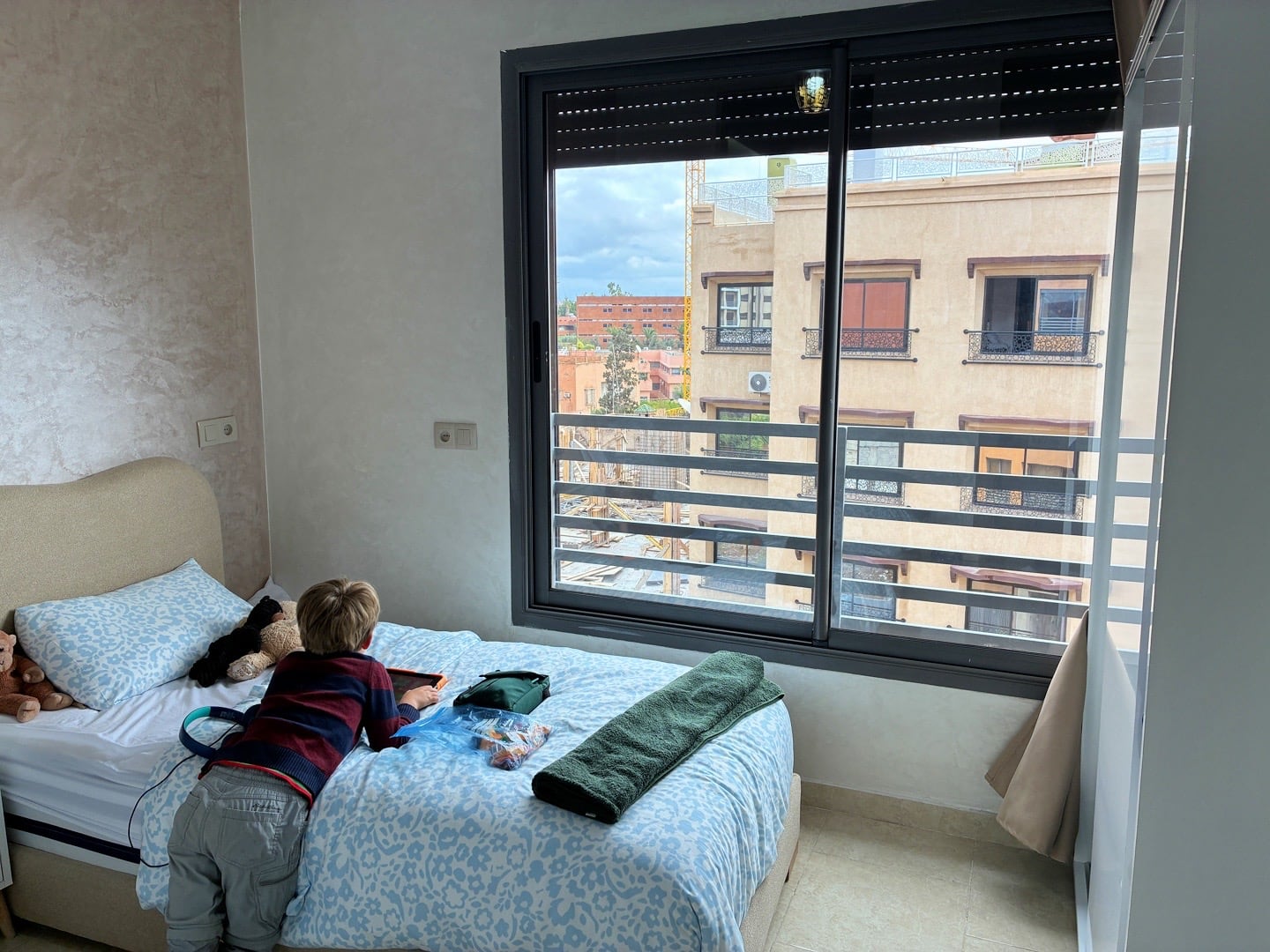
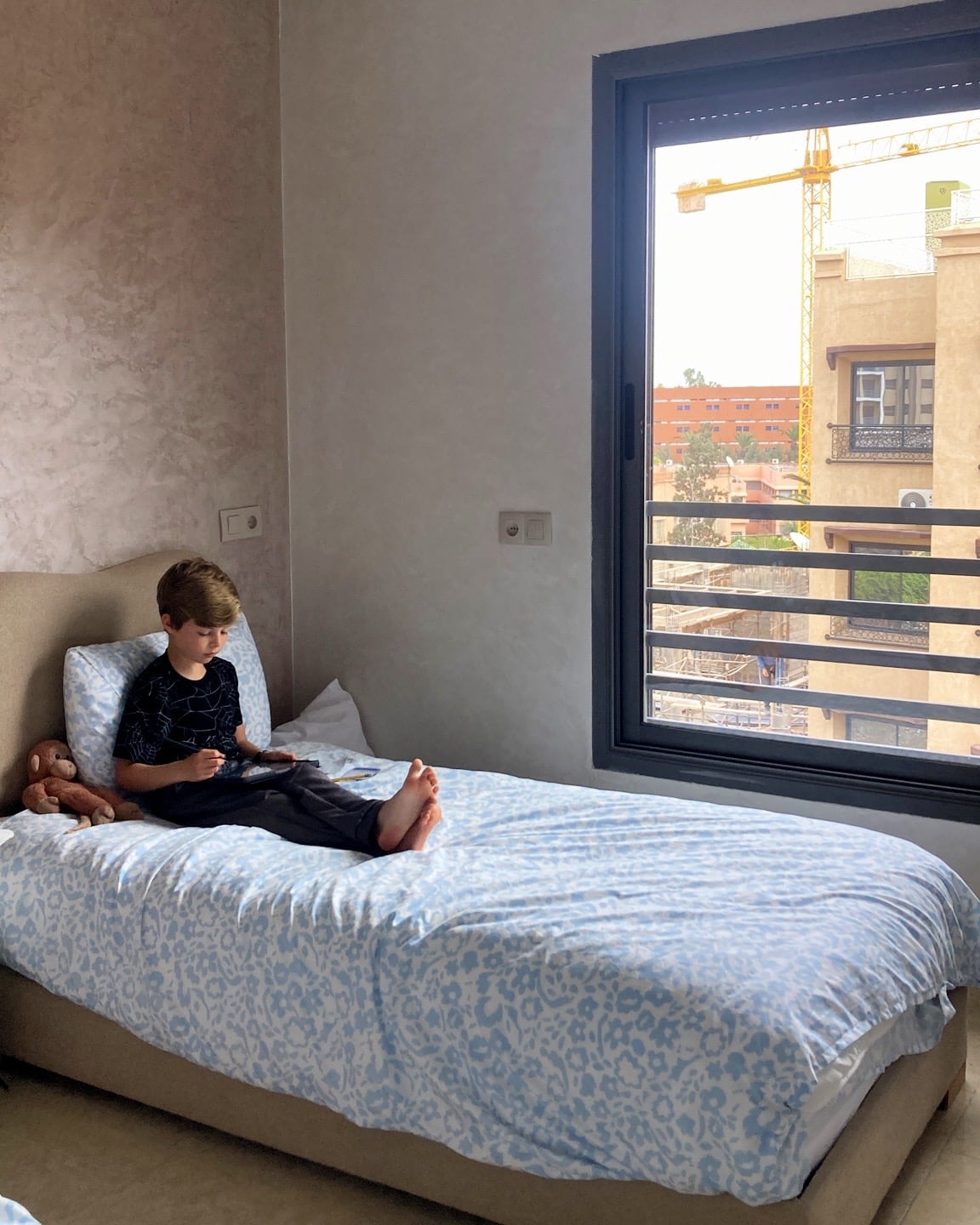
This time around, we’ve got a comfortable two-bedroom apartment in the Hivernage neighborhood.
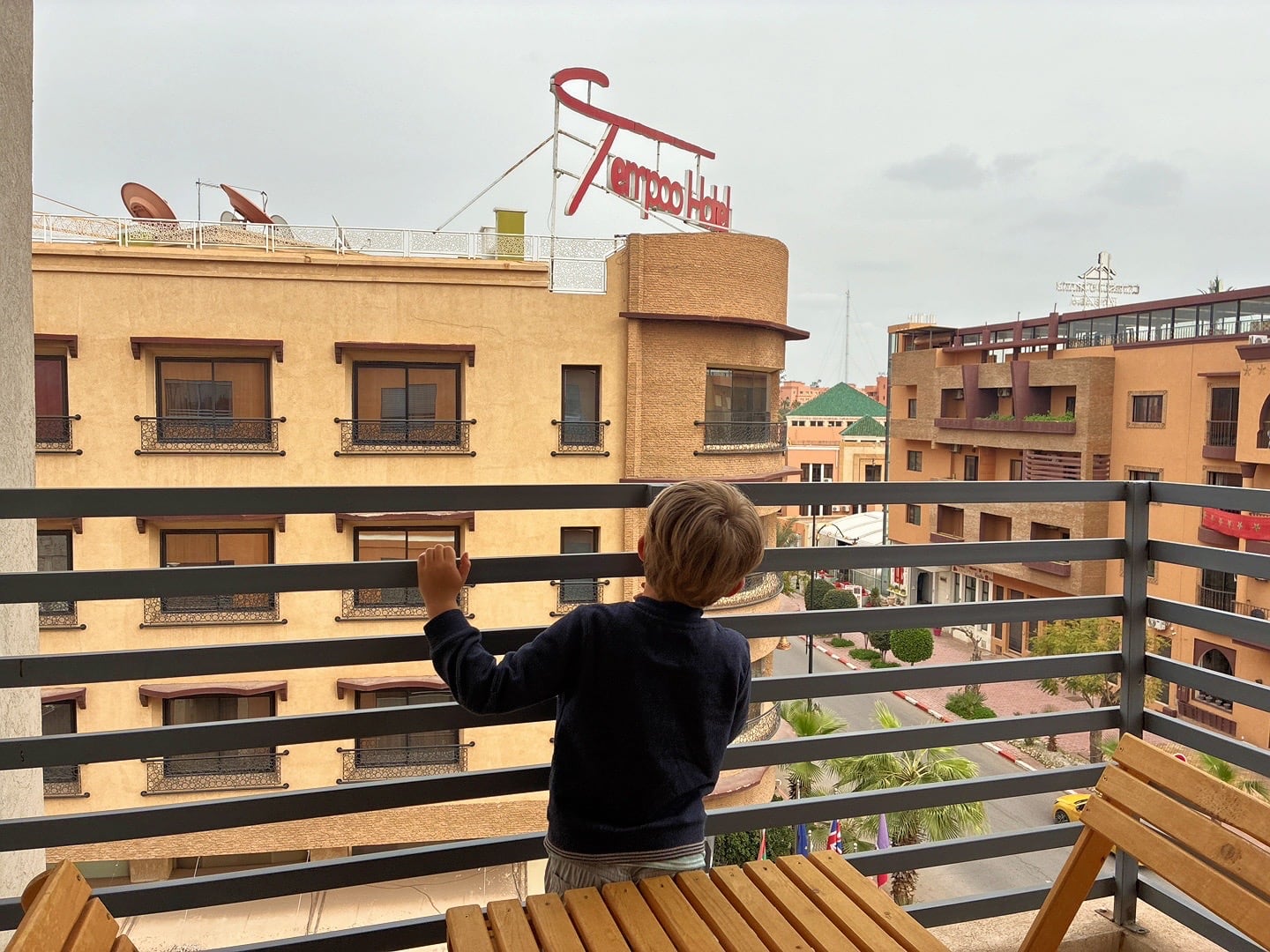
Hivernage is a great location for exploring New Town, but not so great for exploring the historic Medina (it’s far). When we return later in the month, we’ll be closer to the Medina, but not in the Medina. Accommodation is a lot more expensive and we feel like we got the full Medina experience in Fez.
The first time we stepped out of our apartment and on to the main road, I was floored to see this:
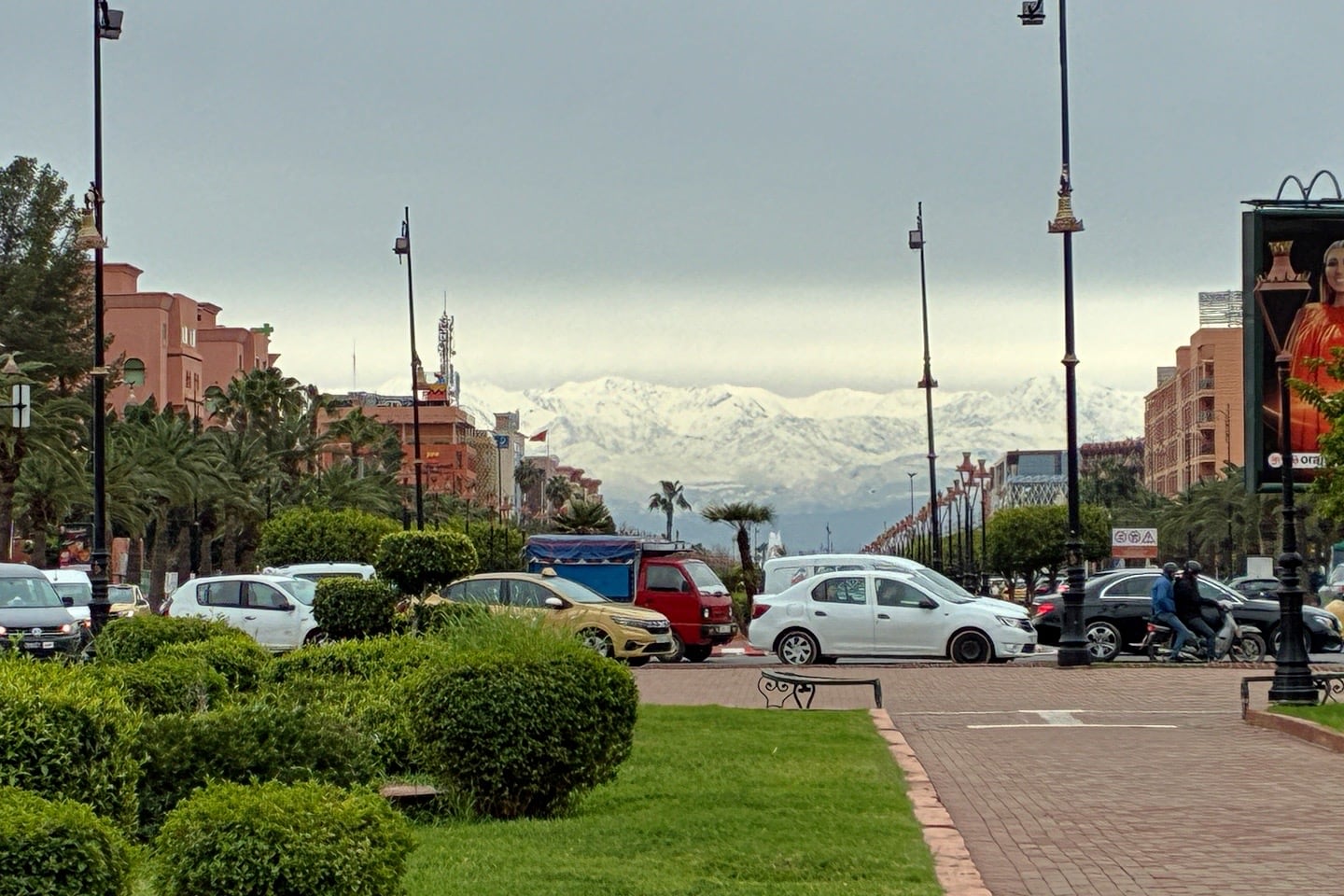
I knew you could see the High Atlas Mountains from town, but had no idea how clear of a view you’d get from so many parts of town. It’s an awesome sight. But as the week wore on, I began to feel a bit uneasy about the amount of snow, as we’re due to cross those mountains shortly.
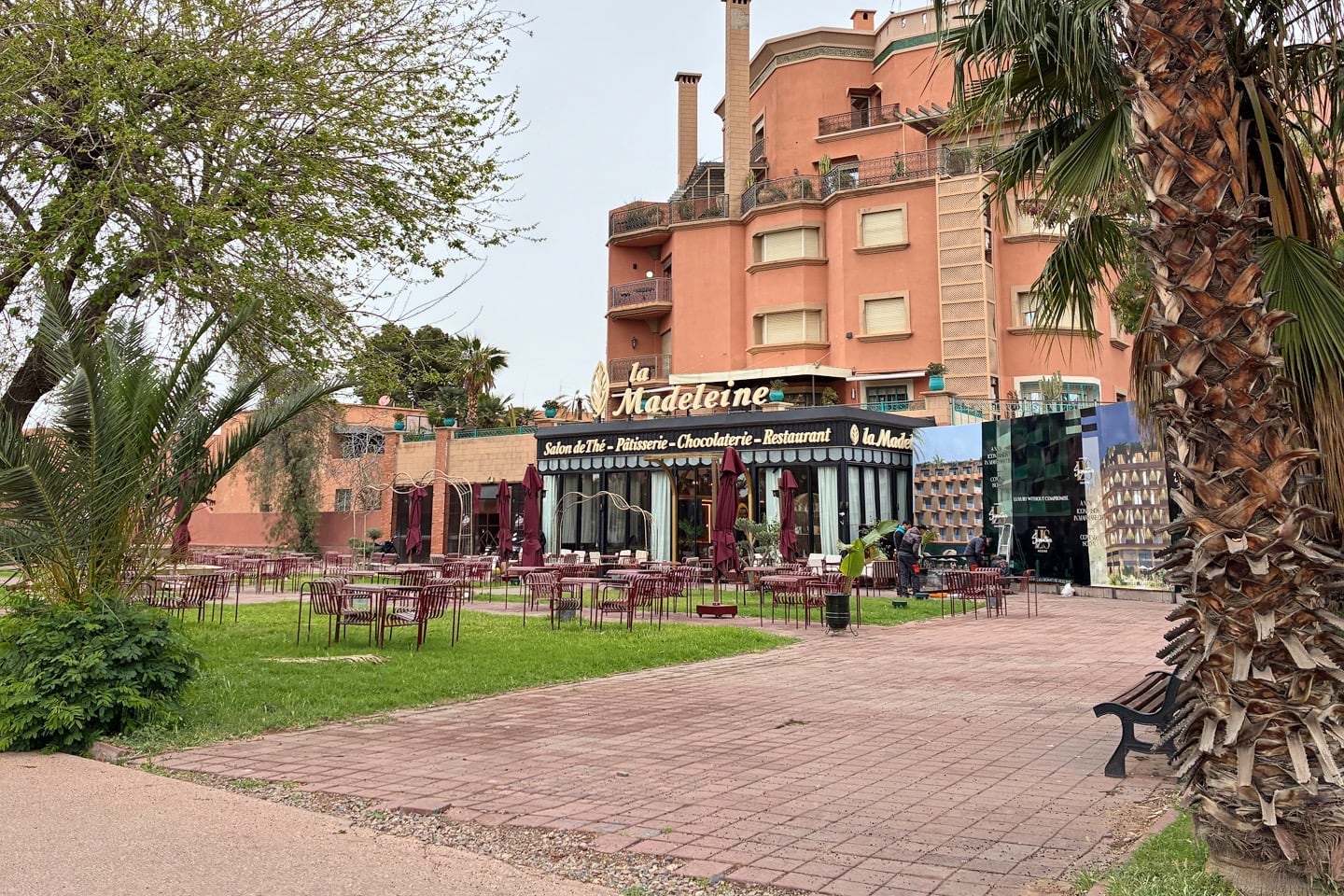
Even in Marrakesh, a relatively cosmopolitan city of 1.1 million people, coffee shops are either closed (or outdoor seating is closed) for Ramadan. In a day or two, we’ll see if that extends to the touristy Medina as well.
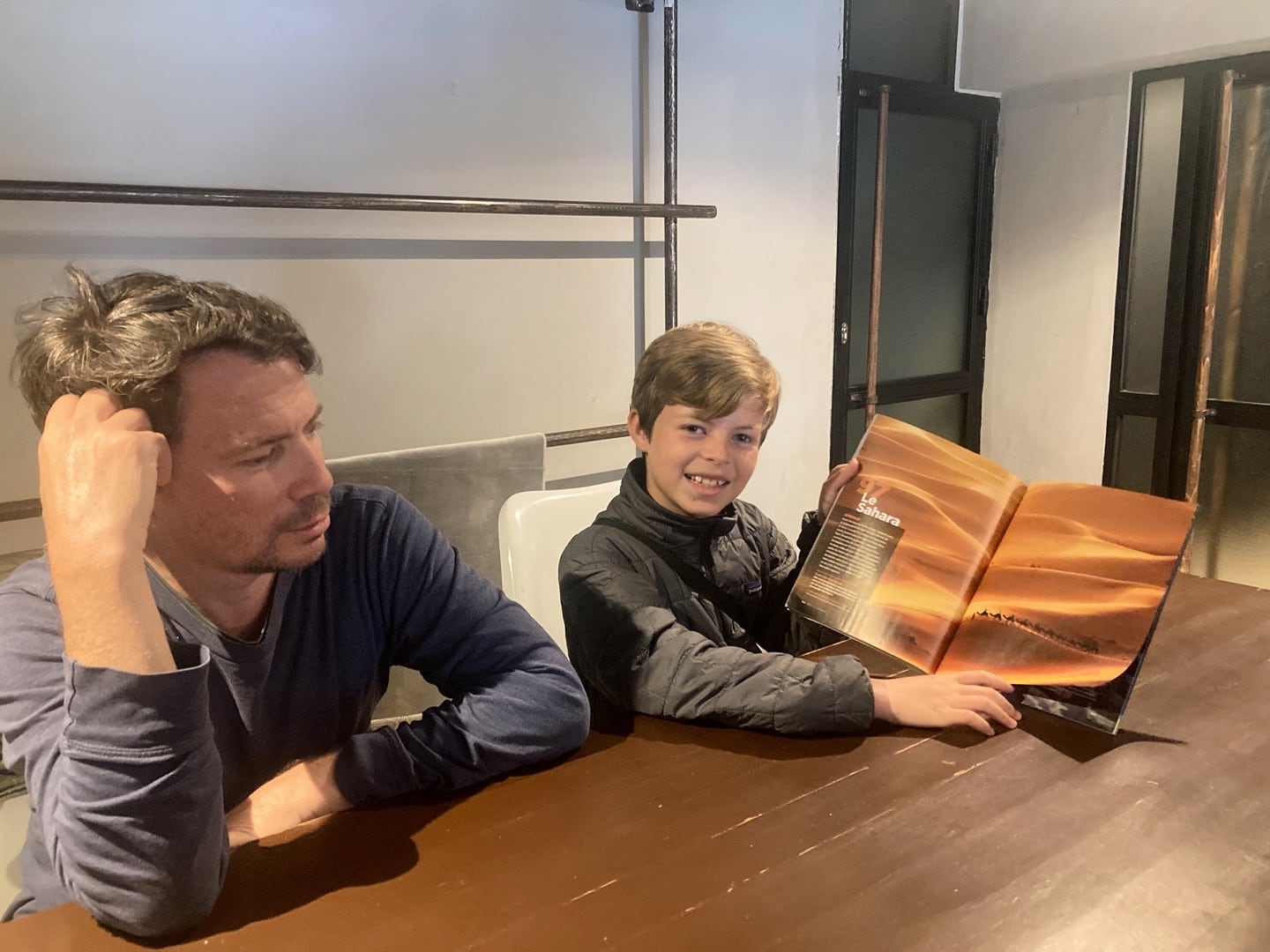
Noe was drawn to this photo in a magazine at a coffee shop. The boys really want to ride camels in the desert here. Two months in and we’ve done nothing of the sort. They don’t know that we’ve got something planned along those lines in the next 10 days.
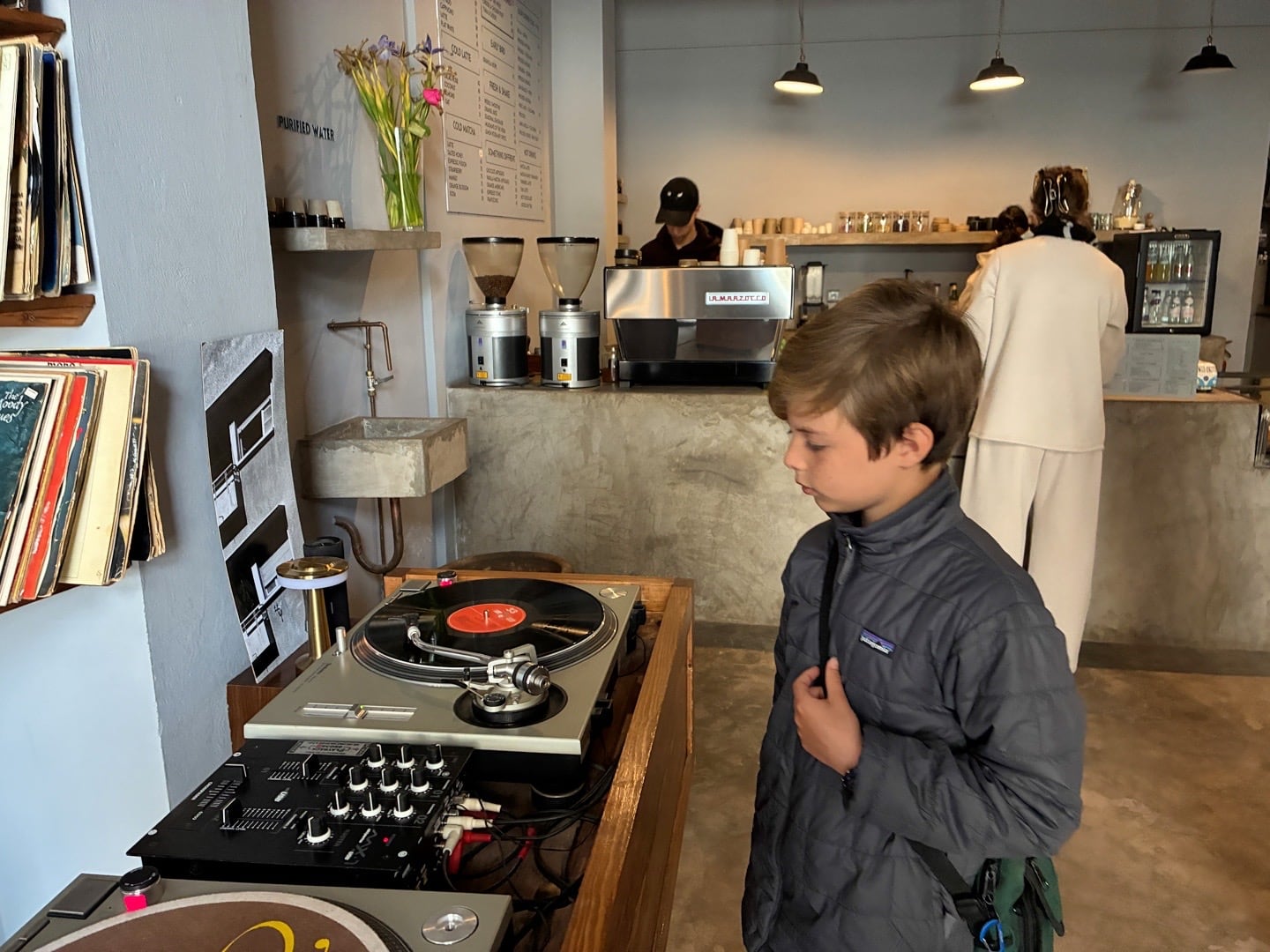
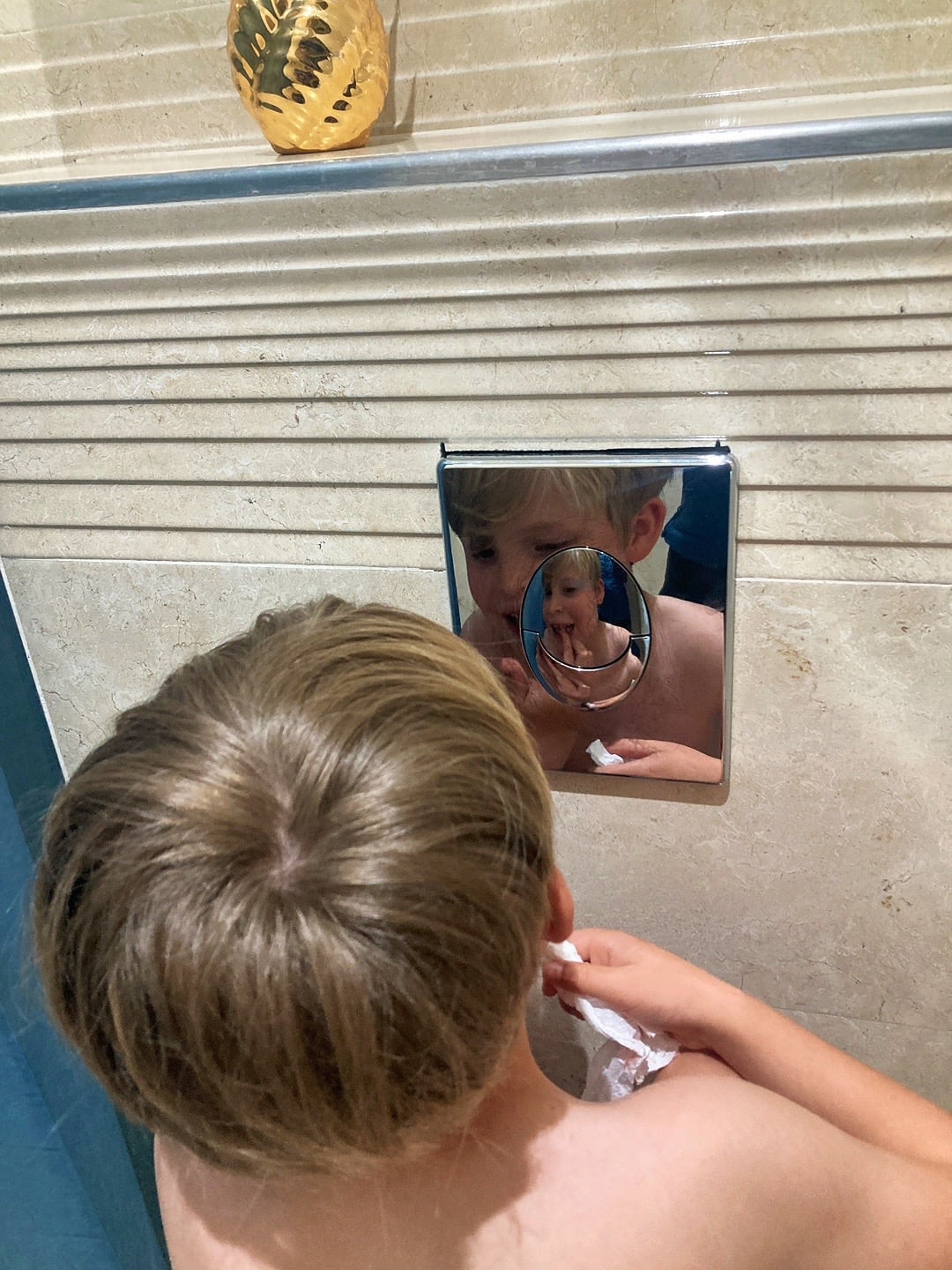
Riley’s working on another tooth. The toilet flusher is a perfect height mirror for the job.
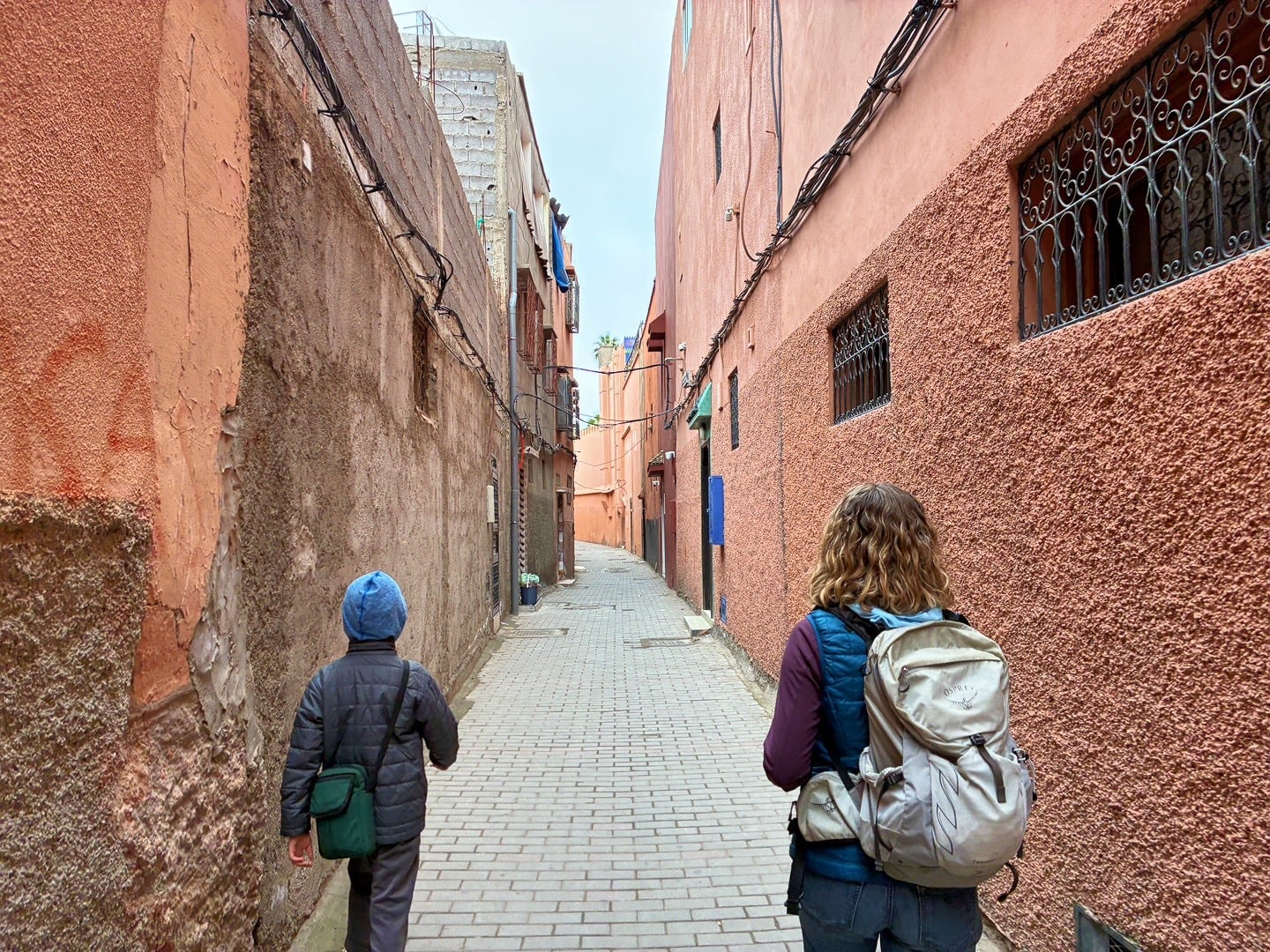
Time to venture into the Medina, another UNESCO World Heritage Site. We’re curious how it compares with the Medina of Fez. I’ve heard it’s more upmarket and boutique-y, and Lori’s heard it a lot more crowded. We shall see.
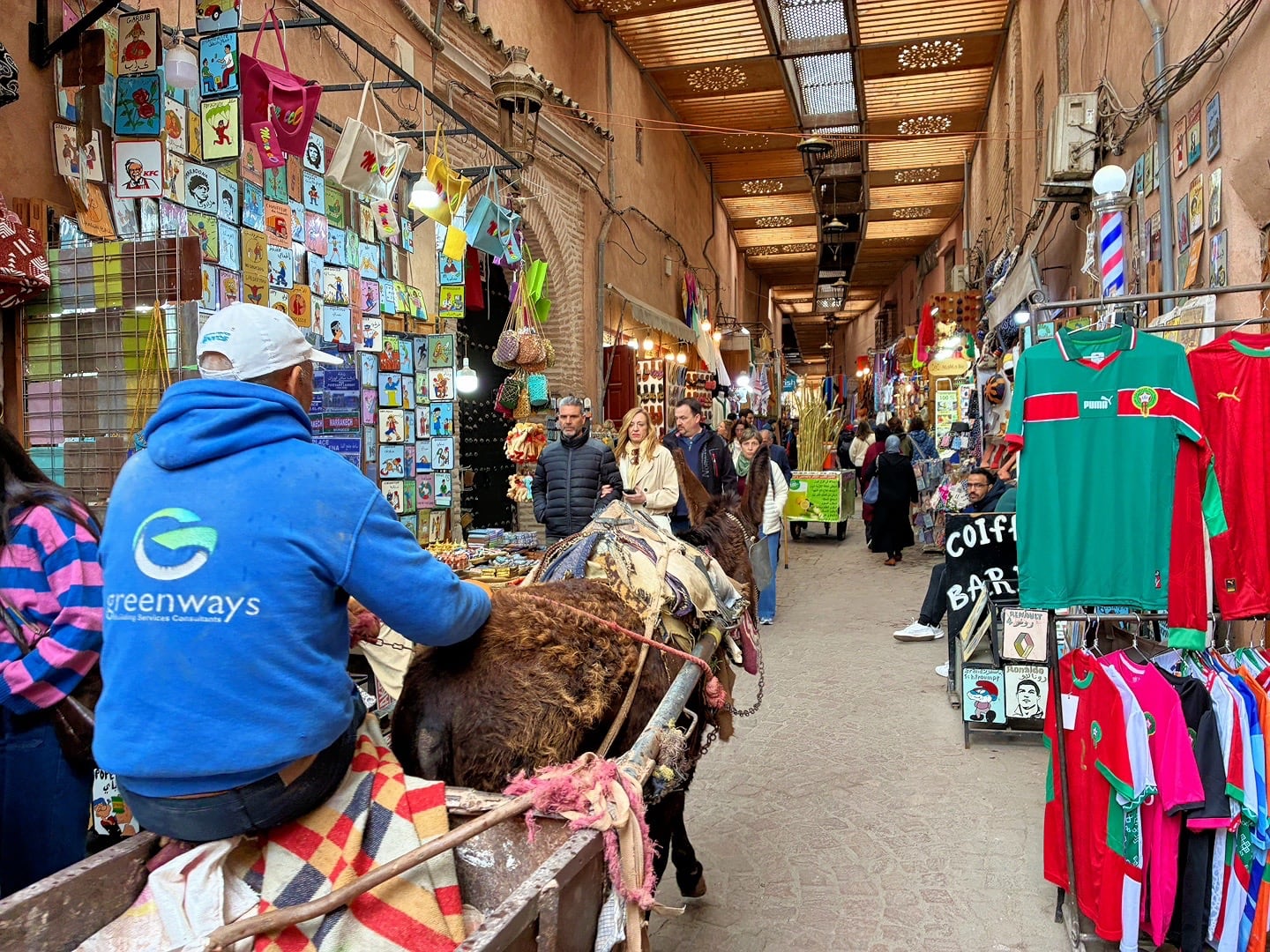
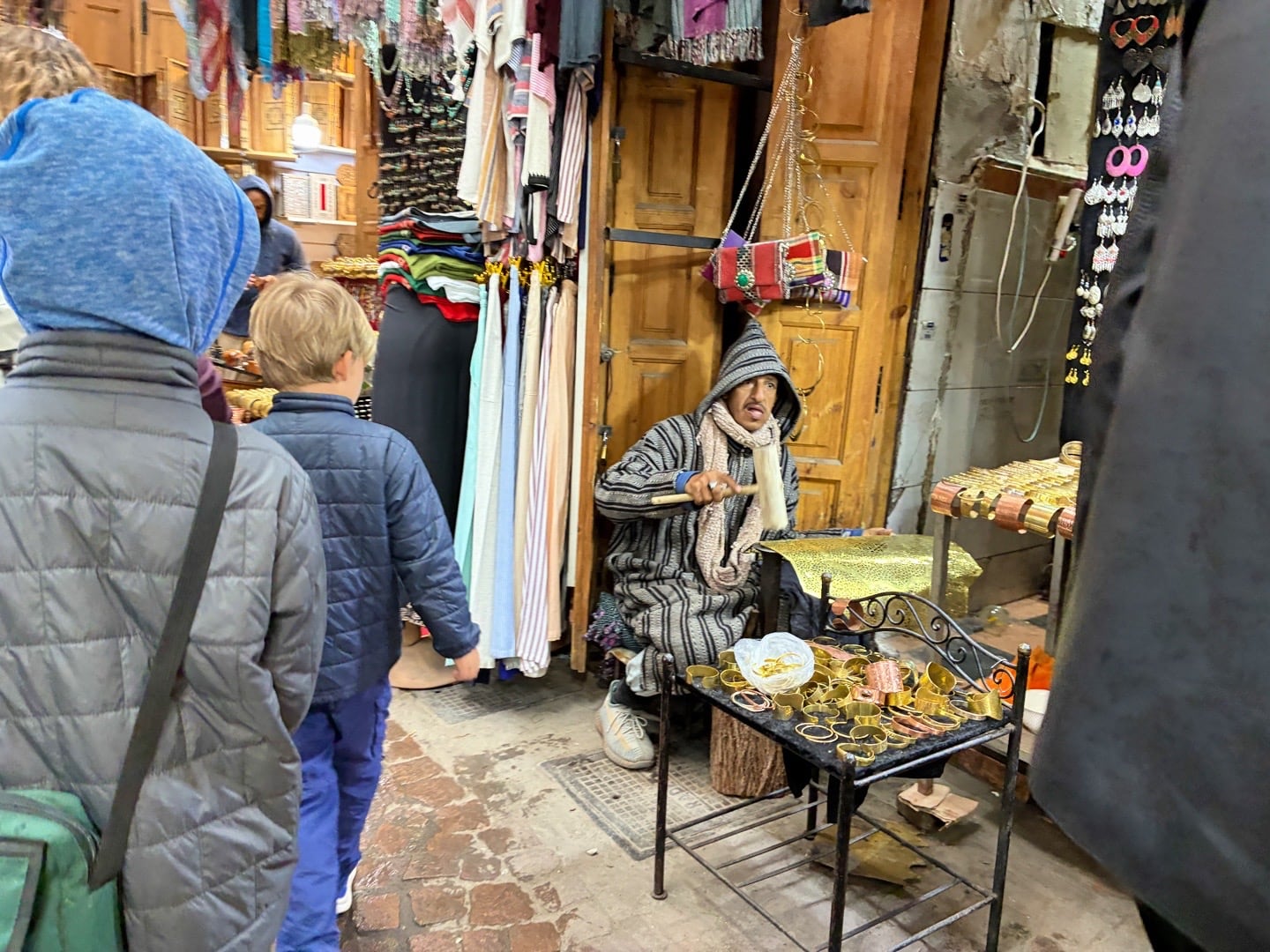
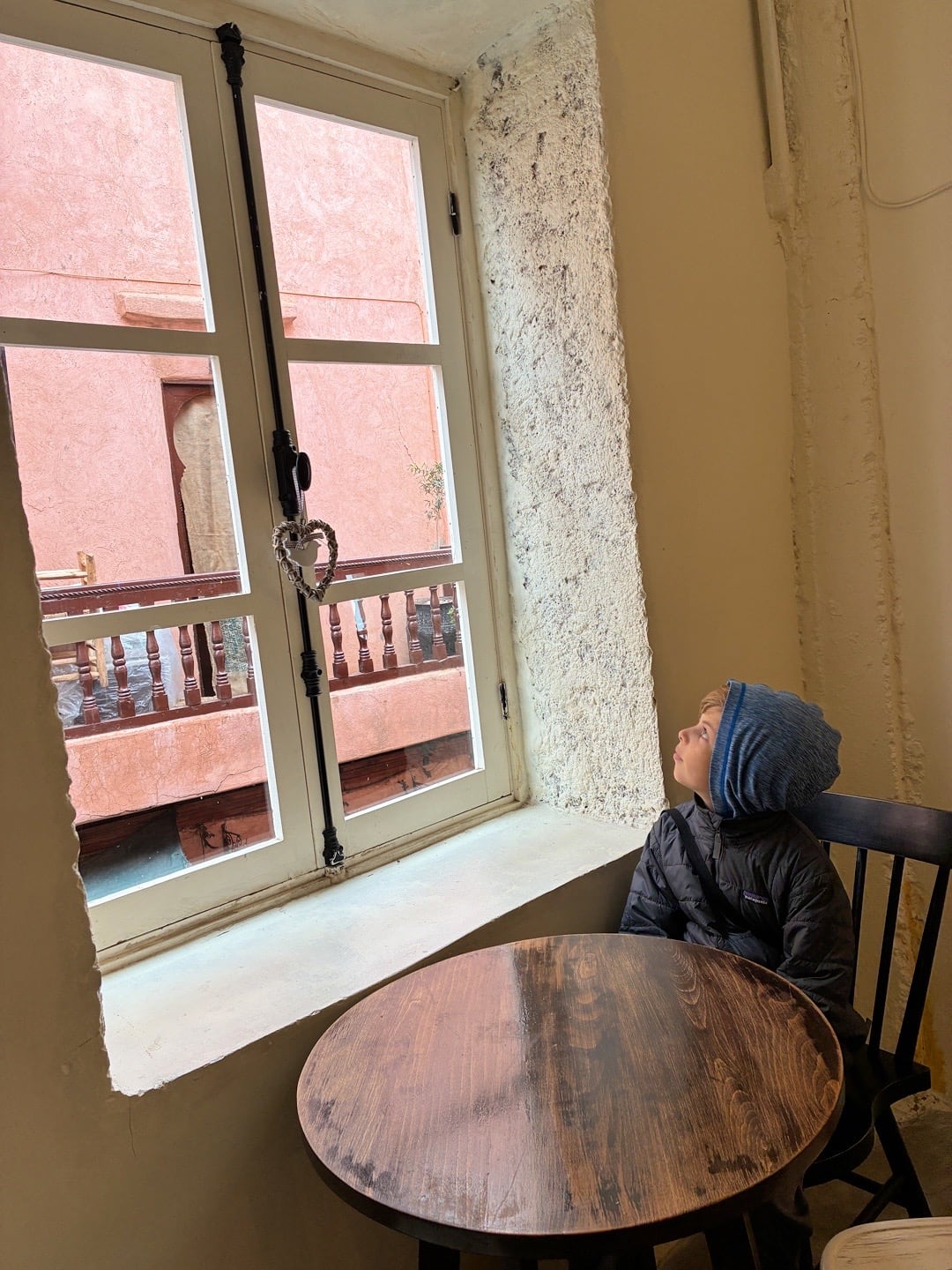
We entered the Medina a different direction from the way I think most visitors enter—in through a side gate and out through Jemaa el-Fnaa, the sprawling main plaza.
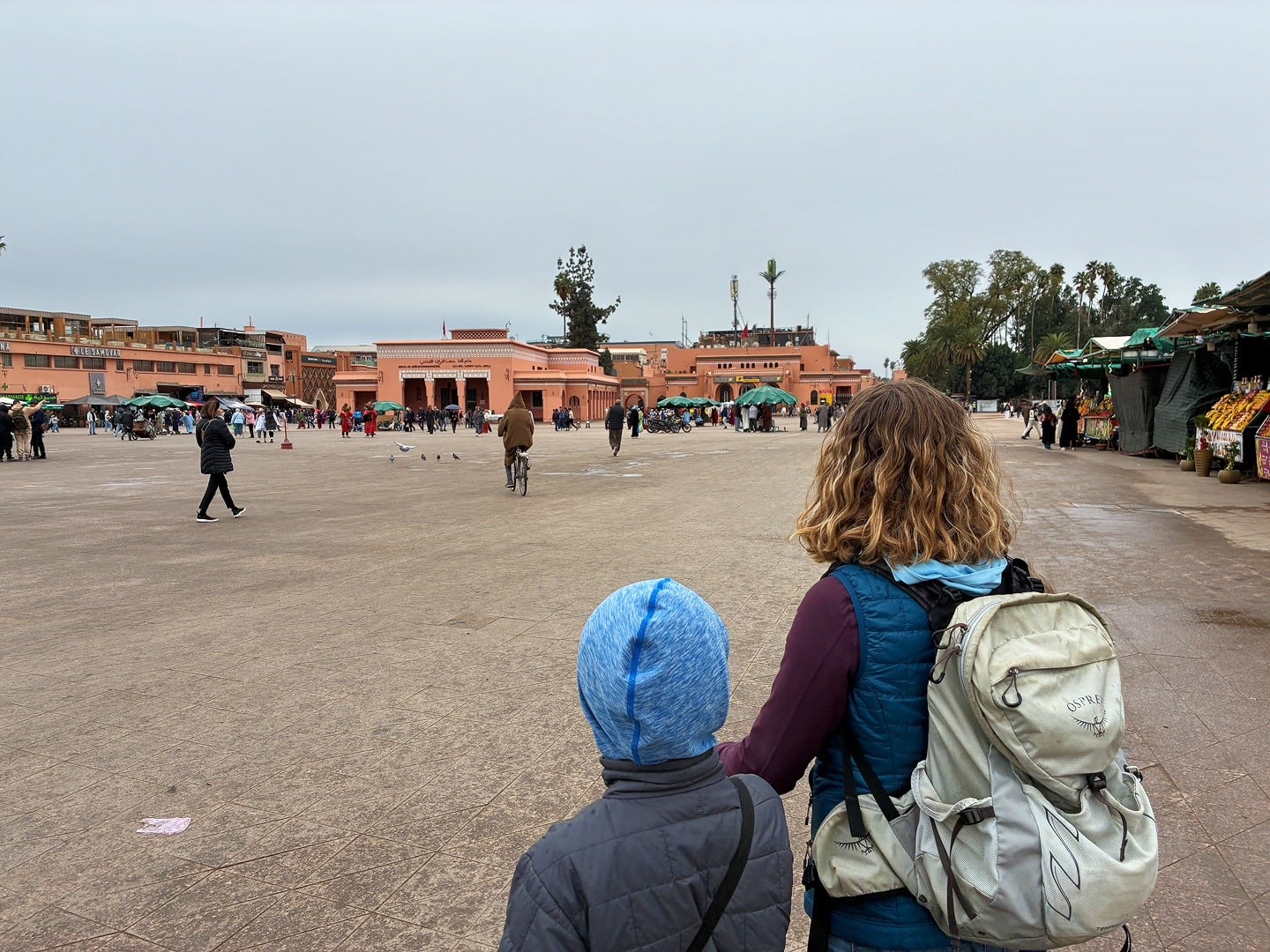
Here on a cold and rainy day at the beginning of March (and the middle of Ramadan), the plaza has a half-functional feel to it. Not a lot vendors, but for a half dozen determined snake charmers.
We’ll try again when the weather improves.
It’s a 40-minute walk from our apartment to the Medina, so we knew visiting wasn’t going to be an everyday affair. The next day, we kept our outing closer to home.
We’ve been struggling to find parks that are open for the boys to run around in. We tried the two main parks in town the other day with no luck. The gates were locked and no one was around.
Curious, I looked into it and didn’t get a straight answer. Some sources say that it’s because people are fasting indoors and not expending energy, but that doesn’t make a lot of sense.
I would think that if you’re not working, it would be better to pass the time sitting outside in a park than just laying on a couch in your house. But then again, I also haven’t observed Ramadan fasting.
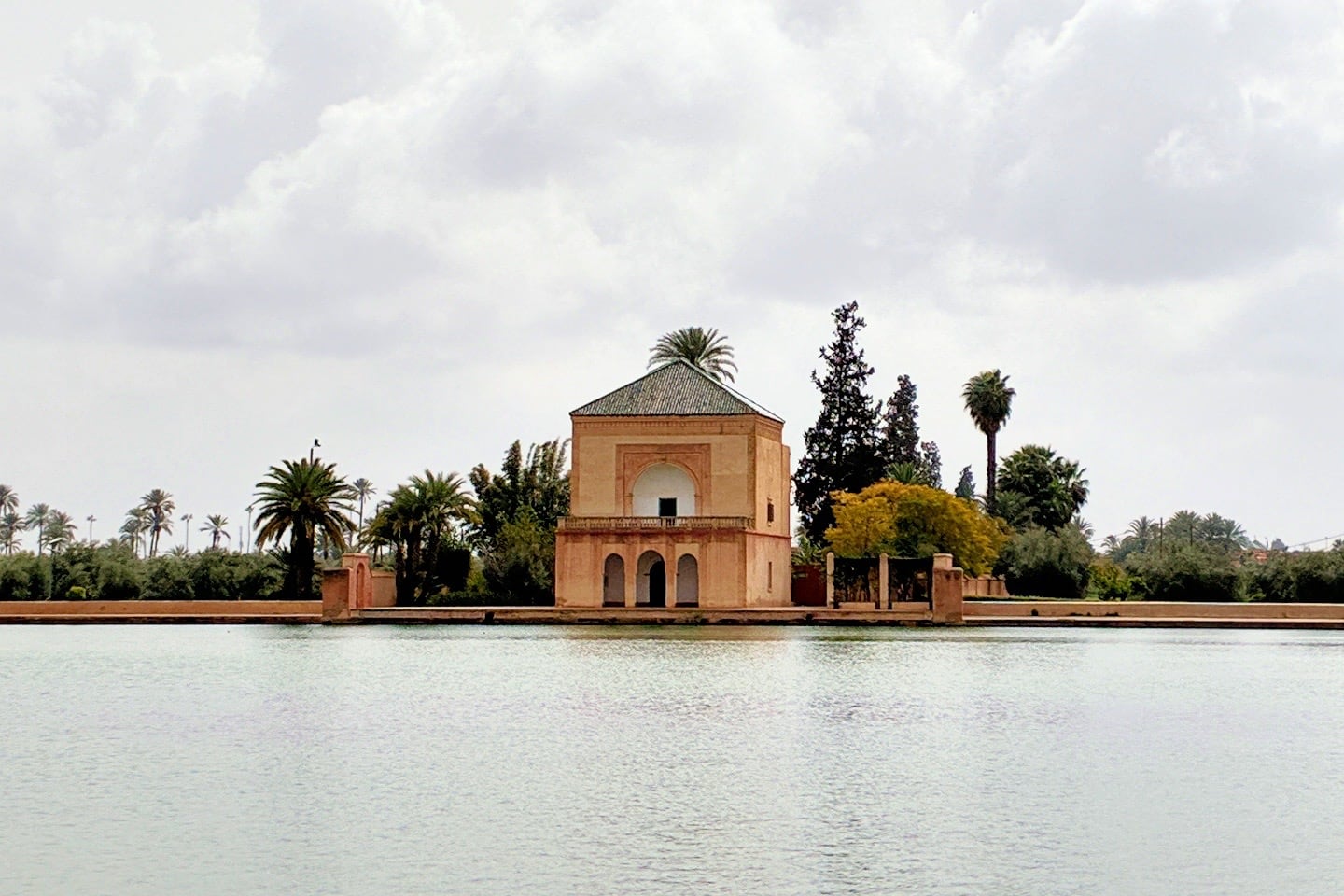
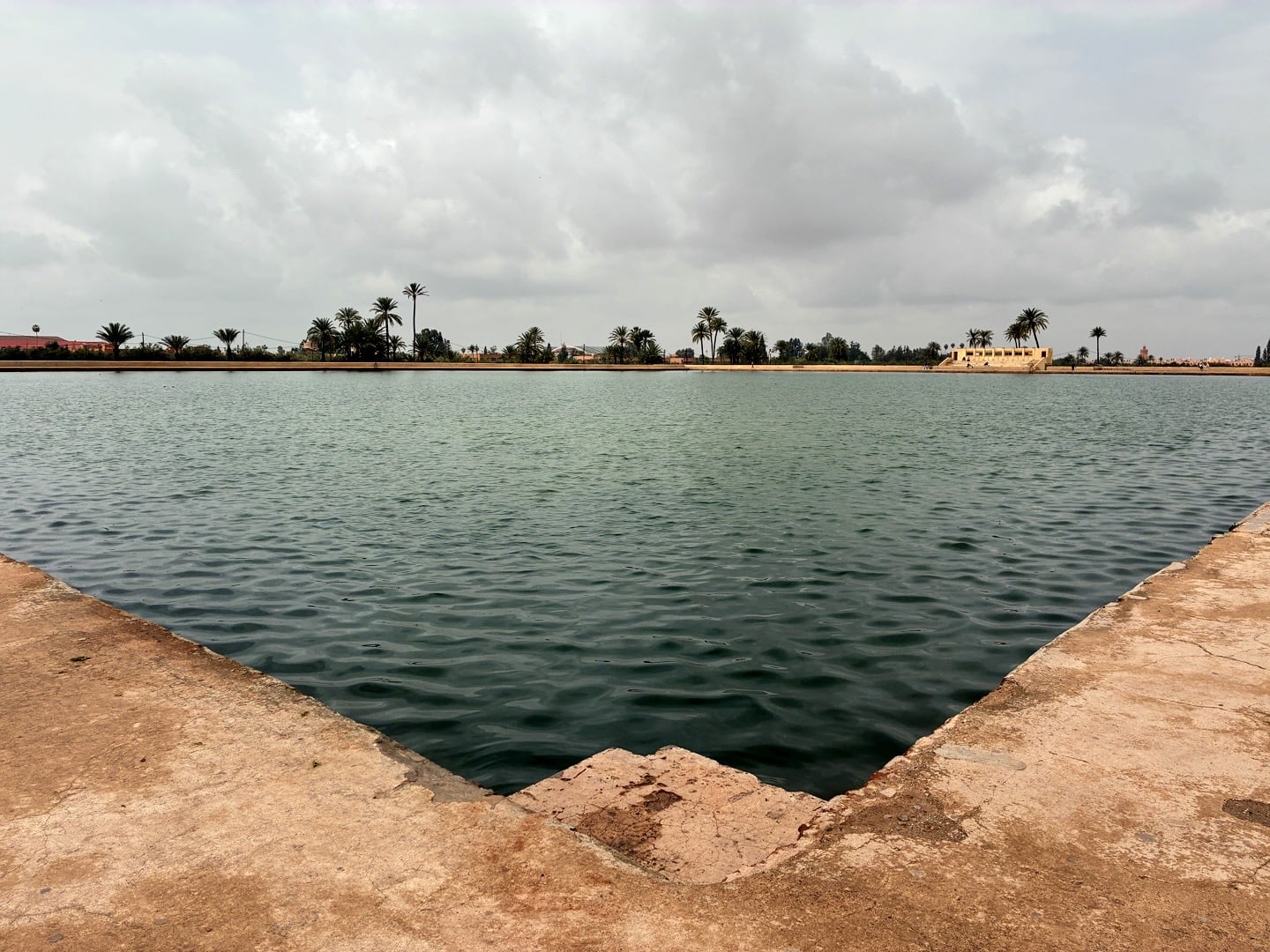
Determined to find some open outdoor space for the boys, Lori spotted an interesting looking park built around a manmade pond not too far from where we were staying. We thought we’d give it a try.
When we got there, we were stunned to find out it was a UNESCO site, which was certainly not evident on the map.
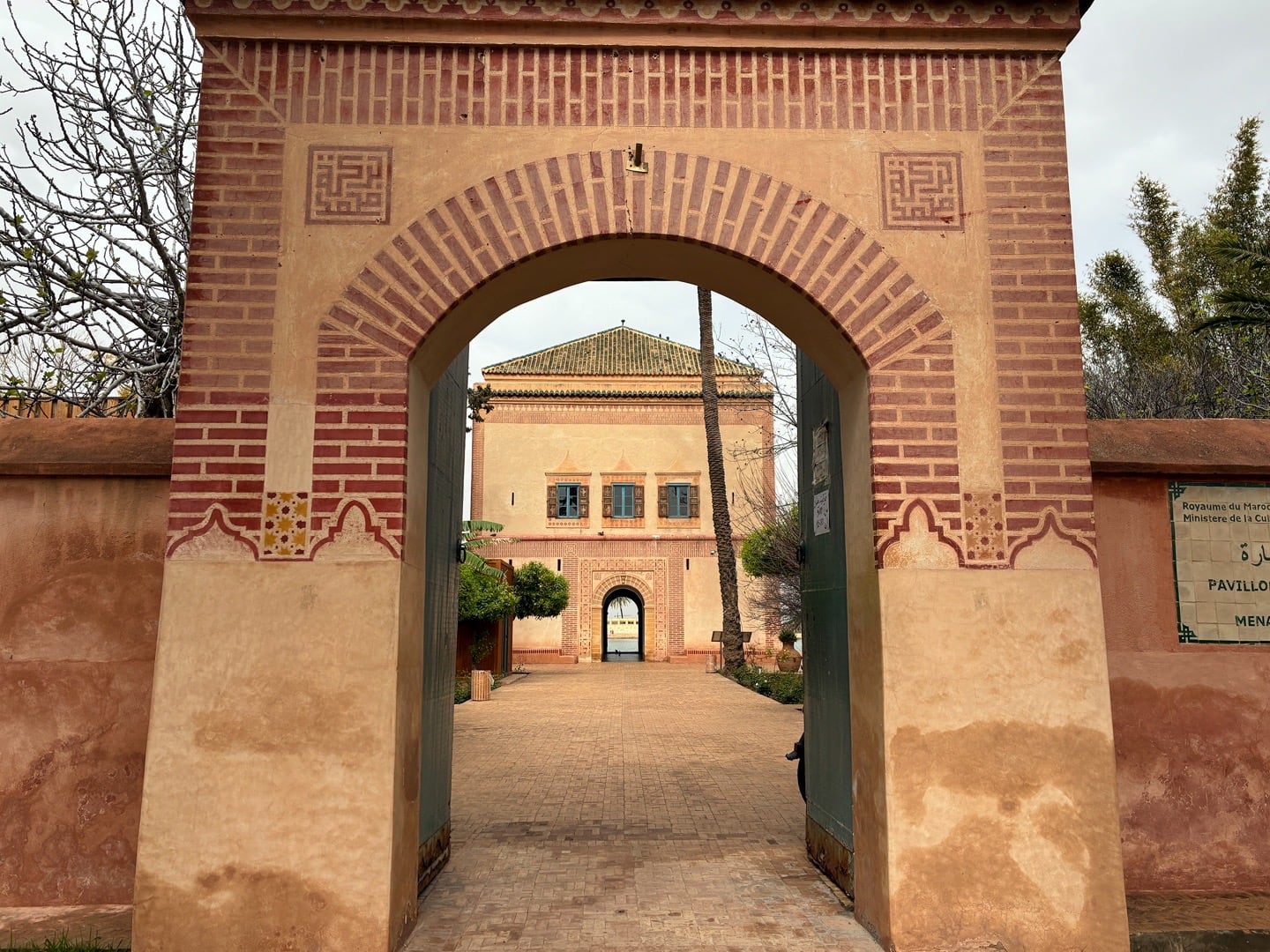
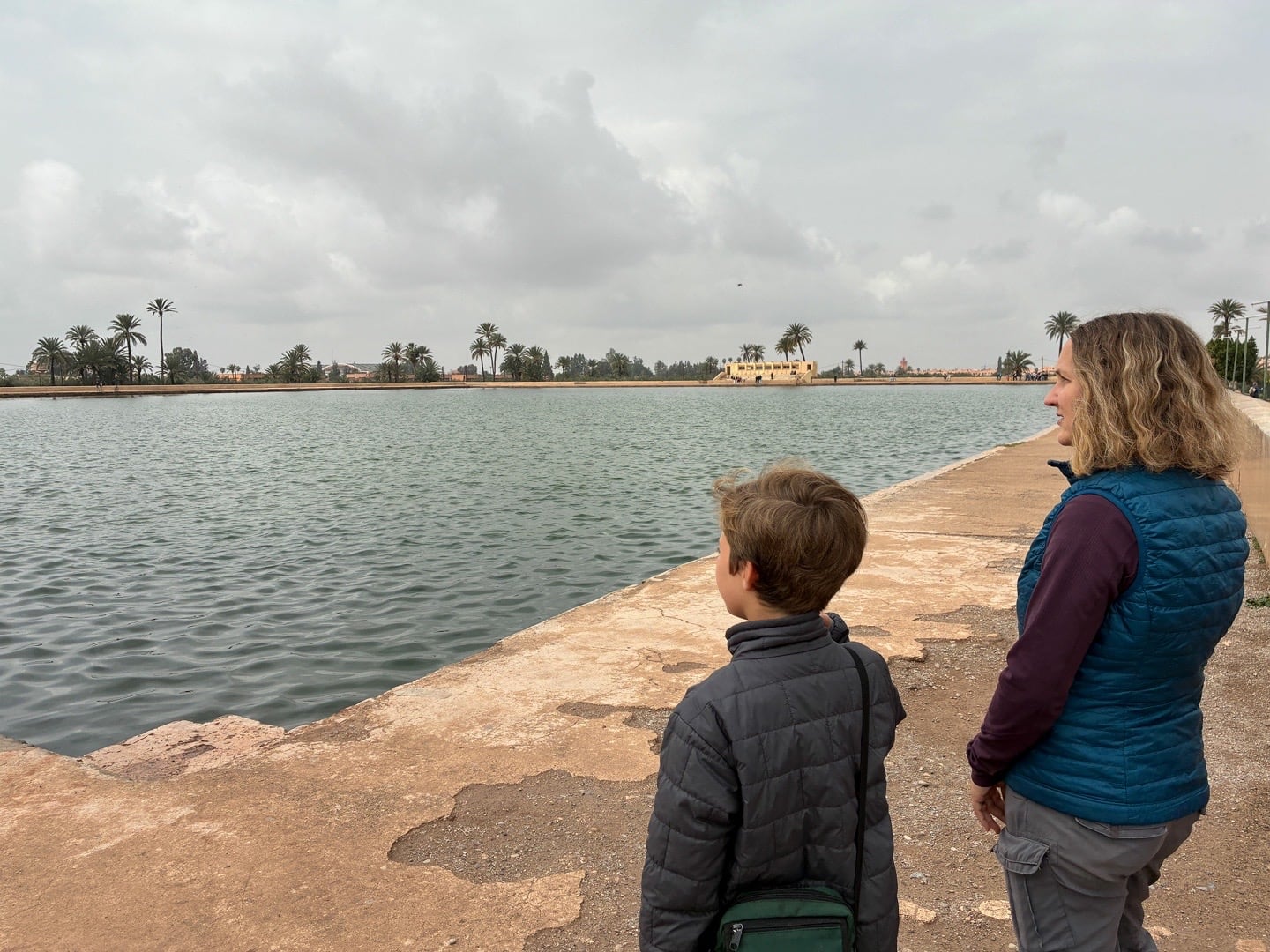
Dating to the 12th century, Menara Gardens were originally built under the Almohad Caliphate as an agricultural estate using an advanced irrigation system channeling water from the Atlas Mountains into this large central basin.
Originally intended to grow olives and train troops for battle, the gardens later became a summer retreat for sultans.
On the way back, we swung by a Carrefour to do some grocery shopping for the week.
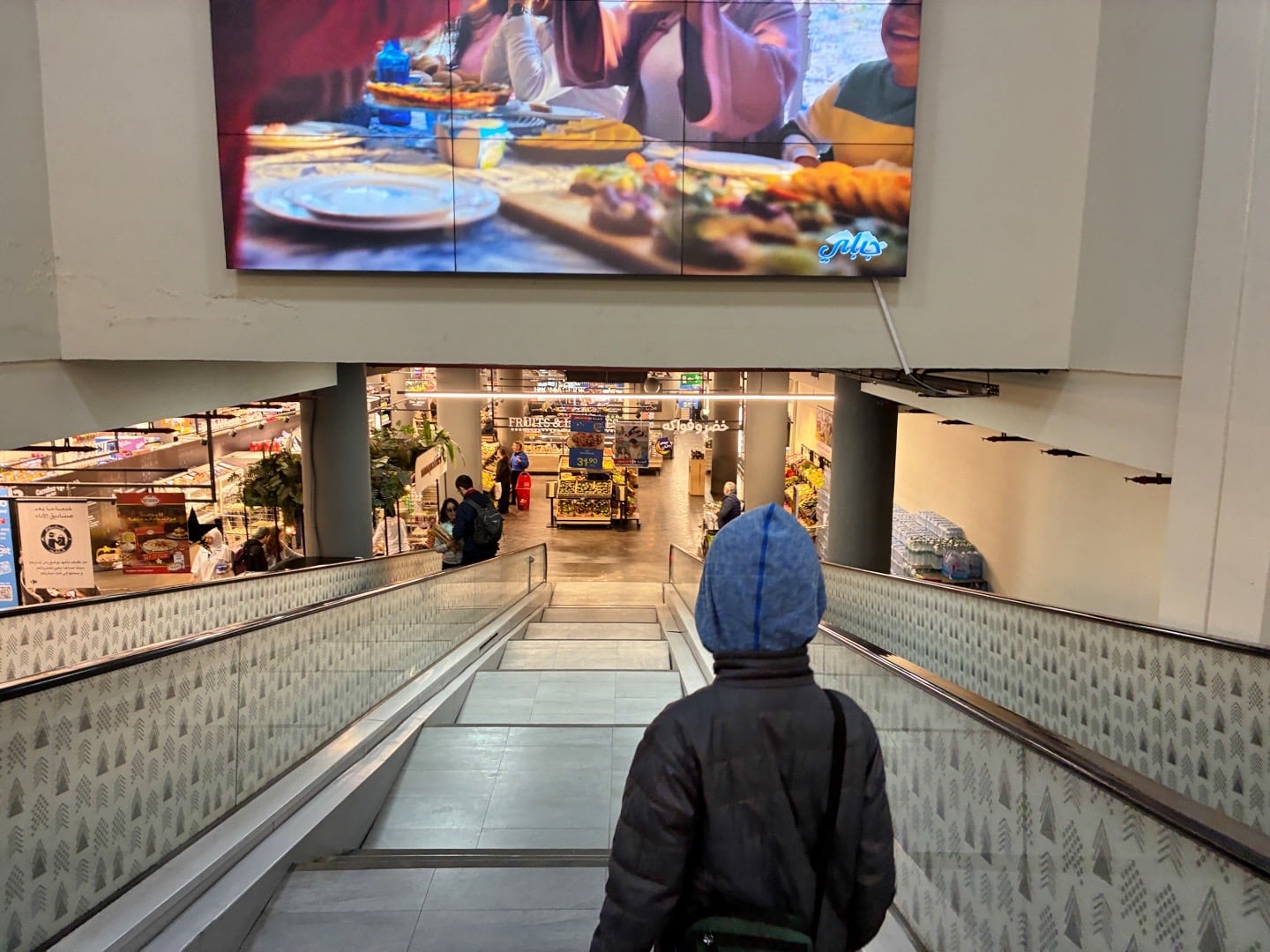
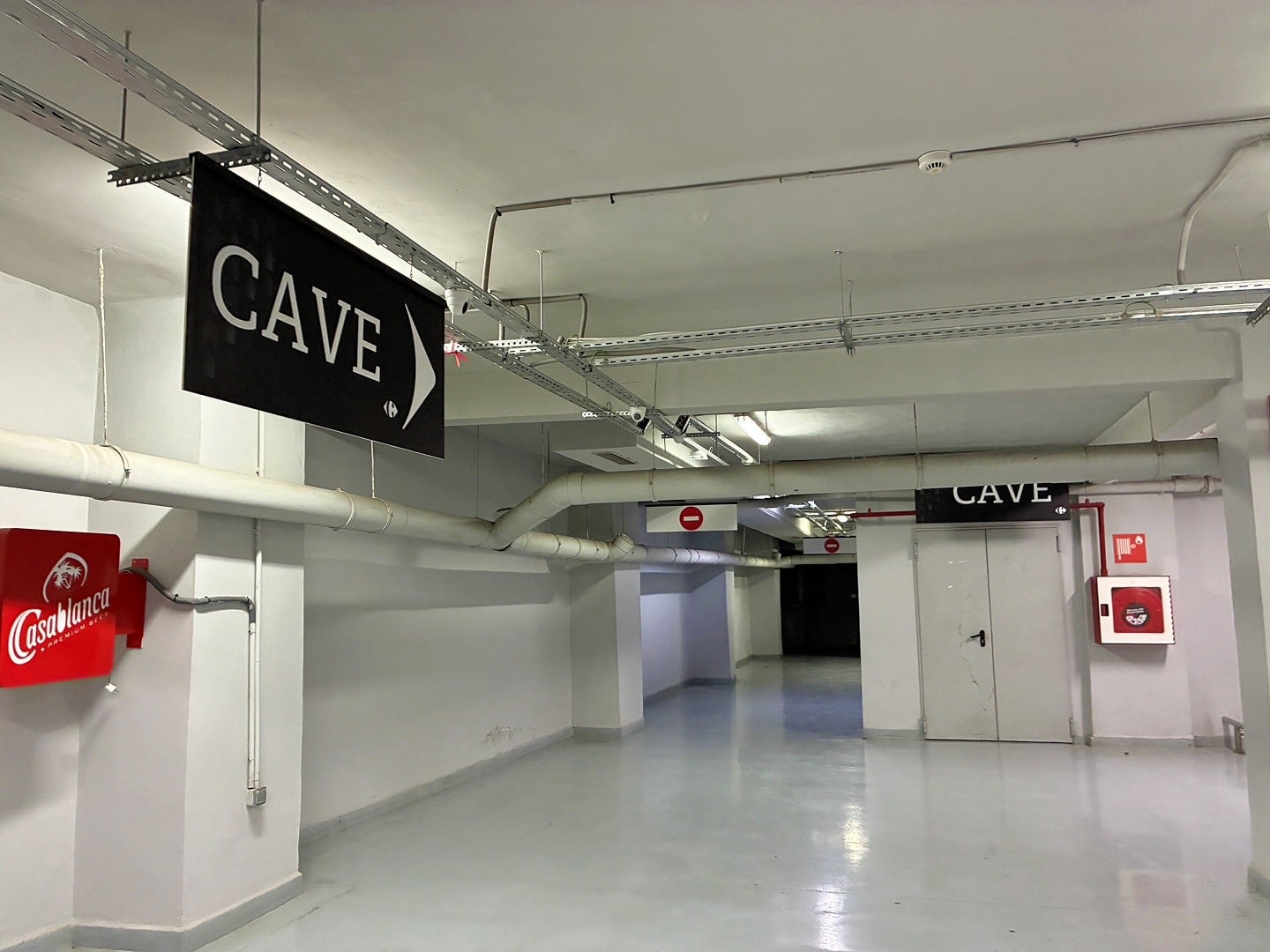
The only store I’ve ever been able to buy a couple of beers in Morocco was at the Carrefour Cave below the Carrefour in Fez. I wondered if the Cave here might still be open during Ramadan (if for limited hours), but as I suspected, it’s shuttered ’til Eid.
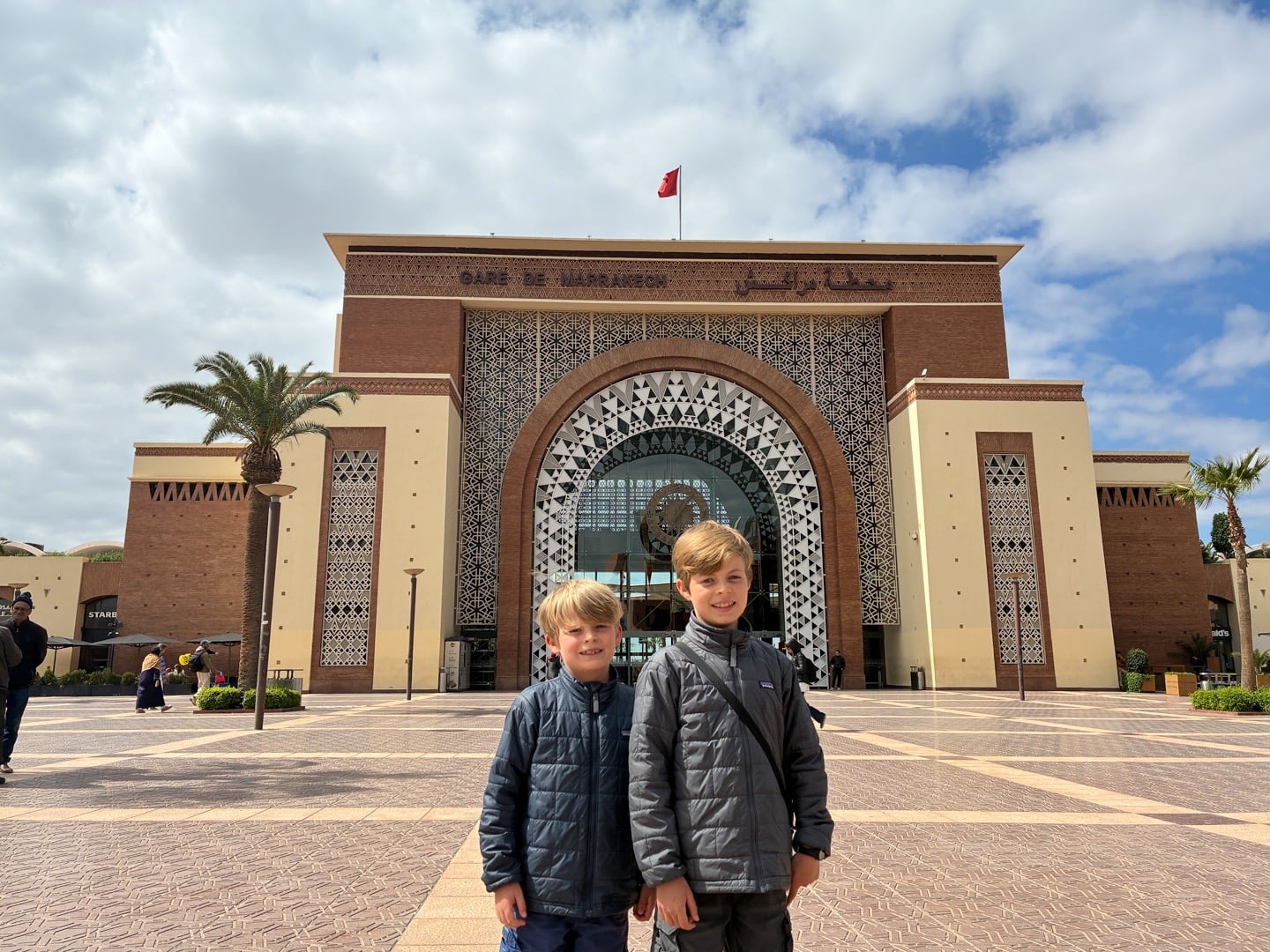
That’s the main railway station in Marrakesh—the same one we arrived at coming from Fez (on our way to Mirleft) over a month ago.
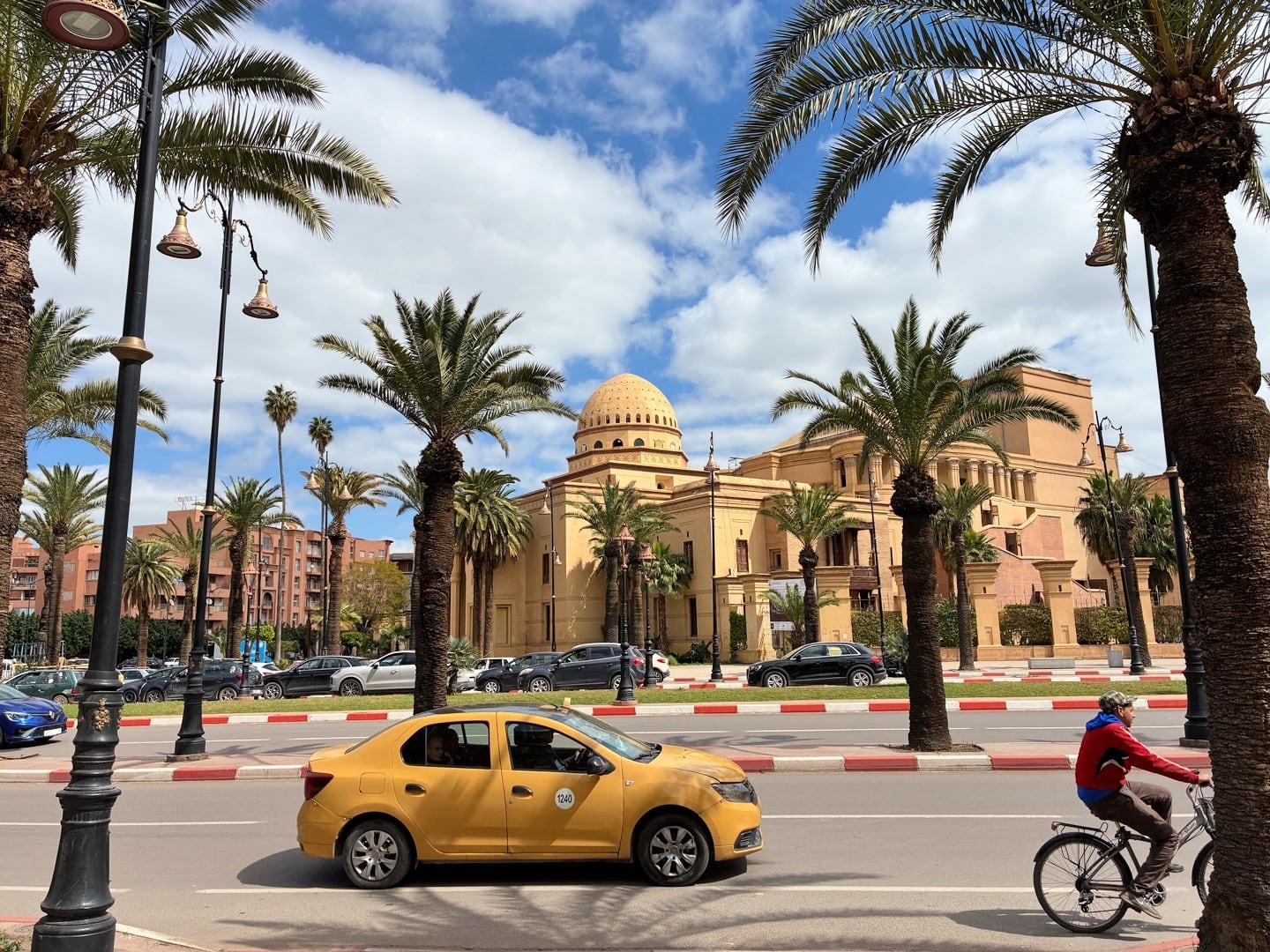
The Royal Theater, currently undergoing restoration.
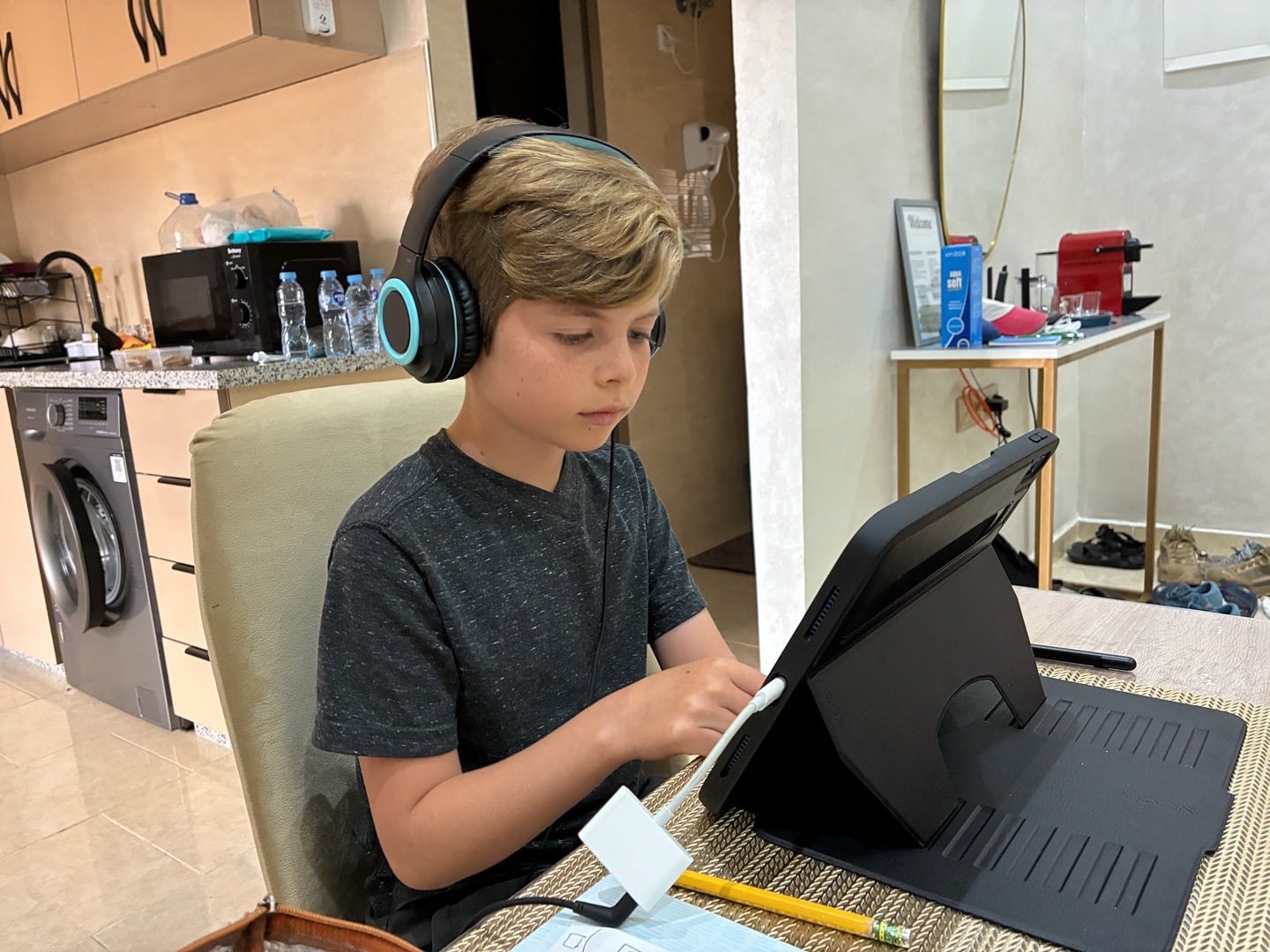
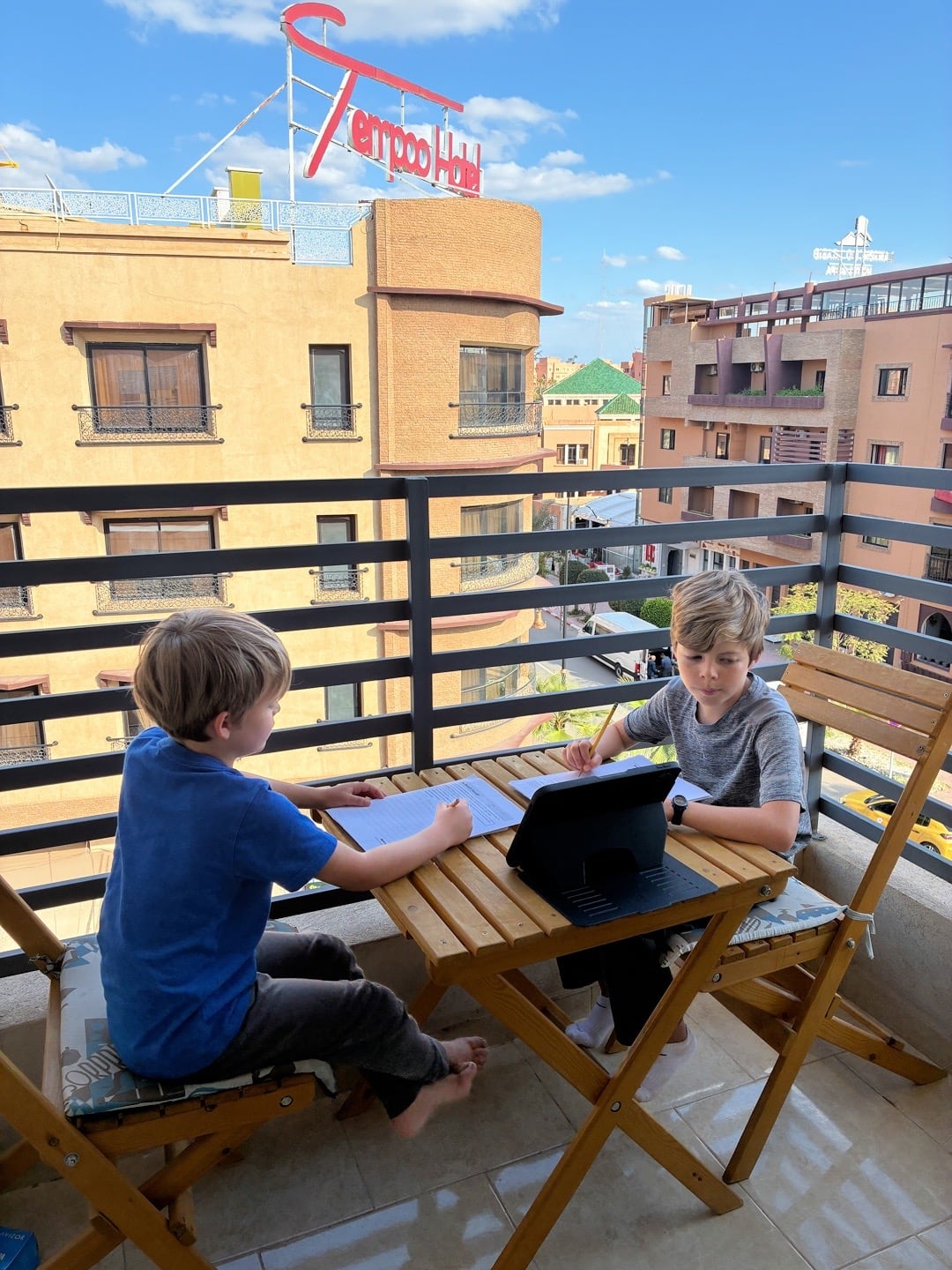
Independent school time.
When the weather’s nice, this is the boys’ classroom…
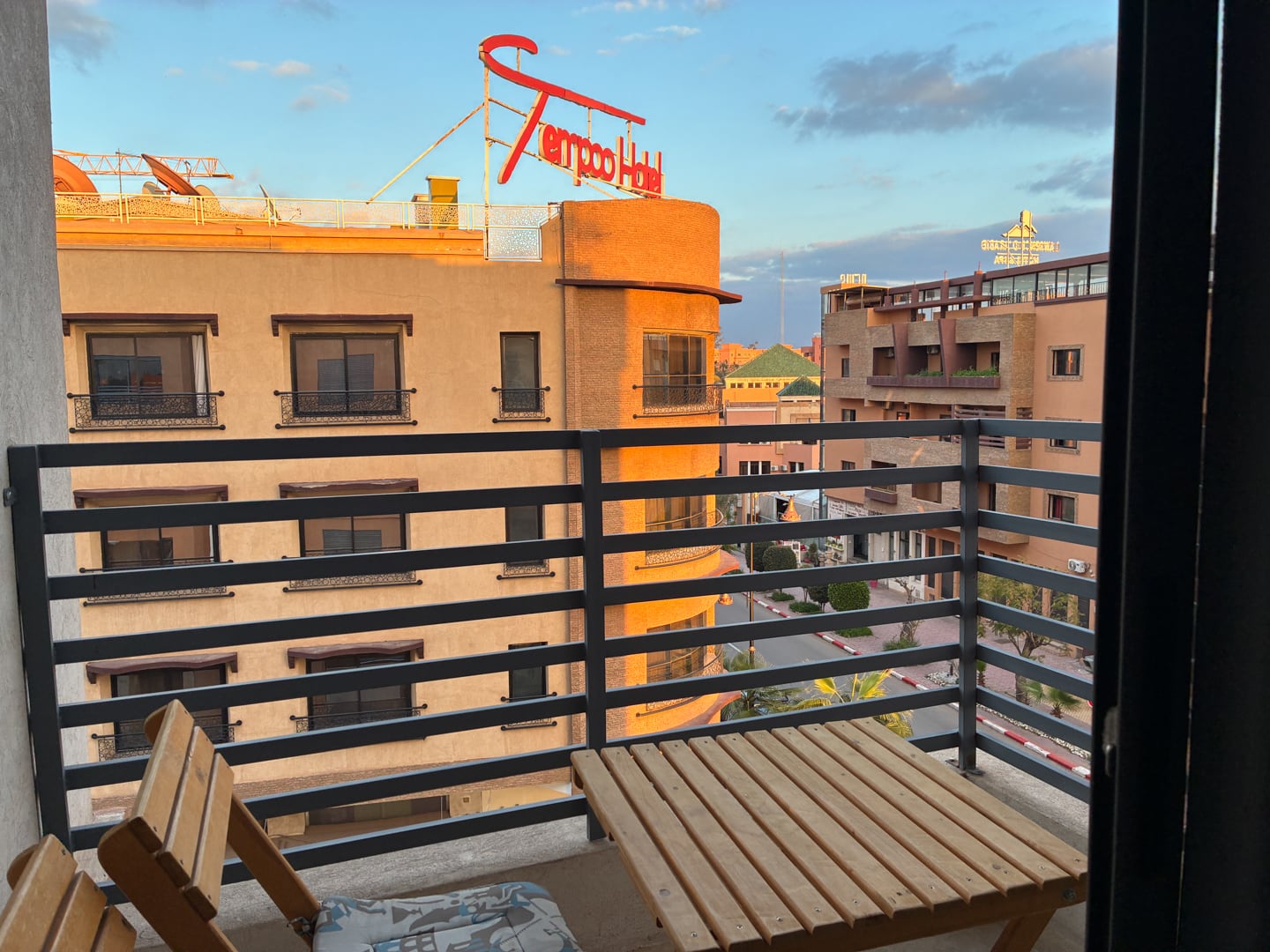
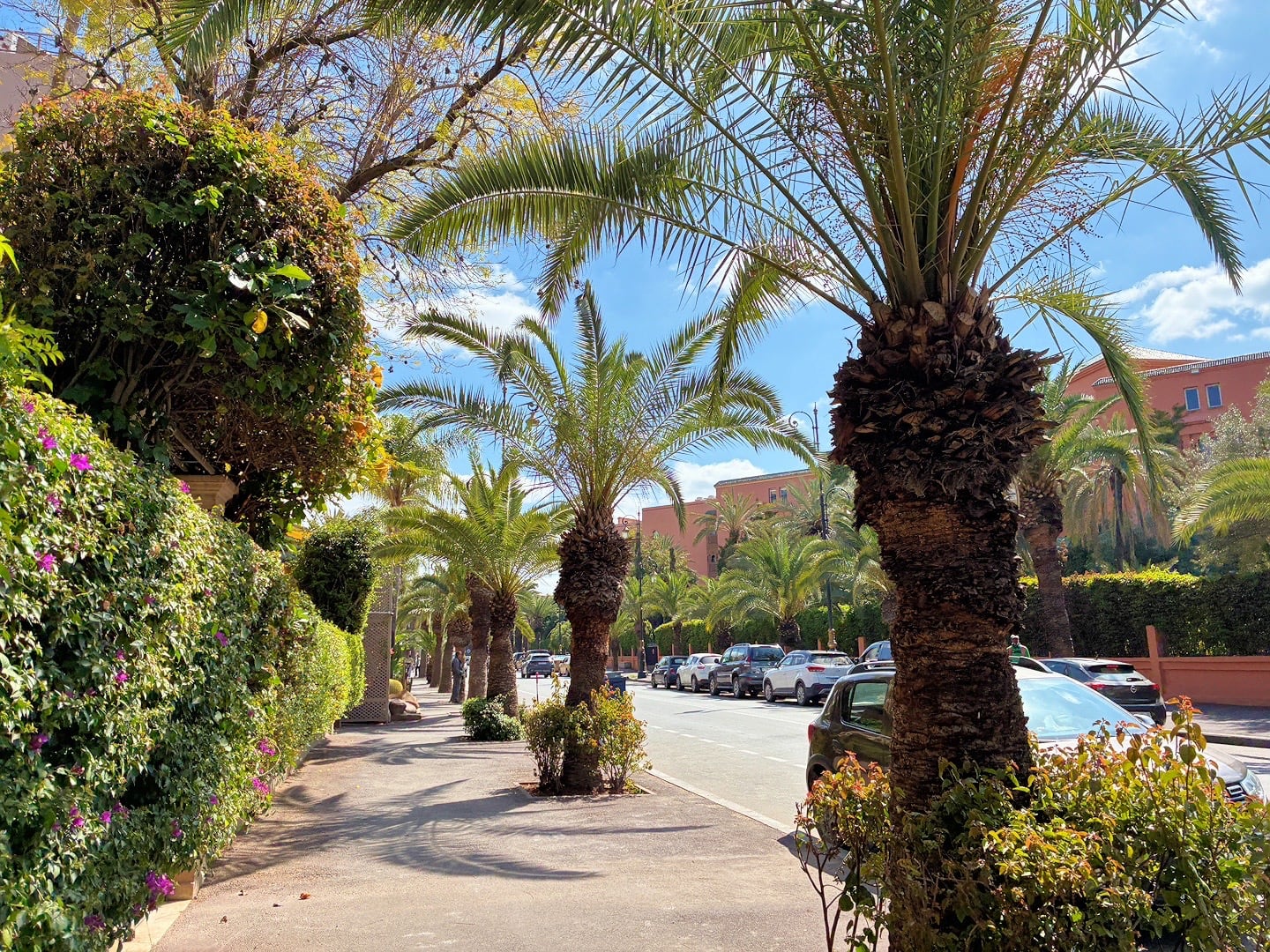
The walk to the Medina.
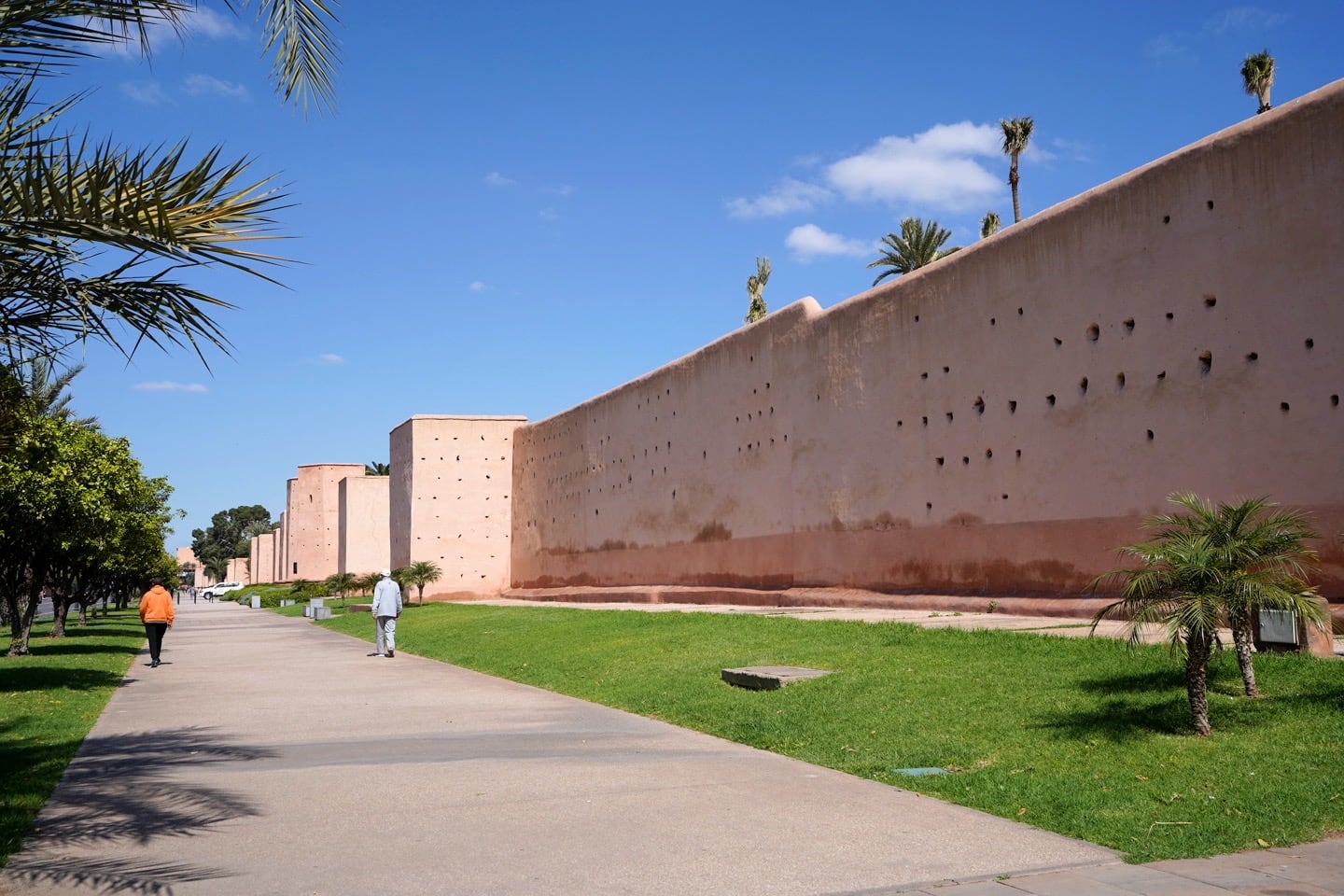
The Old City Walls.
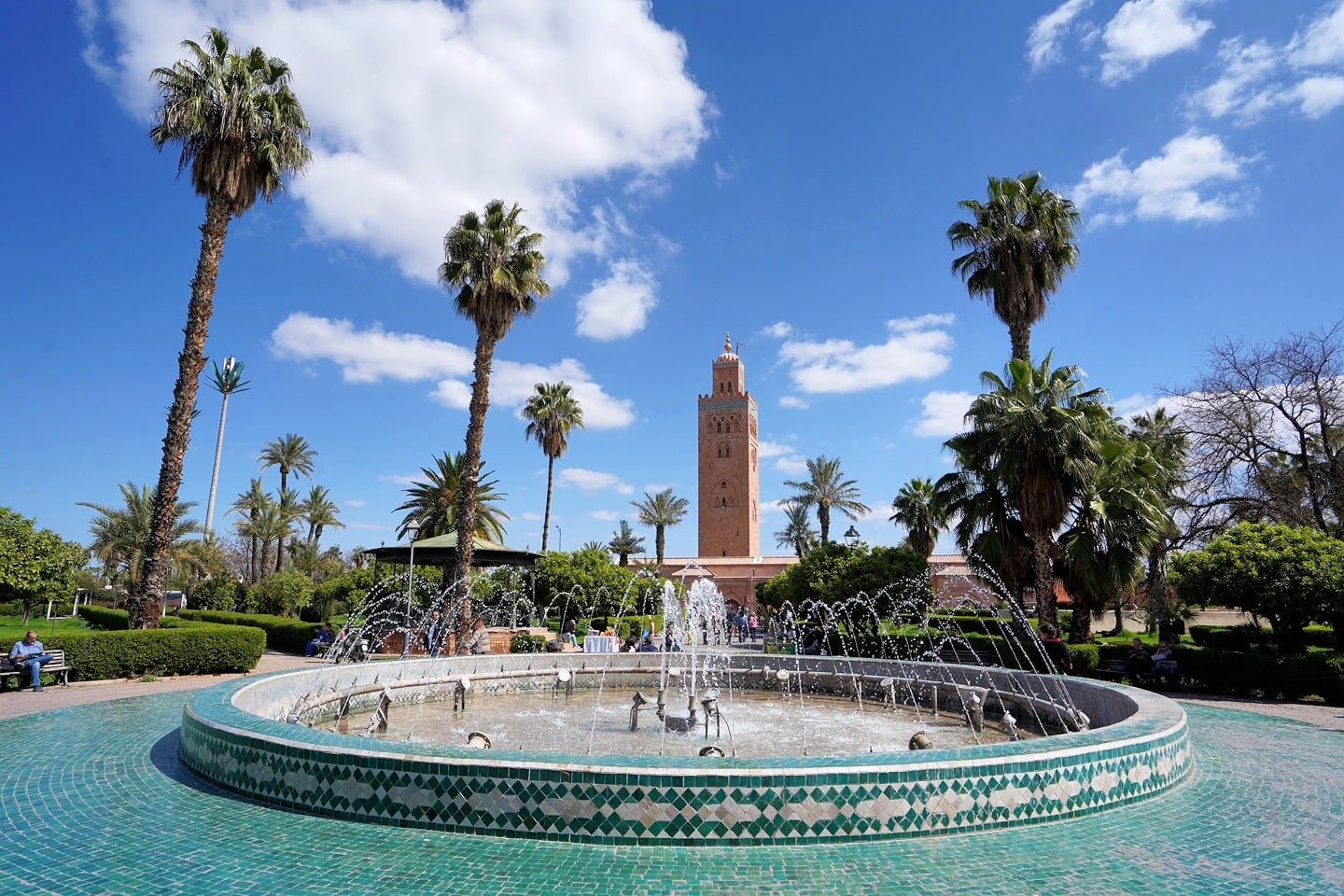
The 12th-century Koutoubia Mosque welcomes visitors into the Medina from the southwestern gates. The Sevilla Cathedral’s Giralda bell tower is said to have been patterned after Koutoubia.
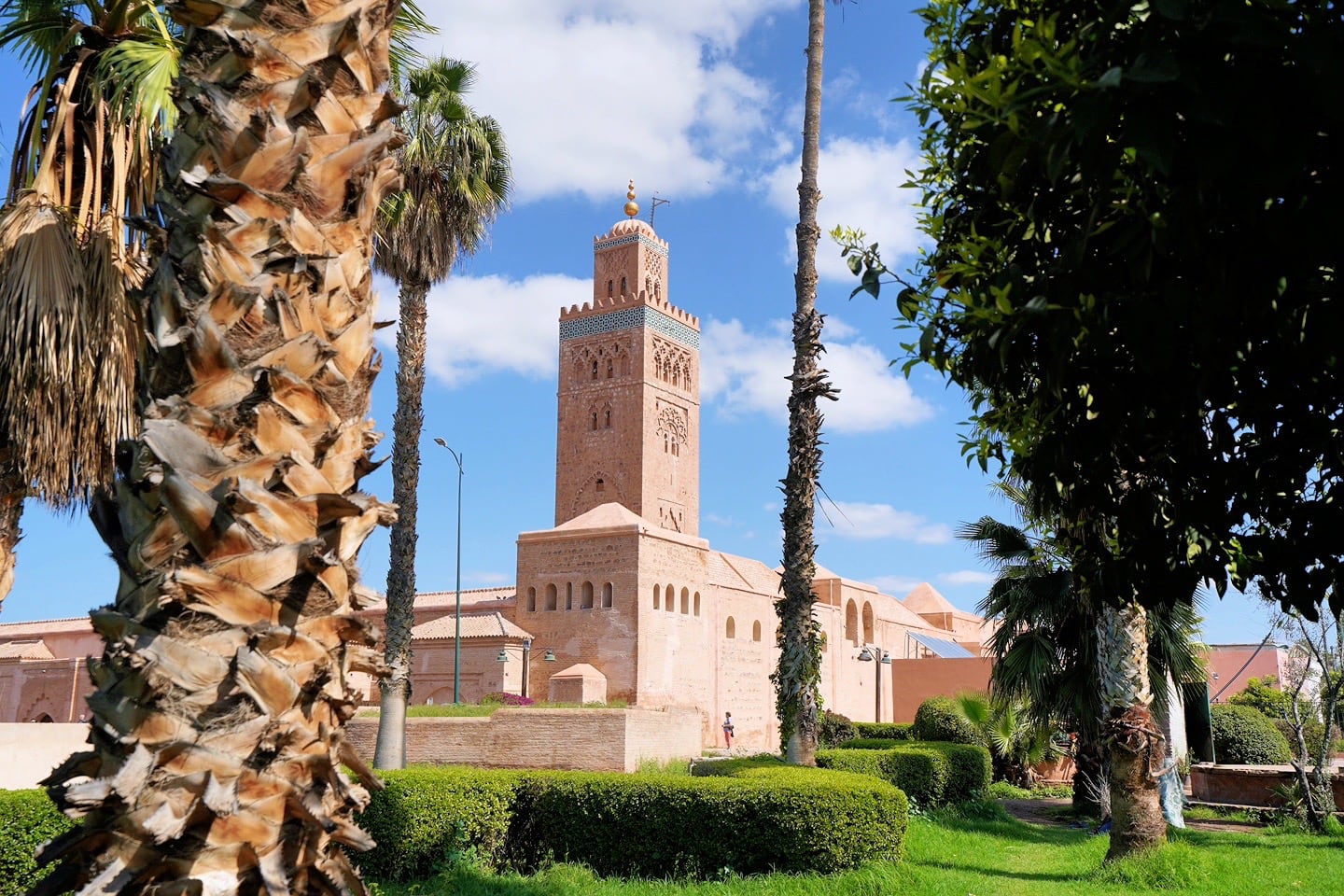
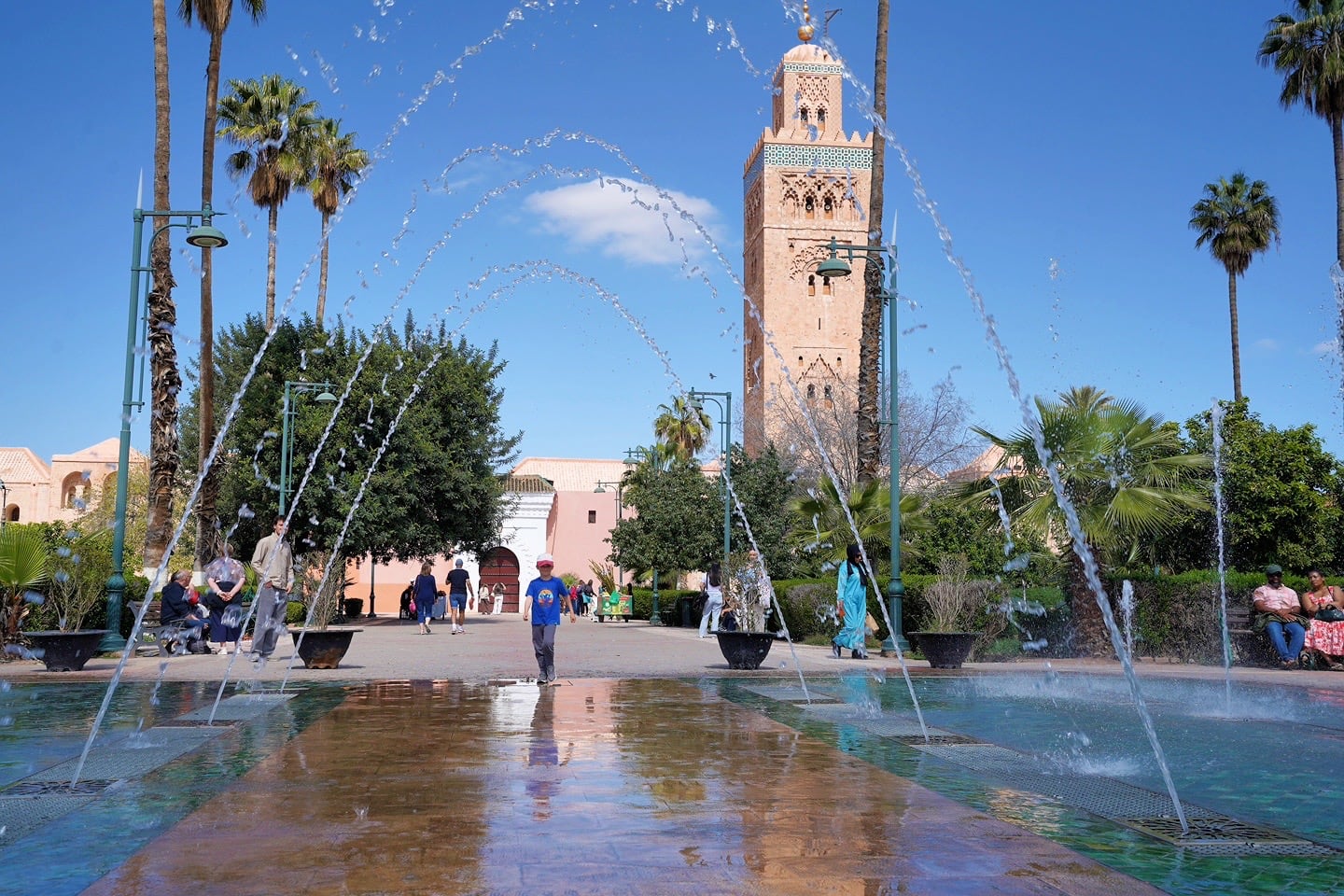
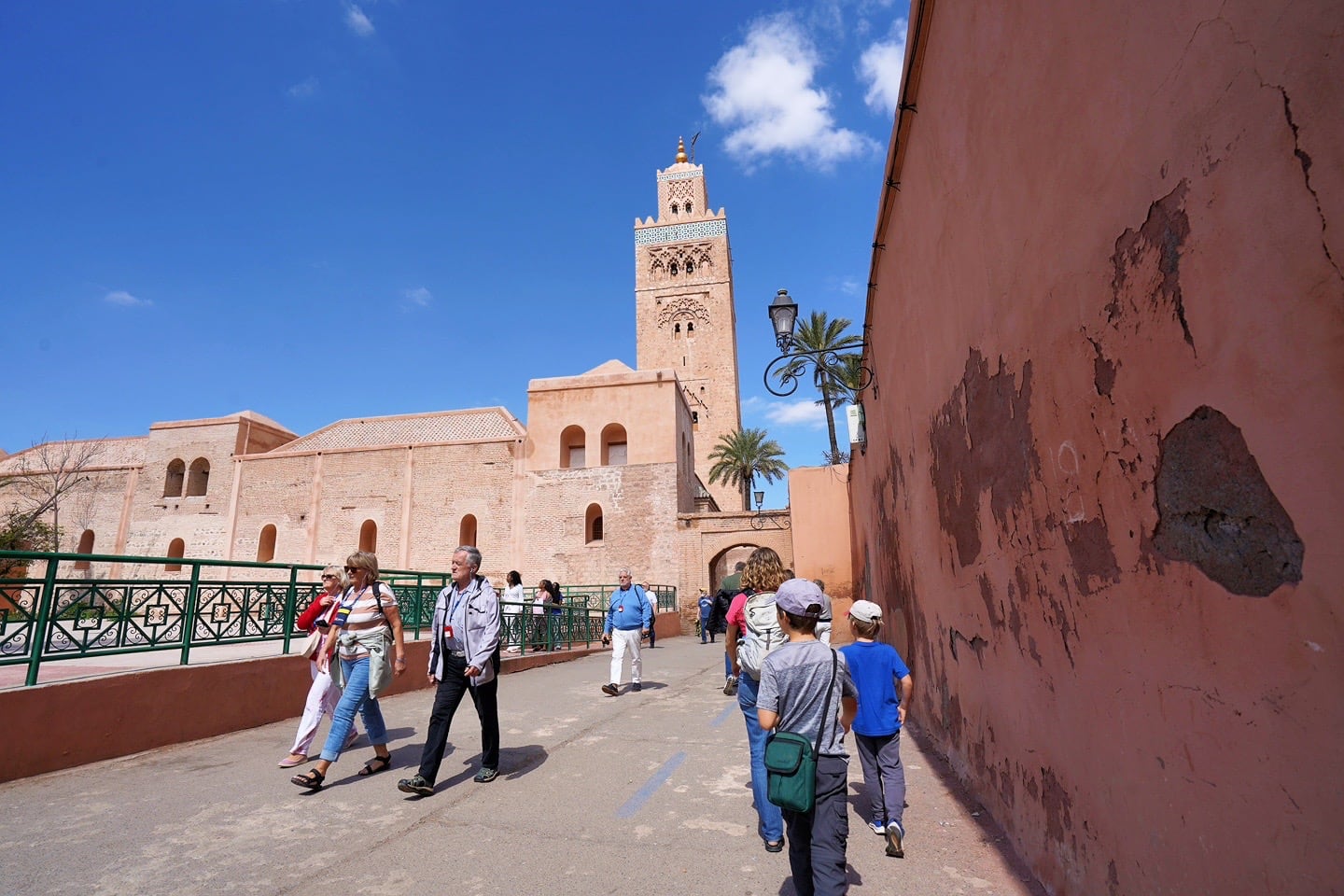
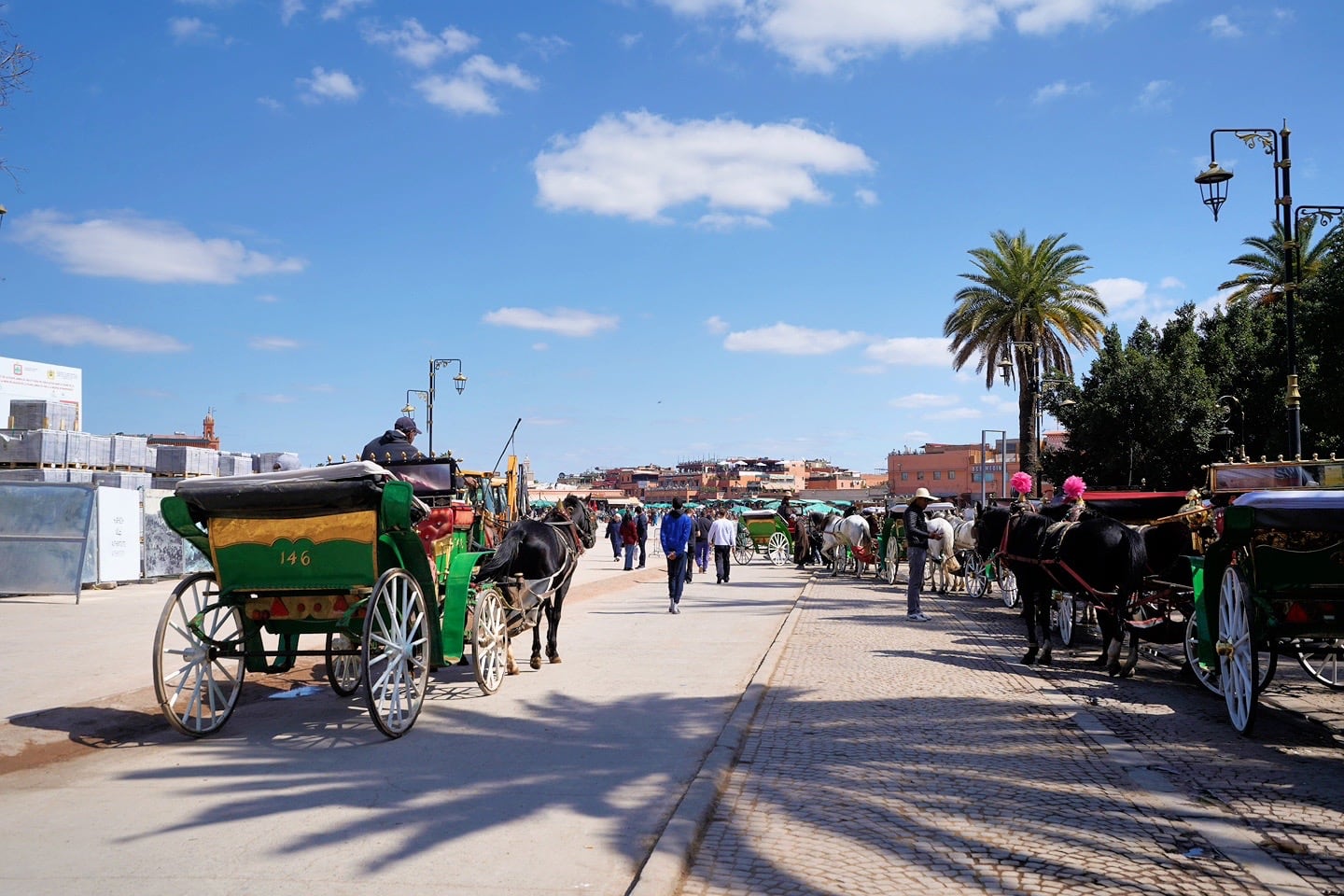
The sun today has brought a lot more people out, adding a very different feel to the Medina.
Snake charmers are a dime a dozen in Jemaa el-Fnaa—it’s what the main plaza is known for…and the aggressive Henna women.
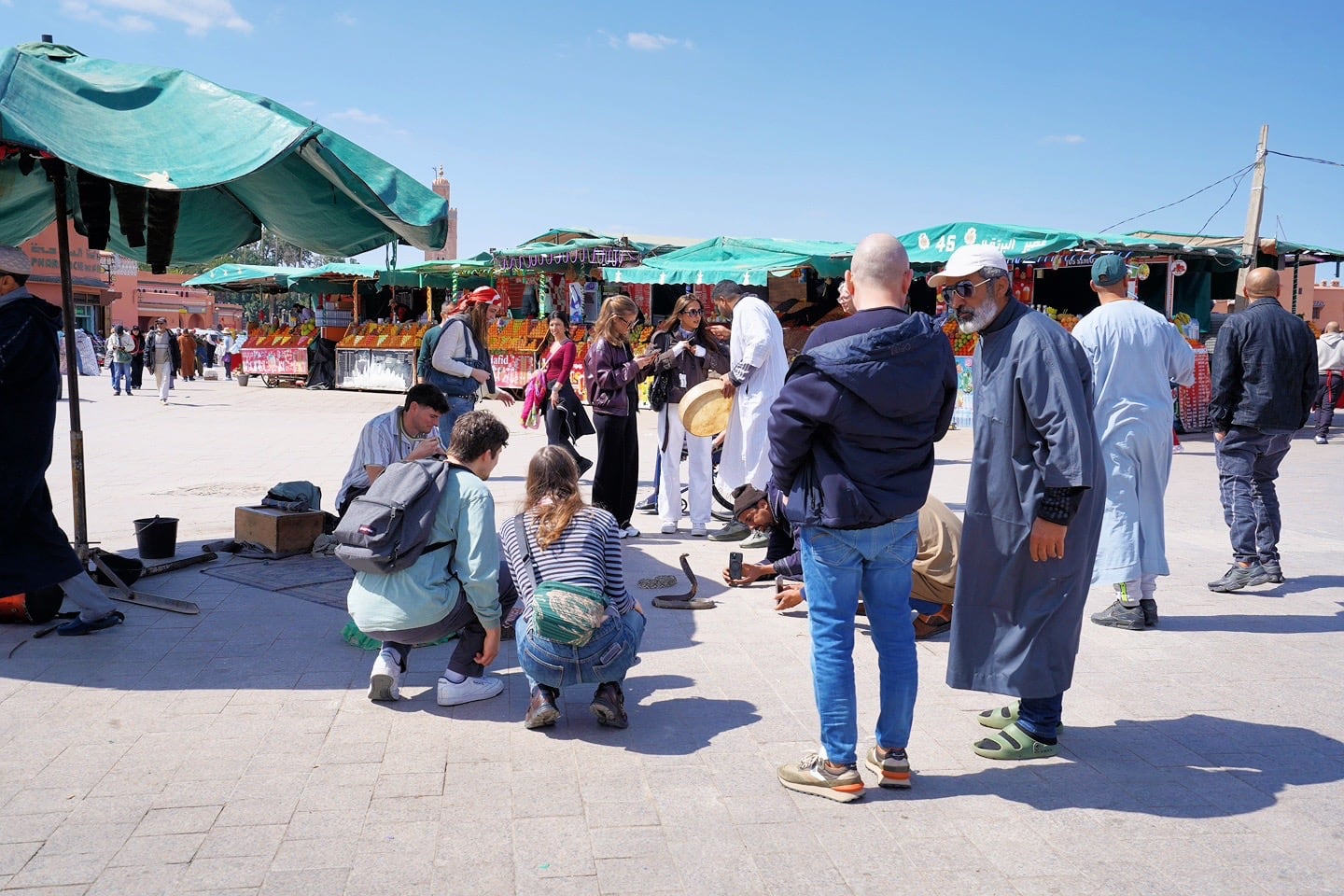
Shortly after I snapped this photo, a guy came running after me demanding money. I wasn’t so much trying to get a picture of the poor King Cobra as I was of the interaction between the tourists and touts and the absurdness of it all.
Eventually, the tout left me alone, but I suddenly felt constrained with my picture-taking.
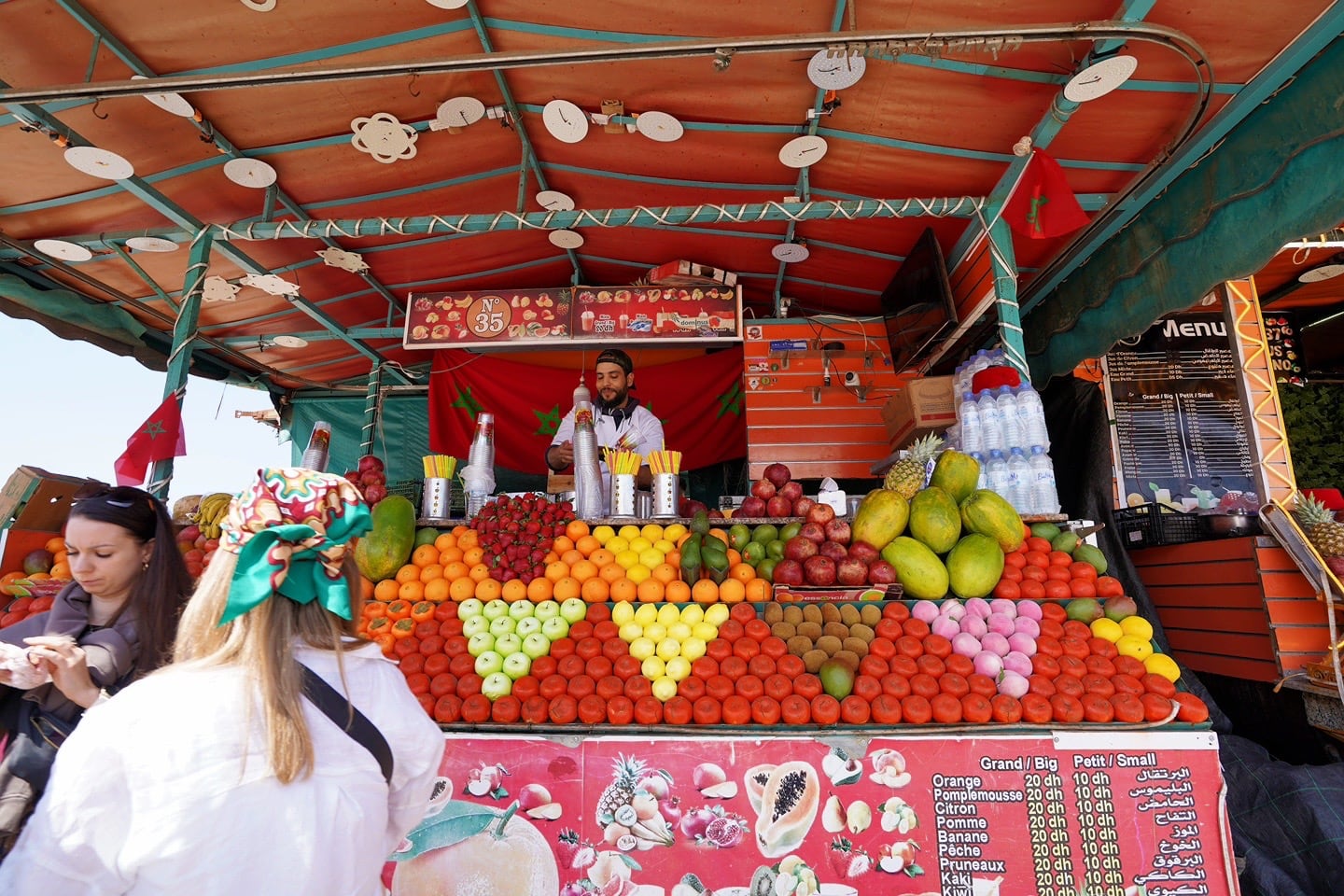
We did end up getting a juice at this stand, so I felt less self-conscious. Which, by the way, answers the question of whether things are different in the Medina during Ramadan.
Today, the Medina is full of foreign tourists eating and drinking freely in public, and locals are happy to cater to them.
It’s a strange dichotomy—two realities we’re constantly straddling as outsiders, never knowing if we’ve stepped too far into one or the other.
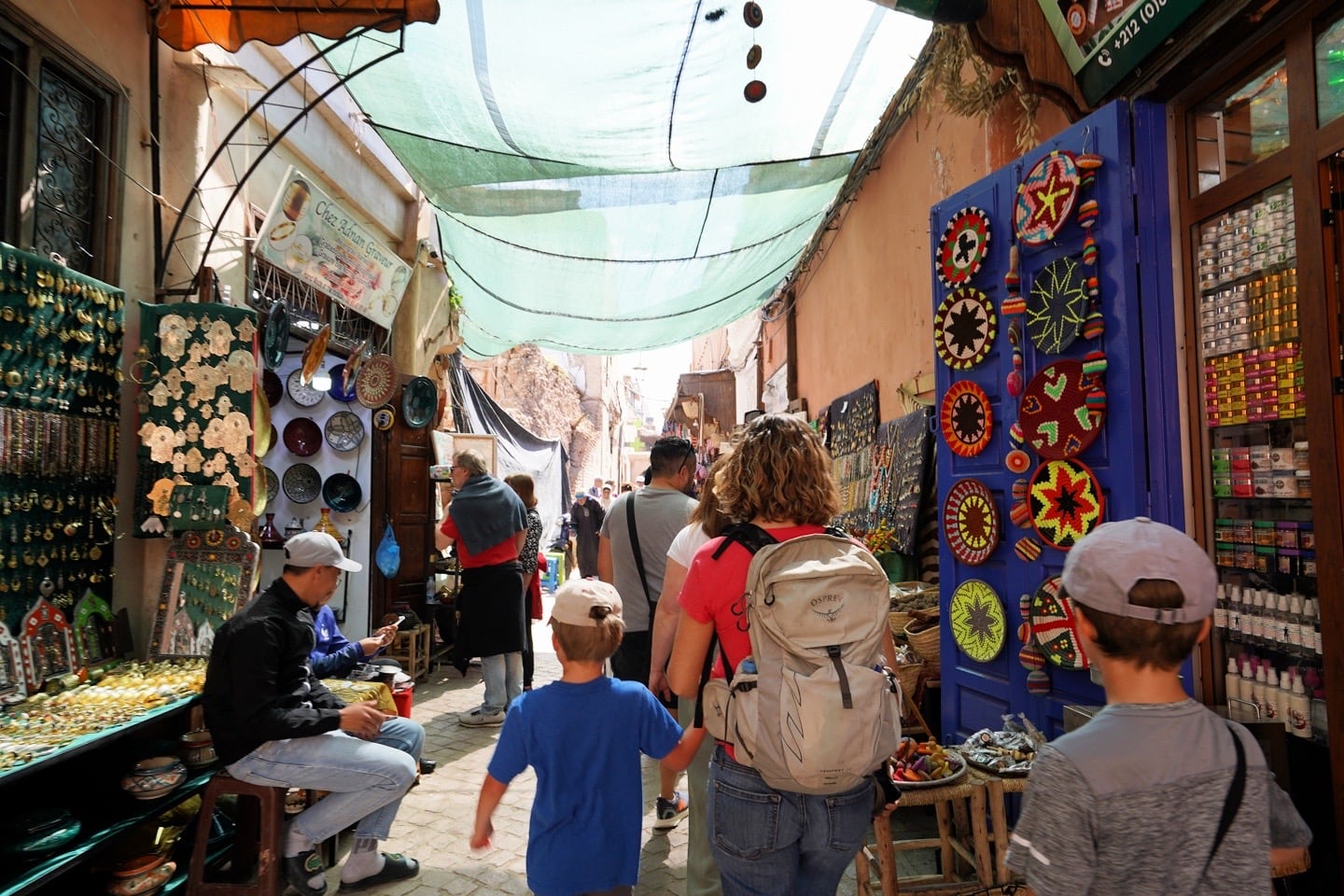
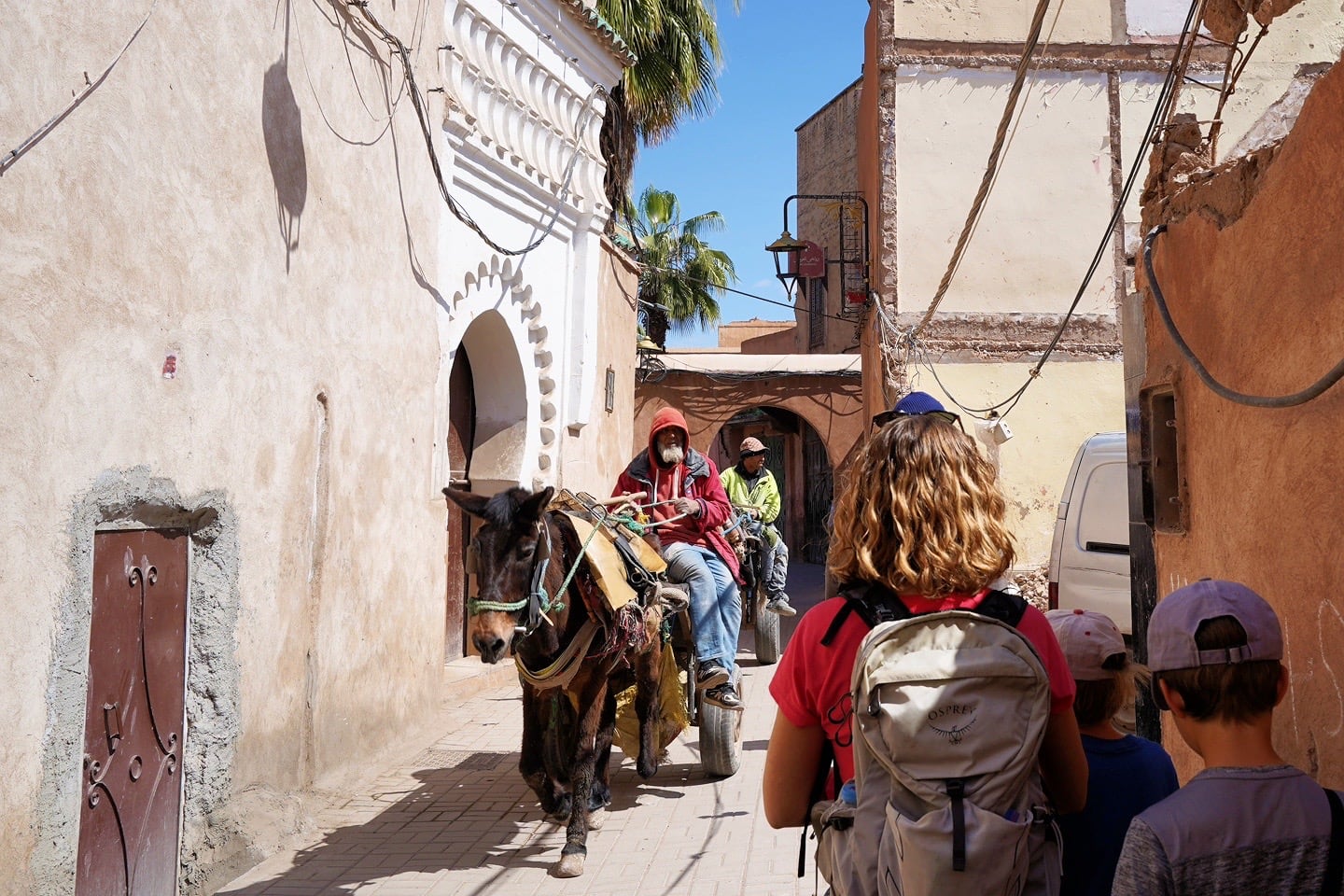
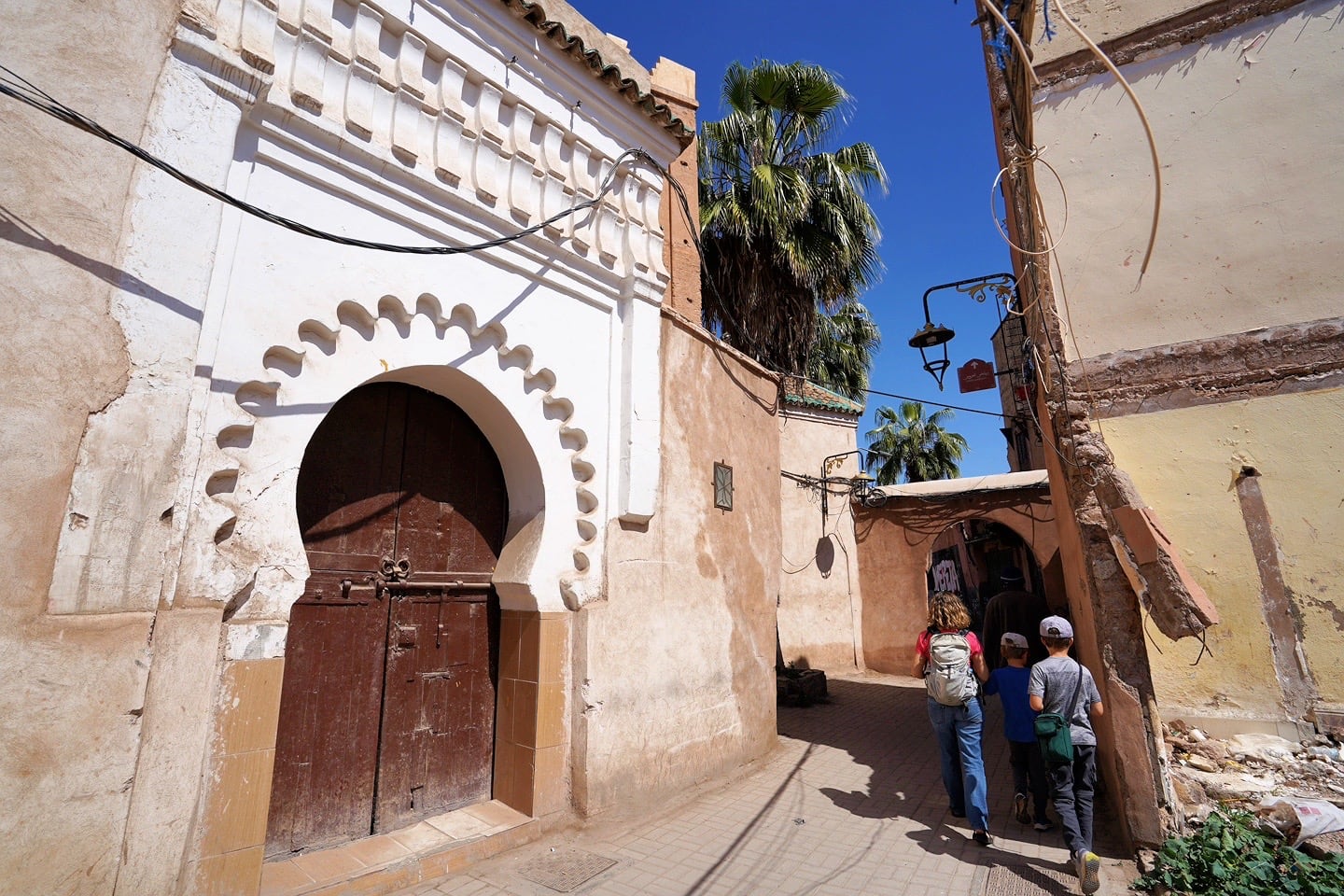
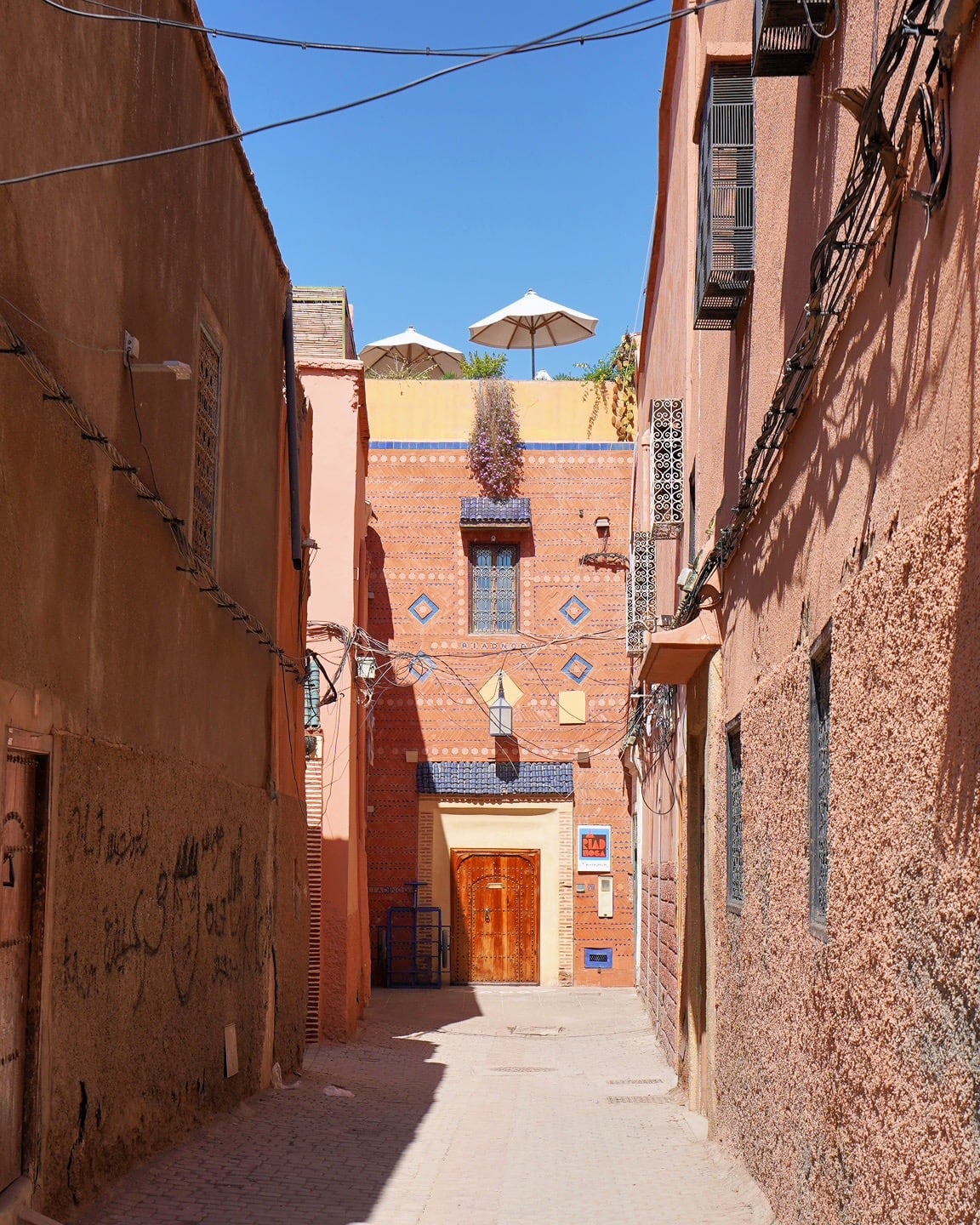
Reviewing my photos of the Medina after the fact, I’m struck by how positively they present this place. This wasn’t my intent (beyond trying to make the best pictures I could in the moment).
In all honesty, Lori and I haven’t been enjoying our time in the Marrakesh Medina. After Fez, it feels like a ruined version of its former self, a Disneyland of sorts set against a historic backdrop.
In Fez, there was tourism and kitsch, but it was concentrated along the main thoroughfare. Walk a few paces off of the main drag and you’re in a local neighborhood.
In the Marrakesh Medina, however, we didn’t see any evidence that regular, everyday Moroccans live here. What residences haven’t been turned into museums, cafes, or shops seem to have been converted into upmarket boutique guesthouses.
None of this surprised Lori and me. After all, Marrakesh is a world-famous destination and visitor numbers to Morocco on the whole has risen exponentially in recent years.
The one thing that surprised above all else, however, were the motorbikes. Not that they exist, but that they are allowed to operate in the way that they are—at high speeds through busy tourist areas. We’ve read a number of stories of visitors being hit by speeding motorbikes in the Marrakesh Medina, then being screamed at and blamed for not getting out of the way.
Also unlike Fez, it seems that Marrakesh has backed itself into a corner. The Medina has become so tourism-oriented that I doubt it could survive without tourism money (and there is a LOT of it that comes through here). And yet, speeding motorcyclists are the ones berating those who make their livelihood possible.
I have to imagine the shopkeepers don’t like the motorbikes either. There were several times in which Lori and I tried to stop to peruse the handicrafts, food, or nicknacks and were forced to carry on because there was another motorbike coming through. As a direct result of this, we bought nothing in the Medina. Nothing.
Here is one of the few [more accurate] photos I snapped with my phone at one point (it’s very hard to get a shot of the mayhem when you’re spending most of your time making sure your kids don’t get run over by motorbikes zipping within inches of their faces. It still doesn’t quite capture the scene.
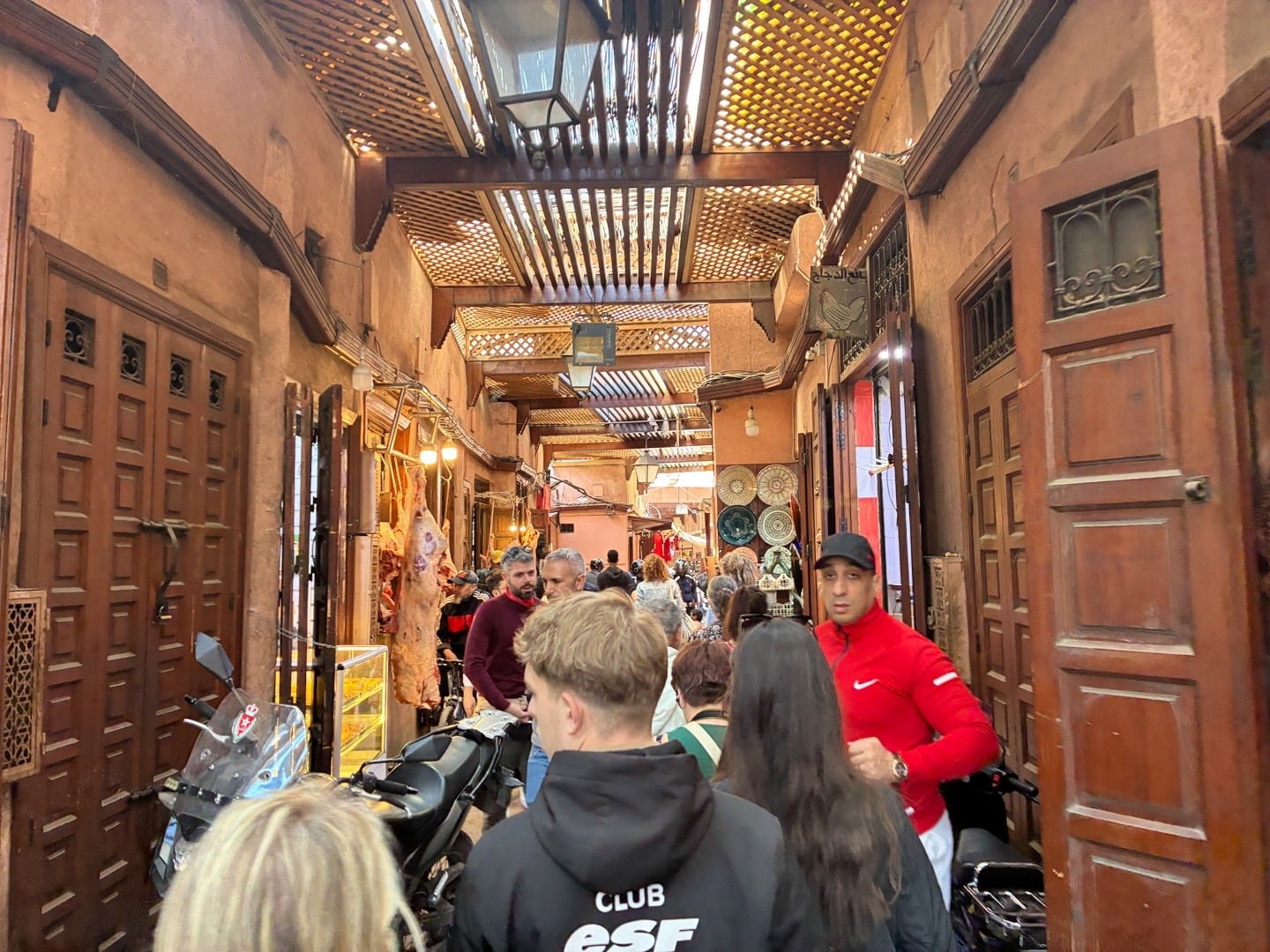
Interestly, Fez isn’t like this. At all. There are strictly enforced restrictions on motorbikes in the Fez Medina. Local officials have cited public safety concerns for their implementation. Go figure.
If you want a way more satisfying, authentic, and enriching Medina experience, you’re better off skipping Marrakesh and visiting Fez instead.
With all that said, I don’t want to end this post on a negative note. We’re not fans of the Marrakesh Medina, but the rest of Marrakesh has treated us well.
The New City has many redeeming qualities in its own right and has been a nice change of pace after a month of small town life.
We’ve got a longer stay in Marrakesh planned for late March. We’ll see if round two changes any of our opinions.
But tomorrow, it’s over the snowy mountains to the Drâa Valley, and eventually, the Sahara!