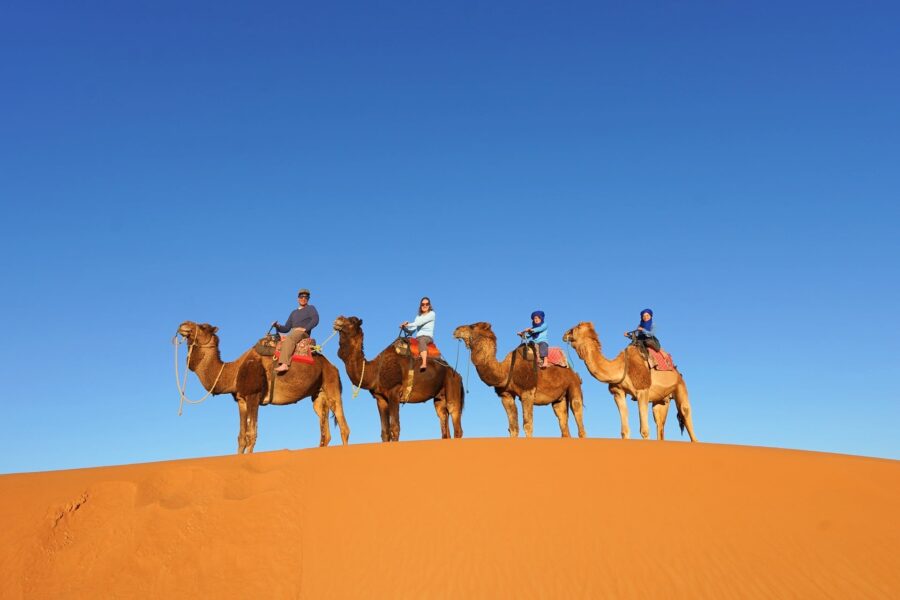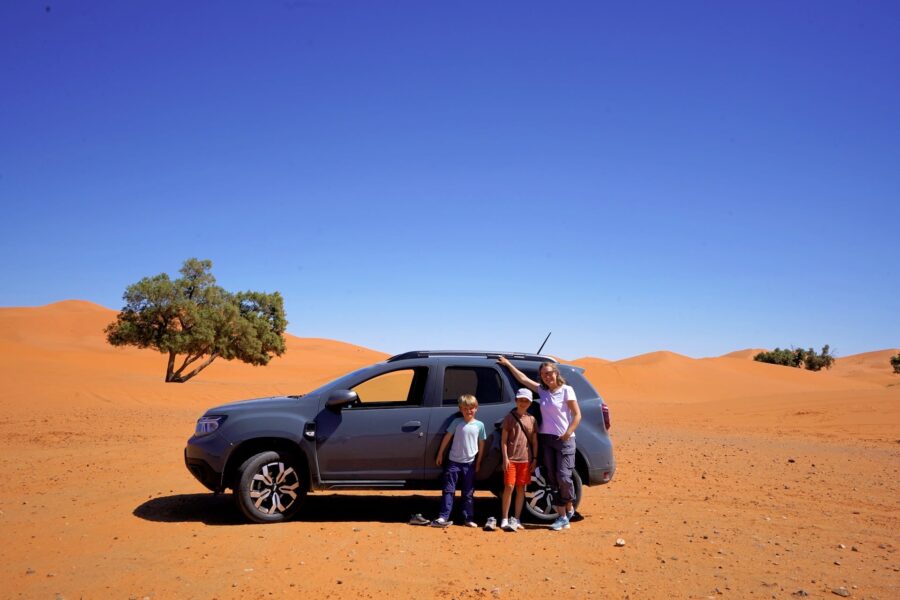
After our Merzouga city accommodations didn’t pan out as expected, we suddenly found ourselves on the hunt for a place to stay for the night after our Sahara Desert camp adventure.
There just so happened to be one very intriguing prospect still sitting on my list that we didn’t get to utilize. But it would mean three fairly long, back-to-back driving days to get back to Marrakesh rather than just two.
Our Euro-African Journey (So Far...)
Plus, there weren’t a lot of online reviews, so it would be a bit of a gamble.
I ultimately decided it was worth it, and made the booking. In the end, it was absolutely the right decision.
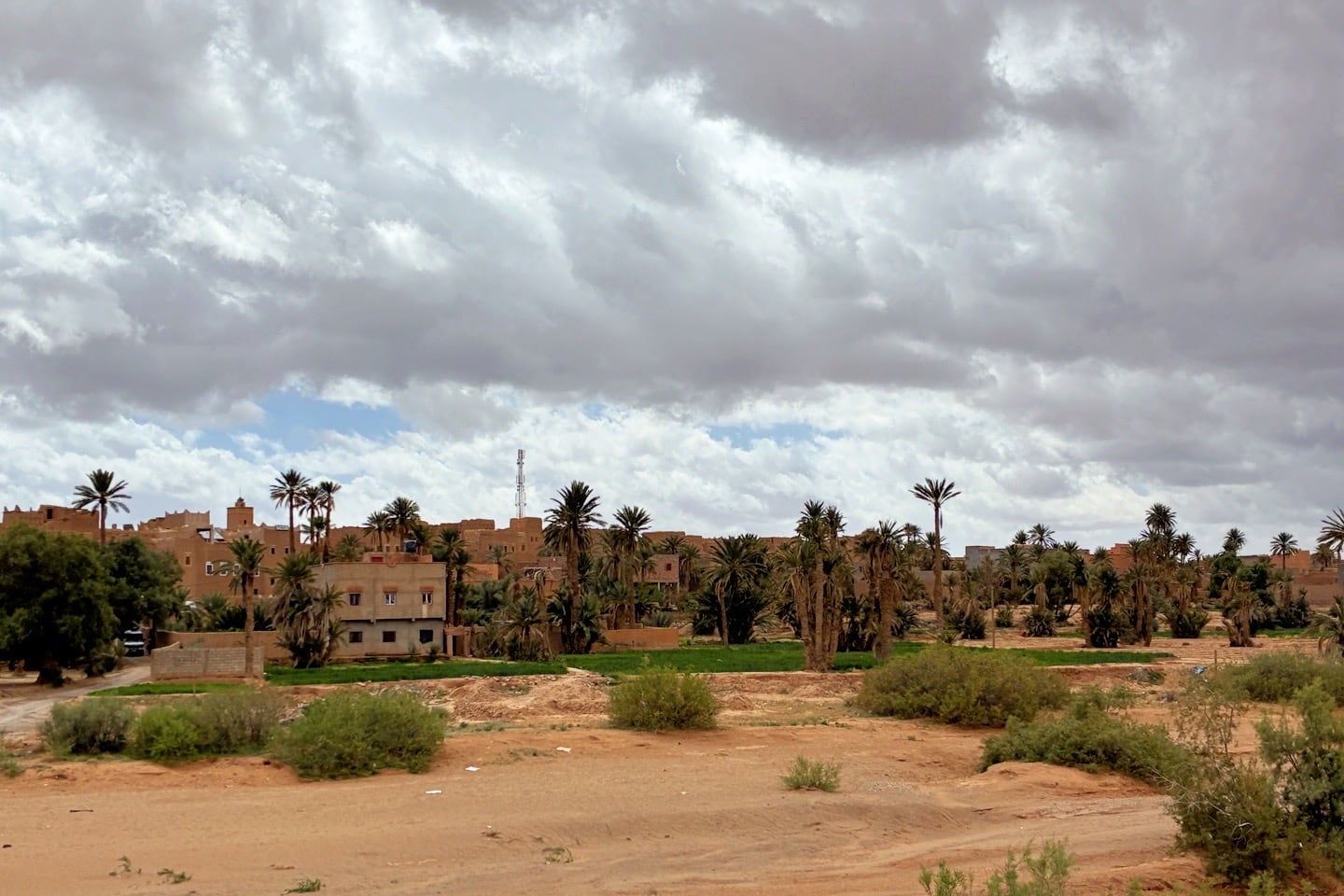
Ksar El-Khorbat has a fairly good website for what it is and where it’s located. Yet, I still found it difficult to get a sense of what the accommodation would be like before we arrived.
I knew it was a restored and preserved Moroccan Ksar (rammed-earth fortified village), but didn’t know how large it was or whether it was still inhabited. Perhaps the entire Ksar was a guesthouse?
Turns out, the Ksar is one of the largest we’ve seen (certainly the largest not in ruins), measuring around the length of two soccer fields long (206 meters or 675 feet) by 83 meters (272 feet) wide.
Today, it’s still inhabited by a whopping 38 families and is celebrated globally as a living example of successful community-led heritage preservation.
Here’s a screen grab from Google Earth:
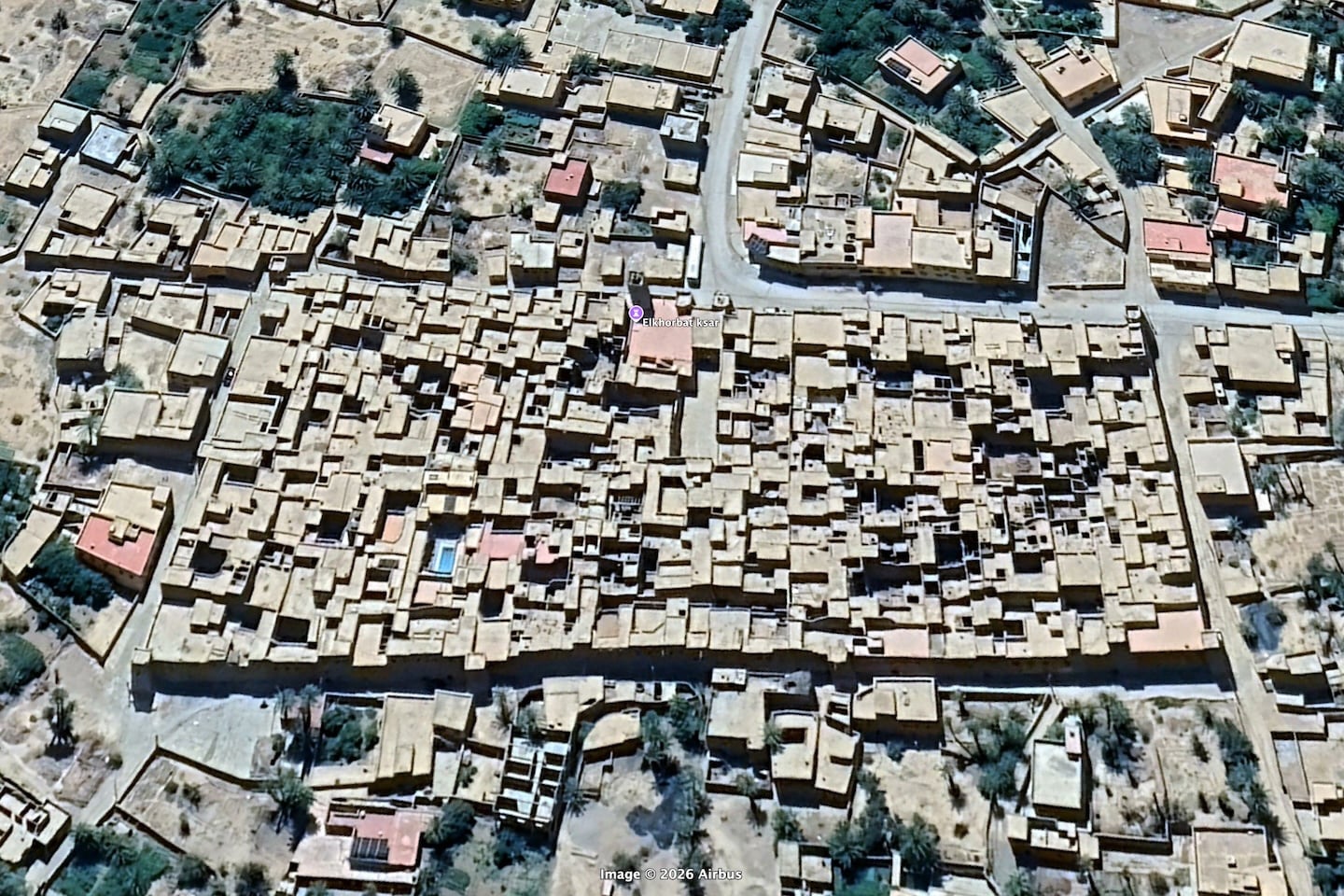
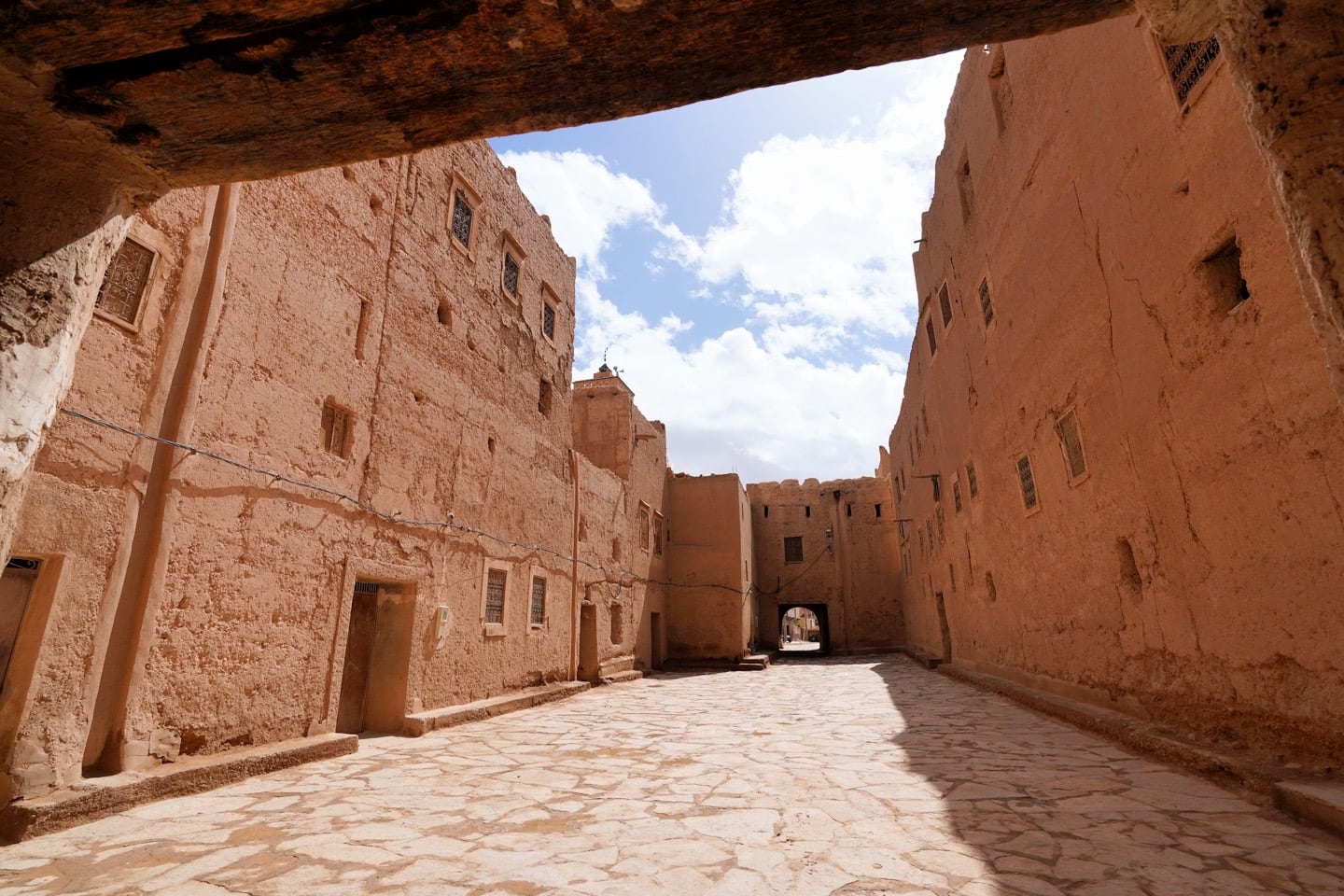
The roughly square-shaped nucleus of the complex dates to the 16th century, but was expanded significantly in the 19th century to what we see today.
Over 95% of the complex is constructed of clay, straw, sand, and gravel, with some concrete reinforcements added during the 2009 restoration.
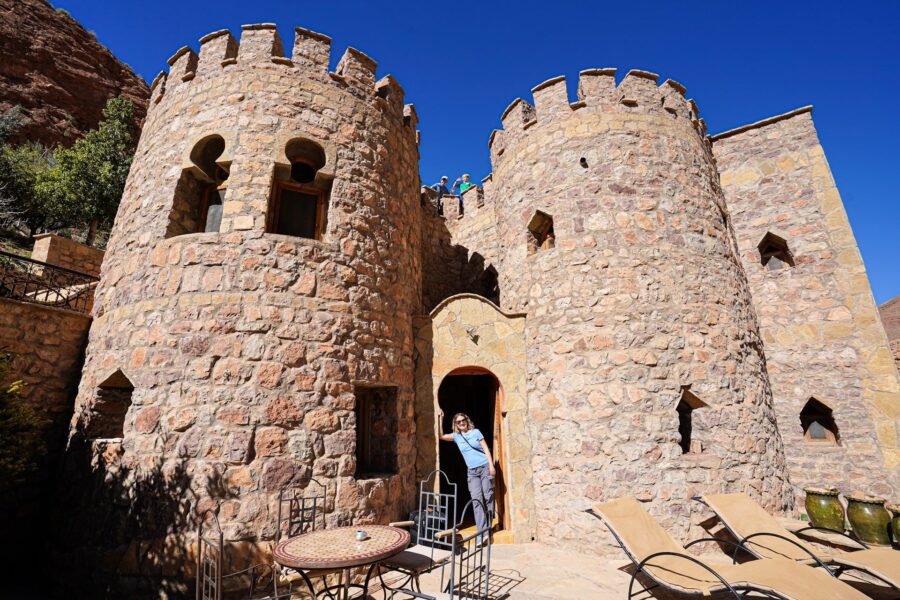
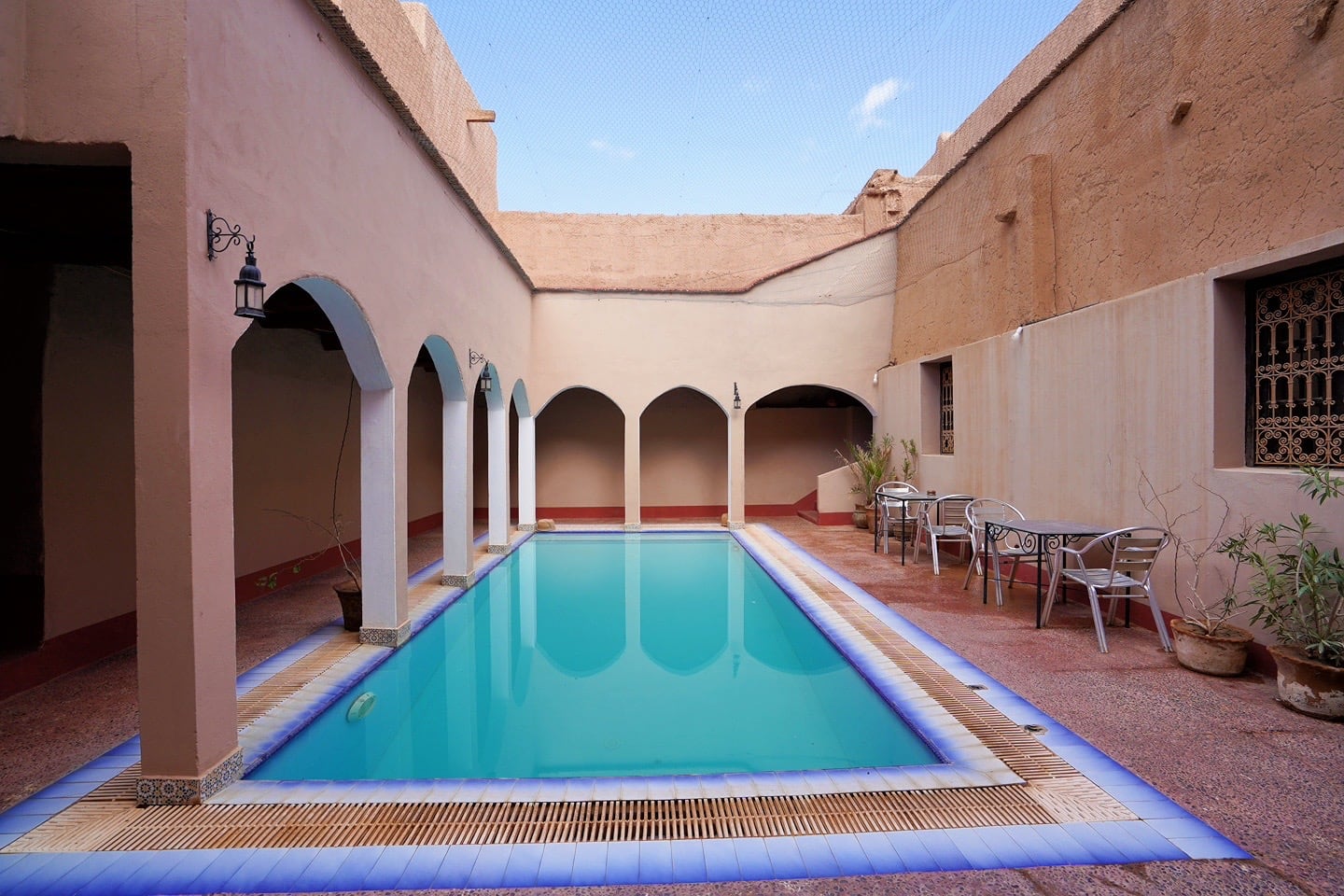
El Khorbat Guesthouse comprises a small portion of the Ksar, centered around the swimming pool in the aerial view, above.
The guesthouse is a pioneering eco-tourism initiative founded in 2002. More than 20 local families are involved in operating the hotel, restaurant, and museum.
Proceeds fund structure upkeep and improvements, as well as social projects like the local kindergarten and a women’s craft workshop, where local women are paid a fair wage to weave rugs and embroider traditional shawls.
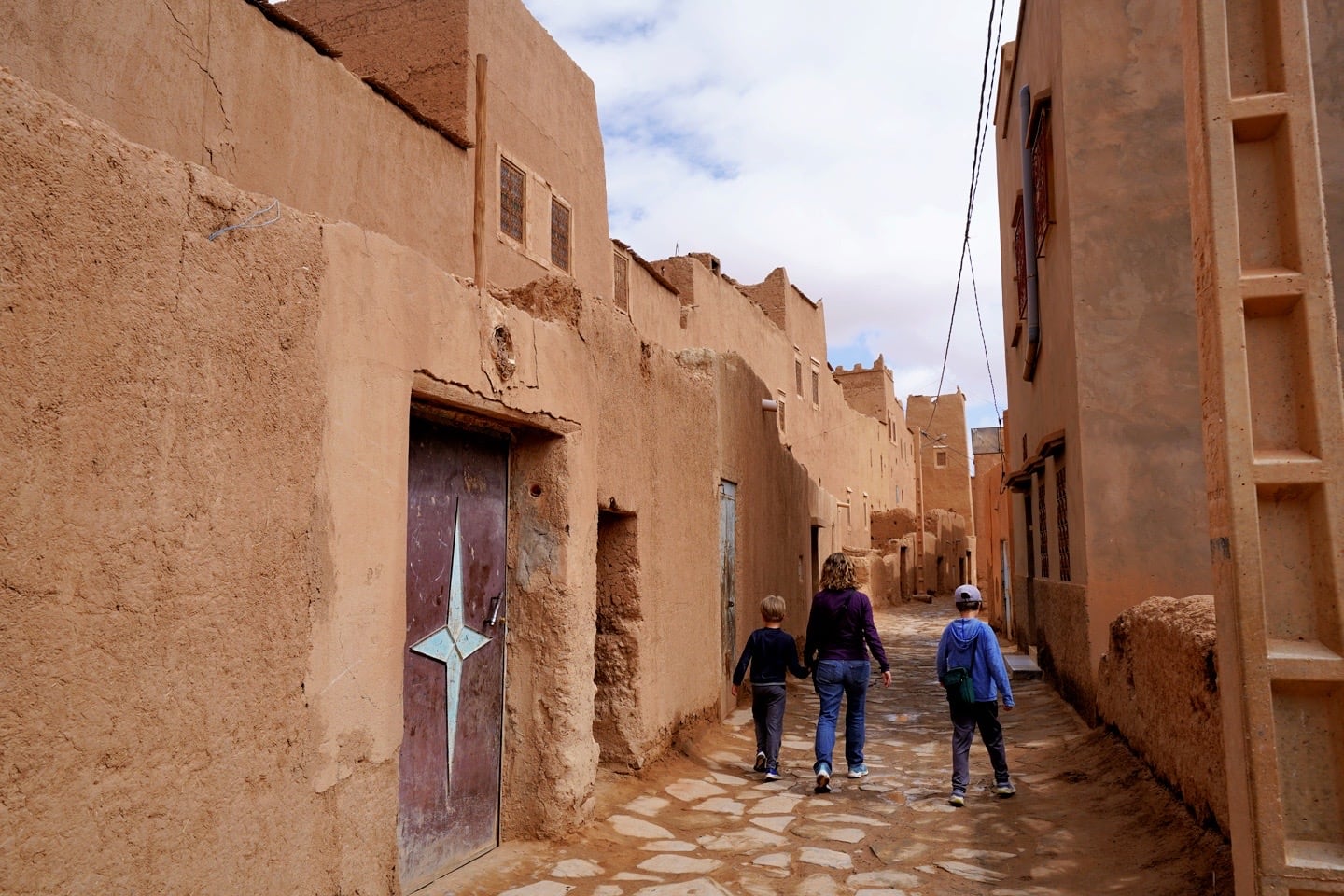
Walking on the outside perimeter of the city walls.
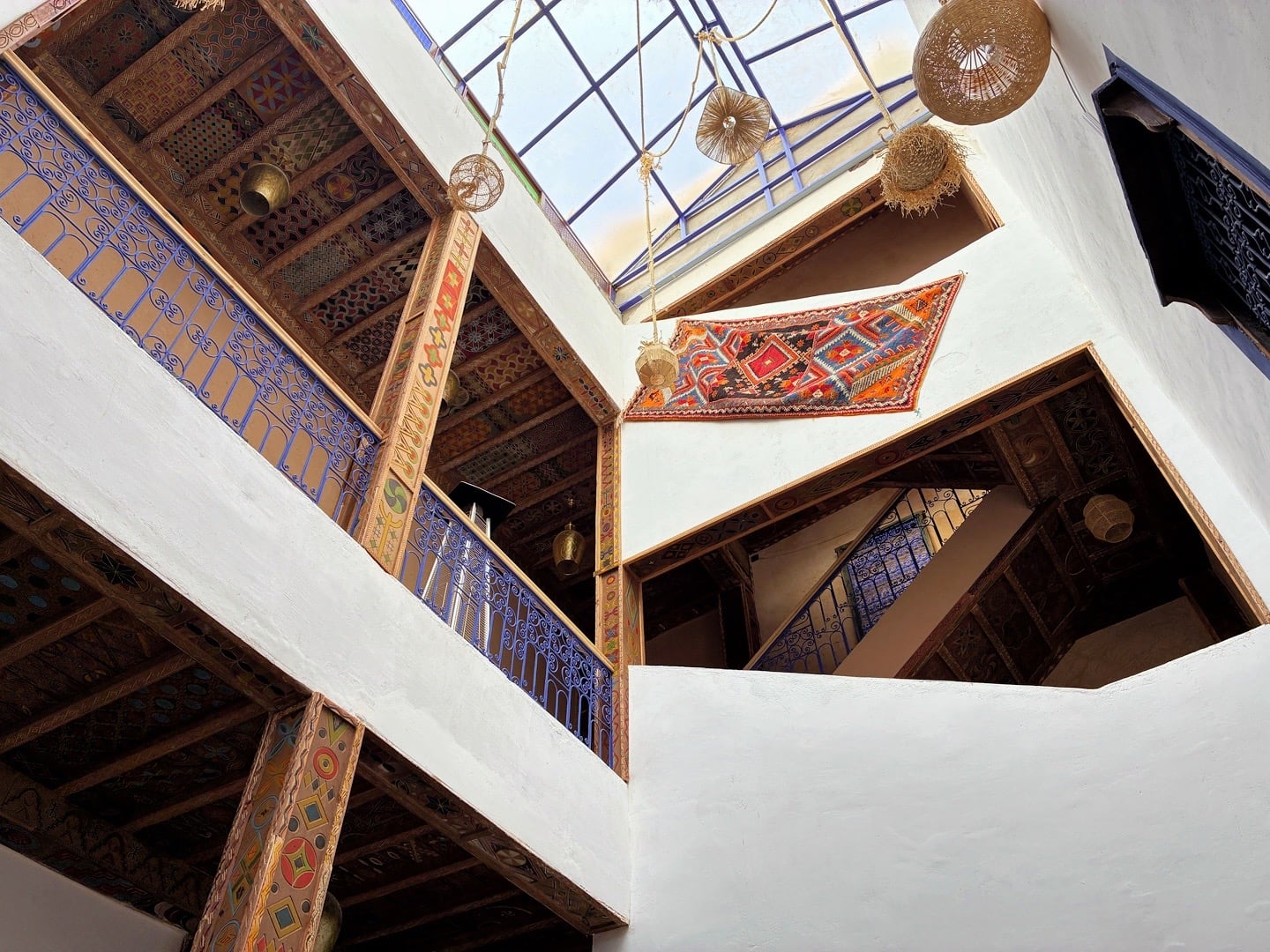
This restored Riad is the central common space for the guesthouse. There are rooms in the Riad building. Our two-room family room was located in the adjacent building within the Ksar.
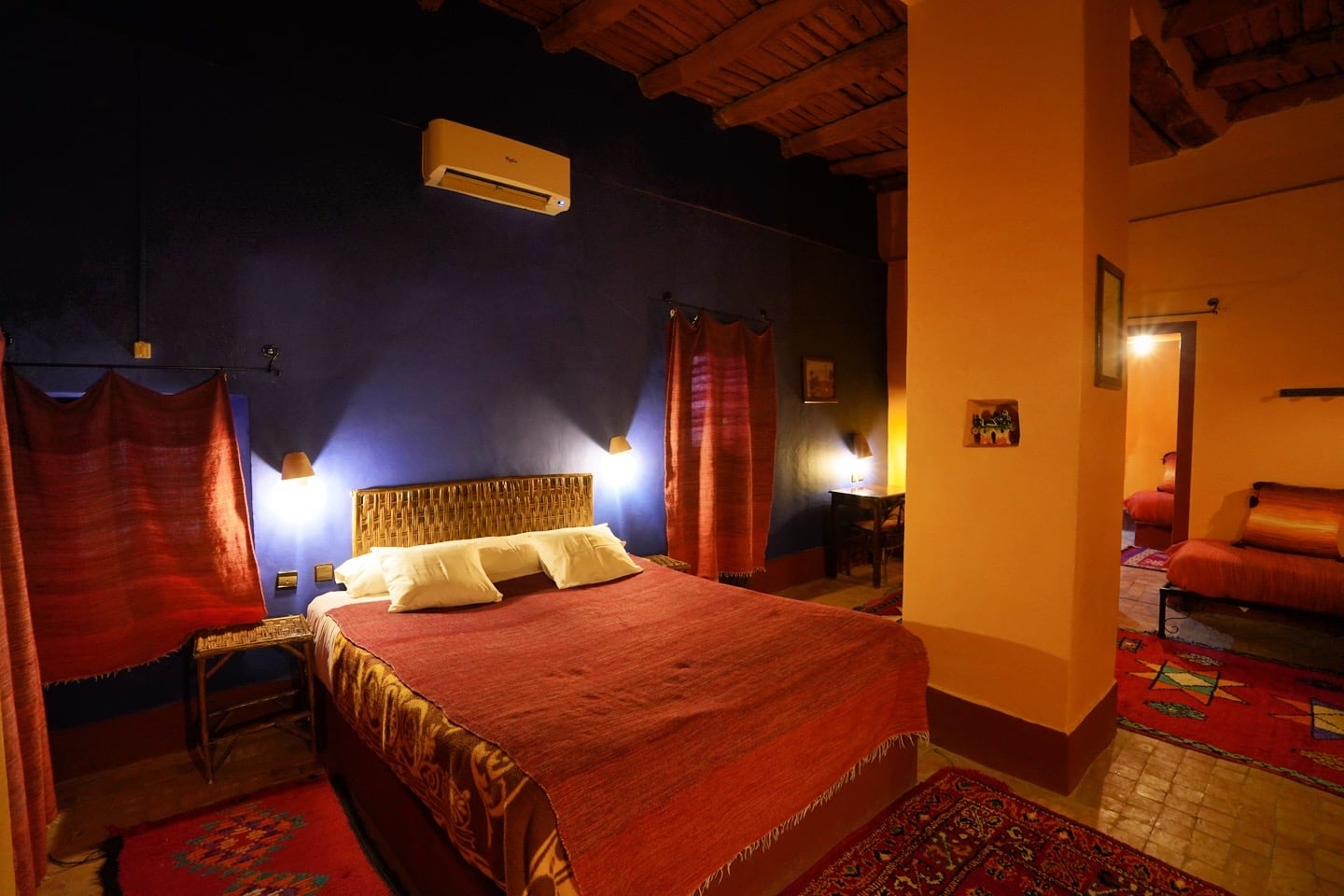
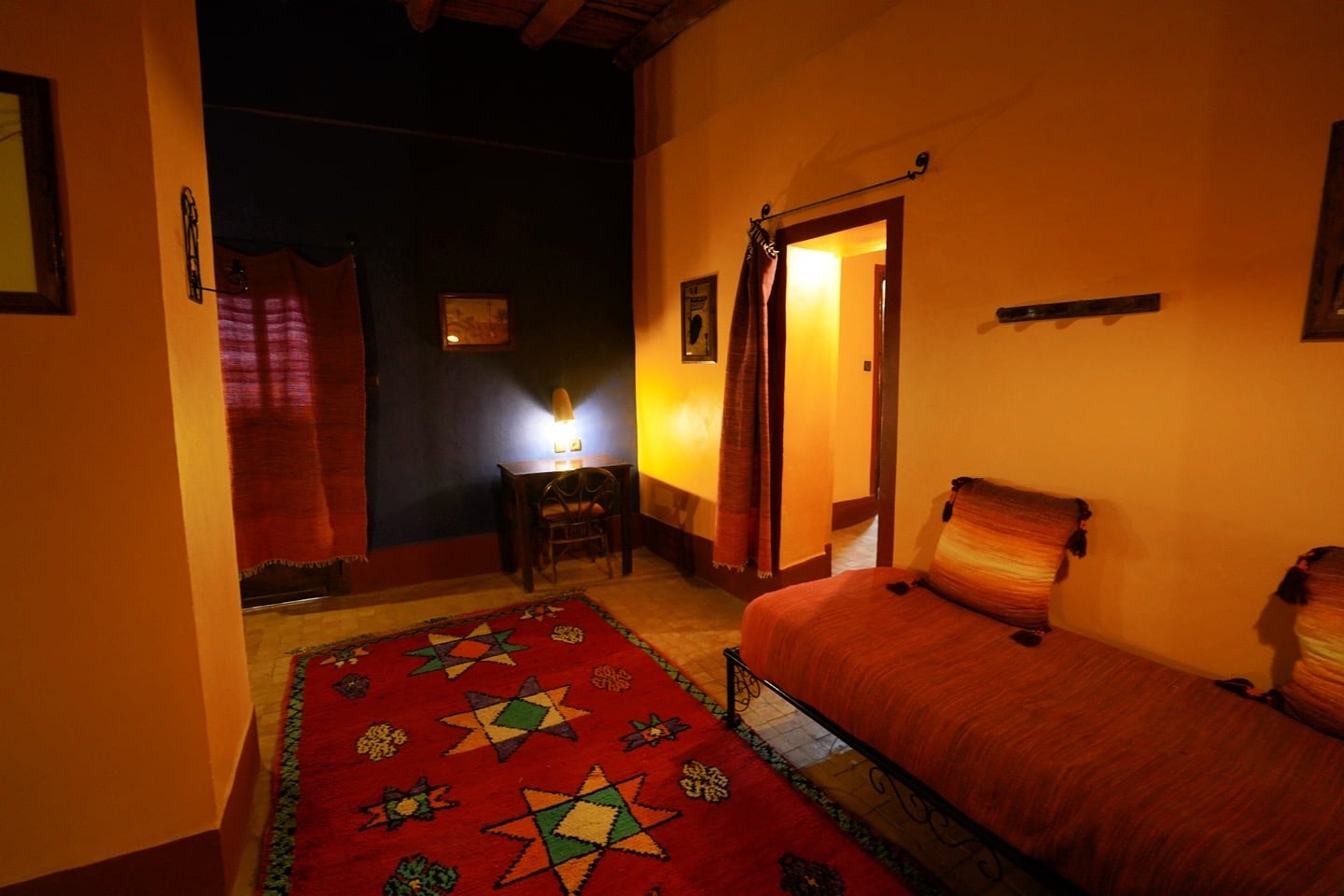
I’m not sure what I was expecting, but the accommodations were much nicer than I thought they’d be for a traditional guesthouse like this.
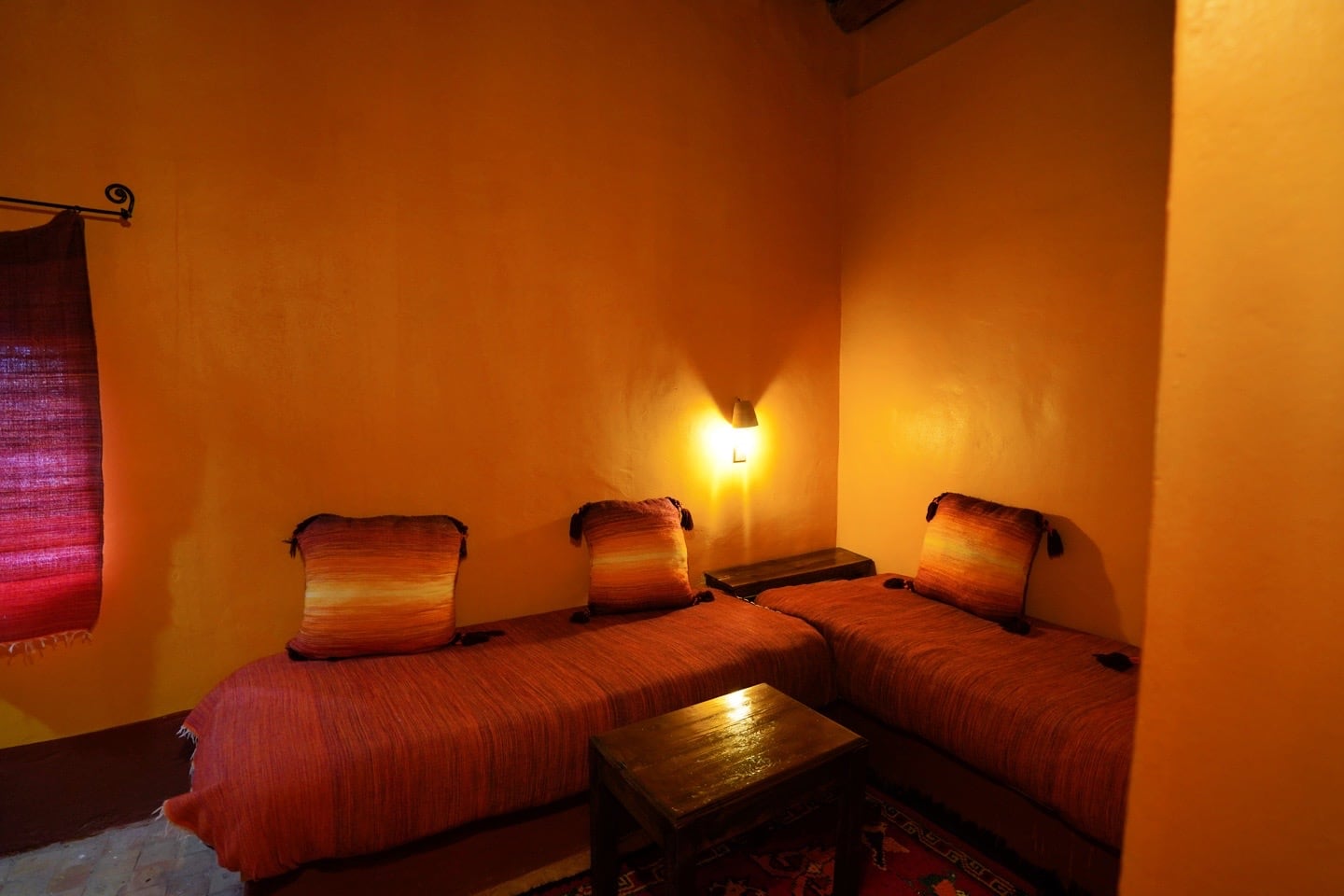
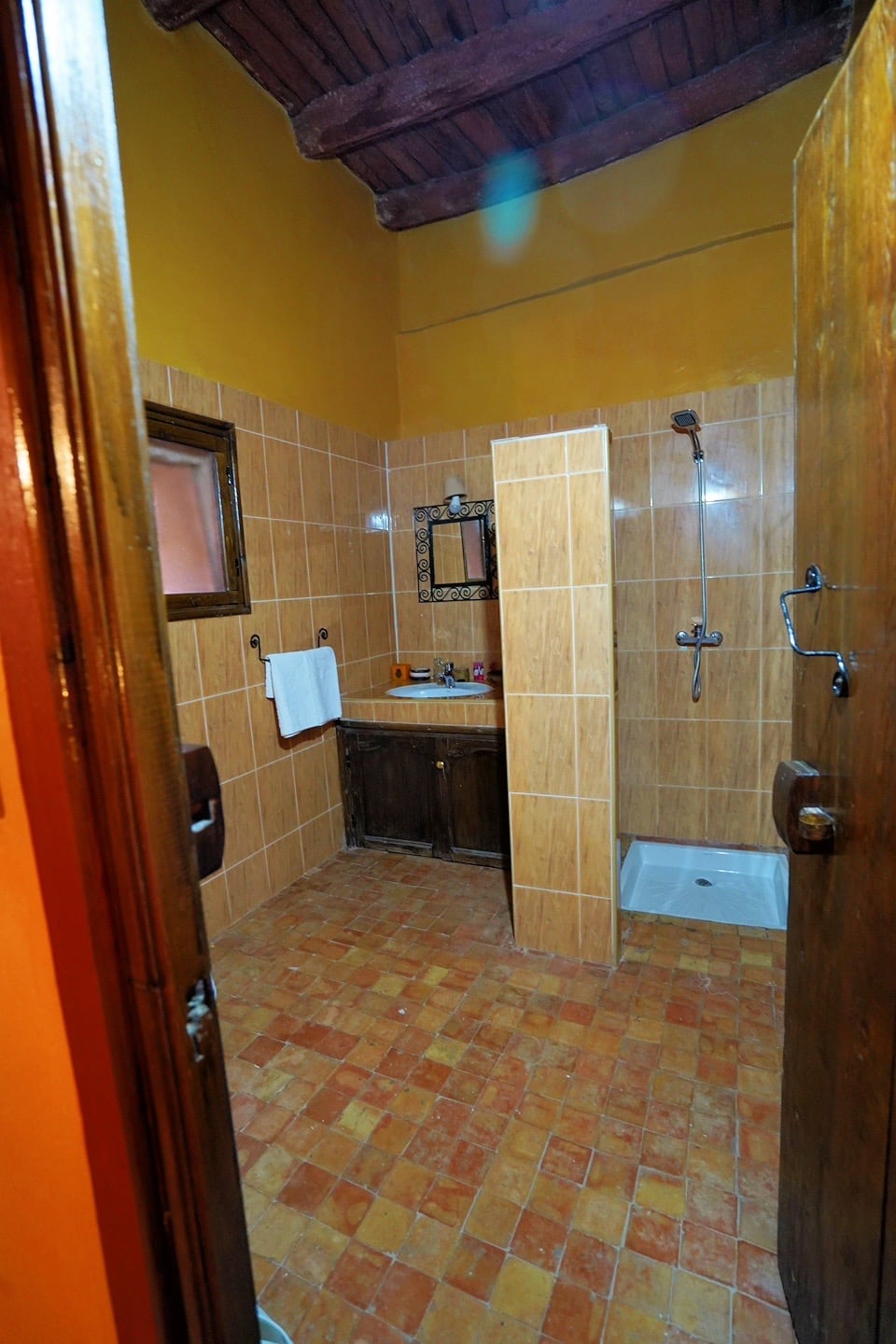
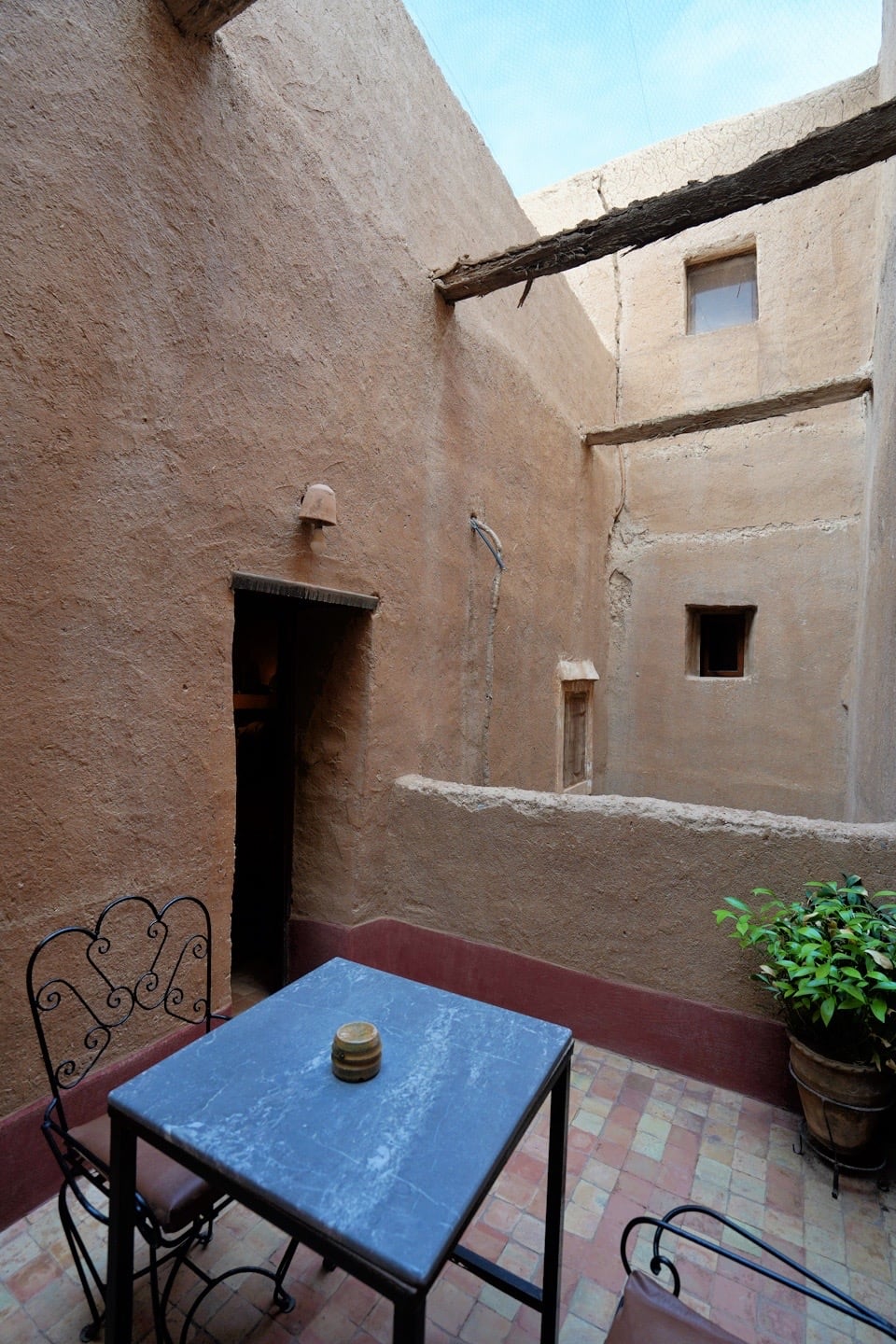
We even had a private outdoor patio space which came as a surprise.
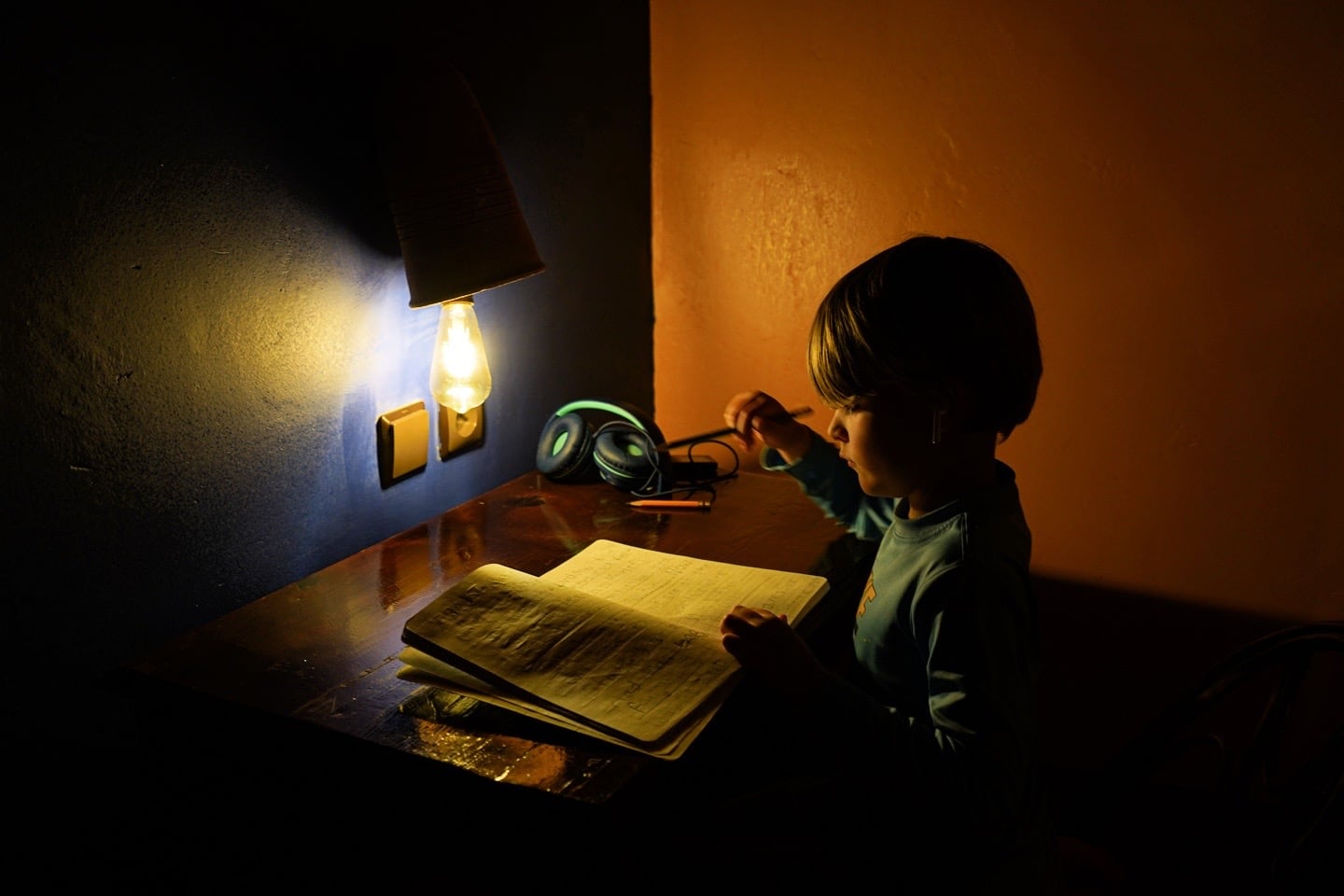
Journal time.
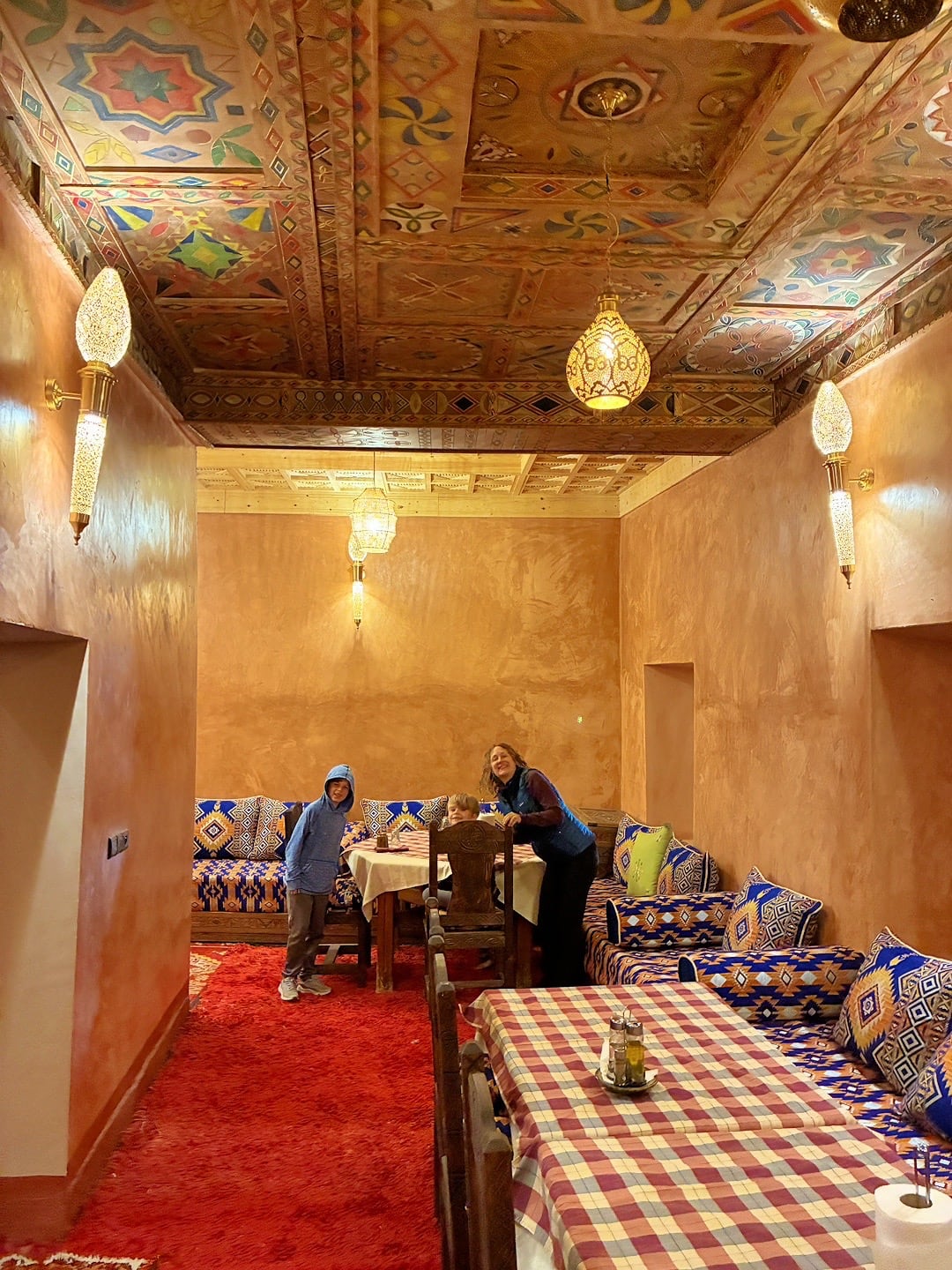
Dinner time!
We may have been the only ones staying here tonight. We were certainly the only ones at dinner.
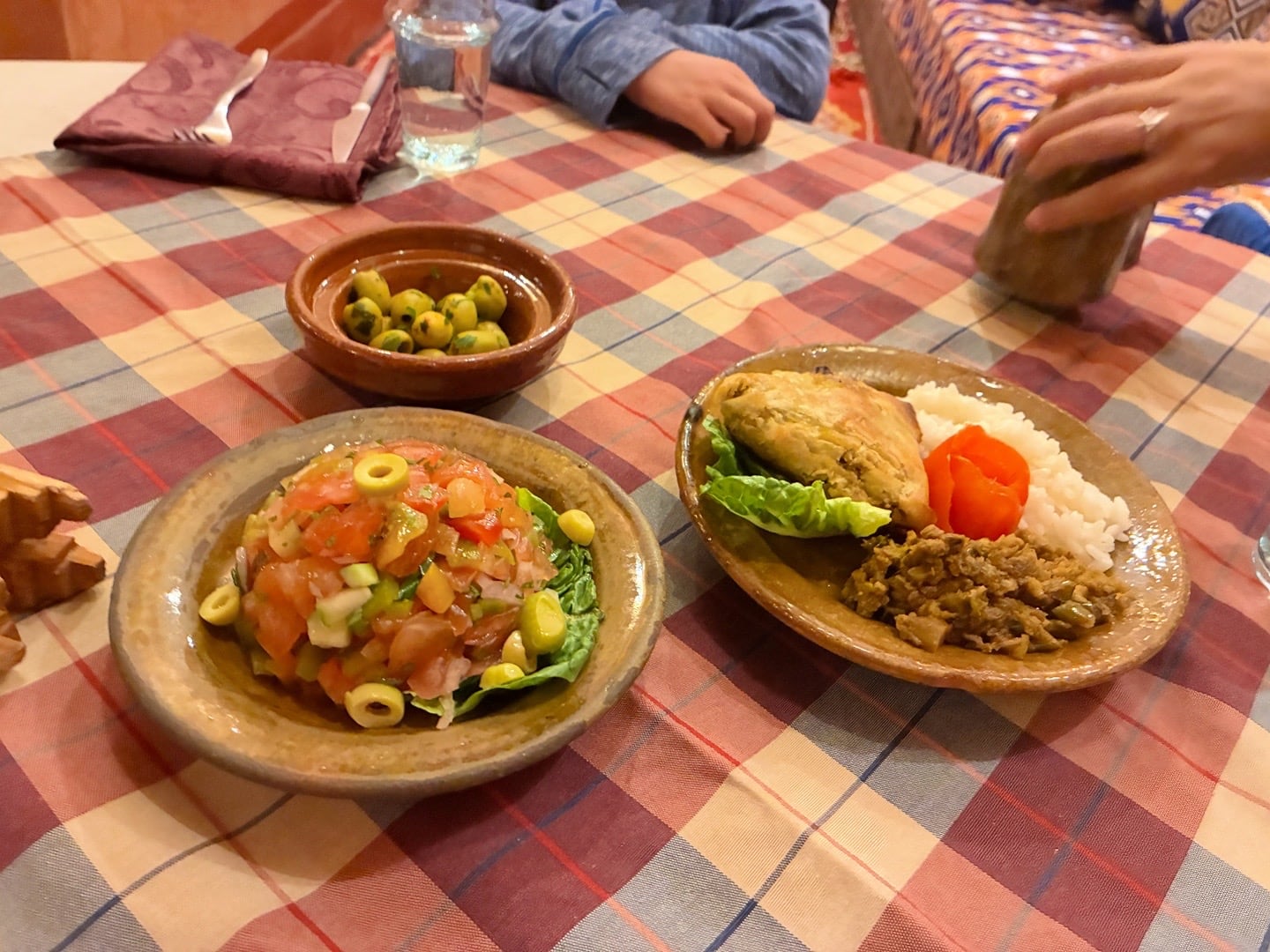
Another delicious traditional Moroccan dinner. We thought we’d be getting tired of these meals by now, but not quite.
We were too tired to do much exploring around the guesthouse and Ksar after we arrived, but set out to explore as much as we could after breakfast the next morning.
It took us a while just to see the public spaces in the guesthouse. It’s quite large.
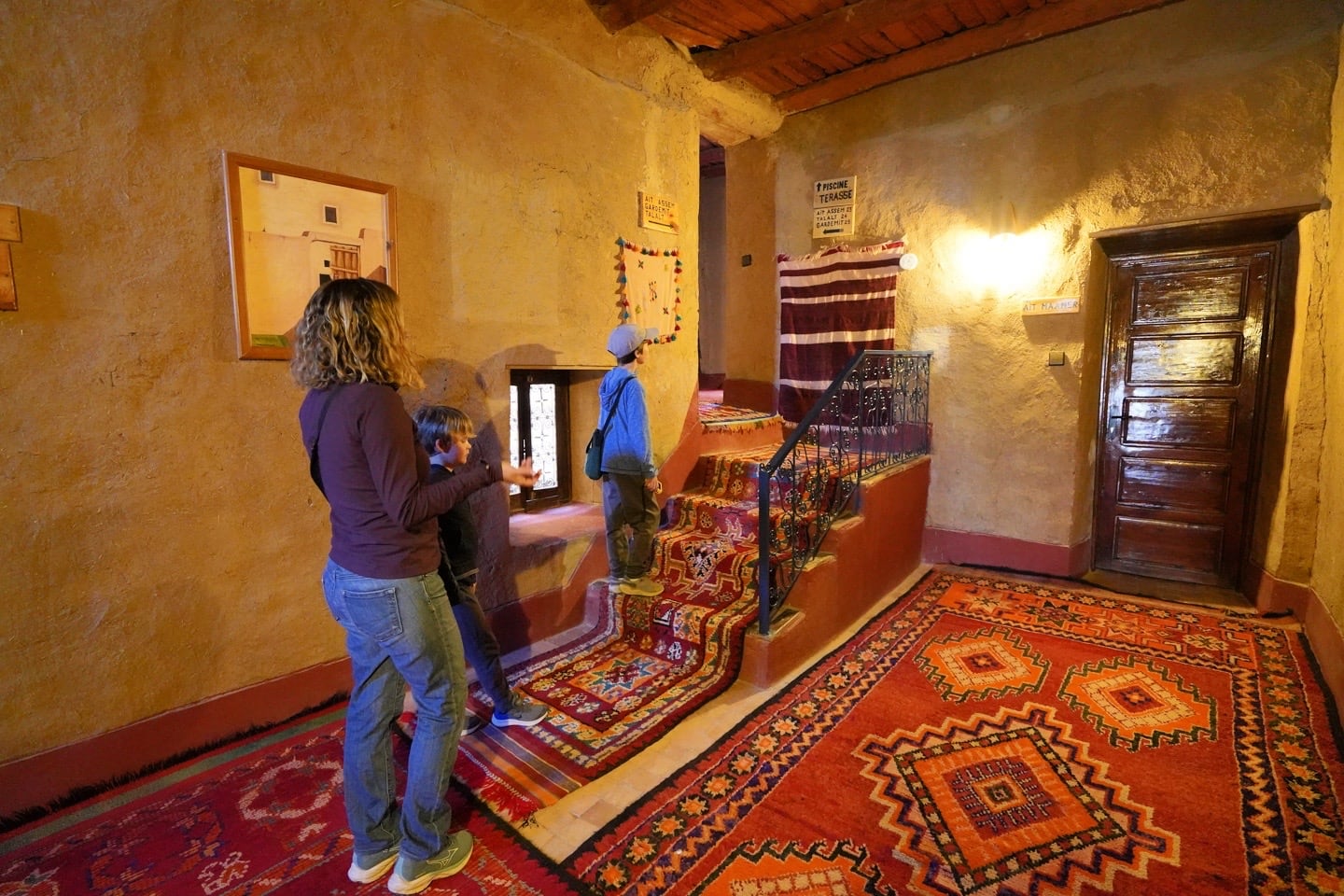
The whole time I kept thinking, this would make an amazing Moroccan McMenamins hotel. But I suppose the lack of alcohol on the premises might deter most of their core cliental.
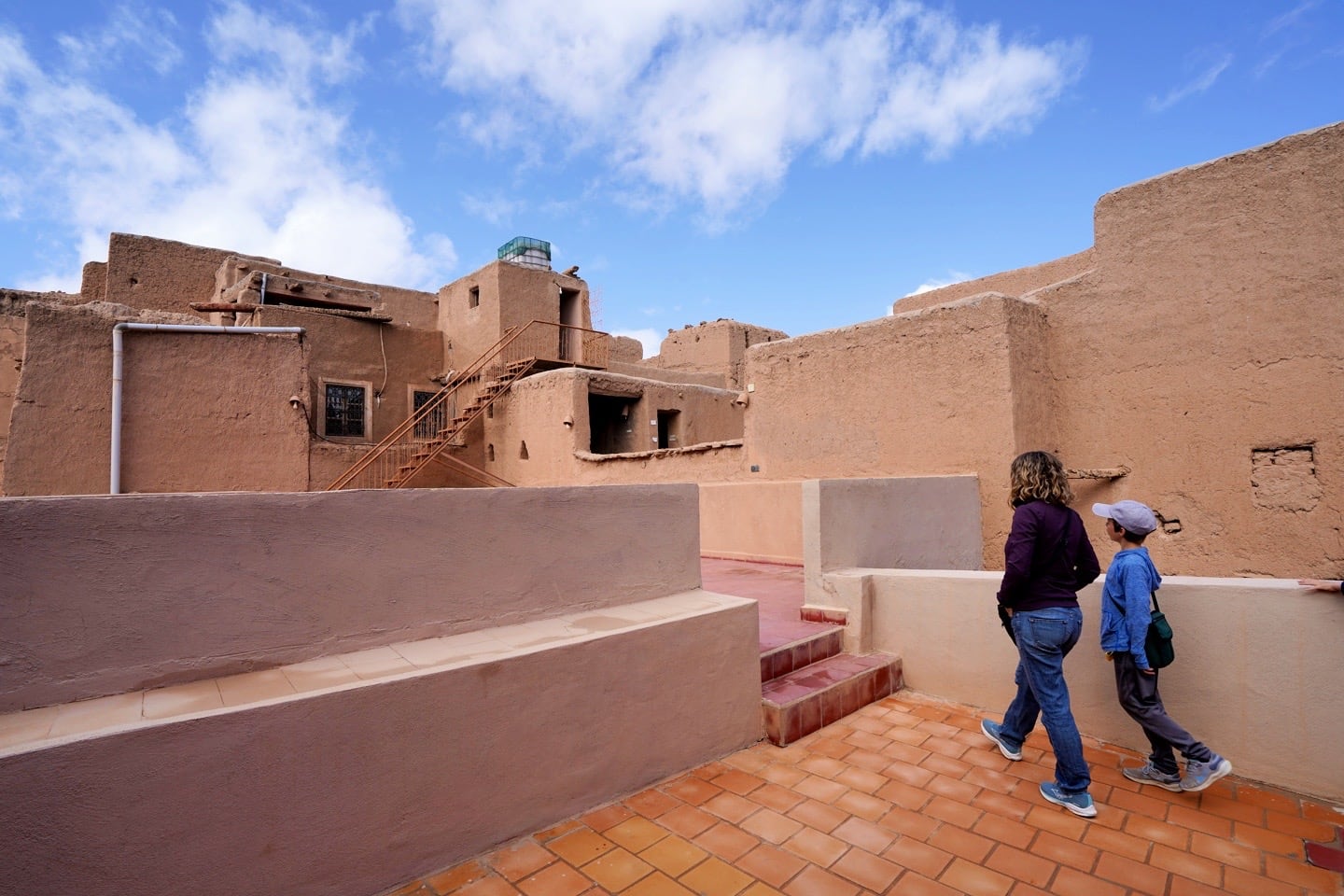
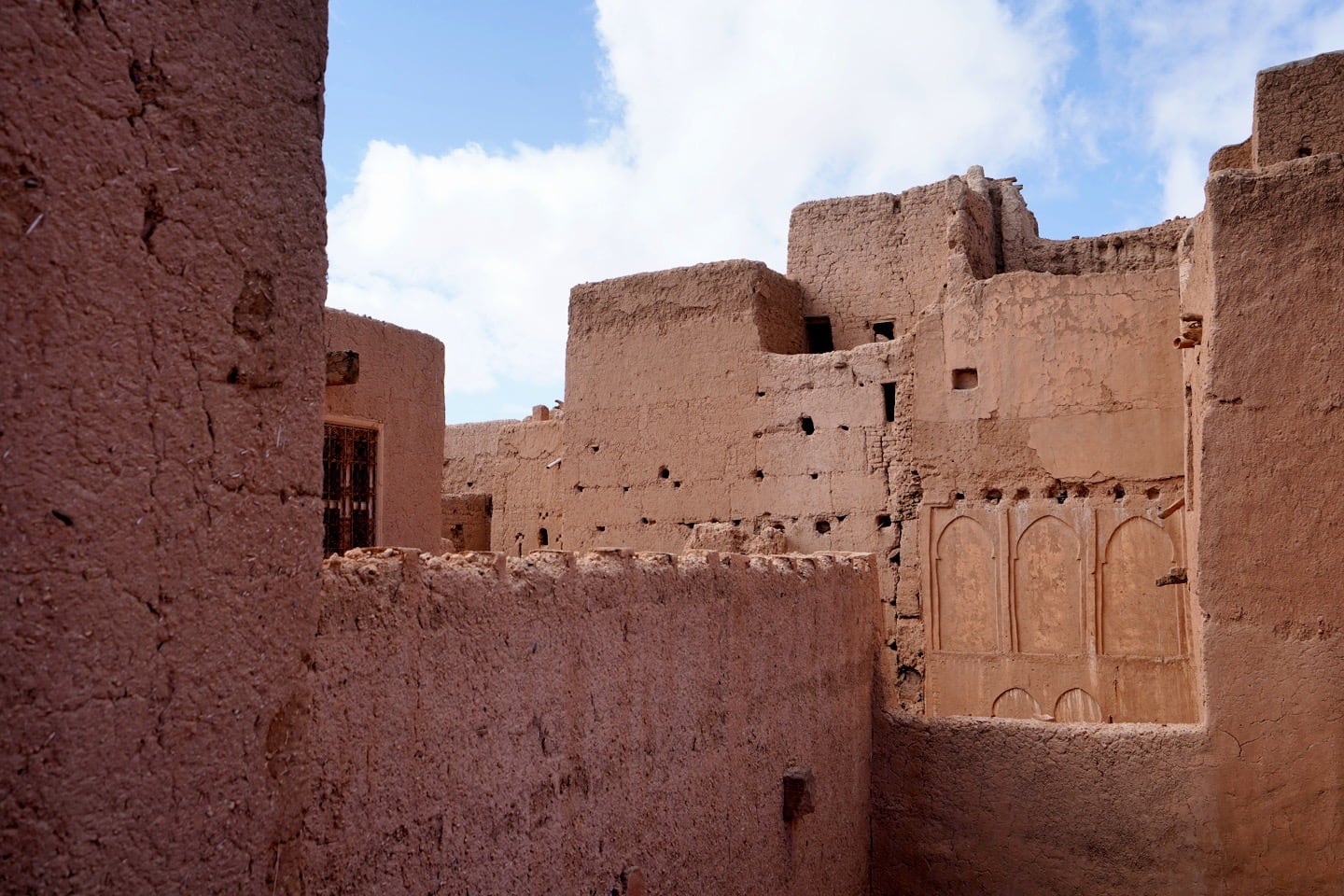
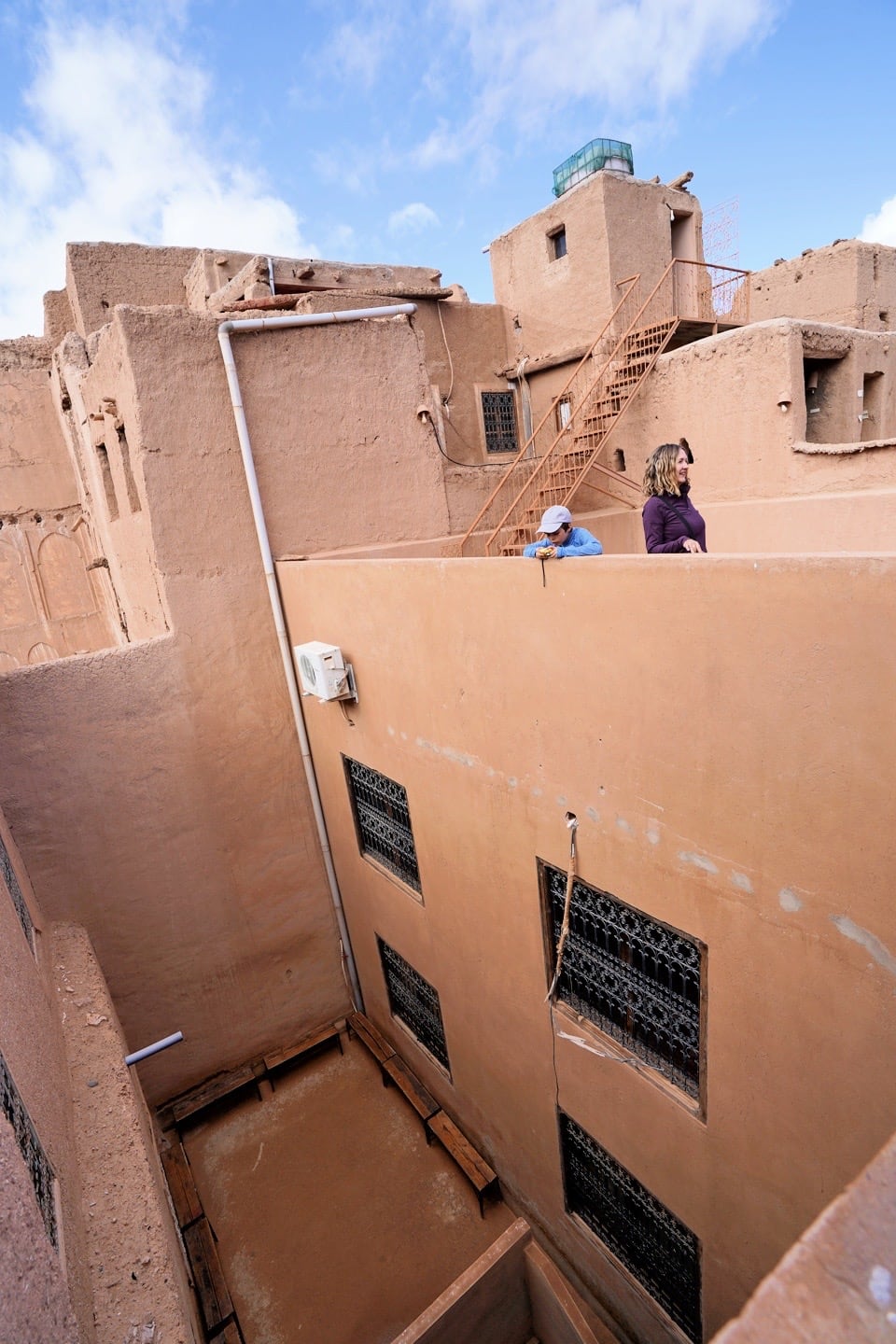
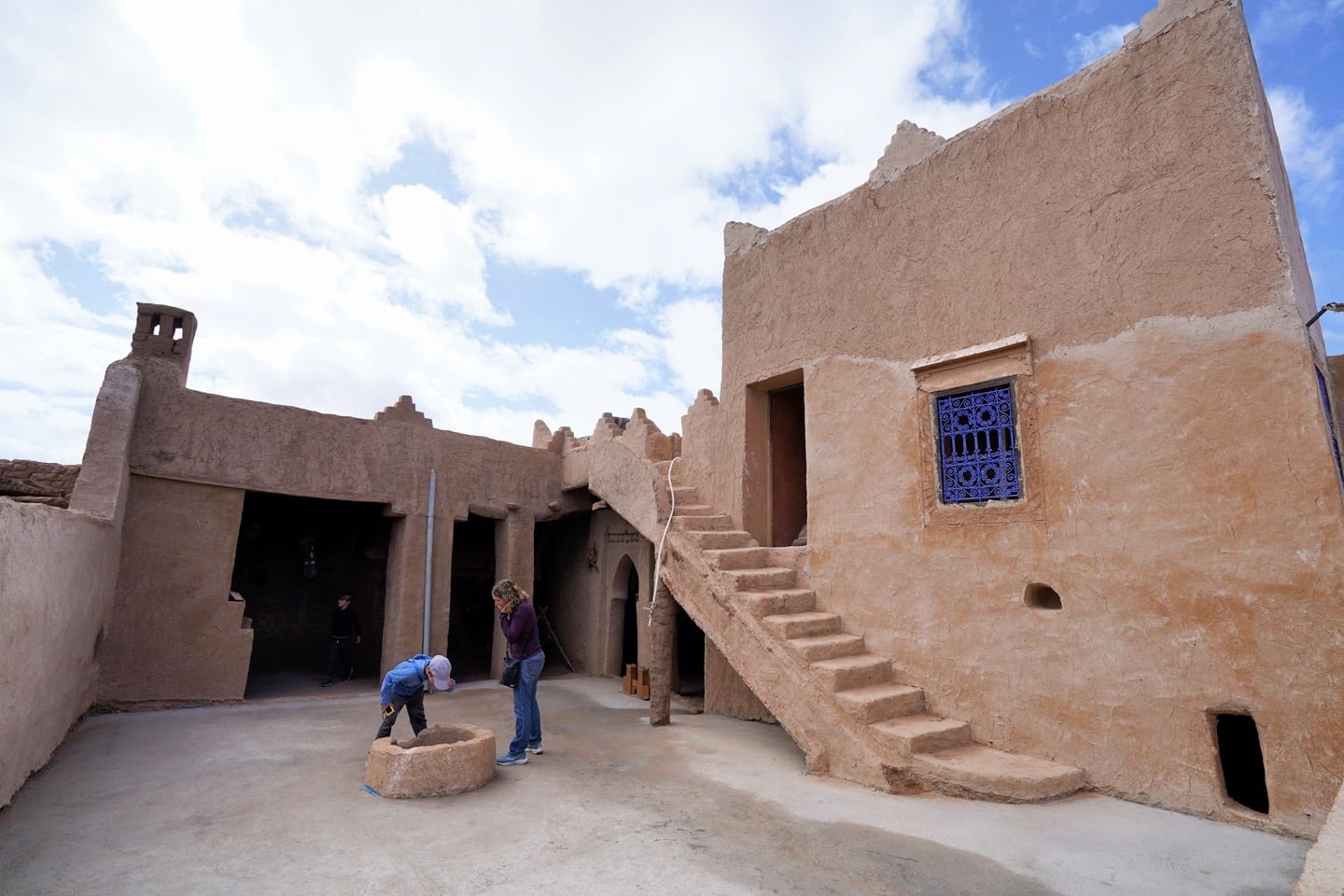
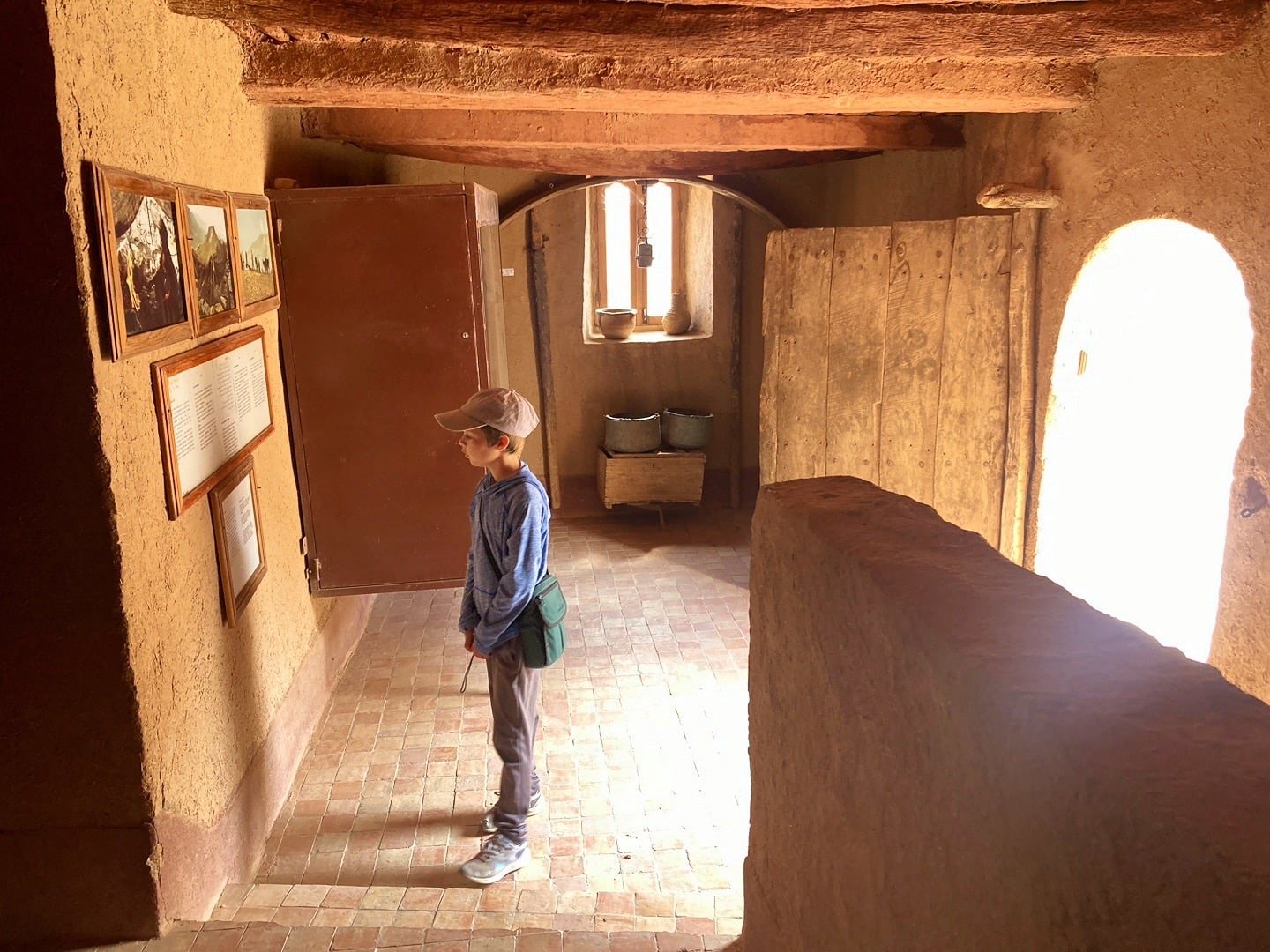
The most interesting part of our explorations came when we reached the rooftop terrace and found this mysterious room full of old artifacts.
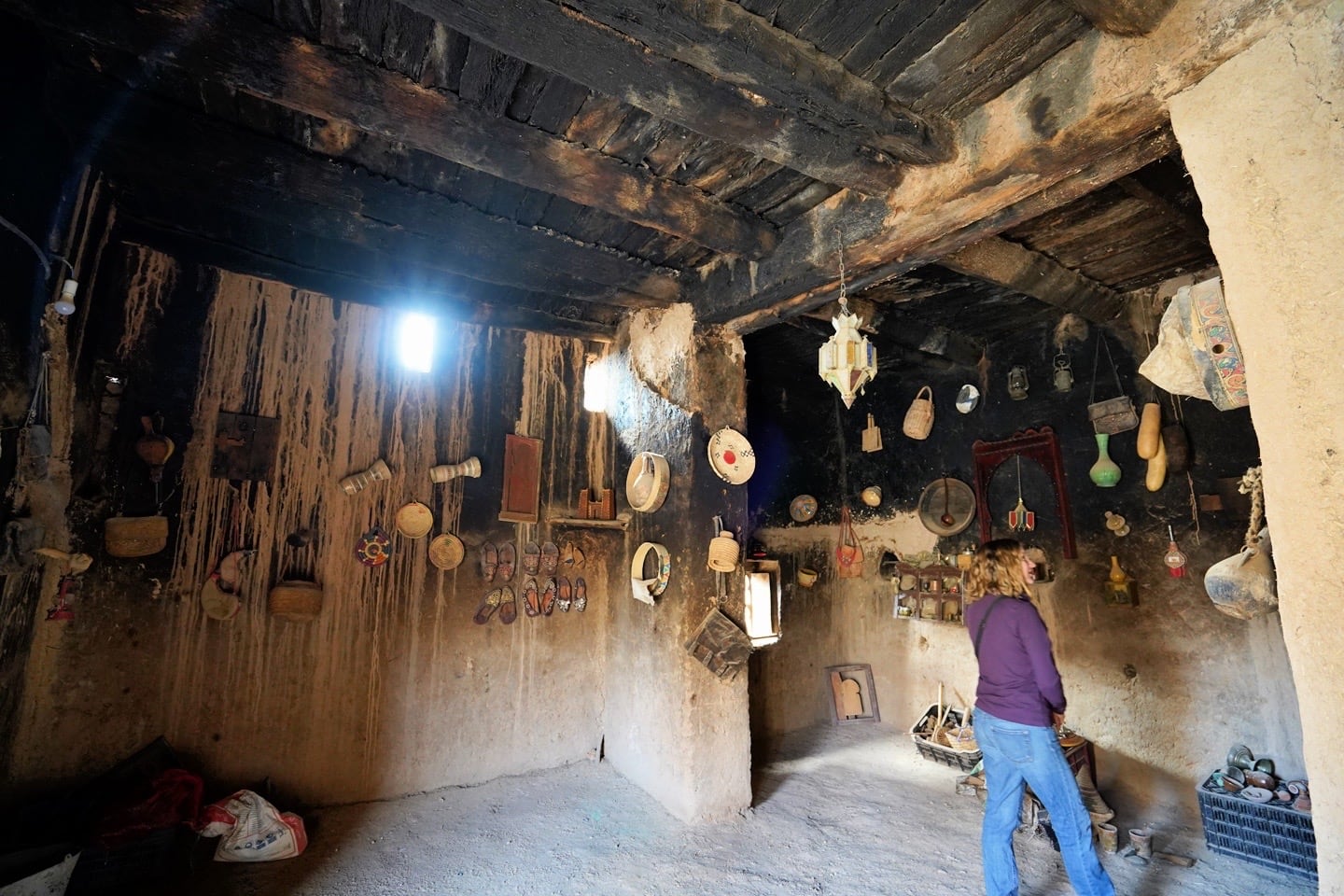
Much of the space appeared blackened, but we couldn’t tell if it was from fire or fungus. Perhaps it had been used as a kitchen at one time?
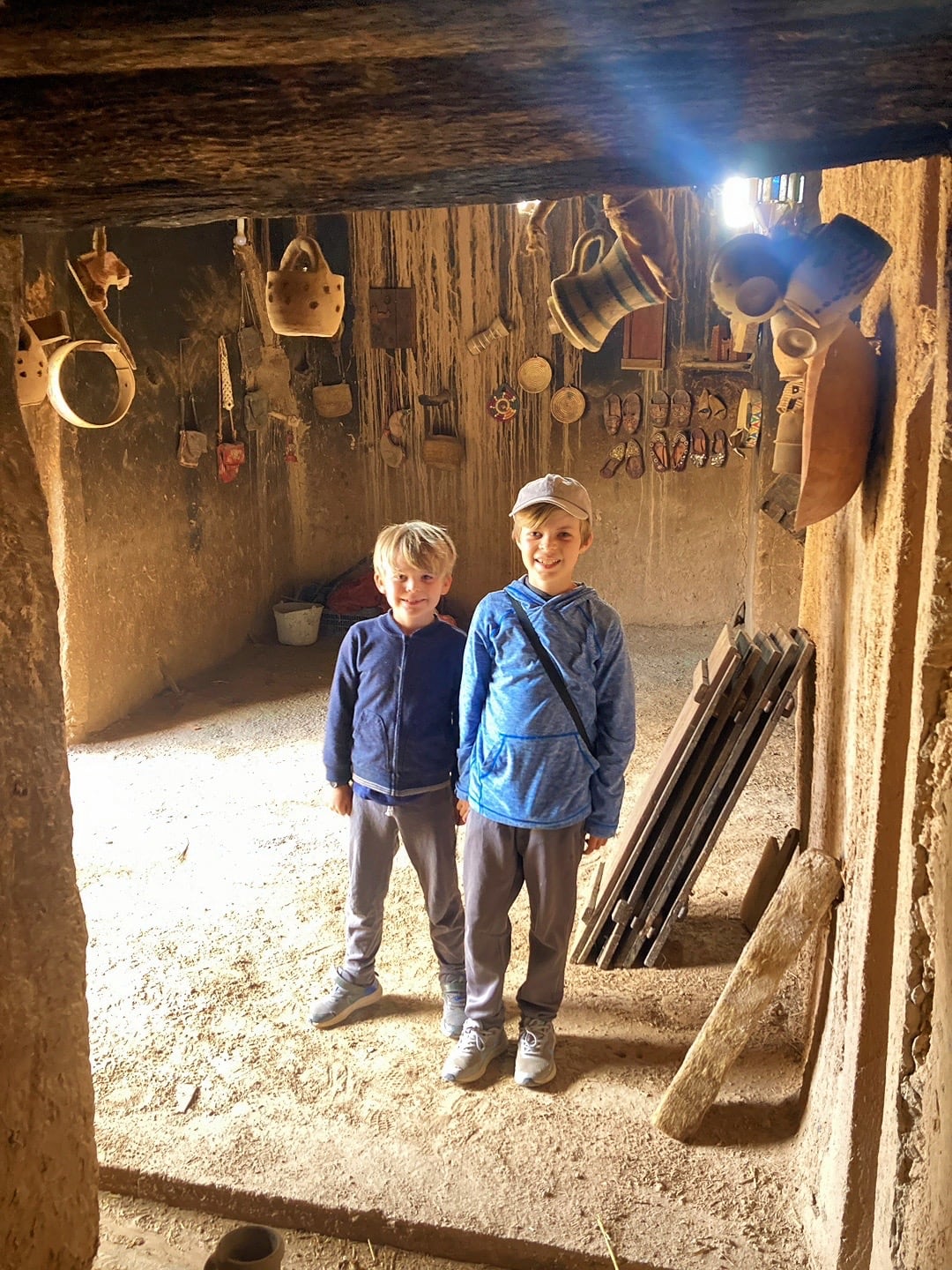
In the corner of the room was a dark passageway with steps leading down. I turned on my phone light and followed them into the darkness, which opened up into another mysterious room.
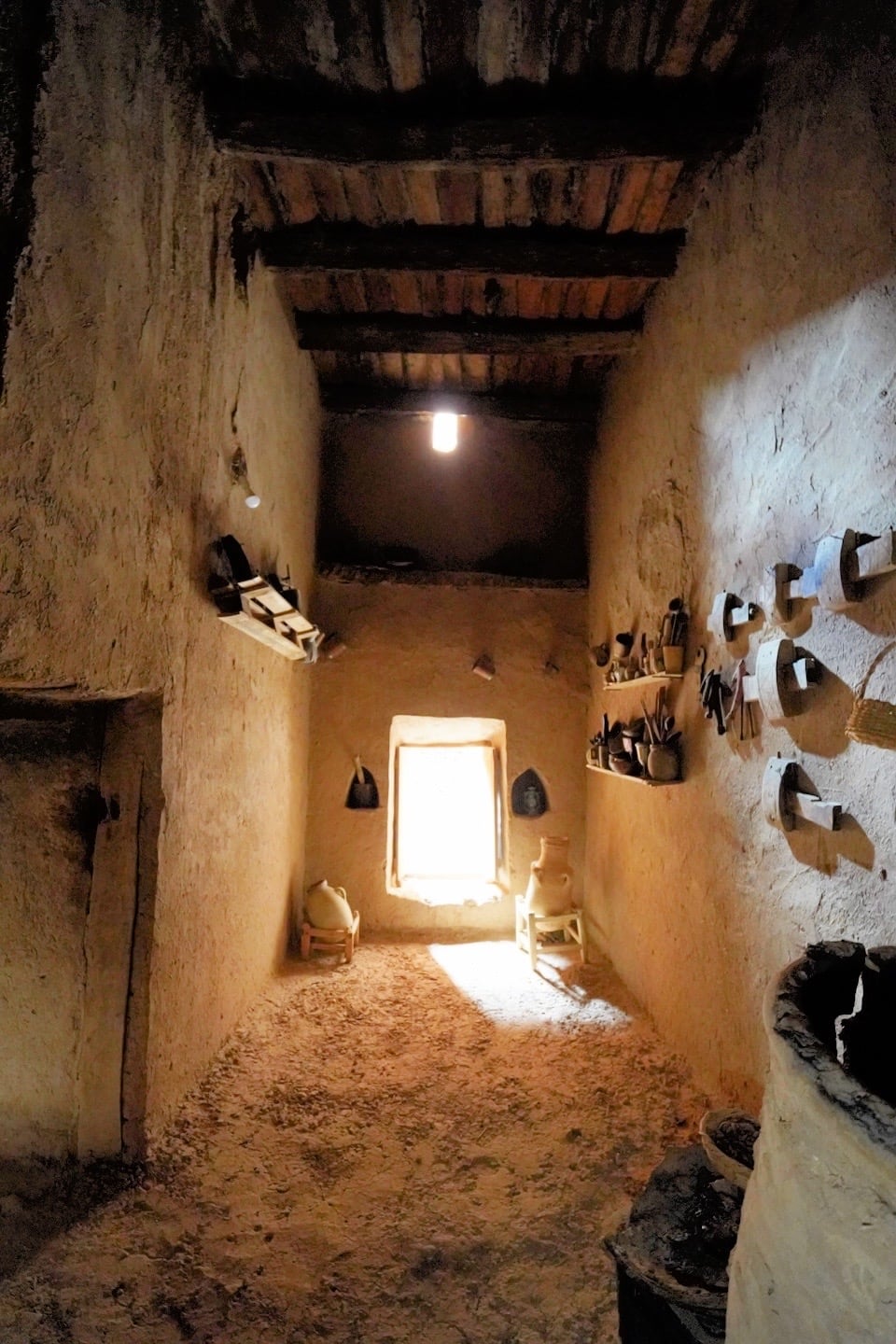
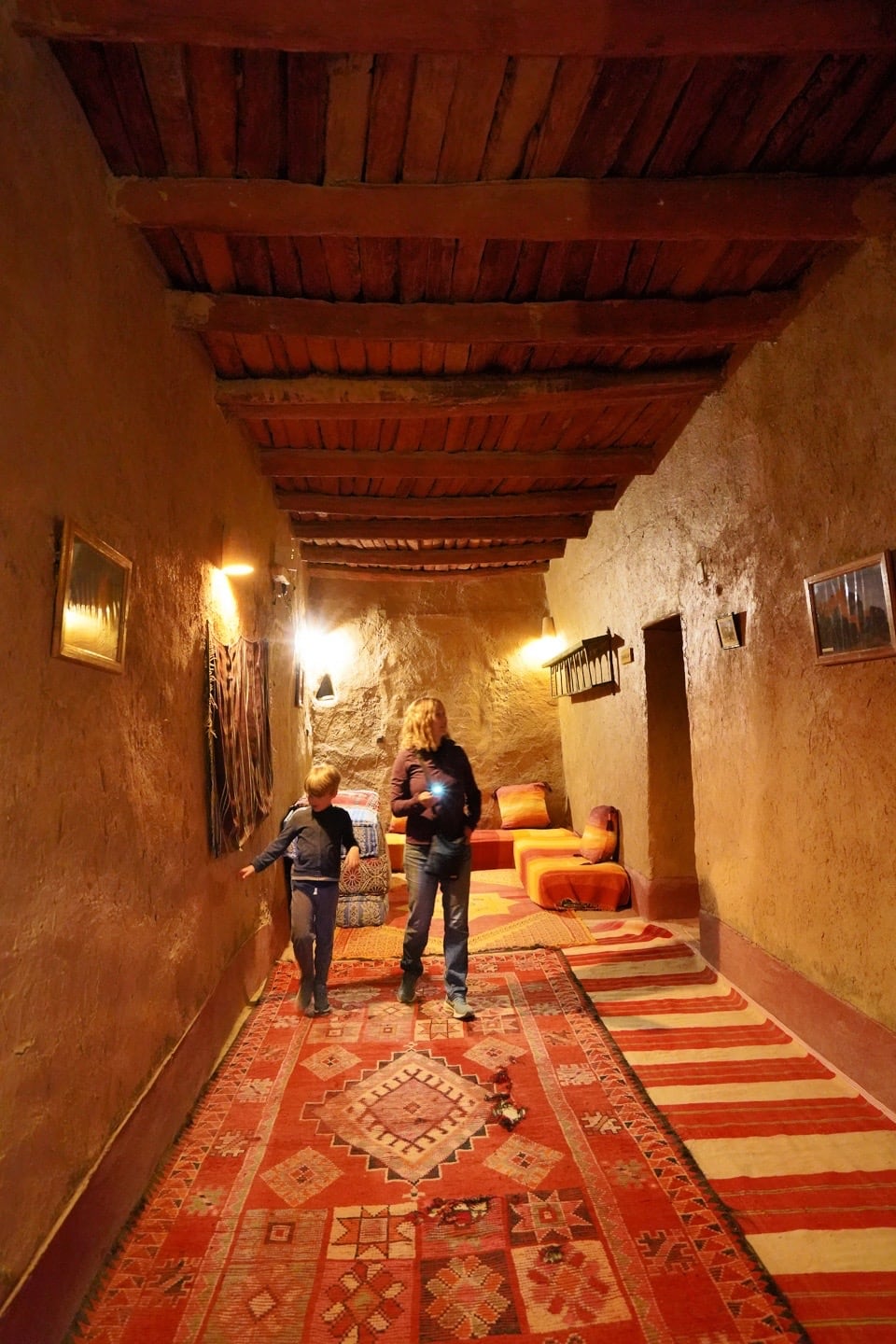
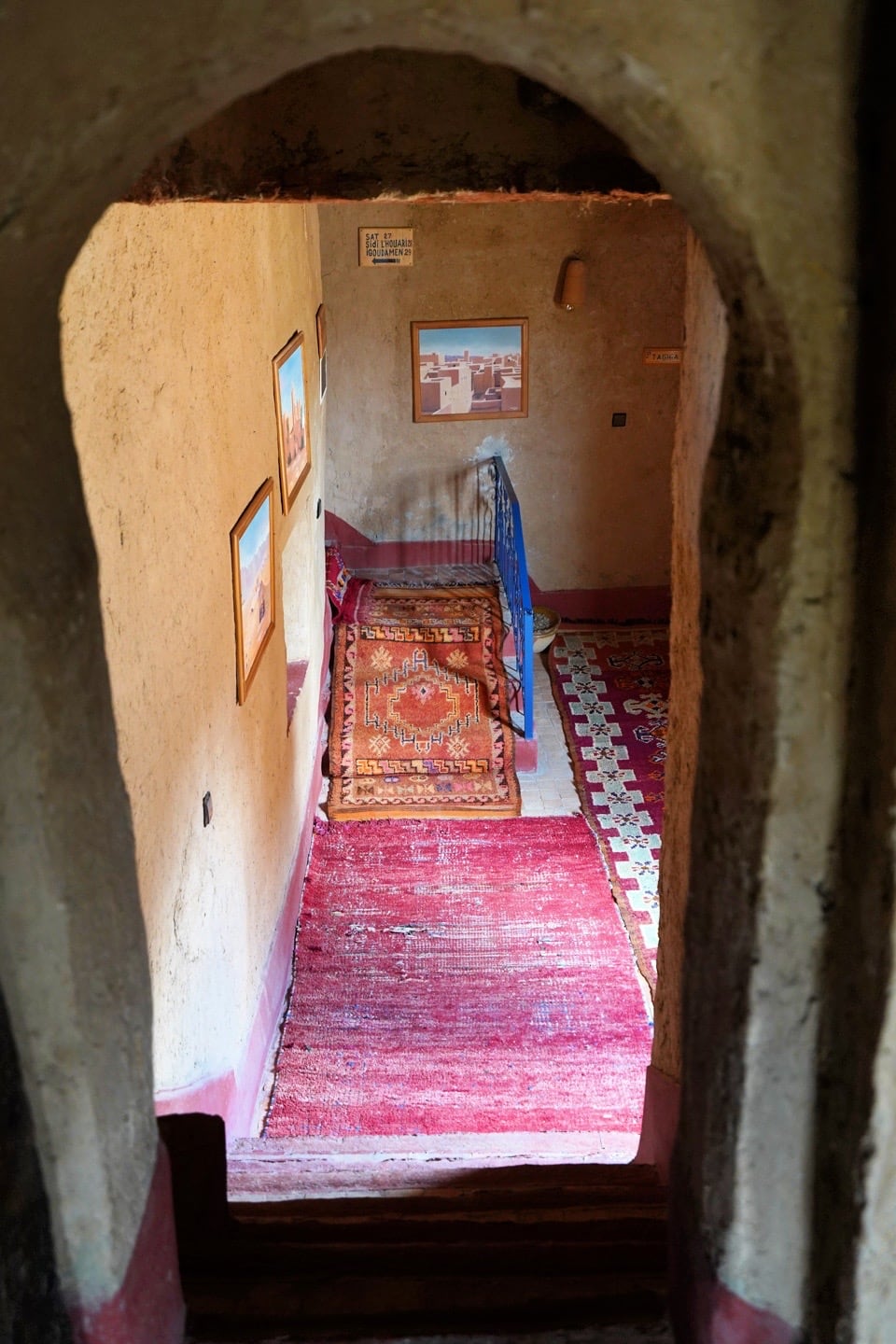
Maybe this was a museum at one time? Hard to tell. Another set of stairs led farther down. We were stunned to suddenly find ourselves in the corridor between the Riad and our room. We had made a big circle.
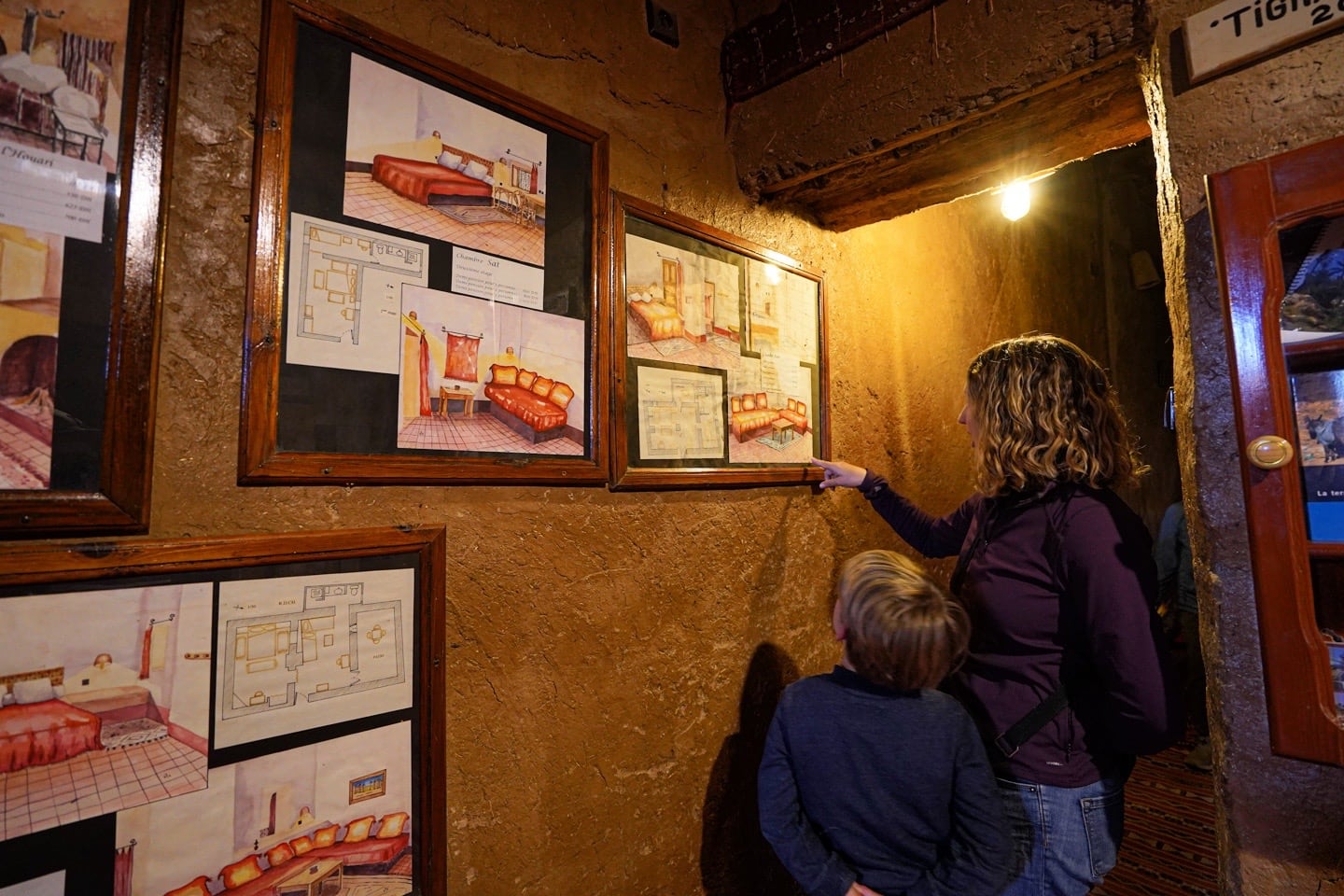
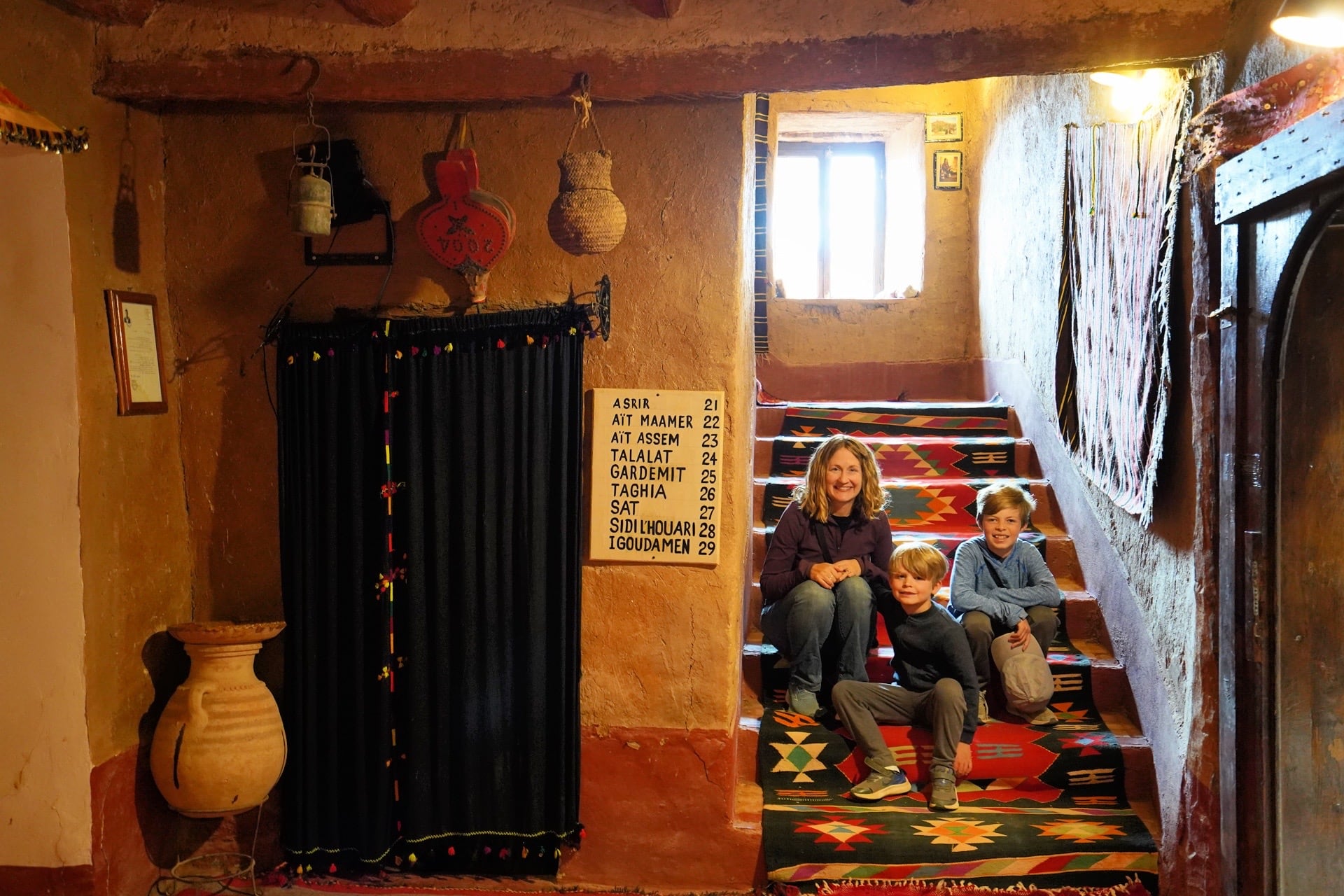
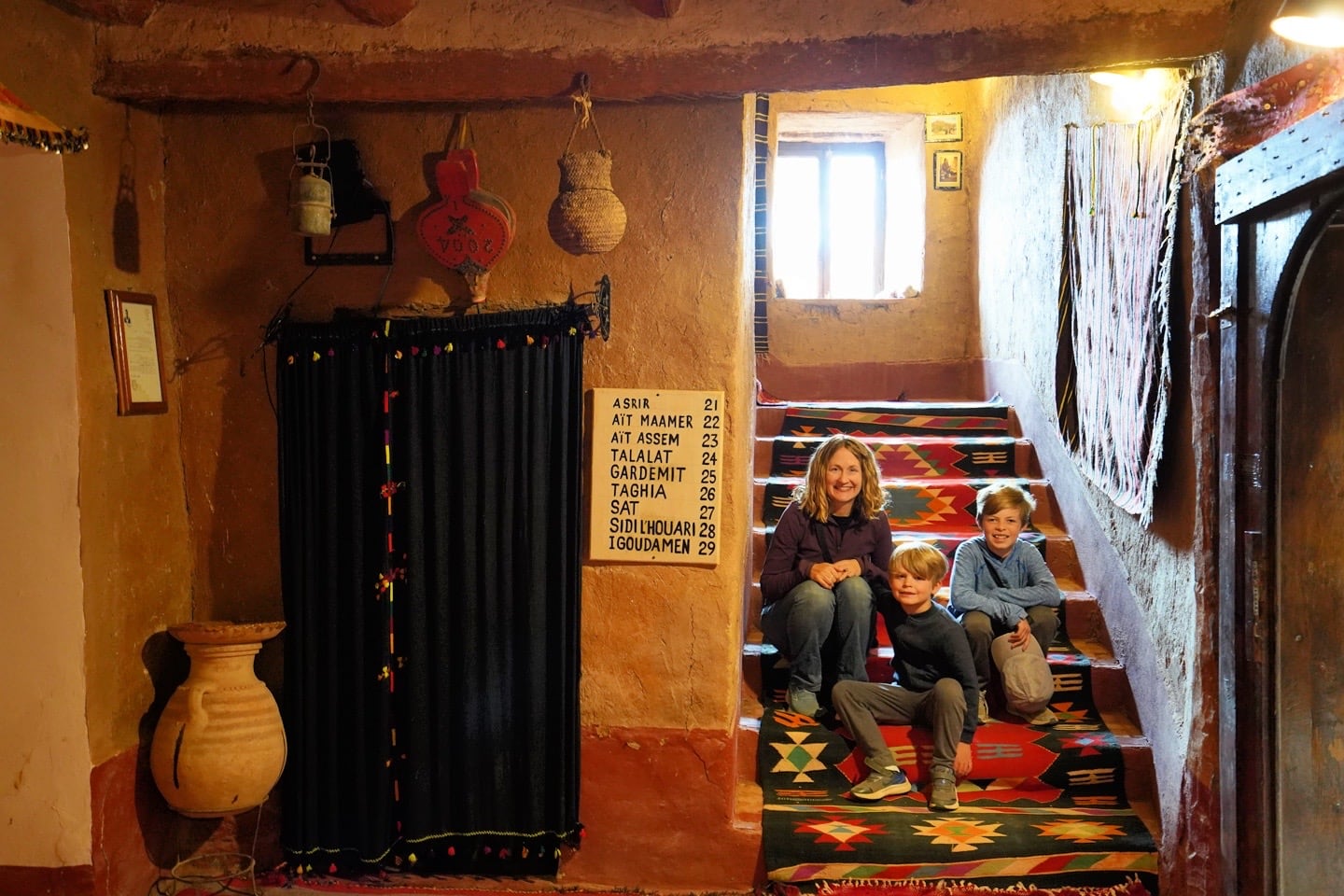
In the stairwell foyer of our building, there were hand painted renderings and floor plans of each of the guest rooms in the historic guesthouse. We found ours:
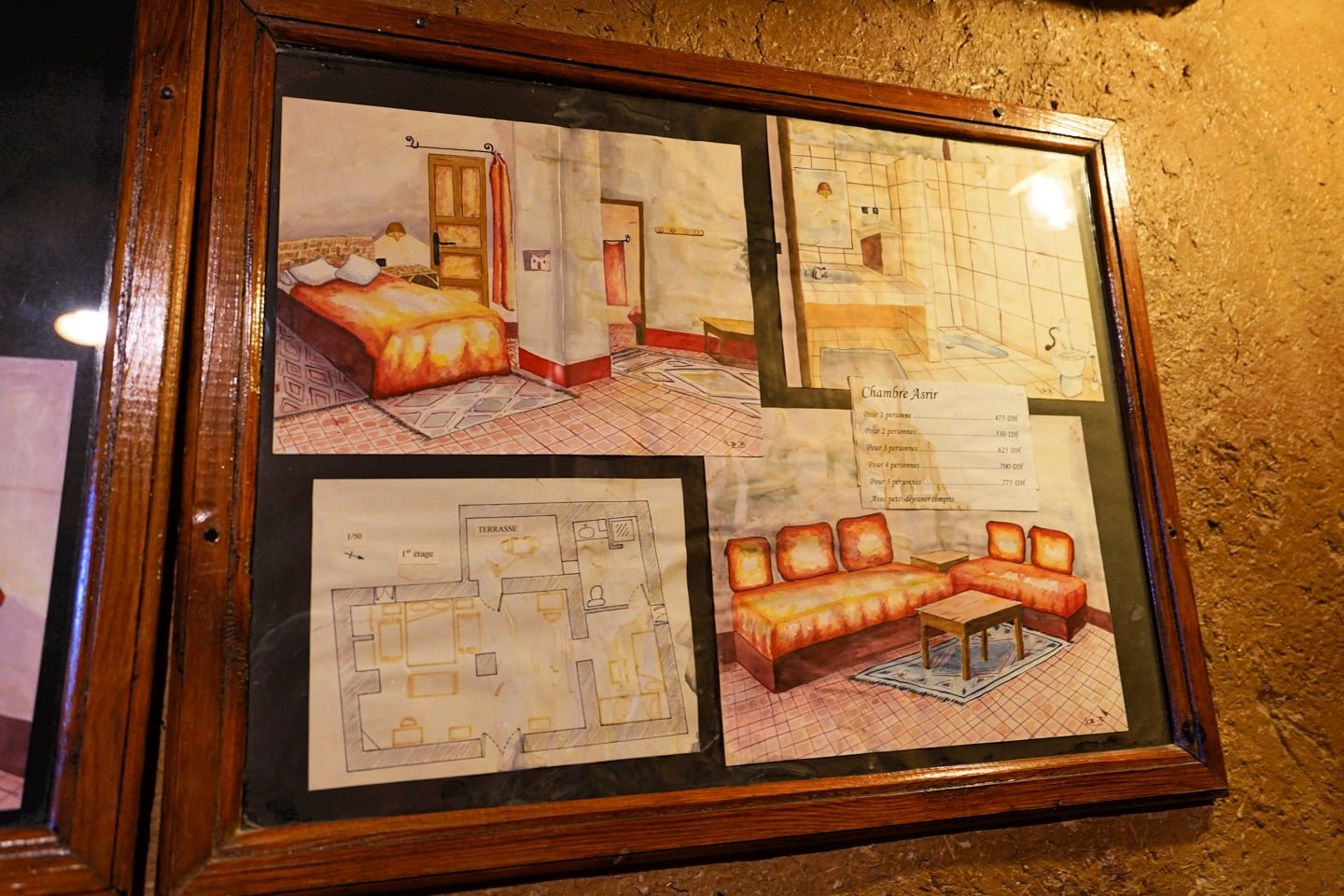
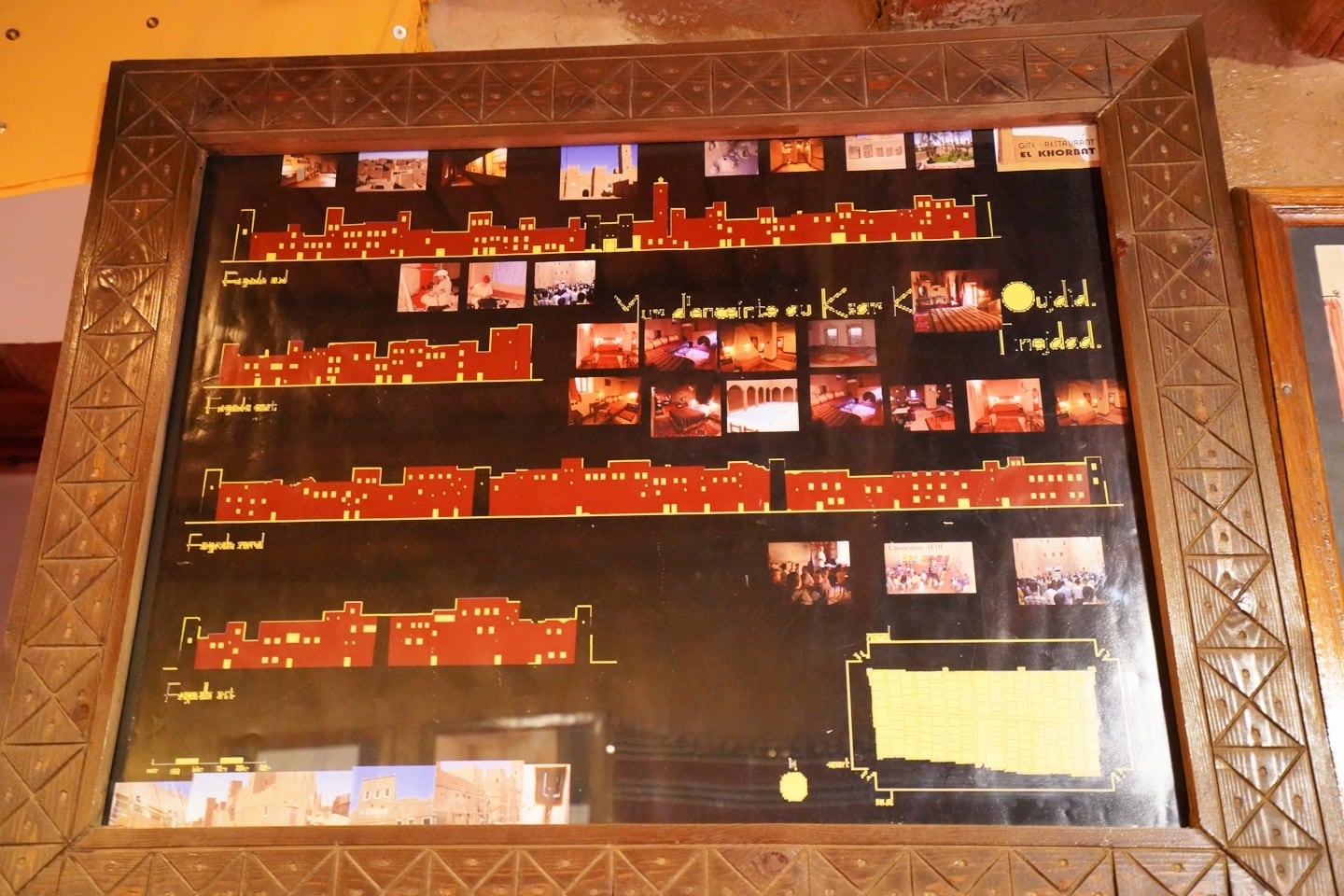
A framed poster showing an artist’s rendering of the different elevations of the fortified village.
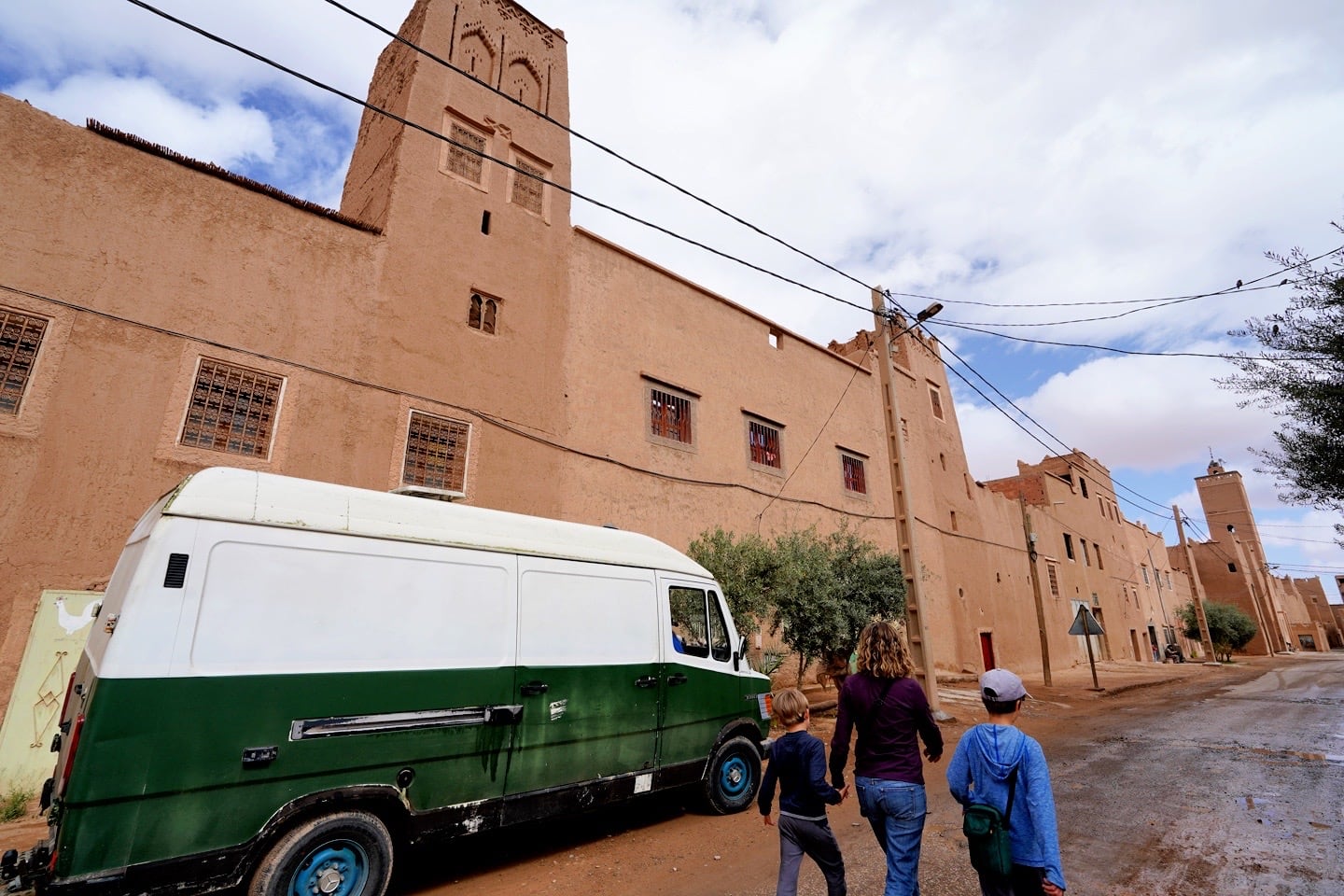
In addition to a guesthouse and private residences, El-Khorbat is also home to a mosque, madrasa (religious school), and dedicated museum.
We thought the museum might take a few minutes to see, but is actually housed in a similarly large complex as the guesthouse, spread across three restored Berber homes.
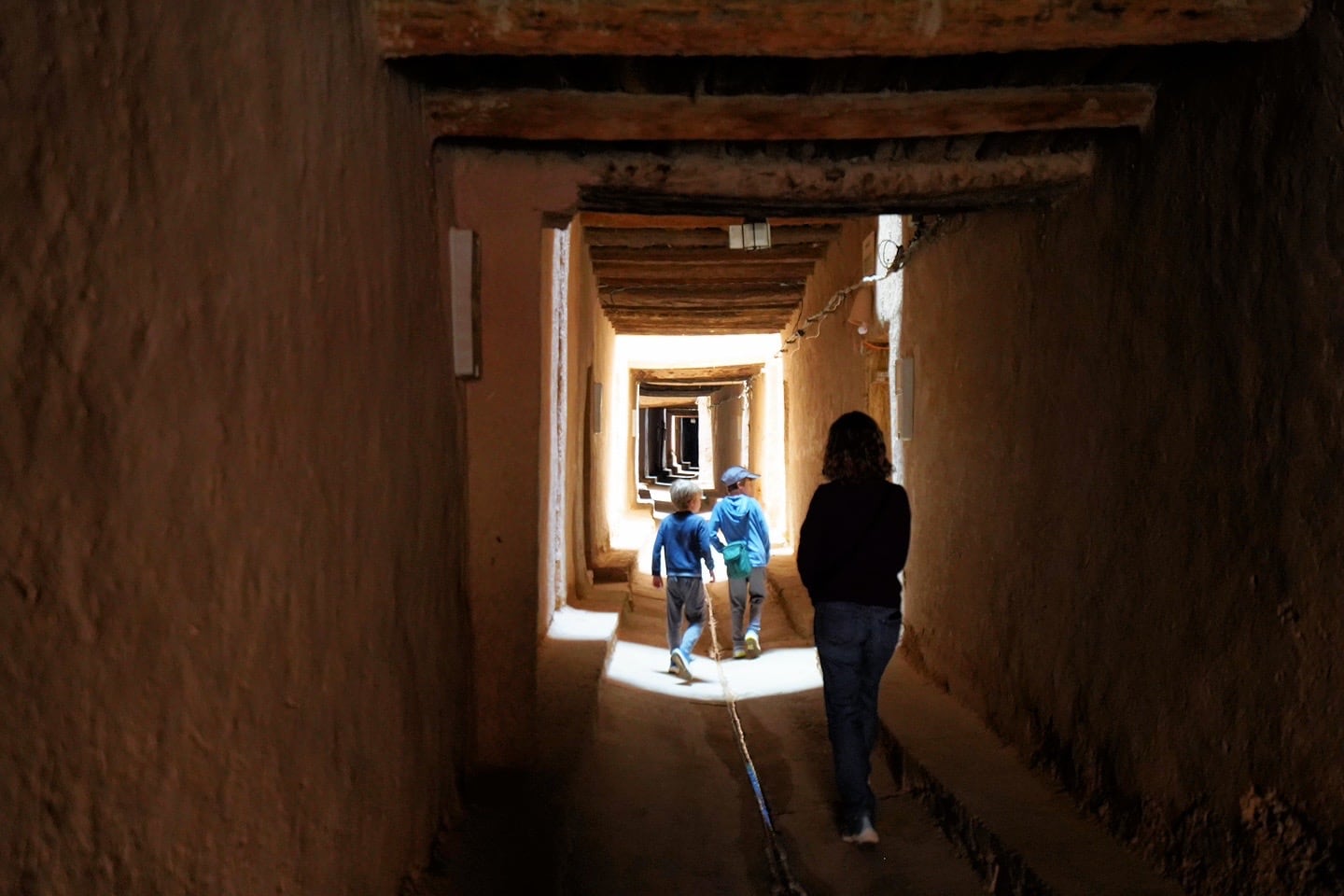
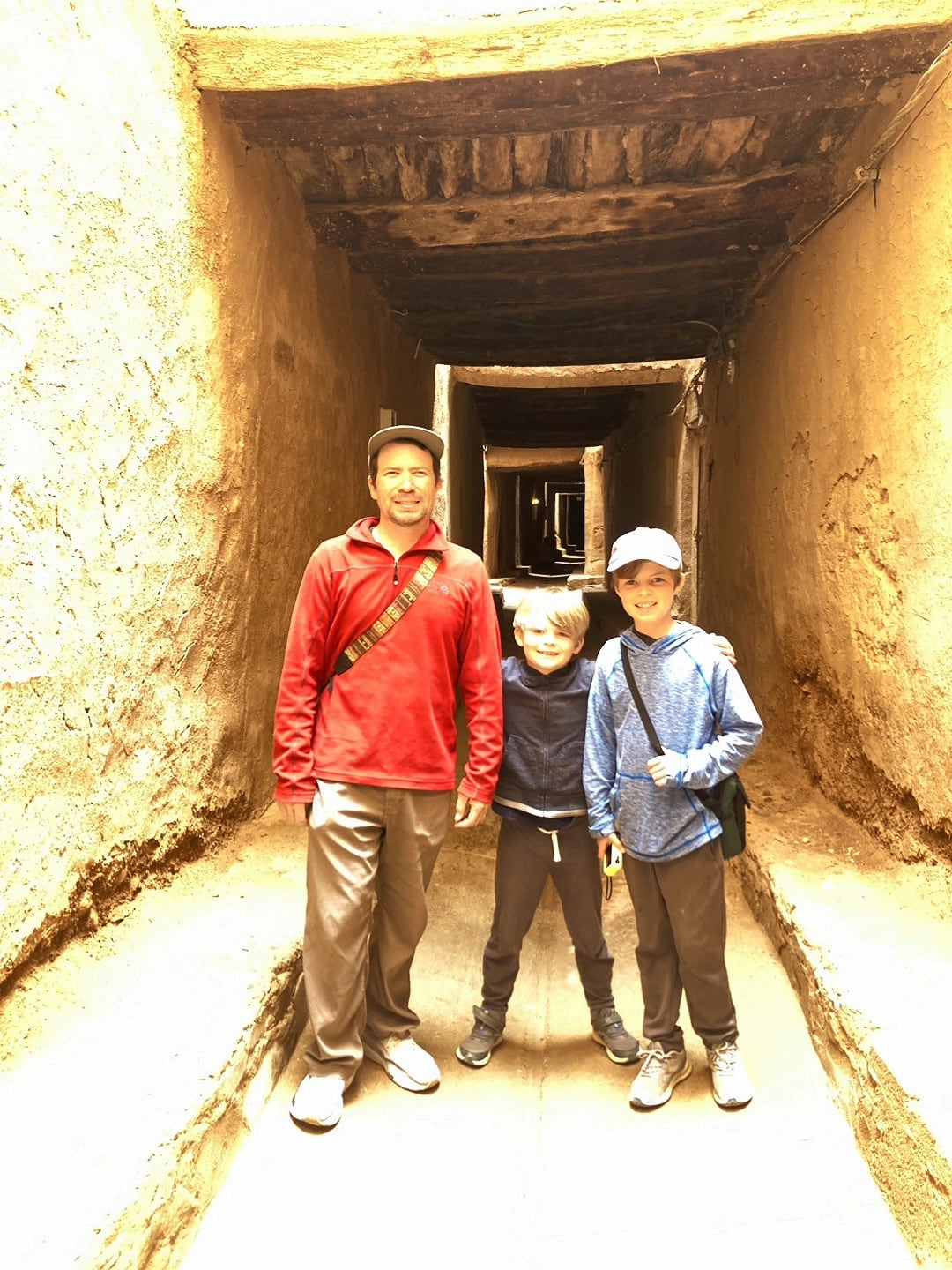
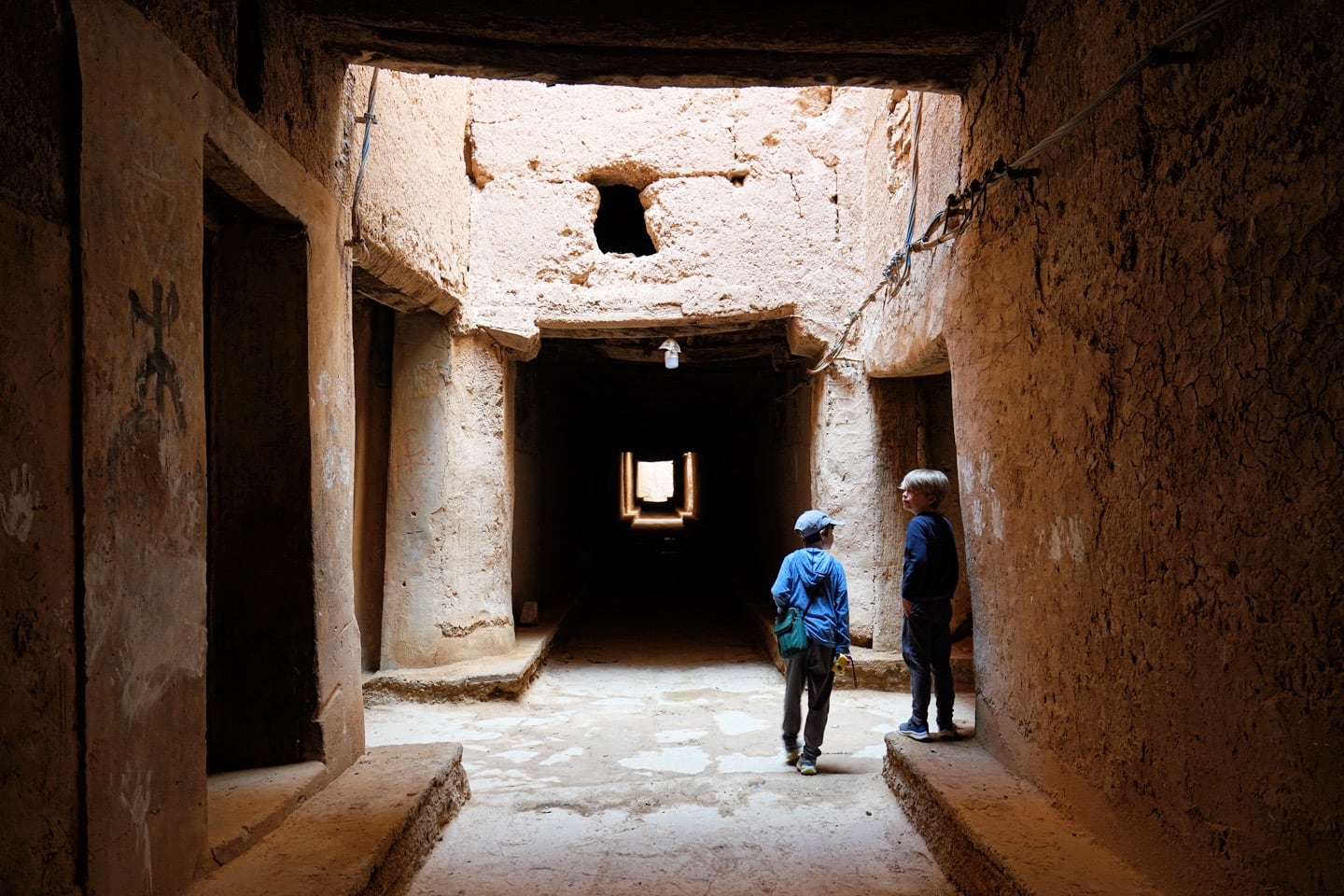
These dark corridors weave throughout the entire Ksar, forming the main thoroughfares of the city. These passageways aren’t visible from the satellite image because most of the residences have built over them throughout the years.
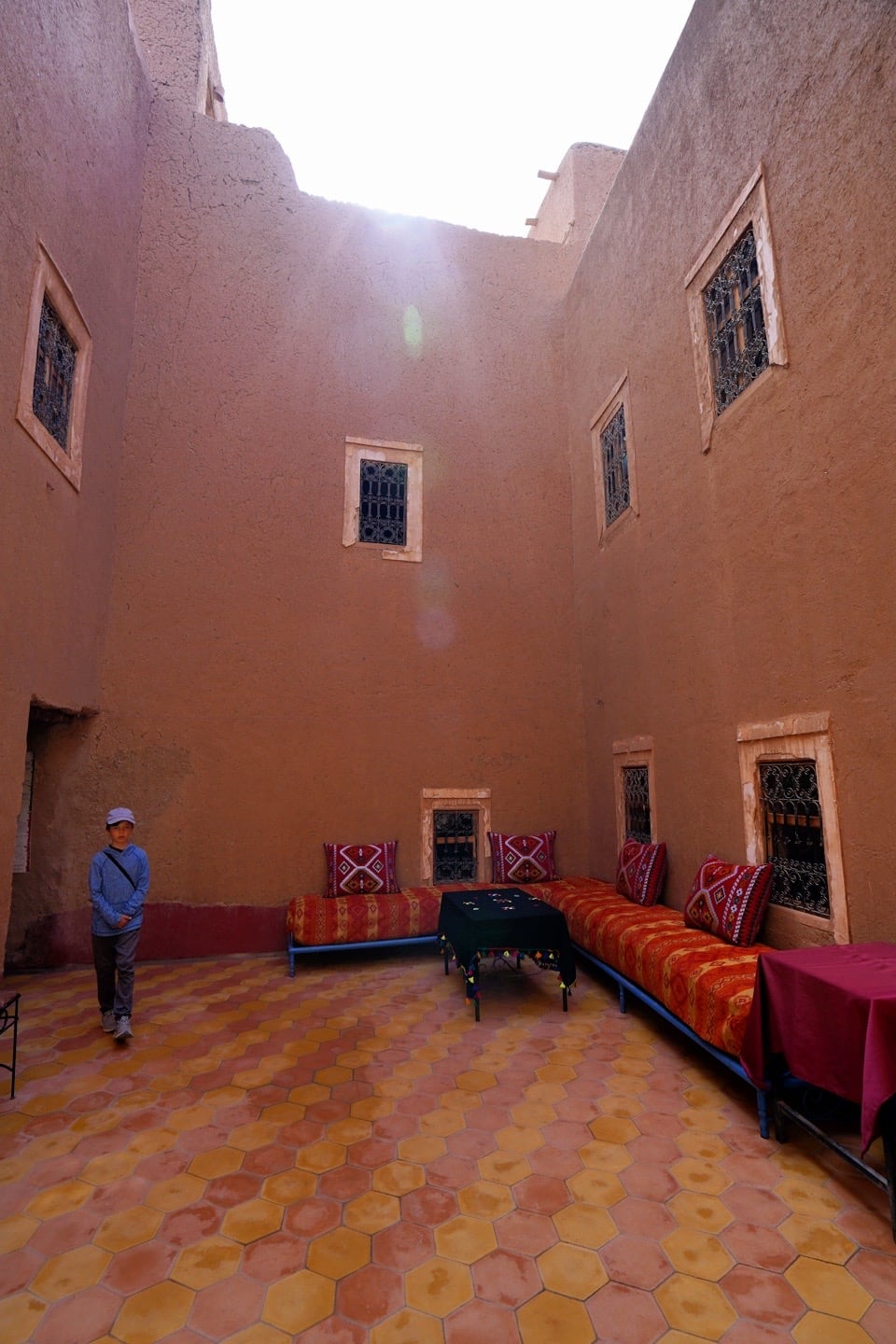
The museum contains a lot of artifacts and period items. But, again, the most interesting aspect of the museum is wandering through the labyrinthine complex of rooms spanning multiple floors and buildings.
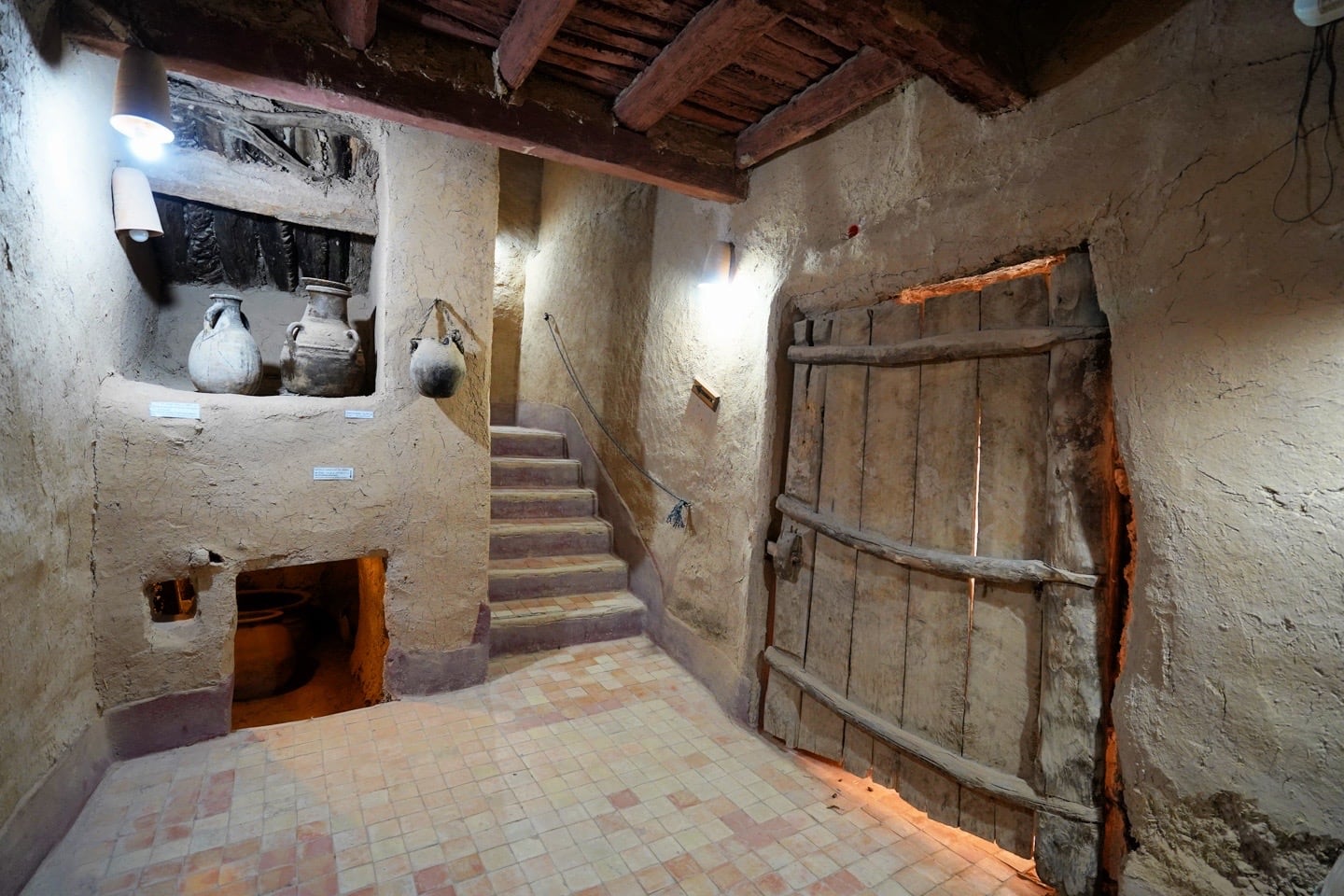
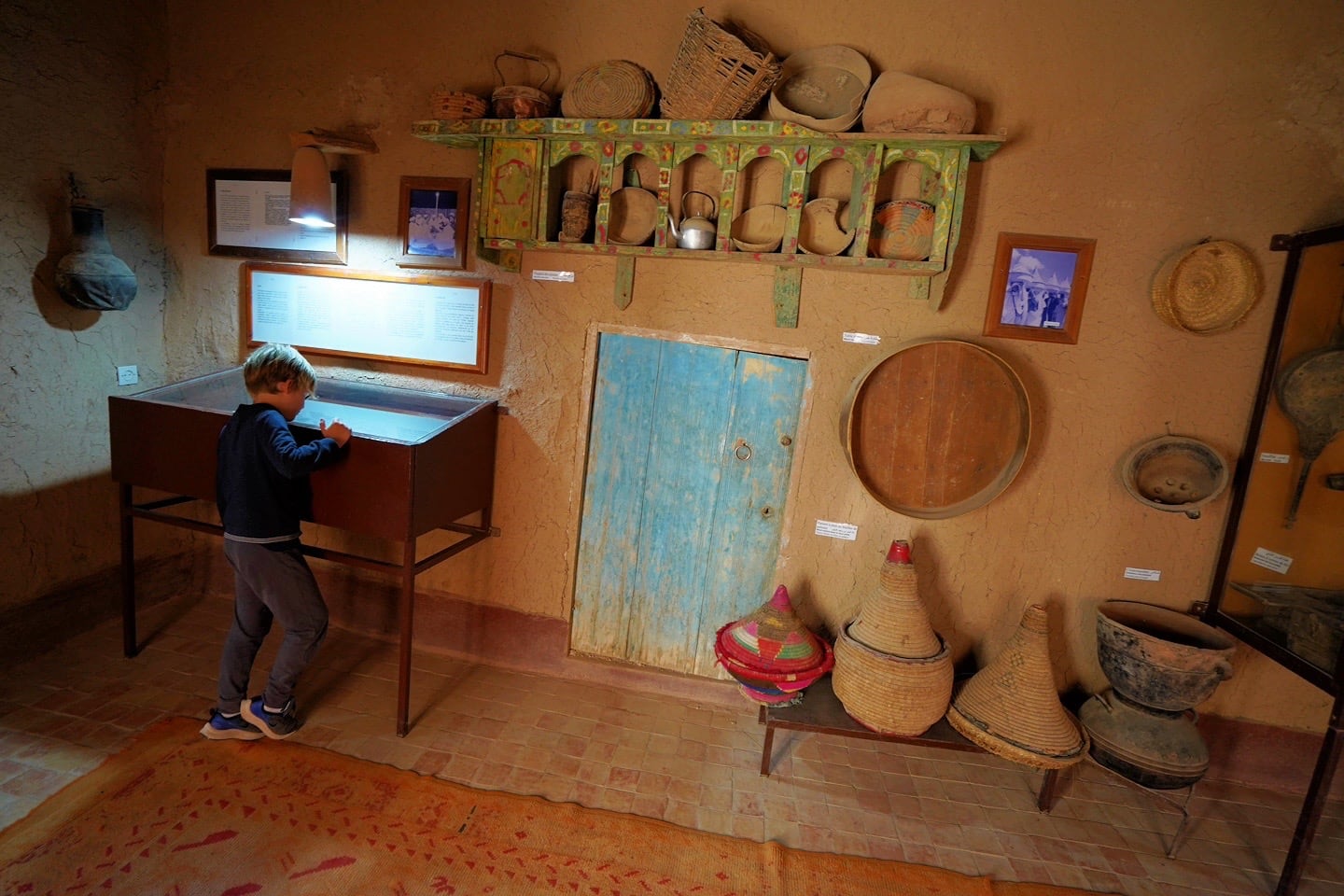
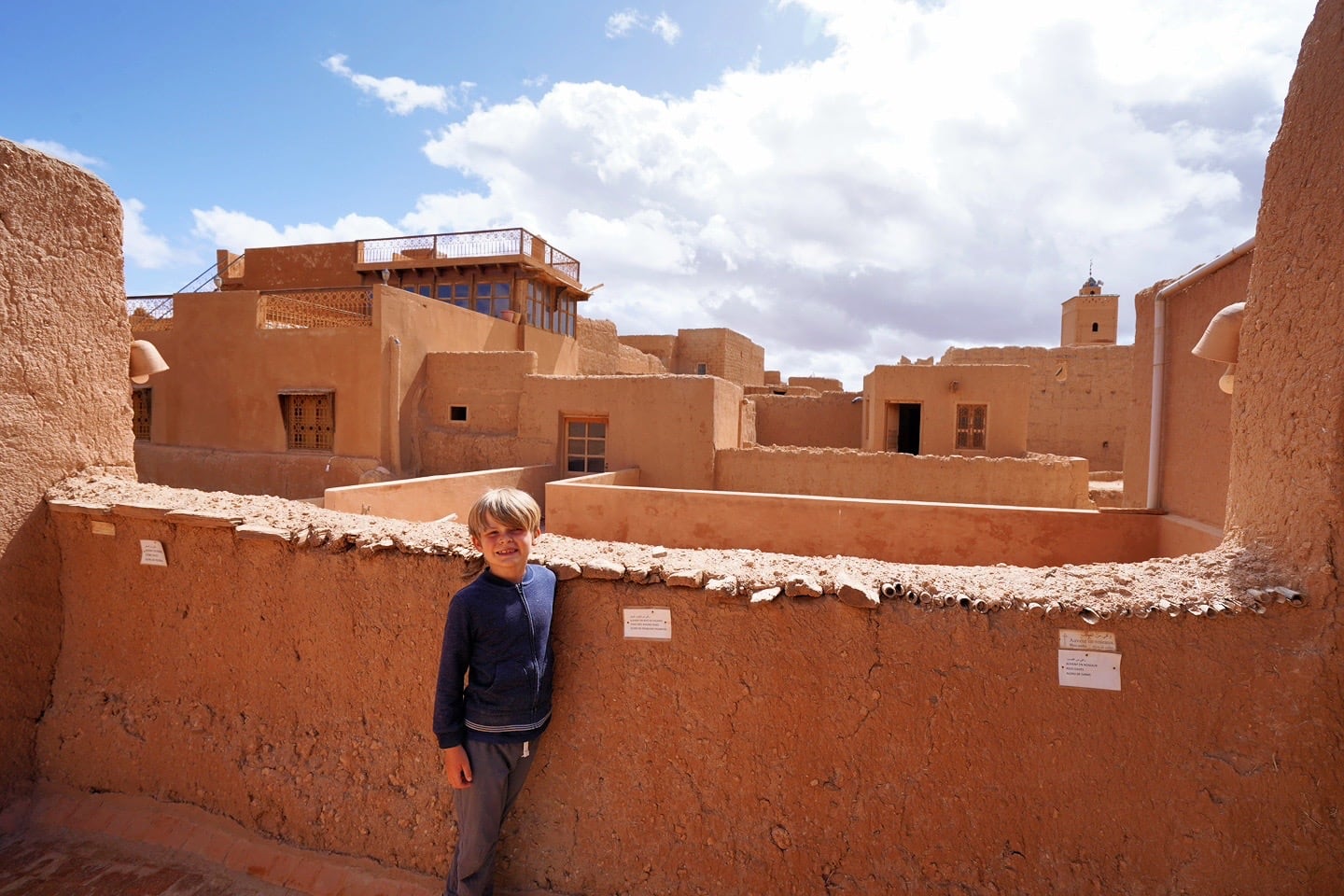
Traditionally, Ksar homes rose three to four stories high. The ground floor was typically used for livestock and grain storage, the first floor was for family living, and the upper terraces were used for sleeping during hot summer nights (these days, the guesthouse and some residences are equipped with air-conditioning and other modern amenities).
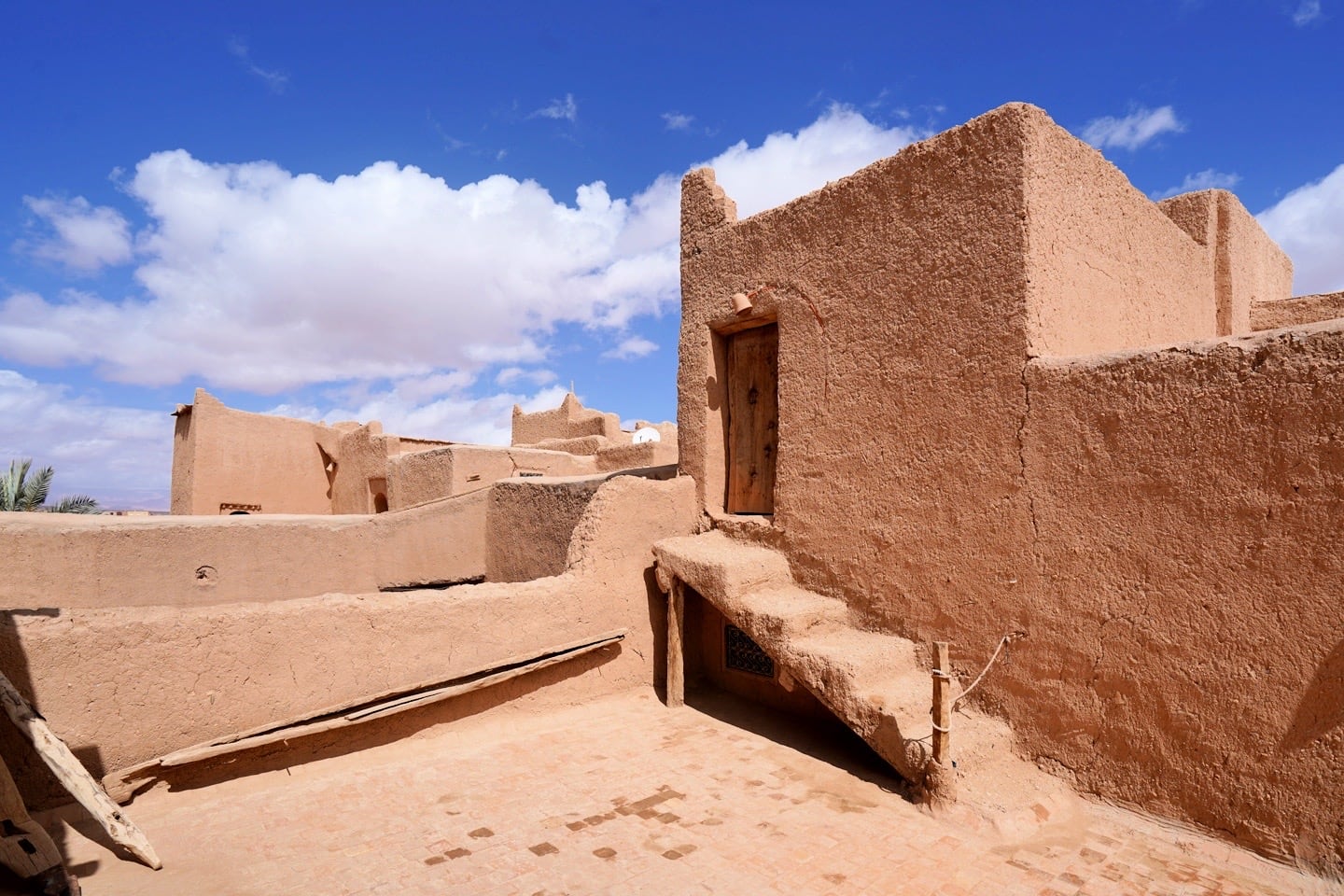
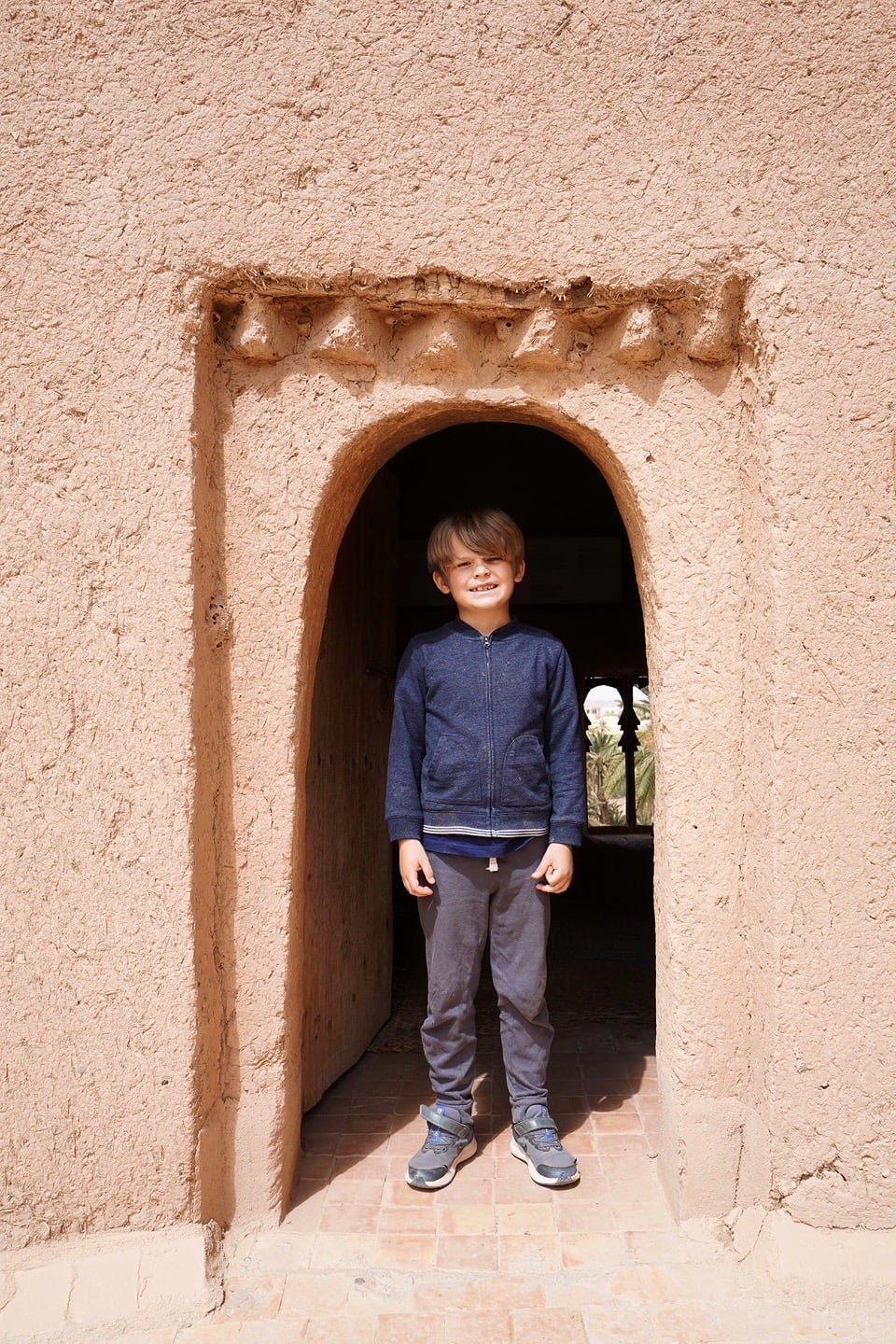
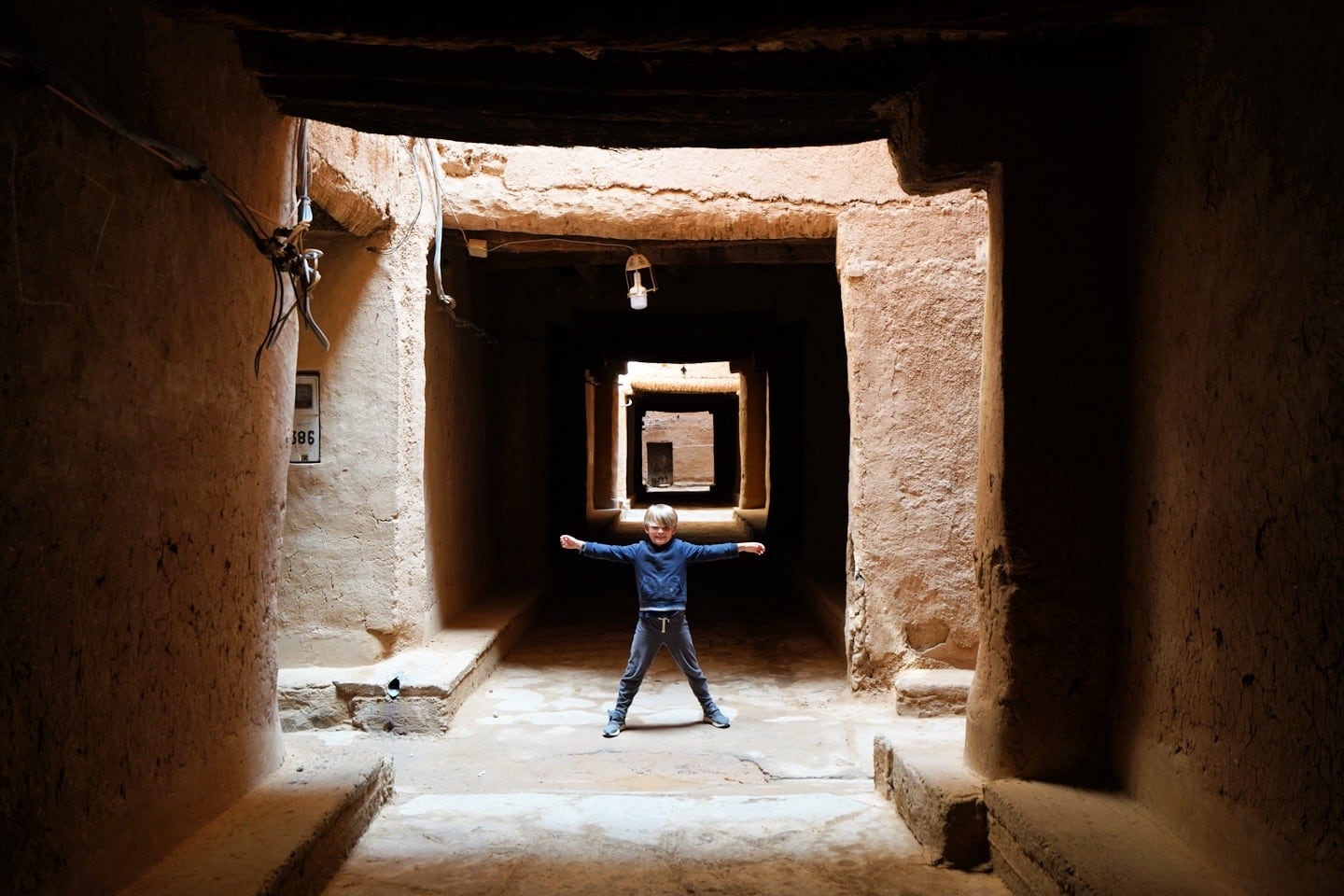
We’ve loved our stay at El Khorbat. It’s been the best kind of surprise and far exceeded our expectations.
It also marks the second to last night of accommodation on our Sahara road trip, so leaving this place is bittersweet.
Today, we have a three-and-a-half-hour drive back to Ouarzazate, and a four-hour drive up and over the High Atlas Mountains to Marrakesh planned for tomorrow.