On New Year’s Eve, we caught the celebrations in India before sending the boys to bed at a reasonable hour.
But the celebrations around the city at midnight local time were too much to let them sleep through.
Our Euro-African Journey (So Far...)
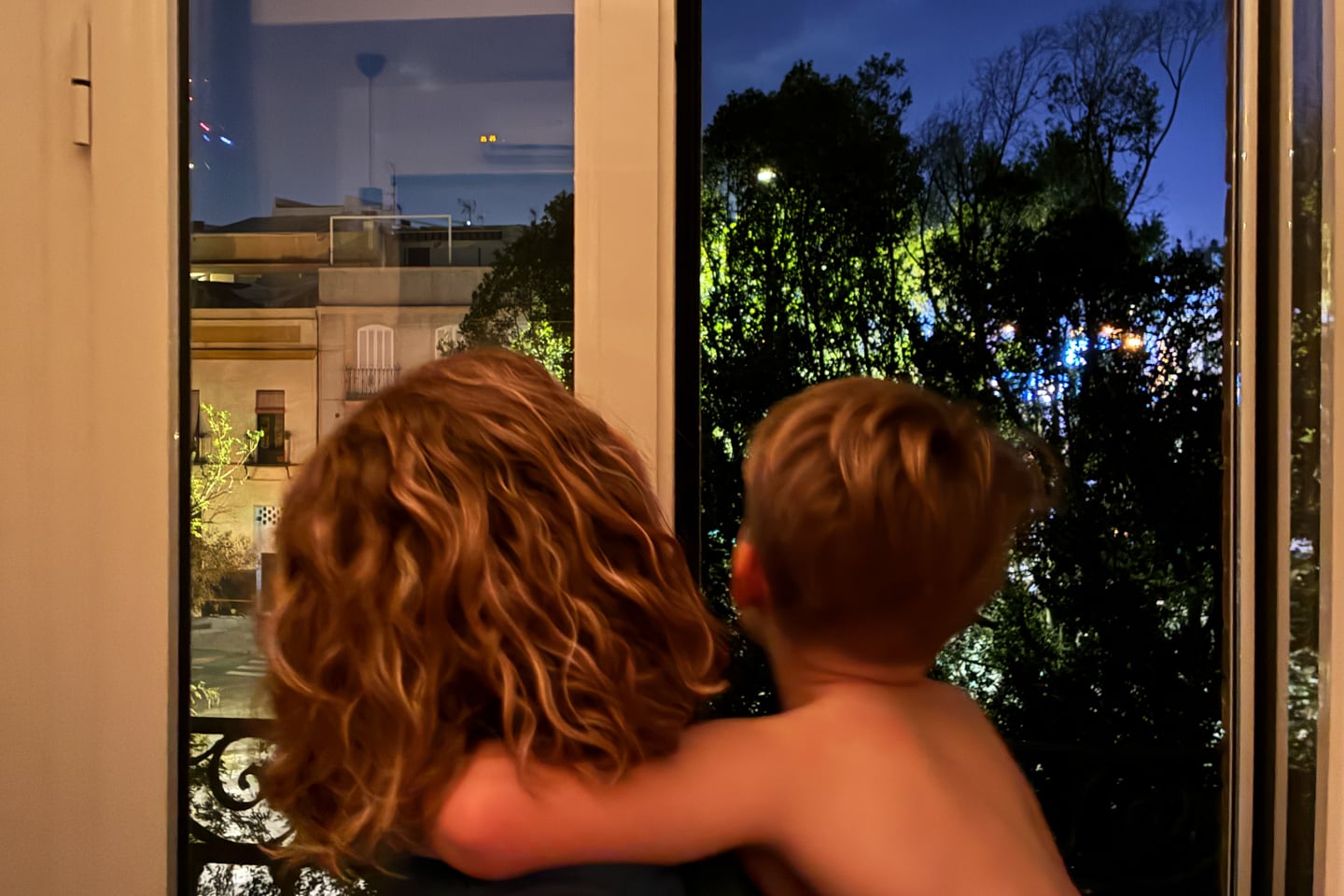
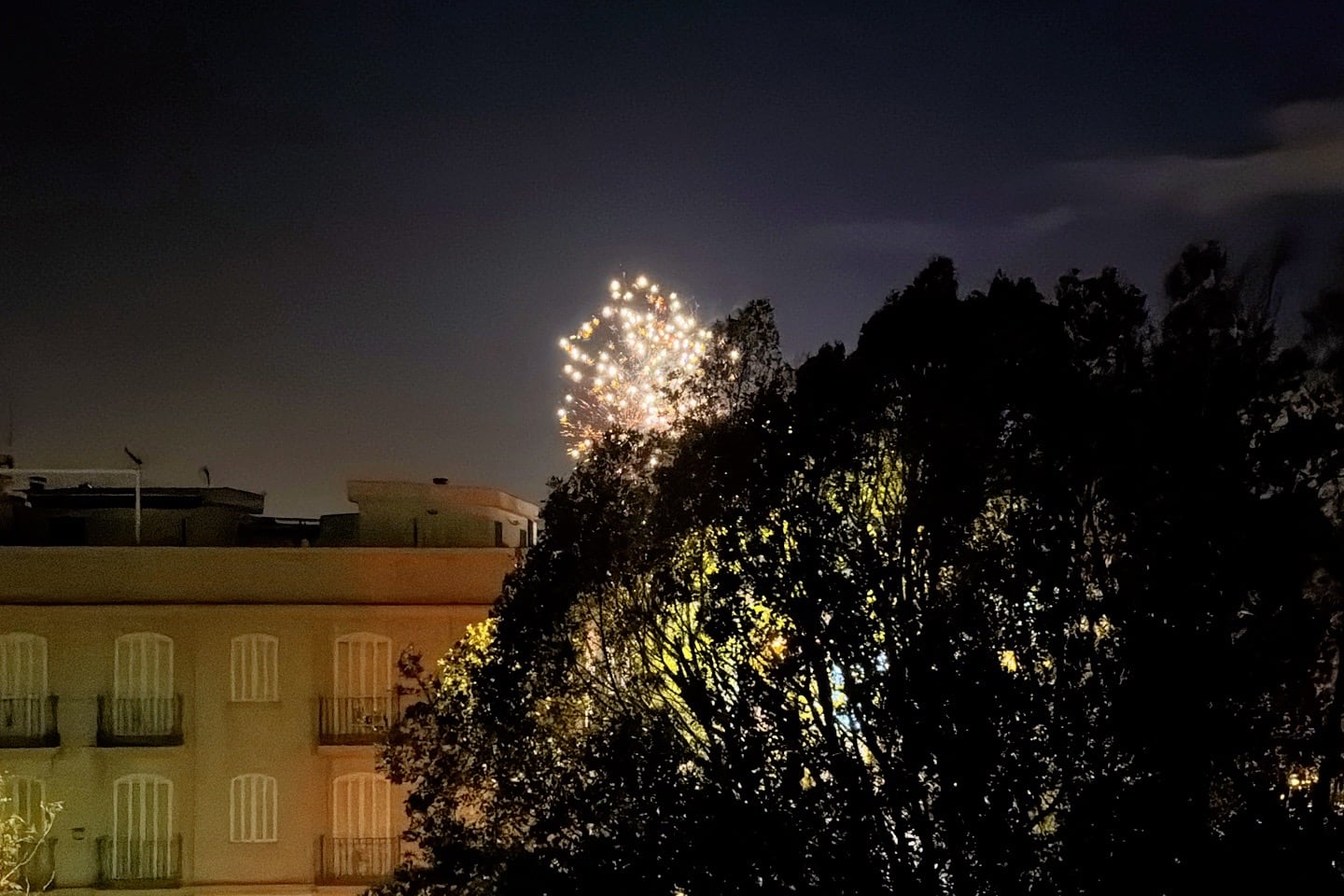
In Sevilla, they don’t typically have one or two central fireworks displays. Instead, the entire town unleashes enough ordinance to make a seasoned war veteran run for cover.
It was as if every man, woman, and child in this city of nearly a million had their own dozen aerial shells and M-80s on hand to set off over the span of an hour.
At one point, there were even people lighting off commercial shells from the top of our building, which would rain down on us as we stood on the balcony.
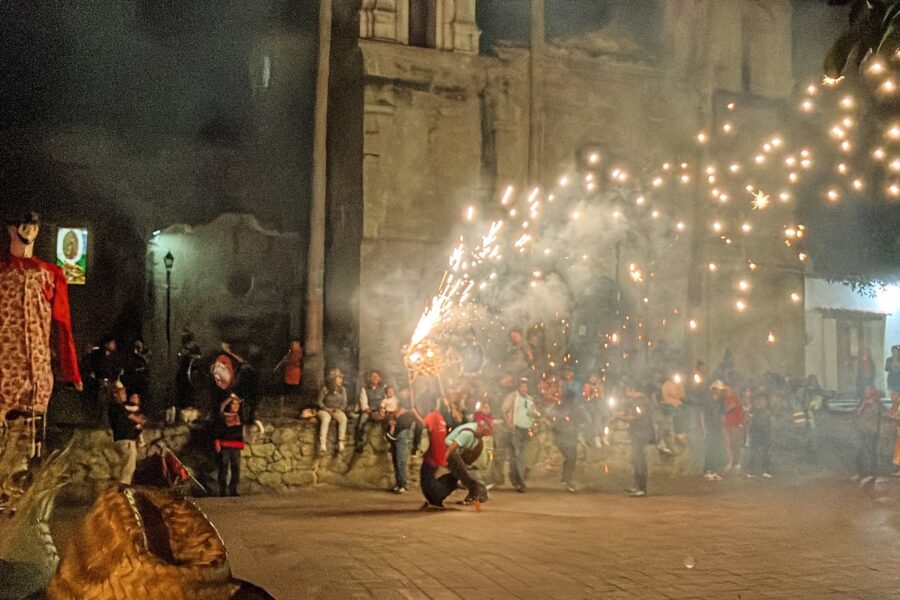
Occasionally we would get a glimpse of someone’s collection of pyrotechnics.
I seriously doubt anyone in the whole of Spain went to bed before 1am (but that’s like a normal day, here).
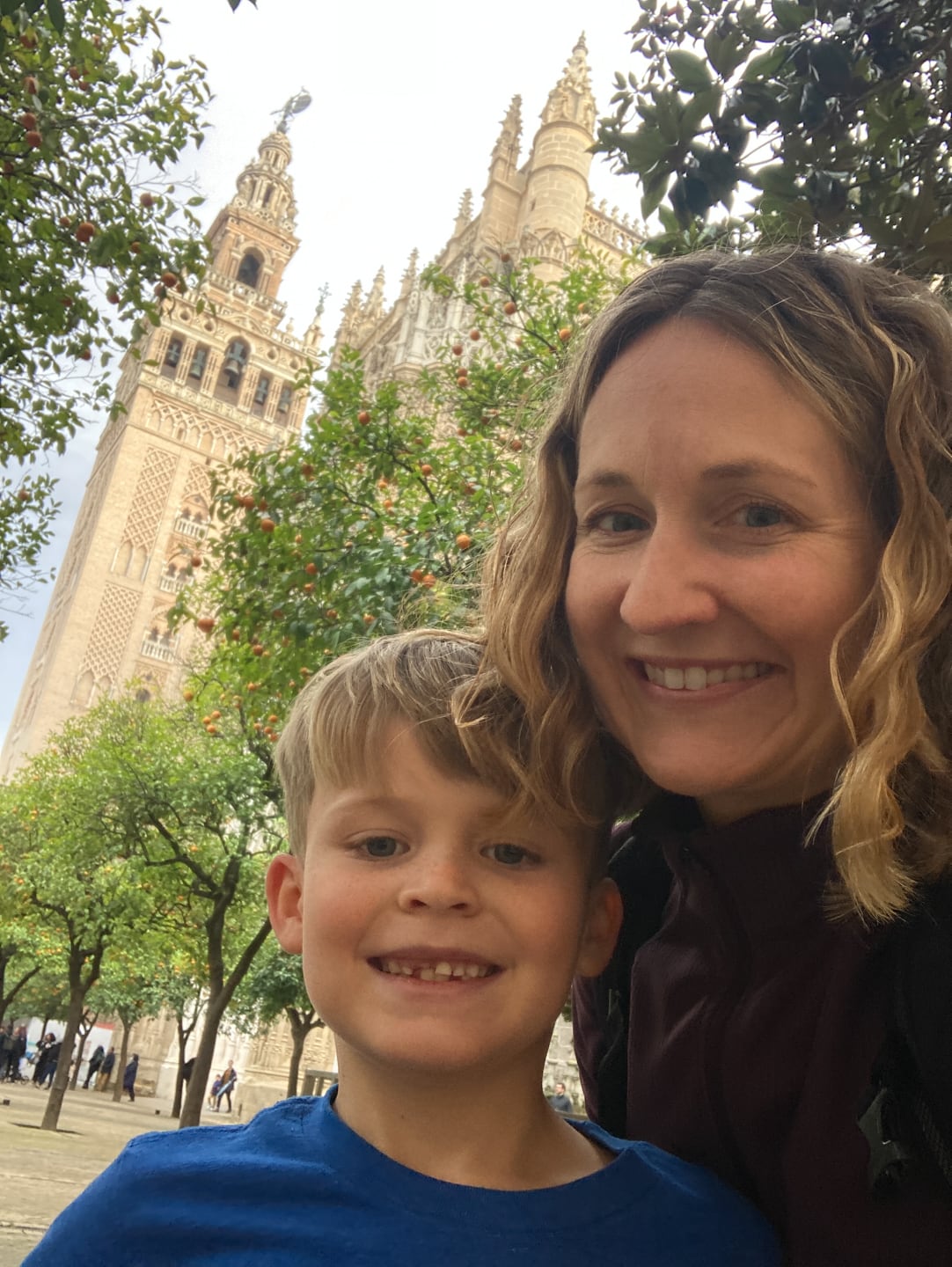
The Sevilla Cathedral is undoubtedly the most-visited landmark in the entire city. It’s a UNESCO-designated site and so popular, that even here in the depths of winter (i.e. “low season”) we still had to buy our tickets more than a week in advance to have any hope of visiting.
When we got to the cathedral, we still had a bit of time until our designated entry, so we grabbed some churros con chocolate nearby.
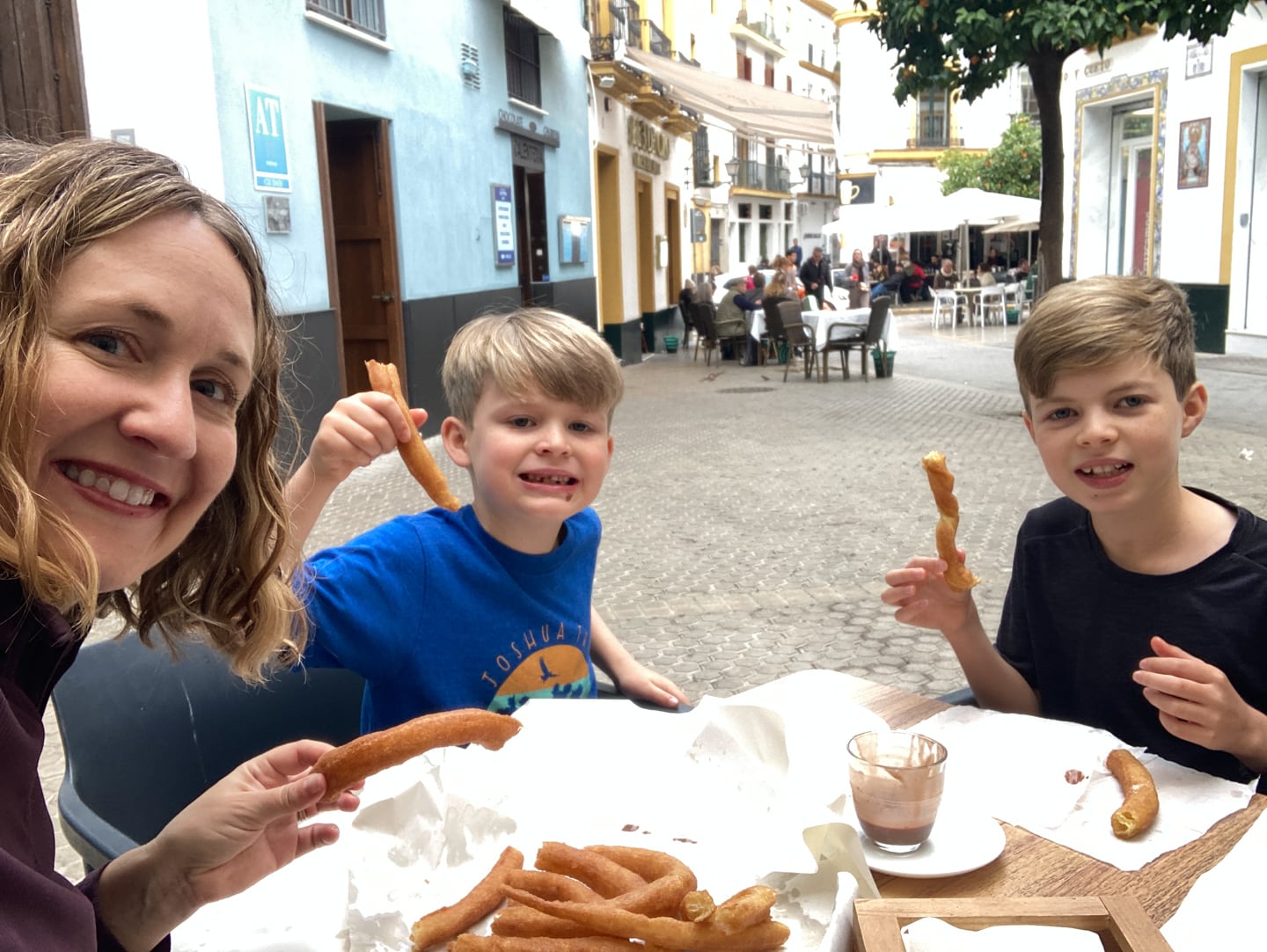
On paper, these sound delicious. While tasty, they weren’t quite as amazing as we all thought they might be. They’re basically fried bread dipped in chocolate milk.
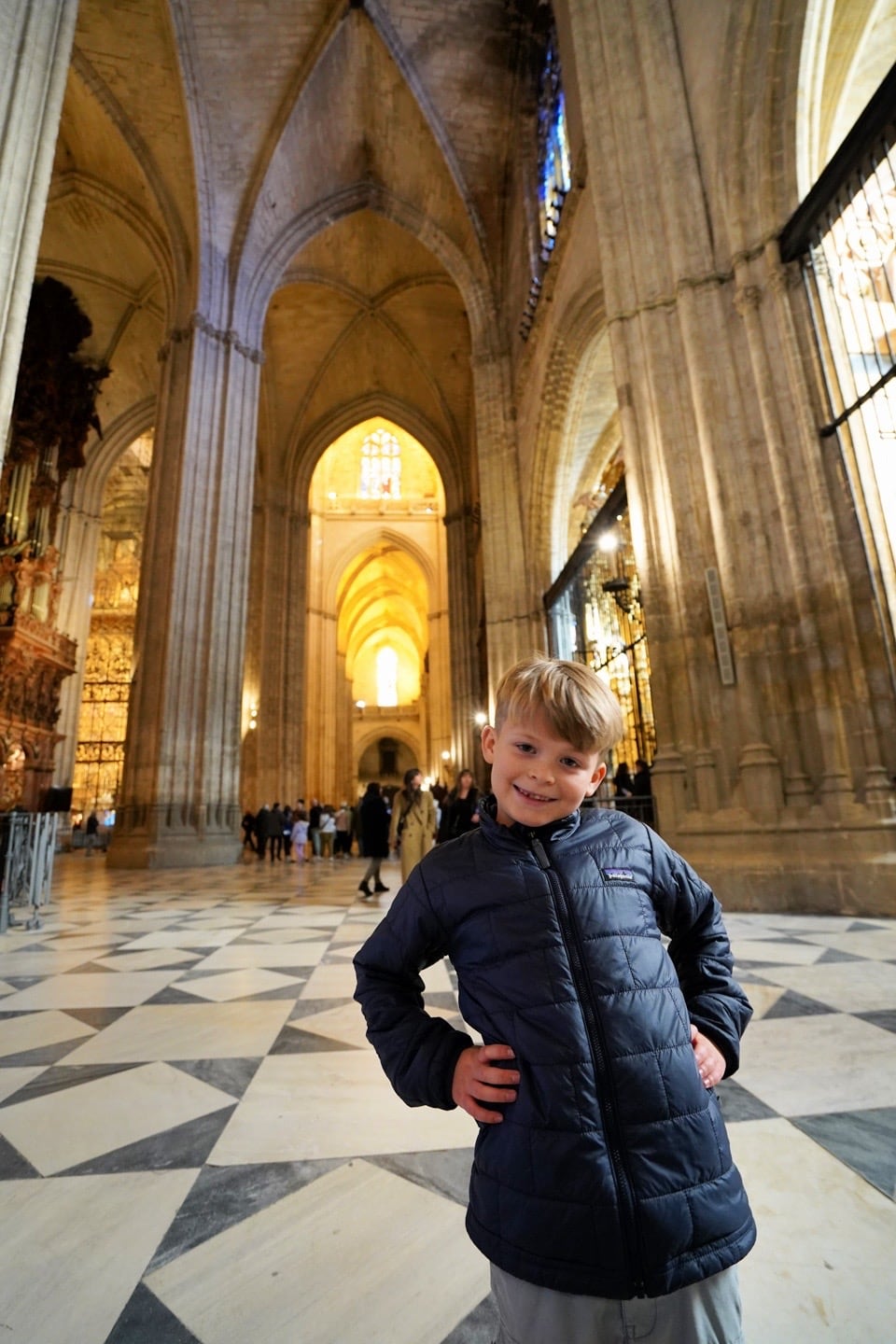
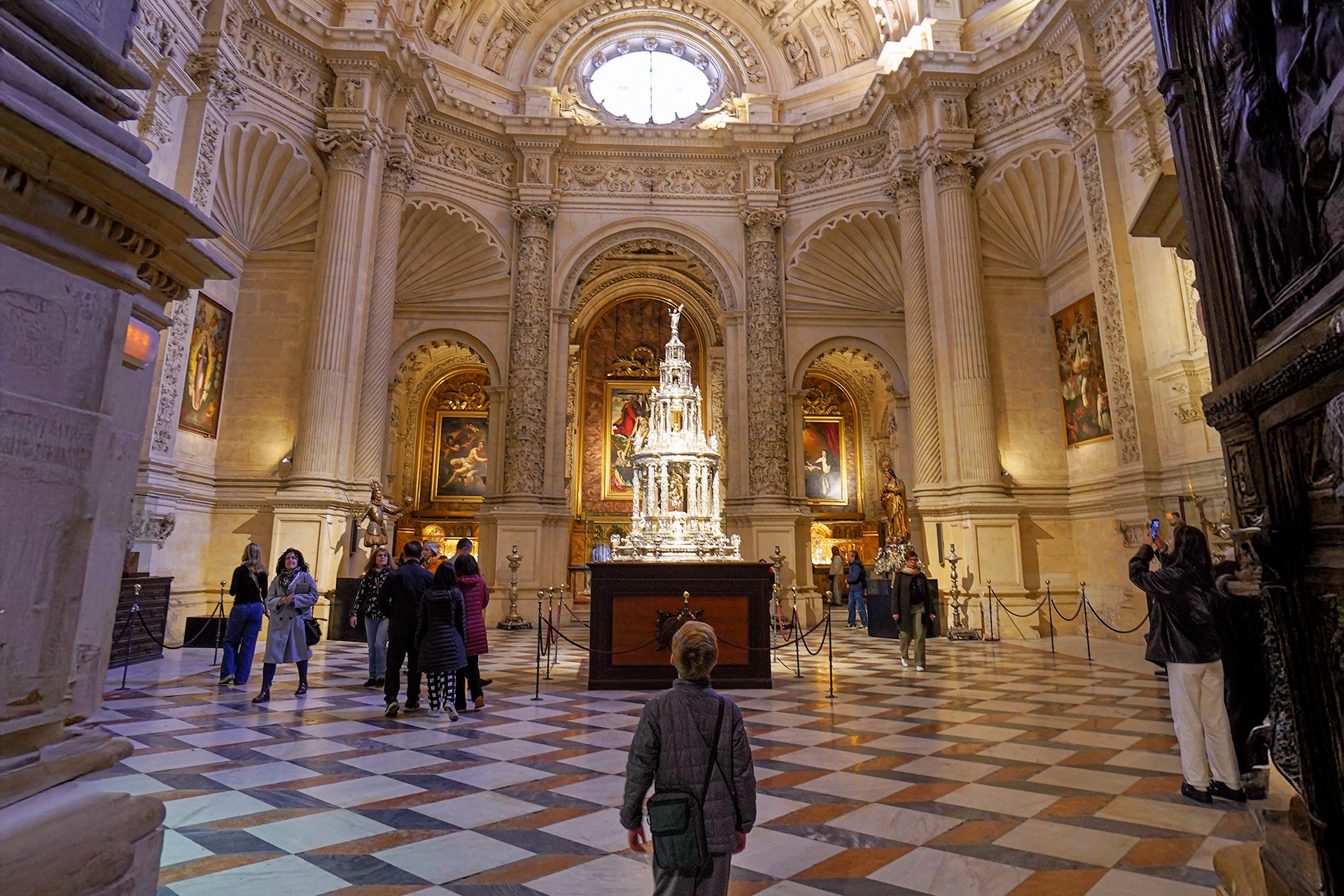
Before we knew it, the time had finally arrived for us common folk to be allowed entry into the grand cathedral. And so grand, it is.
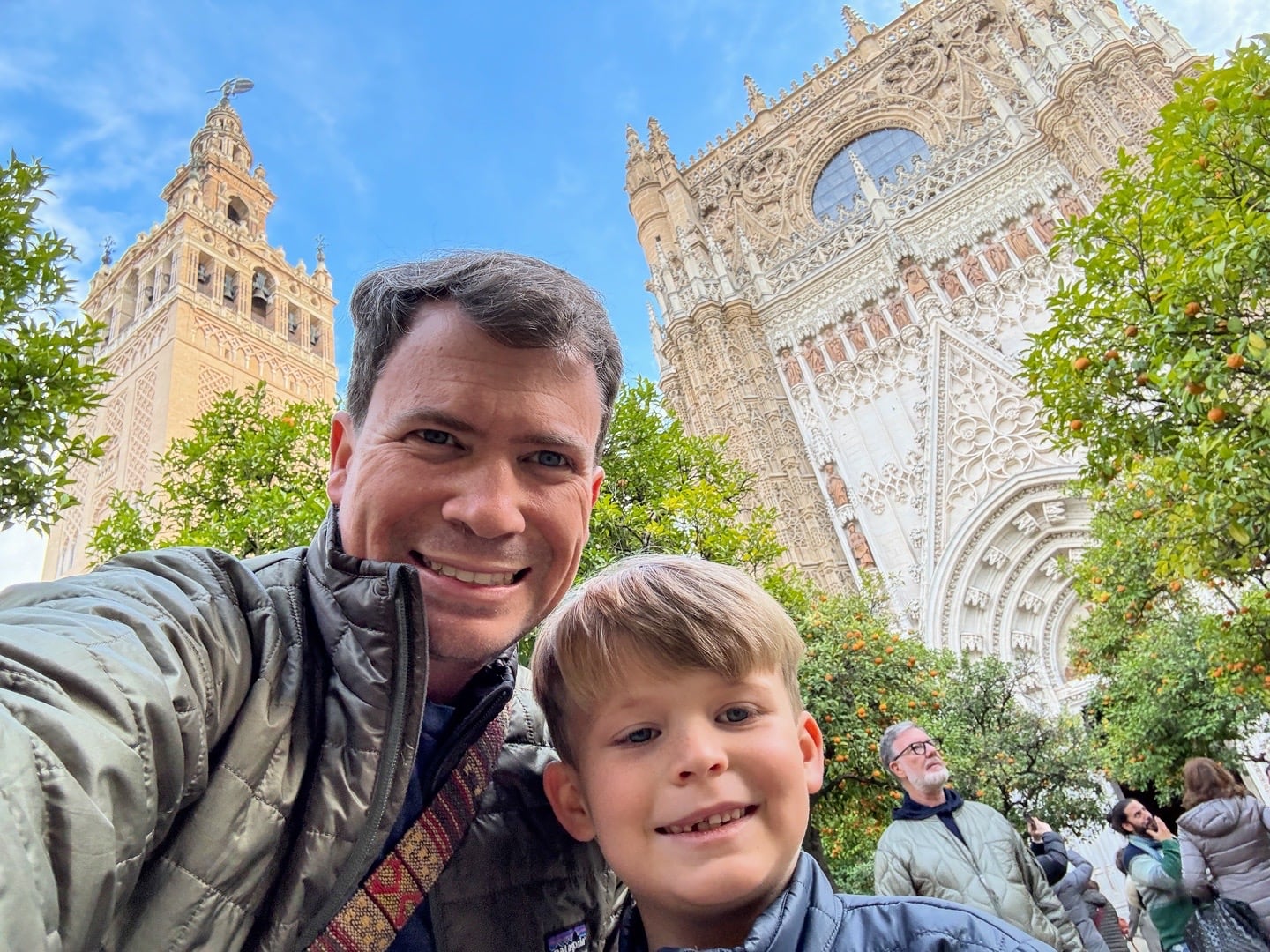
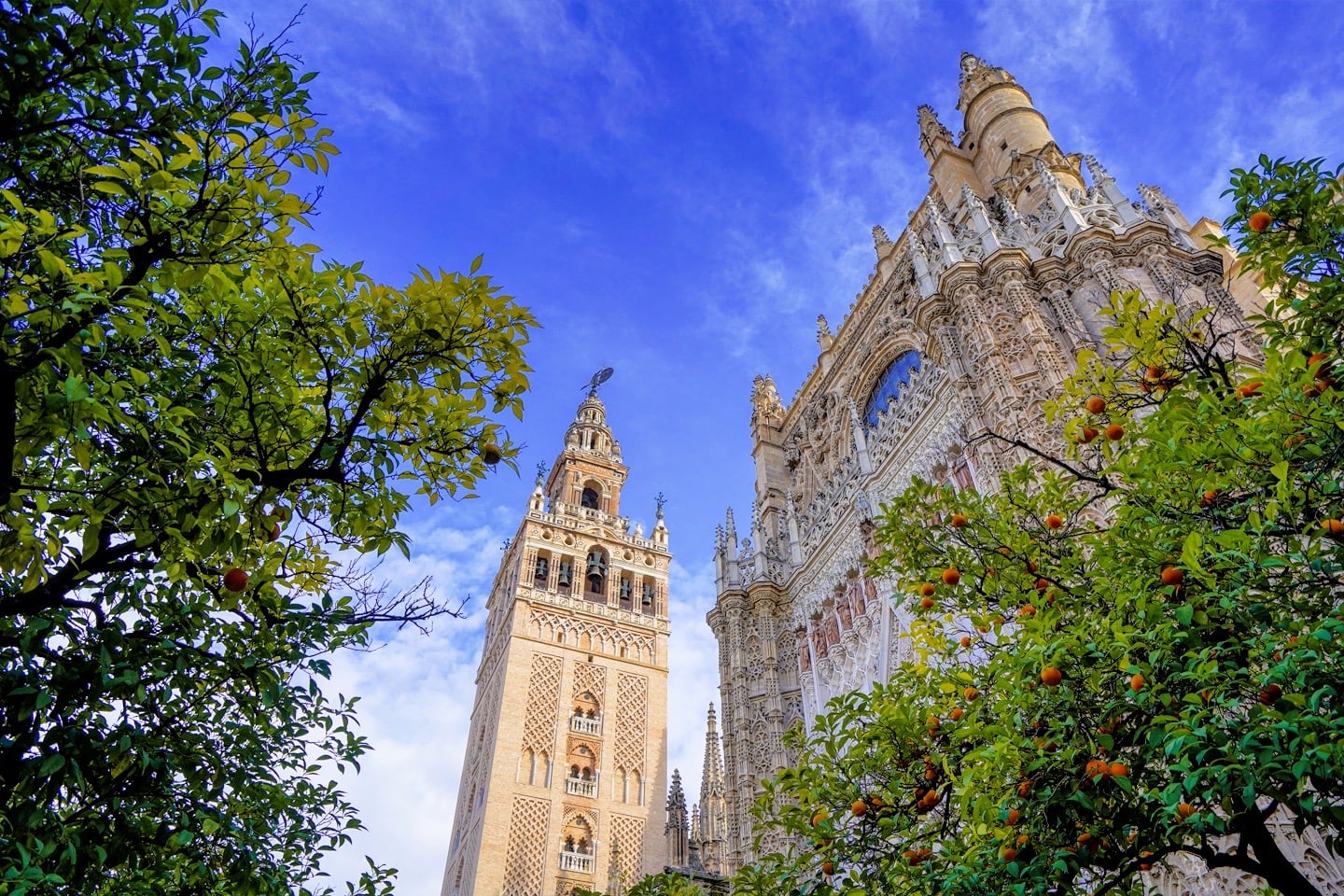
But first, a climb to the top of La Giralda (the cathedral’s iconic bell tower).
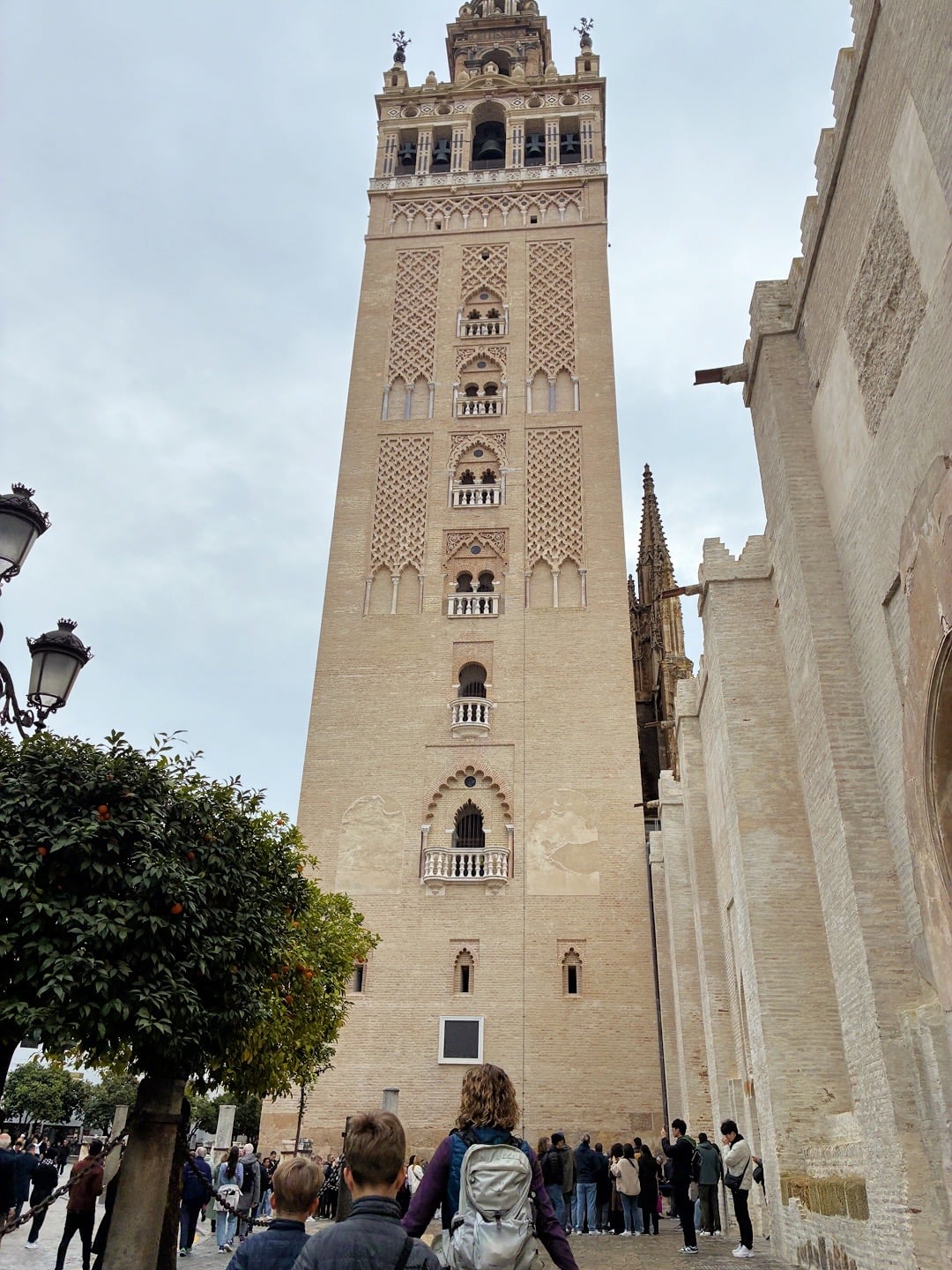
This is no ordinary bell tower (or ordinary climb up a bell tower).
Originally built as a minaret for the Great Mosque of Isbiliya (Sevilla’s Moorish name) in 1198, it stands an incredible 35 stories high.
It’s so tall that, in order for the muezzins to conduct the Call to Prayer five times a day from the tippy top, a series of ramps—35 to be exact— were installed so they could barrel up and down on horseback.
No horses these days, just lots and lots of people.
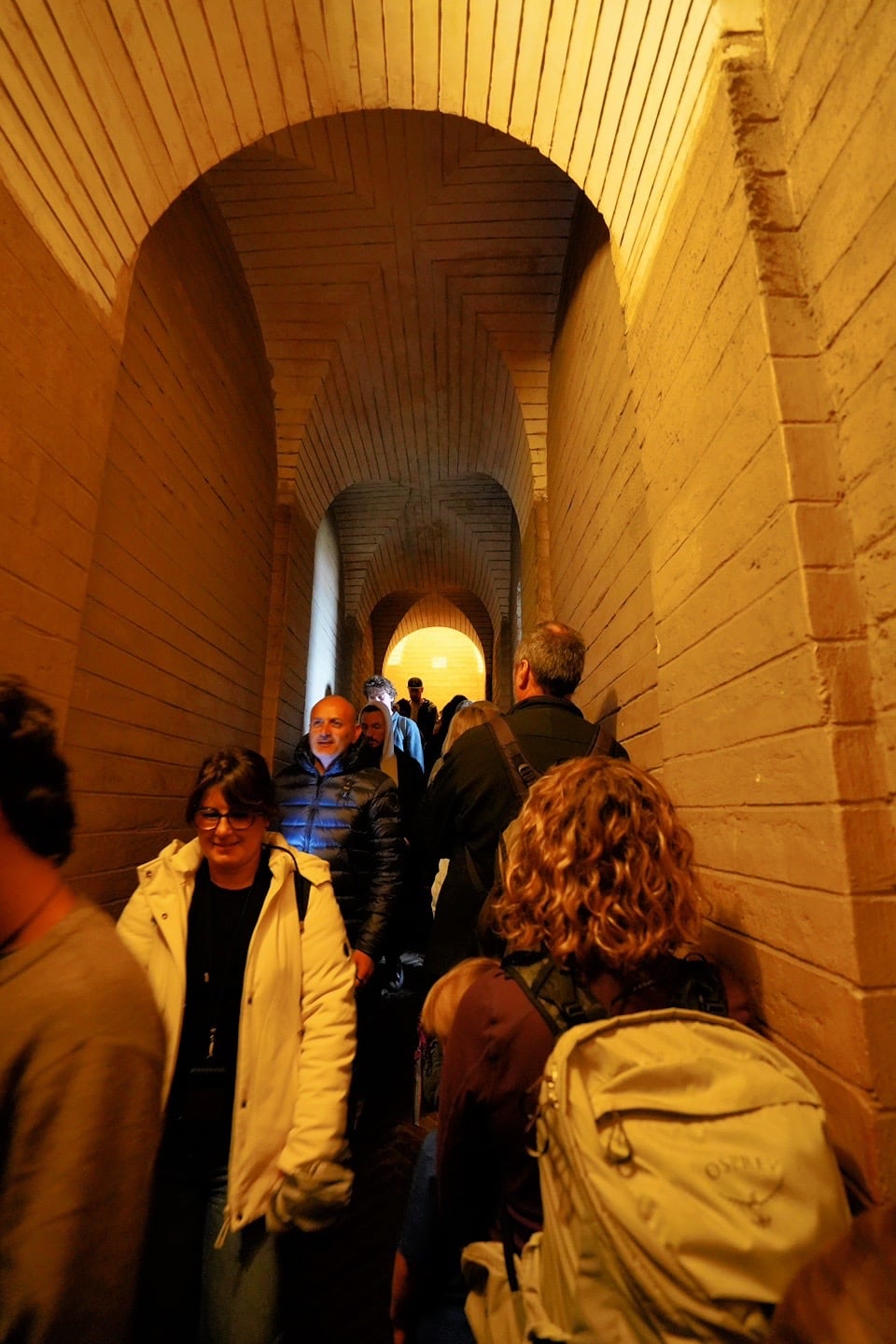
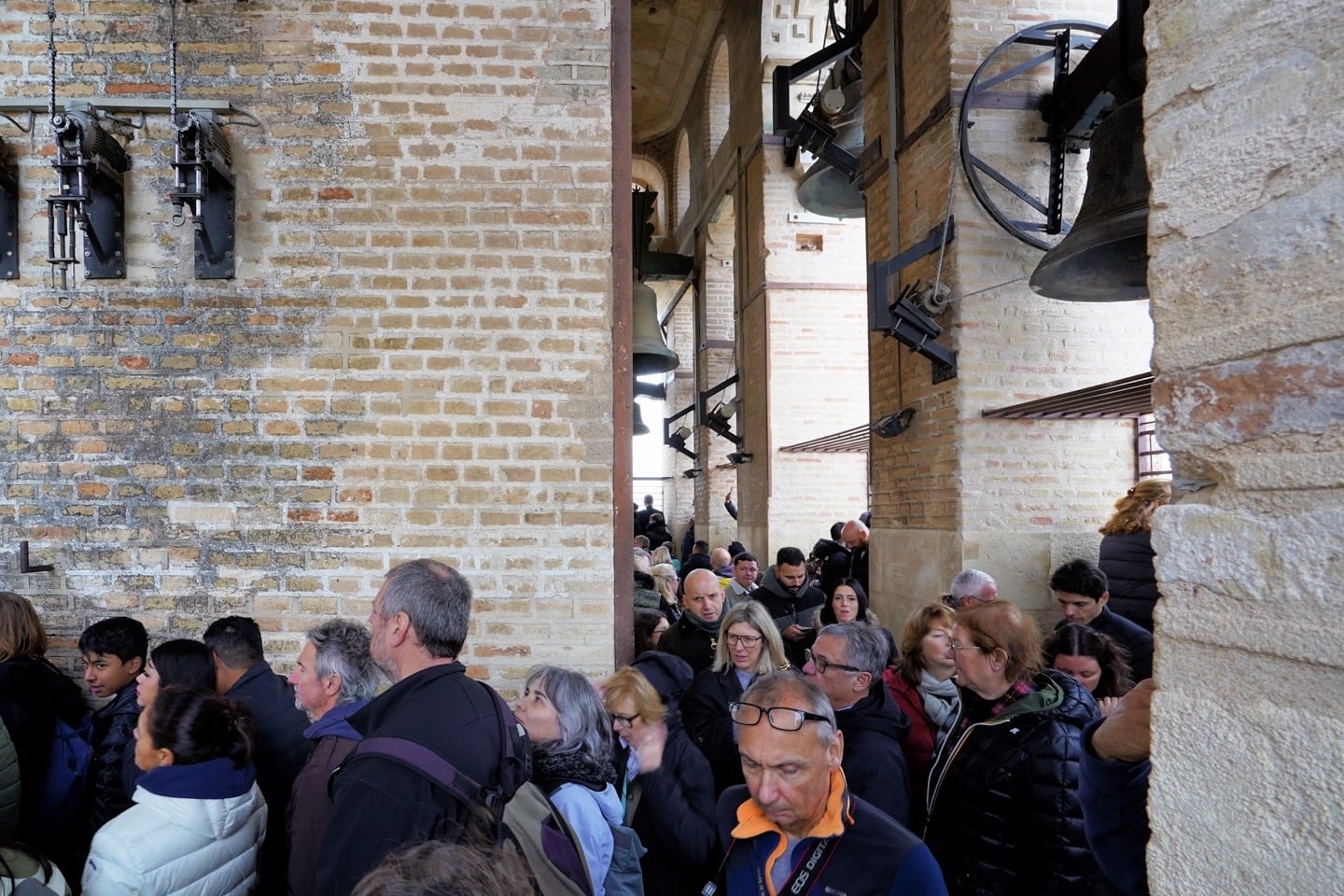
Things were no better at the top. For twenty minutes, we inched along, slowly making our way around the perimeter of the bell tower, squeezing in where we could to take in what we could of the views.
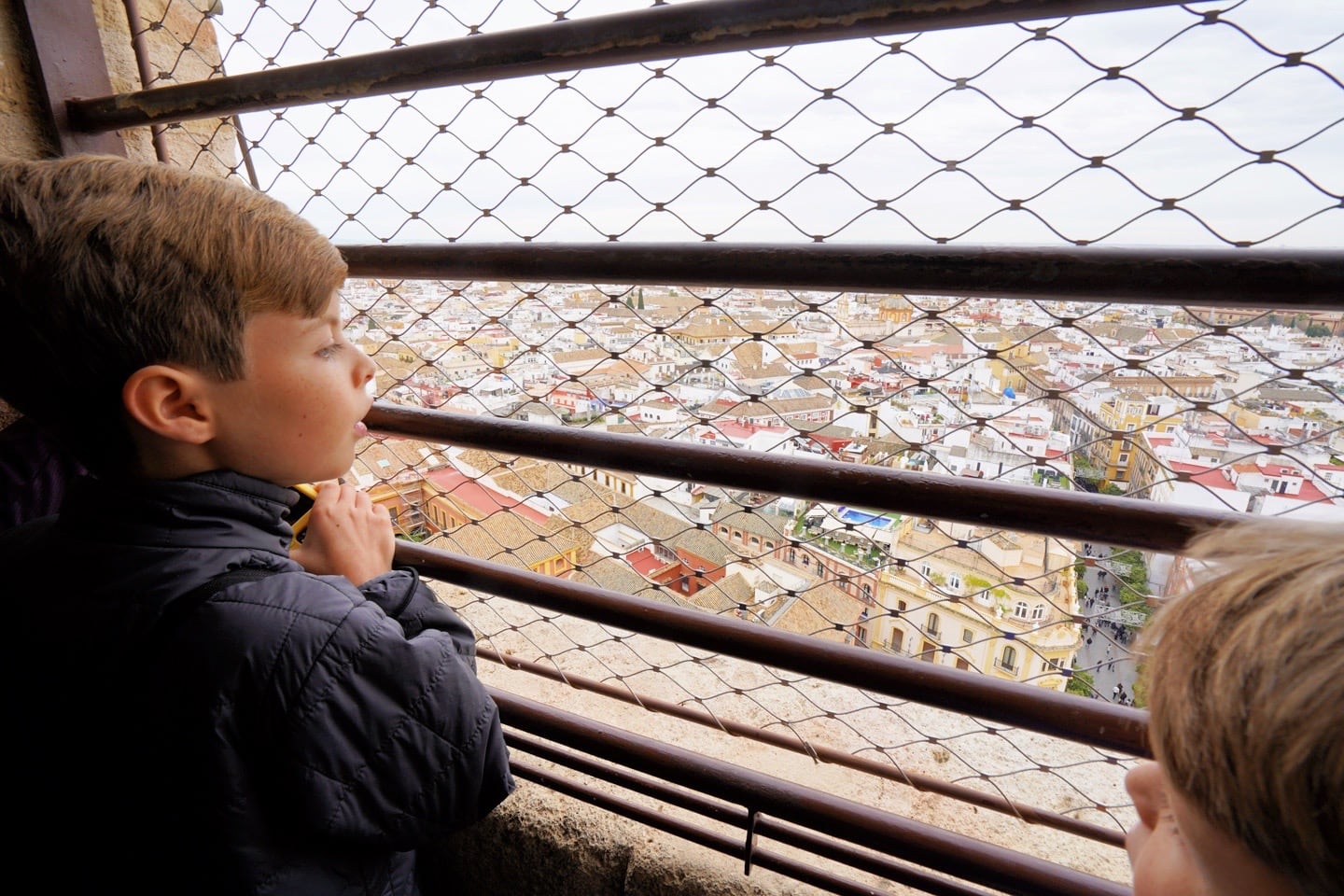
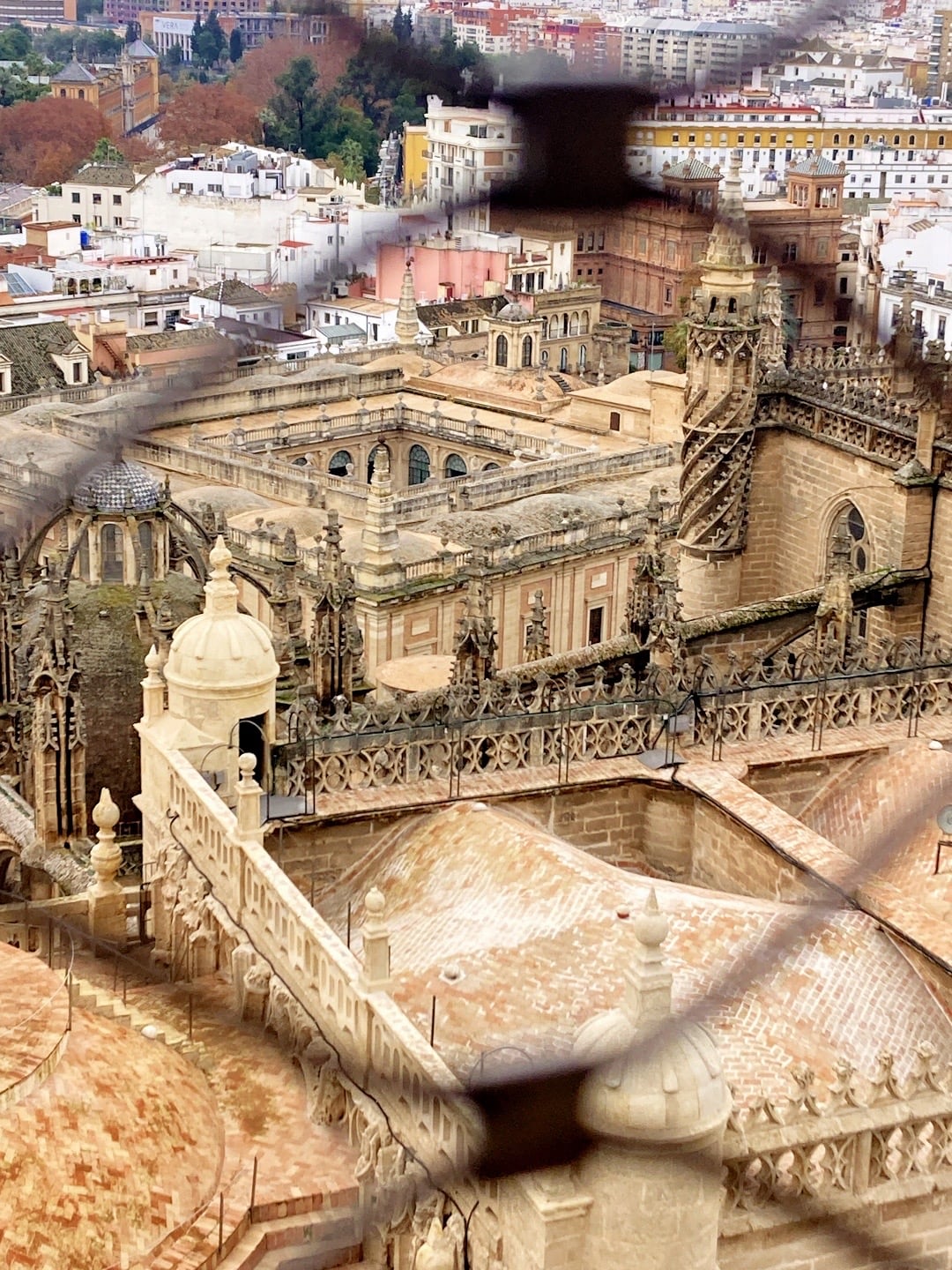
Back down on ground level, the madness continues. Tickets are timed entry here—up to 60 people are permitted to enter every five minutes. Today and every day this week, the online ticketing system shows they’re maxed out.
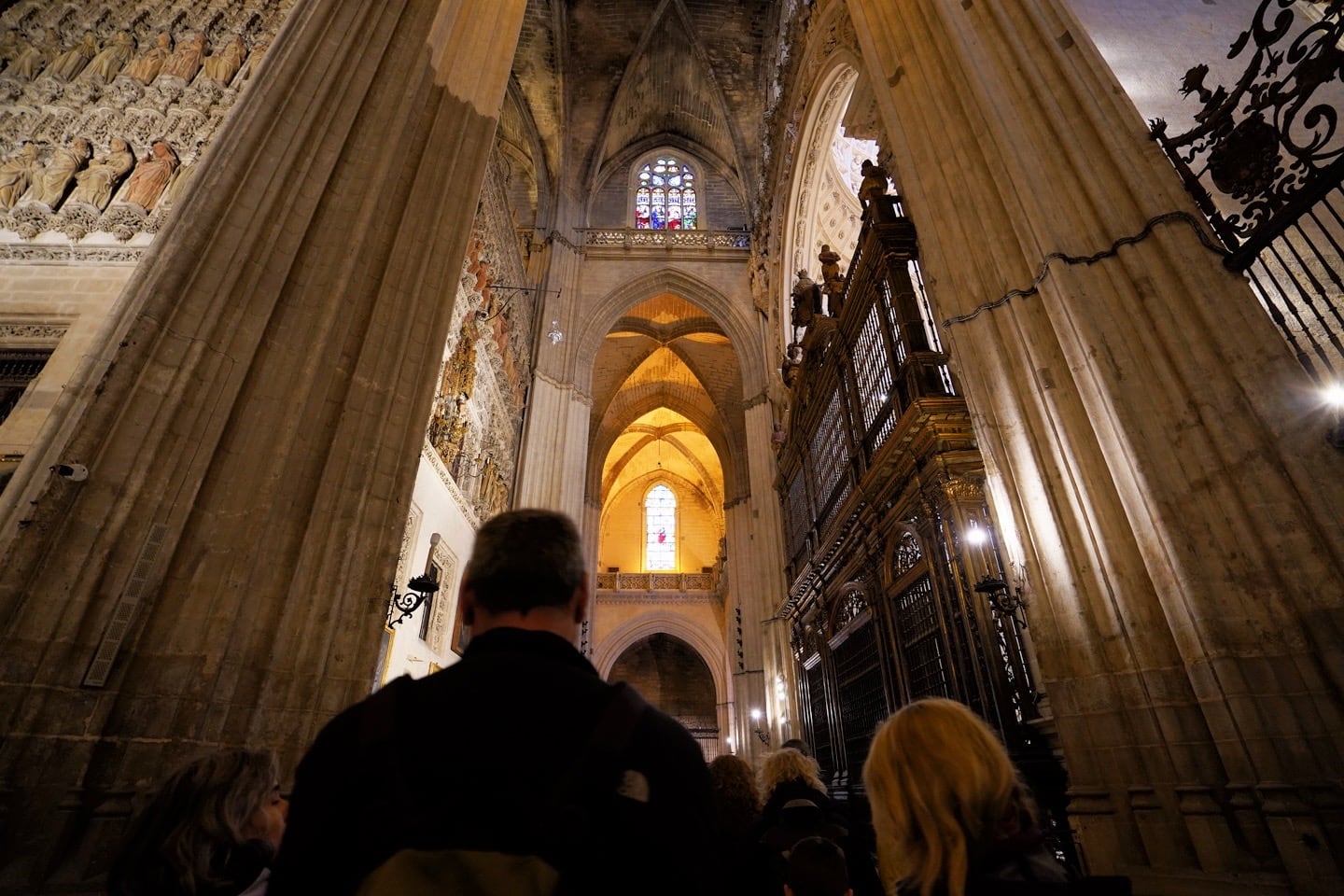
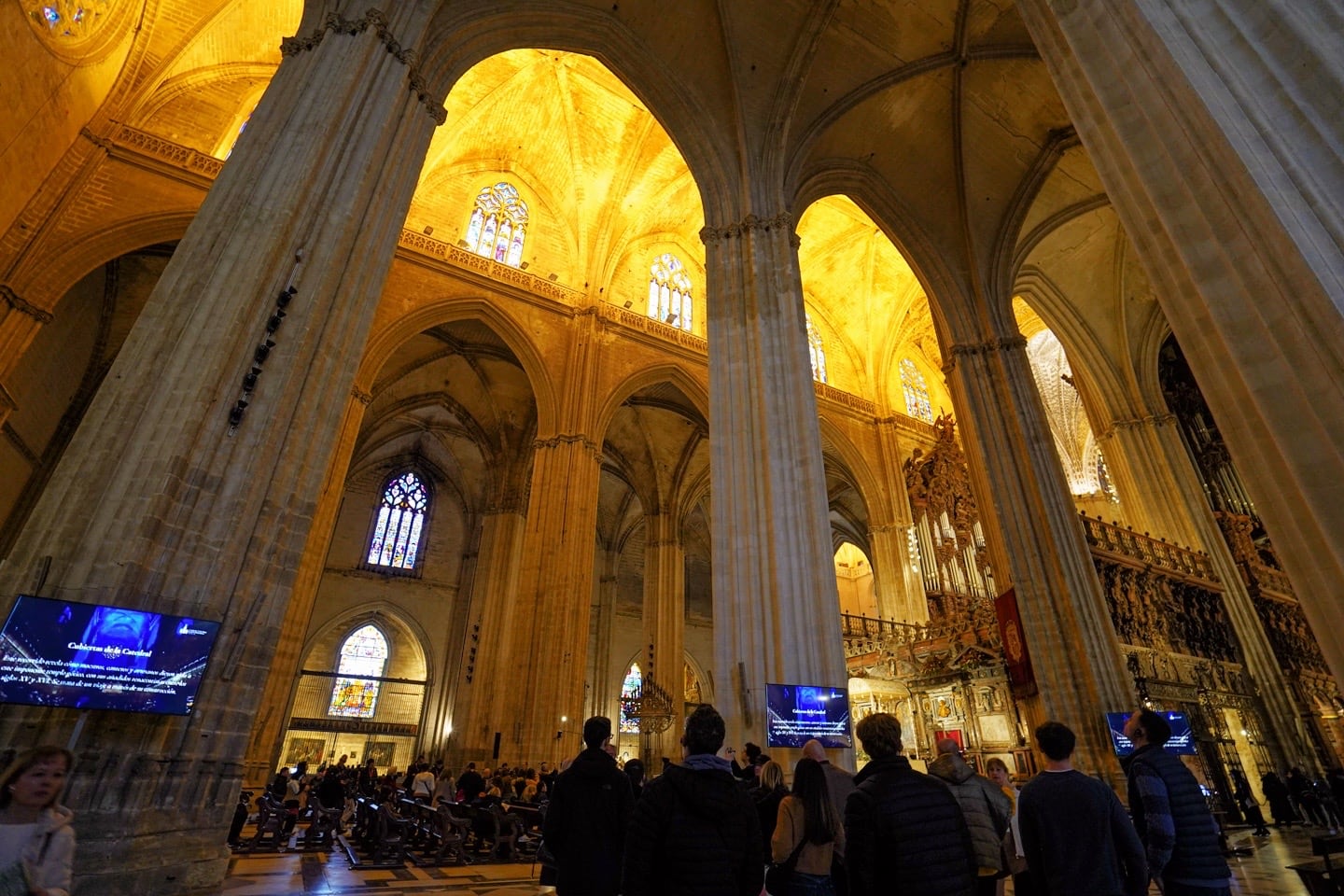
The Seville Cathedral (Catedral de Santa María de la Sede) is the world’s LARGEST Gothic cathedral, large enough to entirely enclose two football fields side-by-side.
It was built between 1434 and 1517 on the site of a 12th-century Almohad mosque. Unlike the historic Córdoba mosque-cathedral, the Spanish demolished all but the minaret, re-using the materials in the construction of this enormous building.
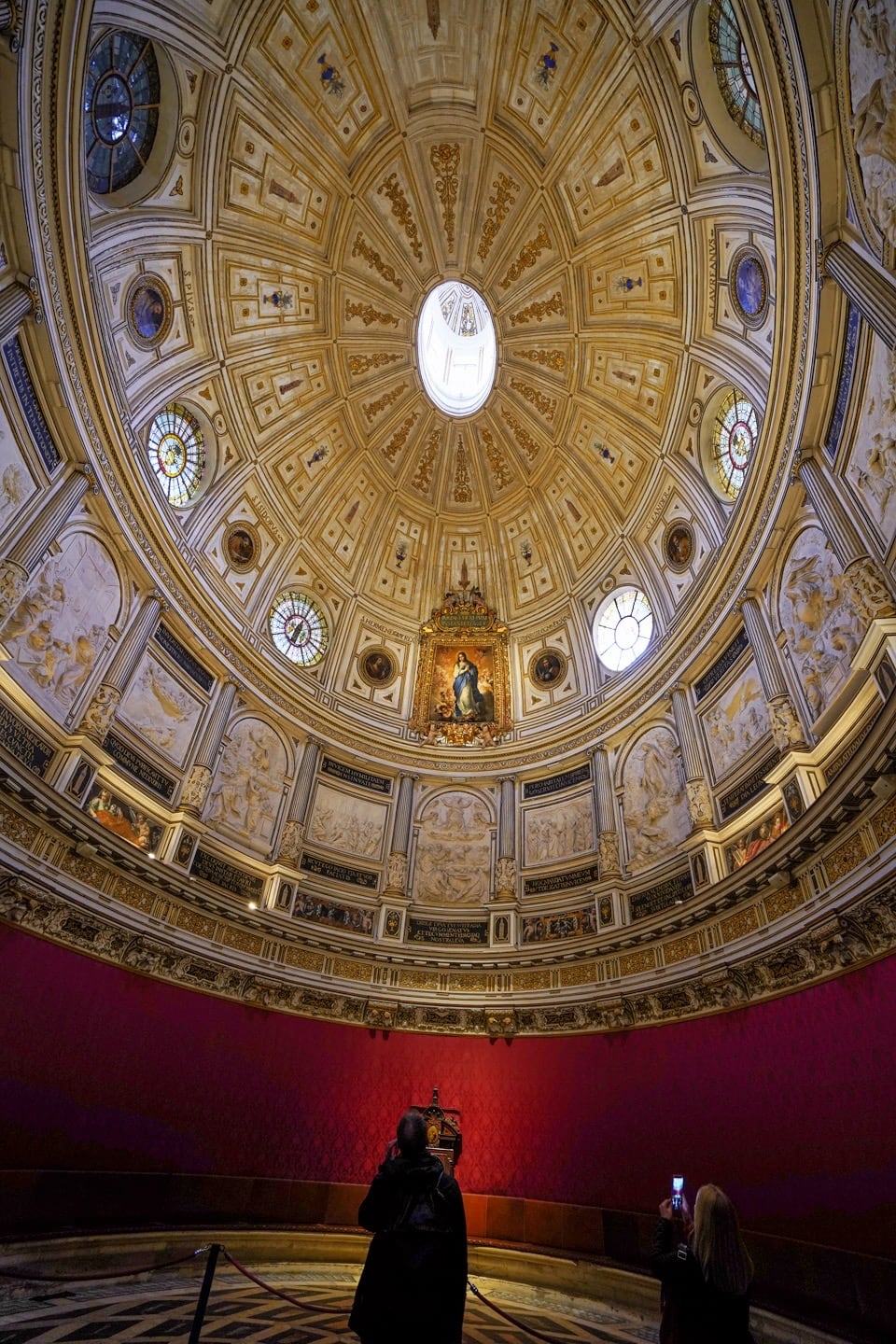
Several side halls, like the Sacristía Mayor, are by themselves larger than the naves of some cathedrals in other parts of the world.
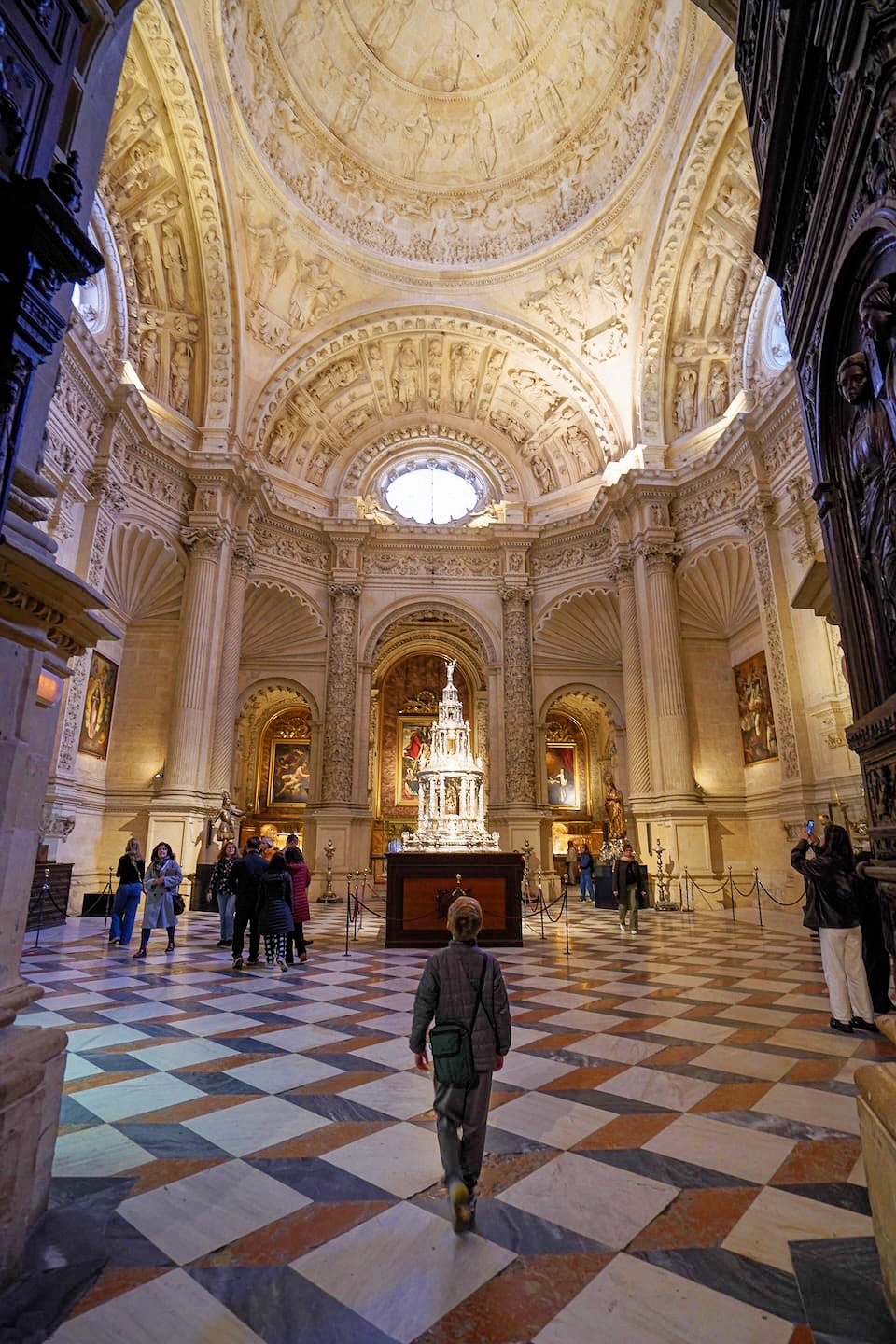
The number of people in each of dozens of halls, cloisters, and chapels within the complex ebb and flow during our visit, making it possible to occasionally find corners of relative peace.
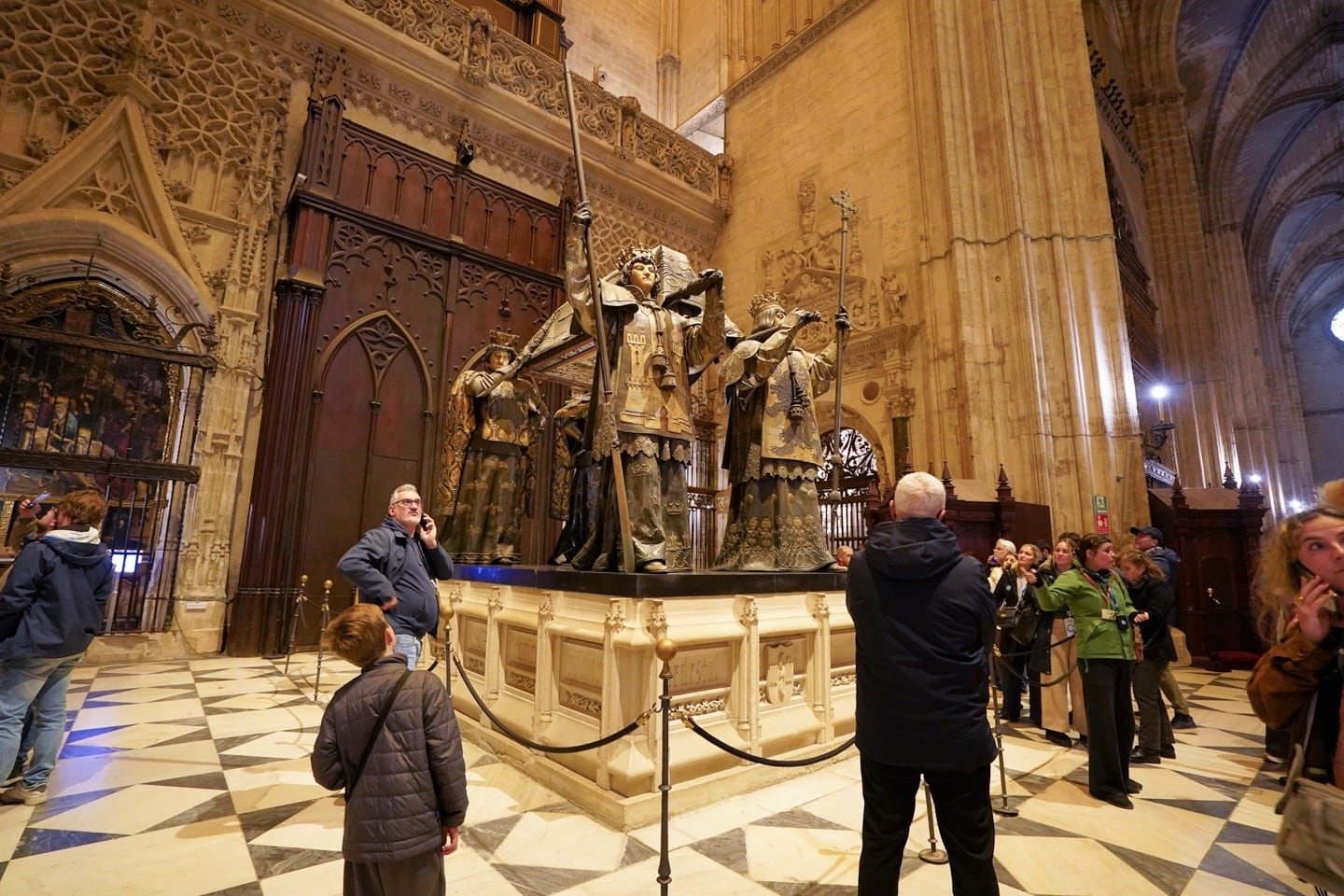
Located in the south transept, this 19th-century monument holds the confirmed skeletal remains of Christopher Columbus. Previously, his remains were located in Valladolid, Santo Domingo, and Havana.
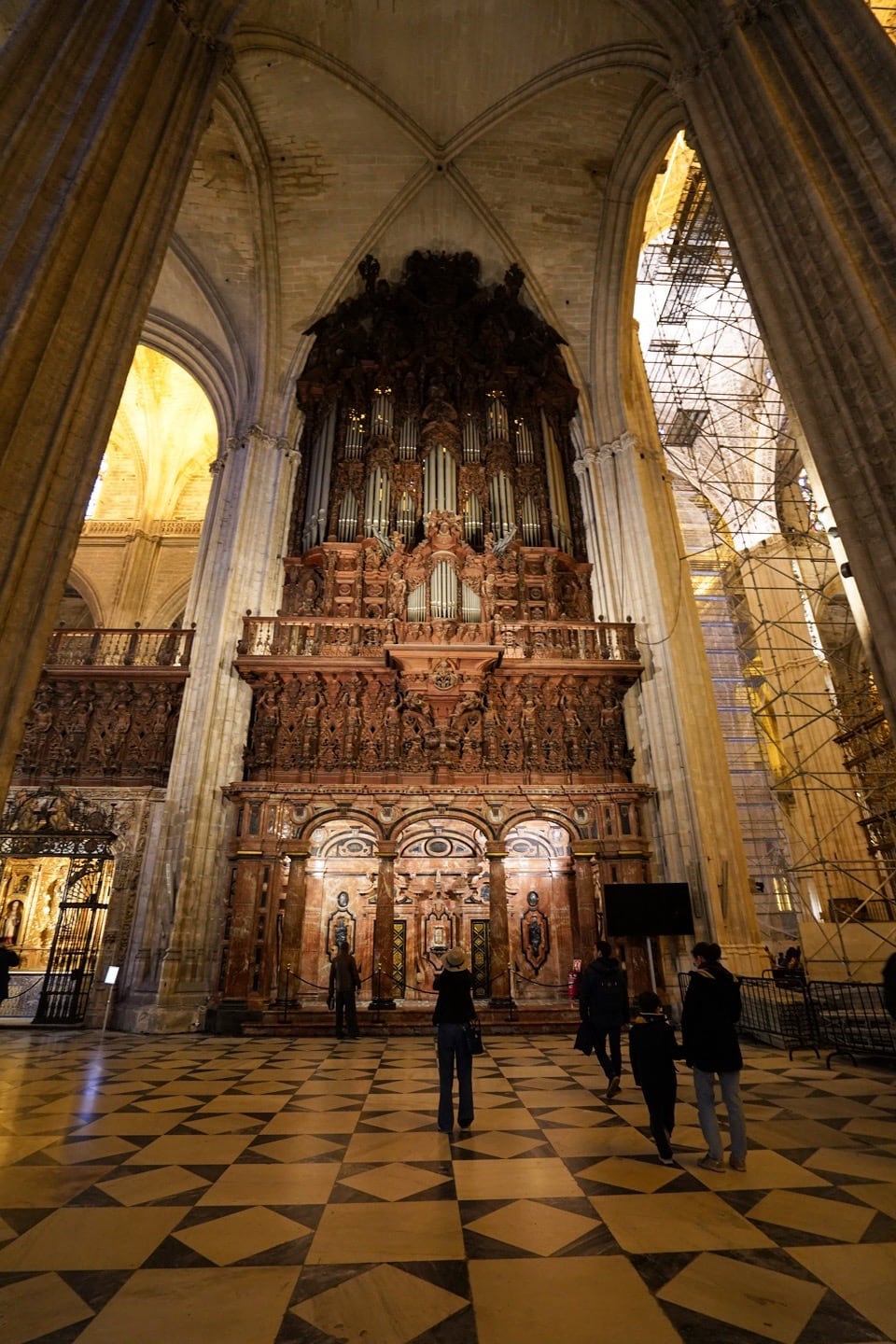
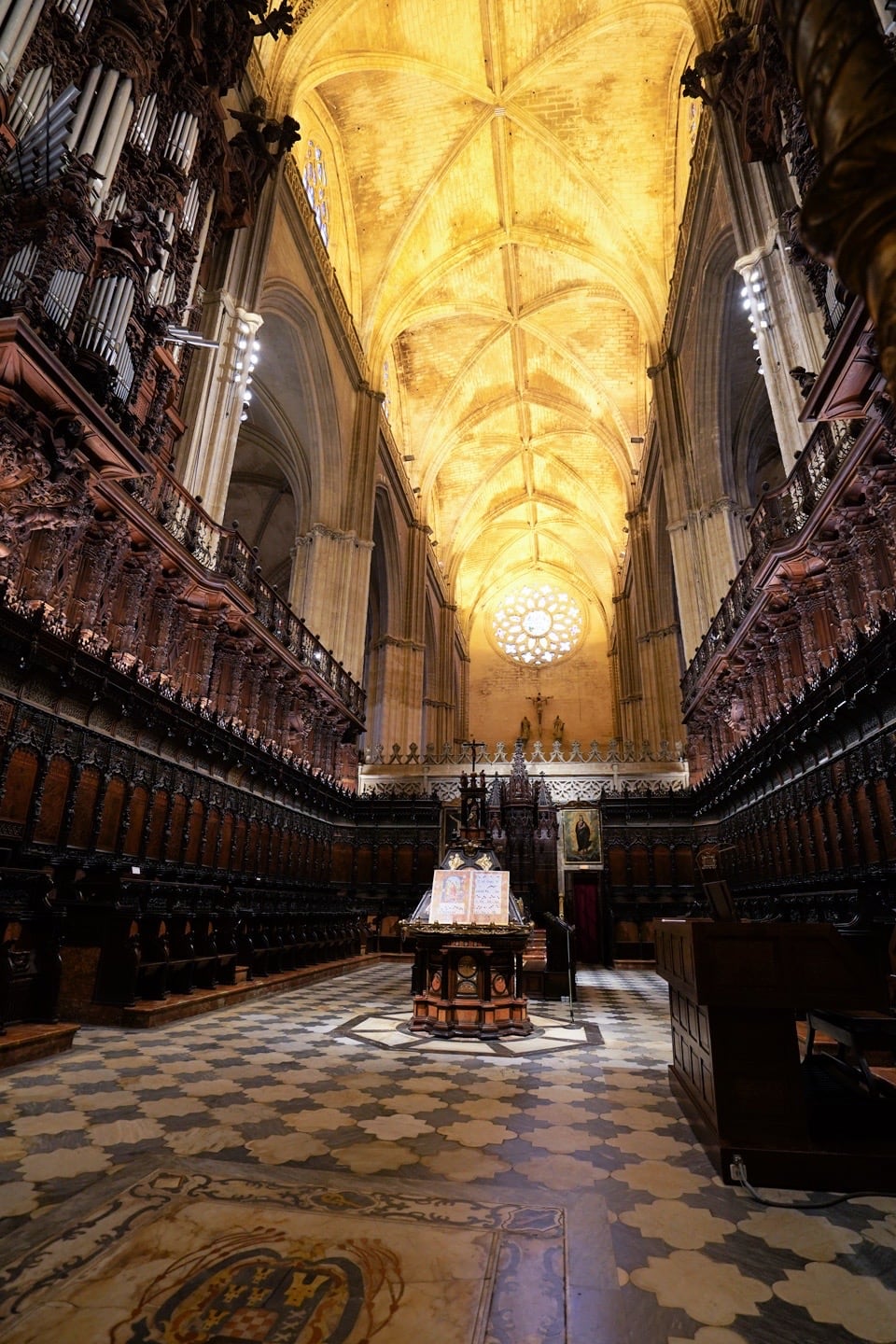
Above, is one HALF of the massive Pipe Organ, which is played from the Choir (below)
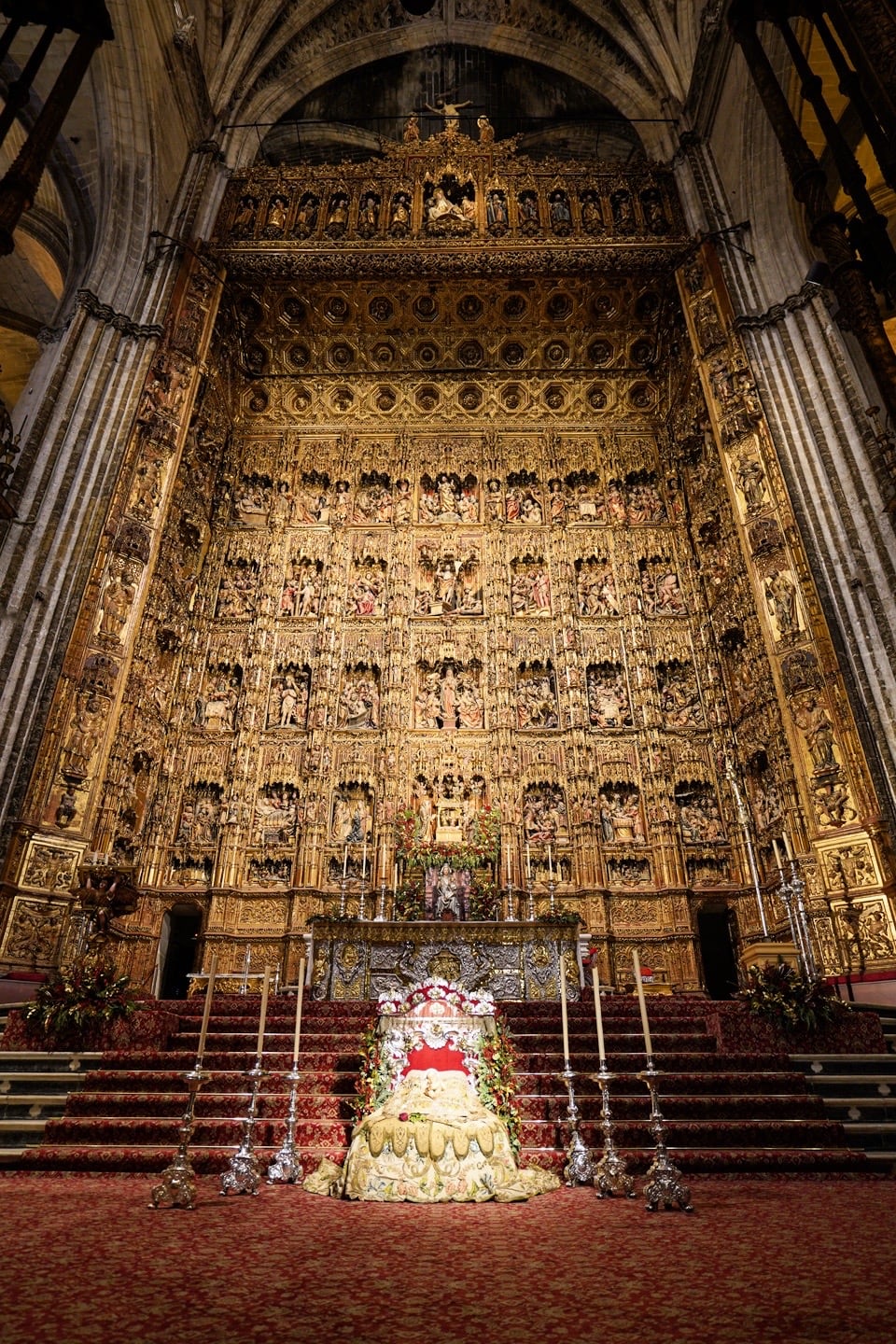
Known as the Retablo Mayor, the massive gilded altar is widely considered the largest and richest altarpiece in the entire world.
It stands as a staggering wall of gold, soaring over 66 feet (20m) high and stretching 59 feet (18m) wide. The figures standing on the very top of the altar are said to be life-size, which might give you some idea of how big this thing is.