
The week before Christmas, Lori asked me when I wanted to do our day trip to Córdoba. Day trip to Córdoba? Thinking in Mexico terms, I thought, “We can’t do a day trip to Córdoba. That’s like a hundred miles away!”
But this, of course, is Europe. And not just Europe, but Spain—the country with the second largest high-speed rail network in the world (after China). A 100-mile day trip? Piece of cake.
Our Euro-African Journey (So Far...)

I’m no train buff, but I do love train travel. Any mode of transport where you can travel in comfort—be able to stretch your legs whenever you want, have a full meal, casually have a cup of coffee, work, play cards, and use the toilet whenever you want—is the way to go!
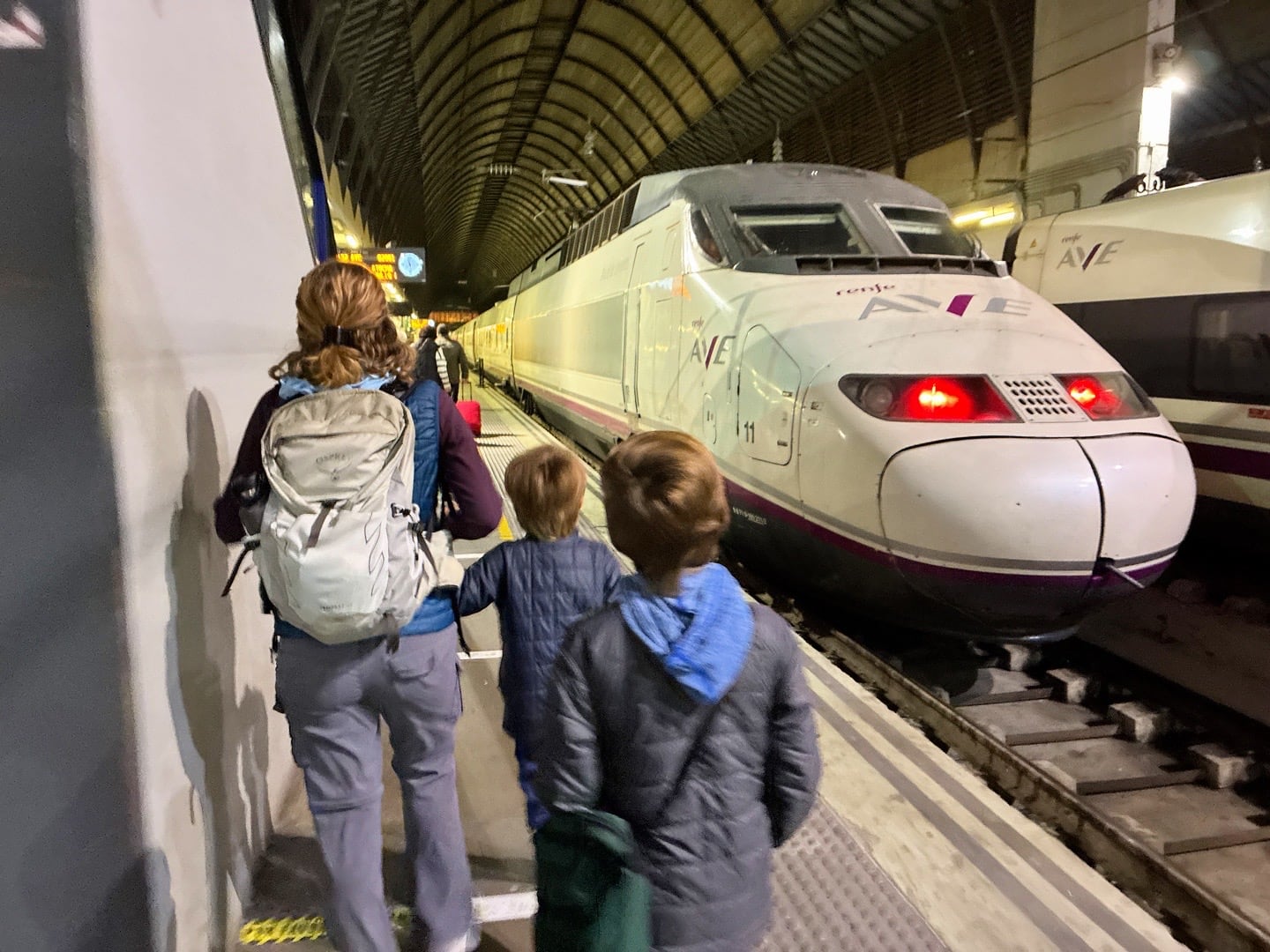
This particular train was something special. It’s a time capsule to the early days of high-speed rail in Europe. This is a Renfe AVE S-100, the train that started it all. It was the engine model that inaugurated the country’s first stretch of high-speed track between Sevilla and Madrid in 1992, which was built to coincide with the ’92 Expo.
The AVE S-100 cruises at around 150 mph, but it can go much faster.

What’s even better, is that they hadn’t really updated the cars of this train either. Everything’s straight up early ’90s luxury.

.
Note from the future:
You may have heard about Spain’s second deadliest train crash that happened in mid-January 2026, three weeks prior to our trip. We weren’t on that particular stretch of track, but we were close.
After dropping us off in Córdoba, this train would have continued north to Madrid, passing the small town of Adamuz (the site of the crash), some 20 miles away.
While an absolutely devastating tragedy for Spain and those involved, it’s important to note that Spain runs nearly two million train trips in any given year (about 5,000 per day)—the overwhelming majority of which experience no major issues.
Back to the post…
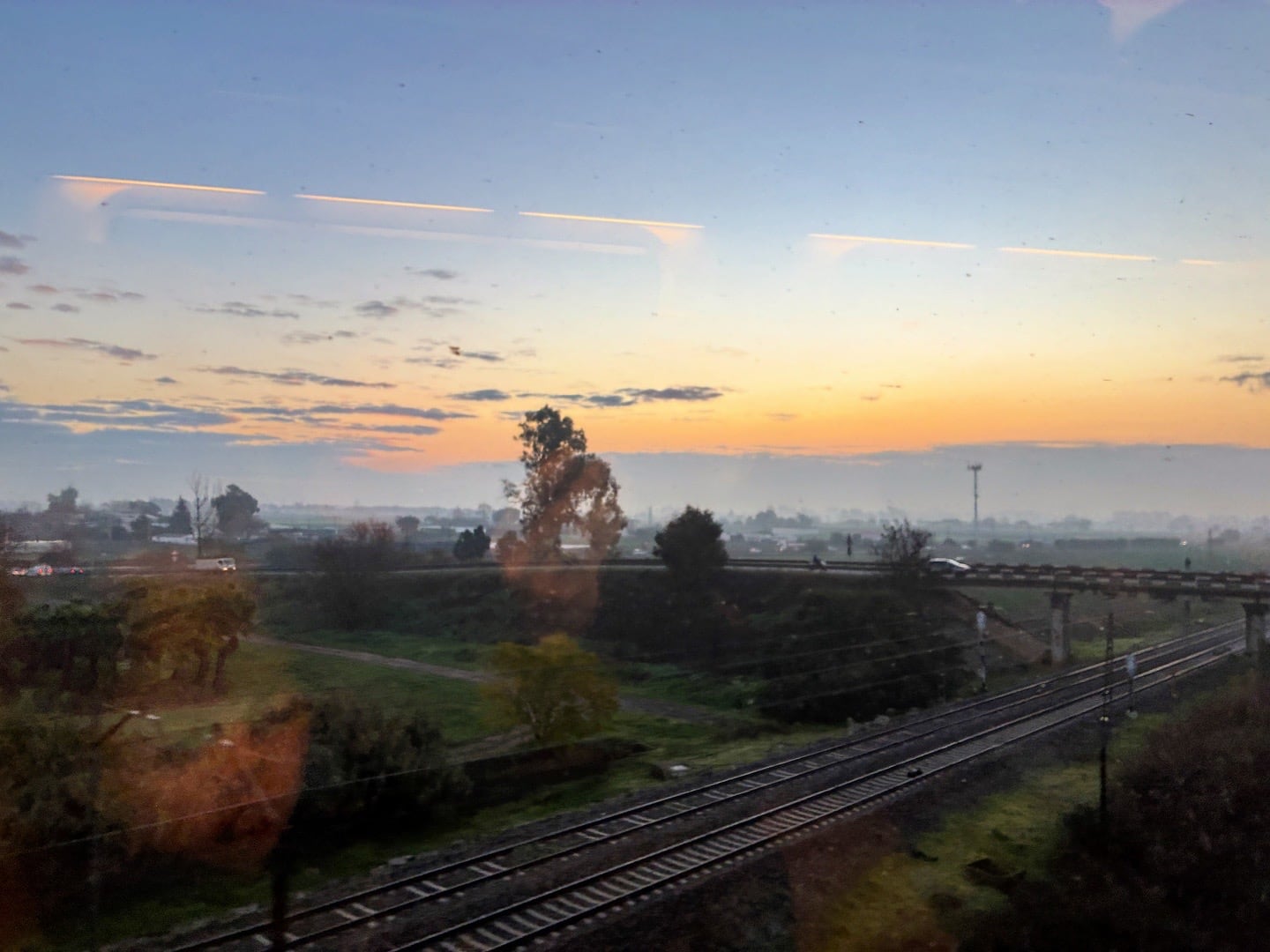
So how long did it take us to cover the hundred or so miles between Sevilla and Córdoba? A cool 35 minutes station to station.
It was frigid when we got to Córdoba. And we were hungry. We followed the pack of passengers out of the station and into the Centro (Spaniards love to eat, but they also love to walk everywhere, we discovered).
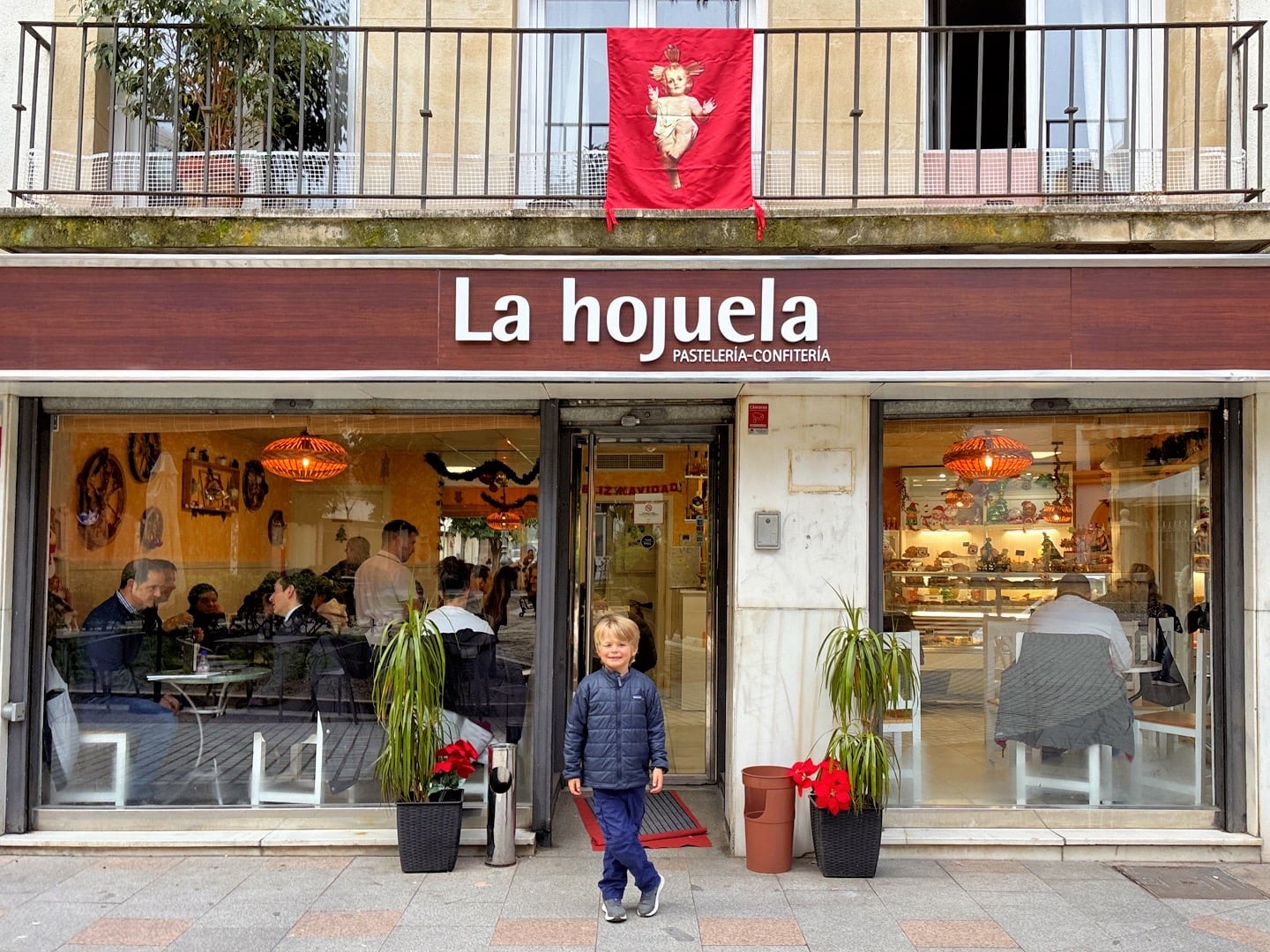
On the way, we stopped to grab a very Spanish breakfast (pan con tomate)…
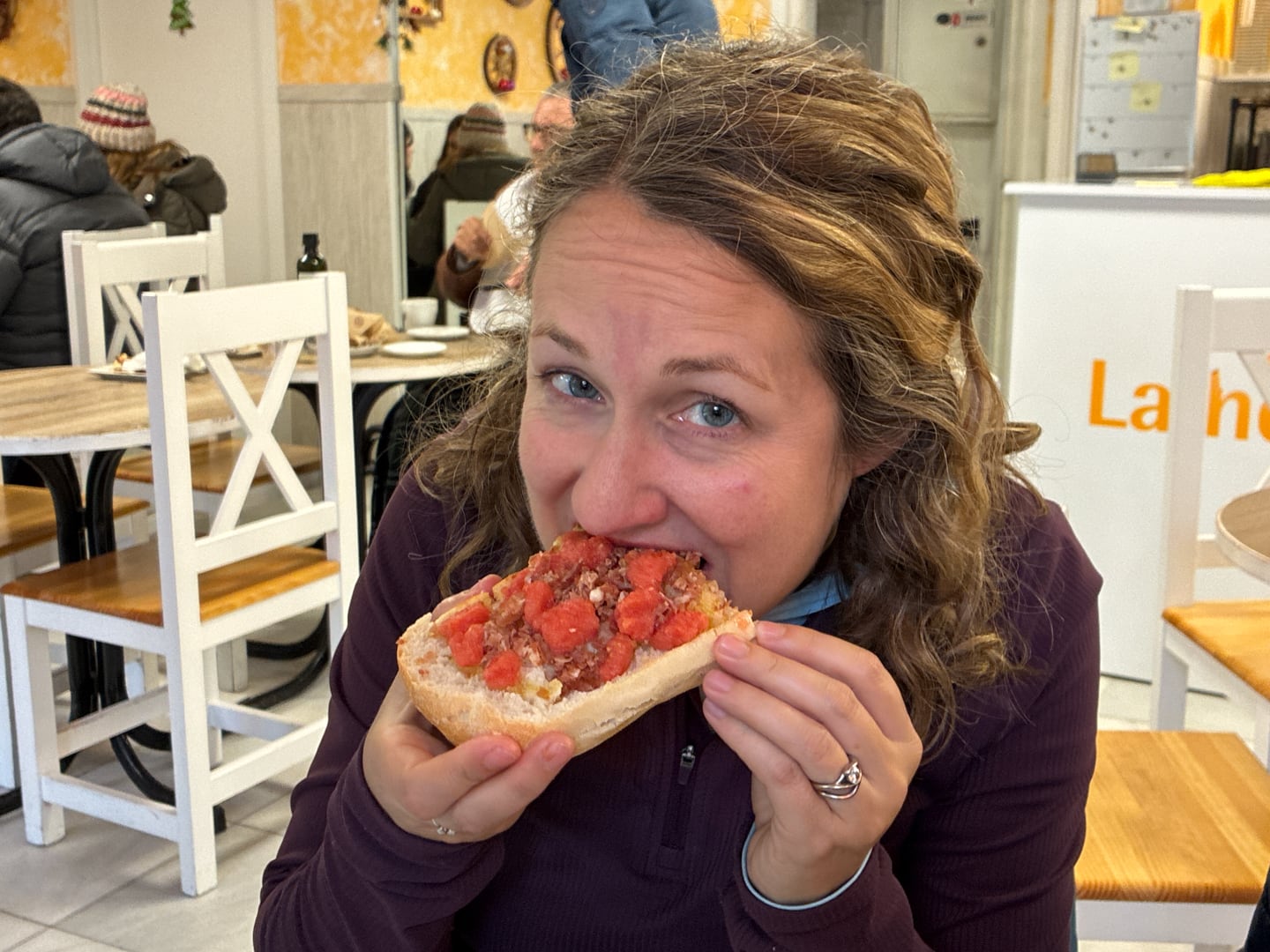
This is what Lori’s host family fed her every morning, but not quite this hearty. The home version consists of little more than toasted baguette topped with olive oil and sugar. The ones at this bakery were loaded with cheese, tomato, and diced ham.
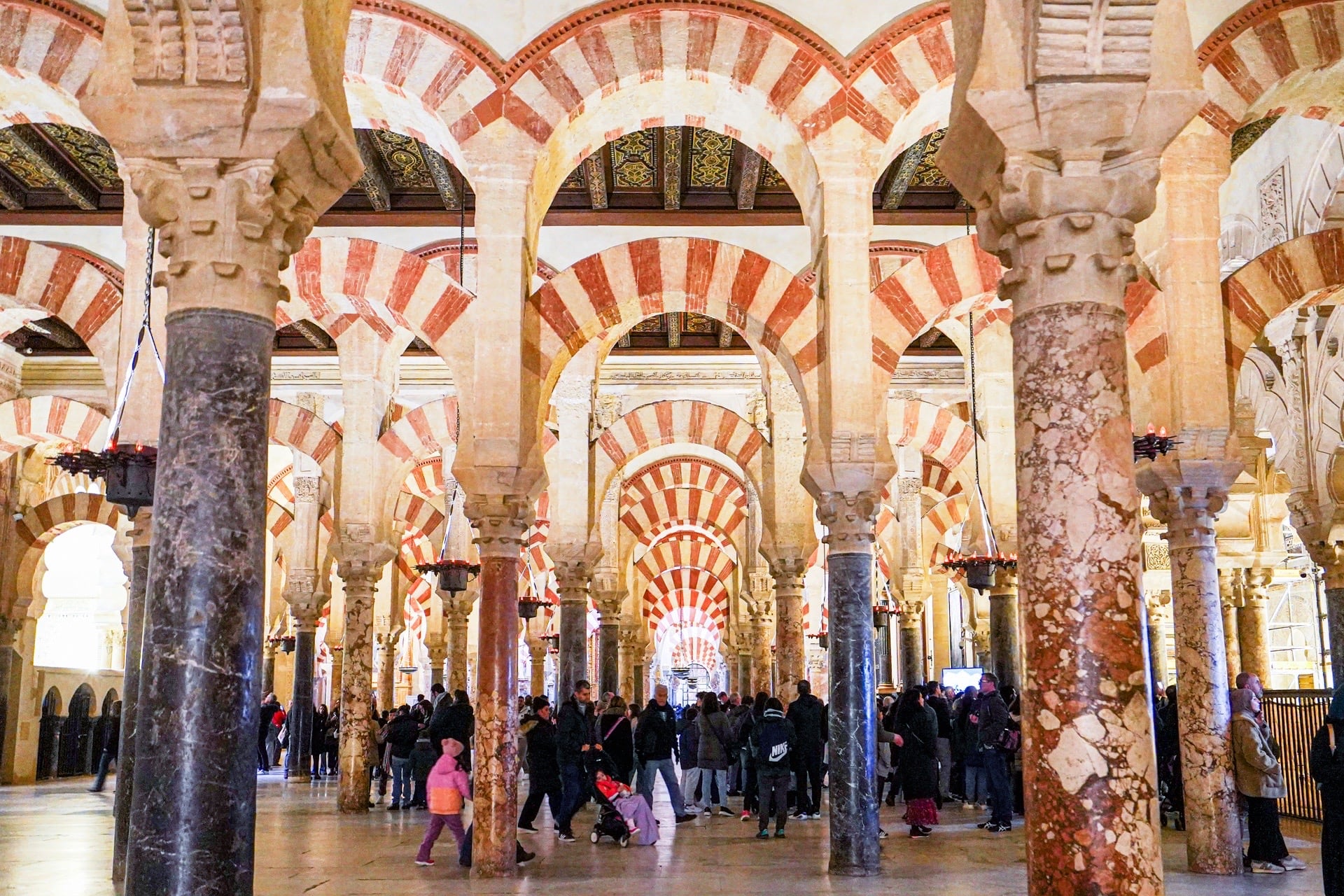
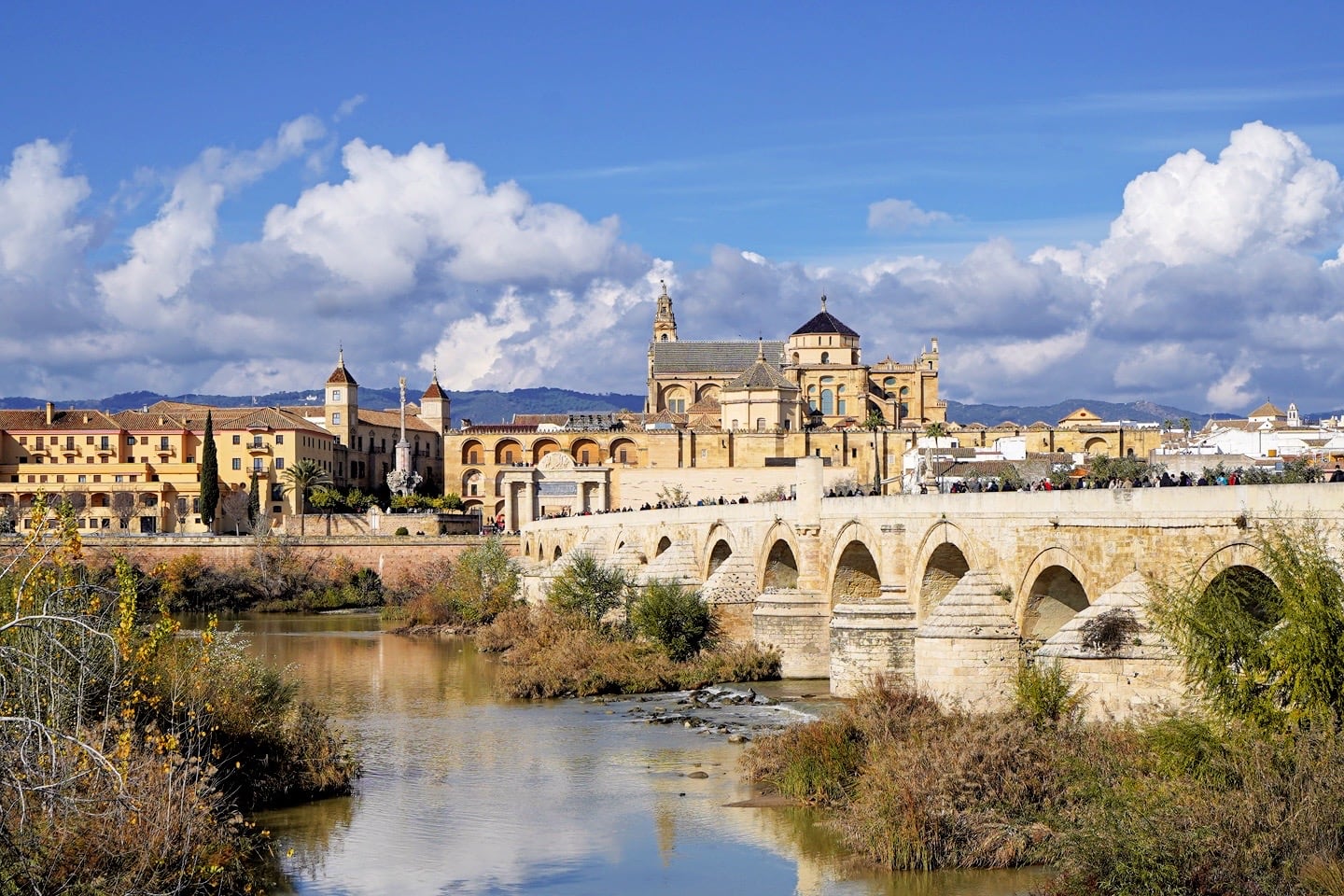
The historic center of Córdoba has been designated as a UNESCO World Heritage Site. But its main claim to fame is the Mezquita-Catedral (Mosque-Cathedral), a HUGE one-of-kind Franken-mosque that was once a major center of medieval Islamic learning and power.
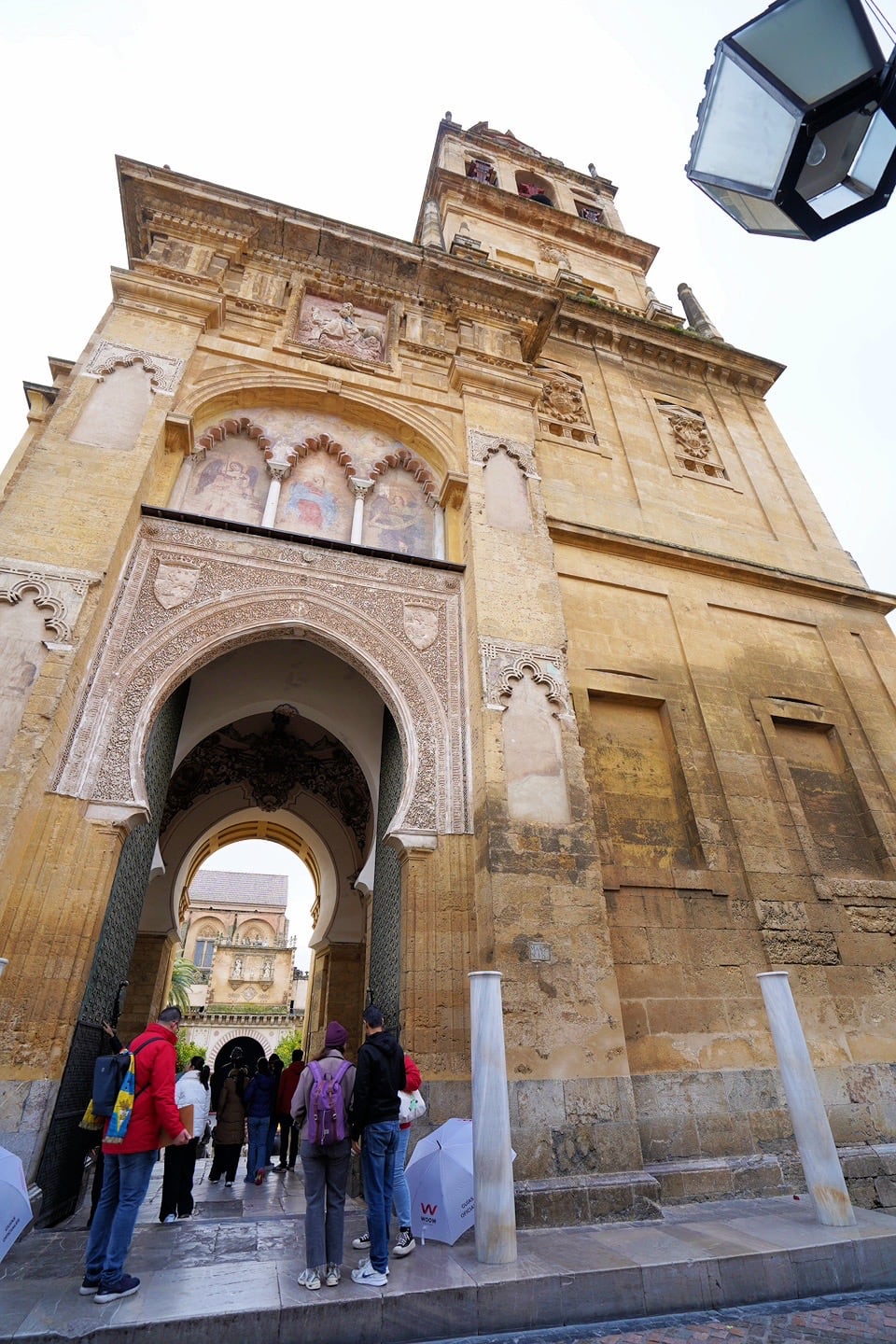
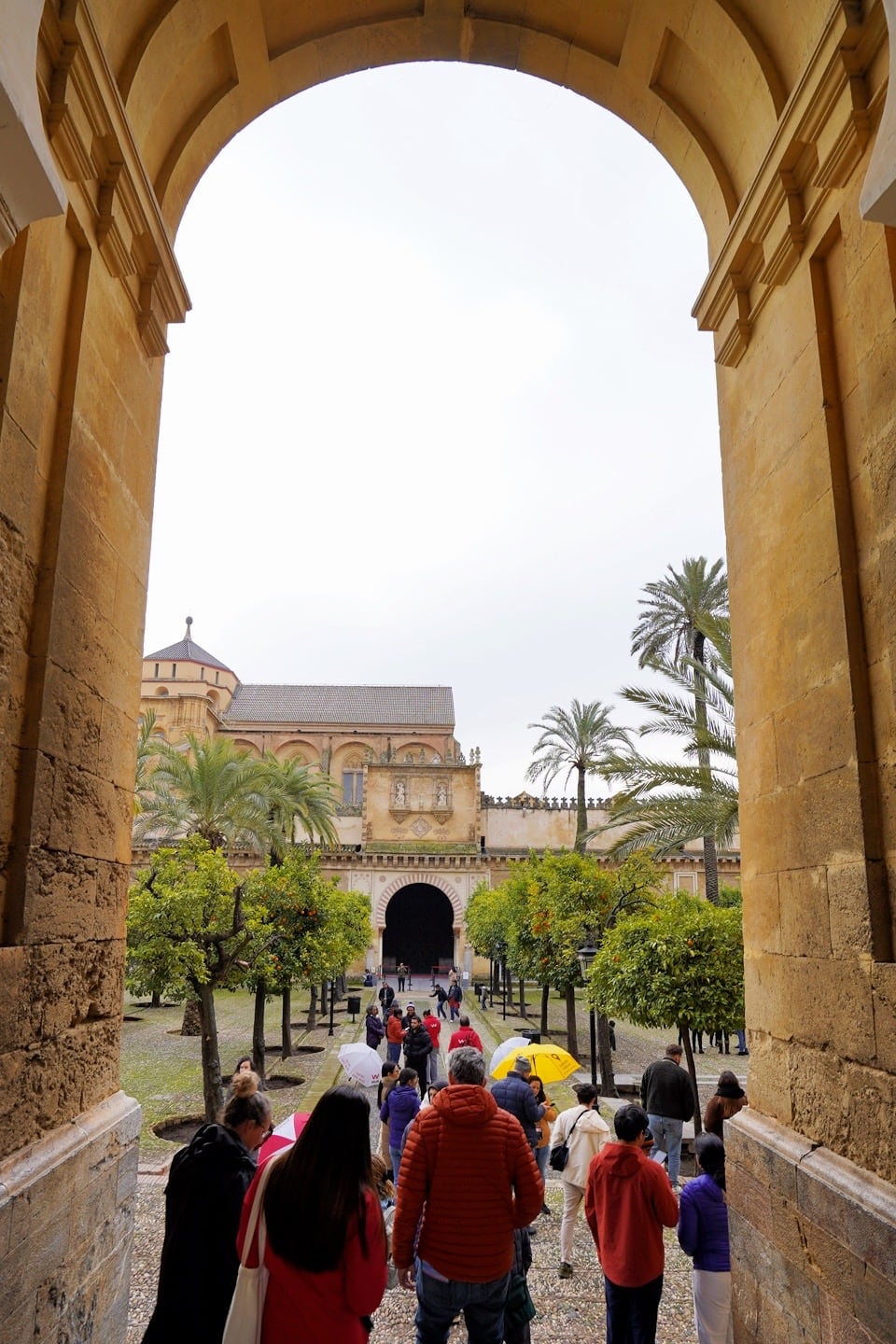
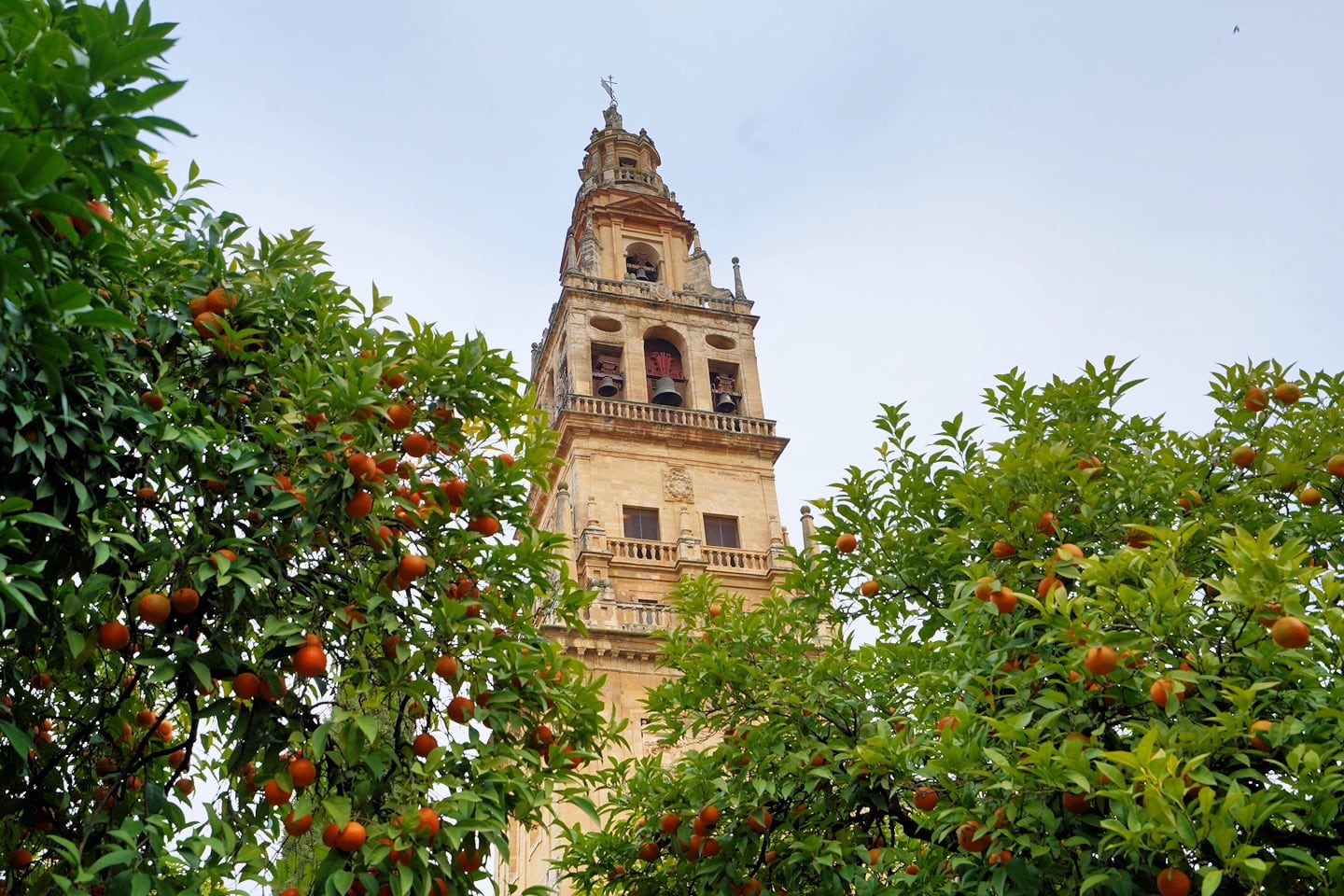
When we arrived, the grounds were relatively empty. It’s advised that you head straight to the minaret-bell-tower first, and that’s what we did.
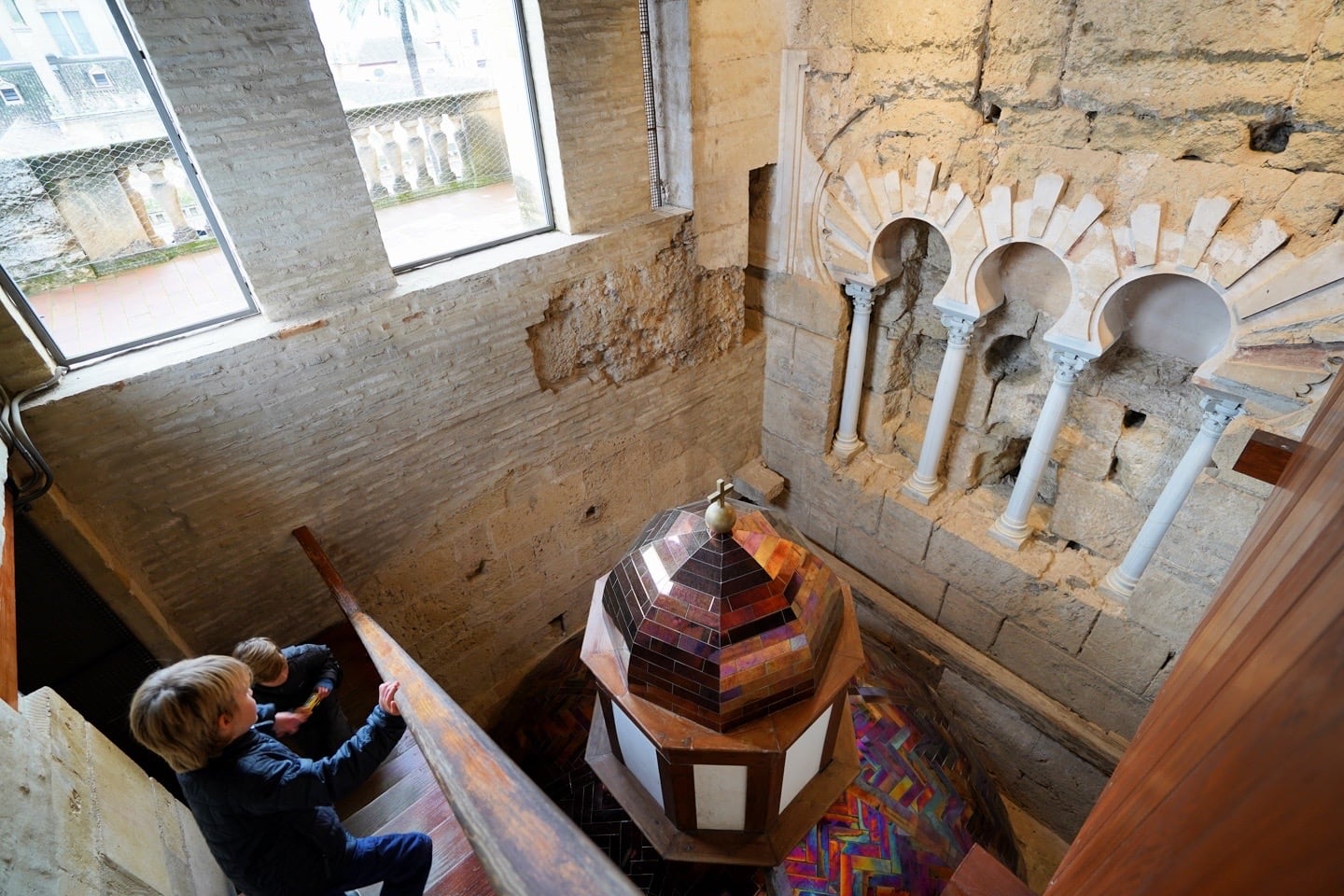
Up, up, and up.
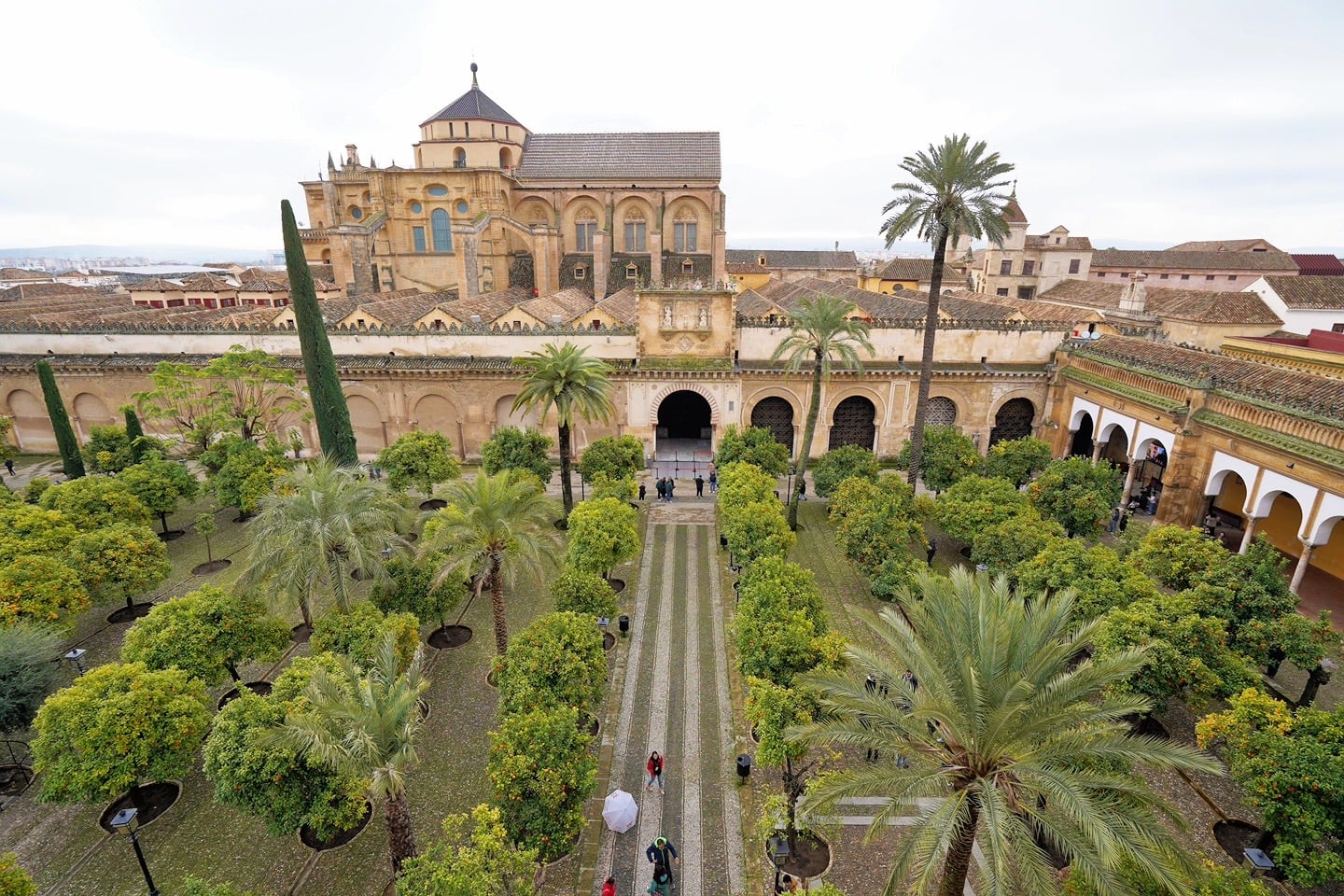
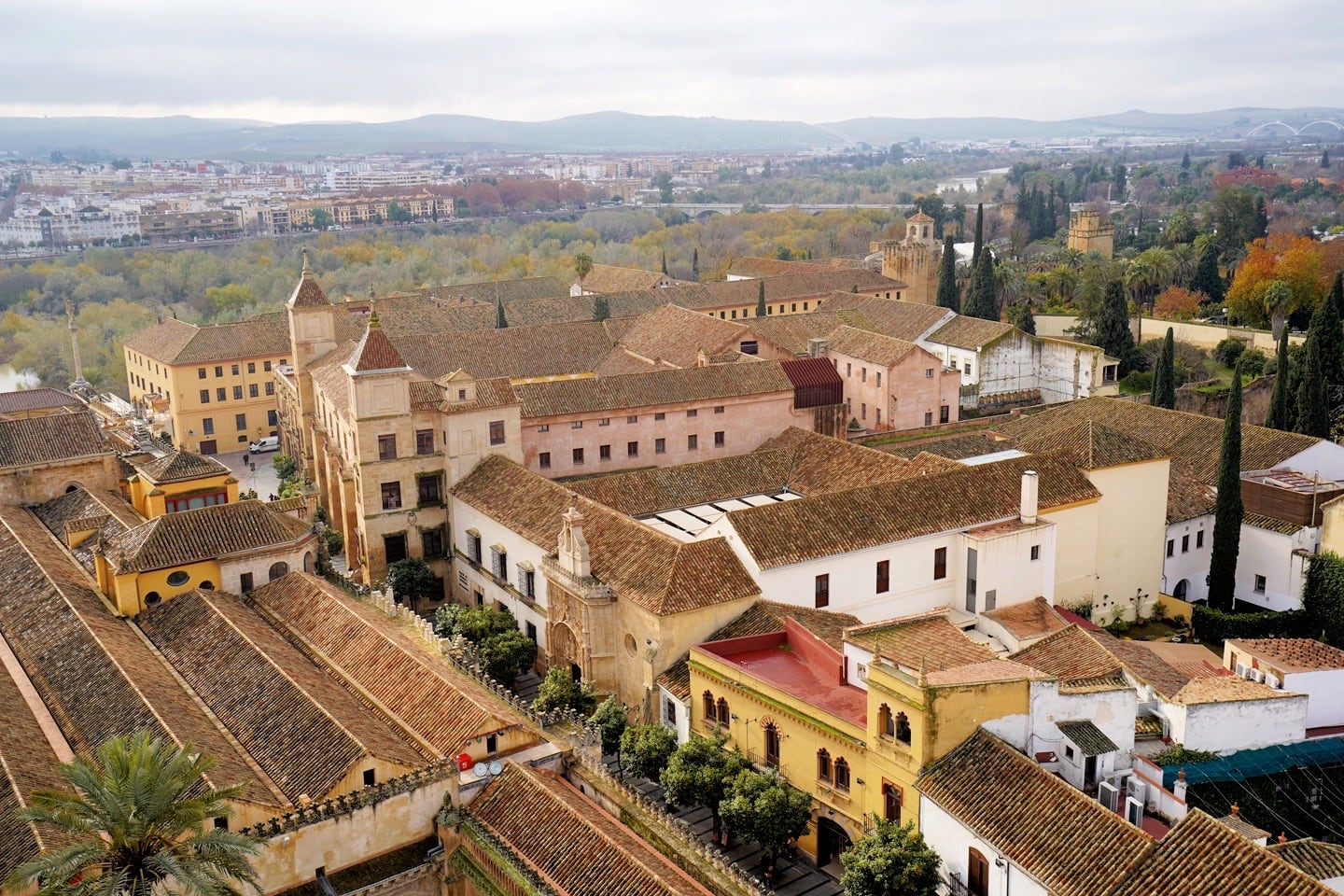
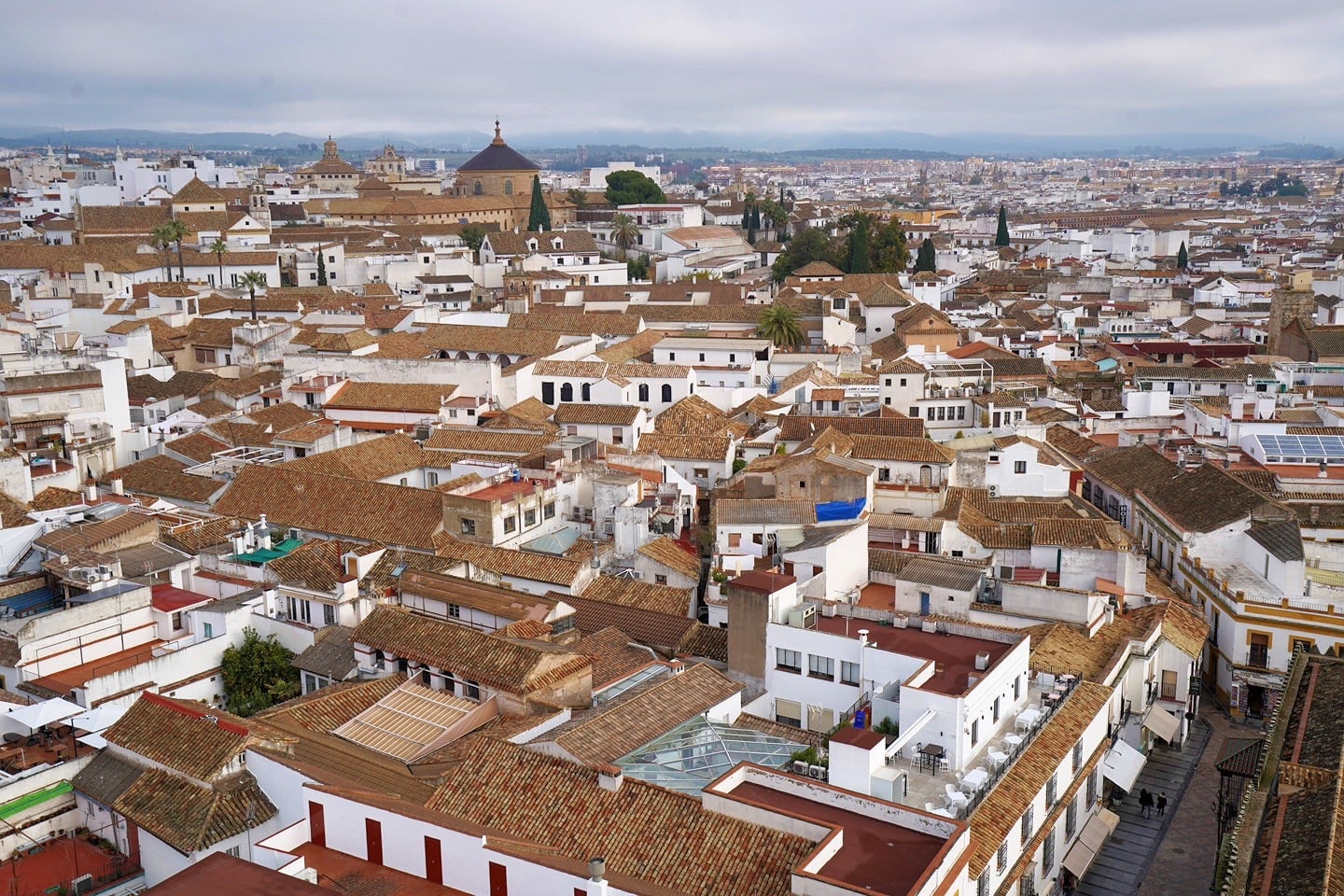
The bell tower offers some of the very best views of the grounds (and the entire Old City, for that matter).
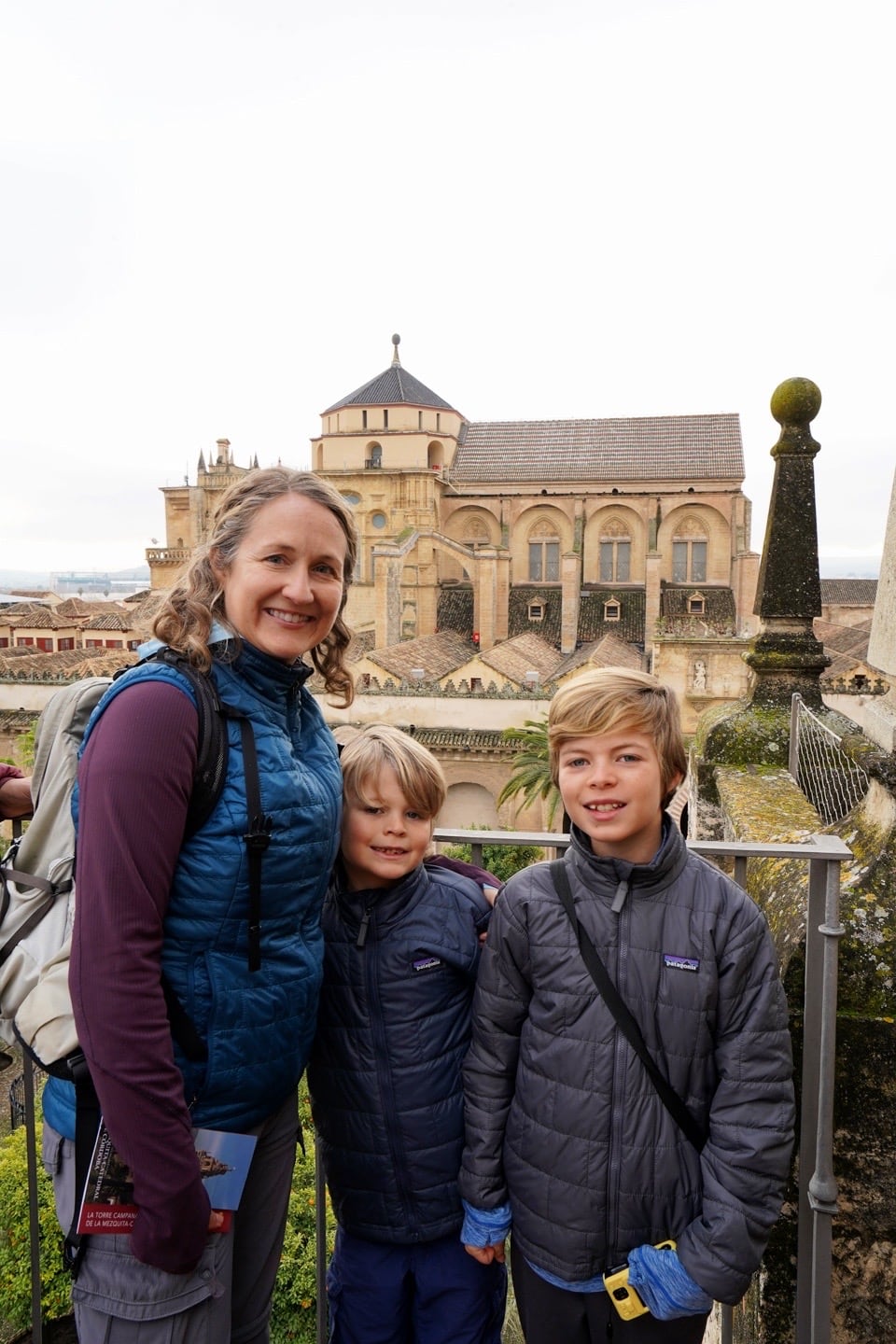
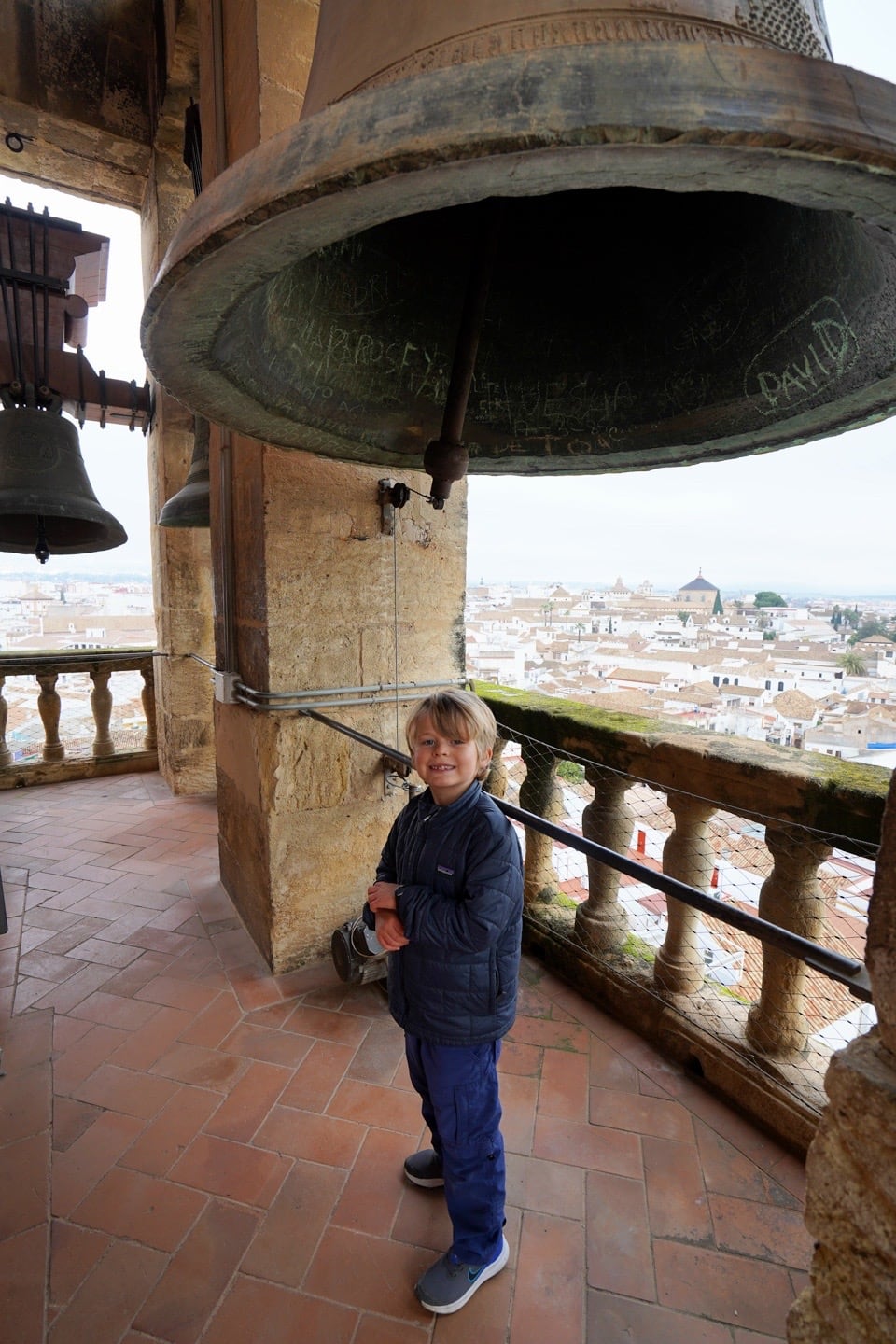
That single bell is many times larger (and undoubtedly many times heavy) than Riley. For the record, I’m not the one who tagged the bell, but I think I know the name of the perp.

The bell tower and the views are worth the visit, alone. But the real draw here are the dozens upon dozens of candy-striped arches that seem to fade into infinity.
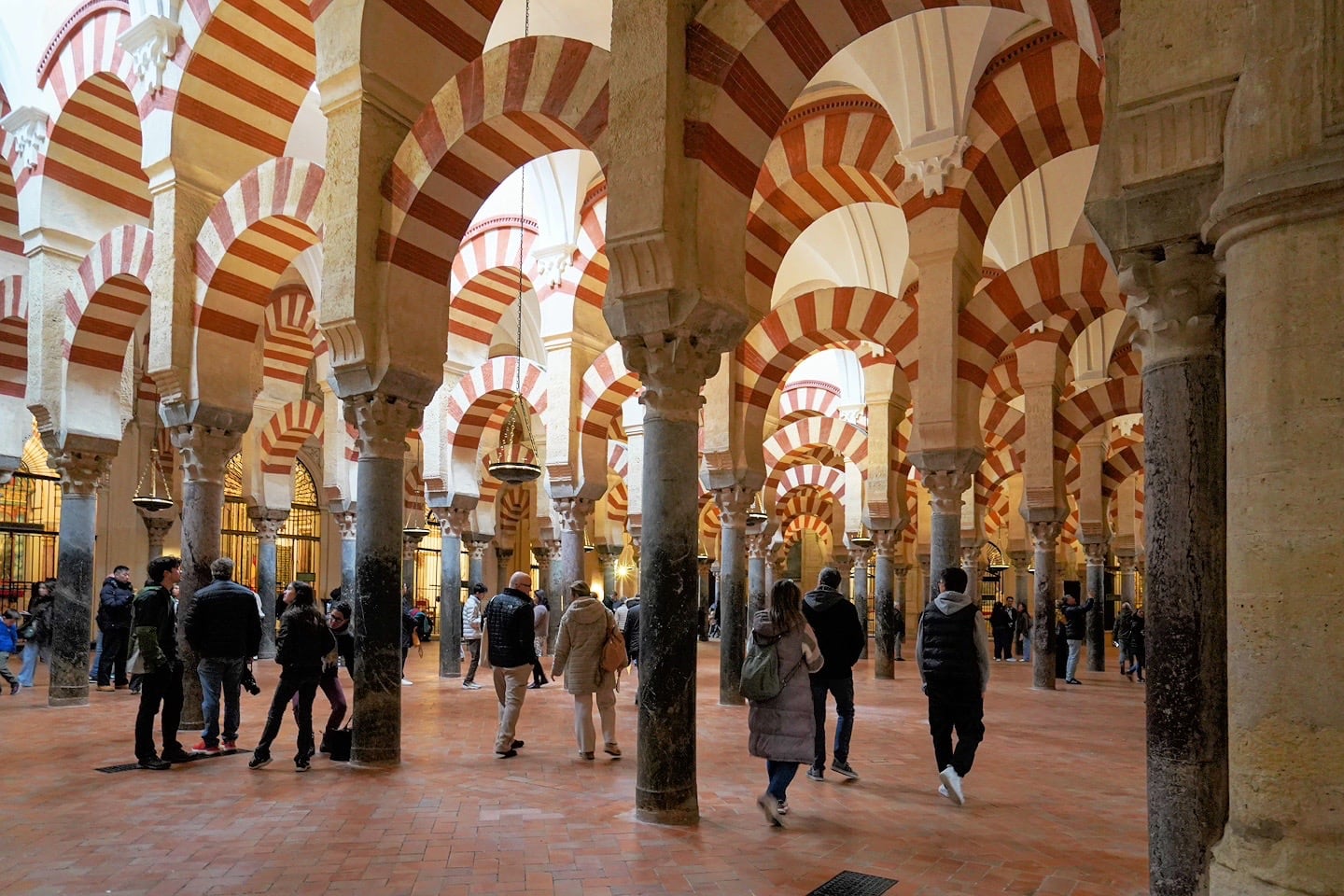
These arches, constructed from the 8th century onwards when this building was still very much a mosque, are not painted, but red brick and stone recycled from earlier Roman and Visigothic columns.


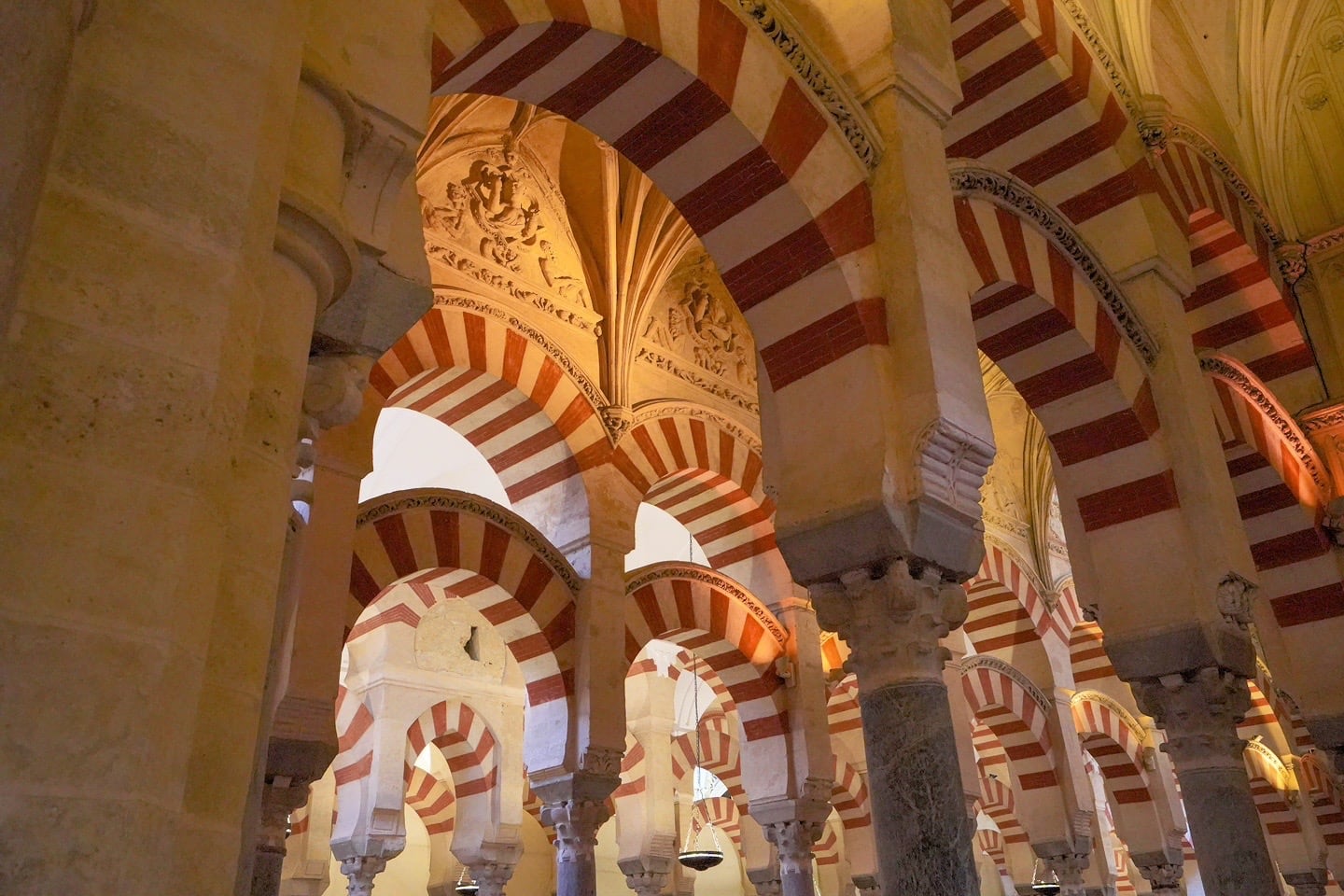
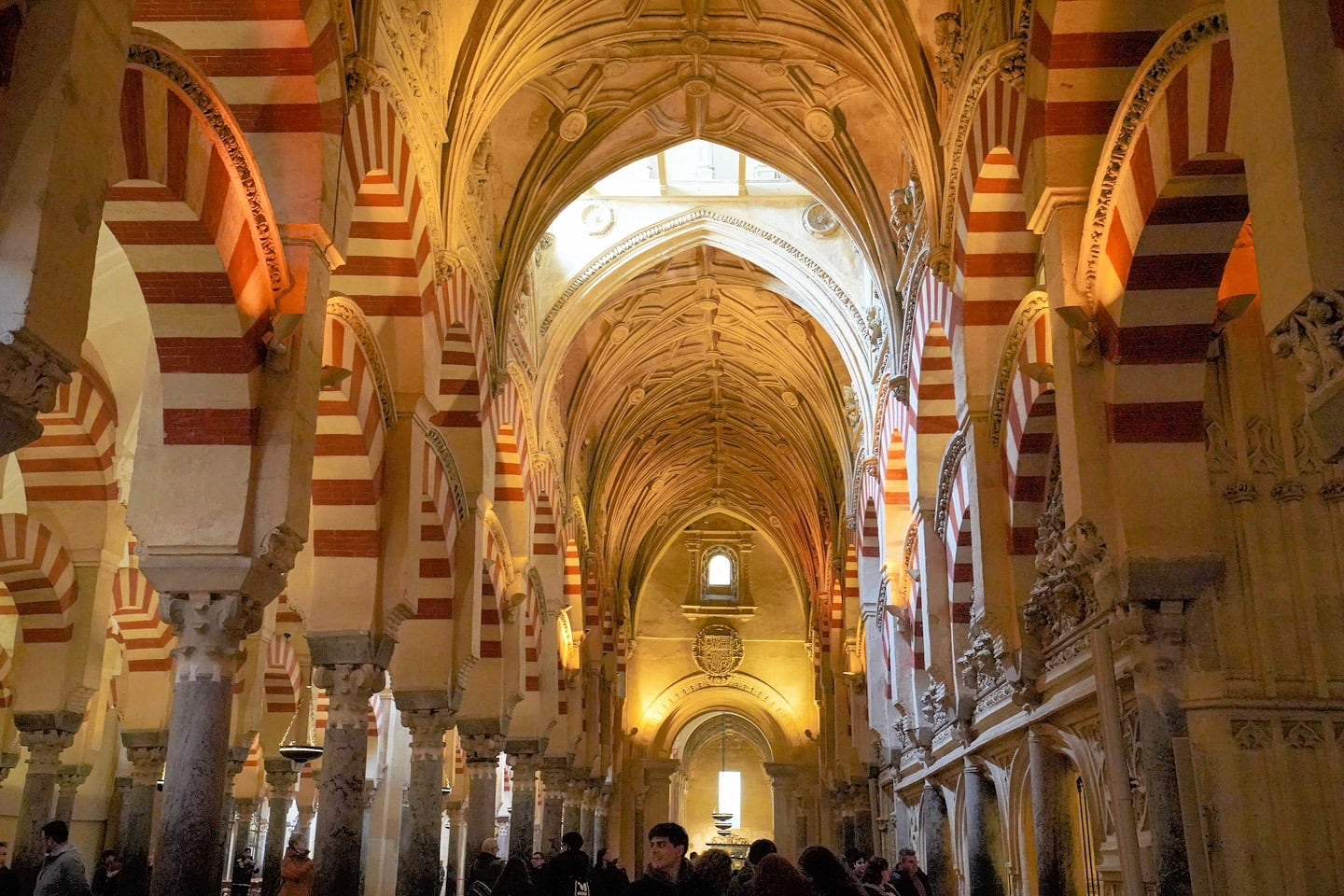
The most unusual aspect of the structure, however, might just be the enormous 16th-century cathedral constructed smack-dab in the center of the former mosque.
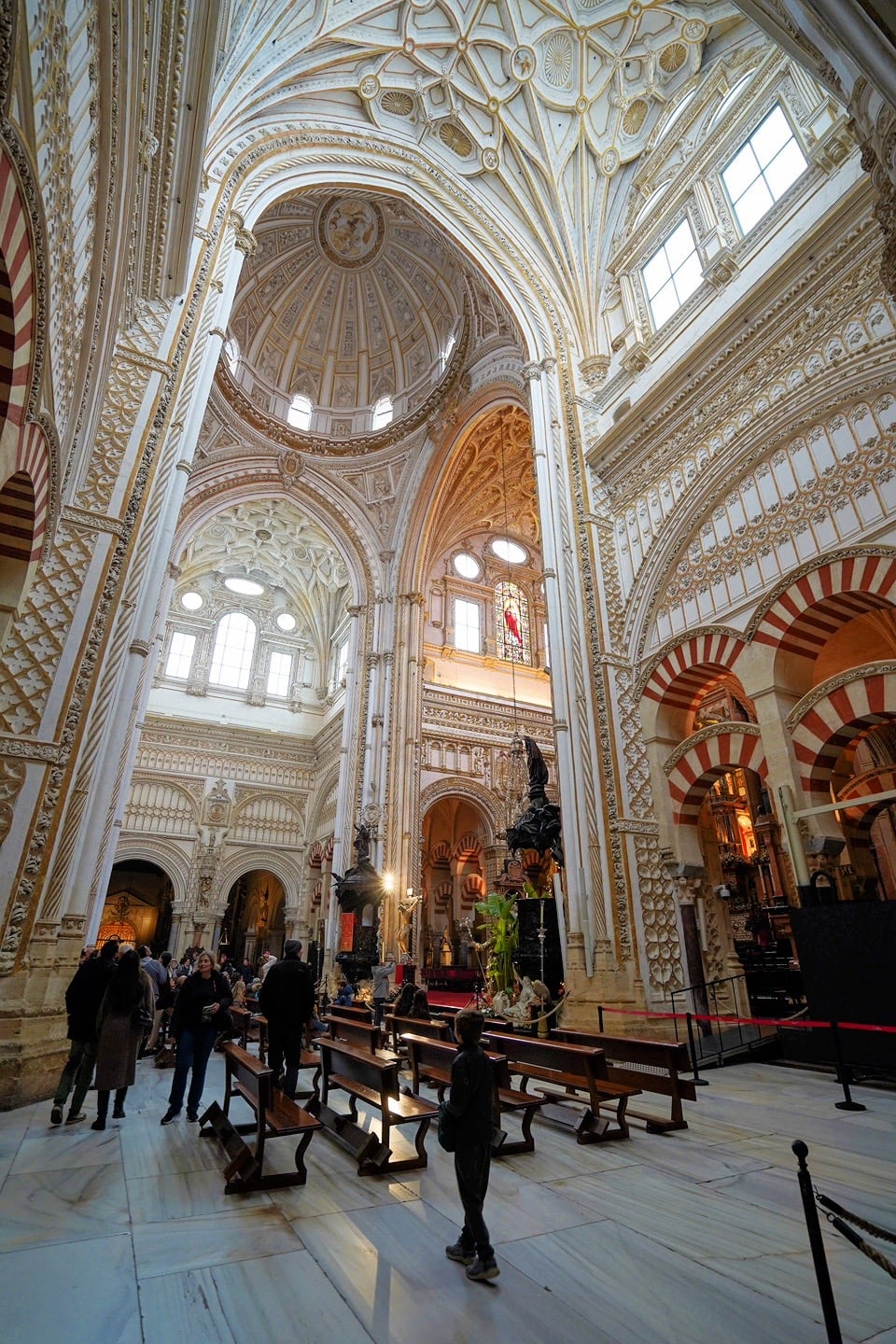
Following the Christian Re-conquest of Andalusia, it was the modus operandi of the Spanish to completely destroy a mosque (irrespective of its significance) and use the materials to construct an even larger church on the same site.
Historians believe that its immense, unique beauty (and location on the site of a former Visigothic church) saved it from the wrecking crew.
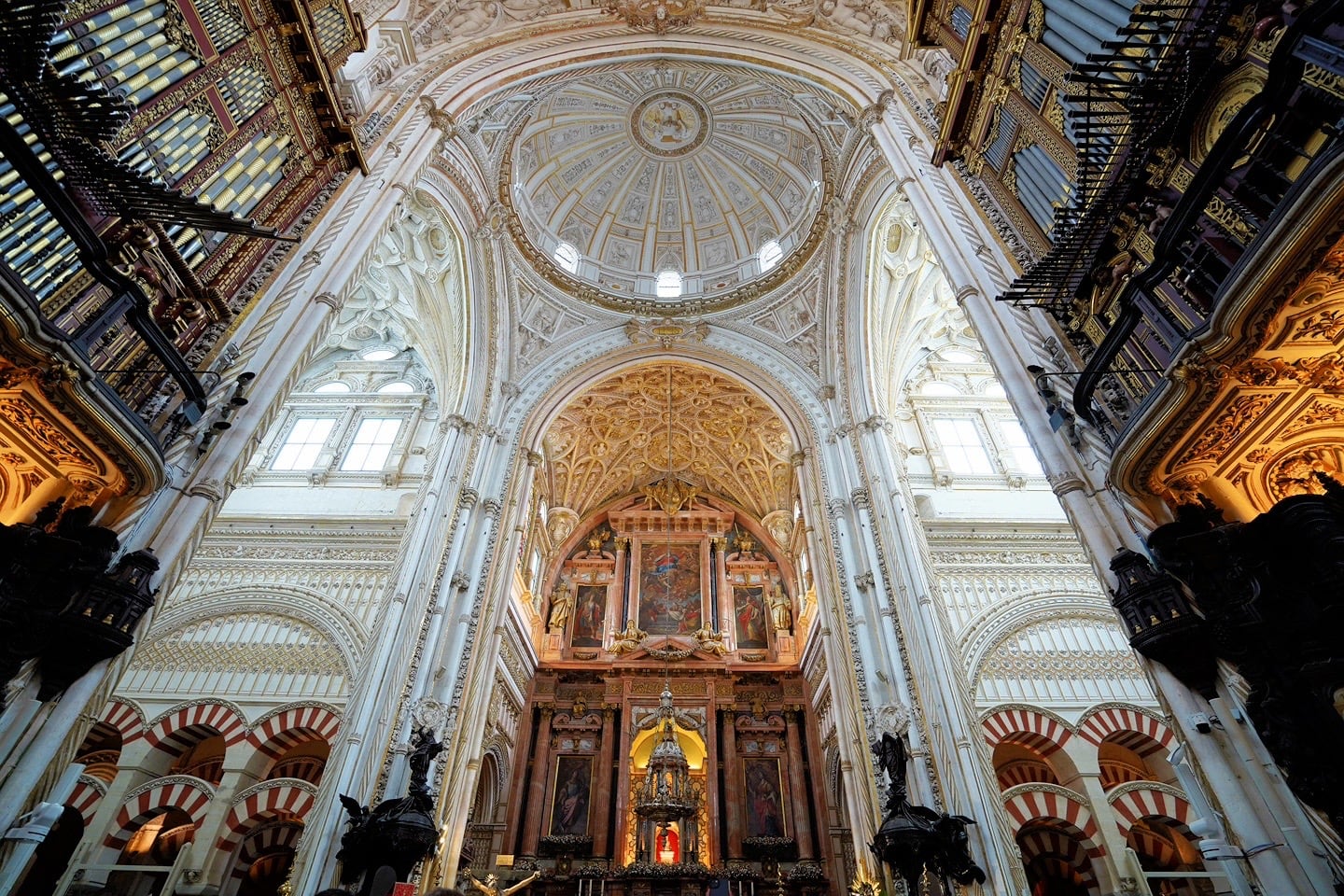
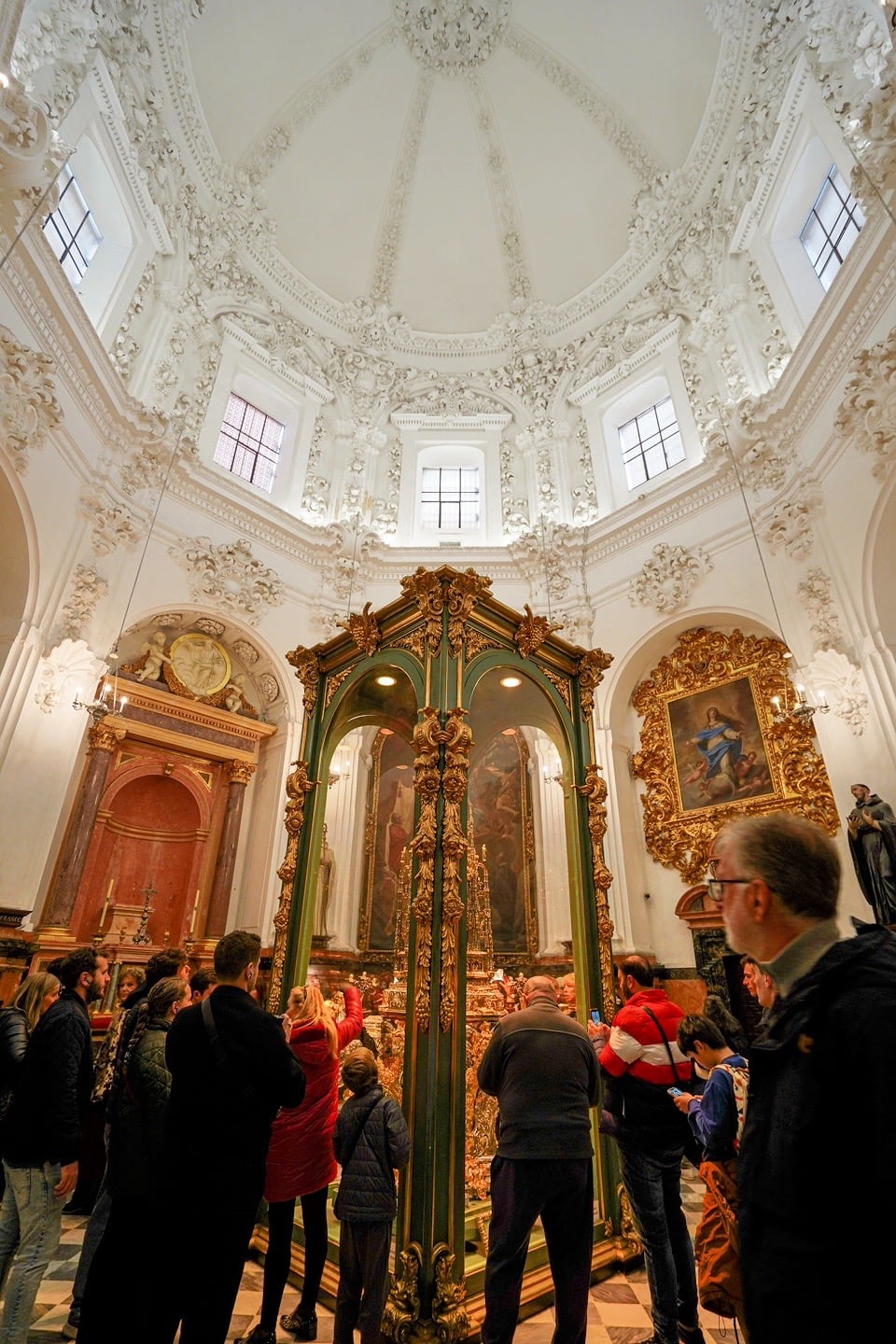
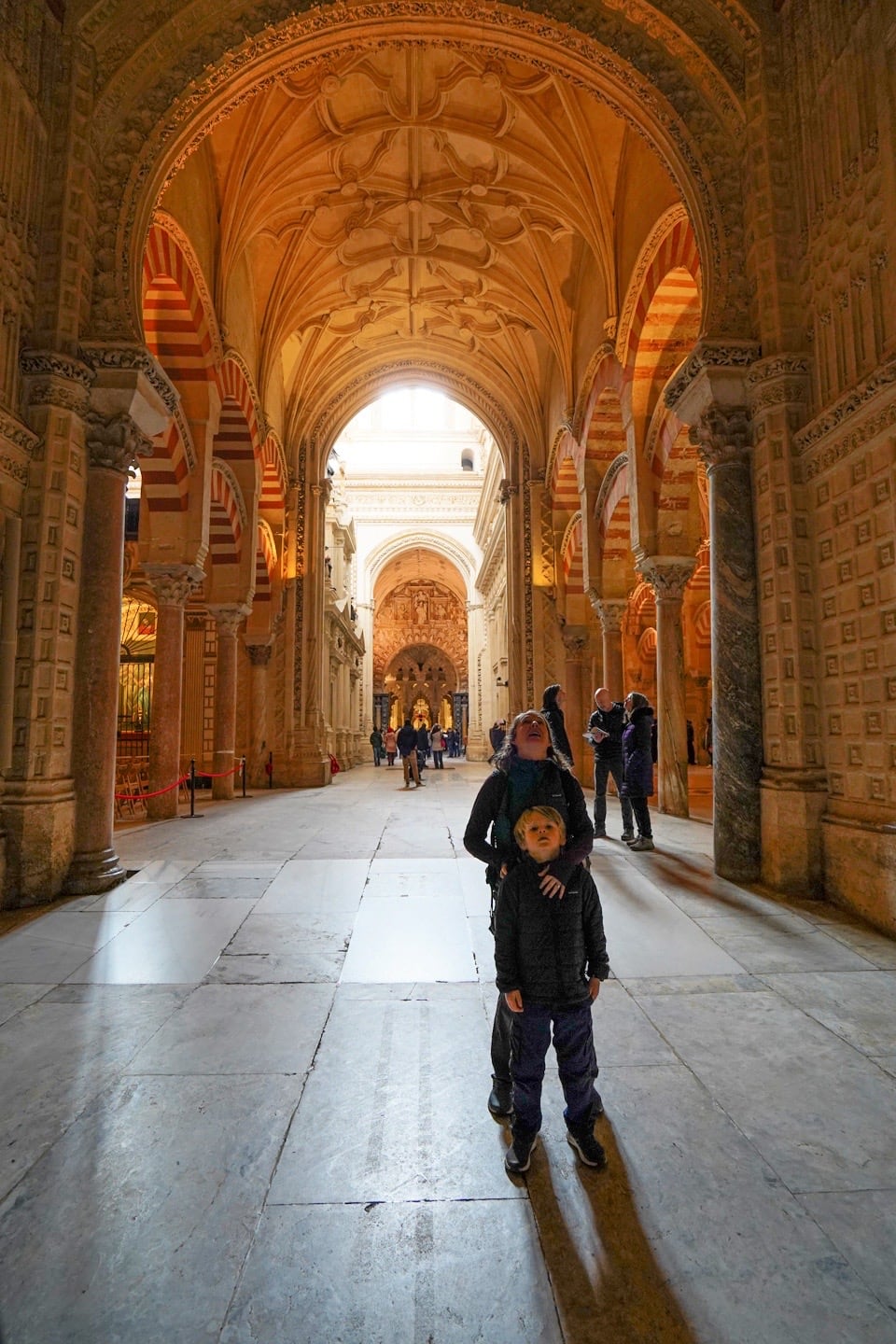
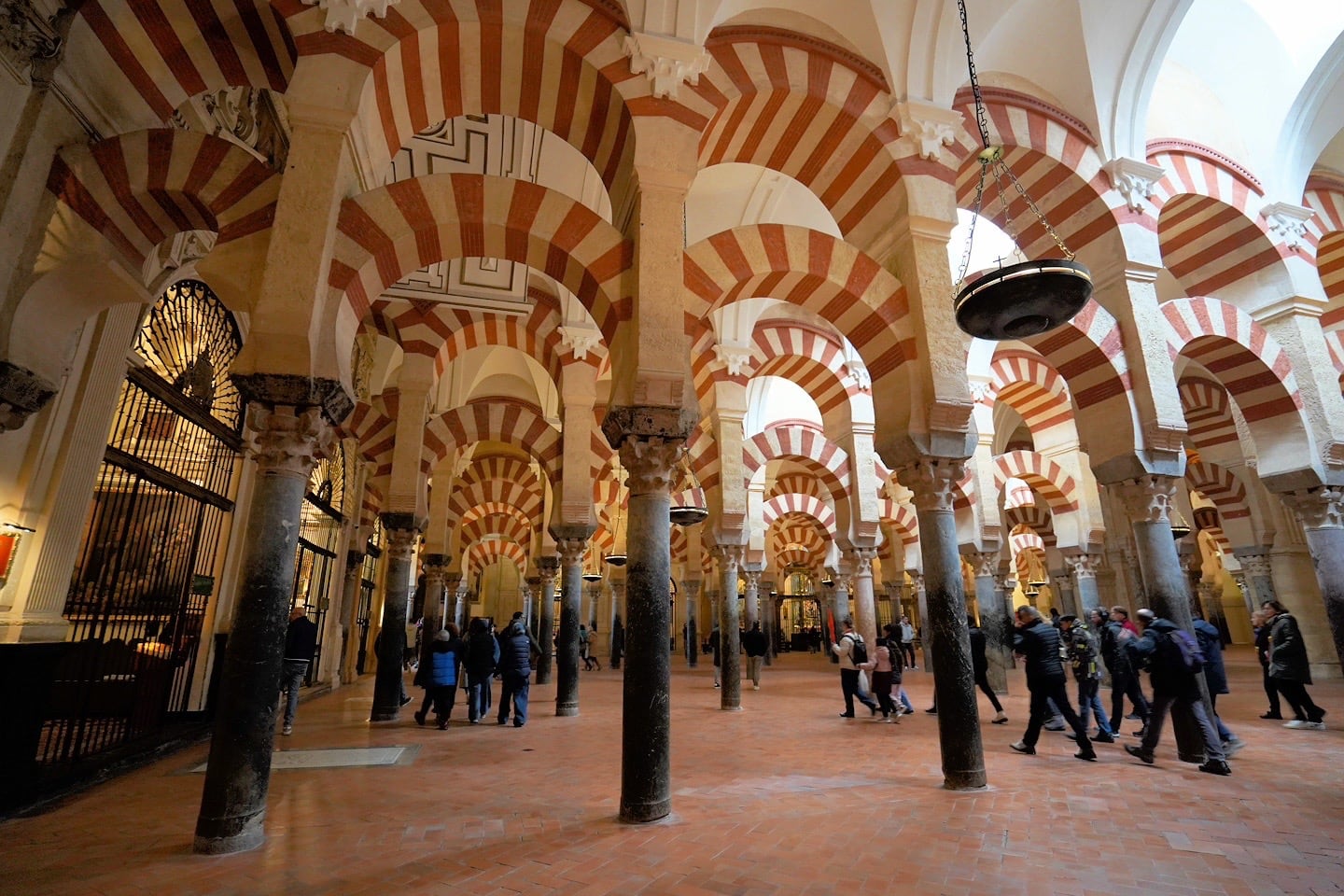
This place gets super busy. We thought that maybe we had gamed the system, choosing to visit the day after Christmas. But no. Boxing Day is as busy of a day as any in Spain for tourists, apparently (maybe even more so).
Still, the space is so immense, that rarely did it feel too crowded.

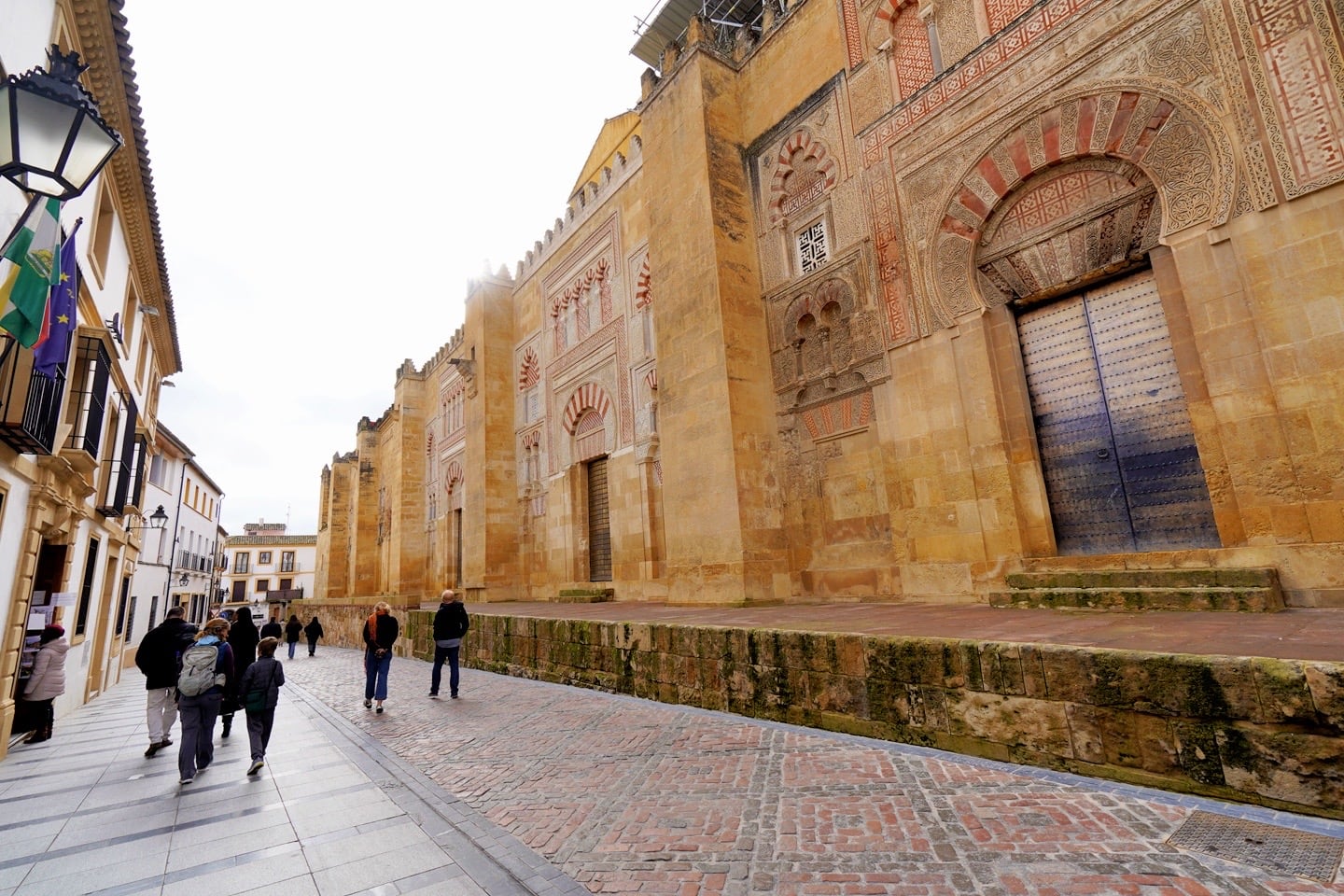
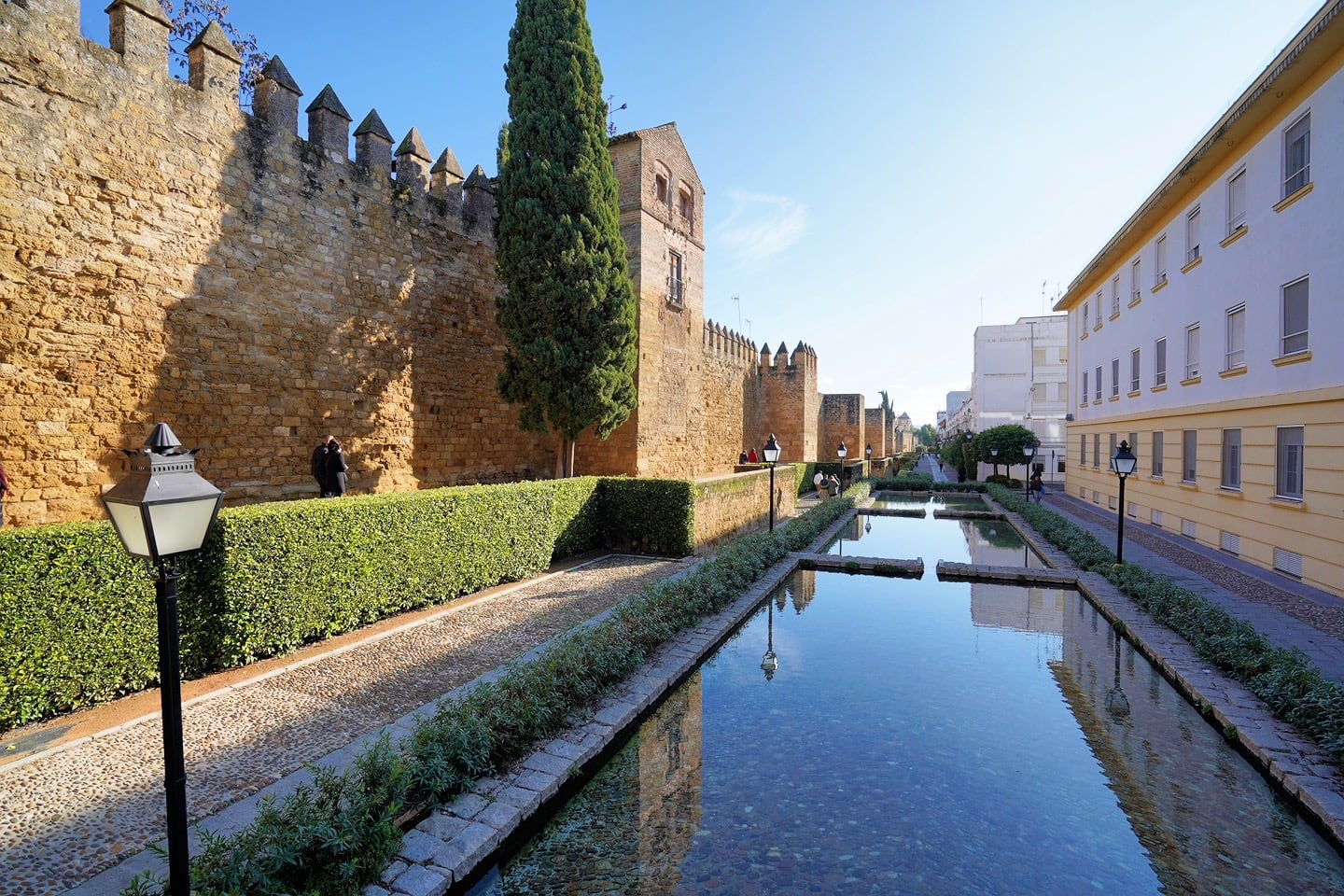
Back outside, the mosque-cathedral still retains the old Moorish walls surrounding the grounds.
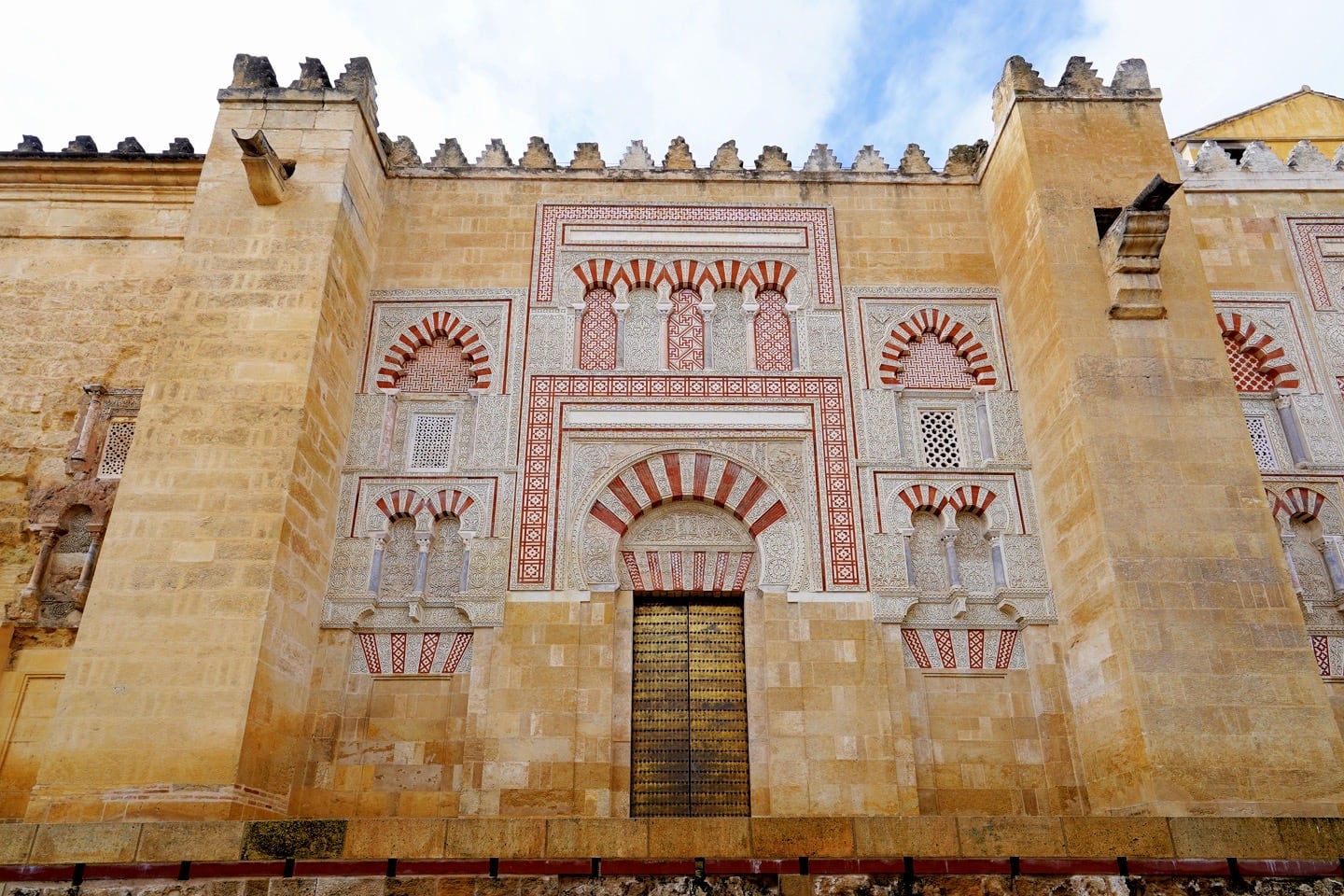

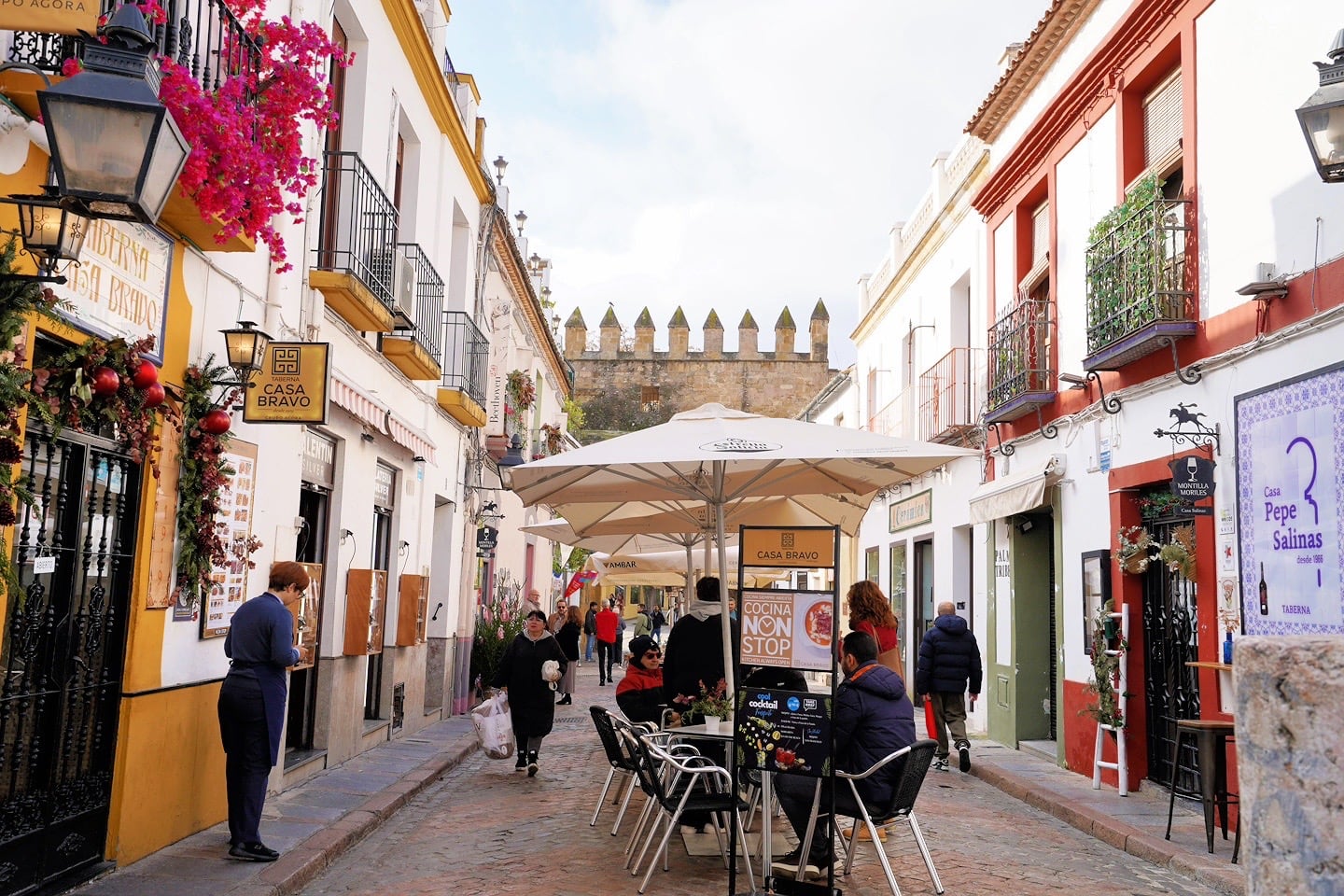
Making our way around town, things were starting to ramp up. We stopped by a coffee shop for coffee, but they were fresh out. The barista said he’d never seen anything like it. The busiest morning he’d ever seen.
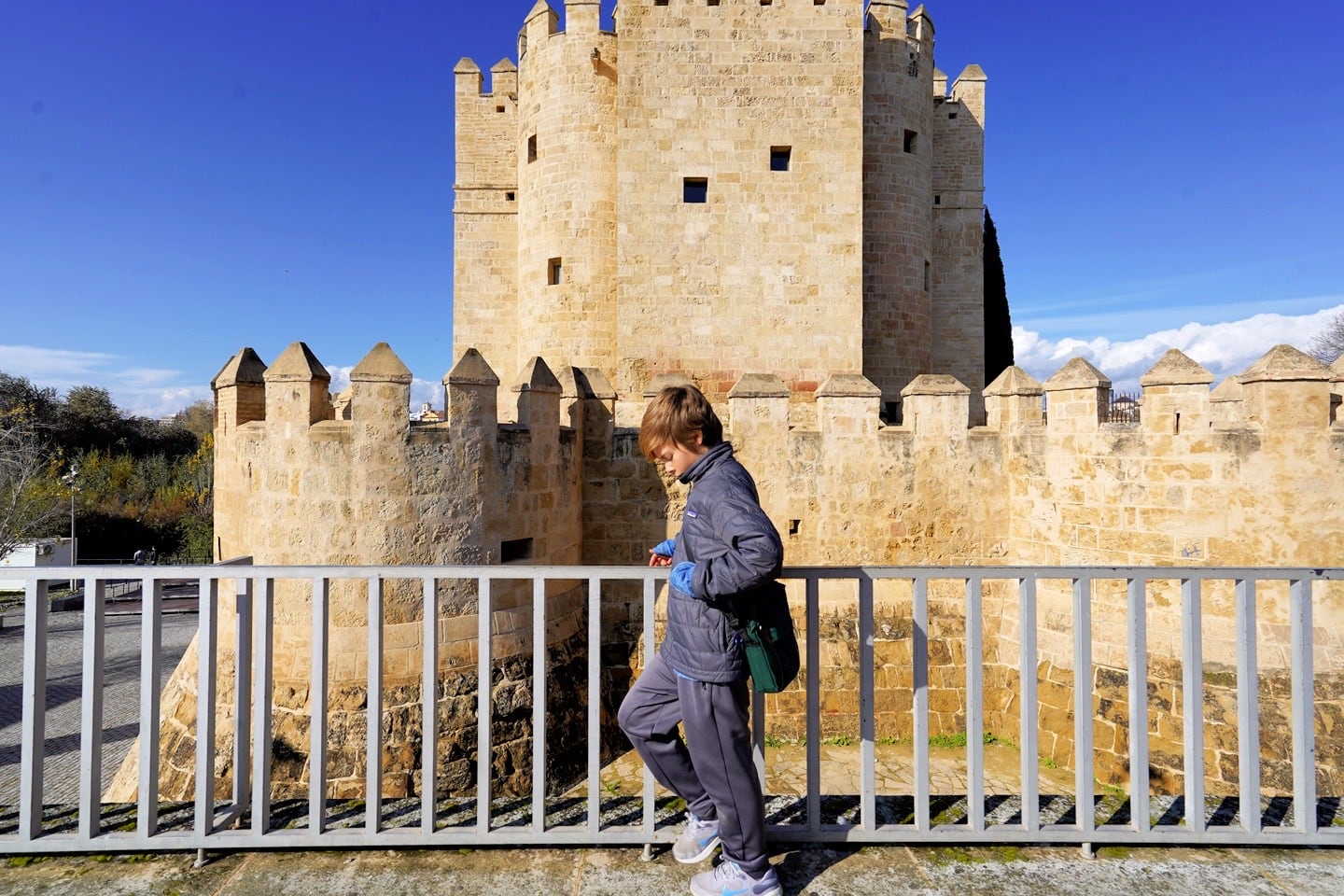
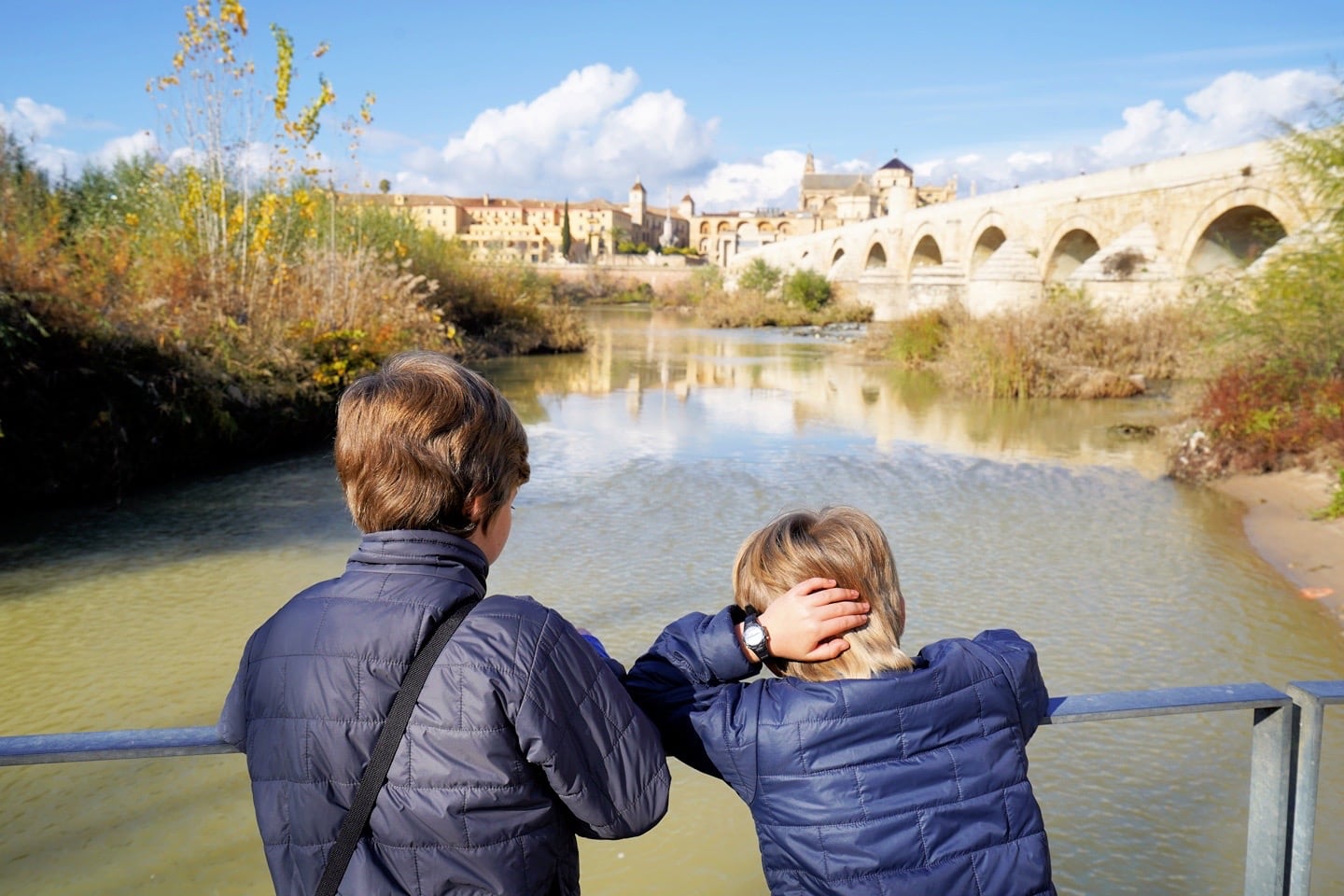
Next, we headed across the “Old Bridge”. And when they say “Old Bridge,” they’re not kidding. The bridge dates to the 1st century BC—yet, another reminder that this city has been an important hub for a very long time.
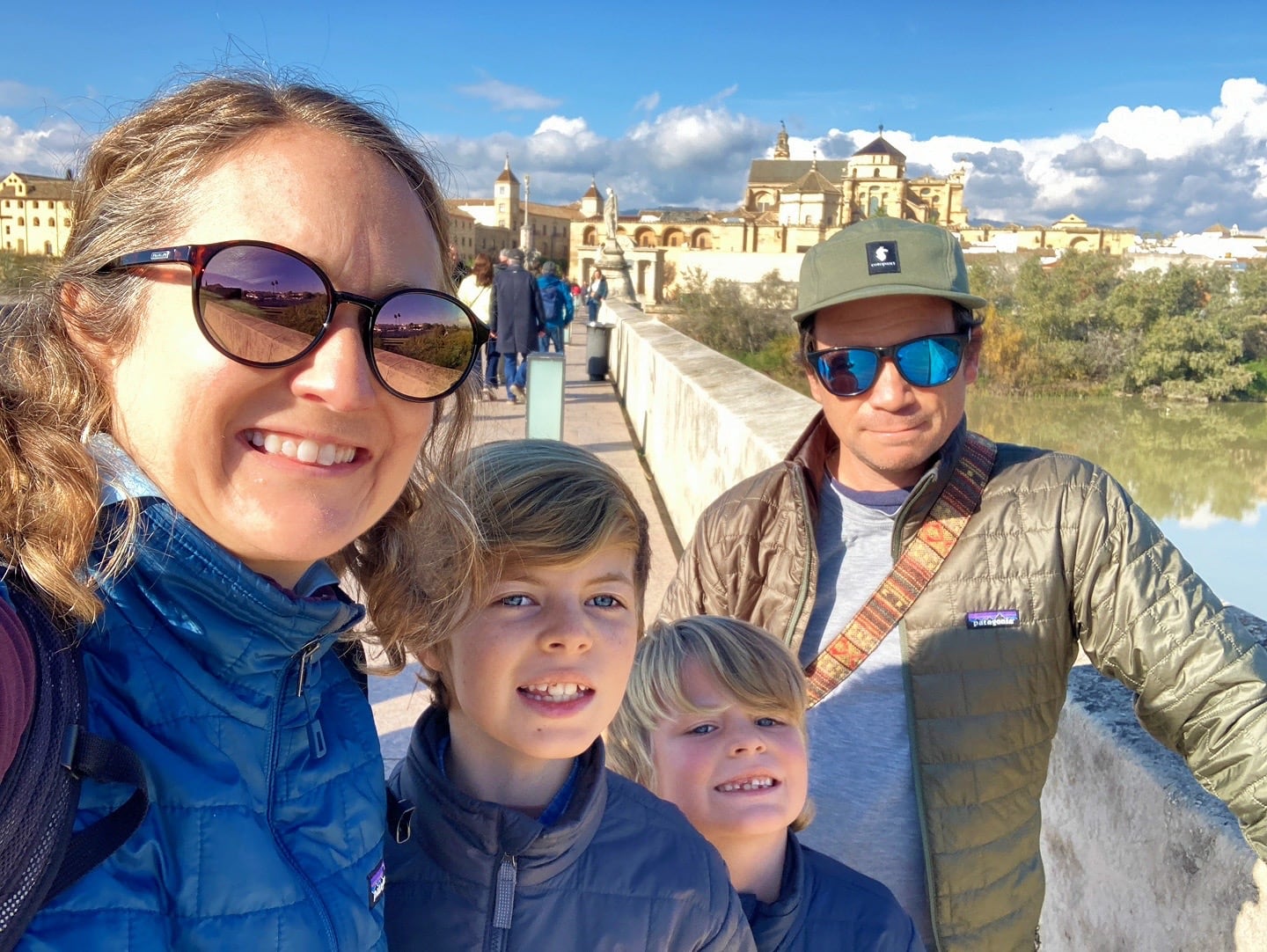

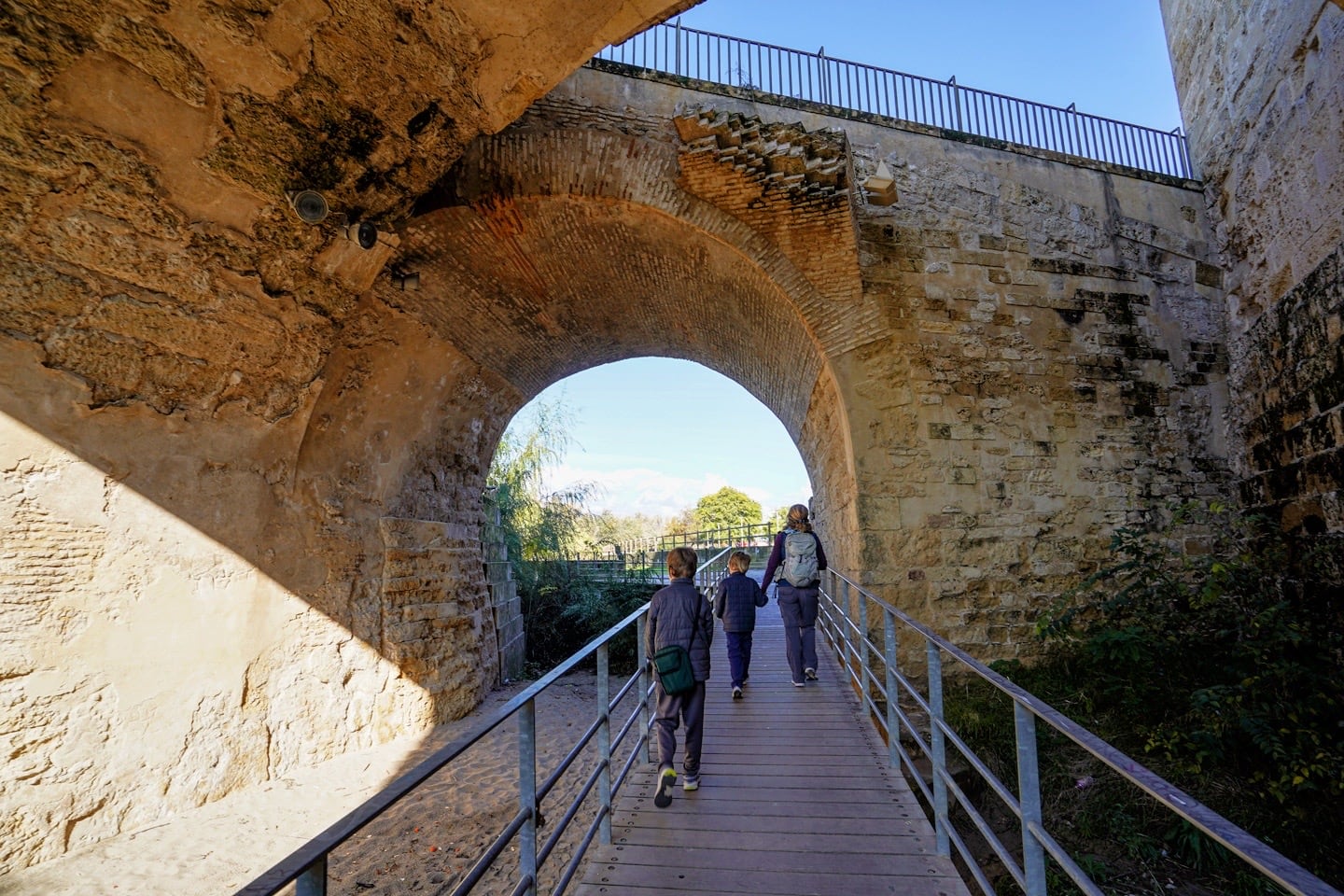
Walking under a part of the ancient Roman bridge.
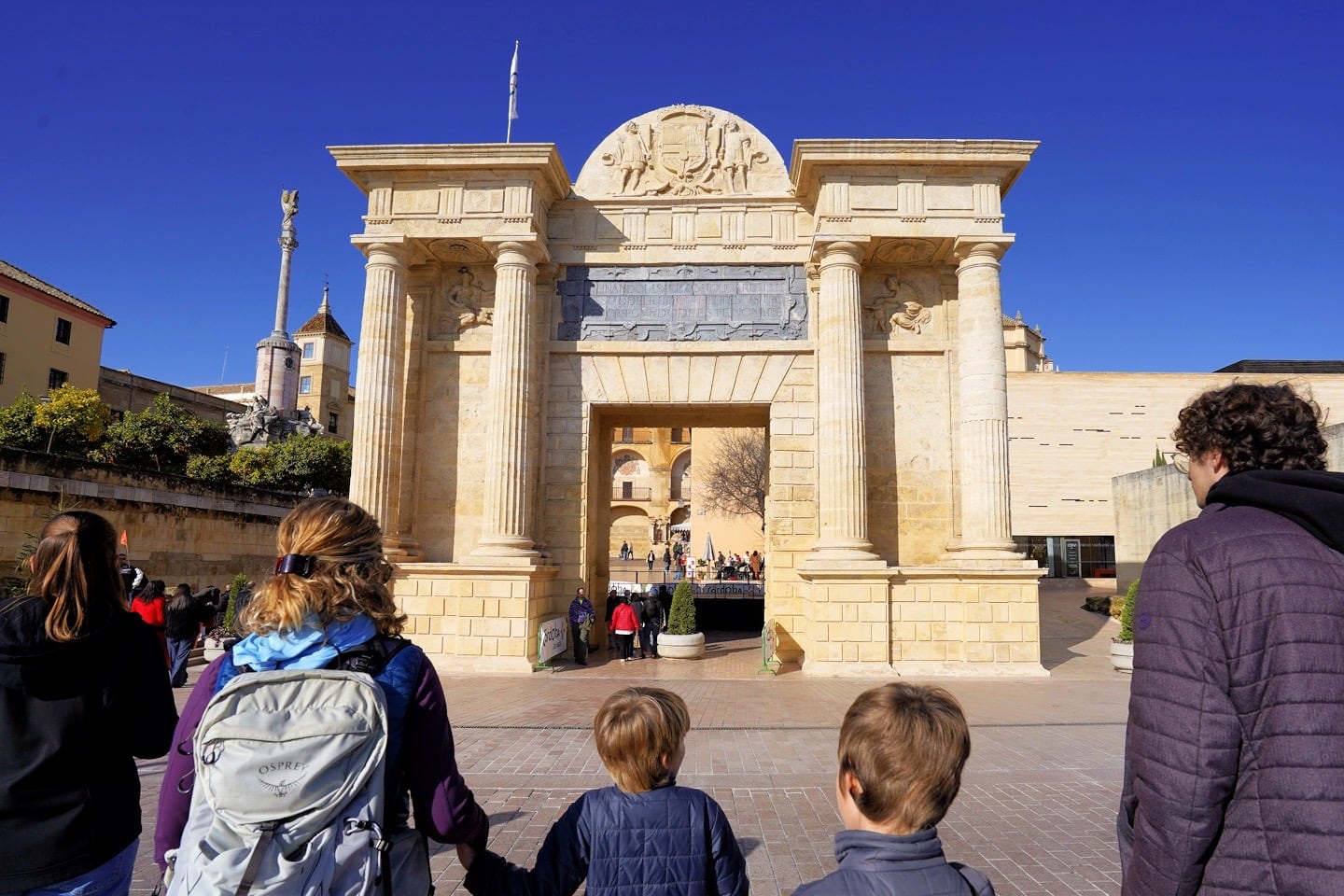
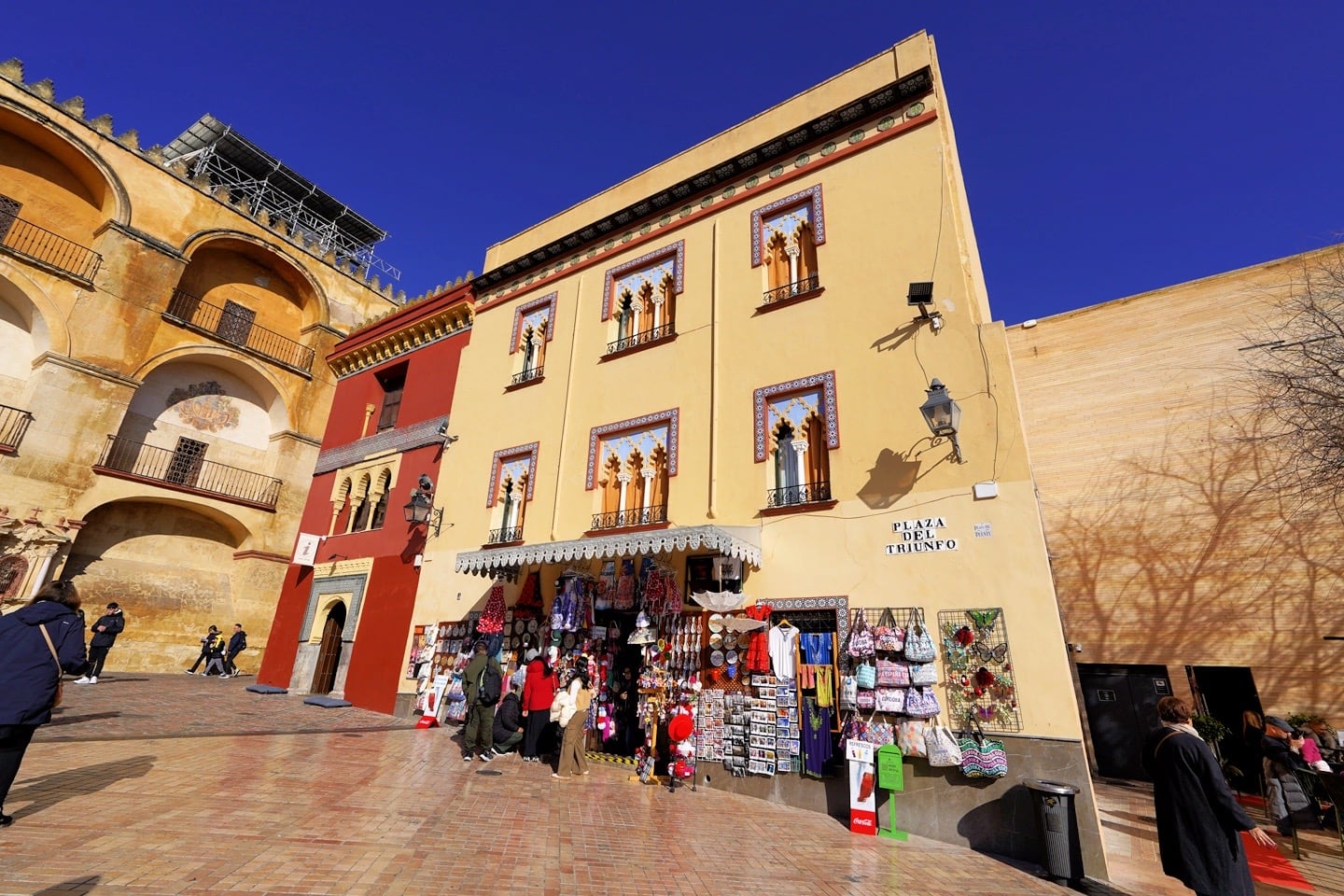
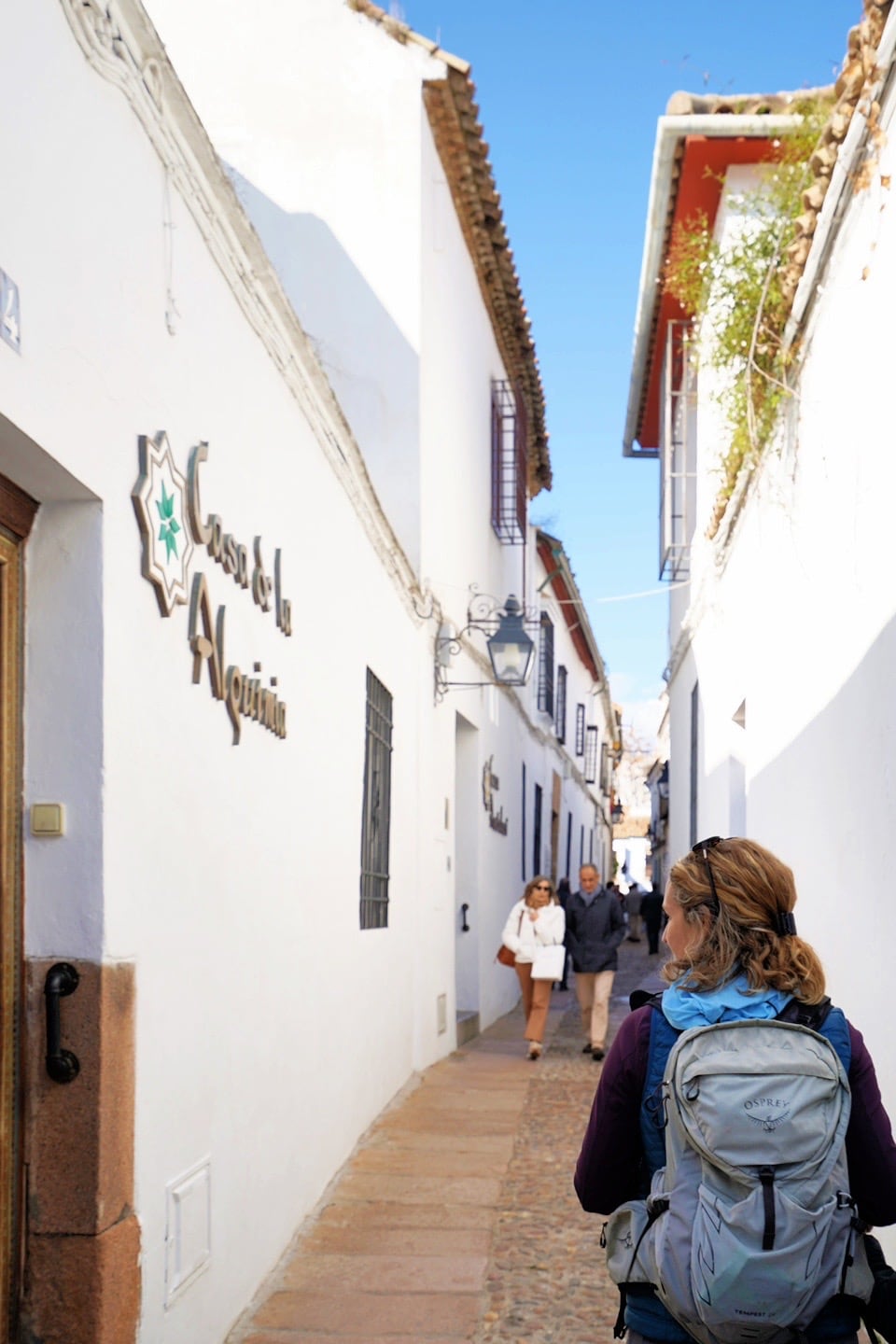
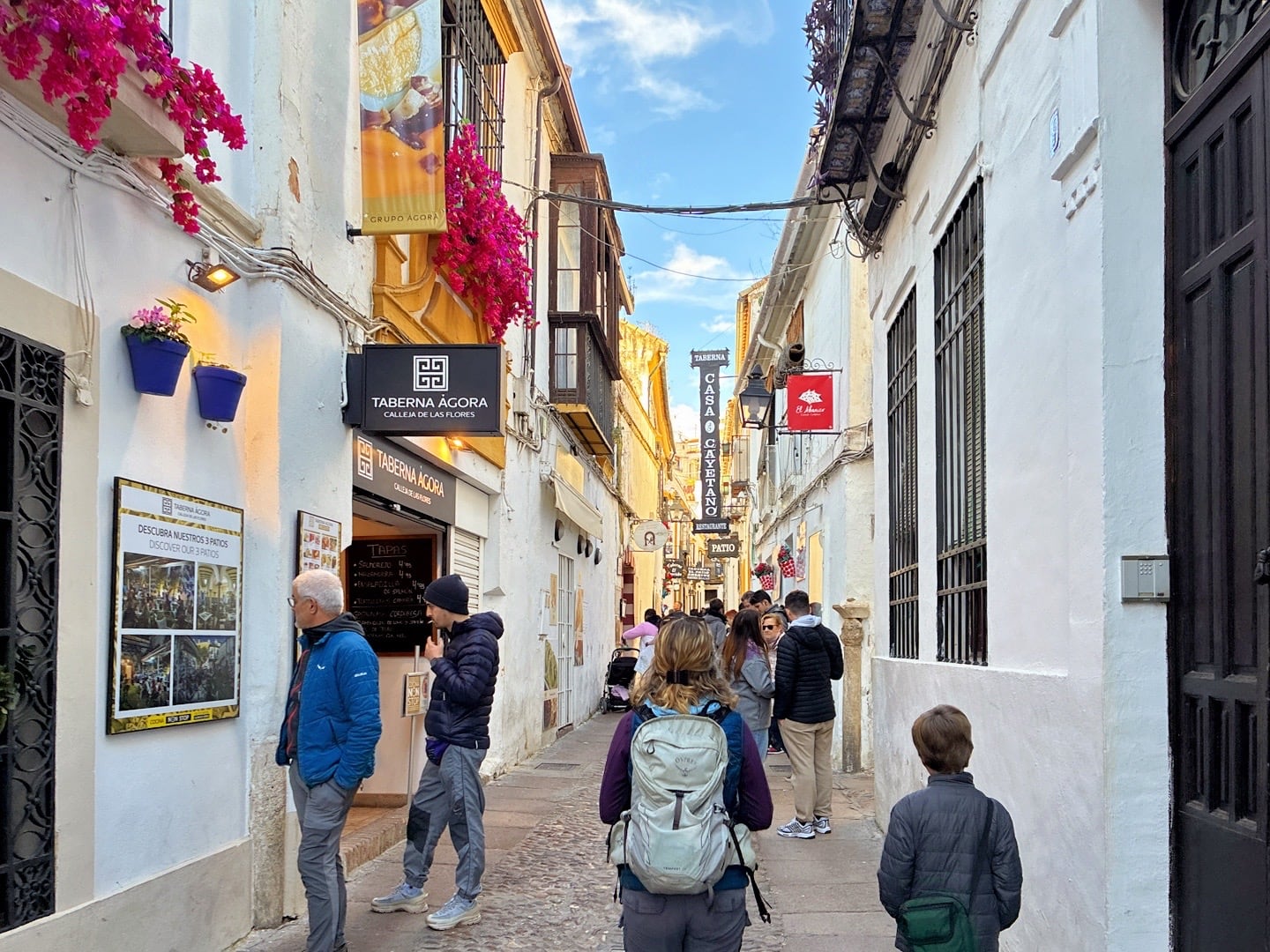
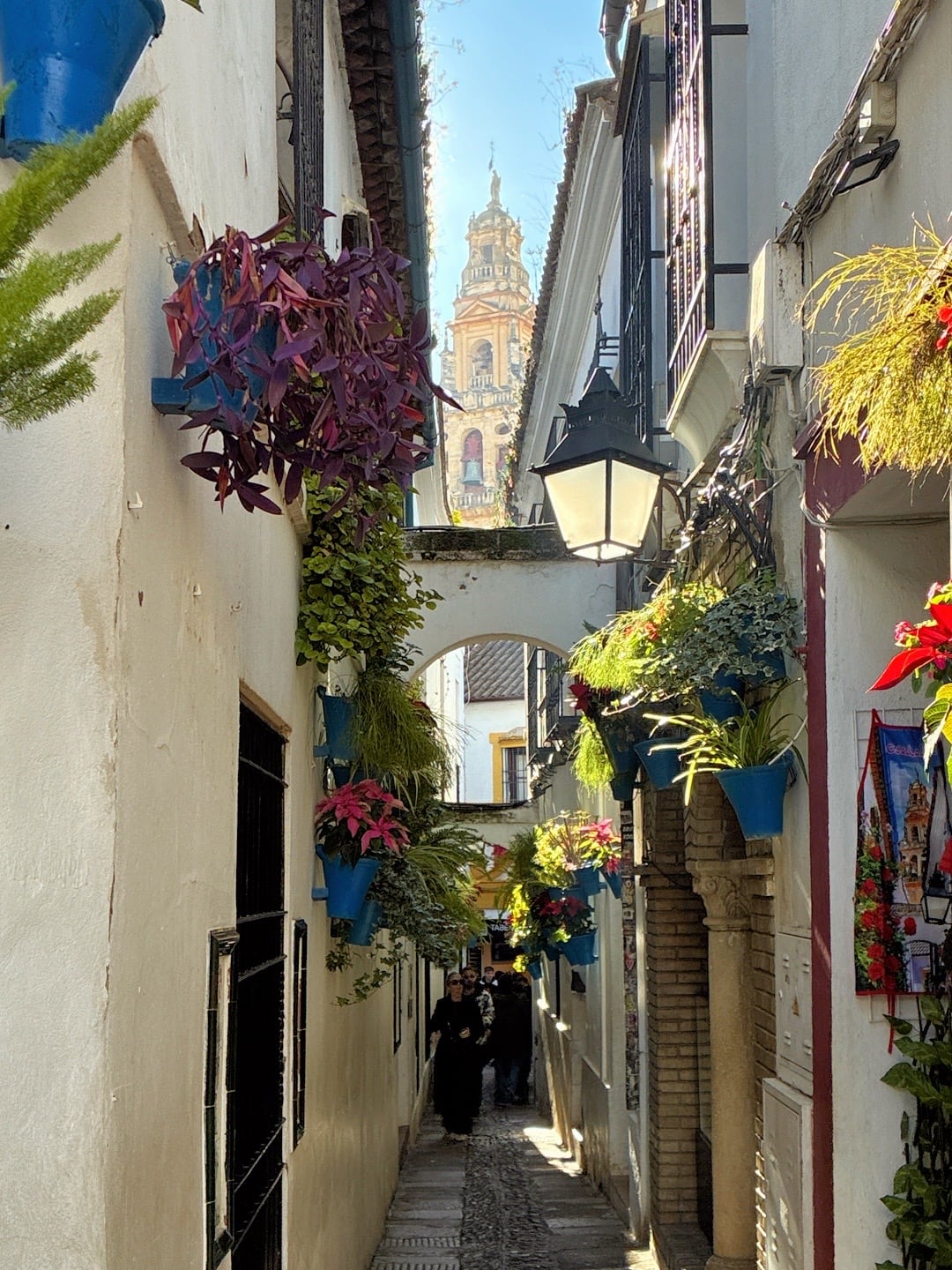
Every old city in this part of the world seems to have an old Jewish Quarter. The Jews were expelled from Spain in 1492, but much of their legacy lives on 500 years later in these neighborhoods.
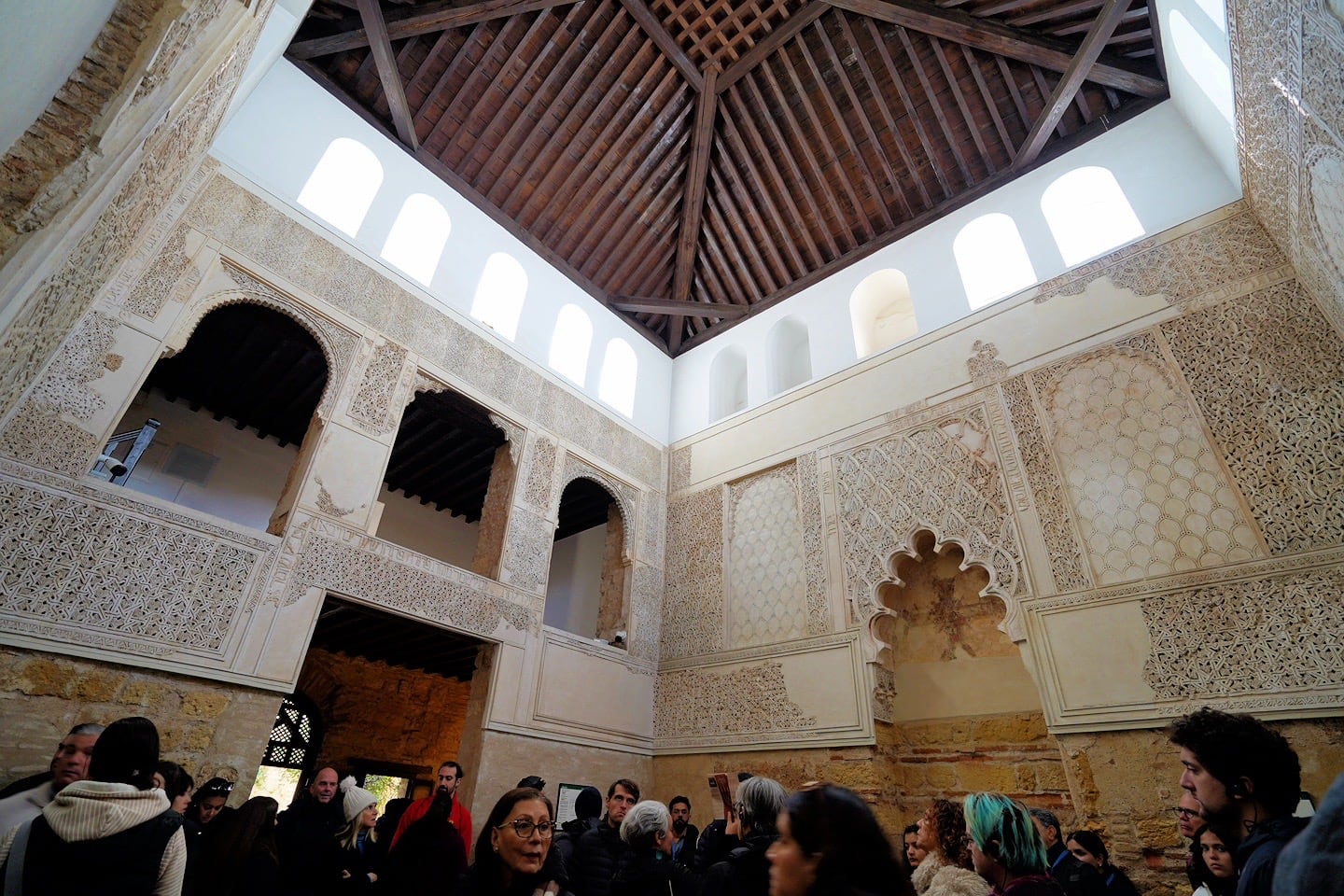
One of the main attractions in the Quarter is this historic synagogue.



Yep, even Europe has “Pressed Penny” machines, we’ve discovered. But around here, they use the 5-cent Euro coin, which more closely resembles a U.S. penny than any other coin.

Time to catch the train back to Sevilla. This time, we opted for the cheaper Avlo train (instead of the premium AVE we took on the way out here). We thought the difference might be speed, but nope. This one made it to Sevilla in even less time. These just have less legroom, less comfortable seats, and don’t come with a cafe-bar car.


It was a really nice evening, so we opted to cover the two miles back to the apartment on foot, passing through the center of Sevilla. It seems everyone else in town had a similar idea.


