Sevilla’s got a lot of attractions for visitors. But the two big ones are the Cathedral (the largest of its kind in the world), and the Royal Alcázar (pronounced al-KUH-thuh).
Both sights are the city’s lone UNESCO World Heritage Sites and attract a ton of visitors, even in winter. We waited for a good weather window and had to book several days in advance, but the effort and wait paid off.
Our Euro-African Journey (So Far...)
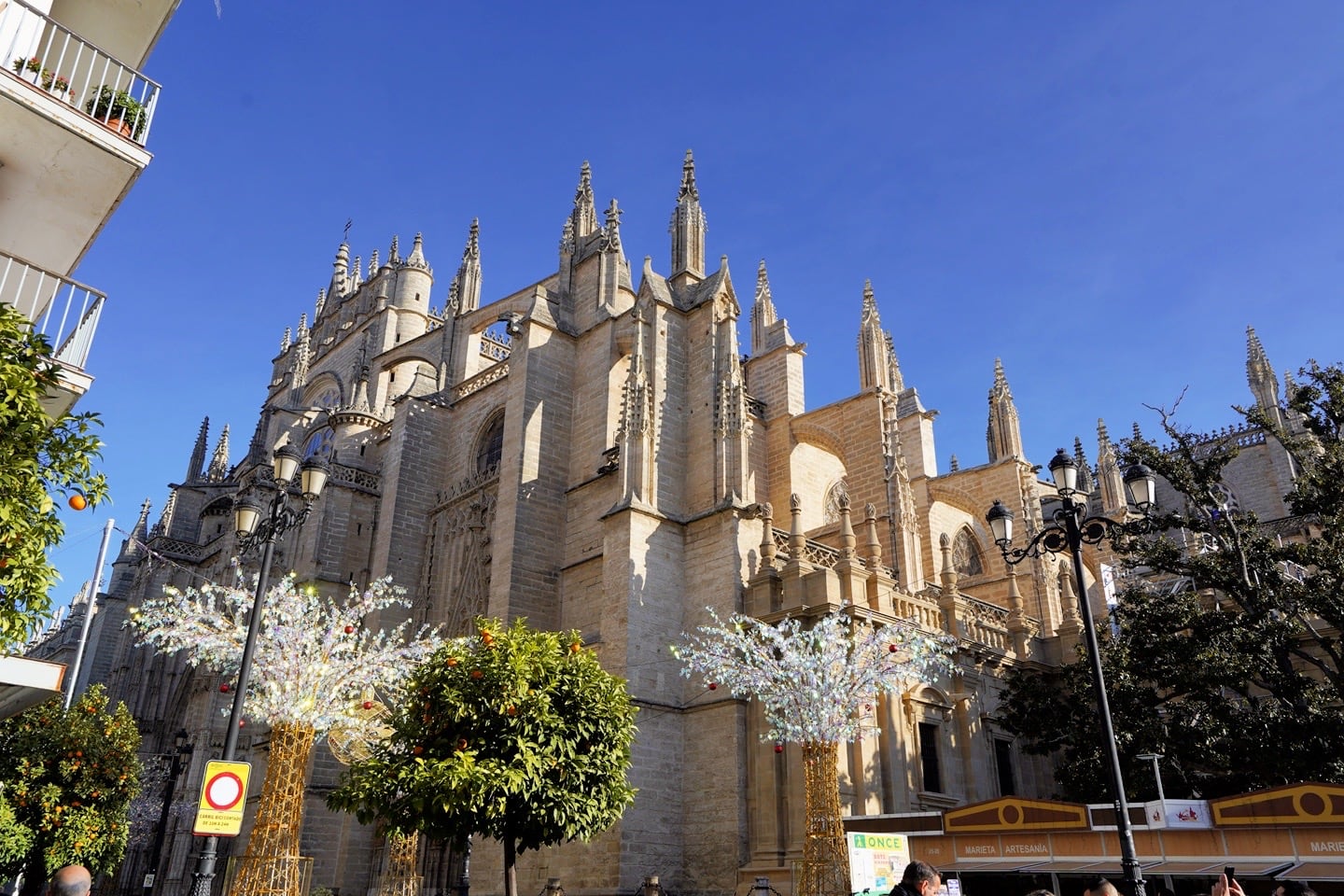
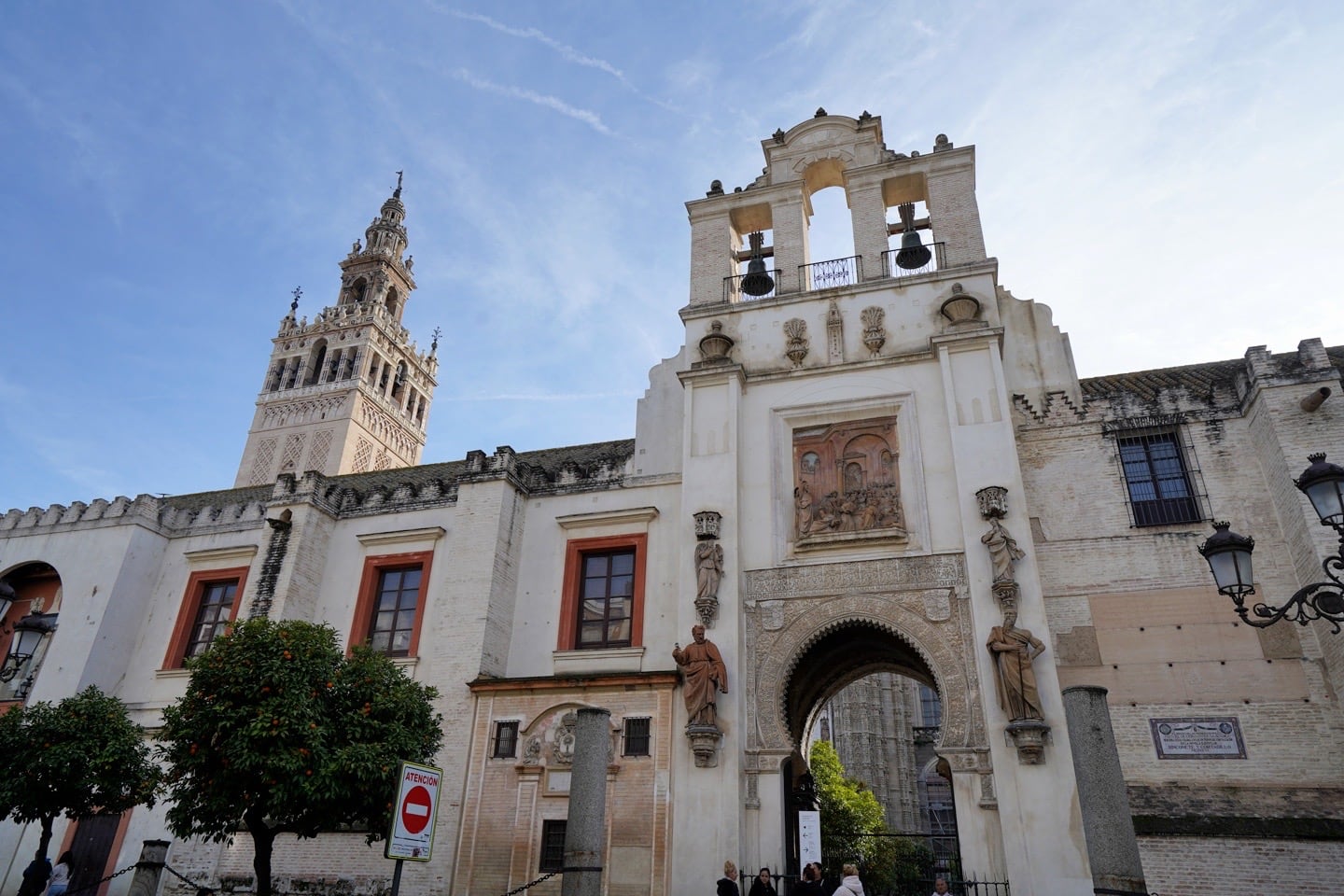
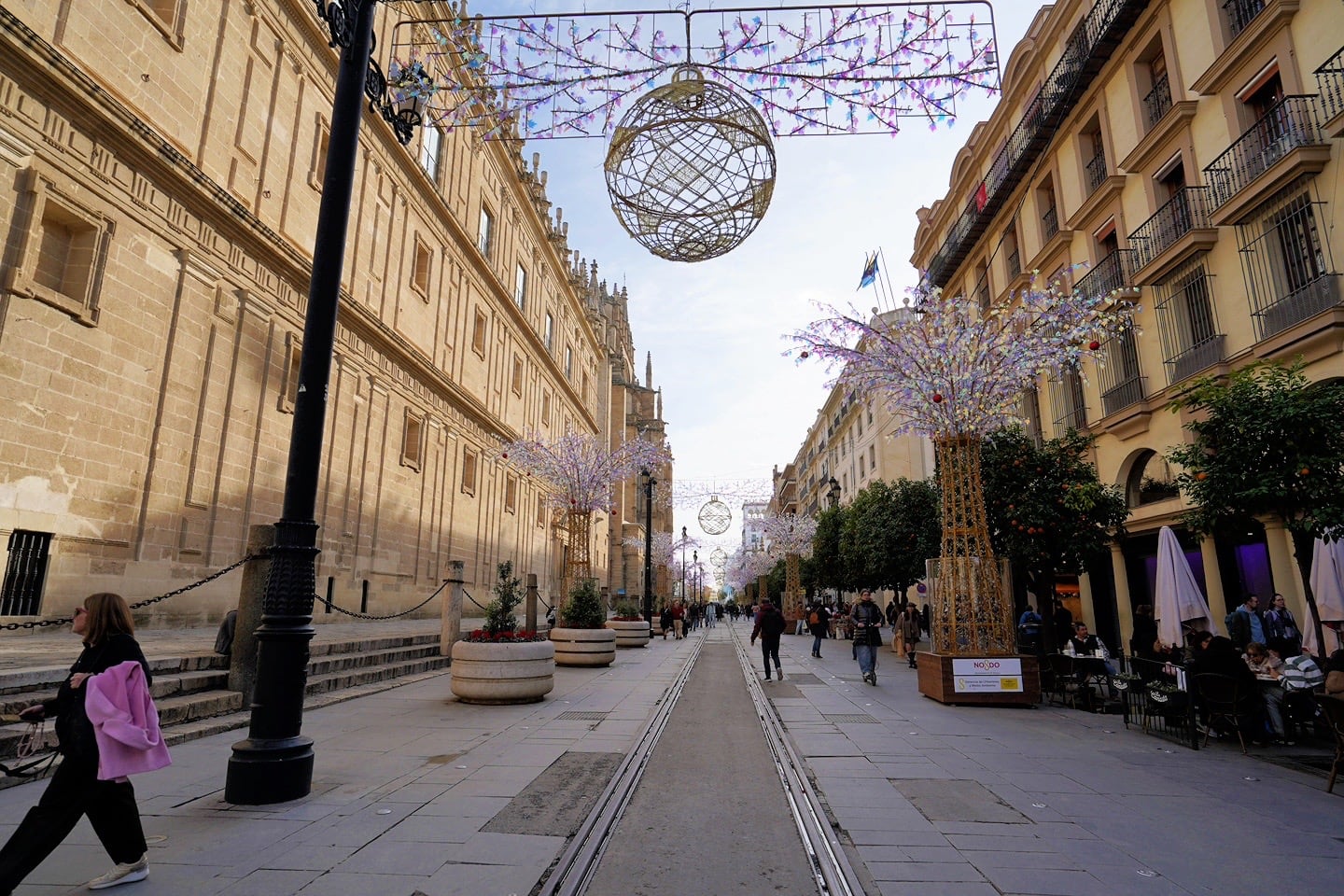
The Alcázar is located just to the southeast of the Cathedral (above).
The main gates of the Alcázar are often busy with carriage rides and long lines of people waiting to get in. We had a time on the earlier side, so not a lot of visitors yet.
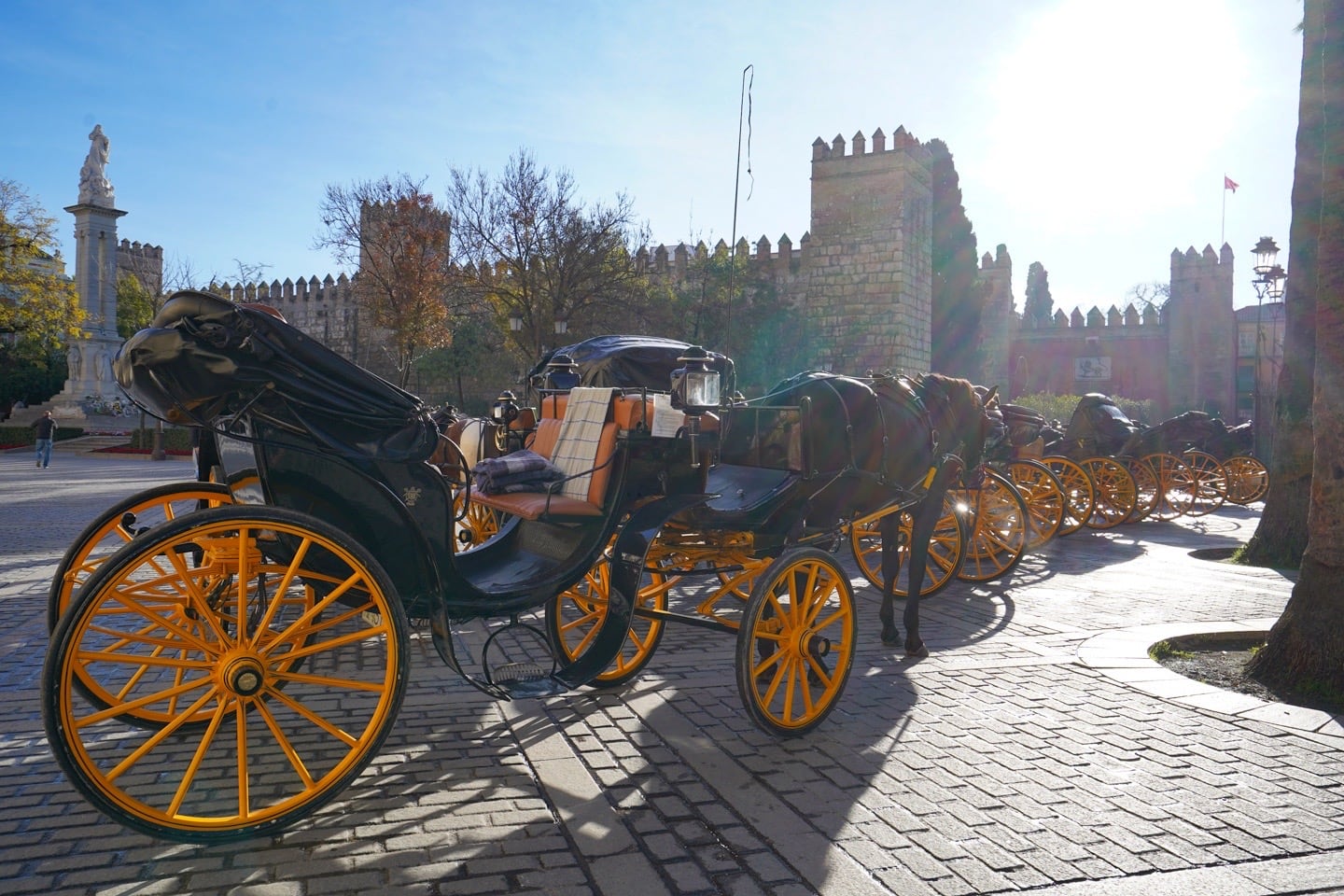
The Royal Alcázar of Seville is one of the oldest royal palaces in Europe, and it’s still in use today by members of the Royal Family.
It began life as a 10th-century Moorish fortress, and was heavily revised and added onto over the centuries in the distinct Mudéjar style of Southern Spain.
There are lots of different sections of the grounds, including the 14th-century Palacio de Pedro I, the 13th-century Gothic Palace, later 18th-century additions, and the 17-acre palace gardens.
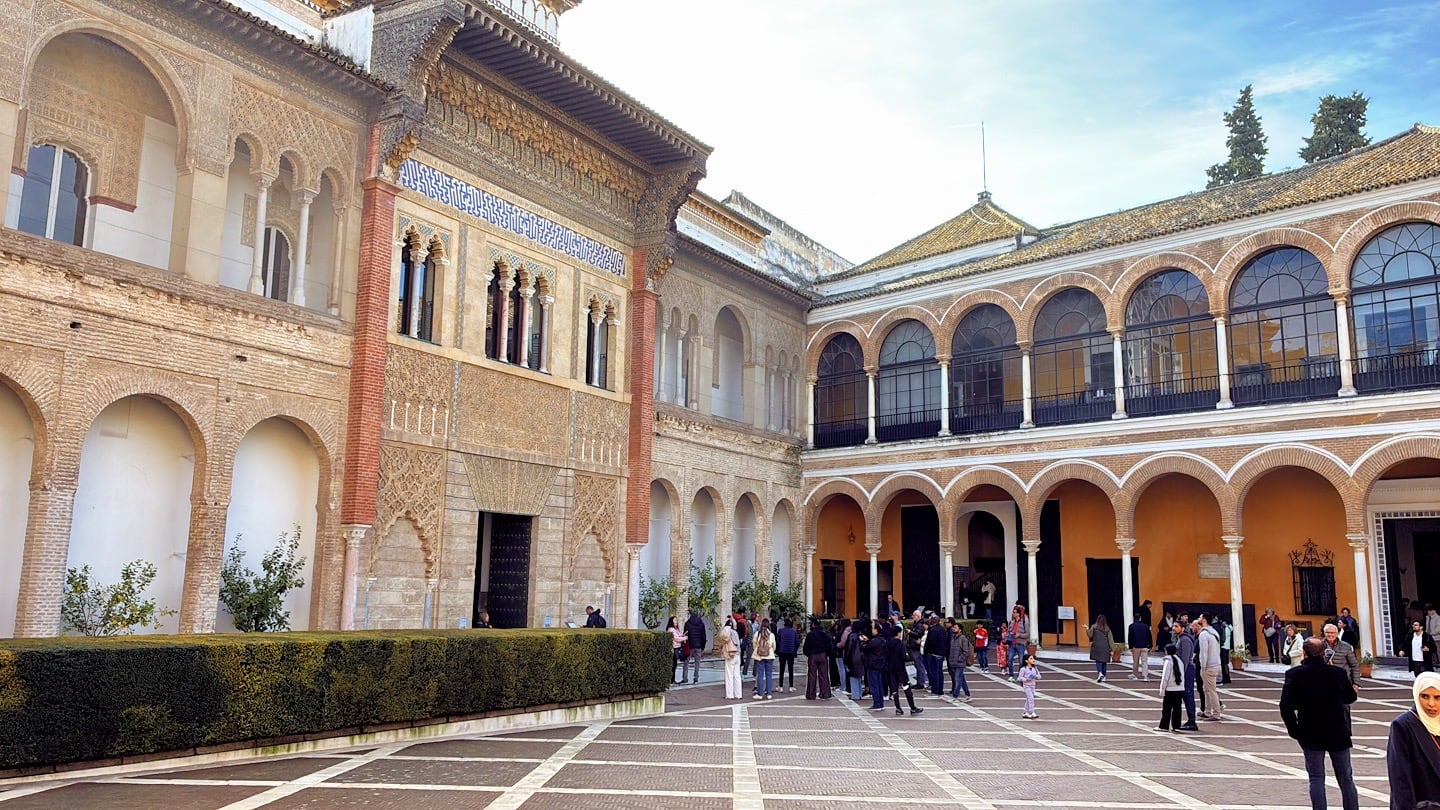
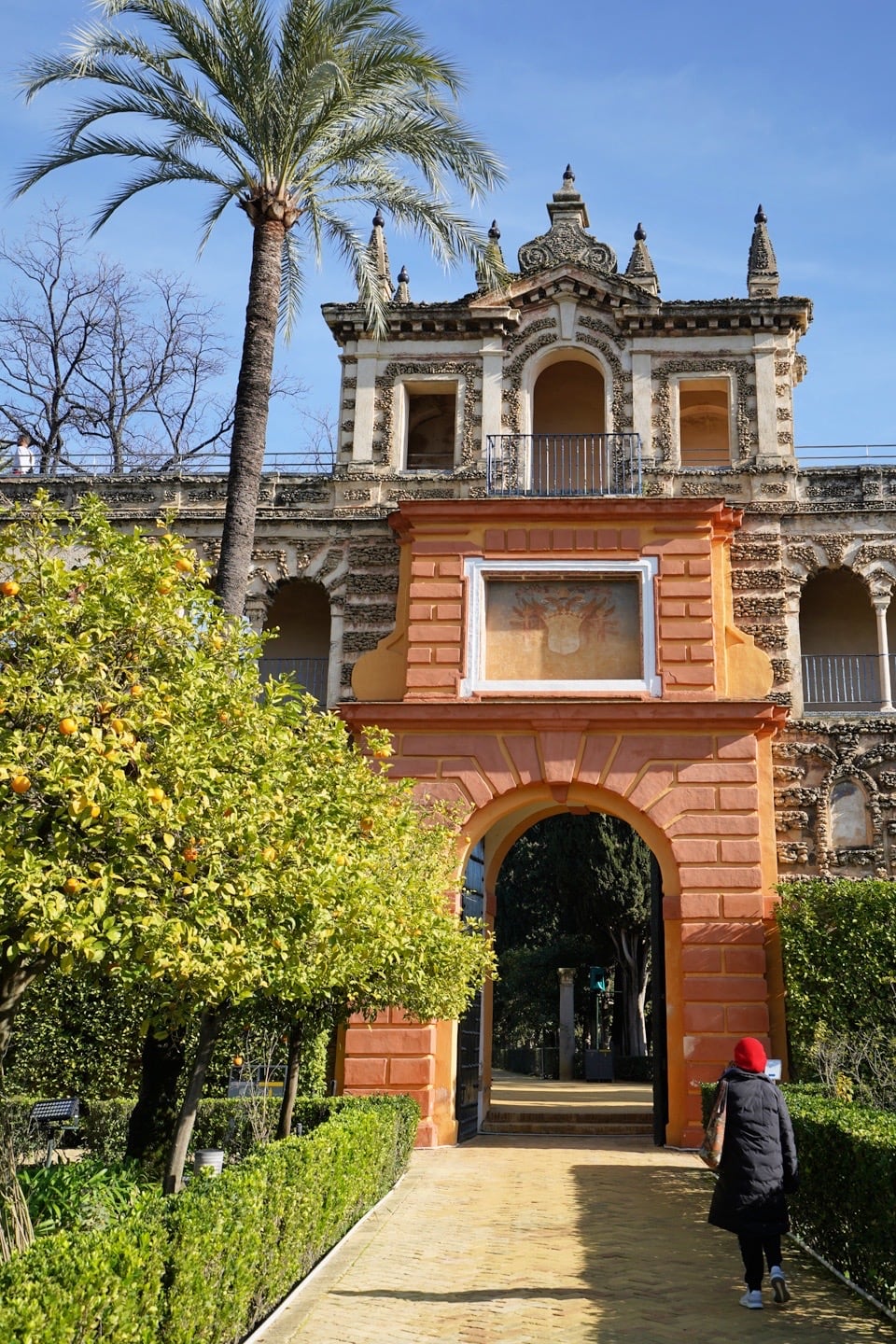
The main attraction is the incredibly ornate Palacio de Pedro I (Palace of Peter the 1st, also known as Peter the Cruel), which is entered through the gate, above.
The palace faces the Patio de la Montería (Courtyard of the Hunt) (also above), traditionally where the royal hunting parties would gather before setting out.
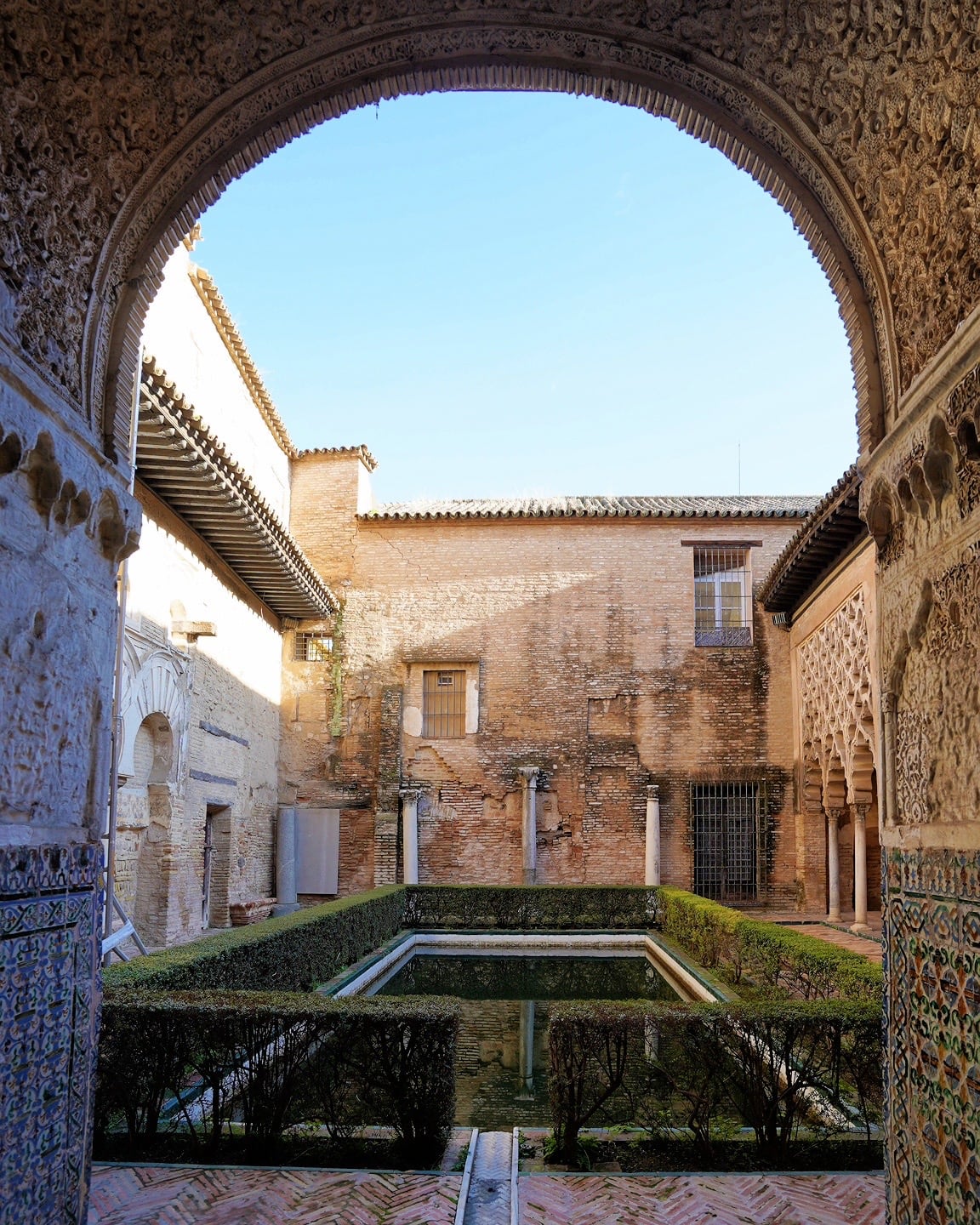
Around the property are a number of vast halls, pocket gardens, and other nooks and crannies to explore.
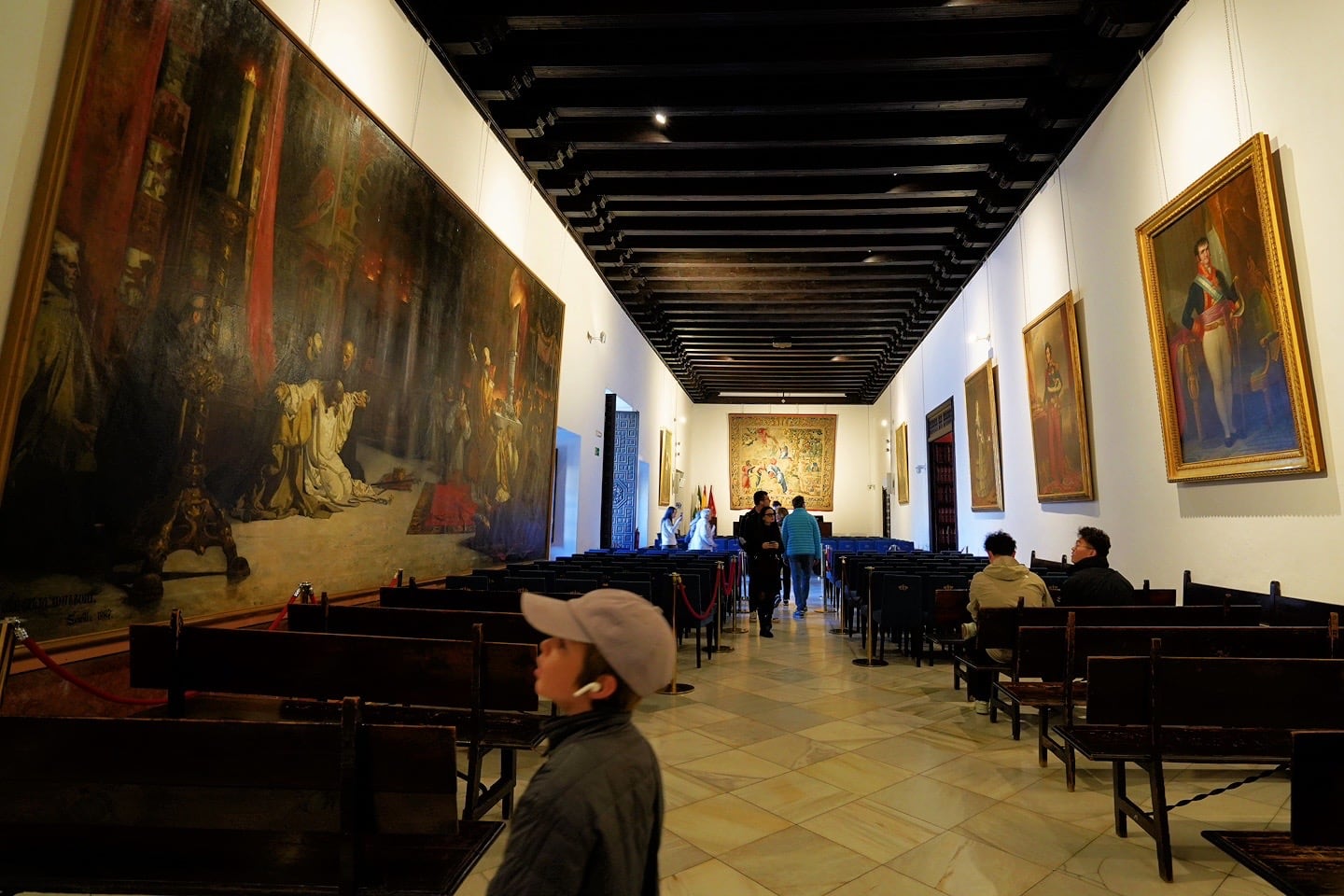
The entire site took Noe and I three hours to circulate through (following our audio guide). Noe could have spent much more time here, but I think three hours was a good amount.
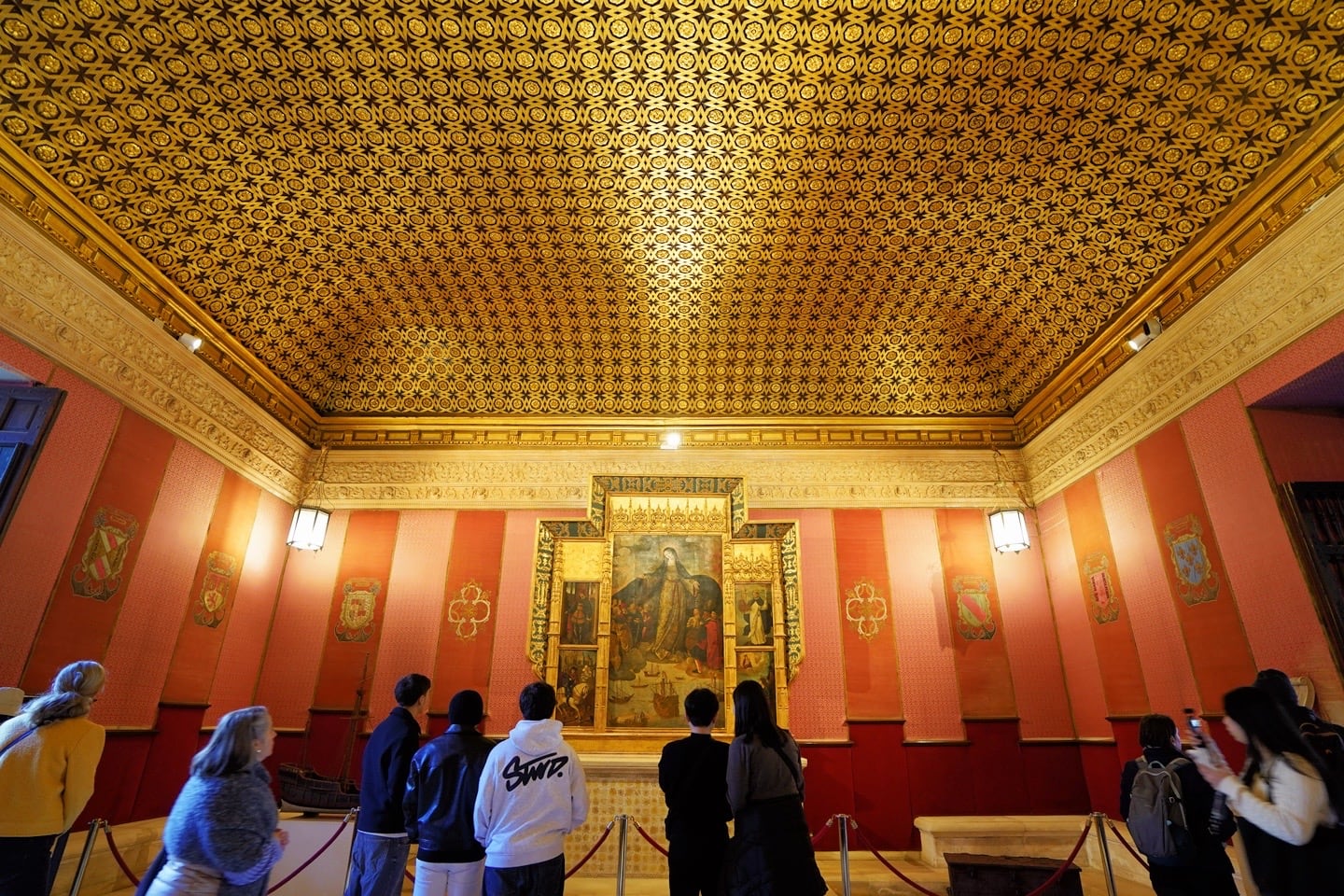
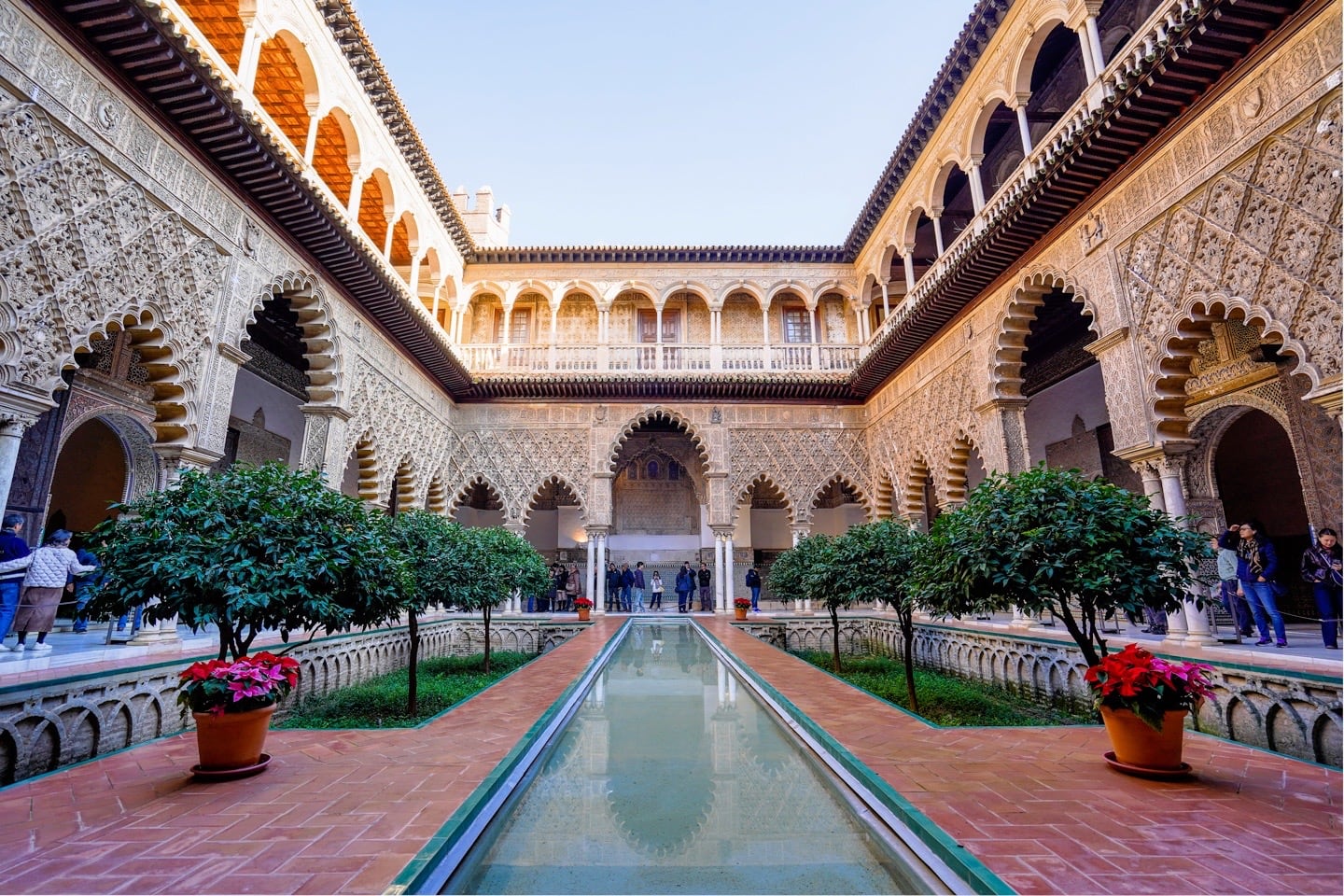
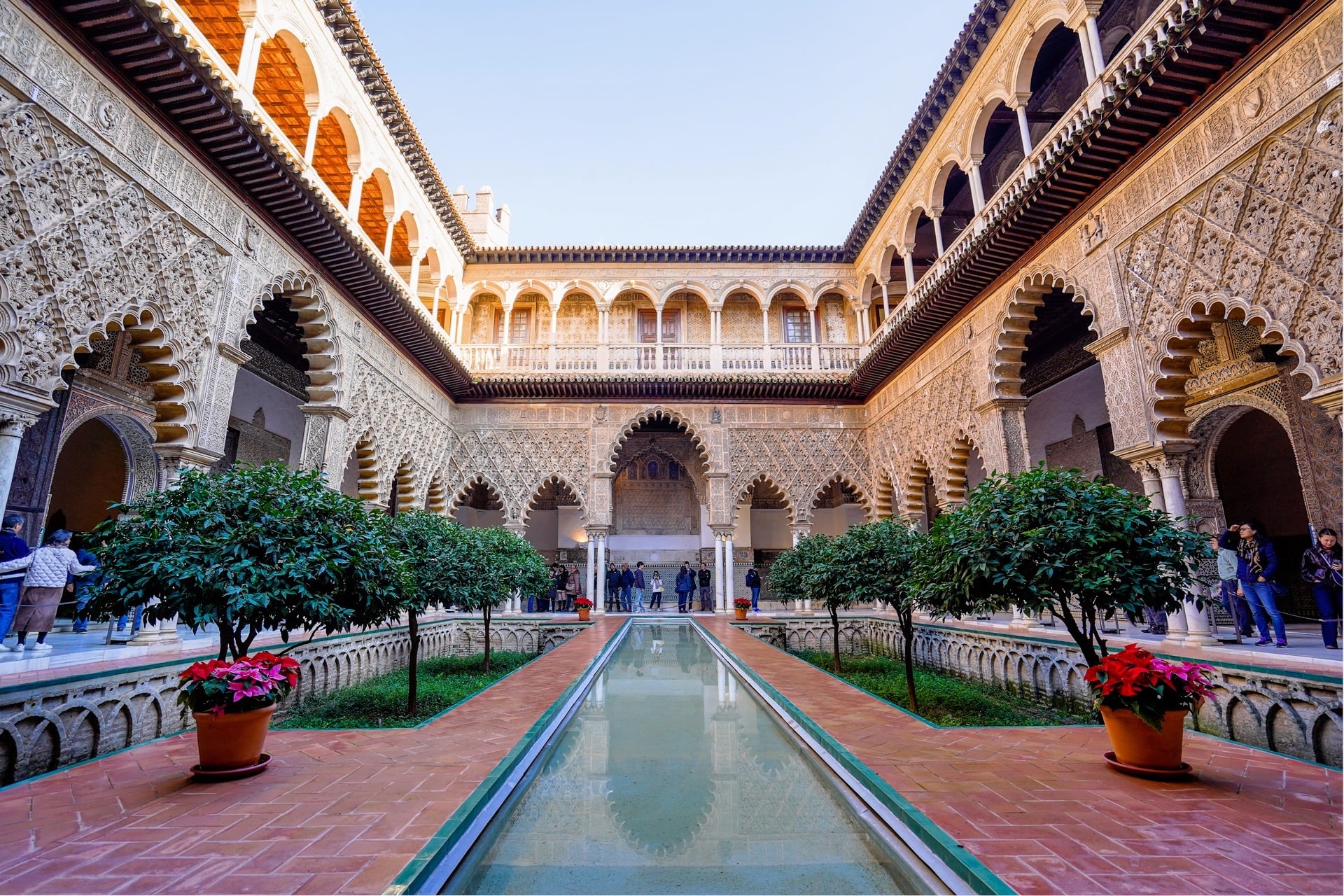
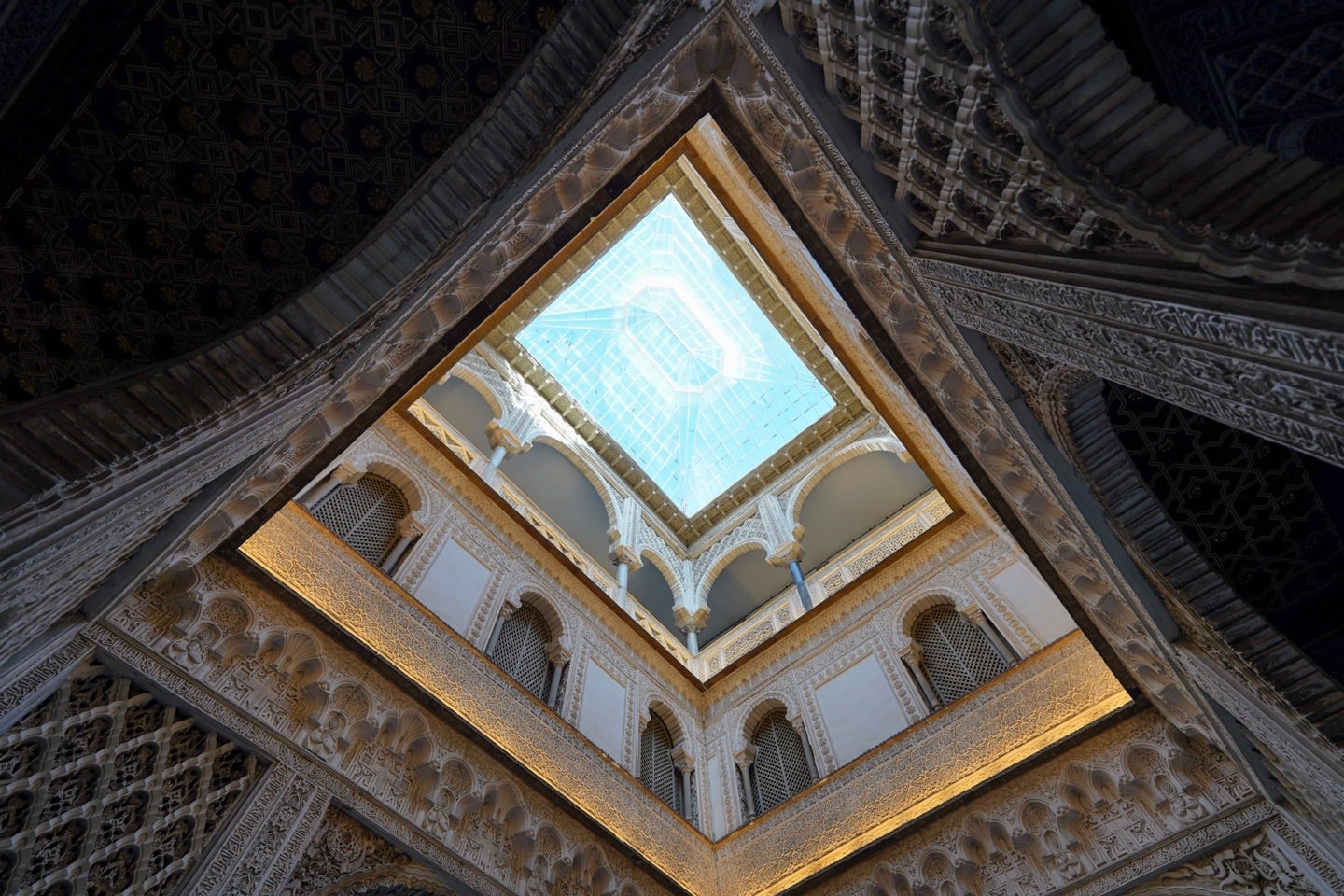
The Patio de las Doncellas (Courtyard of the Maidens) is the eye-catching, central courtyard of Sevilla’s Alcázar, and arguably one of the palace’s main attractions.
Peter the Cruel was said to be a particularly paranoid king (with a name like that, I can’t imagine why). When he built the palace, he naturally installed a number of secret passage ways for quick escape from the public areas of the palace and to easily meet with his Mistress without raising suspicion.
One such passageway that is open to the public connects the Courtyard of the Hunt with the Courtyard of the Maidens.
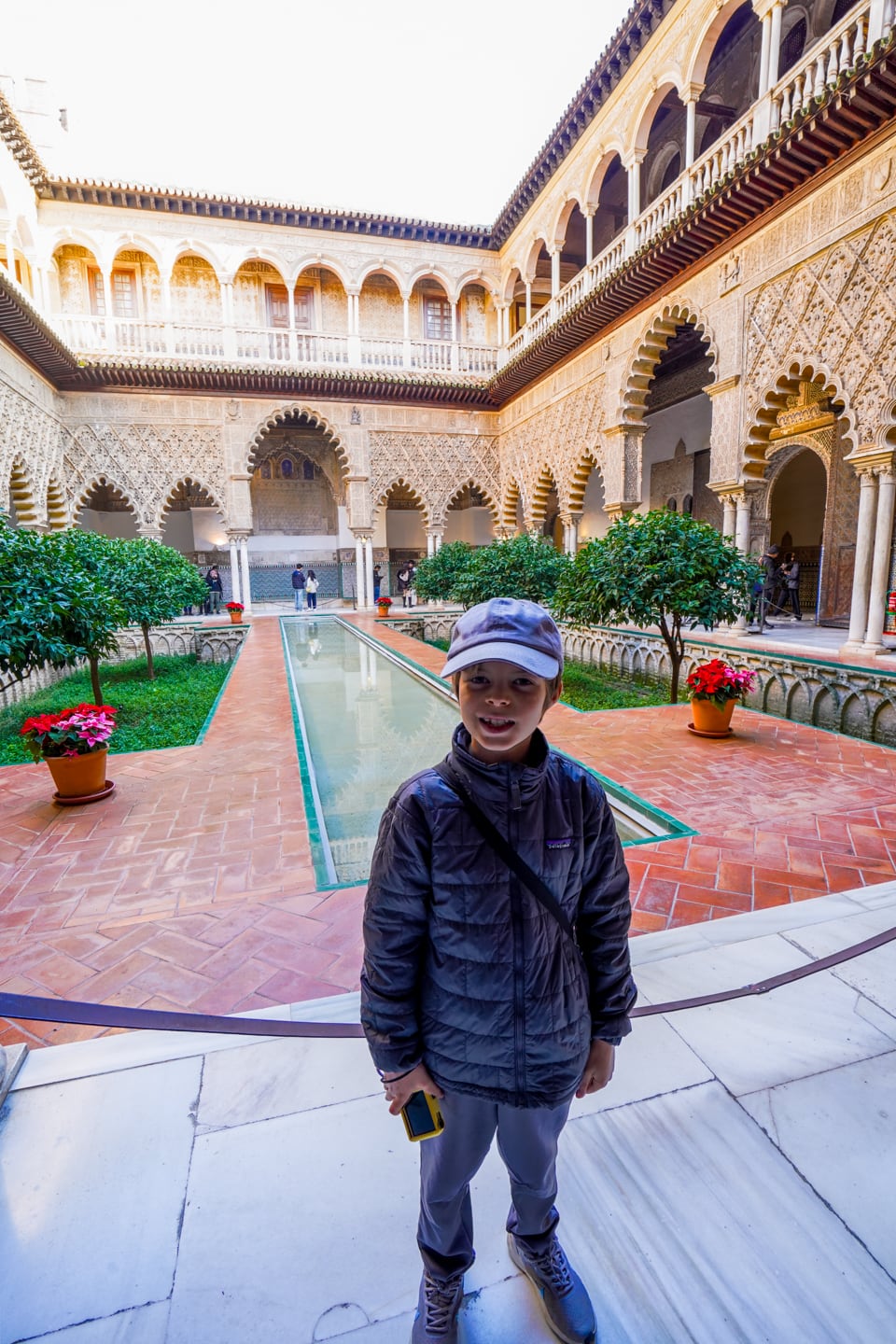
We got here early, so we were able to wander around without too many people pushing and shoving. Two hours later when we came through again, it was a completely different story.
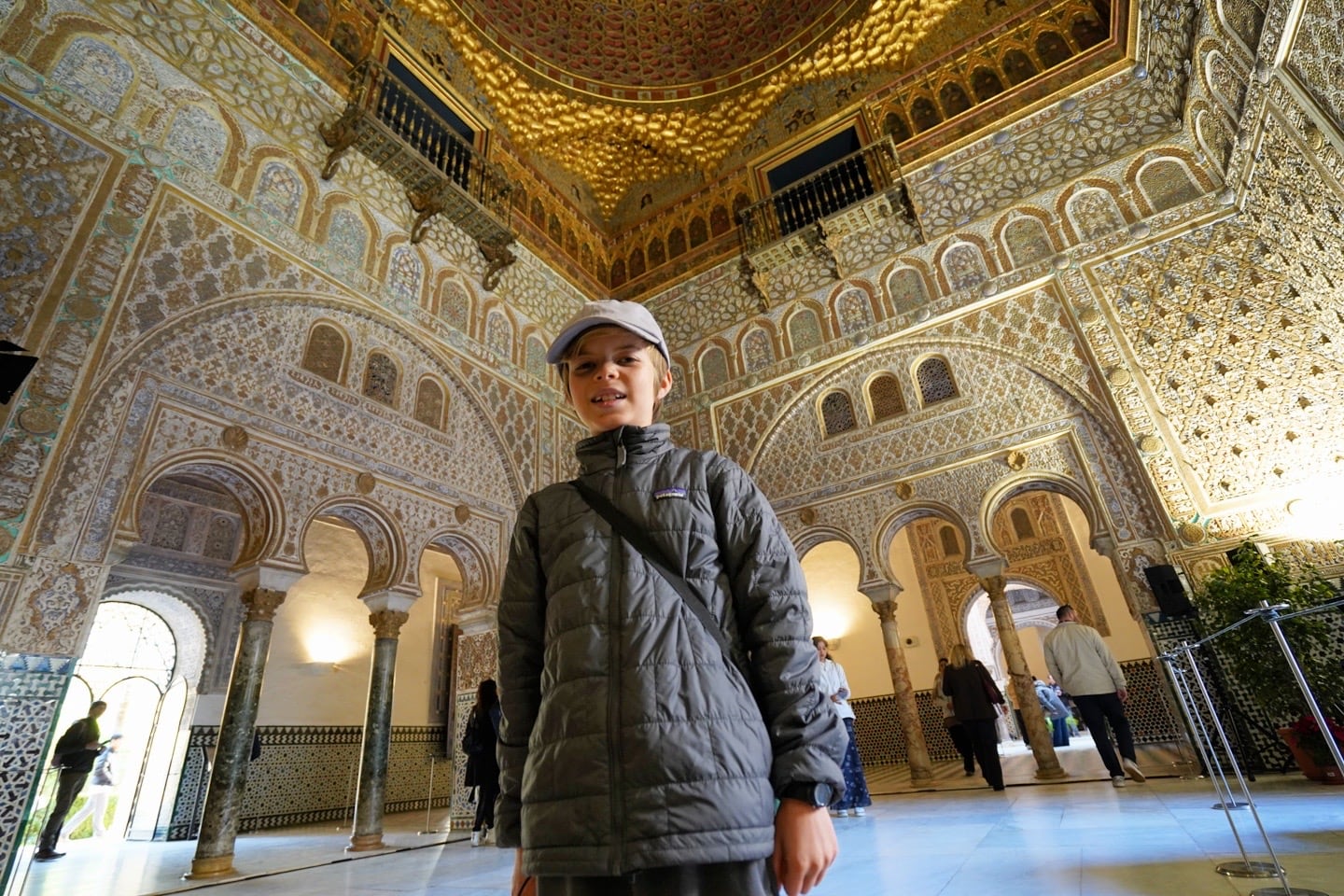
Next, we head to the most impressive area of the entire palace, the Salón de Embajadores (Hall of Ambassadors).
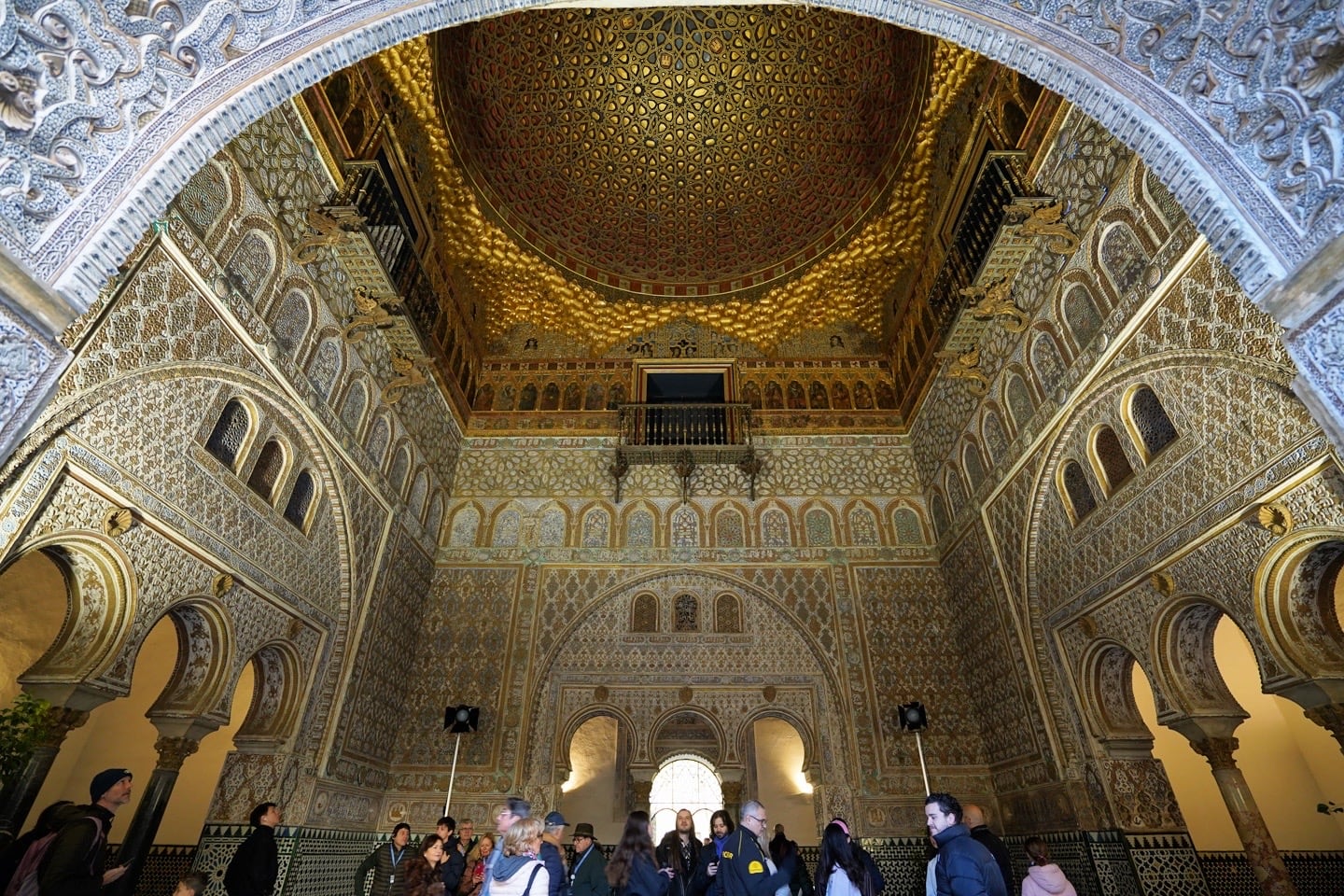
The king went Mudéjar-to-the-max in the Hall of Ambassadors, sparing no expense.
The hall is crowned by a spectacular gilded wooden dome symbolizing the heavens, that features tiny geometric designs, horseshoe arches, and intricate plasterwork, blending both Islamic and Christian themes and styles.
This room served as the royal throne hall where Peter the Cruel received dignitaries and showed off his power and wealth.
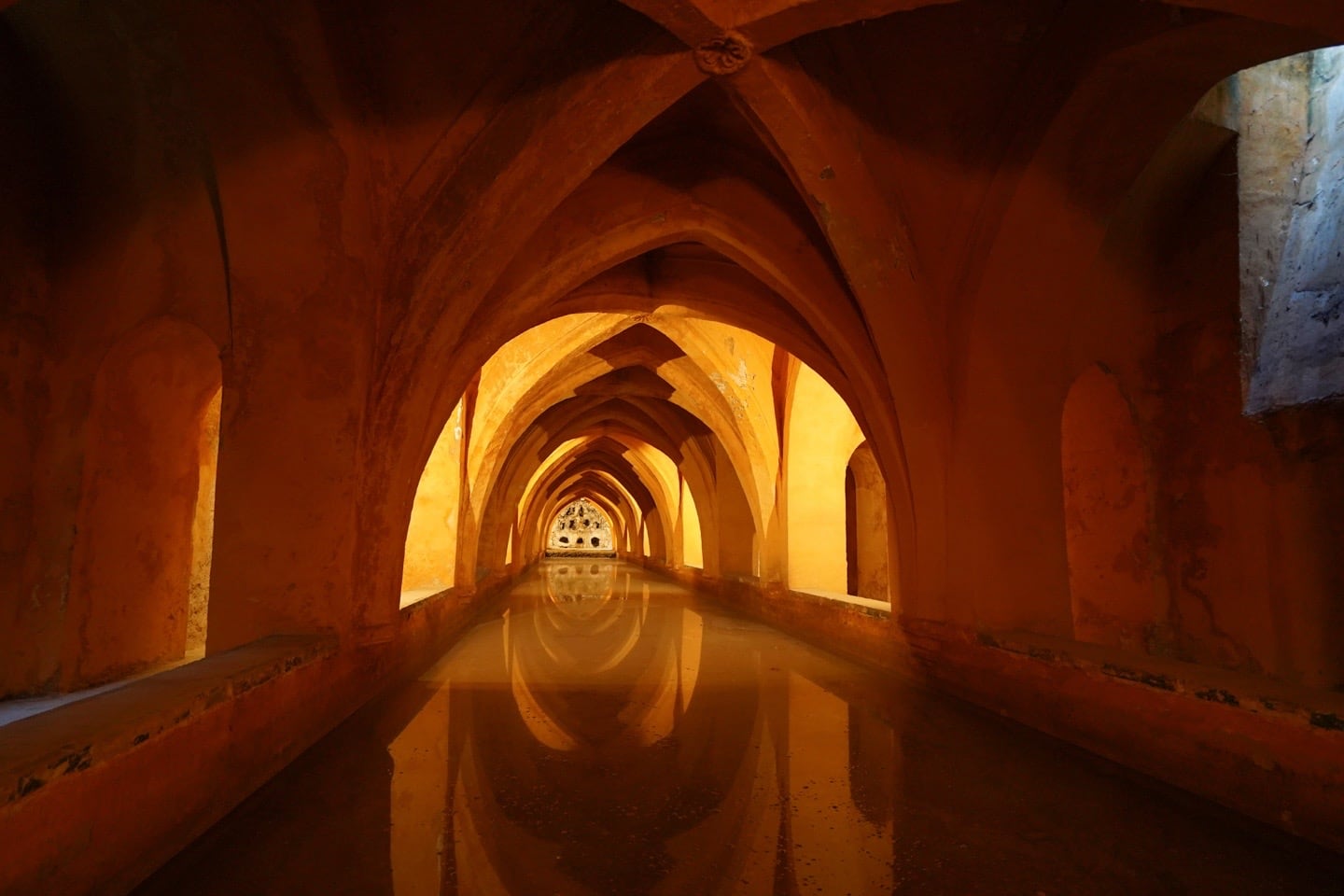
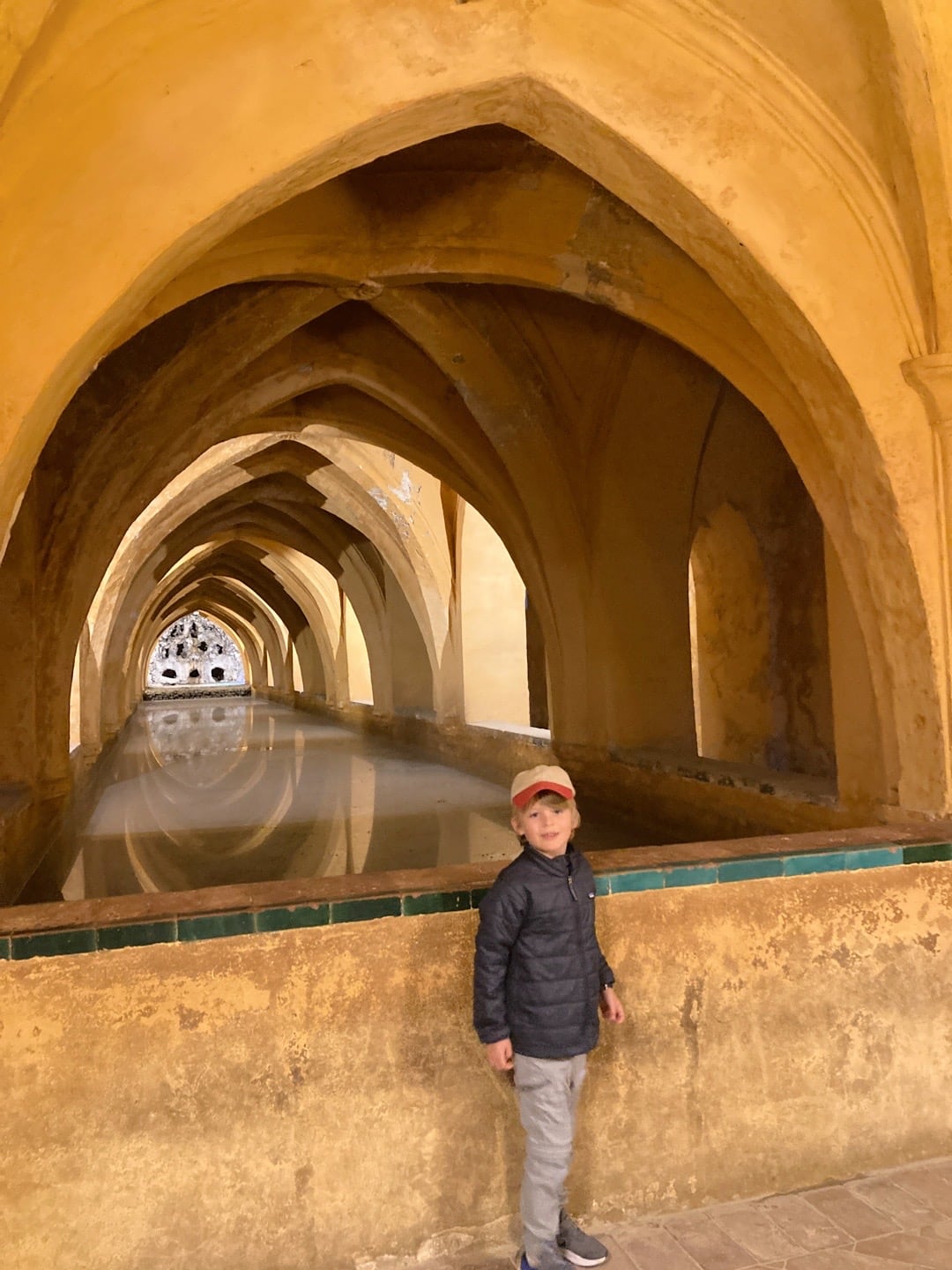
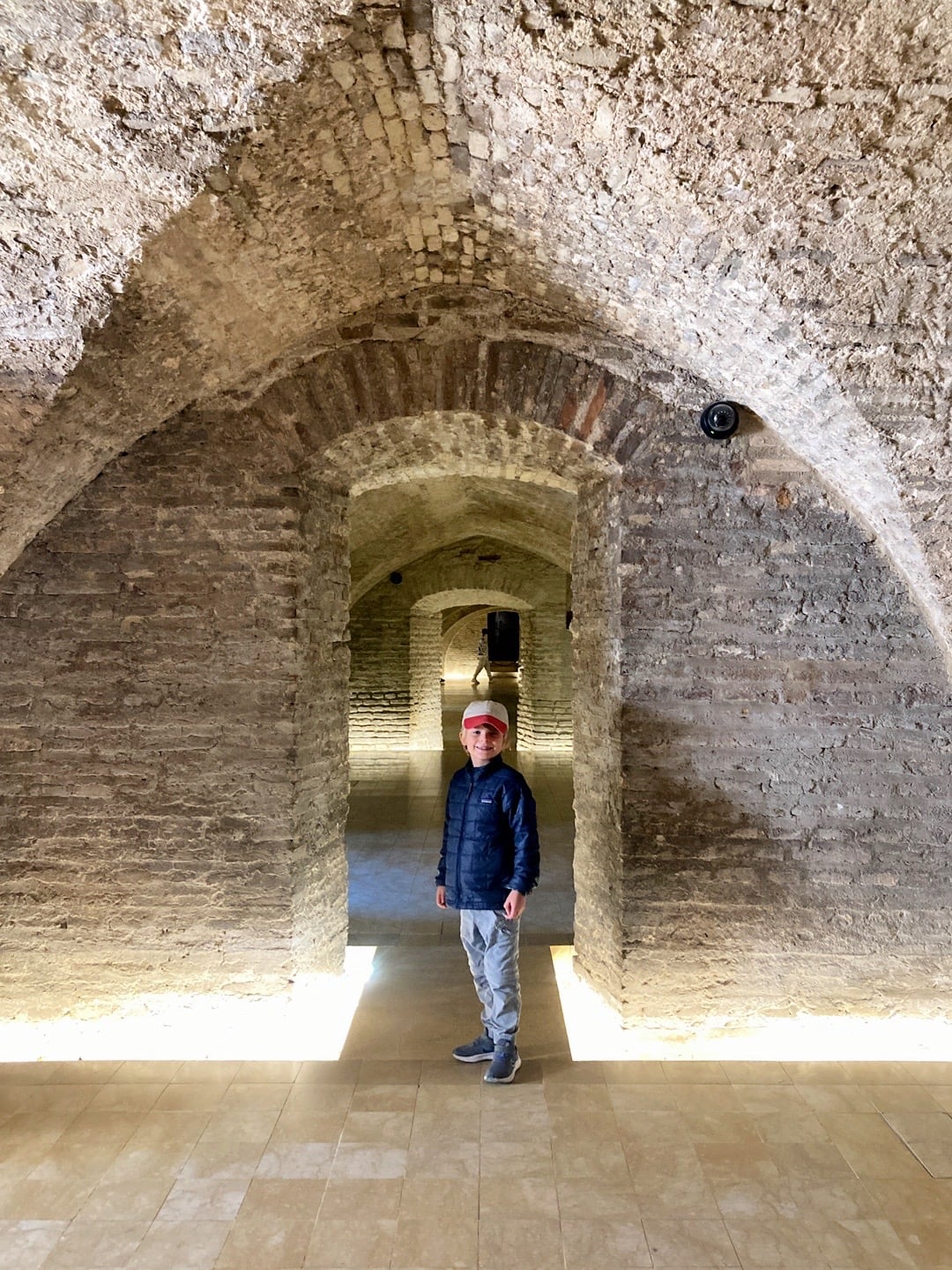
Noe really wanted to see the Baths of Doña María de Padilla, so we searched and searched and finally found them through an unmarked tunnel below the palace.
The baths were built around the 12th century and served as a place to seek refuge from the oppressive summer heat.
They are named after King Peter the Cruel’s mistress, who purportedly strolled around naked in the palace and bathed here. Legend has it that Peter the Cruel would make all his visitors drink from the bathwater of Doña María before he would agree to take an audience with them. Interesting guy.
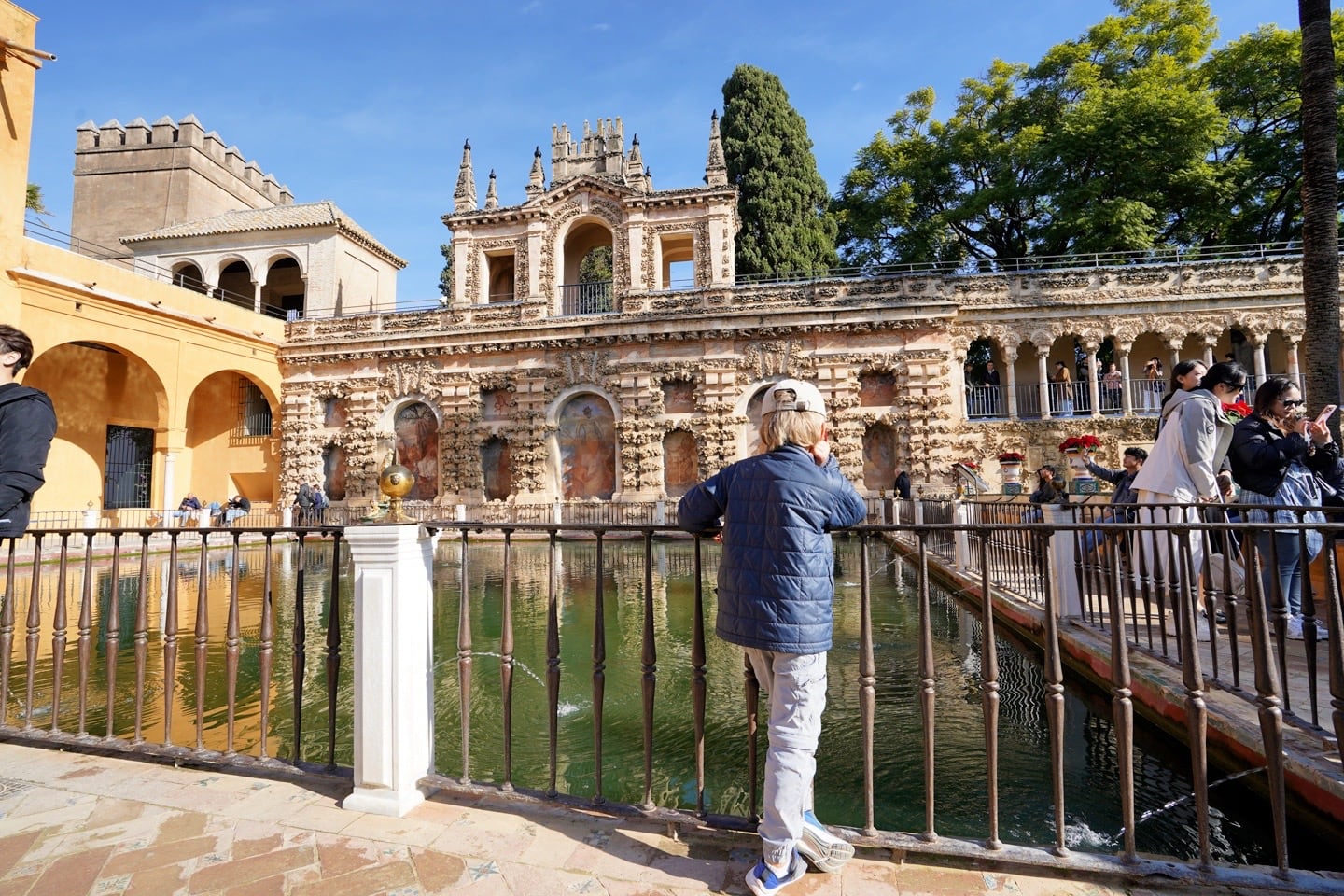
A short walk away is the 17th-century Neptune fountain.
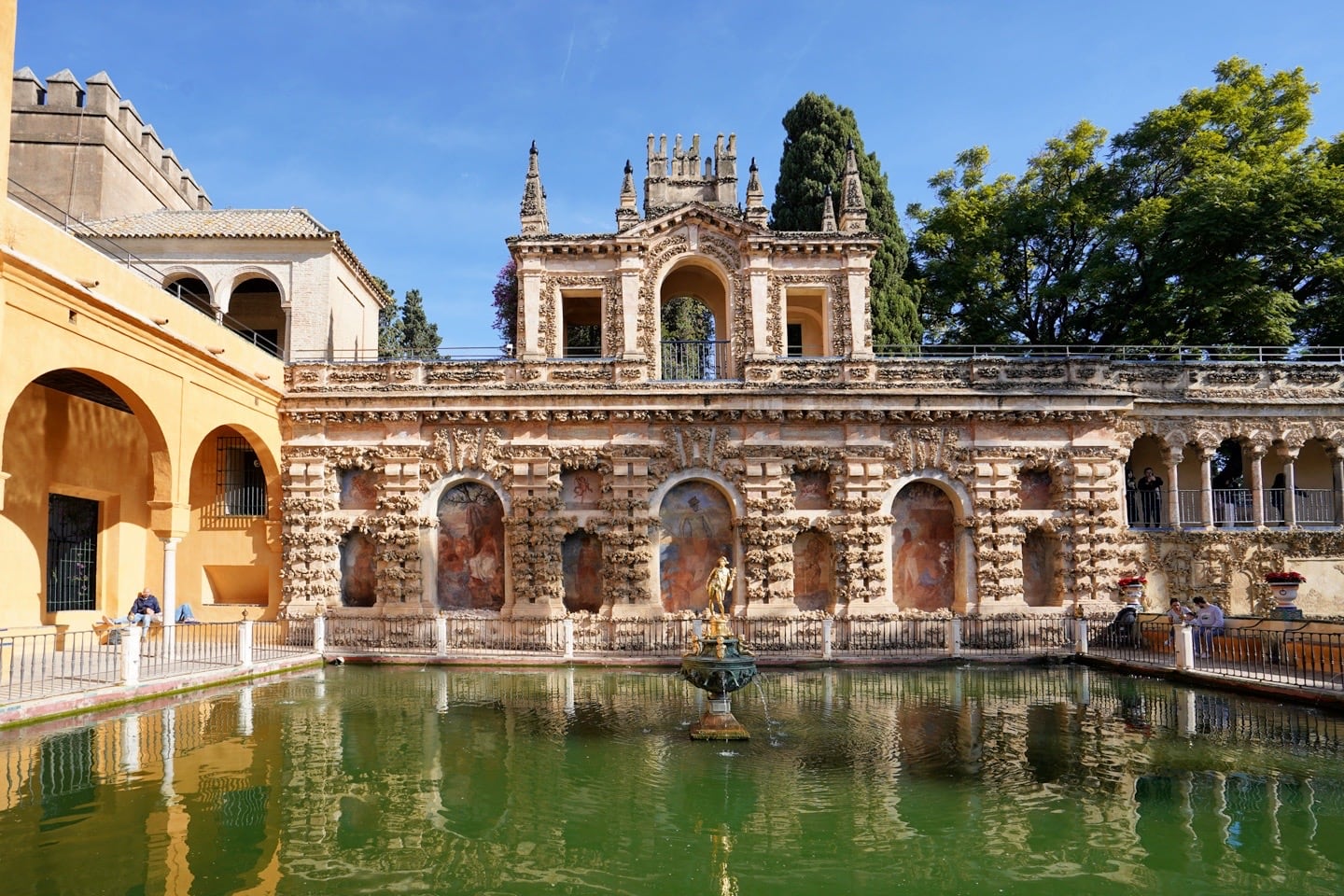
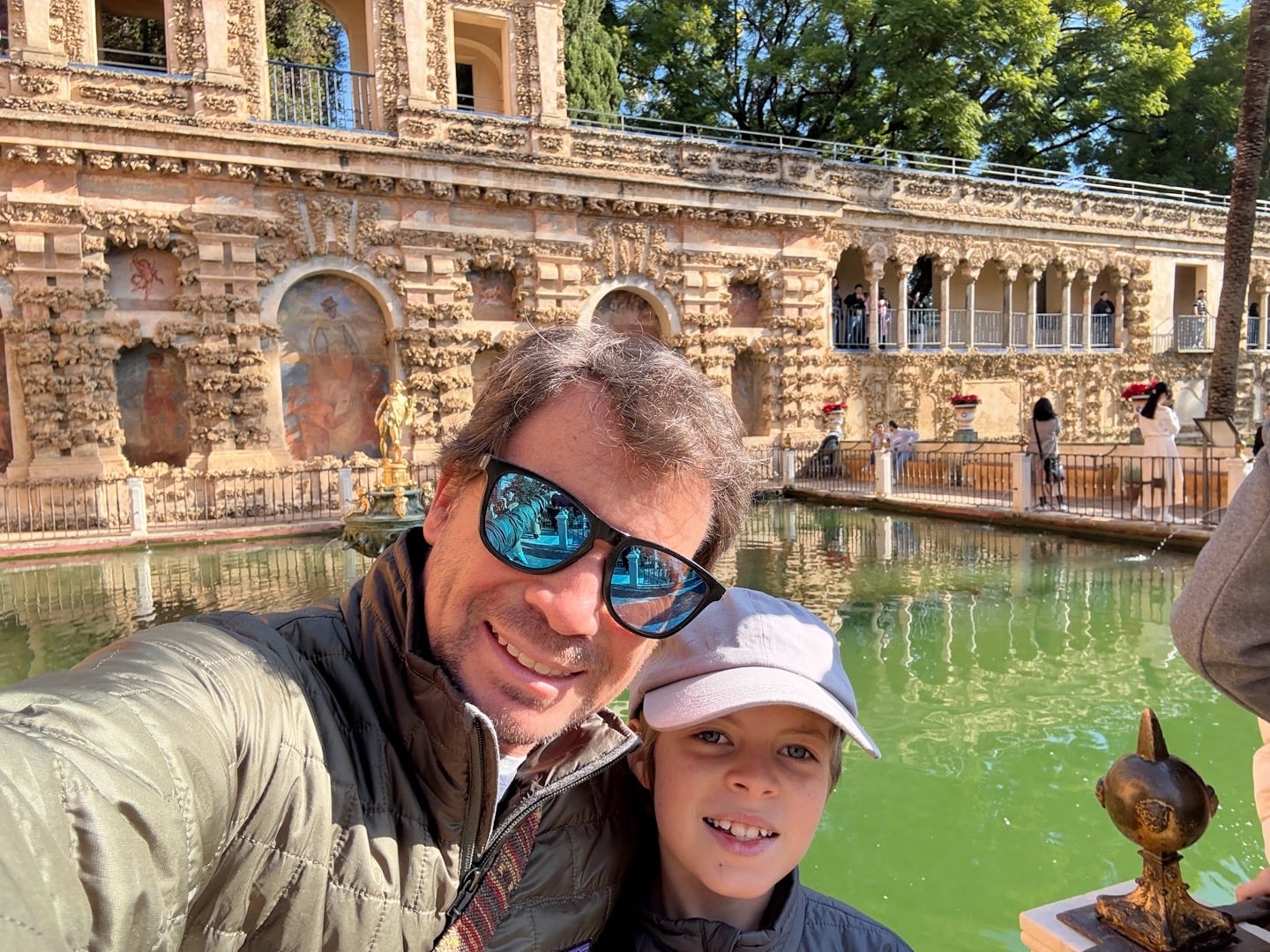
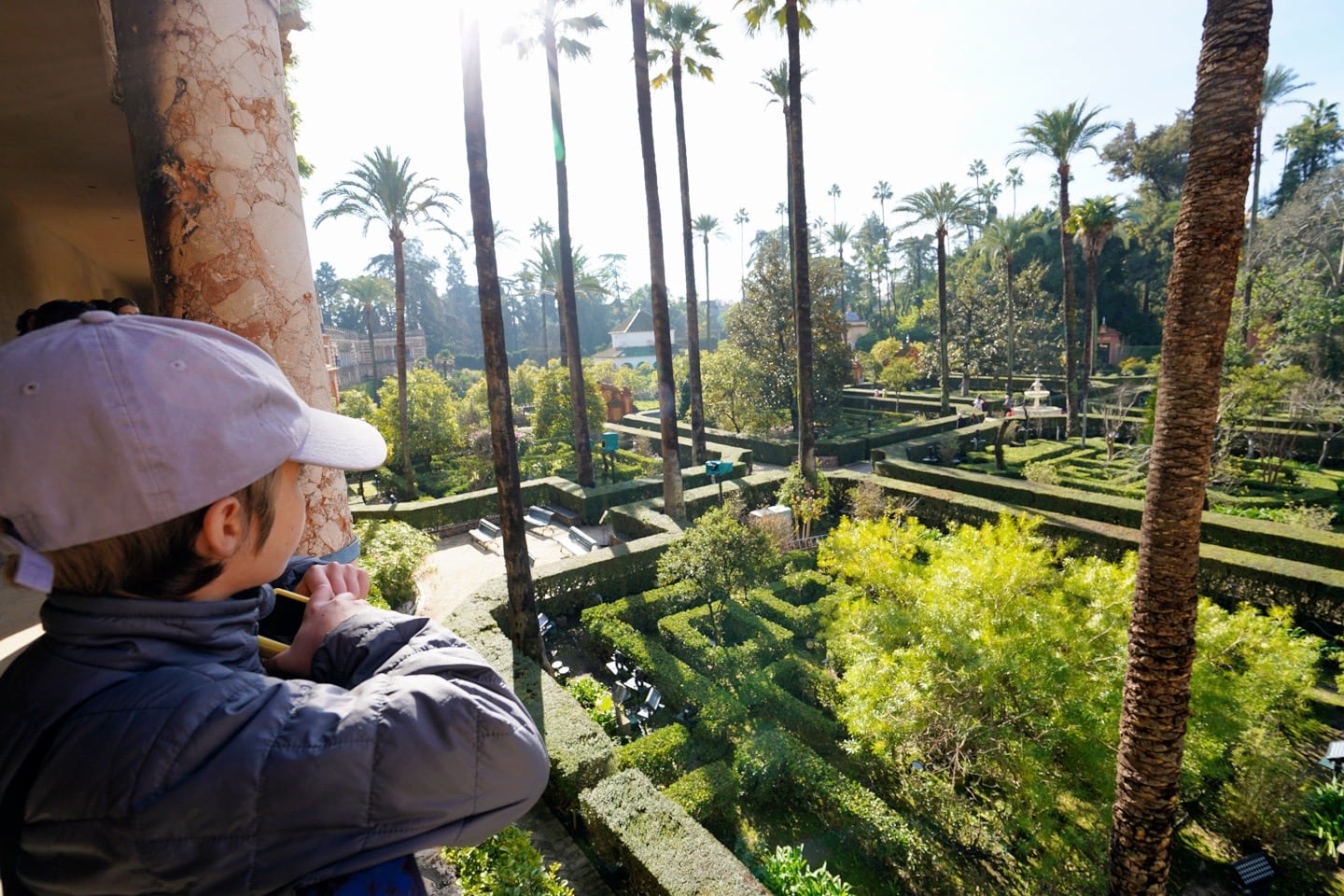
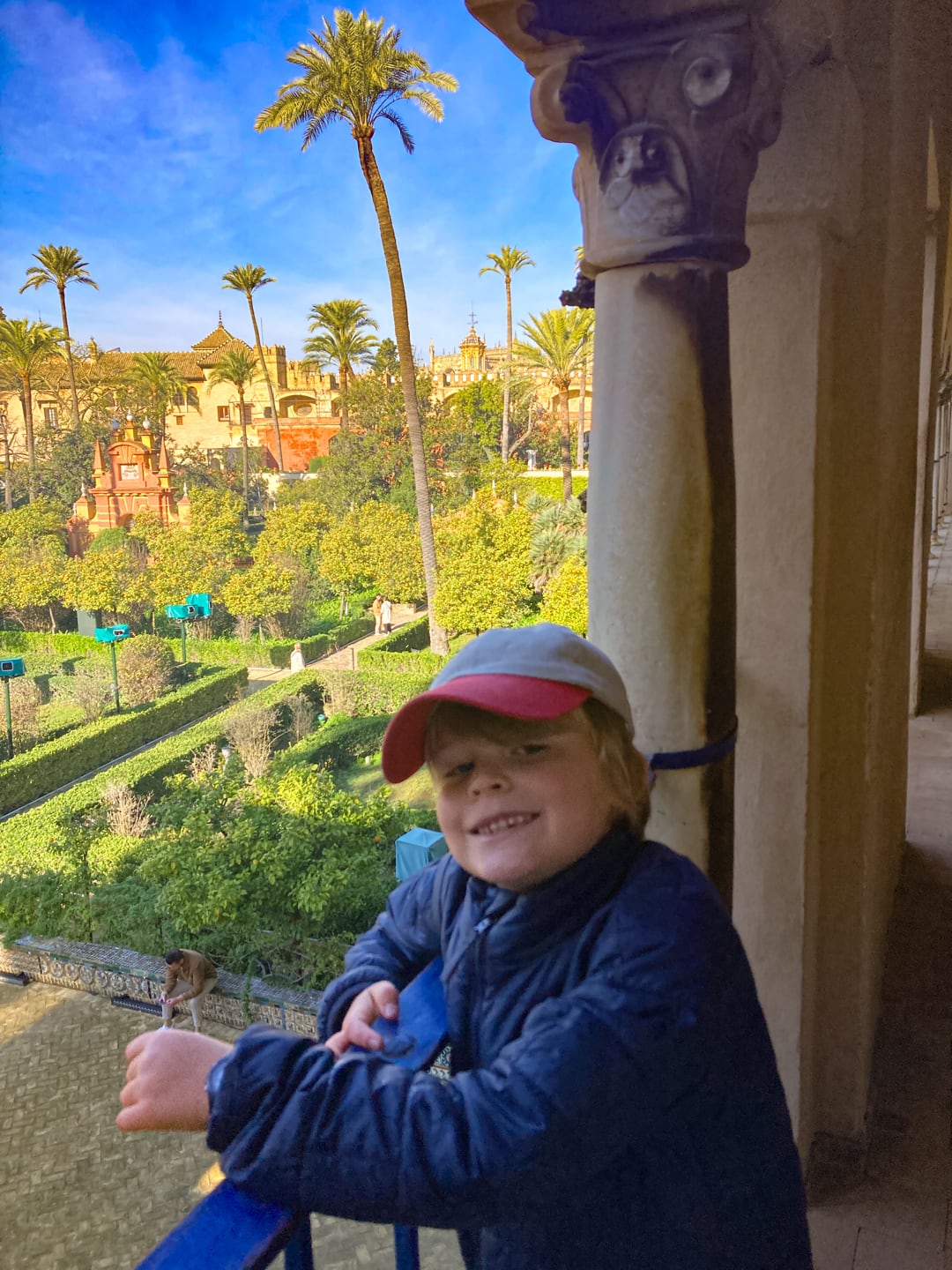
The vast gardens are divided by a wall that originally served as the exterior fortifications of the Moorish fortress. These days, you can walk the wall for some of the best views of the gardens.
Riley and Lori also enjoyed their visit here, though Riley preferred to get through the palace in much less time.
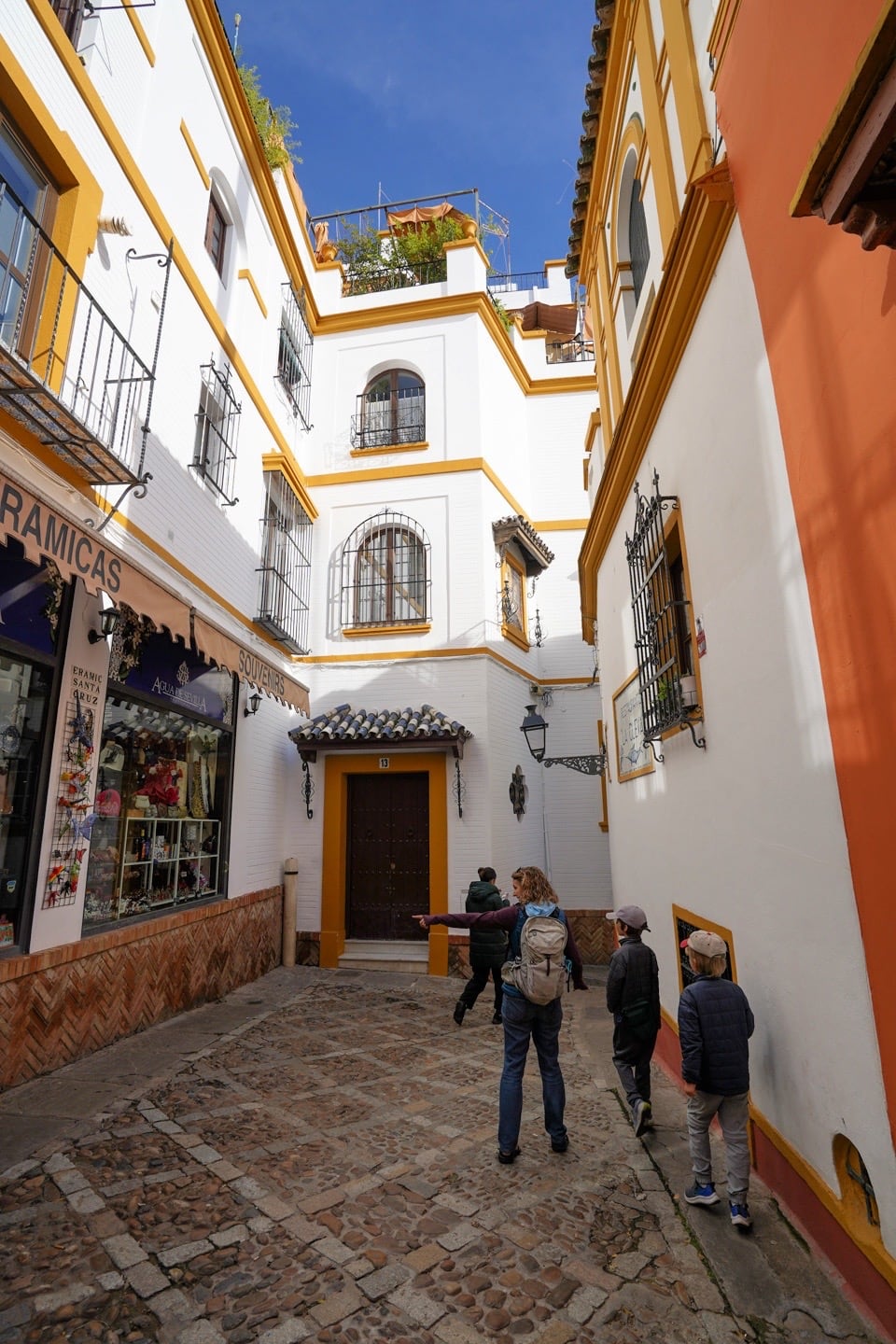
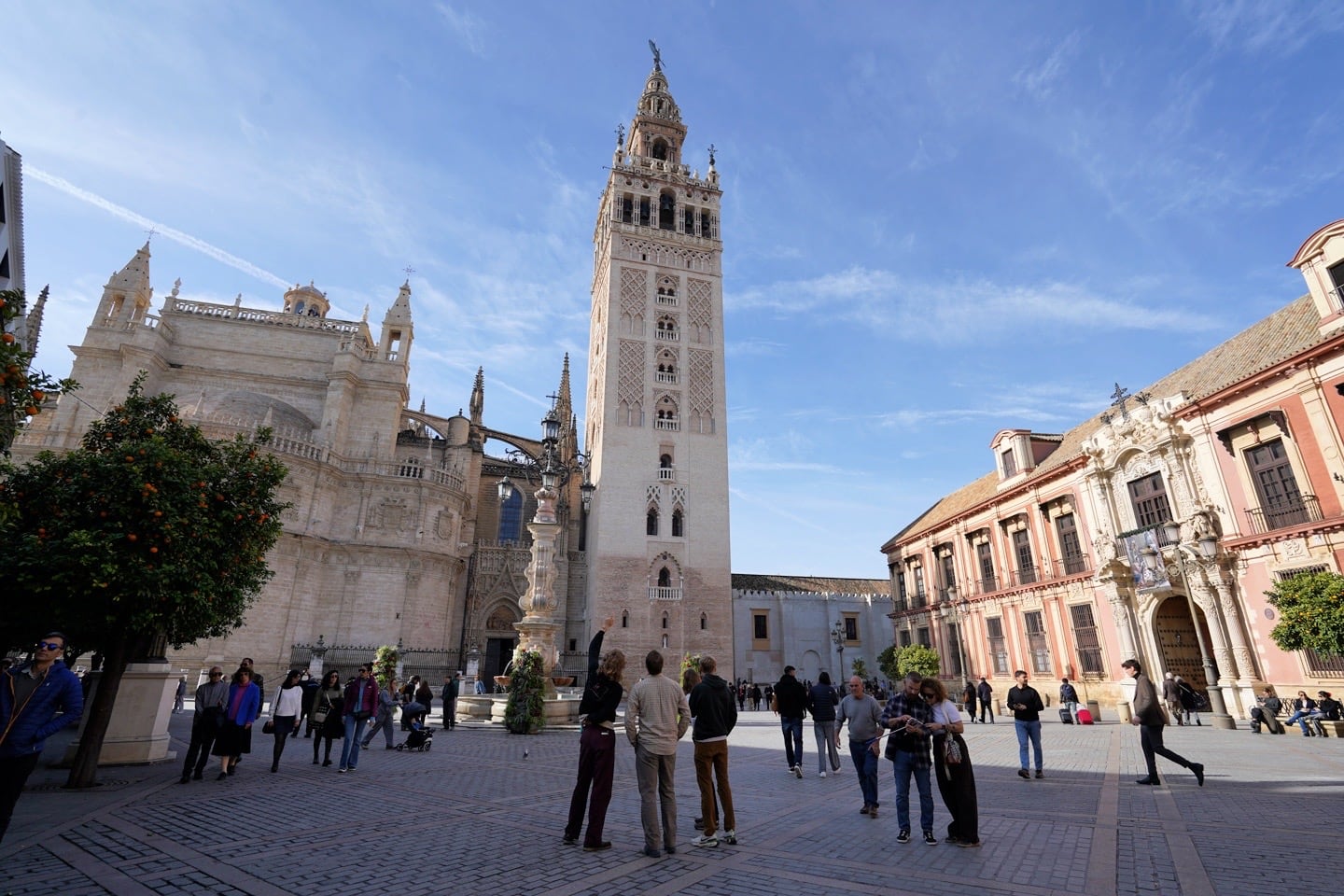
The Royal Alcázar is located in the historic heart of the city known as Barrio Santa Cruz. This neighborhood is also home to Sevilla’s old Jewish Quarter, which is known for its narrow, labyrinthine streets.
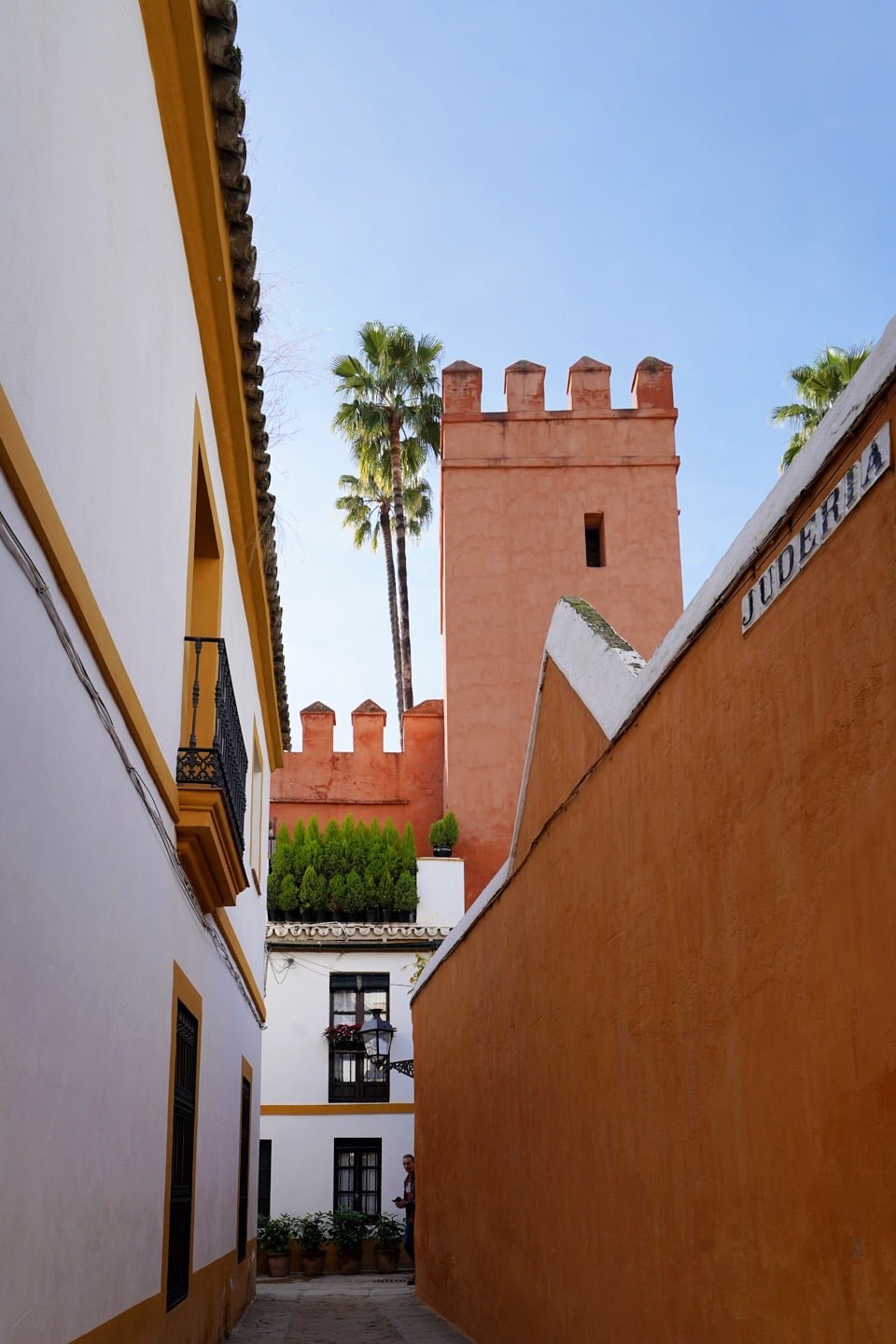
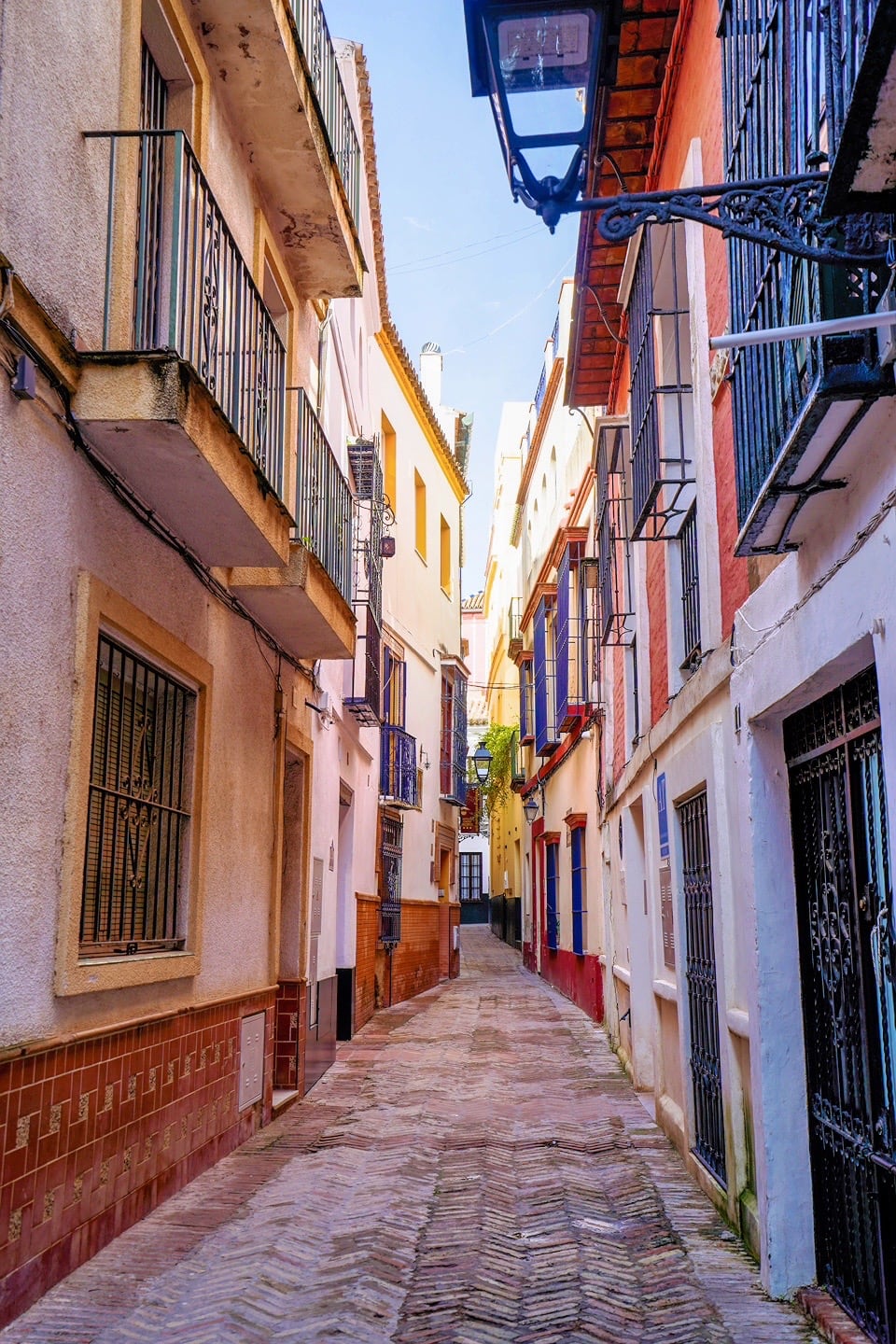
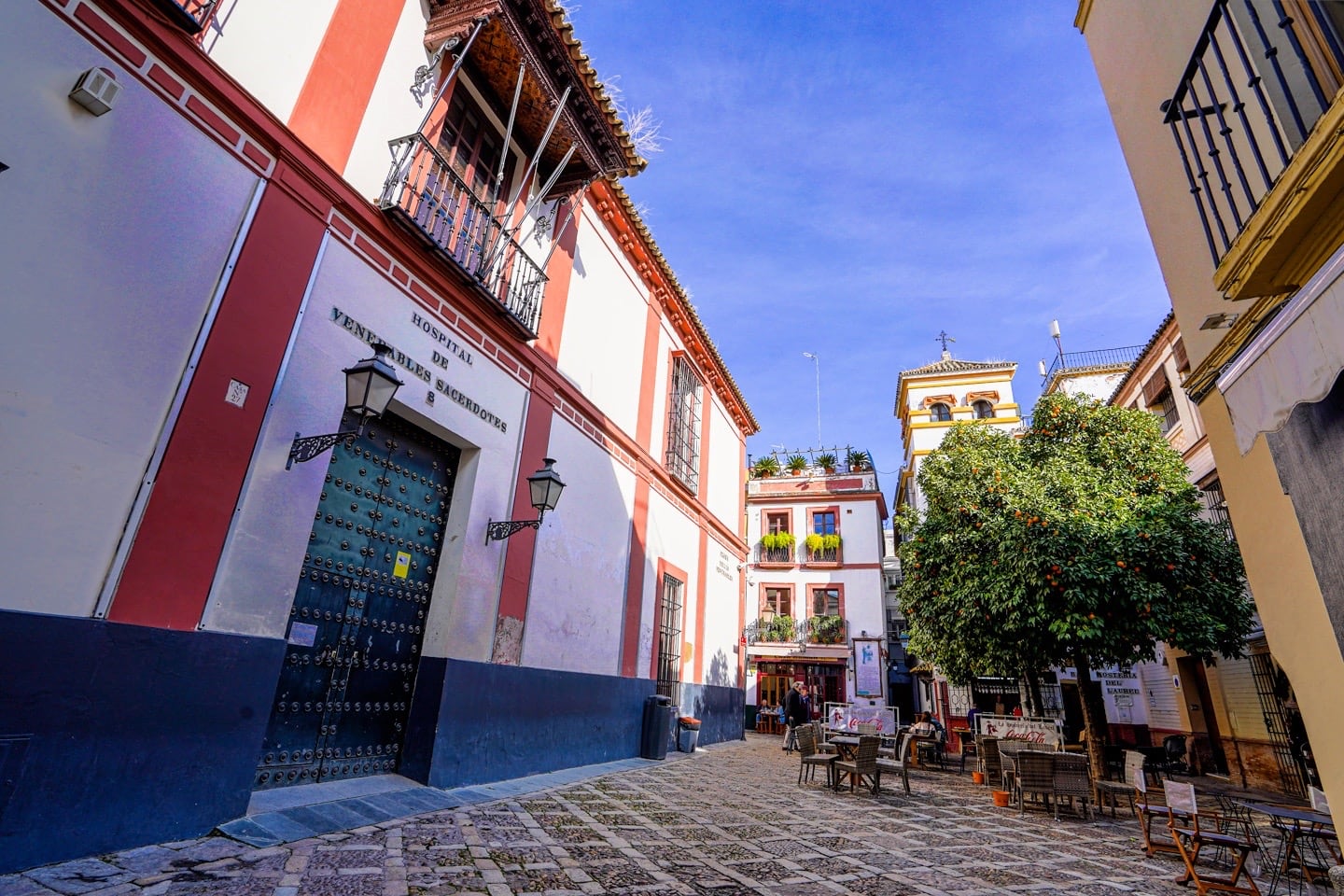
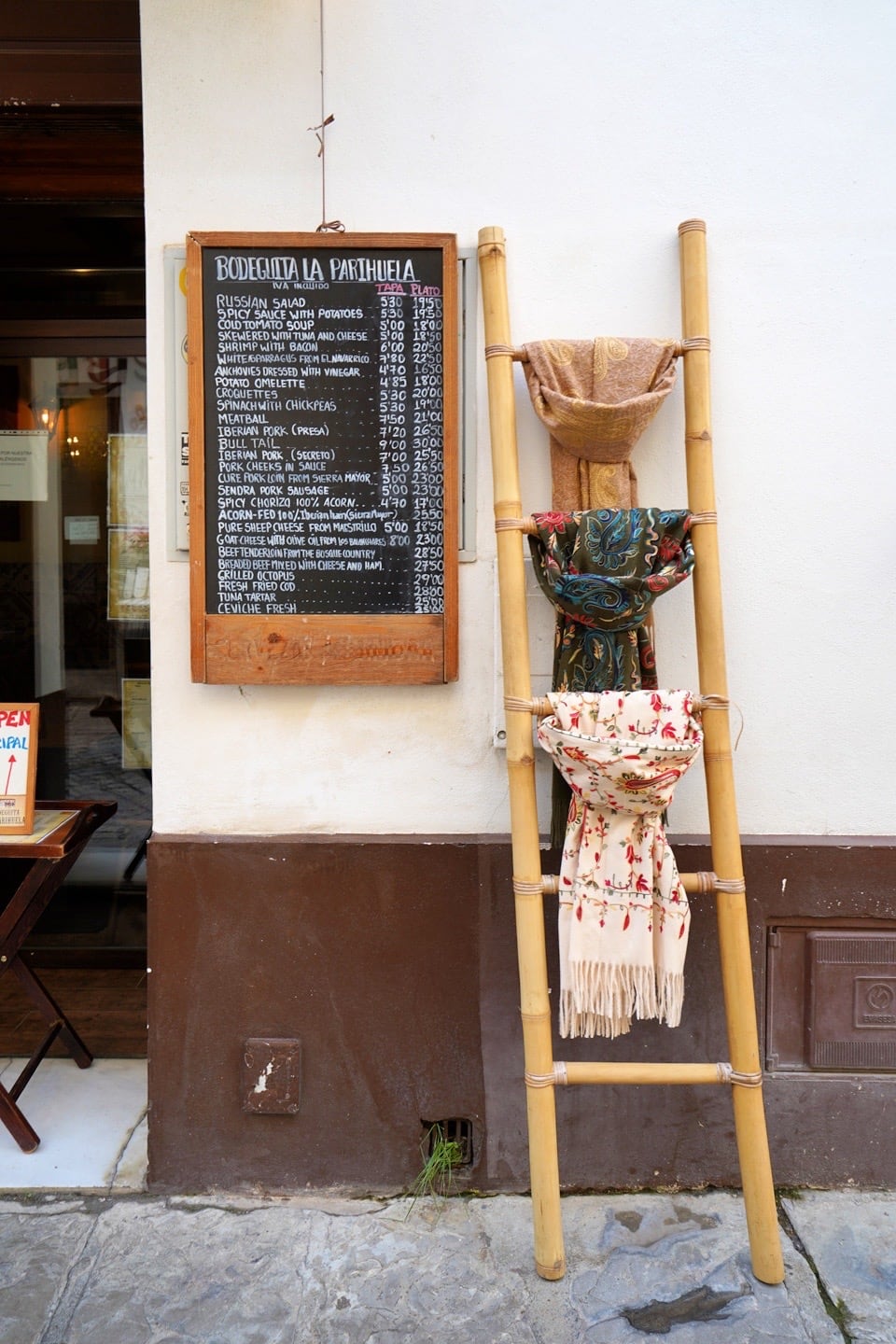
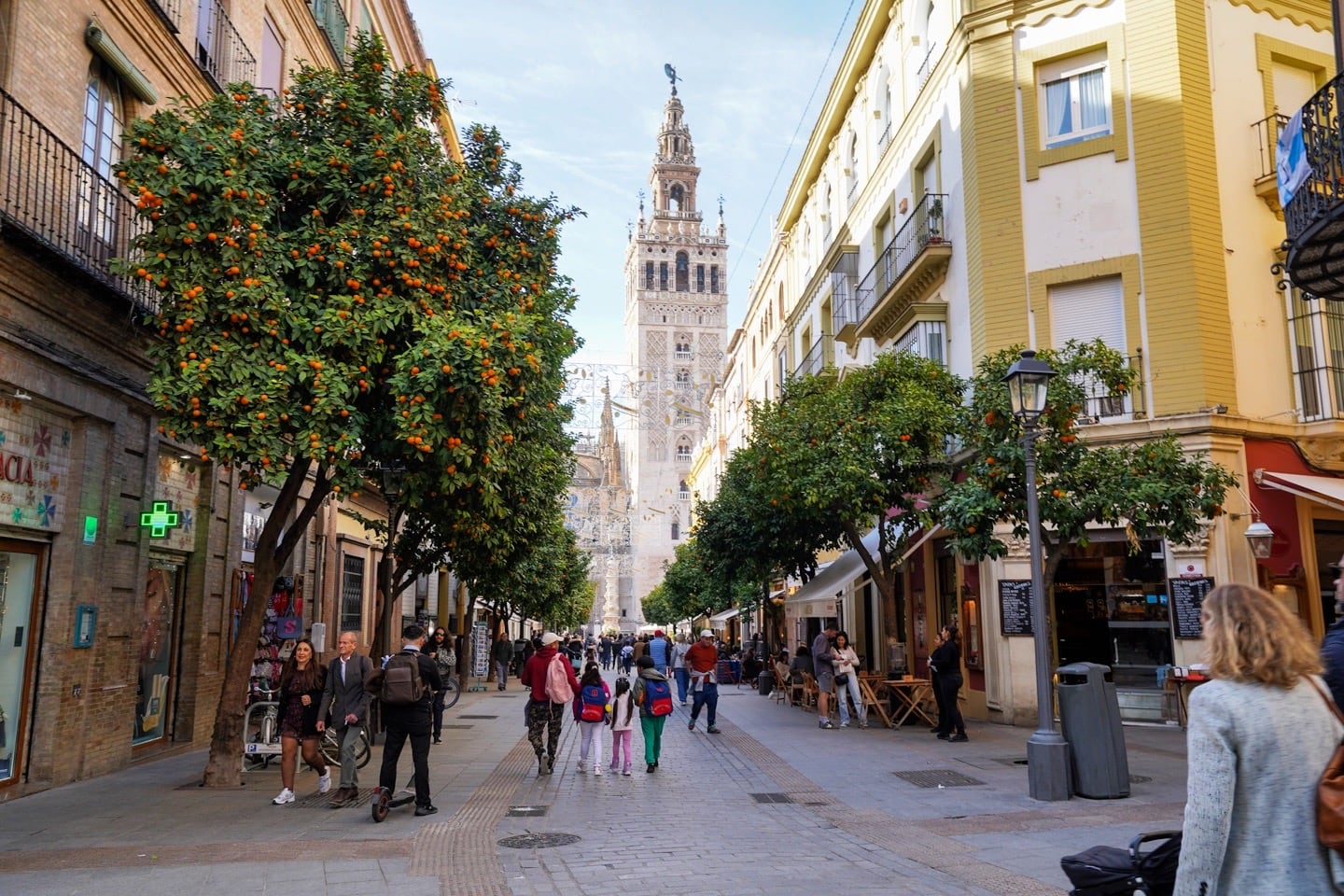
Back on Calle Mateos Gago, the main pedestrian thoroughfare in this part of town, lined with some of the oldest and best-known bars and cafes in the city.
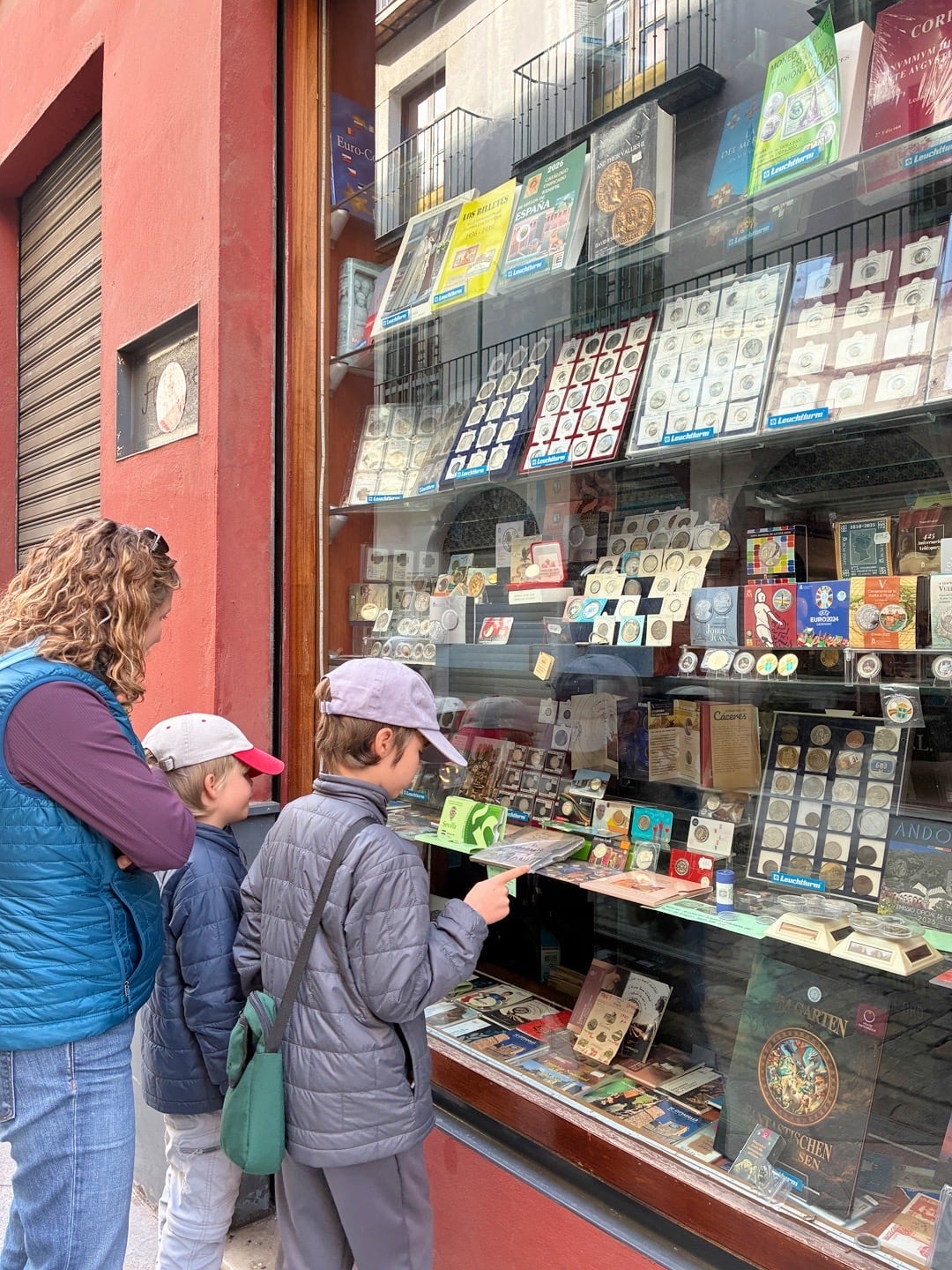
Noe’s been really interested in coins lately. You can imagine his excitement when we stumbled upon this rare coins shop. It was closed, but there was more than enough in the window display to keep both boys interested for a while.