We head to Spain, today! A mere two hours on a bus and we’ll be in Sevilla—Lori’s former study-abroad home two decades prior and a new country for the rest of us.
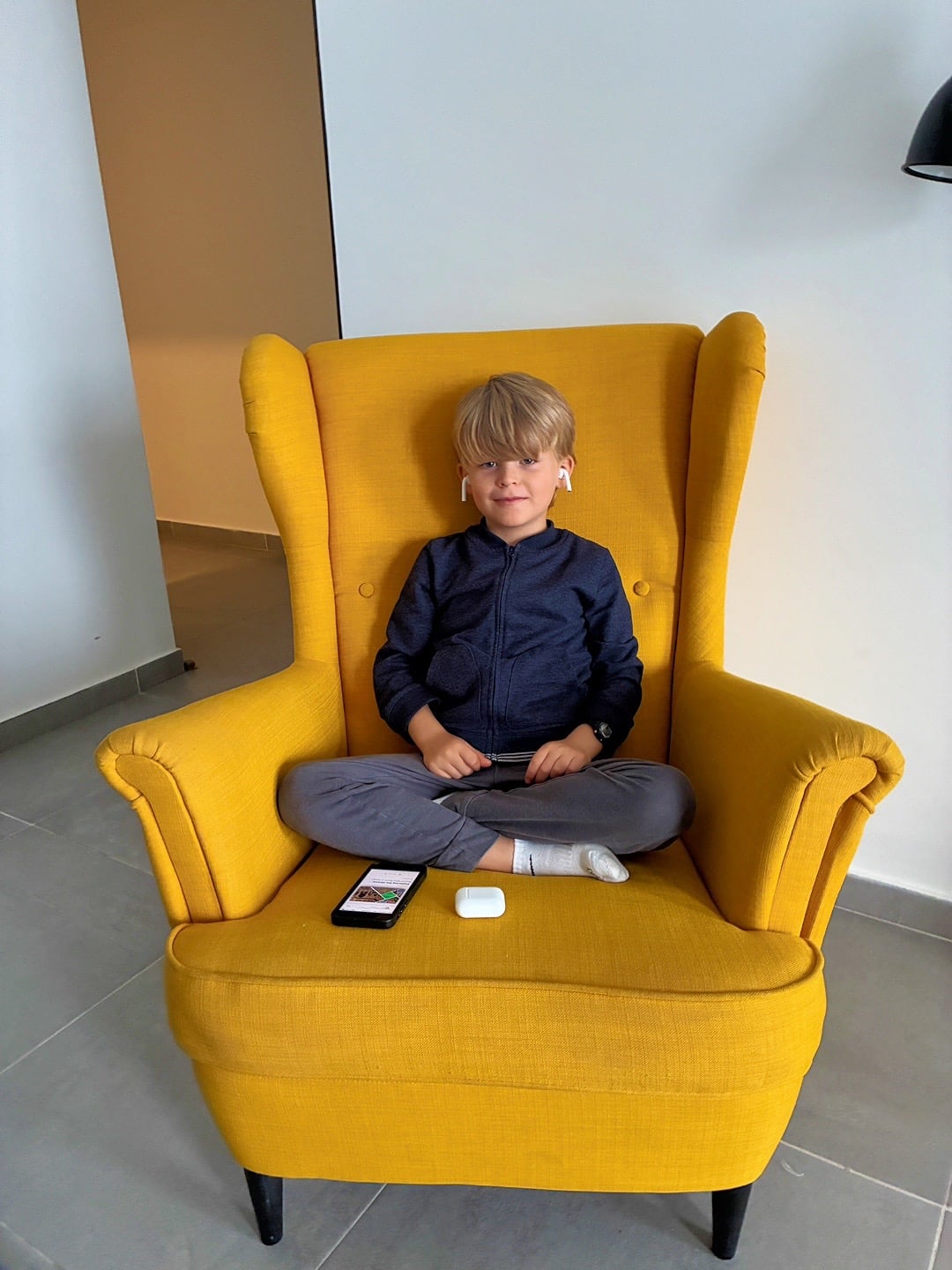
Riley zoning out to an audiobook while we pack.
Our Euro-African Journey (So Far...)
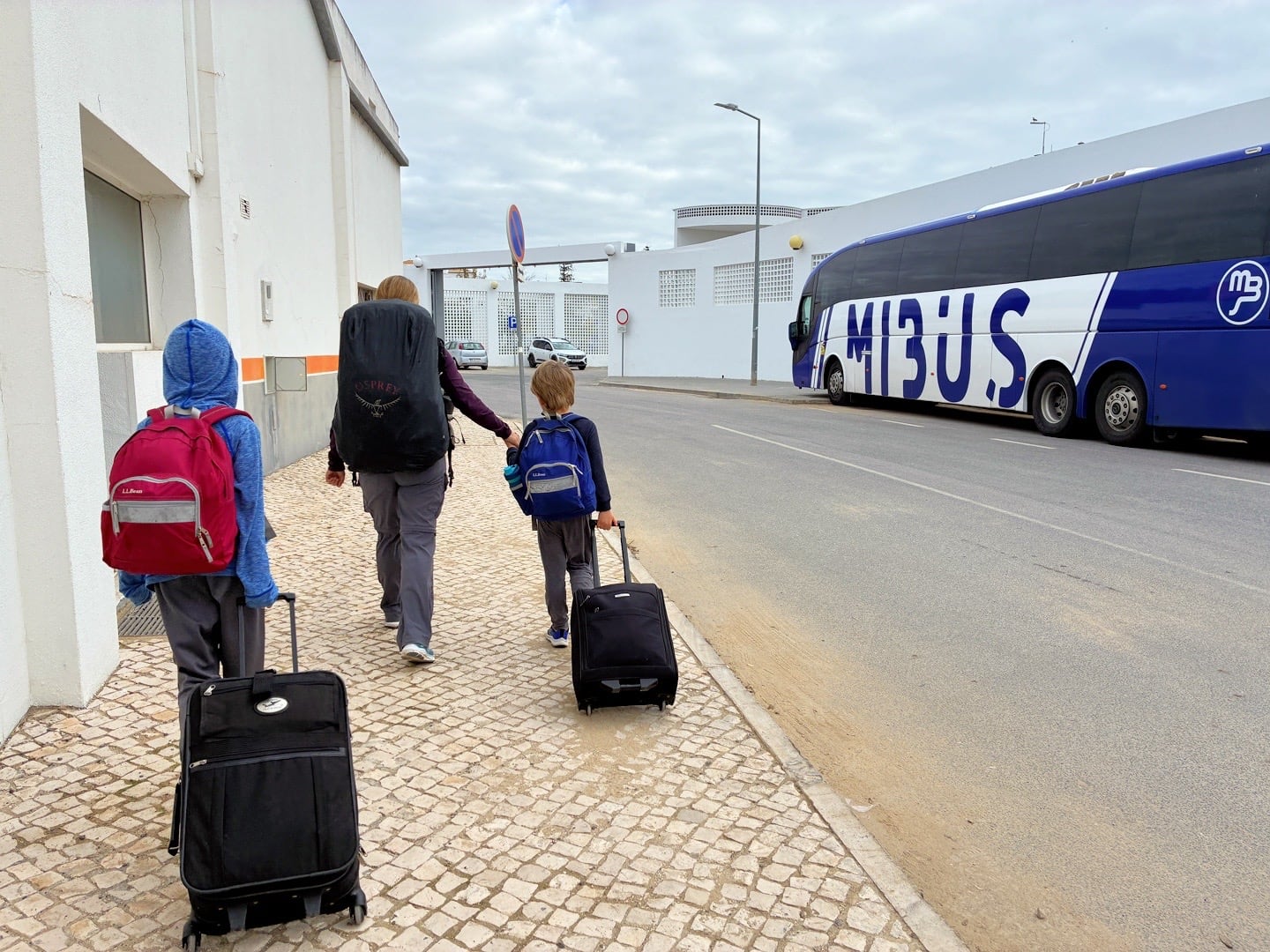
This transit day couldn’t have been easier.
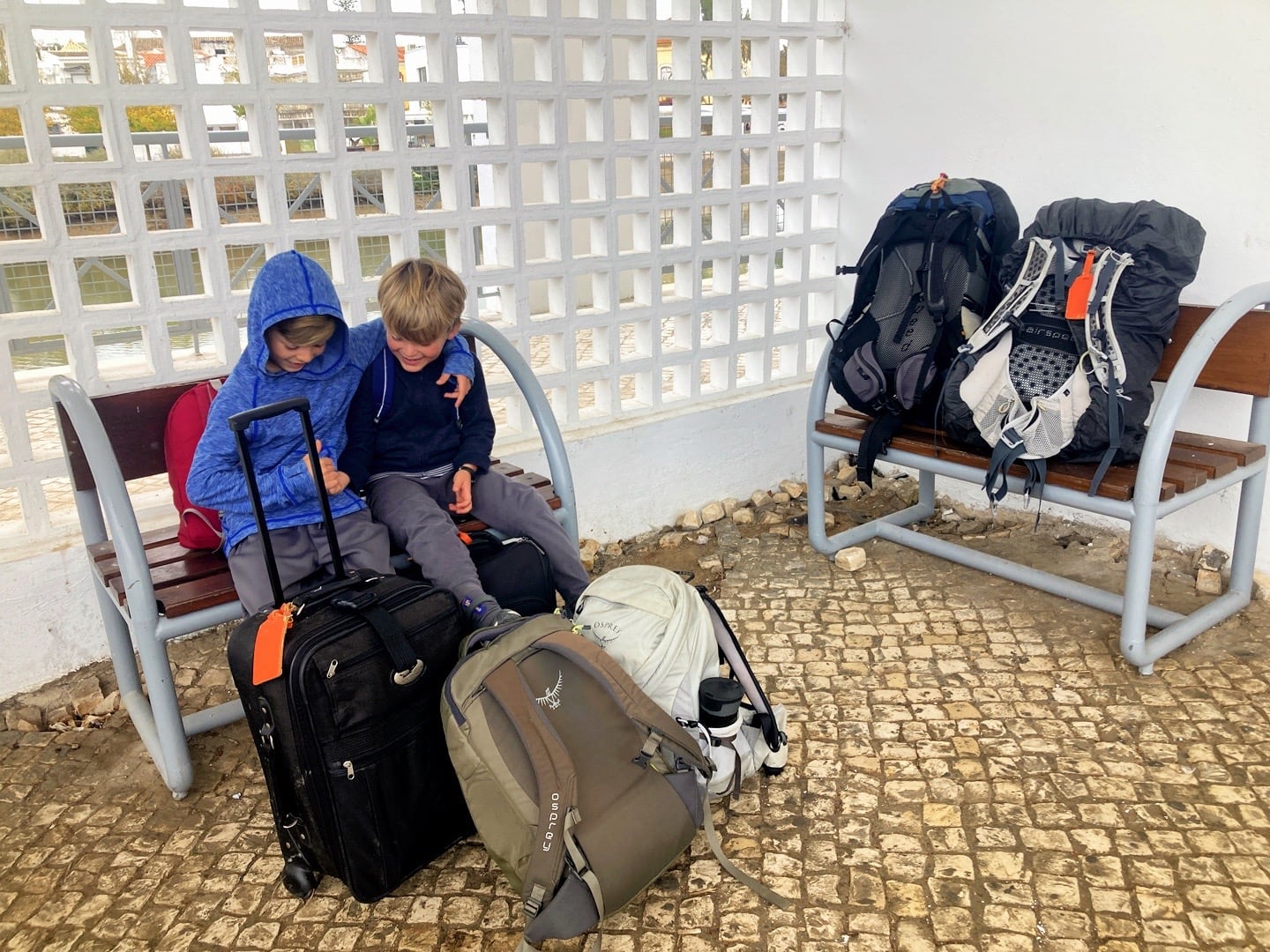
The bus station in Tavira was a five-minute walk from our apartment. The bus offered a direct connection between the two towns with no stop for immigration or customs because we’re still in the EU’s open-border Schengen Area.
When we arrived at the bus station in Sevilla, it was an easy ten-minute walk over the bridge to our home for the next month.
No taxis. Easy peasy. Too easy.
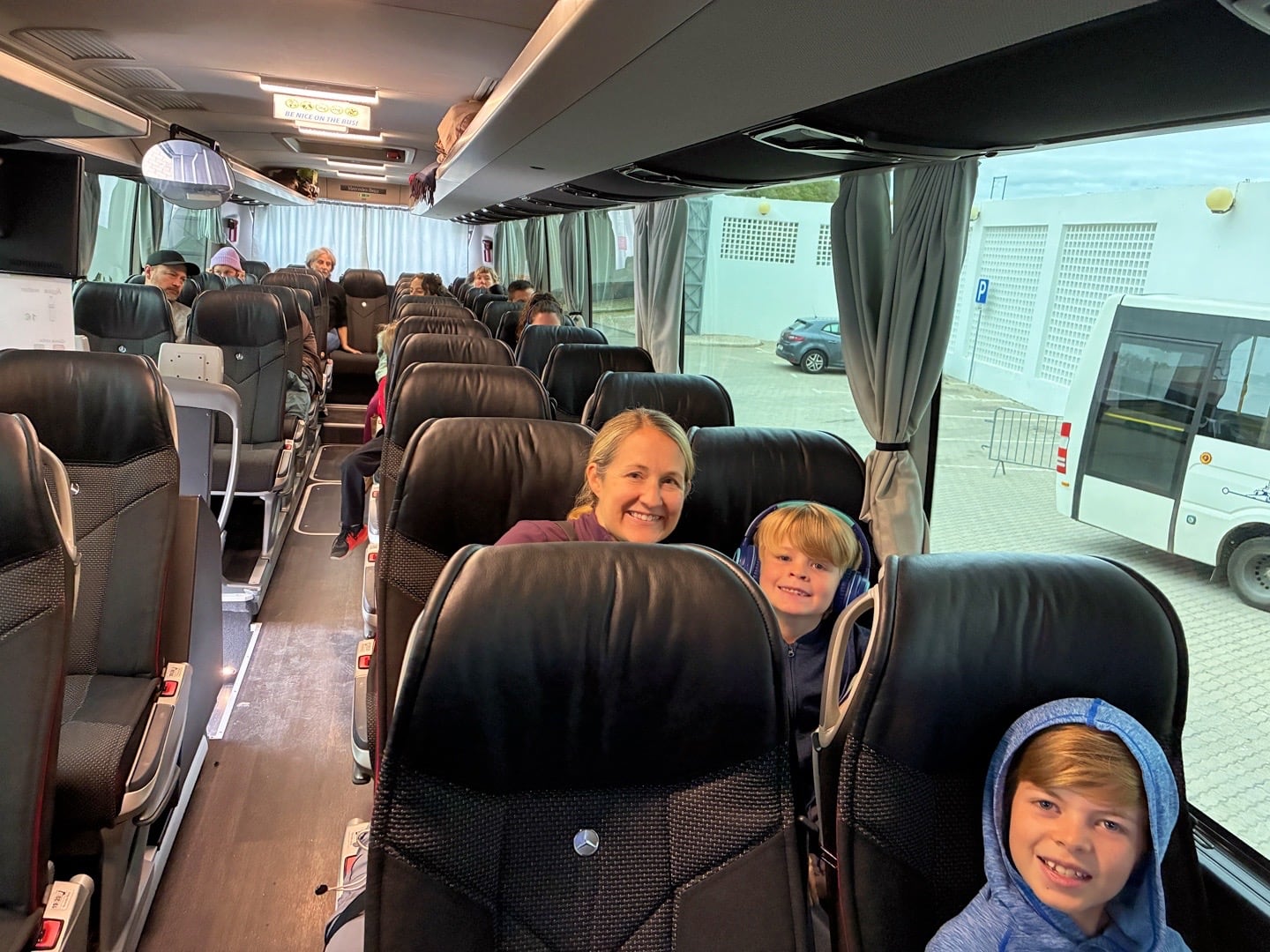
The bus was brand new, but still no functional toilet. Onboard WCs were becoming increasingly commonplace a decade ago on these intercity coaches, but it seems they’ve fallen out of fashion. Not a big deal on this short trip, but traveling with kids, it’s a nice thing to have.
Twenty minutes after leaving Tavira, and we’re already at the border with Spain.
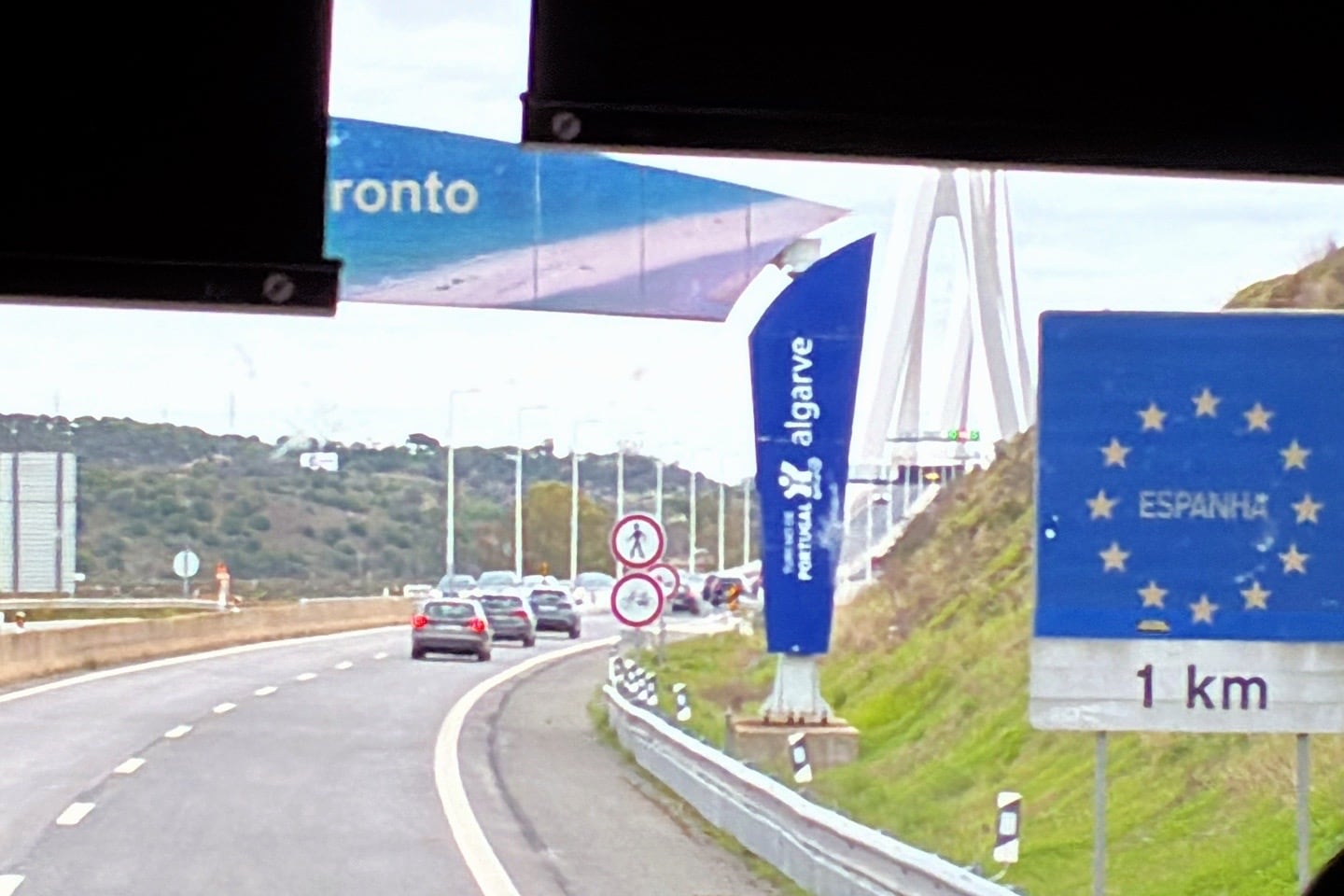
Crossing the Portugal-Spain border has just about as much fanfare surrounding it as crossing the border from Oregon to Washington, but with less traffic and a more modern bridge.
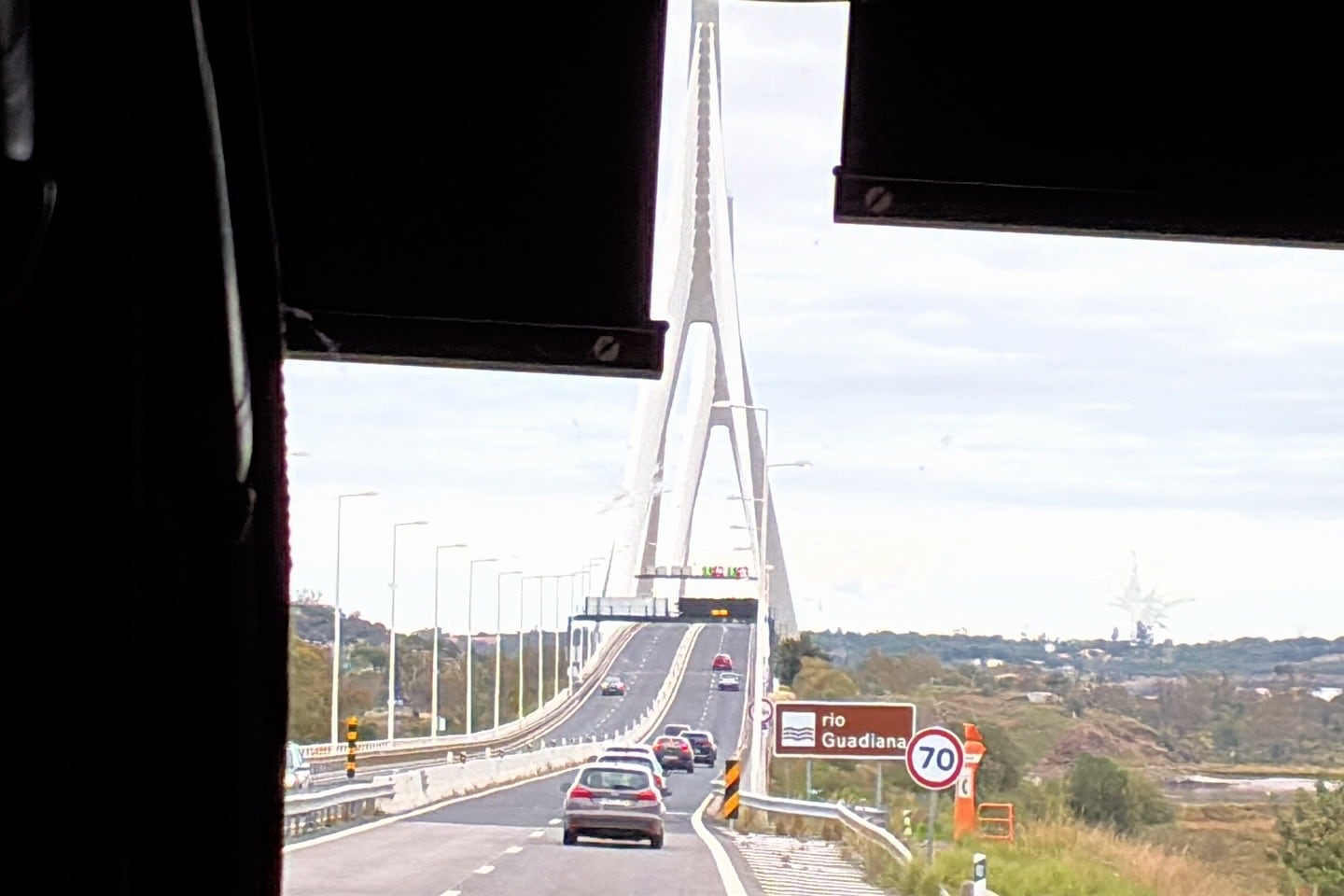
And just like that, we’re in Spain.
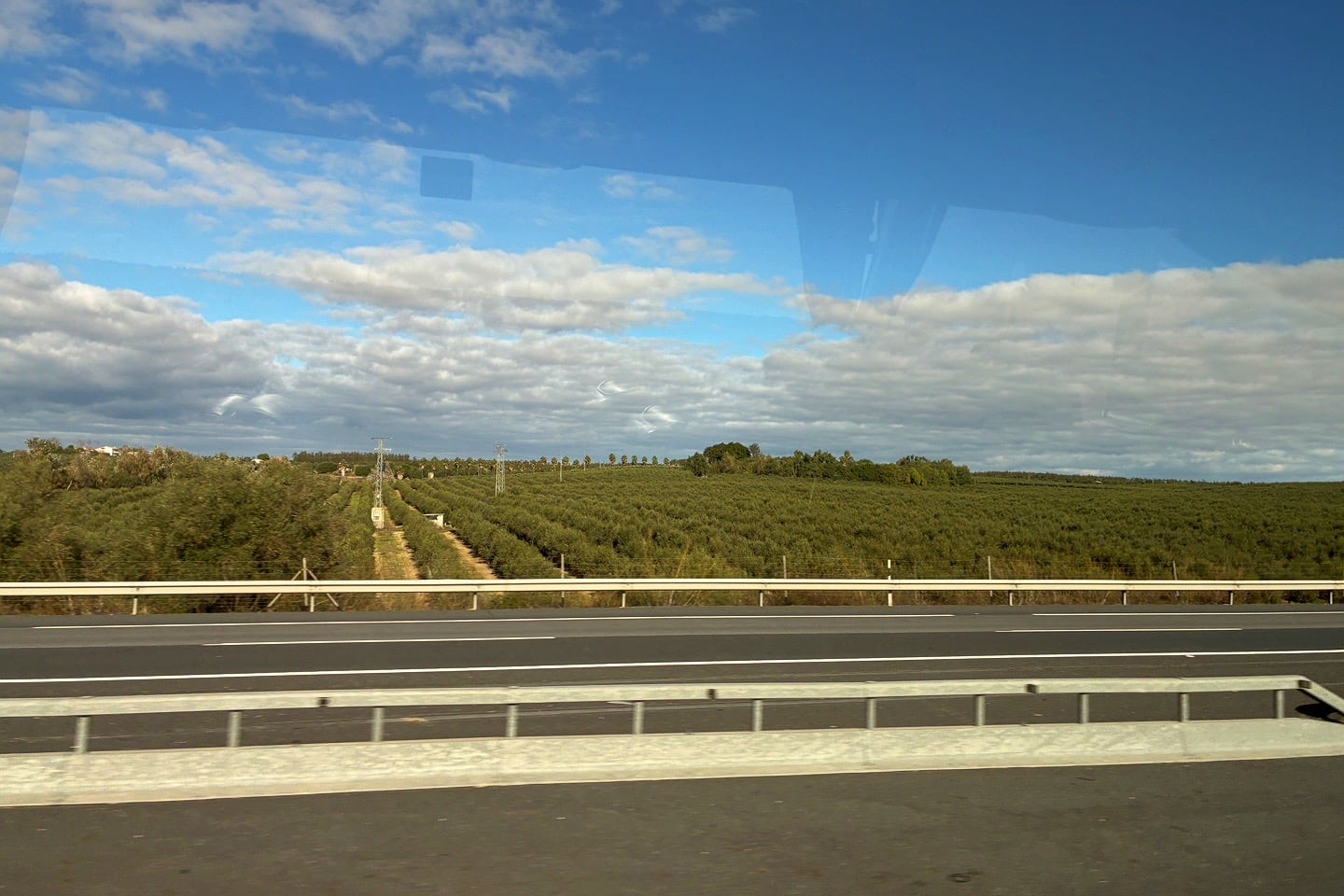
I thought that Southern Spain might be a bit more built up than the Algarve. Still not a lot of towns along the highway, but a lot more agriculture.
46 years and dozens of countries visited and Spain has eluded me this whole time. I’m not sure how that happened, considering my wife, sister, brother-in-law and several of my close friends all studied in Spain, and my grandmother used to spend half the year there.
In the midst of all the excitement, there’s a small part of me that mourns the fact that I can no longer tell people, “Well, I’ve never been to Spain, but I kinda like the music…”
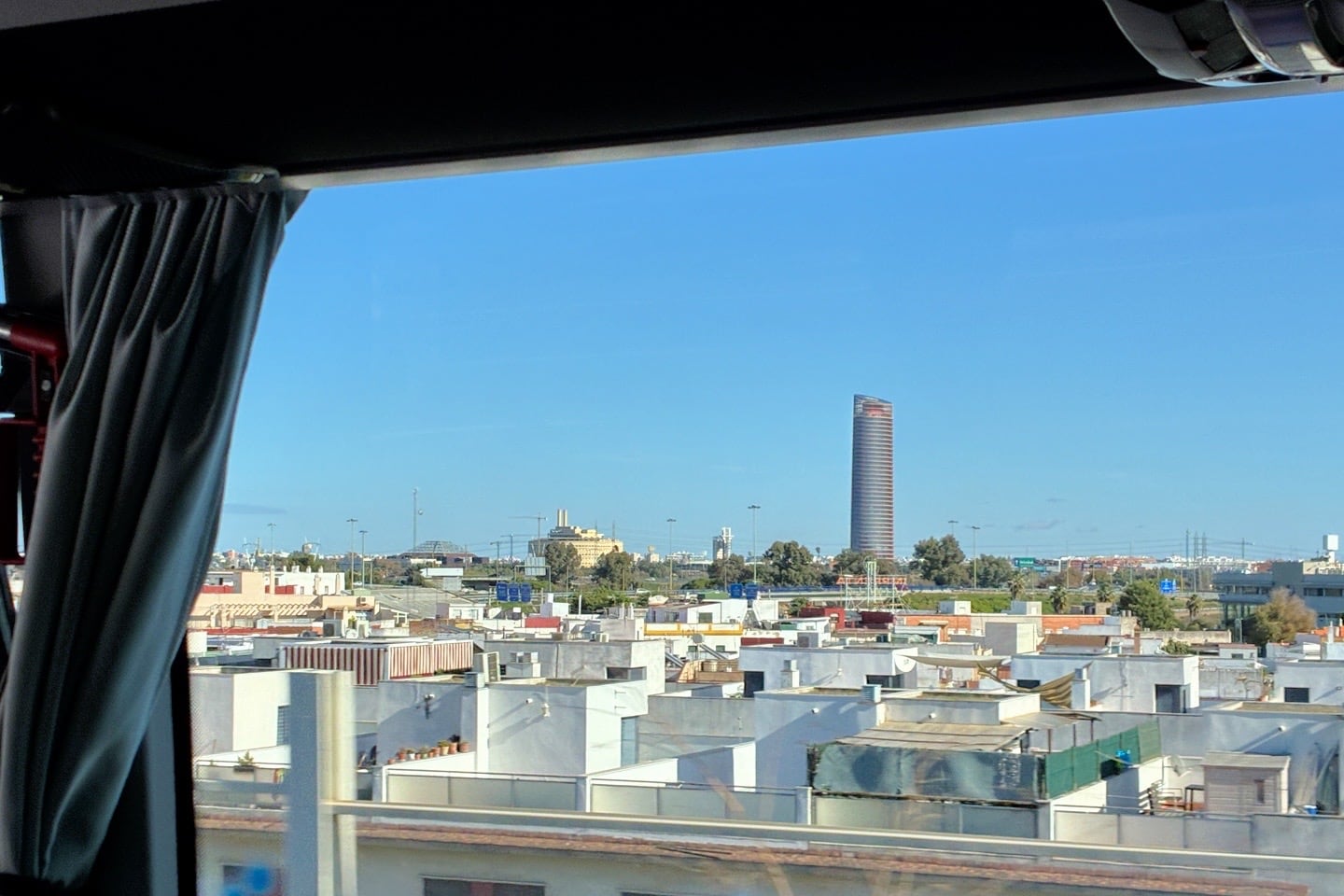
Coming into town, I got the first glimpse of the skyline and said, “I didn’t know Sevilla had skyscrapers.” Lori replied, “I didn’t know either.” Turns out, the Triana Tower is the only one, and it would become an easy landmark for us for finding our way back to our apartment.
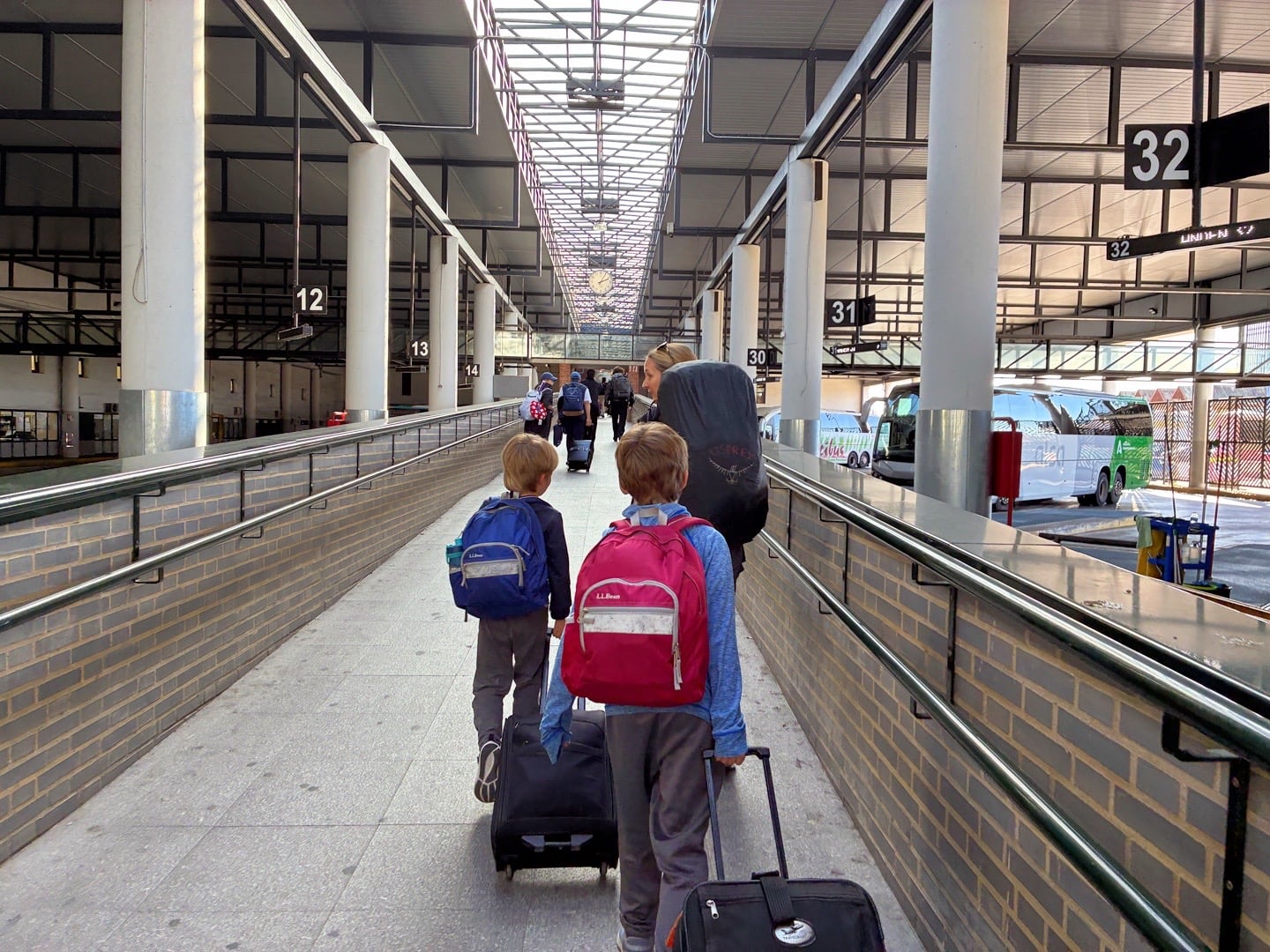
On the outside, the bus station looks like a defaced and abandoned warehouse, but it’s clean and tidy on the inside.
We knew that our apartment wasn’t far. But given the boys and all our stuff, we thought it might make sense to grab a taxi for the quick jaunt.
When we got to the taxi stand just outside the bus station, Lori approached the first taxi driver, showed him where we were headed on her phone and asked how much.
He just chuckled and said it would take him just as long to drive us as it would for us to walk, and that we should just save our money and walk.
He then added that the walk is easy and shouldn’t take us more than 10 minutes or so.
We decided to take his advice. He was correct on all accounts.
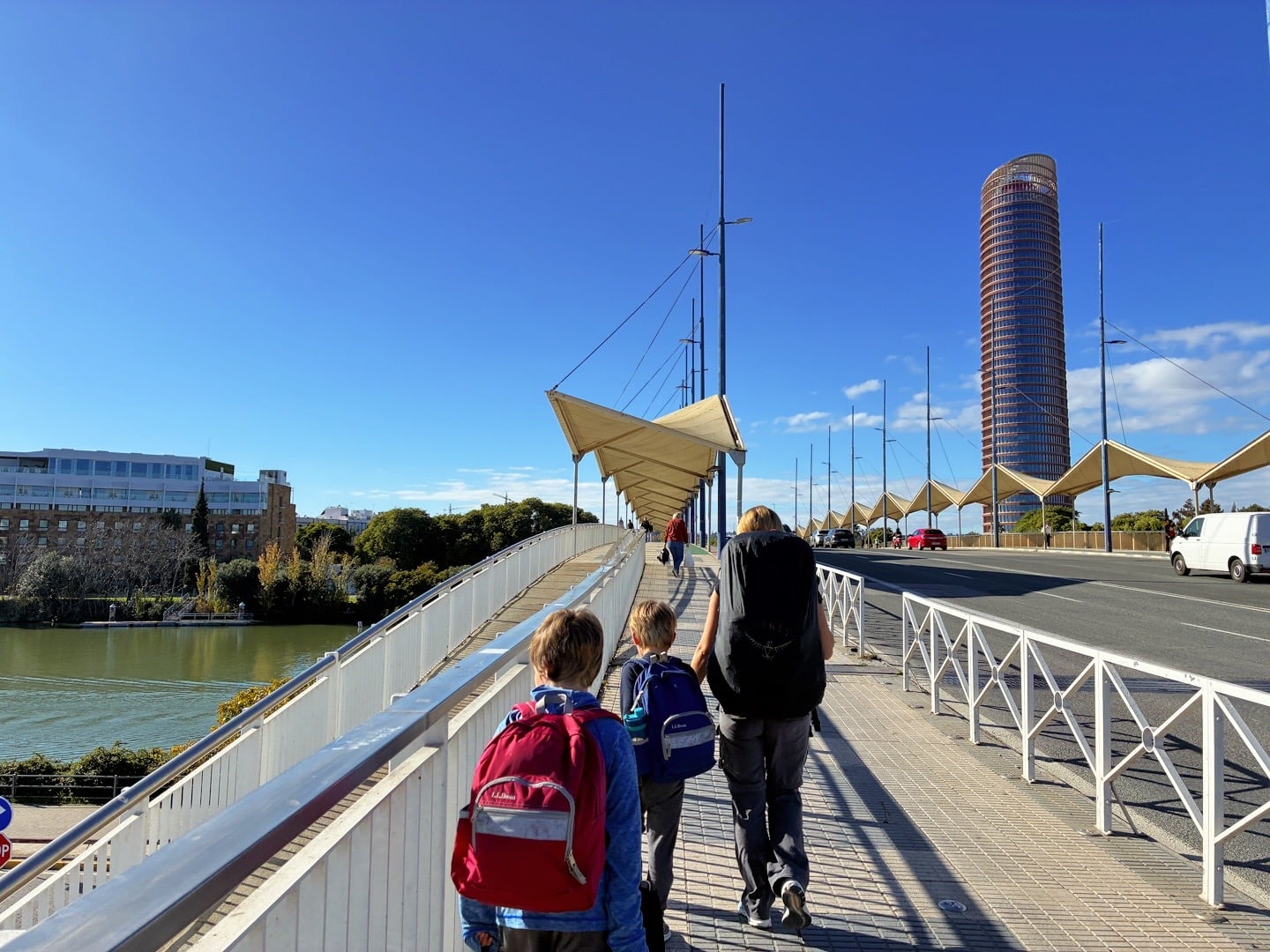
Just on the other side of the river, we arrived at the apartment. The hardest part of the entire day might have been getting our stuff up the stairs to the third floor.
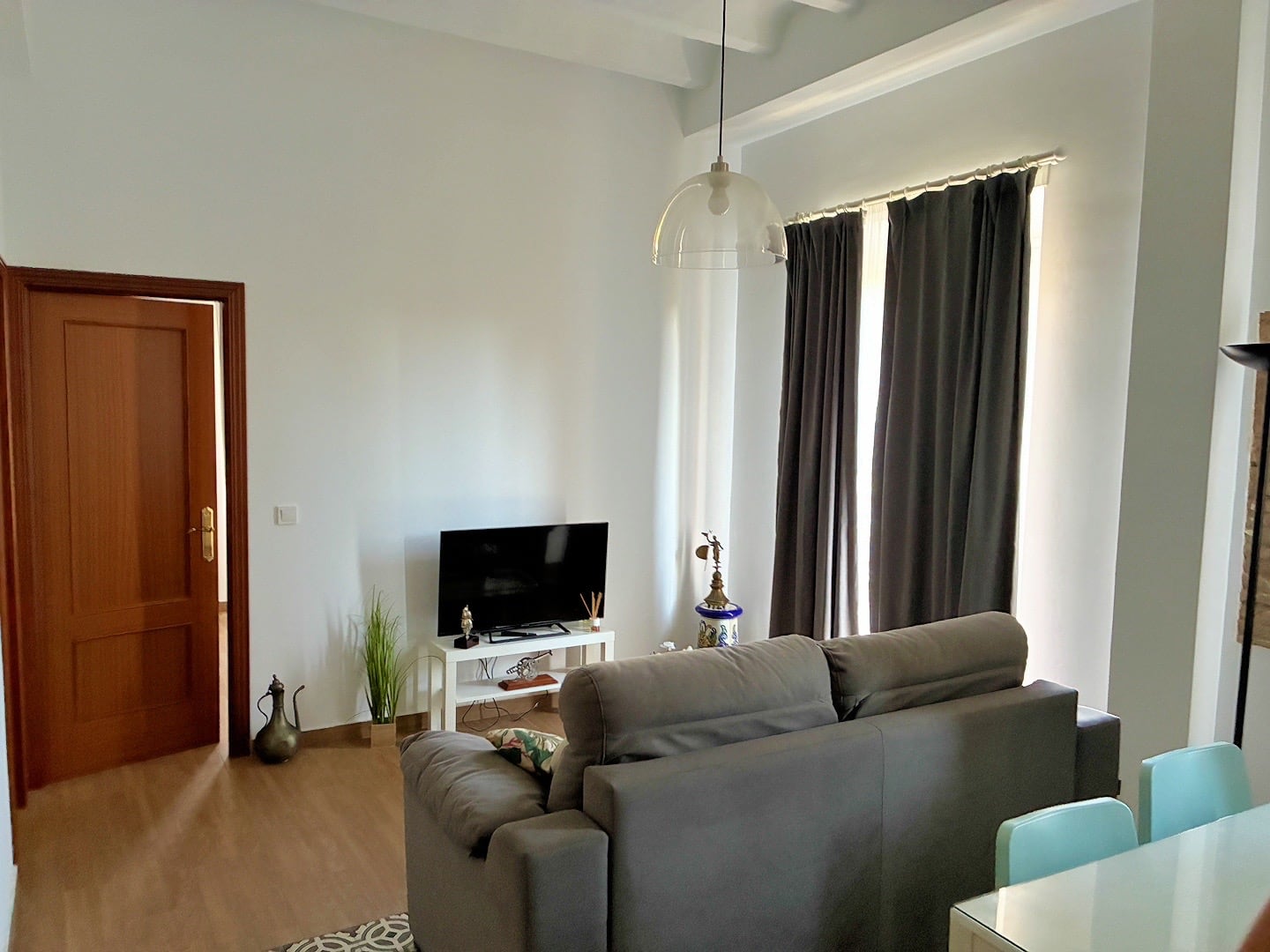
This is a two-bedroom apartment—one of the smallest of those we’ve had in our travels, but it’s got most of what we require and is in a good location.
The building, itself, is around 100 years old, but the interior units have all been recently renovated.
We’ve stayed in a lot of these sorts of places over the years and it’s always interesting to see how they reconfigure these old buildings into rentable units.
My guess is that this was an office building repurposed into apartments given that all the interior walls of the unit are not concrete but made of thin, modern materials, but I could be wrong.
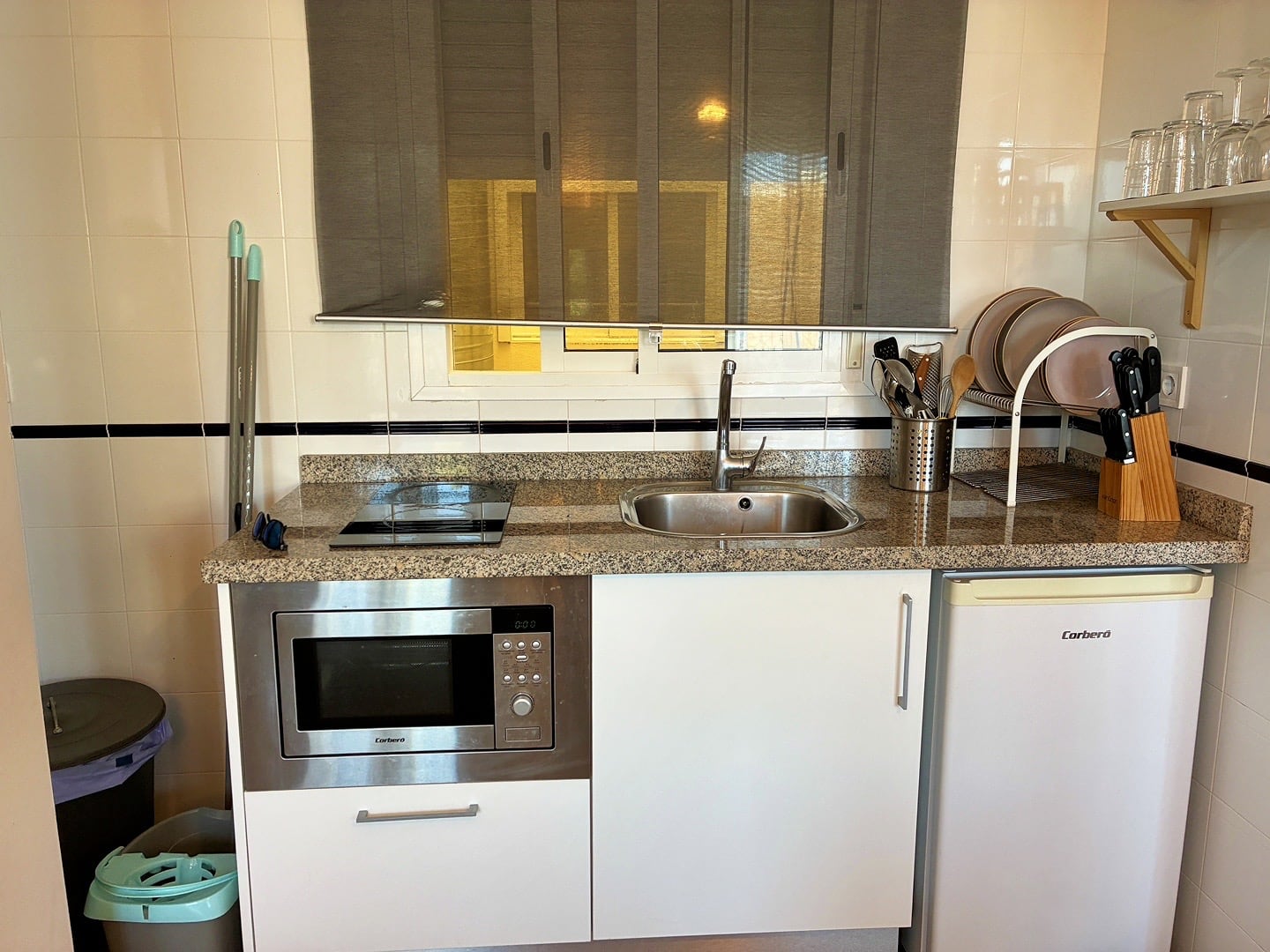
The smallest “kitchen” we’ve had to date (for a place we plan on living in for a month). We’re usually up for a challenge, and this looks like it might be one, considering we’re trying to keep costs low and eat most meals at home.
I find myself now comparing everything to what we had in the RV. It was really a magnificent use of 200 square feet and we didn’t feel we lacked any necessities.
In that area, our refrigerator and counter space was twice that of this apartment, our cupboard and drawer space easily triple, and we even had an oven and two-basin sink.
With that said, it’s been nice having full-sized bedrooms with room enough to walk around the beds.
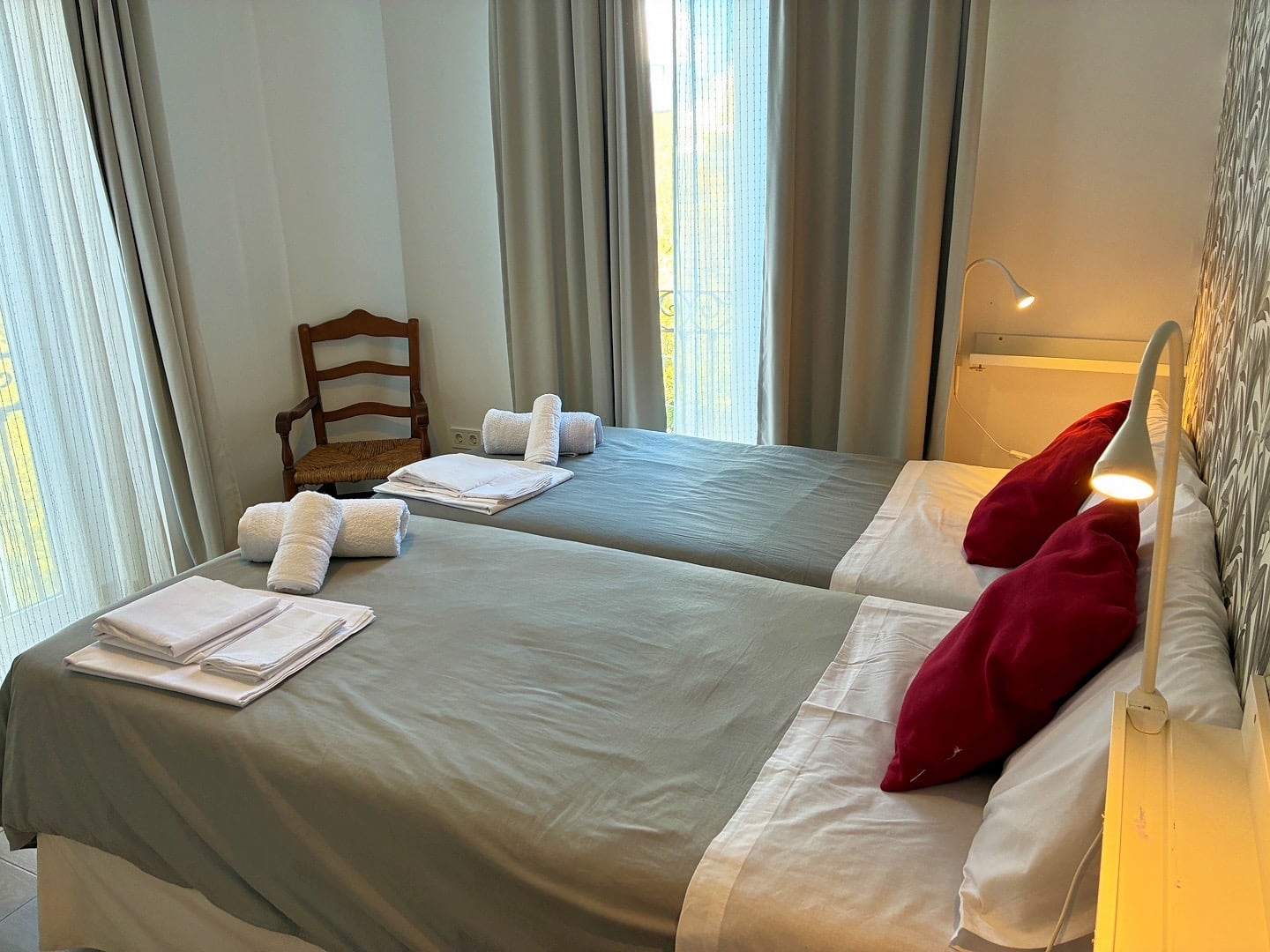
Each room in this apartment has two small balconies with floor to ceiling French doors.
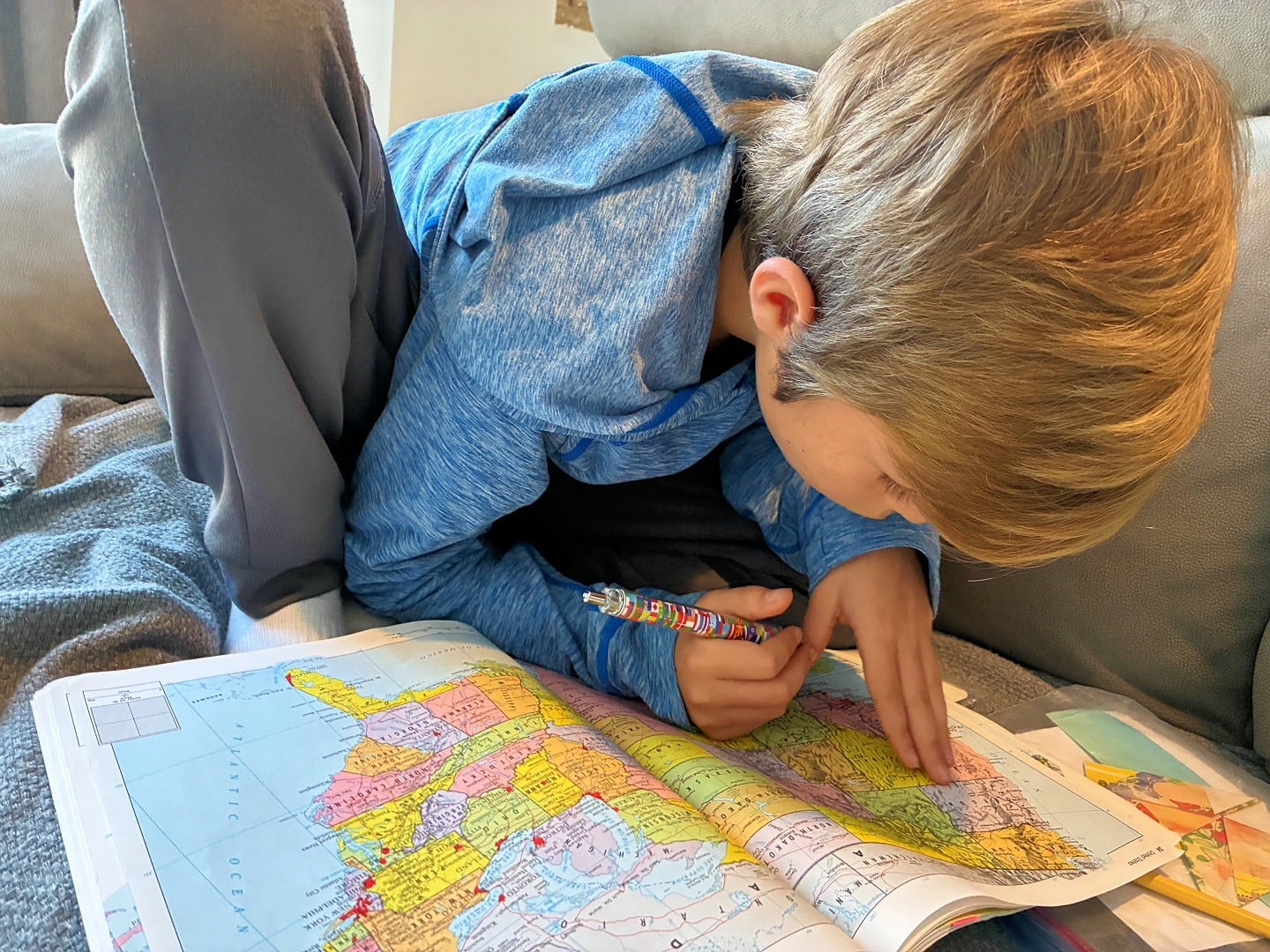
Our not-so-little traveler, marking off the places he’s been this past year in his atlas.
We didn’t linger in our new pad for too long. It was sunny outside and we were all hungry. So, we thought we’d head into the center of our neighborhood (Triana) to see what there was.
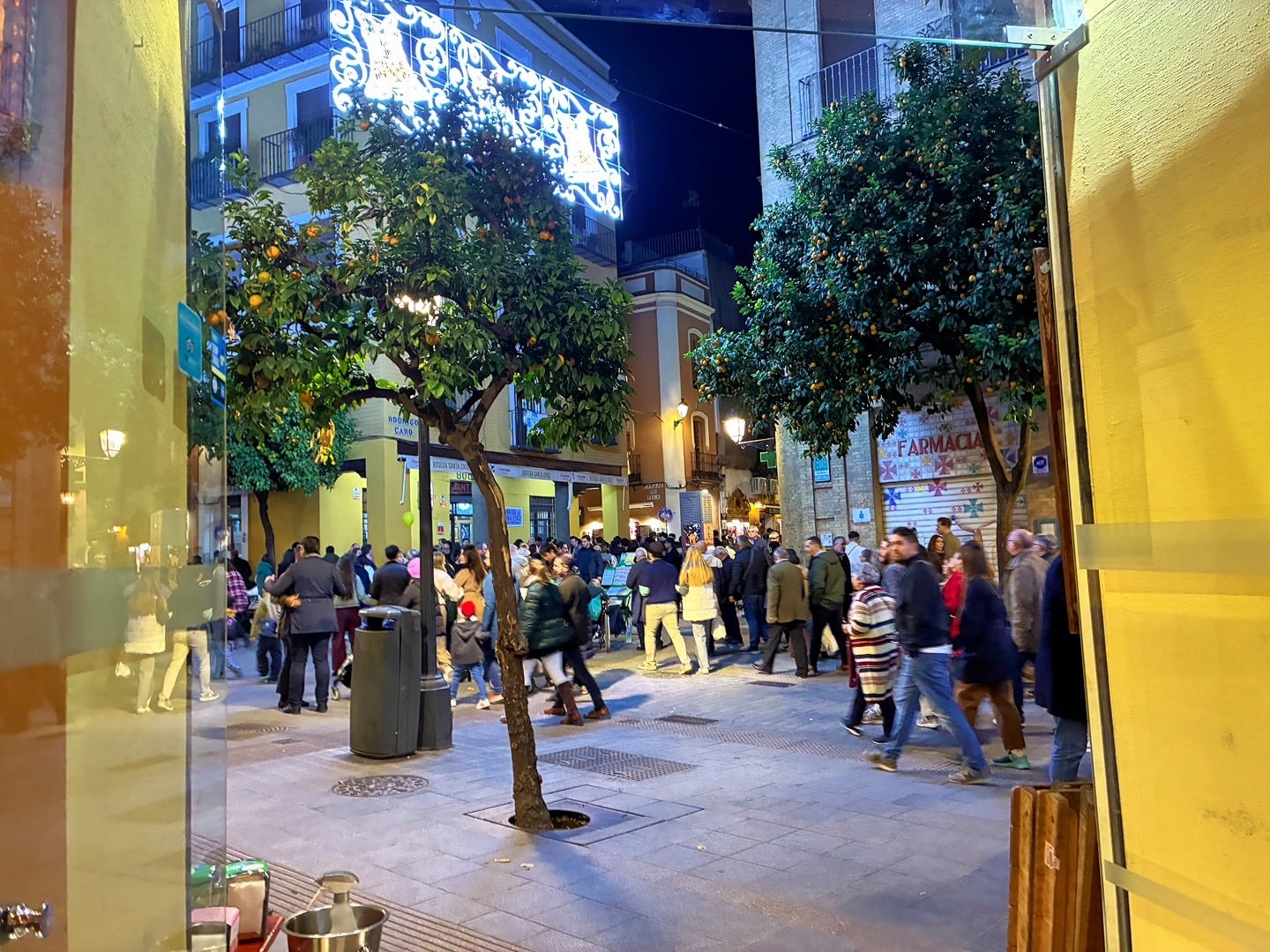
The main road connecting our apartment to the main market is lined with orange trees. I’ve never seen anything quite like it. So many oranges in the middle of a city of 700,000 people.
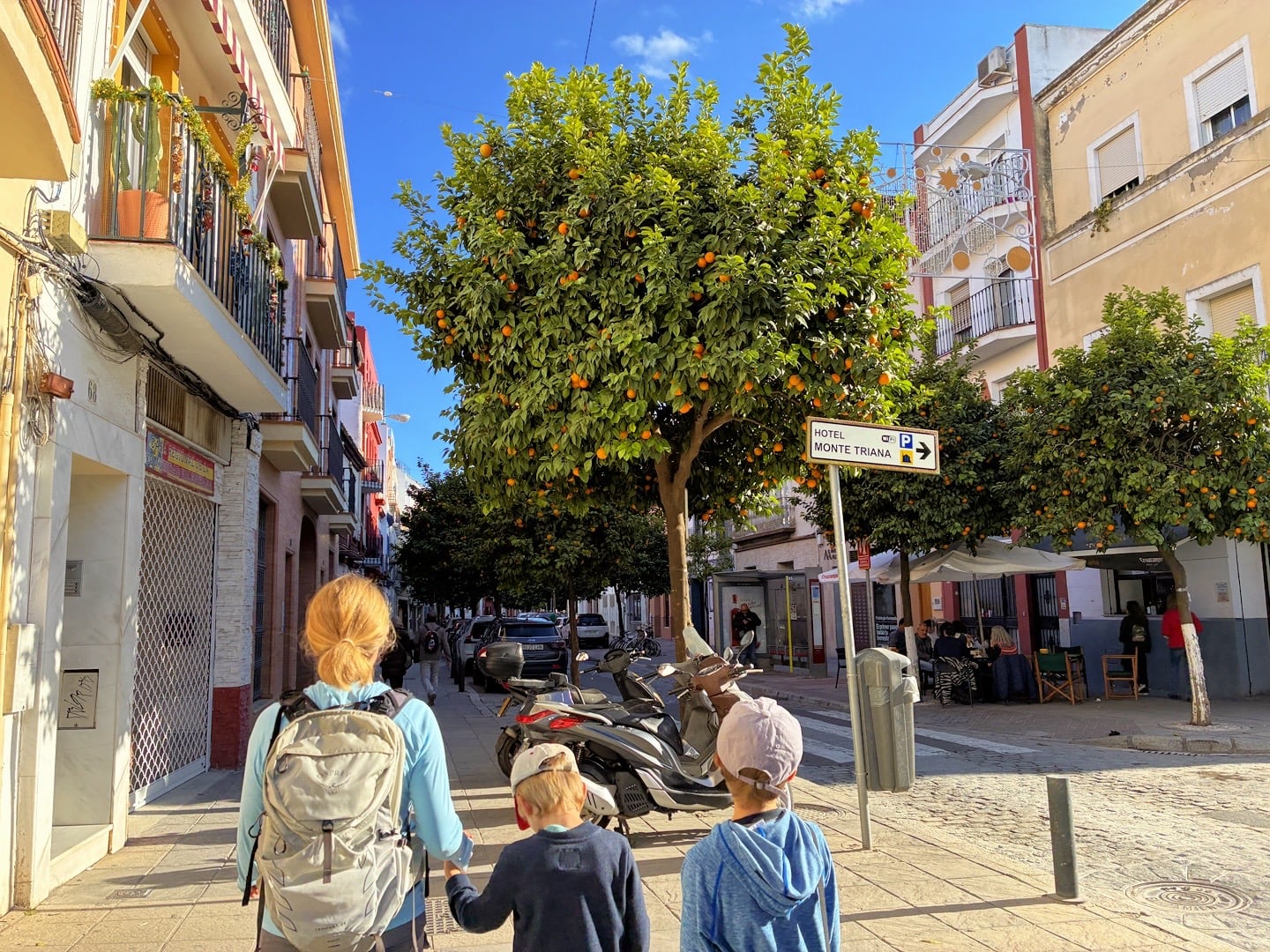
The boys asked if we could pick them. I figured we probably couldn’t or everyone would have picked them bare by now.
Later, we learned that you wouldn’t want to eat Sevilla’s oranges anyway, as they are a sour variety not fit for raw consumption. For many years, they were used strictly for the production of marmalade.
These days, apparently the local government mulches them and sells them to area farmers.
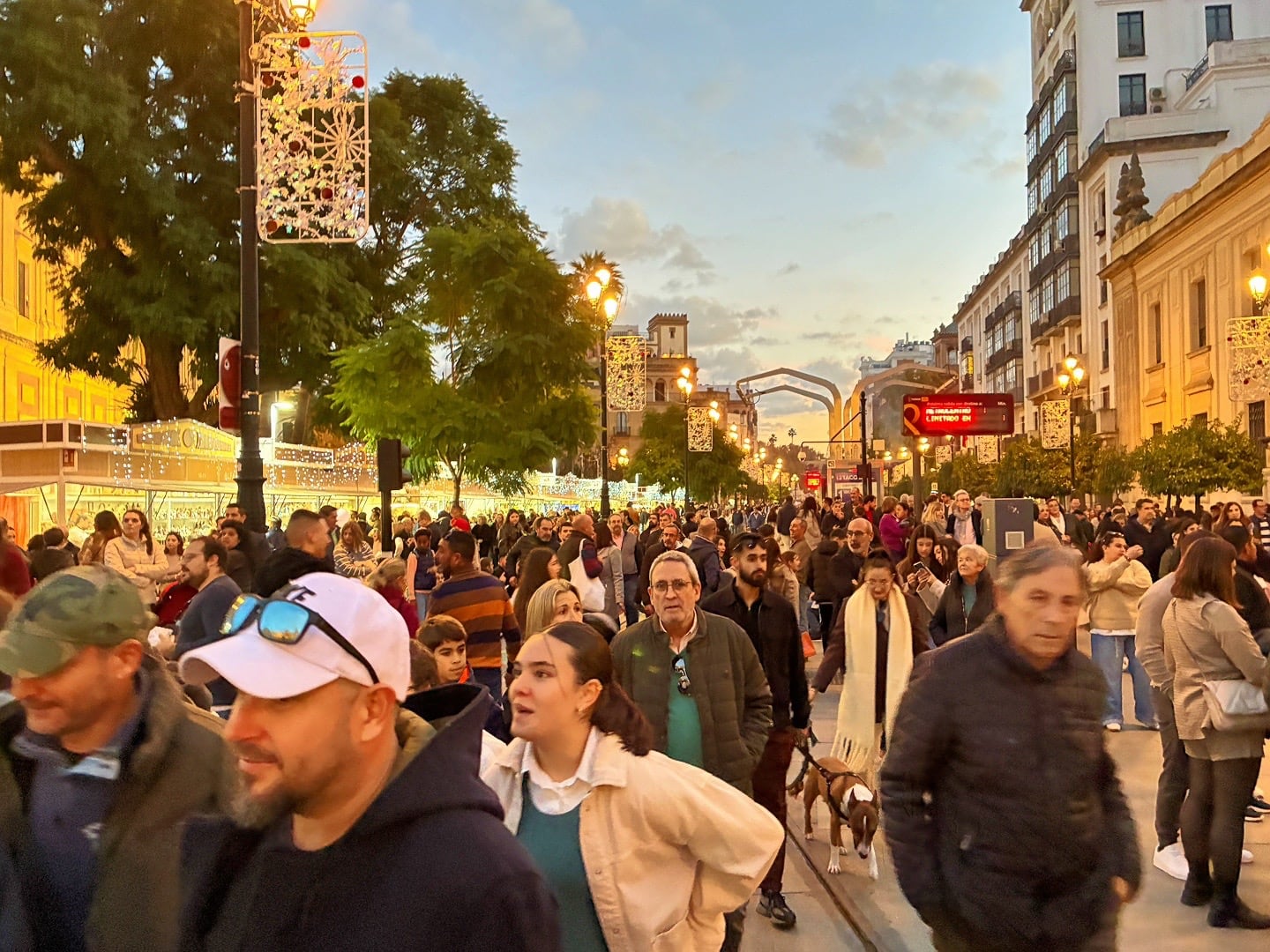
When we got to the center of Triana, we were blown away by the number of people out and about. It was Sunday, and it was a three-day weekend, but this was on another level.
It was next to impossible to find seating at any restaurant, so we thought we’d settle for a coffee shop. Even that took 20 minutes. In the end, we found a hidden empanada joint and called it good.
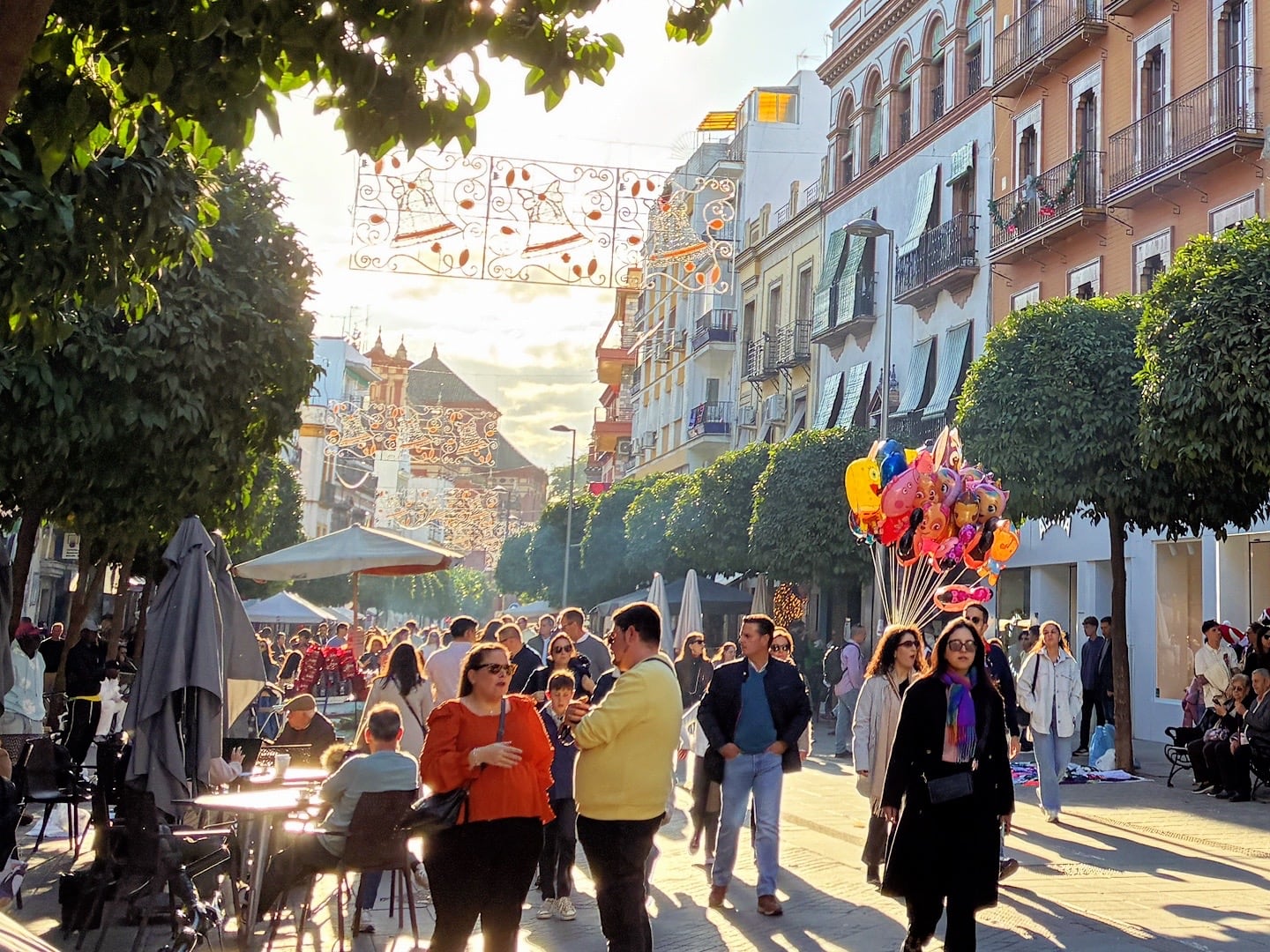
Turns out, that even though tomorrow was technically the holiday (Vigil of the Immaculate Conception), today in Sevilla was the big event—The Night of the Tunas.
Lori read up a bit on the festivities and it sounded to us like something worth checking out. So, we returned to the apartment to get settled, then headed back out.
We hadn’t considered going into the Centro today, but that’s where the festivities were, making it a pretty big day for us, considering we had already traveled internationally and all.
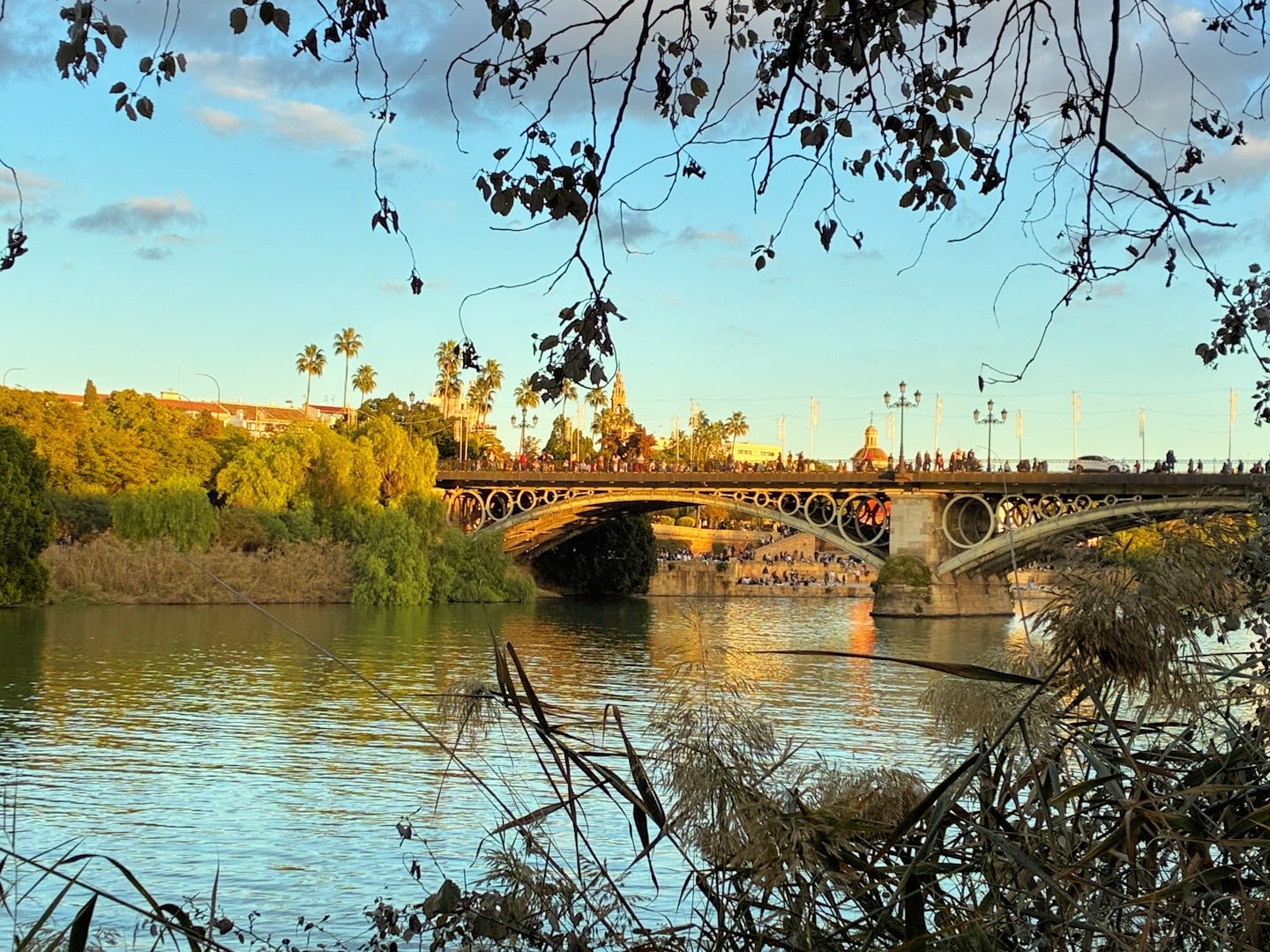
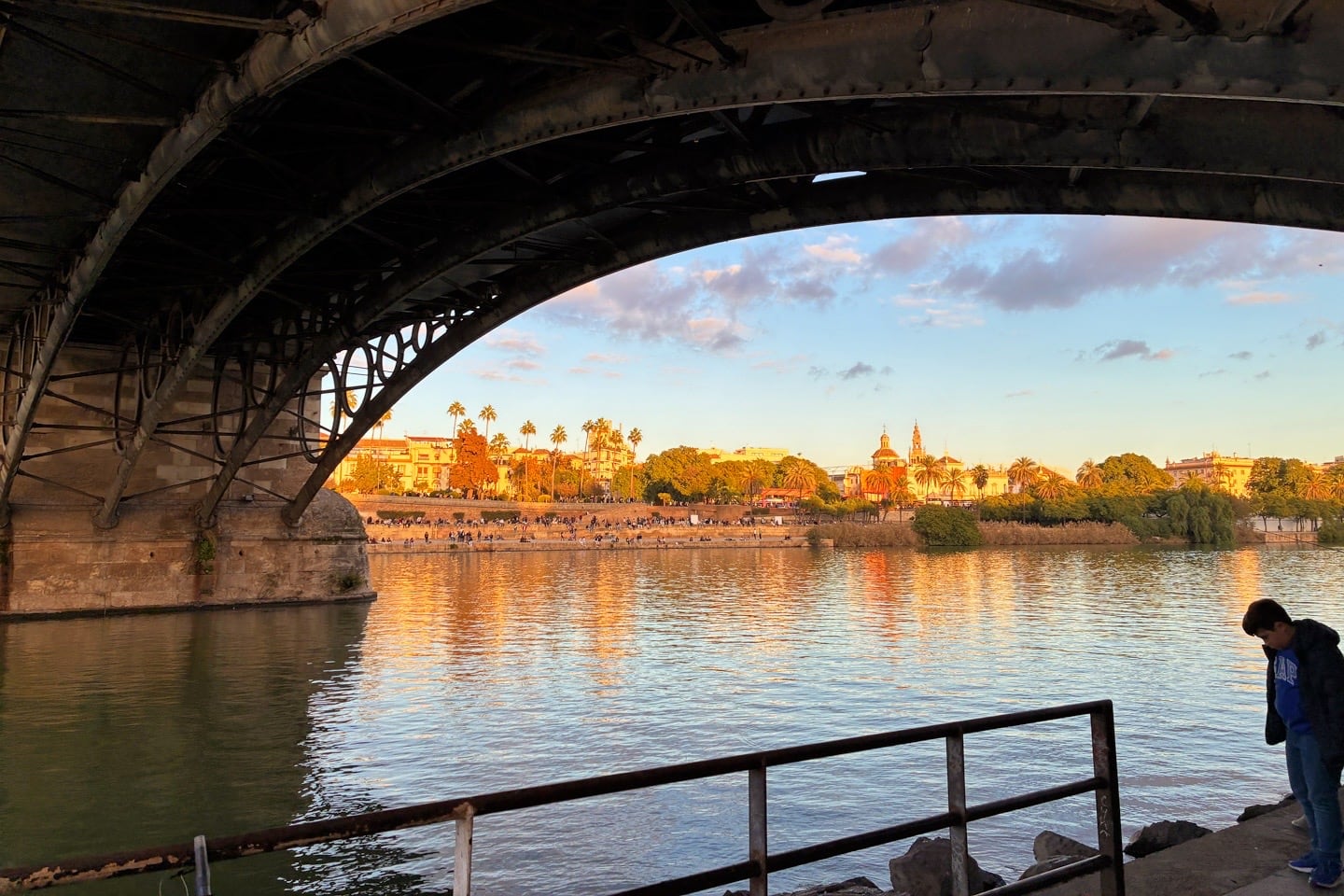
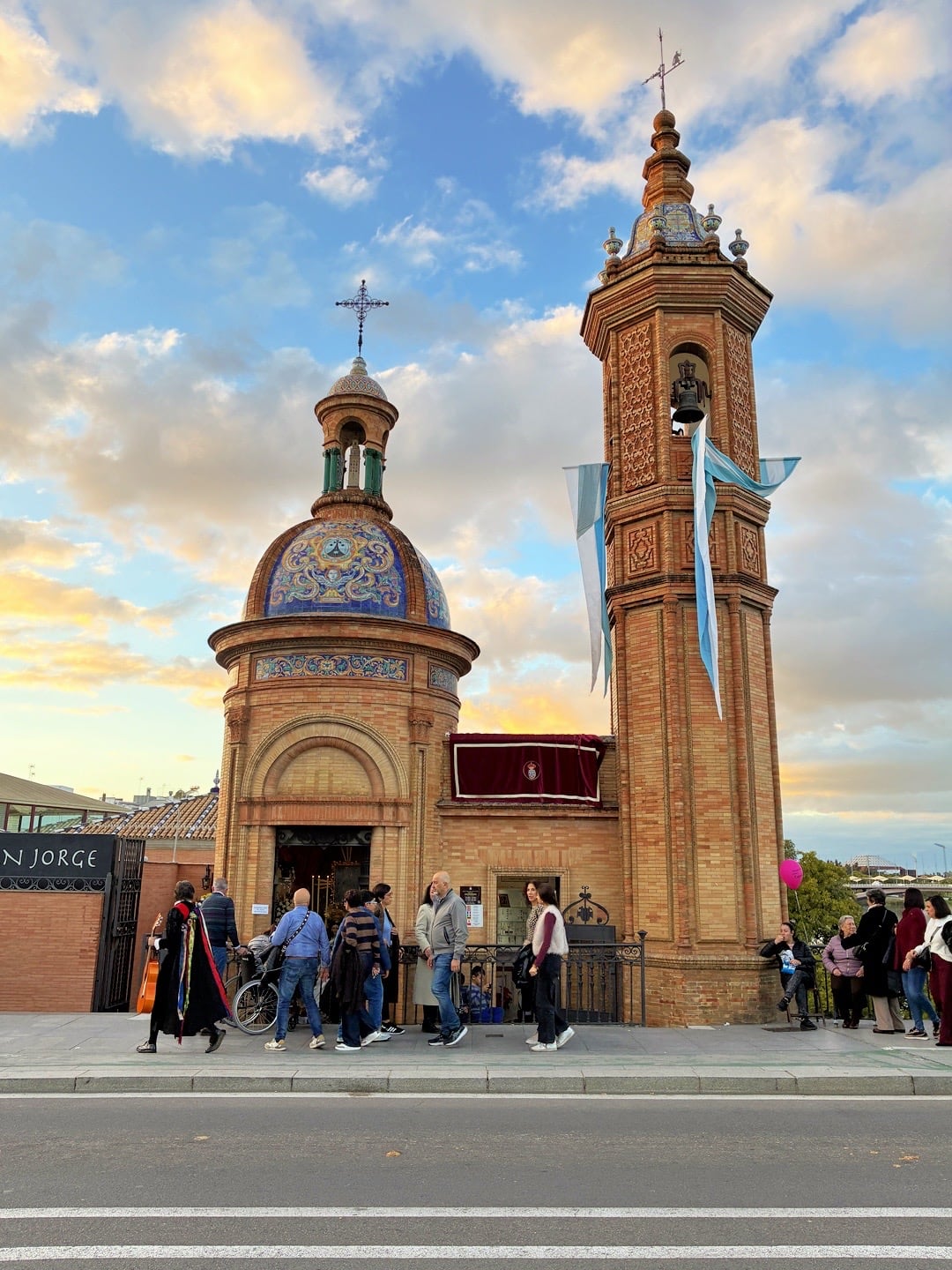
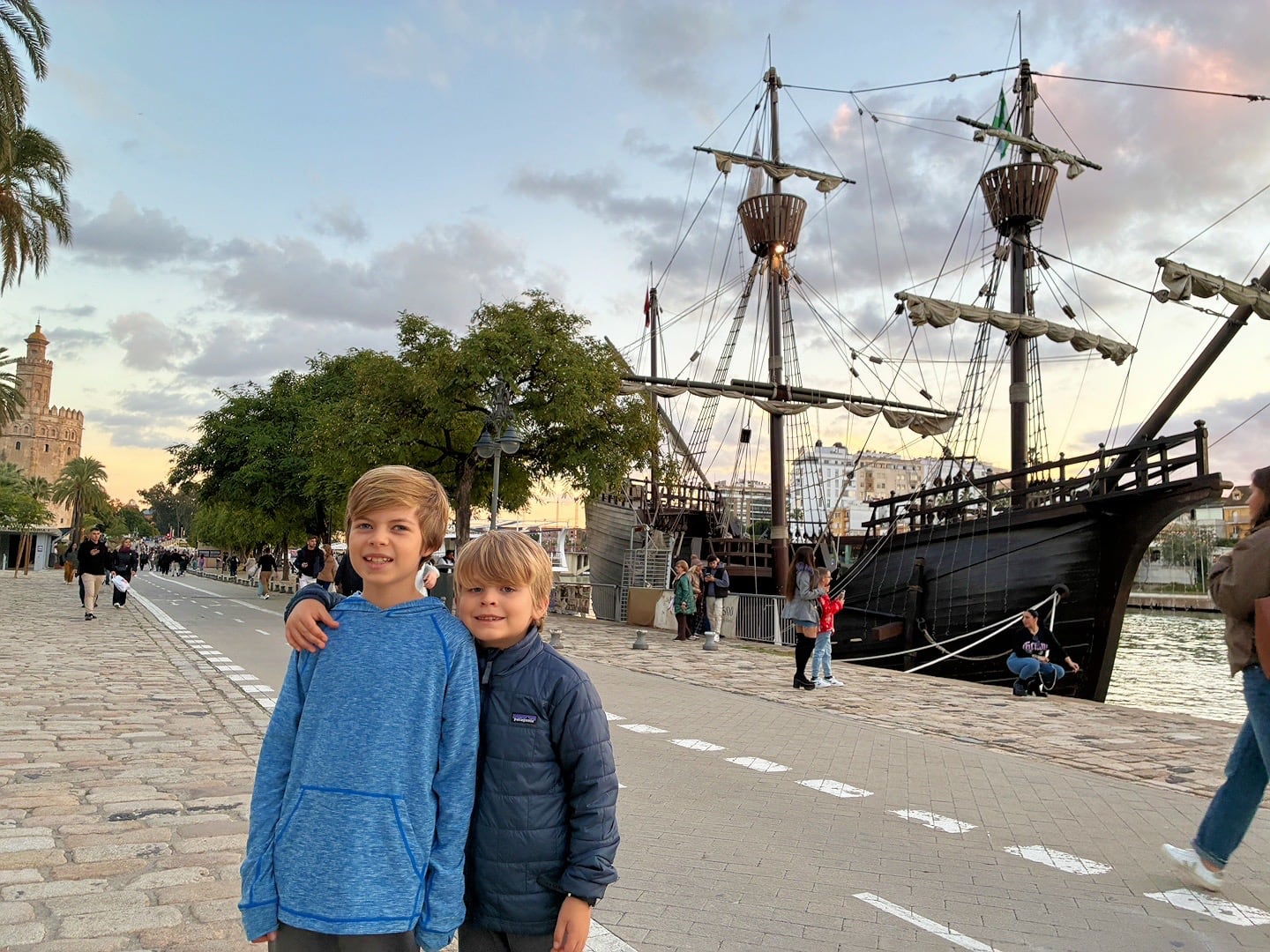
The crowds were really something else—something I haven’t experienced in a very long time (maybe since the Water Festival in Phnom Penh, pre-Covid?). And they just got bigger and bigger as the night progressed.
Lori didn’t seem to remember a ton of details from her first time in Sevilla. But one thing she had mentioned was how trendy and stylish everyone dresses. For the most part, it seems that memory holds up.
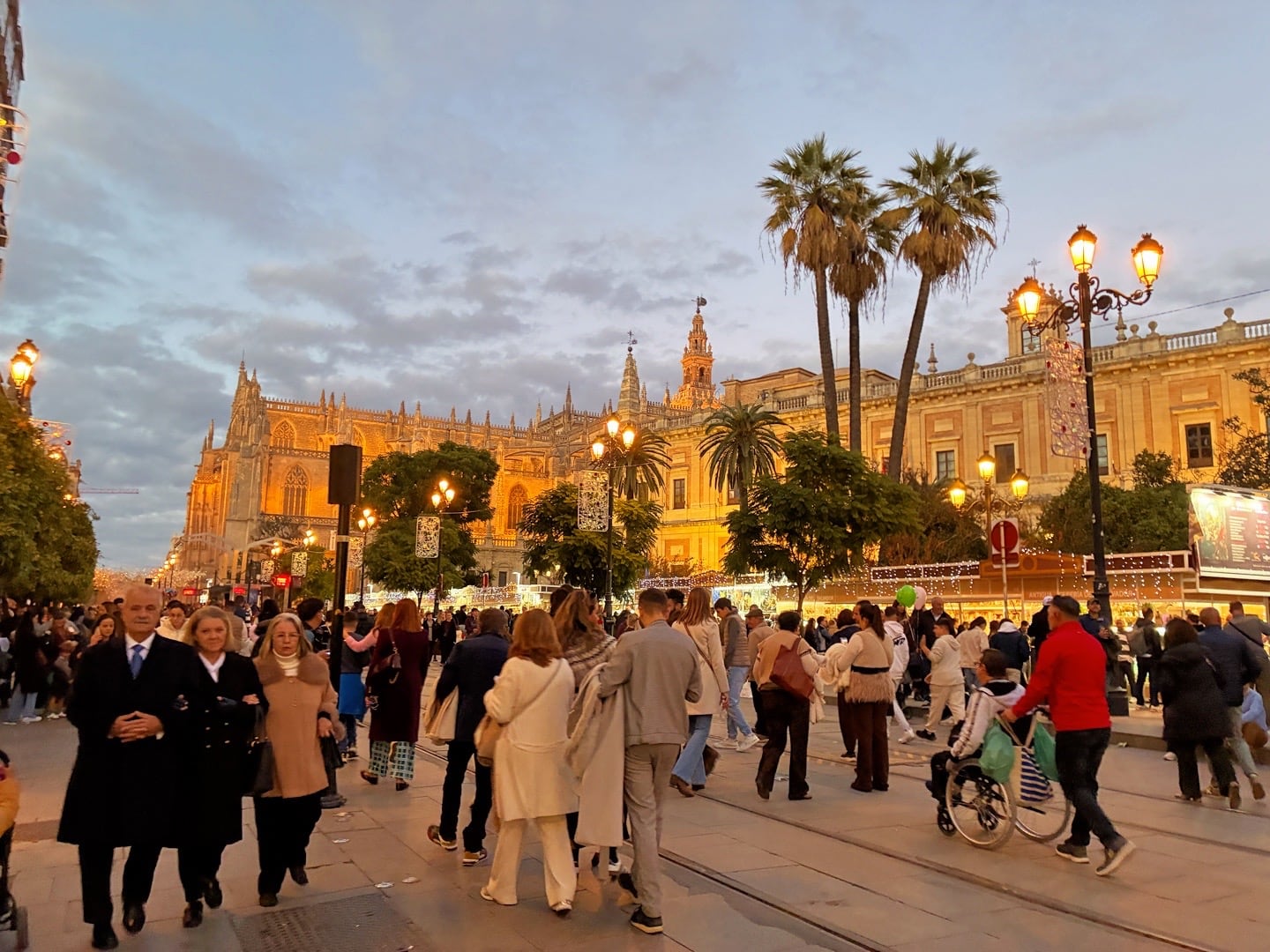
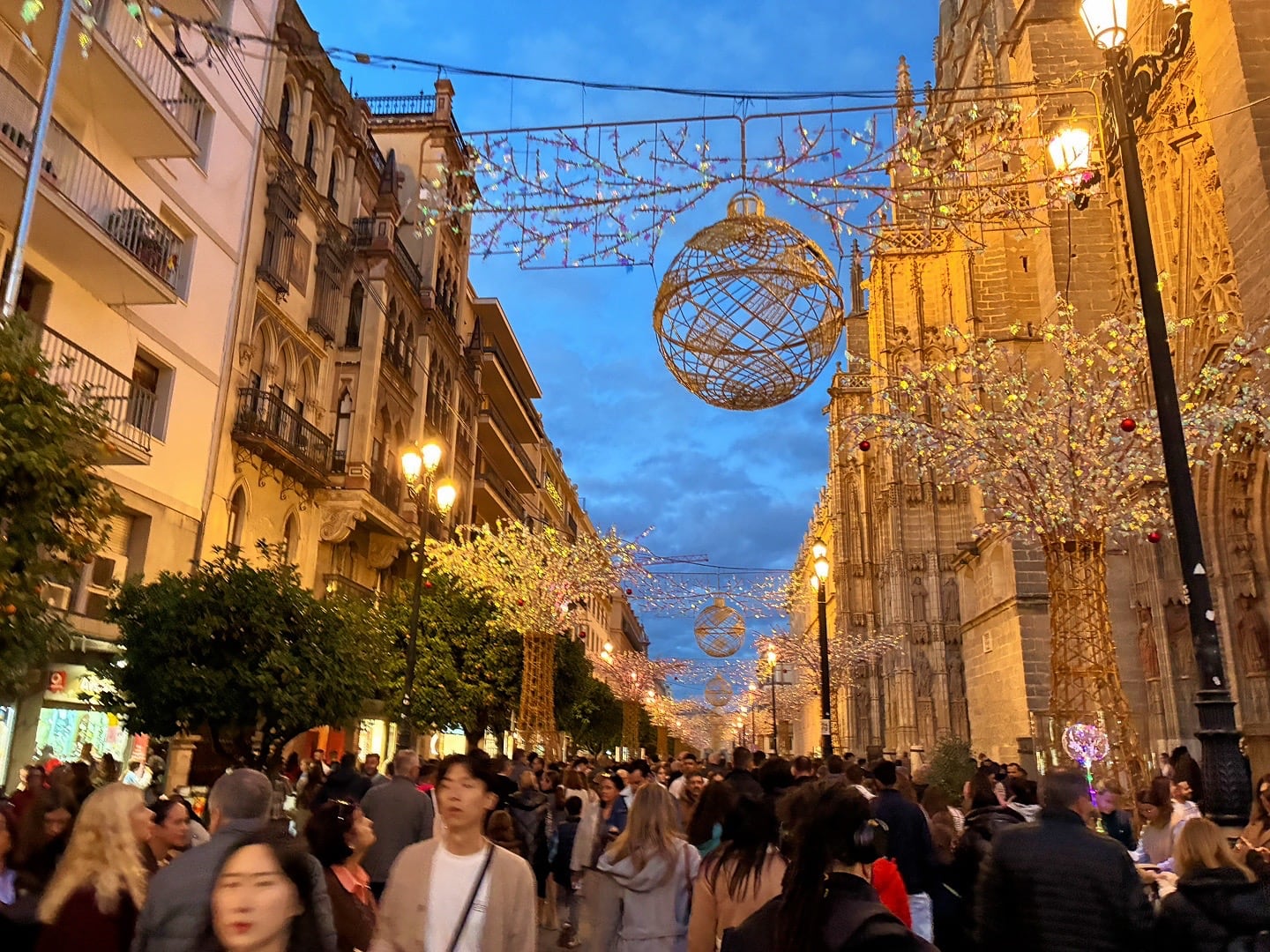
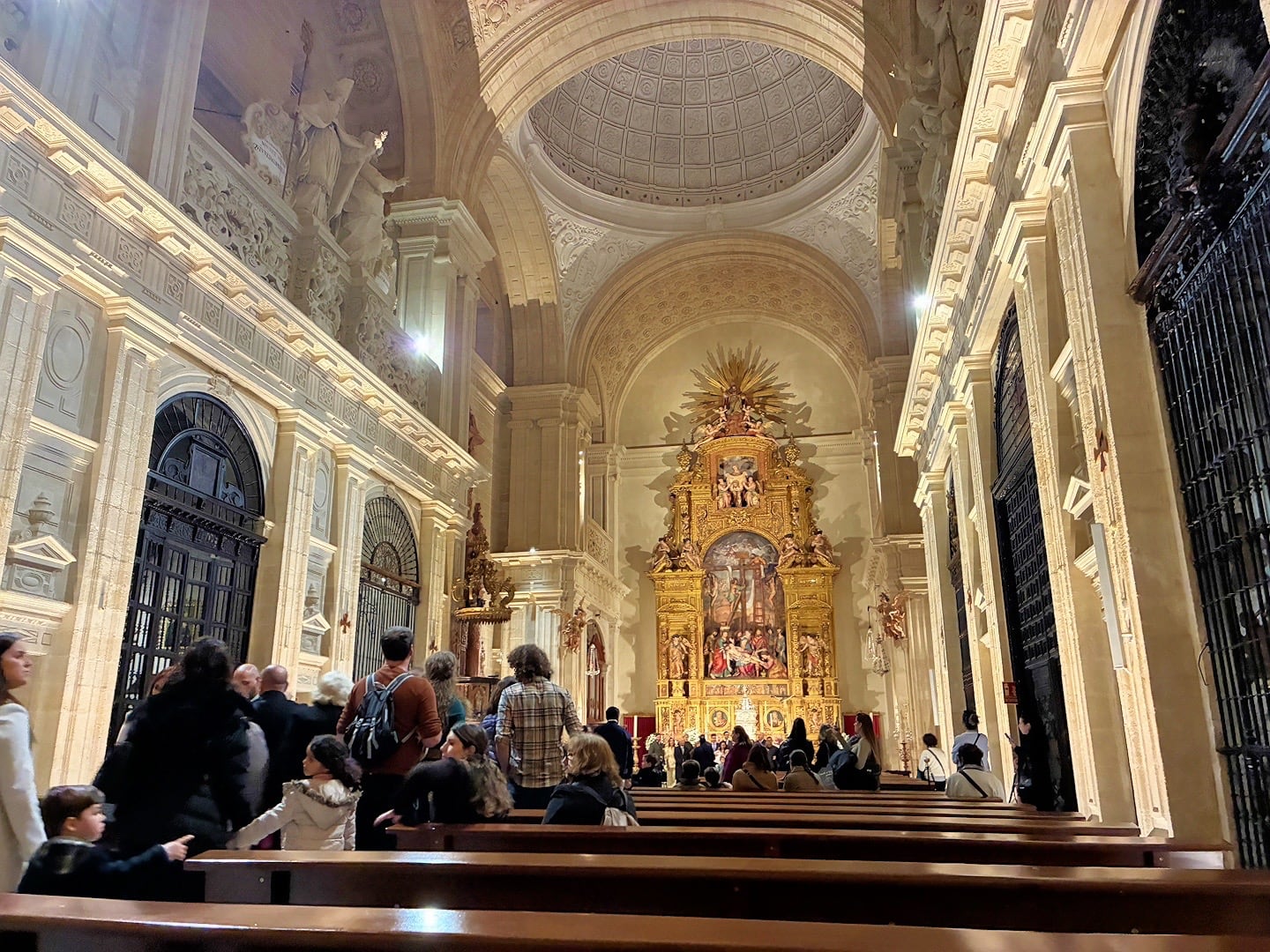
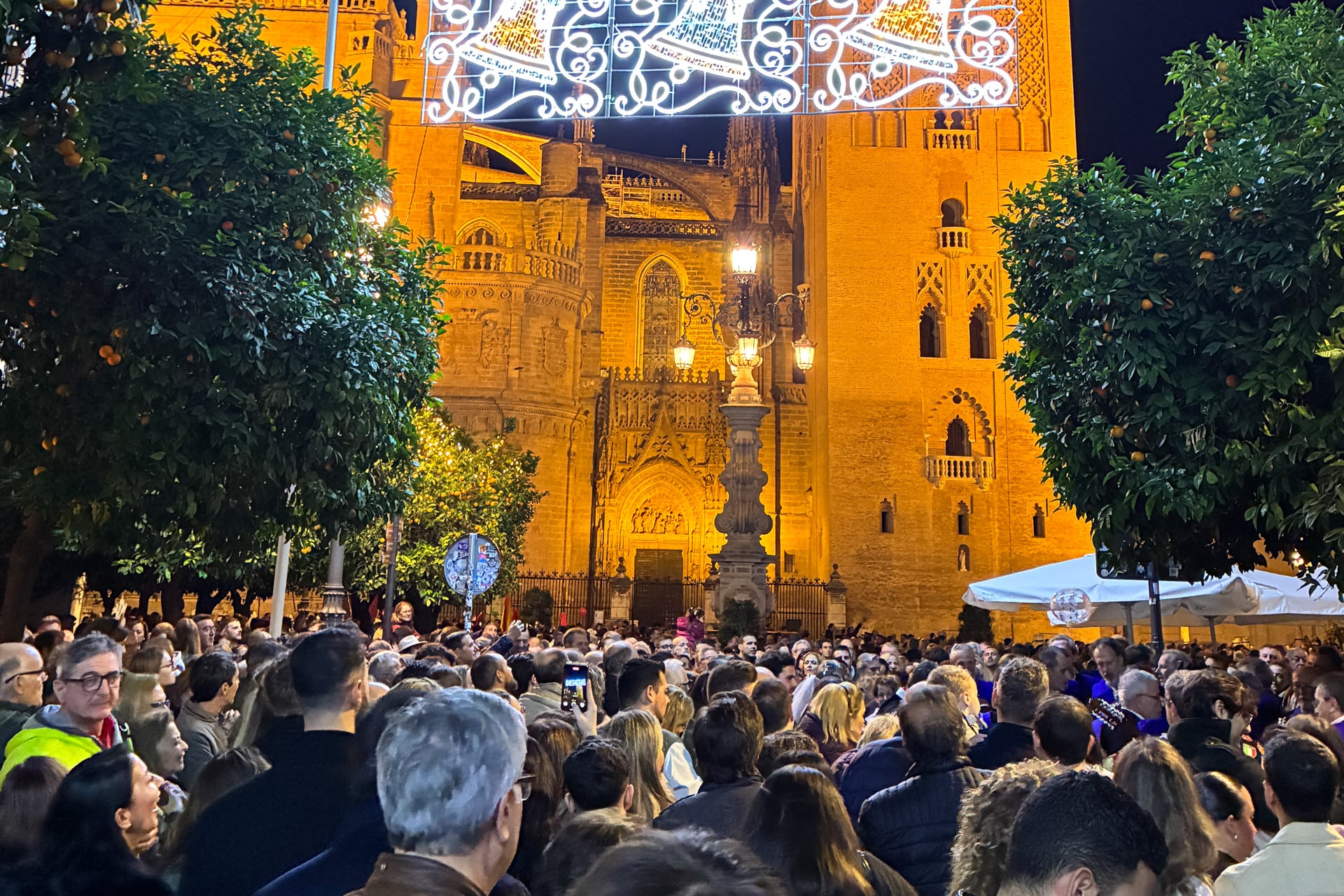
At one point, we’re standing next to the main cathedral and Lori is talking with a local woman, getting information for where we should go and what we should do tonight.
Then, all of a sudden, one half of the street illuminates like the floodlights at a nighttime soccer game, and the crowd goes wild.
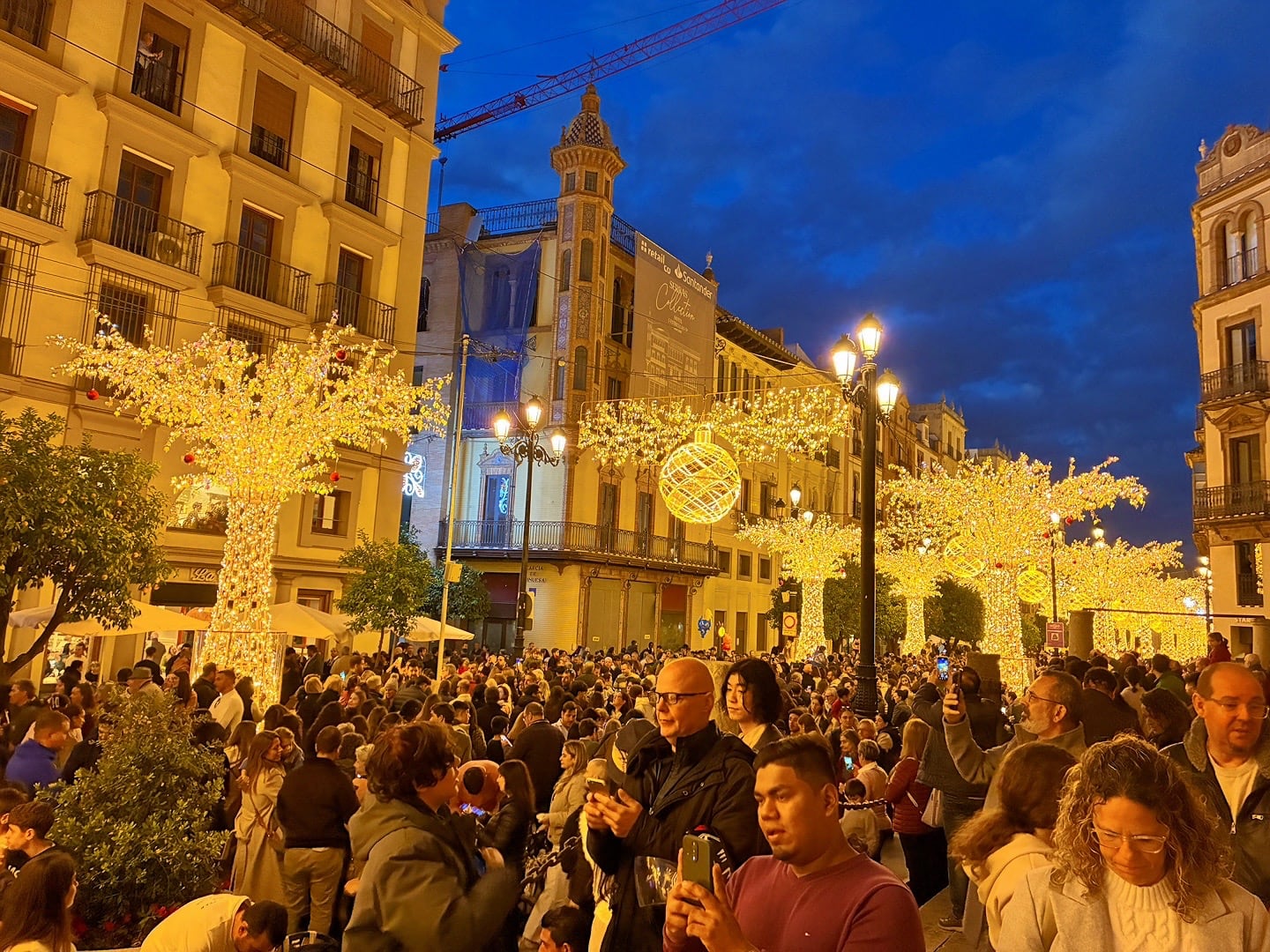
Then, the other half lights up and the crowd goes even more wild, bells start ringing from the cathedral, and people sing and dance.
It’s as if someone on a Spanish movie set yelled “Accion!” and the entire street sprang to life.
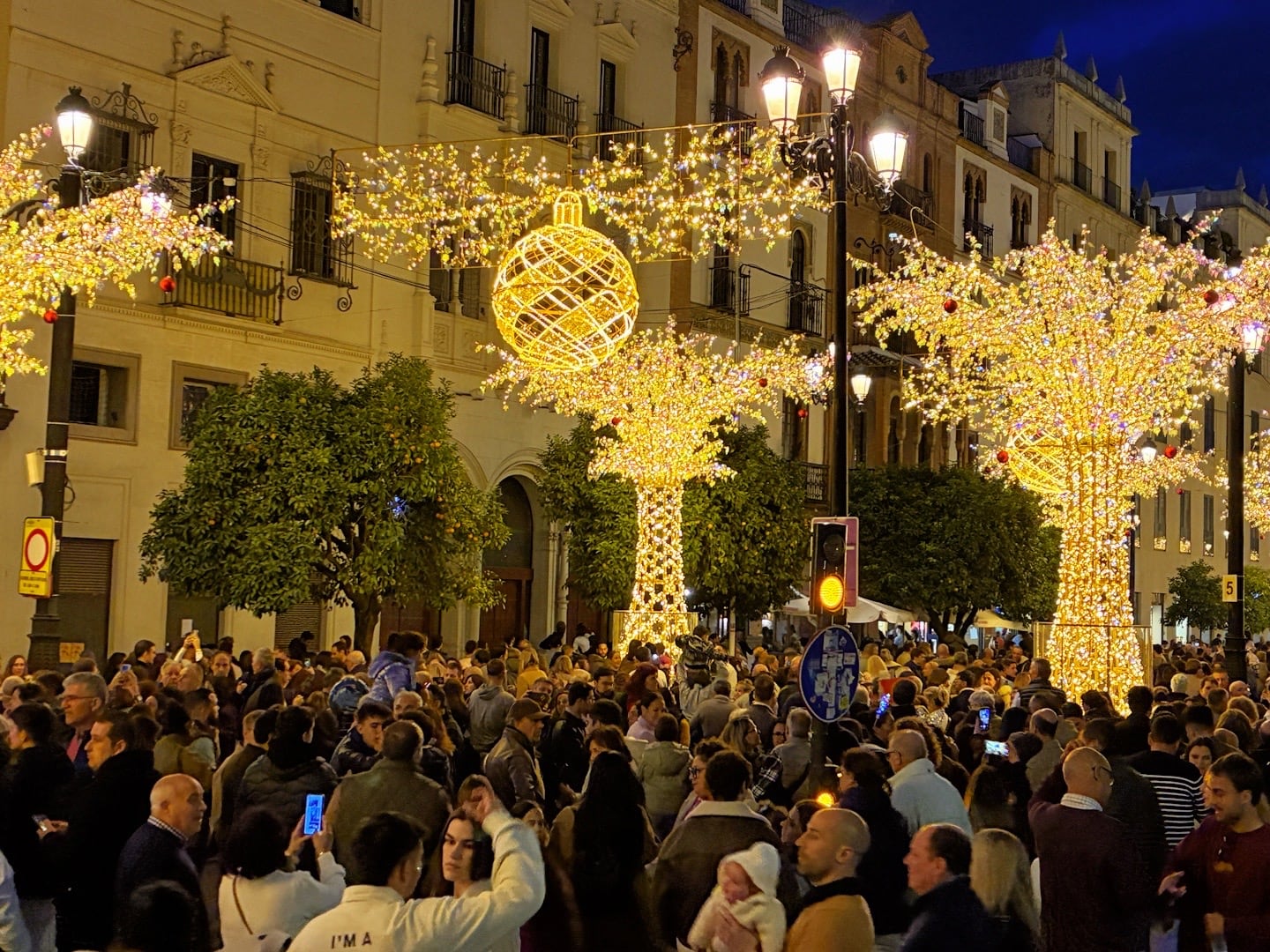
In the center of it all is Sevilla’s brightly-lit cathedral (the largest Gothic cathedral in the world), and all the bells of it’s iconic minaret-turned-bell-tower ring continuously into the night as people consume copious amounts of food and beverage and try to squeeze here and there to get a glimpse of the singing Tunas.
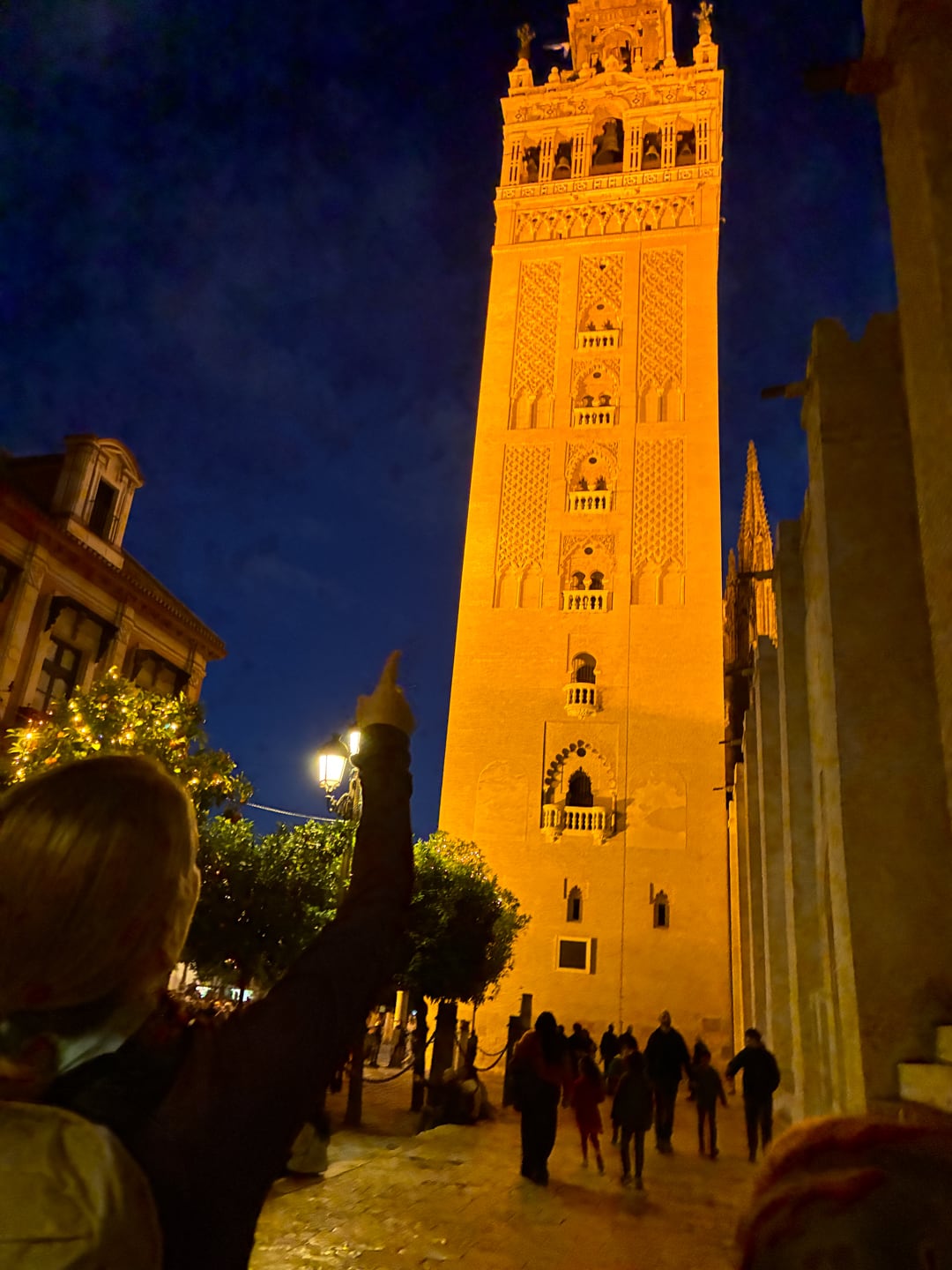
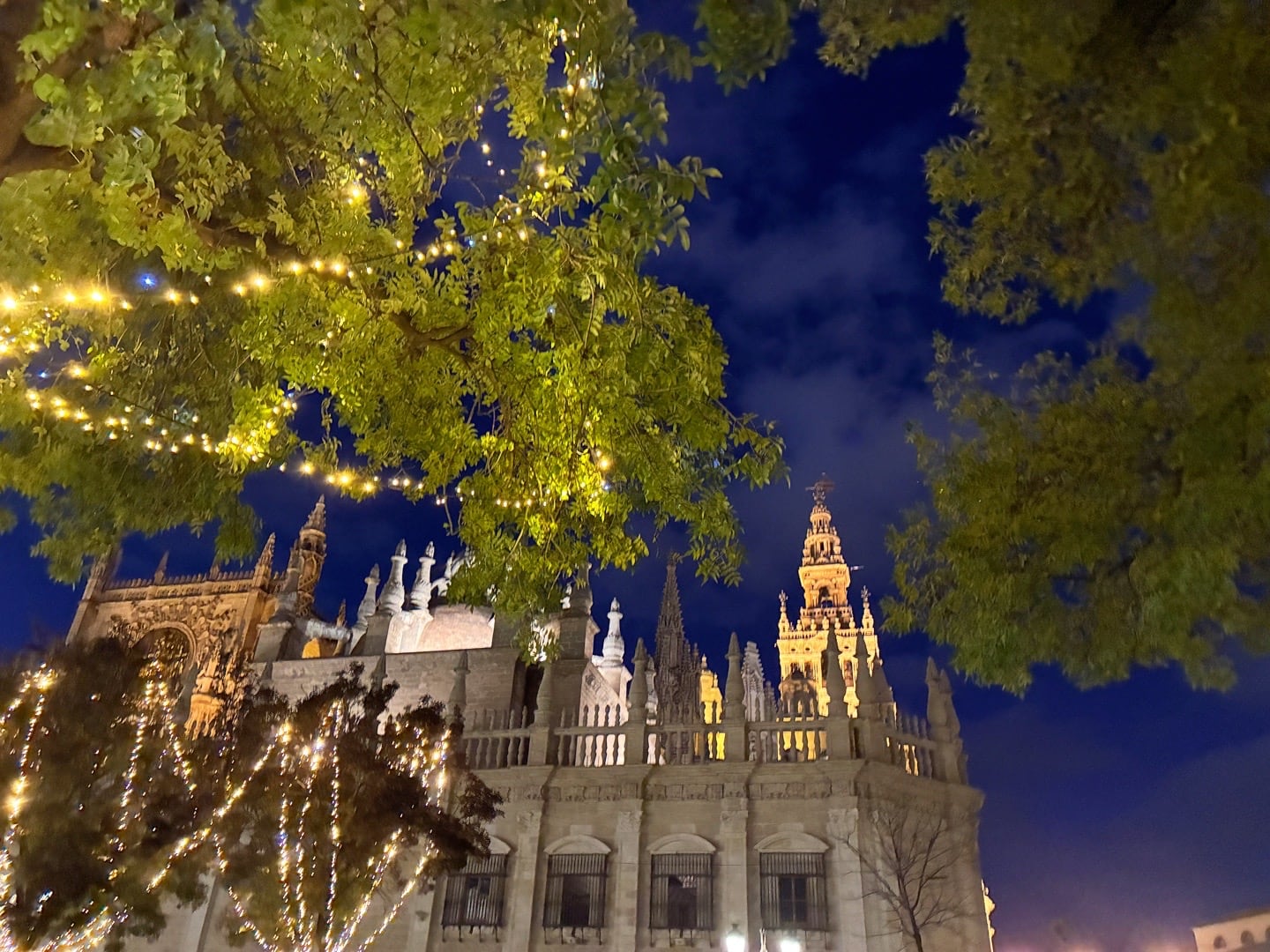
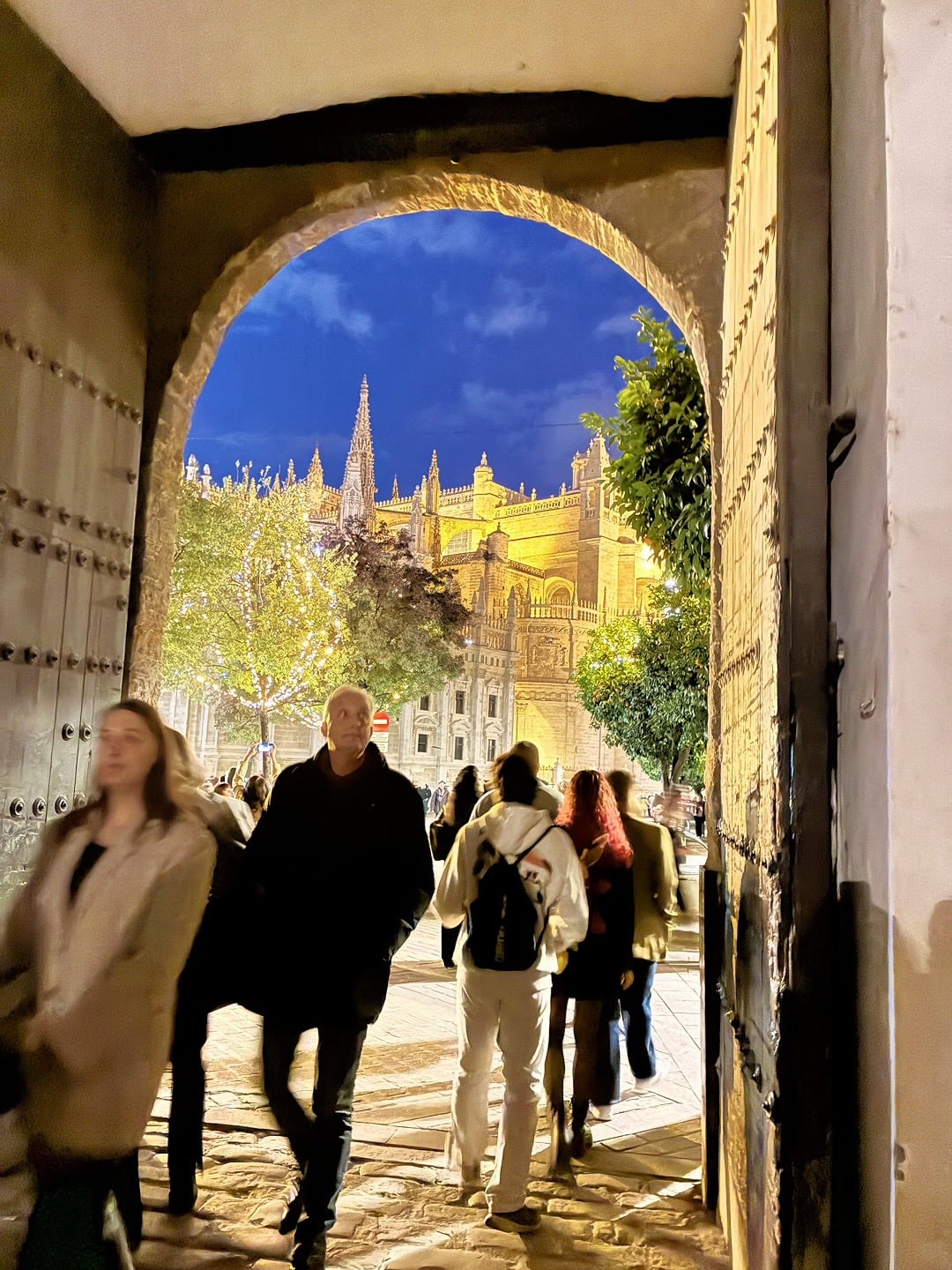
So, what exactly are these Tunas? They are roving bands of choirs—usually men and usually associated with a university. They sing into the wee hours, eventually accompanying processions associated with the Vigil of the Immaculate Conception.
The whole city is crowded, but wherever the crowds get even more dense, that’s where you’ll find the Tunas.
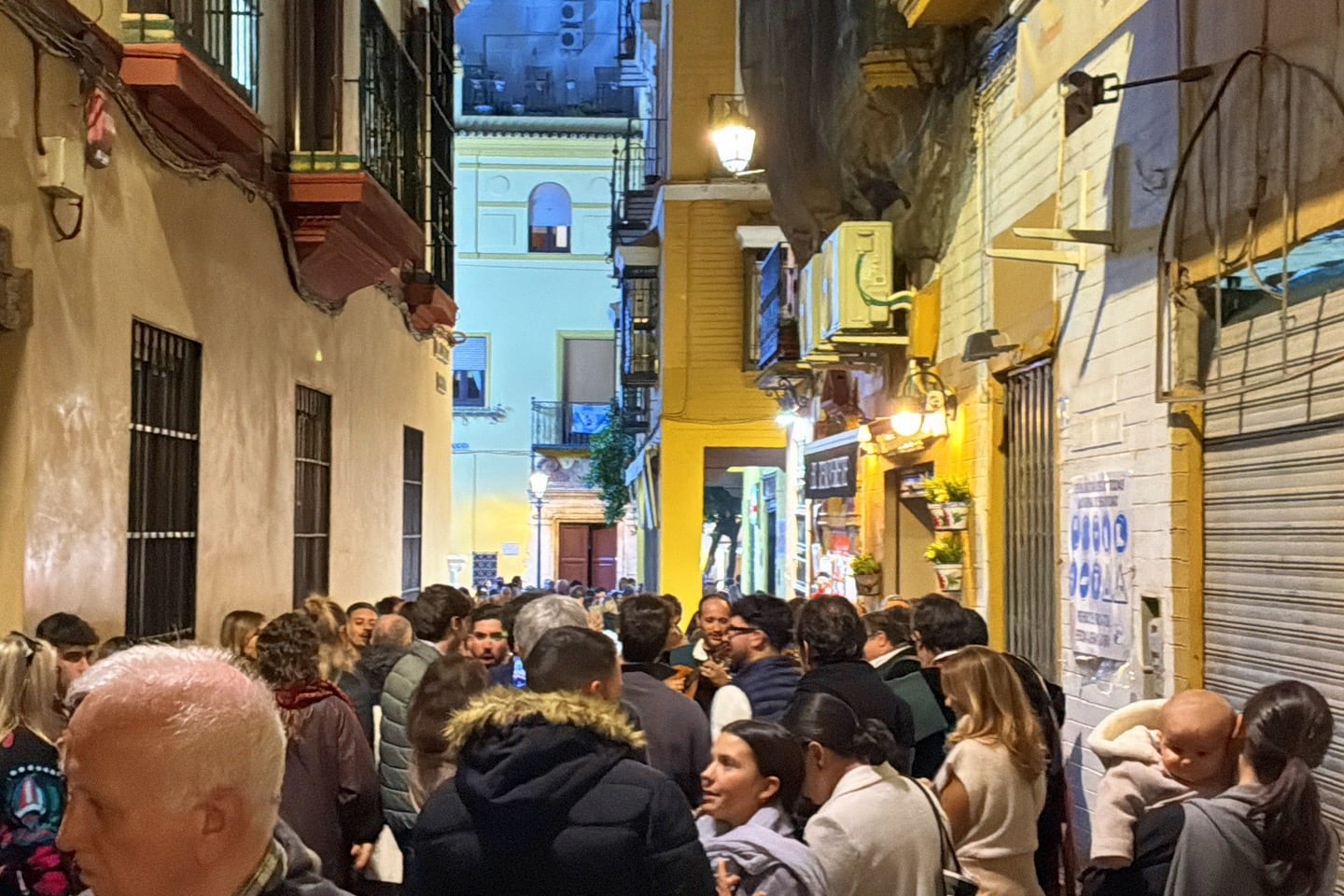
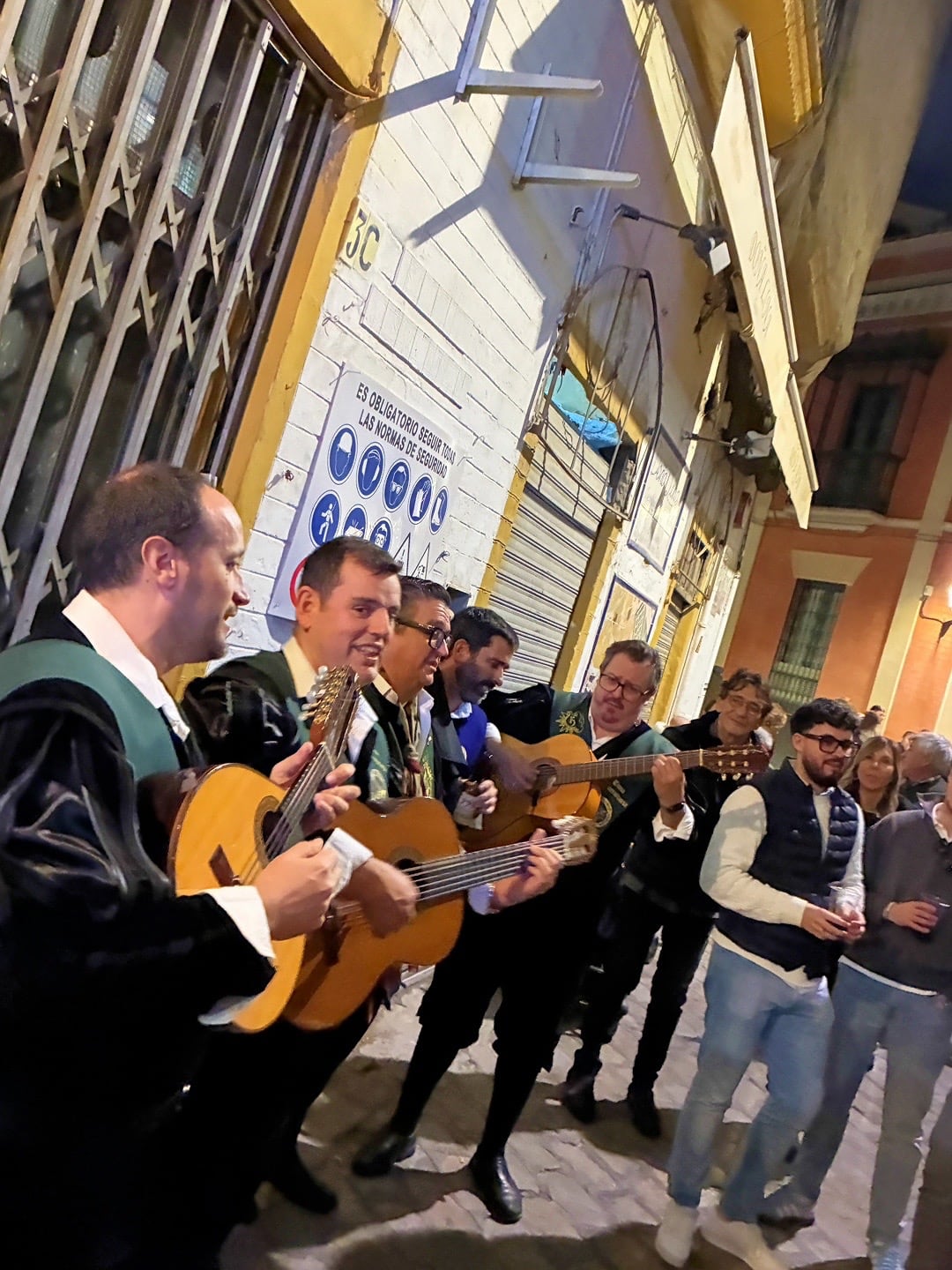
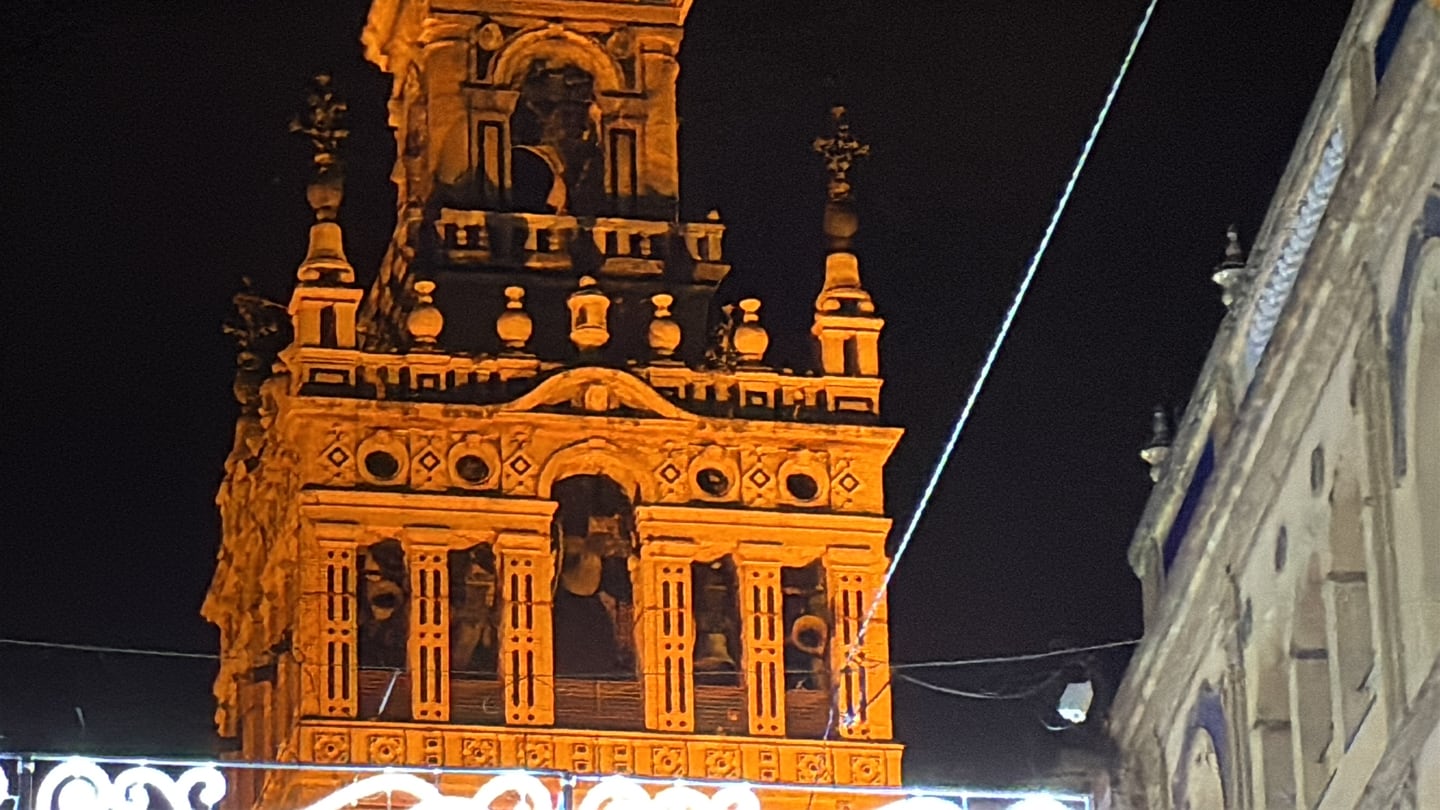
Bells, bells, and more bells.
It’s mealtime again for us, but it’s only 7pm (which is not mealtime here in Spain), so we don’t have as much trouble finding a place to eat this time around.
Our first choice is a cheap and popular drinking establishment on the main drag, but it’s absolutely packed tonight (Spaniards might not eat a large meal at all hours, but they seem to have no problem drinking at all hours).
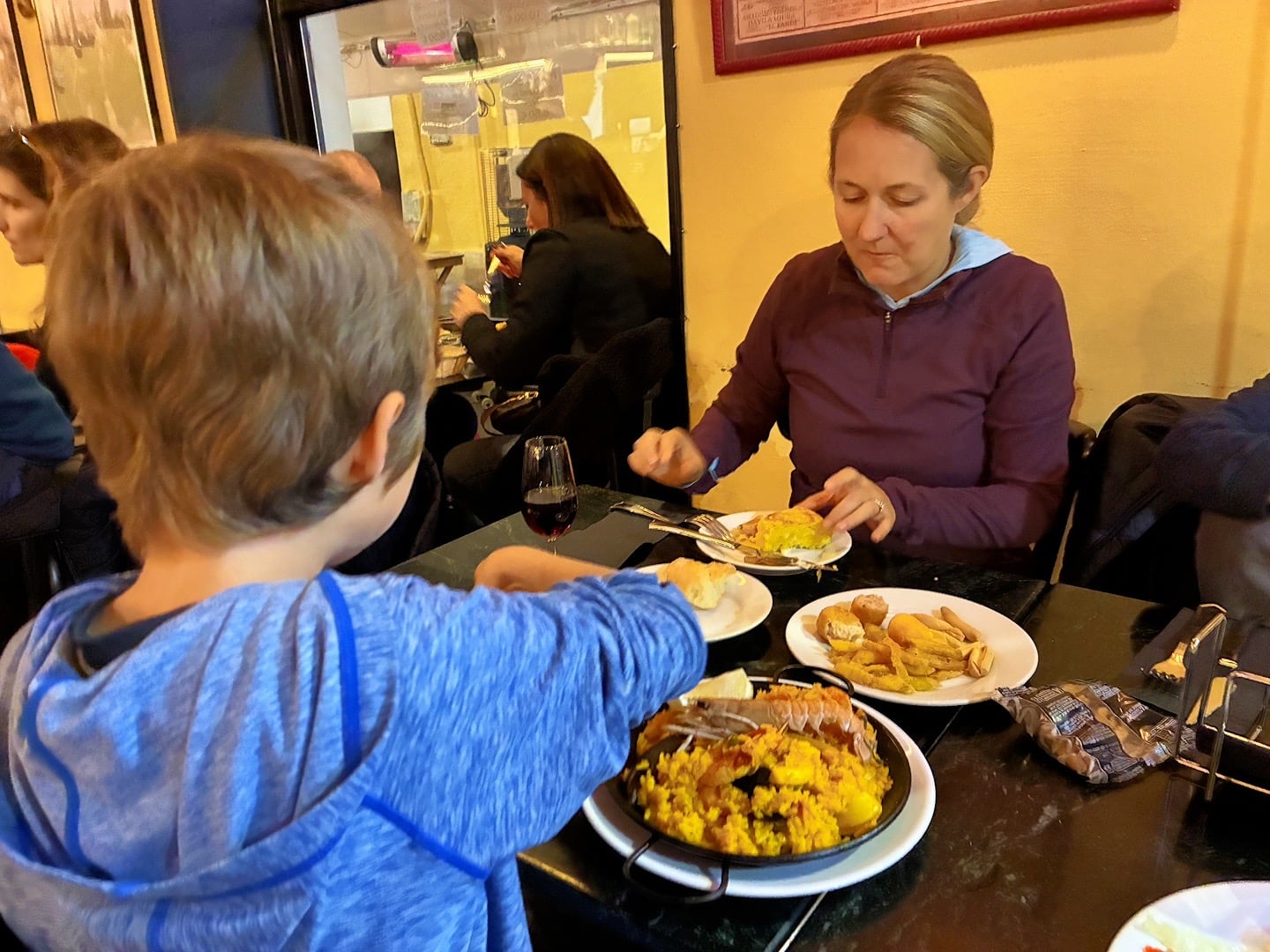
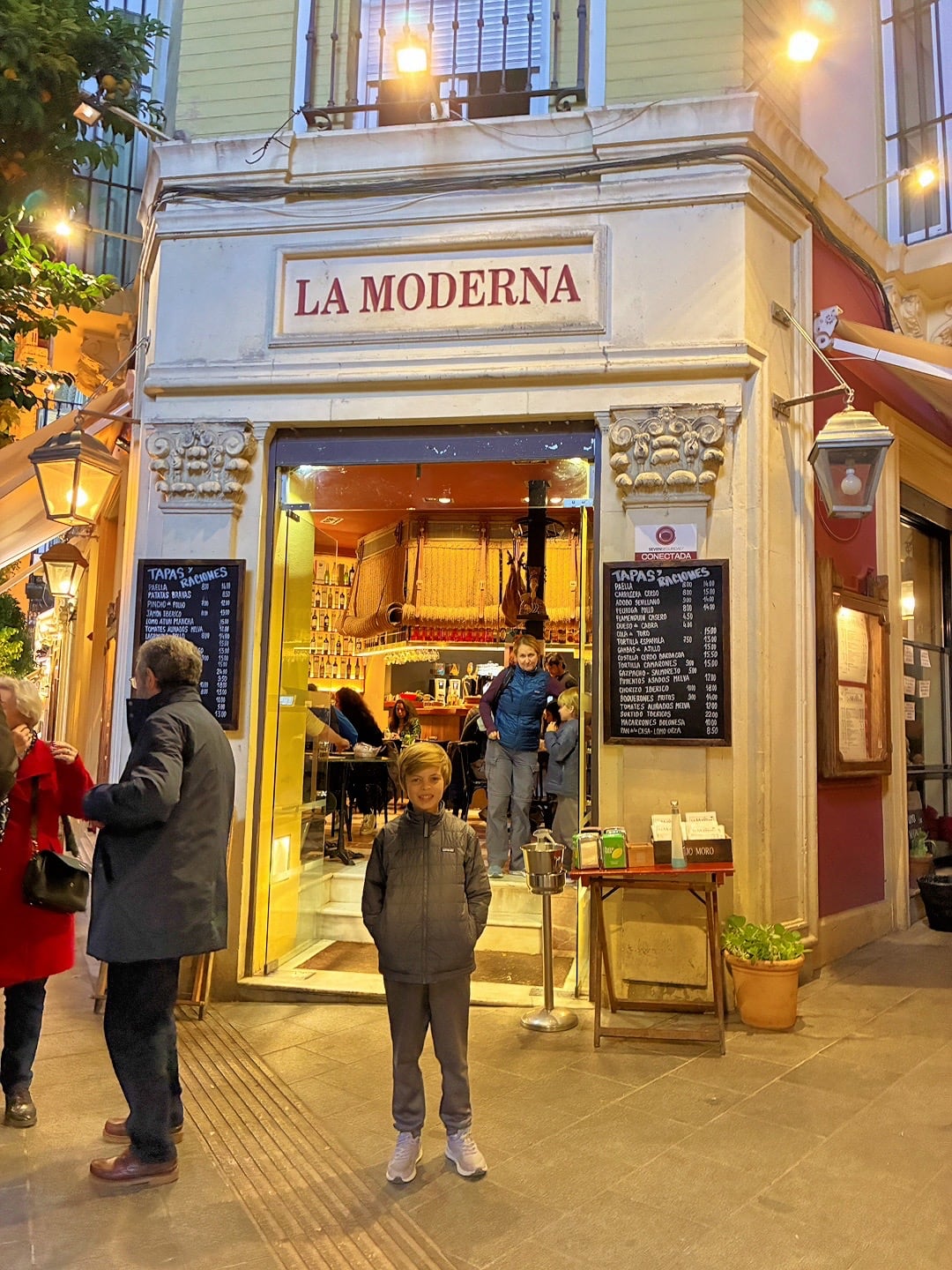
We stumble upon this tapas bar across the street with a free table and settle in.
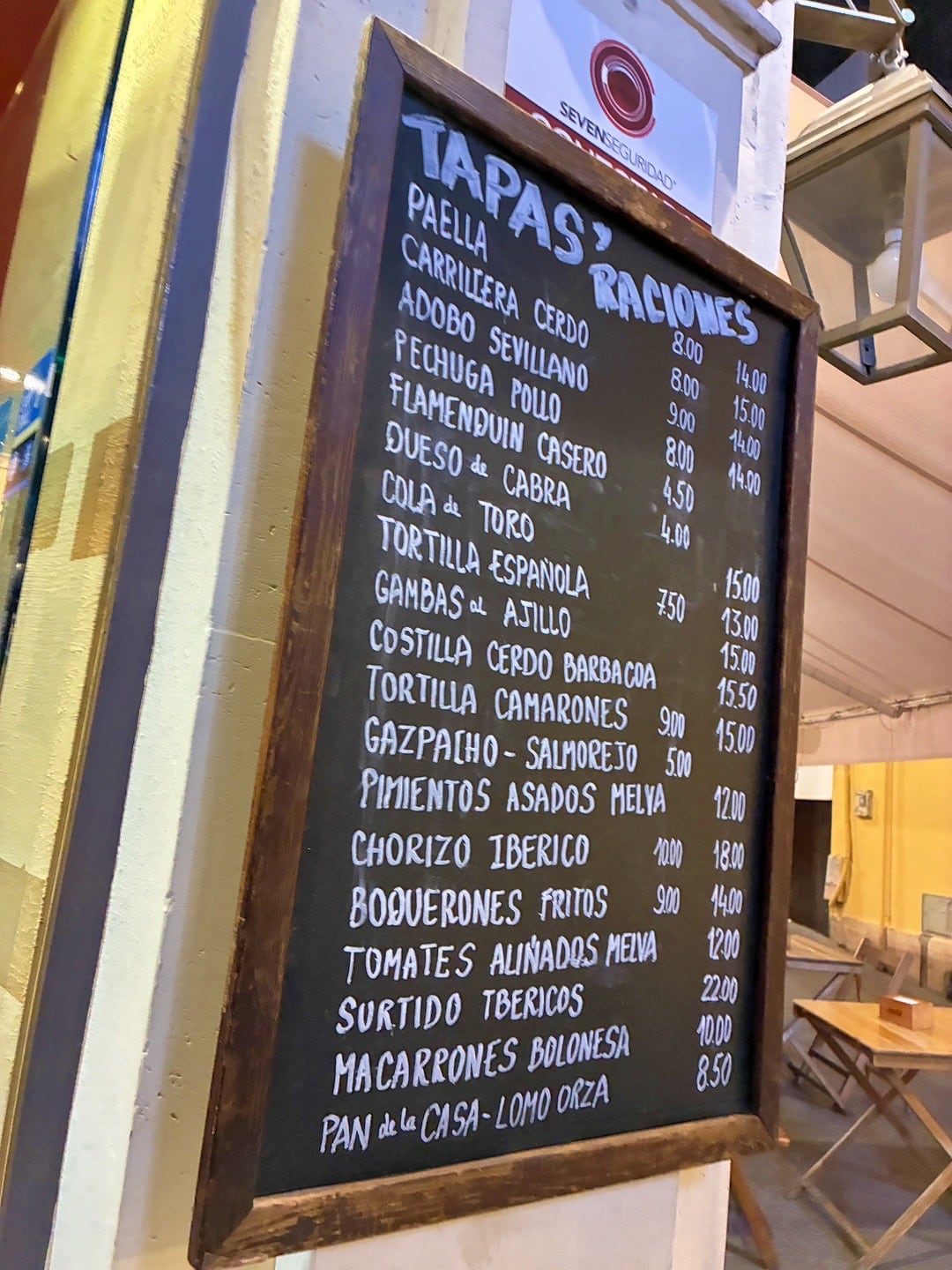
We didn’t think we’d get to sample all of Spain’s signature dishes on our first night, but we put a pretty good dent in our list: Paella, Tortilla Española, and a variety of tapas.
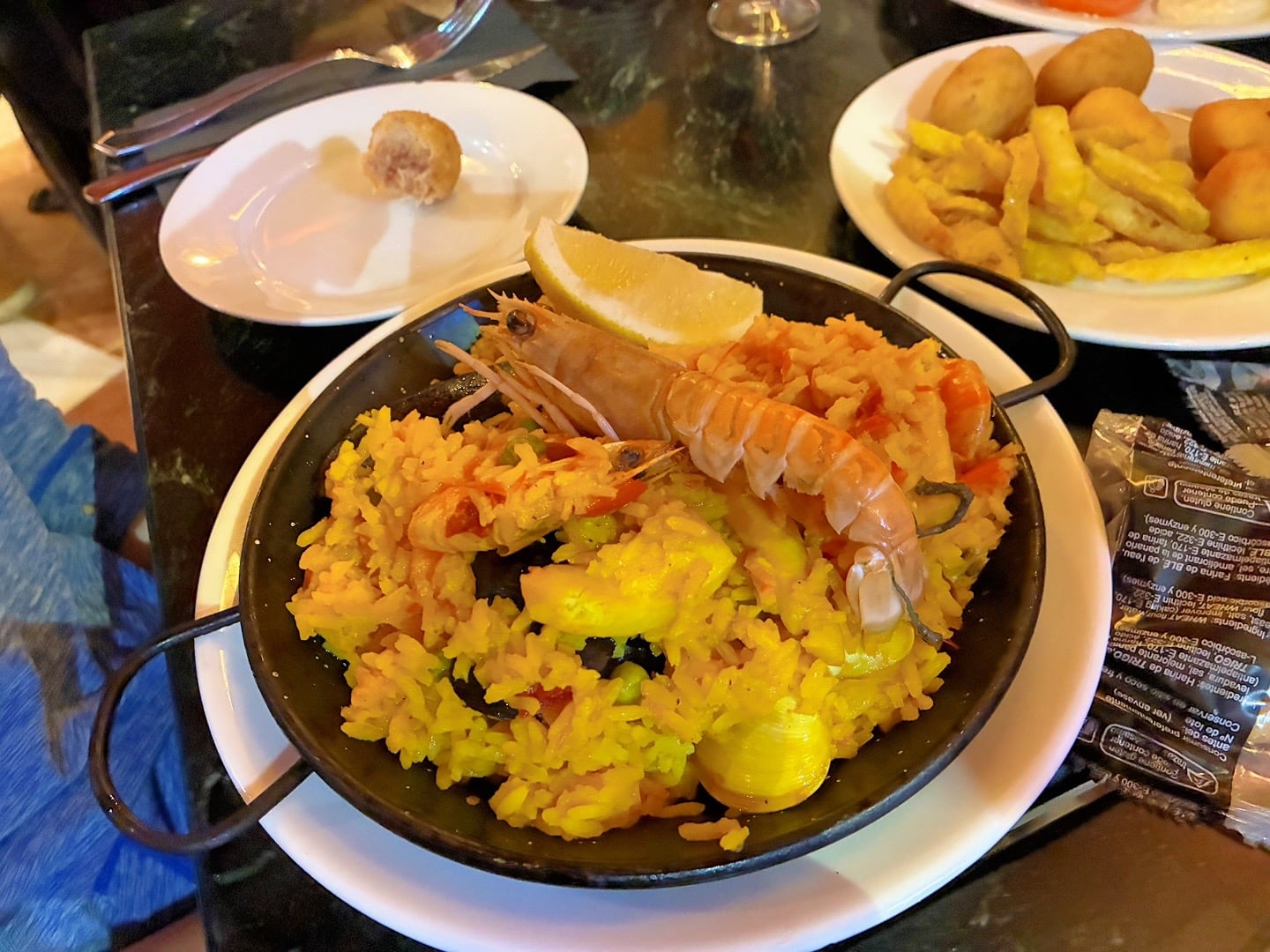
The price was right, so we also ordered a glass of Cruzcampo (the local beer) and a glass of orange wine, which seemed appropriate.
After diner, we re-joined the party, passing more bands of Tunas along our route.
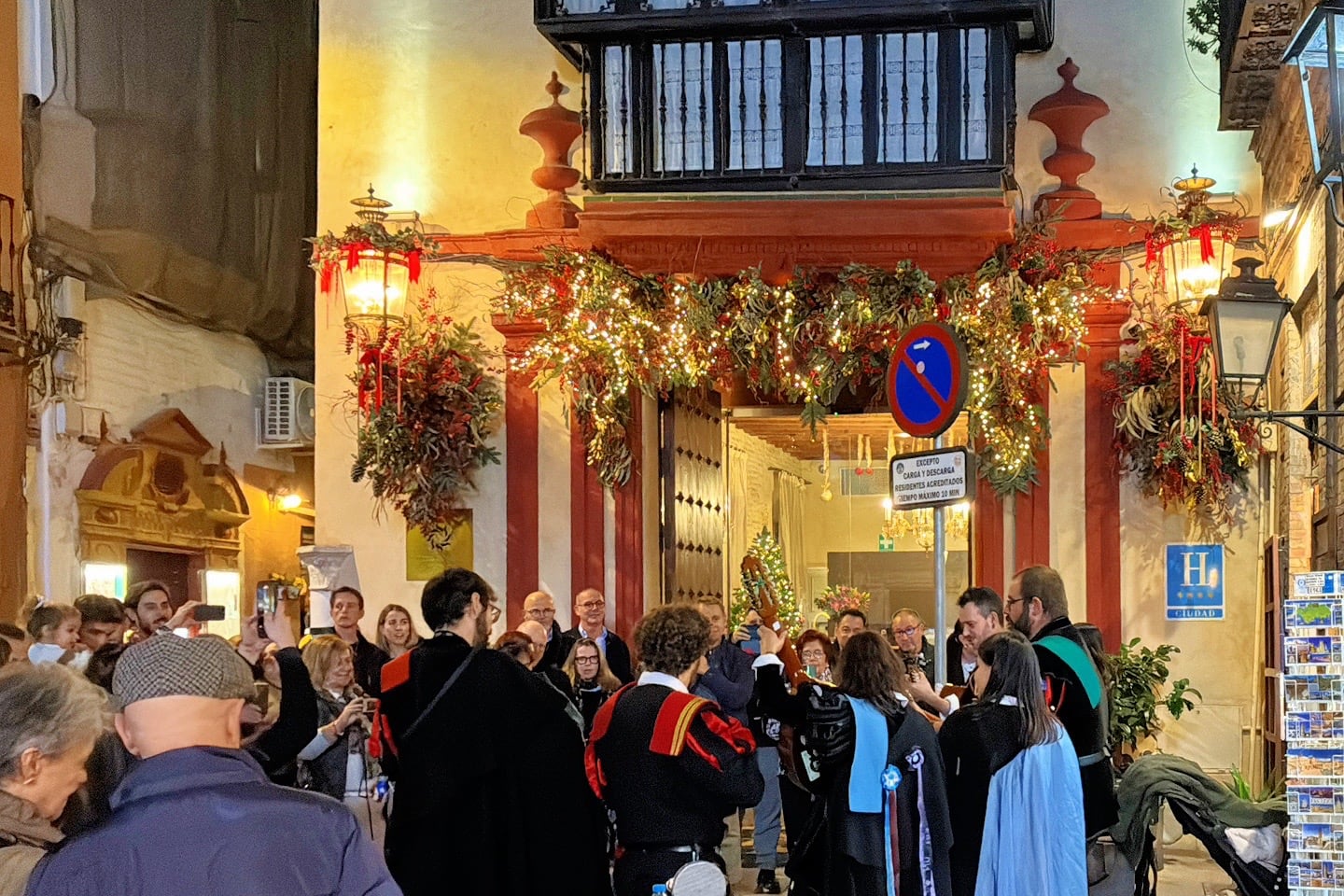
We slowly made our way to the center of the festivities, the Monument to the Immaculate Conception in the Plaza del Triunfo. Due to the crush of people, however, we only got as far as the Fuente Farola.
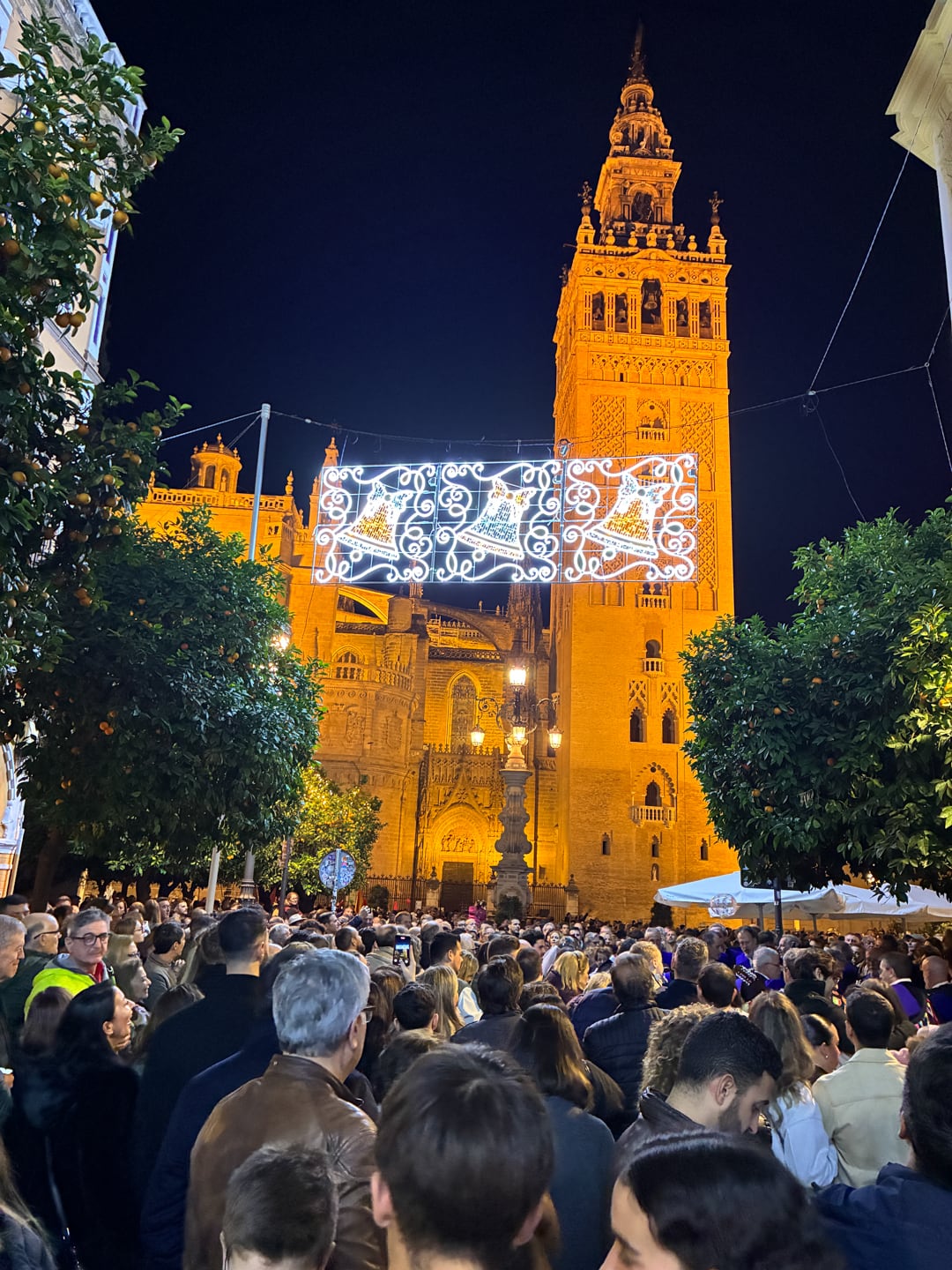
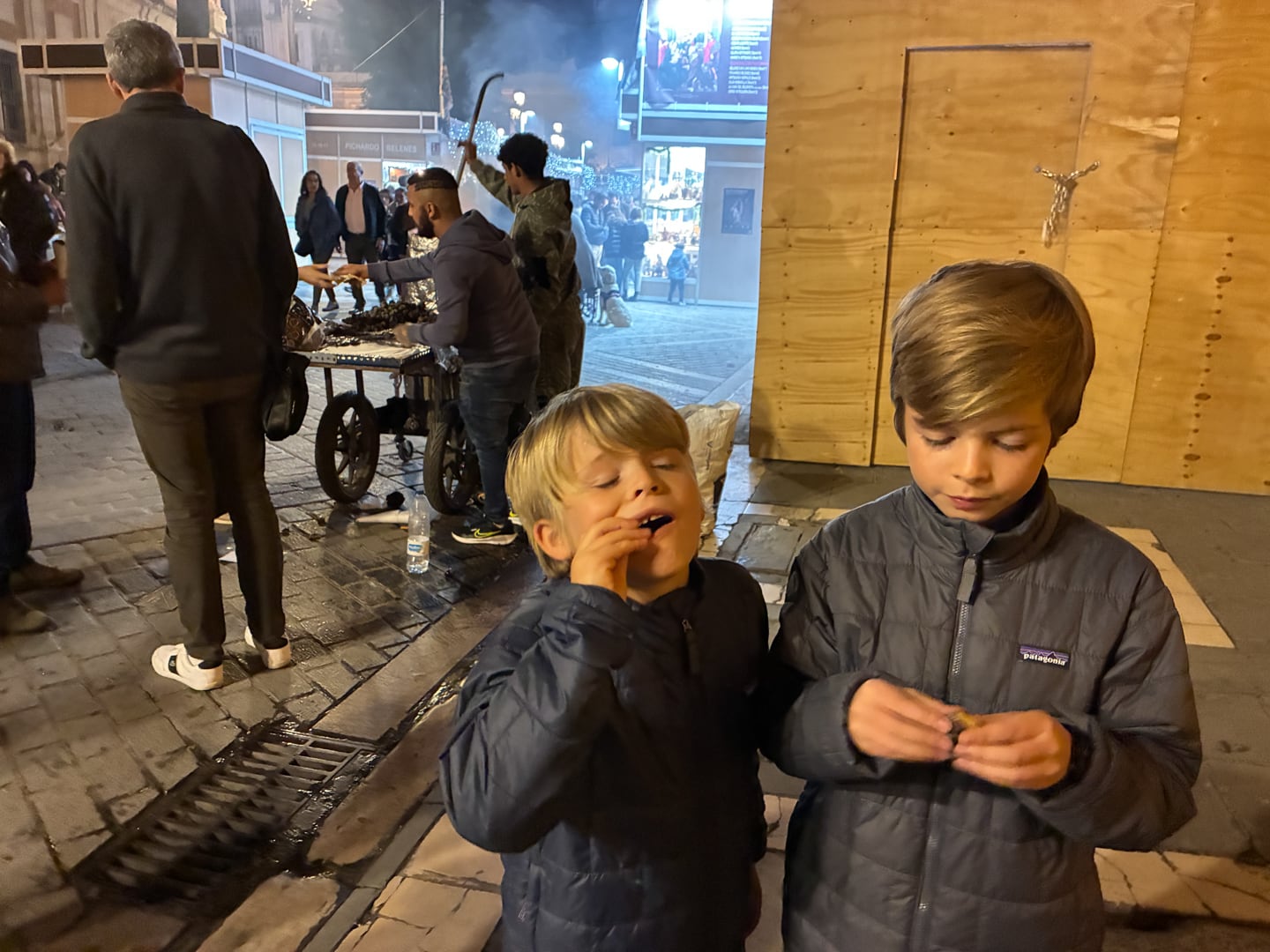
The crowd got more and more compressed to the point where we just weren’t feeling that comfortable about the whole thing. So, we aborted our mission and grabbed some roasted chestnuts, instead.
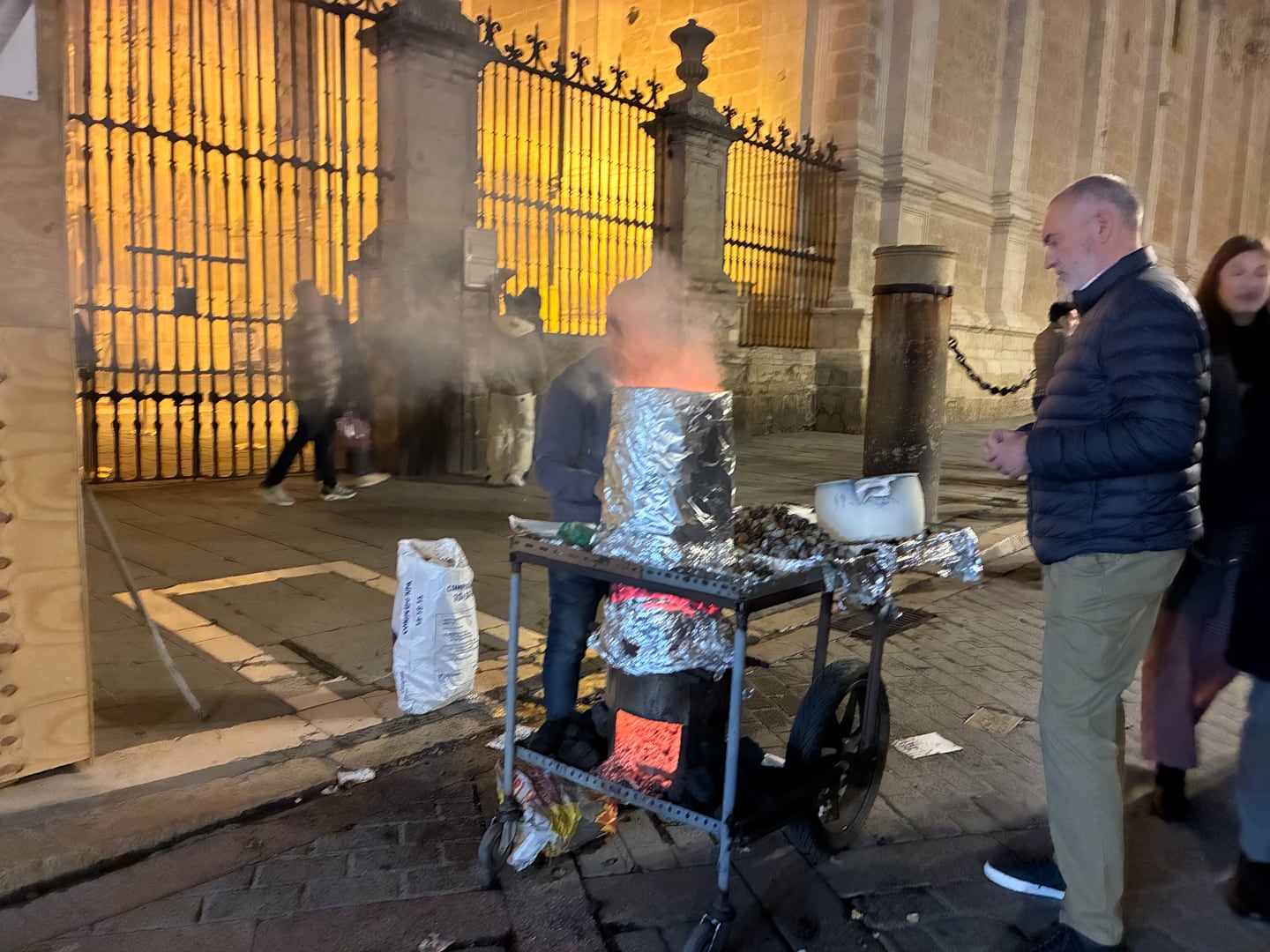
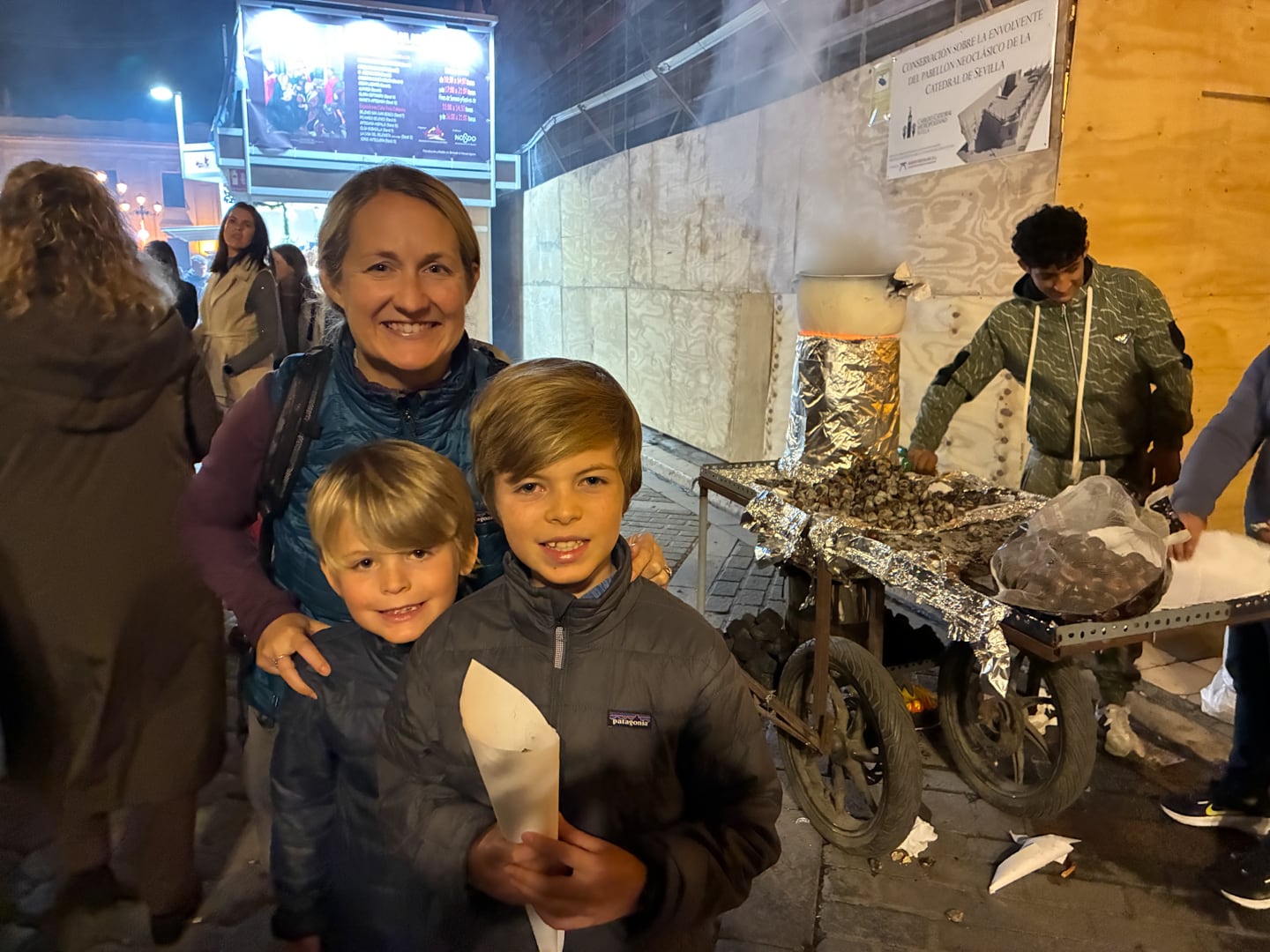
Street-roasted chestnuts are just as ubiquitous in Mexico, but we somehow never tried them the whole time we lived there. Tonight seemed like a good night to give them a whirl, and…well…not really our thing. But we’re glad we tried them.
It’s been one heck of a long day. Time to get these boys home. Which is easier said than done.
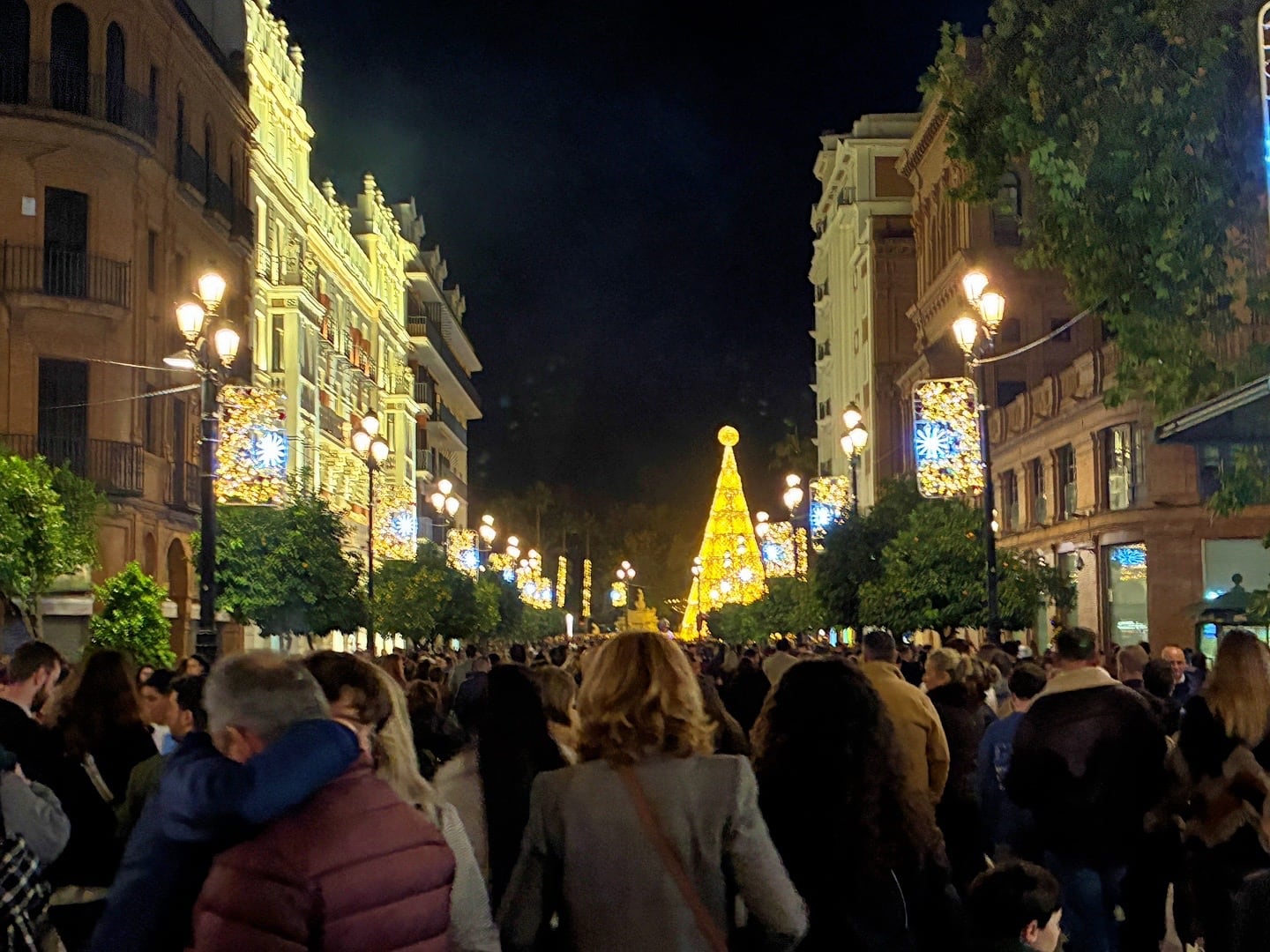
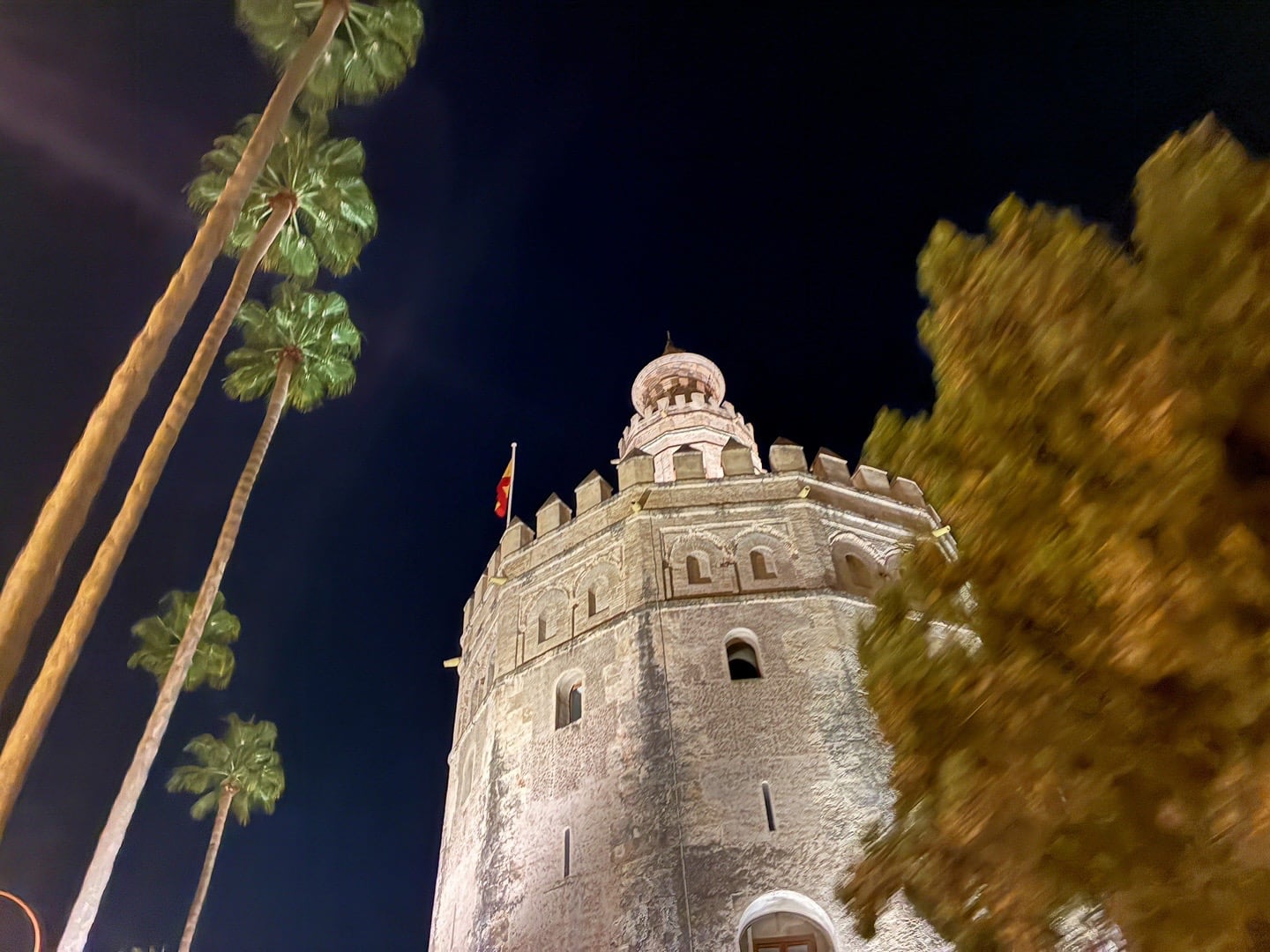
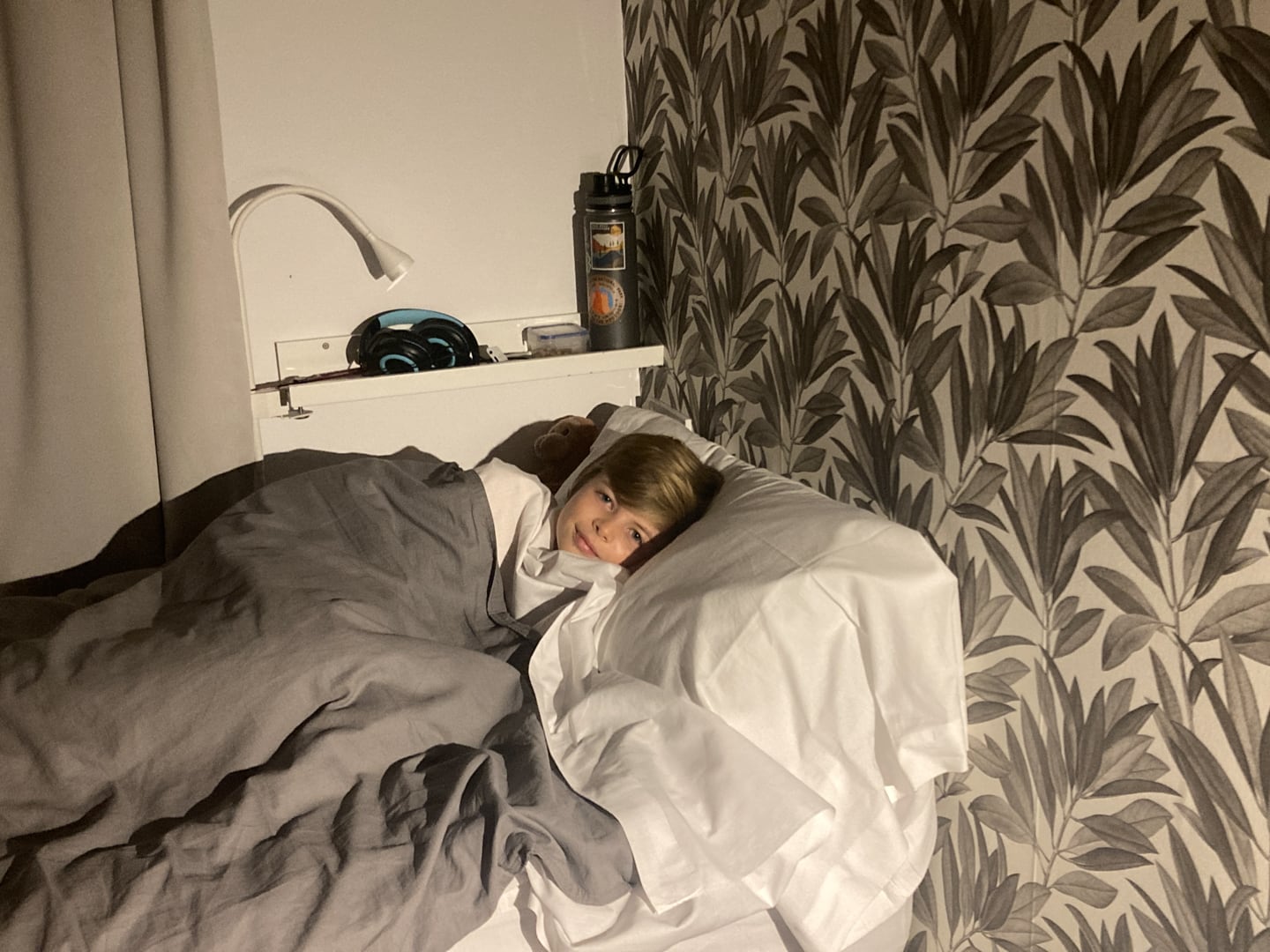
Forty minutes later, we’re back across the river at our new home for the next month. Quite an eventful start to our time in Spain. I think the boys will rest well tonight in their cozy new digs.