Dades Valley (also called Dades Gorges) is really a stunning little corner of Morocco. And the weather is wonderful. Here in March, we left rainy Marrakesh behind on the other side of the Atlas Mountains for sunshine and comfortable temperatures here.
Perfect conditions for getting in a long hike among a spectacular backdrop.
Our Euro-African Journey (So Far...)
But first, some breakfast and a morning drive up the gorge.
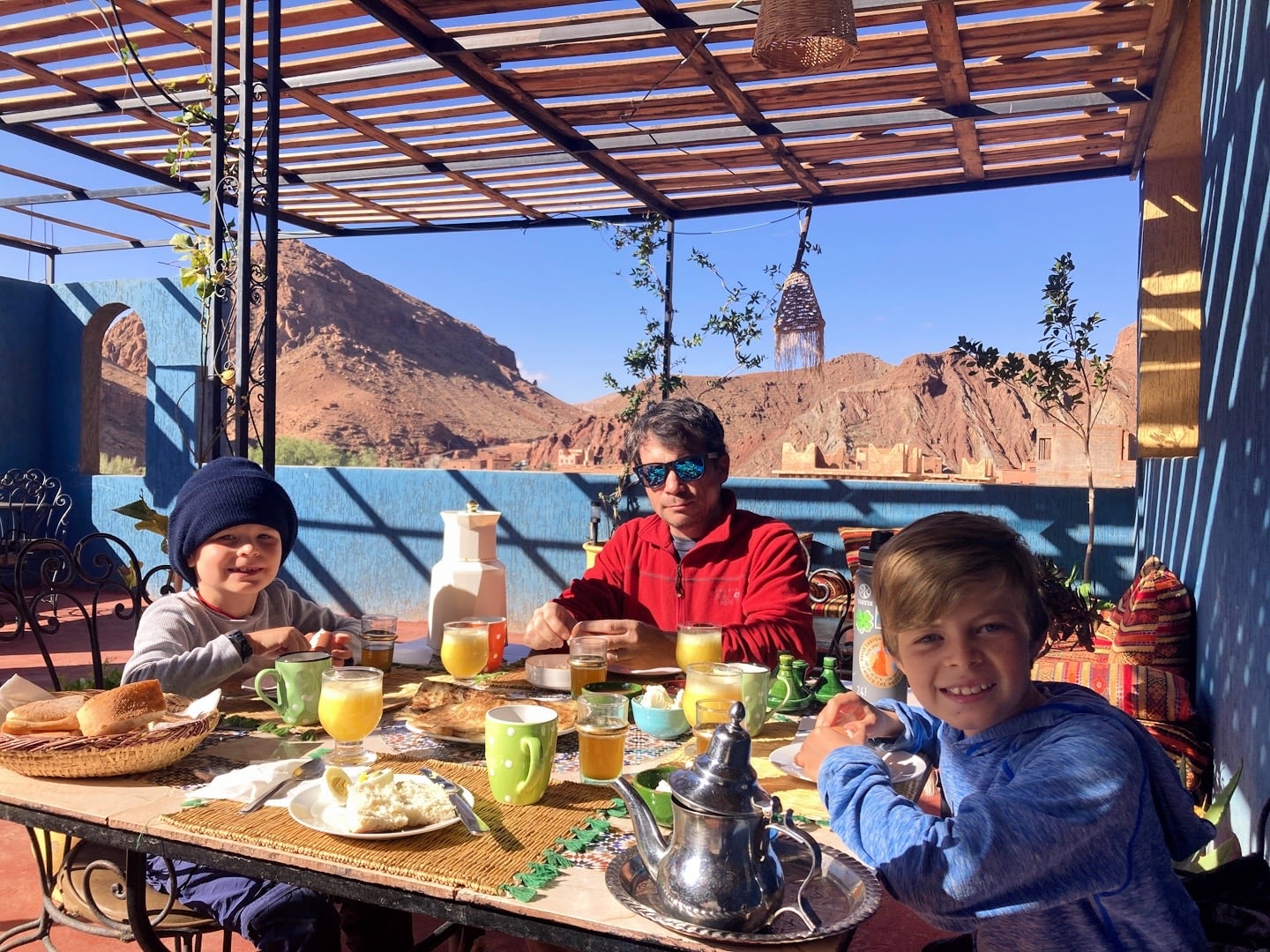
Another tasty and surprisingly filling guesthouse breakfast.
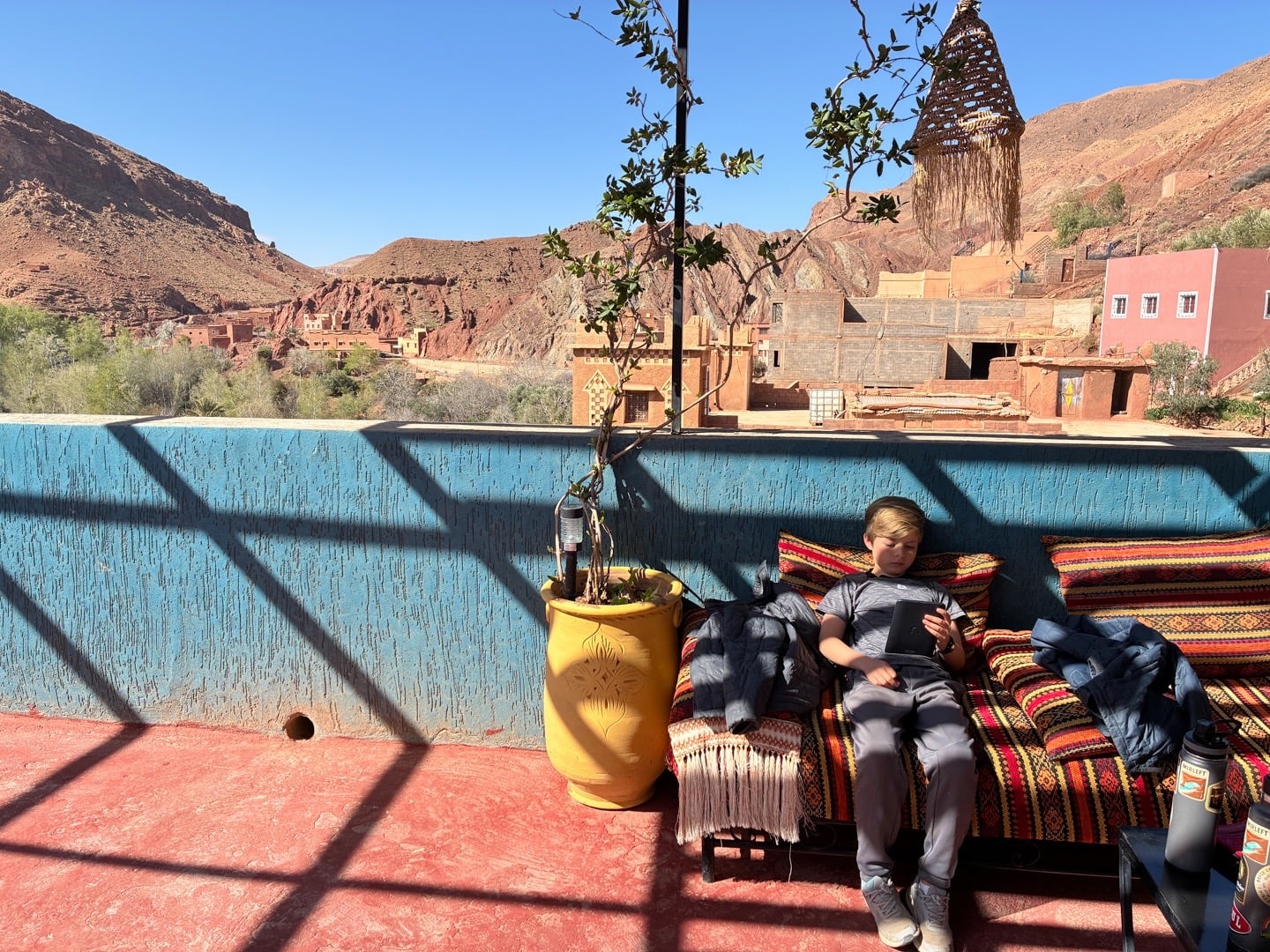
Not long ago, Hiking Nomads Guesthouse operated as a hostel. Like so many lodging establishments here in Morocco, they’ve recently remodeled and rebranded a bit more upmarket.
The guesthouse converted their bunk rooms into comfortable ensuite guest rooms but still retains a communal feel with an open common area on the main floor and roof terrace.
And the staff is incredibly warm and welcoming, but that seems to be the rule rather than the exception across Morocco.

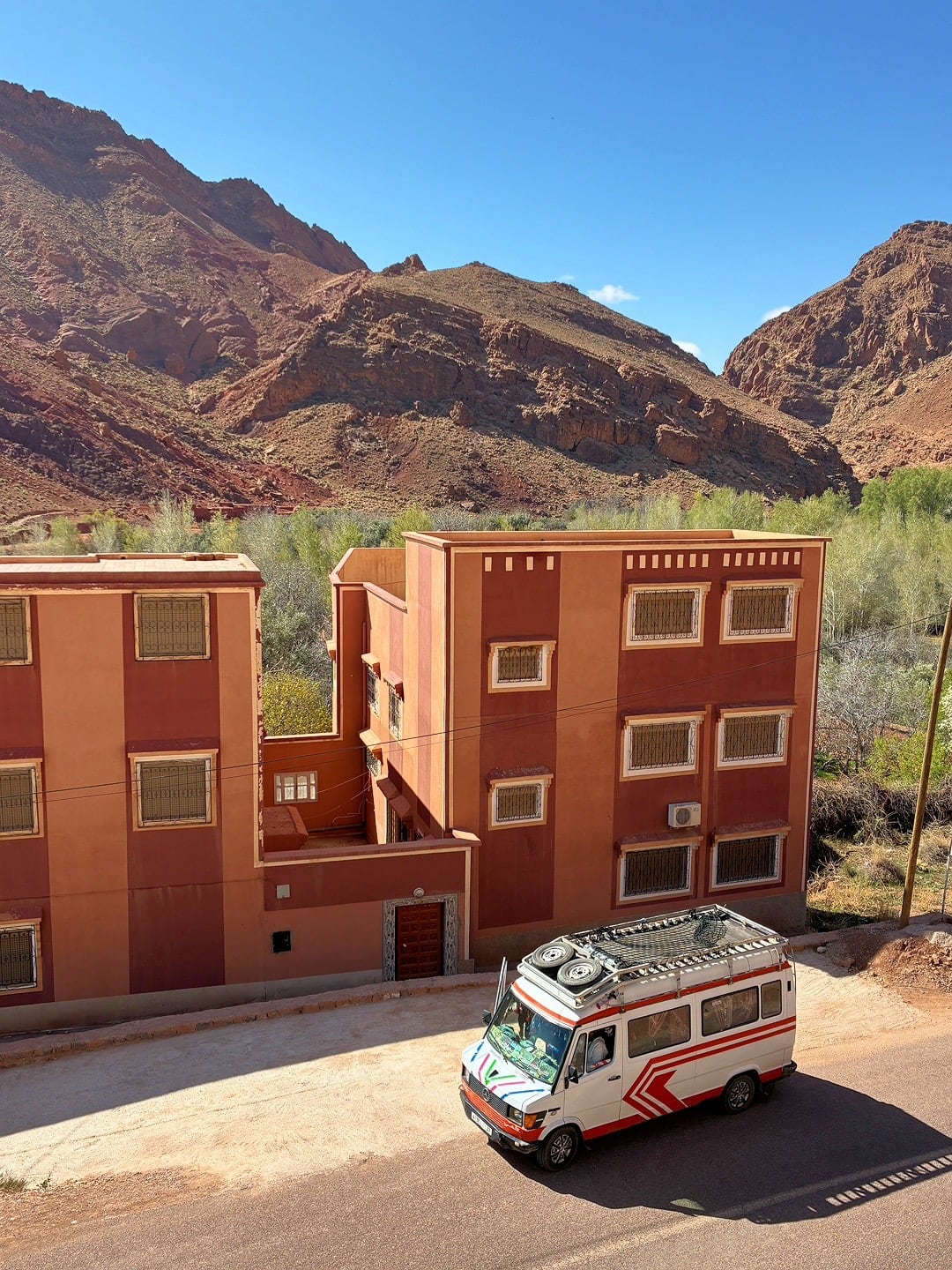
The public buses in these parts are well-equipped for the conditions.
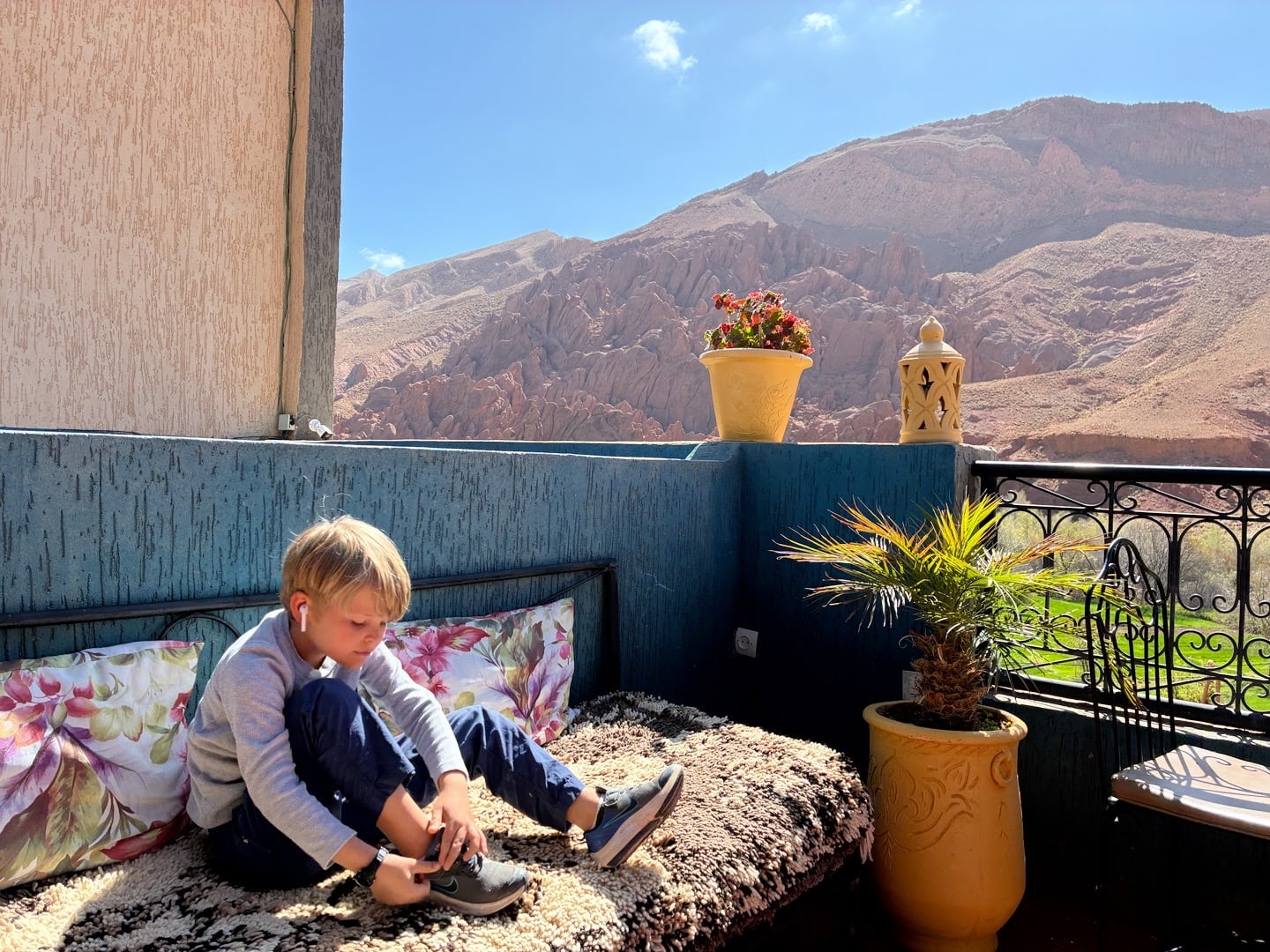
The Dades Gorges are a series of rugged wadi gorges carved out by the Dades River. The river originates in the High Atlas Mountains and flows all the way to the edge of the Sahara.
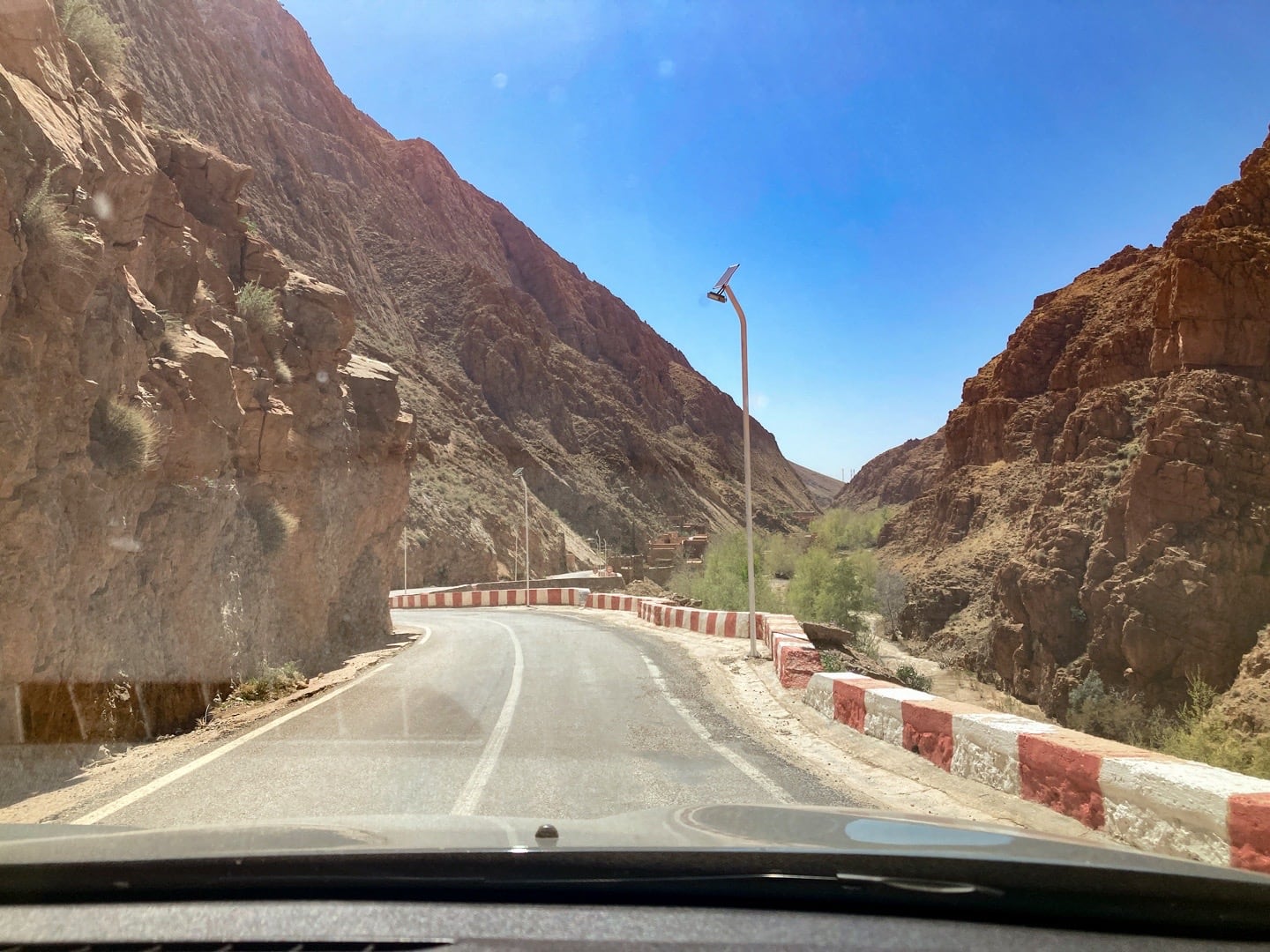
Today, we’re going to explore a few different gorges. First, we’ll follow the Dades River deeper into the main canyon to famous viewpoint.
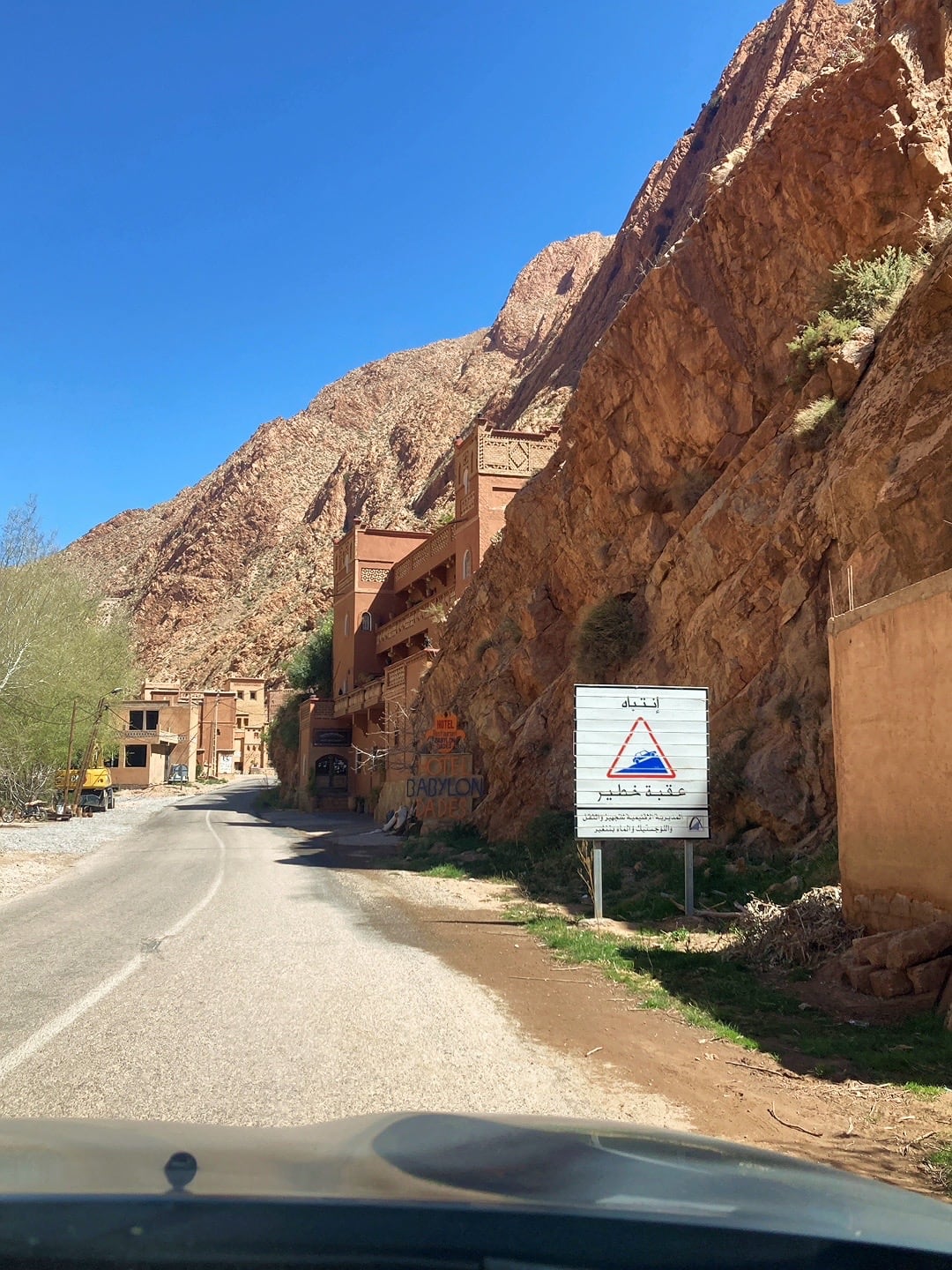
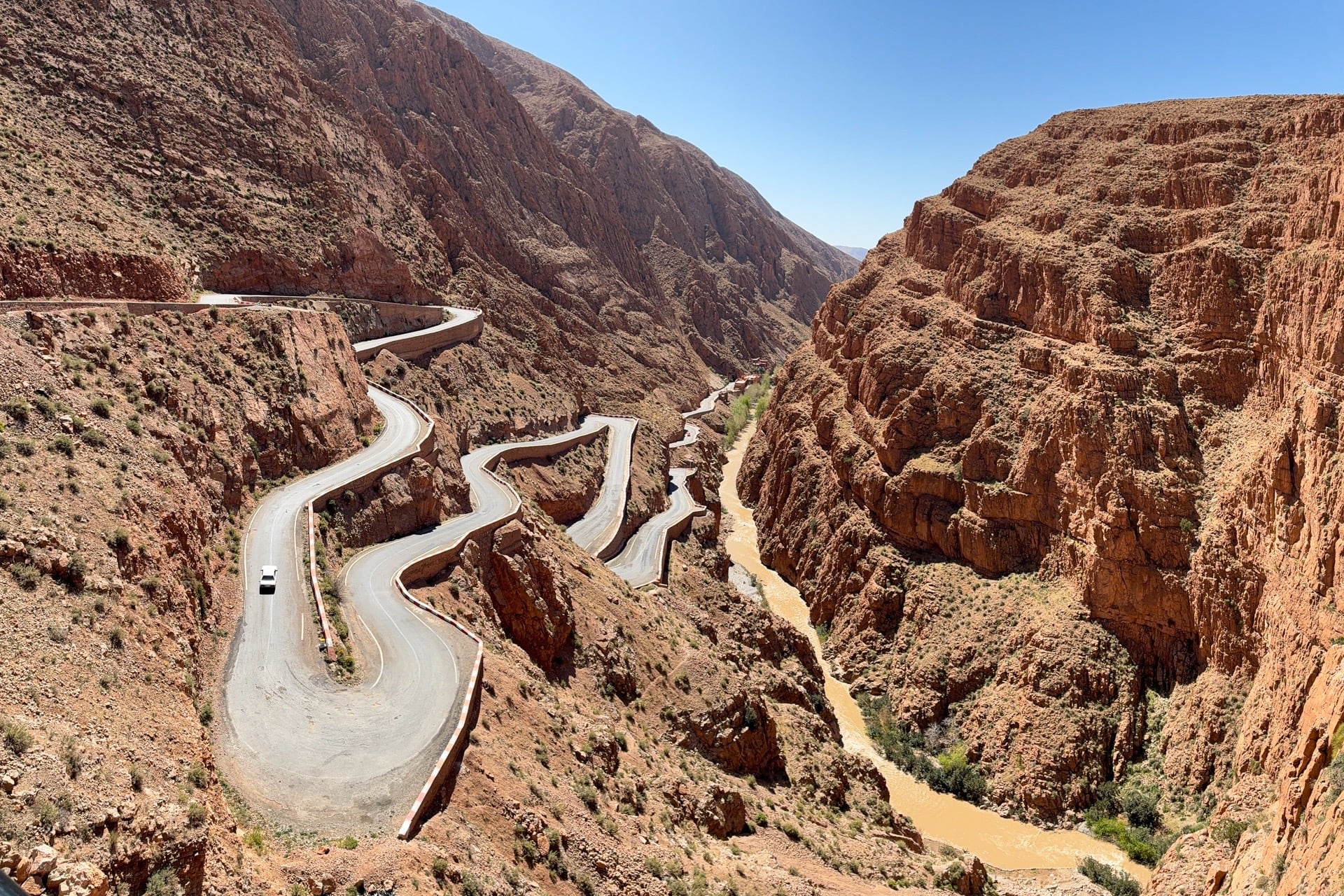
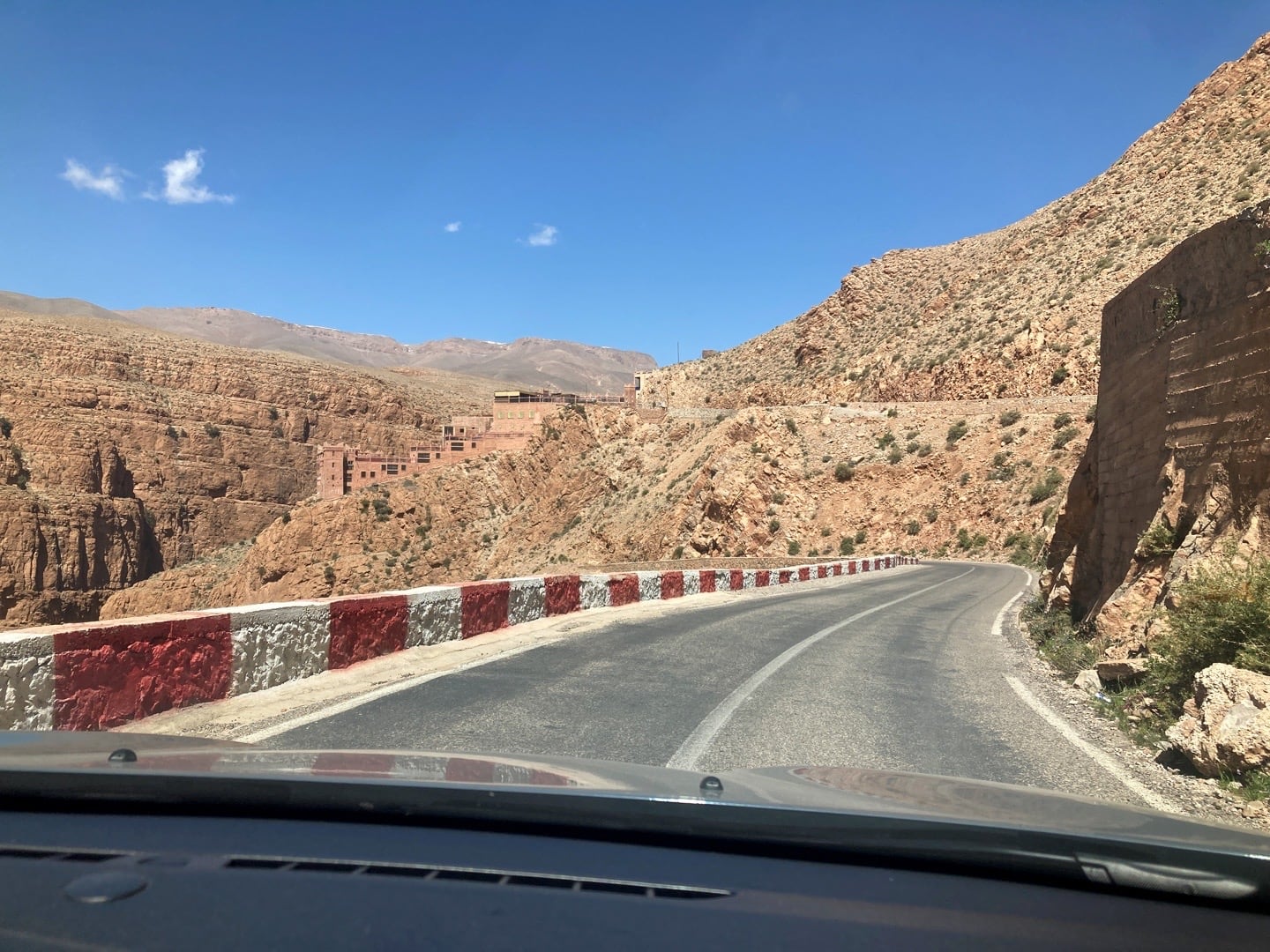
After a thirty-minute drive deeper into the narrow canyon, we arrived at the famous Tisdrin Hairpin Road where we proceeded to slowly wind our way to the top for a one-of-a-kind view.
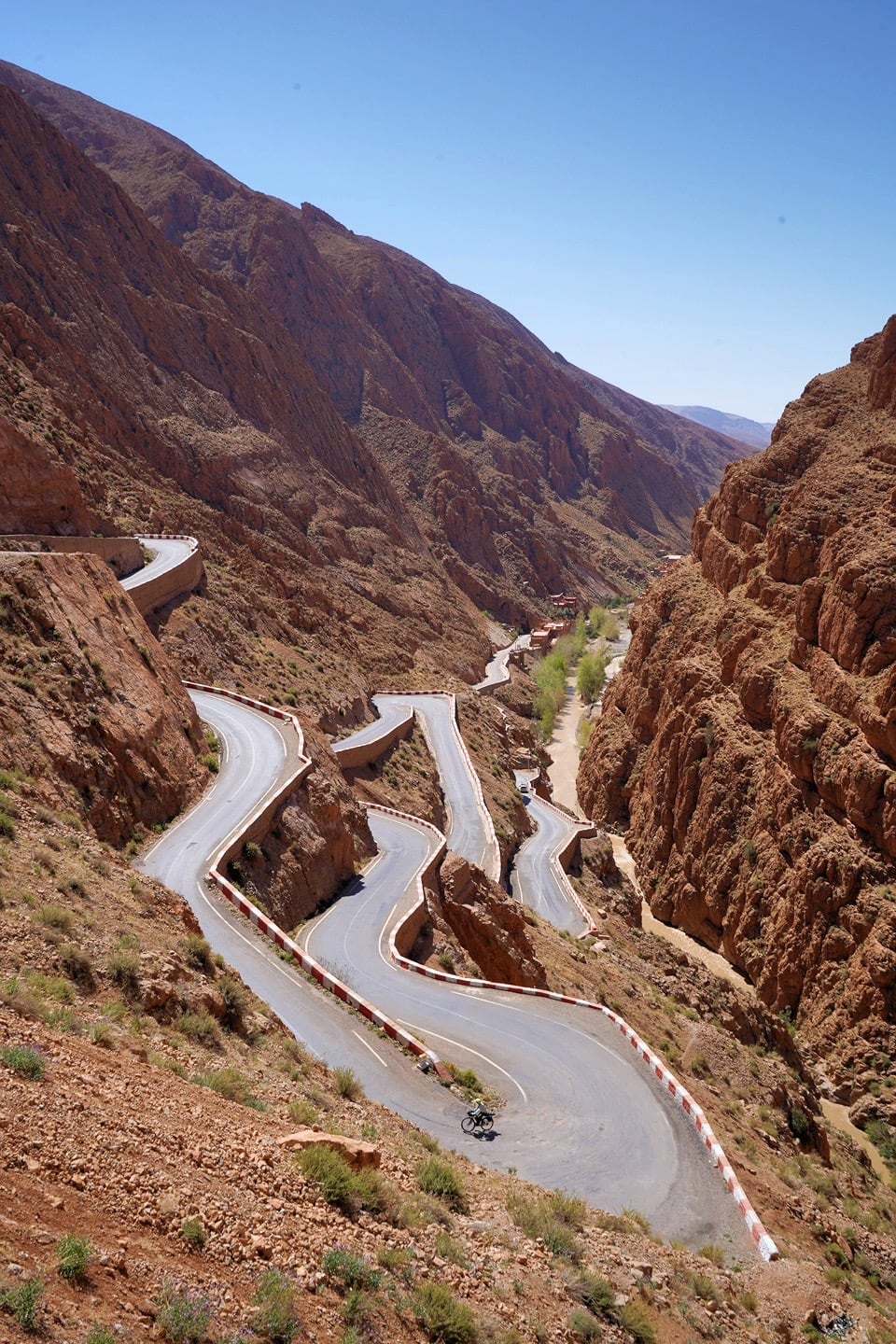
“Morocco’s Tisdrin Road is often ranked among the most winding roads in the world. Featuring 100+ hairpin turns that resemble a ‘serpent,’ and a steep, 500-foot drop section, its twists are one of the most photographed mountain passes in the world.”
– Motorcyclist Magazine
The hairpin turns take you up 500 feet in elevation in less than a 500-foot distance.
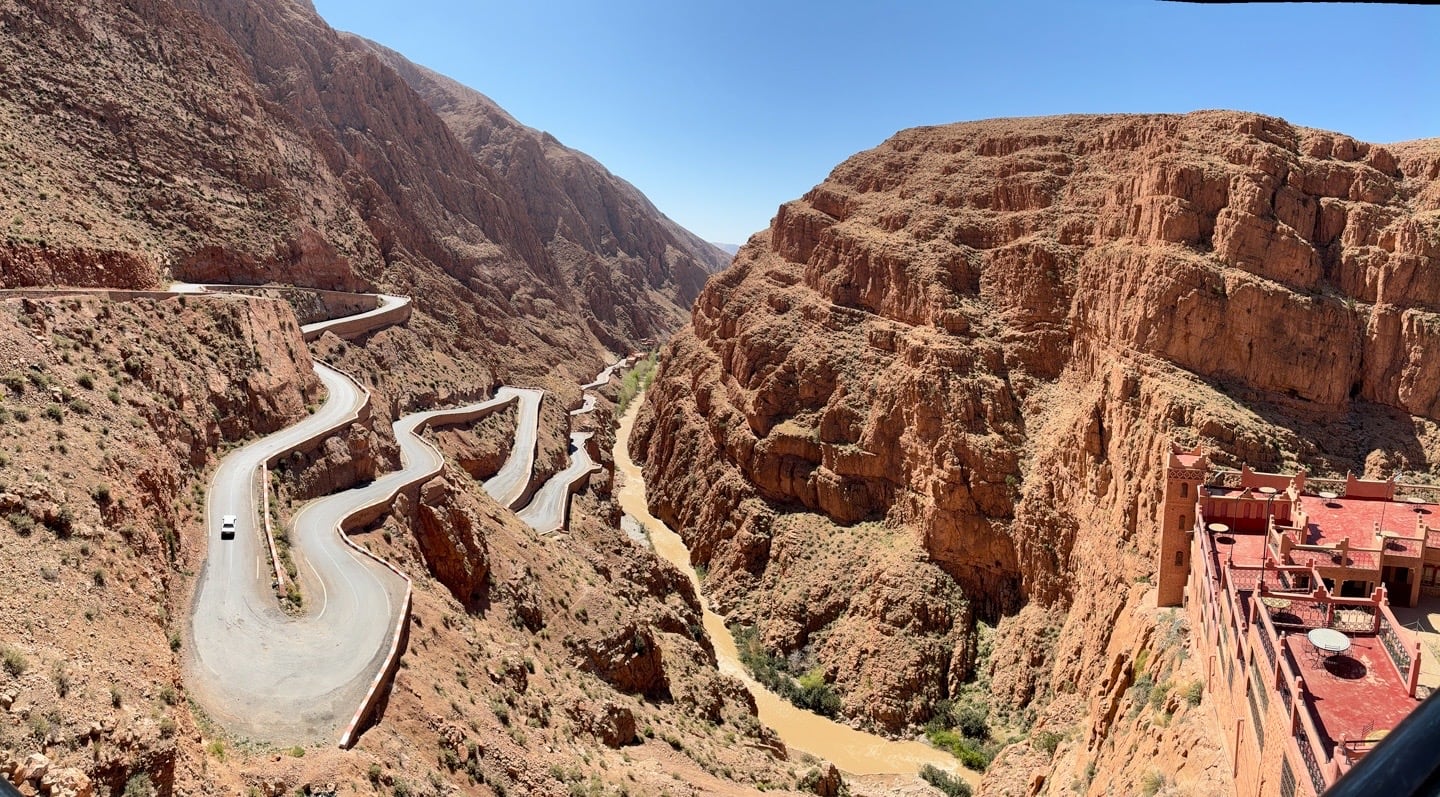
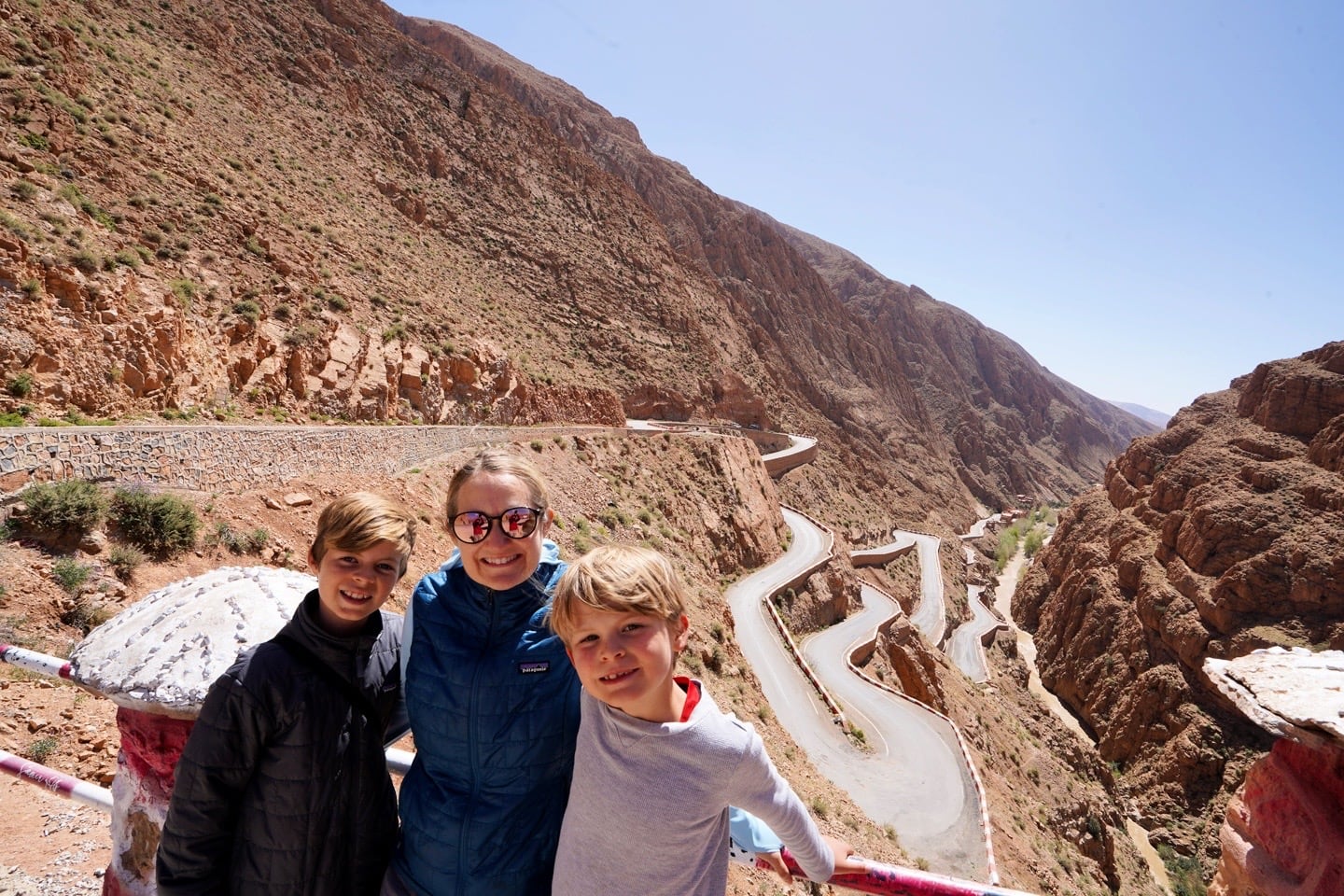
We had coffee and watched everything from motorcycles and overland rigs to RVs and even a solo bicyclist negotiate the switchbacks.
Then, it was time to head back down and do it all one more time. A FUN DRIVING EXPERIENCE!
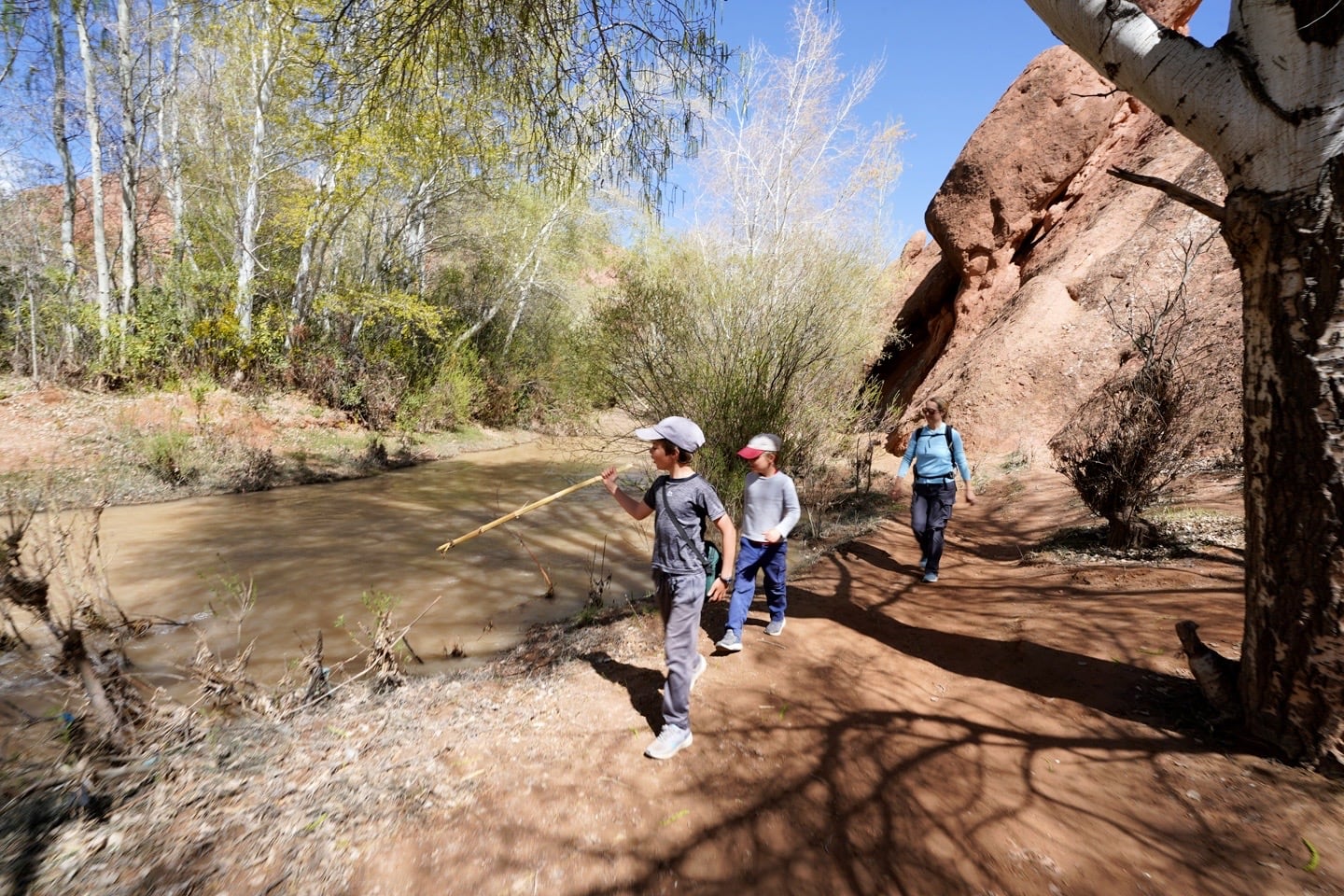
Back in the village, we parked at a small pull-off and set off to tackle the Monkey Fingers.
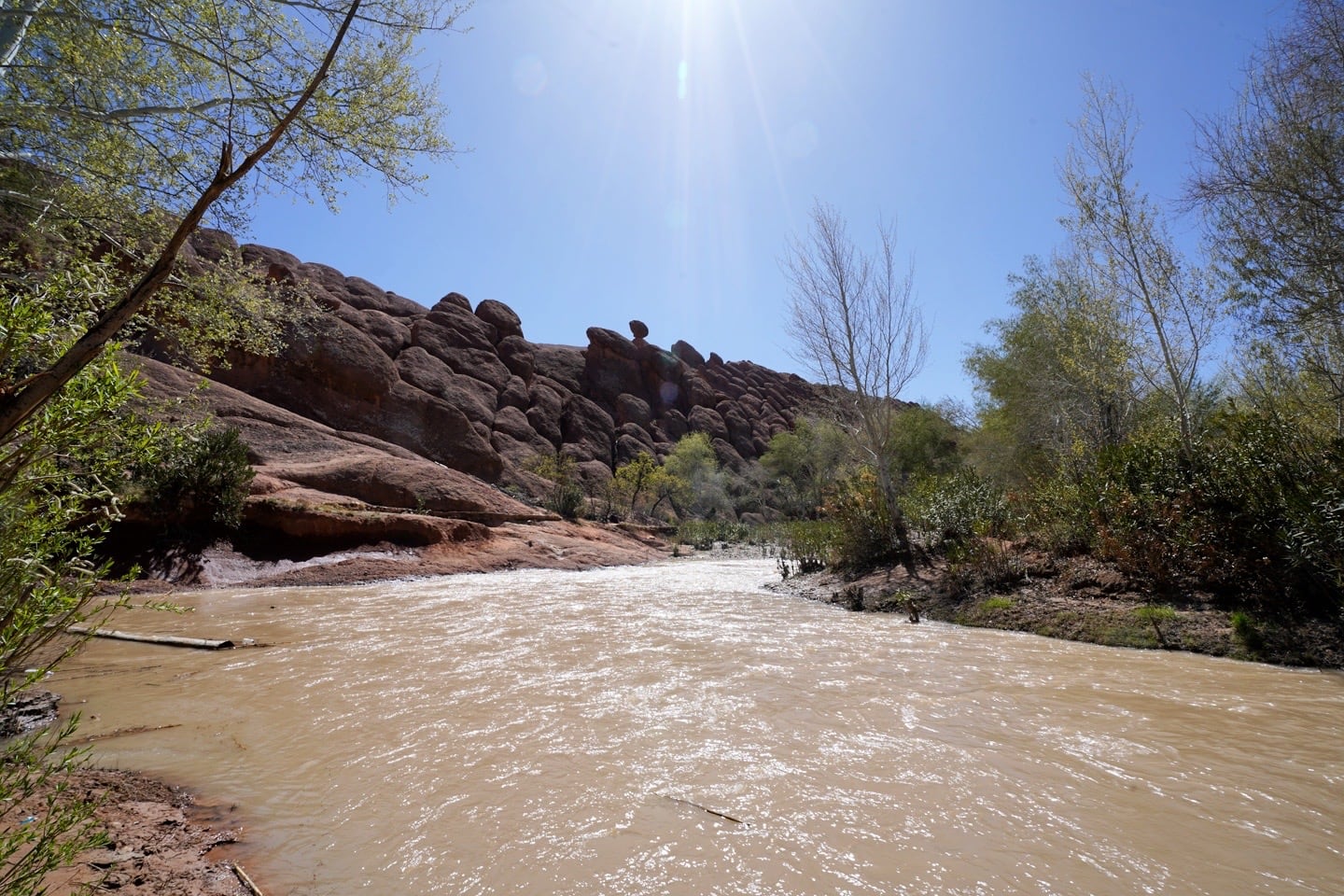
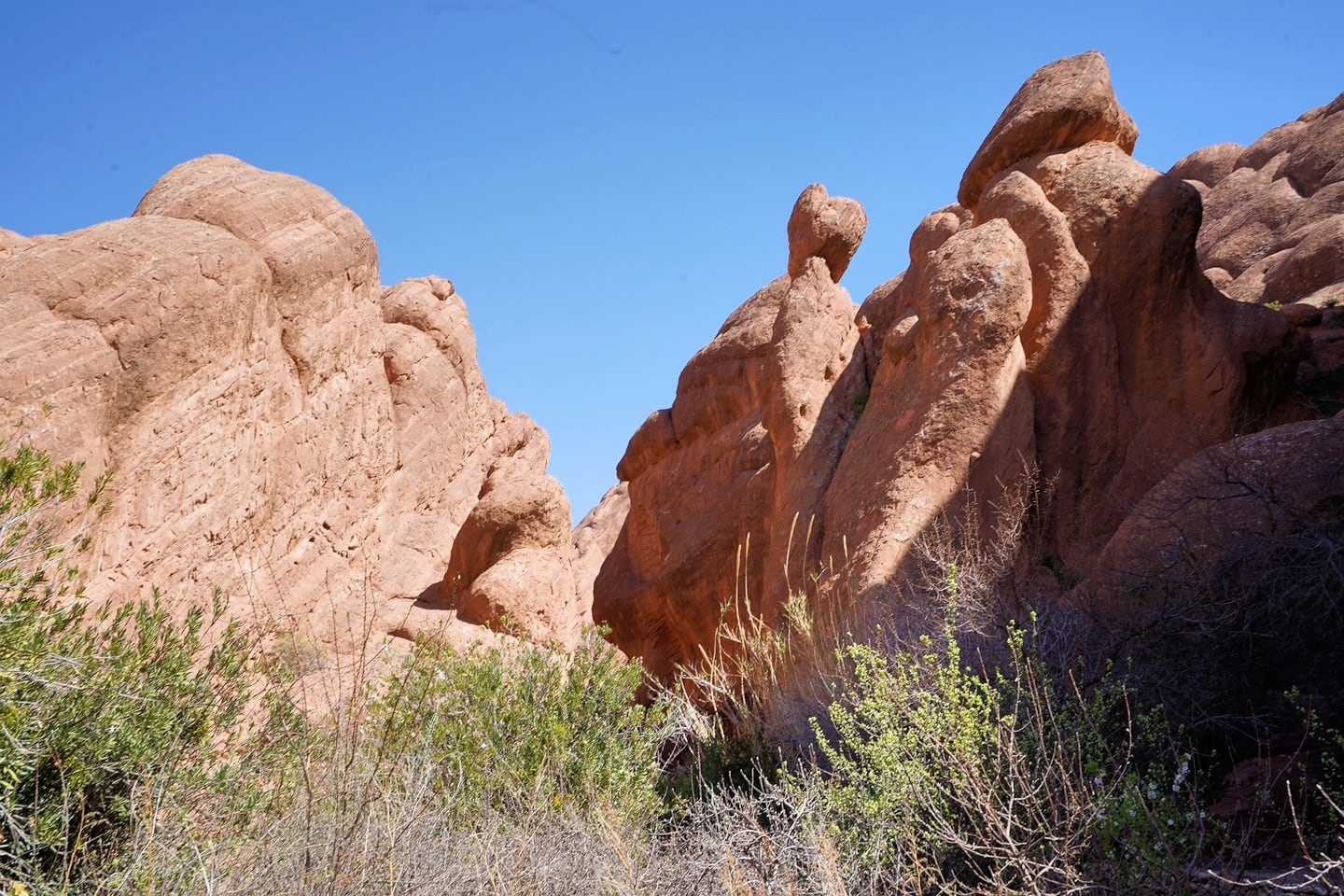
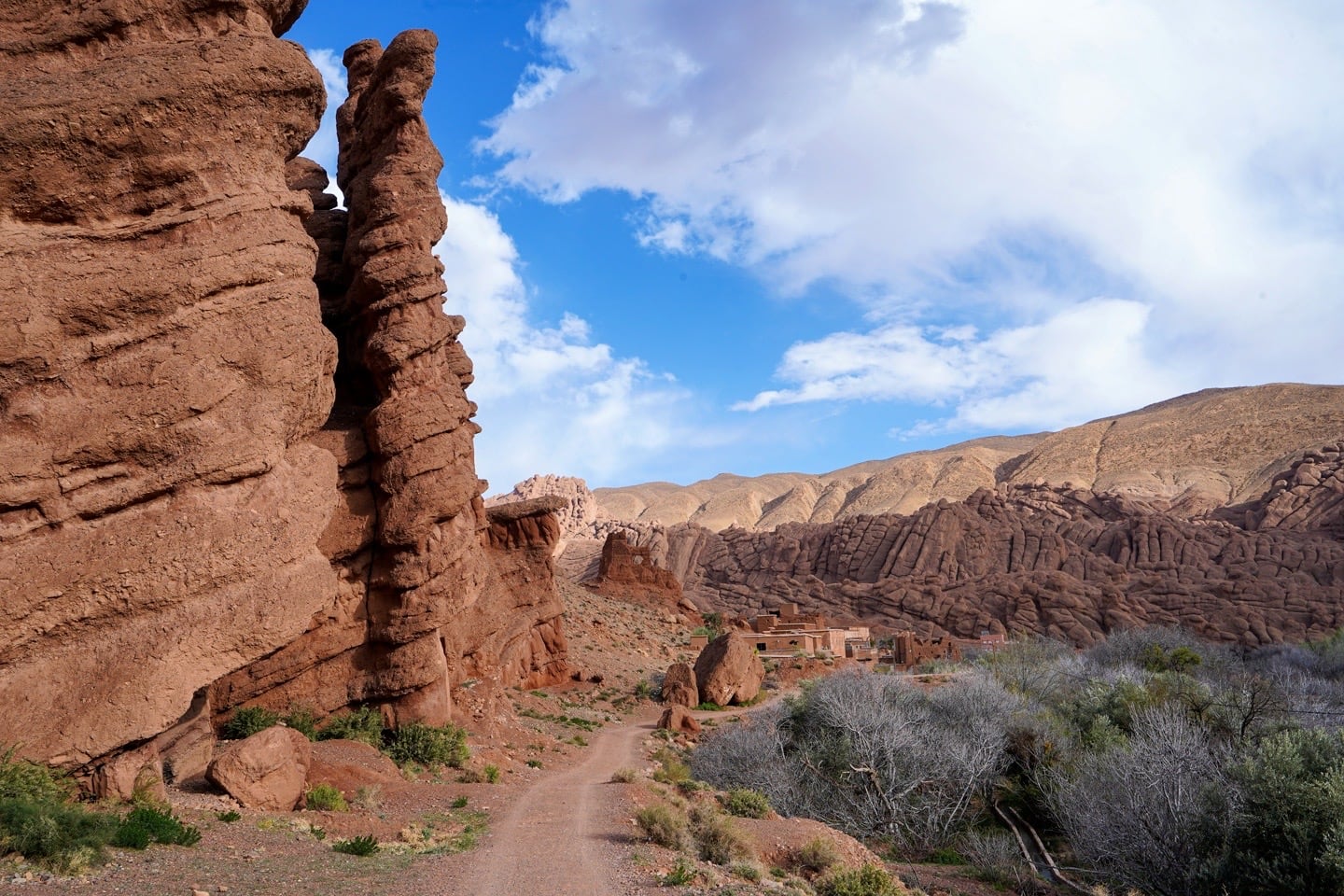
Our first glimpse of Dades Valley’s famous Monkey Fingers. Unbeknown to us, there were many, many more to come.
There are a few different ways you can tackle this loop hike. One, is to descend into a narrow slot canyon and climb your way out of it to hook up with the main loop trail.
The other popular route is bypassing the slot canyon completely and staying on the main trail, which stays high for the first half of the loop (heading counter-clockwise).
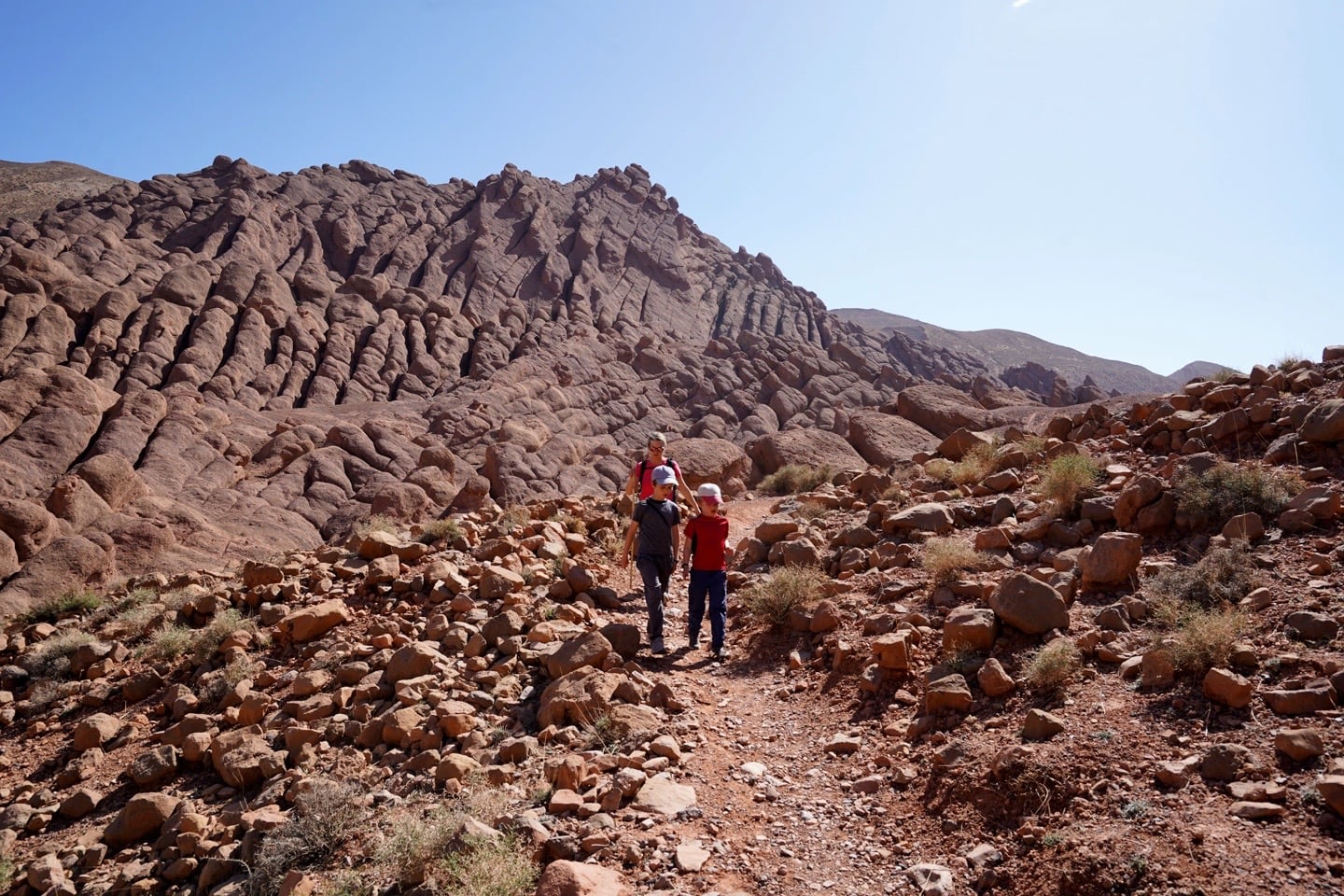
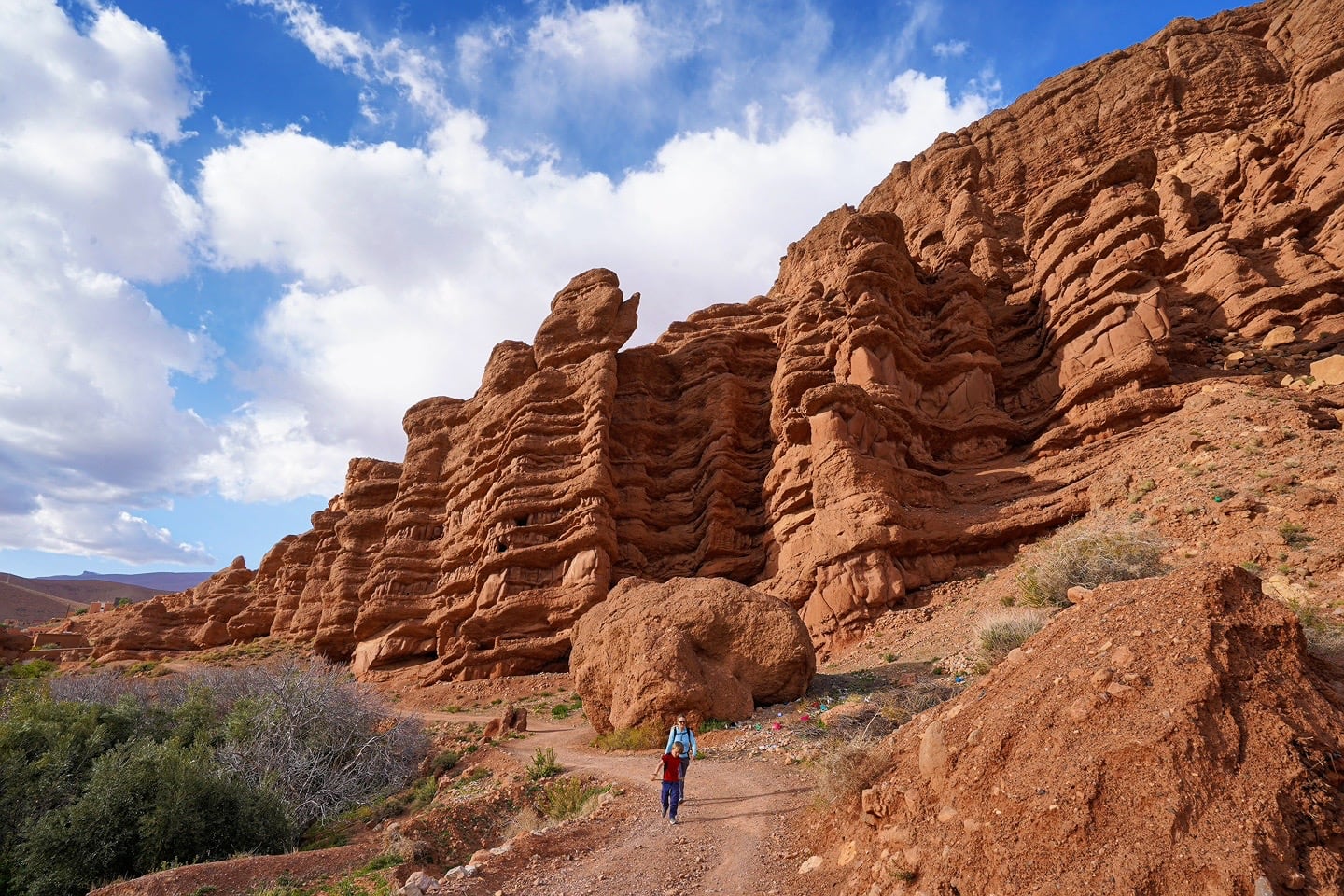
Since it was already warming up and we weren’t sure how the boys would handle the vertical climbing section, we opted for a hybrid of the two: We hiked into the slot canyon as far as we felt comfortable before doubling back to the high trail, which worked out perfectly for us. It would have been a shame to have to skip the slot canyon.
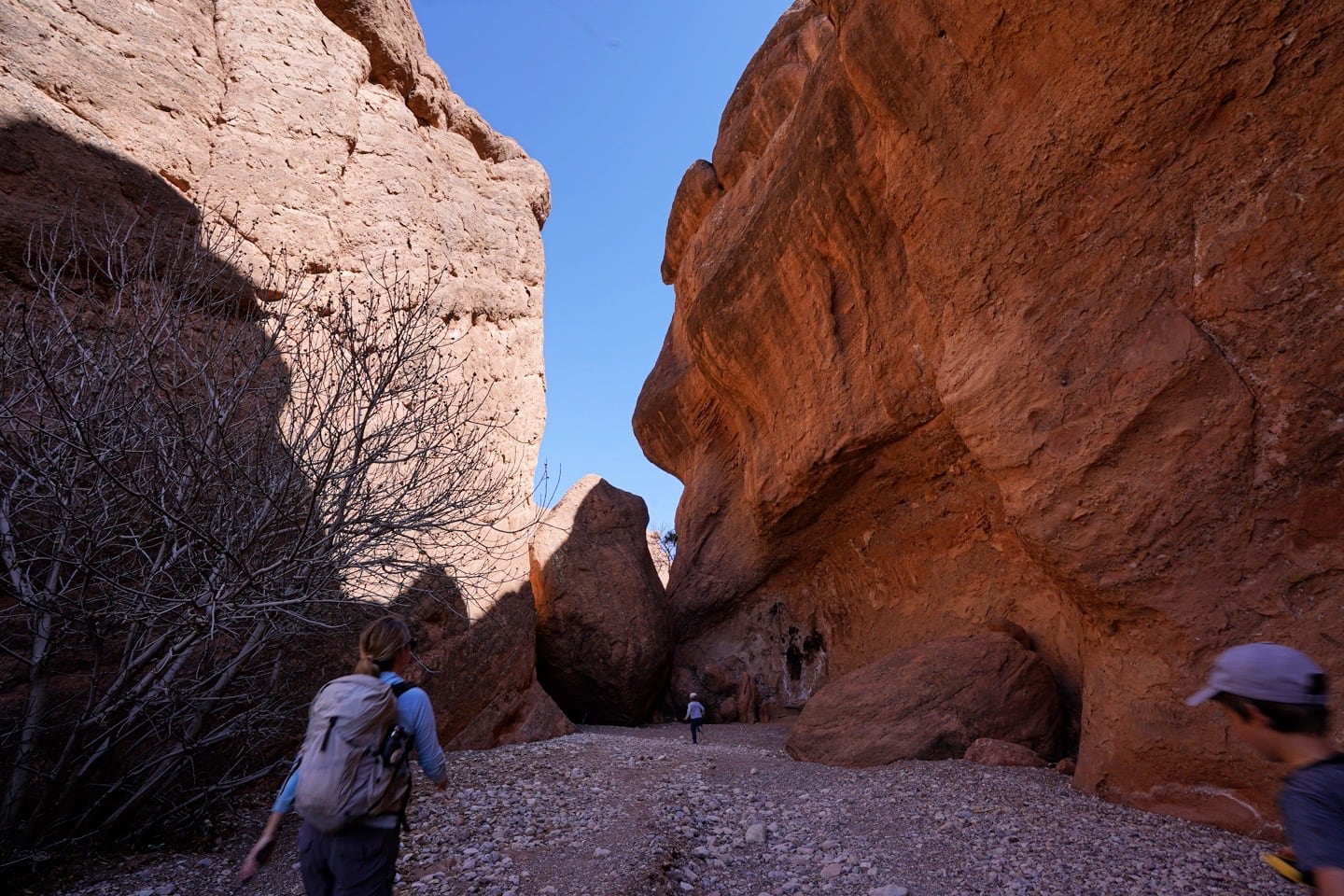
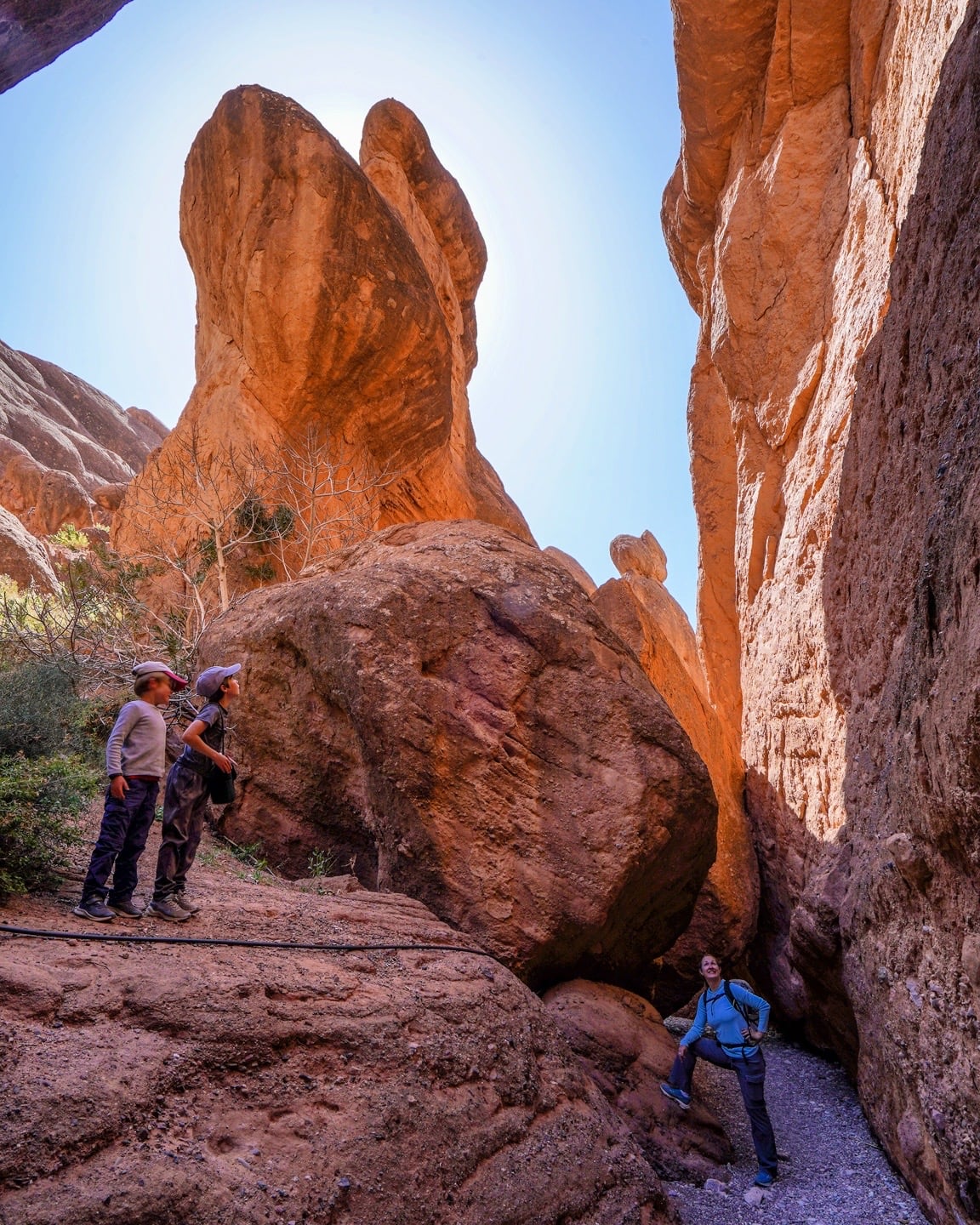
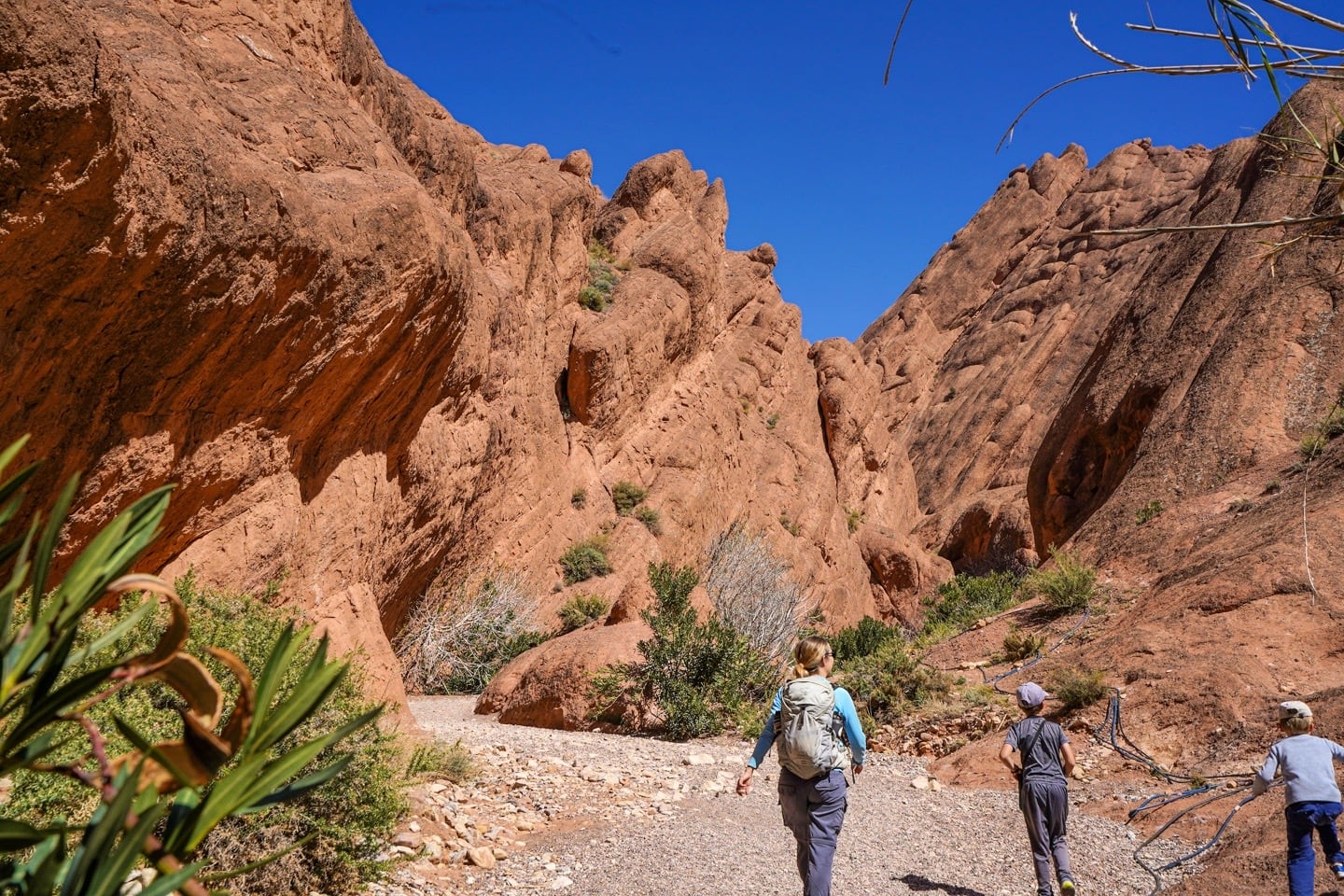
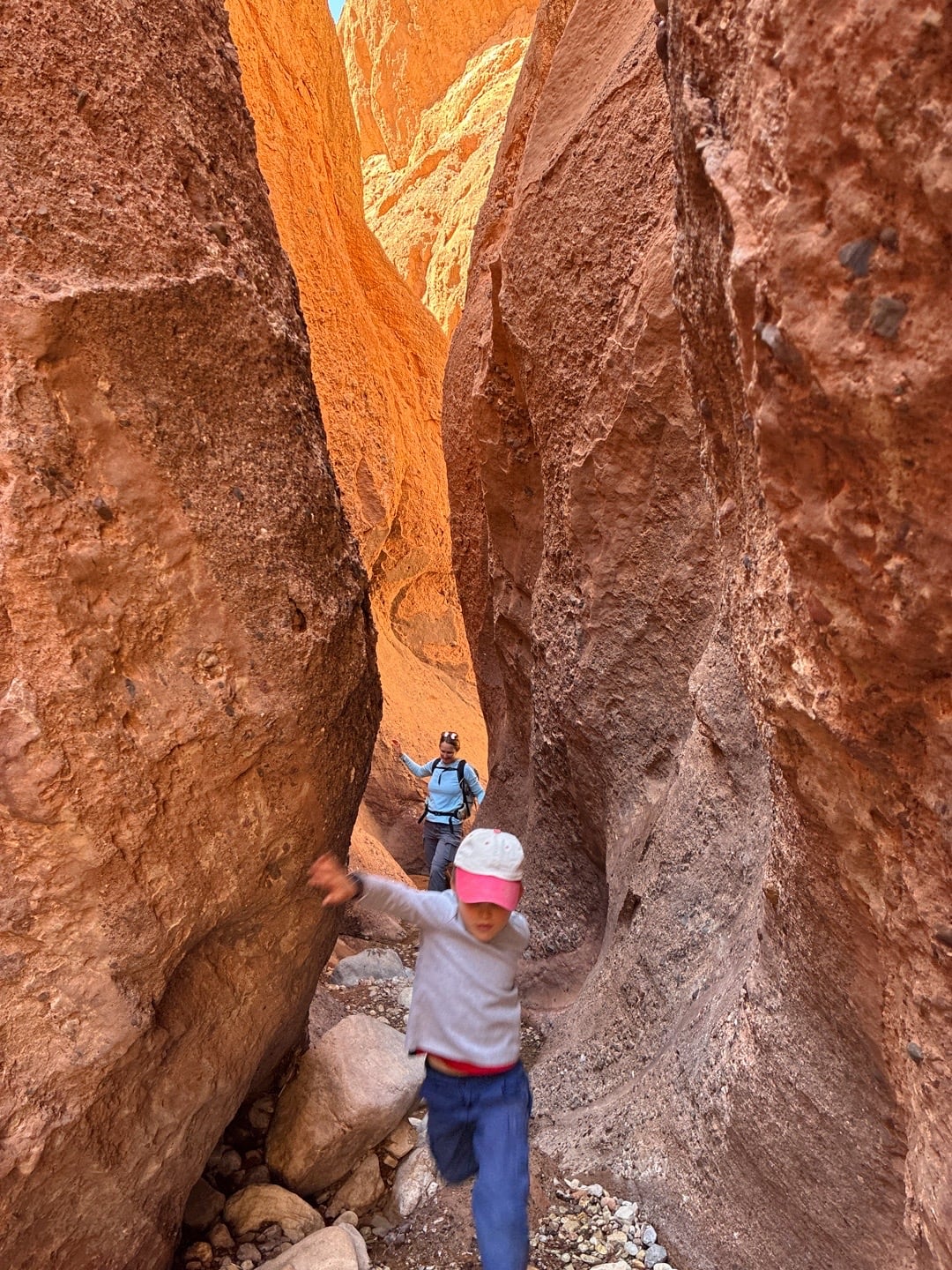
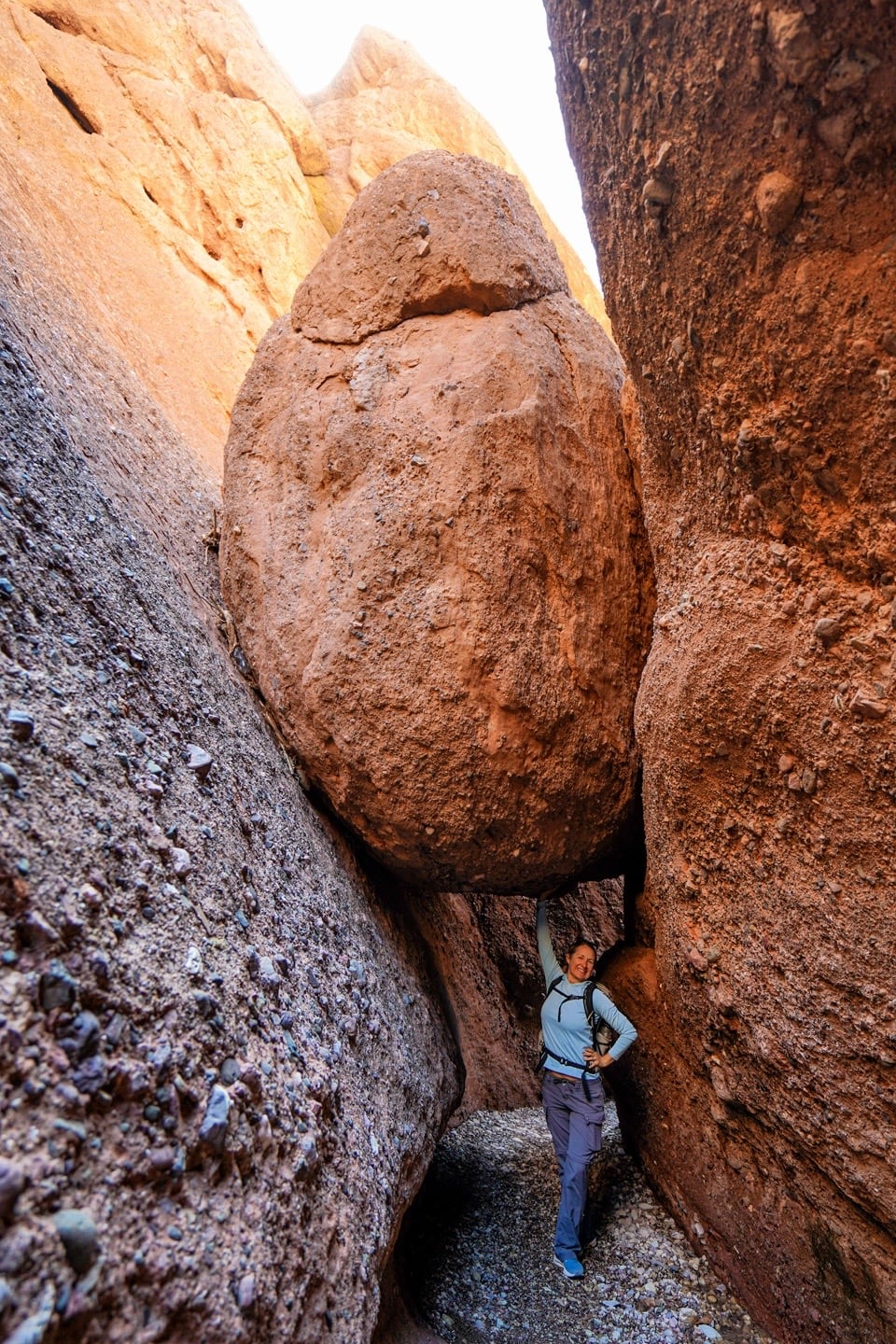
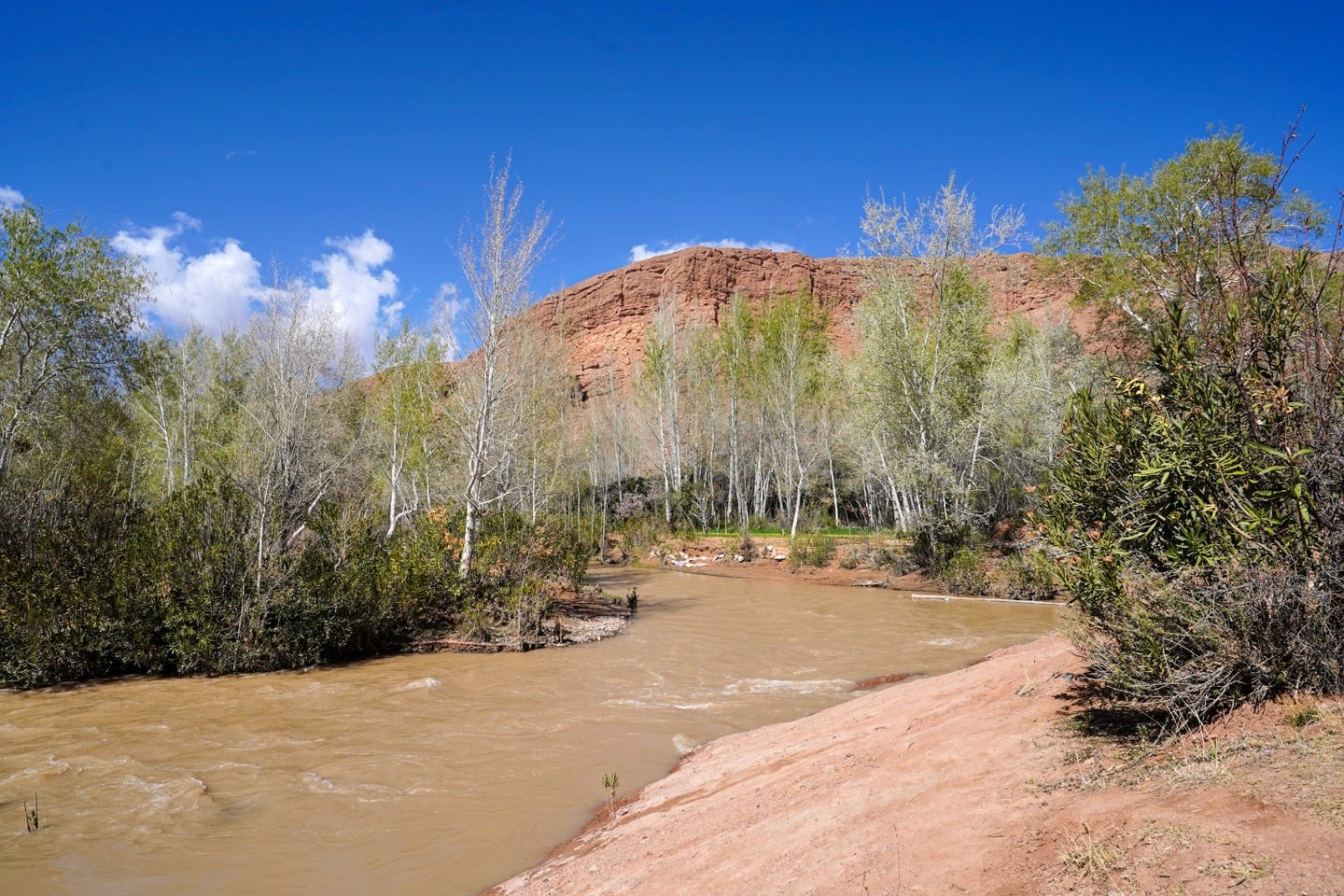
Doubling back, we return to the river and start our gradual climb to the top of the pass.
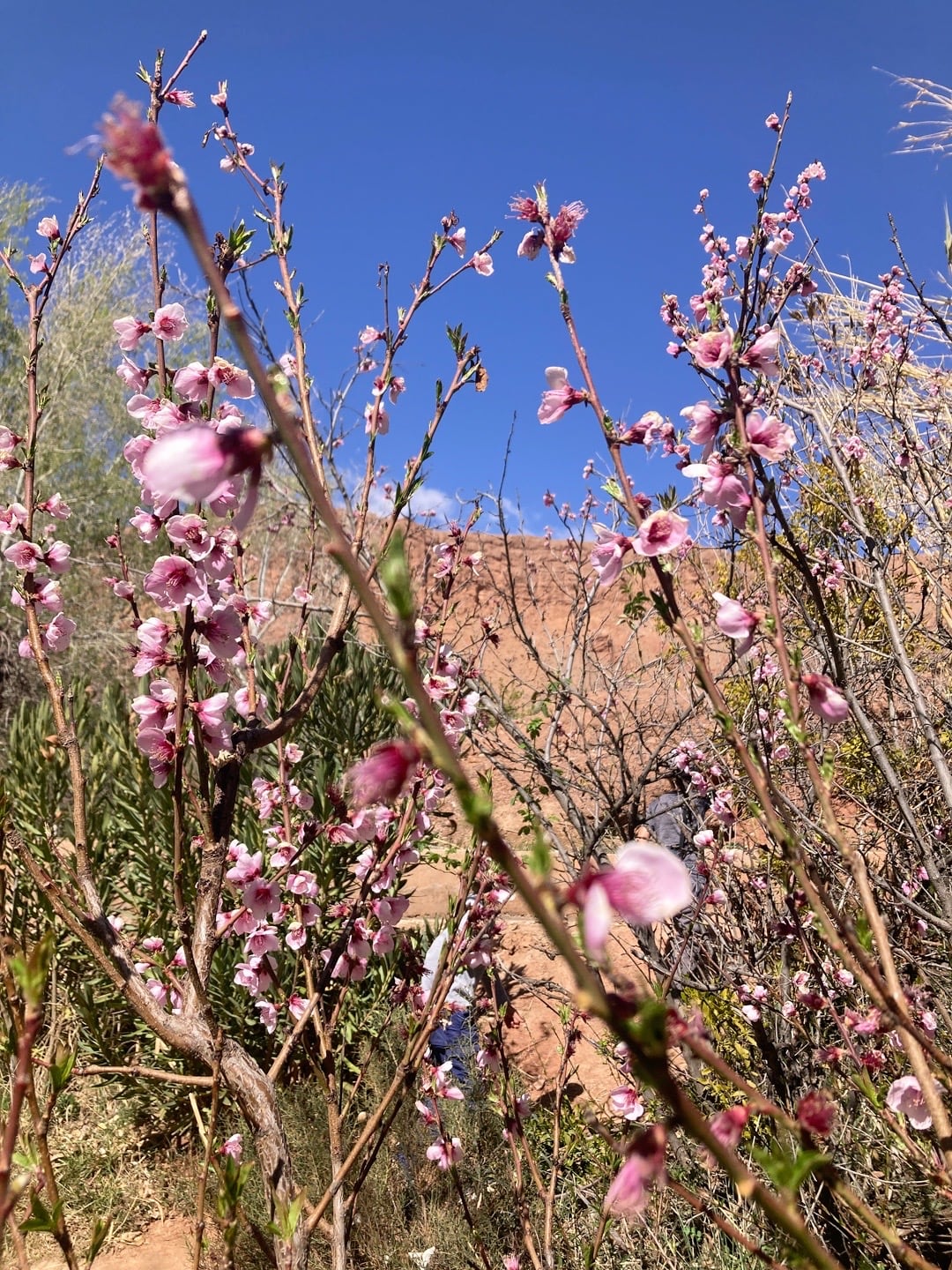
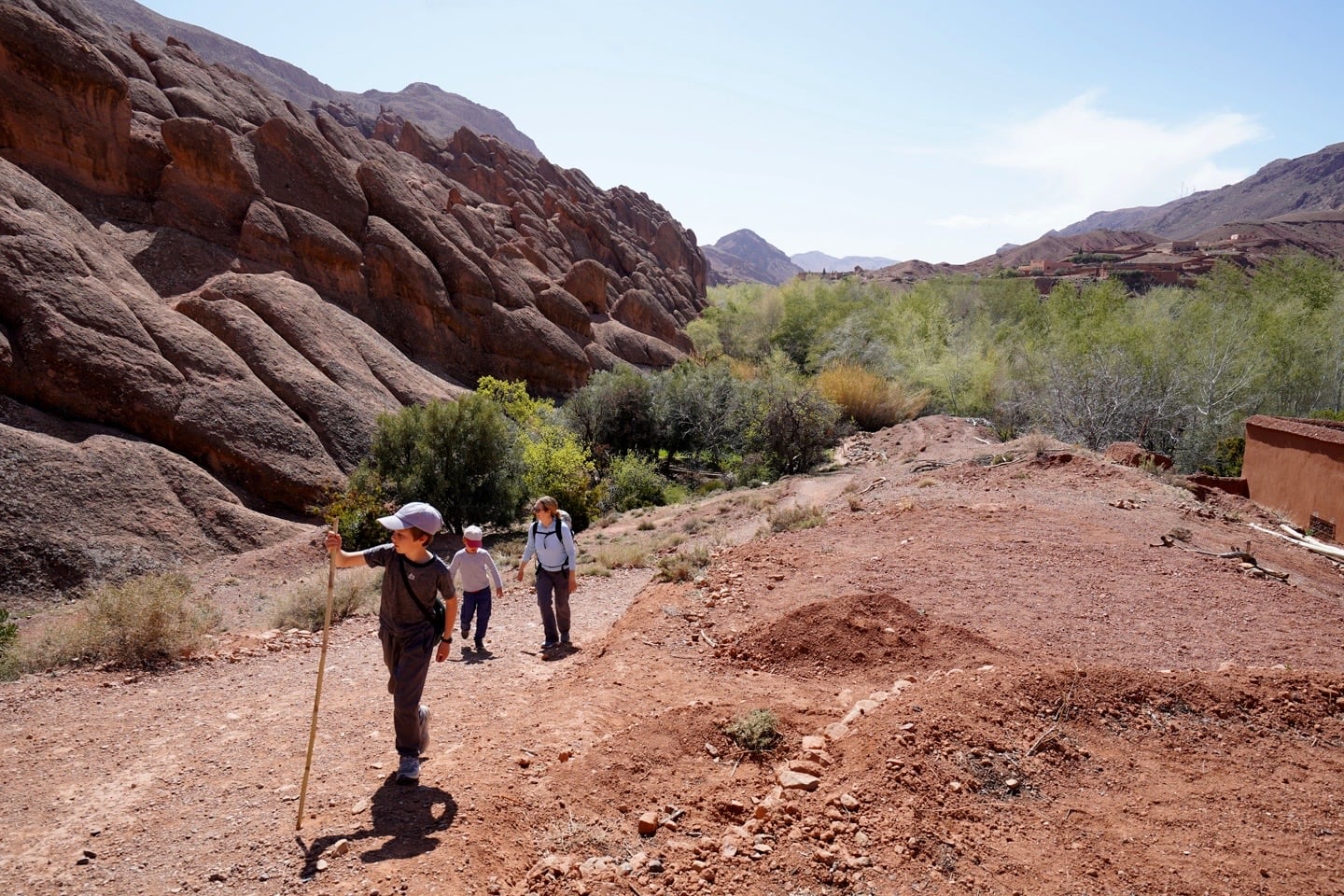
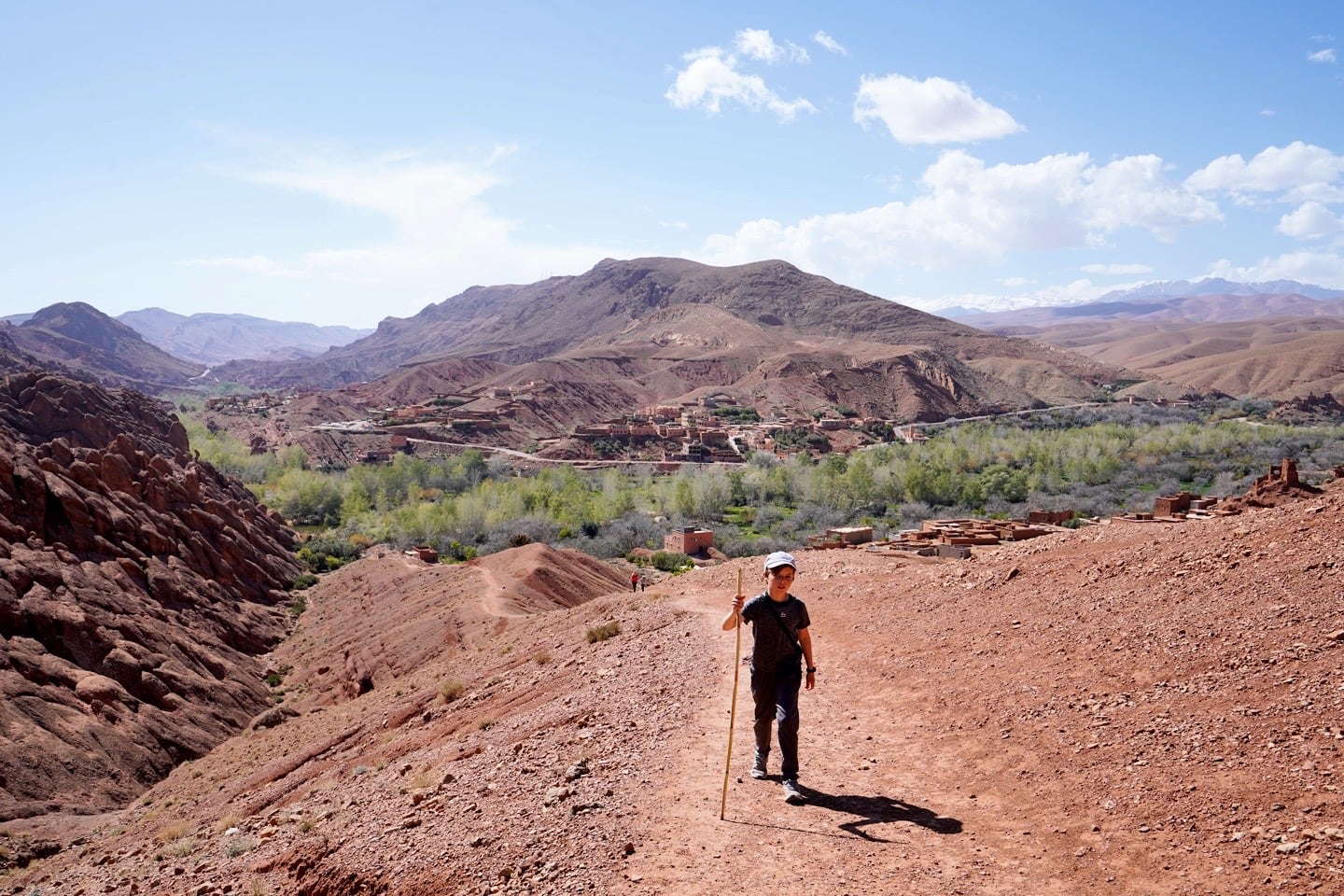
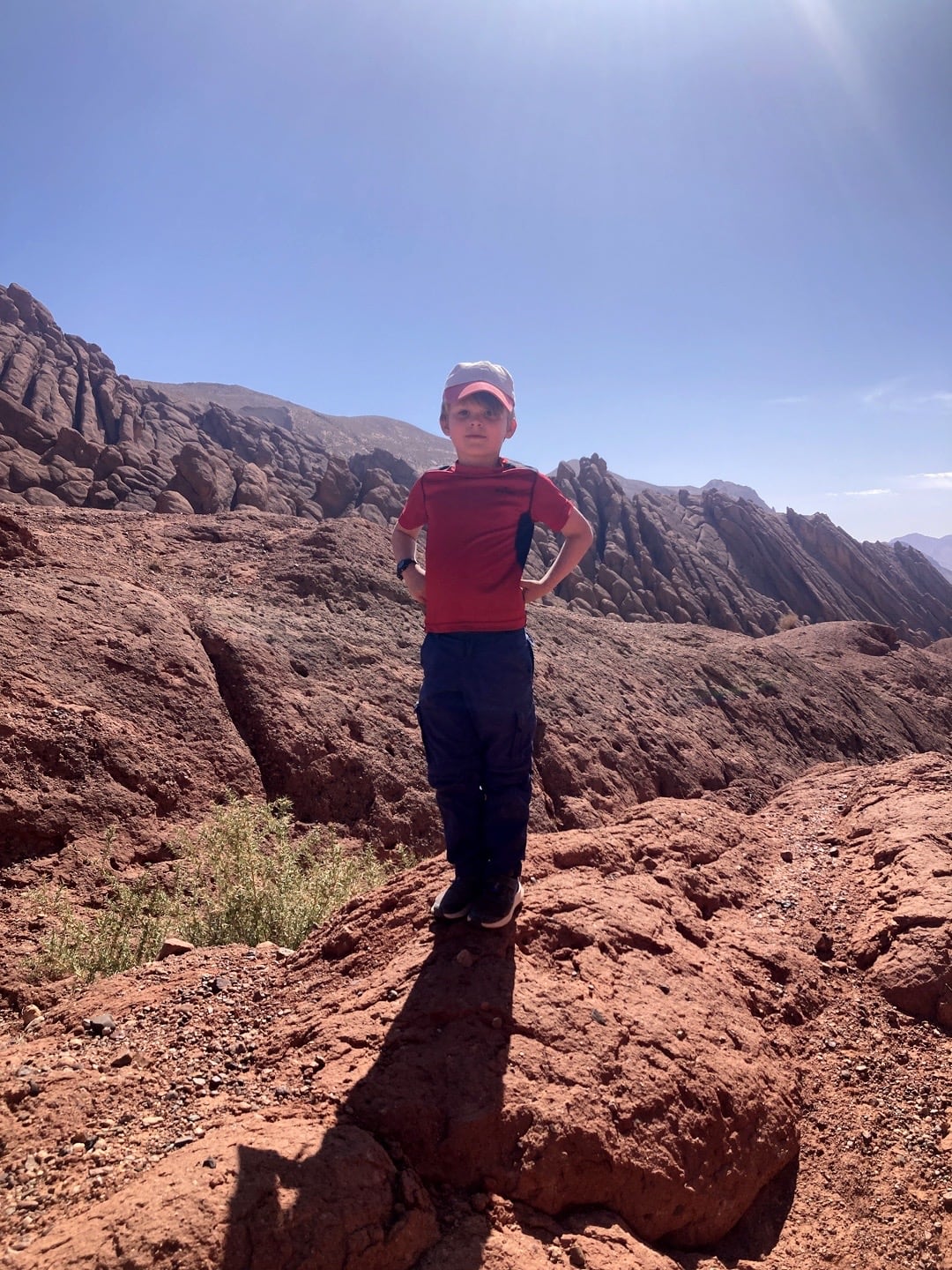
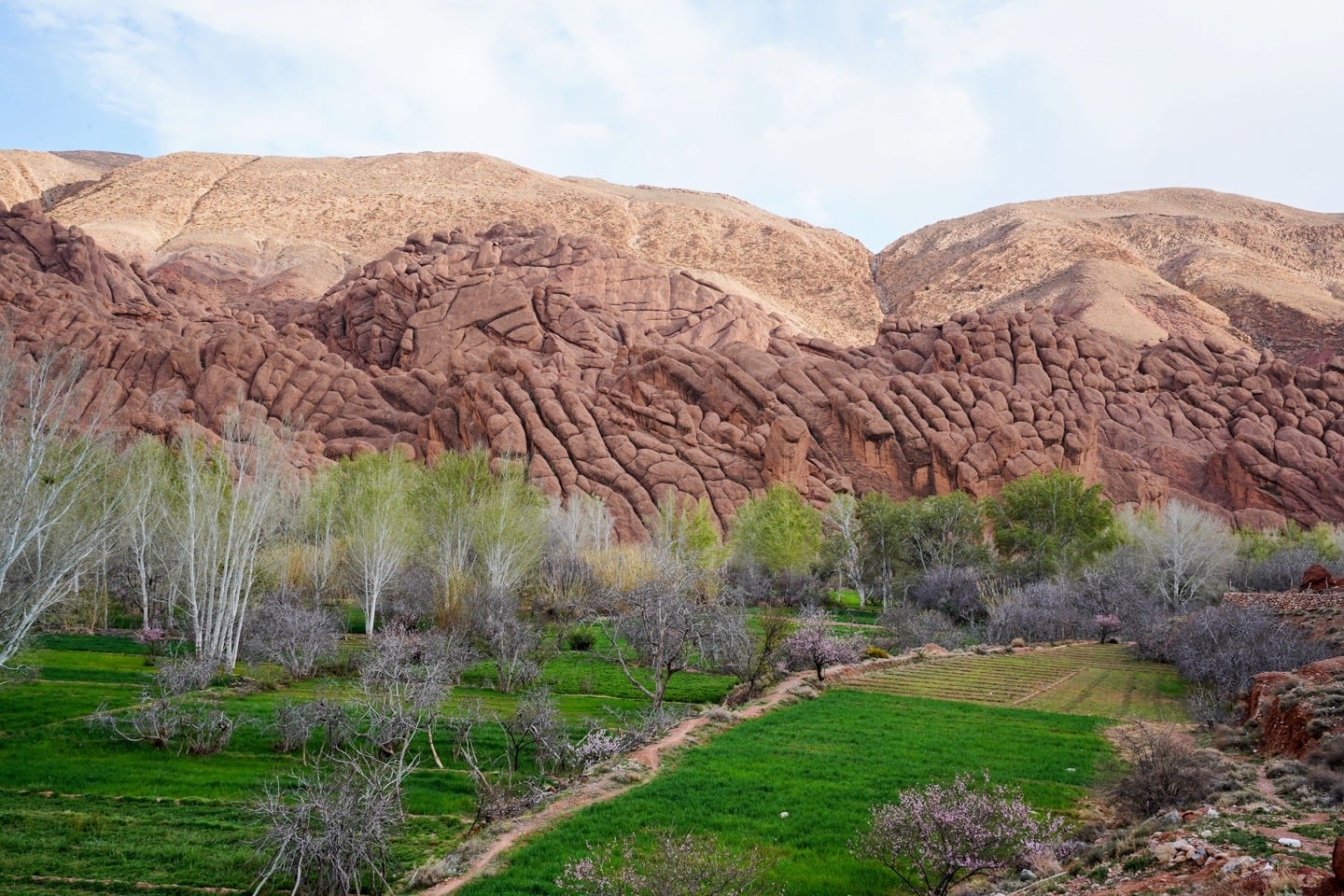
About half way up our ascent, the bulk of the Monkey Fingers come into view.
Near the top of the pass, we get a bench and a front row seat to this unique natural formation.
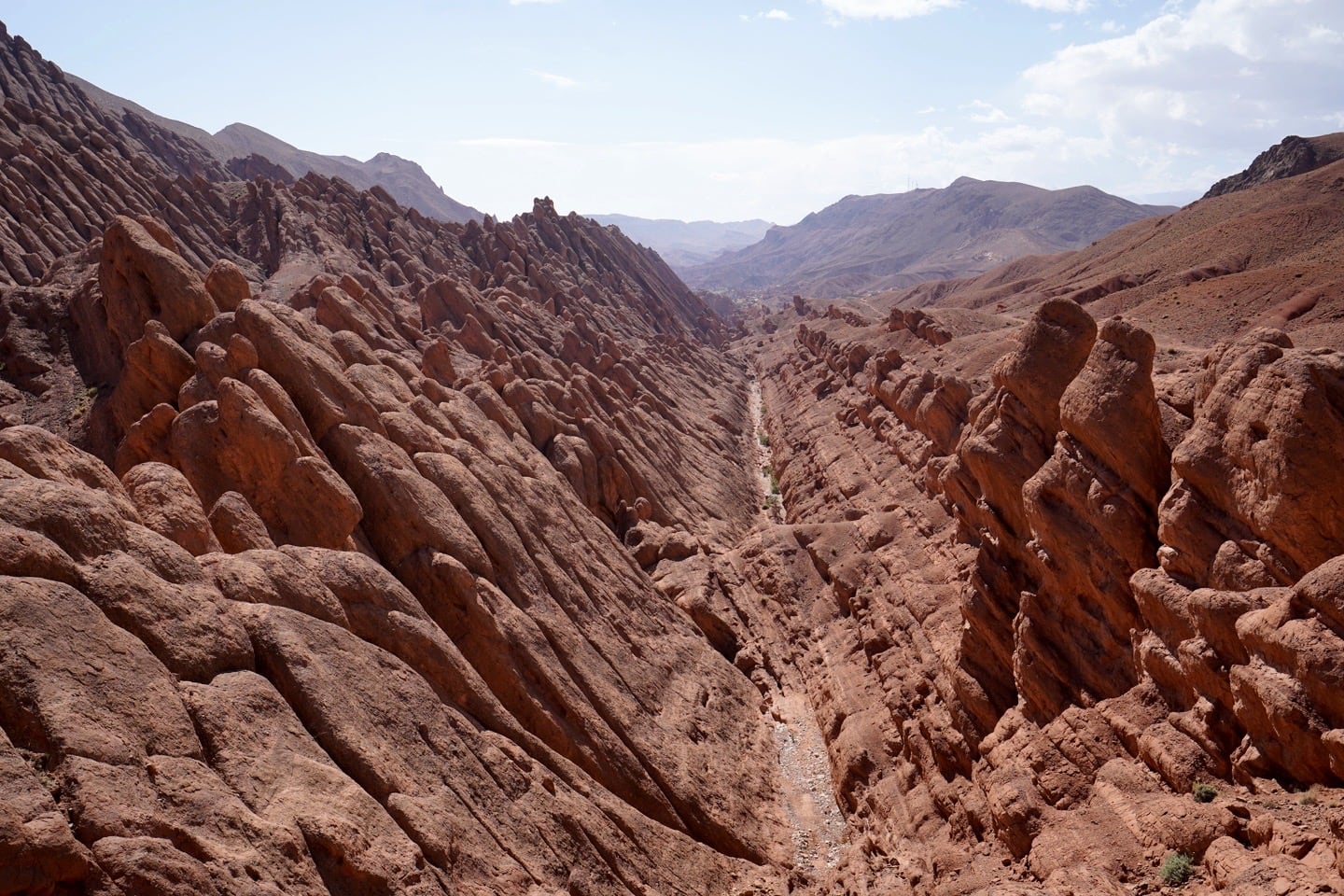
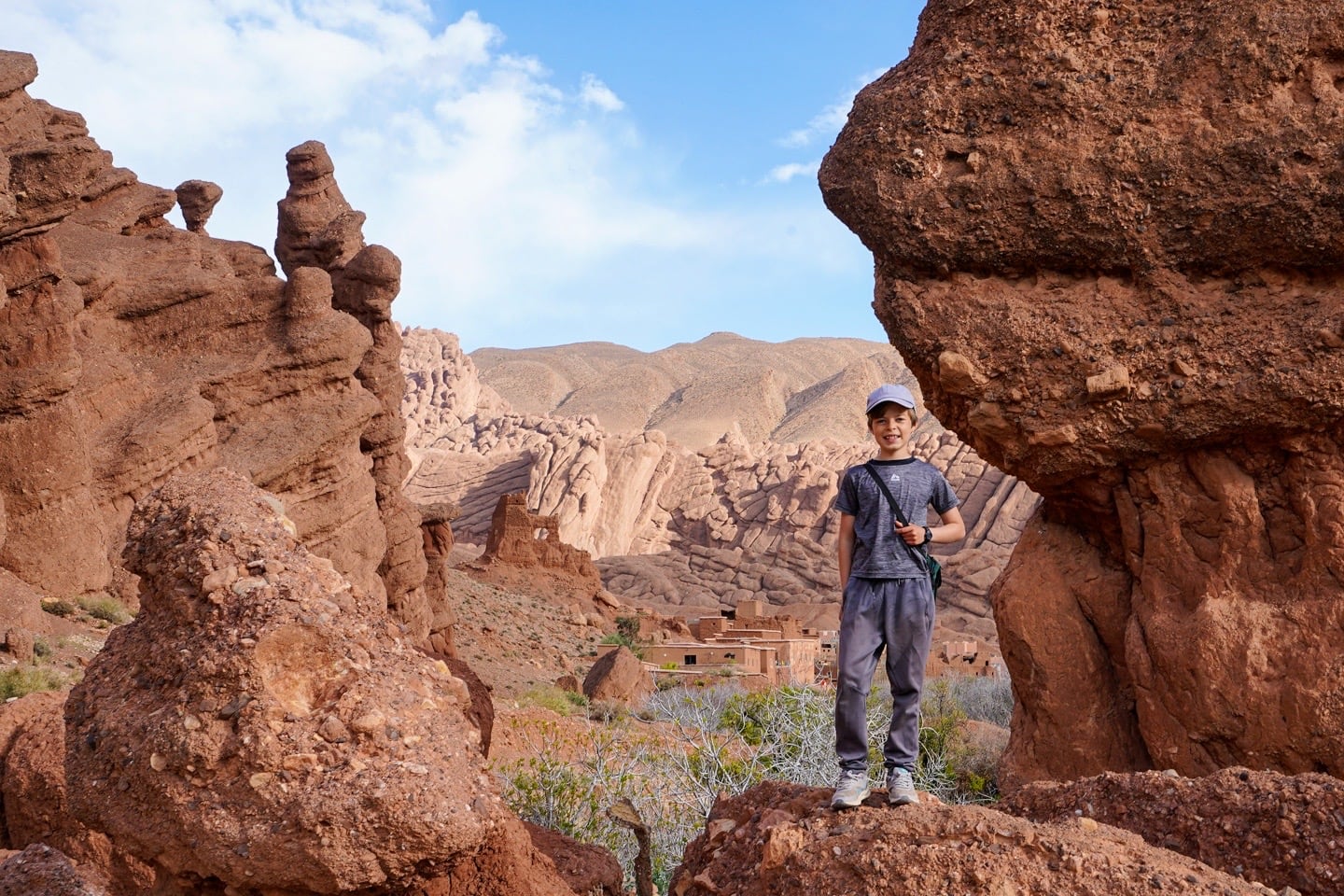
Shaped by centuries of wind and water, the towering sandstone canyon walls here feature knobby, rounded outcrops that resemble the curled knuckles of a monkey’s hand, hence the name.
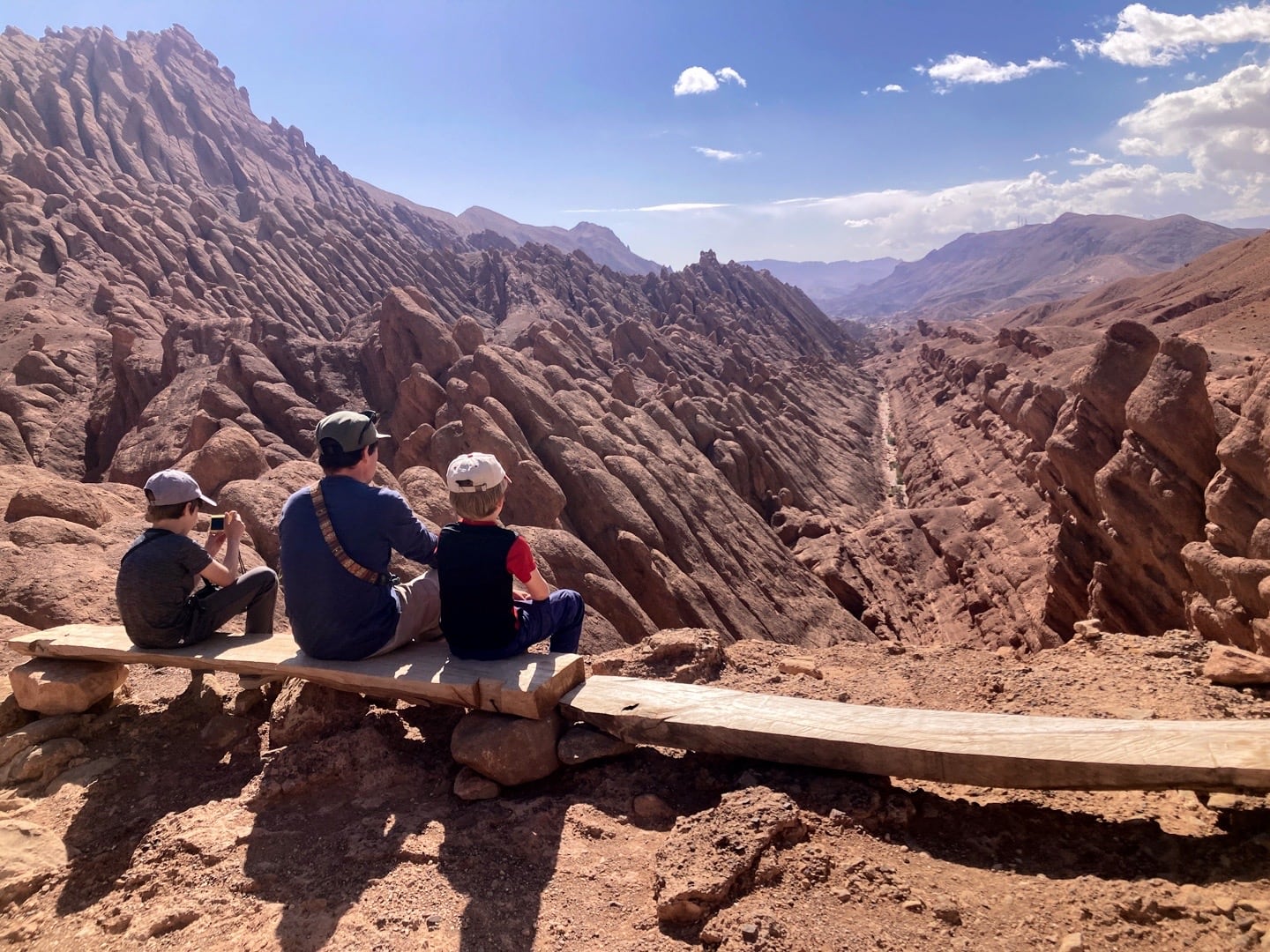
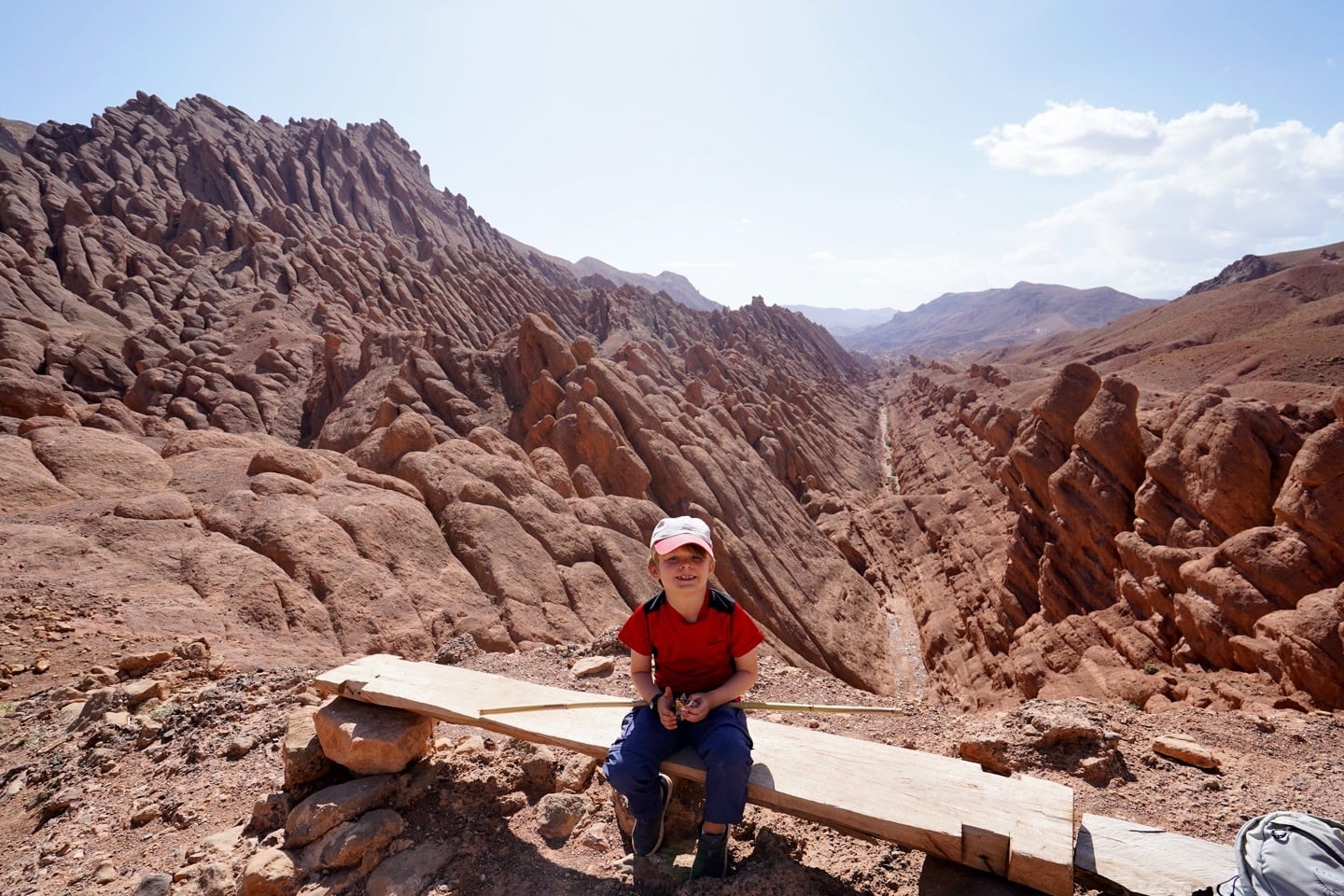
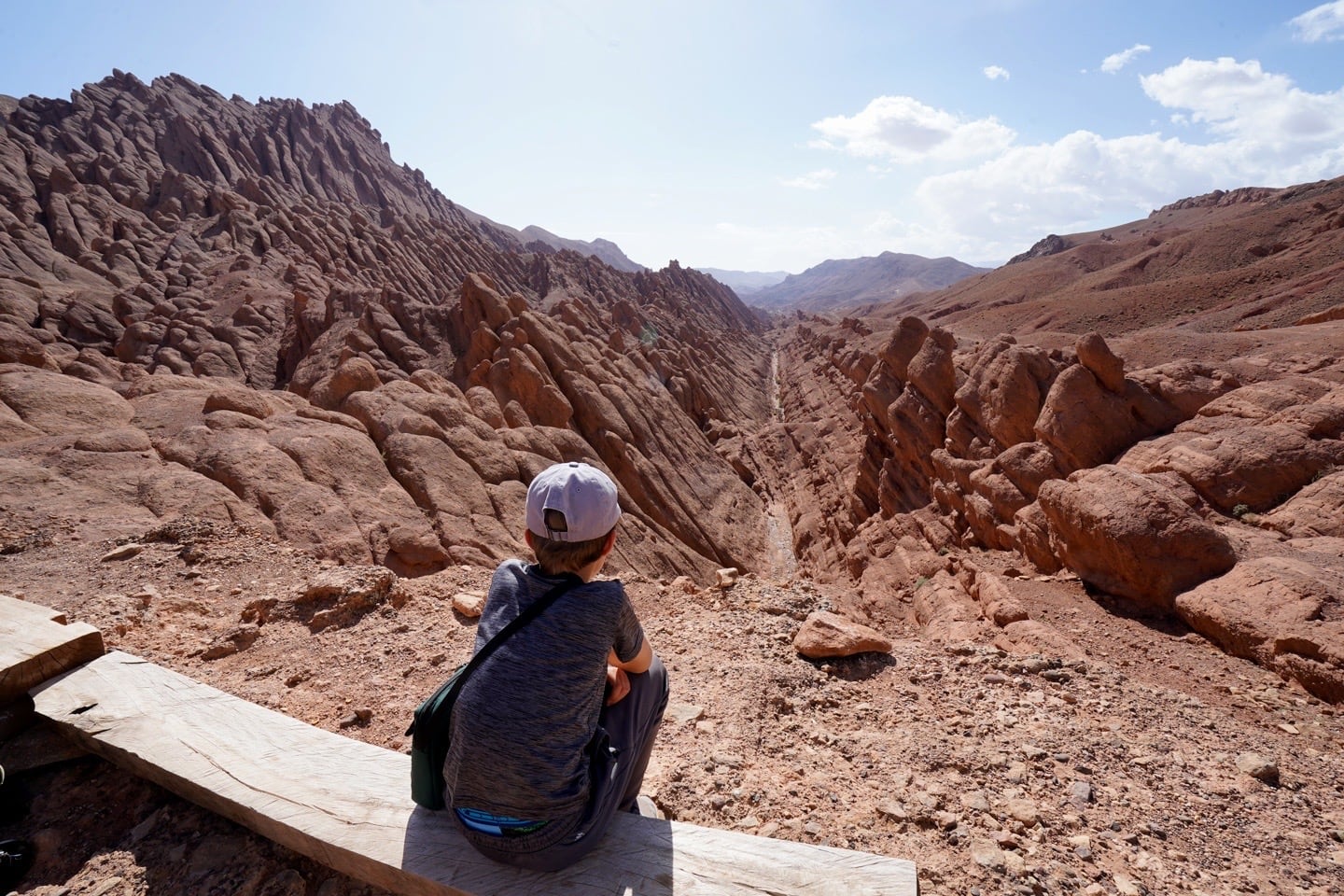
After a well-deserved snack and rest, we carried on to complete the 5-mile (8km) loop.
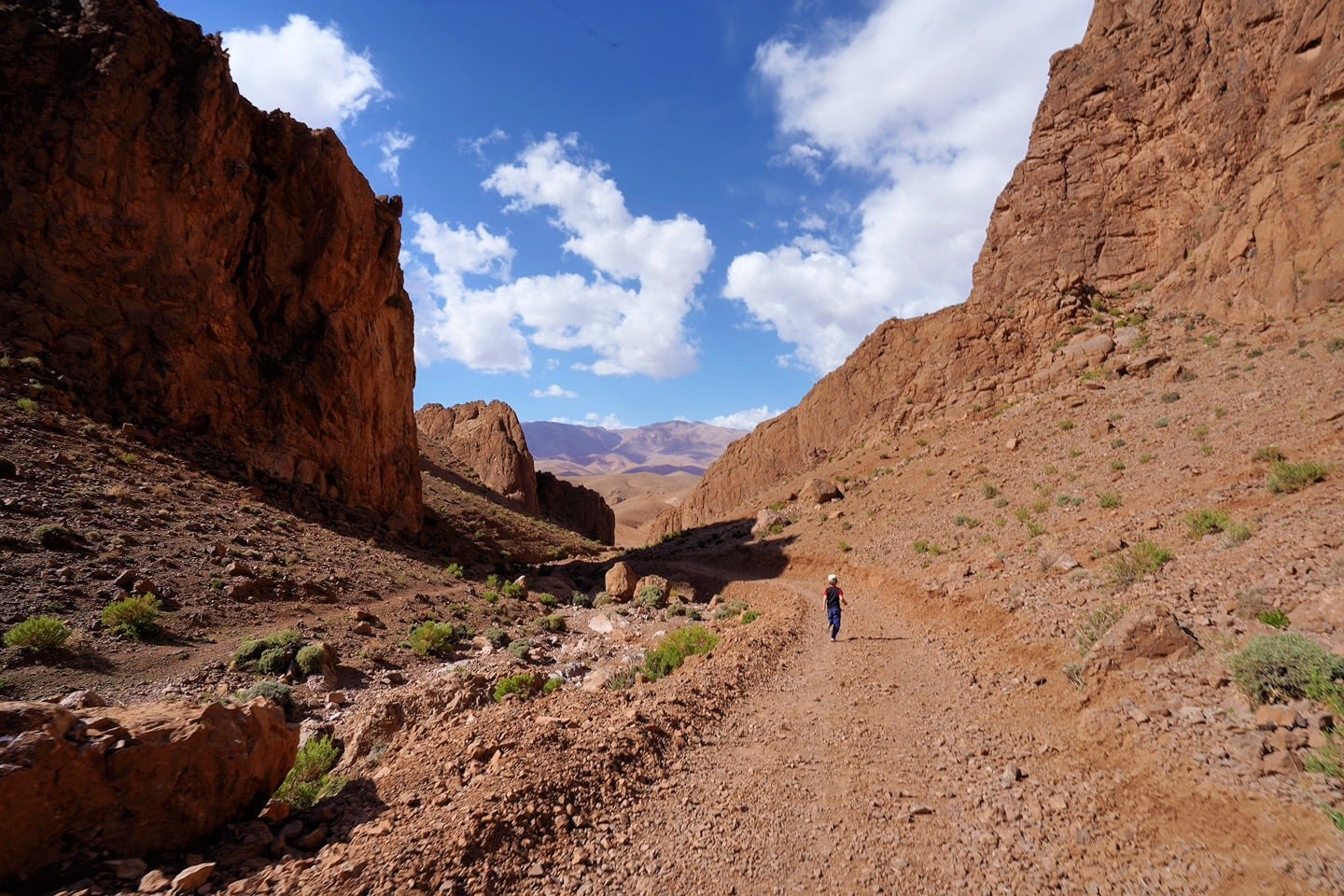
The narrow pass makes a sharp turn to the left before opening up to a wide, dry riverbed (possible a tributary of the Dades River during wetter parts of the year?).
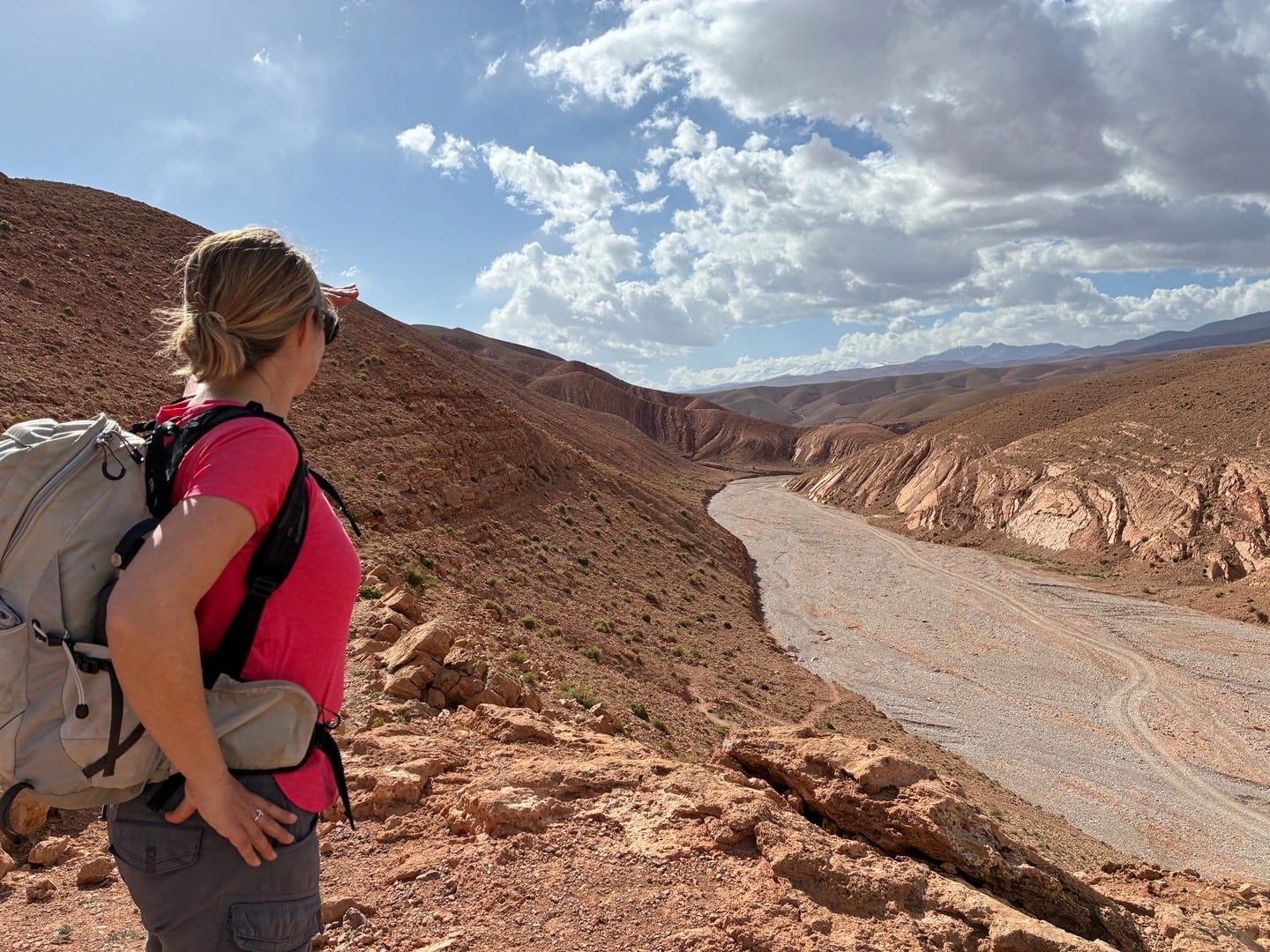
We descended down to the riverbed, turned left, and followed the valley back towards town.
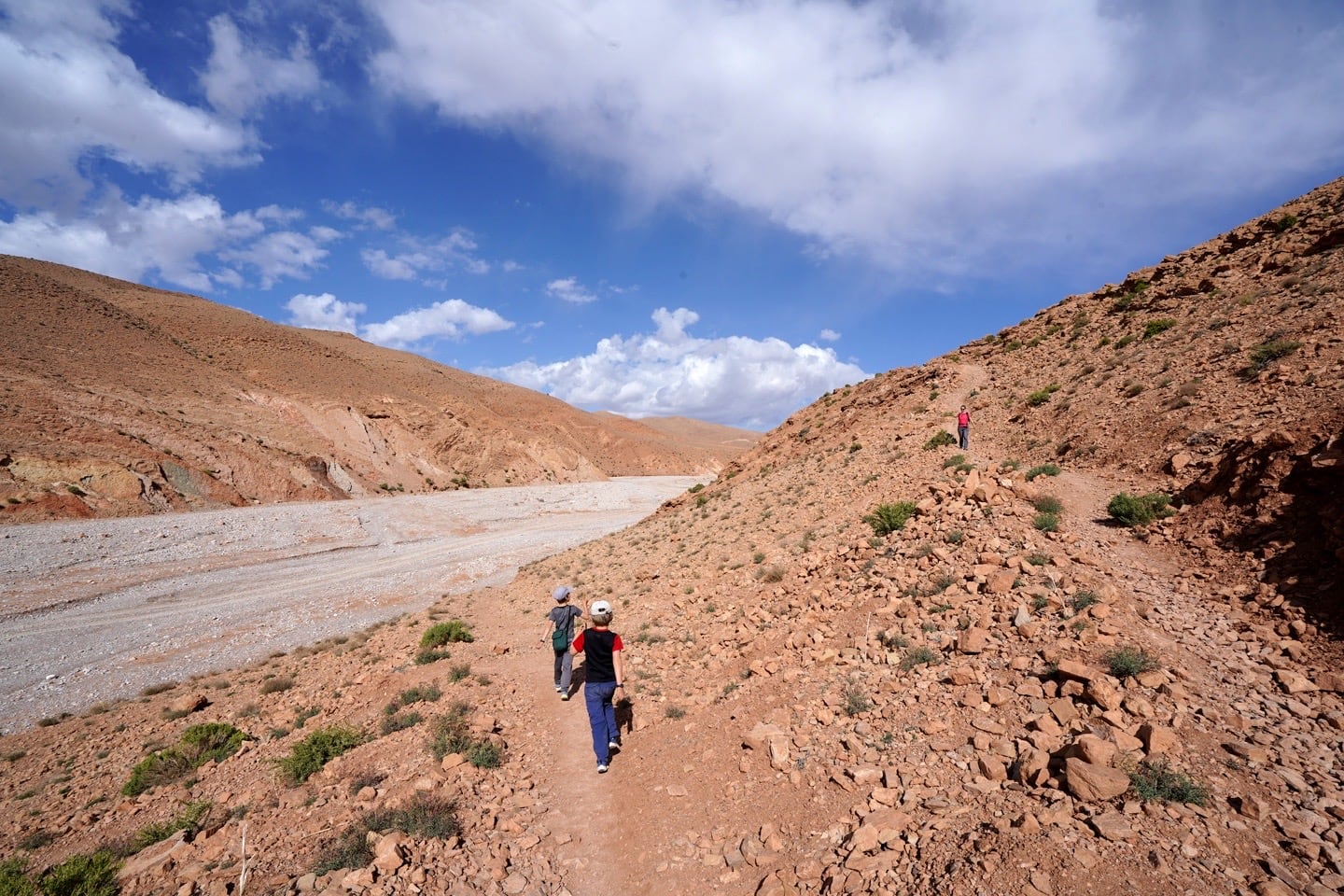
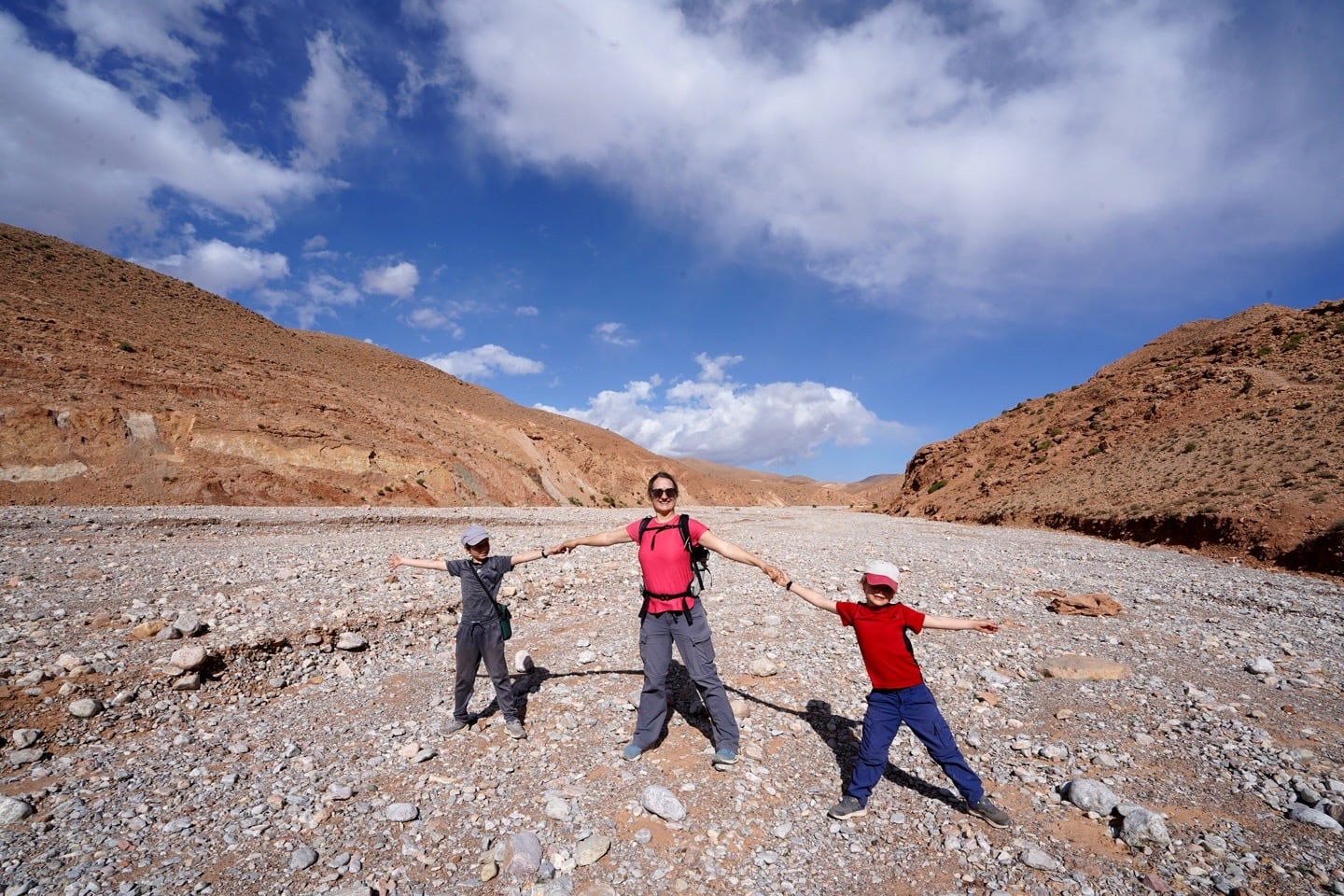
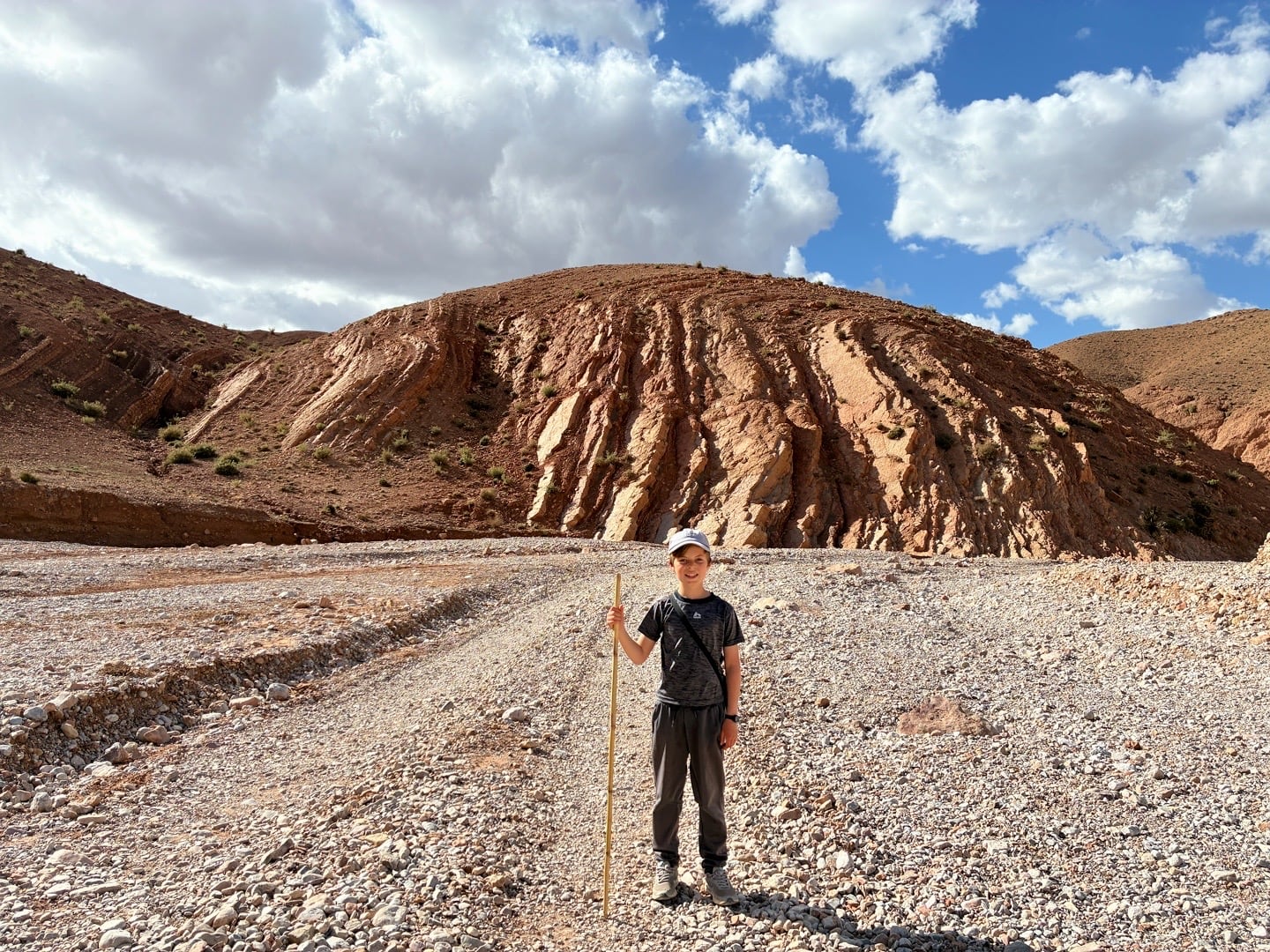
A while later, we crested a hill where a couple had parked their RV to boondocks and followed the gravel road into town.
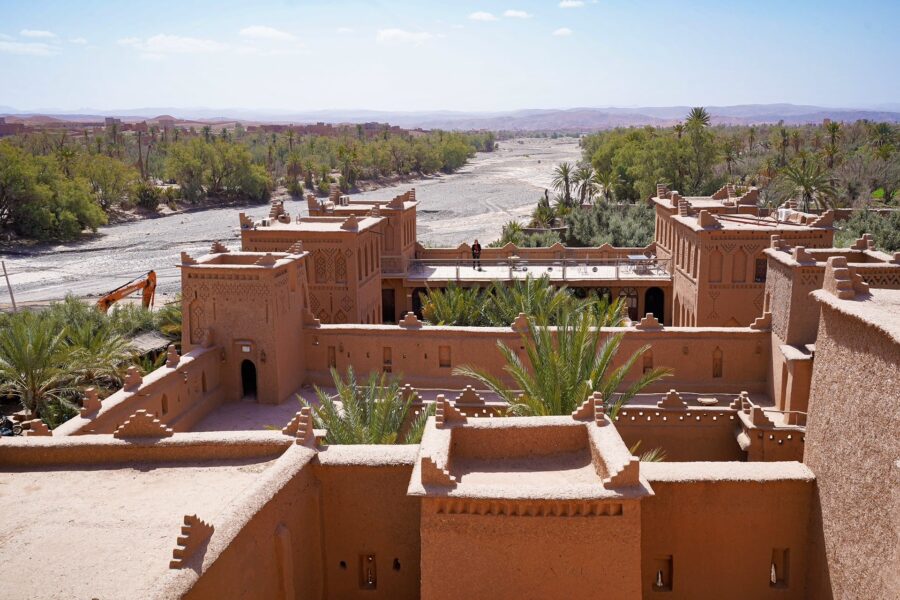
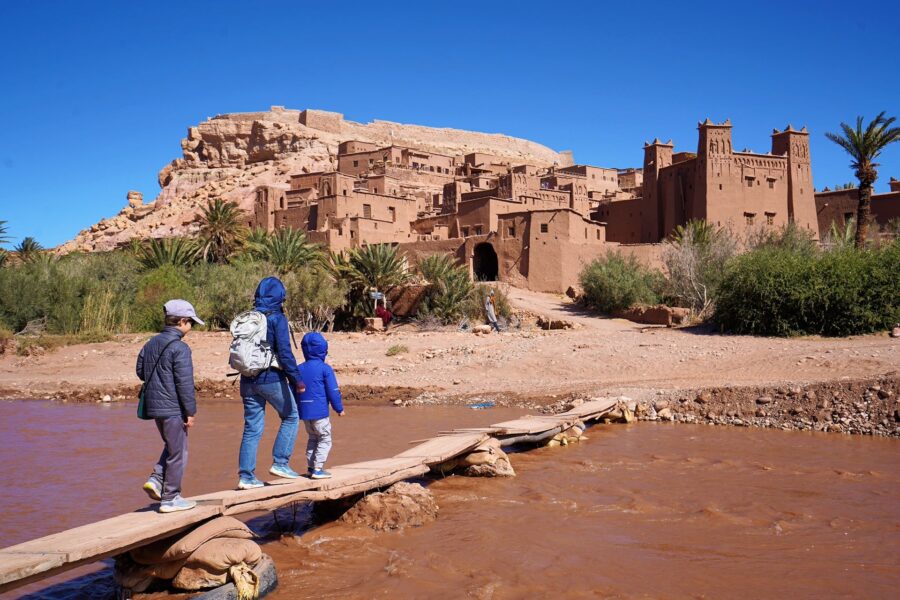
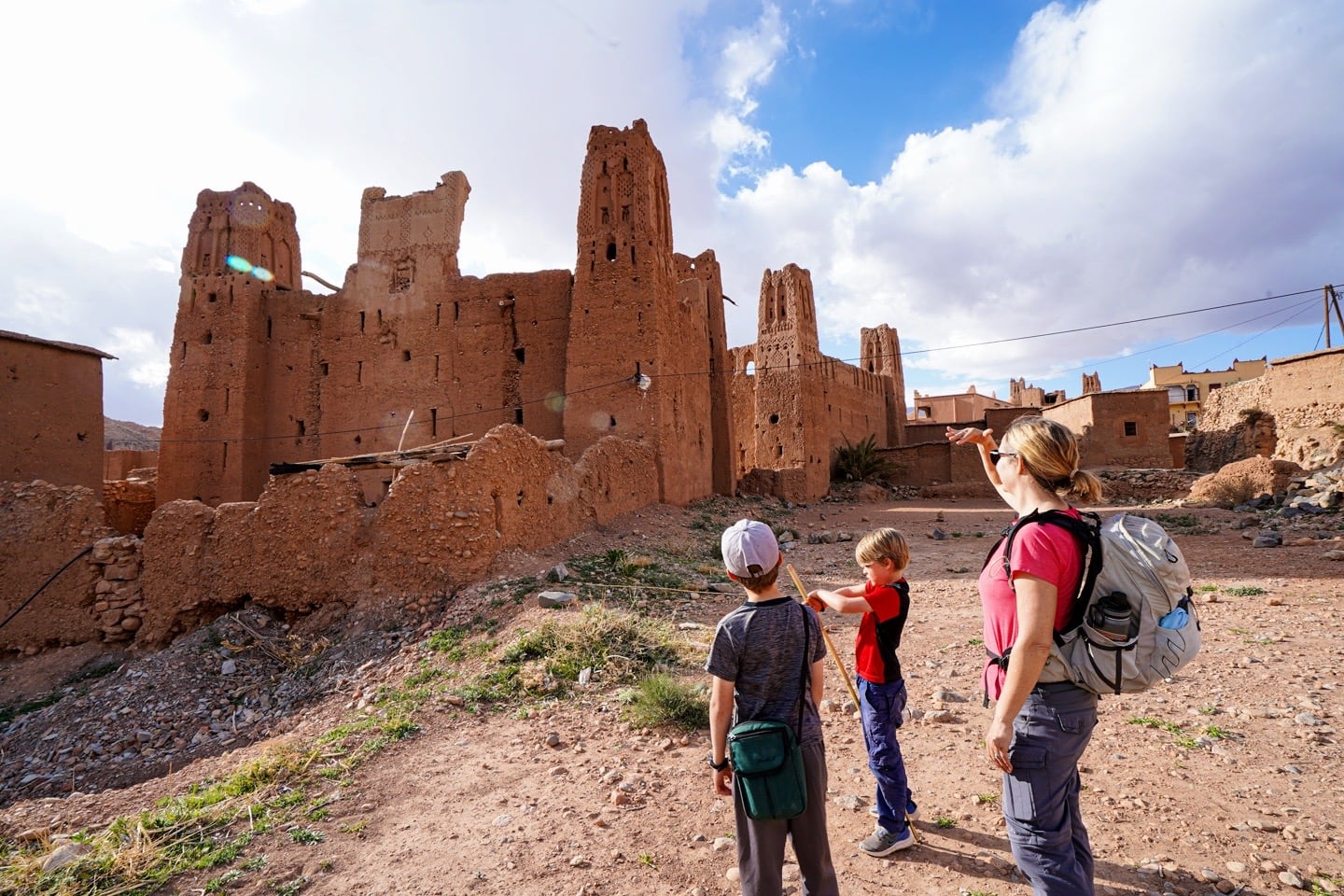
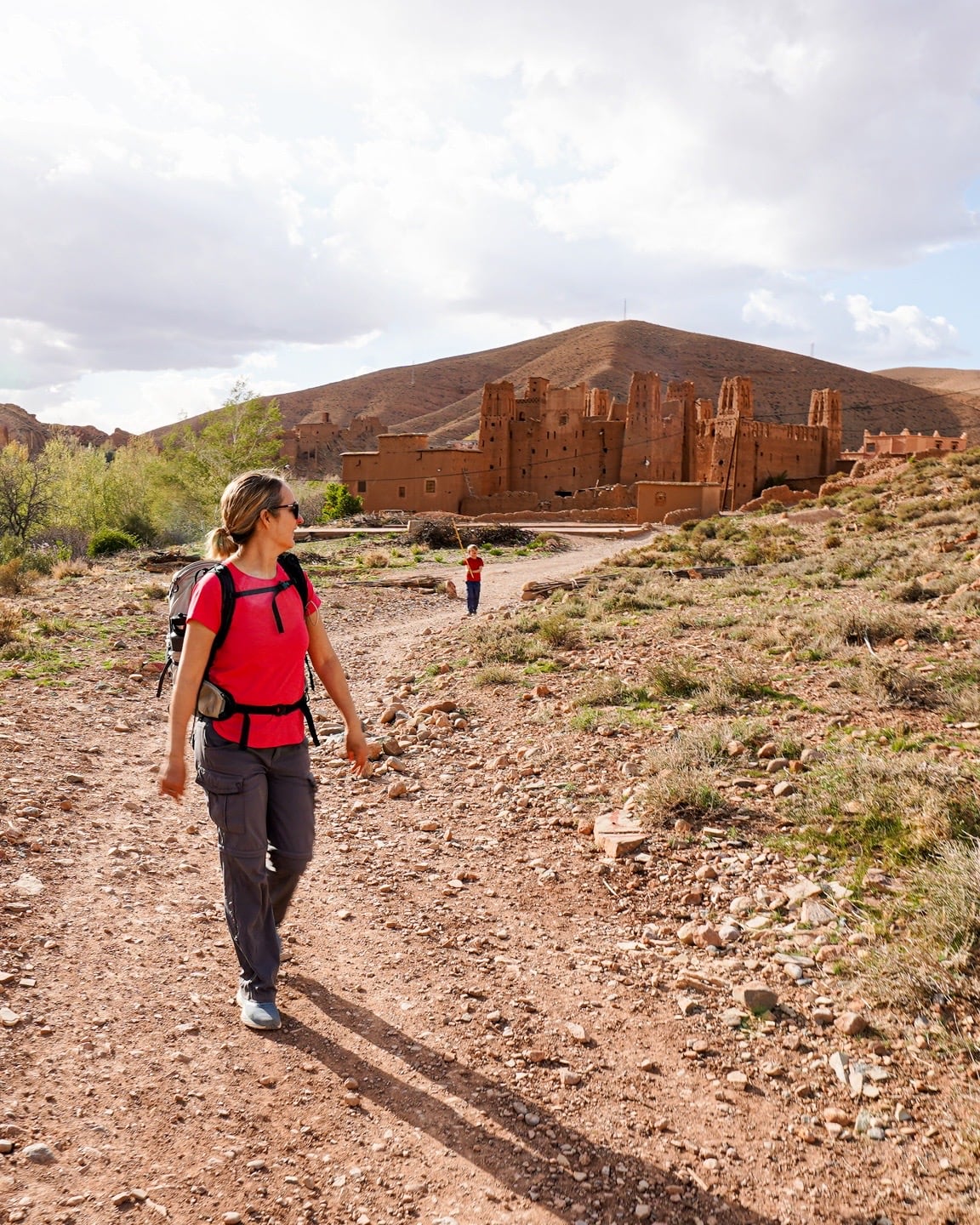
Soon, signs of life (and the old, abandoned ksars and kasbahs) started to appear.
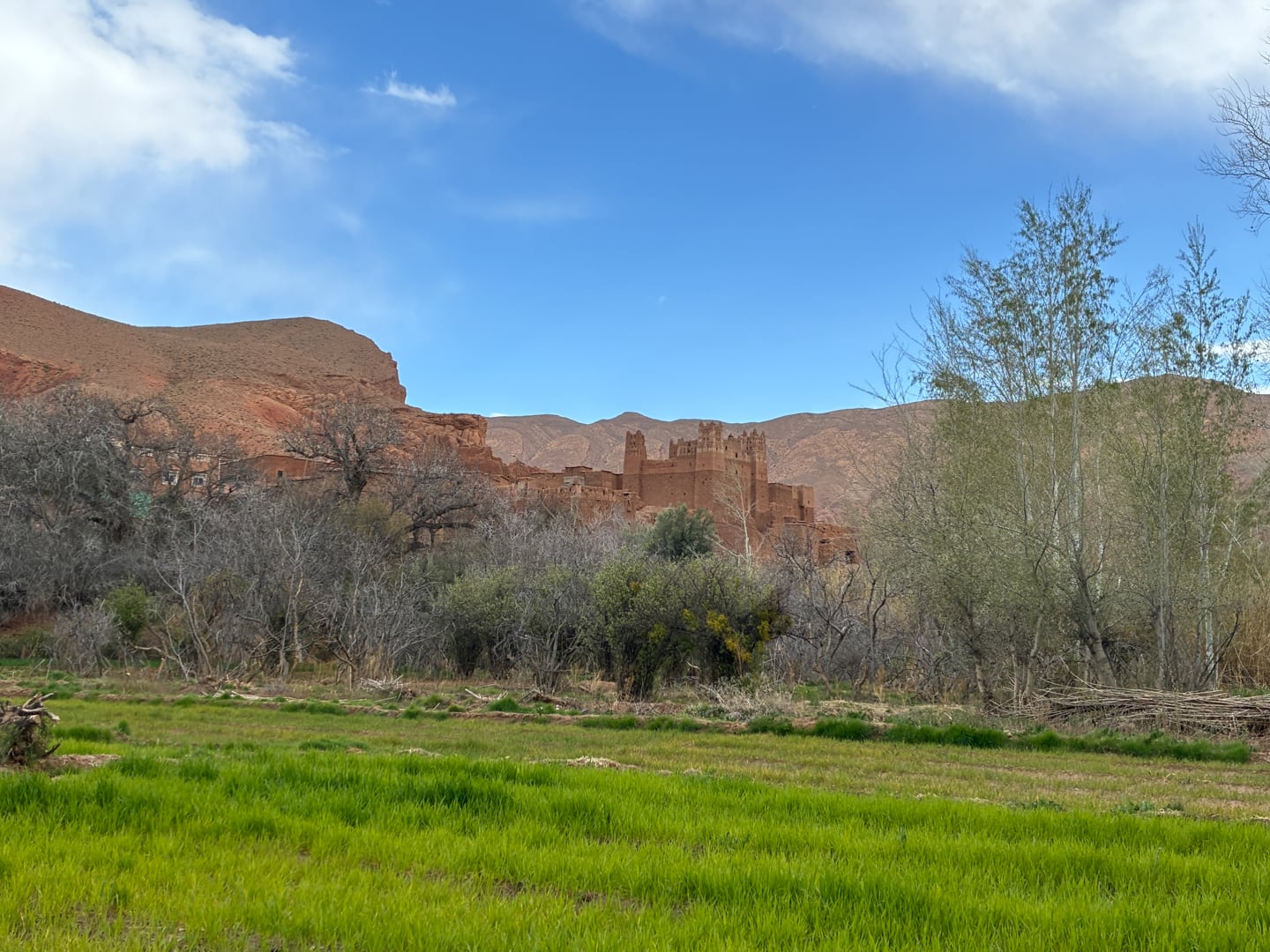
I had one kasbah marked on my map but was surprised to find ourselves literally surrounded by sprawling ruin complexes.
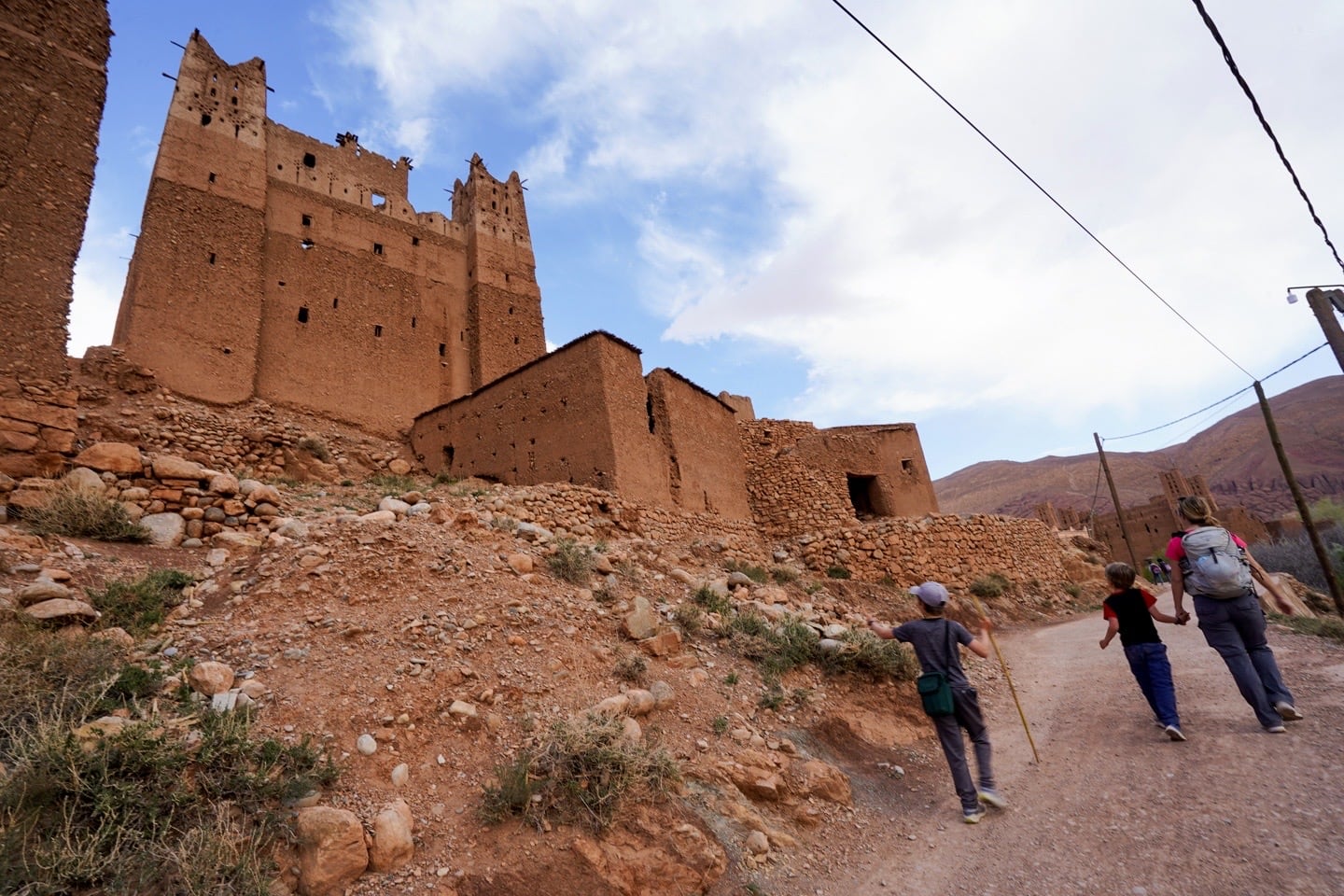
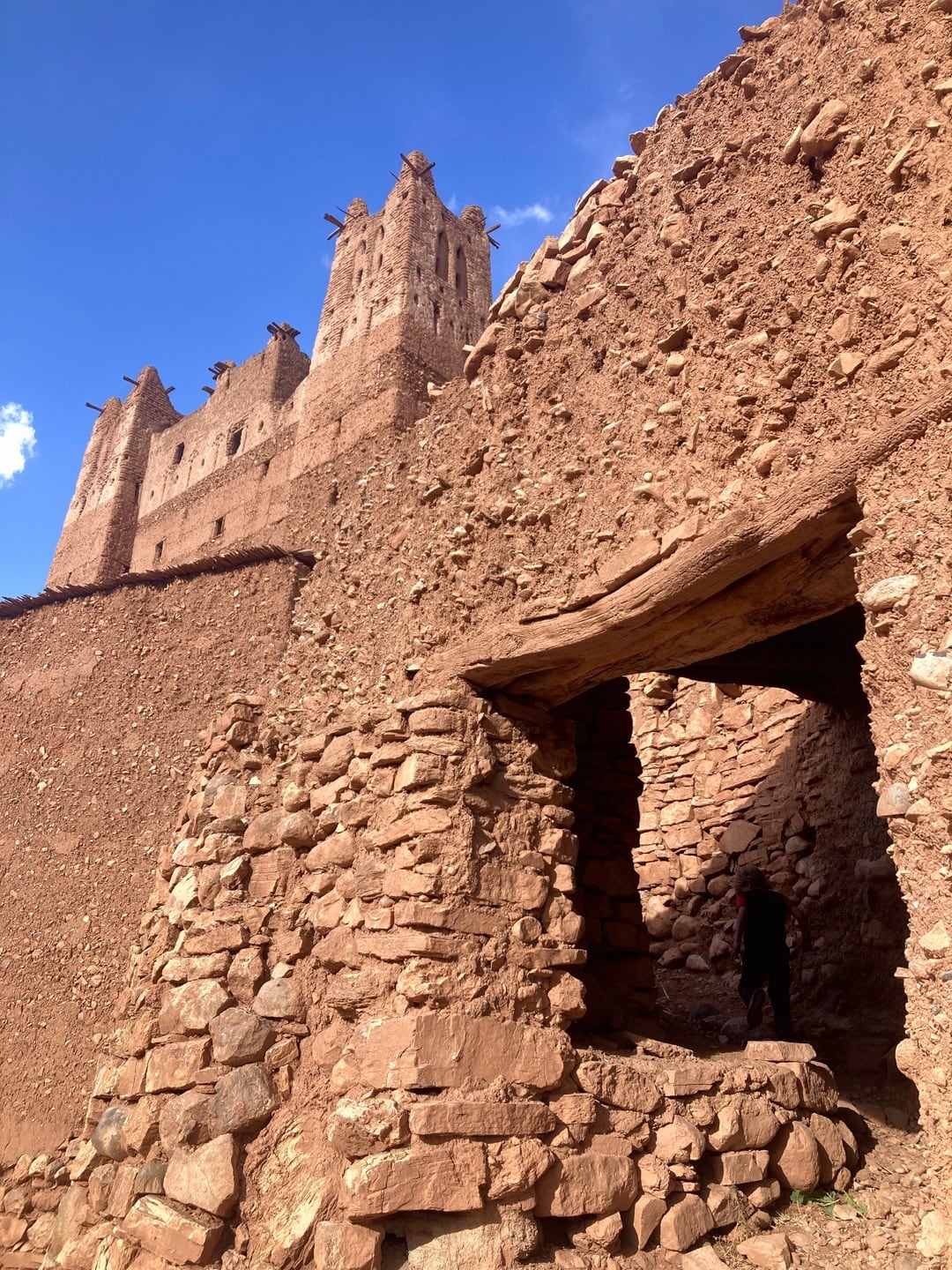
It’s tempting to venture inside, but reminded ourselves these are centuries-old mud-brick structures in an advanced state of decay. Stability is probably not their strong-suit.
But they’re pretty cool to admire from afar.
After a full day of exploring the area, we headed to Restaurant La Vallee et Figues for dinner, on the recommendation of one of the staff at our guesthouse.
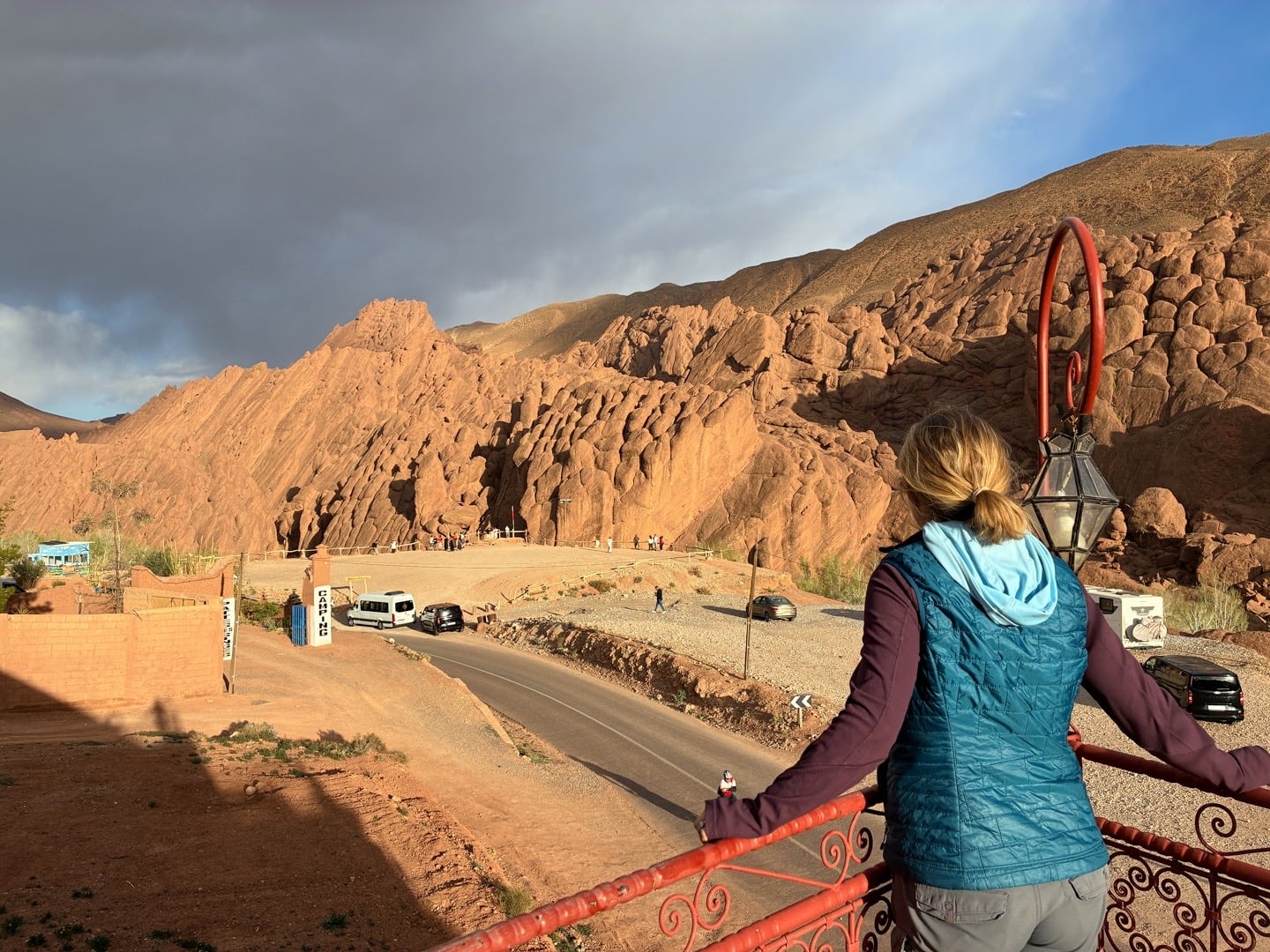
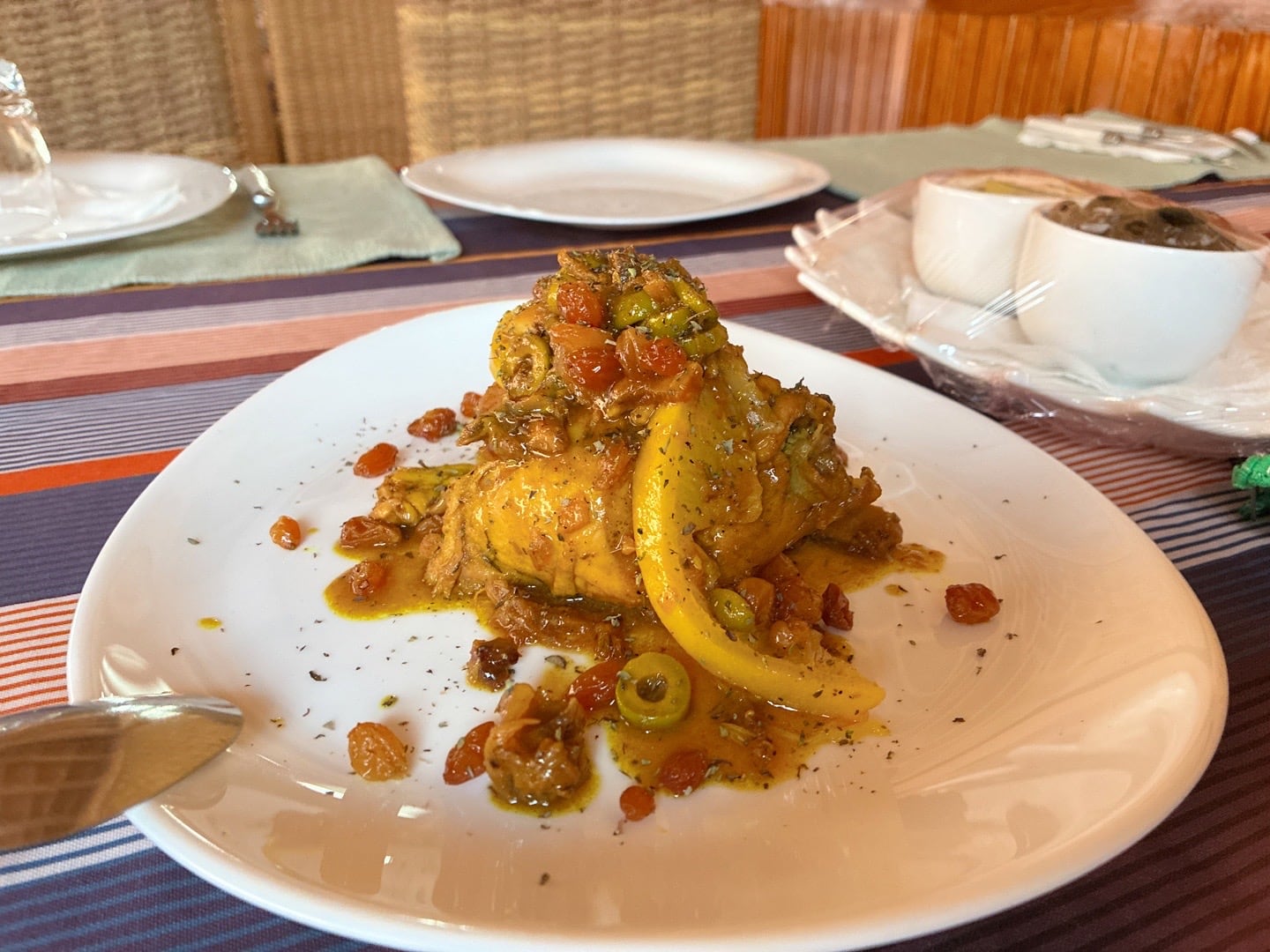
Prime sunset views of Monkey Fingers and delicious food. La Vallee did not disappoint.