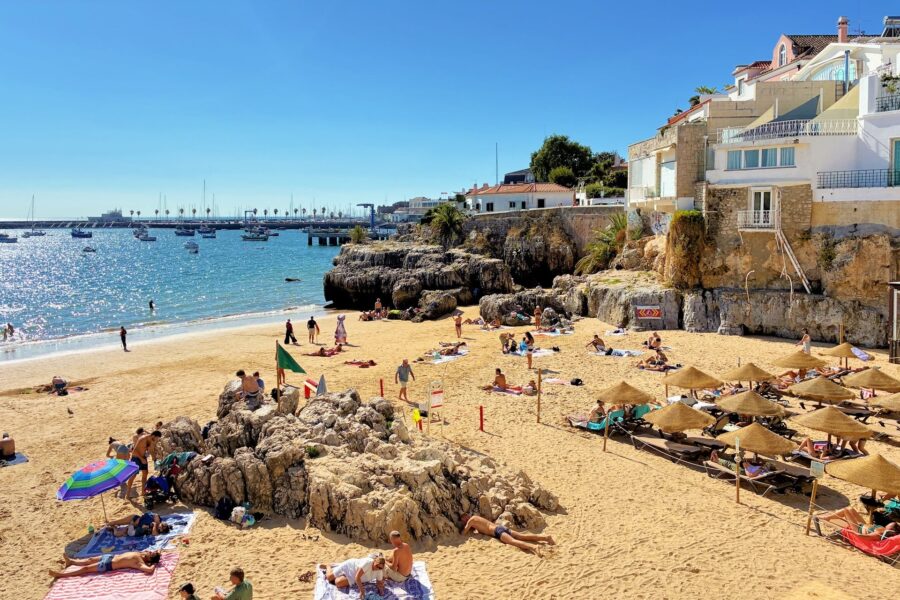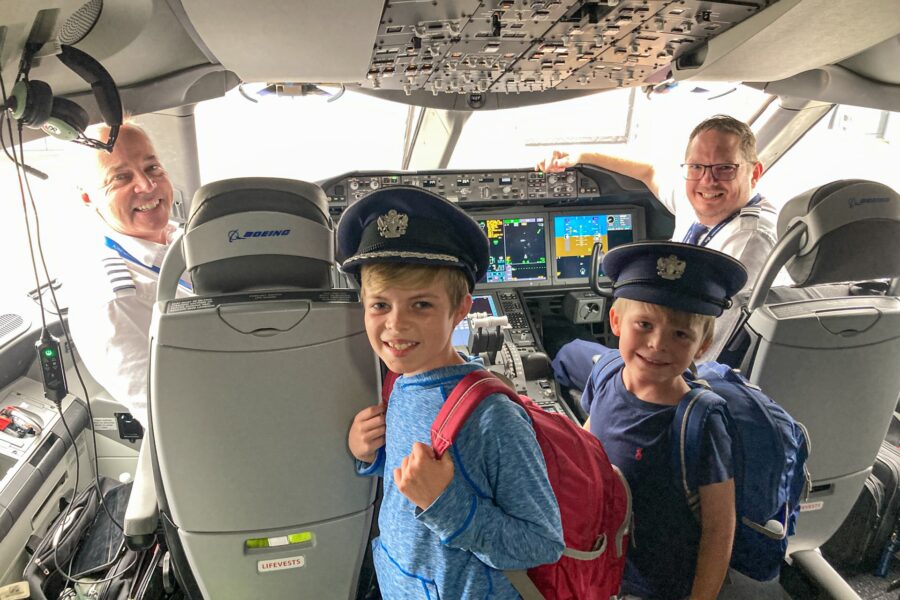
Lisbon has been an ideal place to kick off our European travels for the next year. There’s so much to see and do, and the prices seem very reasonable by Western European standards.
We’ve also been very happy with our choice of accommodation. Technically, we didn’t have much of a choice in the end—Lisbon rental prices have shot up in the past couple of years and the first several we tried to book on Flatio fell through.
Our Euro-African Journey (So Far...)
Ultimately, it was a choice between a cramped loft on a touristy road in the Alfama and this place. It might be a bit farther out, but it’s proven to be an excellent home base for an extended stay.
Costs are cheaper up here in Olaias, and we have plenty of space to stretch out and have the boys do school on days when we don’t plan on sightseeing.

We also get a better sense of how most people live rather than just those in the tourist area, which is what we’re looking for in each of our stops.
Over the next week, we made exploring Lisbon a priority. The weather’s been beautiful, but we know it’ll turn soon enough. Lately, we’ve been doing school in the morning or afternoon, then doing a big outing the other half of the day.
Sunday was a nice day to explore some of the miradouros (viewpoints) closer to home.

First stop, not-so-popular Miradouro da Penha de França.

Followed by the much more popular Miradouro Monte Agoudo—perhaps on account of the small bar-cafe and tables at the top. We couldn’t resist grabbing a Sagres beer and staying a while.


Riding the Lisbon Metro has become a regular part of our lives in the past week. It’s a quick and cheap way to zip around the city, but does get pretty crowded around rush hour. Regardless, we can almost always find seats after just a couple of stops.

Monday brings more explorations around town. Today, we’re checking out Bairro Alto and the area around Parque Estrela.

Lisbon’s iconic Santa Justa Lift, built in 1902 to ferry people and goods between the Baixa (downtown) and Bairro Alto (uptown). The lift isn’t running today, so we’re forced to hoof it up the hill.

Constructed in the 16th century, Igreja de São Roque is one of the earliest Jesuit churches in the world, and is also known for being one of the few churches that survived the Great Lisbon Earthquake of 1755.
The site of São Roque had previously been the location of a massive cemetery for victims of the plague.
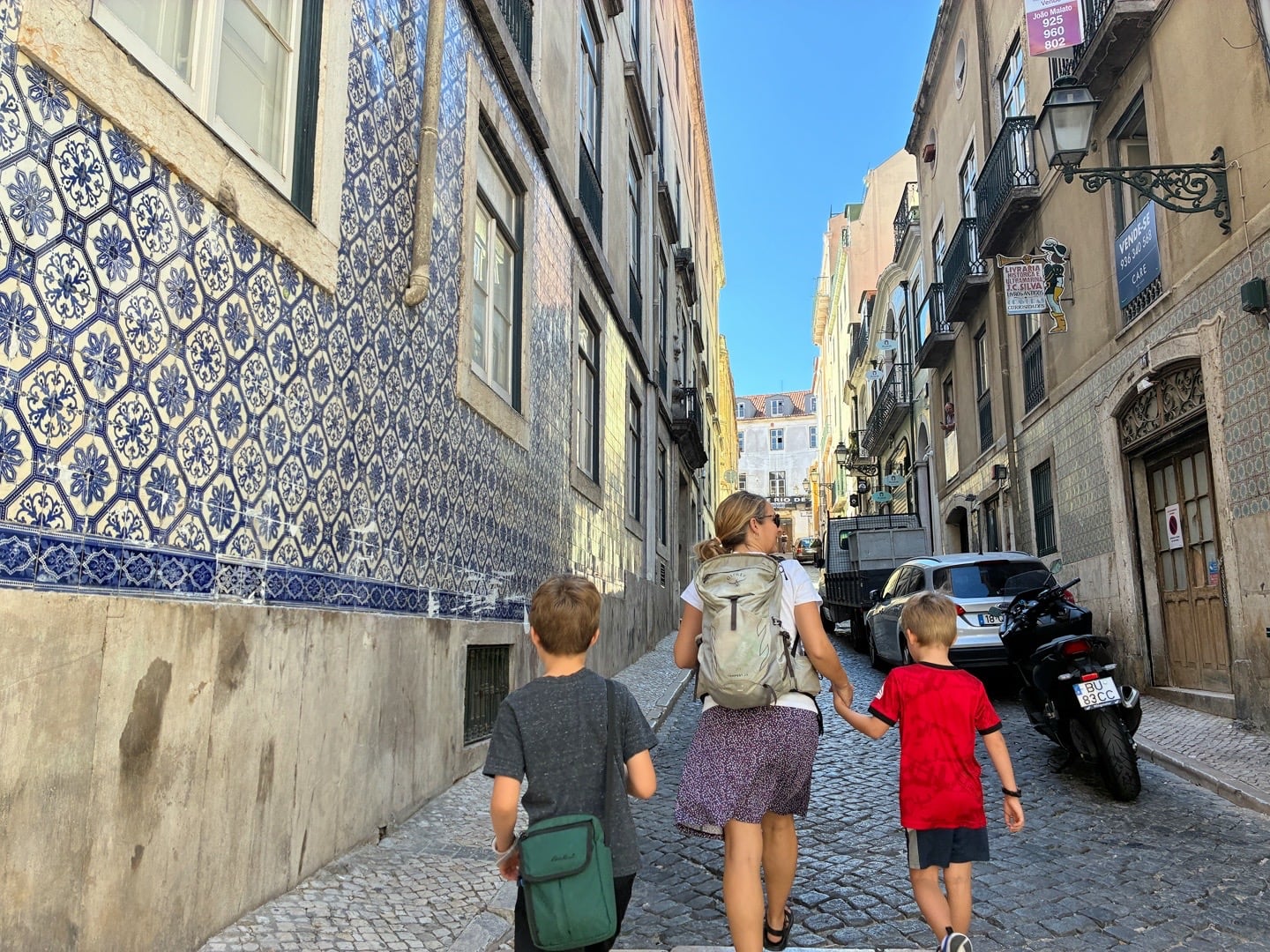


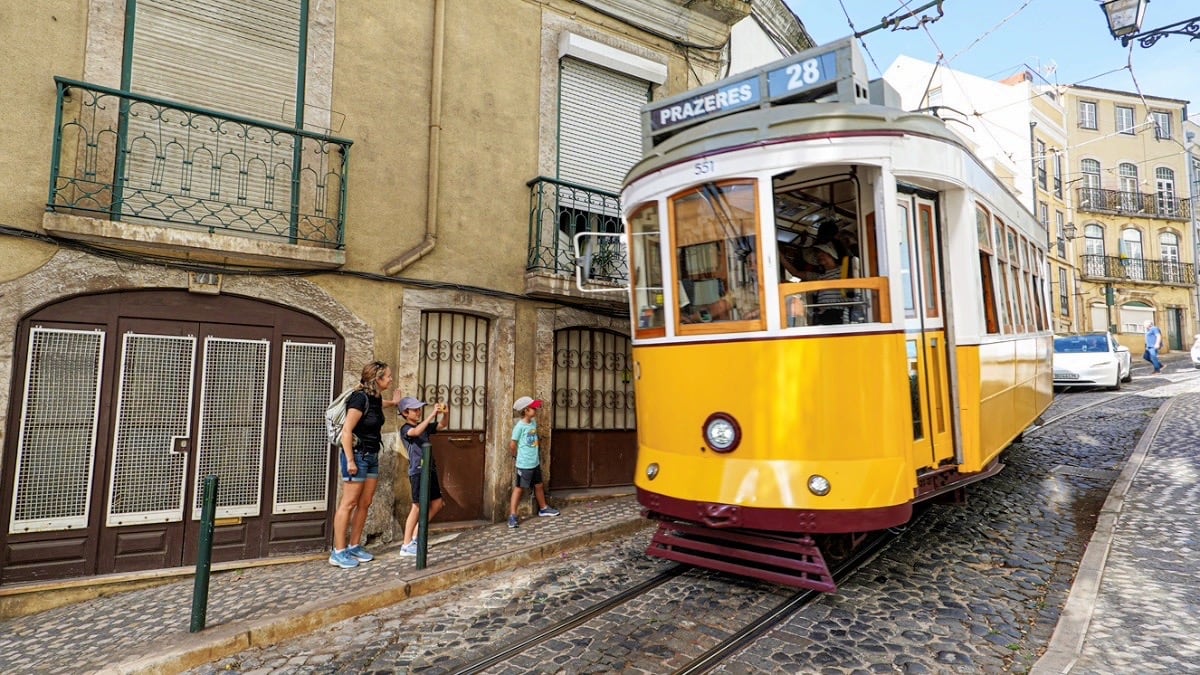
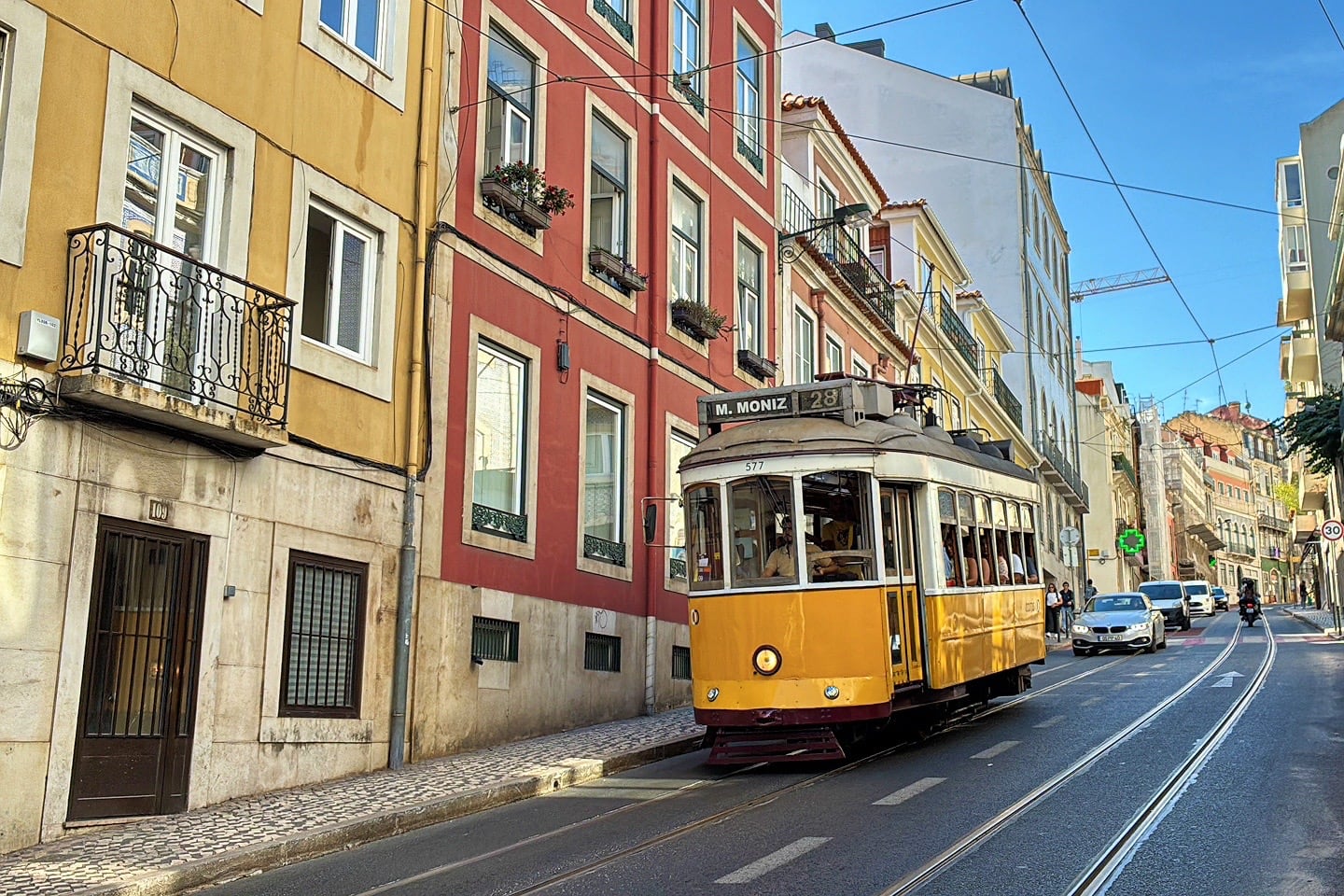
Sadly, this is as close as we’ll get to riding one of the city’s famed cable trams. Just weeks prior, a steel cable on the historic Glória funicular snapped killing 16 people.
Funicular service has been suspended indefinitely, but the electric-powered streetcars remain in operation.

Making our way towards Parque Estrela, we pass a number of points of interests, such as the São Bento Palace, the seat of the Portuguese parliament.

And, Basílica da Estrela.

It was a journey, but we finally made it to Parque Estrela. The boys agreed the playground (and English-speaking kids to play with) was worth the effort.


A relaxed day at the apartment with an outing to the nearby park in the evening.


Lori and I have been on a mission to find the cheapest drinkable aged Tawny Port we can find. This little loja did not disappoint. A dozen 750mL Tawny Ports between €6 and €7. We went with the Porto Cruz which ended being pretty darn good.

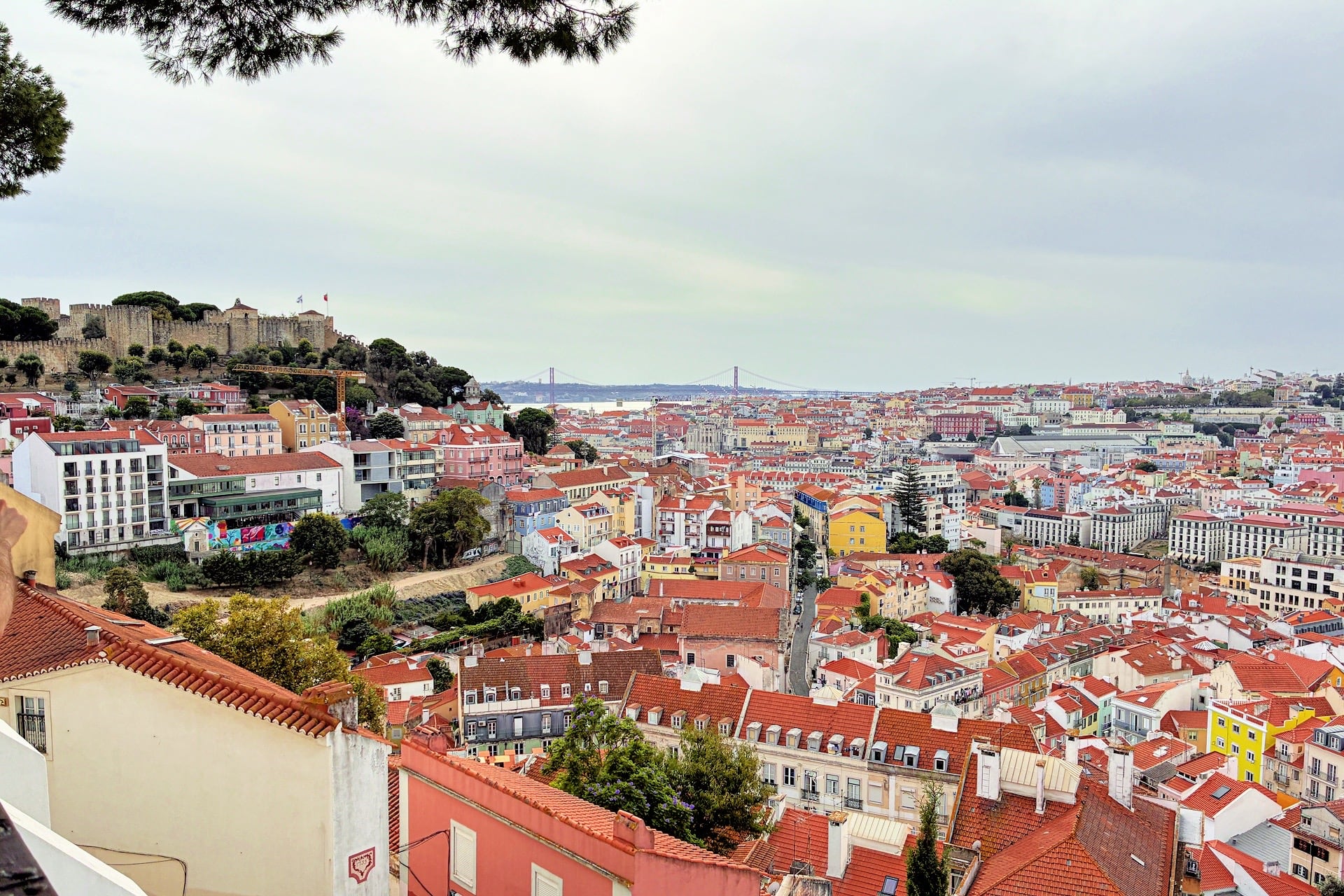
We made Tuesday another day of miradouro surfing (there are so many!), in spite of overcast skies. First up, Miradouro da Senhora do Monte, offering expansive views of the city center, São Jorge Castle, and the 25 de Abril Bridge.


There are so many different ways tourists can overpay for transport in Old Town. Never have I seen golf carts, tuk-tuks, olde-timey cars, AND horse carriages all on offer in the same place.
It’s a steep climb to the next viewpoint. Lisbon is known for its street art, which runs the gamut from drunken graffiti to masterworks. And there’s plenty to be seen around the city’s various miradouros.


The best views we’ve had so far are definitelyy from Miradouro da Graça, which, not surprisingly, is a popular tourist draw.

Adjacent to the miradouro is the Convento da Graça. You have to pay to enter most of the complex, but the main church, like all churches in the city, does not have an entry fee.
Riley’s seen the prayer candles in Mexico for years, but they’re usually the kind where you put a peso into a slot and it lights up.
When he saw real candles in a church, he got really excited and asked if he could borrow some change. We told him he could do that, but he would need to say a little prayer like he’s seen others do.
And so it went.

As to what was said, I do not know. That’s between him and the Man Upstairs, I suppose.

Before heading back, we grabbed a table and a drink and enjoyed the view. The boys enjoyed a heated game of Pokemon Uno…until they didn’t and it was time to leave.
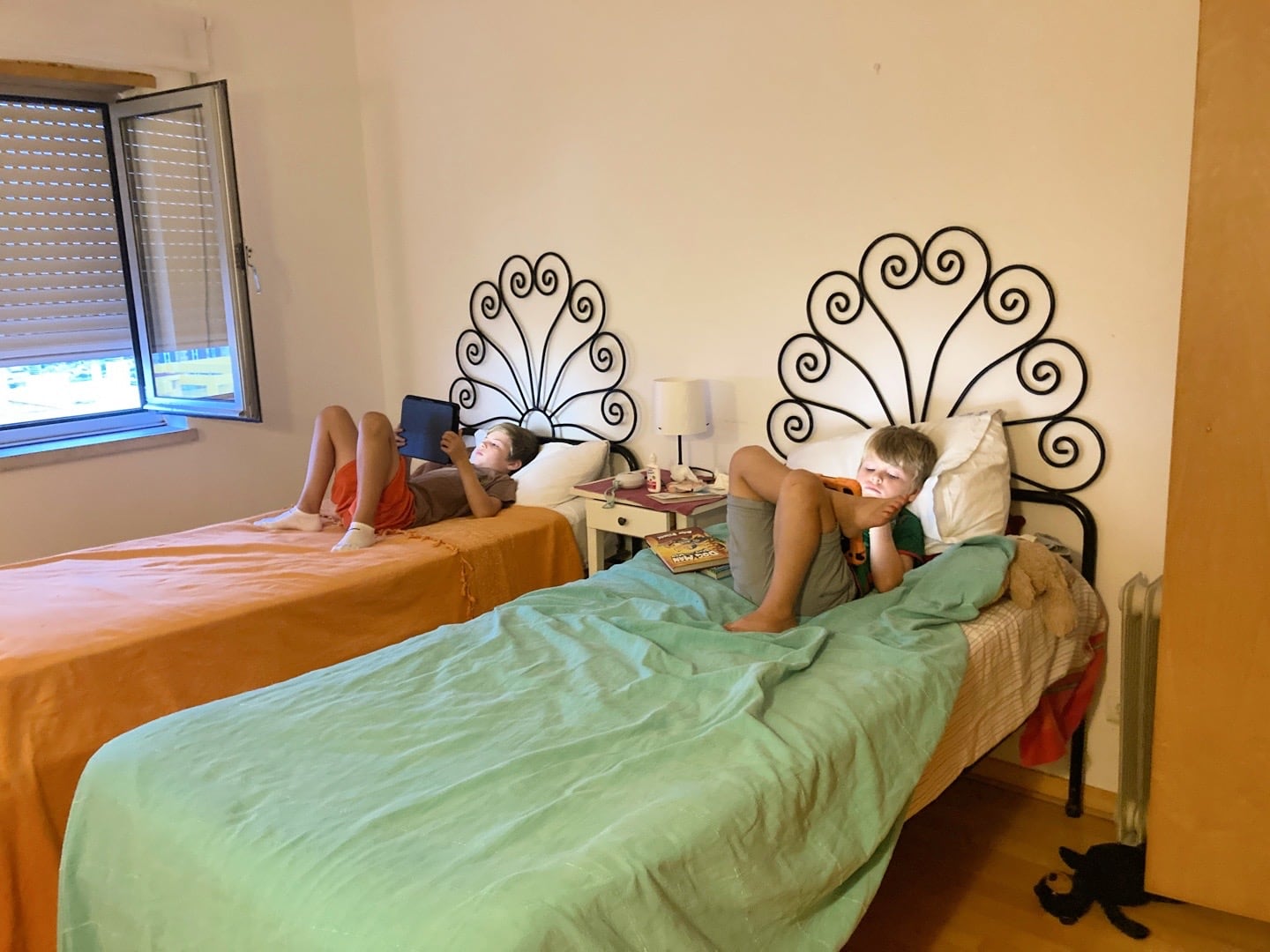
Reading books after a big outing. The boys are still voracious readers.
How do we keep up with their consumption? The magical app, Libby, which allows them to check out e-books from their library back in the U.S.
Occasionally, they’ll even get an audiobook or two, which is super handy for travel days.

Wednesday was a Baixa day. We took the metro downtown and got off near the Praça do Comércio, which is home to a former palace and Lisbon’s Arco da Rua Augusta (the arch in the picture, above).
Directly across from the praça is a small beach with a nice view of the bridge.


The best selfie we could muster today. They can’t all be Insta-worthy…especially with two wily boys in the mix.

Today’s big stop was the Portugal Money Museum, which ended up being way more interesting than I was expecting.
Both boys are really into old coins right now, so it was right down their alley.


So many coins, dating back 2,000+ years—from the various peoples and civilizations that have occupied this land to land the Portuguese once occupied around the world (of which there is much).

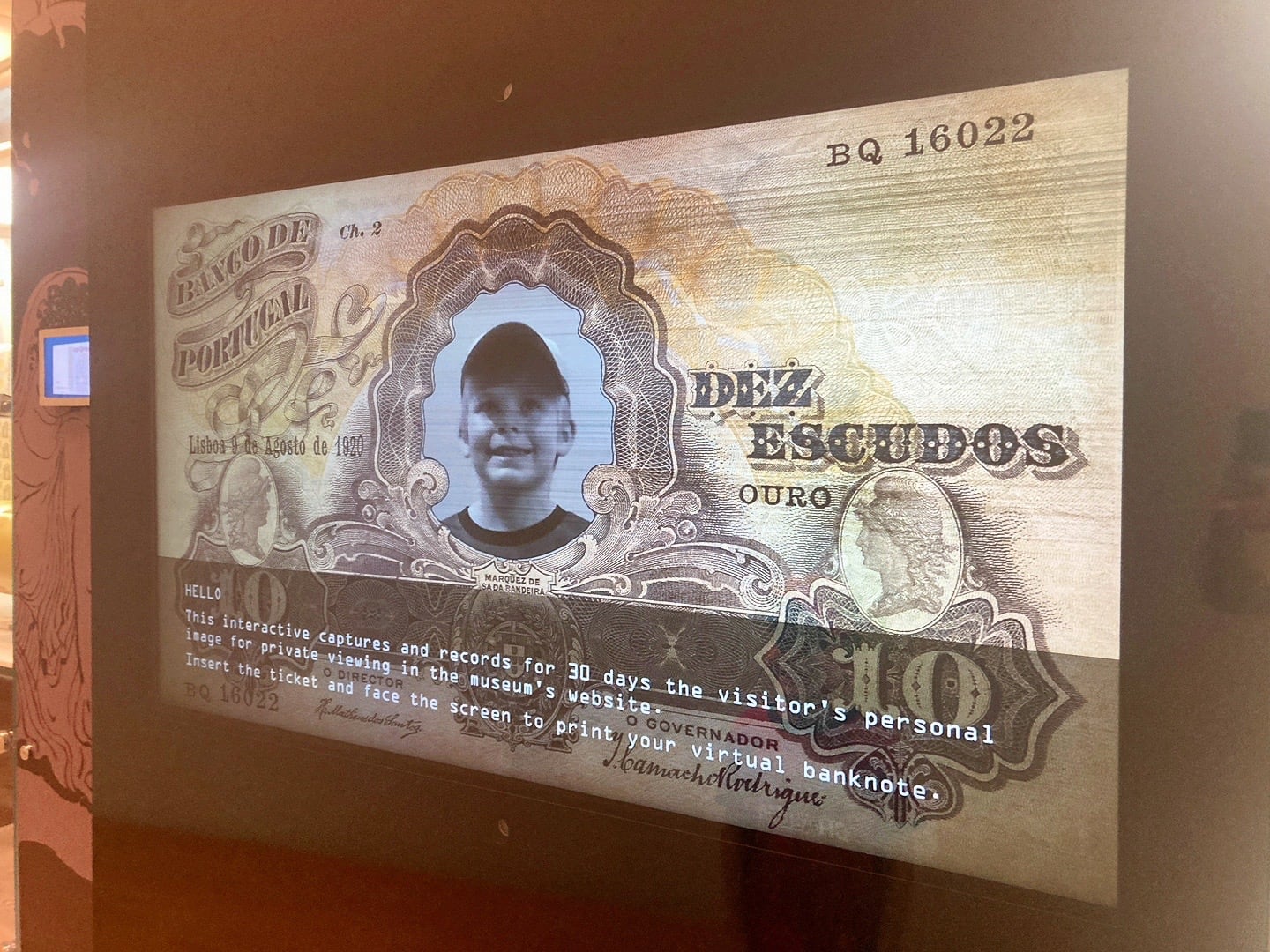
Escudos were the old Portuguese currency, prior to adopting the euro, a quarter of a century ago.
This past summer in Oregon, the boys got a kick out of rifling through all of my old currency from the European countries I backpacked through 25 years ago.
It’s going to be weird to return to many of those places in the absence of Drachma, Lira, Schillings, Francs, and so on. Way too easy, now.

A rare quiet street in the Baixa.
Night and day compared to the main pedestrian thoroughfare of Rua Augusta.

We’ve come to visit Fábrica da Nata for a special treat.

They’ve got a lot of good looking sandwiches, but we’re here to try our first pastel de nata—another one of Riley’s deferred birthday gifts.
You can even watch them make them through the front window.

I’m not sure what Riley liked more, the pastel or the topping shakers, but either way, he was pleased with his Portuguese pastry. Good stuff!