When Lori’s parents proposed the idea of visiting for two weeks in November, Lori and I floated a number of options with each other before proposing one week in Zipolite and one week in Huatulco.
On their previous visits to Mexico, Lori tried to include side-stays to popular destinations like Playa del Carmen, Cabo San Lucas, and Monterrey. This time would be a bit different. Both Zipo and Huatulco aren’t exactly household names in the U.S.
The decision ultimately came down to weather, bang for the buck, and of course, where we could reasonably get the RV by that time (we were planning this months in advance).
Our Mexico-USA RV Journey 2024-25
The stars seemed to align when we discovered that the RV park in Zipo also doubled as a nice apart-hotel.
With regards to Huatulco, we really wanted to spend some quality time there, but couldn’t figure out how to make it work with the RV, as there isn’t really an RV park close to anything. And Huatulco’s many bays are hard to access without your own car.
Perfect, we thought! Why not do half Zipo (so we could give them a taste of our RV life here in Mexico), then park the RV for a week, hire a rental car, and stay in an Airbnb near the beach. And so it was.
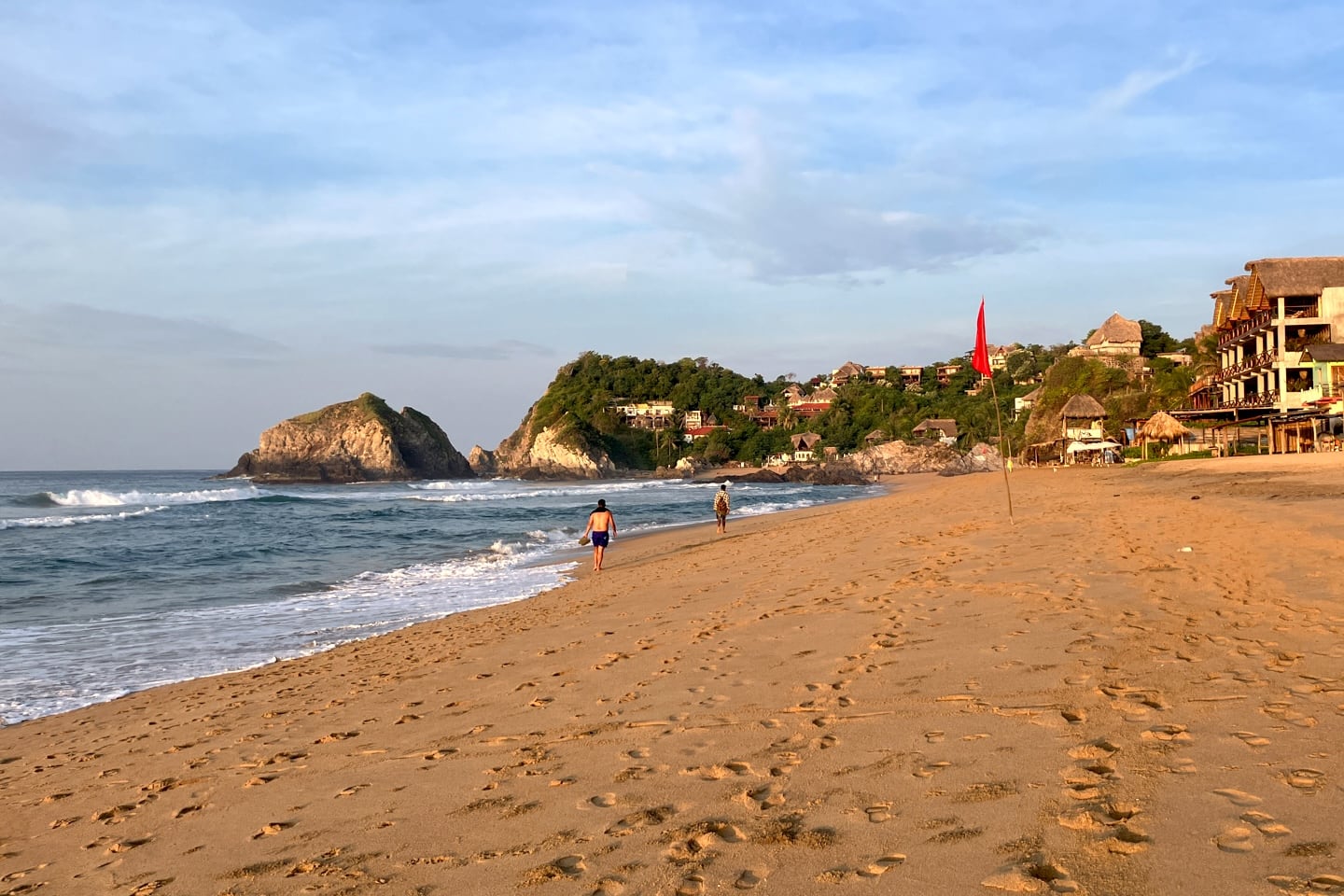
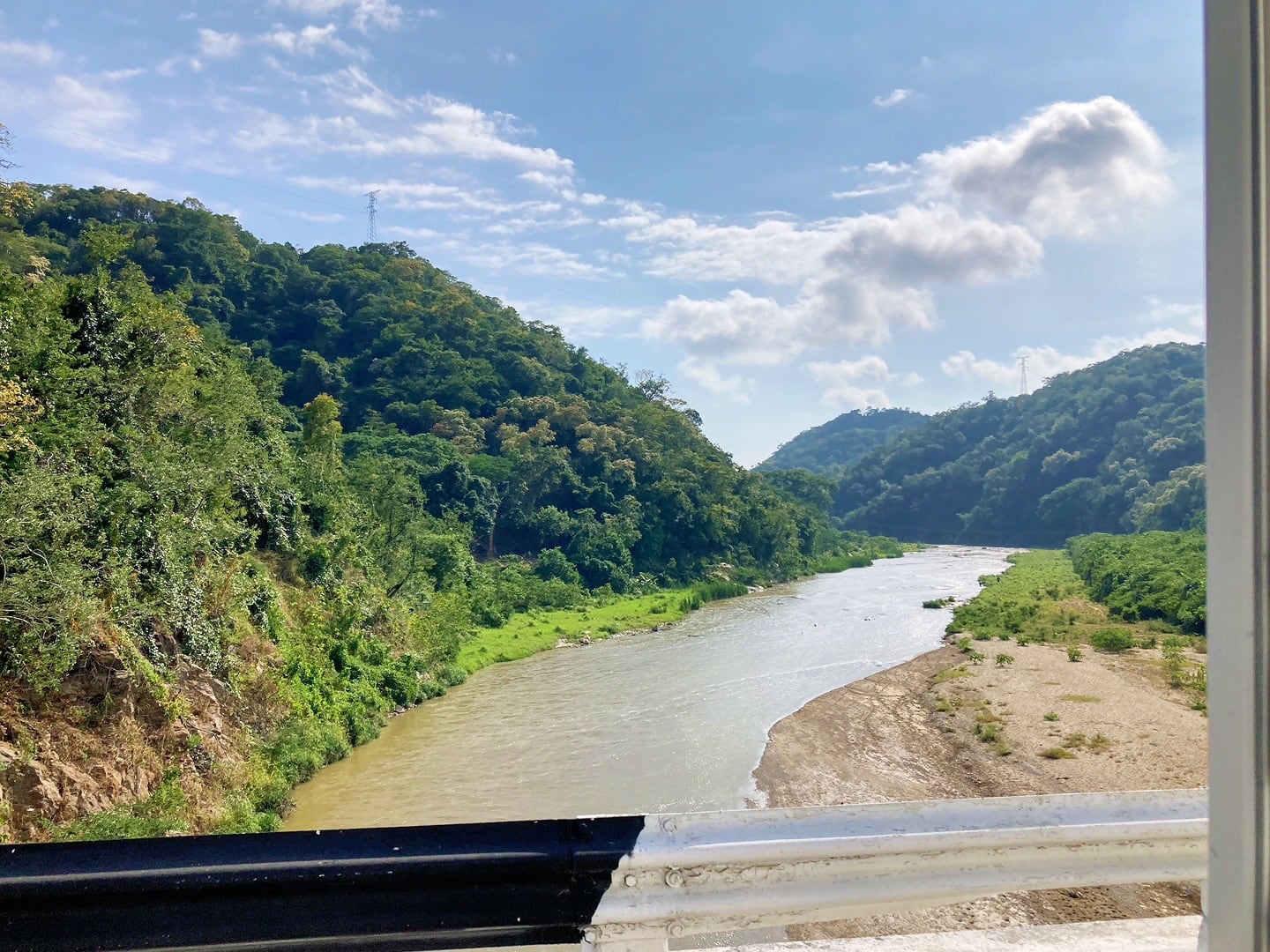
We packed up the RV and set off from Zipolite on a gorgeous mid-November morning.
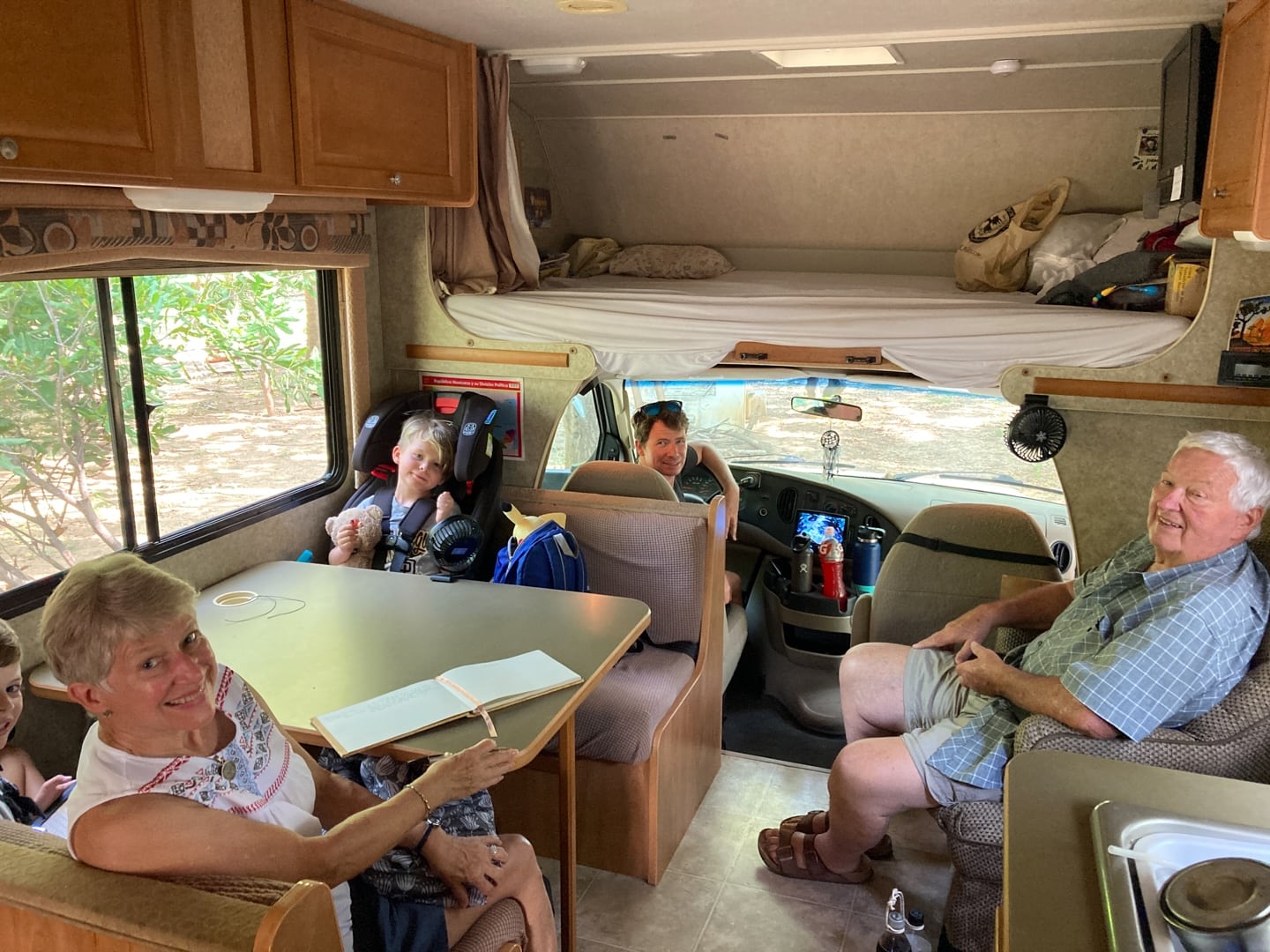
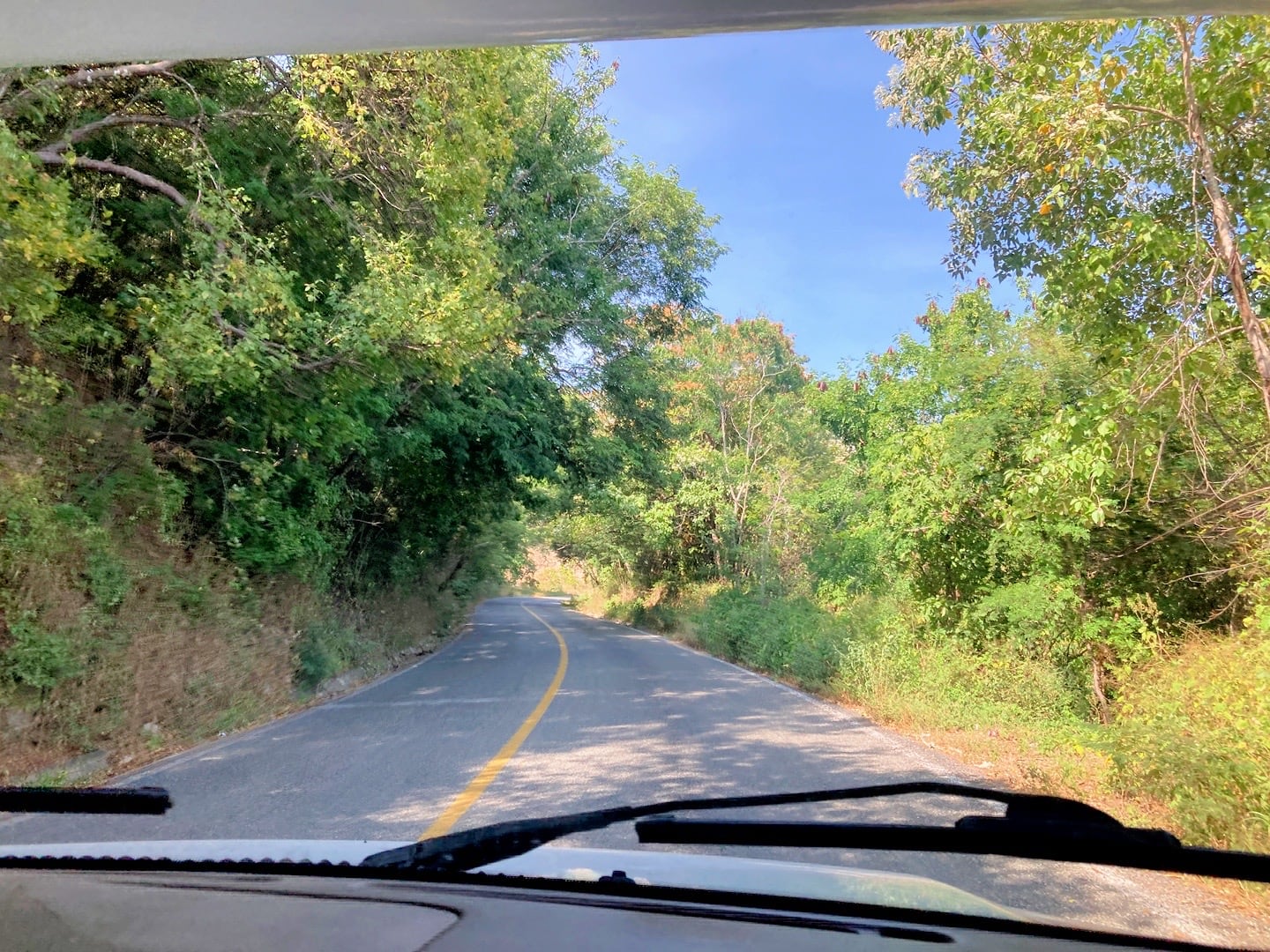
It’s supposed to take around two hours to get from Zipolite to Santa Cruz Huatulco, but we knew the journey would take longer today.
I would need to drop off Ron, Shirley, and one of the boys at the rental car office near the airport, then take the RV out to a storage lot outside of town, lock it all up and grab a taxi back to the rental car office before 3:30pm. Then, drive all of us to the Airbnb in town.
Figured we’d give them the full RVing experience.
But it wasn’t the full Mexico RVing experience until we got waved over at a random military checkpoint in the middle of nowhere and had the RV boarded by a pair of guys in fatigues wielding assault weapons.
We’ve had our fair share of dealings with law enforcement on the road in Mexico over the past four years, but being boarded at a checkpoint was a first. And Lori’s parents were lucky enough to be a part of it.
After a quick peek around, they hopped off and waved us on. Guess a multi-generational family of gringos wasn’t quite what they were looking for. Better luck next time, I suppose.
I did a bit of Google Earth sleuthing ahead of time to make sure I was going to be able to park near the rental car company. But when we arrived, somebody had already taken my spot. PIGS!!!
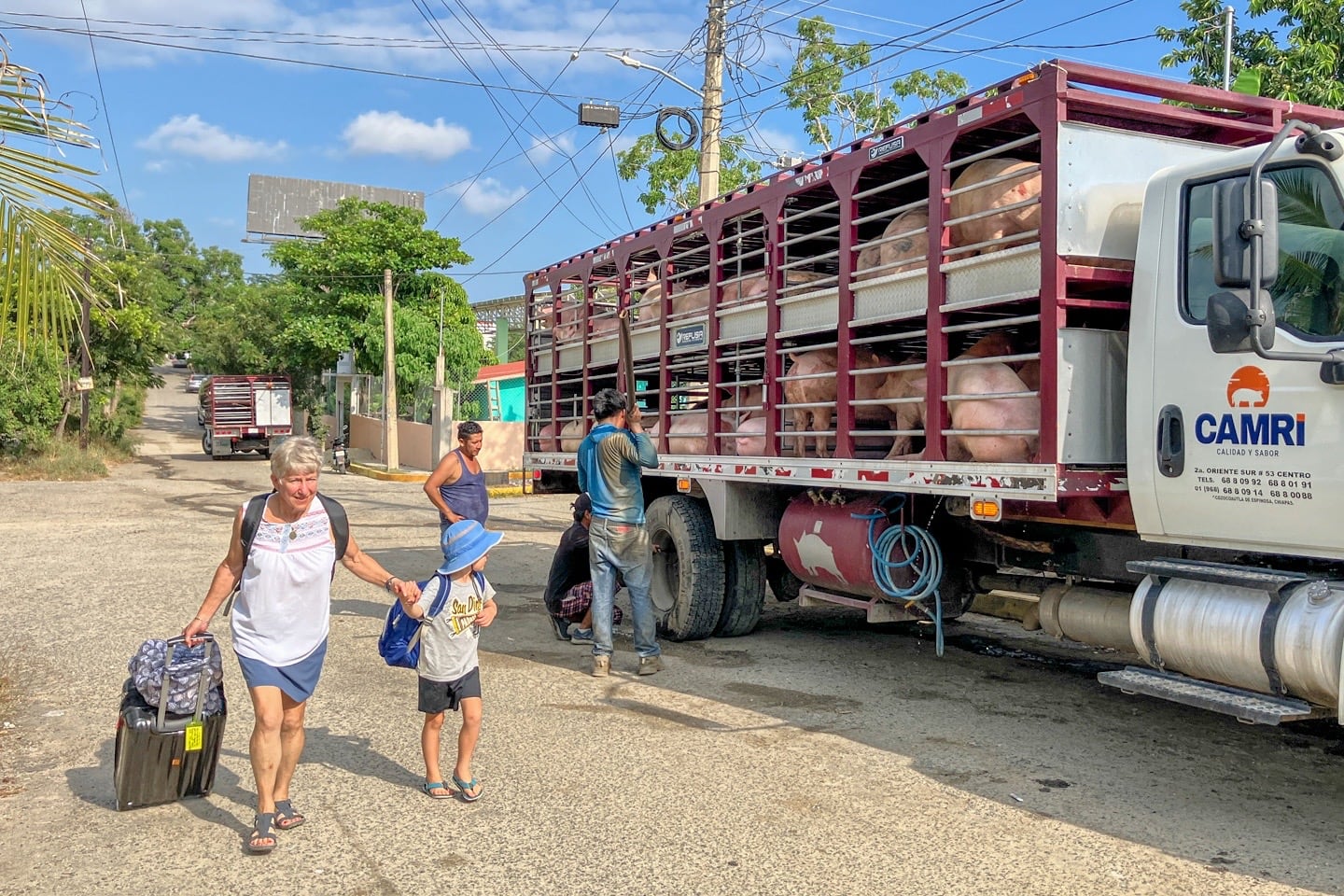
The stench isn’t exactly what you want to subject your in-laws to. Grampy grew up on a dairy farm, so I knew he could deal. But Grammy didn’t deserve this.
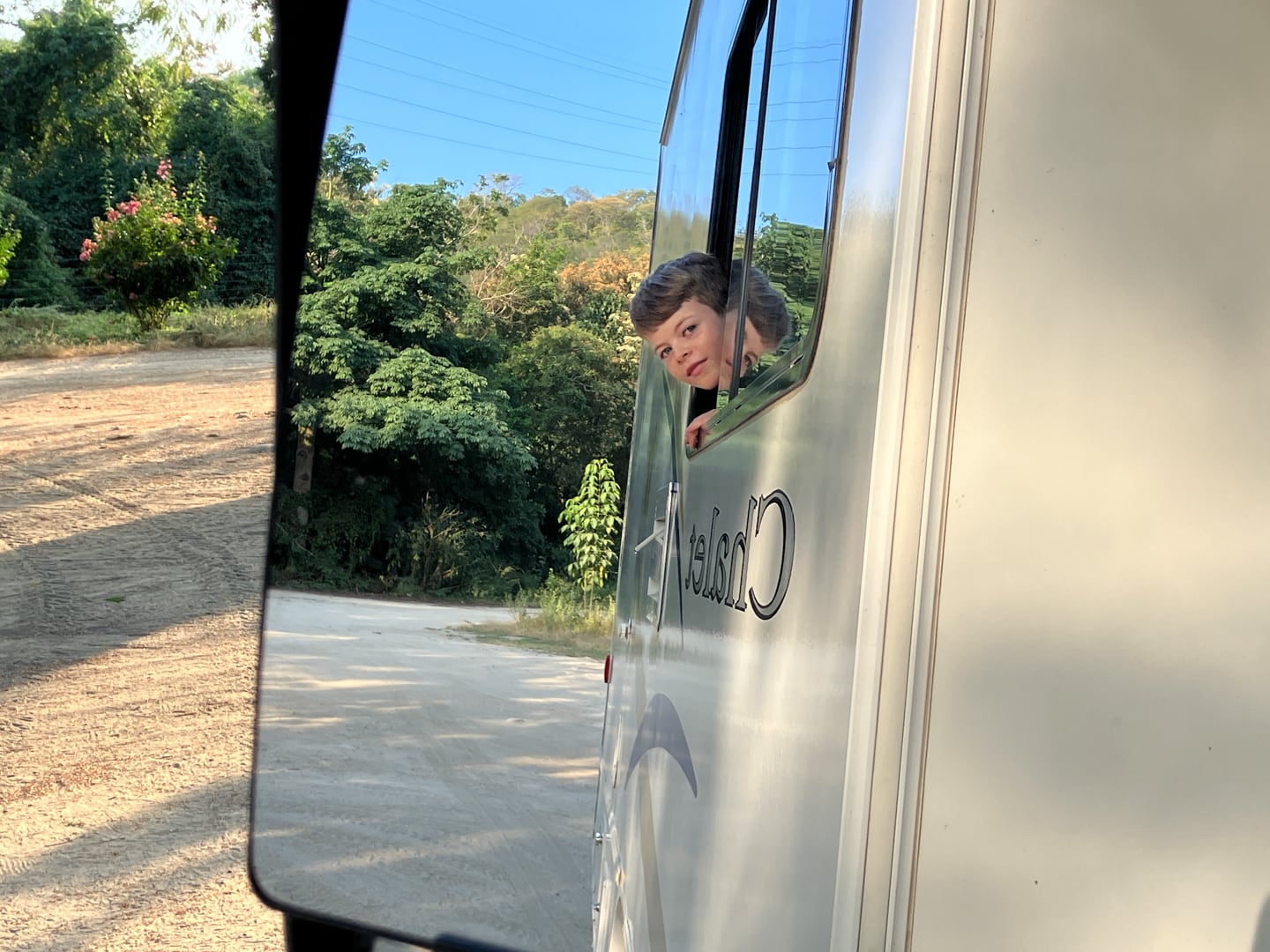
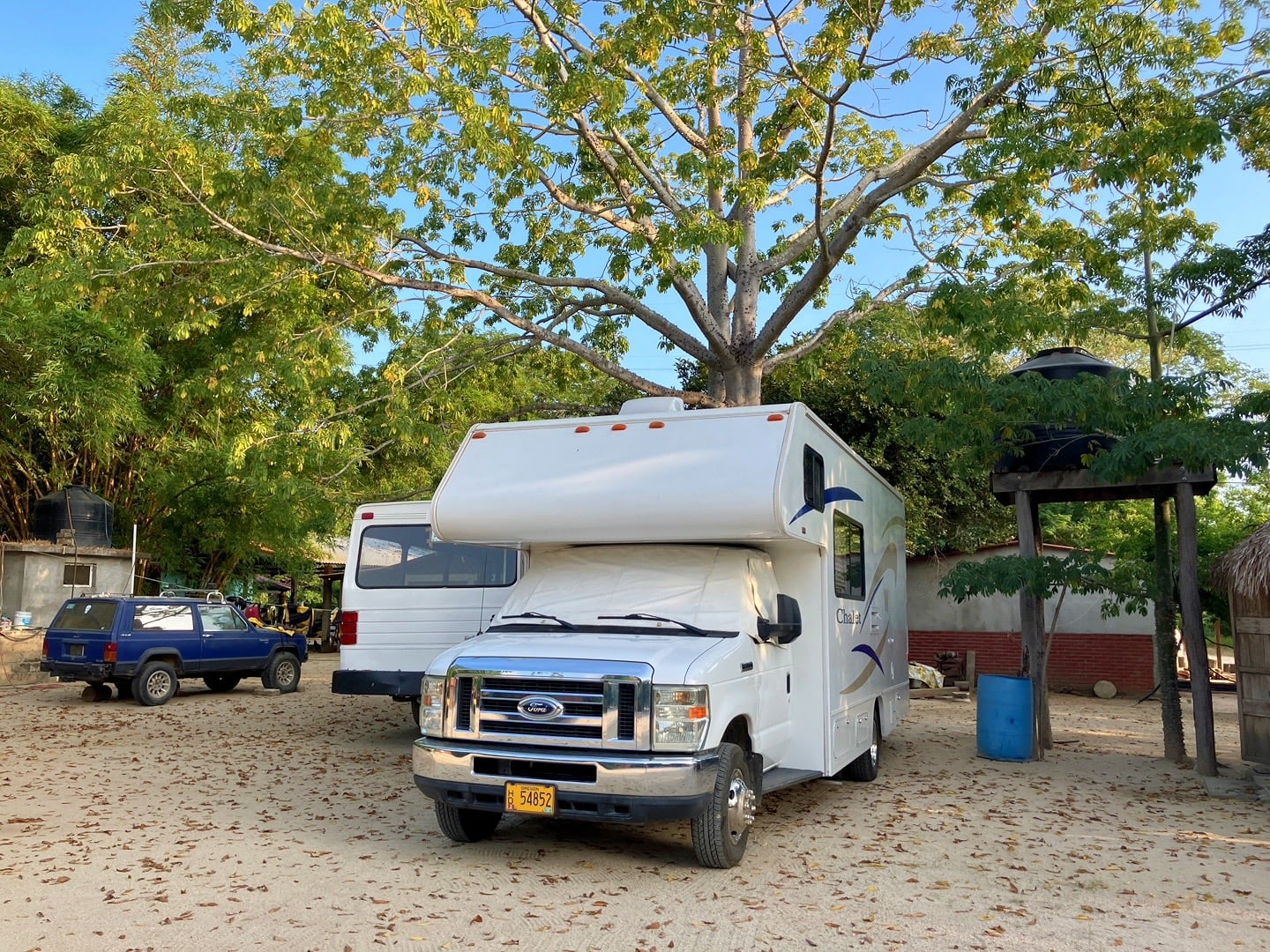
Next, it was on to the storage lot. A quick power-down and lock-up and it was time to make our way back to the airport. See ya in a week, Winnie!
Nobody enjoys a big ‘ol bed more than this guy.
Slow mornings hanging out and reading with Grammy.
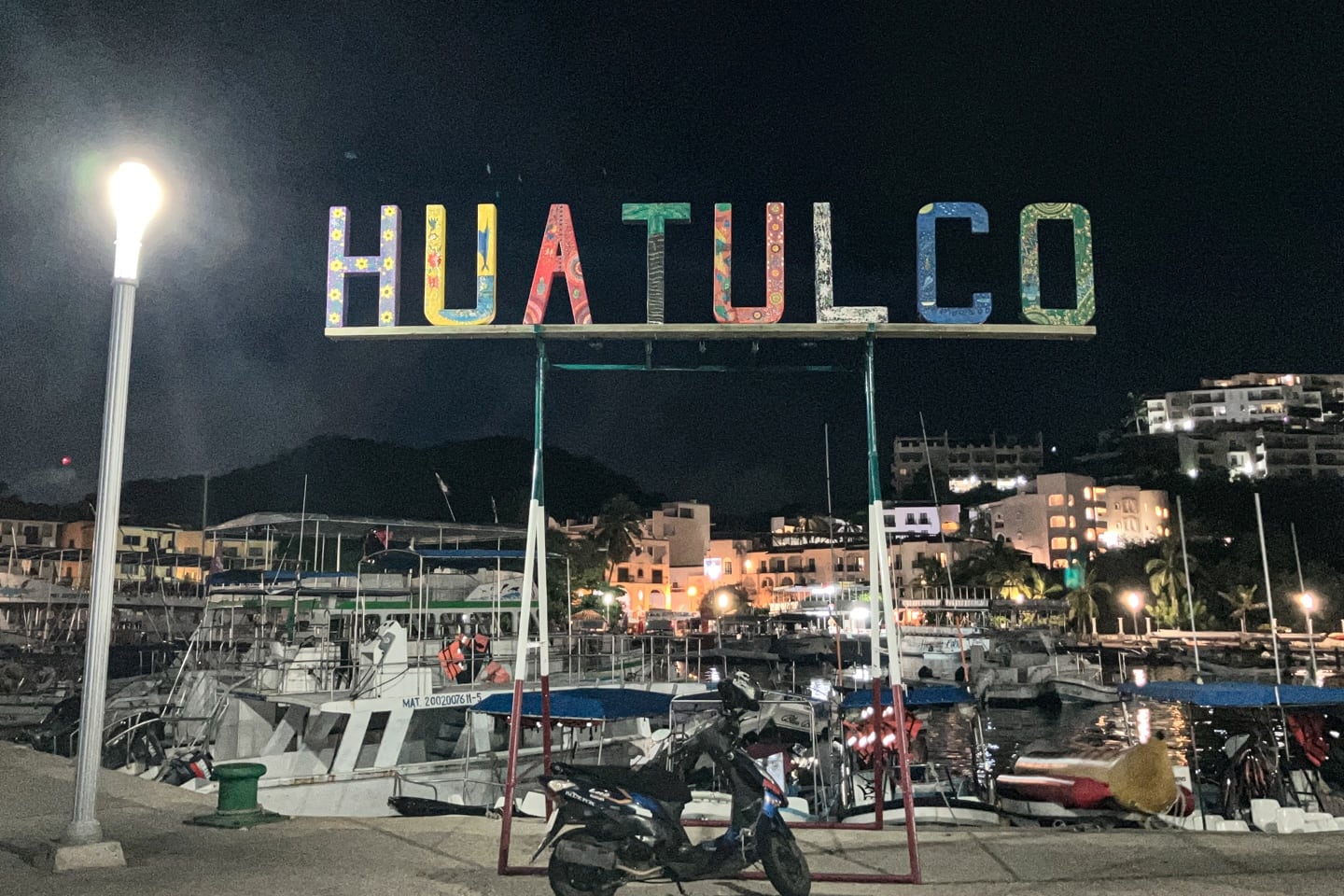
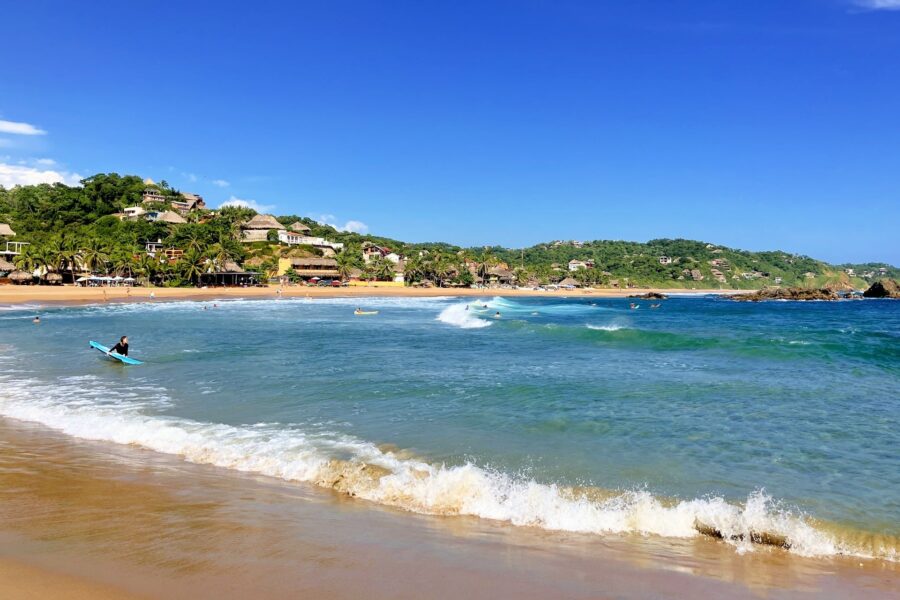
So why Huatulco? Well, the Bays of Hualtuco (Bahías de Huatulco) is a collection of government-designated resort towns built around Huatulco National Park.
The park encompasses nine beautiful bays and 36 idyllic beaches with some of the calmest and most biodiverse waters in the country.
We’re staying in Santa Cruz, which is a small beach community. To access the majority of beaches, however, you need your own wheels, which is where the rental car comes in.
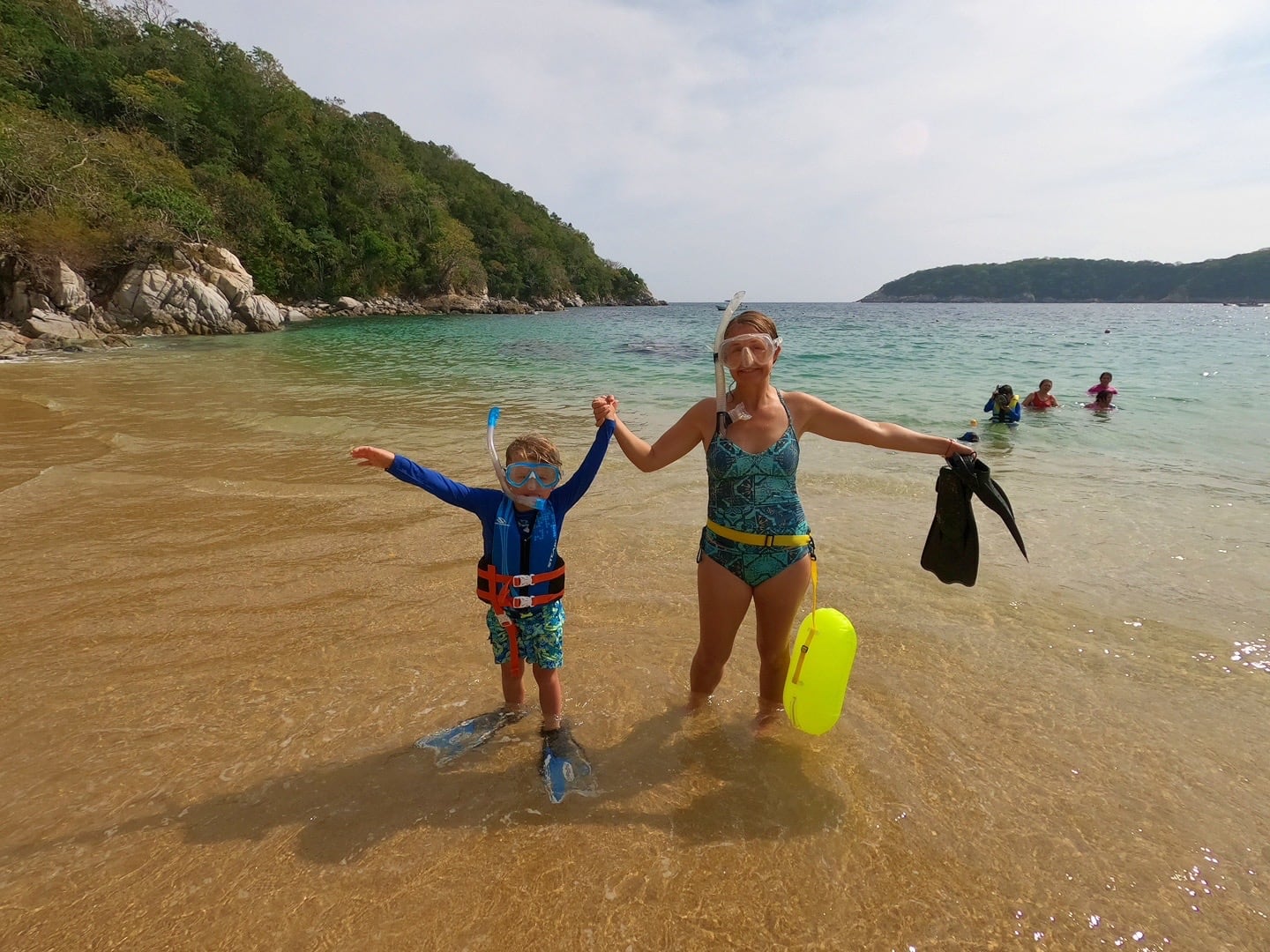
Today, we thought we’d take the boys on a scouting mission to find a good place to return to with our guests. We heard that Playa La Entrega was a good place to start.
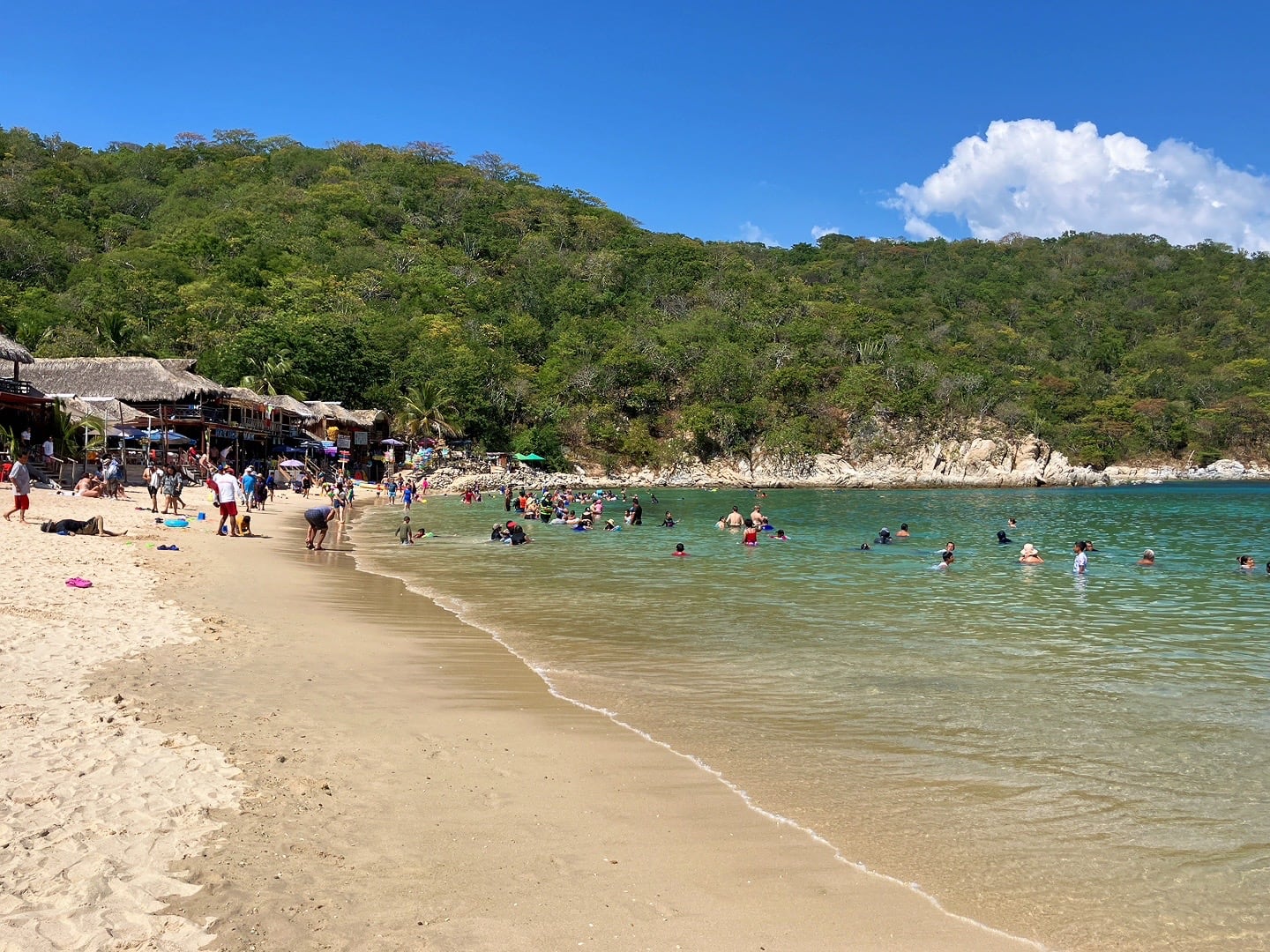
The beach is named for the key role it played in the struggle for Mexican history. It was here in 1831 that Mexican independence hero and former president Vicente Guerrero was betrayed and handed over to his enemies, leading to his execution.
Today, it’s one of the of the closest of the Huatulco National Park beaches to town and one of the best for snorkeling.
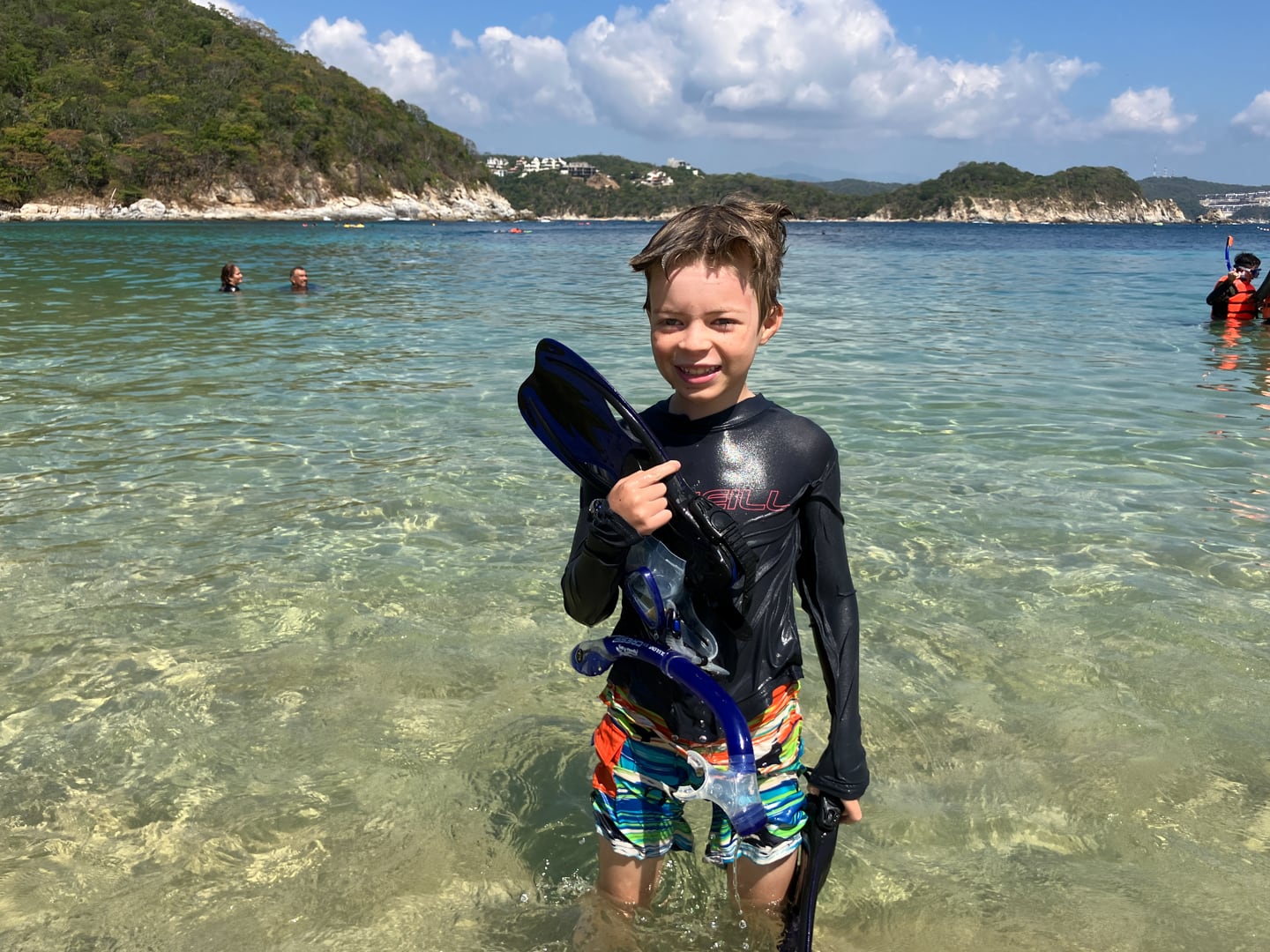
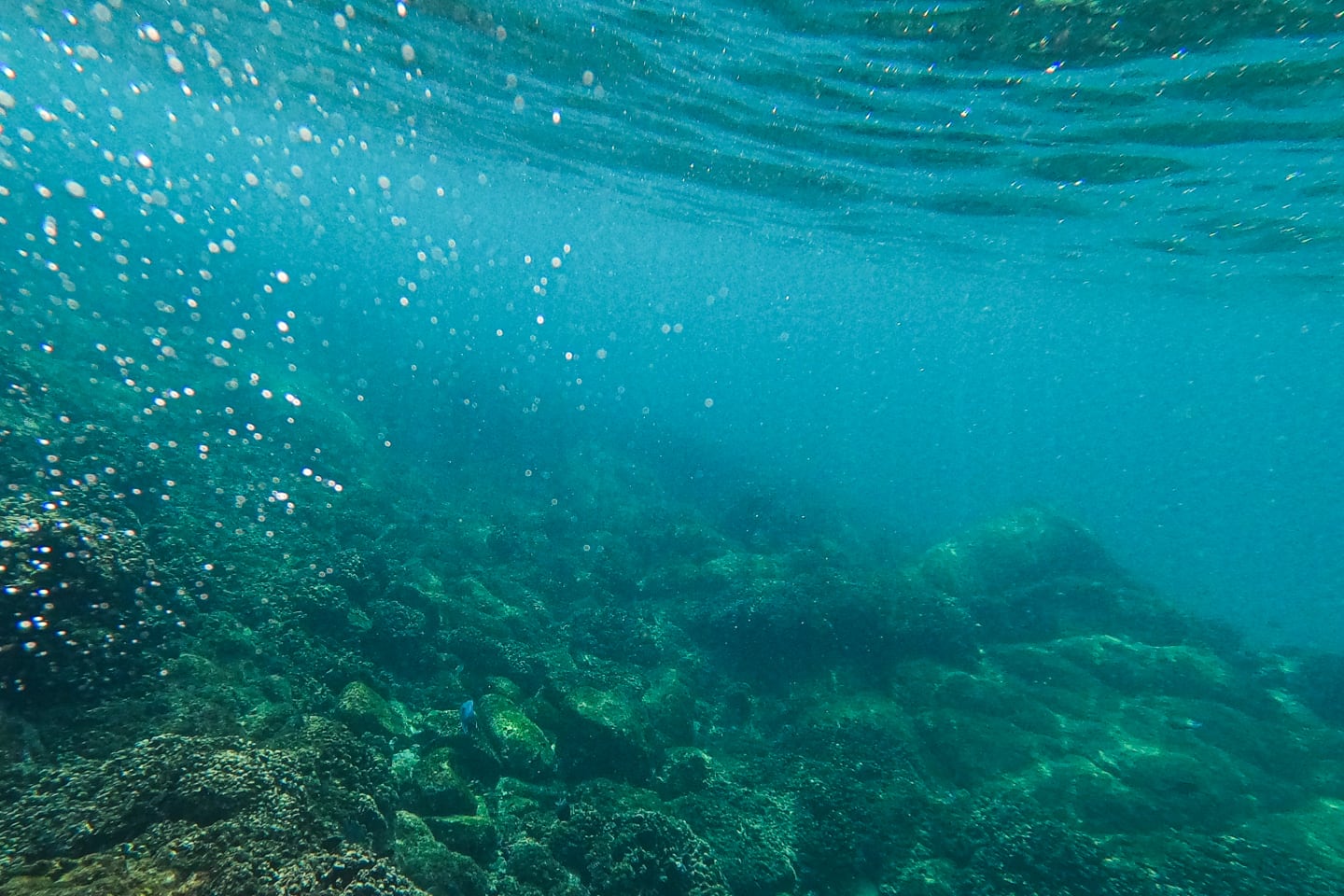
For years, I’ve been hearing that Huatulco has some of the best preserved coral reefs in Mexico and even the world. What I hadn’t heard was that an estimated 70-90% of the reserve’s coral had been decimated by a mass bleaching event last year.
Having lived in La Paz for 18 months, I know what healthy coral is supposed to look like, and this is not that. Five thousand years of development killed off in a matter of months due to a particularly warm El Niño that can most certainly be attributed to climate change.
I’m not sure how anyone this day and age can be a climate skeptic, let alone the President of the United States.
There is a mountain of evidence that our over-reliance on fossil fuels is heating the planet to dangerous levels.
And the effects are all around us, from record-breaking heat, wildfires, rainfall/flooding, hurricanes, and tornadoes, to air turbulence, polar ice cap and glacial melting, and coral bleaching—all on an unprecedented scale.
We’ve seen the effects everywhere we’ve lived and traveled, from Asia and Africa to Latin America and especially the Western U.S.
That’s not to say that we didn’t see marine life. We did, in relative abundance, but not near the levels we’ve heard about in the past.
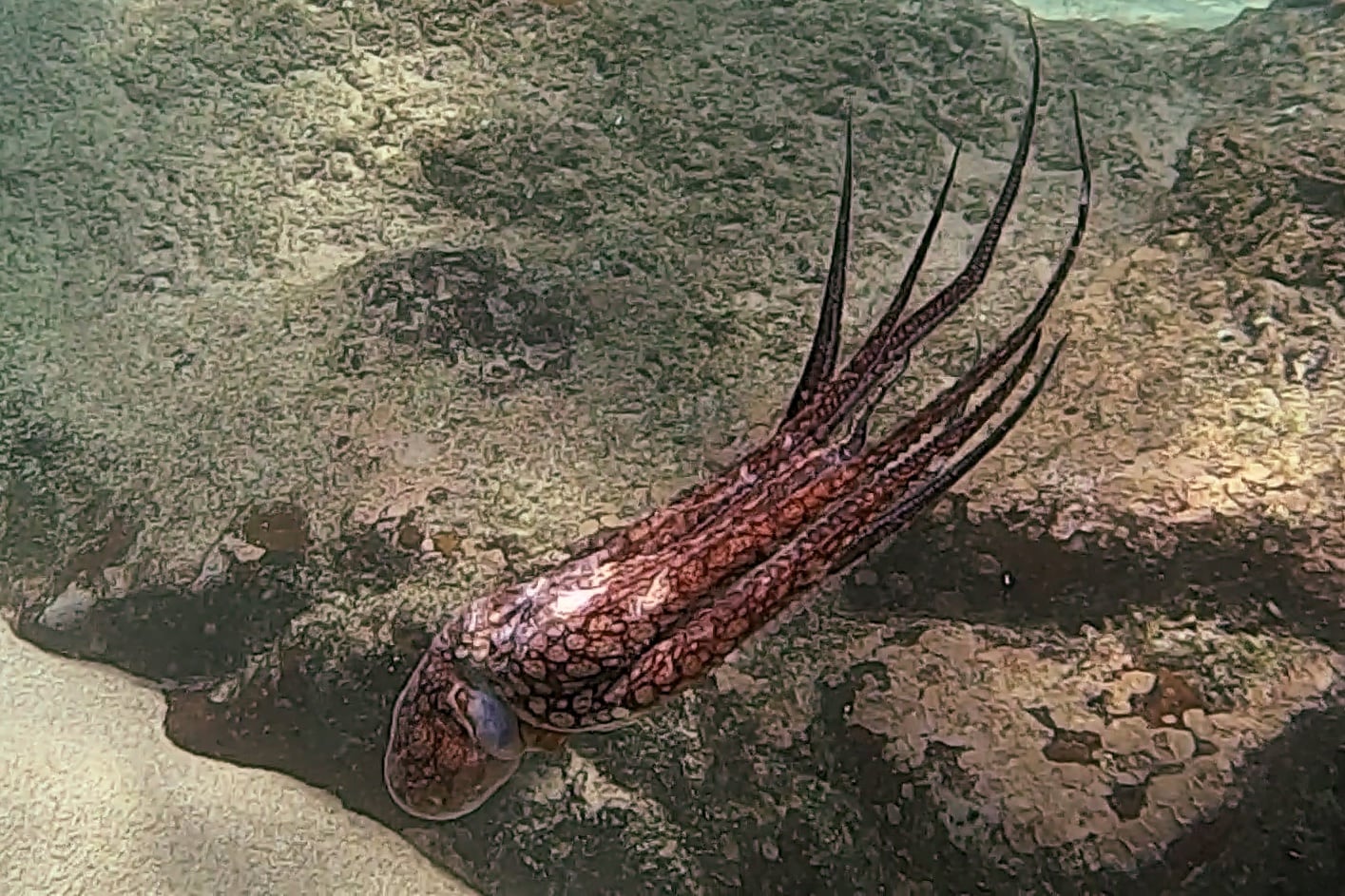
Now, looking back on the few photos I have of the critters here, I can’t help but feel sorry for them. I can’t help but feel angry for so many people’s continued ignorance and inaction.
Once these things are gone, they are very unlikely to return in our lifetime.
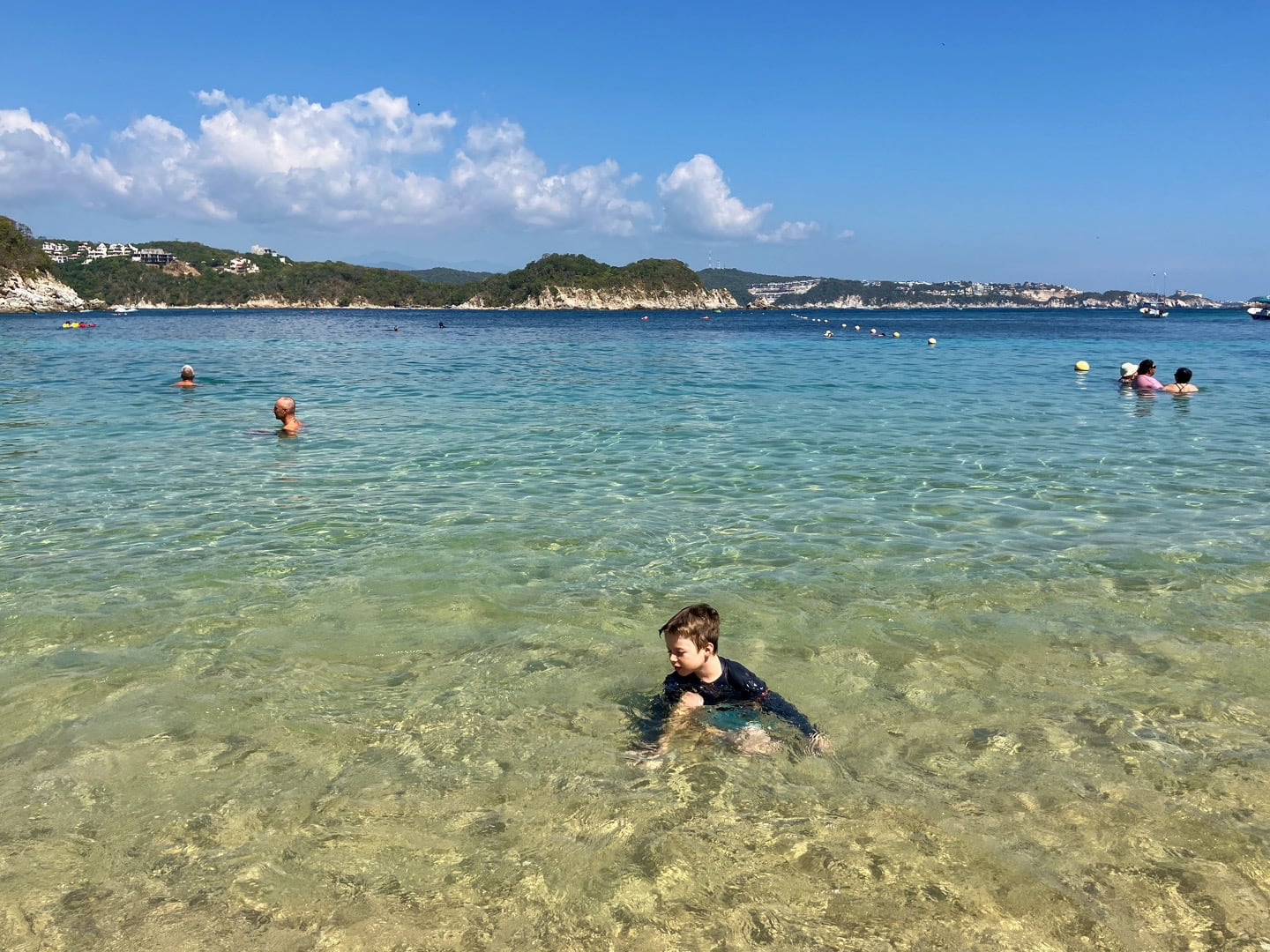
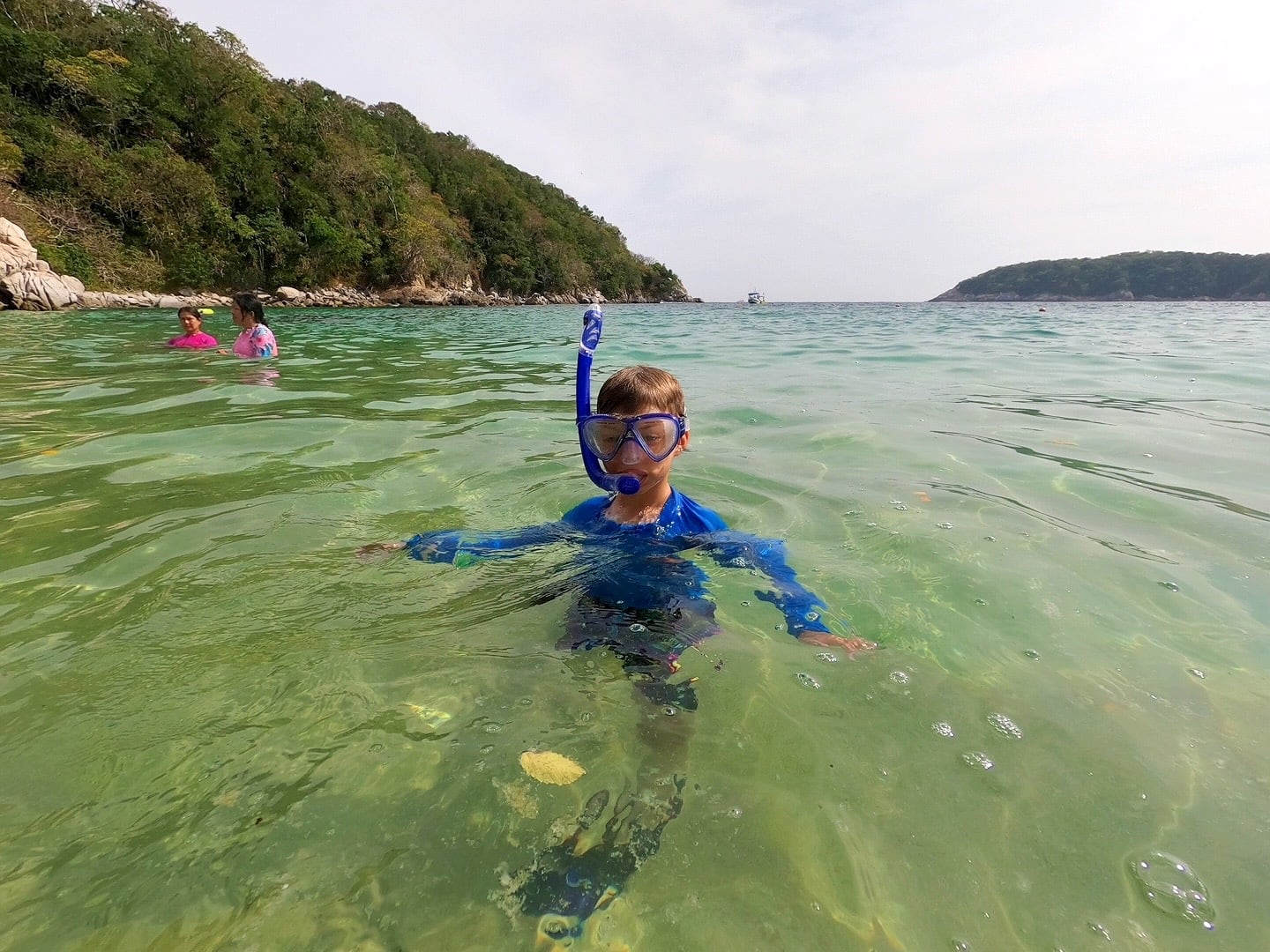
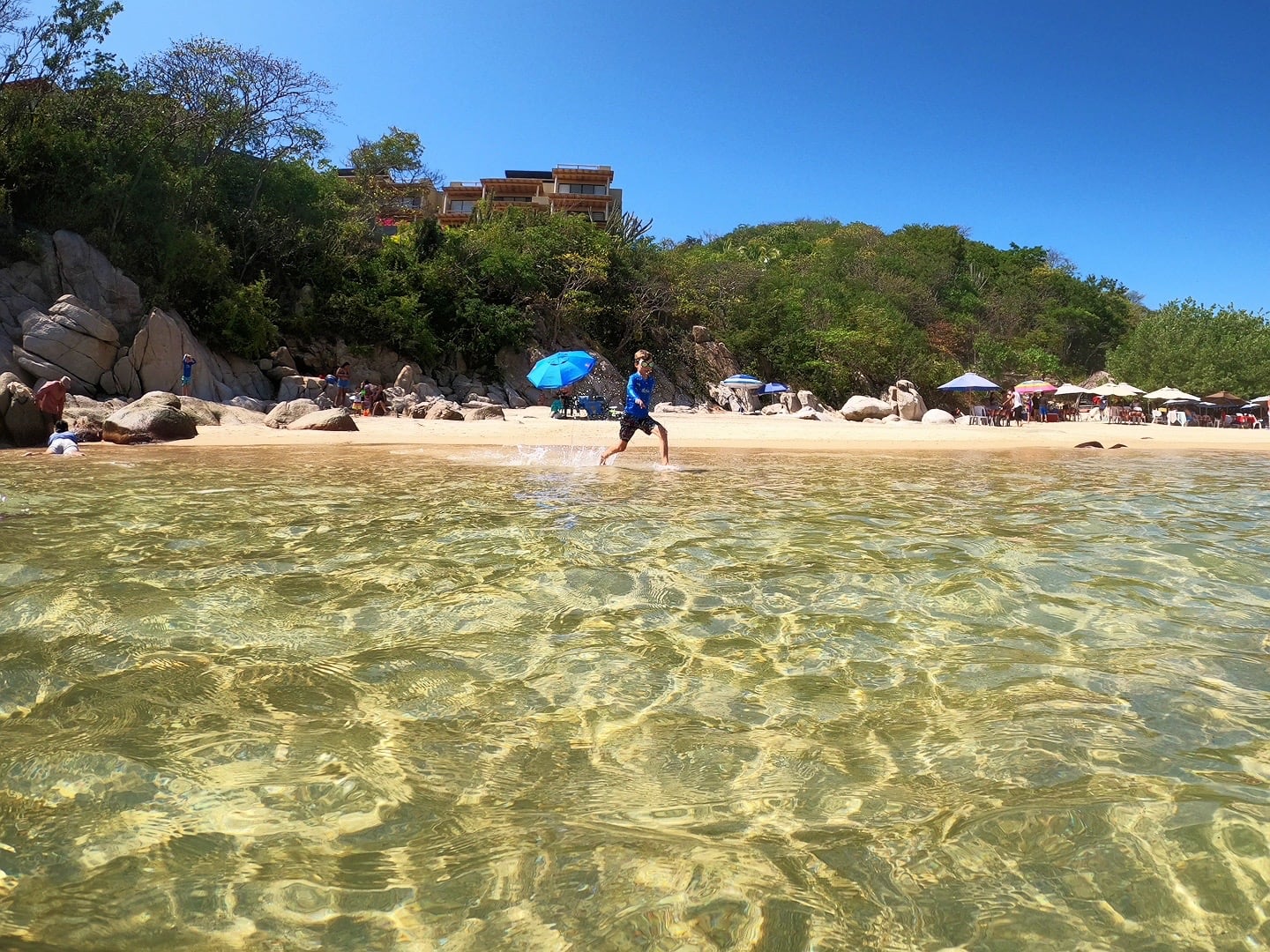
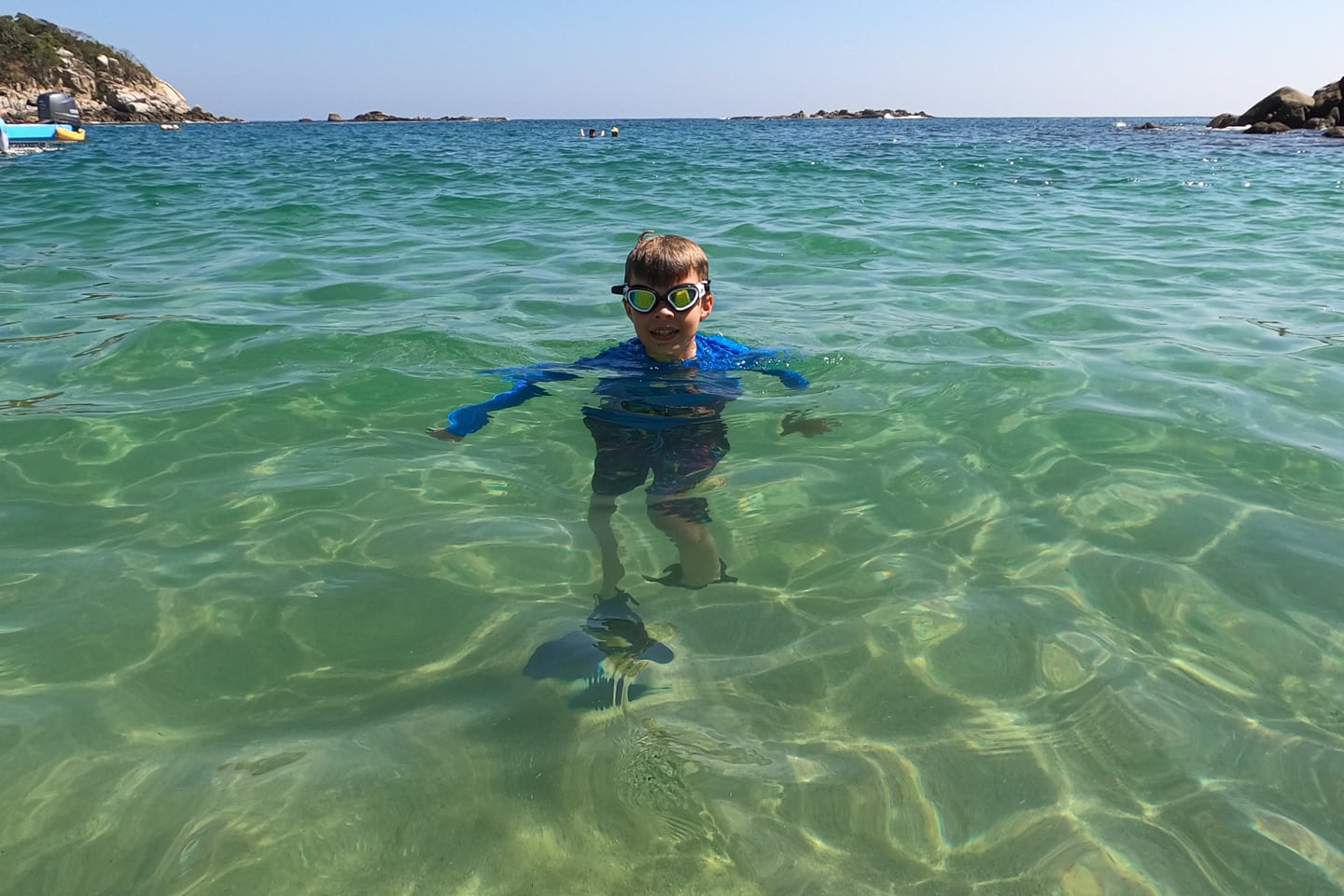
On a positive note, we couldn’t get over how clear and calm the water is here—perhaps even clearer than the beaches around La Paz, which we didn’t think was possible.
The difference here is there is a lot more to see in a small area. In the photo above, most of what you see out there where it turns to deep blue is all coral reef. I can’t begin to imagine what it must have been like just a couple of years ago.
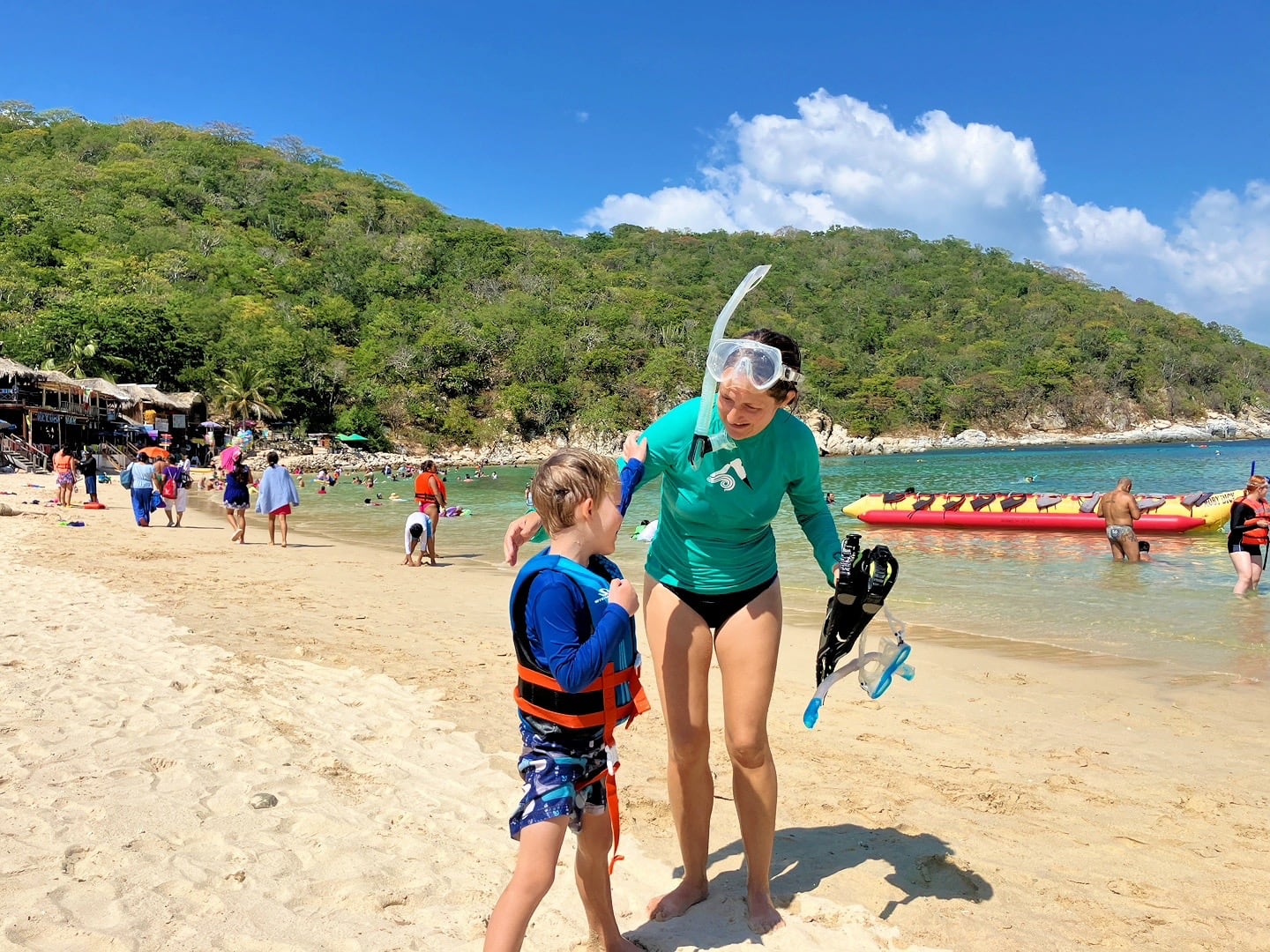
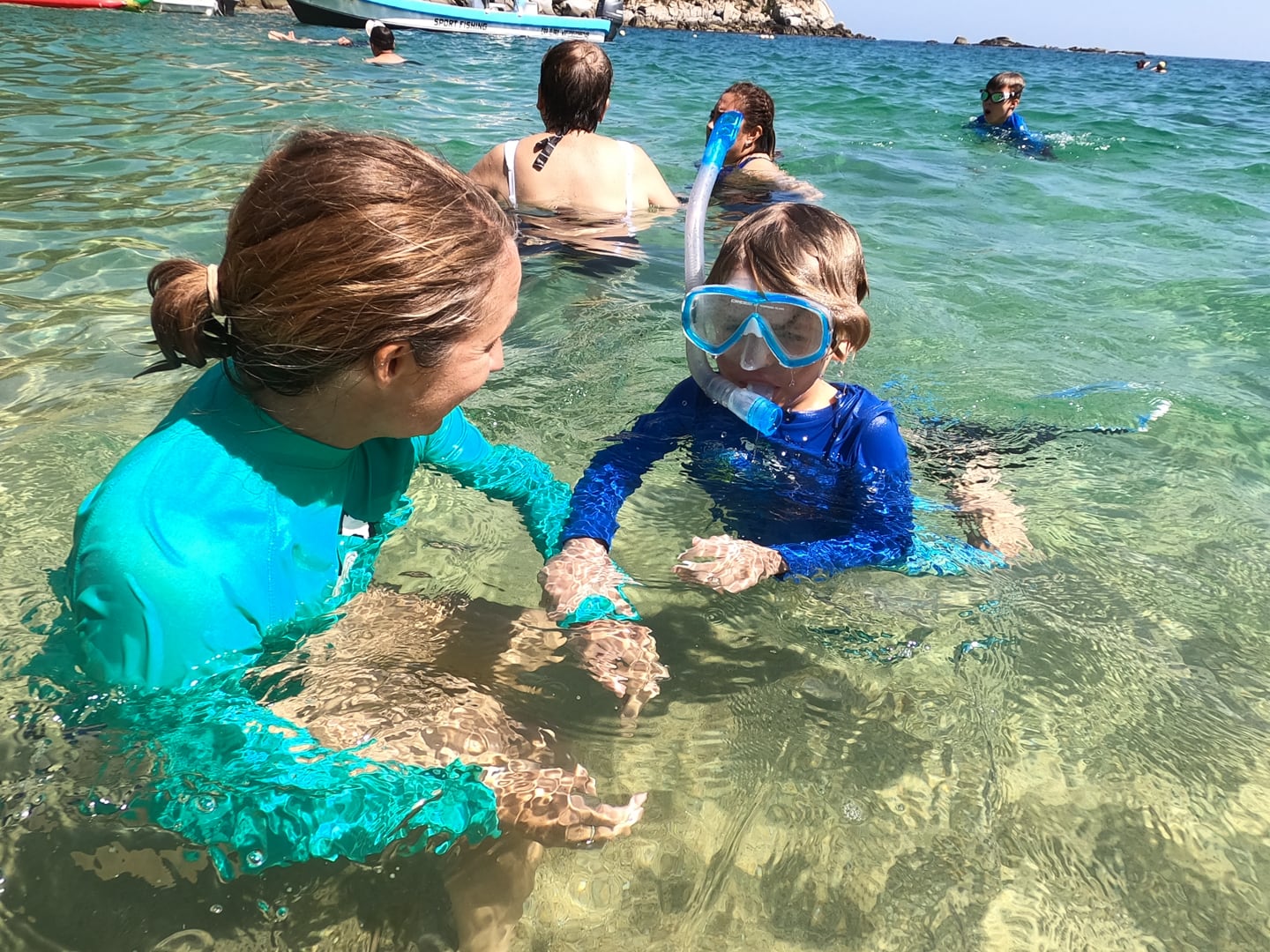
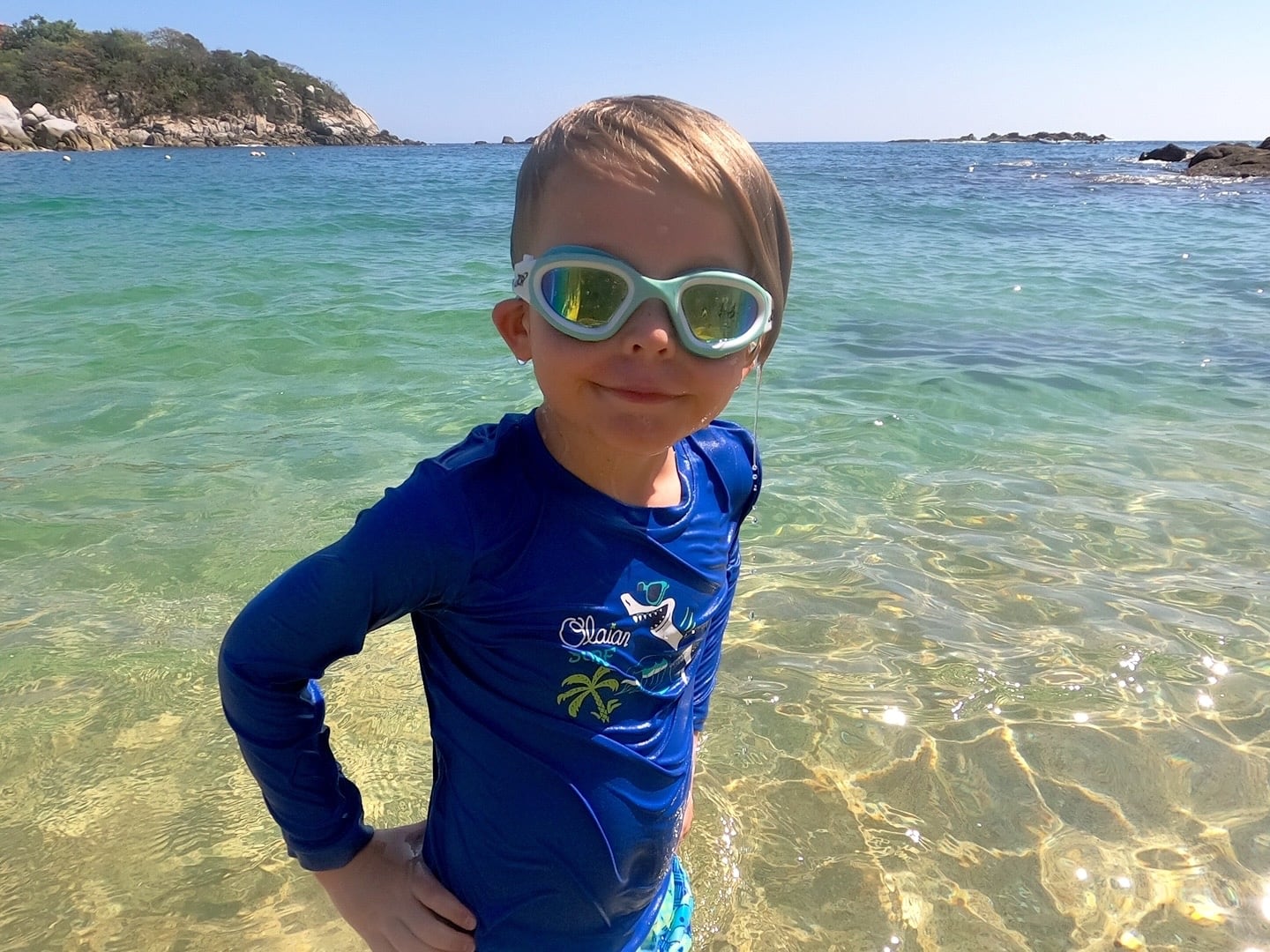
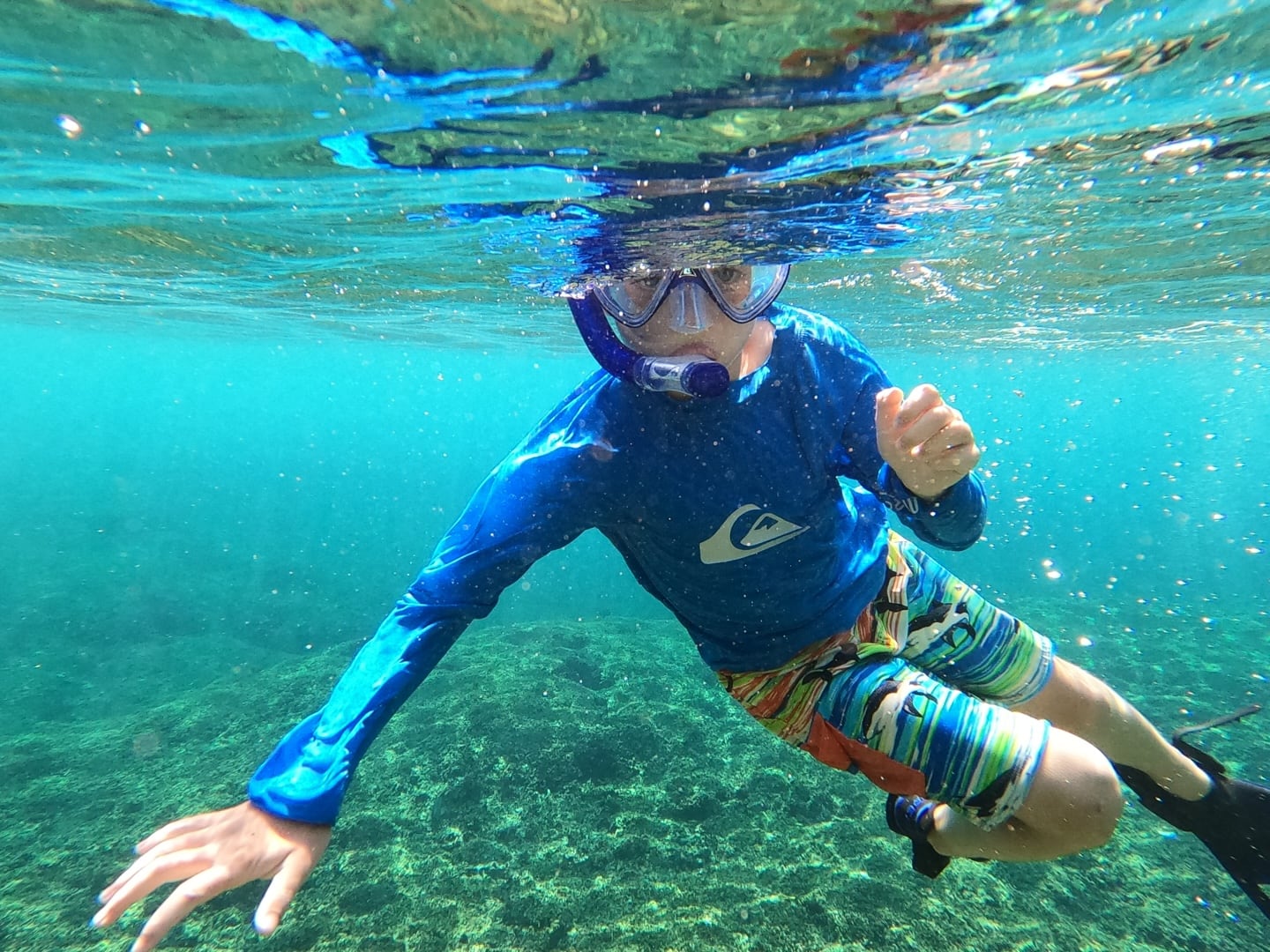
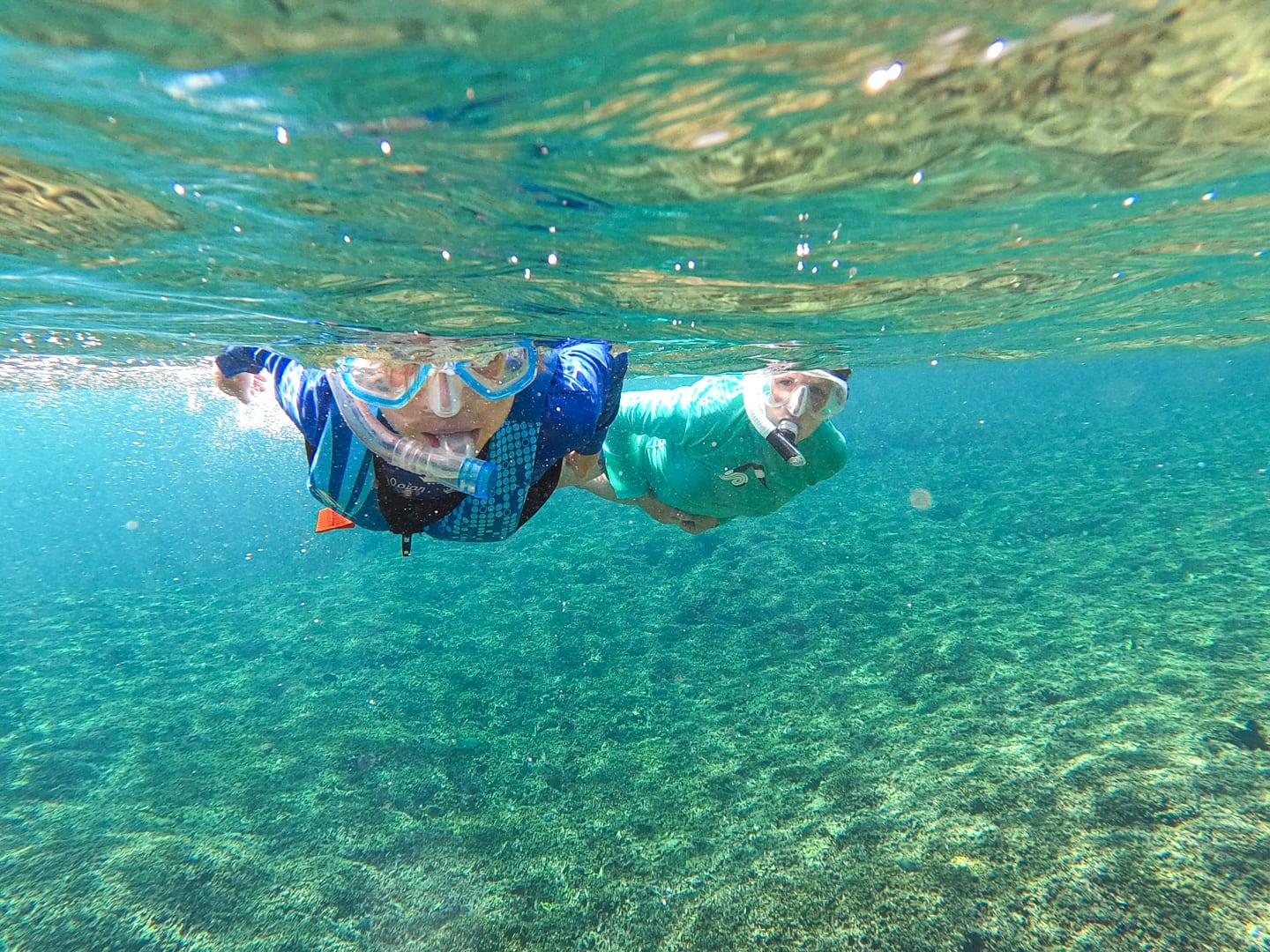
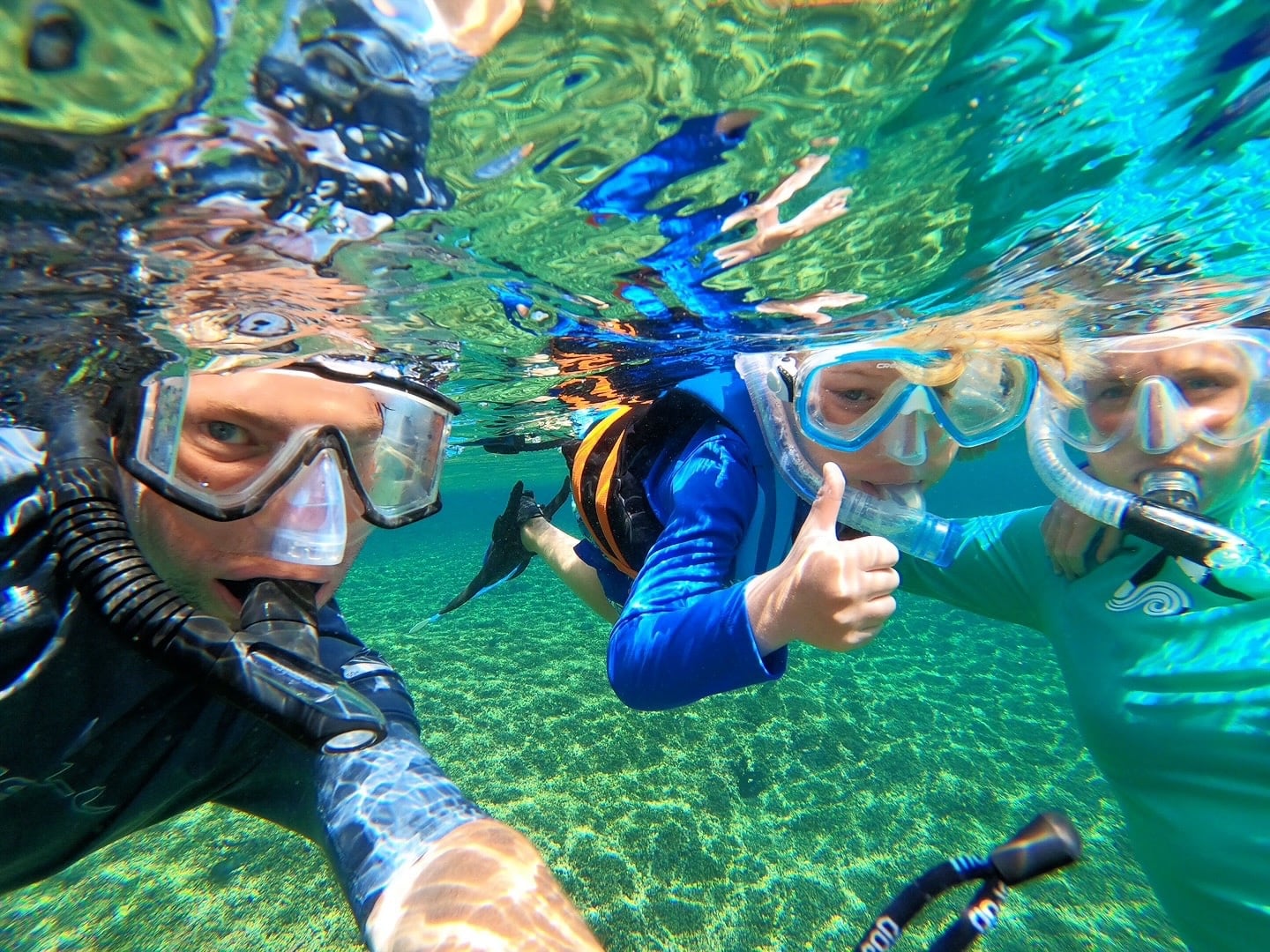
Noe’s always down for snorkeling, but this time we were even able to convince Riley to come out with us. He’s usually content to stick close to shore, but the water was just calm and clear enough to change his mind.
A successful scouting mission. We’ll definitely be back with reinforcements in a couple of days.
After showers, it was off to catch the sunset at our local beach—Playa Santa Cruz, followed closely by dinner.
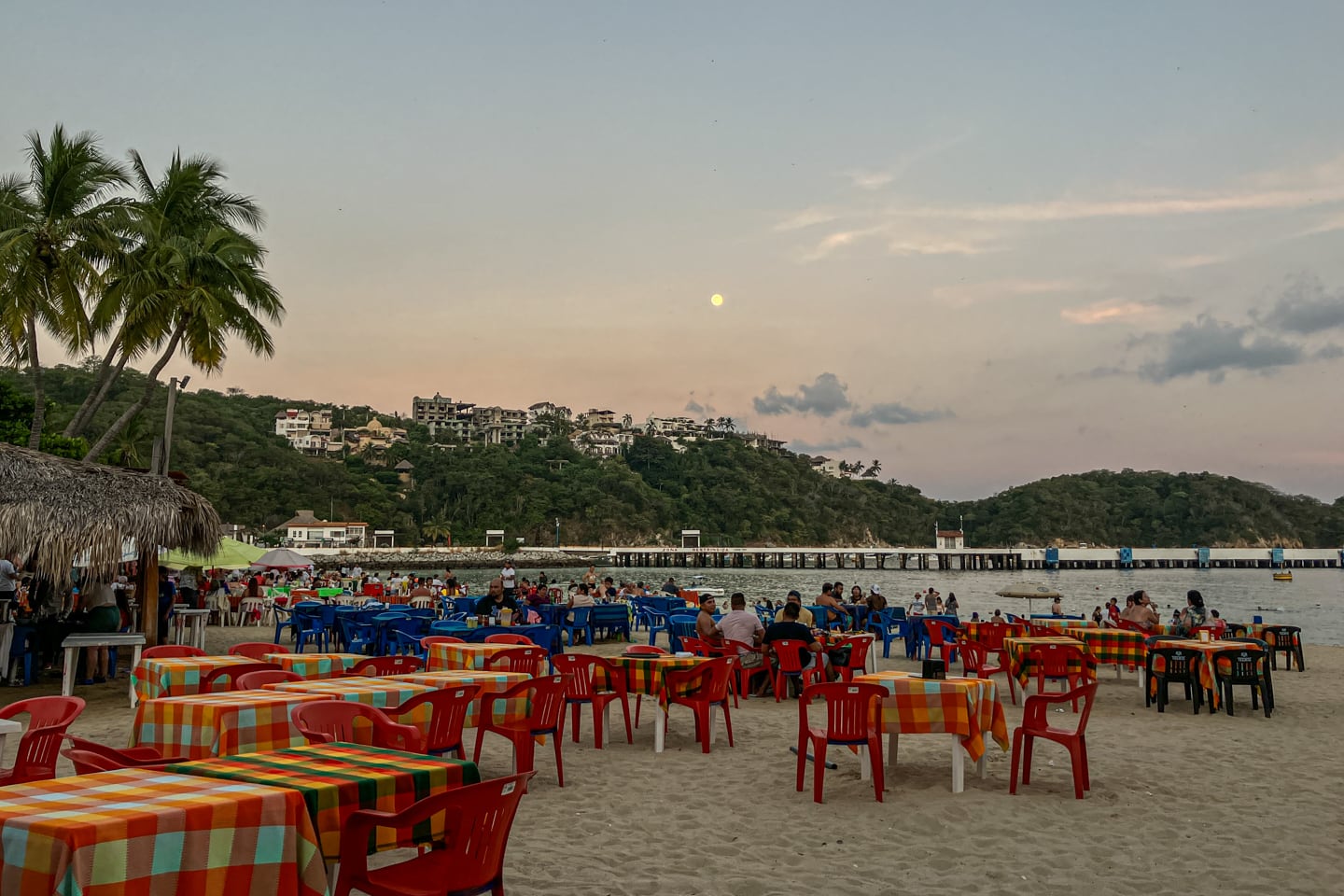
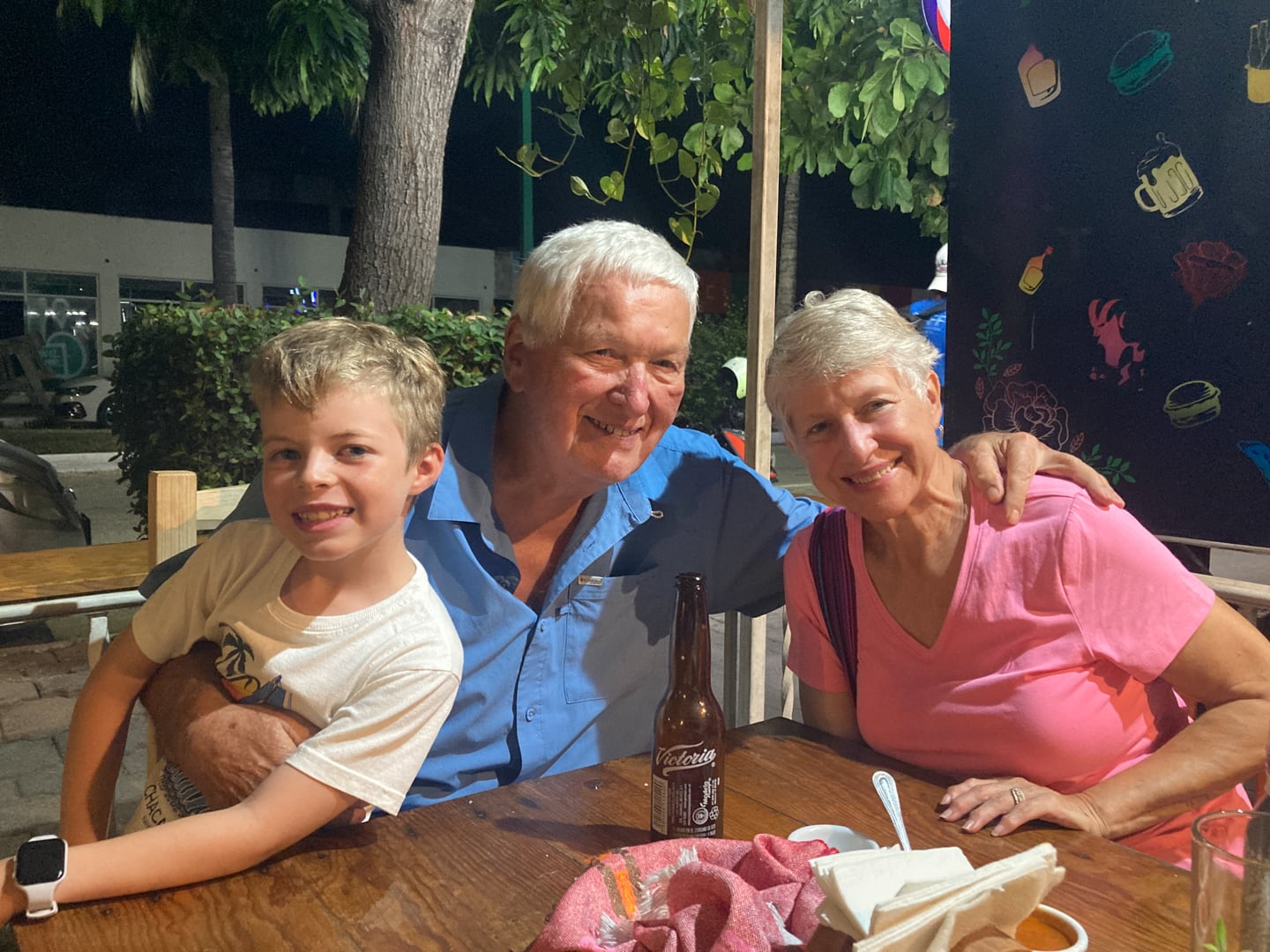
The next day, Grammy and Grampy snagged a few more hours of rest time while the four of us did a bit more exploring.
This time, we made sure to hit beaches we didn’t think they’d want to join us on. These two beaches were a bit harder to access and required a hike to get to.
The first place we tried was Playa Maguey, which was busy and required a fee to park. We continued on to the next, but not before driving in circles a few times.
Eventually, we found the access point to the first—Playa del Órgano—after driving past it several times. It’s unmarked from the highway and easy to miss.
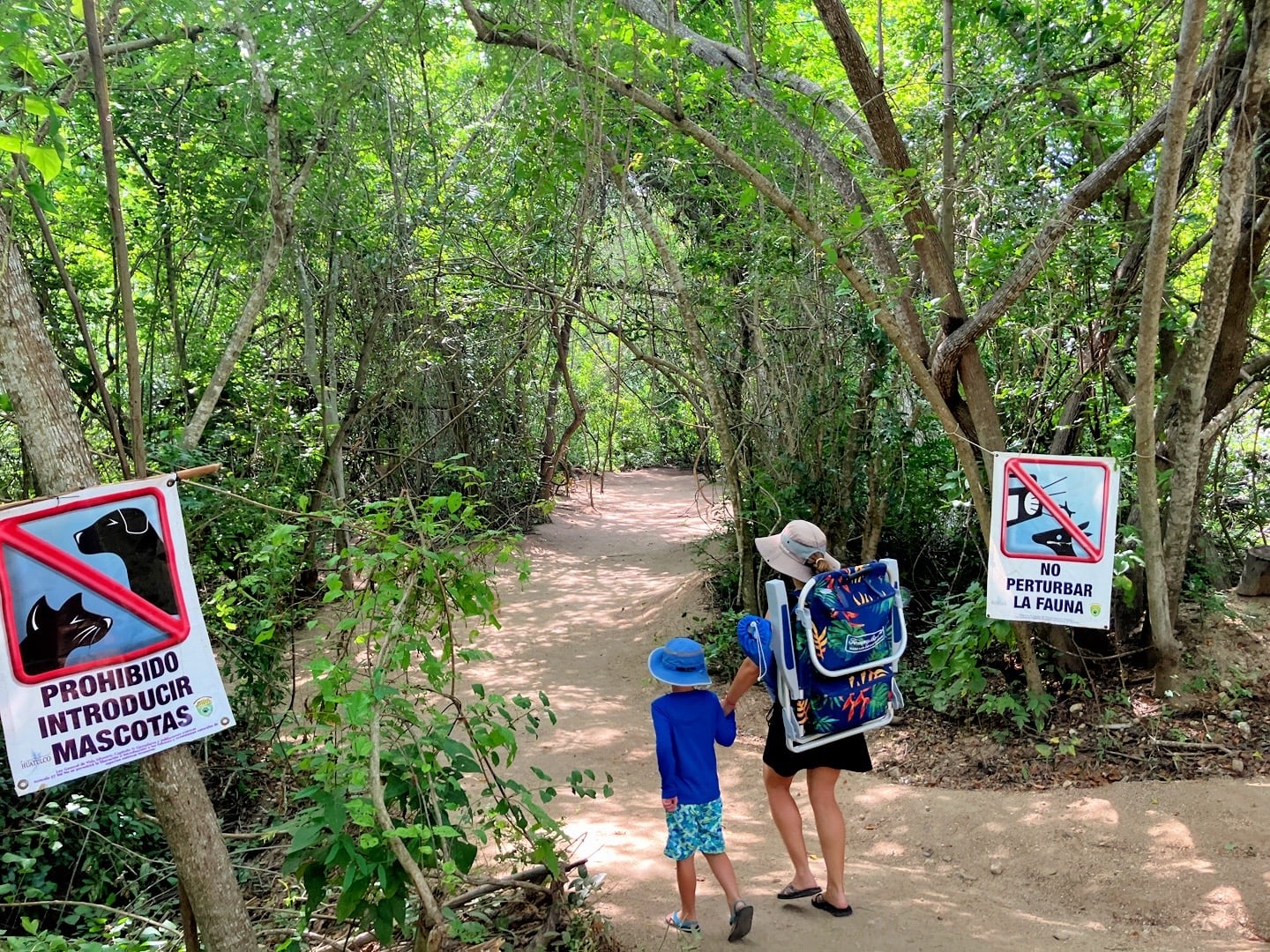
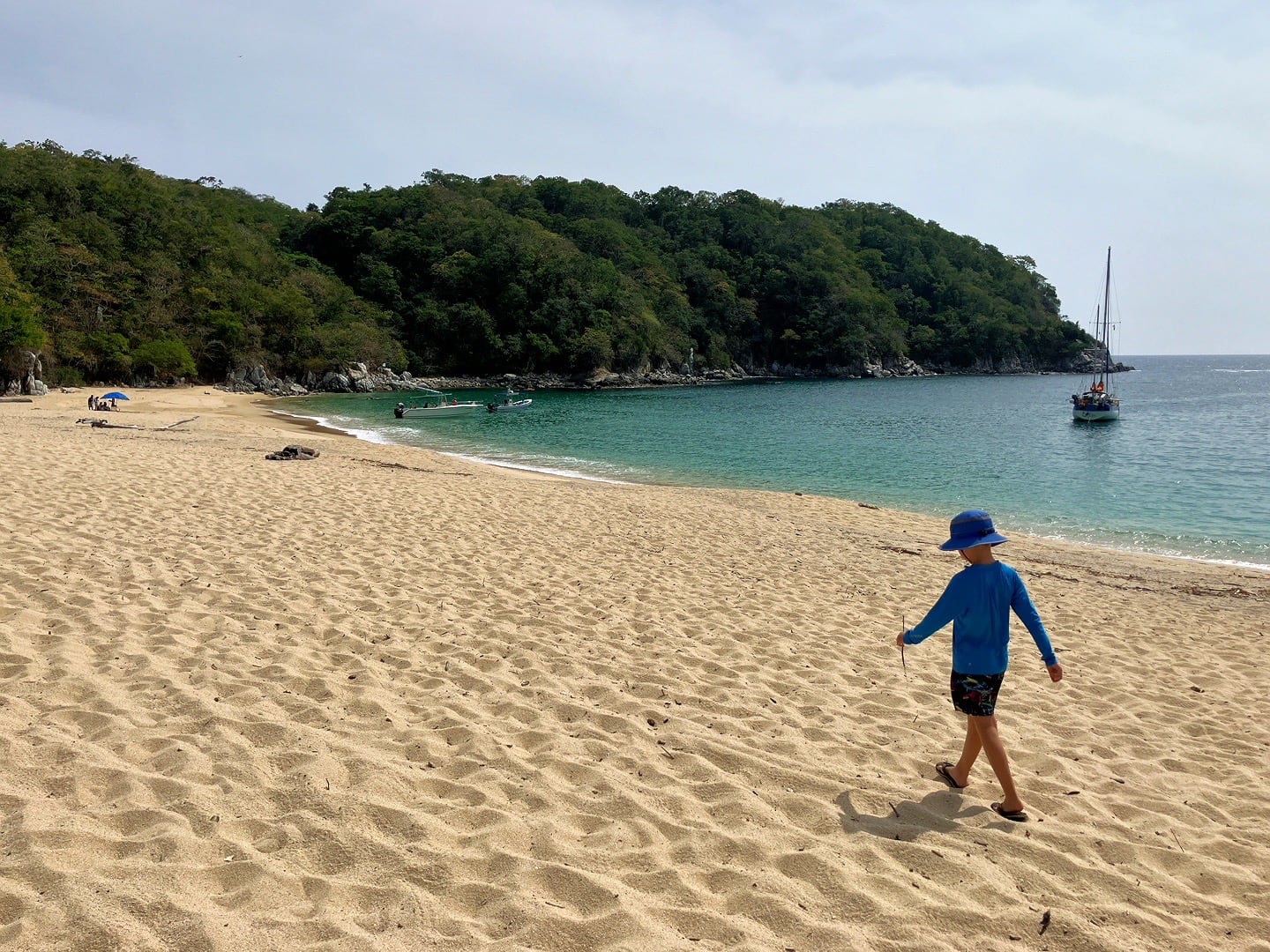
The visibility wasn’t as good as La Entrega the previous day, but there were pockets of healthy coral and colorful marine life, making it a worthwhile outing.
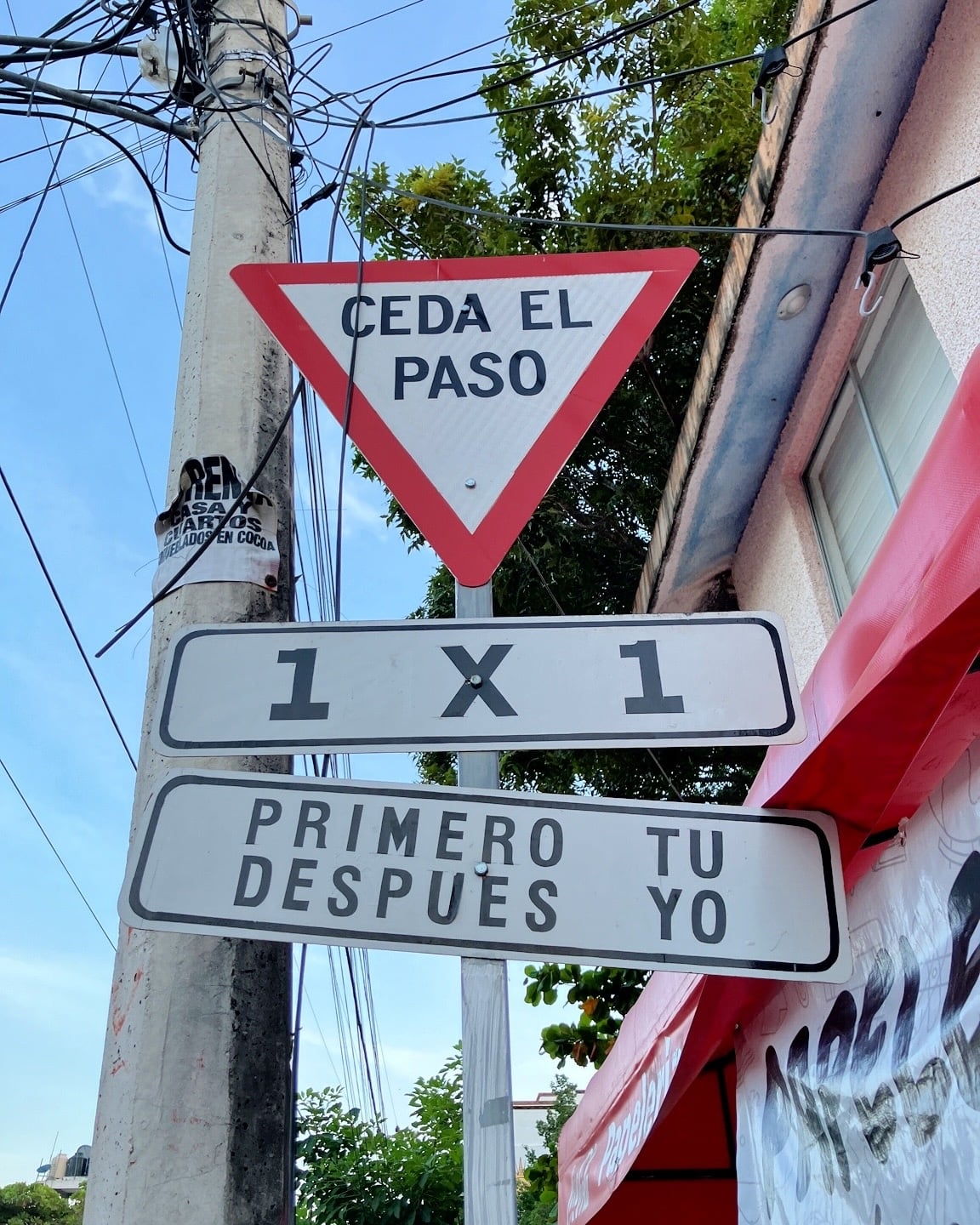
“First you, then me”.
Grampy is celebrating a milestone birthday next month. So we wanted to throw him a special celebration here in Mexico while we’re all together. Which brought us to the nearby town of La Crucecita.
The town has a sad history that most visitors probably are unaware of. Long an important fishing village and trading center for the indigenous Zapotec and Mixtec, the local people were forcibly removed in the 1980s by the government to make way for the construction of an “eco-tourism” resort city.
The entire population was relocated 20 miles inland (mind you, most of these people’s livelihoods were tied to the water) to the town of Santa Maria Huatulco.
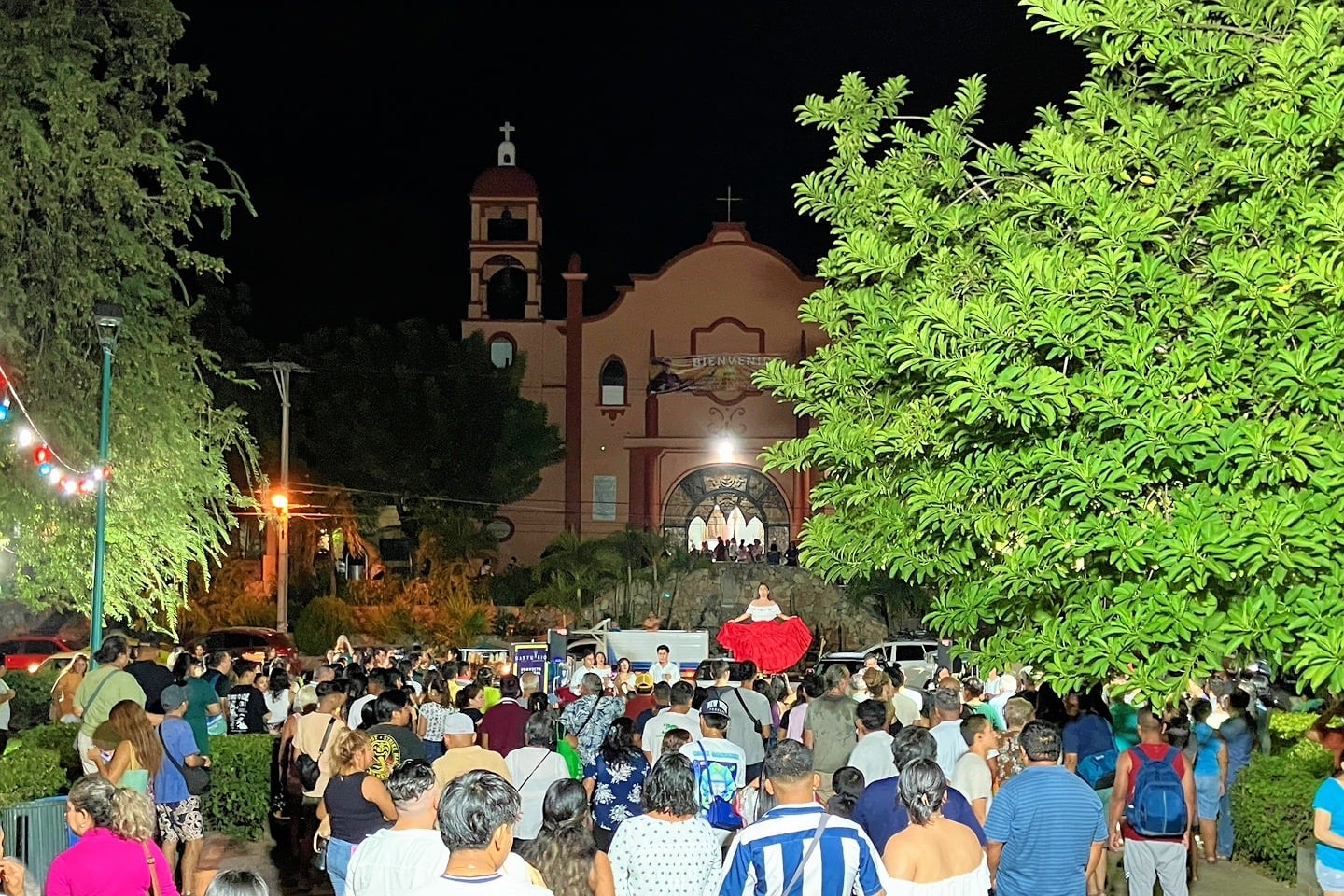
Nearly everything in town that you see now, including the main plaza and church, was essentially constructed for tourists to create the illusion of a traditional Mexican town.
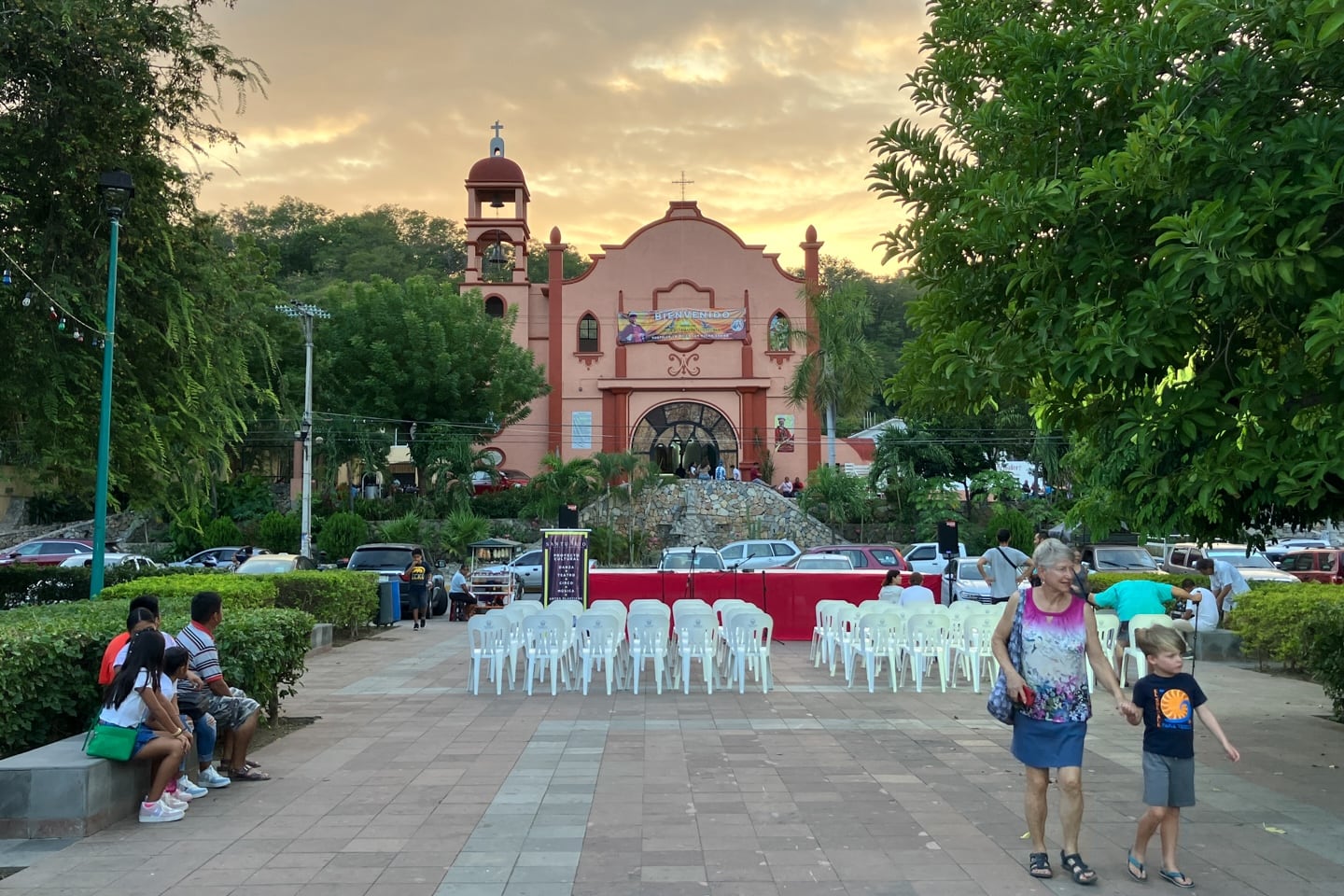
But enough of that, on to the festivities.
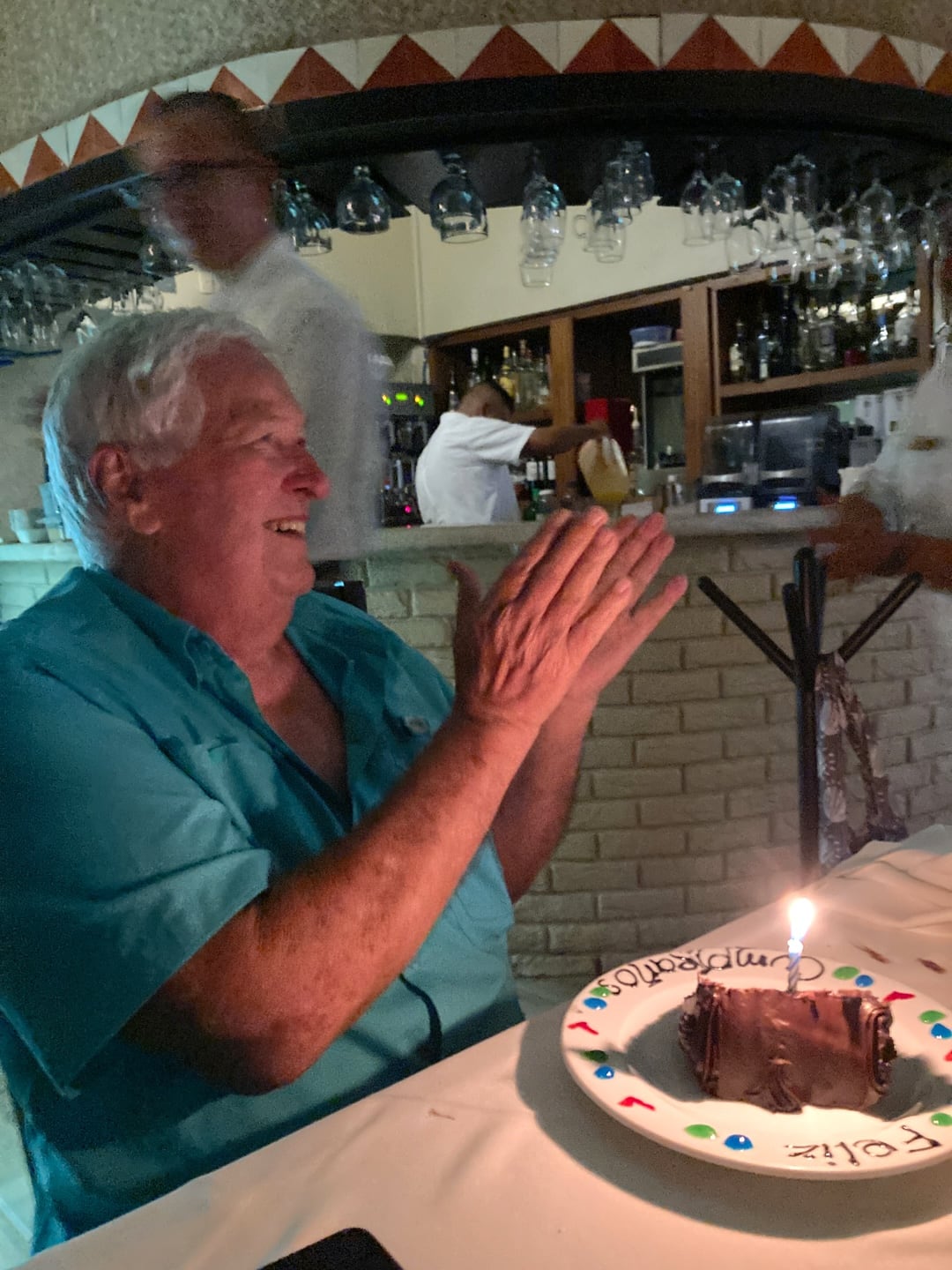
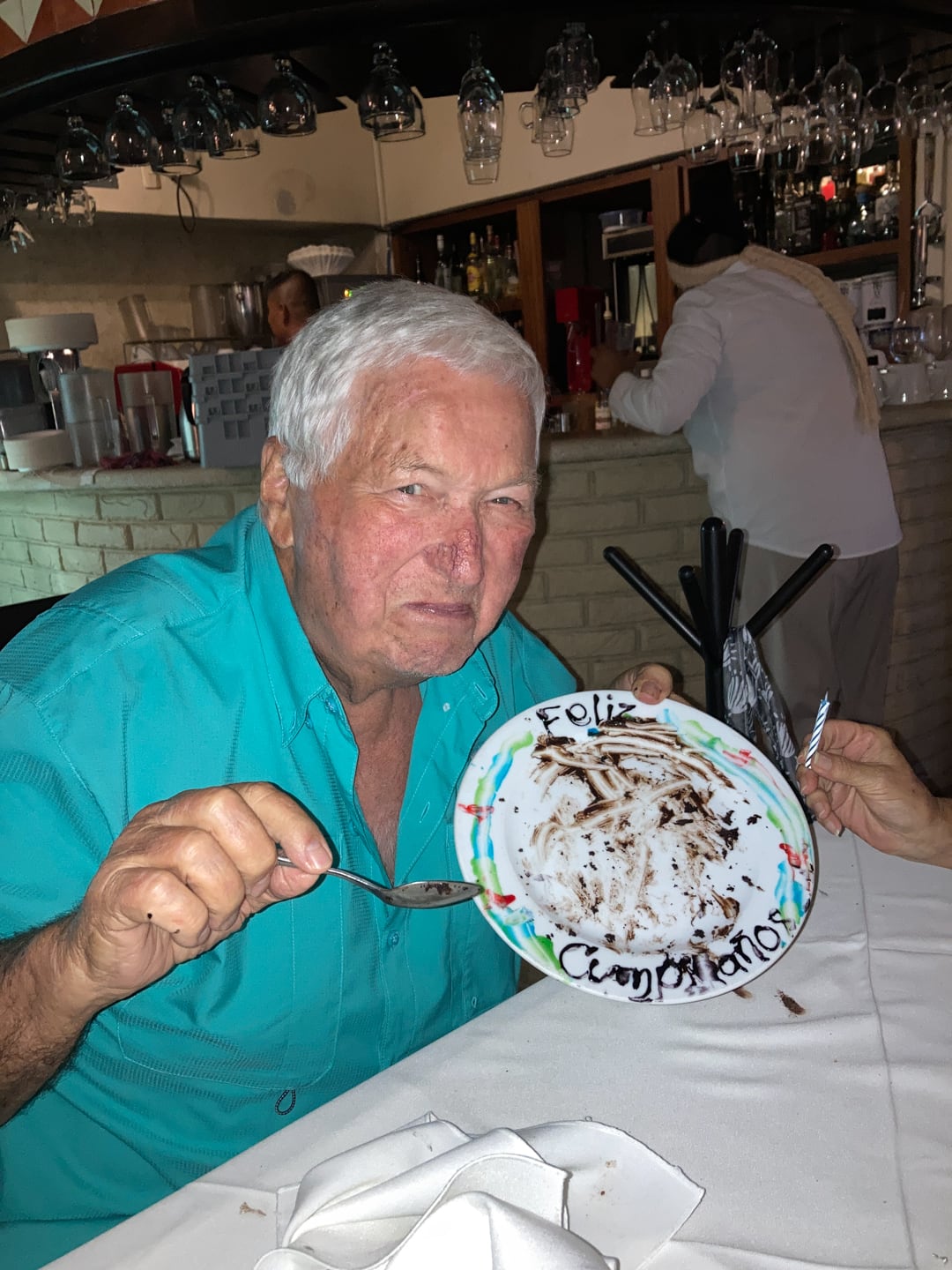
I think we managed to surprise him pretty good this time. I also think he enjoyed the cake.
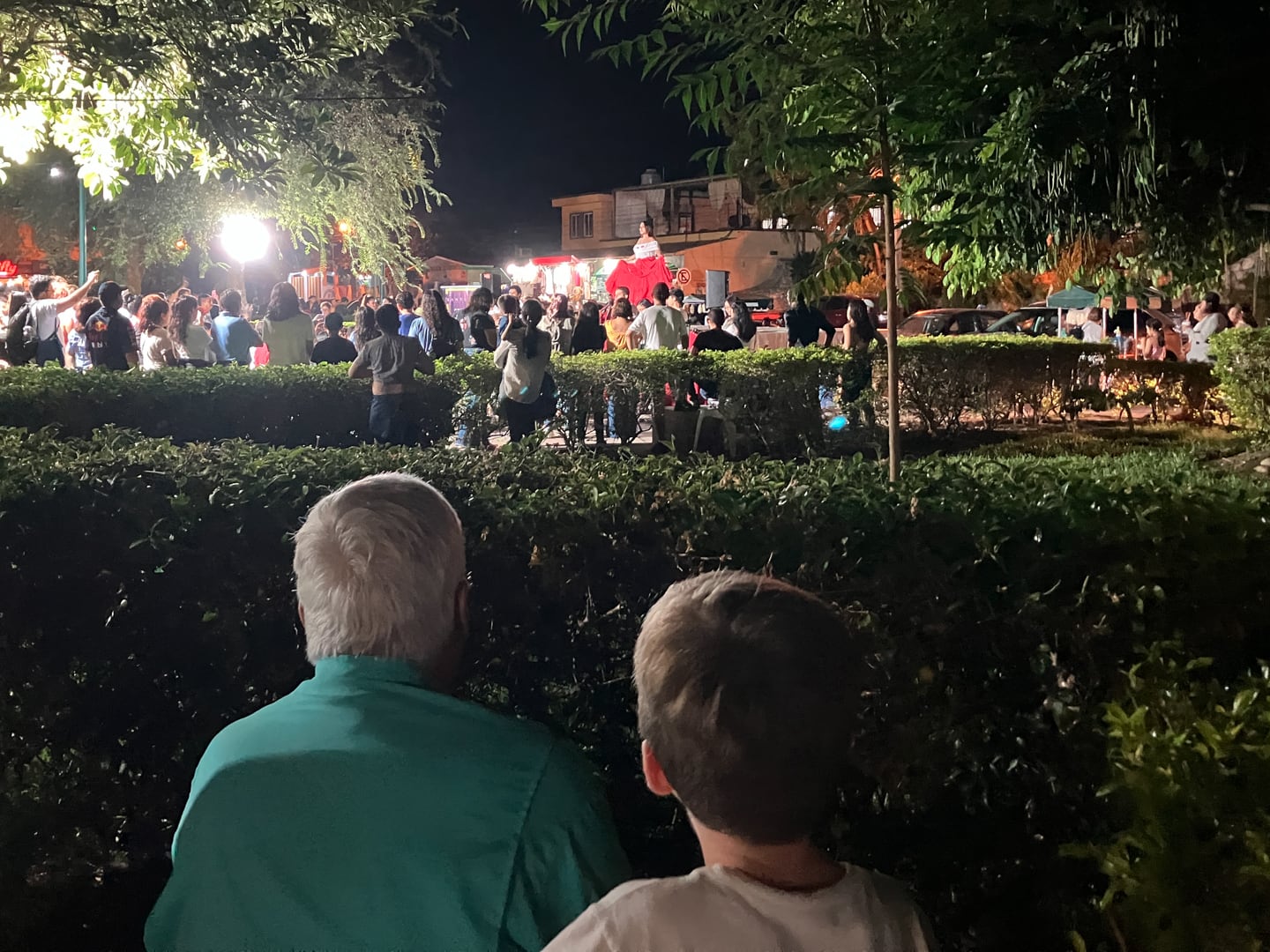
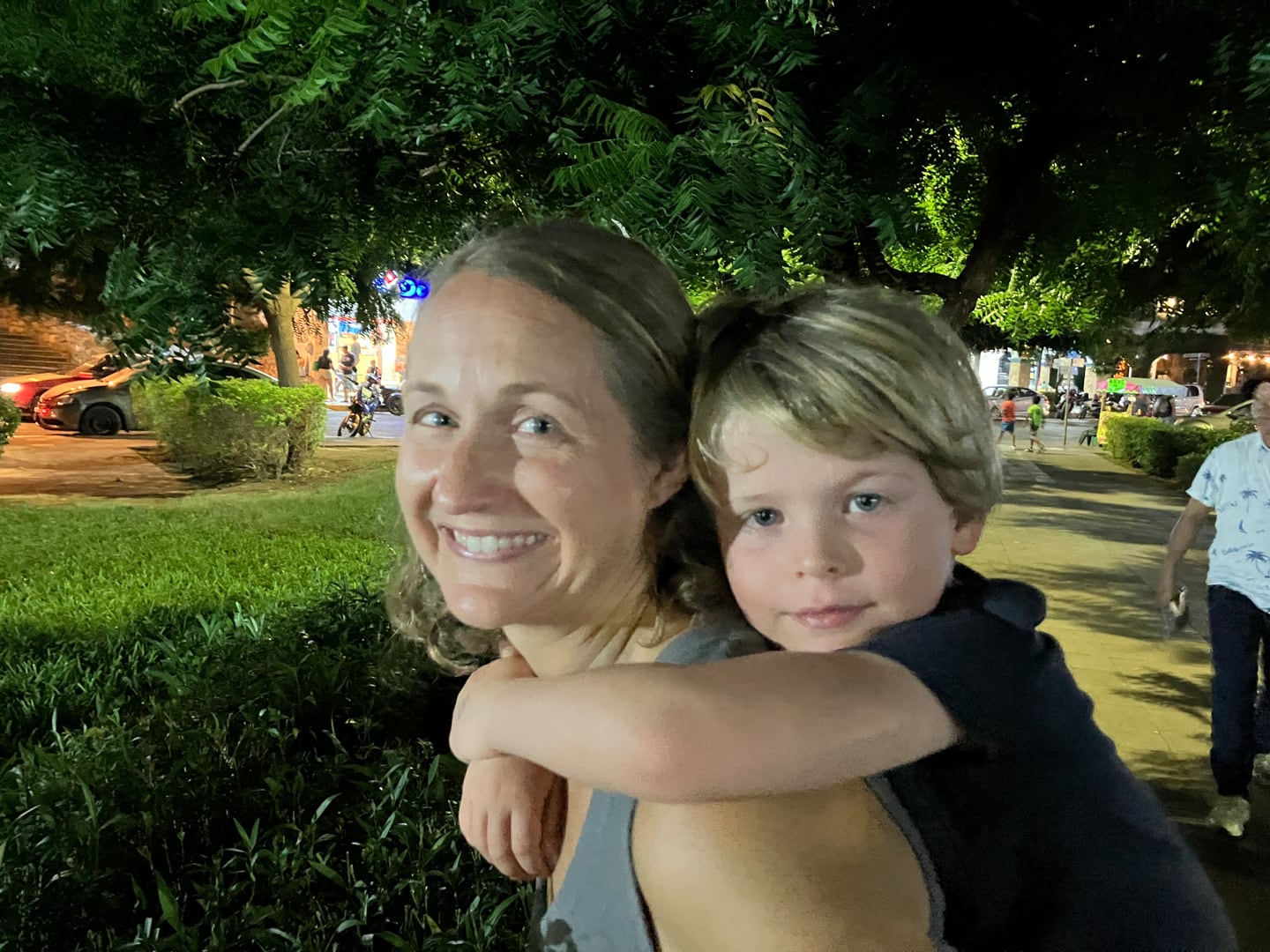
After dinner, there just happened to be a traditional dance event happening in the plaza, which meant Grampy got a birthday show as well.
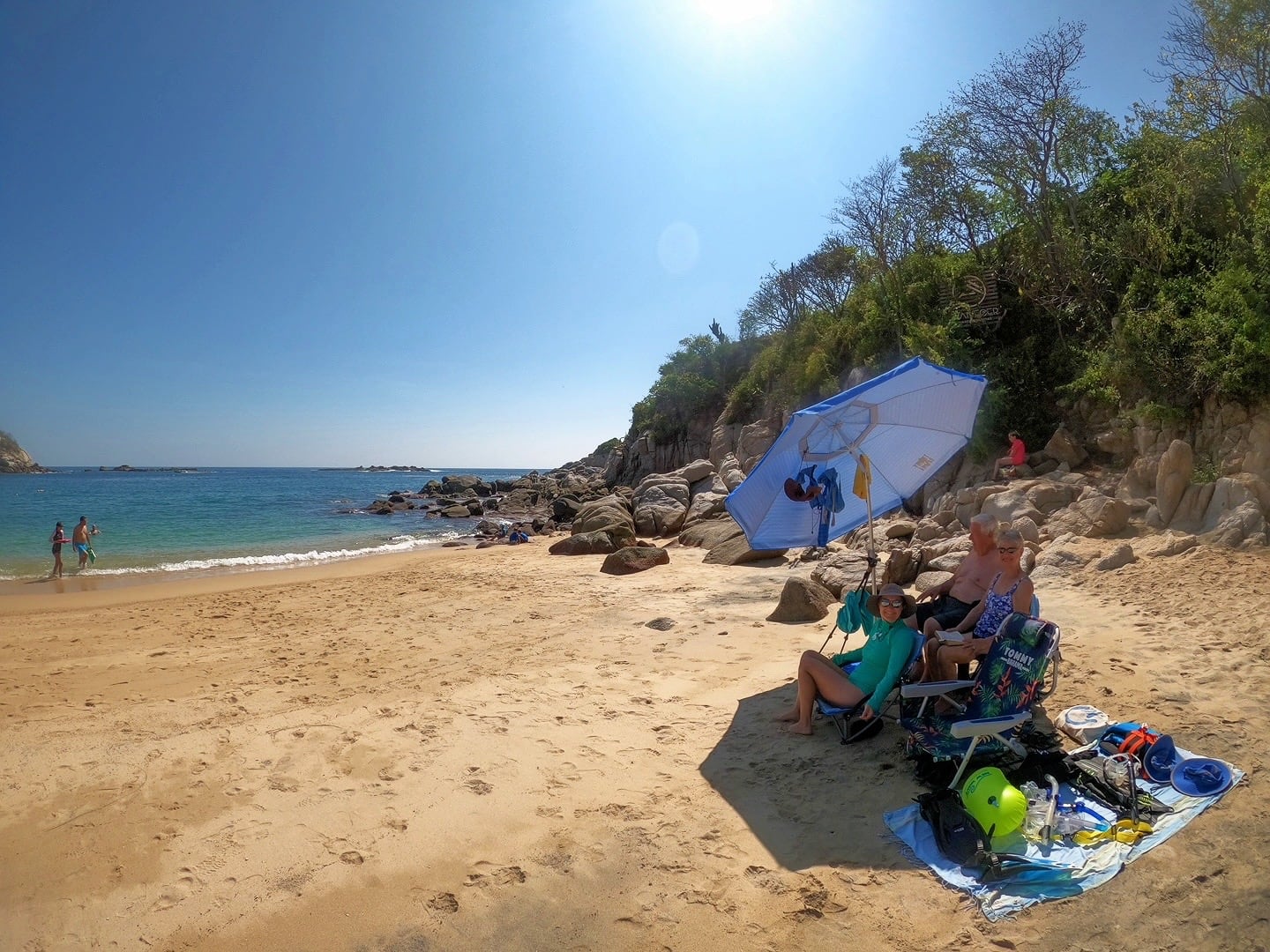
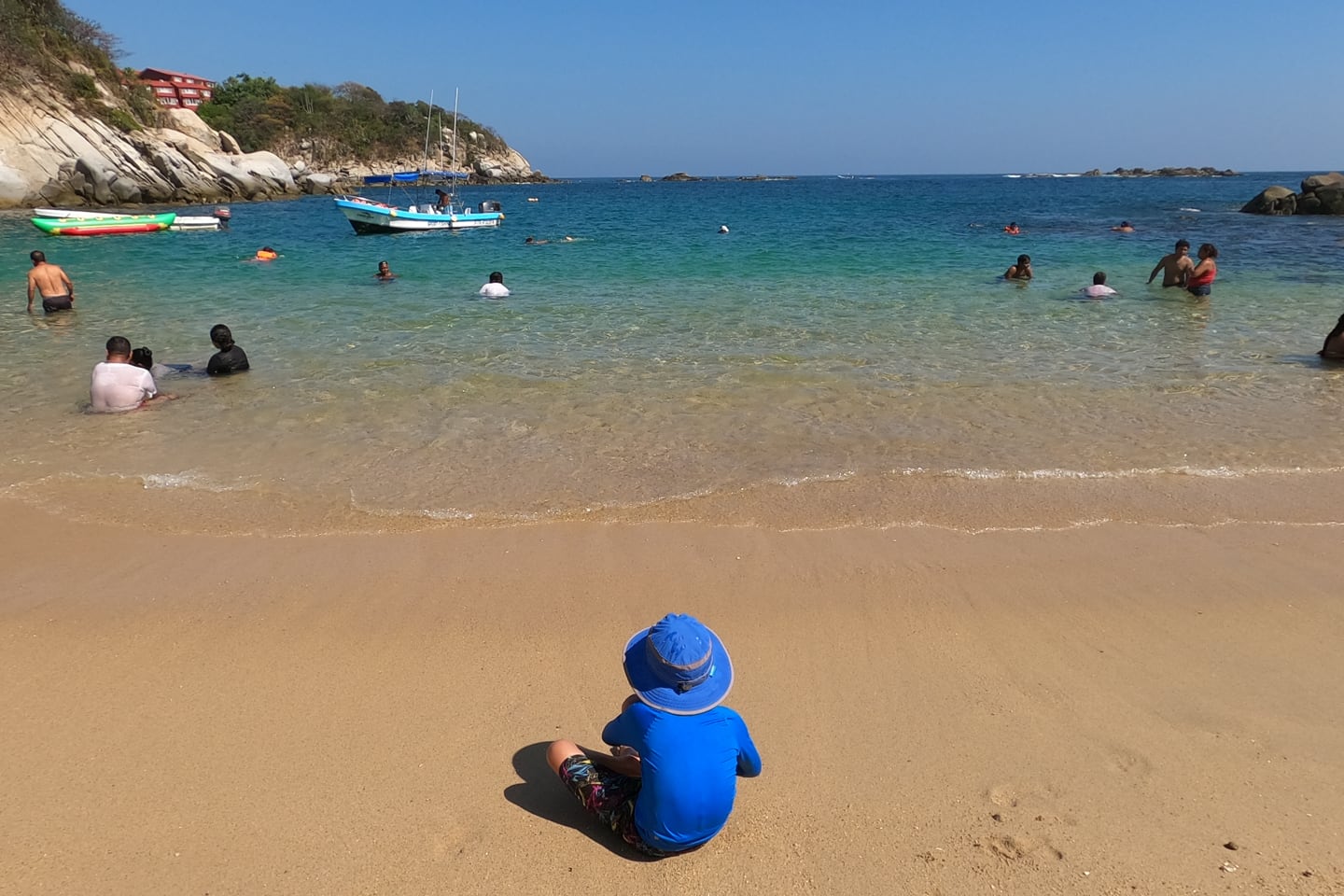
The next morning, we made our way to diminutive Playa Arrocito, which has a bit more of an urban vibe than the beaches we’ve been going to.
There wasn’t as much to see beneath the surface here, but the calm and clear water made it perfect for all of us to cool off and splash around.
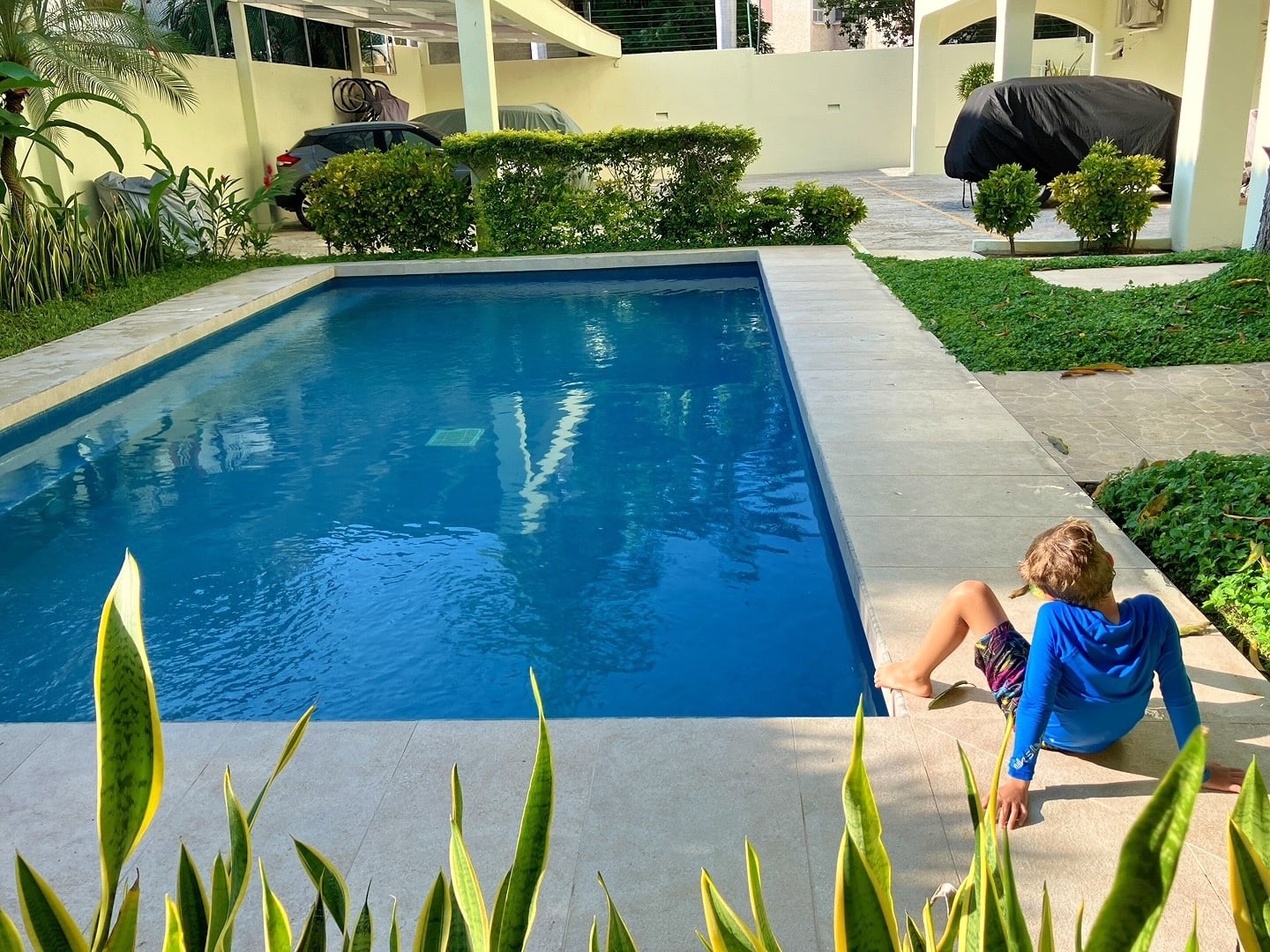
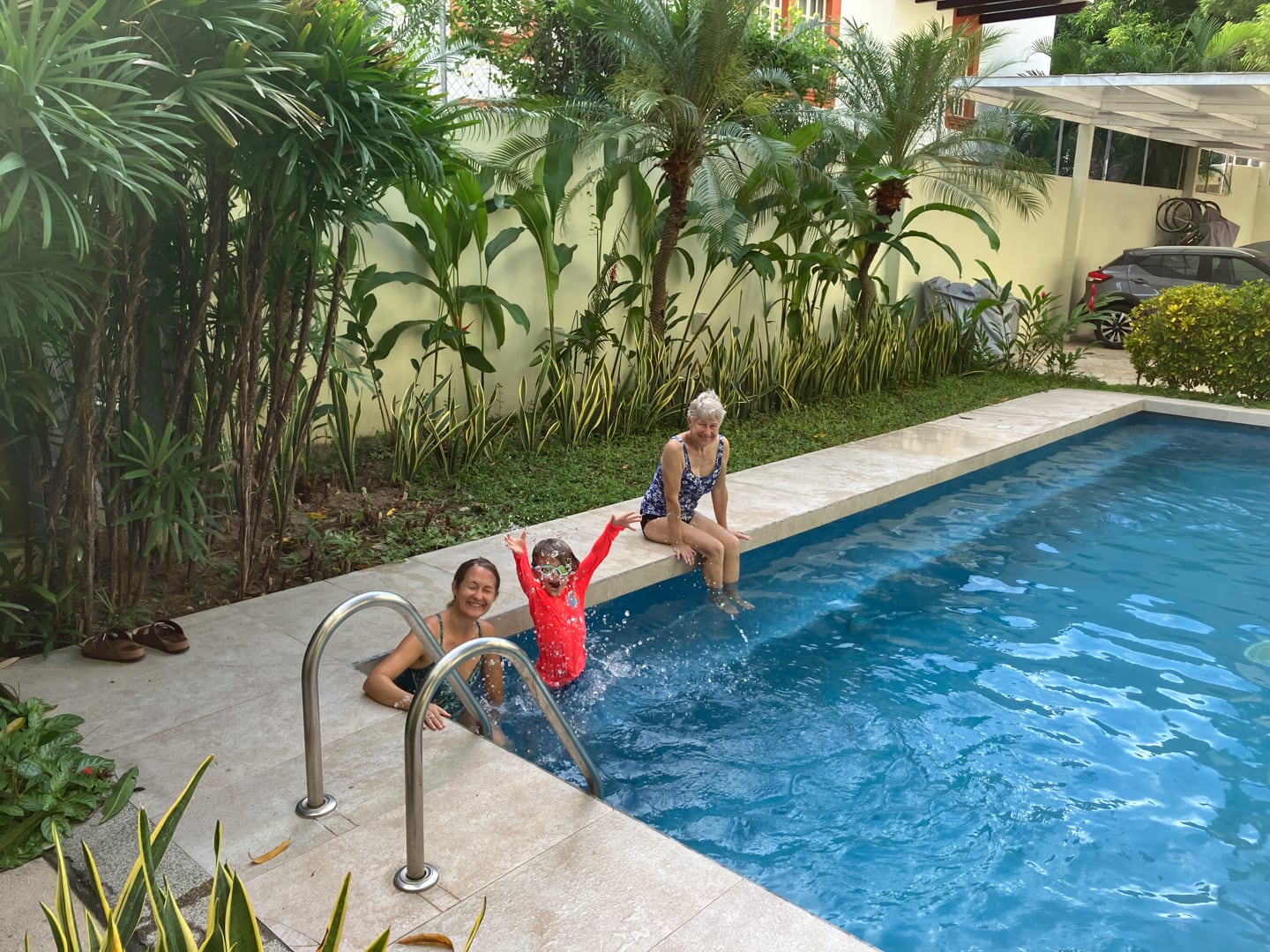
Our apartment also came with a pool. In Zipolite, the pool was a lifeline. Here, it was a welcome, if underused perk. The bays around here are already giant swimming pools.
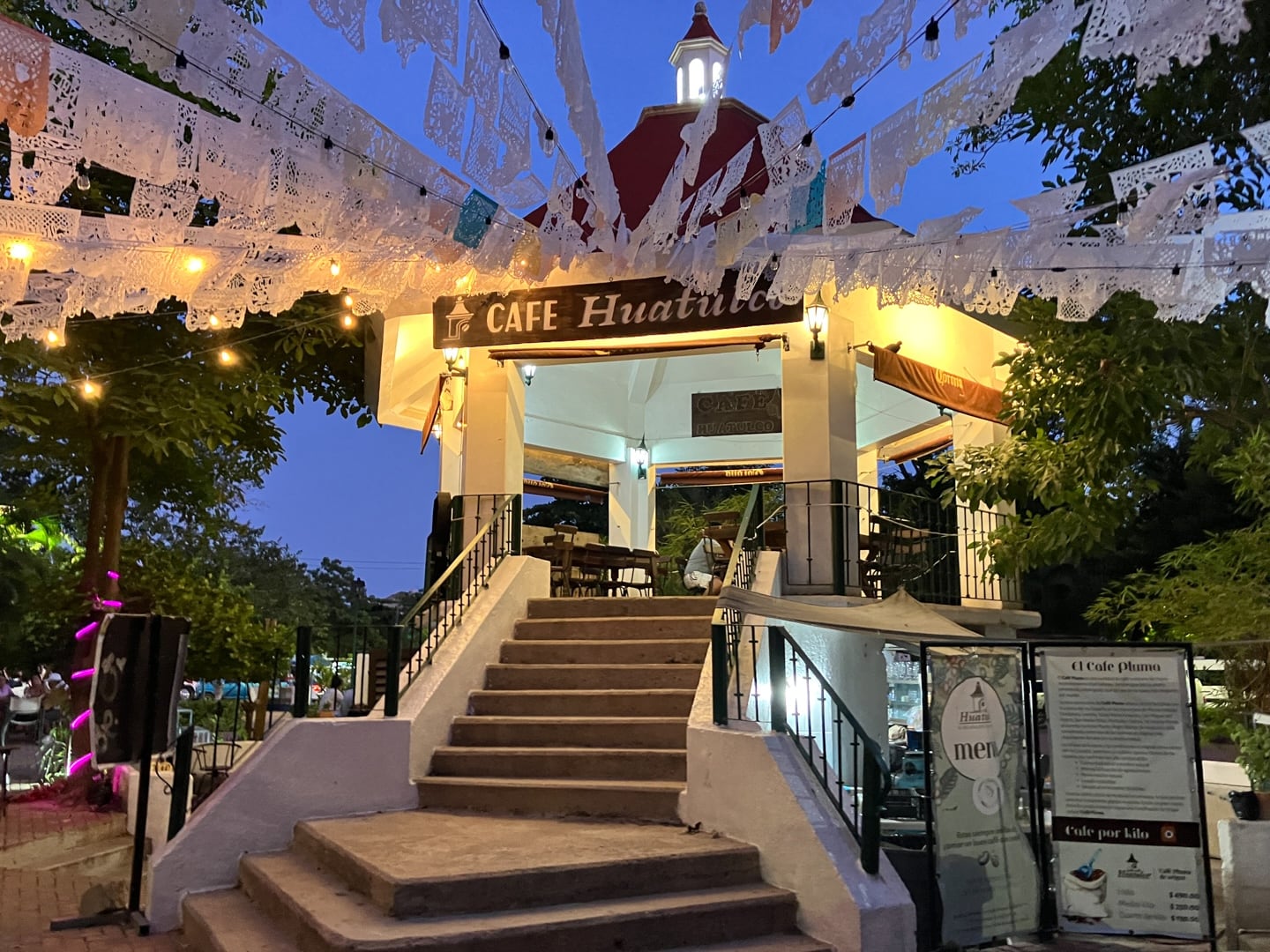
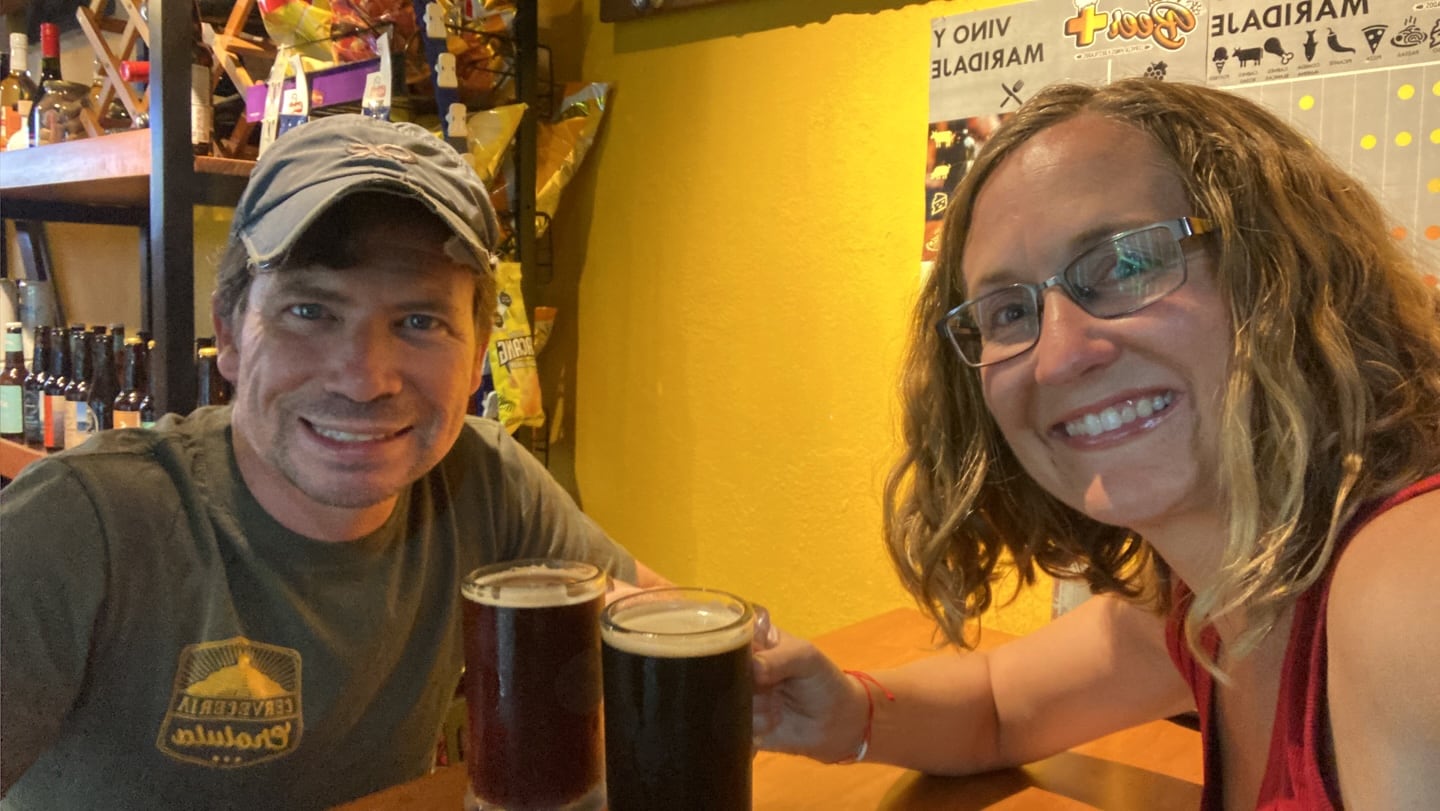
After the oldest and youngest contingent of our group went off to sleep one night, Lori and I managed to duck out for a beer at the local cerveceria.
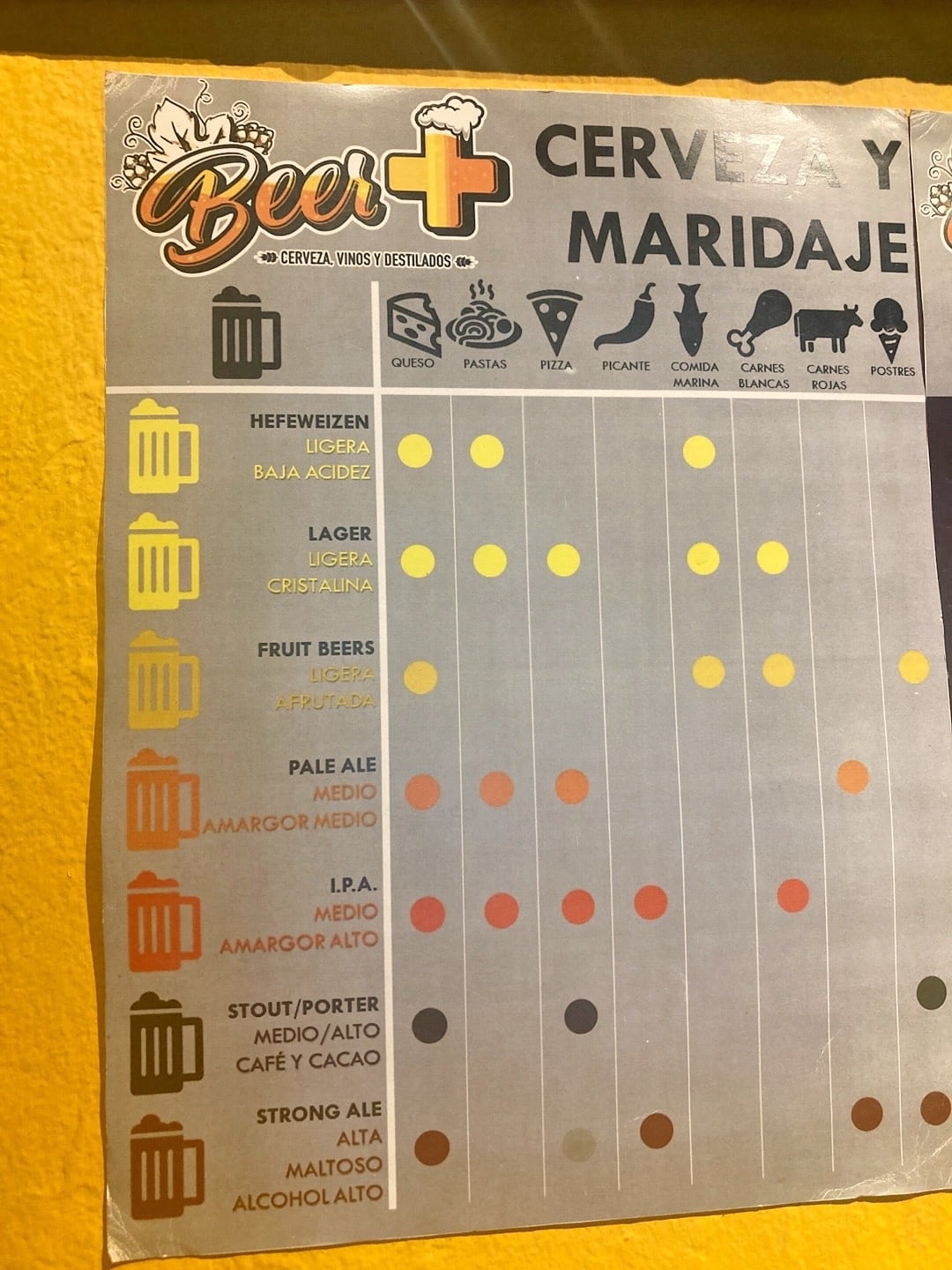
If you ever wondered what food to pair that Corona (Lager) with, here’s your answer. Notice that picante is not one of the suggested options.
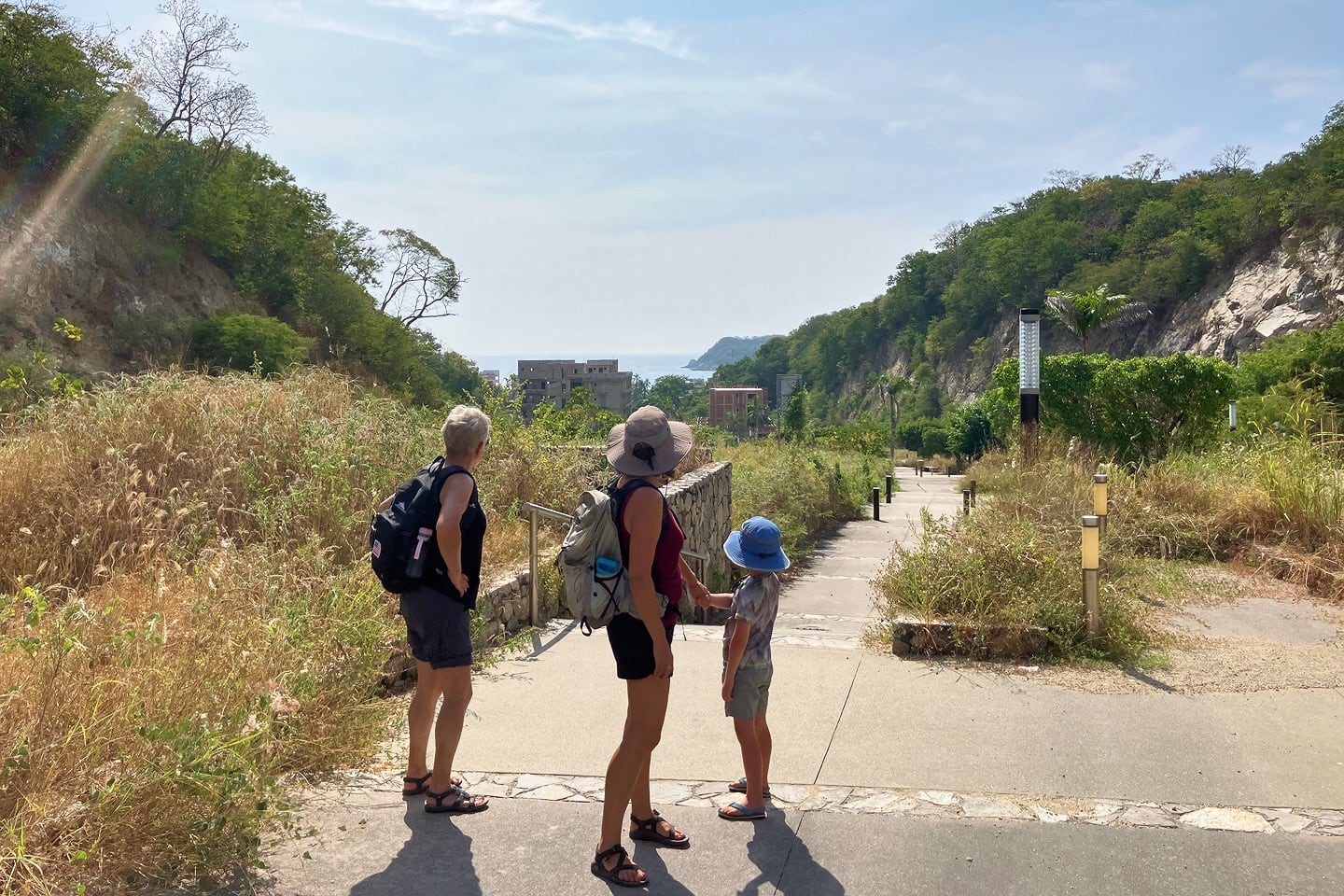
There’s a multi-use path that connects the town of Santa Cruz (where we were staying), with La Crucecita, so we thought we’d check it out.
However, getting on the path at mid-morning was not the best decision, even here in mid-November. It’s a long, hot walk with very little shade.
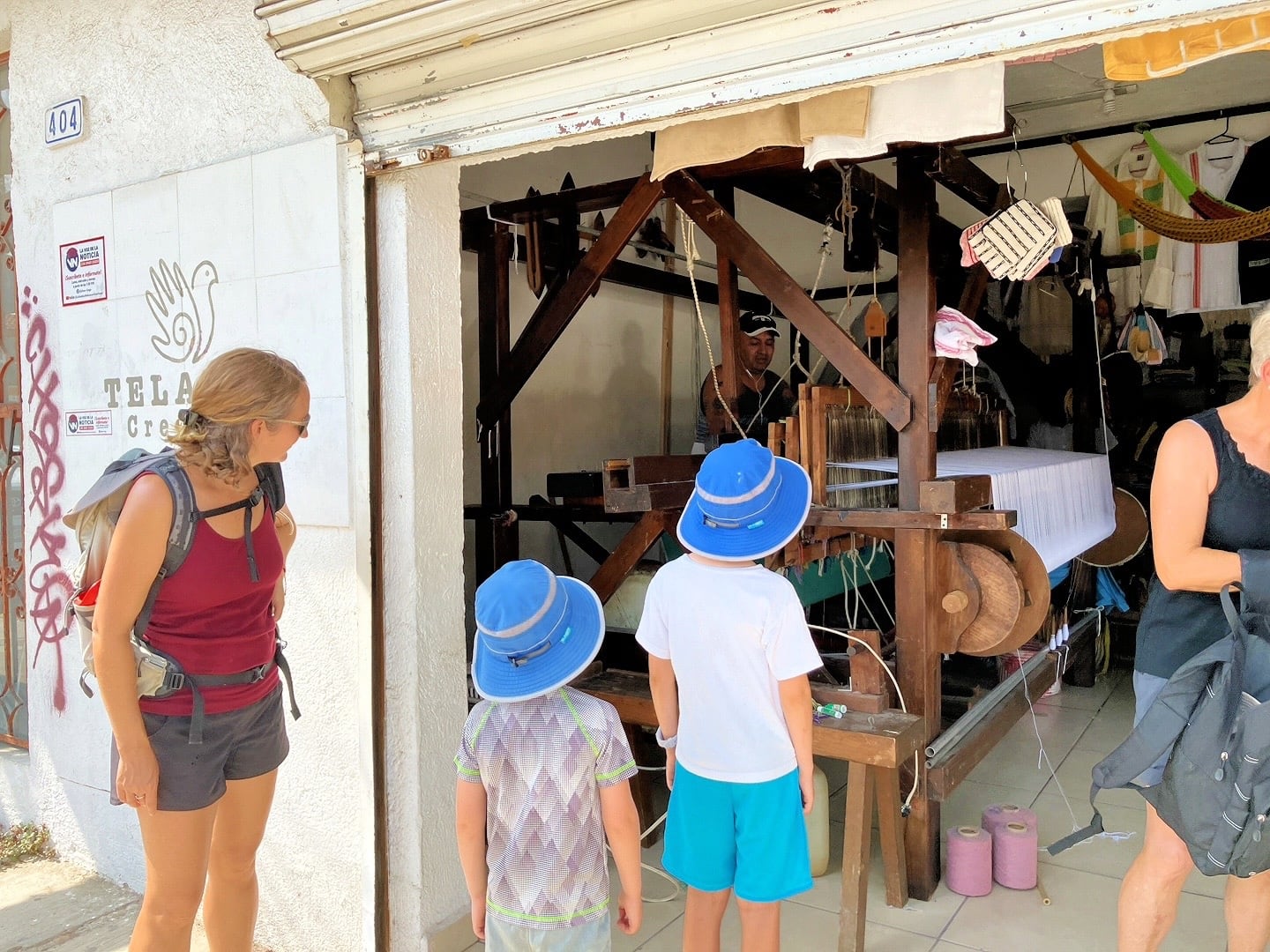
In La Crucecita, we poked around various shops, and even came across a few small textile operations using traditional looms.
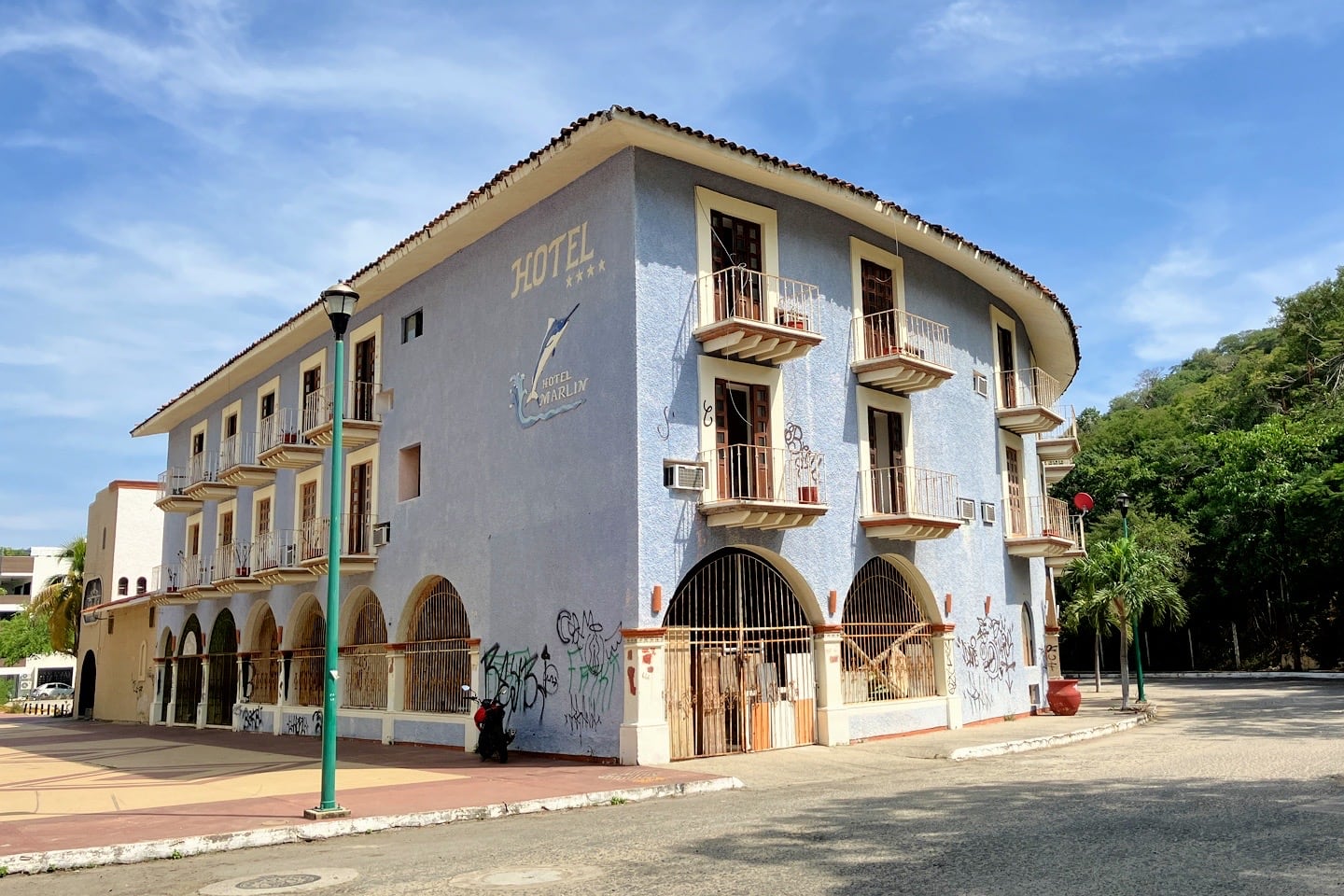
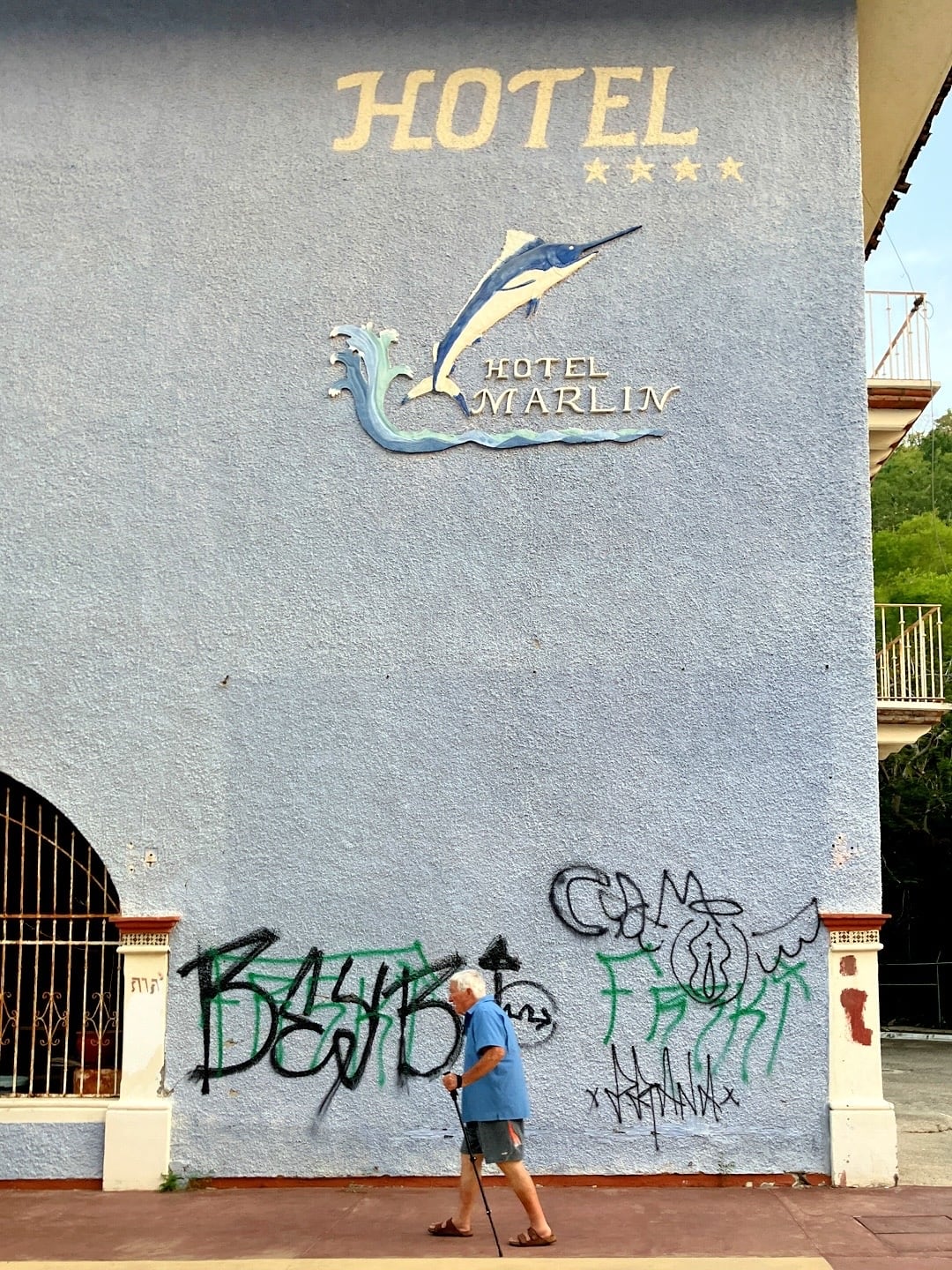
Across the street from our apartment is the Hotel Marlin—yet another defunct hotel sitting on prime real estate. These are a dime a dozen in Mexican beach towns.
It never ceases to amaze me how the basic laws of economics rarely seem to apply to real estate in Mexico.
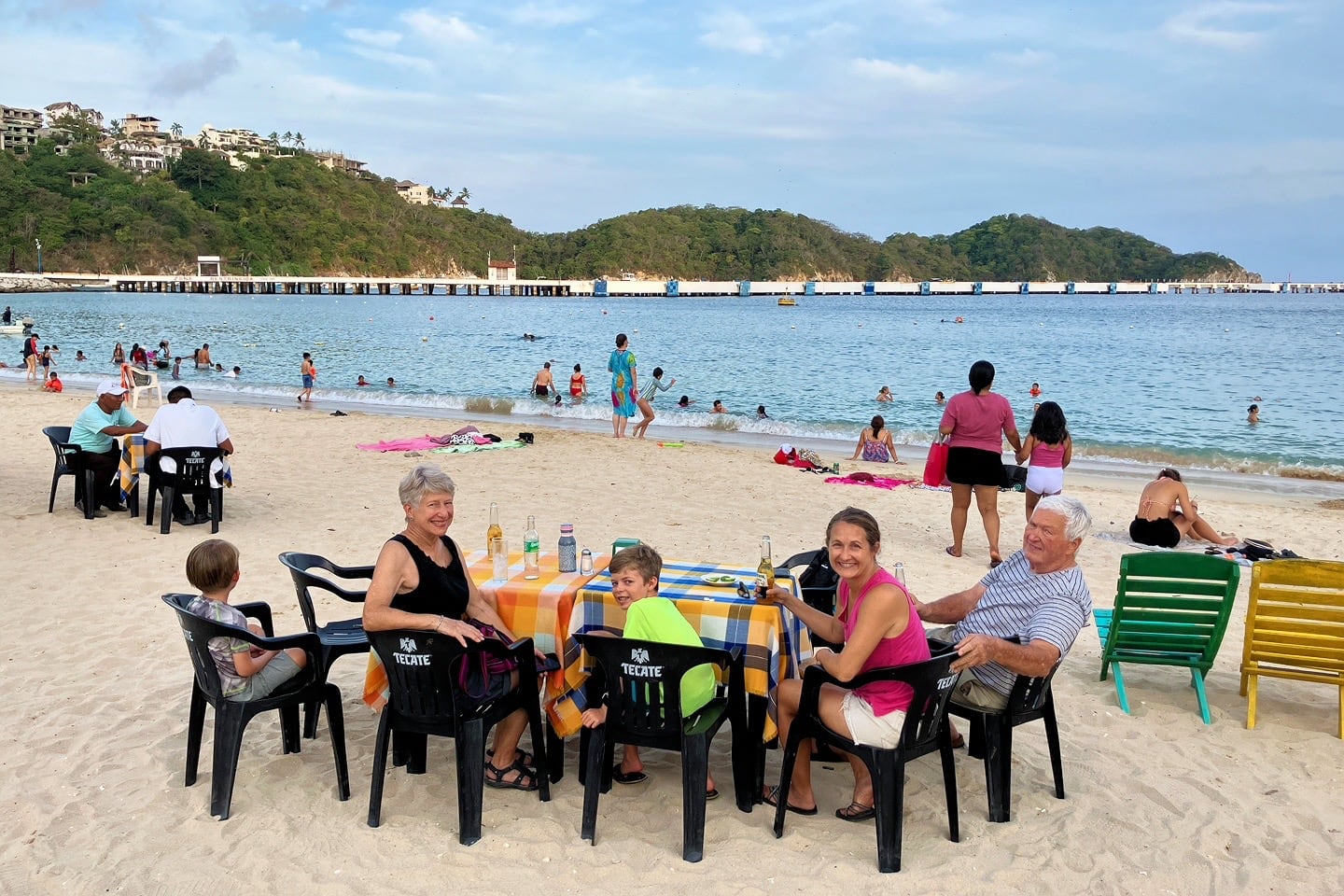
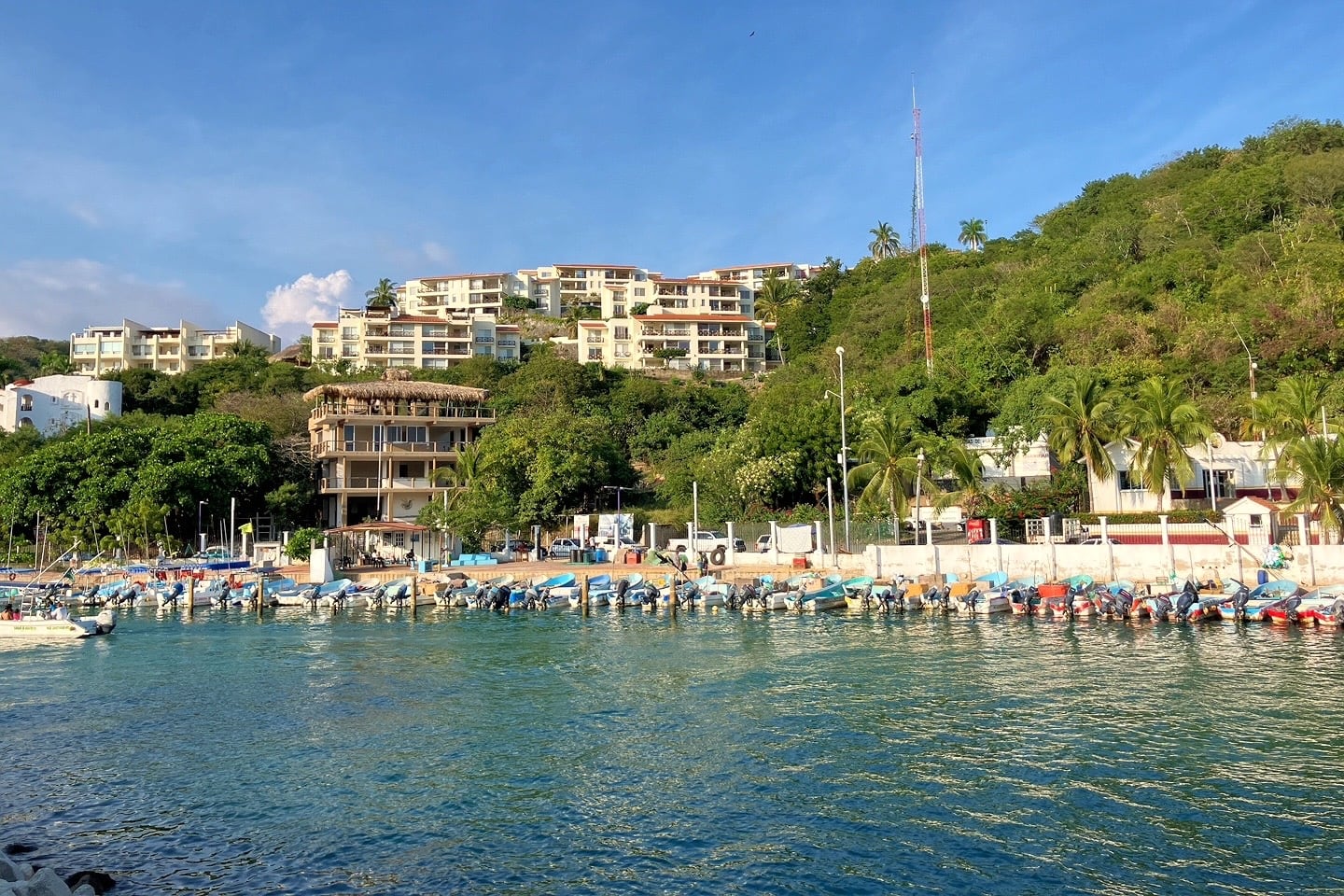
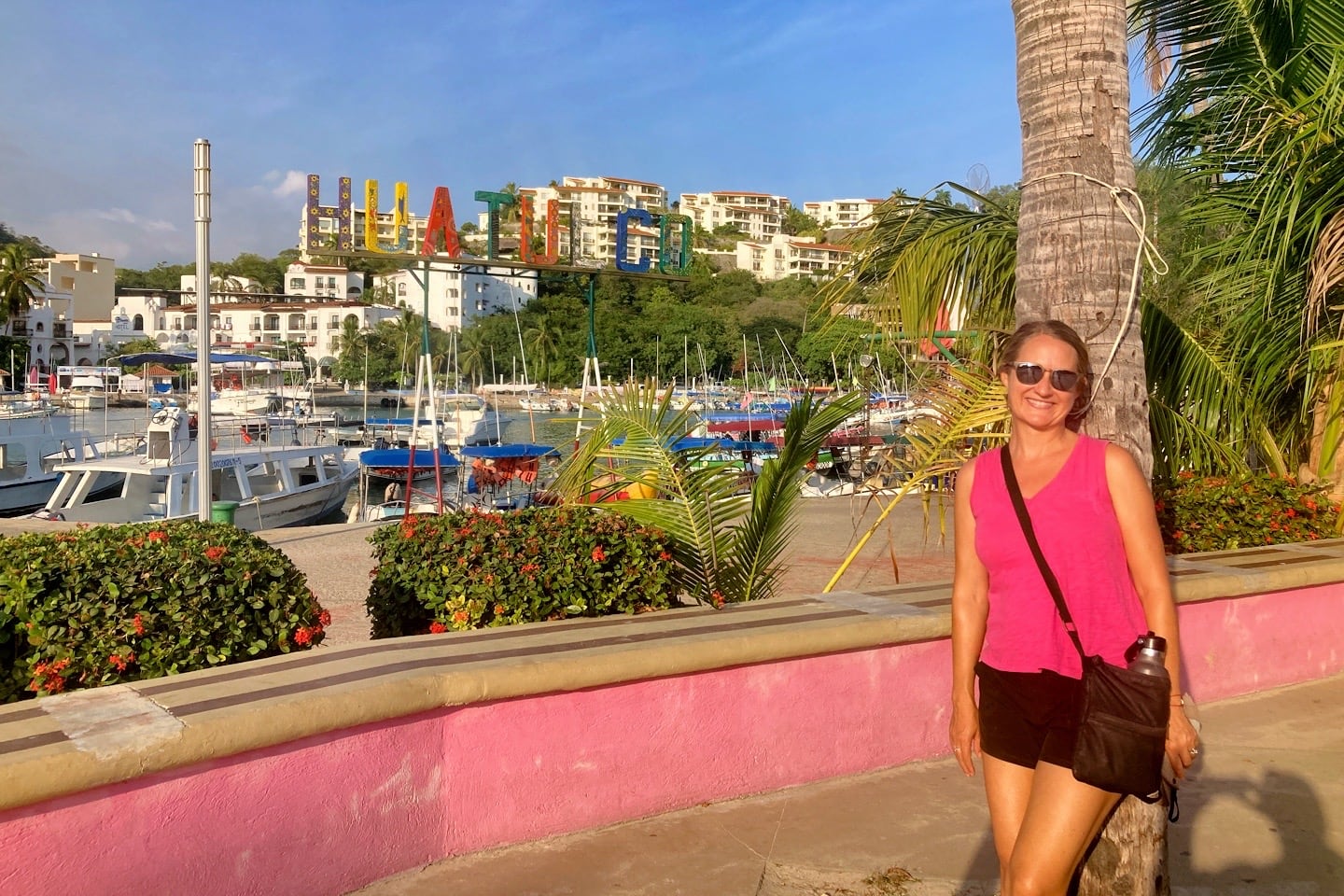
Sundowners on the beach in Santa Cruz. That long pier behind us is the cruise ship terminal. Huatulco is a popular port of call for large cruise ships. Thankfully, it’s just before the start of the season right now, so we haven’t had to deal with any of that.
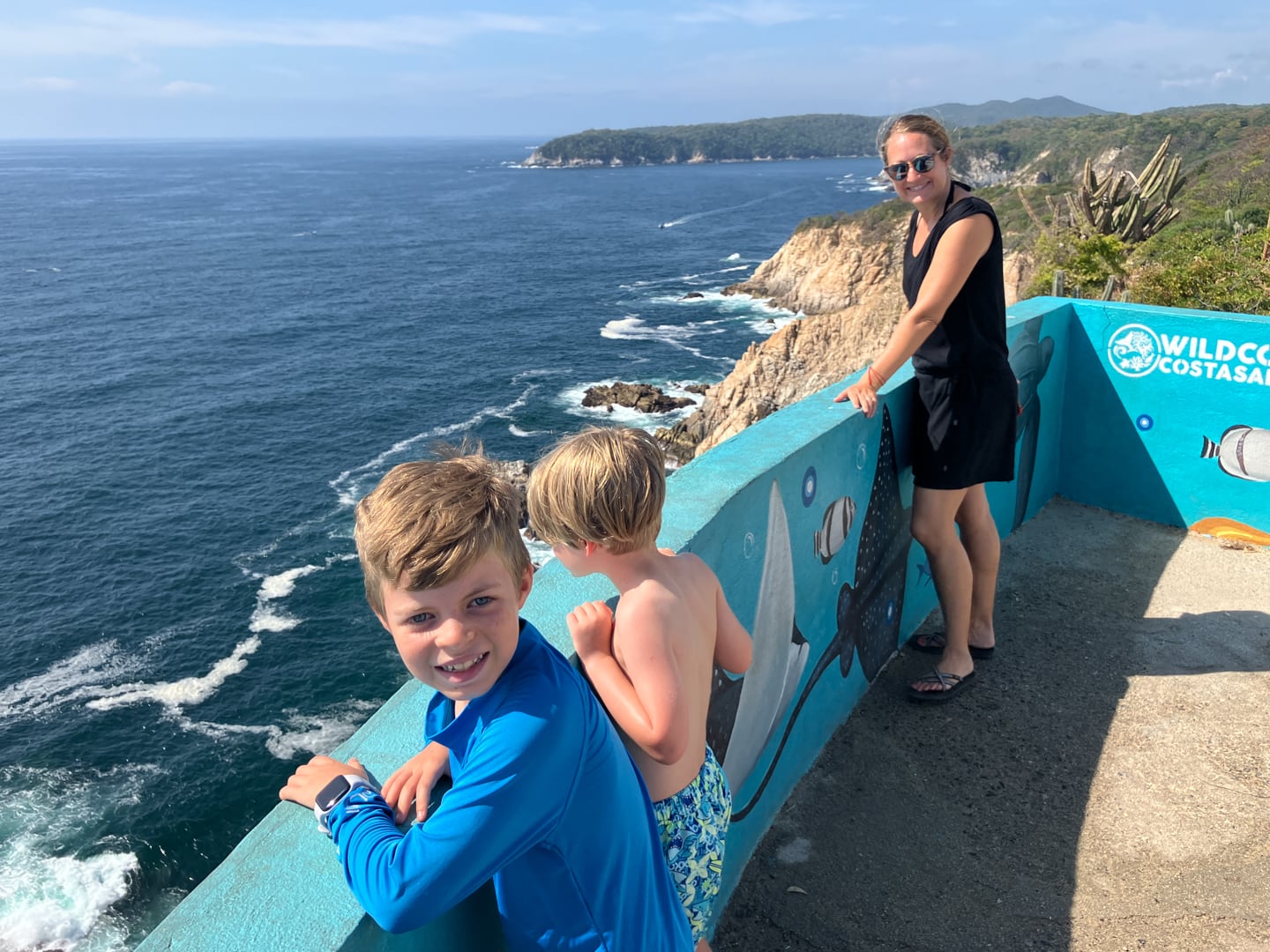
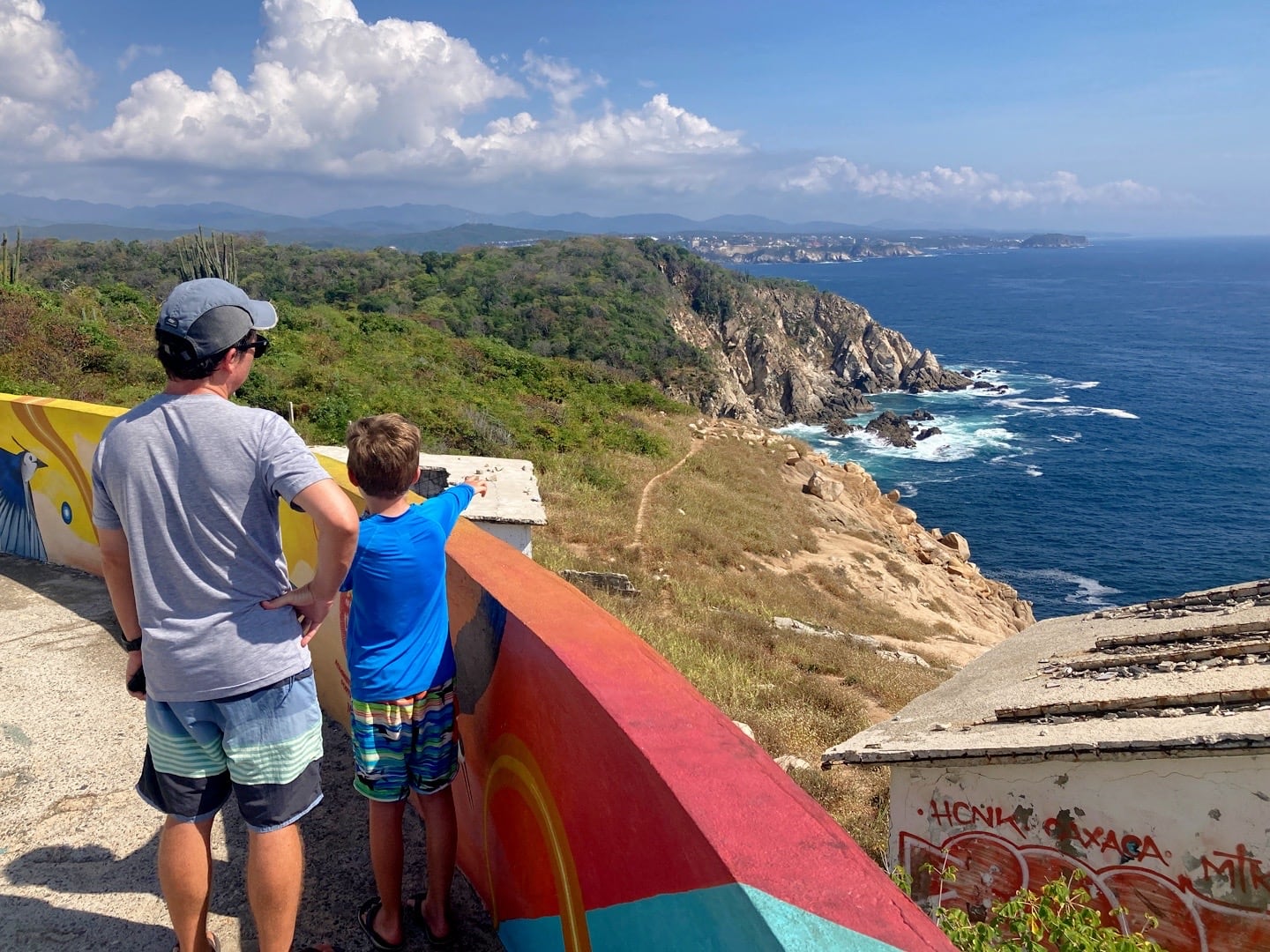
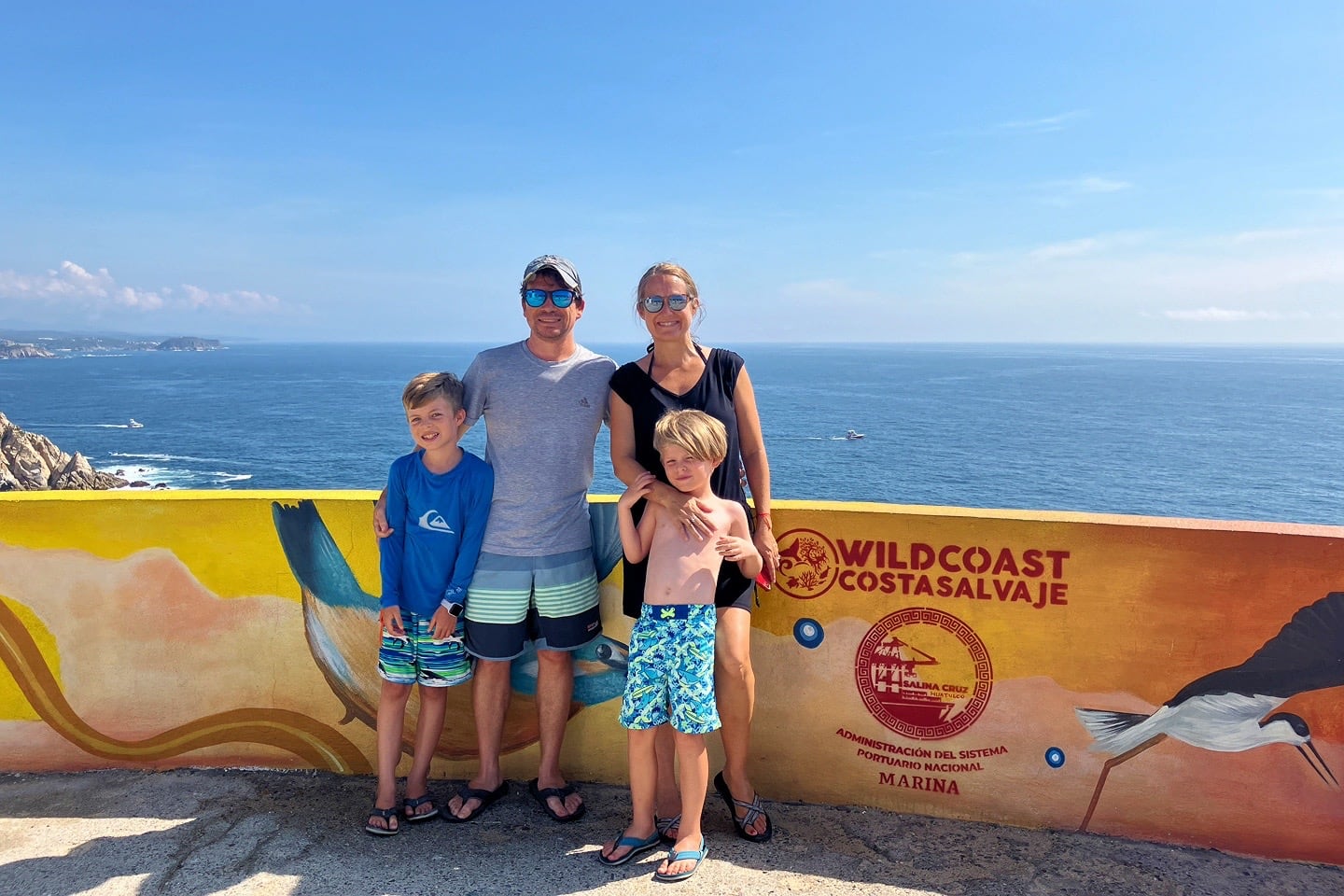
The Huatulco Lighthouse offers some of the best views of the area from above, though the complex, itself, looks pretty neglected.
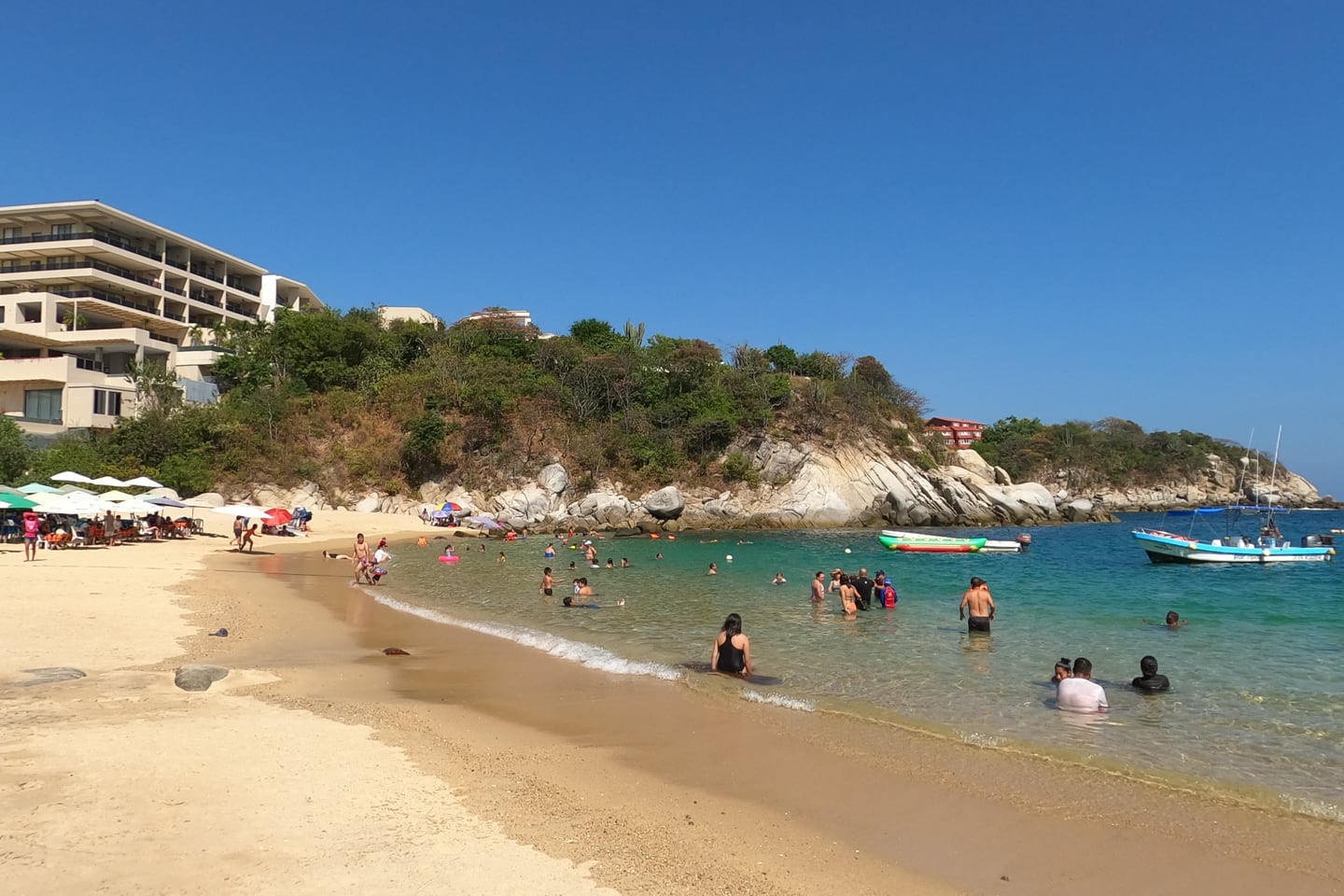
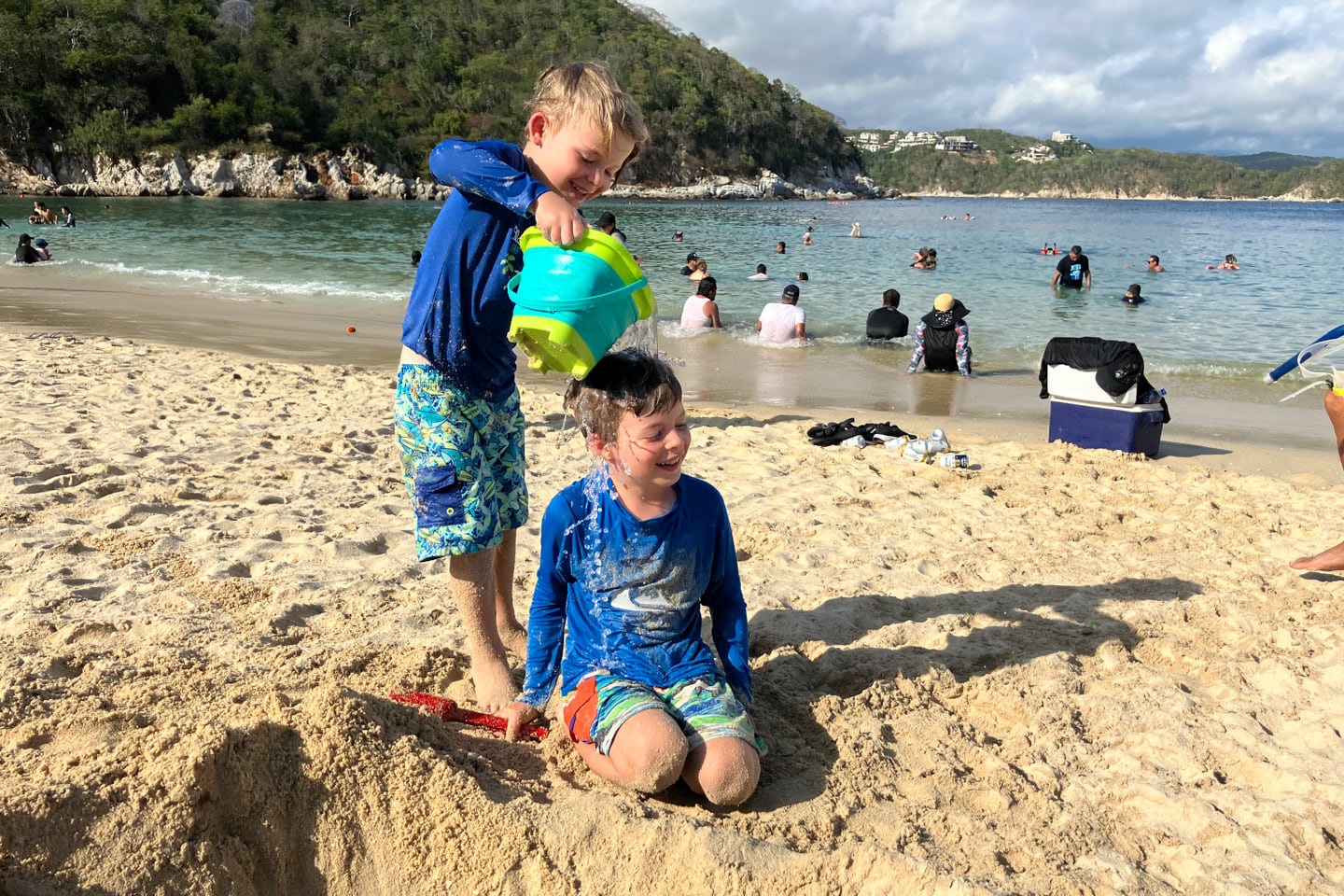
Our return to Playa La Entrega with Grammy and Grampy. This time, there’s an even bigger crowd than the other day.
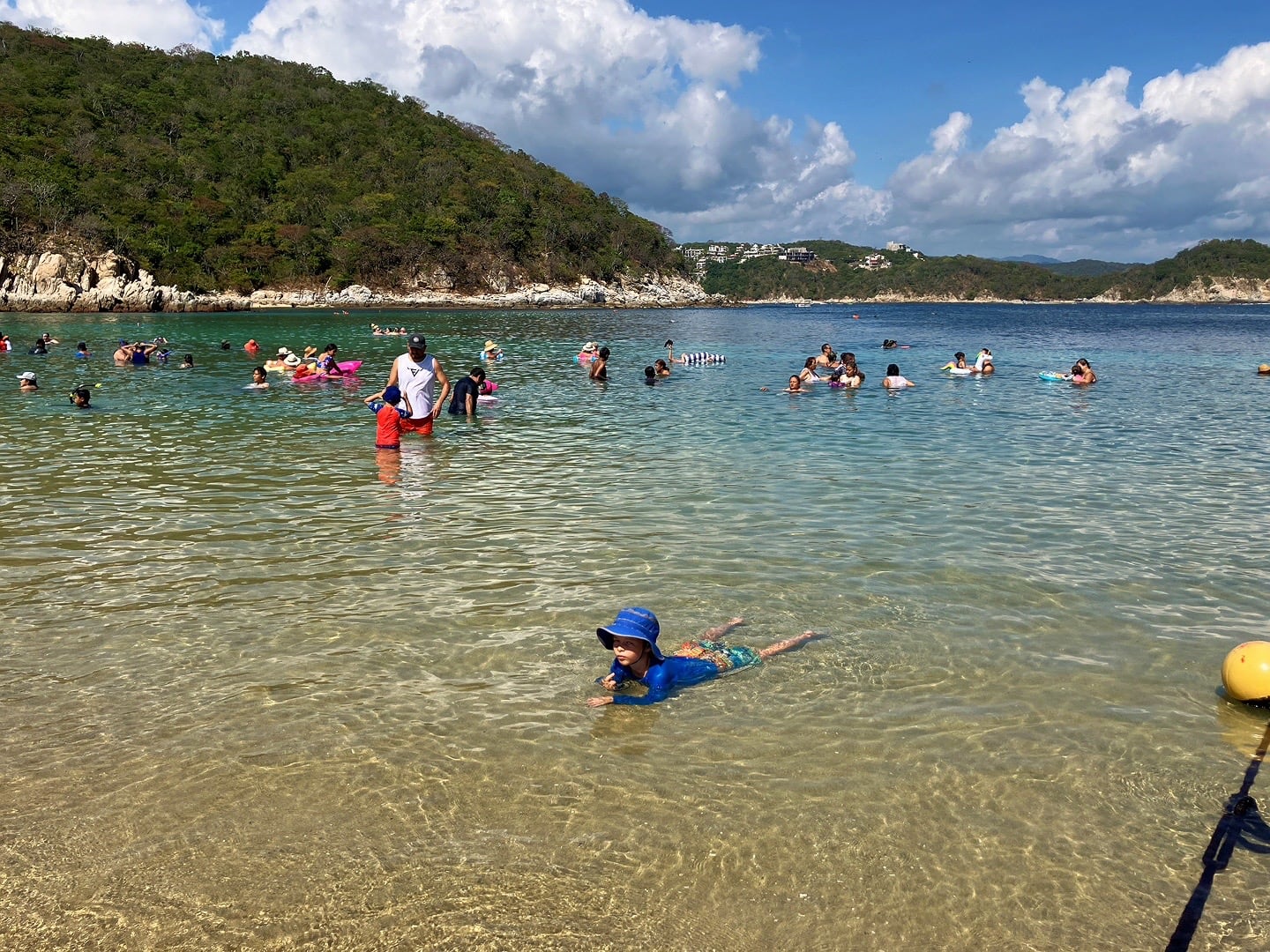
Mind you, this is a TUESDAY in November. This is far from unusual in our experience.
Of course, it doesn’t help that Revolution Day was yesterday. Lately, it seems however that these Puentes (three-day weekends) more often than not turn into weeklong affairs (of which there are many).
I’m convinced people in Mexico have simply decided not to bother with work or school anymore.
Fortunately for us, it’s a big bay and most visitors aren’t here to snorkel. A hundred meters out and we’ve got the place to ourselves.
At one point amidst all the fun, an older man had a medical emergency and passed away on the far end of the beach.
There was what seemed like a short-lived attempt to revive him by lifeguards (too short, in my opinion) before the authorities stepped in and tossed a sheet over him.
And there he remained for the next 30-45 minutes until paramedics casually showed up (with no sense of urgency, even joking around at times) to cart off the body on a stretcher.
All the while, the locals continued going about their business drinking and having a good time as if nothing happened.
Lori and I witnessed an eerily similar thing happen on the beach in Chacala a few years back with the same reaction and results, so I think it happens with some frequency.
The boys were clueless about it all, but Lori and I couldn’t stop thinking about it for the rest of the day.
How nonchalant and indifferent people act in Mexico under these sorts of circumstances is something I don’t think I’ll ever understand (or want to understand), no matter how long I live here.
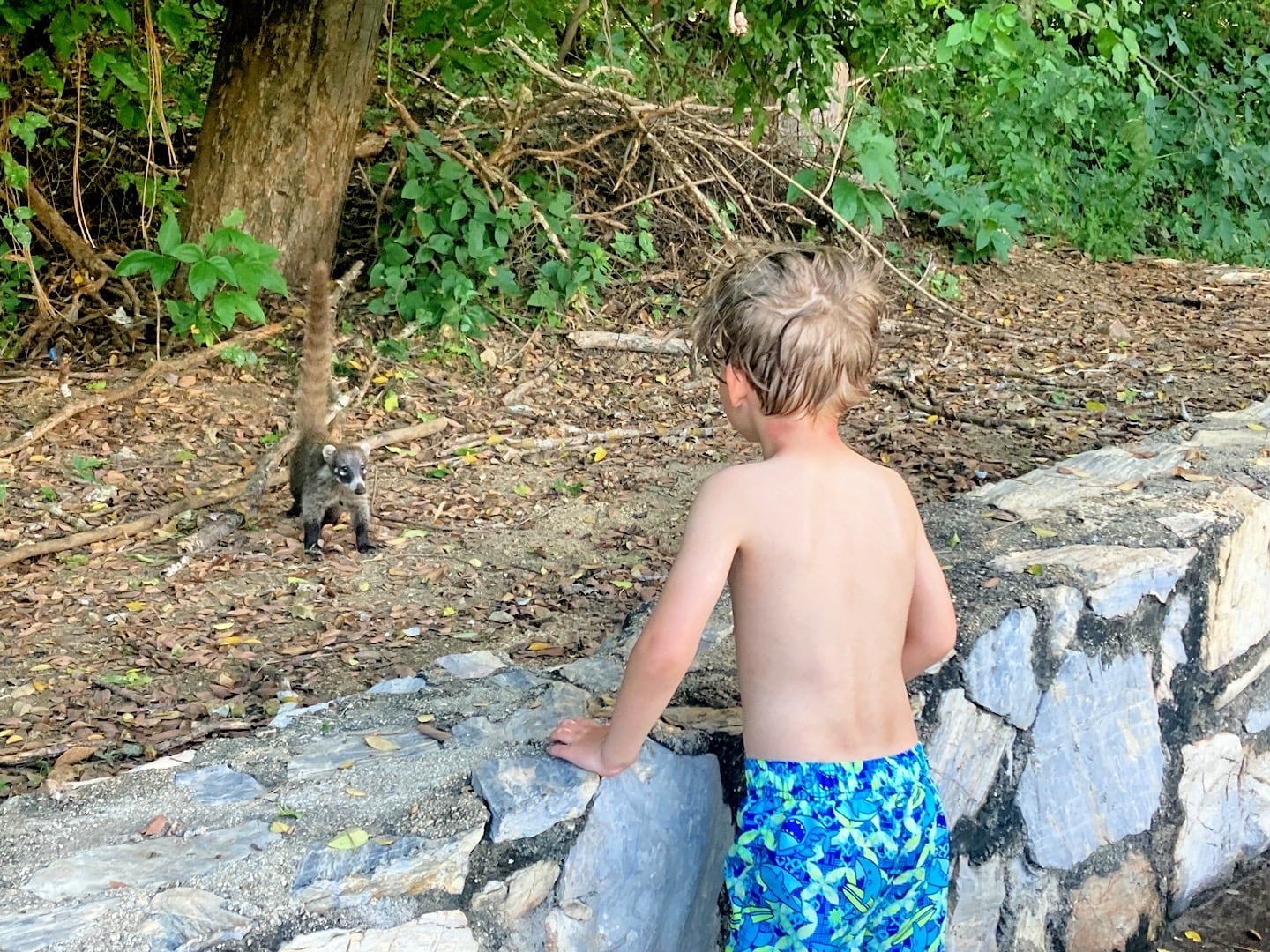
Heading back to the car, the Coatis followed us and nearly jumped Riley when he pulled out his snack container. The area is swarming with these guys.
Fortunately, most of them were scared of Riley. They should be. The one above had some nerve, but eventually gave up his quest for Riley’s peanuts and raisins and everyone went their separate ways in peace.