Visiting the town of Sintra is more or less a must-do if you find yourself in Lisbon. Lori saw this place 20 years ago and wanted to make sure we returned with the boys.
I usually have a love/hate relationship with these sorts of places. On the one hand, the pictures I’ve seen of Sintra look unreal, and I can rarely resist a good UNESCO site.
Our Euro-African Journey (So Far...)
On the other hand, I have a strong aversion to insanely crowded tourist attractions and avidly try to avoid such places if given the option.
It didn’t help matters that we had to plan in advance and purchase entry tickets online for the date AND time we wanted to visit Sintra’s top attractions. I didn’t like that one bit.
In the end, we had no choice given Sintra’s popularity. The weather looked about as good as it ever would for Monday, so we got the tickets, planned our visit and caught the train bright and early.
I was in charge of getting us there. When I saw the recommended route on Google Maps, I had a good chuckle.
The app wanted us to take the metro from our apartment to Oriente railway station, then catch the train to Sintra from there, which would double back past our apartment, stop at Roma station, and carry on 45 minutes more to Sintra.
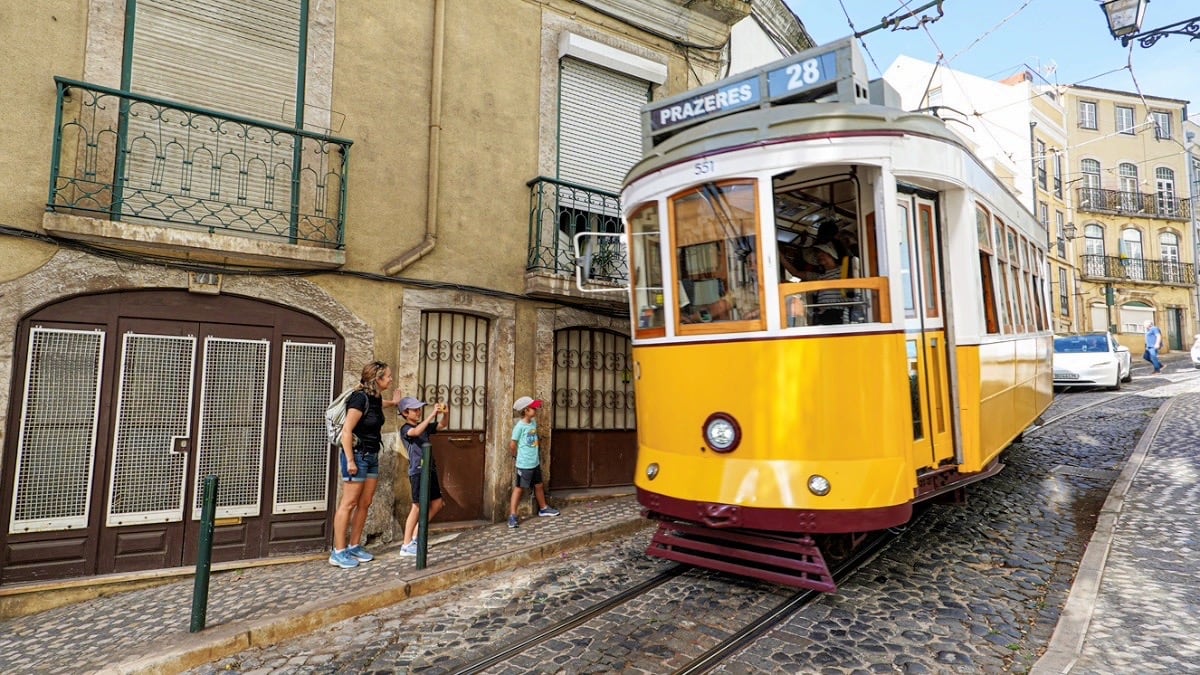
I initially thought, “That’s dumb. Instead of going 25 minutes out of our way, why don’t we just walk 15 minutes to Roma railway station and catch the train from there.”
I posed the two options to Lori, who then surprised me by emphatically choosing Google’s recommended option. “Wha…? Why?”
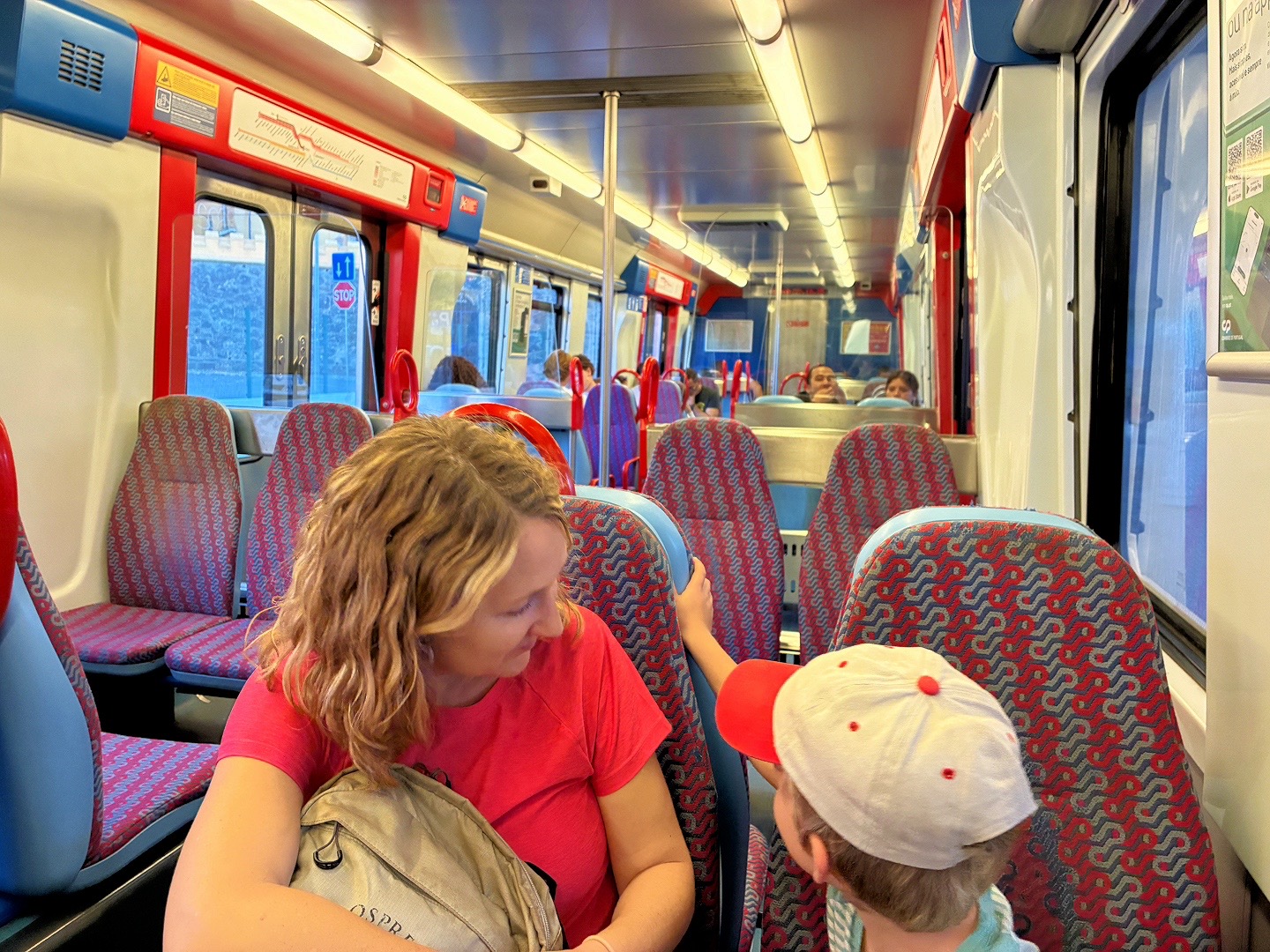
Lori suggested that it might be worth the extra time (and money) to board the train at the terminus to make sure we get seats.
In the end, we chose her way. We caught the train out of Oriente station and had our pick of seats. By the time we reached Roma, the train was packed and it was standing room only. Good thing I listened to my wife.
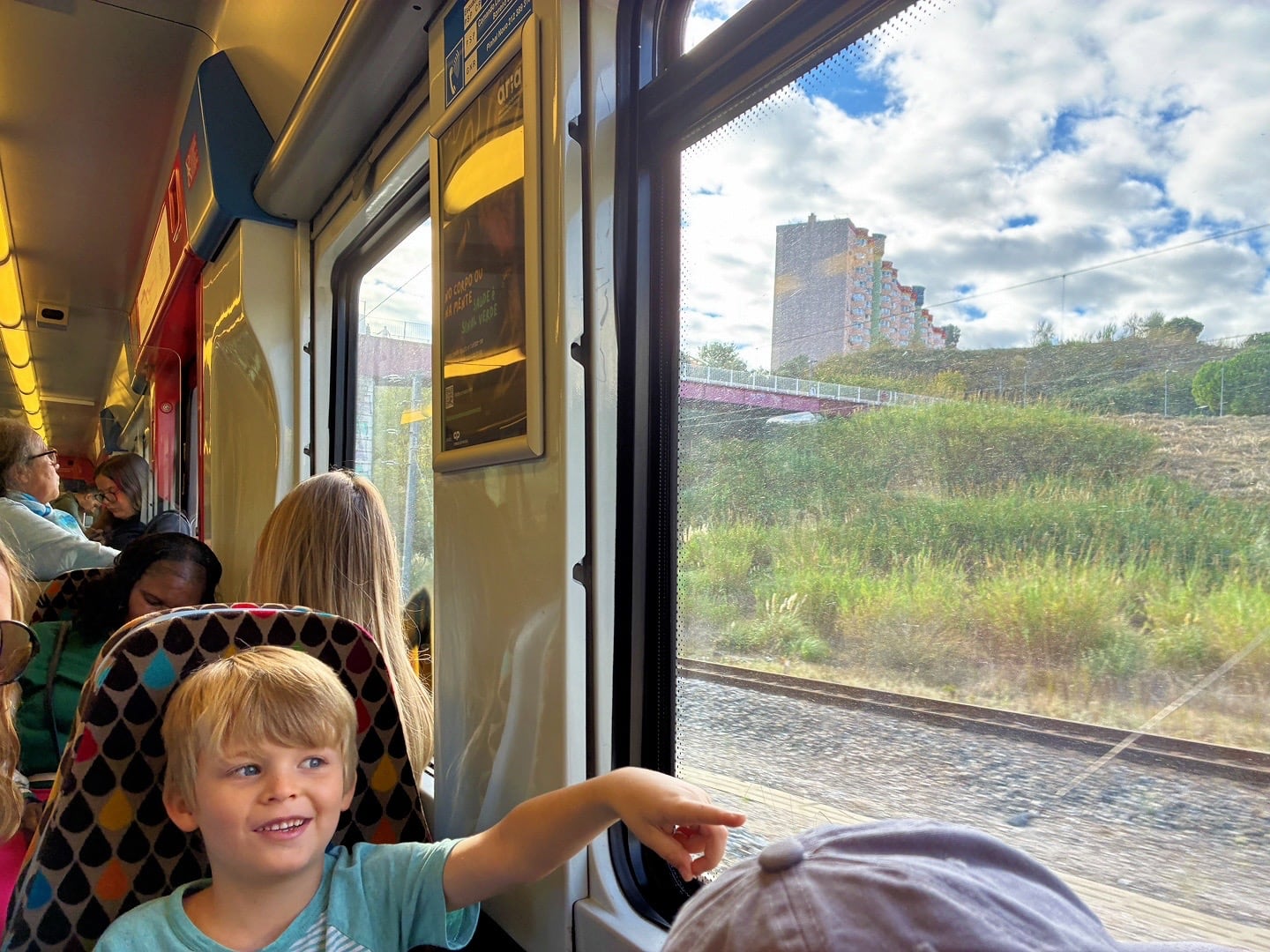
I still got a good laugh when we passed our apartment on the way to AND from the train station. That’s it there, as viewed from Riley’s very nice window seat.
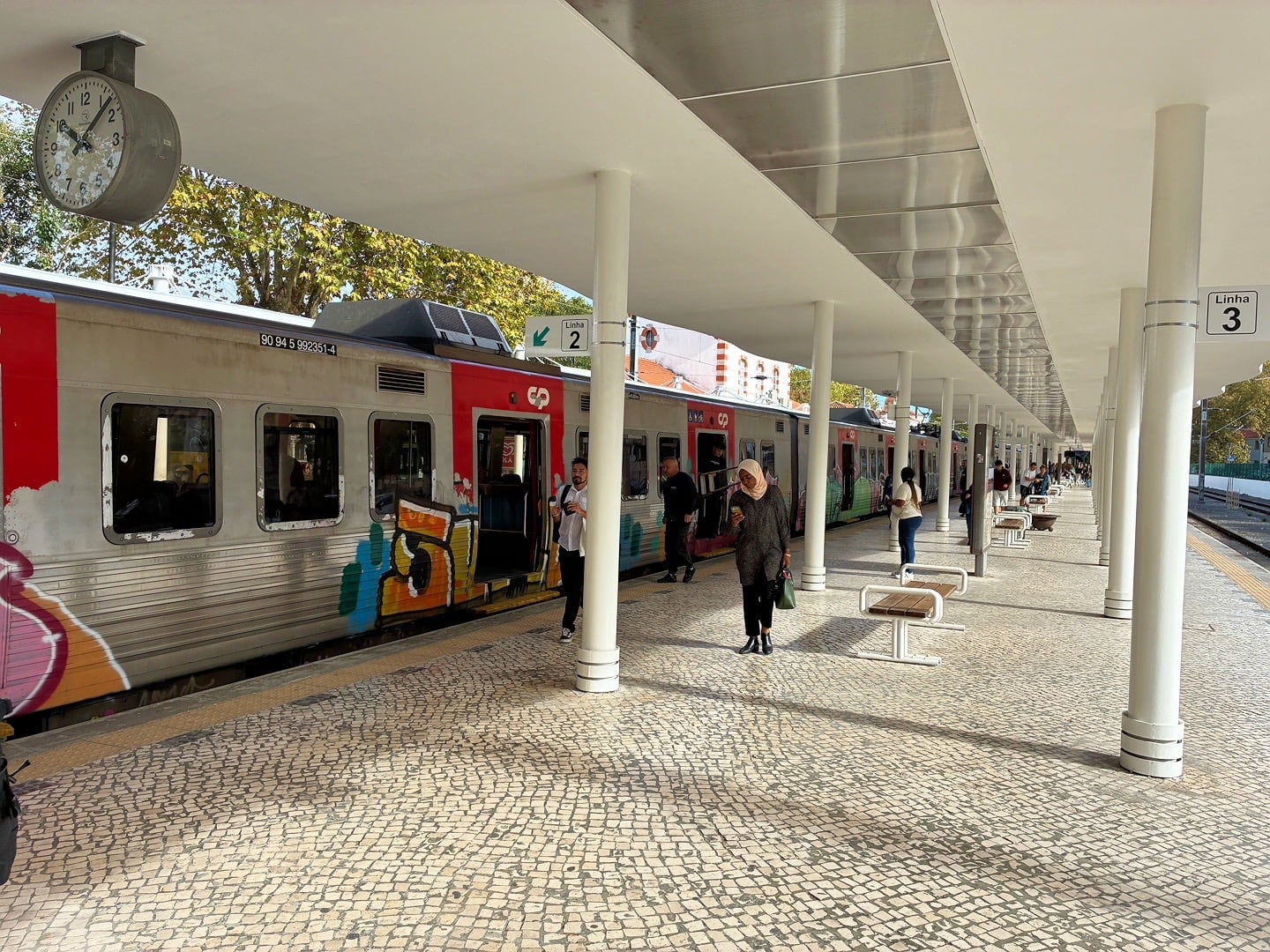
When we first arrived in Portugal, we thought there might be a chance we’d actually find a small place in Sintra to stay for a week or two. Fat chance! Short-term accommodation is hard enough to find, let alone a longer term apartment. We resigned ourselves to a day trip from Lisbon, but a full day at that.
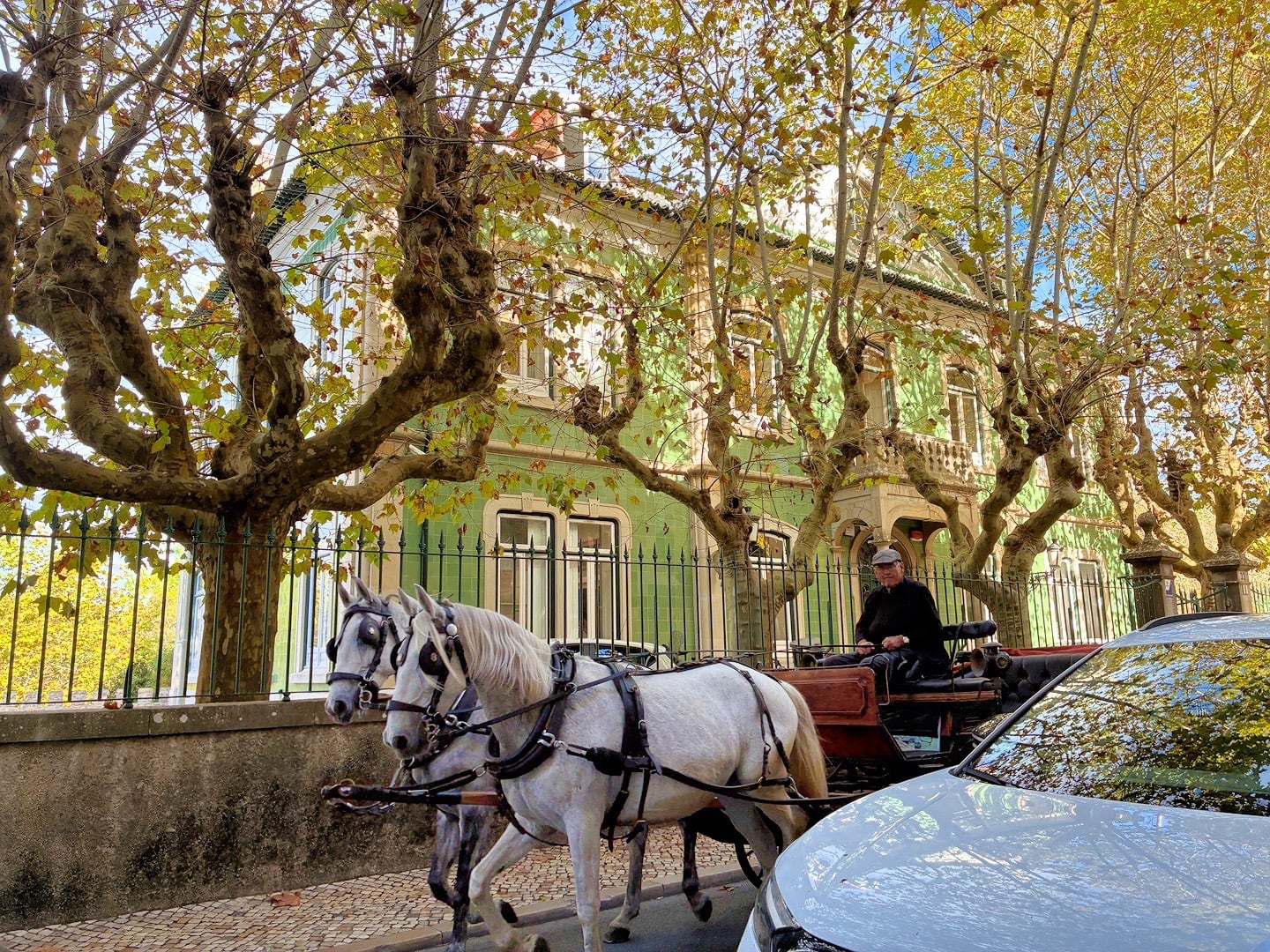
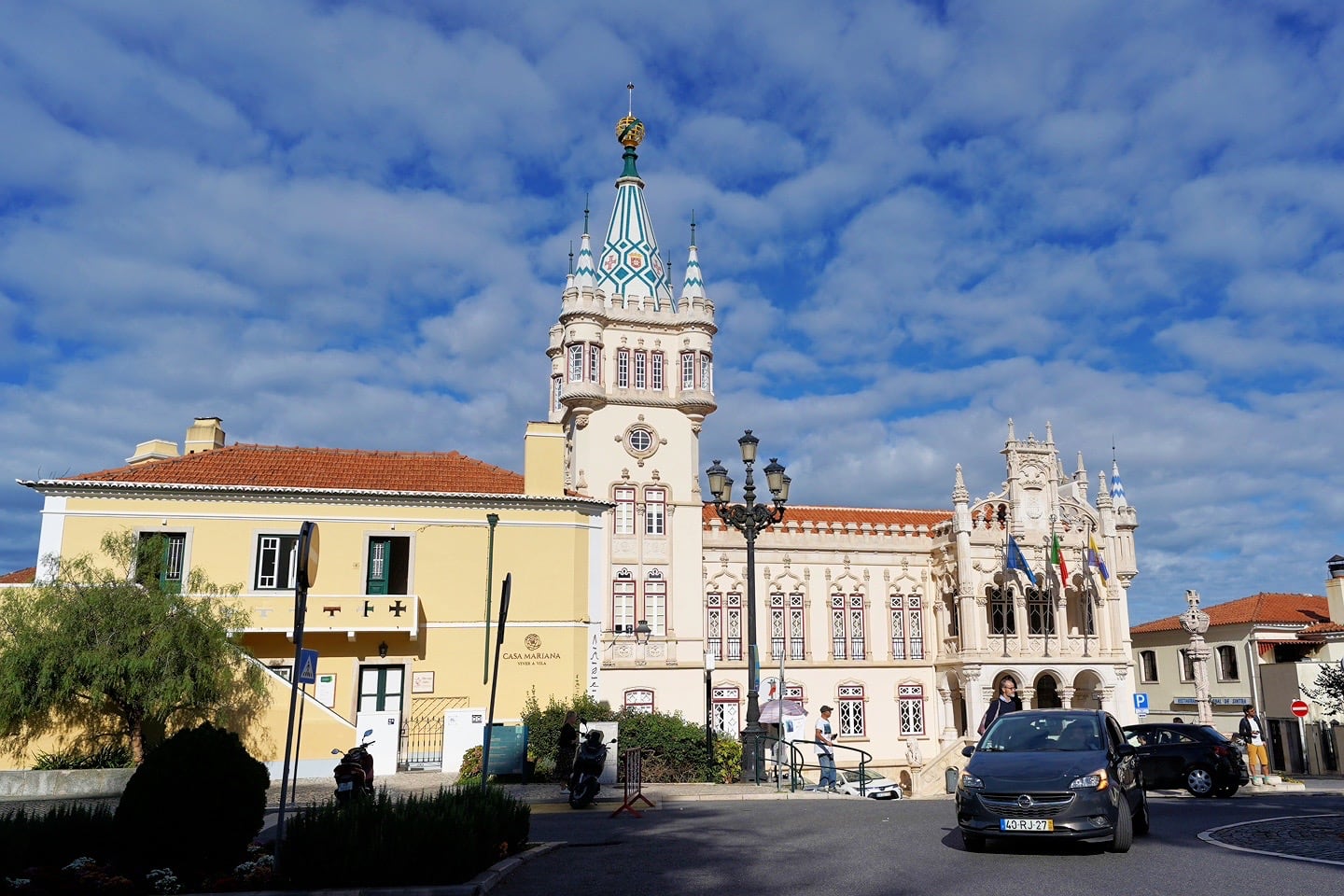
Still, there’s lots more to see and do in Sintra than we could possibly hope to do in just a day—more palaces and museums than you can shake a royal scepter at—and miles upon miles of hiking trails.
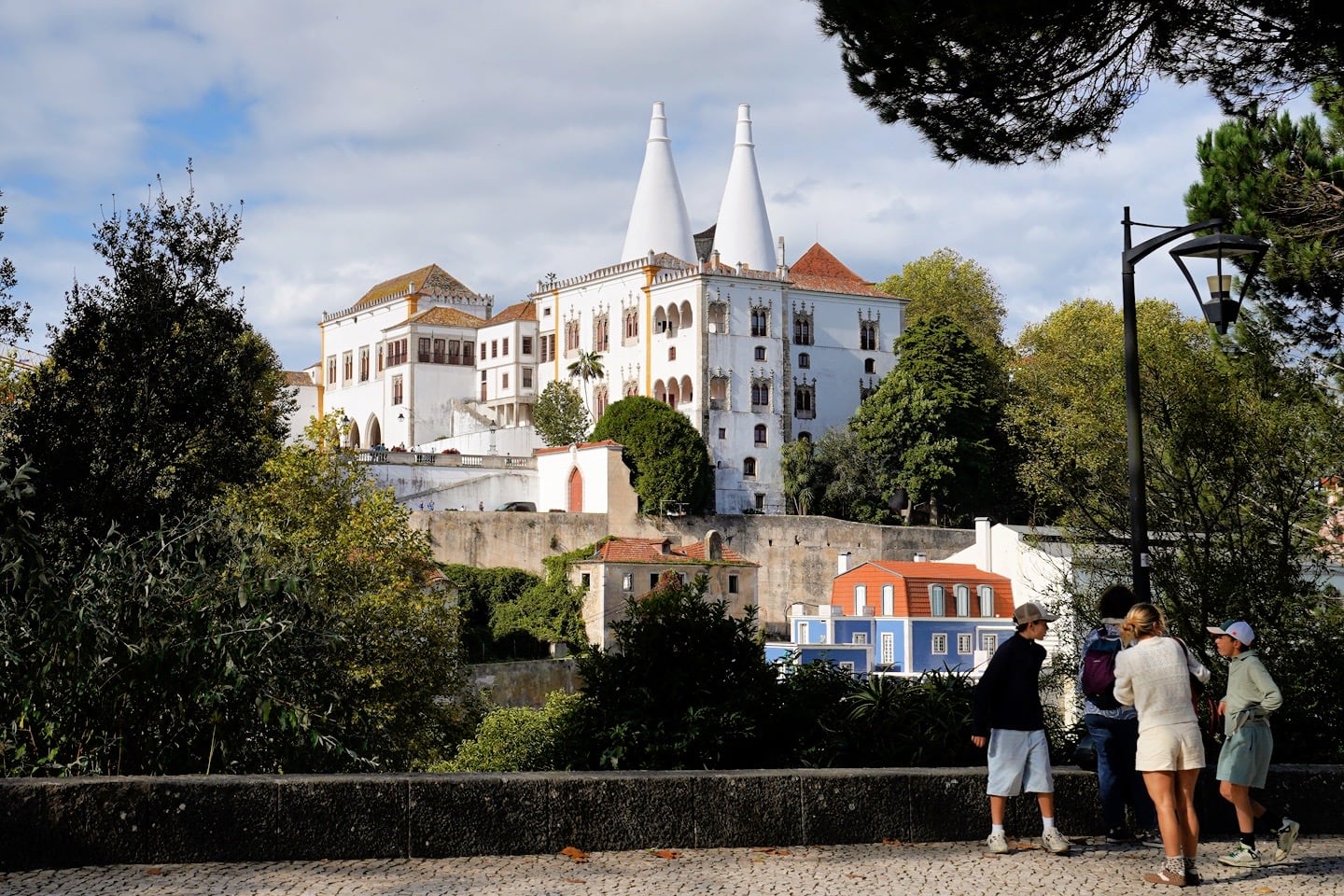
We knew we couldn’t possibly see everything, so we zeroed in on the two most significant sights in town: Pena Palace and the Moorish Castle.
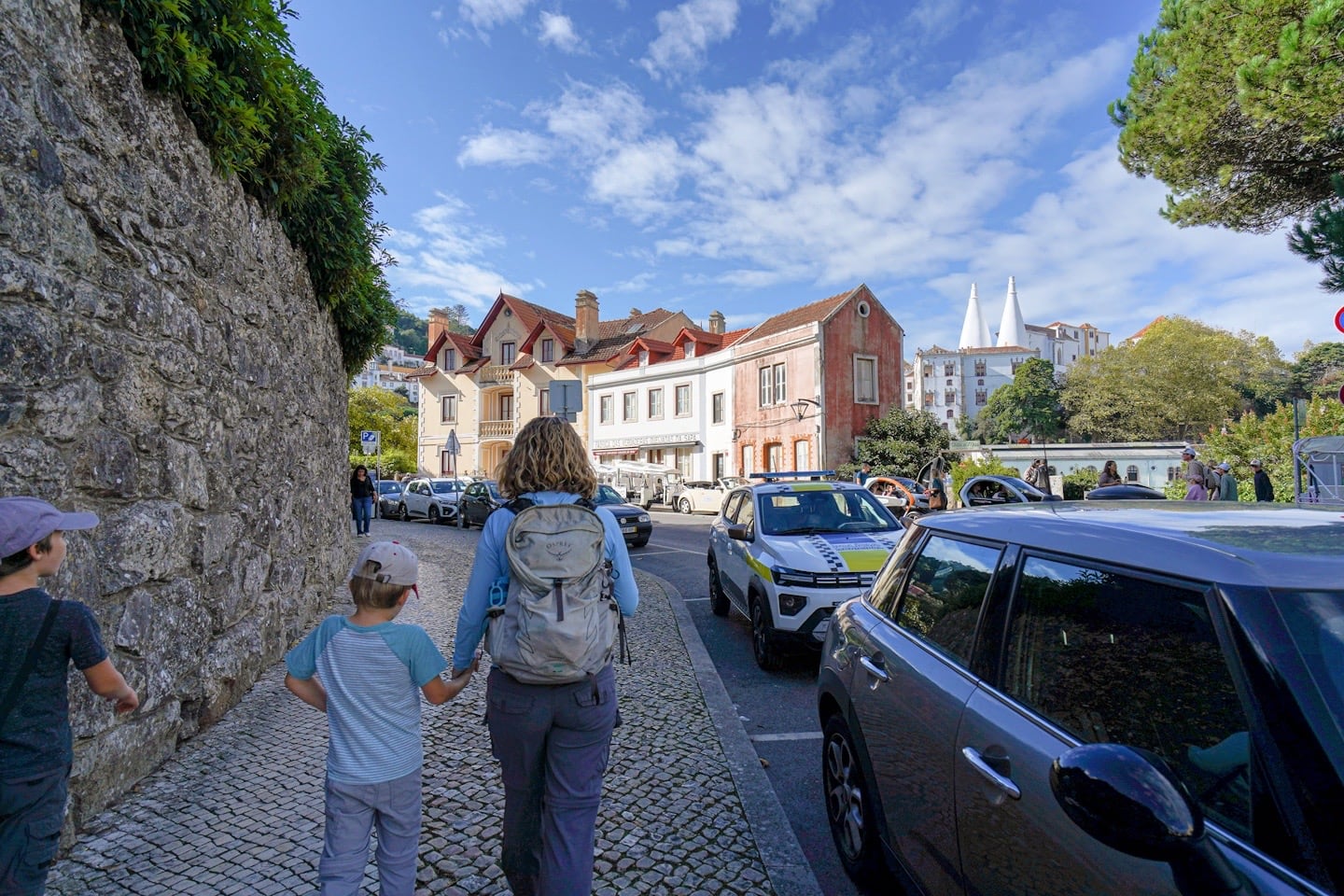
Both of these complexes are located on the same mountain overlooking town. There are two ways to access the palace and castle: By shuttle or on foot. We chose the latter, which involves a 1,400-foot ascent through the forest, clocking in at around 5 miles, round trip.
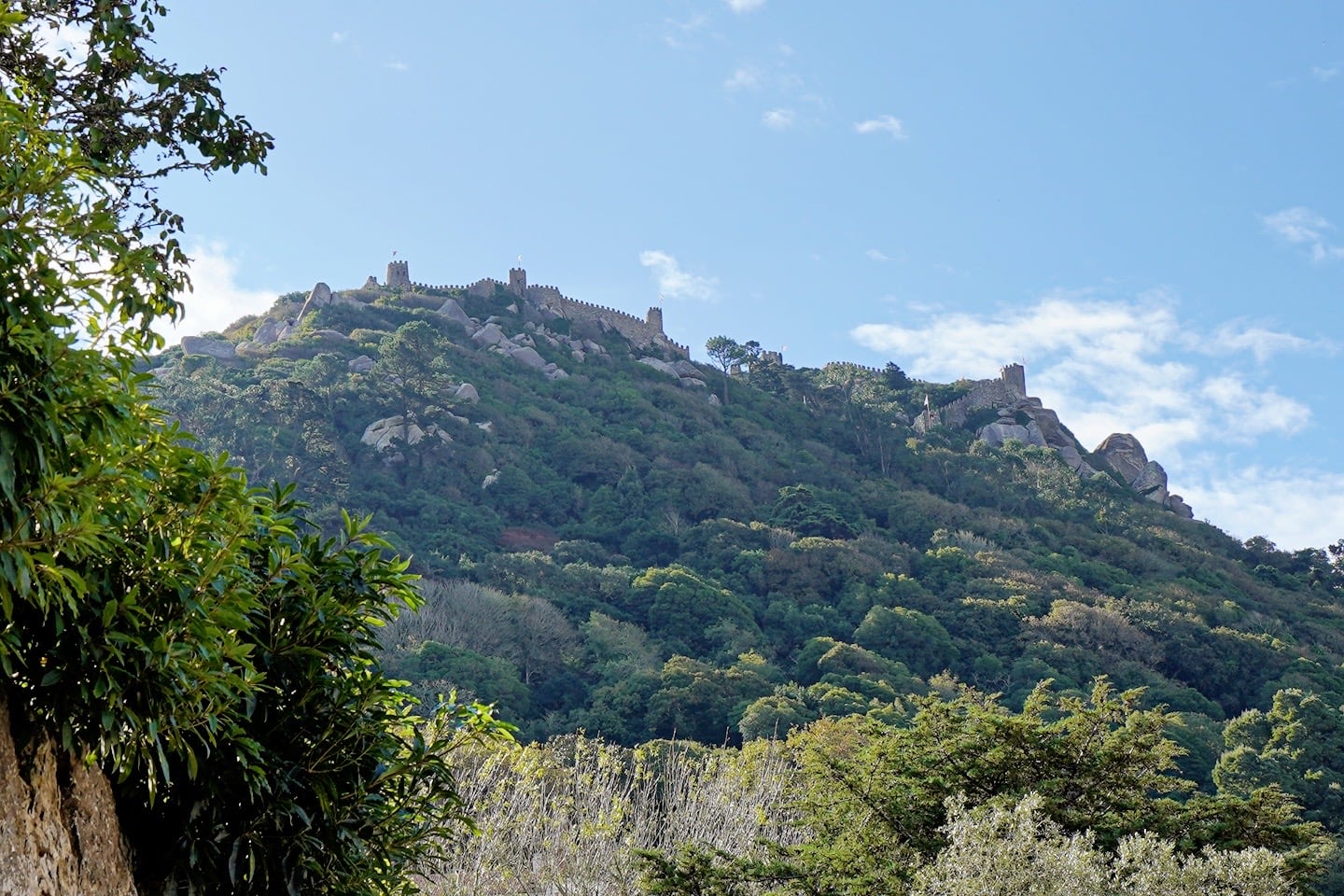
That’s our first stop—the Moorish Castle as viewed from the valley floor.
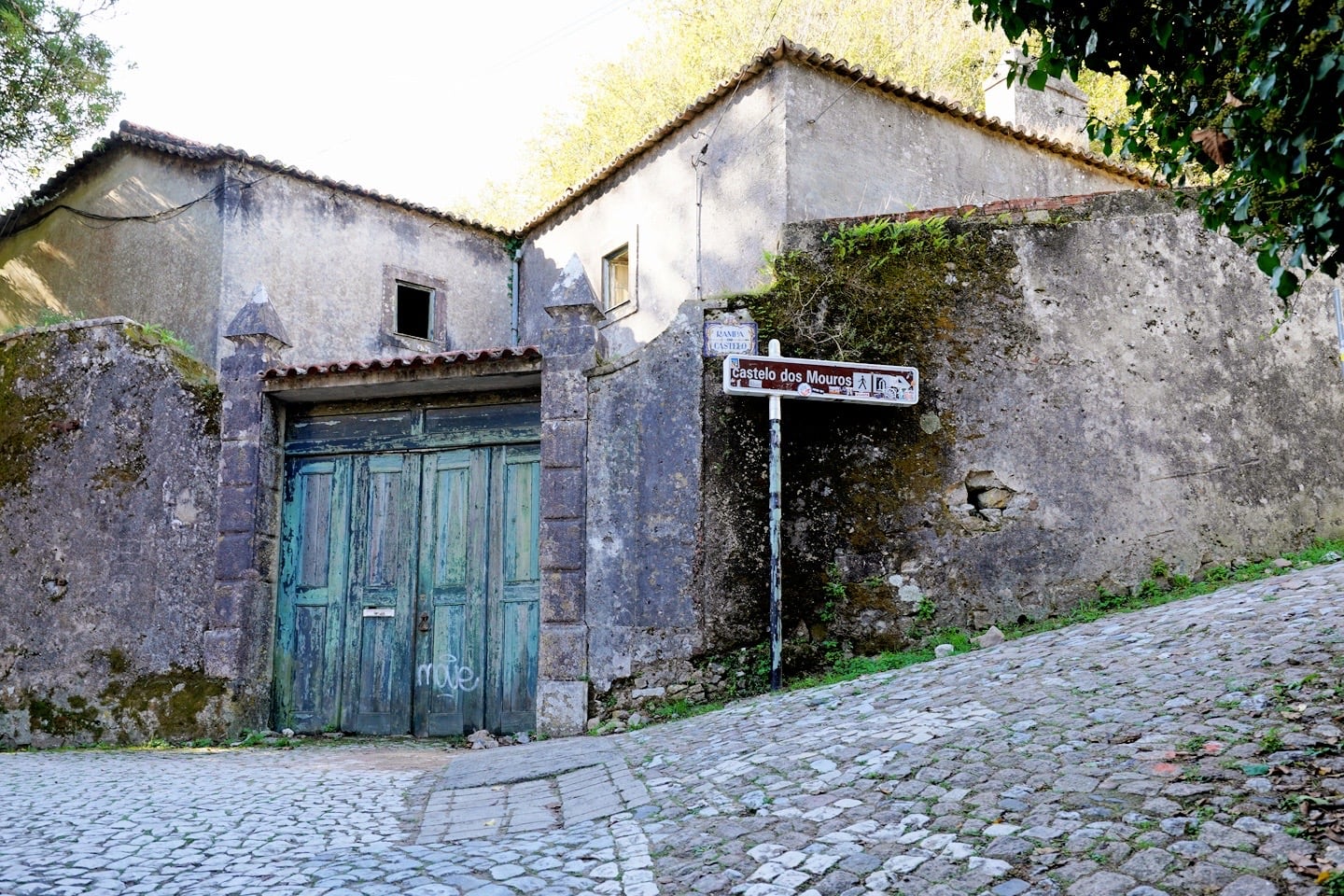
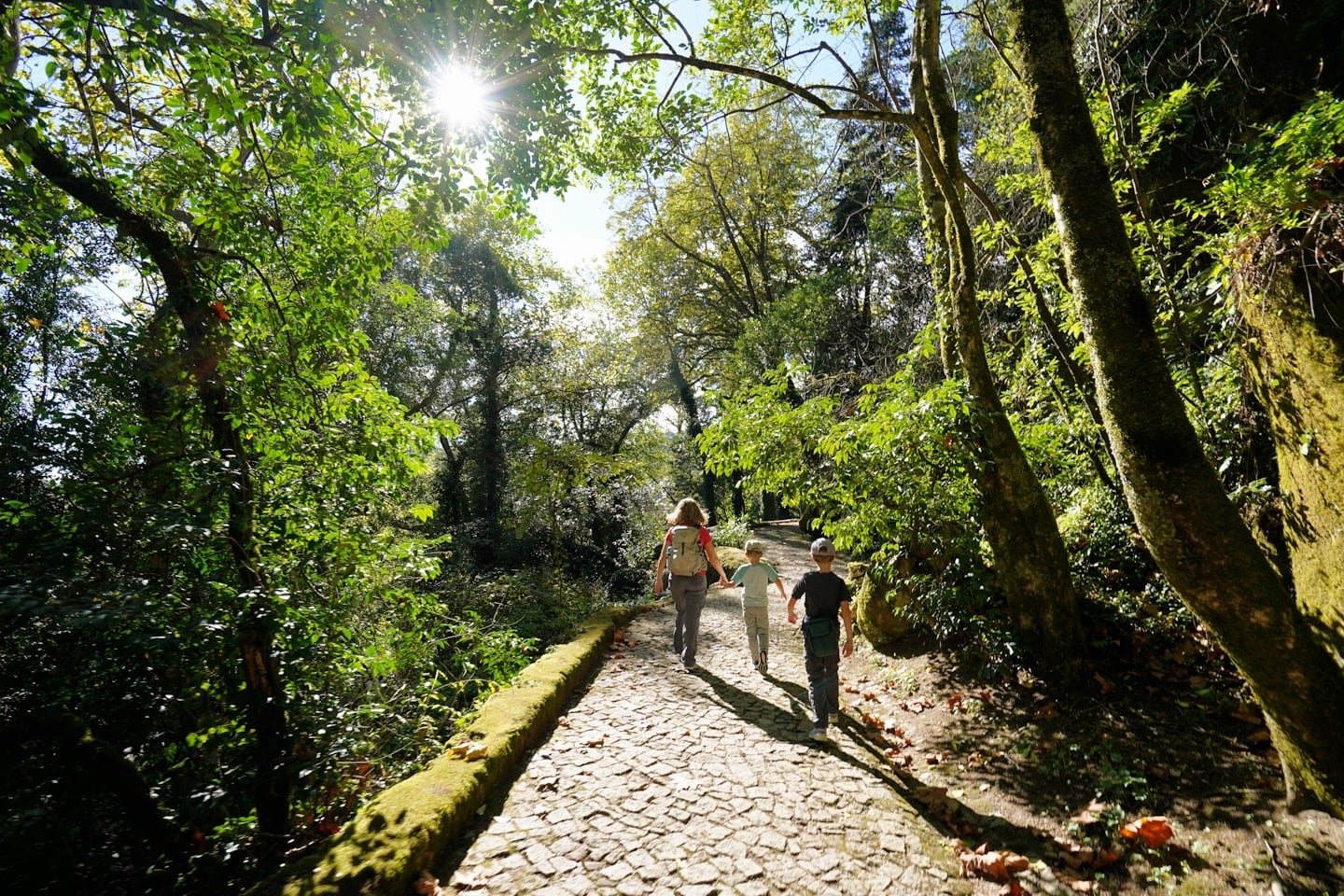
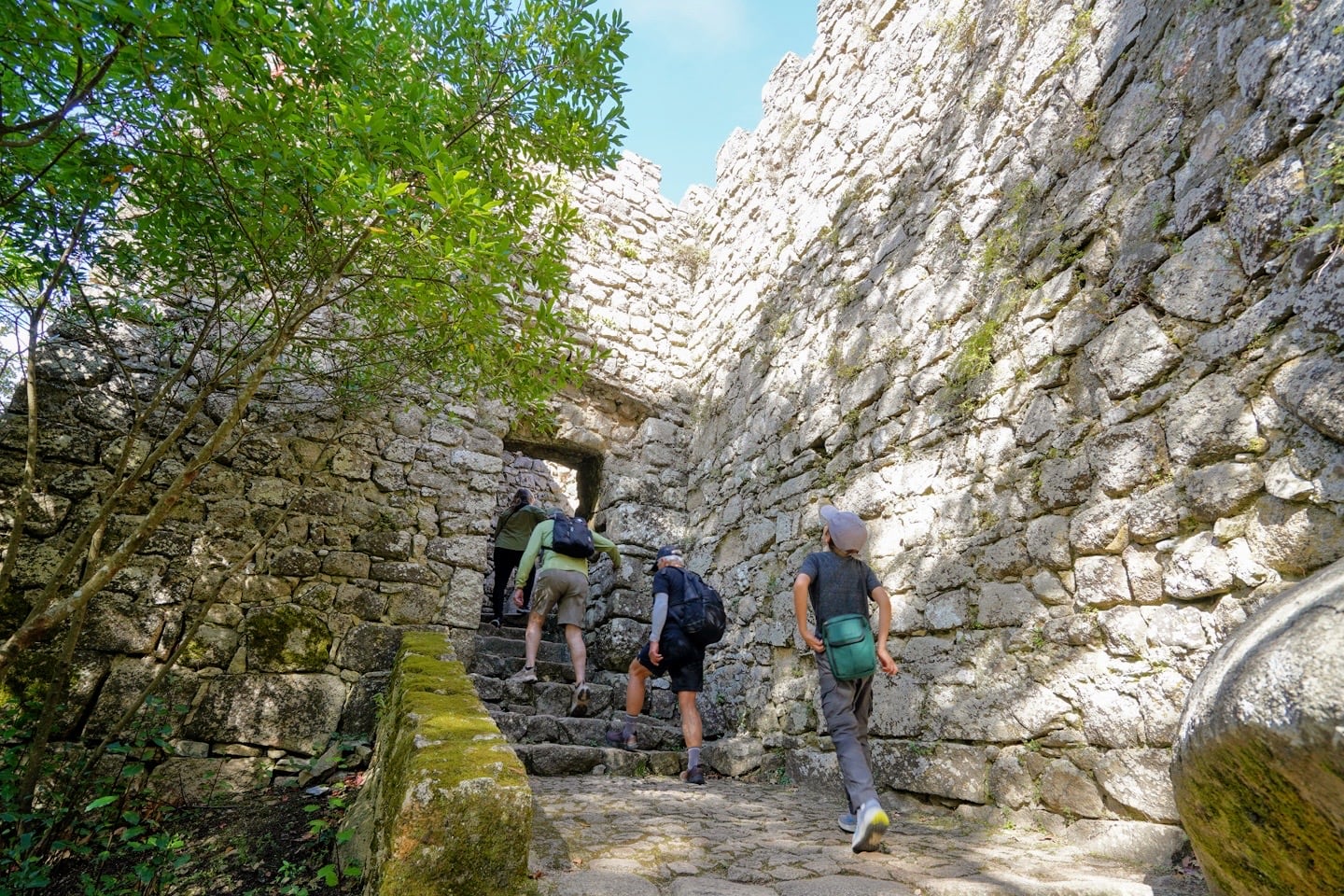
Just under an hour after leaving the train station, we arrive at the ticket checkpoint to Stop #1.
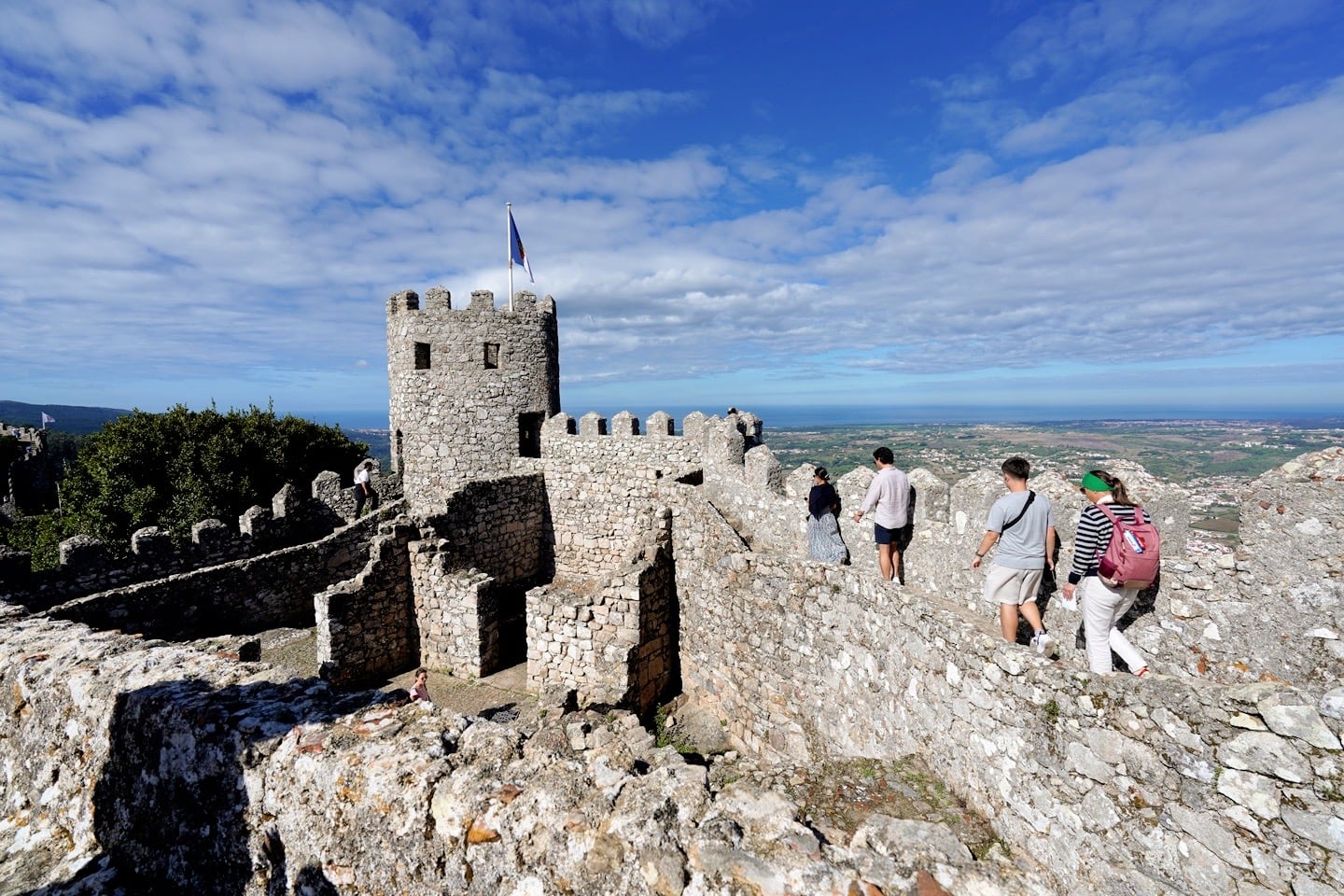
The Moorish Castle (Castelo dos Mouros) is a medieval fortification built in the 8th or 9th century during the Moorish occupation of the Iberian Peninsula.
After Christian forces captured Lisbon in 1147, the castle’s inhabitants surrendered peacefully. The castle eventually lost its military significance and fell into disrepair over centuries due to neglect and the 1755 earthquake.
In the 19th century, King Ferdinand II began restoring parts of the ruins, integrating them into the landscape of the surrounding Pena Park.
The castle is a National Monument and was designated a UNESCO World Heritage Site in 1995 as part of the Sintra Cultural Landscape.
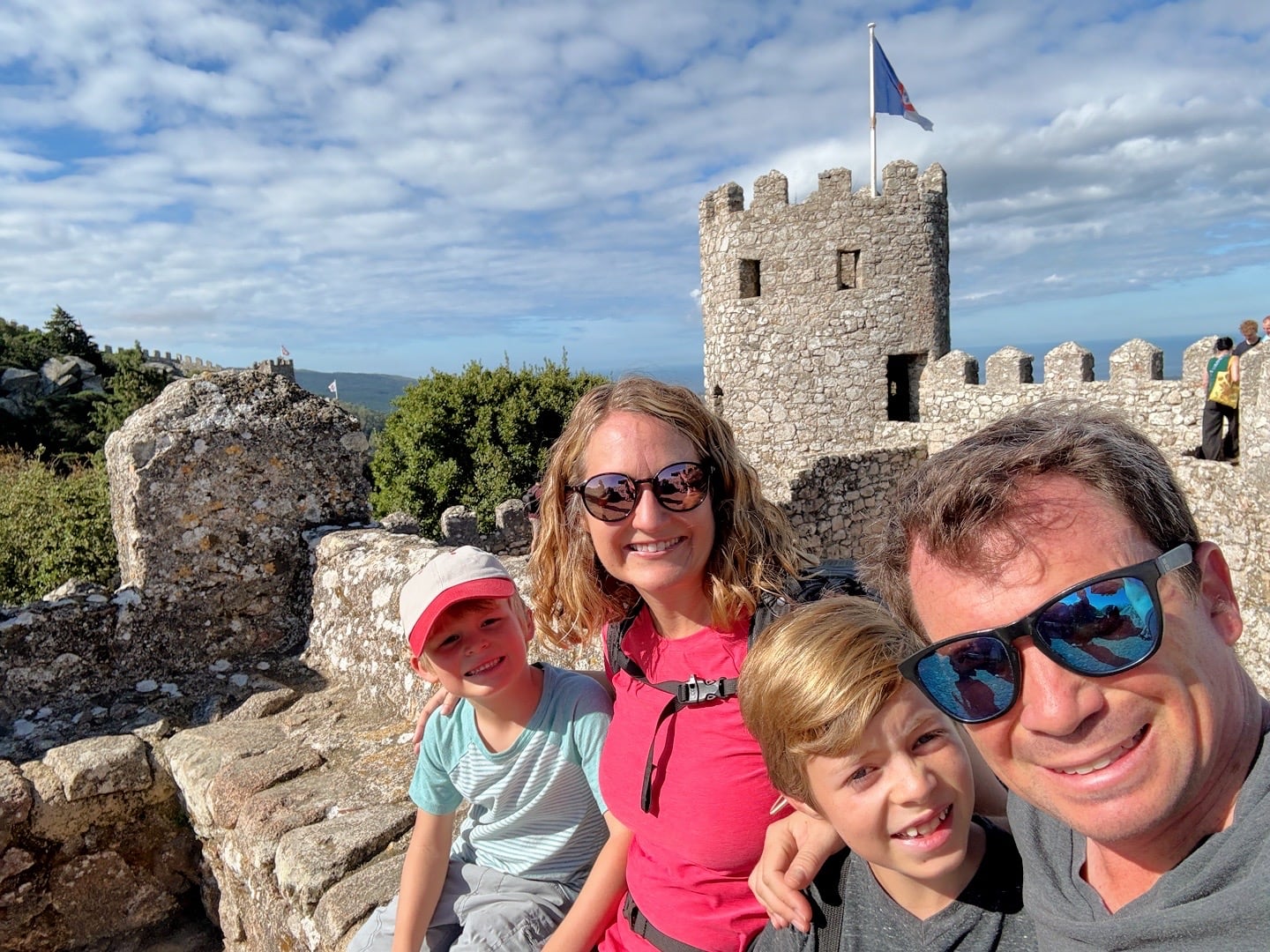
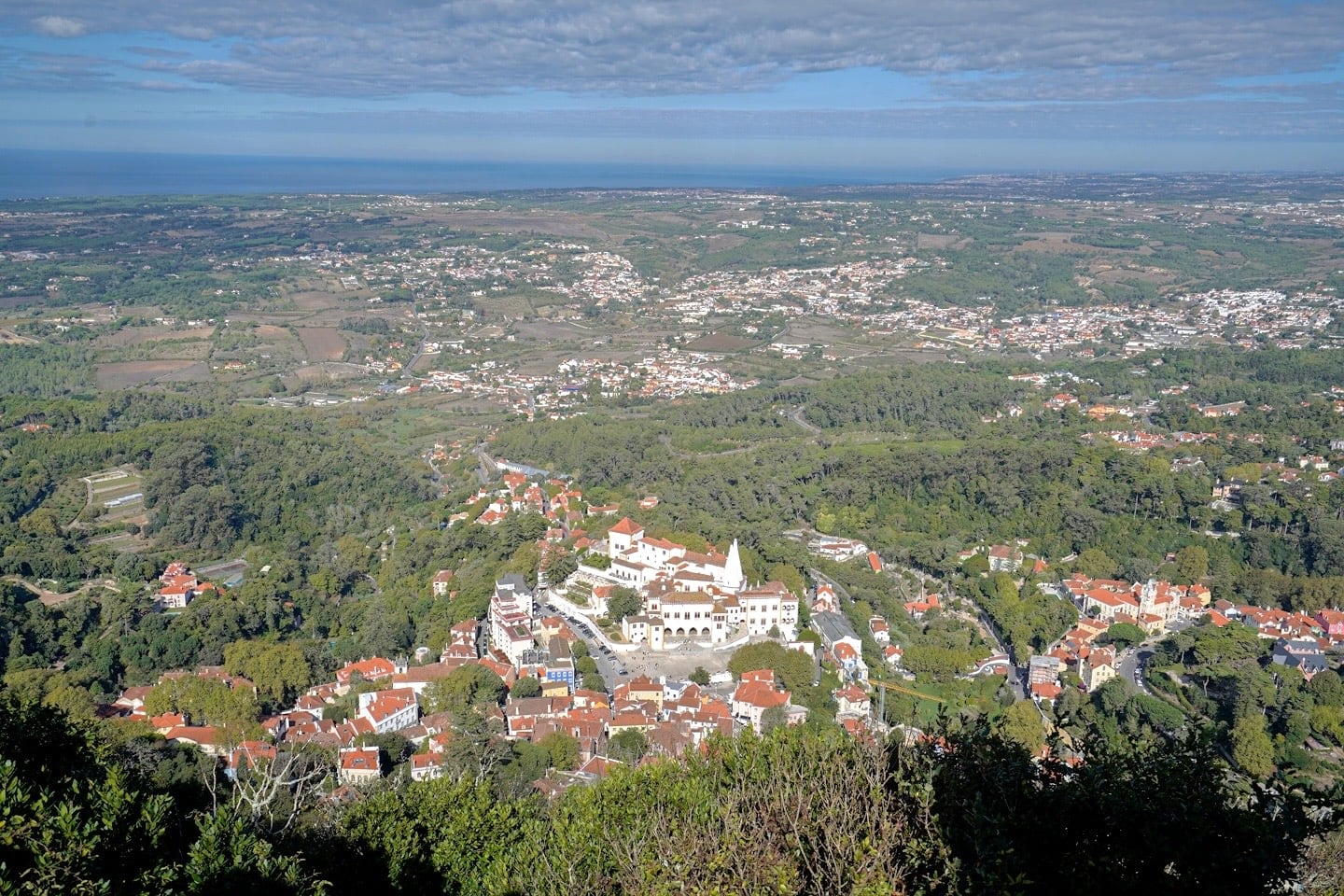
Arguably the best views of Sintra (stretching all the way to the Atlantic) are from the castle’s ramparts.
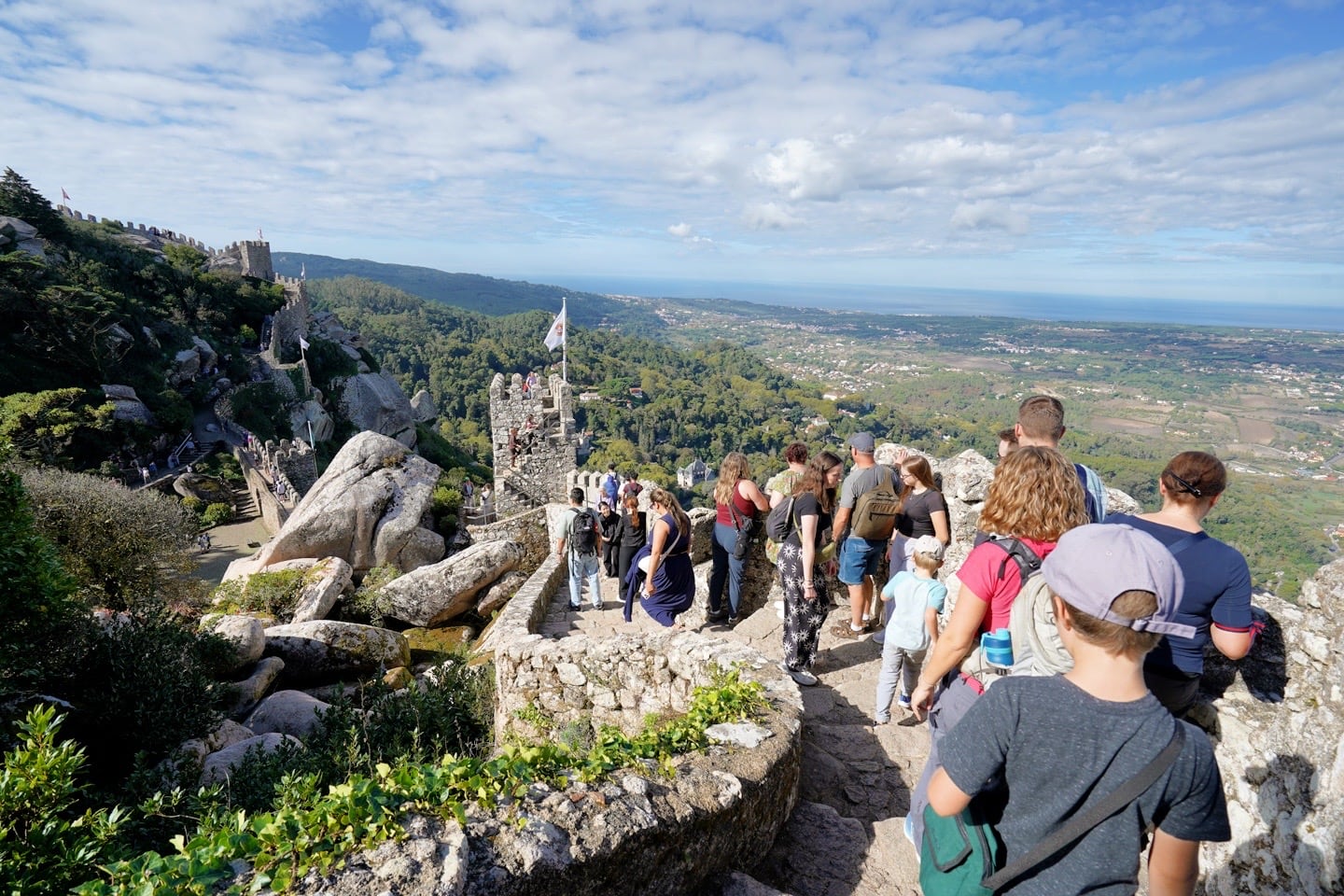
Walking the castle walls brought back a lot of memories of tracing the Great Wall of China. More than just a few similarities, if on a much smaller scale compared to its Chinese cousin.
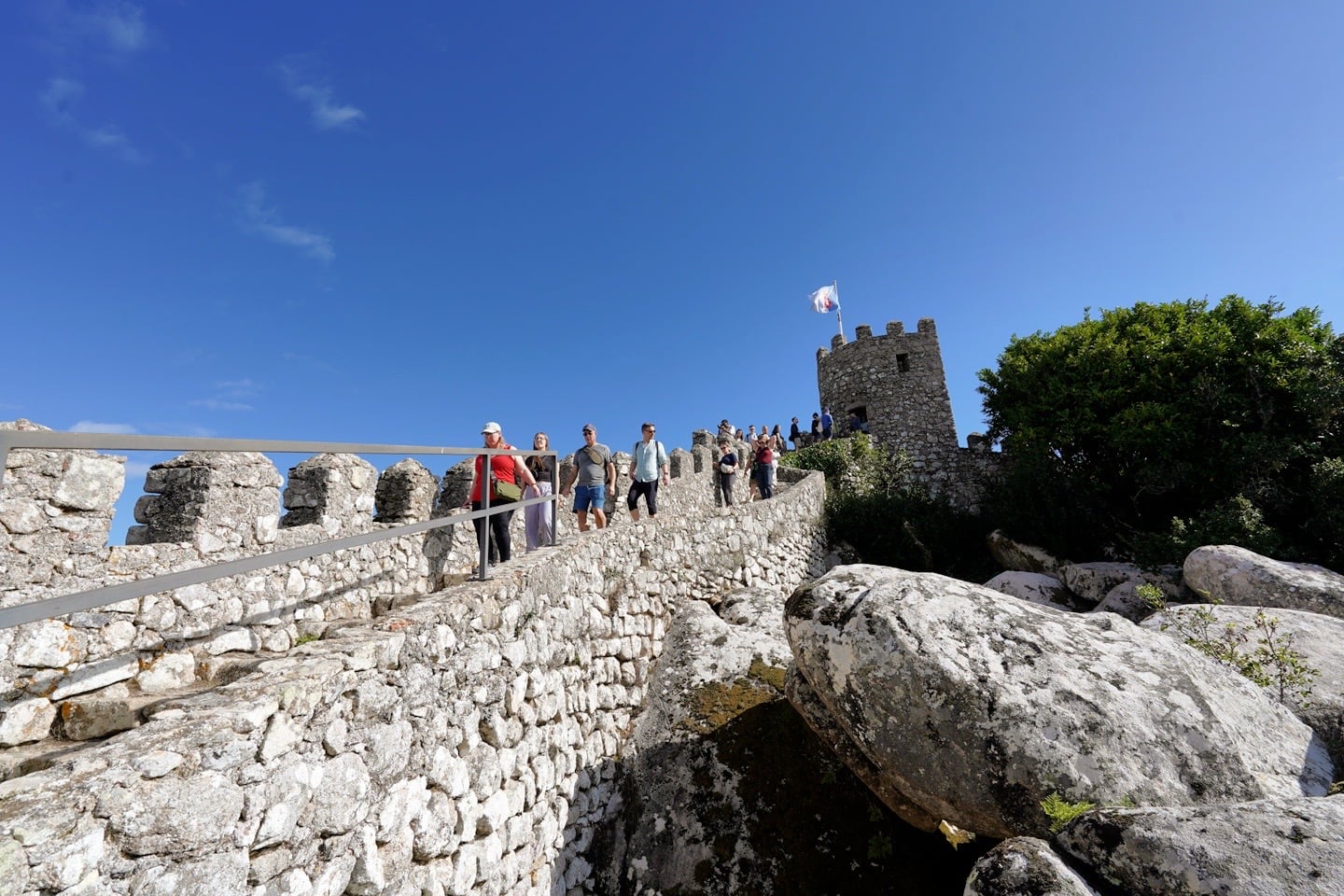
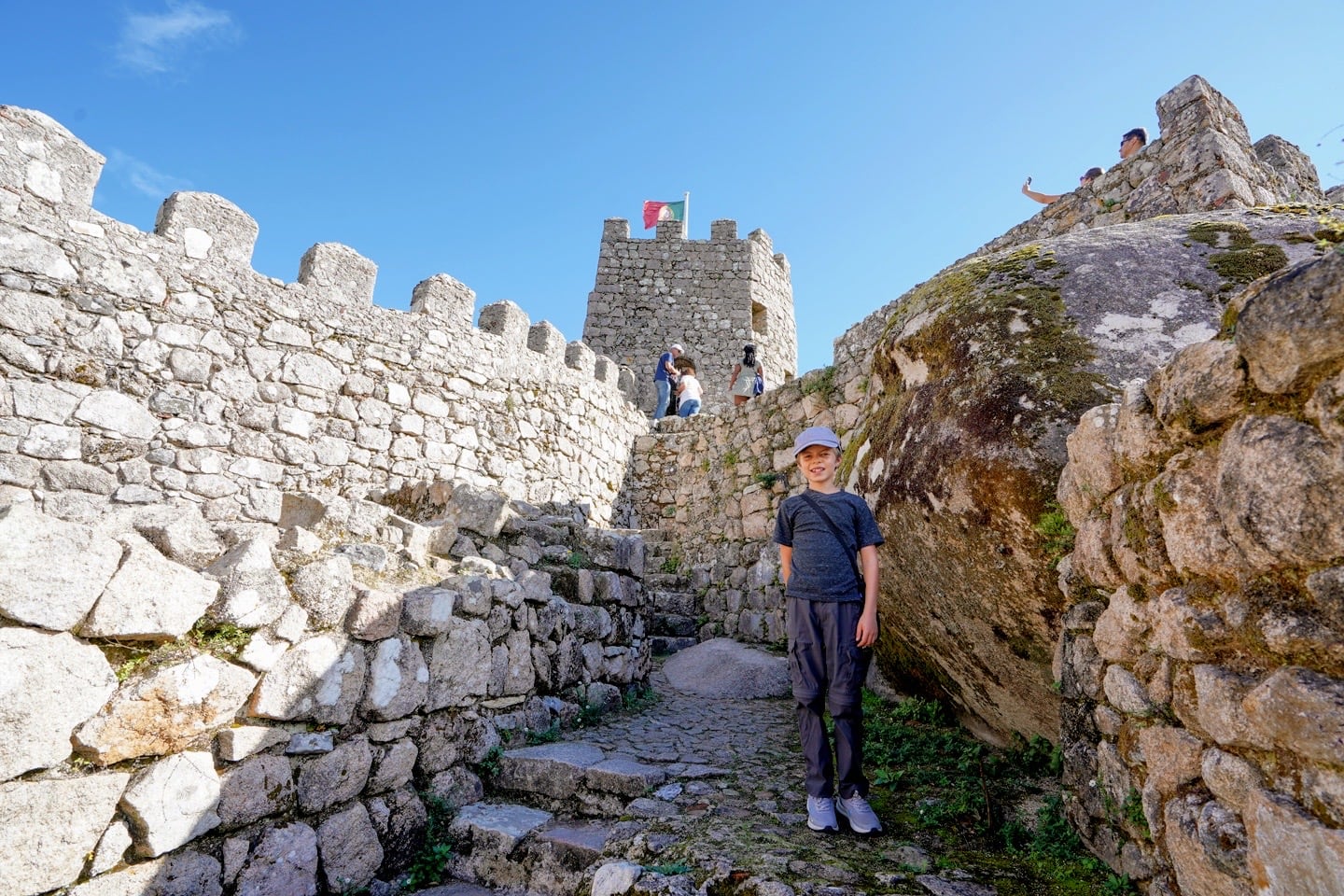
Some of the ramparts have railings, but most do not, which made for interesting explorations particularly with a wily seven-year-old in tow.
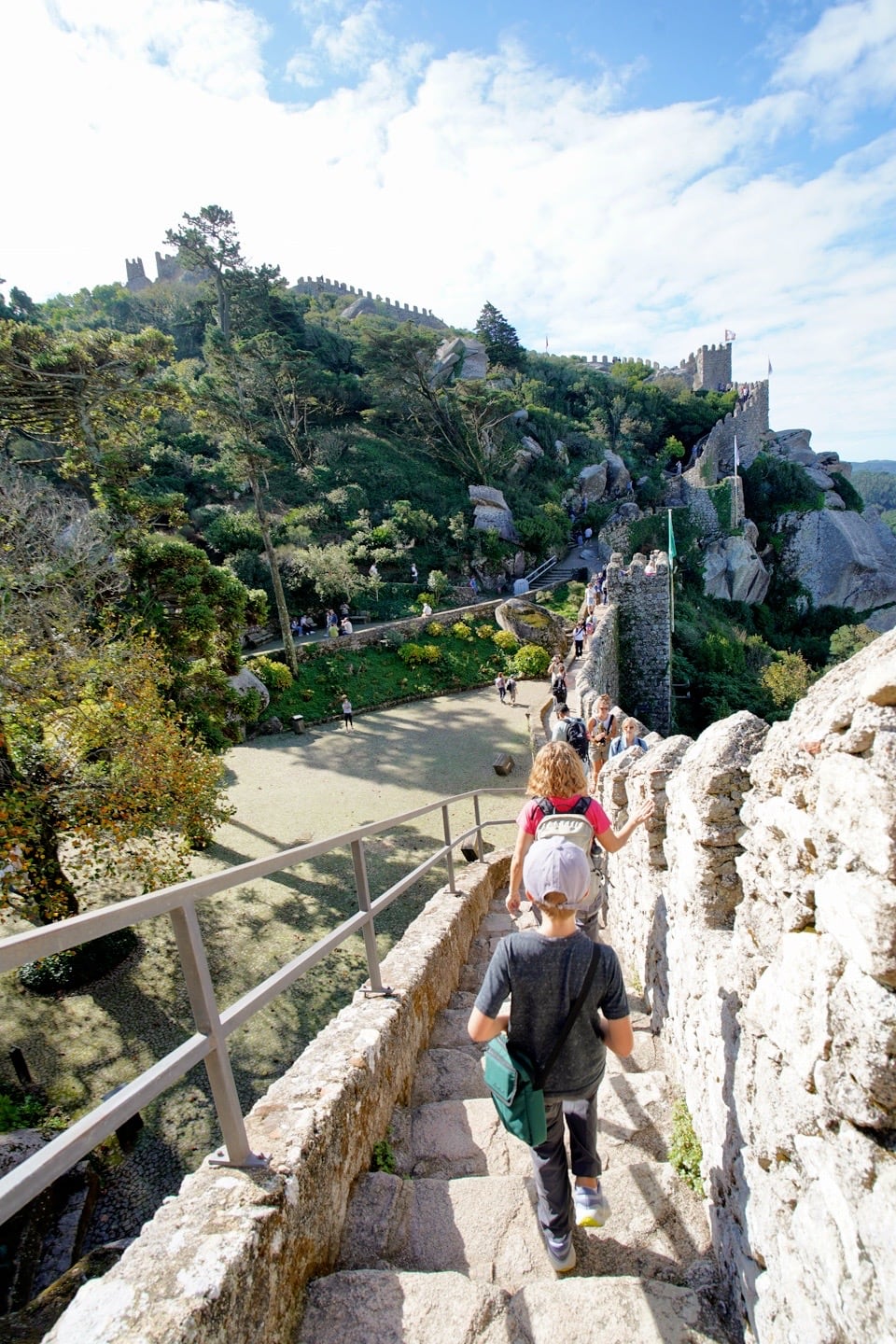
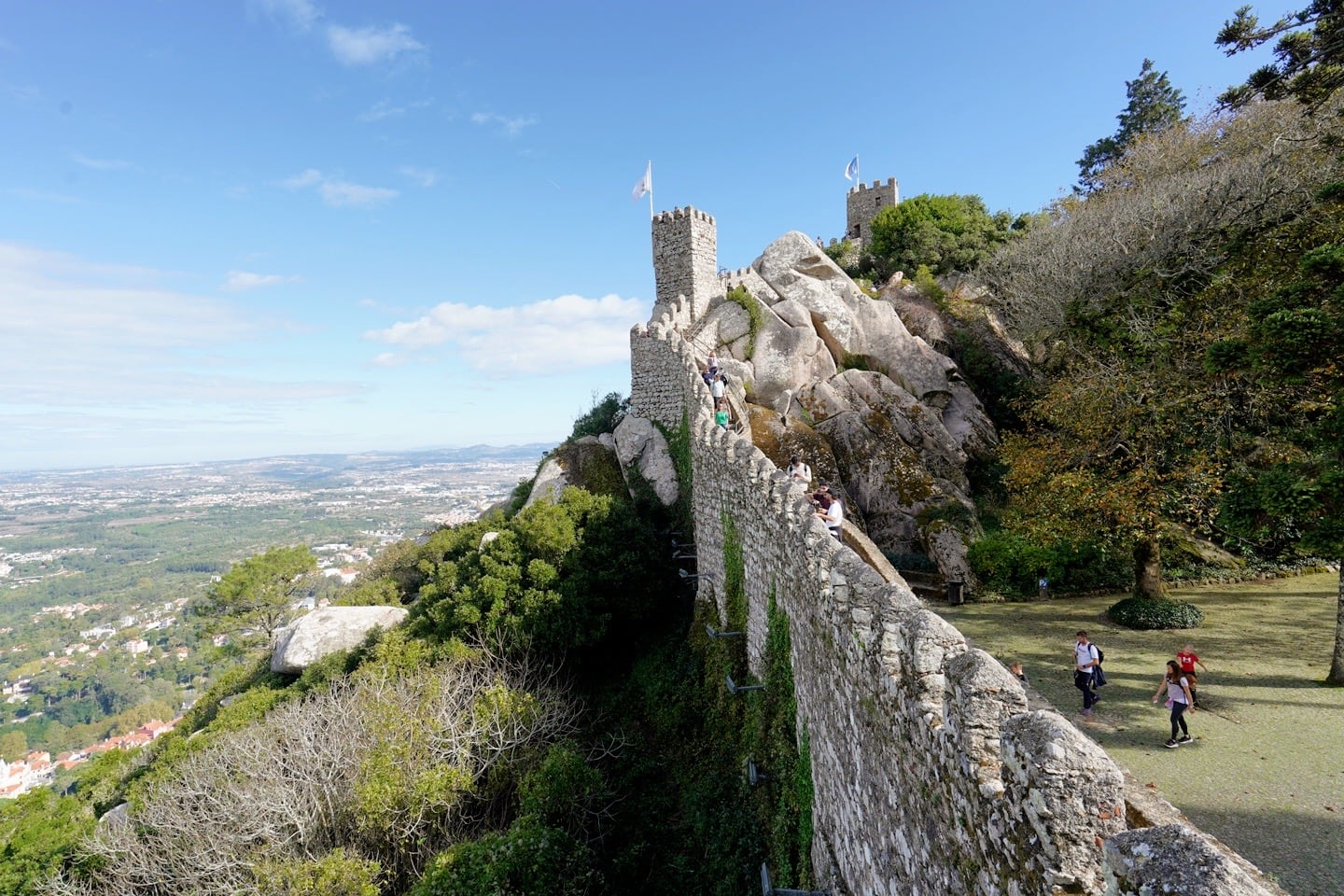
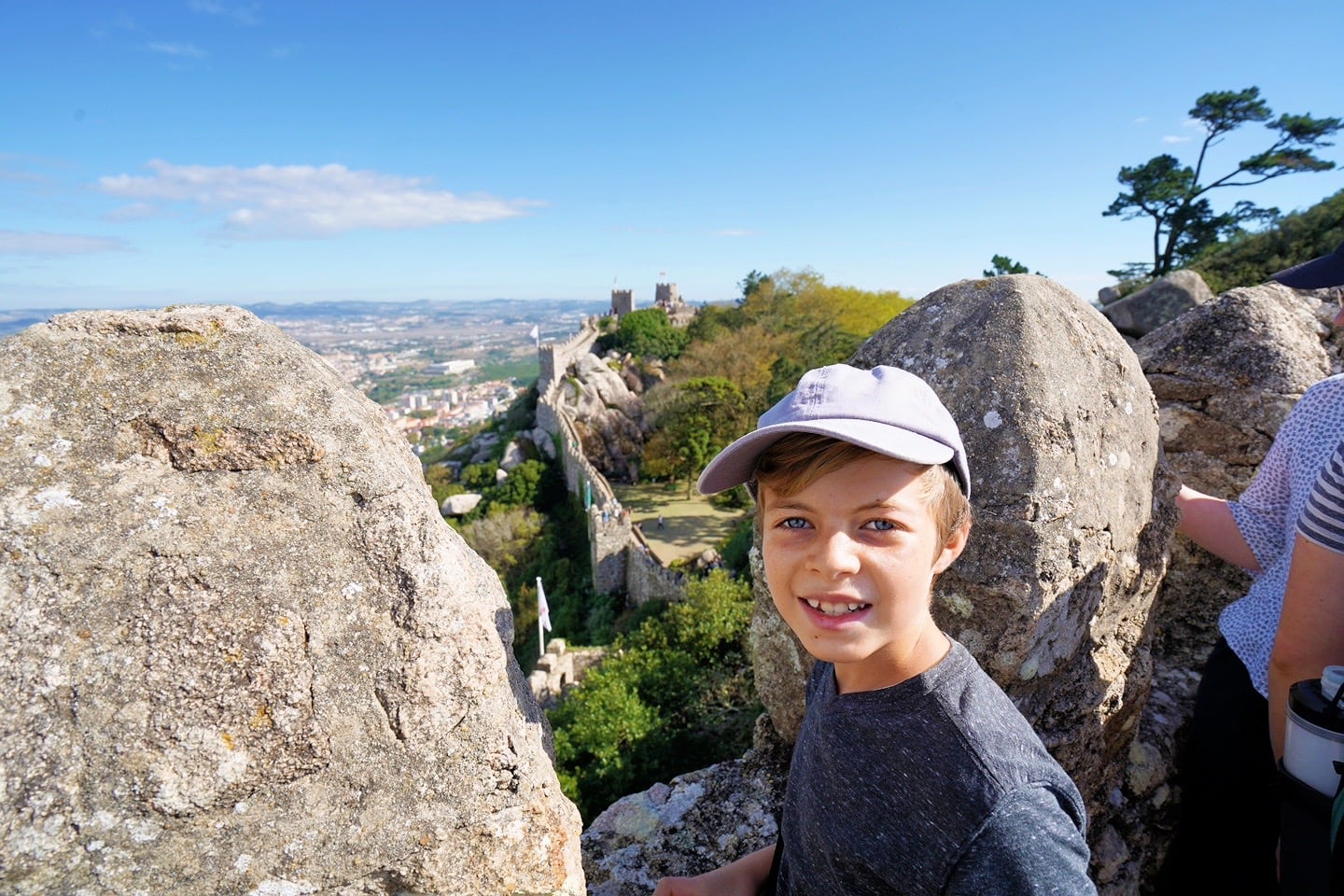
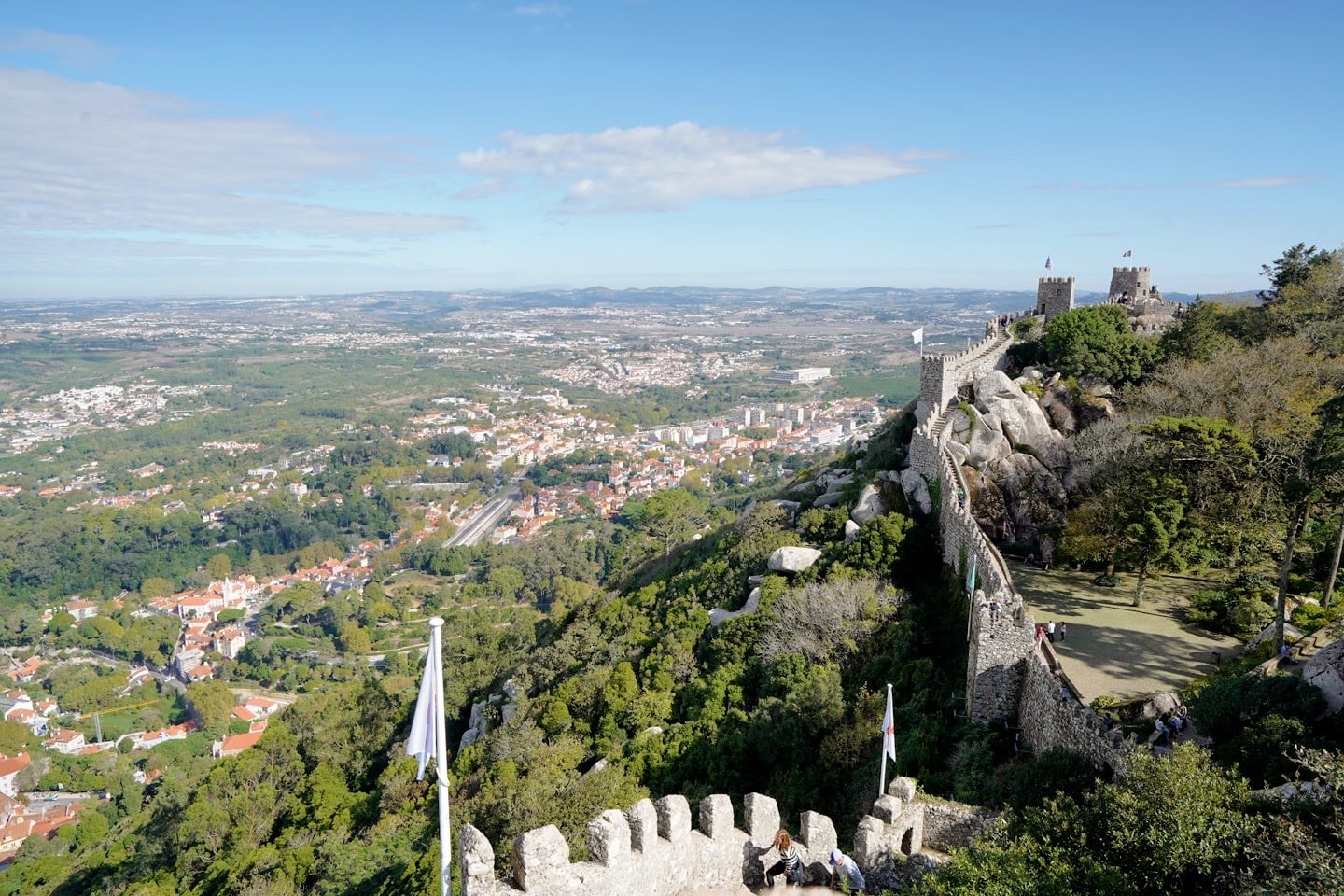
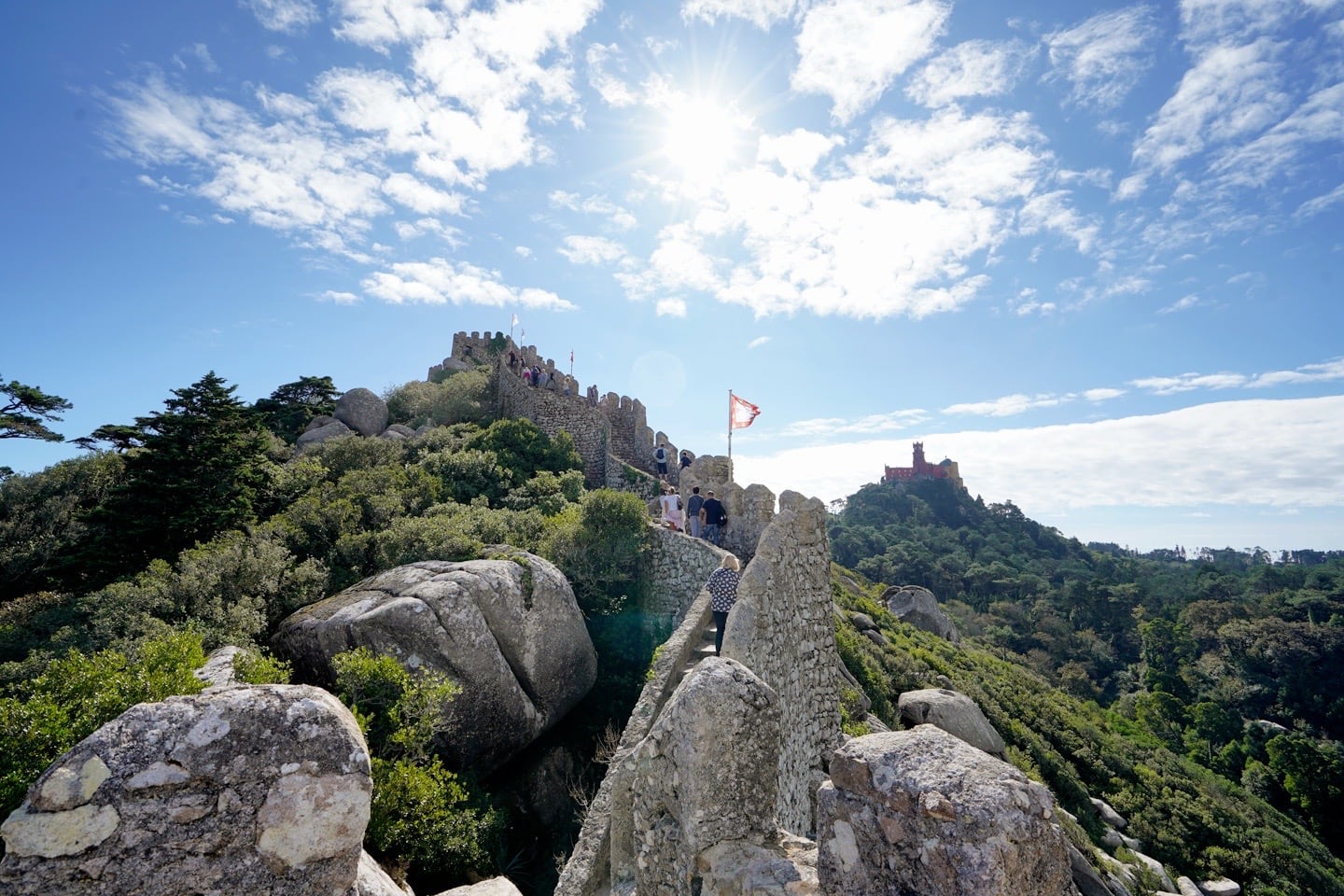
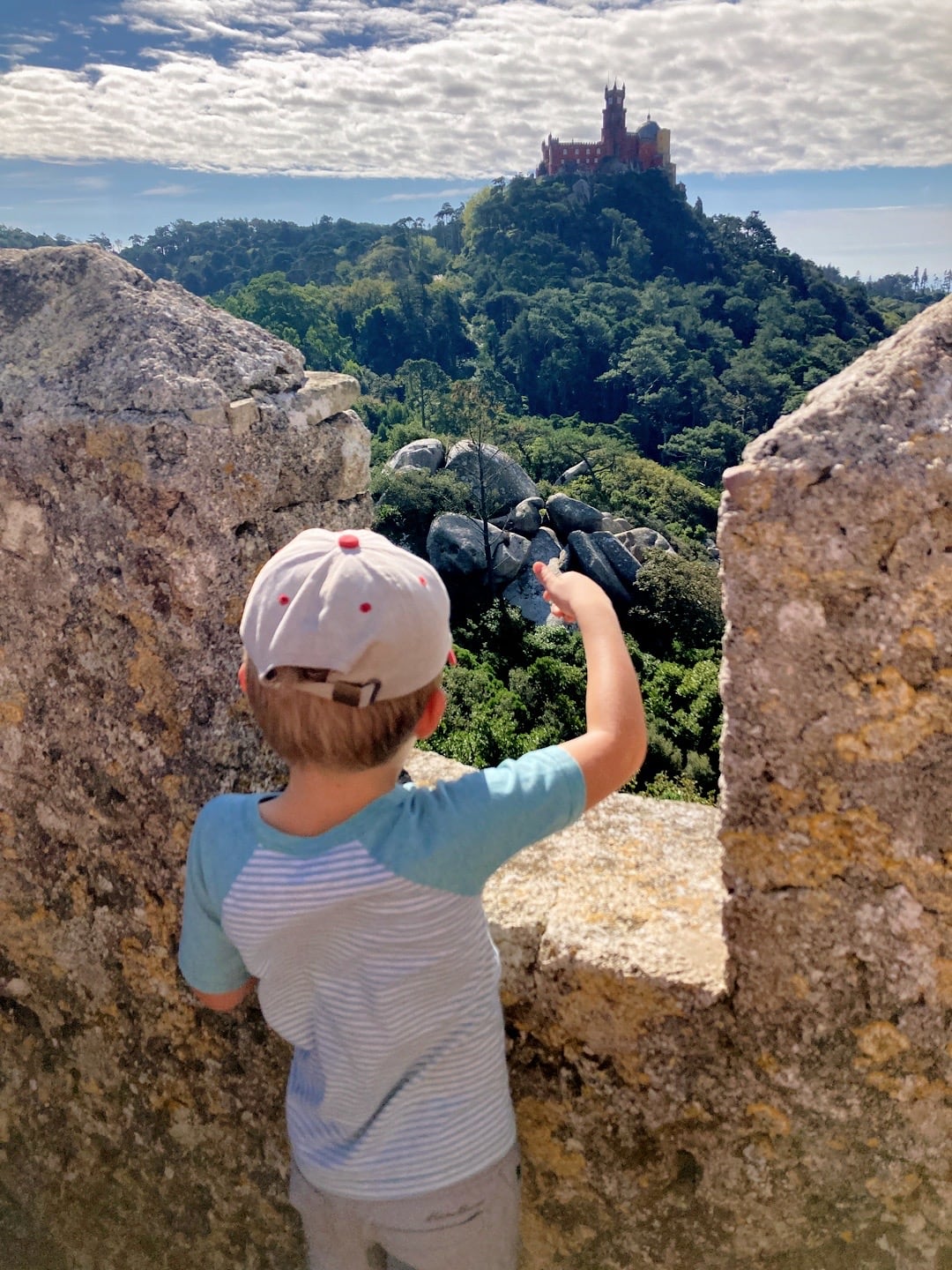
Across the way is Pena Palace, our second stop on the mountain.
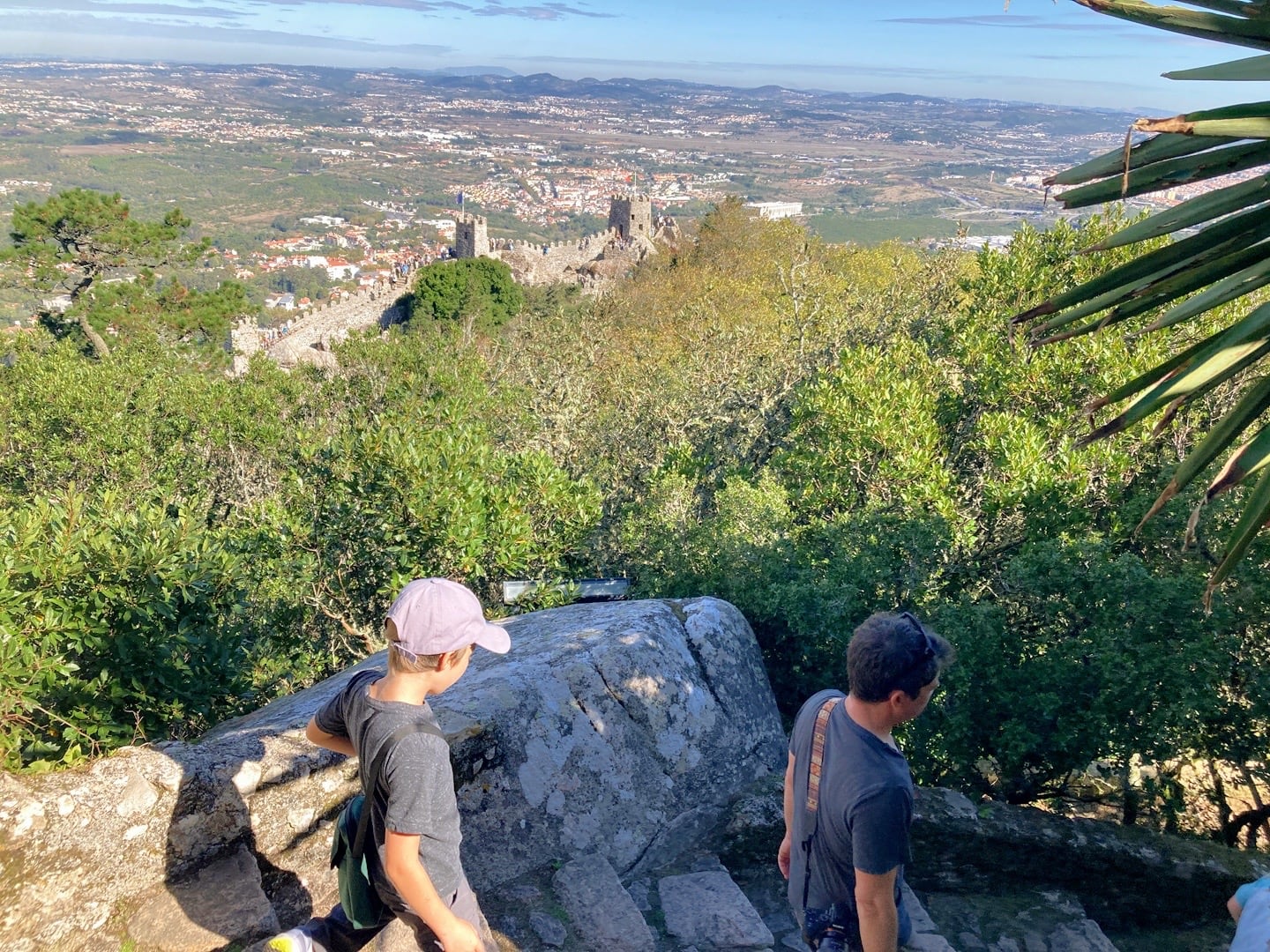
Getting between the two on foot meant traversing a marginally-maintained footpath through the forest, along with dozens of other visitors.
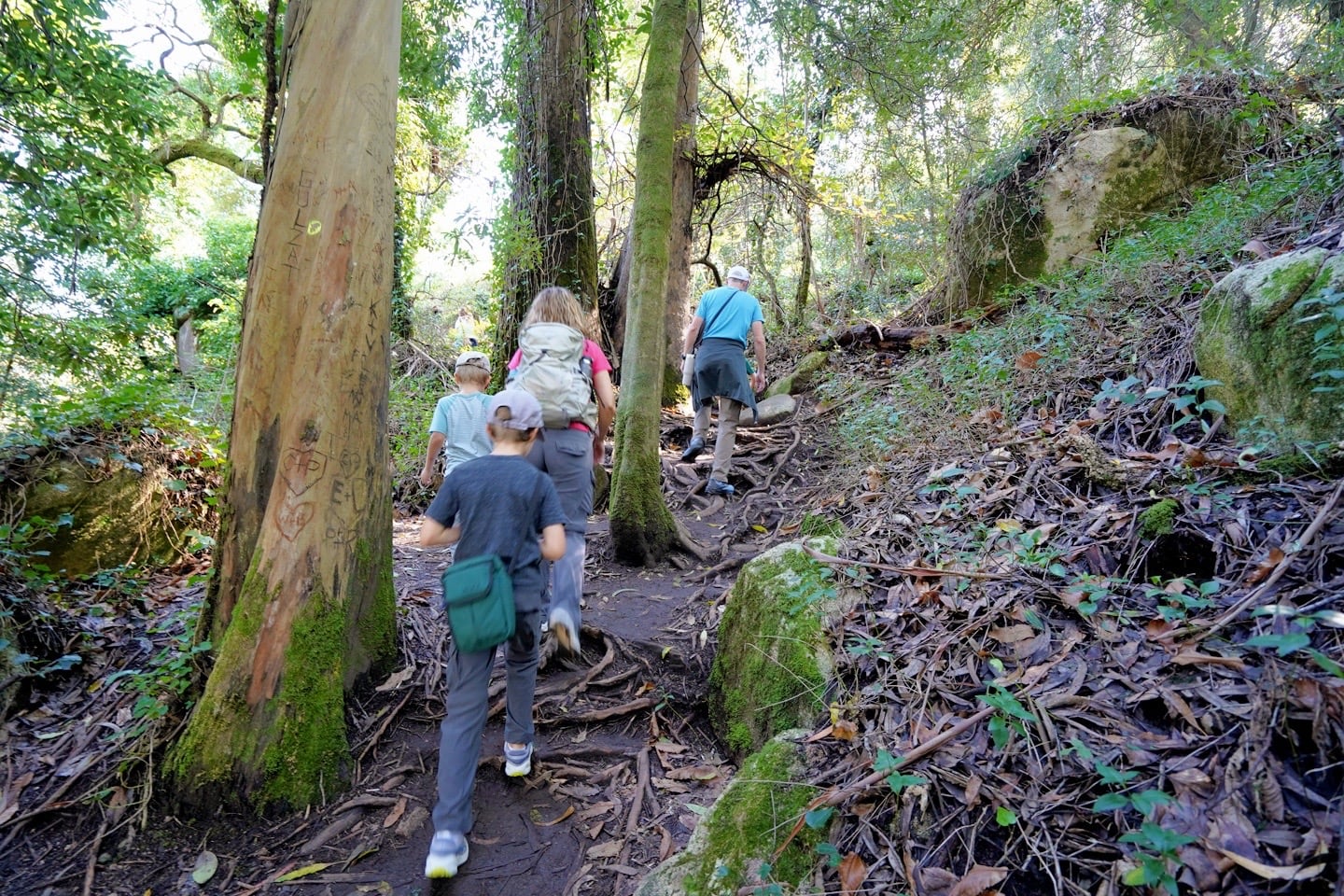
Our assigned time to visit the palace was 1pm, so we still had a bit of time left. We found a nice little clearing with some cafe tables and had a pack lunch from a bakery in town (and an overdue rest for our feet).
Soon enough, it was time to head up to the palace and get in line.
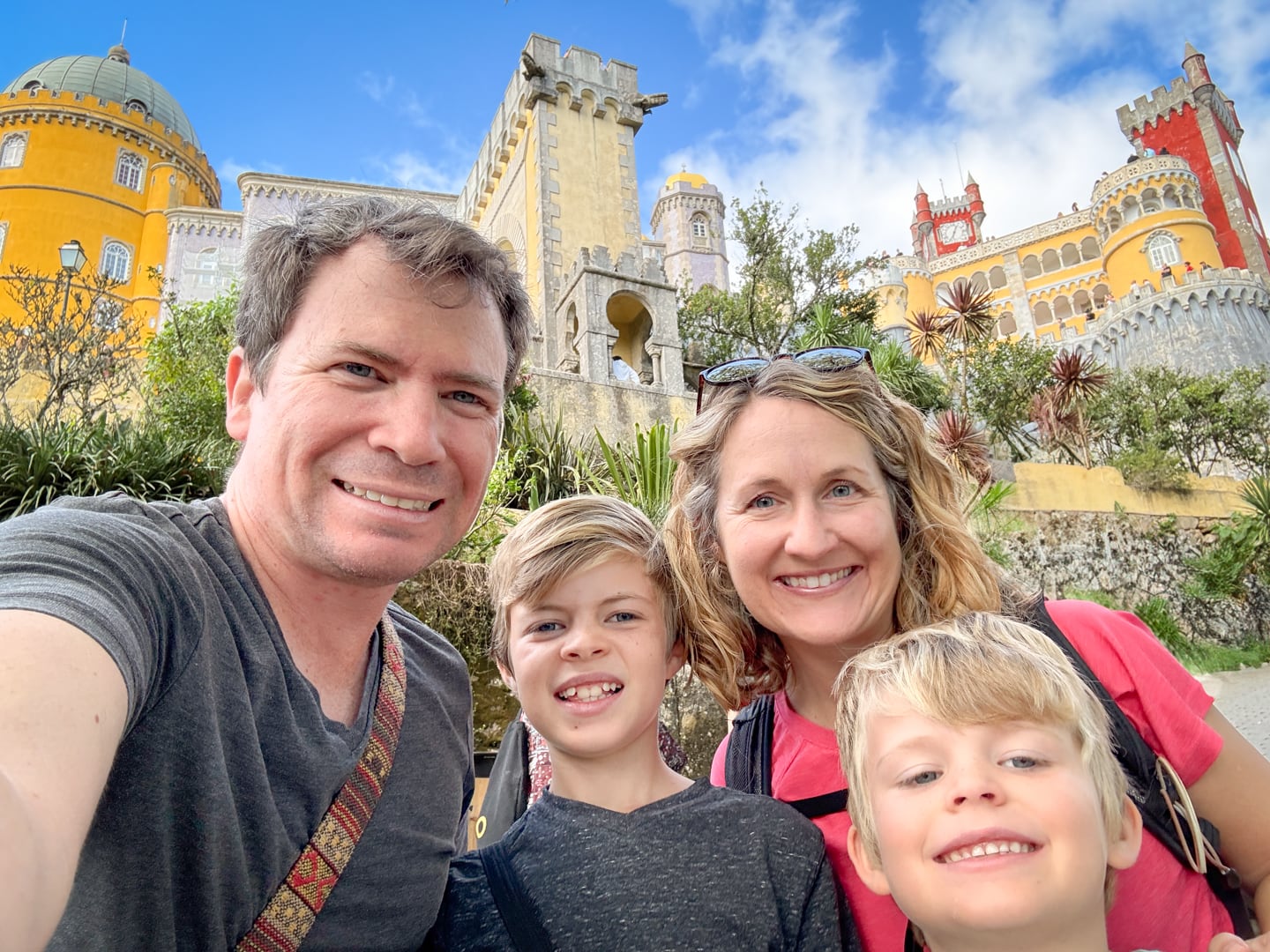
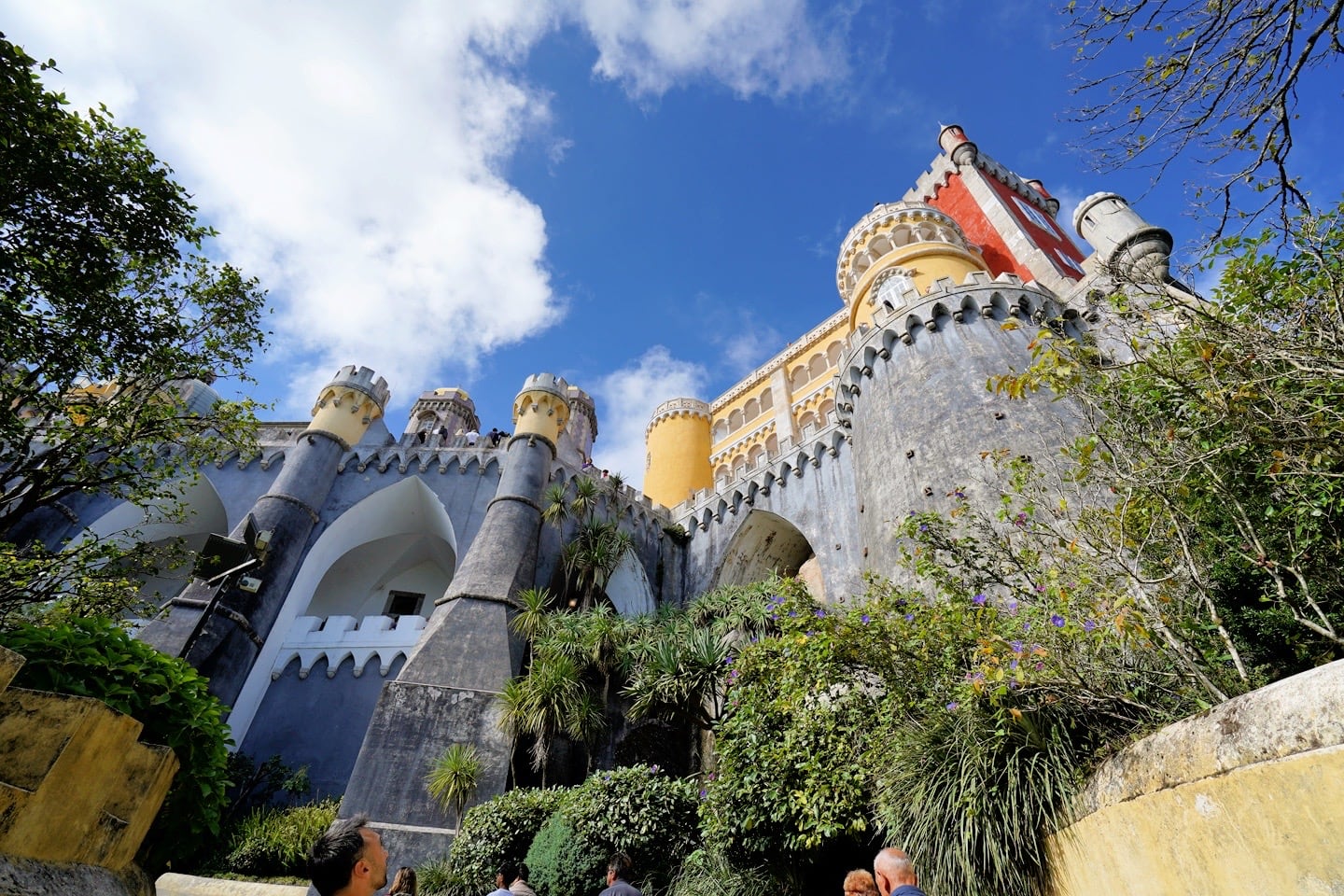
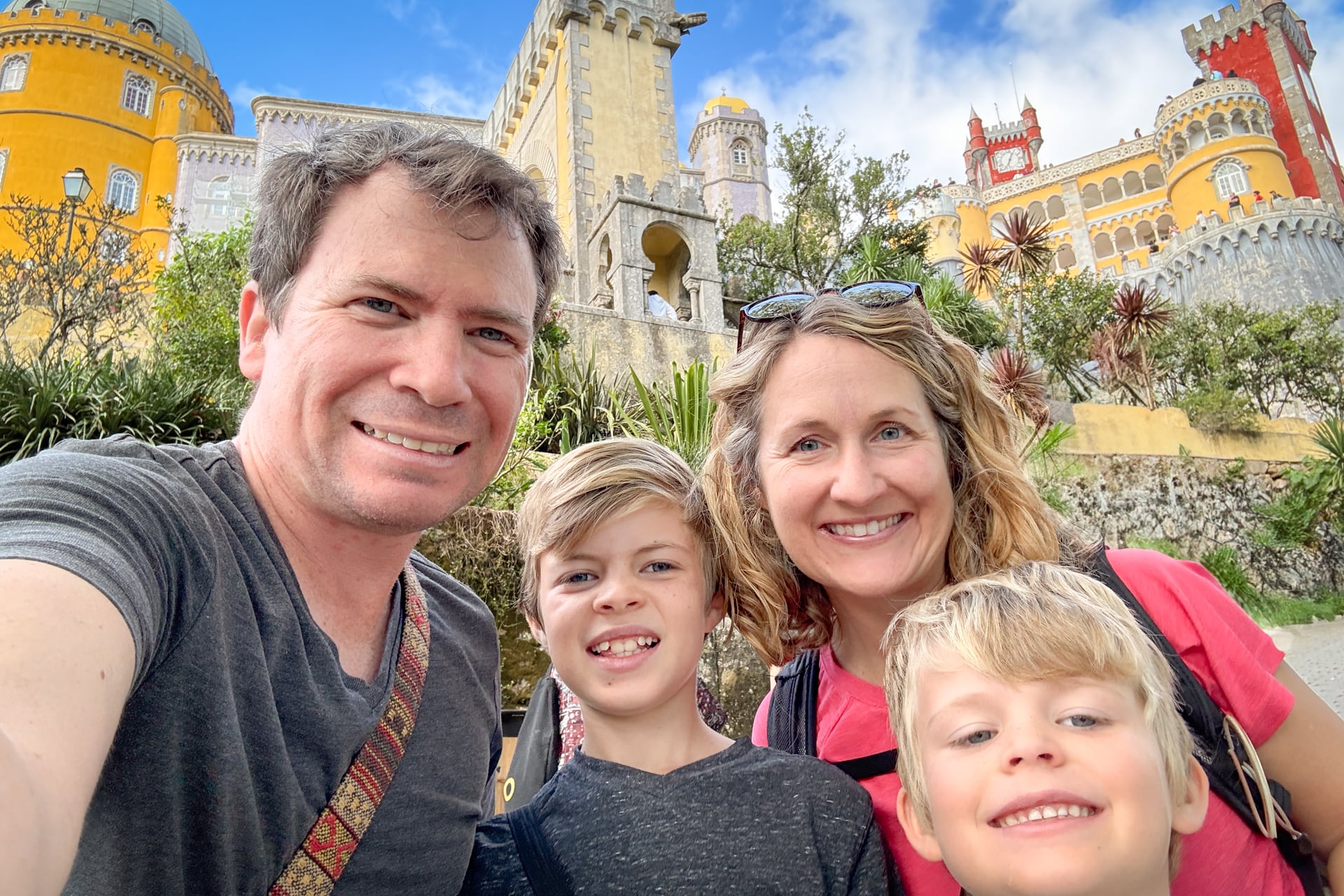
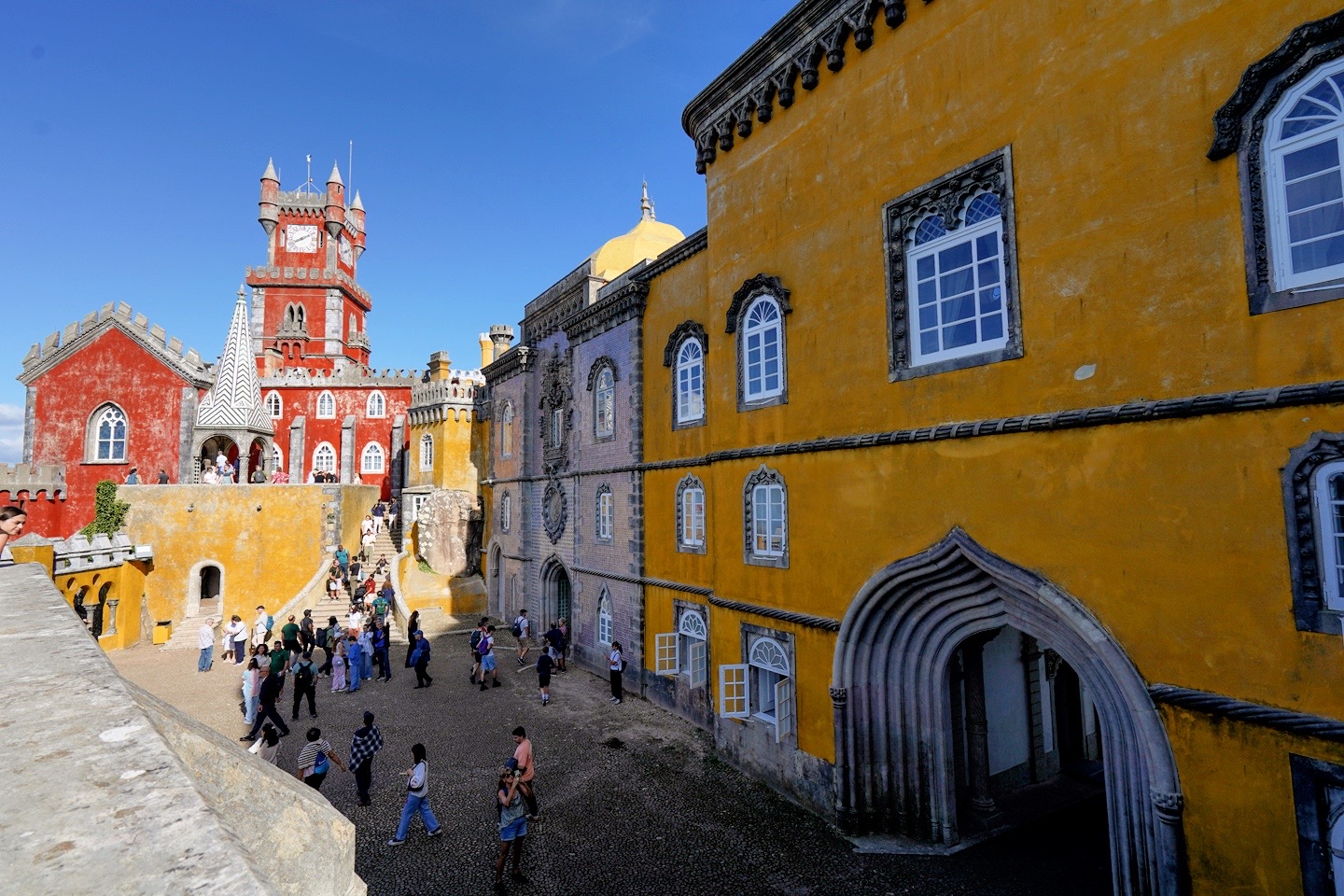
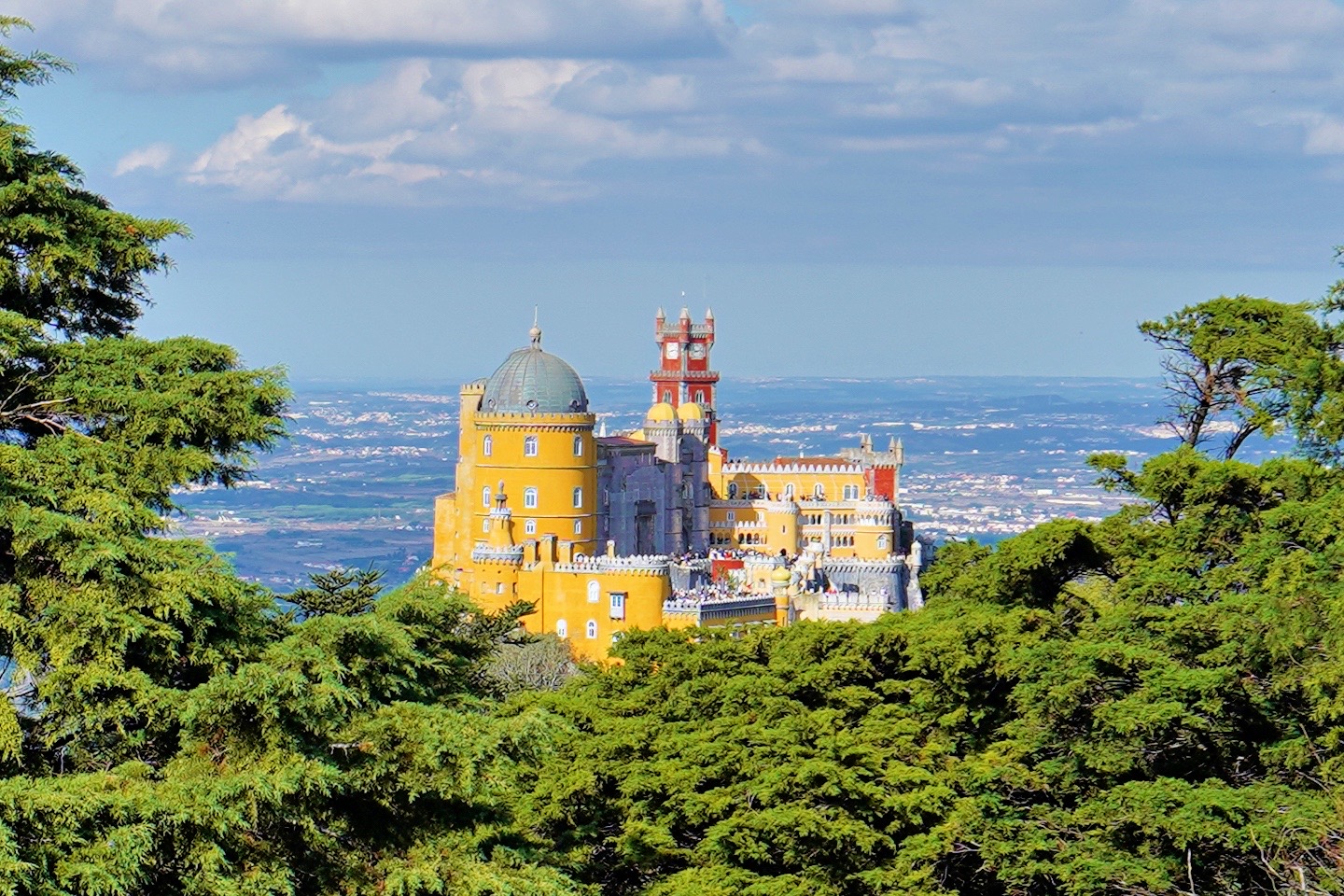
I had an idea of what to expect. Still, pictures don’t do Pena Palace justice. Seeing it in-person is definitely worth the effort (and in my mind, the steep ticket price). The exterior of the palace, in particular, is like something out of a fantasy movie. Pretty unreal.
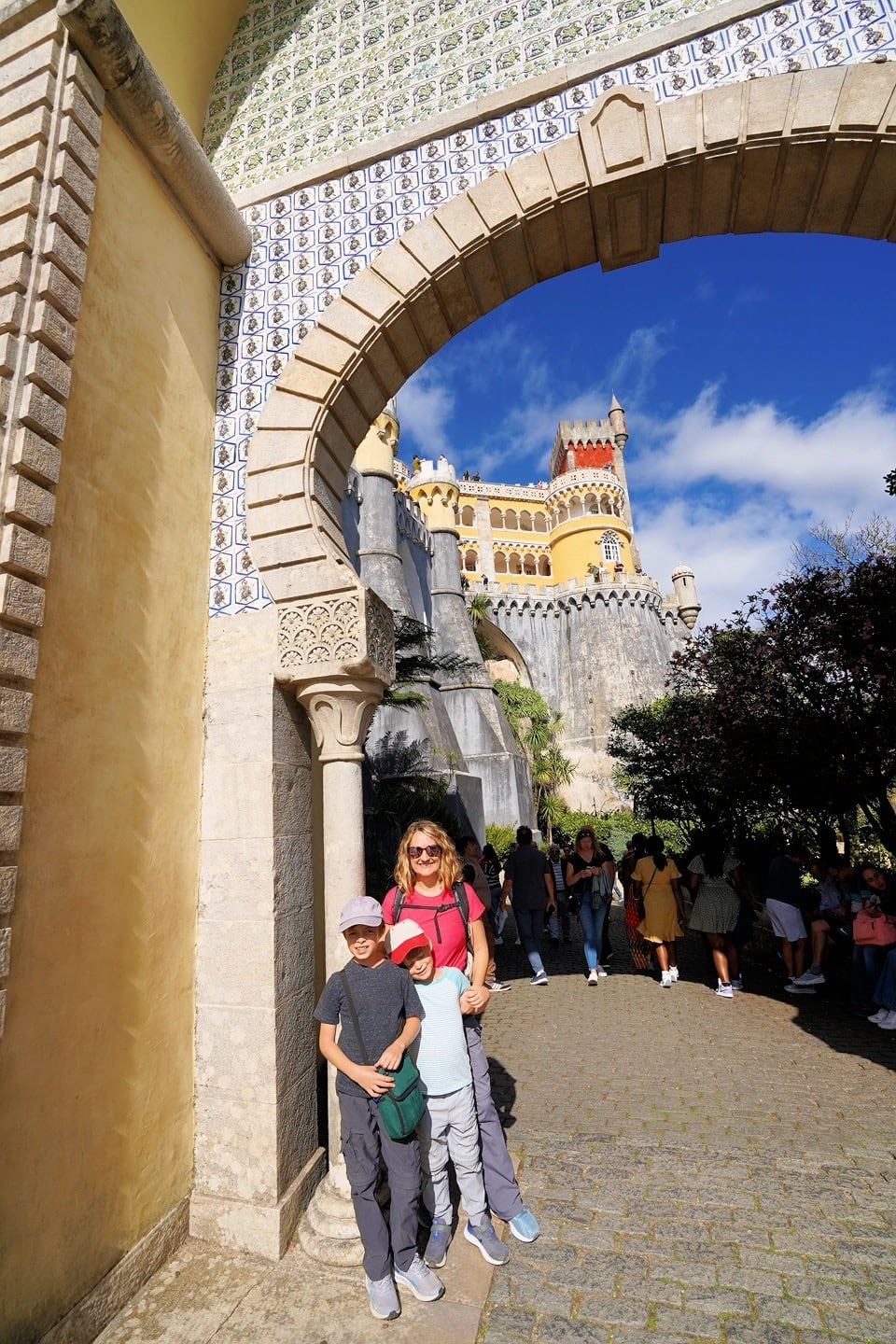
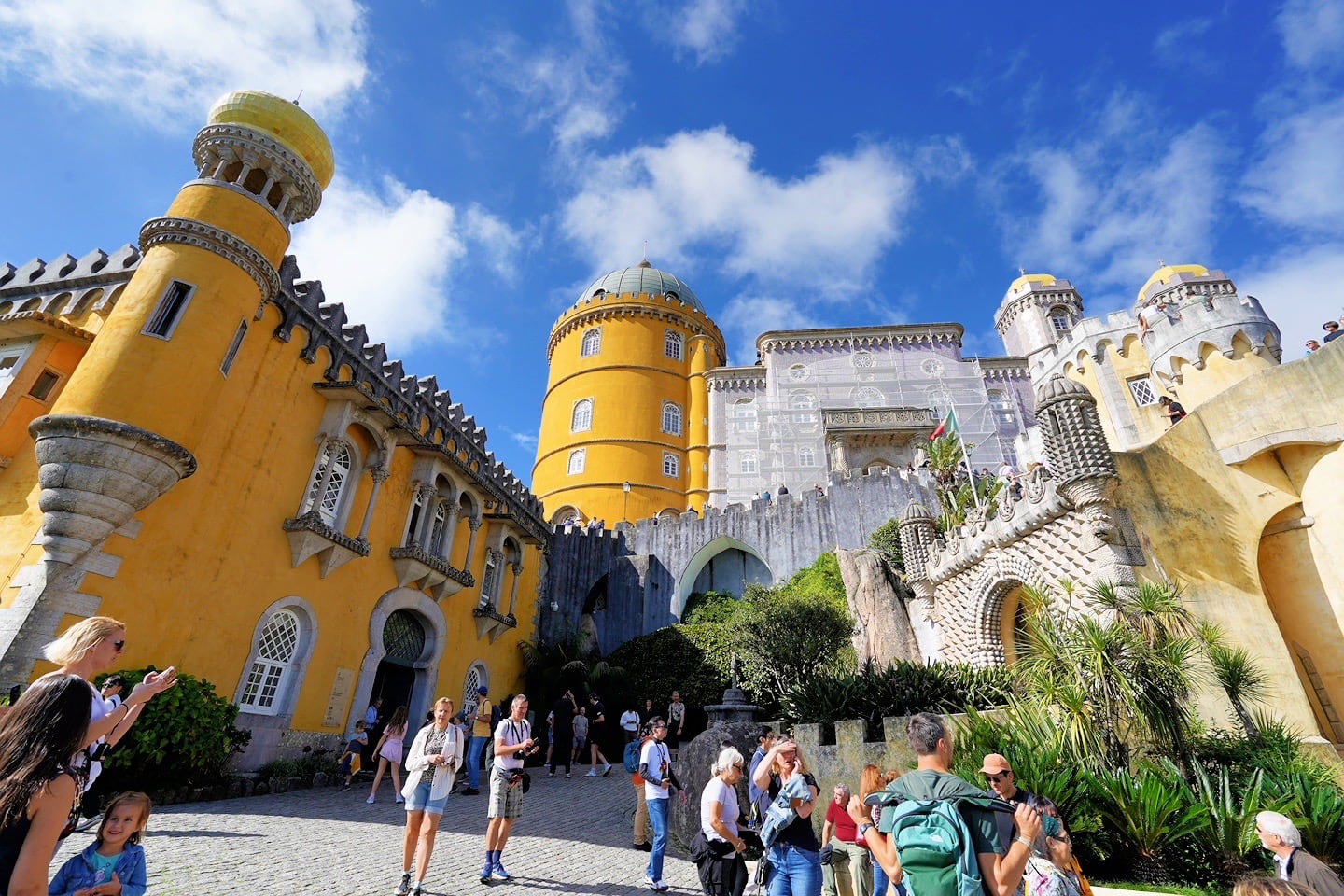
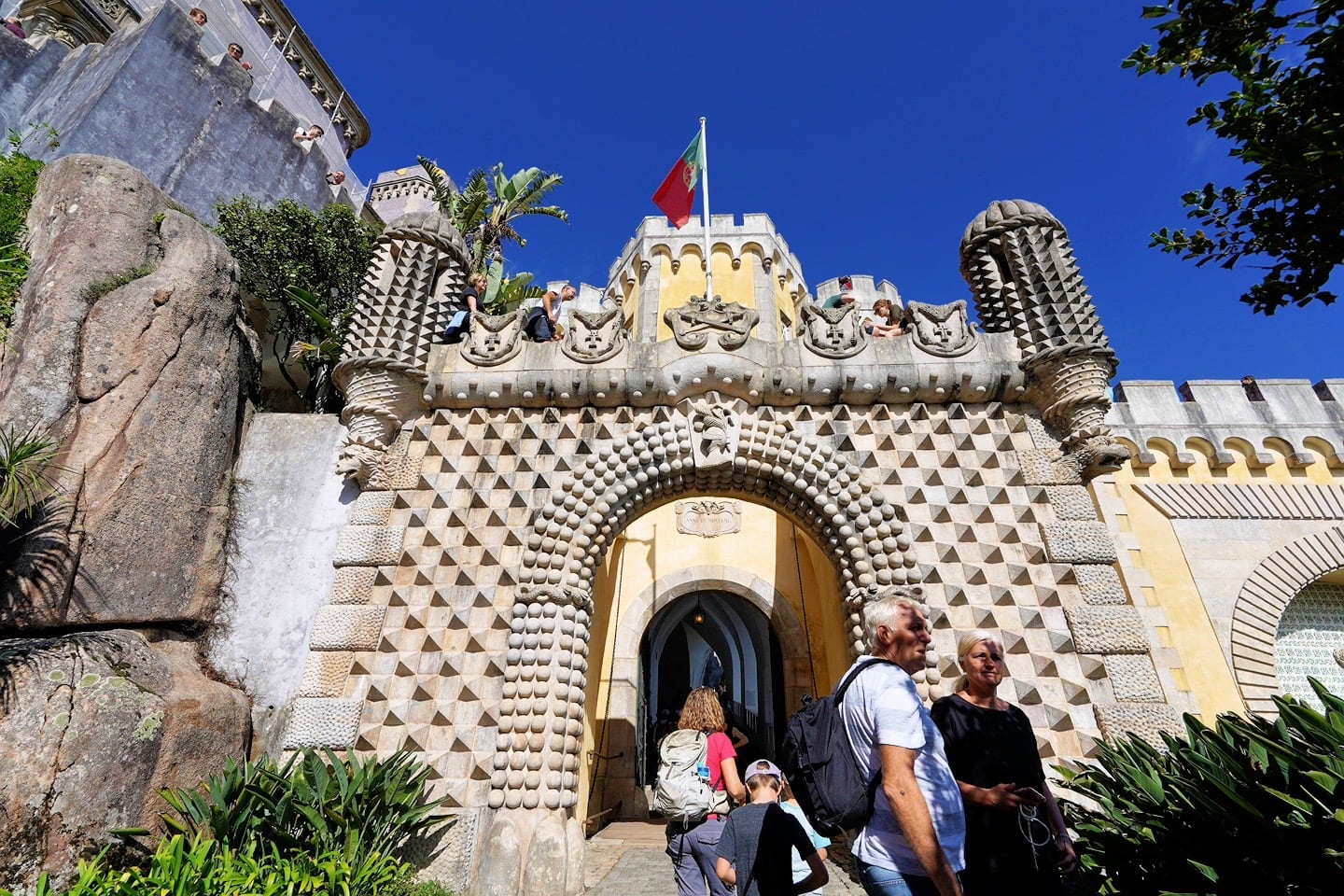
Also unreal were the crowds, especially considering we were deep into October and for all intents and purposes it should be pouring down rain right now.
Presumably, a great many of these people knew what they were getting into and prepared for the fact that the whole thing might be a wash. Or maybe not, who knows.
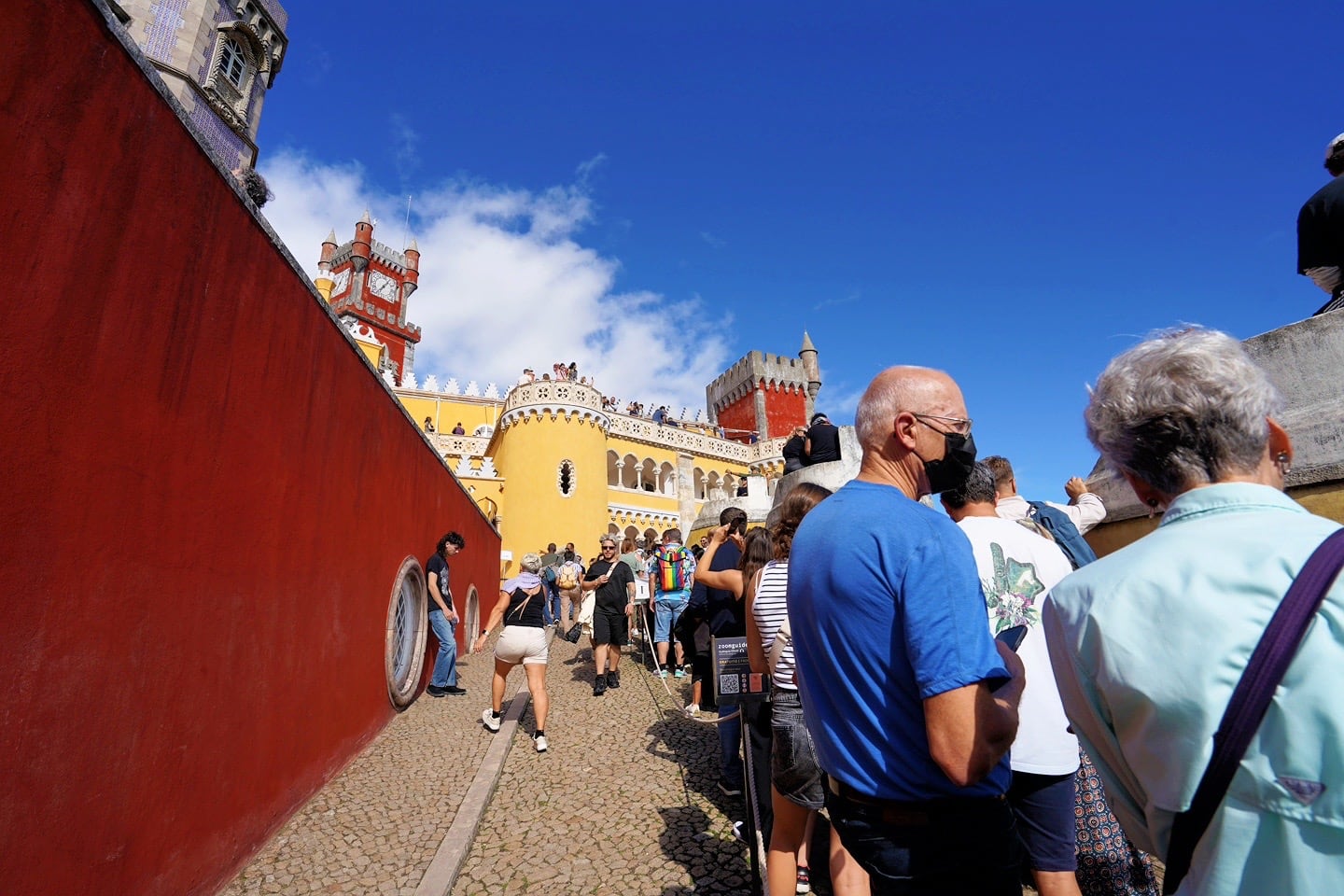
This is the line for everyone waiting for the 1pm entry slot (they admit up to 300 visitors every 30 minutes). Still in a Mexico frame of mind, I had my doubts. But promptly at 1pm, they switched the sign, the line started moving, and we were in the palace within minutes.
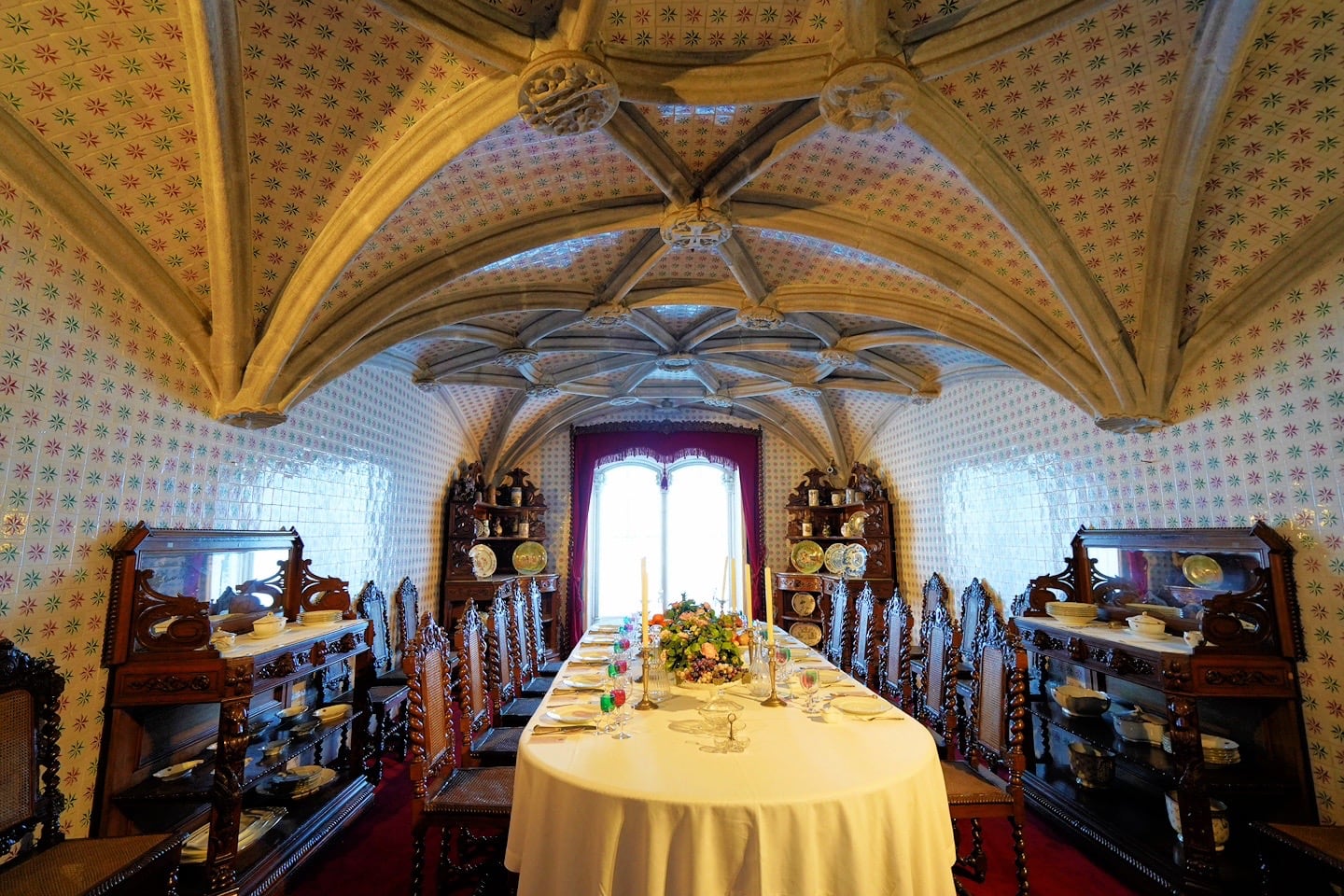
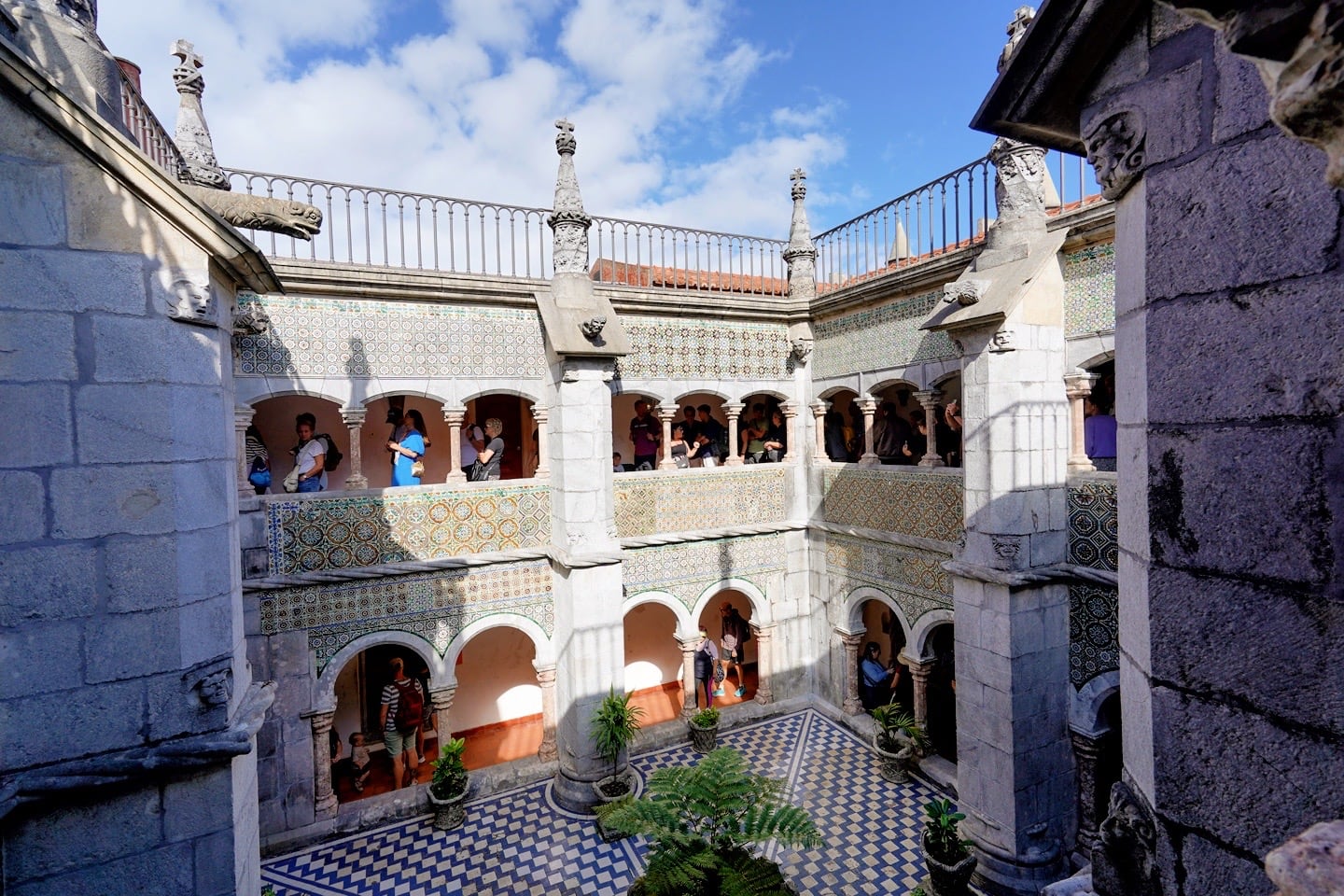
The origins of Pena Palace trace back to a medieval chapel dedicated to Our Lady of Pena. In the 1500s, King Manuel I built a monastery for the Order of Saint Jerome, which was later severely damaged in the Great Lisbon Earthquake of 1755.
In 1838, King Ferdinand II acquired the ruined monastery and commissioned German architect Baron Wilhelm Ludwig von Eschwege to restore and expand it. The king’s vision was to create a new summer palace reflecting the Romantic style of the era.
Construction was completed in the mid-1860s. After King Ferdinand’s death, the palace was eventually sold to the Portuguese state in 1889 and became a museum following the revolution of 1910.
For much of the 20th century, the palace’s vibrant red and yellow exterior faded to gray. Restoration work in the 1990s brought back its original colors.
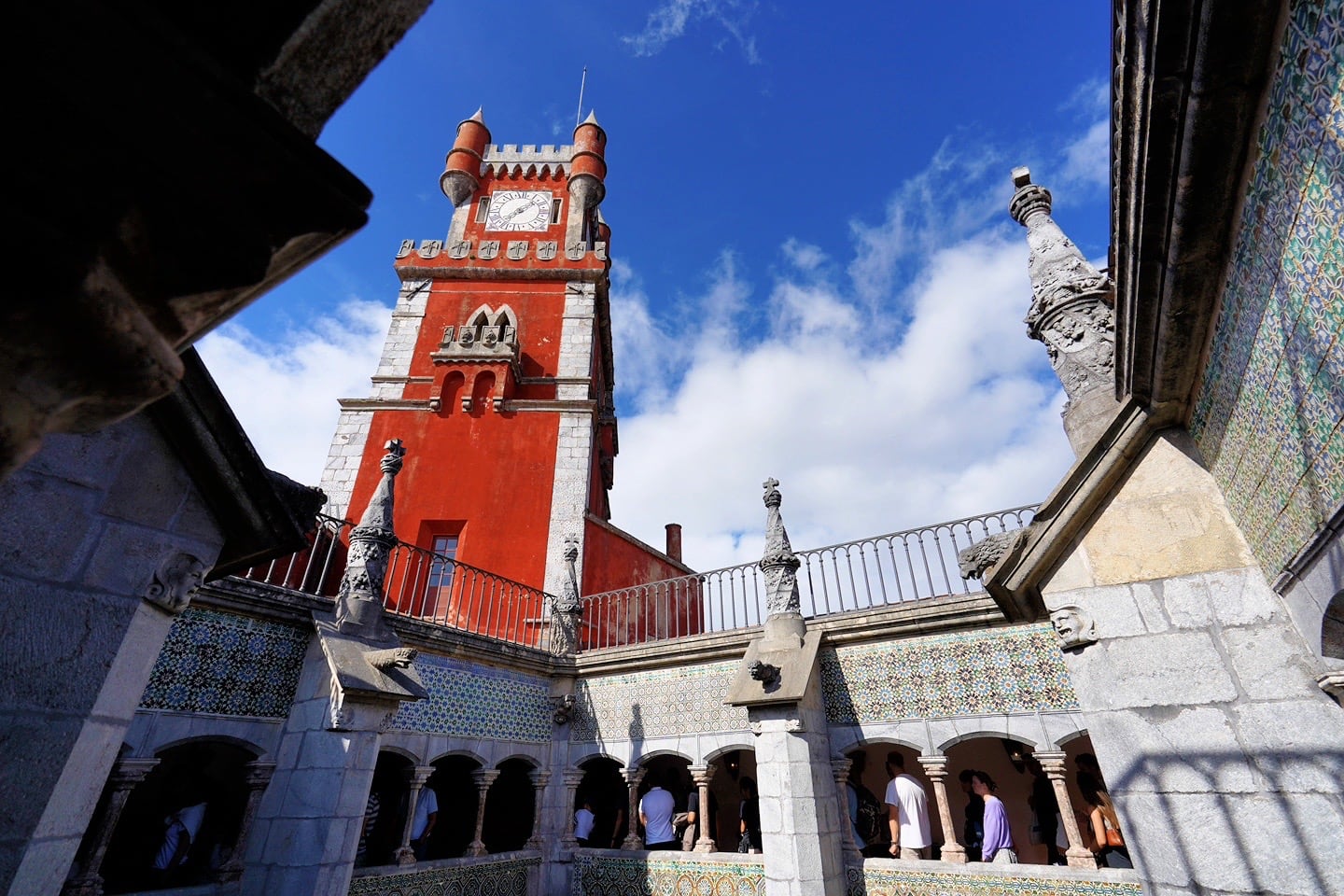
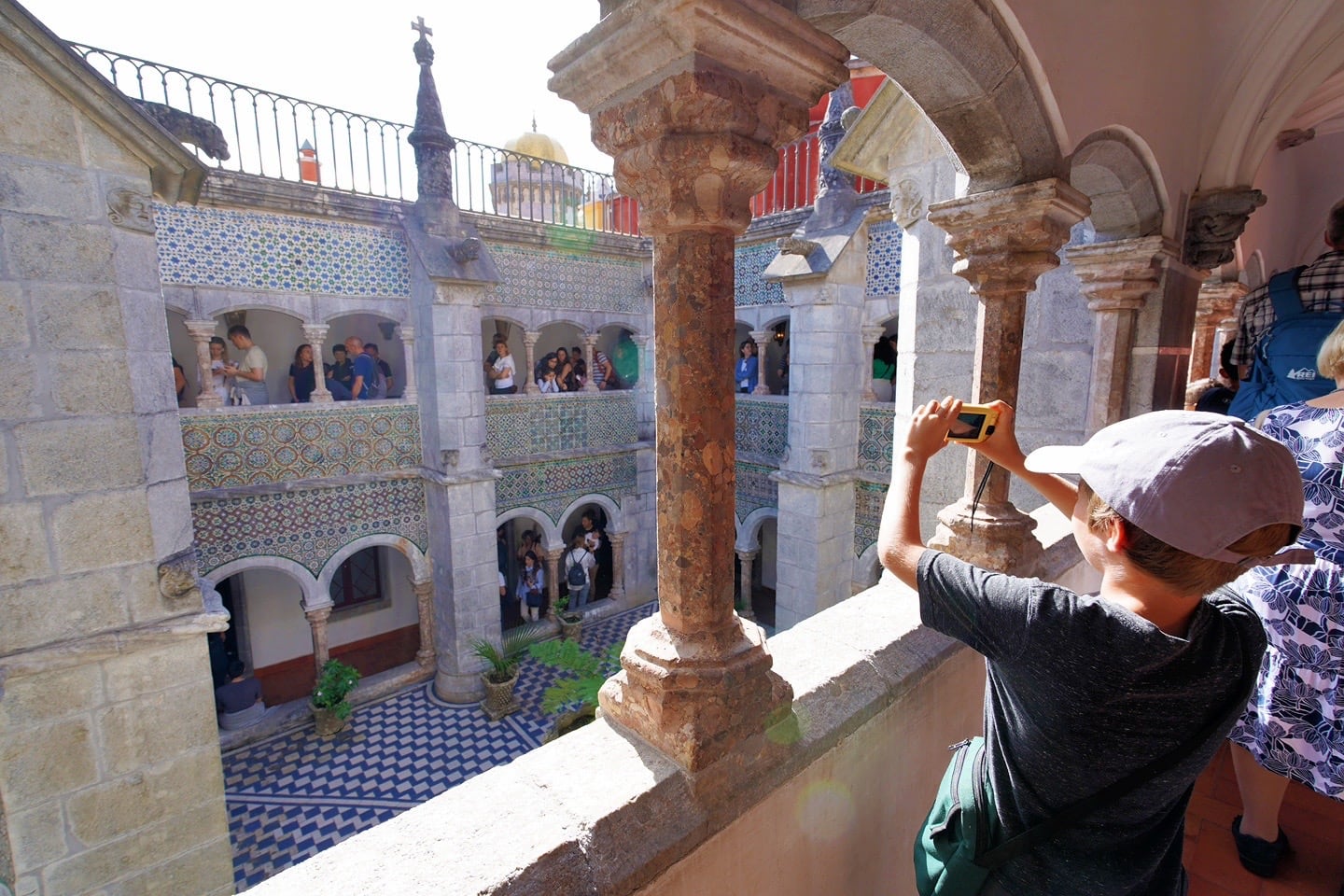
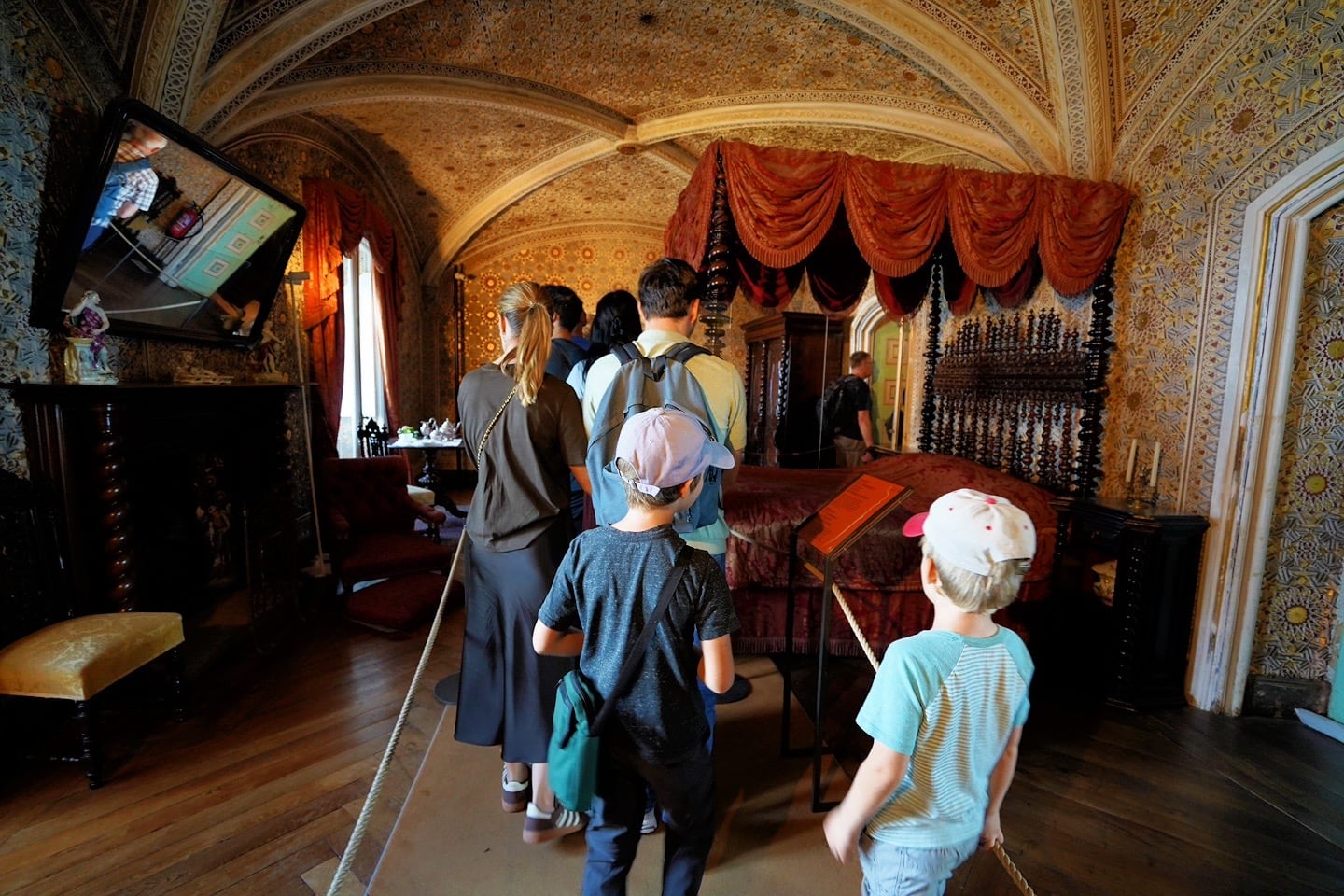
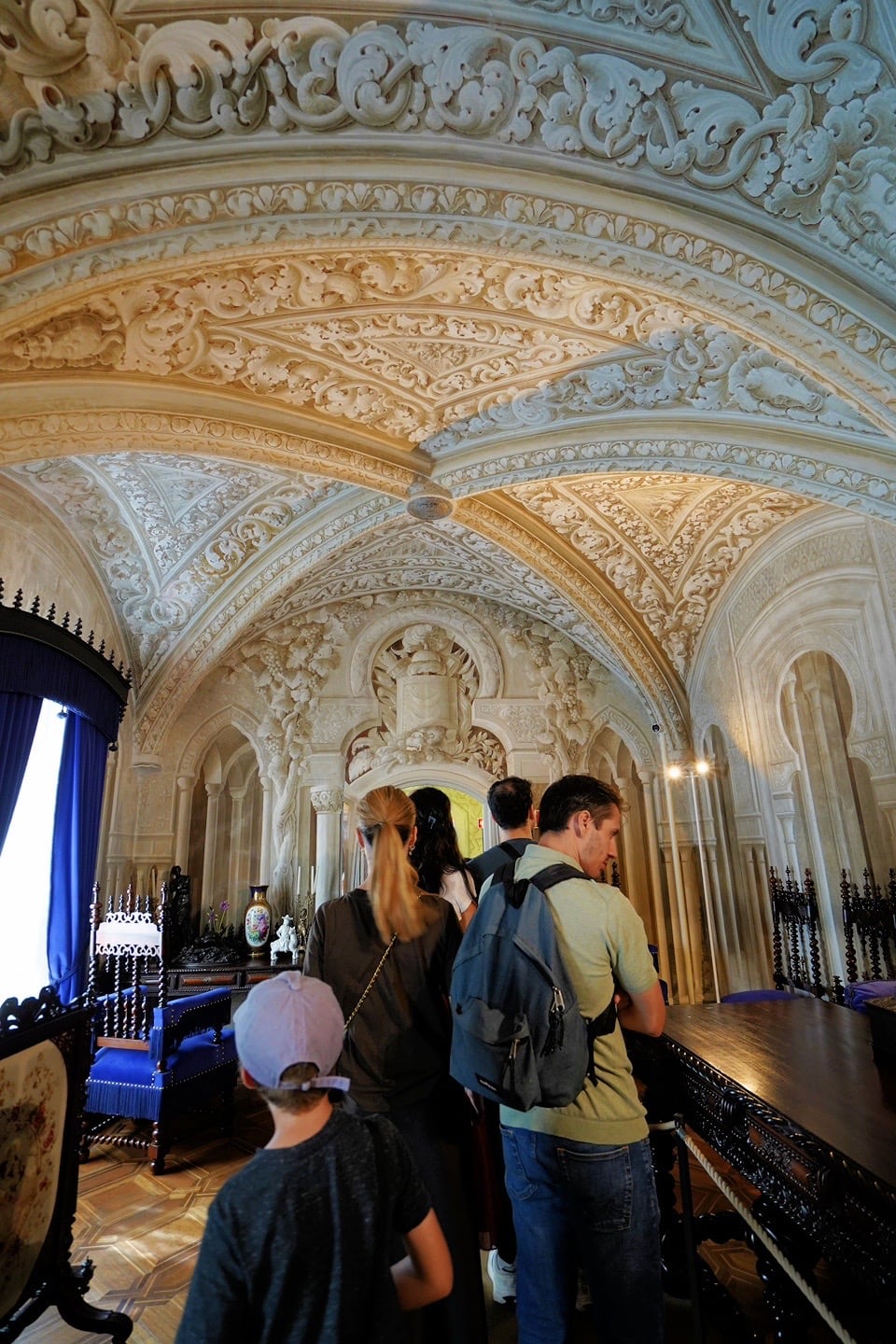
It may look three-dimensional, but the ceiling detail is actual painted on.
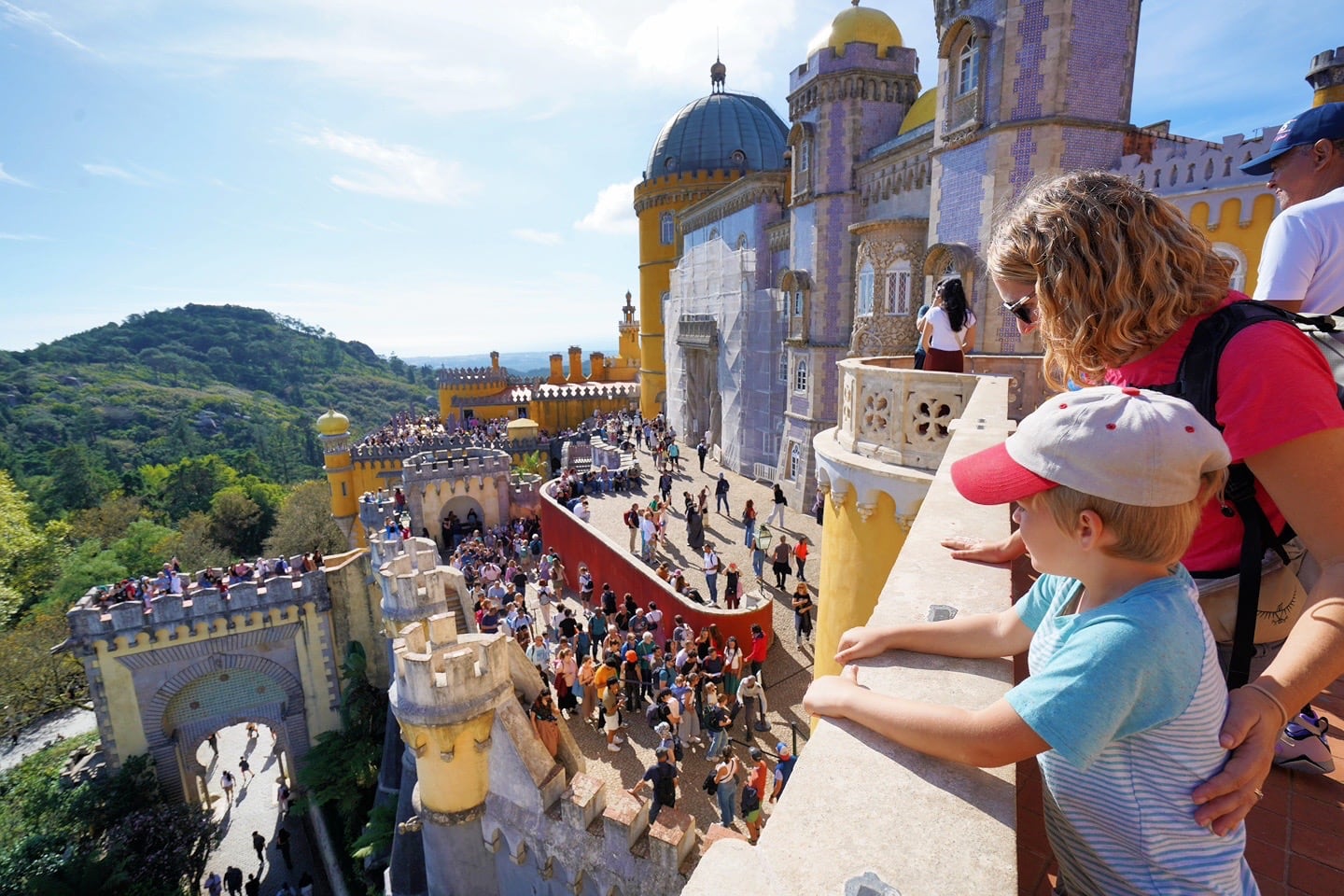
Yep, it’s one busy place. Even on a Monday in late October, the time slots are 100% full.
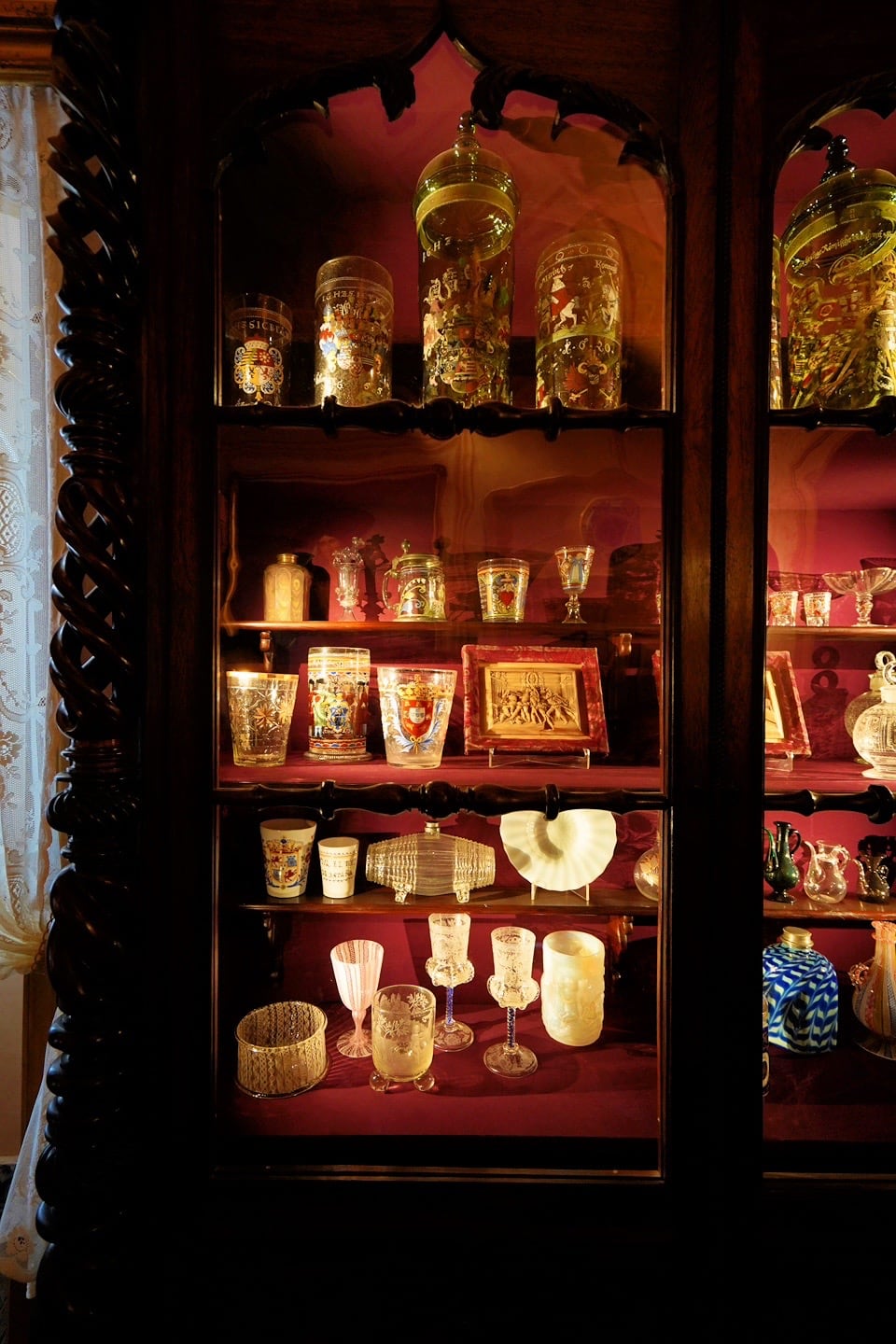
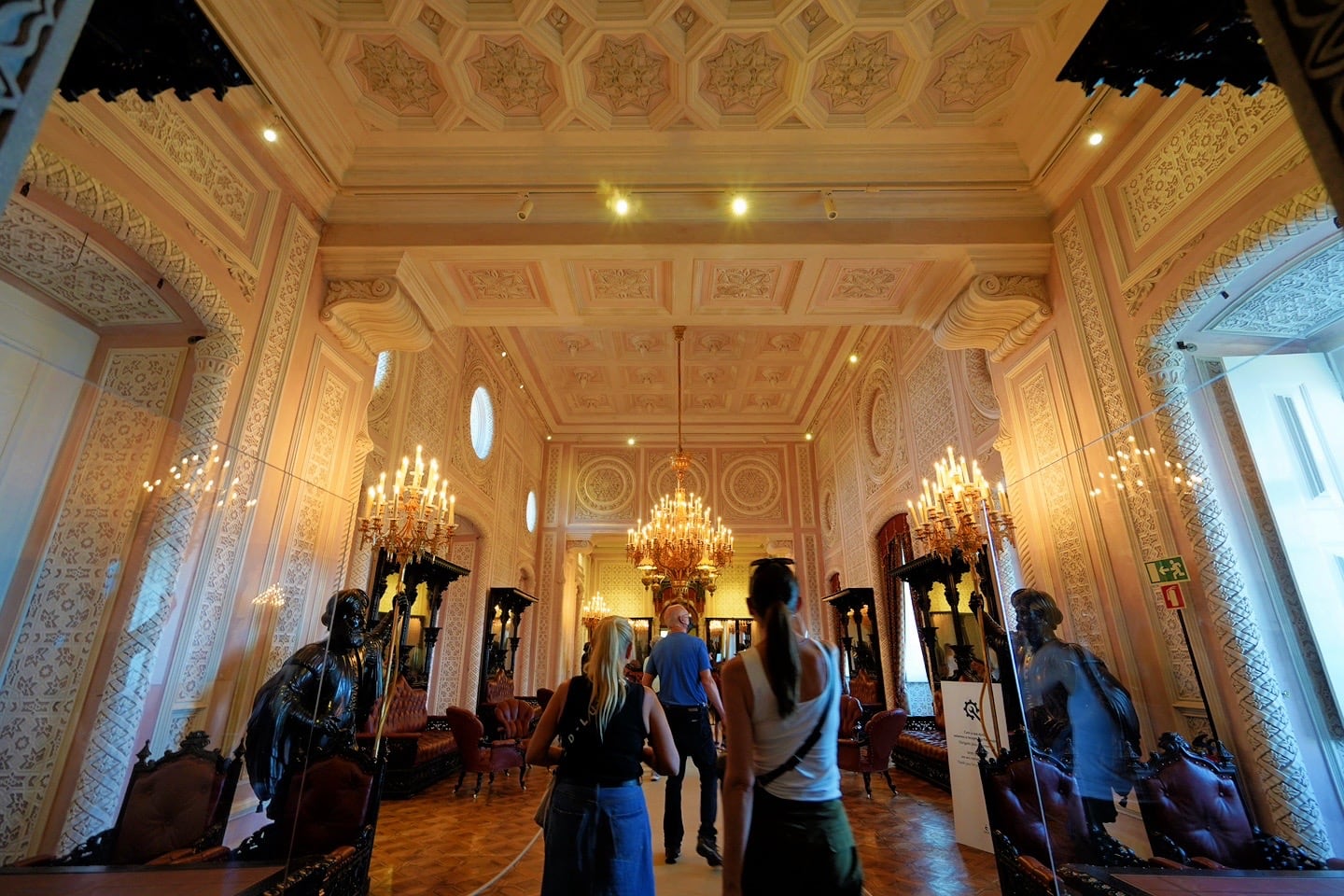
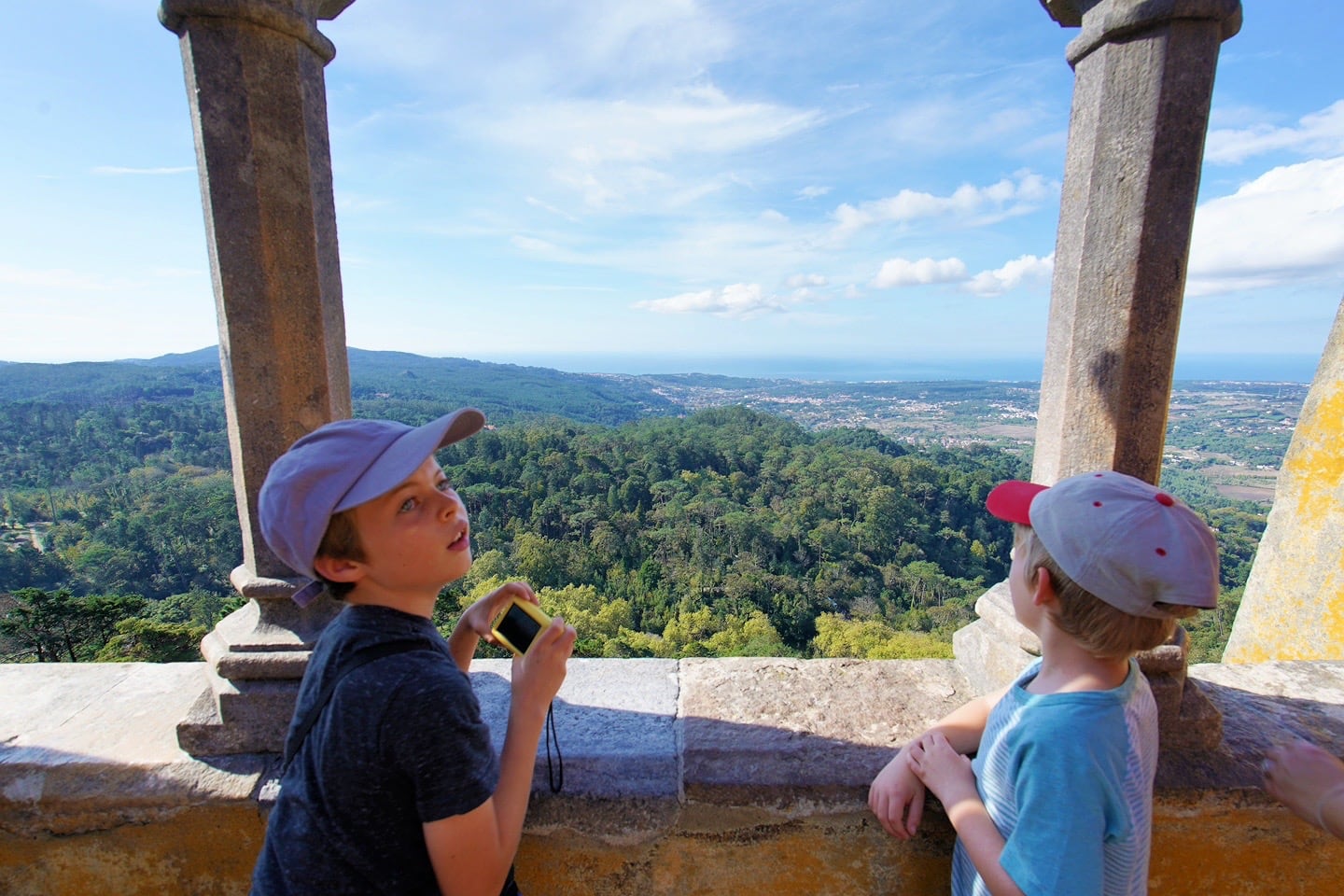
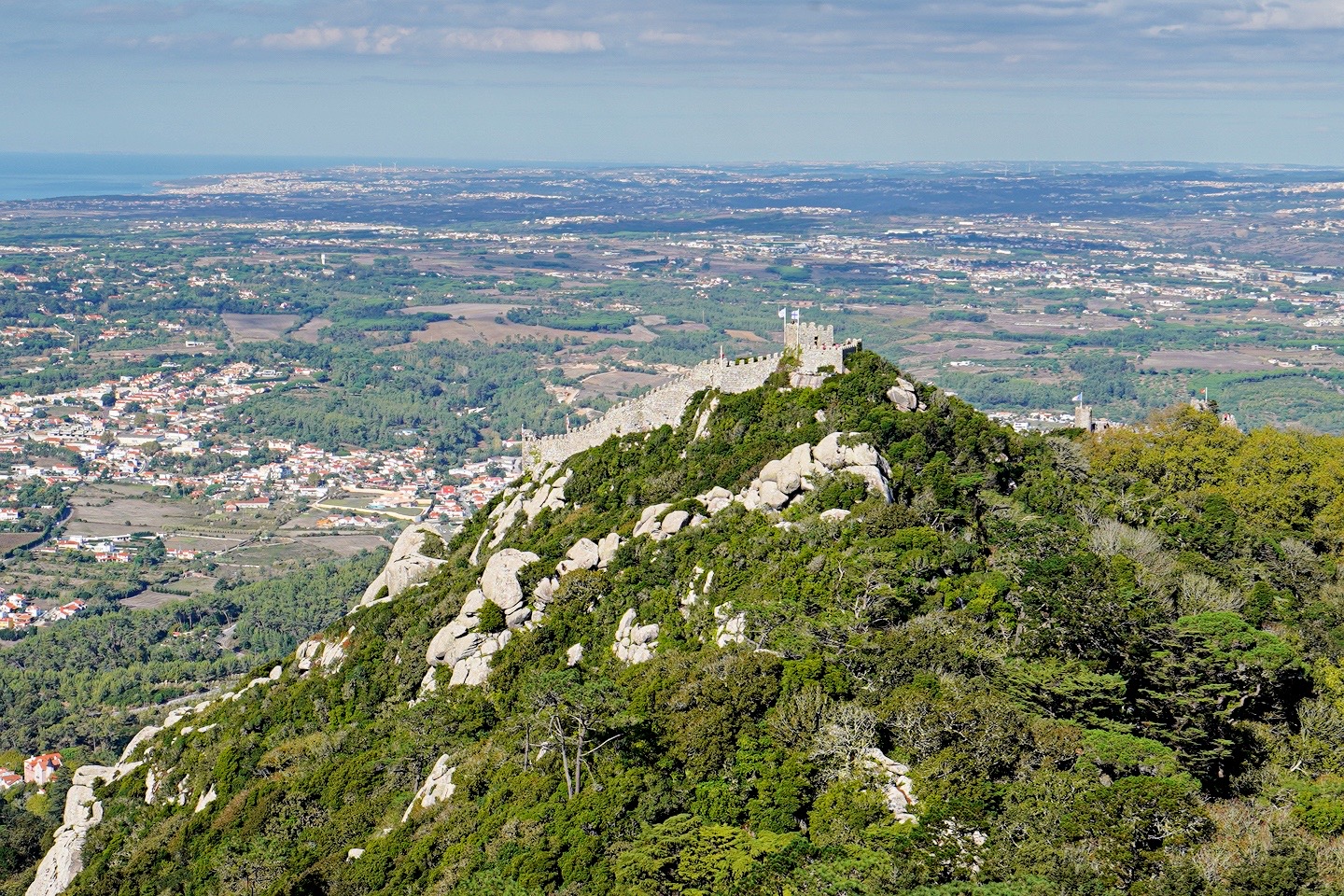
A view of the Moorish Castle from Pena Palace.
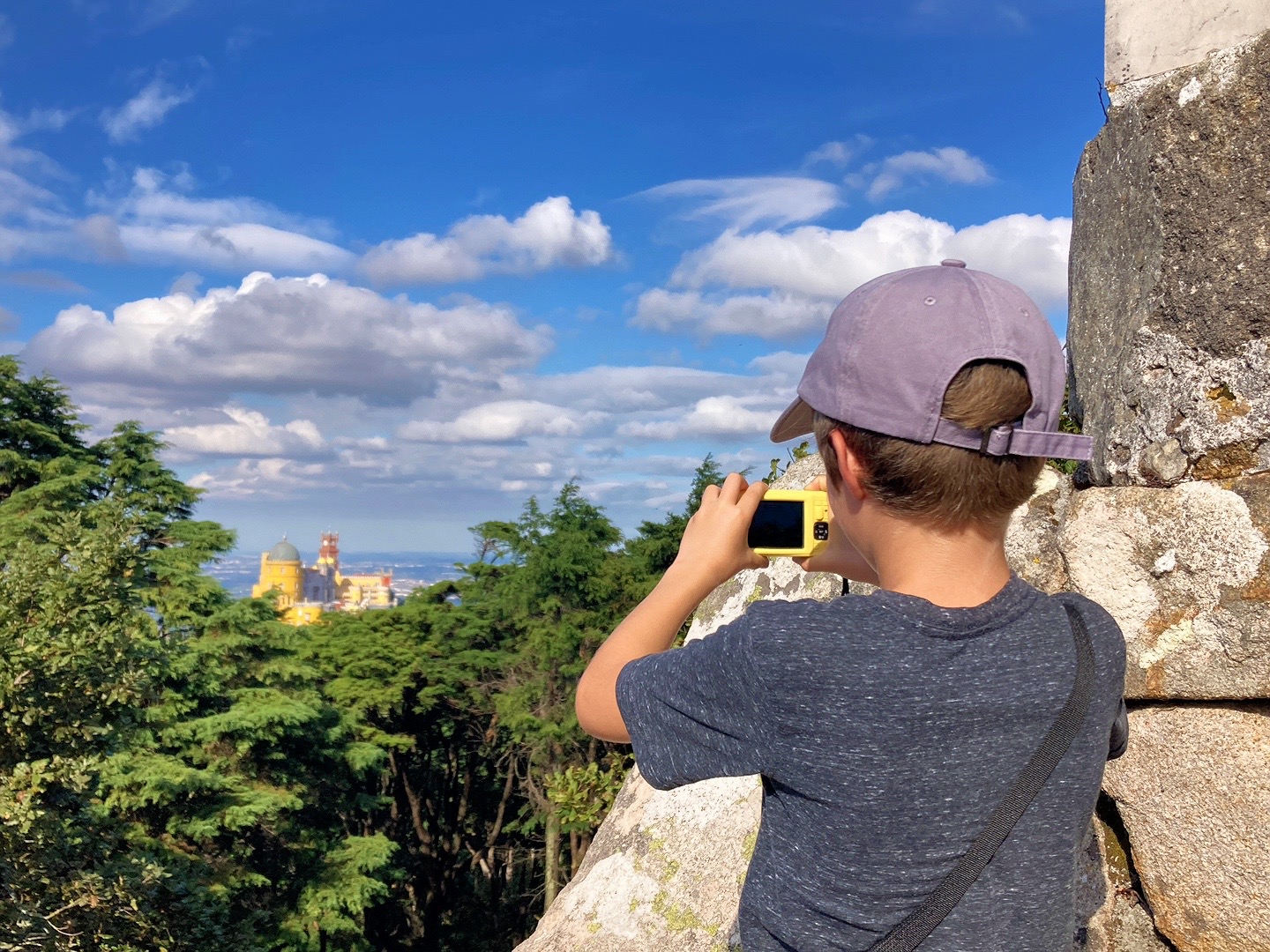
A short 15-minute walk from the palace walls is a mirador (Miradouro da Cruz Alta) where you can get a pretty good view of the whole enchilada.
About an hour later, we were down on the valley floor in Old Town, pretty wiped and famished. Thankfully, Lori already had a recommendation for a top eatery.
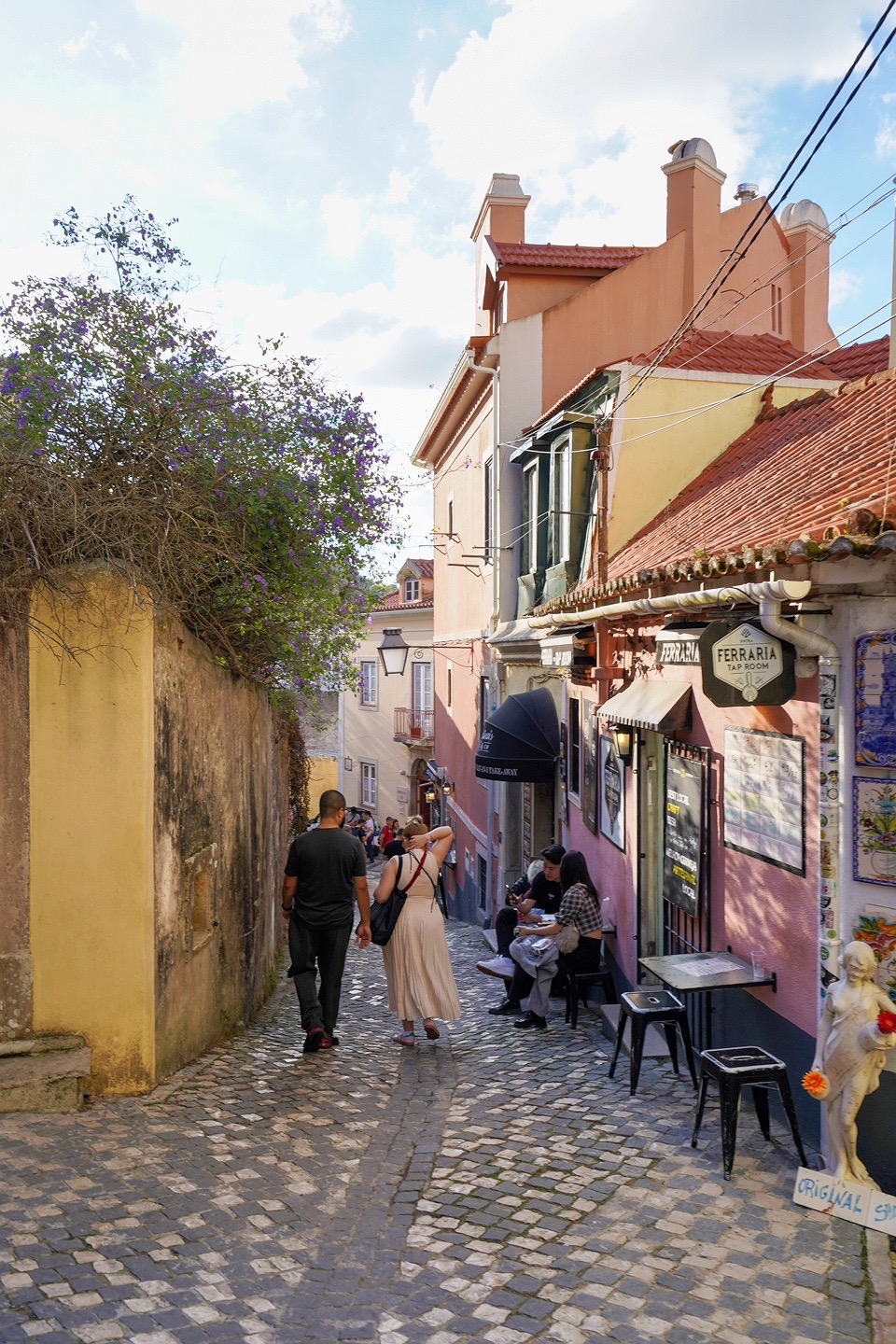
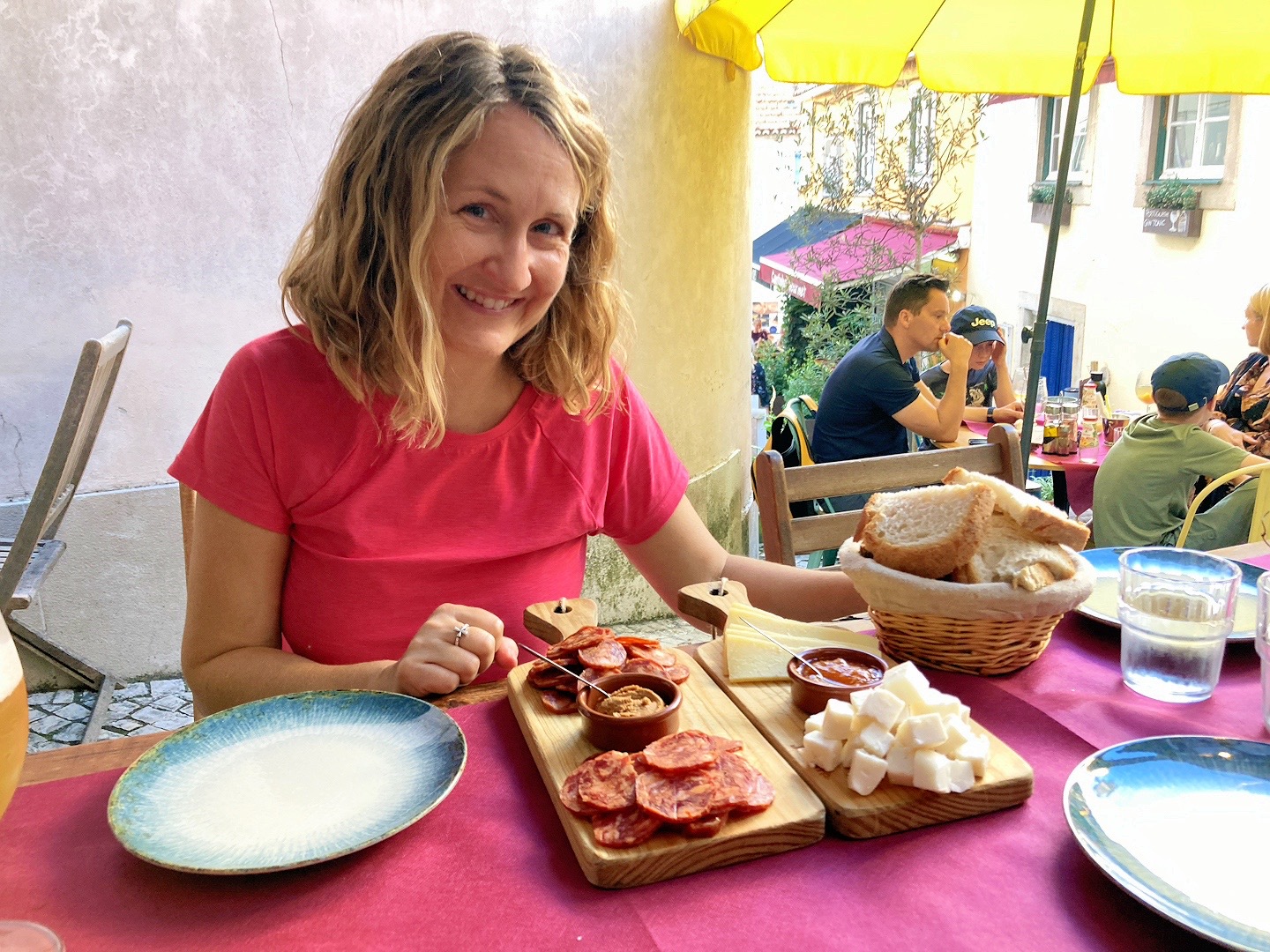
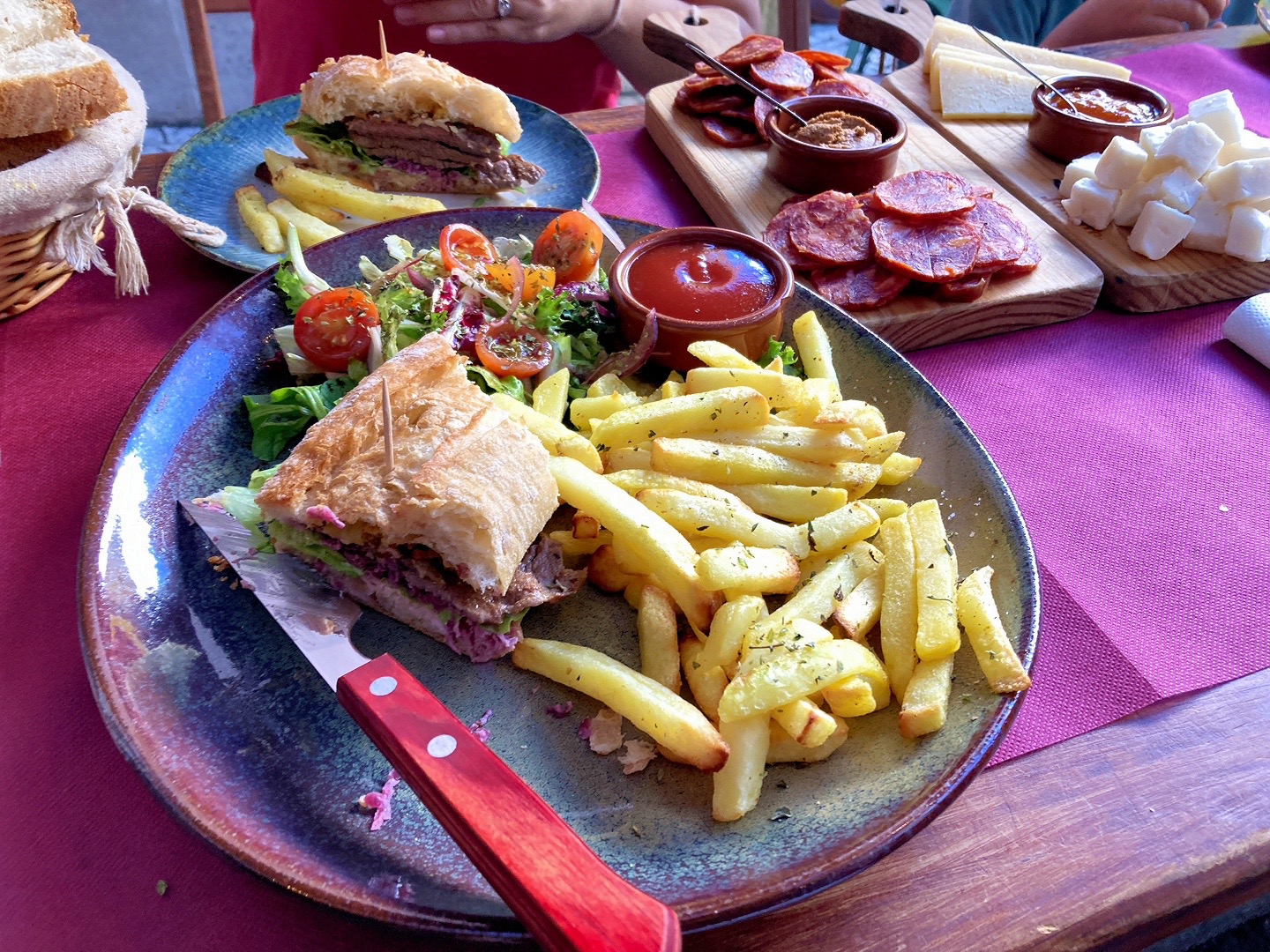
We got the meat and cheese plate (Menu Ramisco) and Sandes Picanha to share. Muito Bom!
After dinner, it was a short walk back to the train station, and an hour ride back to the apartment, capping a fun and memorable day exploring one of Portugal’s top sights.