Before wrapping up our month in Lisbon and moving south, there’s one last major attraction we’ve been holding off on visiting—more like a cluster of historic sights spread out over a neighborhood.
For this reason, we waited out the stormy weather hoping to get one last nice day to make the trip to Belém.
Our Euro-African Journey (So Far...)
Along with the Tower of Belém (which is currently closed for refurbishment), the Monastery of Jerónimos are the two sole UNESCO World Heritage Sites in Lisbon, and they’re both outside, which is why we didn’t mind waiting for a nice day.
On our last Sunday, we finally got what we had been waiting for—a brilliant, sun-filled morning to do some sightseeing across town.
More on that in a moment.
Days before (on a not-so-great-weather-day), we finally made it to LX Factory, Lisbon’s funky, artsy factory-turned-shopping-district.

Ler Devagar is one of the most visited (and photographed) shop on the strip, a quirky two-level bookstore where the boys got to pick up a couple new reads.


I wouldn’t have thought this church was still operational if I hadn’t seen the long line of parishioners filing in on All Saints Day.
Jerónimos Monastery is so popular, you have to book a time slot (we booked online the night before). Determined not to miss our slot, we headed to Belém early. We figured we’d check out the adjacent Naval Museum (which you did not have to have a time slot for) beforehand.
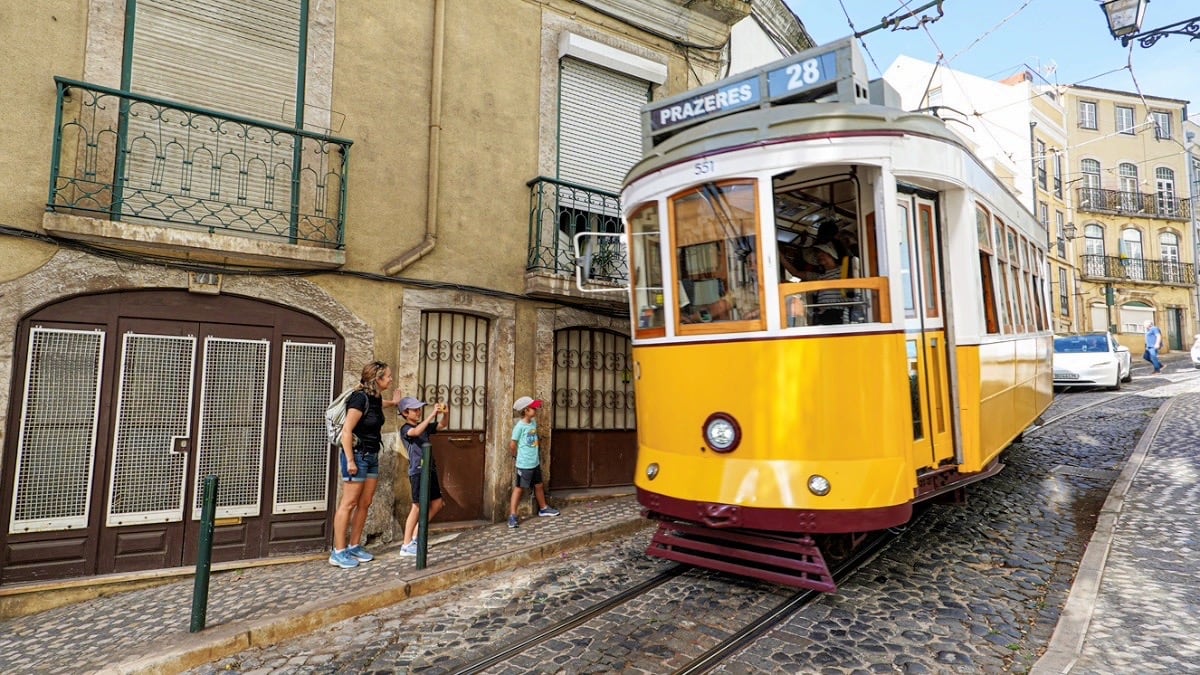
We aimed to get off of the streetcar one stop after Jerónimos, but hadn’t thought to press the ‘Stop’ button, since the streetcar had stopped at every previous stop. This resulted in having to speed walk a half a kilometer back to the museum. Fortunately, there was no line, and we walked right in.

The museum is actually housed inside part of the monastery building, so even if you weren’t able to visit the actual monastery, you could theoretically tour a portion of it quickly and easily.
The Naval Museum (Museu de Marinha) offers a compact but worthwhile look at Portugal’s long seafaring history—from the Age of Discoveries to modern naval achievements.
The museum houses historic maps, navigational tools, LOTS of model ships, royal boats and even a handful of airplanes.

At the entrance, we were greeted by the huge map highlighting the country’s maritime exploits over the past 500 years.

Big ships, small ships, steamships, tall ships…


The boys loved it. Well, at least Noe did. Per the usual, Riley was finished after about two minutes, and Noe had to be dragged out when time ran out.


Riley did like the seaplane exhibit though. I told him Jimmy Buffett once had a Grumman Widgeon like this one, which made him happy.

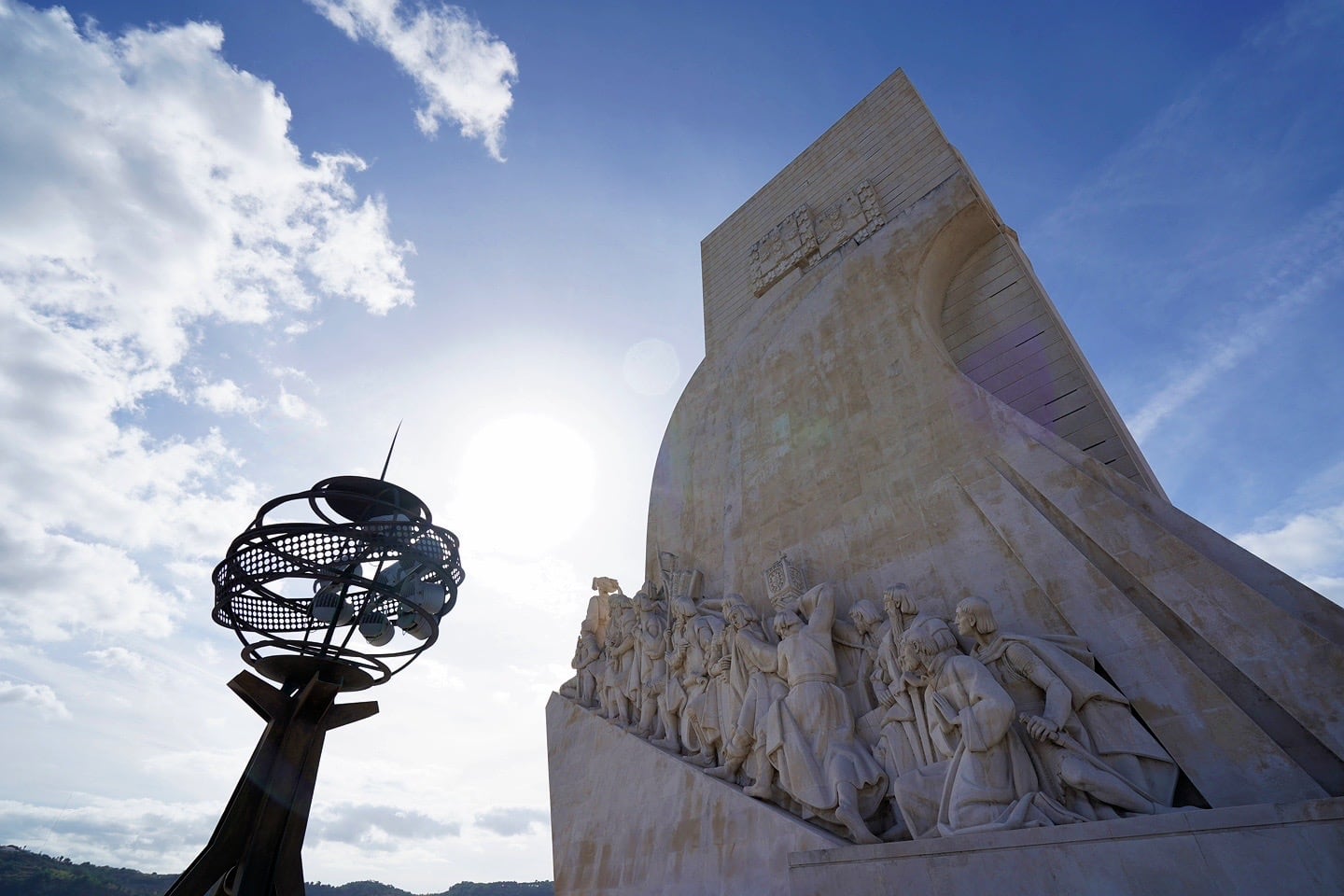
Once we wrapped things up at the Naval Museum, we had just enough time to check out the neighboring park and Monument to the Discoveries.
To say Portugal is proud of its maritime history would be an understatement.


With our time slot fast approaching, it was time to head to the entrance…right behind the other 200 visitors lining up for the same time.

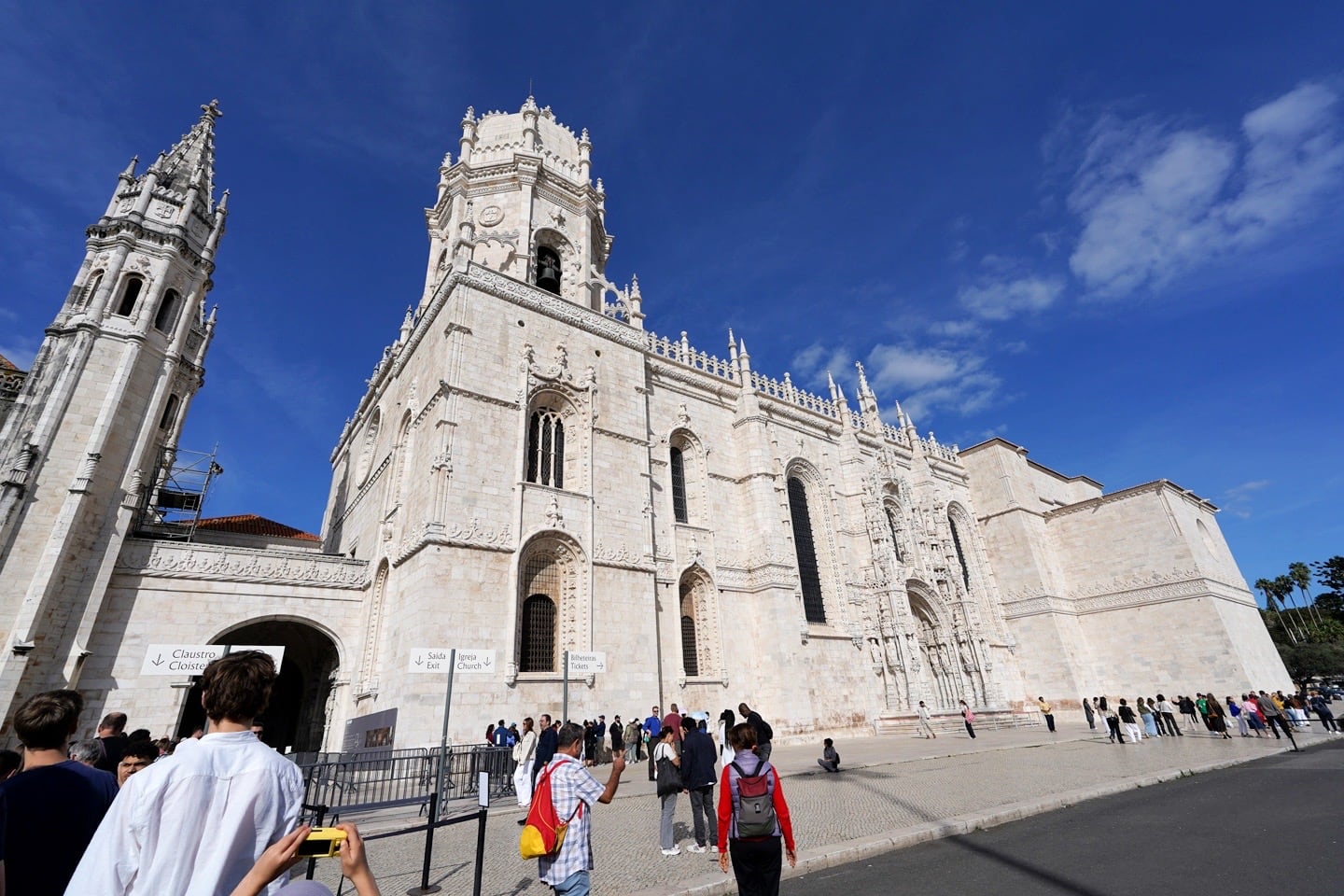
But once the clock reached 1:30pm, the gates opened, and we were in in under five minutes.
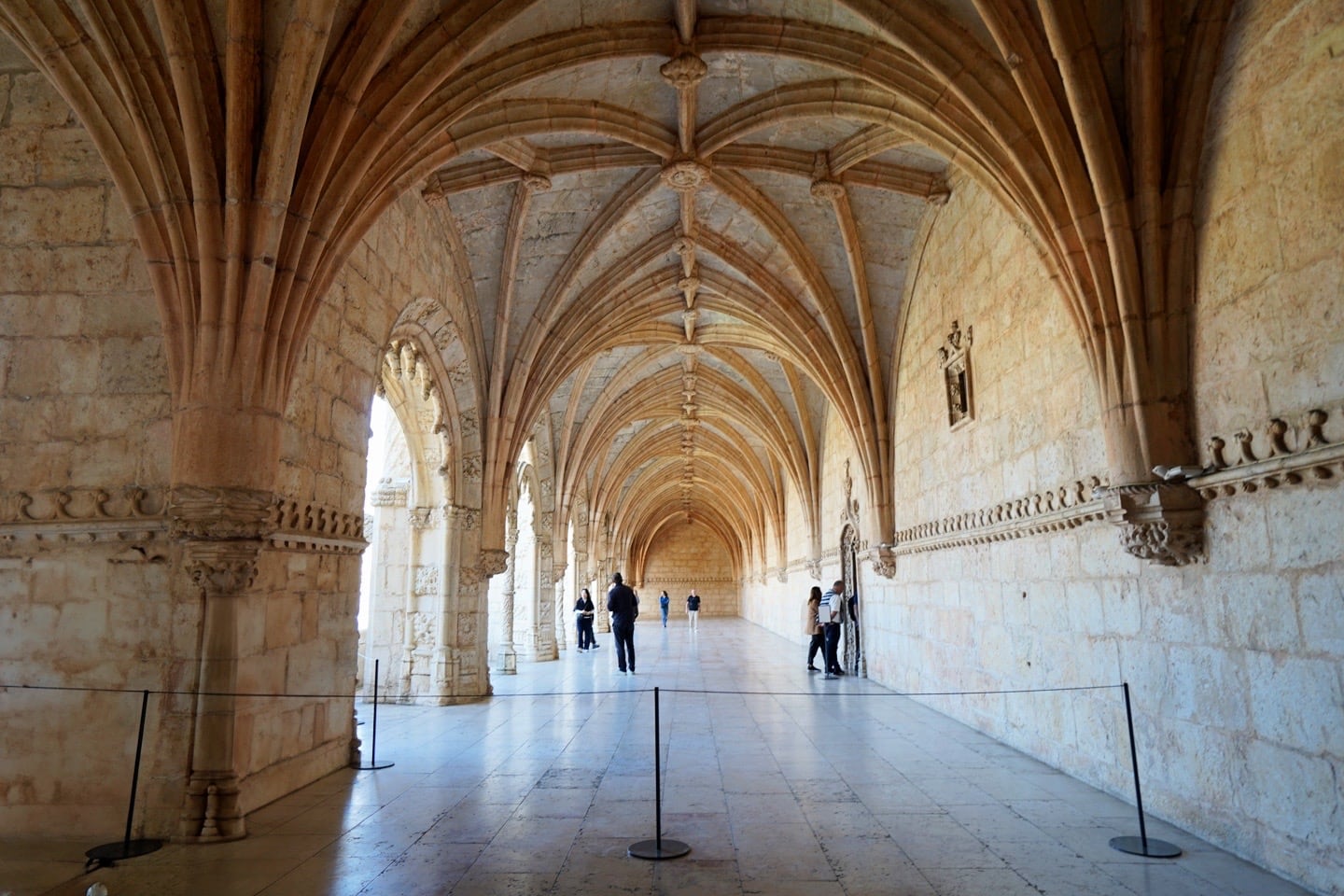

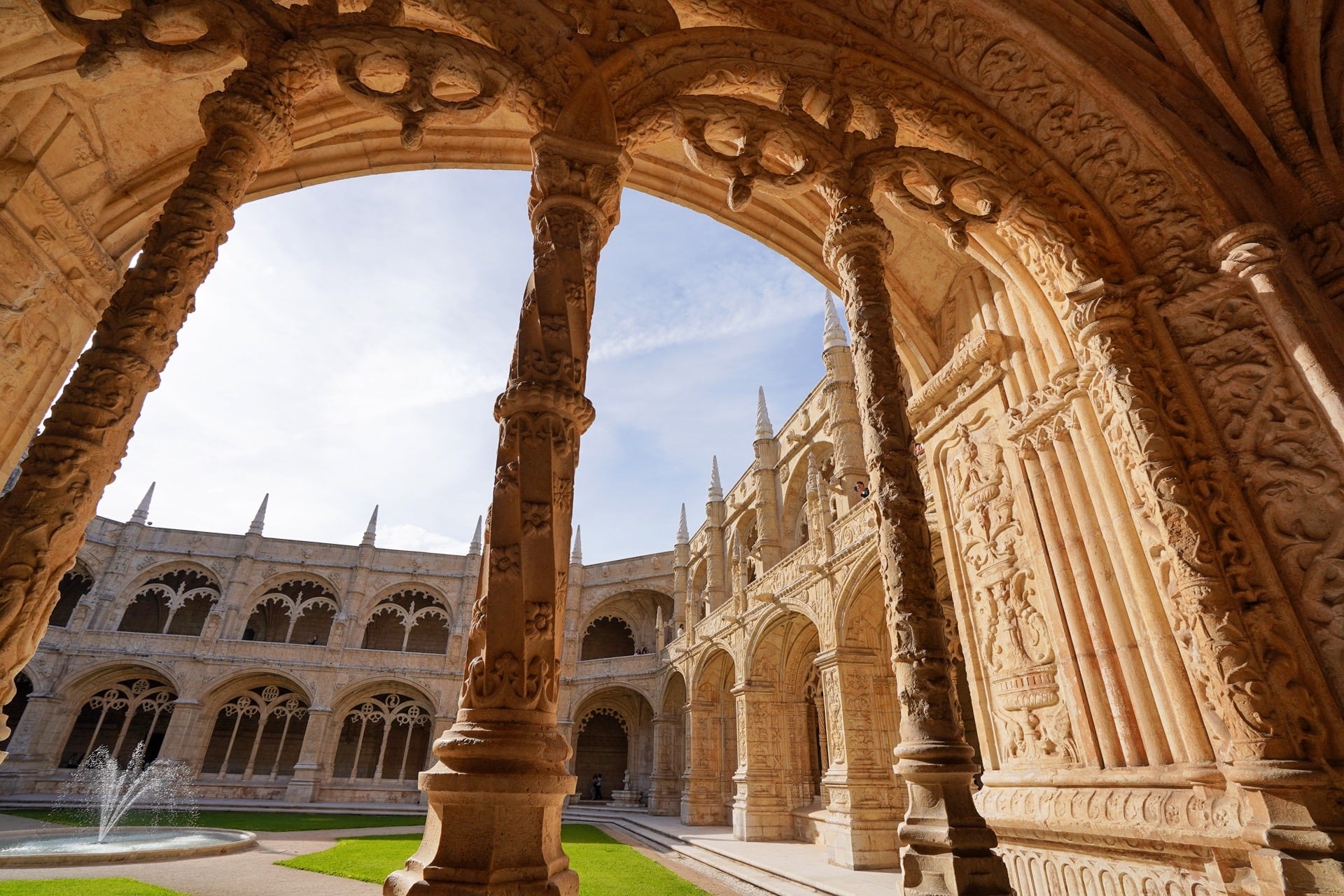
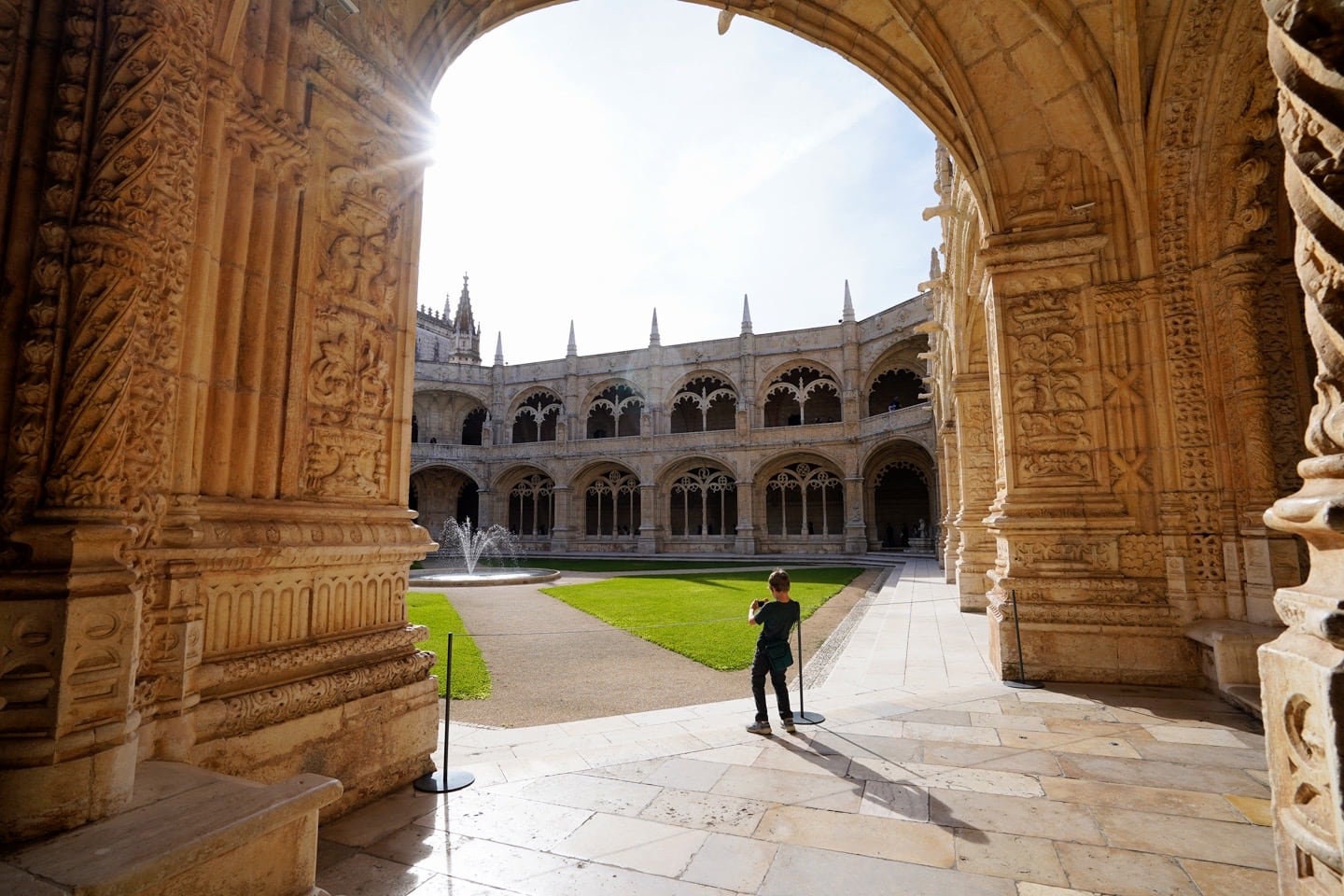
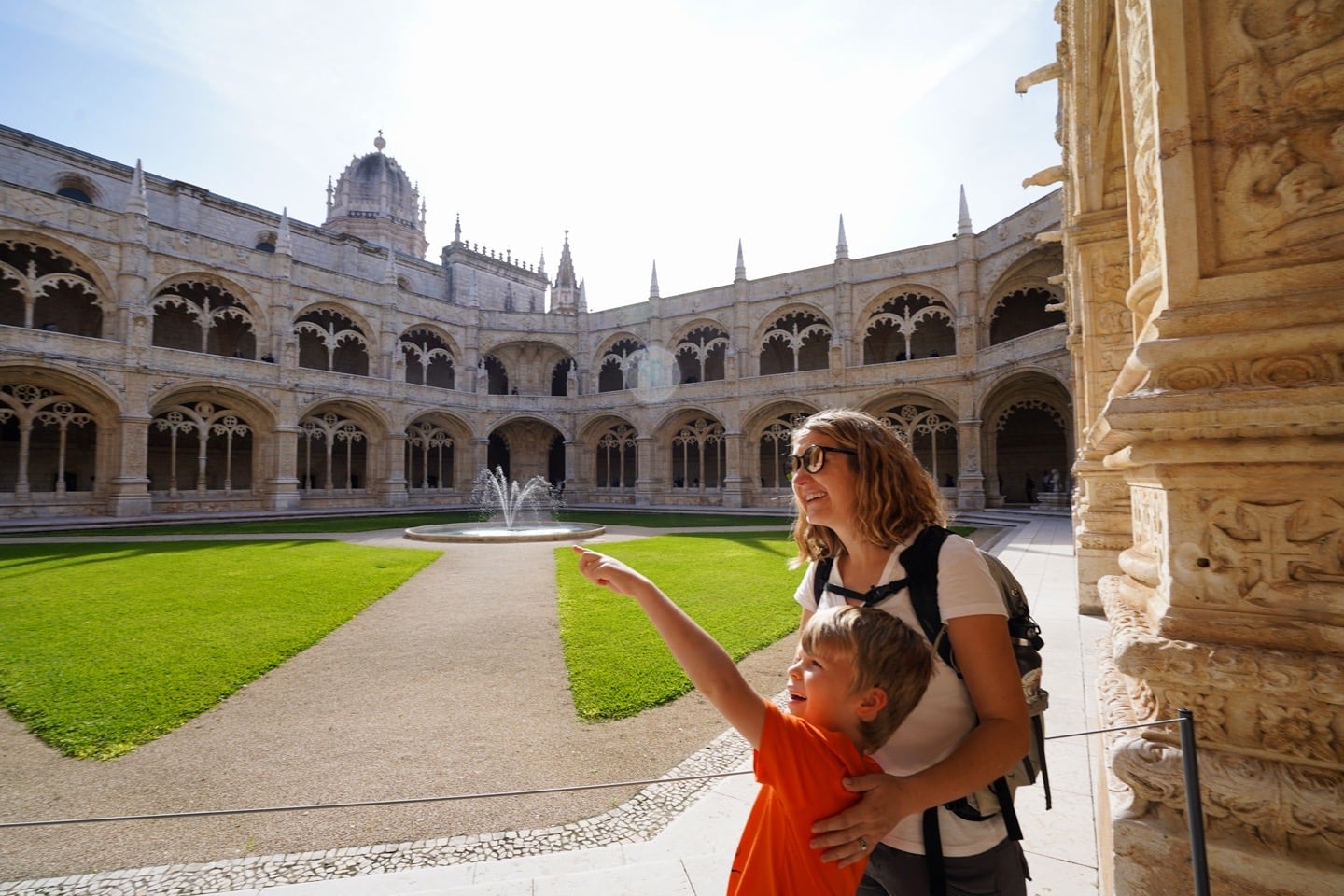
The Jerónimos Monastery is easily one of Lisbon’s most famous landmarks, known for its striking Manueline architecture and deep ties to Portugal’s Age of Discoveries.
Built in the early 16th century and funded by the wealth of overseas trade, the complex (namely the adjacent church) served as something of a spiritual home for sailors where they would spend time praying before setting out on a long voyage.
It also houses the tomb of Vasco da Gama. When Lori and I heard this, we both looked at each other and said, “I thought he was buried in India!”
In 2012, we visited the Church of Saint Francis in Kochi, India where they initially buried ol’ Vasco. Turns out, somebody wasn’t happy about that, so he eventually ended up here.

The main courtyard is also the main event. There are a handful of rooms to poke into around the courtyard, but that’s about it. That surprised us a bit, but we still felt like the place was worth the time and effort. It’s impressive!


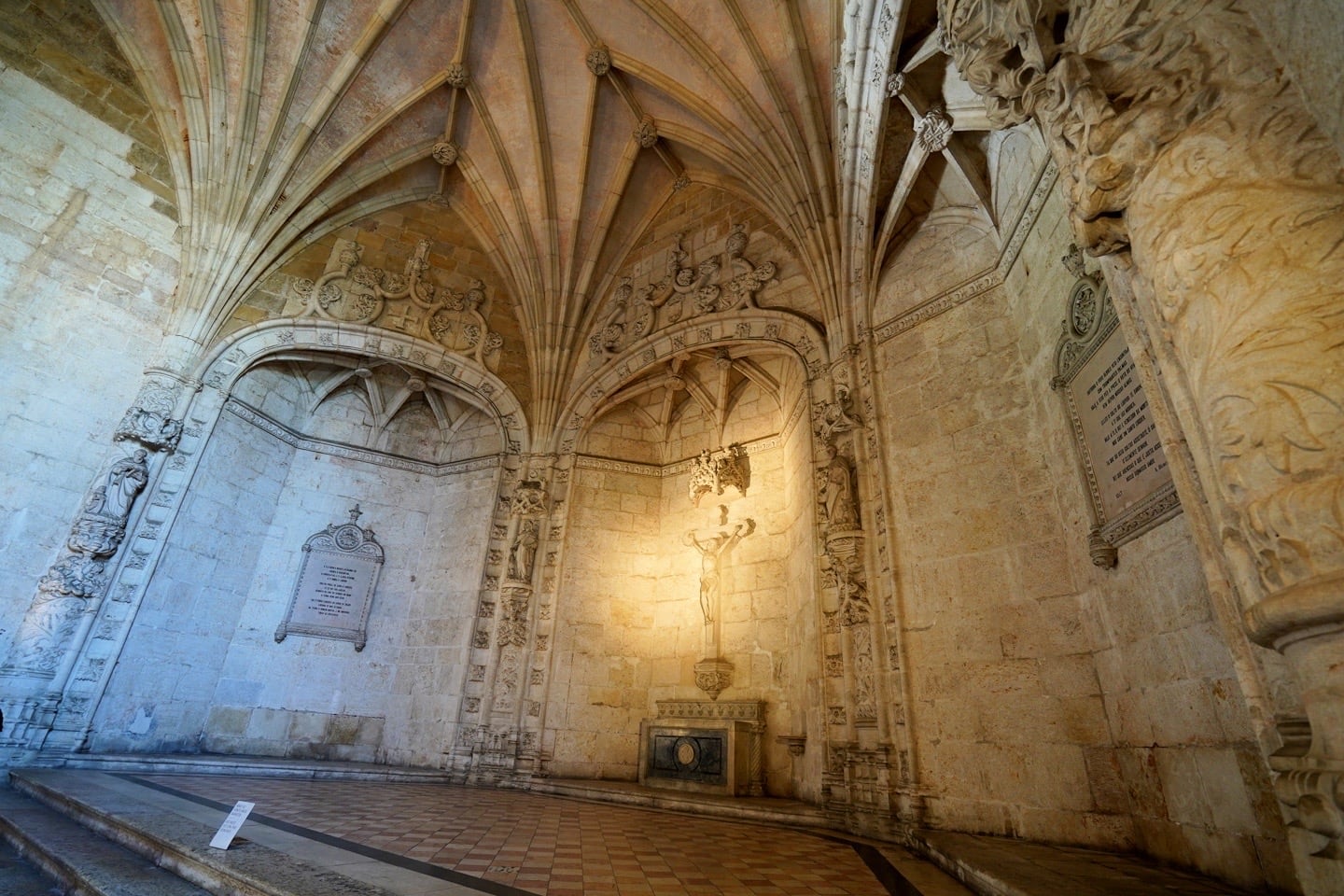
This is the Chapter Room where the monks used to gather by candlelight.

This is the refectory, which is lined with detailed tiled murals depicting biblical and maritime stories through blue‑and‑white imagery.

Afterwards, we made the two-minute walk over to Pastéis de Belém, Lisbon’s most famous pastry shop. It was just a wee bit busy.
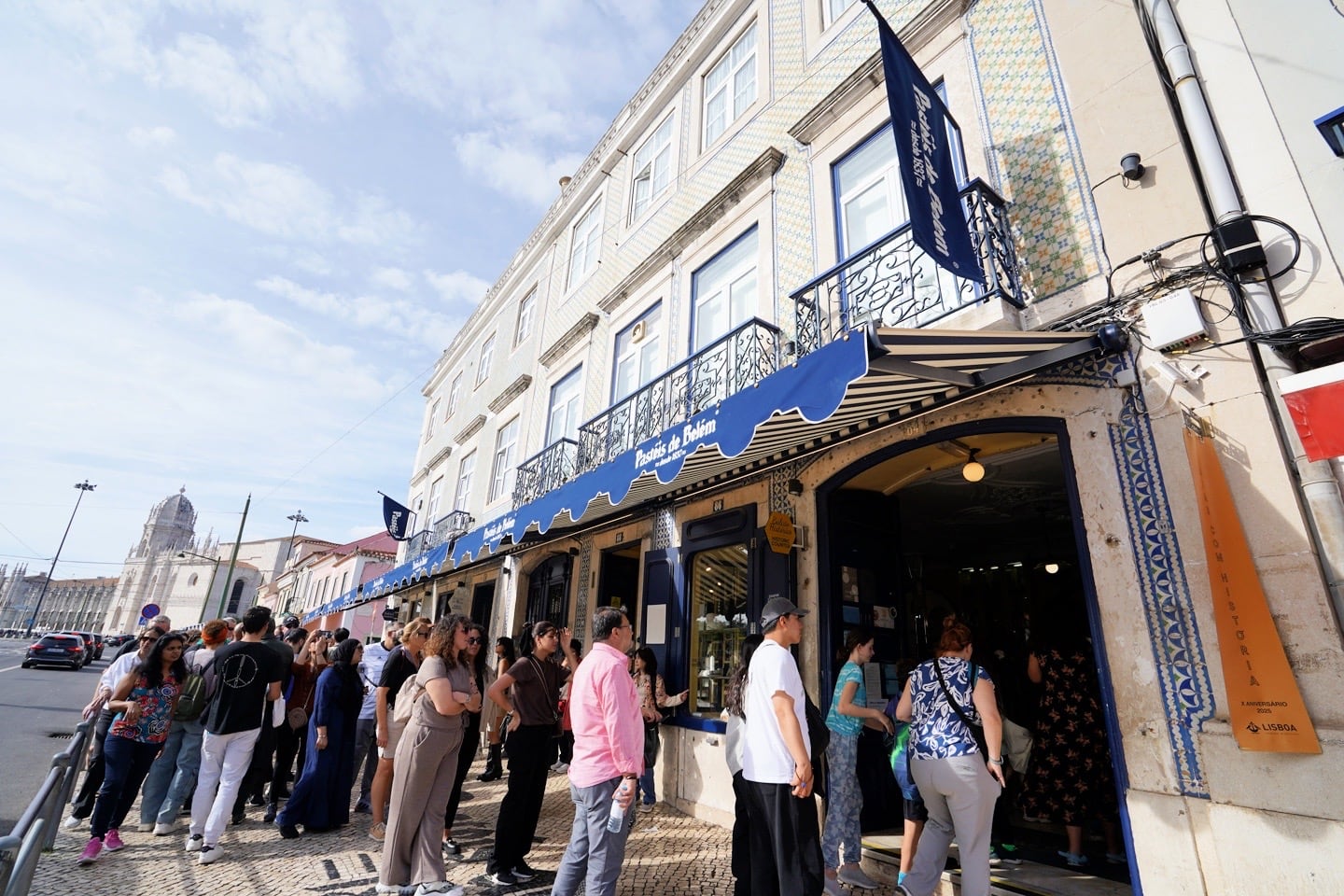

But you gotta hand it to them, they’ve got their business down to a tee, and get the people in and out like clockwork.

And here it is, their fiercely sought after Pastel de Nata. They are quite tasty (and still reasonably priced).

On our way back, we stopped off at another Lisbon foodie attraction that we’ve heard so much about—Time Out Market. Here on Sunday afternoon, there wasn’t a free seat in the house.
So, we headed around the corner to Musa da Bica Taproom and shared a flight.

Not the best in town, but it offered what Time Out Market couldn’t—a place to sit, better people watching, and a chance to enjoy the gorgeous early November weather.