Our second week was forecast to bring sunshine. Instead, we got a big storm and more rain. It made for more lowkey stay in Fez than we had planned (we thought we might be able to squeeze in a day trip to a historic UNESCO town or two, but to no avail).
We’re hoping as we make our way south and get closer to spring that the weather warms and dries out a bit. Fortunately, we’ve got a few months in Morocco, so we’re not too worried. It’s bound to start feeling more like North Africa and less like Britain at some point, right?
Our Euro-African Journey (So Far...)
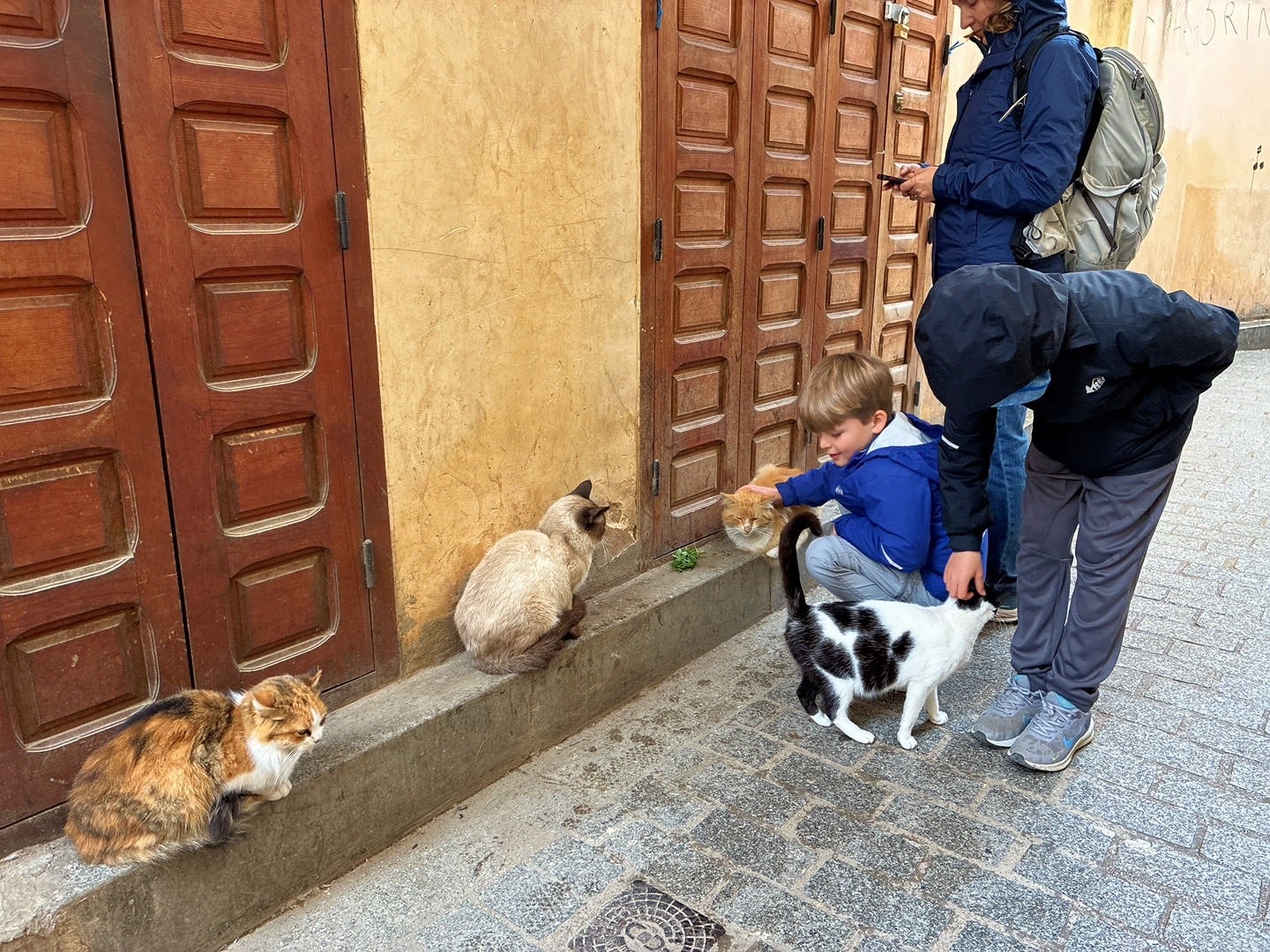
Cats, cats, and more cats. Cats everywhere. Cats are almost as revered in Islamic culture as cows are in Hindu culture. That’s what it seems like to us, at least.
The boys love it, especially Riley who is an absolute cat fiend. If you’re a full-time traveler and can’t have your own family pet, visiting Morocco is a good substitute.

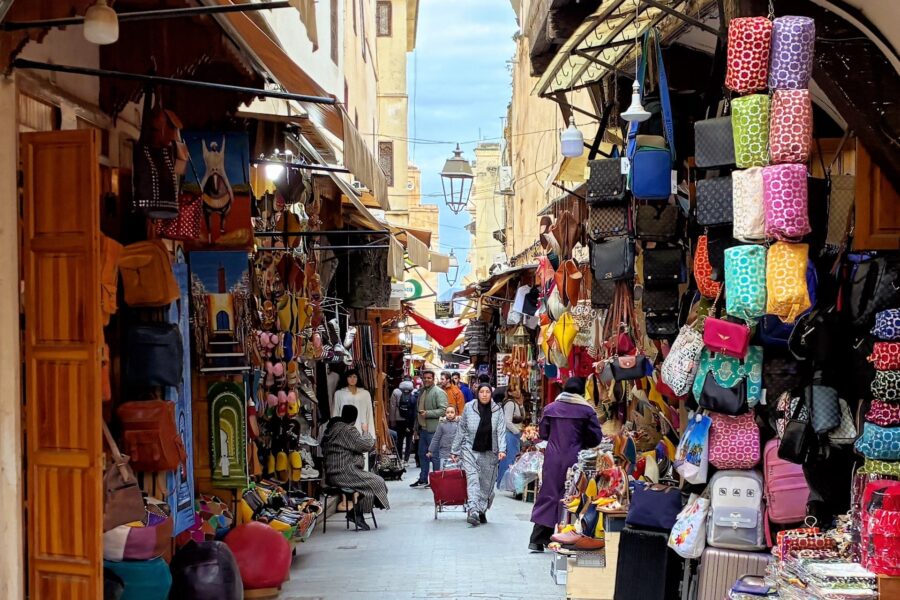
This is one of the many souks scattered throughout the ancient Medina. From noon onward, these alleyways are bustling with activity. On Fridays, however, most of the more traditional shops are closed for prayers. You can literally hear a pin drop.

No motorized vehicles in the Medina (but for the occasional rogue motorbike). Everything else is muled in and out by, well, mule. Even propane.

What do you do out and about with kids on a rainy day in the Fez Medina? Tuck into a coffee shop and play cards. Or build a house of cards. Pretty much anything you can imagine with cards.

The long, rainy slog back to our 400-year-old Riad home for two weeks.
The weather’s just been nasty lately. We’ve yet to find a reliable app for forecasting out more than a couple of days at a time. At around noon, I received a weather alert warning of approaching Storm Gumbau, which was expected to bring heavy rain (surprise!) and dangerous wind gusts.
Nothing out of the ordinary happened for the rest of the day. Then, just as Lori and I were heading off to bed, the wind roared in like a freight train. At 1:30am, I was awakened by the sound of the plexiglass panels over the courtyard trying to take flight (fortunately they never did or we would have had quite the mess on our hands from the heavy rain that followed).
This is what it looked like on Windy.

That’s around 45mph sustained winds where we are. I don’t recall ever seeing those types of wind speeds this far away from the coast.
We surveyed the rooftop the next morning and nothing seemed too out of sorts. It’s no coincidence these old buildings have been around for so long.

The storm had moved on by Sunday morning, leaving sunny skies and pleasant temps. We seized the opportunity to venture out of the Medina once more. This time to La Ville Nouvelle (New Town).
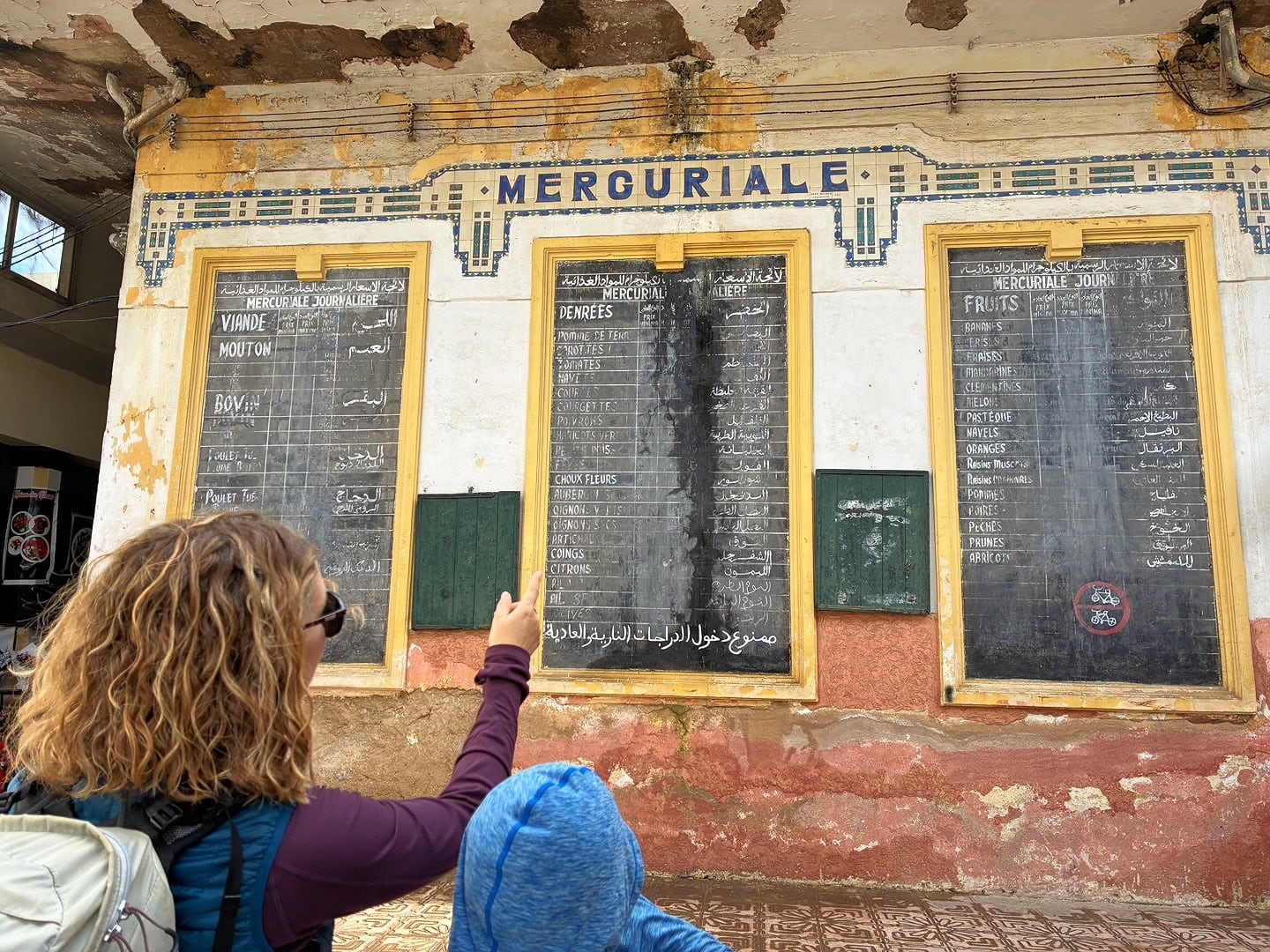
The old chalkboards of the Marché Central (Central Market) tell you what type of meat, seafood, and produce are available each day even before you’ve gone in. We heard the market was closed Sundays and the blank boards confirmed it.

New Town is oriented along a wide boulevard, but even the narrowest side streets seem luxuriously roomy compared to the alleyways of the Medina.

We found one of the few cafes open today and joined a half dozen older men in sipping coffee and staring out at the empty street.
Well, mostly empty, except for this guy…

There wasn’t a whole lot happening in the New Town today. We grabbed lunch and figured we might as well make a stop at the supermarket to pick up some odds and ends we can’t get in the Medina.
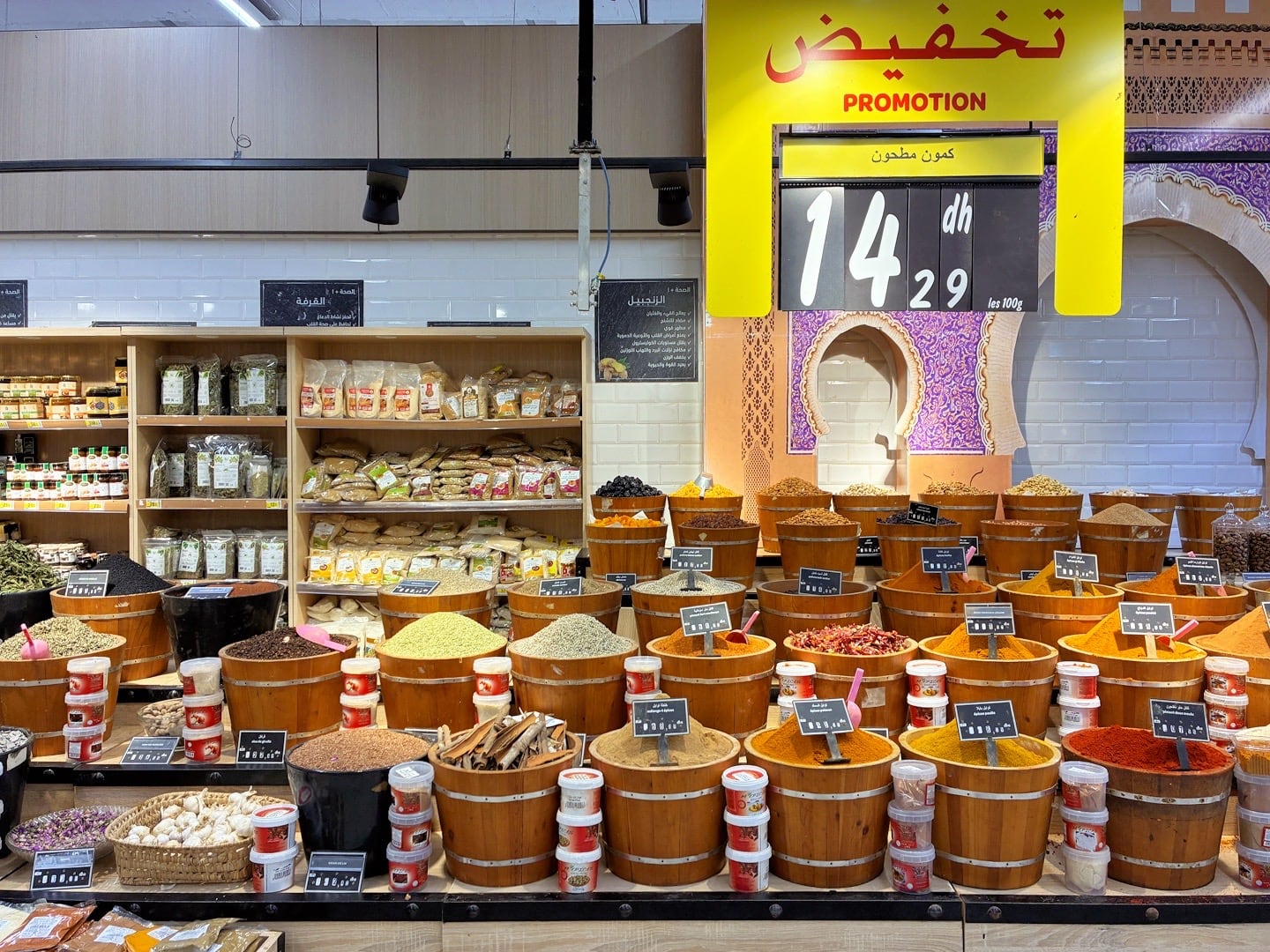
The Medina is loaded with spice stalls, but even the displays of this modern supermarket mimic the Old City’s souks.

In Morocco, selling produce with the dirt still on is considered a sign of freshness. We were surprised to see the practice continue at big international chain supermarkets.
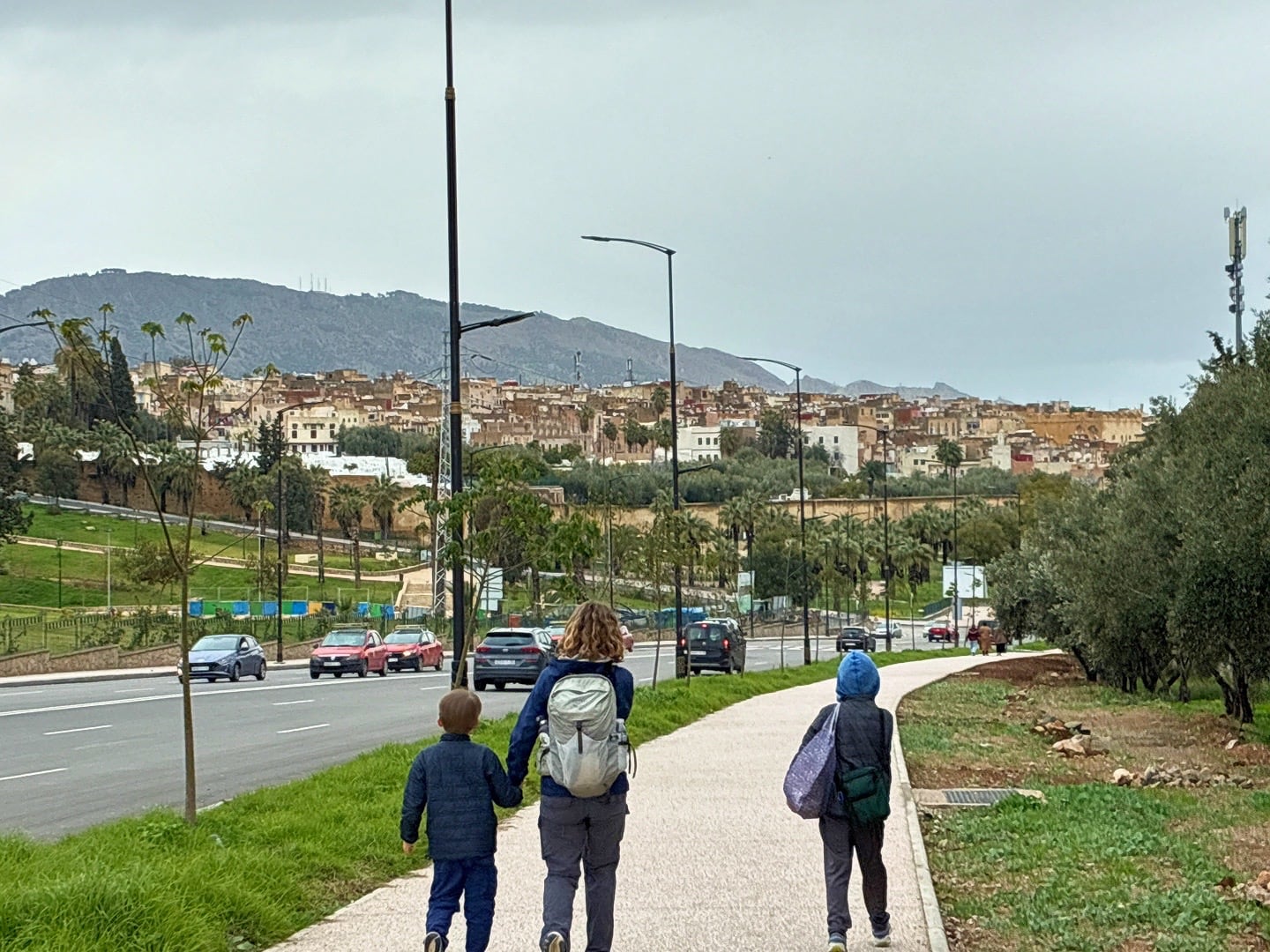
Heading back to the Medina.

Rush hour.


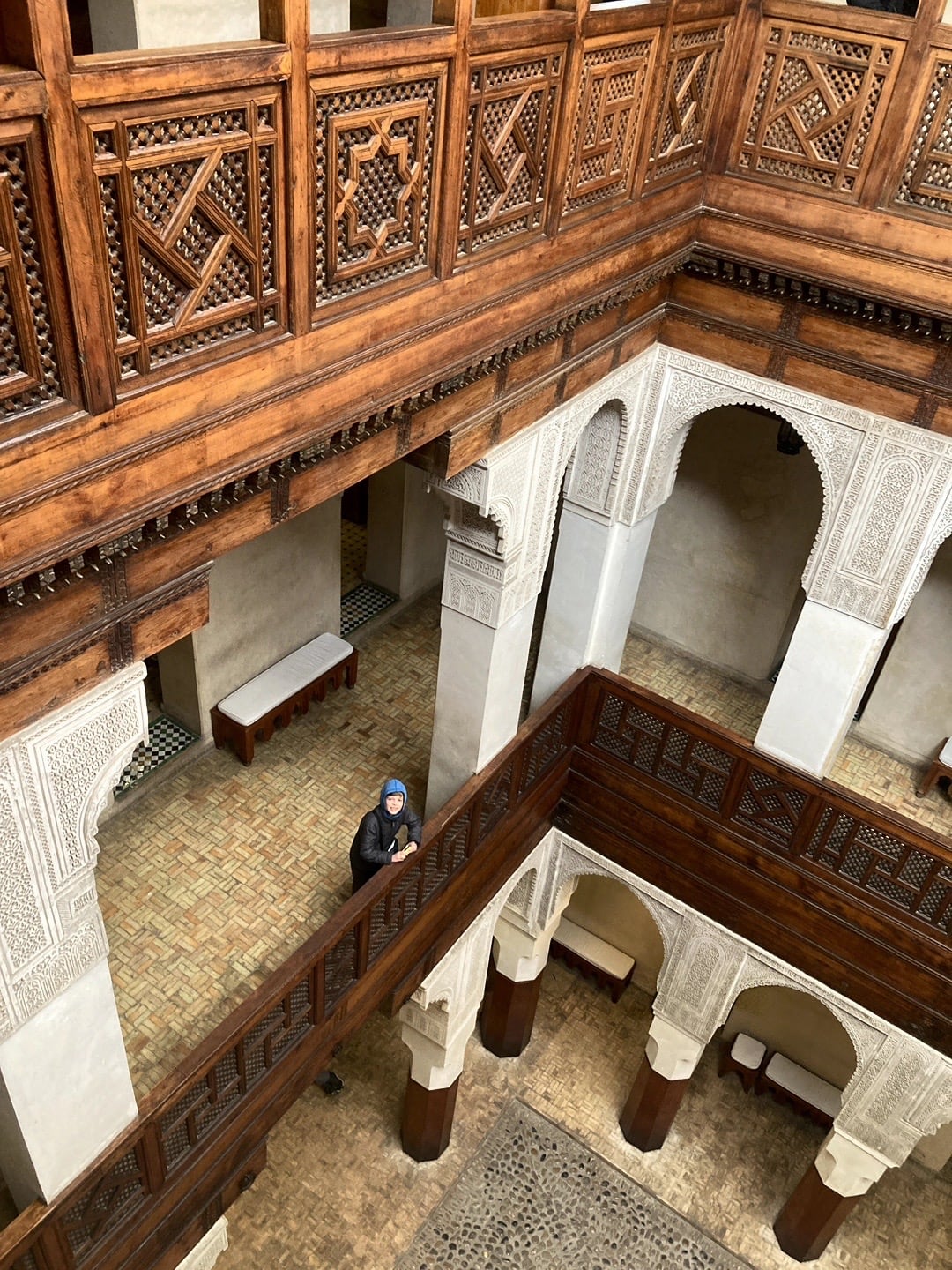
Nejjarine, a former inn now turned woodcarving museum.

Sampling traditional almond milk at one of the city’s historic juice stalls.
The ancient tanneries of Fez are a major draw for visitors, and the Chouara Tannery is the grand daddy of them all. Dating to the 11th century, the complex is vast, colorful, and odorous.
We waited for a sunny day to visit, but it had mostly clouded over by the time we got there, so we went twice.
We never got brilliant sunshine for the popping photos we’ve seen from others. But we got a fascinating lesson in the ancient tanning process and got to see it first-hand.

It’s difficult, unglamorous work that has been passed down over the generations. It gave us a new found appreciation of all the leather goods we see throughout town (provided they’re actually made from hide and skin originating from here and not a factory in China, as many products sold in the tourist souks are).
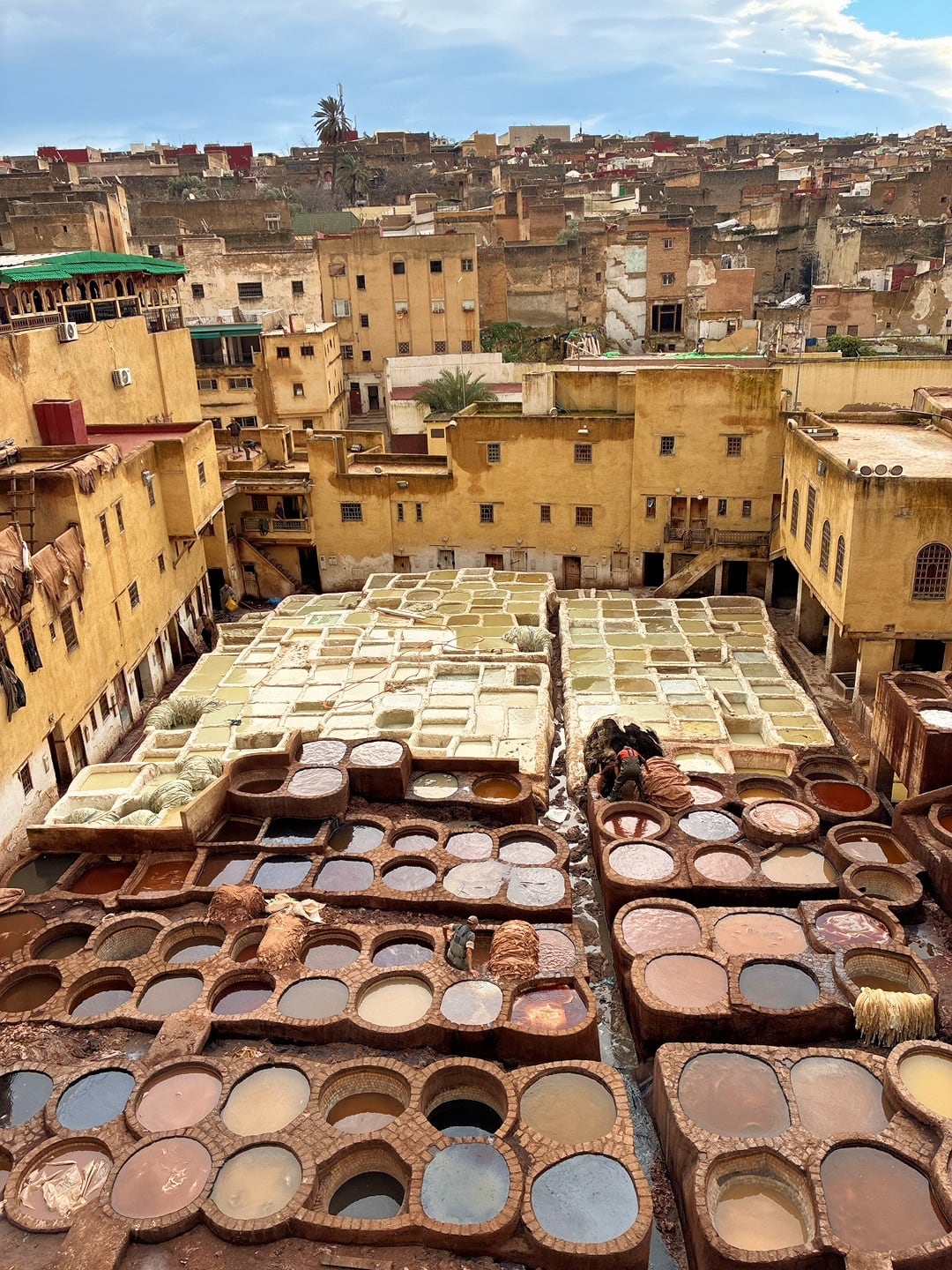
The process employed today uses the a centuries-old method that relies almost entirely on natural materials.
Raw animal hides are soaked and cleaned, then softened in a mixture of water, lime, salt, and pigeon droppings.

After rinsing, the hides are transferred into stone vats filled with plant-based dyes made from ingredients like saffron for yellow, indigo for blue, henna for orange tones, poppy flowers for red, and cedar wood or mint for browns and greens.
Workers manually knead and turn the hides, then stretch and dry them in the sun. We’re told that the labor-intensive process has changed very little since medieval times.
As the city grew, it became harder to source the water for the operation, and the practice nearly ended. UNESCO stepped in, and now supplies the water and delivery system so that the 900-year-old practice can continue.
It’s one of the easier (and cheaper) sights to visit in Fez. Basically, pick a leather shop surrounding the tannery and someone will give you a handful of mint leaves (for you to sniff on as the tanneries can be smelly) and lead you to a viewing platform.
We preferred the platforms around the northwest corner as they provide the best views of the entire operation.

On our second visit, we got an attendant that spoke English and was able to share some of the history of the place and describe the process in more detail.
Whoever you get, it’s customary to give them with a small tip (like 10 dirhams). We felt better about this the second time around when the guy provided some additional value to our visit.
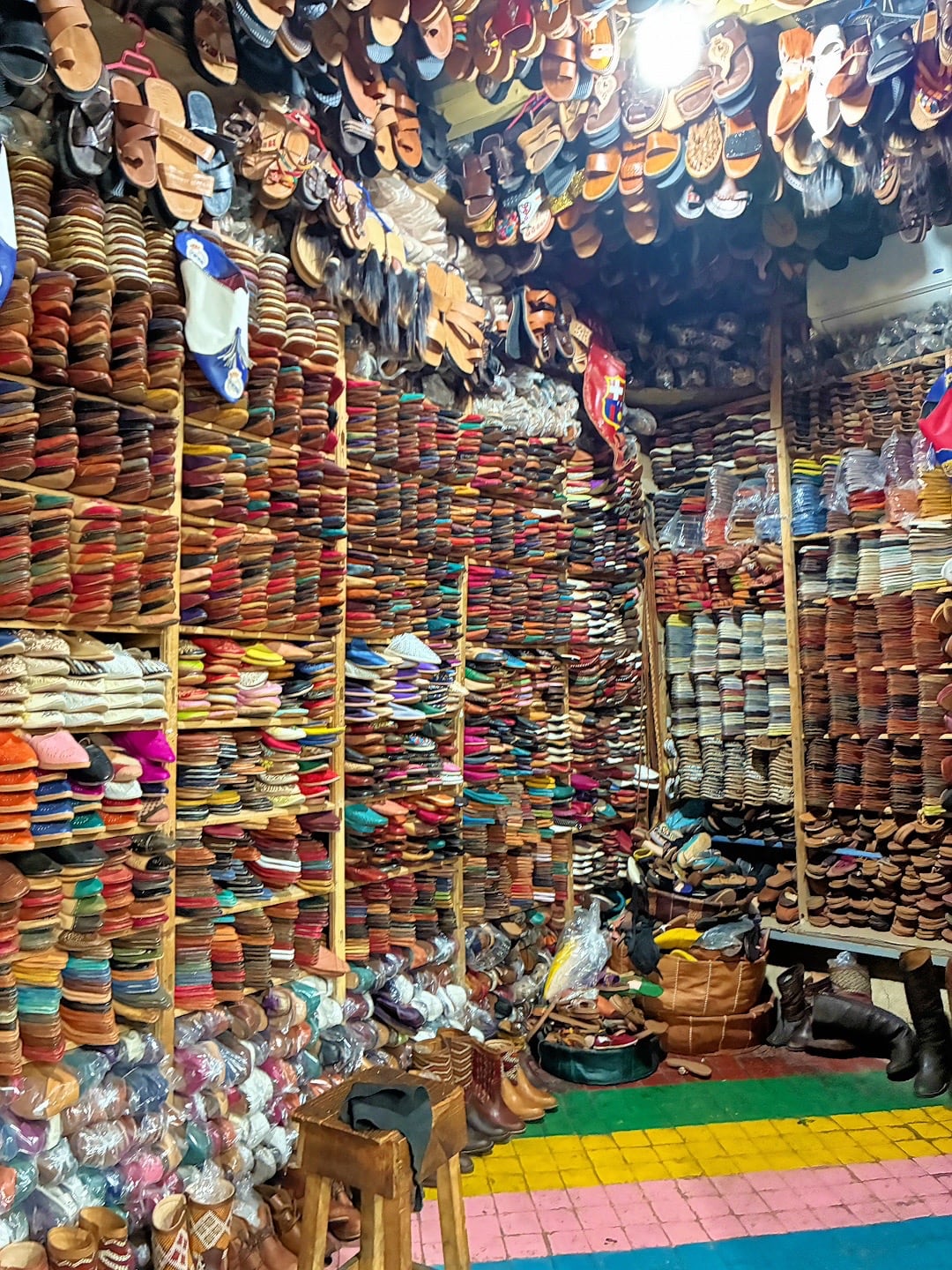
On the way out, they’ll of course try and steer you to buy some of the product. It was a hard sell, and we probably would have picked up a souvenir if we weren’t traveling so light.
The wool-lined indoor sandals were especially appealing (and colorful), especially given how cold the nights have been here.


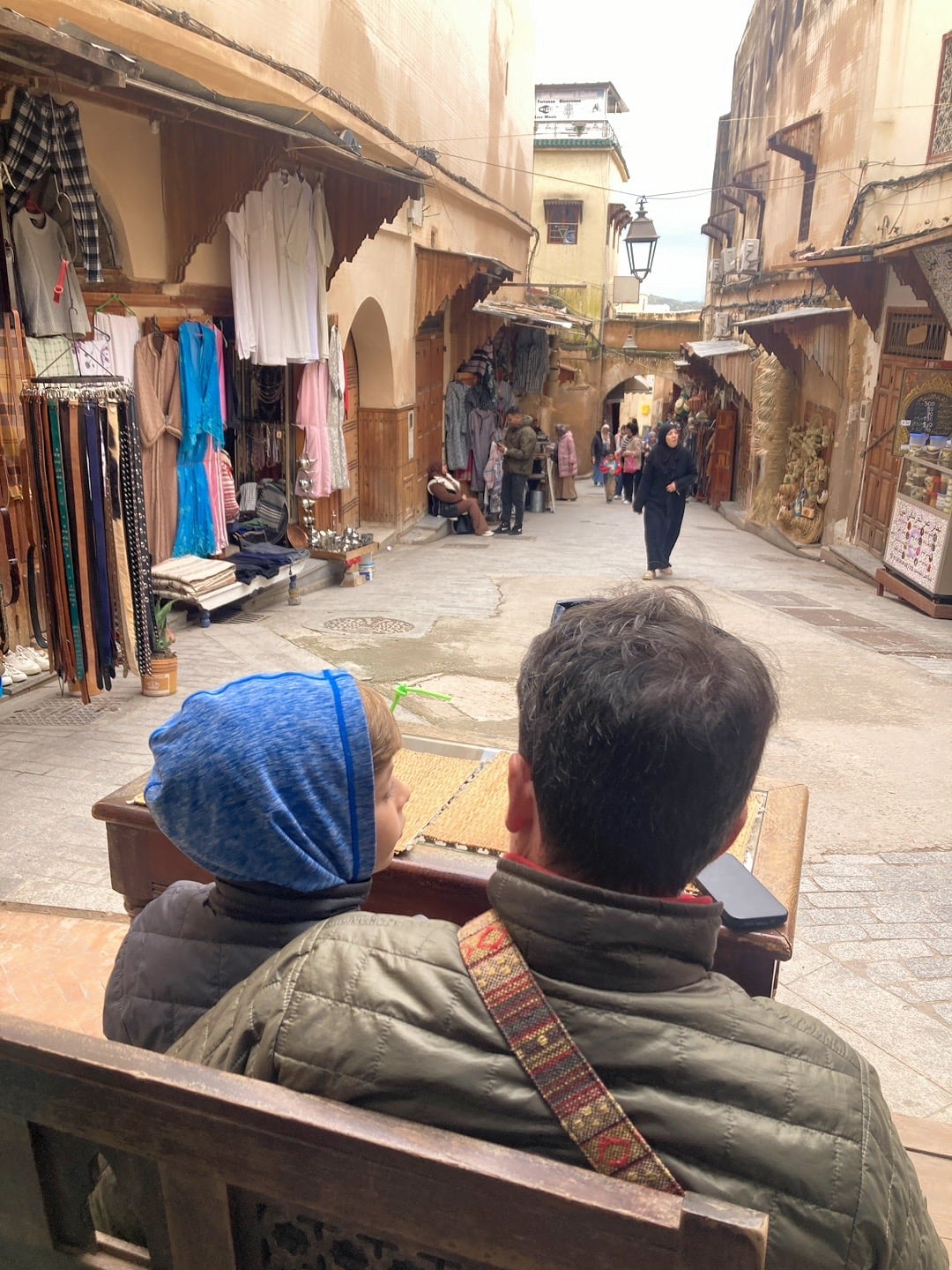
This little cafe was perfect for people watching in the Medina. They even whipped up a decent ice coffee.



It’s hard to truly appreciate the scope of this place from street level. Even our rooftop terrace feels hemmed in.
The old city walls at the top of the cemetery provide some of the best panoramic views of Old Town in the entire city.


That’s the 1,200-year-old Fez Medina, or at least as much as I could squeeze into the picture. 150,000 residents living among centuries old structures in close quarters. Not a single automobile and violent crime is virtually non-existent.
It’s one of the more challenging and immersive places we’ve stayed in a while, and also one of the most rewarding.
With that said, we’re all looking forward to heading south for warmer weather and beach time.